1. Introduction
Mirror aluminum for solar thermal collector — aluminum sheet finished to a high-specular surface and protected with optical coatings — is an important reflector option (heliostats, parabolic troughs, dishes and linear Fresnel fields).
Properly engineered mirror-aluminum assemblies deliver high solar-weighted specular reflectance (typically ≈90–95% in the solar band for practical front-surface systems), low areal mass, easier handling than glass, and excellent recyclability.
Lifetime and optical stability depend on the substrate alloy, surface finish and protective stack; modern protected aluminum front-surface mirrors have demonstrated field lifetimes on the order of a decade or more when tested and maintained appropriately.
These optical and durability attributes make mirror aluminum a cost-effective choice in many solar-thermal applications — provided procurement specifies spectral and specular reflectance metrics (not only “percent reflectance”) and requires durability test data from suppliers.
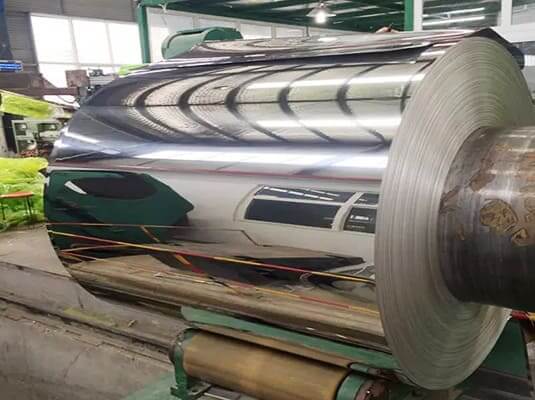
Huawei 1100 Mirror Aluminum Coil
2. The Principle of Mirror Aluminum for Solar Thermal Collector
2.1 Overview of Solar Thermal Technology
Solar thermal collectors harness solar energy by absorbing radiation and converting it to thermal energy.
Non-concentrating collectors typically achieve maximum temperatures around 100°C, limiting applications to lower temperature ranges.
Concentrated solar thermal technology, however, concentrates direct solar radiation to generate high temperatures at the receiver, enabling power generation and industrial process heat applications.
Concentrating solar collectors are classified based on focus characteristics:
- Point Focus Concentrators: Parabolic dish systems with dual-axis tracking
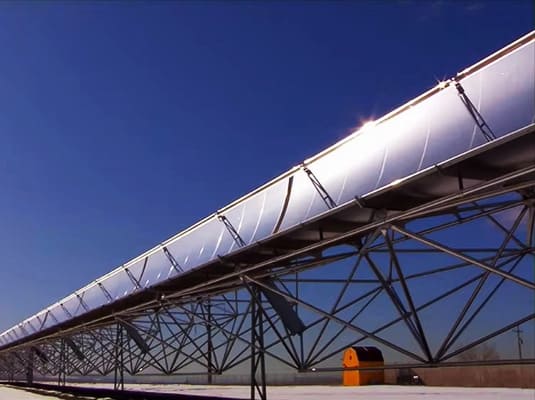
- Line Focus Concentrators: Parabolic trough collectors with parabolic cross-section
The optical efficiency of these concentrators is highly dependent on the reflective material mounted on the concentrator frame.
2.2 Role of Mirror Aluminum
Mirror aluminum serves as the primary reflective surface in solar thermal collectors, performing several critical functions:
- Solar Concentration: Reflecting and concentrating sunlight onto receivers to achieve high temperatures
- Optical Efficiency: Determining the system’s ability to capture and direct solar radiation
- Long-term Performance: Maintaining reflective properties throughout the collector’s 25-30 year design life
Research demonstrates that the reflectivity of mirrors is one of the most important parameters affecting overall system performance.
Higher reflectivity directly translates to increased energy collection and improved system economics.

Mirror Aluminum for Solar Cookers
3. Material Science of Mirror Aluminum for Solar Thermal Collector
3.1 Aluminum Alloy Selection
The selection of aluminum alloys for solar thermal mirror applications is based on comprehensive considerations of reflectivity, mechanical strength, formability, and cost-effectiveness.
High-Purity Aluminum (>99.8%)
- Typical Grades: 1050, 1100, 1070, 1085
- Composition Characteristics: Strict control of impurity elements such as Fe and Si
- Advantages: Highest reflectivity, reaching 90-95%
- Limitations: Lower mechanical strength, may require composite reinforcement
Al-Mg Series Alloys (5000 Series Aluminum)
- Typical Grades: 5754, 5052
- Composition Characteristics: Mg content 2.5-3.5%, providing excellent corrosion resistance
- Applications: Coastal or high-humidity environments; product specifications for 5754 alloy show tensile strength of 300-320 N/mm² and yield strength of 270-300 N/mm²
Al-Mn Series Alloys (3000 Series Aluminum)
- Typical Grades: 3003, 3105
- Advantages: Good strength and formability balance
3.2 Thickness and Temper
- Thickness: The gauge of the aluminum sheet typically ranges from 0.4 mm to 1.5 mm, balancing rigidity, weight, and cost. Thinner gauges (e.g., 0.4-0.6 mm) are common for smaller, more flexible reflectors, while thicker gauges (e.g., 1.0-1.5 mm) are used for larger, more rigid parabolic troughs or heliostats.
- Temper: The mechanical temper is crucial for formability and structural integrity:
- H18 / H19 (Full Hard): Often chosen for the highest strength and stiffness, suitable for applications where the mirror needs to retain its precise shape under environmental loads (e.g., wind).
- H14 / H16 (Half Hard / Three-Quarter Hard): May be used where some formability is still required post-processing, balancing strength with ductility.
- O (Annealed / Soft): Rarely used for finished mirror components due to lack of rigidity, but may be an intermediate stage for complex forming before final hardening.
3.3 Reflectivity
Reflectivity is the most critical optical property. It is measured as specular reflectivity, which is the percentage of incident light reflected in a mirror-like direction (rather than diffused).
- Specular Reflectivity: High-performance mirror aluminum achieves specular reflectivity ranging from 85% to over 98% in the solar spectrum (300-2500 nm).
- Anodized Aluminum: Typically achieves 85-92% specular reflectivity. The reflectivity is inherent to the polished aluminum surface, protected by a transparent alumina layer.
- Sputtered Silver/Aluminum: Sputtered silver mirrors, often protected by an overcoat, can achieve the highest specular reflectivity, often >95%, with some premium products reaching 97-98%. Sputtered aluminum mirrors typically fall in the 90-95% range.
- Diffuse Reflectivity: Mirror aluminum is designed for very low diffuse reflectivity (e.g., <2%), ensuring that almost all reflected light is directed precisely towards the absorber.

Huawei Export Packaging Mirror Aluminum Coils
4. Manufacturing Process of Mirror Aluminum for Solar Thermal Collector
4.1 Aluminum Sheet/Coil Production
- Ingot Casting: High-purity aluminum alloys are melted and cast into large ingots.
- Hot Rolling: Ingots are hot rolled into thick plates.
- Cold Rolling: Multiple passes through precision cold rolling mills reduce the aluminum to the desired thin gauge (e.g., 0.4 mm to 1.5 mm).
- Annealing/Tempering: Controlled heat treatment or cold working to achieve the specified mechanical temper (e.g., H18, H19, H14).
Critical controls for optical-grade material:
- Thickness and flatness consistency (affects forming and slope error),
- Surface defect control (scratches, roll marks, pits),
- Cleanliness (residual oils can cause coating defects).
4.2 Surface Treatment and Polishing
Good optical performance depends on both macroscopic figure and microscopic smoothness.
- Degreasing and Cleaning: The aluminum surface is thoroughly cleaned to remove all rolling oils, contaminants, and oxides using alkaline and acidic chemical baths, followed by rinsing. This is essential for subsequent polishing and coating adhesion.
- Mechanical Polishing: For the highest quality, a multi-stage mechanical polishing process is often employed, using progressively finer abrasives and buffing wheels. This removes macro-scale scratches and surface defects, achieving a very low surface roughness (e.g., Ra <0.05 µm).
- Electropolishing/Chemical Polishing (Brightening): After mechanical polishing, chemical or electrochemical brightening baths are used. These processes selectively dissolve microscopic peaks on the surface, achieving atomic-scale smoothness and maximizing inherent reflectivity. This step is particularly critical for anodized aluminum mirrors.
4.3 Coating Application
Once the surface is prepared, the reflective and protective layers are applied.
Vacuum Deposition (PVD/CVD) for Sputtered Mirrors:
- Sputtering: In a high-vacuum chamber, a target material (e.g., silver or aluminum) is bombarded with energetic ions, dislodging atoms that then deposit as a thin, uniform, highly reflective layer (e.g., 0.1-0.3 µm) onto the polished aluminum substrate. Silver is preferred for its high reflectivity.
- Protective Overcoat: After the reflective layer, a transparent, durable protective layer (e.g., acrylic, PVDF, SiO2, or other inorganic compounds) is often applied, sometimes also via sputtering or a roll-coating process. This layer shields the delicate reflective film from abrasion, corrosion, and UV degradation.
Anodizing for Anodized Aluminum Mirrors:
- Electrochemical Process: The polished and brightened aluminum sheet is immersed in an electrolyte (e.g., sulfuric acid) and subjected to an electric current. This process electrochemically grows a uniform, dense, and transparent layer of aluminum oxide (Al2O3) directly from the aluminum surface.
- Layer Thickness Control: The thickness of the anodic oxide layer is precisely controlled (e.g., 1-5 µm). It must be thick enough to be protective but thin enough to maintain high reflectivity and transparency.
- Sealing: A final sealing step (e.g., hot water, nickel acetate) closes the pores in the anodic layer, enhancing its corrosion resistance and durability.

PVD Ultra-High Reflectivity Mirror Aluminum Plate
5. Advantages of Mirror Aluminum for Solar Thermal Collectors
5.1 High Efficiency in Solar Concentration
Mirror aluminum sheet enables efficient solar concentration through high reflectivity.
Glass mirrors and aluminum are the main candidate materials for solar reflectors, with aluminum offering reflectivity comparable to glass while providing additional benefits.
The optical efficiency of concentrators greatly depends on the reflective material, and high-quality aluminum mirrors with 95% total reflectance and ≥91% specular reflectance ensure maximum energy capture.
5.2 Cost-Effectiveness
Aluminum mirrors offer significant economic advantages:
- Lower material costs compared to silver-based mirrors
- Reduced manufacturing complexity for curved surfaces
- Glass mirror preparation for curved applications is not economically feasible for small and medium sale volumes
The monolithic structure of aluminum mirror designs enables simple “drop-in-place” installation, reducing labor costs.
5.3 Durability and Weather Resistance
PVD anodized aluminum mirror sheets demonstrate excellent durability:
- Weather Resistance: Stable coating unaffected by UV radiation, maintains bright color without peeling or rusting even after long-term outdoor exposure
- Temperature Resistance: Withstand high temperatures, with anodized surface helping dissipate heat effectively and preventing degradation of the reflective coating
- Corrosion Resistance: Dense aluminum oxide film provides protection against atmosphere, chemicals, and moisture
Prototype tests of coated mirrors showed stability in external conditions with no coating degradation during test campaigns.
5.4 Lightweight and Structural Simplicity
Aluminum’s low density provides significant advantages:
- Reduced structural requirements for support frames
- Simplified installation and handling
- Lower transportation costs
The aluminum mirror design incorporates sheet, extrusions, and fasteners in a monolithic structure that enables easy installation.
5.5 Design Flexibility
Mirror aluminum offers excellent formability for various collector designs:
- Can be bent to achieve curved parabolic shapes required for trough collectors
- Eliminates gaps between mirror pieces that occur when using flat glass mirrors on curved frames
- Suitable for both flat and curved surface applications
5.6 Recyclability
Aluminum mirrors offer environmental advantages throughout their life cycle:
- 100% recyclable without performance loss
- Environmentally friendly PVD process produces minimal waste and emissions
- Aluminum mirrors have a more sustainable life cycle from an environmental point of view compared to glass-based mirrors
6. Performance and Testing Methods of Mirror Aluminum
6.1 Optical Performance Testing
| Test Parameter | Method | Key Indicator |
|---|---|---|
| Total Reflectance | Spectrophotometer with integrating sphere | ≥92-95% |
| Specular Reflectance | Goniophotometer | ≥91% at 60° |
| Diffuse Reflectance | Haze meter | <1% |
| Color | Colorimeter | ΔE controlled |
Portable reflectometers are now used for monitoring reflectance of solar mirrors in CSP plants.
6.2 Durability Testing
Accelerated Aging Tests:
- QUV (UV + condensation): 5000 hours minimum
- Salt Spray Test: ≥1000 hours
- Damp Heat Test: 85°C/85% RH, 1000 hours
- Thermal Cycling: -40°C to +80°C, 100 cycles
Outdoor Exposure Testing:
Field tests at research facilities validate the stability of coated prototypes under real conditions.
Soiling and Cleaning Studies:
Research demonstrates that self-cleaning coatings restore initial reflectance affected by soiling and allow reduced water consumption for cleaning operations compared to uncoated glass mirrors.
Metal mirrors show significantly less soiling than glass or plastic film mirror products due to the lack of static charge.
6.3 Mechanical Performance Testing
| Test | Method | Requirements |
|---|---|---|
| Adhesion | Cross-cut test | 4B-5B grade |
| Abrasion Resistance | Taber abrasion test | Minimal haze increase |
| Hardness | Pencil hardness | ≥H |
| Formability | Bend test | No cracking at ≥1.5× thickness radius |
7. Key Applications of Mirror Aluminum for Solar Thermal Collector
7.1 Concentrating Solar Power (CSP) Plants
CSP plants represent a major application for mirror aluminum.
The partnership between research institutions and industry has developed concentrating solar collectors with aluminum mirrors, with installations at test facilities demonstrating the technology’s viability.
Applications in CSP:
- Parabolic Trough Collectors: Curved aluminum mirrors concentrate sunlight onto receivers along the focal line
- Linear Fresnel Reflectors: Flat or slightly curved mirror arrays
- Central Receiver Systems: Heliostats for tower-type systems
Aluminum mirrors offer advantages for CSP including durability, environmental friendliness, and lower installation costs compared to fragile glass-based mirrors.
Mirror Aluminum for Solar Thermal Collector
7.2 Domestic and Commercial Hot Water Systems
Mirror aluminum enhances the performance of solar water heating systems:
- Compound Parabolic Concentrators: Low-concentration ratio for medium-temperature applications
- Evacuated Tube Collectors: Integrated CPC reflectors提高单位面积集热量
7.3 Industrial Process Heat
Industrial applications require medium to high temperatures for processes such as:
- Food processing
- Chemical manufacturing
- Textile production
- Desalination
Mirror aluminum enables efficient solar concentration for these applications, reducing fossil fuel consumption and operational costs.
7.4 Solar Cookers and Dryers
Parabolic dish concentrators for solar cooking and drying benefit from aluminum mirrors:
- Box Cookers: Enhanced with external reflectors
- Parabolic Cookers: High-concentration designs for cooking and frying
- Solar Dryers: Concentrating reflectors for agricultural product drying
The lightweight nature of aluminum mirrors is particularly advantageous for portable and manually tracked solar cookers.
7.5 Additional Applications
Tubular Daylighting Devices: PVD anodizing aluminum mirror sheets maximize light transmission efficiency, efficiently redirecting sunlight to illuminate interior spaces with natural light.
Indoor Louver-Type Light Collecting Systems: High-performance mirror materials serve as critical components for introducing outdoor daylight into indoor areas with no light or light-blind zones, providing an effective, energy-saving, and environmentally friendly solution.
Satellite Reflectors and Telescopes: High-reflectivity aluminum mirror sheets find applications in space and astronomical instruments.
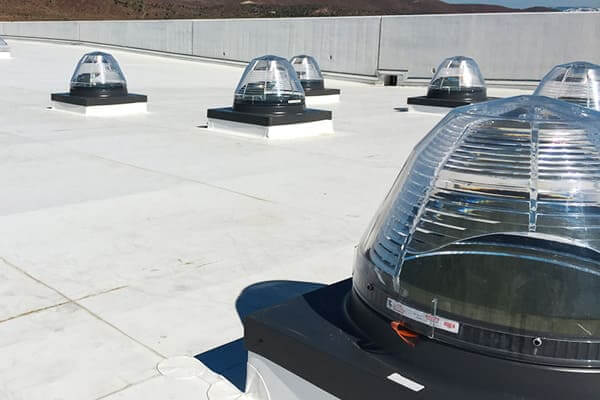
TTD System Used Mirror Aluminum
8. Comparison of Alternative Products
| Feature / Material | Mirror Aluminum (Sputtered Silver) | Mirror Aluminum (Anodized) | Low-Iron Glass Mirror |
| Specular Reflectivity | Excellent (95-98%) | Good (85-92%) | Very Good (92-94%) |
| Durability / Weathering | Very Good (Coating dependent, excellent UV/corrosion resistance) | Good (Anodic oxide offers good protection) | Excellent (Highly resistant to environmental degradation) |
| Abrasion Resistance | Moderate to Good (Coating dependent, can be susceptible) | Moderate (Anodic layer is hard but thin) | Excellent (Glass is inherently hard) |
| Weight (Relative) | Excellent (Lightweight) | Excellent (Lightweight) | Poor (Heavy, ~2.5x heavier than aluminum of same area) |
| Formability | Excellent (Can be bent, curved) | Excellent (Can be bent, curved) | Poor (Rigid, can only be slightly curved via sagging) |
| Cost (Relative) | Medium to High (Depending on coating complexity) | Medium | High (Material cost, transportation, structural support) |
| Ease of Handling/Install | Excellent (Light, less fragile) | Excellent (Light, less fragile) | Poor (Heavy, fragile, requires robust handling) |
| Maintenance (Cleaning) | Moderate (Surface can be more delicate) | Moderate (Surface can be more delicate) | Easy (Robust, common cleaning methods) |
| Recyclability | Excellent (Aluminum base, but coating can add complexity) | Excellent (Aluminum base, but coating can add complexity) | Excellent (Well-established recycling for glass) |
| Typical Applications | CSP parabolic troughs, Fresnel, heliostats for high output | Evacuated tube reflectors, flat plate backs, cost-sensitive CSP | CSP heliostats, dishes, where maximum durability is key |
9. Conclusion
Mirror aluminum for Solar Thermal Collector stands as a pivotal material in the continuous evolution of solar thermal energy technology, offering a sophisticated solution for maximizing the capture and concentration of solar radiation.
Its precise material science, combining high-purity aluminum with advanced reflective and protective coatings, yields exceptional specular reflectivity, ranging from 85% to over 98%, critical for high-efficiency systems.
Beyond its superior optical performance, mirror aluminum’s lightweight nature, remarkable formability, and robust durability against environmental stressors contribute significantly to the cost-effectiveness and structural simplicity of solar thermal collectors.
From the vast arrays of heliostats in Concentrating Solar Power plants to the subtle reflectors within domestic hot water systems, its versatility is unmatched.
While continuous efforts are made to enhance its abrasion resistance and optimize its long-term performance, mirror aluminum is undeniably a cornerstone material driving the growth and viability of renewable thermal energy worldwide, playing a crucial role in our transition to a more sustainable energy future.
FAQs
What is the typical lifespan of mirror aluminum in a solar thermal collector?
With proper protective coatings and maintenance, mirror aluminum can have a lifespan of 10 to 20 years or more in solar thermal applications.
How does mirror aluminum compare to silvered glass in terms of cost and performance?
Mirror aluminum is generally more cost-effective and lighter than silvered glass. While silvered glass typically offers slightly higher initial reflectivity, mirror aluminum provides better formability and often sufficient performance for many applications, especially when considering total system cost.
What maintenance is required for mirror aluminum reflectors?
Regular cleaning to remove dust and dirt is crucial to maintain optical performance. The frequency depends on the local environment. Inspection for coating damage or corrosion is also recommended.
Can mirror aluminum be used in all types of solar thermal collectors?
Mirror aluminum is primarily used in concentrating solar collectors (parabolic troughs, dishes, heliostats) due to its high specular reflectance. It can also be used as internal reflectors in some flat plate collectors to enhance efficiency.
What are the environmental benefits of using aluminum in solar applications?
Aluminum is 100% recyclable, reducing waste and energy consumption associated with primary aluminum production. Its lightweight nature also contributes to lower transportation emissions during installation.
Casting production process and its introduction
The purpose of melting and casting is to produce alloys with satisfactory composition and high purity of melt, so as to create favorable conditions for casting alloys of various shapes.
Melting and casting process steps: batching --- feeding --- melting --- stirring after melting, slag removal --- pre-analysis sampling --- adding alloy to adjust the composition, stirring --- refining --- static Setting——Guide furnace casting.
Hot rolling production process and its introduction
- 1. Hot rolling generally refers to rolling above the metal recrystallization temperature;
- 2. During the hot rolling process, the metal has both hardening and softening processes. Due to the influence of deformation speed, as long as the recovery and recrystallization process is too late, there will be a certain work hardening;
- 3. The recrystallization of the metal after hot rolling is incomplete, that is, the coexistence of recrystallized structure and deformed structure;
- 4. Hot rolling can improve the processing performance of metals and alloys, reduce or eliminate casting defects.
- 1. The casting and rolling temperature is generally between 680°C and 700°C. The lower the better, the stable casting and rolling line usually stops once a month or more to re-stand. During the production process, it is necessary to strictly control the liquid level of the front tank to prevent low liquid level;
- 2. Lubrication uses C powder with incomplete combustion of gas for lubrication, which is also one of the reasons for the dirty surface of casting and rolling materials;
- 3. The production speed is generally between 1.5m/min-2.5m/min;
- 4. The surface quality of products produced by casting and rolling is generally relatively low, and generally cannot meet products with special physical and chemical performance requirements.
- 1. Cold rolling refers to the rolling production method below the recrystallization temperature;
- 2. There will be no dynamic recrystallization during the rolling process, and the temperature will rise to the recovery temperature at most, and the cold rolling will appear in a work hardening state, and the work hardening rate will be large;
- 3. The cold-rolled sheet and strip have high dimensional accuracy, good surface quality, uniform structure and performance, and products in various states can be obtained with heat treatment;
- 4. Cold rolling can roll out thin strips, but at the same time, it has the disadvantages of high energy consumption for deformation and many processing passes.
- 1. Finishing is a processing method to make the cold-rolled sheet meet the customer's requirements, or to facilitate the subsequent processing of the product;
- 2. The finishing equipment can correct the defects produced in the hot rolling and cold rolling production process, such as cracked edge, oily, poor plate shape, residual stress, etc. It needs to ensure that no other defects are brought into the production process;
- 3. There are various finishing equipments, mainly including cross-cutting, slitting, stretching and straightening, annealing furnace, slitter, etc.
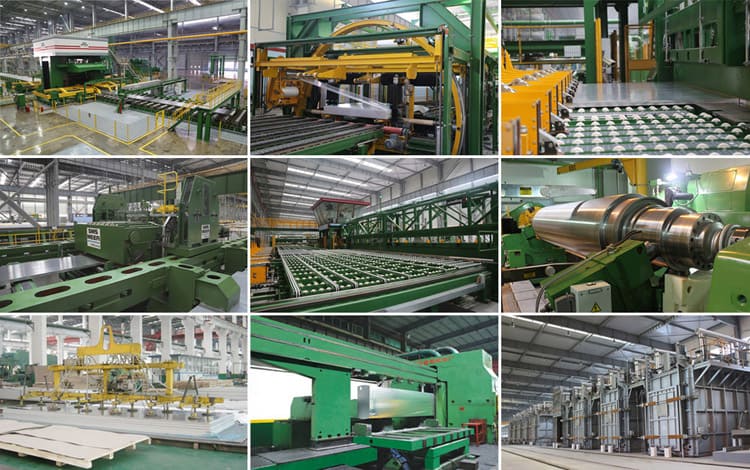
Casting and rolling process
Casting and rolling process: liquid metal, front box (liquid level control), casting and rolling machine (lubrication system, cooling water), shearing machine, coiling machine.
Cold rolling production process
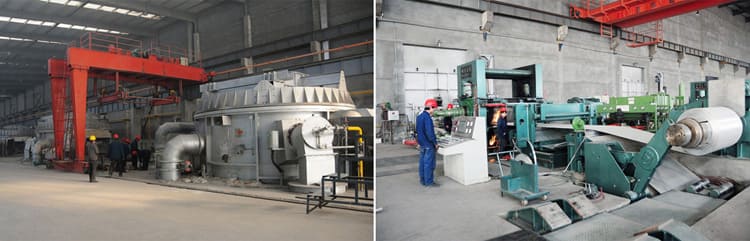
Introduction to finishing production process
Aluminum alloy has the characteristics of low density, good mechanical properties, good processing performance, non-toxic, easy to recycle, excellent electrical conductivity, heat transfer and corrosion resistance, so it has a wide range of applications.
Aerospace: used to make aircraft skins, fuselage frames, girders, rotors, propellers, fuel tanks, wall panels and landing gear struts, as well as rocket forging rings, spacecraft wall panels, etc.
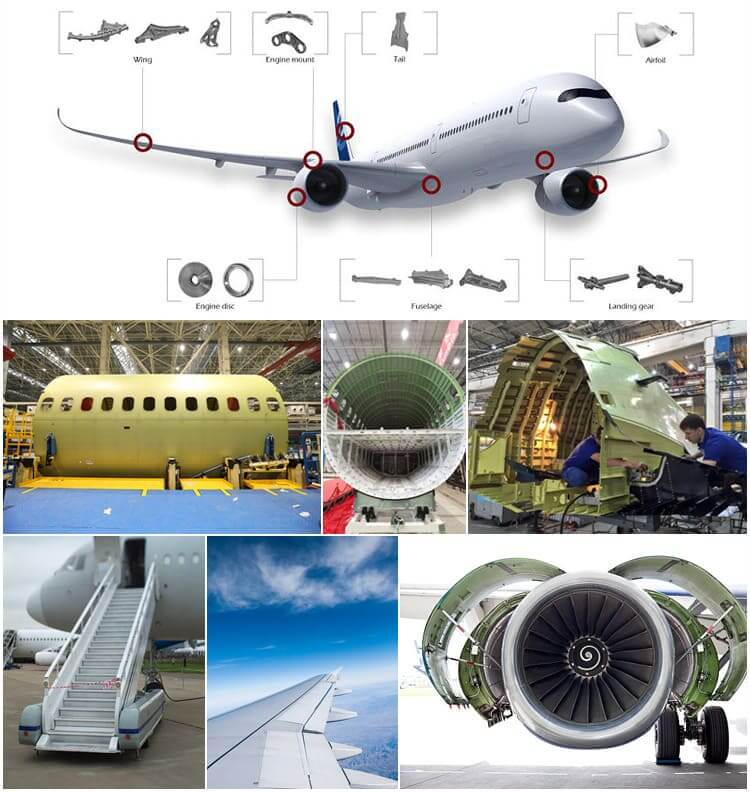
Aluminum alloy used for aerospace
Transportation: used for car body structure materials of automobiles, subway vehicles, railway passenger cars, high-speed passenger cars, doors and windows, shelves, automotive engine parts, air conditioners, radiators, body panels, wheels and ship materials.
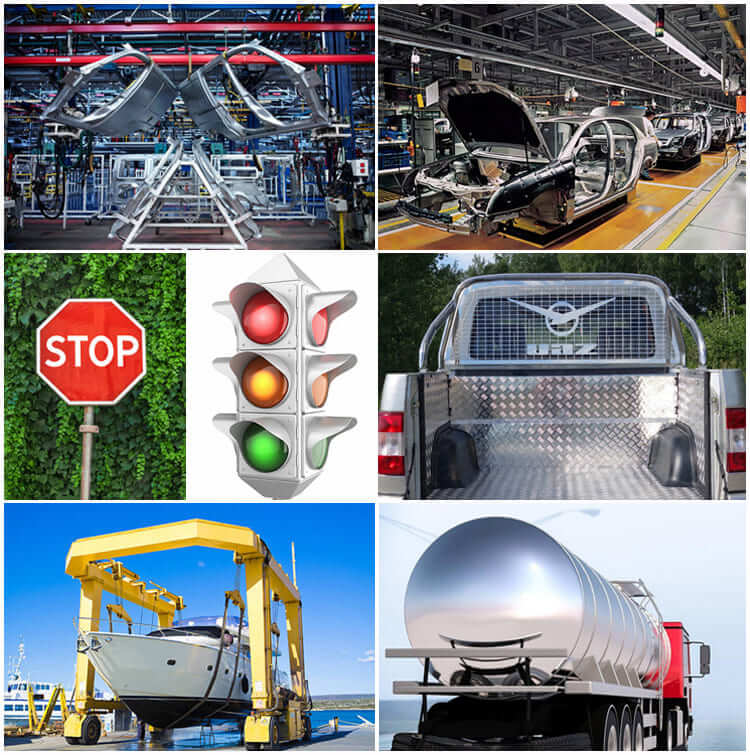
Traffic application
Packaging: All-aluminum pop cans are mainly used as metal packaging materials in the form of thin plates and foils, and are made into cans, lids, bottles, barrels, and packaging foils. Widely used in the packaging of beverages, food, cosmetics, medicines, cigarettes, industrial products, medicines, etc.
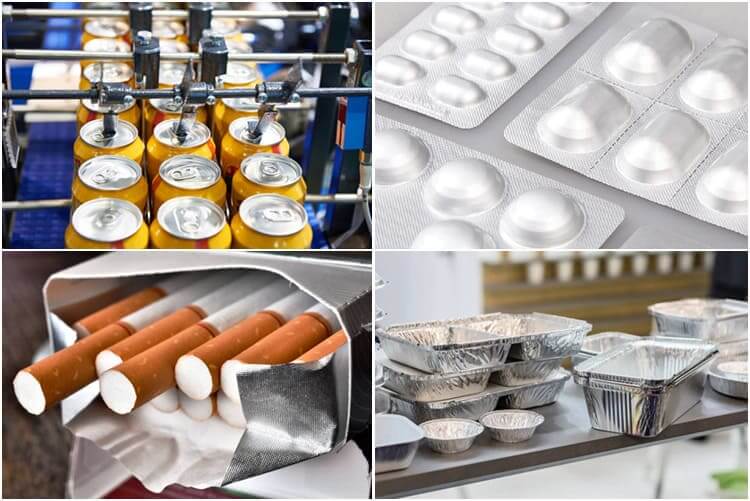
Packaging application
Printing: Mainly used to make PS plates, aluminum-based PS plates are a new type of material in the printing industry, used for automatic plate making and printing.
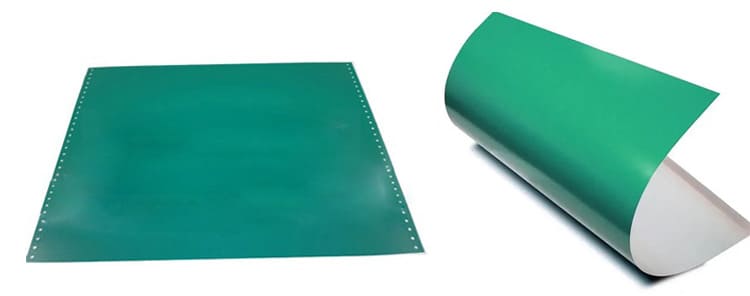
PS printing
Architectural decoration: aluminum alloy is widely used in building structures, doors and windows, suspended ceilings, decorative surfaces, etc. due to its good corrosion resistance, sufficient strength, excellent process performance and welding performance.
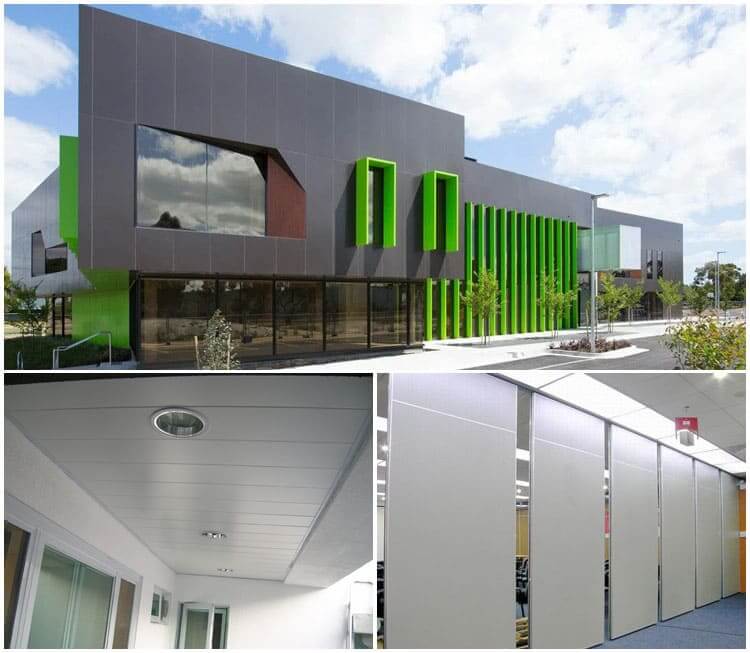
Aluminum alloy construction application
Electronic products: computers, mobile phones, refrigerator shells, radiators, etc.
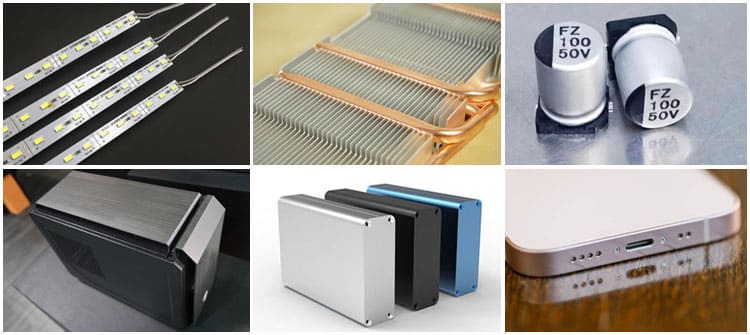
Electronic product application
Kitchen supplies: aluminum pots, aluminum basins, rice cooker liners, household aluminum foil, etc.
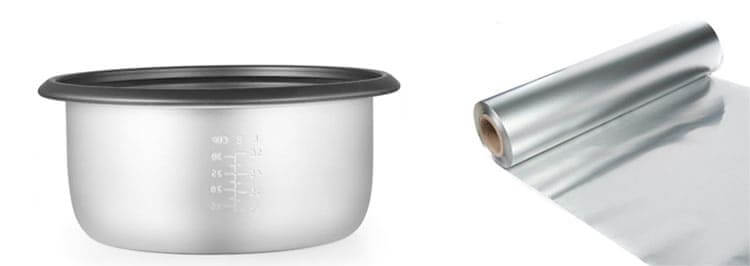
Kitchen application
Packaging Of Aluminum Sheet/Coil
Every detail of packaging is where we pursue perfect service. Our packaging process as a whole is as follows:
Lamination: clear film, blue film, micro-mucosal, high-mucosal, laser cutting film (2 brands, Novacell and Polyphem);
Protection: paper corner protectors, anti-pressure pads;
drying: desiccant;
Tray: fumigated harmless wooden tray, reusable iron tray;
Packing: Tic-tac-toe steel belt, or PVC packing belt;
Material Quality: Completely free from defects such as white rust, oil spots, rolling marks, edge damage, bends, dents, holes, break lines, scratches, etc., no coil set.
Port: Qingdao or other ports in China.
Lead time: 15-45 days.
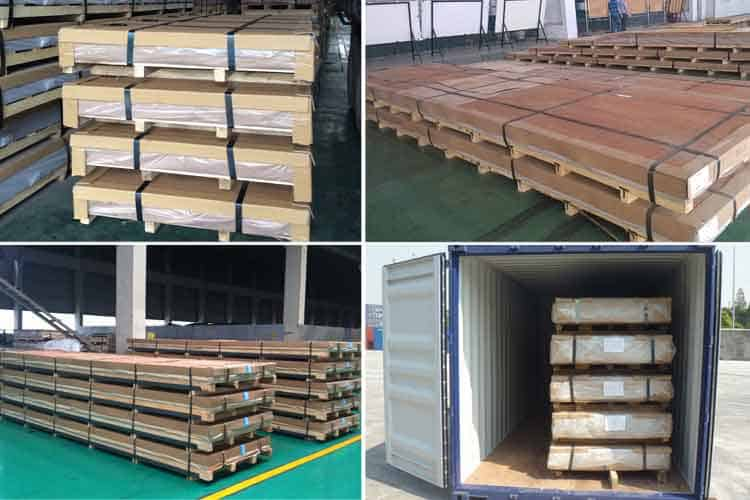
Aluminum sheet/plate packaging process
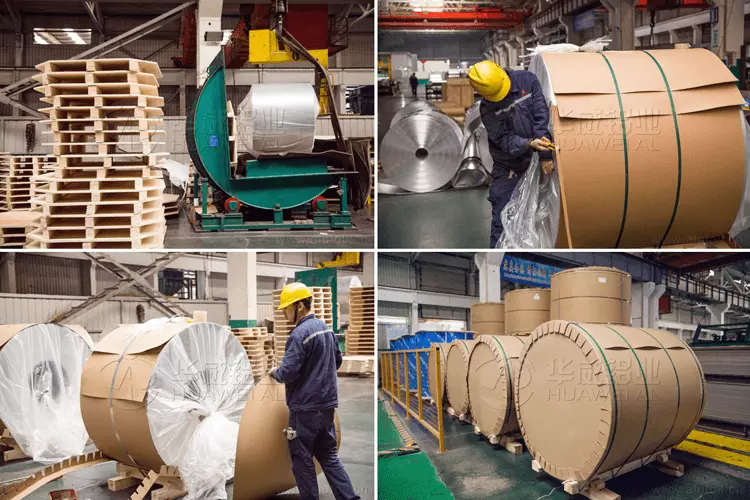
Aluminum coil packaging process
F: Are you a manufacturer or a trader?
Q: We are a manufacturer, our factory is at No.3 Weier Road, Industrial Zone, Gongyi, Henan, China.
F: What is the MOQ for ordering the product?
Q: Our MOQ is 5 tons, and some special products will have a minimum order quantity of 1 or 2 tons.
F: How long is your lead time?
Q: Generally our lead time is about 30 days.
F: Do your products have quality assurance?
Q: Yes, if there is a quality problem with our products, we will compensate the customer until they are satisfied.
Related Products


Latest Blogs
5052 vs 6061 Aluminum: Key Differences & Best Uses
Compare 5052 vs 6061 aluminum for strength, corrosion resistance, formability, and machining. Discover which alloy best fits your project.
Common Alloys of Reefer Truck Used PE Coated Aluminum Coil
Discover common alloys of reefer truck used PE coated aluminum coil, including 3003, 3004, and 3105. Designed for excellent corrosion resistance, formability, and long-lasting outdoor performance.
Is Aluminum Conductive? Properties, Uses & Benefits Explained
Is aluminum conductive? Discover aluminum's electrical conductivity, key advantages, and why it is widely used in power transmission and industrial applications.
Unlocking Sustainability: The Truth About Aluminum Foil Recycling
Is Aluminum Foil Recyclable? Learn how aluminum foil can be recycled, how to prepare it properly, and why recycling helps reduce waste and save resources.