1. Introduction
8021 Cold Forming Aluminum Foil is a high-barrier aluminum foil grade widely used in pharmaceutical blister packaging, especially where moisture, oxygen, and light protection are critical.
In supplier and application descriptions, 8021 is repeatedly positioned as a cold-forming foil for medicines and other sensitive products, with O-temper material commonly used for blister and high-end drug packaging.
What makes 8021 important is not just that it is aluminum foil, but that it is engineered for deep forming, strong barrier performance, and consistent surface quality.
For pharmaceutical users, that combination matters because the foil must protect the medicine, form cleanly during blister production, and maintain integrity through storage and transport.
2. Why use 8021 cold forming aluminum foil?
Cold-form blister packs are chosen when a product needs stronger protection than standard heat-sealed structures can offer. Compared with ordinary packaging foil, 8021 cold forming aluminum foil is used because it offers a better balance of barrier performance, forming capability, and packaging reliability.
Supplier descriptions specifically connect 8021 with water, oxygen, and UV protection, and describe it as suitable for high-end pharmaceutical packaging.
Another reason is practical manufacturing performance. Pharmaceutical blister packs demand a foil that can be formed without tearing while still maintaining a dense barrier structure.
Sources describing 8021 emphasize good flexibility, excellent formability, minimal pinholes, and a smooth, uniform surface, which are exactly the characteristics needed for cold-form applications.
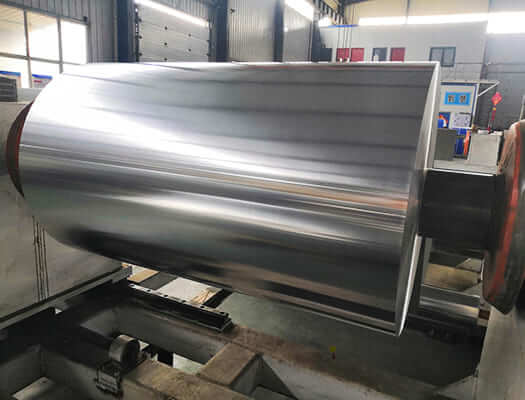
8021 Cold Forming Aluminum Foil
3. What is 8021 aluminum foil?
8021 aluminum foil is an Al-Fe-Si alloy foil used in thin-gauge packaging and pharmaceutical applications.
Industry descriptions identify it as an aluminum alloy foil based mainly on aluminum, iron, and silicon, with the alloying system selected to support barrier performance, flexibility, and thin-foil manufacturability.
In practical terms, 8021 is a foil grade designed for products where the material must do three things at once: resist environmental attack, form into complex shapes, and stay consistent enough for high-speed packaging lines.
That is why it is repeatedly listed for blister packaging, pharmaceutical packaging, food packaging, and other high-barrier flexible packaging formats.
3.1 Chemical composition of 8021 aluminum foil
Typical supplier descriptions and patent examples show 8021 as an aluminum alloy based on Al with Fe and Si as the principal alloying elements, while minor elements are tightly controlled.
One patent example for a high-elongation 8021 foil disclosed compositions around Si 0.08–0.10%, Fe 1.25–1.50%, with trace Cu, Mn, Mg, Zn, Cr, and Ti, and the balance aluminum.
| Element | Typical Description | Role |
|---|---|---|
| Al | Balance | Base metal; provides low density and the foil matrix |
| Fe | Principal alloying element | Supports foil strength and processing behavior |
| Si | Principal alloying element | Helps control alloy structure and rolling performance |
| Cu, Mn, Mg, Zn, Cr, Ti | Trace / tightly controlled | Kept low to preserve consistency and packaging performance |
The key point is that 8021 is not designed like a structural engineering alloy. Its chemistry is optimized for foil conversion, barrier integrity, and forming reliability.
3.2 Common temper
For cold forming and pharmaceutical blister use, suppliers commonly describe 8021-O as the relevant temper.
The O temper is the soft, fully annealed condition that supports the deep drawing and blister forming required in cold-form packaging.
This temper choice is important because the foil must deform under cold forming rather than crack, split, or thin excessively at the draw wall.
In other words, the temper is not just a processing detail; it is part of the product’s performance definition.
3.3 Mechanical properties
Public supplier descriptions do not always present a single universal property set, because foil performance depends on thickness, temper, and production route.
What is consistently emphasized for 8021 is good ductility, flexibility, excellent formability, and strong barrier behavior, together with minimal pinholes and a smooth surface.
| Property | Typical Description | Why It Matters |
|---|---|---|
| Formability | Excellent | Enables cold forming into deep blister cavities |
| Flexibility | Good | Helps foil survive conversion and sealing steps |
| Barrier performance | Excellent | Protects drugs from moisture, oxygen, and light |
| Surface quality | Smooth, uniform, minimal pinholes | Reduces leakage and improves packaging reliability |
| Heat resistance | Good | Supports sterilization or processing conditions in pharma use |
The overall mechanical profile is therefore best understood as high-formability packaging foil, not a load-bearing metal product.
4. Manufacturing Process of 8021 Cold Forming Aluminum Foil
Producing 8021 cold forming aluminum foil demands meticulous control throughout a complex multi-stage manufacturing process to achieve the precise metallurgical and surface characteristics required for high-performance packaging.
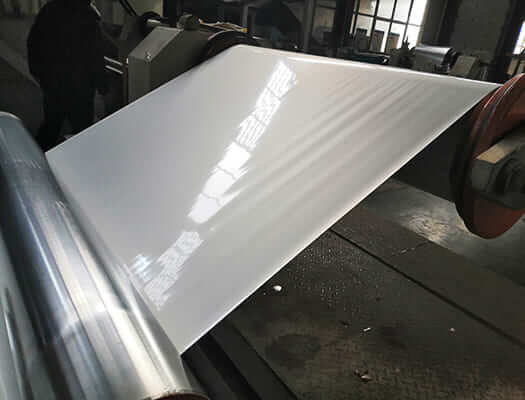
8021 Cold Forming Aluminum Foil Production
4.1 Raw Material Preparation
The journey commences with the selection of high-quality aluminum ingots or slabs.
Manufacturers prioritize sourcing primary aluminum with tightly controlled impurity levels to guarantee the consistency and purity of the 8021 alloy.
These ingots undergo melting in specialized furnaces, followed by precise alloying with iron and silicon to achieve the 8021 specification.
Crucial subsequent steps include degassing to remove dissolved hydrogen gas, which could lead to porosity, and filtration to eliminate non-metallic inclusions, both vital for ensuring a clean, homogeneous melt free from defects that could compromise the final foil’s integrity.
4.2 Hot Rolling
The cast slabs, often several hundred millimeters thick, proceed to the hot rolling mill.
Here, they are heated to elevated temperatures (e.g., 400-550°C) and passed repeatedly through a series of heavy rollers.
This process substantially reduces the slab’s thickness to an intermediate gauge (e.g., a few millimeters).
Hot rolling is instrumental in refining the metal’s grain structure, breaking down cast microstructures, and achieving a uniform material that is more amenable to subsequent cold working.
4.3 Cold Rolling (Multi-Stage)
Following hot rolling, the material undergoes an intensive multi-stage cold rolling process at ambient temperatures.
This is where the aluminum sheet is progressively reduced to its final ultra-thin foil gauge, typically ranging from 0.045 mm to 0.070 mm for cold forming applications.
Precision is paramount at this stage. Roll cleanliness and surface finish are critical to prevent transferring imperfections onto the delicate foil.
Furthermore, for 8021, cold rolling parameters are carefully controlled to impart a specific amount of strain hardening that, in conjunction with subsequent annealing, will yield the desired formability and mechanical properties.
4.4 Annealing (for O Temper)
Achieving the critical “O” temper (fully annealed) involves a precise heat treatment.
The cold-rolled foil coils are placed in annealing furnaces, heated to a specific temperature (e.g., 340-410°C), held for a controlled duration, and then slowly cooled.
This process effectively recrystallizes the strained grain structure, eliminating internal stresses and restoring maximum ductility.
The result is a soft, pliable foil that can be deeply drawn without tearing or developing pinholes during the cold forming operation, which is absolutely essential for barrier integrity.
3.5 Doubling/Separation
For the extremely thin gauges characteristic of packaging foil (below approximately 0.020-0.025 mm), a technique known as doubling is often employed during the final stages of cold rolling.
Two layers of foil are rolled together as a single unit. This prevents the delicate foil from breaking and also creates the characteristic dull/bright surface difference on the separated foils.
After rolling, the doubled foils are carefully separated into individual rolls. For cold forming foils, which are typically thicker, doubling is less common, but the principle of handling thin material with care remains.
4.6 Slitting and Winding
Once the foil reaches its final thickness and temper, it undergoes slitting – a process where wide rolls are precisely cut into narrower widths required by packaging machinery.
Subsequently, these narrower strips are accurately wound onto cores (e.g., cardboard or plastic) with controlled tension.
Proper slitting and winding ensure that the foil rolls are free from telescoping, dishing, or other winding defects, making them compatible with high-speed lamination and packaging lines.
4.7 Surface Treatment/Coating Preparation (if applicable)
While 8021 foil itself forms the barrier, it is almost always part of a multi-layer laminate.
Therefore, after rolling and slitting, the foil’s surface often undergoes preparation to facilitate optimal adhesion to other material layers.
This typically involves cleaning and degreasing to remove residual rolling oils, followed by the application of specialized primers or adhesion promoters.
This crucial step ensures robust bond strength between the aluminum and polymer layers, maintaining the laminate’s integrity throughout forming and the product’s shelf life.

8021 Cold Forming Aluminum Foil for Pharmaceuticals
5. Performance Characteristics and Advantages of 8021 cold forming aluminum foil
The meticulously manufactured 8021 cold forming aluminum foil offers a suite of performance characteristics that collectively define its superiority in high-barrier packaging.
5.1 Superior Barrier Properties
The hallmark of 8021 cold forming aluminum foil lies in its unparalleled ability to create an impermeable barrier, preserving product integrity.
- Moisture Vapor Transmission Rate (MVTR): 8021 aluminum foil, as a component in a cold form laminate, delivers near-zero MVTR (typically less than 0.001 g/m²/day for a complete blister structure at 38°C/90% RH). This level of protection is paramount for highly hygroscopic drugs or food products that readily absorb moisture, which can lead to degradation, caking, or loss of potency.
- Oxygen Transmission Rate (OTR): Similarly, it provides near-zero OTR (often less than 0.001 cm³/m²/day at 23°C/0% RH). This complete oxygen barrier protects oxygen-sensitive compounds from oxidation, preventing spoilage, rancidity, or loss of efficacy in pharmaceuticals.
- Light Barrier: Aluminum foil is inherently opaque, offering complete protection against UV and visible light. This is critical for light-sensitive active pharmaceutical ingredients (APIs), vitamins, or flavors in food, preventing photodegradation and maintaining product stability.
5.2 Exceptional Formability and Dead-Fold Characteristics
The “O” temper of 8021 alloy specifically enables its extraordinary formability.
- Deep Drawing Without Pinhole Formation: The foil laminate can be deeply drawn into complex blister cavities, accurately conforming to the mold’s shape without thinning excessively or creating pinholes, which would compromise the barrier. This is a direct benefit of the alloy’s optimized ductility.
- “Dead-Fold” Property: After forming, the aluminum possesses a “dead-fold” characteristic, meaning it retains its formed shape without elastic spring-back. This is crucial for creating stable blister cavities that securely hold the product and maintain their structural integrity throughout the supply chain.
5.3 Chemical Resistance
Aluminum’s inherent chemical inertness to most common product chemistries ensures minimal interaction between the packaging and its contents.
This protects the product from contamination or degradation due to packaging interaction, a critical factor for pharmaceuticals where stability and purity are paramount.
5.4 Mechanical Strength and Puncture Resistance
While being highly formable, the laminated 8021 foil structure provides sufficient mechanical strength to protect contents from physical damage during handling, shipping, and storage.
The outer polymer layers (e.g., OPA) significantly enhance overall puncture and abrasion resistance, safeguarding the delicate aluminum barrier.
5.5 Sterilization Compatibility
8021 cold forming aluminum foil laminates are generally compatible with common sterilization methods employed for pharmaceutical and medical products, including gamma irradiation and E-beam sterilization.
The material’s stability under these conditions ensures that the packaging maintains its integrity and barrier properties post-sterilization.
5.6 Aesthetic and Printing Capabilities
The smooth, uniform surface of the outer polymer layer in the laminate provides an excellent substrate for high-quality printing.
This allows for clear branding, regulatory information, dosage instructions, and anti-counterfeiting features, enhancing both consumer appeal and product safety.
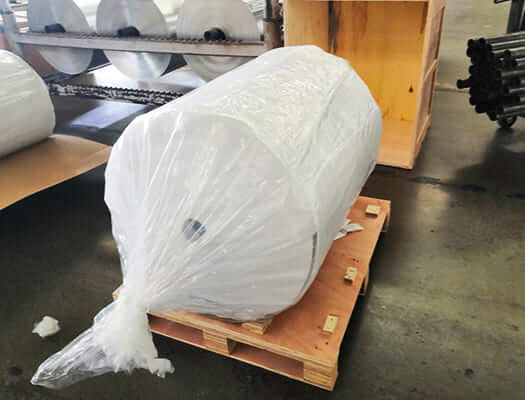
Huawei Packaged Aluminum Foil
6. Lamination Structure and Role in Cold Form Foil Packaging
8021 aluminum foil rarely functions as a standalone packaging material for cold forming; instead, it is the central component of a sophisticated multi-layer laminate.
This lamination strategy synergistically combines the best properties of different materials to achieve optimal packaging performance.
6.1 Typical Multi-Layer Structure
A common and highly effective structure for cold form foil (CFF) blister packaging is a three-ply laminate, such as OPA/Alu/PVC.
- Outer Layer (e.g., OPA – Oriented Polyamide/Nylon):
- Mechanical Strength & Abrasion Resistance: The OPA layer provides exceptional mechanical strength, stiffness, and resistance to abrasion and tearing. This is vital to protect the delicate aluminum foil layer underneath during the high-stress cold forming process. It prevents the aluminum from being punctured or scratched as it conforms to the mold.
- Printability: OPA offers an excellent surface for high-quality gravure or flexographic printing, facilitating brand identity and critical information display.
- Aluminum Layer (8021 Alloy):
- The Core Barrier: This is the heart of the laminate, providing the absolute barrier against moisture, oxygen, and light. The 8021 alloy’s specific composition and temper ensure this layer’s integrity during deformation.
- Formability: Its ductility enables the deep drawing into precise blister cavities.
- Inner Layer (e.g., PVC – Polyvinyl Chloride, or PP – Polypropylene, or PE – Polyethylene):
- Heat Sealability: This layer directly contacts the product and is engineered to be heat-sealable to the lidding foil (often aluminum or an aluminum-paper laminate). This ensures a hermetic seal, locking in the product’s protection.
- Chemical Compatibility: The choice of polymer (PVC, PP, PE) is critical for ensuring chemical compatibility with the packaged product, preventing migration or undesirable interactions. PVC is common due to its good formability and rigidity, while PP or PE might be chosen for non-PVC contact or specific chemical resistance.
6.2 Function of Adhesives
Specialized adhesives bind these distinct layers securely together.
These adhesives must exhibit high bond strength to prevent delamination during the aggressive cold forming process, transportation, and throughout the product’s shelf life.
They must also be non-toxic and comply with food/pharmaceutical contact regulations.
6.3 Advantages of Lamination
- Synergistic Properties: Lamination achieves a performance profile far superior to any single material. The OPA provides toughness, the 8021 aluminum provides an absolute barrier, and the inner polymer provides heat sealability and product compatibility.
- Customization: The multi-layer structure allows for customization to specific product needs. For instance, different inner polymer layers can be selected based on the product’s chemical sensitivity or required sealing characteristics.
- Enhanced Overall Package Performance: This combined structure ensures maximum protection, structural integrity, and ease of processing on high-speed packaging lines.
7. Key Applications of 8021 Cold Forming Aluminum Foil
The superior protective capabilities and formability of 8021 cold forming aluminum foil make it indispensable across several industries, with its most prominent role in pharmaceuticals.
7.1 Pharmaceuticals (Dominant Market)
The pharmaceutical sector is the largest consumer of 8021 cold forming aluminum foil, driven by the critical need for drug efficacy and patient safety.
- Blister Packaging for Tablets/Capsules: This is the primary application. Cold form blister packs provide unit-dose packaging that completely isolates each tablet or capsule from external elements.
- Protection of Sensitive Drugs: Essential for highly hygroscopic (moisture-absorbing), oxygen-sensitive, or light-sensitive Active Pharmaceutical Ingredients (APIs) and finished drug forms. Examples include antibiotics that degrade in humidity, effervescent tablets, and certain vitamins (e.g., Vitamin C).
- Unit Dose Packaging: Facilitates precise dosing, improves patient compliance, and offers tamper evidence.
- Regulatory Compliance: Meets stringent regulatory requirements from bodies like the FDA and EMA for drug stability, child resistance, and senior-friendly access.
- Medical Devices: Packaging for sterile medical instruments, diagnostic kits, or components that require a sterile, moisture-free environment until use.
7.2 Food Industry
While less dominant than in pharmaceuticals, 8021 cold forming aluminum foil plays a crucial role in extending the shelf life of certain sensitive food products.
- High-Value & Sensitive Food Products: Examples include single-serve coffee pods, premium spices, active nutritional supplements (e.g., probiotics), dried fruit snacks, or specialized confectioneries that are highly susceptible to moisture or oxygen degradation, or require aroma retention.
- Extending Shelf Life: By completely blocking environmental factors, it significantly prolongs freshness and flavor.
7.3 Electronics
Certain electronic components are extremely sensitive to moisture, which can cause soldering issues or component failure.
- Moisture-Sensitive Components: 8021 foil laminates are used to package integrated circuits (ICs), printed circuit boards (PCBs), and other sensitive electronic parts, creating a desiccated environment to prevent damage from humidity during storage and transport.
7.4 Cosmetics & Personal Care
For high-value or active cosmetic and personal care formulations, superior barrier protection maintains product efficacy and extends shelf life.
- Sensitive Formulations: Creams, serums, or single-use facial masks containing active ingredients that are sensitive to oxygen or light can benefit from cold form blister packaging, ensuring product integrity until application.
8. Comparison with similar products
| Material | Main Strength | Main Limitation | Typical Position |
|---|---|---|---|
| 8021 Cold Forming Aluminum Foil | Best balance of barrier + deep forming | More specialized and typically higher value than general foils | High-end pharmaceutical blister packs |
| 8011 Aluminum Foil | Good general heat-seal and packaging performance | Less specialized for cold-form pharmaceutical use | Food packaging, heat-seal lids, general flexible packaging |
| 8079 Aluminum Foil | Also used in pharmaceutical and high-barrier packaging | Selected by different processing or cost priorities | Pharma and flexible packaging |
| PVC-based blister structures | Lower cost and familiar processing | Weaker barrier than aluminum-based cold-form packs | Standard blister packaging where extreme barrier is not required |
The practical takeaway is that 8021 is chosen when protection and forming performance matter more than material simplicity.
In that sense, it sits at the premium end of the pharmaceutical foil spectrum.
9. Conclusion
8021 cold forming aluminum foil stands as an indispensable material in the realm of high-barrier packaging.
Its unique metallurgical composition, combined with a precise manufacturing process, unlocks a synergy of superior barrier protection, exceptional formability, and reliable mechanical strength.
This makes it the preferred choice for safeguarding sensitive pharmaceuticals, foods, and electronics against moisture, oxygen, and light degradation, ultimately ensuring product efficacy, safety, and extended shelf life.
As industries continue to evolve, facing new challenges in product protection, regulatory stringency, and sustainability, 8021 cold forming aluminum foil will undeniably maintain its critical role, adapting through innovation to meet the demands of a dynamic global market.
Its proven performance and continuous development solidify its position as a cornerstone of advanced packaging solutions.
FAQs
Why is 8021 foil used for cold forming?
Because it combines excellent barrier performance with the ductility needed to form deep blister cavities without losing protection.
What temper is most common for cold-form 8021 foil?
O temper is the standard choice described by suppliers for blister and cold-form pharmaceutical use.
What products commonly use 8021 foil?
Pharmaceutical blister packs and other high-end pharmaceutical packaging products are the most common applications.
Is 8021 a general-purpose foil?
It can be used in several packaging contexts, but its main strength is in high-barrier pharmaceutical and cold-form applications.
Casting production process and its introduction
The purpose of melting and casting is to produce alloys with satisfactory composition and high purity of melt, so as to create favorable conditions for casting alloys of various shapes.
Melting and casting process steps: batching --- feeding --- melting --- stirring after melting, slag removal --- pre-analysis sampling --- adding alloy to adjust the composition, stirring --- refining --- static Setting——Guide furnace casting.
Hot rolling production process and its introduction
- 1. Hot rolling generally refers to rolling above the metal recrystallization temperature;
- 2. During the hot rolling process, the metal has both hardening and softening processes. Due to the influence of deformation speed, as long as the recovery and recrystallization process is too late, there will be a certain work hardening;
- 3. The recrystallization of the metal after hot rolling is incomplete, that is, the coexistence of recrystallized structure and deformed structure;
- 4. Hot rolling can improve the processing performance of metals and alloys, reduce or eliminate casting defects.
- 1. The casting and rolling temperature is generally between 680°C and 700°C. The lower the better, the stable casting and rolling line usually stops once a month or more to re-stand. During the production process, it is necessary to strictly control the liquid level of the front tank to prevent low liquid level;
- 2. Lubrication uses C powder with incomplete combustion of gas for lubrication, which is also one of the reasons for the dirty surface of casting and rolling materials;
- 3. The production speed is generally between 1.5m/min-2.5m/min;
- 4. The surface quality of products produced by casting and rolling is generally relatively low, and generally cannot meet products with special physical and chemical performance requirements.
- 1. Cold rolling refers to the rolling production method below the recrystallization temperature;
- 2. There will be no dynamic recrystallization during the rolling process, and the temperature will rise to the recovery temperature at most, and the cold rolling will appear in a work hardening state, and the work hardening rate will be large;
- 3. The cold-rolled sheet and strip have high dimensional accuracy, good surface quality, uniform structure and performance, and products in various states can be obtained with heat treatment;
- 4. Cold rolling can roll out thin strips, but at the same time, it has the disadvantages of high energy consumption for deformation and many processing passes.
- 1. Finishing is a processing method to make the cold-rolled sheet meet the customer's requirements, or to facilitate the subsequent processing of the product;
- 2. The finishing equipment can correct the defects produced in the hot rolling and cold rolling production process, such as cracked edge, oily, poor plate shape, residual stress, etc. It needs to ensure that no other defects are brought into the production process;
- 3. There are various finishing equipments, mainly including cross-cutting, slitting, stretching and straightening, annealing furnace, slitter, etc.
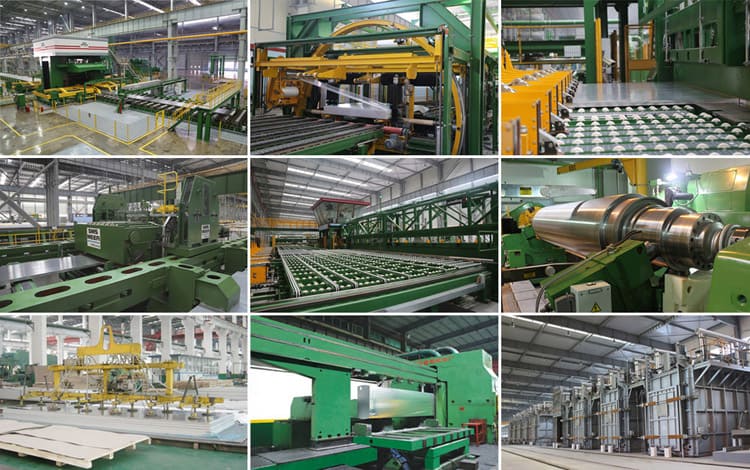
Casting and rolling process
Casting and rolling process: liquid metal, front box (liquid level control), casting and rolling machine (lubrication system, cooling water), shearing machine, coiling machine.
Cold rolling production process
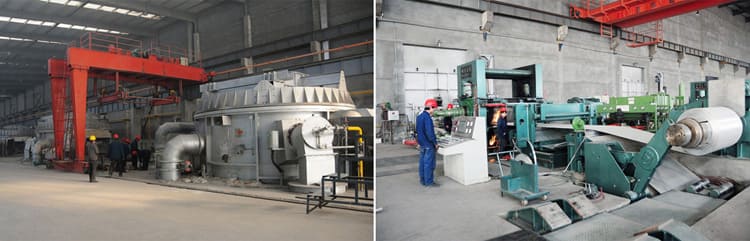
Introduction to finishing production process
Aluminum alloy has the characteristics of low density, good mechanical properties, good processing performance, non-toxic, easy to recycle, excellent electrical conductivity, heat transfer and corrosion resistance, so it has a wide range of applications.
Aerospace: used to make aircraft skins, fuselage frames, girders, rotors, propellers, fuel tanks, wall panels and landing gear struts, as well as rocket forging rings, spacecraft wall panels, etc.

Aluminum alloy used for aerospace
Transportation: used for car body structure materials of automobiles, subway vehicles, railway passenger cars, high-speed passenger cars, doors and windows, shelves, automotive engine parts, air conditioners, radiators, body panels, wheels and ship materials.

Traffic application
Packaging: All-aluminum pop cans are mainly used as metal packaging materials in the form of thin plates and foils, and are made into cans, lids, bottles, barrels, and packaging foils. Widely used in the packaging of beverages, food, cosmetics, medicines, cigarettes, industrial products, medicines, etc.
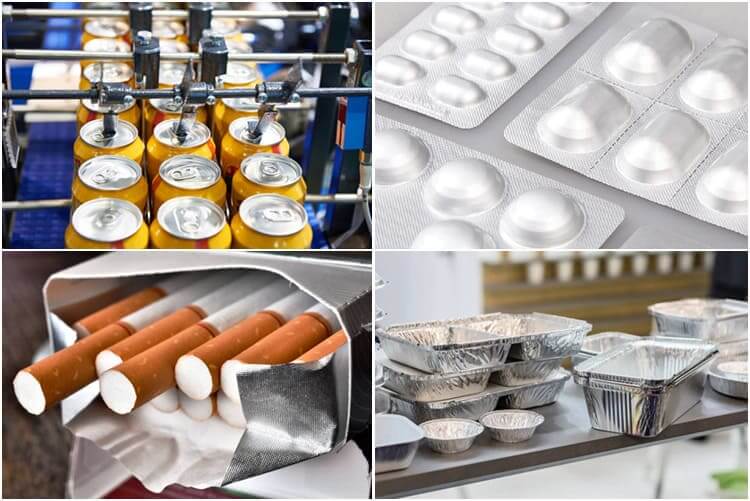
Packaging application
Printing: Mainly used to make PS plates, aluminum-based PS plates are a new type of material in the printing industry, used for automatic plate making and printing.
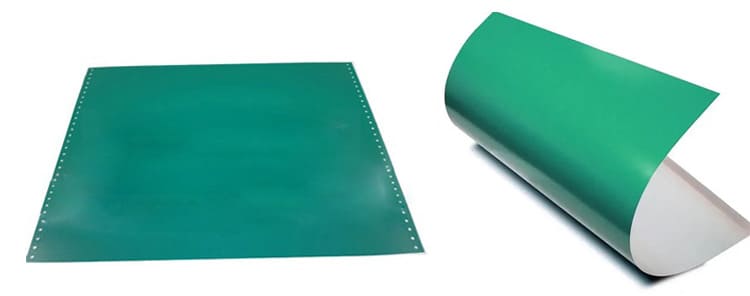
PS printing
Architectural decoration: aluminum alloy is widely used in building structures, doors and windows, suspended ceilings, decorative surfaces, etc. due to its good corrosion resistance, sufficient strength, excellent process performance and welding performance.

Aluminum alloy construction application
Electronic products: computers, mobile phones, refrigerator shells, radiators, etc.
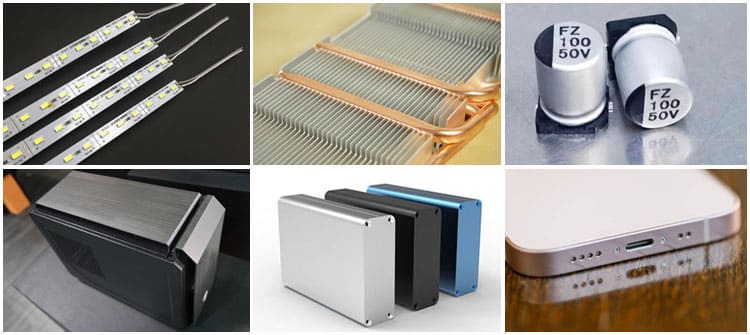
Electronic product application
Kitchen supplies: aluminum pots, aluminum basins, rice cooker liners, household aluminum foil, etc.
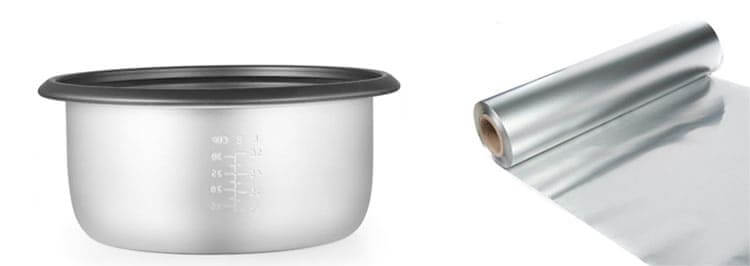
Kitchen application
Packaging Of Aluminum Sheet/Coil
Every detail of packaging is where we pursue perfect service. Our packaging process as a whole is as follows:
Lamination: clear film, blue film, micro-mucosal, high-mucosal, laser cutting film (2 brands, Novacell and Polyphem);
Protection: paper corner protectors, anti-pressure pads;
drying: desiccant;
Tray: fumigated harmless wooden tray, reusable iron tray;
Packing: Tic-tac-toe steel belt, or PVC packing belt;
Material Quality: Completely free from defects such as white rust, oil spots, rolling marks, edge damage, bends, dents, holes, break lines, scratches, etc., no coil set.
Port: Qingdao or other ports in China.
Lead time: 15-45 days.
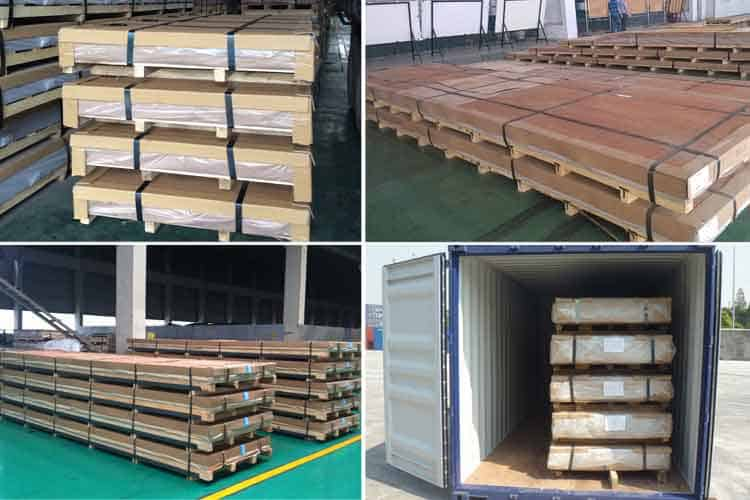
Aluminum sheet/plate packaging process
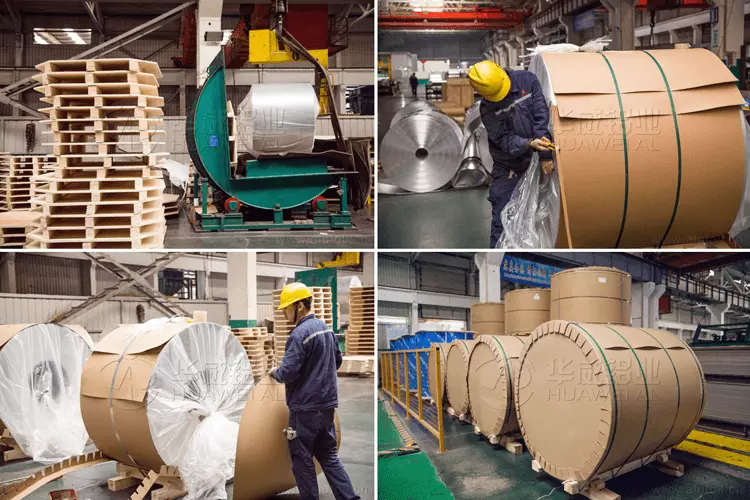
Aluminum coil packaging process
F: Are you a manufacturer or a trader?
Q: We are a manufacturer, our factory is at No.3 Weier Road, Industrial Zone, Gongyi, Henan, China.
F: What is the MOQ for ordering the product?
Q: Our MOQ is 5 tons, and some special products will have a minimum order quantity of 1 or 2 tons.
F: How long is your lead time?
Q: Generally our lead time is about 30 days.
F: Do your products have quality assurance?
Q: Yes, if there is a quality problem with our products, we will compensate the customer until they are satisfied.
Related Products



Latest Blogs
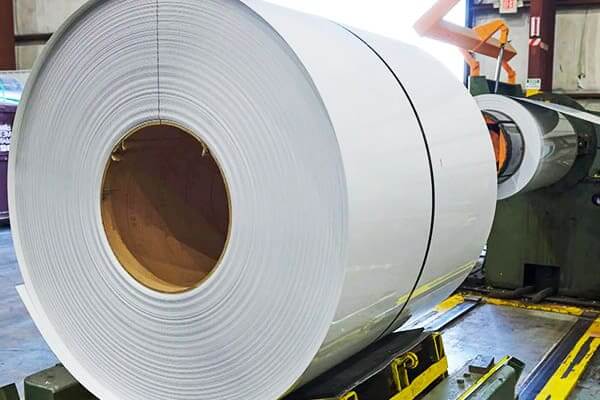
Common Alloys of Reefer Truck Used PE Coated Aluminum Coil
Discover common alloys of reefer truck used PE coated aluminum coil, including 3003, 3004, and 3105. Designed for excellent corrosion resistance, formability, and long-lasting outdoor performance.
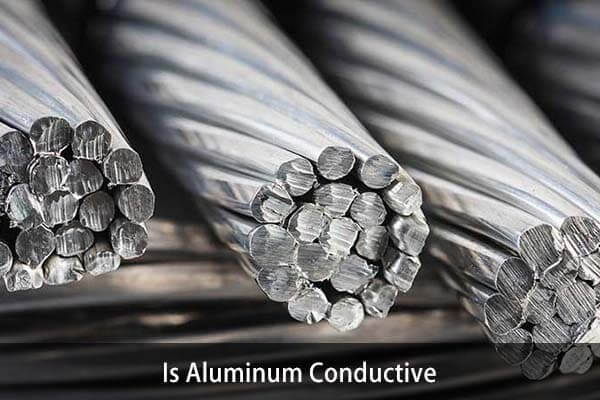
Is Aluminum Conductive? Properties, Uses & Benefits Explained
Is aluminum conductive? Discover aluminum's electrical conductivity, key advantages, and why it is widely used in power transmission and industrial applications.
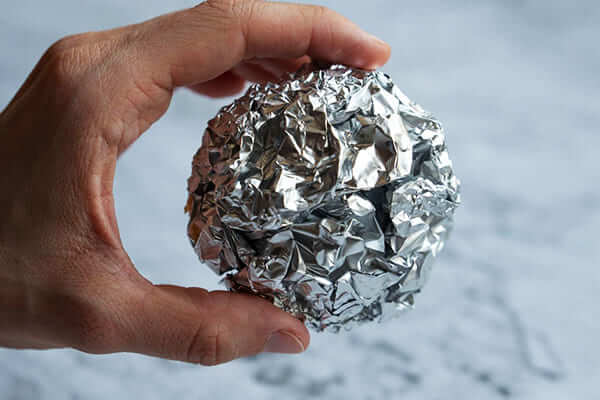
Unlocking Sustainability: The Truth About Aluminum Foil Recycling
Is Aluminum Foil Recyclable? Learn how aluminum foil can be recycled, how to prepare it properly, and why recycling helps reduce waste and save resources.
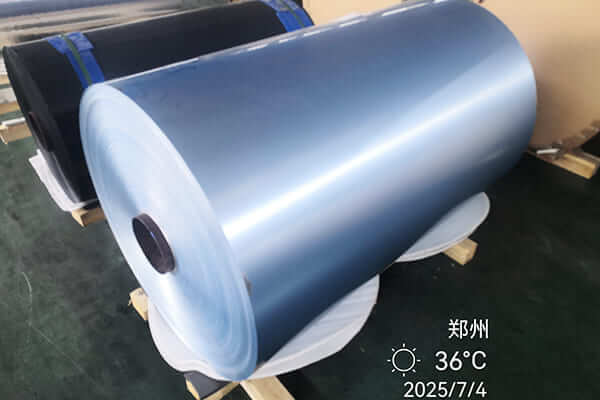
Coated Aluminum Foil for Packaging Applications | Strong & Reliable
High-quality coated aluminum foil for packaging applications, offering excellent barrier protection, durability, and consistent performance.