1. Introduction
6082 aluminum tread plate is a high-strength aluminum flooring material designed for applications that require a combination of slip resistance, structural strength, low weight, and corrosion resistance.
It is based on EN AW-6082, a heat-treatable Al-Mg-Si alloy widely used for structural and engineering applications.
Unlike plain aluminum sheet, tread plate features a raised surface pattern that improves traction and provides a distinctive industrial appearance.
This makes it suitable for walkways, platforms, stairs, vehicle floors, ramps, machinery access areas, and other surfaces where secure footing is important.
The main advantage of 6082 is its relatively high strength within the 6xxx aluminum family.
In T6 condition, EN AW-6082 rolled products have minimum tensile strength requirements that vary with thickness; for example, EN 485-2 data list a minimum tensile strength of 310 MPa for 1.5–3.0 mm material and 300 MPa for 6.0–12.5 mm material.
The performance of a tread plate depends on more than alloy designation alone. Alloy, temper, thickness, tread geometry, flatness, surface condition, and manufacturing quality all influence the final product.
For this reason, 6082 aluminum tread plate should be specified according to the actual loading, forming, machining, and environmental requirements of the application.

Huawei 6082 Aluminum Tread Plate
2. What Is 6082 Aluminum Tread Plate?
2.1 Overview of 6082 Aluminum Alloy
6082 aluminum is an Al-Mg-Si-Mn alloy in the 6000 series. Silicon and magnesium provide the basis for precipitation hardening, while manganese contributes to the alloy’s strength and structural characteristics. Its chemical composition is controlled under standards such as EN 573-3.
Compared with softer non-heat-treatable alloys, 6082 can achieve substantially higher strength through solution heat treatment and artificial aging.
The T6 temper is therefore widely used when a tread plate requires higher load-bearing capability.
6082 also provides good general corrosion resistance, machinability, and weldability, making it suitable for a wide range of engineering applications.
2.2 What Is an Aluminum Tread Plate?
An aluminum tread plate is a flat-rolled aluminum product with a raised pattern on one surface.
The pattern increases surface traction and helps reduce the risk of slipping compared with a smooth aluminum sheet.
Tread plate is also known as:
- Aluminum checker plate
- Aluminum diamond plate
- Aluminum floor plate
- Aluminum chequered plate
The exact pattern geometry can vary by manufacturer and specification. Common commercial designs include diamond and multi-bar patterns.
The raised pattern also affects the effective thickness and weight of the finished product.
Therefore, when specifying a tread plate, buyers should distinguish between the base metal thickness and overall patterned thickness where applicable.
2.3 How Does the Tread Pattern Improve Performance?
The raised pattern creates a more textured contact surface for footwear, tires, and equipment.
This is particularly useful in areas where water, oil, dust, or other contaminants may reduce traction.
The tread pattern also provides a practical visual distinction between flooring surfaces and ordinary flat sheet.
However, the pattern should not be treated as a substitute for application-specific slip testing when a project has defined safety requirements.
For industrial flooring, the choice of pattern should consider the environment, cleaning requirements, traffic type, and expected load.
2.4 6082 Tread Plate vs Plain 6082 Aluminum Plate
Both products use the same basic 6082 alloy, but their surface structures and typical applications are different.
| Feature | 6082 Aluminum Tread Plate | 6082 Plain Aluminum Plate |
|---|---|---|
| Surface | Raised pattern | Flat |
| Slip Resistance | Higher | Lower |
| Surface Function | Anti-slip and decorative | Structural/fabrication surface |
| Typical Applications | Flooring, platforms, steps, ramps | Structural parts, machining, fabrication |
| Weight | Slightly higher due to raised pattern | Lower for the same base thickness |
| Cleaning | Pattern may retain dirt or liquids | Easier to clean |
| Appearance | Industrial patterned finish | Smooth mill finish |
The tread version is generally selected when surface traction is important, while plain 6082 plate is more suitable when machining, welding, fabrication, or a flat surface is the primary requirement.

6082 Aluminum Tread Plate for Stairs
3. Specifications of 6082 Aluminum Tread Plate
| Specification | Details |
|---|---|
| Alloy | EN AW-6082 / AlSi1MgMn |
| Temper | T4, T6, T651 |
| Product Type | Aluminum Tread Plate, Checker Plate, Diamond Plate |
| Base Thickness | Typically 1.5–8.0 mm; customized according to application |
| Pattern Height | Depends on tread pattern and base thickness |
| Width | Commonly 1,000–1,500 mm; custom widths available |
| Length | Standard or cut-to-length; commonly up to 6,000 mm |
| Tread Pattern | Diamond, 1-Bar, 2-Bar, 3-Bar, 5-Bar |
| Surface Finish | Mill Finish, Bright Finish, Anodized, or Customized |
| Edge | Mill Edge or Cut Edge |
| Density | Approximately 2.70 g/cm³ |
| Elastic Modulus | Approximately 70 GPa |
| Applicable Standards | EN 573-3, EN 1386, EN 485 series, ASTM B632/B632M, or customer specification |
| Typical Applications | Industrial Flooring, Walkways, Platforms, Stairs, Ramps, Truck Floors, Machinery Access Areas |
4. Chemical Composition of 6082 Aluminum
6082 is an Al-Mg-Si-Mn alloy in the 6000 series.
Silicon and magnesium provide the primary precipitation-hardening mechanism, while manganese contributes to strength and structural stability.
The chemical composition is controlled according to EN 573-3.
| Element | Content (wt.%) | Main Function |
|---|---|---|
| Aluminum (Al) | Balance | Base metal |
| Silicon (Si) | 0.70–1.30 | Combines with Mg for precipitation hardening |
| Iron (Fe) | ≤ 0.50 | Controlled impurity |
| Copper (Cu) | ≤ 0.10 | Kept low to maintain corrosion resistance |
| Manganese (Mn) | 0.40–1.00 | Improves strength and structural stability |
| Magnesium (Mg) | 0.60–1.20 | Provides age-hardening response with Si |
| Chromium (Cr) | ≤ 0.25 | Helps control microstructure |
| Zinc (Zn) | ≤ 0.20 | Controlled minor element |
| Titanium (Ti) | ≤ 0.10 | Helps refine grain structure |
| Other Elements, Each | ≤ 0.05 | Controlled trace elements |
| Other Elements, Total | ≤ 0.15 | Total limit for other elements |
5. Mechanical Properties of 6082 Aluminum Tread Plate
The mechanical properties of 6082 aluminum tread plate depend primarily on its temper and thickness.
T6 and T651 are commonly selected when higher strength is required. According to EN 485-2, the specified minimum mechanical properties change with product thickness.
6082-T6 Mechanical Properties
| Thickness (mm) | Tensile Strength Rm (MPa) | Yield Strength Rp0.2 (MPa) | Elongation (%) |
|---|---|---|---|
| 1.5–3.0 | ≥310 | ≥260 | ≥7 |
| 3.0–6.0 | ≥310 | ≥260 | ≥10 |
| 6.0–12.5 | ≥300 | ≥255 | ≥9 |
| 12.5–60 | ≥295 | ≥240 | ≥8 |
| 60–100 | ≥295 | ≥240 | ≥7 |
| 100–150 | ≥275 | ≥240 | ≥6 |
| 150–175 | ≥275 | ≥230 | ≥4 |
| 175–350 | ≥260 | ≥220 | ≥2 |
These values should be treated as standard-based minimum reference values for the corresponding rolled product conditions, not as a single universal value for every 6082 tread plate.
The actual certificate should identify the alloy, temper, thickness, applicable standard, and test results.
T6 vs. T651
| Property | 6082-T6 | 6082-T651 |
|---|---|---|
| Heat Treatment | Solution treated + artificially aged | Solution treated + stress relieved + artificially aged |
| Strength | High | High |
| Residual Stress | Higher | Lower |
| Machining Stability | Good | Better |
| Typical Use | Flooring, structural fabrication | Machined or dimensionally sensitive components |
T651 can be advantageous where stress relief and dimensional stability are important during subsequent machining or fabrication.

6082 Aluminum Tread Plate for Trailer
6. Physical Properties of 6082 Aluminum Tread Plate
The physical properties of 6082 aluminum contribute to its low weight, thermal performance, and structural efficiency.
Because a tread plate contains raised material on its surface, the actual weight per square meter depends on the base thickness and tread geometry.
| Physical Property | Typical Value |
|---|---|
| Density | ~2.70 g/cm³ |
| Elastic Modulus | ~70 GPa |
| Thermal Conductivity, T6 | ~172 W/m·K |
| Coefficient of Thermal Expansion | ~23.1 × 10⁻⁶/K |
| Electrical Conductivity, T6 | ~44% IACS |
| Material Family | 6xxx Series Al-Mg-Si-Mn |
7. Key Properties of 6082 Aluminum Tread Plate
6082 aluminum tread plate combines the high strength of 6082 aluminum alloy with the functional benefits of a raised tread surface.
It is mainly selected for applications that require a good balance of strength, low weight, corrosion resistance, machinability, and surface traction.
7.1 High Strength-to-Weight Ratio
6082 is a high-strength 6xxx-series alloy, especially in the T6 and T651 tempers.
Its relatively low density allows manufacturers to reduce component weight while maintaining useful structural strength.
This makes it suitable for platforms, ramps, stairs, vehicle floors, and industrial equipment.
7.2 Improved Surface Traction
The raised tread pattern creates a textured surface that can improve traction compared with smooth aluminum sheet.
Diamond and multi-bar patterns are commonly used for walkways, stairs, ramps, platforms, and vehicle flooring.
Actual slip performance depends on the tread geometry, moisture, contamination, footwear or tire type, and operating conditions, so application-specific testing may be required.
7.3 Good Corrosion Resistance
6082 provides good corrosion resistance for many industrial and outdoor applications.
Its natural oxide layer helps protect the aluminum surface, while anodizing or coating can provide additional protection when required.
7.4 Good Machinability and Weldability
6082 offers good machinability, particularly in T5 and T6 conditions, and can be processed through cutting, drilling, milling, and other conventional methods.
It can also be welded using common aluminum welding processes, although welding heat can reduce strength in the affected area.
7.5 Lightweight and Durable
The combination of low density, high strength, corrosion resistance, and a functional tread surface makes 6082 aluminum tread plate a practical alternative to heavier steel flooring in many applications.
Overall, 6082 aluminum tread plate is best suited to projects where strength, weight reduction, durability, and surface traction are more important than highly decorative surface appearance.
8. Manufacturing Process of 6082 Aluminum Tread Plate
The production of 6082 aluminum tread plate combines alloy preparation, rolling, heat treatment, pattern forming, leveling, and cutting.
Each stage affects the final plate thickness, mechanical properties, tread consistency, and surface quality.
8.1 Melting and Casting
Aluminum and alloying elements are melted and adjusted to meet the required EN AW-6082 chemical composition.
The molten alloy is then cast into rolling slabs or other suitable semi-finished forms.
8.2 Homogenization and Rolling
The cast slab is homogenized to improve microstructural uniformity before rolling.
It then undergoes hot rolling and, when required, cold rolling to achieve the required base thickness and material properties.
8.3 Heat Treatment
For heat-treatable tempers such as T6 and T651, the rolled material undergoes solution heat treatment, quenching, and artificial aging.
This process develops the required strength and hardness of 6082 aluminum.
8.4 Tread Pattern Forming
The flat aluminum sheet passes through pattern-forming or embossing rolls to create the required raised design, such as diamond or multi-bar patterns.
Controlled rolling pressure helps maintain consistent pattern height and surface appearance.
8.5 Leveling and Cutting
After pattern formation and heat treatment, the plate is leveled to improve flatness and then cut to the required width and length.
Edge trimming can also be performed to meet dimensional requirements.

Color Coated 6082 Aluminum Tread Plate
9. Surface Finishing of 6082 Aluminum Tread Plate
6082 aluminum tread plate is commonly supplied with a mill finish, but additional surface treatments can be used when the application requires better corrosion protection, wear resistance, appearance, or color.
The choice of finish should also consider the raised tread pattern and its intended use.
| Surface Finish | Main Benefits | Typical Applications |
|---|---|---|
| Mill Finish | Economical and functional | Industrial floors, platforms, ramps |
| Anodizing | Improves corrosion and wear resistance | Outdoor and functional applications |
| Powder Coating | Provides color and durable protection | Equipment, structures, outdoor applications |
| Wet Painting | Flexible color and coating options | Industrial and architectural applications |
| Brushing / Polishing | Improves surface appearance | Decorative or visible components |
9.1 Mill Finish
Mill finish is the most common option for 6082 aluminum tread plate.
It retains the natural aluminum surface produced during rolling and pattern forming and is suitable for most industrial flooring, walkways, platforms, stairs, and ramps.
9.2 Anodizing
Anodizing creates a protective aluminum oxide layer that can improve corrosion resistance, surface hardness, wear resistance, and cleanability.
6082 responds well to functional anodizing, although its appearance may be less uniform than alloys specifically selected for decorative anodizing.
9.3 Powder Coating
Powder coating provides a durable colored surface with additional resistance to corrosion, scratching, and chipping.
It is suitable when both appearance and surface protection are important.
9.4 Wet Painting
Wet painting offers flexible color and coating options and can provide additional corrosion protection.
It is useful for industrial equipment and applications that require a specific coating system or appearance.
9.5 Mechanical Finishing
Brushing, polishing, and blasting can modify the surface appearance or prepare the aluminum for subsequent coating.
For tread plate, these processes should be carefully controlled to avoid damaging the raised pattern.
For most heavy-duty 6082 aluminum tread plate applications, mill finish is sufficient.
Anodizing, powder coating, or painting can be selected when additional protection or appearance requirements justify further processing.

Pickup Truck Used 6082 Aluminum Tread Plate
10. Applications of 6082 Aluminum Tread Plate
6082 aluminum tread plate is mainly used where high strength, low weight, corrosion resistance, and improved surface traction are required.
The raised pattern makes it particularly suitable for flooring and access applications, while the strength of 6082 allows it to handle demanding industrial environments.
10.1 Industrial Flooring and Platforms
6082 tread plate can be used for factory floors, maintenance platforms, machine access areas, and elevated work platforms.
Its lightweight structure helps reduce the dead load of the installation while the raised pattern provides additional surface traction.
10.2 Walkways and Stair Treads
The textured surface makes 6082 tread plate suitable for walkways, stairs, stair treads, ramps, and access passages.
It is especially useful where operators regularly work around equipment or where moisture and dirt may affect the walking surface.
10.3 Truck and Trailer Floors
The combination of strength and low density makes 6082 suitable for transportation applications such as truck floors, trailer floors, vehicle steps, ramps, and access panels.
Reducing floor weight can help lower the overall vehicle weight while maintaining adequate structural performance.
6082 is widely used in transport-related structural applications because of its strength and durability.
10.4 Machinery and Industrial Equipment
6082 tread plate can be fabricated into machine platforms, equipment covers, access panels, protective flooring, and maintenance areas.
Its good machinability also allows cutting, drilling, and other secondary operations when required.
10.5 Construction and Infrastructure
The material can be used for construction platforms, temporary access structures, service walkways, and other lightweight structural components.
Its corrosion resistance and relatively low weight are useful where installation and handling efficiency are important.
11. 6082 Aluminum Tread Plate vs Other Aluminum Alloys
6082 is generally selected when strength is a major design requirement.
However, it is not automatically the best choice for every tread plate application.
Alloys such as 3003, 5052, and 6061 may offer advantages in formability, corrosion resistance, welding, or availability.
| Property | 6082 | 6061 | 5052 | 3003 |
|---|---|---|---|---|
| Alloy Series | 6000 | 6000 | 5000 | 3000 |
| Heat Treatable | Yes | Yes | No | No |
| Strength | High | High | Medium | Medium-Low |
| Corrosion Resistance | Good | Good | Very Good | Very Good |
| Machinability | Good | Good | Moderate | Moderate |
| Weldability | Good | Very Good | Very Good | Very Good |
| Formability | Moderate | Moderate | Excellent | Excellent |
| Typical Advantage | High structural strength | Balanced strength and fabrication | Formability and corrosion resistance | Formability and cost efficiency |
| Typical Tread Applications | Heavy-duty platforms, ramps, structural flooring | Structural and fabricated components | Marine/general industrial flooring | General flooring and decorative applications |
12. Conclusion
6082 aluminum tread plate combines the high-strength characteristics of EN AW-6082 aluminum with a raised surface designed to improve traction.
Its low density, good corrosion resistance, machinability, and structural performance make it suitable for industrial flooring, platforms, stairs, ramps, vehicle floors, and equipment access areas.
For successful material selection, buyers should consider more than the alloy designation.
Temper, base thickness, tread pattern, dimensions, surface finish, mechanical properties, and applicable standards should all match the intended application.
For demanding load-bearing applications, T6 or T651 can provide the required strength, while the tread pattern adds functional surface texture.
A well-defined specification and appropriate quality inspection help ensure consistent performance in service.
FAQs
1. What is 6082 aluminum tread plate?
6082 aluminum tread plate is a patterned aluminum plate made from EN AW-6082 alloy. Its raised surface improves traction, while the 6082 alloy provides high strength and low weight.
2. Is 6082 aluminum tread plate strong?
Yes. 6082 is a high-strength 6xxx-series alloy, especially in T6 and T651 tempers, making it suitable for platforms, ramps, flooring, and other structural applications.
3. What is the difference between 6082 T6 and T651?
Both are heat-treated high-strength tempers. T651 additionally undergoes stress relief by stretching, which can improve dimensional stability during machining and fabrication.
4. Is 6082 aluminum tread plate suitable for outdoor use?
Yes. 6082 offers good corrosion resistance and is widely used in outdoor structures, transport equipment, platforms, and infrastructure applications.
5. What tread patterns are available?
Common options include diamond, 1-bar, 2-bar, 3-bar, and 5-bar patterns. Pattern dimensions and geometry depend on the manufacturer and specification.
6. Can 6082 aluminum tread plate be customized?
Yes. Suppliers can customize temper, thickness, width, length, tread pattern, surface finish, edge condition, packaging, and inspection documentation according to project requirements.
Casting production process and its introduction
The purpose of melting and casting is to produce alloys with satisfactory composition and high purity of melt, so as to create favorable conditions for casting alloys of various shapes.
Melting and casting process steps: batching --- feeding --- melting --- stirring after melting, slag removal --- pre-analysis sampling --- adding alloy to adjust the composition, stirring --- refining --- static Setting——Guide furnace casting.
Hot rolling production process and its introduction
- 1. Hot rolling generally refers to rolling above the metal recrystallization temperature;
- 2. During the hot rolling process, the metal has both hardening and softening processes. Due to the influence of deformation speed, as long as the recovery and recrystallization process is too late, there will be a certain work hardening;
- 3. The recrystallization of the metal after hot rolling is incomplete, that is, the coexistence of recrystallized structure and deformed structure;
- 4. Hot rolling can improve the processing performance of metals and alloys, reduce or eliminate casting defects.
- 1. The casting and rolling temperature is generally between 680°C and 700°C. The lower the better, the stable casting and rolling line usually stops once a month or more to re-stand. During the production process, it is necessary to strictly control the liquid level of the front tank to prevent low liquid level;
- 2. Lubrication uses C powder with incomplete combustion of gas for lubrication, which is also one of the reasons for the dirty surface of casting and rolling materials;
- 3. The production speed is generally between 1.5m/min-2.5m/min;
- 4. The surface quality of products produced by casting and rolling is generally relatively low, and generally cannot meet products with special physical and chemical performance requirements.
- 1. Cold rolling refers to the rolling production method below the recrystallization temperature;
- 2. There will be no dynamic recrystallization during the rolling process, and the temperature will rise to the recovery temperature at most, and the cold rolling will appear in a work hardening state, and the work hardening rate will be large;
- 3. The cold-rolled sheet and strip have high dimensional accuracy, good surface quality, uniform structure and performance, and products in various states can be obtained with heat treatment;
- 4. Cold rolling can roll out thin strips, but at the same time, it has the disadvantages of high energy consumption for deformation and many processing passes.
- 1. Finishing is a processing method to make the cold-rolled sheet meet the customer's requirements, or to facilitate the subsequent processing of the product;
- 2. The finishing equipment can correct the defects produced in the hot rolling and cold rolling production process, such as cracked edge, oily, poor plate shape, residual stress, etc. It needs to ensure that no other defects are brought into the production process;
- 3. There are various finishing equipments, mainly including cross-cutting, slitting, stretching and straightening, annealing furnace, slitter, etc.
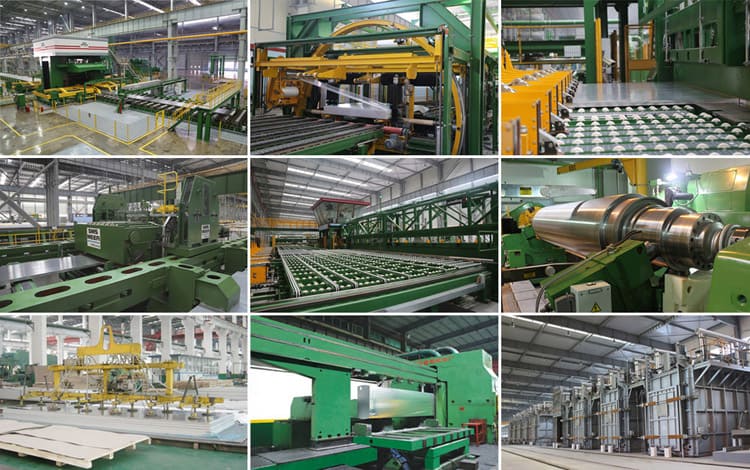
Casting and rolling process
Casting and rolling process: liquid metal, front box (liquid level control), casting and rolling machine (lubrication system, cooling water), shearing machine, coiling machine.
Cold rolling production process
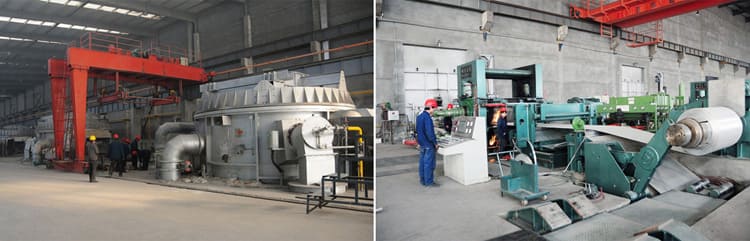
Introduction to finishing production process
Aluminum alloy has the characteristics of low density, good mechanical properties, good processing performance, non-toxic, easy to recycle, excellent electrical conductivity, heat transfer and corrosion resistance, so it has a wide range of applications.
Aerospace: used to make aircraft skins, fuselage frames, girders, rotors, propellers, fuel tanks, wall panels and landing gear struts, as well as rocket forging rings, spacecraft wall panels, etc.
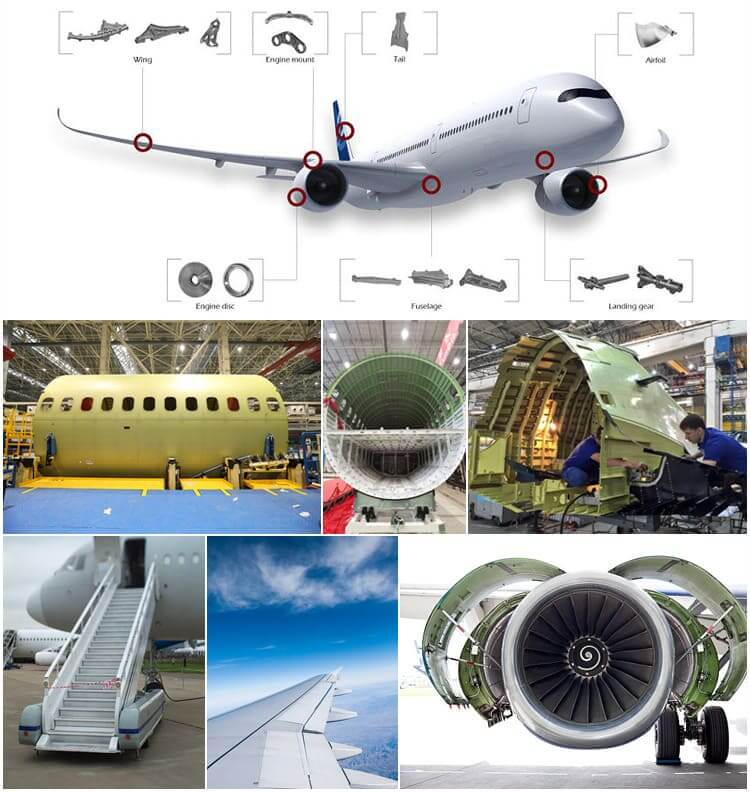
Aluminum alloy used for aerospace
Transportation: used for car body structure materials of automobiles, subway vehicles, railway passenger cars, high-speed passenger cars, doors and windows, shelves, automotive engine parts, air conditioners, radiators, body panels, wheels and ship materials.
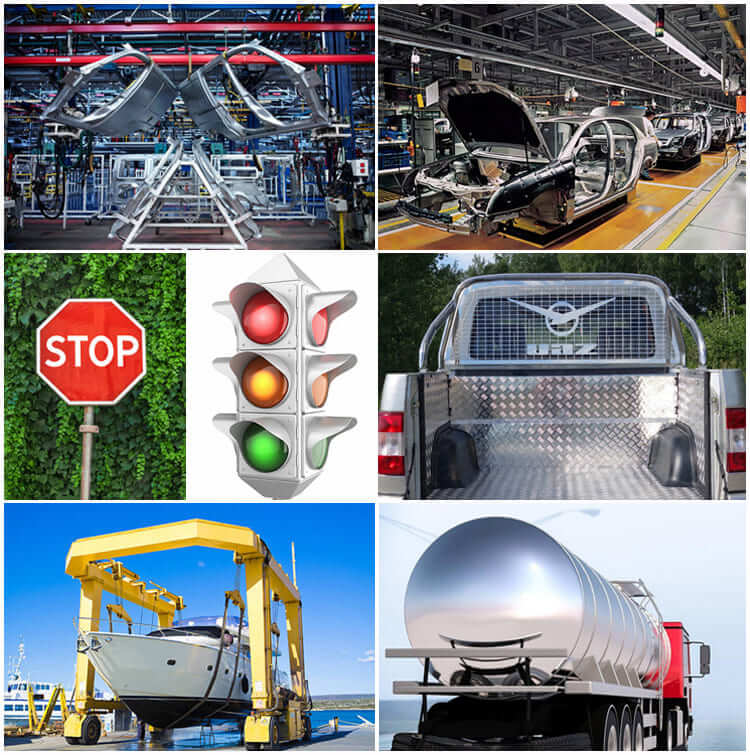
Traffic application
Packaging: All-aluminum pop cans are mainly used as metal packaging materials in the form of thin plates and foils, and are made into cans, lids, bottles, barrels, and packaging foils. Widely used in the packaging of beverages, food, cosmetics, medicines, cigarettes, industrial products, medicines, etc.
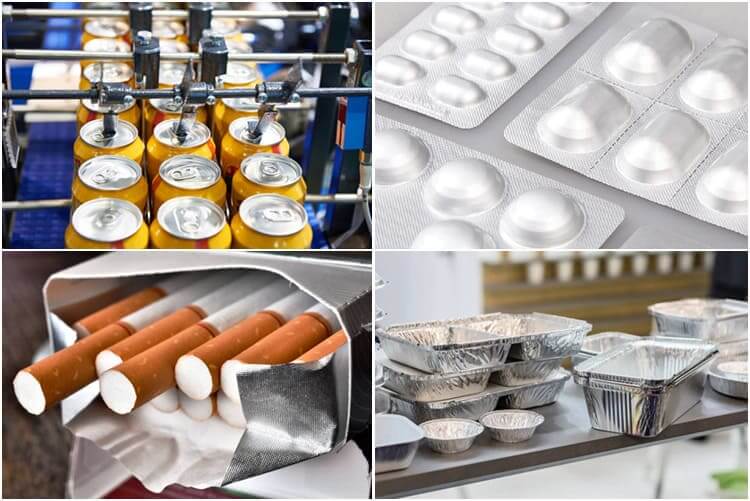
Packaging application
Printing: Mainly used to make PS plates, aluminum-based PS plates are a new type of material in the printing industry, used for automatic plate making and printing.
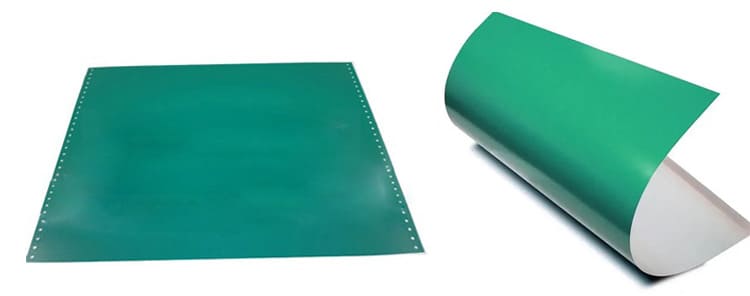
PS printing
Architectural decoration: aluminum alloy is widely used in building structures, doors and windows, suspended ceilings, decorative surfaces, etc. due to its good corrosion resistance, sufficient strength, excellent process performance and welding performance.
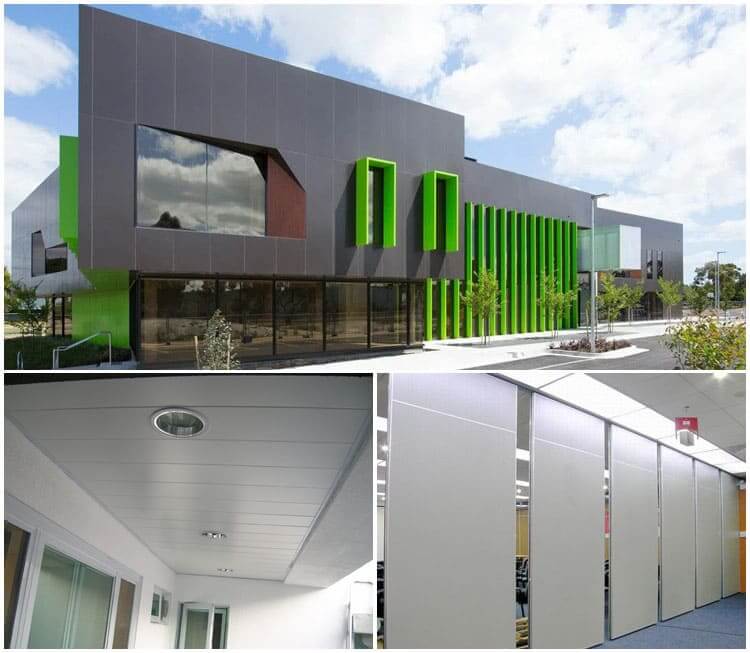
Aluminum alloy construction application
Electronic products: computers, mobile phones, refrigerator shells, radiators, etc.
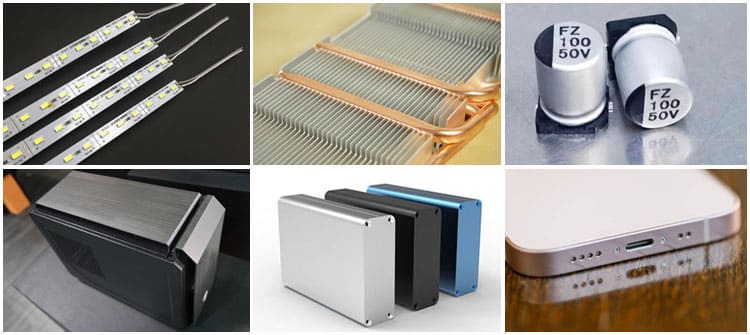
Electronic product application
Kitchen supplies: aluminum pots, aluminum basins, rice cooker liners, household aluminum foil, etc.
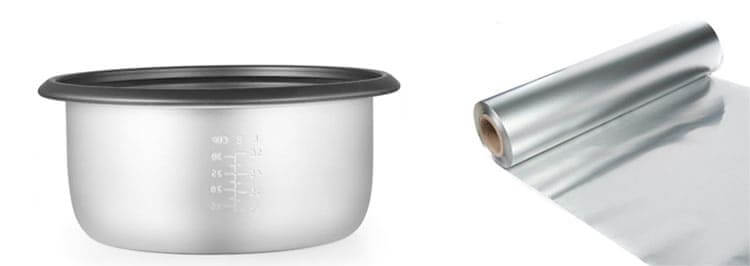
Kitchen application
Packaging Of Aluminum Sheet/Coil
Every detail of packaging is where we pursue perfect service. Our packaging process as a whole is as follows:
Lamination: clear film, blue film, micro-mucosal, high-mucosal, laser cutting film (2 brands, Novacell and Polyphem);
Protection: paper corner protectors, anti-pressure pads;
drying: desiccant;
Tray: fumigated harmless wooden tray, reusable iron tray;
Packing: Tic-tac-toe steel belt, or PVC packing belt;
Material Quality: Completely free from defects such as white rust, oil spots, rolling marks, edge damage, bends, dents, holes, break lines, scratches, etc., no coil set.
Port: Qingdao or other ports in China.
Lead time: 15-45 days.
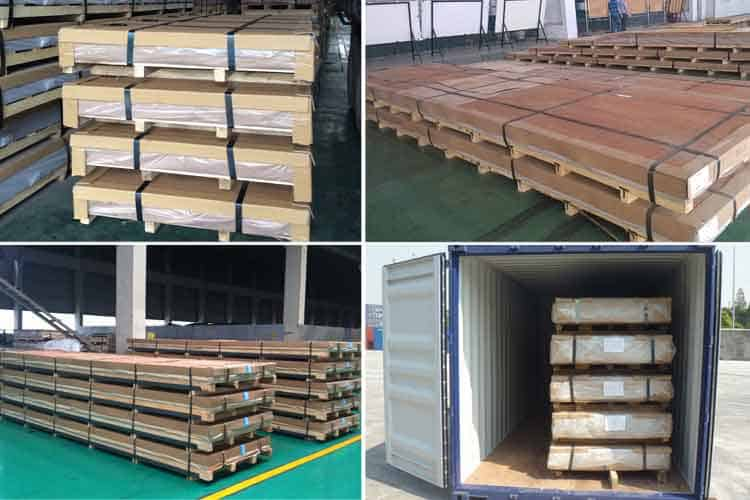
Aluminum sheet/plate packaging process
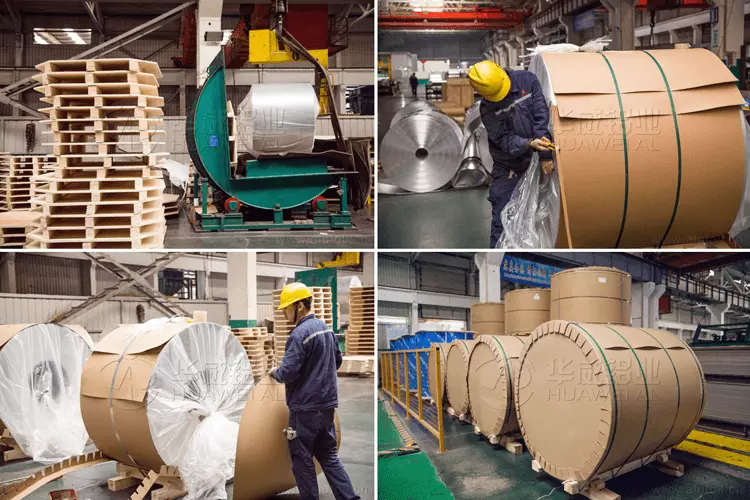
Aluminum coil packaging process
F: Are you a manufacturer or a trader?
Q: We are a manufacturer, our factory is at No.3 Weier Road, Industrial Zone, Gongyi, Henan, China.
F: What is the MOQ for ordering the product?
Q: Our MOQ is 5 tons, and some special products will have a minimum order quantity of 1 or 2 tons.
F: How long is your lead time?
Q: Generally our lead time is about 30 days.
F: Do your products have quality assurance?
Q: Yes, if there is a quality problem with our products, we will compensate the customer until they are satisfied.
Related Products


Latest Blogs
Common Alloys of Reefer Truck Used PE Coated Aluminum Coil
Discover common alloys of reefer truck used PE coated aluminum coil, including 3003, 3004, and 3105. Designed for excellent corrosion resistance, formability, and long-lasting outdoor performance.
Is Aluminum Conductive? Properties, Uses & Benefits Explained
Is aluminum conductive? Discover aluminum's electrical conductivity, key advantages, and why it is widely used in power transmission and industrial applications.
Unlocking Sustainability: The Truth About Aluminum Foil Recycling
Is Aluminum Foil Recyclable? Learn how aluminum foil can be recycled, how to prepare it properly, and why recycling helps reduce waste and save resources.
Coated Aluminum Foil for Packaging Applications | Strong & Reliable
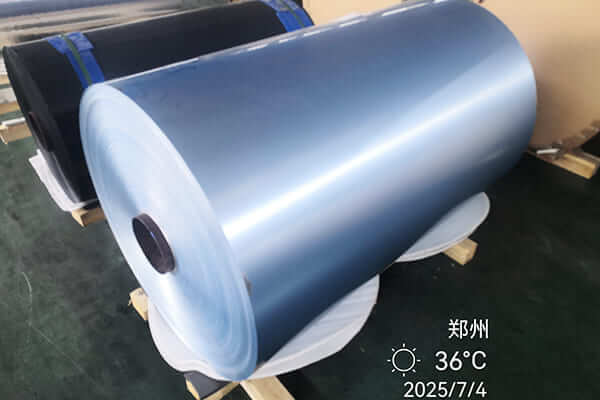
High-quality coated aluminum foil for packaging applications, offering excellent barrier protection, durability, and consistent performance.