Aluminum Coils for Thermal Insulation
1234 Views 2026-09-10 03:27:45
1. Introduction
Aluminum coil is widely used as a protective jacketing and facing material for thermal insulation systems.
It combines low weight, corrosion resistance, formability, and good durability, making it suitable for insulated pipes, HVAC ducts, tanks, industrial equipment, and building systems.
However, choosing Aluminum Coils for Thermal Insulation is not simply a matter of selecting a certain thickness or alloy.
The material must match the operating temperature, installation environment, forming requirements, corrosion exposure, mechanical loads, and insulation system design.
For example, an indoor HVAC duct may require a different aluminum specification from an outdoor chilled-water pipeline or a chemical-processing plant.
Alloy, temper, thickness, surface treatment, and moisture protection can all affect service performance.
ASTM C1729 specifically covers aluminum jacketing for thermal and acoustical insulation in both indoor and outdoor applications.
It considers factors including surface treatment and emittance, alloy and temper, moisture-retarder construction, thickness, and physical properties.
Therefore, high-quality aluminum insulation coil should be evaluated as part of the complete insulation system, rather than as an independent metal product.

High-Quality 3003 Aluminum Coils
2. What Are Aluminum Coils for Thermal Insulation?
Aluminum coil for thermal insulation is a continuous aluminum sheet supplied in coiled form and used primarily as the outer protective layer of an insulated system.
It does not normally provide the main thermal resistance.
Instead, the insulation core—such as mineral wool, fiberglass, PIR, PUR, or elastomeric insulation—provides the primary thermal insulation, while aluminum jacketing protects that insulation from the surrounding environment.
2.1 Main Functions of Aluminum Coils for Thermal Insulation
A properly selected aluminum jacket can provide several important functions:
- Moisture protection: Helps protect insulation from rain, condensation, and environmental moisture.
- Mechanical protection: Reduces damage from impact, handling, and routine maintenance.
- Weather resistance: Provides a durable outer surface for outdoor insulation systems.
- Corrosion resistance: Aluminum naturally forms a protective oxide layer that helps resist atmospheric corrosion.
- UV resistance: An aluminum exterior does not degrade in the same way as many organic protective materials under prolonged sunlight.
- Appearance and maintenance: Provides a clean, durable, and relatively easy-to-maintain exterior surface.
The exact performance depends on the aluminum grade, surface treatment, moisture-retarder design, installation details, and service environment.
2.2 Typical Applications
Aluminum insulation coil is commonly fabricated into jacketing or cladding for:
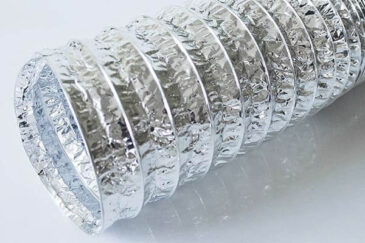
HVAC ducts: Protects insulated air ducts and provides a durable external surface.
Pipes and pipelines: Used around chilled-water, hot-water, steam, refrigeration, and industrial process piping.
Tanks and equipment: Provides protective jacketing for insulated vessels, tanks, and industrial equipment.
Building insulation: Used in selected wall, roof, and other insulation assemblies where a durable metal facing is required.
For industrial applications, the selection should consider operating temperature, chemical exposure, outdoor conditions, maintenance requirements, and the possibility of condensation.
2.3 Common Aluminum Grades
The appropriate alloy depends on the application. ASTM C1729 identifies several aluminum grades and tempers for insulation jacketing, including 3003, 3105, 1100, 3004, and 5052, with different temper conditions specified according to grade.
For example:
- 1100: Excellent formability and commonly associated with soft jacketing applications.
- 3003: Good balance of strength, formability, and corrosion resistance.
- 3105: Good combination of strength, formability, and corrosion resistance.
- 3004: Higher strength than 1100 while maintaining useful forming characteristics.
- 5052: Higher-strength option for applications requiring greater mechanical performance.
The best alloy is therefore determined by the actual insulation environment and fabrication requirements, not simply by the nominal strength of the material.
3. Key Factors for Choosing High-Quality Aluminum Coils for Thermal Insulation
Choosing high-quality insulation coil requires a systematic evaluation of alloy, temper, thickness, surface condition, dimensional accuracy, corrosion resistance, and supplier quality.
3.1 Alloy Selection
Alloy selection is the first major consideration because it determines the basic balance between strength, formability, corrosion resistance, and fabrication performance.
For general insulation jacketing, 3003 and 3105 offer a useful balance of mechanical strength and formability.
1100 can be appropriate where excellent formability and softer material are more important.
Higher-strength alloys such as 5052 aluminum coil may be considered for more demanding mechanical environments.
The selected alloy should always correspond to the applicable specification and service conditions.
ASTM B209/B209M covers aluminum and aluminum-alloy sheet and coiled sheet in specified alloys and tempers.
3.2 Temper Selection
Temper determines how the aluminum responds to bending, forming, and mechanical loading.
A softer temper generally provides better formability, while a harder temper provides greater strength and resistance to deformation.
For insulation jacketing, the correct balance is important because the material may need to be bent around pipes, formed around ducts, corrugated, or fabricated into fittings.
ASTM C1729 includes H14/H24, H12, and dead-soft conditions for different insulation-jacketing grades, demonstrating that temper selection is an integral part of the specification rather than an afterthought.
3.3 Thickness
Thickness affects both the mechanical durability and handling characteristics of the jacket.
A thicker aluminum coil generally provides greater resistance to:
- Dents
- Punctures
- Impact
- Handling damage
- Local deformation
However, excessive thickness increases material weight, cost, and forming requirements.
The objective should therefore be to select a thickness that provides adequate mechanical protection without unnecessary material consumption.
ASTM C1729 includes requirements for minimum thickness and thickness tolerances for aluminum insulation jacketing.
3.4 Corrosion Resistance
The operating environment should be evaluated before selecting the alloy and surface finish.
Indoor dry environments generally impose less corrosion risk than:
- Coastal or salt-laden environments
- Outdoor installations
- High-humidity locations
- Areas exposed to condensation
- Industrial environments containing corrosive chemicals
For severe environments, alloy selection, surface treatment, moisture-retarder design, joint sealing, and contact with dissimilar metals should all be considered together.
In particular, galvanic corrosion can occur when aluminum contacts dissimilar metals in the presence of an electrolyte.
Proper material compatibility and isolation are therefore important in industrial insulation systems.
3.5 Surface Quality and Finish
Surface quality directly affects appearance, fabrication, and long-term durability.
A high-quality coil should have a uniform surface with good control of:
- Scratches
- Pits
- Oil stains
- Roll marks
- Wrinkles
- Oxidation
- Edge cracks
- Excessive waviness
Depending on the application, the coil may use mill finish, bright finish, stucco embossing, corrugation, or a coated/laminated surface.
ASTM C1729 recognizes smooth, corrugated, and stucco-embossed aluminum jacketing configurations and also considers surface treatment and emittance as part of jacketing classification.
3.6 Formability and Mechanical Performance
The coil must withstand the fabrication process without excessive cracking or permanent deformation.
Important properties include:
- Tensile strength
- Yield strength
- Elongation
- Bend performance
- Thickness uniformity
A material that is excessively hard may resist dents but become difficult to form around tight radii.
Conversely, material that is too soft may form easily but provide insufficient mechanical protection.
The ideal specification balances strength and formability according to the actual fabrication method.
3.7 Dimensional Accuracy
Consistent dimensions are particularly important for automated processing and large-volume insulation projects.
Purchasers should verify:
| Parameter | Key Requirement |
|---|---|
| Thickness | Accurate and consistent |
| Width | Within agreed tolerance |
| Coil ID | Compatible with processing equipment |
| Coil Weight | Suitable for handling |
| Edge Quality | Clean, without excessive burrs or cracks |
| Flatness | Controlled waviness and shape |
| Winding | Tight and uniform |
ASTM B209/B209M establishes requirements for specified aluminum sheet and coiled sheet, while ASTM C1729 addresses physical requirements specific to insulation jacketing.
3.8 Moisture Protection and Insulation-System Compatibility
High-quality aluminum alone cannot compensate for poor insulation design.
For systems exposed to condensation or outdoor moisture, the aluminum jacket should work together with the insulation core, vapor retarder, joints, seams, penetrations, and drainage design.
This distinction is important: aluminum jacketing protects the insulation, but it does not replace a properly designed vapor-control or waterproofing system.
ASTM C1729 also treats moisture retarders as a separate classification factor for aluminum jacketing.

Huawei Quality Inspection of Embossed Aluminum Coils
4. Pre-Coated and Special-Finish Aluminum Coils
For thermal insulation applications, aluminum coils can be supplied with different surface finishes or factory-applied coatings to meet specific environmental, functional, and appearance requirements.
The right finish should be selected according to service conditions rather than appearance alone.
ASTM C1729 recognizes several surface treatments for aluminum jacketing, including smooth, corrugated, and stucco-embossed finishes.
It also allows factory-applied coatings or films for applications requiring additional corrosion protection or specific surface characteristics.
4.1 Mill-Finish Aluminum Coil
Mill-finish aluminum is a common choice for standard insulation jacketing.
It provides the natural appearance and corrosion resistance of aluminum without an additional decorative coating.
It is suitable for HVAC ducts, insulated pipes, tanks, and general industrial insulation where the service environment does not require a specialized coating system.
4.2 Embossed and Corrugated Aluminum Coil
Embossing and corrugation can improve surface rigidity and provide a distinctive appearance.
These finishes are commonly considered for pipe, duct, and equipment jacketing where additional stiffness and mechanical protection are desirable.
ASTM C1729 specifically recognizes smooth, corrugated, and stucco-embossed aluminum jacketing finishes.
Corrugation dimensions should be agreed upon between the purchaser and manufacturer when required for interchangeability and consistent appearance.
4.3 Polyester-Coated Aluminum Coil
Polyester-coated aluminum provides a colored and more uniform surface while adding an additional protective coating layer.
It can be considered for HVAC systems, architectural or decorative insulation applications, and environments where appearance and surface protection are important.
The coating specification should define the coating type, thickness, color, adhesion, surface quality, and required durability rather than simply stating “color coated.”
4.4 PVDF-Coated Aluminum Coil
PVDF-coated aluminum is designed for applications that require enhanced weathering and surface durability.
It can be particularly useful for outdoor insulation systems exposed to sunlight, moisture, and changing weather conditions.
For demanding environments, the coating system should be specified together with the aluminum alloy, temper, thickness, coating performance, and installation requirements.
ASTM C1729 includes PVDF-based paint systems among its recognized options for aluminum jacketing.
4.5 Moisture-Barrier and Laminated Aluminum Coil
Moisture protection is especially important for chilled-water pipes, HVAC systems, and other applications where condensation may occur.
Factory-applied films or laminated moisture-retarder layers can help protect the inner surface of aluminum jacketing.
ASTM C1729 recognizes factory-applied moisture-retarder constructions and includes moisture-retarder performance among its requirements and test considerations.
4.6 How to Select the Right Finish
| Application | Recommended Surface Direction | Main Consideration |
|---|---|---|
| Indoor HVAC insulation | Mill finish / smooth | Formability and appearance |
| General pipe insulation | Smooth / embossed | Mechanical protection and fabrication |
| Outdoor insulation | Coated / suitable finish | Weather and corrosion exposure |
| Coastal or aggressive environments | Protective coating system | Corrosion resistance |
| Decorative insulation | Polyester or other color coating | Appearance and surface durability |
| High-weathering applications | PVDF-based coating | UV and weather resistance |
| Condensation-prone systems | Moisture-retarder construction | Moisture and vapor control |
The most important principle is to evaluate the aluminum alloy, temper, thickness, surface finish, coating, moisture-retarder construction, and service environment as one system.
5. Corrosion Resistance: A Critical Selection Factor
Corrosion resistance is particularly important for aluminum insulation jacketing because the outer surface may remain in service for years under humidity, condensation, rain, salt exposure, or industrial atmospheric conditions.
Aluminum naturally develops a thin oxide layer that provides a degree of protection against atmospheric corrosion.
However, alloy selection and system design still matter, particularly in aggressive environments.
5.1 Consider the Service Environment
Before selecting an aluminum coil, identify whether the insulation will be installed:
- Indoors or outdoors
- In a dry or humid environment
- In a coastal or salt-laden atmosphere
- Near chemicals or industrial emissions
- Around chilled equipment where condensation may occur
- In environments with frequent temperature cycling
A material suitable for a dry indoor HVAC installation may not be the best choice for an exposed coastal pipeline.
5.2 Alloy Selection
Different aluminum alloys provide different balances of strength, formability, and corrosion resistance.
For example, 1100 and 3003 are commonly considered for general insulation applications, while 3105 or other suitable alloys may be selected when additional mechanical performance is required.
Higher-strength alloys such as 5052 can be considered for more demanding environments or fabrication requirements.
The alloy should always be selected together with the applicable specification and service conditions rather than by alloy number alone.
5.3 Galvanic Corrosion
Special attention is required when aluminum comes into contact with dissimilar metals.
In the presence of moisture, an electrochemical reaction can cause galvanic corrosion, potentially affecting the aluminum jacket or adjacent components.
Fasteners, supports, clamps, and other metal components should therefore be compatible with the aluminum system or appropriately isolated.
5.4 Condensation and Moisture Control
For chilled-water pipes and refrigeration systems, condensation is a major concern.
The aluminum jacket provides external protection, but it should not be considered a replacement for a properly designed vapor retarder and sealed insulation system.
Joints, penetrations, seams, and damaged areas must also be properly protected.
ASTM C1729 treats the moisture-retarder construction as a separate classification factor for aluminum insulation jacketing, reinforcing the importance of considering moisture protection as part of the overall system.
5.5 Corrosion and Material Selection
A practical selection approach is:
Normal indoor environment → standard aluminum alloy and finish
Outdoor environment → corrosion-resistant alloy + appropriate surface/system protection
Coastal or aggressive environment → carefully evaluate alloy, galvanic compatibility, moisture control, and surface protection
The goal is not simply to choose the alloy with the highest nominal corrosion resistance, but to select a material that provides reliable performance under the actual environmental conditions.

Pre Coated Aluminum Coils By Huawei
6. Mechanical Properties and Fabrication Performance
Aluminum Coils for Thermal Insulation must combine sufficient mechanical strength with adequate formability.
During installation, the coil may be cut, bent, rolled, corrugated, folded, and fitted around pipes or equipment.
A material with excellent strength but insufficient formability can create fabrication problems, while excessively soft material may be more vulnerable to dents and handling damage.
6.1 Tensile Strength and Yield Strength
Tensile strength indicates the material’s resistance to failure under tension, while yield strength indicates when significant permanent deformation begins.
For insulation jacketing, these properties influence the material’s ability to withstand:
- Handling and installation
- Local impact
- Bending and forming
- Wind or external loads
- Routine maintenance
The appropriate strength level depends on the thickness, alloy, temper, and application.
6.2 Elongation and Formability
Elongation provides an indication of how much the aluminum can deform before fracture.
Good formability is particularly important when the coil must follow tight pipe radii, curved surfaces, fittings, elbows, or irregular equipment shapes.
ASTM B209/B209M includes tensile requirements and cold-bend requirements for covered aluminum sheet and coiled-sheet products, with requirements depending on alloy, temper, and thickness.
6.3 Temper Selection and Fabrication
Temper directly influences the balance between strength and formability.
- Softer tempers: Easier to bend and form, but generally more susceptible to dents.
- Intermediate tempers: Provide a balance between formability and mechanical strength.
- Harder tempers: Provide greater resistance to deformation but require more forming force.
For insulation jacketing, the optimal temper should therefore match the fabrication method and expected mechanical loads.
6.4 Bend and Forming Performance
During fabrication, aluminum may be bent around small radii or shaped into cylindrical and curved sections. Poorly selected material can develop:
- Edge cracking
- Surface cracking
- Excessive springback
- Permanent deformation
- Wrinkles
A good insulation coil should provide predictable forming behavior throughout the coil rather than acceptable performance only in isolated samples.
6.5 Thickness and Mechanical Protection
Thickness also contributes significantly to mechanical durability.
A thicker coil generally provides greater resistance to impact, dents, punctures, and deformation, but it also increases weight, material consumption, and forming requirements.
Therefore, thickness should be optimized together with alloy and temper rather than considered independently.
7. Dimensional Accuracy and Coil Quality
Dimensional consistency is essential when aluminum coil is used for thermal insulation jacketing.
Accurate thickness, width, coil dimensions, and flatness improve fabrication efficiency, material utilization, and installation quality.
ASTM B209/B209M covers aluminum and aluminum-alloy flat and coiled sheet and includes requirements related to dimensions, quality, mechanical properties, and specified finishes.
ASTM C1729 specifically addresses aluminum jacketing for thermal and acoustical insulation, including minimum thickness and permissible thickness tolerances.
7.1 Thickness Accuracy
Thickness affects mechanical protection, weight, forming behavior, and material cost.
A high-quality coil should maintain consistent thickness across the coil rather than showing significant local variation.
For insulation jacketing, the specified thickness should be selected according to the application, fabrication method, and required mechanical protection.
7.2 Width and Slitting Accuracy
Accurate width allows the coil to fit downstream processing equipment and reduces trimming waste.
Clean slitting also helps prevent excessive burrs, edge cracks, and handling problems.
For customized insulation projects, buyers should clearly specify nominal width and allowable width tolerance before production.
7.3 Flatness and Winding Quality
Good flatness and uniform winding are important for smooth feeding, cutting, forming, and installation.
Poorly wound coils may develop telescoping, loose edges, wrinkles, or uneven tension, which can create difficulties during subsequent processing.
7.4 Coil Dimensions and Packaging
Important purchasing parameters include:
| Parameter | Key Consideration |
|---|---|
| Thickness | Uniformity and tolerance |
| Width | Accurate slitting |
| Coil ID | Equipment compatibility |
| Coil Weight | Handling and processing capacity |
| Winding | Tight and uniform |
| Edge | Clean, without excessive burrs |
| Flatness | Controlled waviness |
| Packaging | Protection against moisture and damage |
ASTM B209/B209M also requires material to be packaged to provide adequate protection during normal handling and transportation.

Outdoor Insulation Used Aluminum Coils
8. Thermal Performance: What Aluminum Coil Can and Cannot Do
Aluminum coil plays an important role in insulation systems, but it is important to distinguish the function of the aluminum jacket from that of the insulation material itself.
8.1 Aluminum Is Primarily a Protective Jacket
Aluminum has relatively high thermal conductivity, so it should not normally be considered the primary thermal insulation material.
The main thermal resistance comes from materials such as:
- Mineral wool
- Fiberglass
- PIR
- PUR
- Elastomeric insulation
The aluminum jacket mainly protects the insulation from weather, moisture, impact, UV exposure, and mechanical damage.
ASTM C1729 also makes this distinction clear: it specifies physical requirements for aluminum jacketing but does not establish the thermal performance of the complete installed insulation system.
8.2 Reflective Surfaces and Radiant Heat
A bright or reflective aluminum surface can reduce radiant heat exchange under appropriate conditions, particularly when the system includes a suitable air space.
However, reflectivity should not be treated as equivalent to thermal resistance or R-value. The actual thermal performance depends on the complete insulation assembly.
8.3 Moisture Protection and Thermal Efficiency
Moisture can significantly affect insulation performance. Wet insulation may lose part of its intended thermal resistance and can also create corrosion or durability problems.
A properly selected aluminum jacket helps protect the insulation from external moisture, but seams, joints, penetrations, vapor retarders, and installation quality are equally important.
9. Aluminum Coil Options for Different Insulation Applications
There is no universal aluminum alloy or temper for every insulation application.
Selection should consider environment, mechanical requirements, forming method, surface requirements, and project specifications.
| Application | Key Requirements | Common Material Direction |
|---|---|---|
| HVAC Duct Insulation | Formability, corrosion resistance, clean appearance | 1100 / 3003 |
| Chilled-Water Pipes | Moisture protection, formability, corrosion resistance | 3003 / 3105 |
| Hot-Water & Steam Pipes | Mechanical durability, temperature resistance | 3003 / 3105 |
| Industrial Equipment | Strength, durability, surface quality | 3003 / 3105 / suitable 5xxx |
| Outdoor Insulation | Weather resistance, corrosion protection | 3003 / 3105 |
| Coastal Environments | Corrosion and galvanic compatibility | Carefully selected alloy/system |
| Decorative Insulation Jacketing | Surface appearance and formability | 1100 / 3003 or coated options |
10. Professional Aluminum Coil Manufacturer – Huawei Aluminum
Henan Huawei Aluminum Co., Ltd. was established in 2001 and has more than 20 years of experience in aluminum alloy production and sales.
Its products are supplied to customers in more than 70 countries and regions.
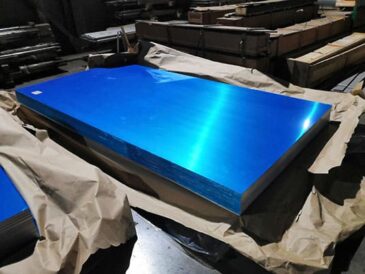
Huawei Aluminum provides aluminum sheets and plates, aluminum coils, aluminum foil and strip, aluminum circles/discs, and embossed aluminum sheets.
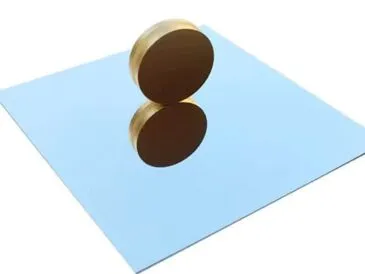
The company also provides value-added processing such as color coating, embossing, anodizing, and mirror finishing.
Customized Aluminum Coil Supply
Different insulation projects require different combinations of alloy, temper, thickness, width, coil dimensions, surface finish, and packaging.
Huawei Aluminum can work with customers to define these specifications according to the intended application, processing method, environmental conditions, and purchasing standard.
For projects involving embossed, coated, anodized, mirror-finish, or other processed aluminum products, customized surface requirements can be discussed before production.
Technical Support for Material Selection
A professional supplier should help customers select the material rather than simply quote a standard coil.
For insulation applications, Huawei Aluminum can support the selection of:
Application → Alloy → Temper → Thickness → Width → Surface Finish → Coating → Packaging → Inspection Requirements
This approach helps buyers avoid selecting material based only on price and reduces the risk of problems during fabrication or installation.
Why Choose Huawei Aluminum?
Huawei Aluminum combines aluminum alloy production experience with customized processing and export experience.
For insulation projects, customers can source standard and value-added aluminum coil products according to their required specifications.
The goal is not simply to supply aluminum coil, but to provide a consistent material solution that matches the application, fabrication process, and service environment.
11. Conclusion
Choosing high-quality aluminum coils for thermal insulation requires more than comparing alloy numbers or prices.
A suitable coil should provide the right combination of alloy, temper, thickness, dimensional accuracy, surface quality, corrosion resistance, mechanical properties, and finish for the intended application.
For standard insulation jacketing, mill-finish, embossed, or corrugated aluminum may be sufficient.
Outdoor, coastal, decorative, or highly corrosive environments may require additional coating or moisture-retarder protection.
Standards such as ASTM C1729 provide an important reference for aluminum jacketing, while ASTM B209/B209M can be used to define the underlying aluminum sheet or coiled-sheet material.
ASTM C1729 also makes an important distinction: the specification addresses the jacketing material itself and does not by itself guarantee the performance of the complete installed insulation system.
Therefore, buyers should evaluate the complete system rather than choosing aluminum coil based on price alone.
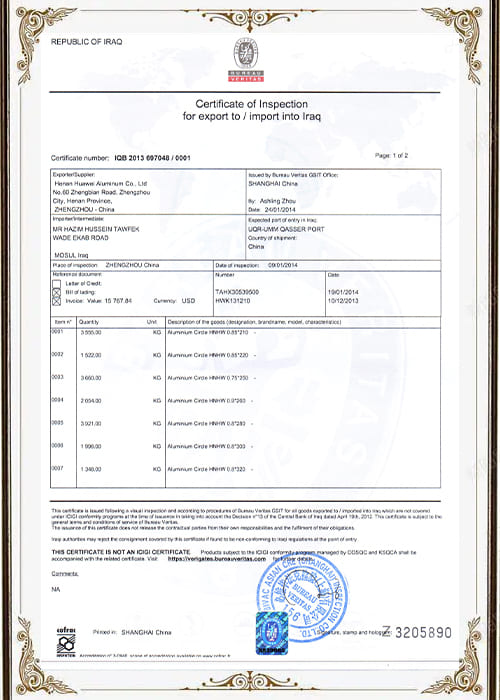
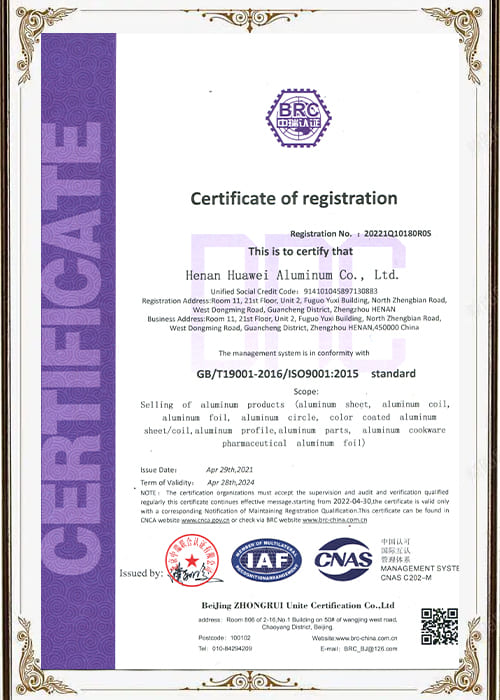
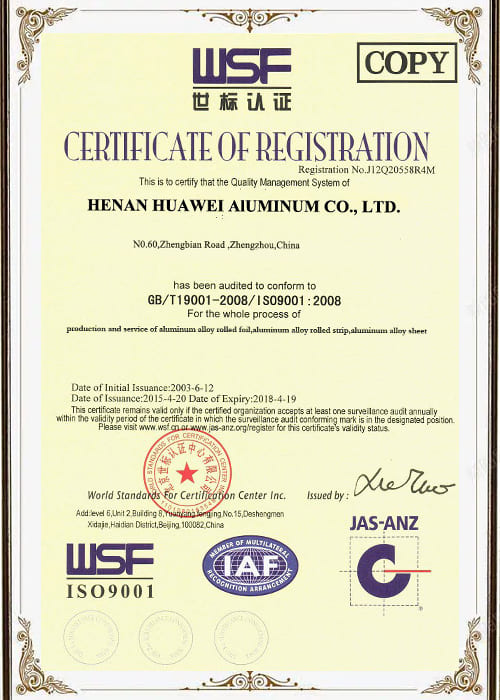
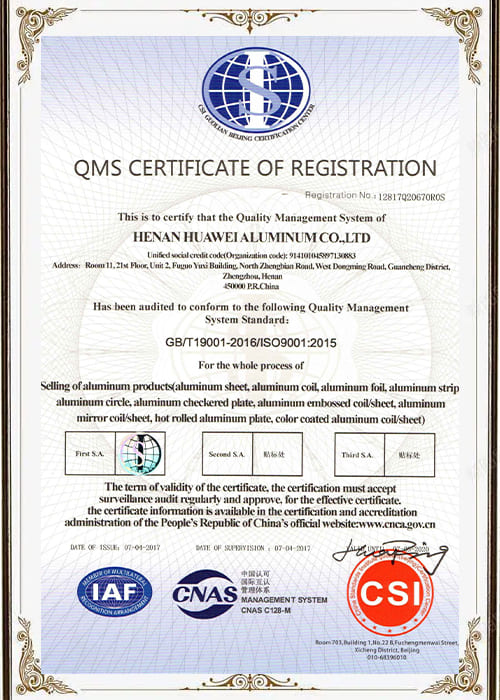
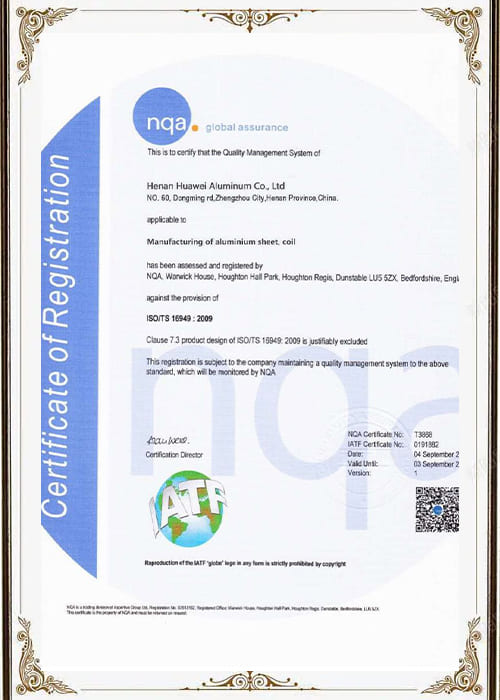
A reliable manufacturer should be able to provide consistent production quality, clear specifications, inspection documentation, suitable processing options, and technical support.
FAQs
1. What aluminum alloys are commonly used for insulation jacketing?
Common choices include 1100, 3003, 3105, and 3004. The right alloy depends on the required strength, formability, corrosion resistance, and application.
2. Is aluminum coil a thermal insulation material?
No. Aluminum coil mainly serves as a protective jacket or facing. The insulation core provides the primary thermal resistance.
3. Which surface finish is best for insulation aluminum coil?
Mill finish is suitable for many standard applications. Embossed, corrugated, or coated finishes can be selected for additional rigidity, appearance, weather resistance, or surface protection.
4. When should I choose coated aluminum coil?
Coated aluminum coil is useful for outdoor, decorative, or demanding environments where additional weathering and surface protection are required.
5. What should I specify when ordering insulation aluminum coil?
Specify the alloy, temper, thickness, width, coil dimensions, surface finish, coating, quantity, and applicable standard. Also indicate the intended application and service environment.
6. How can I check aluminum coil quality before purchase?
Check the material certificate, alloy and temper, dimensions, mechanical properties, surface quality, coil condition, packaging, and traceability. Third-party inspection can be arranged when required.
7. Can Huawei Aluminum provide customized insulation aluminum coils?
Yes. Huawei Aluminum can provide customized alloy, temper, dimensions, surface finish, coating, embossing, and other processing options according to project requirements.