1. Introduction
5052 H32 Aluminum Tread Plate is a patterned aluminum product designed to combine corrosion resistance, strength, formability, lightweight performance, and surface traction.
It is widely used for flooring, walkways, stairs, ramps, vehicle platforms, industrial equipment, and other applications where a durable and lightweight metal surface is required.
The product name contains three important technical elements. 5052 identifies the aluminum alloy, H32 defines its temper condition, and Tread Plate describes the raised surface pattern.
5052 belongs to the Al-Mg family of non-heat-treatable wrought aluminum alloys. Its magnesium and chromium content contributes to its useful combination of strength and corrosion resistance.
In H32 temper, the material gains strength through controlled strain hardening and stabilization, providing a practical balance between strength and ductility.
The raised tread pattern adds another functional advantage. Unlike a smooth aluminum sheet, the patterned surface creates additional contact points that can improve traction under suitable service conditions.
5052 H32 is particularly suitable where low weight, corrosion resistance, moderate strength, and surface grip need to work together.
The alloy also offers good weldability and cold-forming capability, making it suitable for platforms, steps, vehicle components, and industrial panels.
2. What Is 5052 H32 Aluminum Tread Plate?
2.1 Understanding 5052 Aluminum Alloy
5052 is a wrought aluminum alloy primarily strengthened by magnesium.
Under commonly referenced EN 573-3 requirements, magnesium is typically controlled within approximately 2.20–2.80%, while chromium is generally controlled within 0.15–0.35%.
Aluminum makes up the balance, with specified limits for iron, silicon, copper, manganese, zinc, and other elements.
The alloy composition gives 5052 a useful combination of corrosion resistance, strength, ductility, and weldability.
This makes it suitable for products exposed to moisture, outdoor environments, transportation conditions, and industrial atmospheres.

5052 H32 5 Bar Aluminum Tread Plate
2.2 What Does H32 Mean?
The H32 designation describes the temper condition of the aluminum rather than its alloy composition or surface pattern.
H32 represents a strain-hardened and stabilized condition. Controlled cold working increases the material’s strength, while subsequent stabilization helps achieve the required balance of strength and ductility.
Therefore:
- 5052 = aluminum alloy
- H32 = temper condition
- Tread Plate = patterned product form
Changing the temper can significantly change the material’s strength, hardness, and forming behavior even when the alloy remains 5052.
2.3 What Is Aluminum Tread Plate?
Aluminum tread plate is a flat-rolled aluminum product with a raised pattern on one surface.
Common designs include diamond, 3-bar, and 5-bar patterns, although available patterns vary by manufacturer.
The raised pattern serves both functional and visual purposes.
It can improve traction for walking and working surfaces while providing the characteristic appearance associated with aluminum checker or tread plate.
The pattern also affects fabrication and dimensional measurement.
When purchasing the material, buyers should clarify whether the specified thickness refers to the base metal thickness or the overall thickness including the raised pattern.
2.4 How the Three Elements Work Together
The performance of 5052 H32 tread plate comes from the combination of its alloy, temper, and surface design.
5052 alloy provides the basic corrosion resistance, strength, ductility, and weldability.
H32 temper increases strength through controlled strain hardening while retaining useful forming capability.
The tread pattern creates a textured surface that can improve traction and gives the plate its distinctive appearance.
This combination makes 5052 H32 tread plate suitable for applications where a smooth aluminum sheet may not provide sufficient surface grip.
3. Chemical Composition of 5052 Aluminum
| Element | Typical EN 573-3 Range / Limit |
|---|---|
| Aluminum (Al) | Balance |
| Magnesium (Mg) | 2.20–2.80% |
| Chromium (Cr) | 0.15–0.35% |
| Iron (Fe) | ≤ 0.40% |
| Silicon (Si) | ≤ 0.25% |
| Copper (Cu) | ≤ 0.10% |
| Manganese (Mn) | ≤ 0.10% |
| Zinc (Zn) | ≤ 0.10% |
| Other, each | ≤ 0.05% |
| Other, total | ≤ 0.15% |
4. Key Properties of 5052 H32 Aluminum Tread Plate
4.1 Corrosion Resistance
5052 aluminum sheet plate provides good resistance to atmospheric corrosion, moisture, and many marine environments.
This makes it suitable for outdoor platforms, vehicle floors, walkways, stairs, and industrial applications.
Actual corrosion performance depends on the service environment, surface condition, and contact with other metals or chemicals.
4.2 Strength and Durability
The H32 temper increases the strength of 5052 through controlled strain hardening while retaining useful ductility.
This provides a practical balance for flooring, platforms, steps, and other applications exposed to regular loads and traffic.
For structural applications, required thickness, support spacing, and loading conditions should be evaluated together with the material properties.
4.3 Good Formability
5052 H32 offers good cold-forming capability and can be cut, bent, drilled, and fabricated with suitable equipment.
Because H32 is harder than the fully annealed 5052-O condition, forming parameters and bend radius should be selected according to the plate thickness and application.
4.4 Good Weldability
5052 can be welded using common aluminum welding processes such as TIG and MIG.
Proper surface cleaning, filler selection, and welding parameters are important for achieving reliable joints.
4.5 Lightweight Performance
With a density of approximately 2.68 g/cm³, aluminum provides a significant weight advantage over steel.
This makes 5052 H32 tread plate useful for trucks, trailers, marine equipment, platforms, and other applications where weight reduction is important.
4.6 Anti-Slip Surface
The raised tread pattern provides additional surface texture and can improve traction compared with smooth aluminum sheet. Diamond, 3-bar, and 5-bar patterns are commonly used.
Actual slip resistance depends on the pattern, water or oil contamination, footwear, installation conditions, and maintenance.
For applications with specific slip-resistance requirements, the finished product should be tested according to the applicable standard.

Huawei 5052 H32 Aluminum Tread Plate Thickness Measurement
5. Specifications of 5052 H32 Aluminum Tread Plate
5052 H32 Aluminum Tread Plate is available in different thicknesses, dimensions, tread patterns, and surface finishes.
When ordering, it is important to distinguish base thickness from the overall thickness of the raised tread.
5.1 Product Specifications
| Specification | Details |
|---|---|
| Alloy | 5052 |
| Temper | H32 |
| Product Type | Aluminum Tread Plate / Checker Plate |
| Base Thickness | 1.0–12.0 mm, customized |
| Width | 500–2,800 mm, customized |
| Length | 1,000–12,000 mm, customized |
| Tread Pattern | 1 Bar, 2 Bar, 3 Bar, 5 Bar, Diamond, etc. |
| Pattern Height | Customized according to pattern and base thickness |
| Surface Finish | Mill Finish, Bright Finish, or Customized |
| Edge | Mill Edge or Cut Edge |
| Fabrication | Cutting, bending, drilling, welding, and other processing |
| Standards | ASTM B209, EN 485-2, EN 1386, JIS, GB/T, or as required |
| Inspection | Mill Test Certificate (MTC) available |
6. Tread Patterns and Surface Design
The raised pattern is one of the most important features of aluminum tread plate.
According to the Aluminum Association’s terminology, tread plate is sheet or plate with a pattern impressed on one side by rolling with a specially prepared roll, primarily to provide improved traction.
6.1 Diamond Pattern
The diamond pattern is one of the most recognizable tread designs.
Its raised geometry provides multiple contact points and creates a directional textured surface. It is widely used for:
- Vehicle floors
- Stairs
- Walkways
- Ramps
- Industrial platforms
- Toolboxes and equipment panels
The diamond design also provides a distinctive industrial appearance.
6.2 3-Bar Pattern
The 3-bar pattern uses groups of raised bars arranged in a repeated directional configuration.
It can provide a combination of traction and decorative appearance.
The directional pattern can also be selected when the visual layout of the finished floor or panel is important.
6.3 5-Bar Pattern
The 5-bar pattern contains five raised bars arranged in a repeating group.
It is commonly used for transportation equipment, industrial flooring, stairs, platforms, and architectural panels.
The exact geometry, bar height, spacing, and appearance can vary between manufacturers.
6.4 Pattern Height and Geometry
The performance of a tread surface depends not only on the pattern name but also on its actual geometry.
Important parameters include:
- Pattern height
- Pattern width
- Pattern pitch
- Pattern orientation
- Raised area
- Repeat consistency
A higher or more pronounced pattern does not automatically mean better slip resistance.
Actual traction depends on the complete surface design and operating conditions.

Trailer Used 5052 H32 Aluminum Tread Plate
7. Manufacturing Process of 5052 H32 Aluminum Tread Plate
The production of 5052 H32 Aluminum Tread Plate follows a controlled process to ensure consistent composition, strength, dimensions, and tread quality.
Melting & Casting → Hot Rolling → Cold Rolling → H32 Temper Processing → Pattern Rolling → Leveling & Cutting → Inspection → Packaging
7.1 Alloy Preparation and Rolling
Aluminum and alloying elements are melted and adjusted to meet the required 5052 composition.
The material then undergoes hot and cold rolling to achieve the required thickness and surface quality.
7.2 H32 Temper Processing
Controlled strain hardening and stabilization produce the H32 temper, providing a balanced combination of strength, hardness, and formability.
7.3 Tread Pattern Formation
The rolled aluminum passes through specially designed pattern rolls to create the raised tread on one surface.
Common patterns include diamond, 3-bar, and 5-bar designs. Manufacturers control pattern height, geometry, and consistency during this process.
7.4 Leveling, Cutting and Inspection
After pattern rolling, the plate is leveled and cut to the required dimensions. Key quality checks include:
- Thickness and dimensions
- Flatness
- Tread pattern
- Surface quality
- Chemical composition
- Mechanical properties
An MTC (Mill Test Certificate) can be provided when required.
7.5 Packaging
Finished tread plates are properly protected against moisture, impact, and surface damage during storage and transportation.
A controlled production process helps ensure consistent strength, tread geometry, surface quality, and dimensional accuracy in 5052 H32 Aluminum Tread Plate.
8. Applications of 5052 H32 Aluminum Tread Plate
5052 H32 tread plate is suitable for applications that require a combination of surface traction, corrosion resistance, strength, and low weight.
Its applications cover transportation, construction, marine, industrial, and architectural environments.
8.1 Transportation
Transportation is one of the major application areas for 5052 H32 tread plate.
Typical uses include:
- Truck floors
- Trailer floors
- Vehicle steps
- Bus flooring
- Service platforms
- Equipment compartments
- Commercial vehicle interiors
The lightweight aluminum substrate can help reduce vehicle weight, while the tread pattern provides a practical walking or working surface.
8.2 Construction
In construction projects, tread plate can be used where workers need a durable textured surface.
Typical applications include:
- Stair treads
- Ramps
- Walkways
- Maintenance platforms
- Access platforms
- Temporary working surfaces
- Protective panels
Its corrosion resistance makes it suitable for many outdoor environments.

5052 H32 Aluminum Tread Plate for Ship Deck
8.3 Marine Applications
5052 is particularly relevant to marine-related applications because of its corrosion resistance in seawater and marine atmospheres.
Possible applications include:
- Boat steps
- Deck areas
- Gangways
- Access platforms
- Marine equipment panels
- Maintenance walkways
For continuously immersed or highly aggressive marine environments, the complete design should still consider alloy selection, galvanic corrosion, fasteners, coatings, and drainage.
8.4 Industrial Flooring
Industrial facilities often require surfaces that can tolerate repeated traffic and mechanical use.
5052 H32 tread plate can be used for:
- Factory walkways
- Machine platforms
- Maintenance platforms
- Equipment access areas
- Industrial stairs
- Conveyor access platforms
The raised surface can provide useful traction while the aluminum substrate keeps the structure relatively lightweight.
8.5 Railway and Transportation Infrastructure
Patterned aluminum products can also be used in transportation infrastructure and rolling-stock-related applications.
Potential uses include:
- Access platforms
- Interior flooring
- Maintenance areas
- Station equipment areas
- Cargo handling surfaces
Actual use should follow the applicable transportation standards and project-specific material requirements.
8.6 Architectural Applications
Tread plate can also serve decorative purposes because of its distinctive patterned metallic appearance.
Applications may include:
- Interior wall panels
- Decorative flooring
- Staircases
- Building features
- Industrial-style interiors
- Protective architectural panels
For architectural applications, appearance consistency and pattern alignment may be more important than for purely functional flooring.
8.7 Material Handling Equipment
The combination of low weight and textured surface makes 5052 H32 tread plate useful for equipment used to move or handle goods.
Applications can include:
- Equipment platforms
- Carts
- Ramps
- Loading areas
- Conveyor access surfaces
- Storage equipment
The required thickness should be selected according to the actual load and support conditions.
8.8 Trailers and Specialty Vehicles
Tread plate is frequently used in trailers and specialty vehicles where a durable, lightweight surface is required.
Examples include:
- Horse trailers
- Utility trailers
- Cargo trailers
- Service vehicles
- Emergency vehicles
- Mobile workshops
The corrosion resistance of 5052 can also be advantageous for vehicles that operate outdoors and encounter rain, road moisture, and other environmental exposure.
A 5052 H32 treadplate product range, for example, lists vehicle flooring and panels, trailers, walkways, steps, and industrial handling equipment among its applications.
9. 5052 H32 vs. Other Aluminum Tread Plate Alloys
Different aluminum alloys provide different combinations of strength, corrosion resistance, formability, and weldability.
The following table summarizes the key differences between common aluminum tread plate alloys.
| Property | 3003 | 5052 H32 | 6061-T6 | 5083 |
|---|---|---|---|---|
| Alloy Family | Al-Mn | Al-Mg | Al-Mg-Si | Al-Mg |
| Temper | H22/H24 | H32 | T6 | H32/H116 |
| Strength | Moderate | Moderate–High | High | High |
| Corrosion Resistance | Good | Very Good | Good | Excellent |
| Formability | Excellent | Very Good | Moderate | Good |
| Weldability | Very Good | Very Good | Good | Very Good |
| Marine Suitability | Good | Very Good | Good | Excellent |
| Structural Capability | Moderate | Moderate–High | High | High |
| Typical Applications | General flooring, panels, stairs | Vehicle floors, ramps, platforms, walkways | Structural platforms, heavy-duty equipment | Marine decks, vessels, heavy-duty structures |
| Key Characteristic | Excellent formability | Balanced strength, corrosion resistance, and fabrication | High structural strength | High strength and marine corrosion resistance |
5052 H32 is a practical choice when the application requires a balanced combination of corrosion resistance, strength, formability, weldability, and lightweight construction.
Final alloy selection should consider the actual load, thickness, operating environment, fabrication method, and applicable material standards.

Export Packaging for 5052 Aluminum Tread Plate
10. 5052 H32 Aluminum Tread Plate Manufacturer and Supplier
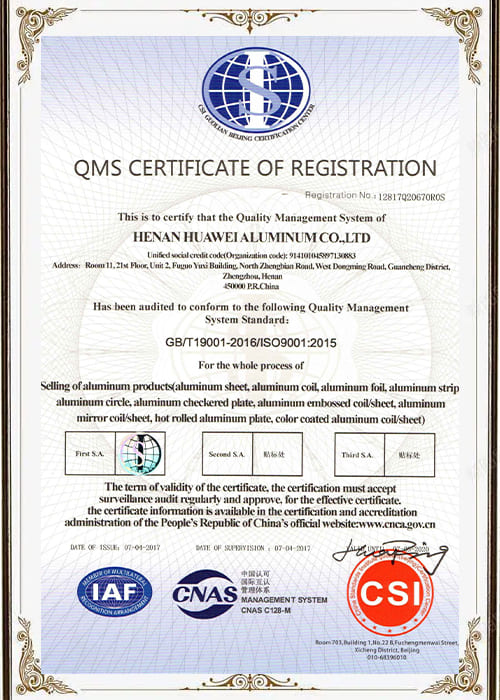
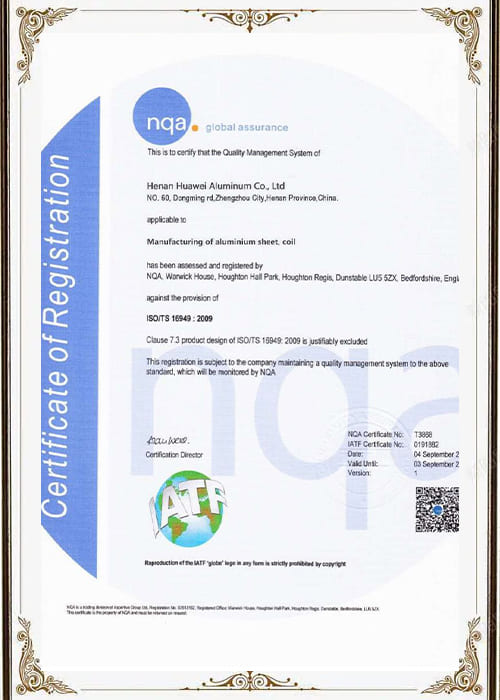
Henan Huawei Aluminum Co., Ltd. is an experienced aluminum manufacturer and supplier providing aluminum sheet, plate, coil, foil, strip, and tread plate for international customers.
With more than 20 years of aluminum production and export experience, Huawei Aluminum supplies 5052 H32 Aluminum Tread Plate for transportation, industrial flooring, platforms, stairs, ramps, and other applications.
10.1 Customized 5052 H32 Tread Plate
Huawei Aluminum can supply 5052 H32 tread plate according to customer requirements for:
- Alloy: 5052
- Temper: H32
- Thickness: Customized
- Width & Length: Customized
- Pattern: Diamond, 3-bar, 5-bar, and other available designs
- Surface: Mill finish or customized
- Edge: Mill edge or cut edge
- Processing: Cutting, bending, drilling, and other fabrication
Customized dimensions can also help reduce material waste and simplify downstream processing.
10.2 Quality Control
Huawei Aluminum focuses on key quality parameters that affect product performance and consistency.
Main inspection items include:
- Chemical composition
- Mechanical properties
- Thickness and dimensions
- Flatness
- Tread pattern consistency
- Surface quality
- Edge condition
- Packaging condition
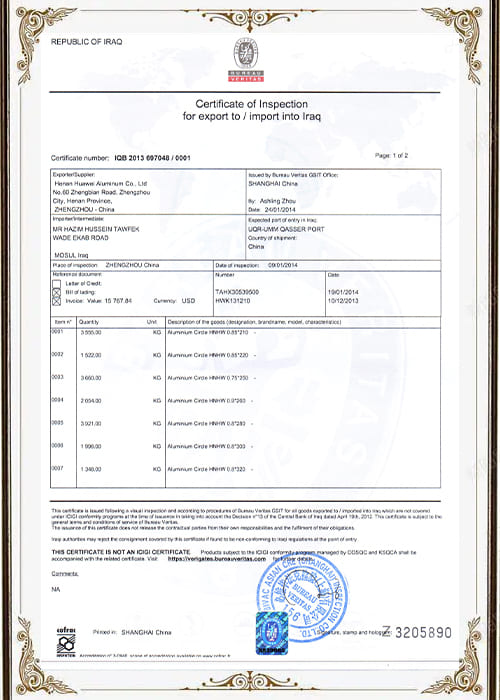
Mill Test Certificates (MTC) and third-party inspection can be provided when required.
10.3 Global Export Experience
Huawei Aluminum has supplied aluminum products to customers in 72 countries.
Its export experience supports customized specifications, export packaging, technical documentation, and international delivery requirements.
For customers looking for a 5052 H32 Aluminum Tread Plate manufacturer or supplier, Huawei Aluminum can provide customized products based on specific technical and application requirements.
11. Conclusion
5052 H32 Aluminum Tread Plate combines strength, corrosion resistance, formability, weldability, and lightweight performance with a raised surface that provides improved traction.
It is widely used for truck and trailer floors, stairs, ramps, walkways, industrial platforms, marine equipment, and maintenance areas.
When selecting 5052 H32 tread plate, buyers should consider base thickness, tread pattern, dimensions, loading conditions, support structure, operating environment, and applicable standards to ensure reliable performance.
With customized specifications, controlled production, and strict quality inspection, Henan Huawei Aluminum Co., Ltd. can supply 5052 H32 Aluminum Tread Plate for a wide range of industrial and transportation applications.
FAQs
1. What is 5052 H32 Aluminum Tread Plate?
5052 H32 Aluminum Tread Plate is a patterned aluminum product made from 5052 alloy in the H32 temper. Its raised surface provides additional traction for flooring, steps, platforms, and similar applications.
2. Is 5052 H32 suitable for outdoor applications?
Yes. 5052 aluminum offers good corrosion resistance in many atmospheric and outdoor environments. The specific operating environment should still be considered when selecting the material.
3. What are the common tread patterns?
Common patterns include diamond, 3-bar, and 5-bar designs. Pattern geometry and availability vary between manufacturers.
4. Is 5052 H32 aluminum tread plate weldable?
Yes. 5052 is generally suitable for common aluminum welding processes such as TIG and MIG. Proper surface preparation, filler selection, and welding parameters are important.
5. Is 5052 H32 stronger than 3003 aluminum tread plate?
5052 H32 generally provides higher strength than commonly used 3003 tread plate tempers while maintaining good corrosion resistance and formability.
6. How do I choose the right thickness?
Thickness depends on the load, span, support spacing, installation method, and application. Engineer
7. Can Huawei Aluminum customize 5052 H32 tread plate?
Yes. Henan Huawei Aluminum Co., Ltd. can provide customized 5052 H32 tread plate according to requirements for thickness, dimensions, tread pattern, surface finish, processing, and packaging.
Casting production process and its introduction
The purpose of melting and casting is to produce alloys with satisfactory composition and high purity of melt, so as to create favorable conditions for casting alloys of various shapes.
Melting and casting process steps: batching --- feeding --- melting --- stirring after melting, slag removal --- pre-analysis sampling --- adding alloy to adjust the composition, stirring --- refining --- static Setting——Guide furnace casting.
Hot rolling production process and its introduction
- 1. Hot rolling generally refers to rolling above the metal recrystallization temperature;
- 2. During the hot rolling process, the metal has both hardening and softening processes. Due to the influence of deformation speed, as long as the recovery and recrystallization process is too late, there will be a certain work hardening;
- 3. The recrystallization of the metal after hot rolling is incomplete, that is, the coexistence of recrystallized structure and deformed structure;
- 4. Hot rolling can improve the processing performance of metals and alloys, reduce or eliminate casting defects.
- 1. The casting and rolling temperature is generally between 680°C and 700°C. The lower the better, the stable casting and rolling line usually stops once a month or more to re-stand. During the production process, it is necessary to strictly control the liquid level of the front tank to prevent low liquid level;
- 2. Lubrication uses C powder with incomplete combustion of gas for lubrication, which is also one of the reasons for the dirty surface of casting and rolling materials;
- 3. The production speed is generally between 1.5m/min-2.5m/min;
- 4. The surface quality of products produced by casting and rolling is generally relatively low, and generally cannot meet products with special physical and chemical performance requirements.
- 1. Cold rolling refers to the rolling production method below the recrystallization temperature;
- 2. There will be no dynamic recrystallization during the rolling process, and the temperature will rise to the recovery temperature at most, and the cold rolling will appear in a work hardening state, and the work hardening rate will be large;
- 3. The cold-rolled sheet and strip have high dimensional accuracy, good surface quality, uniform structure and performance, and products in various states can be obtained with heat treatment;
- 4. Cold rolling can roll out thin strips, but at the same time, it has the disadvantages of high energy consumption for deformation and many processing passes.
- 1. Finishing is a processing method to make the cold-rolled sheet meet the customer's requirements, or to facilitate the subsequent processing of the product;
- 2. The finishing equipment can correct the defects produced in the hot rolling and cold rolling production process, such as cracked edge, oily, poor plate shape, residual stress, etc. It needs to ensure that no other defects are brought into the production process;
- 3. There are various finishing equipments, mainly including cross-cutting, slitting, stretching and straightening, annealing furnace, slitter, etc.
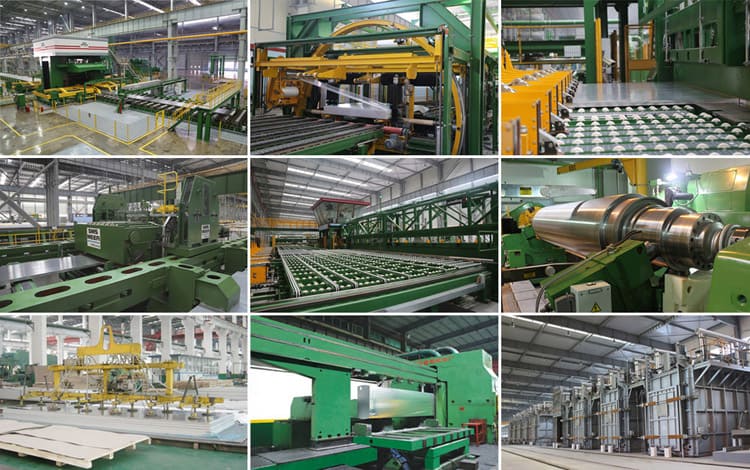
Casting and rolling process
Casting and rolling process: liquid metal, front box (liquid level control), casting and rolling machine (lubrication system, cooling water), shearing machine, coiling machine.
Cold rolling production process
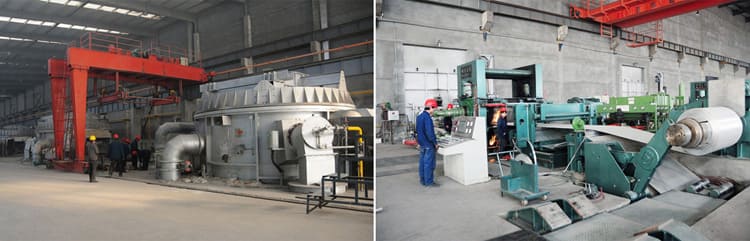
Introduction to finishing production process
Aluminum alloy has the characteristics of low density, good mechanical properties, good processing performance, non-toxic, easy to recycle, excellent electrical conductivity, heat transfer and corrosion resistance, so it has a wide range of applications.
Aerospace: used to make aircraft skins, fuselage frames, girders, rotors, propellers, fuel tanks, wall panels and landing gear struts, as well as rocket forging rings, spacecraft wall panels, etc.
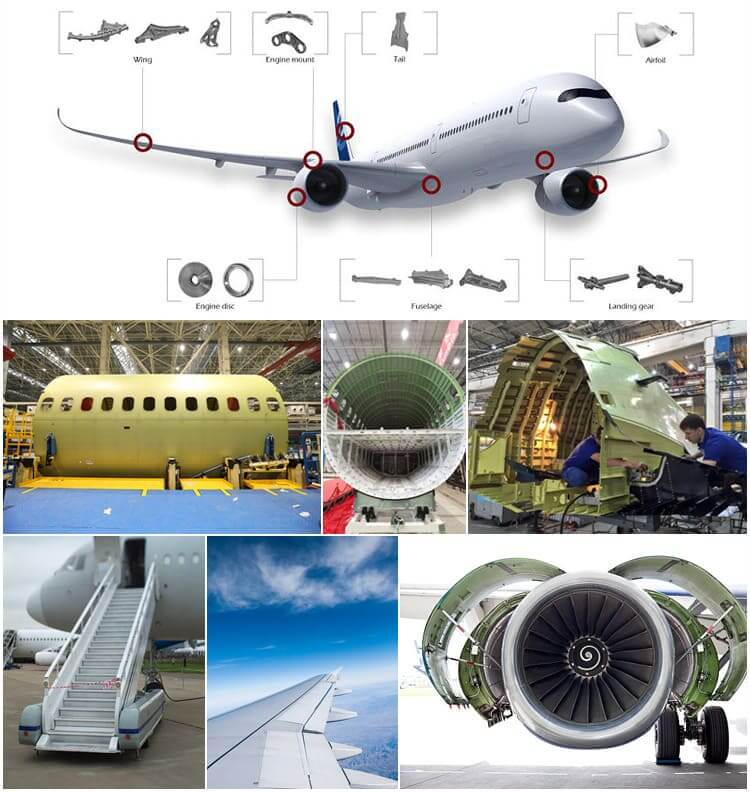
Aluminum alloy used for aerospace
Transportation: used for car body structure materials of automobiles, subway vehicles, railway passenger cars, high-speed passenger cars, doors and windows, shelves, automotive engine parts, air conditioners, radiators, body panels, wheels and ship materials.
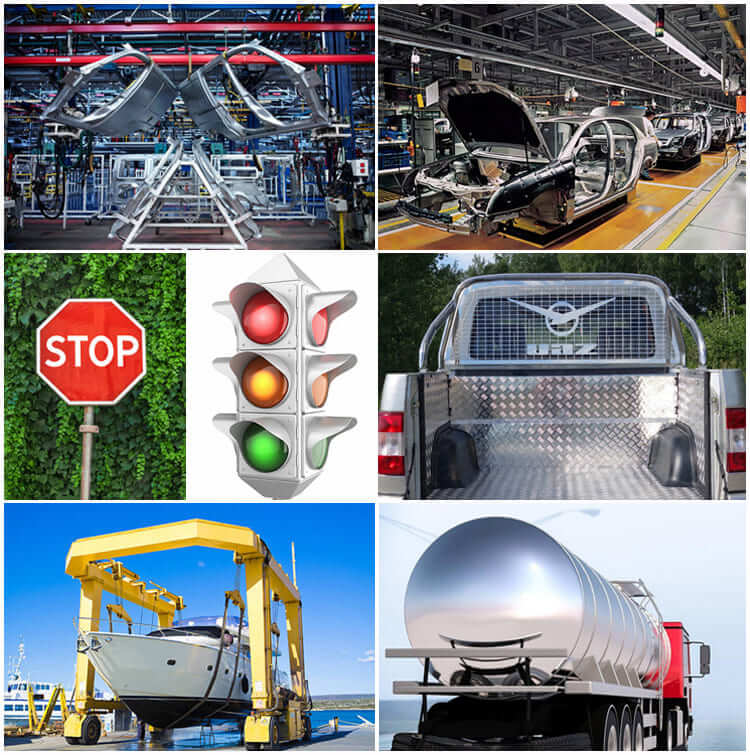
Traffic application
Packaging: All-aluminum pop cans are mainly used as metal packaging materials in the form of thin plates and foils, and are made into cans, lids, bottles, barrels, and packaging foils. Widely used in the packaging of beverages, food, cosmetics, medicines, cigarettes, industrial products, medicines, etc.
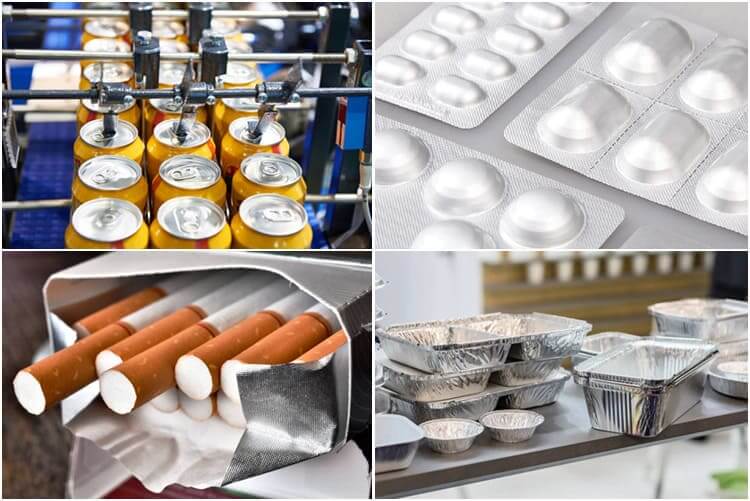
Packaging application
Printing: Mainly used to make PS plates, aluminum-based PS plates are a new type of material in the printing industry, used for automatic plate making and printing.
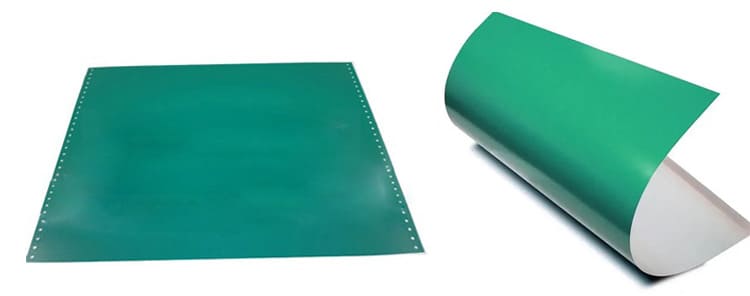
PS printing
Architectural decoration: aluminum alloy is widely used in building structures, doors and windows, suspended ceilings, decorative surfaces, etc. due to its good corrosion resistance, sufficient strength, excellent process performance and welding performance.
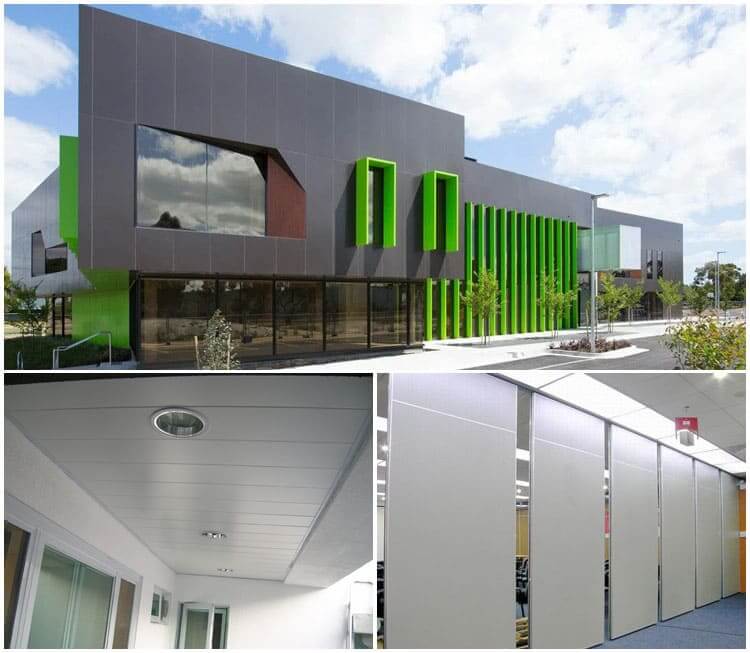
Aluminum alloy construction application
Electronic products: computers, mobile phones, refrigerator shells, radiators, etc.
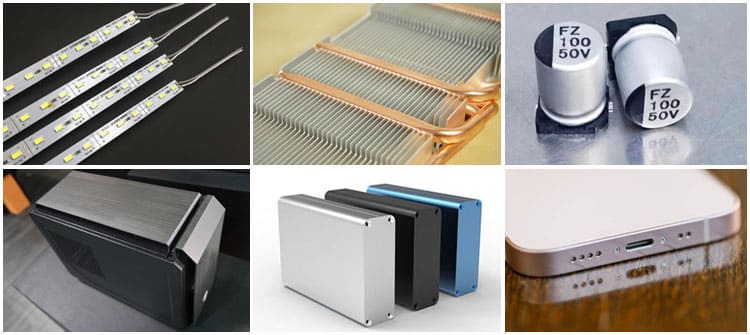
Electronic product application
Kitchen supplies: aluminum pots, aluminum basins, rice cooker liners, household aluminum foil, etc.
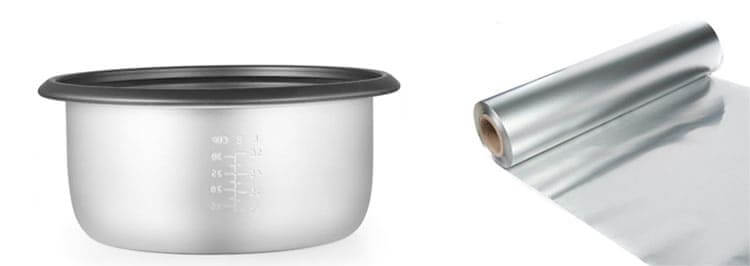
Kitchen application
Packaging Of Aluminum Sheet/Coil
Every detail of packaging is where we pursue perfect service. Our packaging process as a whole is as follows:
Lamination: clear film, blue film, micro-mucosal, high-mucosal, laser cutting film (2 brands, Novacell and Polyphem);
Protection: paper corner protectors, anti-pressure pads;
drying: desiccant;
Tray: fumigated harmless wooden tray, reusable iron tray;
Packing: Tic-tac-toe steel belt, or PVC packing belt;
Material Quality: Completely free from defects such as white rust, oil spots, rolling marks, edge damage, bends, dents, holes, break lines, scratches, etc., no coil set.
Port: Qingdao or other ports in China.
Lead time: 15-45 days.
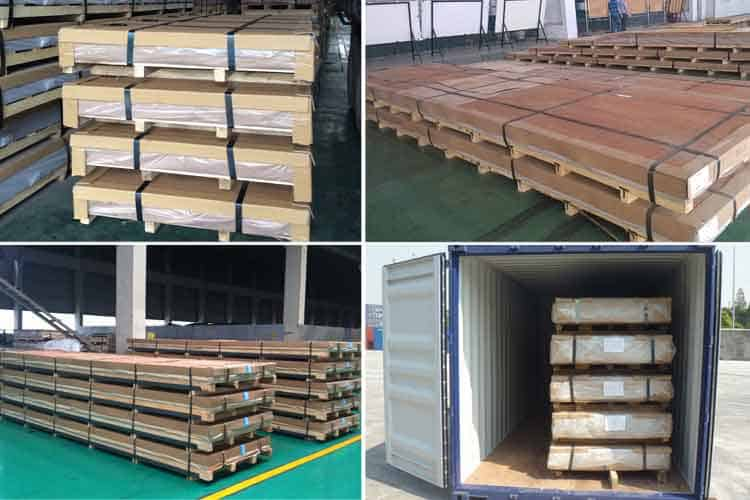
Aluminum sheet/plate packaging process
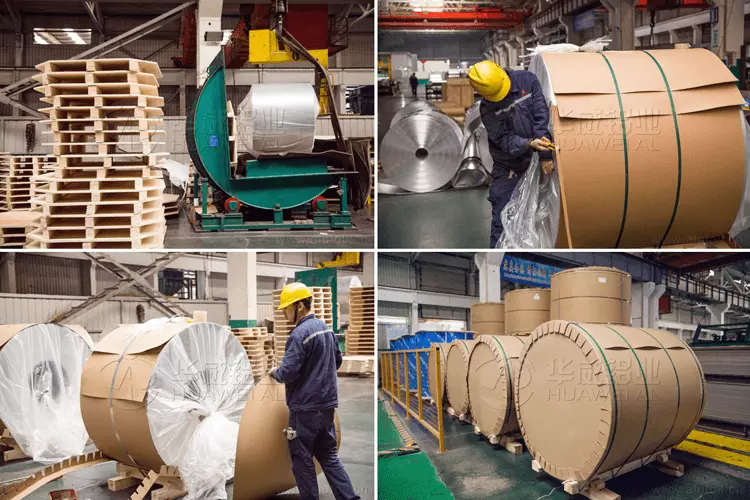
Aluminum coil packaging process
F: Are you a manufacturer or a trader?
Q: We are a manufacturer, our factory is at No.3 Weier Road, Industrial Zone, Gongyi, Henan, China.
F: What is the MOQ for ordering the product?
Q: Our MOQ is 5 tons, and some special products will have a minimum order quantity of 1 or 2 tons.
F: How long is your lead time?
Q: Generally our lead time is about 30 days.
F: Do your products have quality assurance?
Q: Yes, if there is a quality problem with our products, we will compensate the customer until they are satisfied.
Related Products


Latest Blogs
Common Alloys of Reefer Truck Used PE Coated Aluminum Coil
Discover common alloys of reefer truck used PE coated aluminum coil, including 3003, 3004, and 3105. Designed for excellent corrosion resistance, formability, and long-lasting outdoor performance.
Is Aluminum Conductive? Properties, Uses & Benefits Explained
Is aluminum conductive? Discover aluminum's electrical conductivity, key advantages, and why it is widely used in power transmission and industrial applications.
Unlocking Sustainability: The Truth About Aluminum Foil Recycling
Is Aluminum Foil Recyclable? Learn how aluminum foil can be recycled, how to prepare it properly, and why recycling helps reduce waste and save resources.
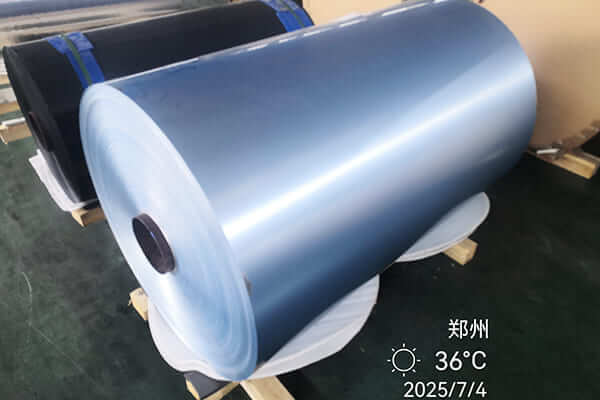
Coated Aluminum Foil for Packaging Applications | Strong & Reliable
High-quality coated aluminum foil for packaging applications, offering excellent barrier protection, durability, and consistent performance.