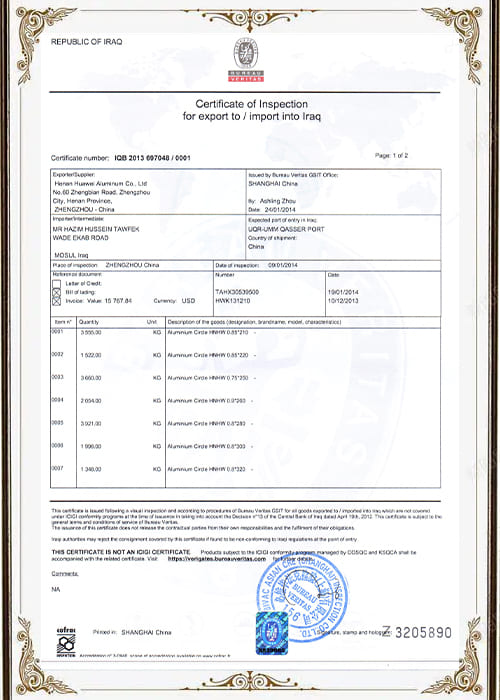
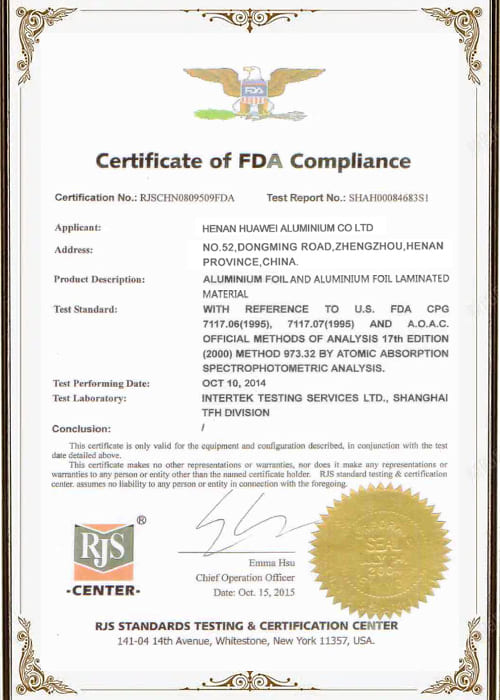
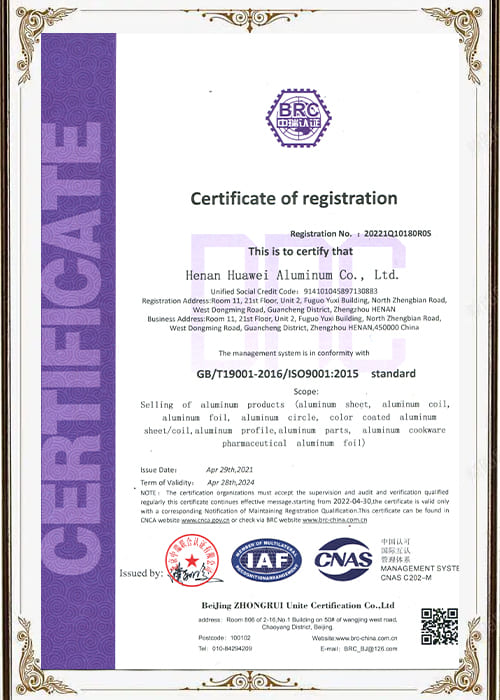
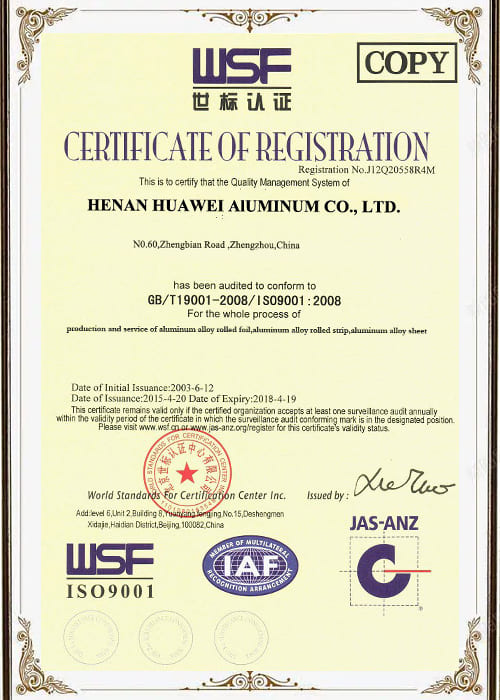
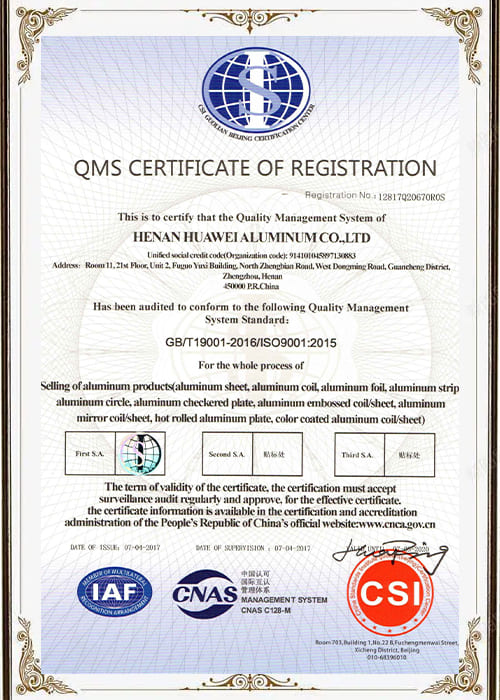
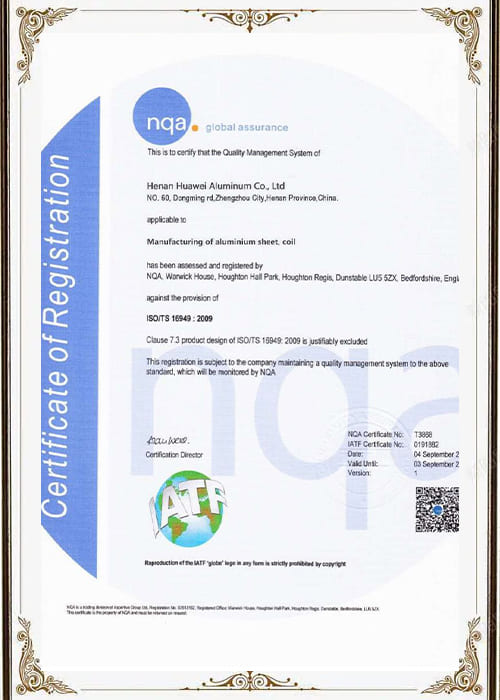
1. Panimula
ISO certified aluminum foil represents a high standard of consistency, kaligtasan, and quality assurance across a wide range of industrial and consumer applications.
While aluminum foil is a widely utilised material—from food wrapping and household preservation to blister packaging, automotive insulation, and electromagnetic shielding—its performance is determined by alloy composition, surface cleanliness, thermal resistance, pinhole level, thickness tolerance, and mechanical reliability.
ISO certification provides verifiable proof that manufacturers consistently meet internationally accepted management, environmental, and safety standards.
Higit na mahalaga, ISO compliance gives users confidence that aluminium foil is safe for food, gamot na, and sensitive performance-critical products.

ISO Certified Aluminum Foil
2. Understanding ISO Certification: Foundations and Relevance
What is ISO and Its Global Mandate
ISO—the International Organisation for Standardisation—was established in 1947 and today includes more than 167 member countries.
ISO does not manufacture products or issue regulatory laws; instead, it develops globally recognised standards related to manufacturing processes, risk management, resource control, environmental sustainability, and product testing.
ISO certification is performed by accredited third-party agencies that audit companies based on:
- documented process control
- continuous improvement
- product traceability
- safety compliance
- regulatory alignment
Companies that meet ISO standards receive certificates valid for typically three years, with annual surveillance audits.
In the case of aluminum foil manufacturing, ISO reinforces:
- consistent alloy composition
- controlled rolling parameters
- defined tolerance limits
- hygienic processing and packaging
This translates into fewer defects, improved product performance, and reduced customer complaints.
Key ISO Standards Relevant to Aluminum Foil
While ISO publishes over 24,000 Mga Pamantayan, only a few directly influence aluminum foil production and usage. Kabilang sa mga ito:
| ISO Standard | Core Focus | Relevance to Aluminum Foil |
|---|---|---|
| .ISO 9001 | Quality control system | Gauge consistency, defect control, batch traceability |
| .ISO 14001 | Environmental management | Waste, emissions, and recycling control |
| .ISO 22000 / FSSC 22000 | Food safety management | Migration safety, contamination prevention |
| .ISO 15378 | Pharma packaging compliance | Primary pharmaceutical packaging and GMP |
| .ISO 45001 | Occupational health/safety | Mill safety, hazardous operations |
| .ISO 50001 | Energy management | Heat/rolling energy efficiency |
These frameworks unify technical, compliance, and operational requirements across global markets.
ISO Certification vs. Other Certifications
| Certification Type | Paglalarawan | Impact on Aluminum Foil |
|---|---|---|
| ISO Certification | Comprehensive system certification | Ensures management, traceability, and stable processes |
| FDA Compliance | Estados Unidos. food contact approval | Approves the food safety composition |
| EU 1935/2004 | EU contact materials regulation | Governs safe materials entering food |
| RoHS/REACH | Hazardous substances control | Focused on chemical compliance |
| TÜV Certification | Third-party quality and performance testing | Product safety validation |
Key distinction:
ISO certifies the management system responsible for quality, not the product itself. Buyers benefit when ISO certification is paired with product-specific compliance tests.

Huawei Packaged Aluminum Foil
3. Why ISO Certification Matters for Aluminum Foil
ISO certification ensures that aluminum foil meets performance expectations consistently. Typical performance values include:
| Performance Indicator | Typical Value for ISO-Compliant Foil |
|---|---|
| Kapal ng tolerance | ±3% to ±6% depending on grade |
| Lakas ng paghatak (8011-H18) | ≥ 120 MPa |
| Pinhole density | ≤ 3 per m² for pharma foil |
| WVTR (with coating/lamination) | < 1 g/m²·day |
| OTR (oxygen barrier) | < 0.1 cm³/m²·day |
ISO certification matters because it ensures:
✓ Safety
No harmful residues, Mga pampadulas, or contaminants enter food or medicine.
✓ Quality reproducibility
Reduced variation in thickness or alloy performance.
✓ Traceability
Every roll can be traced to raw material batches.
✓ Risk reduction
Lower probability of recall or product failure.
✓ Market recognition
ISO compliance is often mandatory for export contracts.

HVAC Used ISO Certified Aluminum Foil
4. Common Alloys of ISO Certified Aluminum Foil
ISO certification does not define alloy types directly; gayunpaman, certain alloys dominate aluminum foil manufacturing due to their mechanical behavior, forming characteristics, paglaban sa kaagnasan, and food-/medicine-safe composition.
ISO-certified production ensures that their properties—such as chemical composition, lakas ng paghatak, elongation and pinhole resistance—remain consistent from batch to batch with full traceability.
| haluang metal | Karaniwang Temper | Mga Katangian ng Mekanikal (Karaniwang Saklaw) | Key Attributes | Mga Karaniwang Aplikasyon |
|---|---|---|---|---|
| 1100 | O, H14, H18 | Paghatak ng balat: 60–100 MPa Elongation: 20–40% | Napakahusay na ductility, high formability, mataas na kaagnasan paglaban | Papel de liha sa bahay, flexible packaging, insulation foils, nutrition wrap |
| 1145 | O, H19 | Paghatak ng balat: 65–110 MPa Elongation: 16–35% | Mataas na kadalisayan (>99% Al), low migration risk, excellent barrier properties | Cigarette foil, food sealing foil, aseptic packaging |
| 1235 | O, H18 | Paghatak ng balat: 70–120 MPa Elongation: 12–28% | Superior ductility, high workability, low pinhole susceptibility | Papel de liha sa bahay, converter foil, lamination-grade foil |
| 3003 | O, H24 | Paghatak ng balat: 90–130 MPa Elongation: 10–25% | Better mechanical strength vs. purong aluminyo, improved crack resistance | Aluminum containers, food trays, semi-rigid packaging |
| 8011 | O, H18, H22 | Paghatak ng balat: 100–150 MPa Elongation: 8–25% | Widely used for packaging; high barrier performance; good sealing | Medicine packaging, household heavy-duty foil, mga takip ng lalagyan ng pagkain |
| 8021 | O | Paghatak ng balat: 90–140 MPa Elongation: 10–30% | High tensile stability and enhanced pinhole resistance | Pharmaceutical cold-form foil, deep-draw foil, laminated barrier foil |
| 8079 | O | Paghatak ng balat: 90–120 MPa Elongation: 10–25% | High elongation and low thickness variation | Converter foil, composite laminates, high-barrier food packaging |
5. Relevant ISO Standards (overview and relevance)
Below are the principal ISO standards that matter for aluminum foil production and supply. Each has a distinct focus and practical consequences.
.ISO 9001 — Quality Management System (QMS)
Scope: Process control, document management, calibration, supplier control and continuous improvement.
Relevance: Ensures mills have documented sampling plans, calibrated thickness gauges, defined acceptance criteria and CAPA procedures.
What buyers can expect: routine MTR/COA issuance, documented non-conformance handling, and records retention for audits.
.ISO 14001 — Environmental Management System (EMS)
Scope: Environmental impacts, waste handling, emissions, resource use and continual environmental improvement.
Relevance: Important where buyers require low VOC coatings, responsible scrappage management and demonstrable recycling programs.
What buyers can expect: documented waste streams, recycling rates for trim scrap and evidence of emissions control.
.ISO 22000 / FSSC 22000 — Food Safety Management
Scope: HACCP-based food safety control systems covering hazard analysis, CCPs, hygiene, contamination control and traceability.
Relevance: Required or preferred for aluminum foil that directly contacts food (retort foil, blister lidding, cook-in-bag).
What buyers can expect: CCP monitoring records (hal., pinhole checks, lubricant removal), hygienic packaging processes and supplier control for inks/adhesives.
.ISO 15378 — Primary Packaging Materials for Medicinal Products
Scope: GMP-aligned requirements specifically for primary packaging used in medicines (hal., blister foil).
Relevance: For pharmaceutical buyers, .ISO 15378 supplies the audit trail and process controls regulators expect.
What buyers can expect: full batch traceability, validated cleaning/sterilization where applicable, extended retention of records.
.ISO 45001 — Occupational Health & Kaligtasan
Scope: Worker safety systems and risk control.
Relevance: Rolling mills involve heavy loads, high temperatures and sharp edges; .ISO 45001 reduces accident risk and business disruption.
What buyers can expect: evidence of safety programs, training records and incident investigation procedures.
.ISO 50001 — Energy Management (optional relevance)
Scope: Systematic energy performance improvement.
Relevance: For energy-intensive rolling operations, .ISO 50001 demonstrates efficiency and can be used in sustainability claims.
What buyers can expect: energy KPIs, initiatives for waste-heat recovery and improved carbon accounting.

8021 ISO Certified Aluminum Foil for Food Packaging
6. How ISO Certification Intersects with Product & Process Requirements for Foil
ISO systems provide the framework; product performance depends on controlled execution and supporting tests.
This section ties ISO requirements to the metrics that matter to foil users.
Material quality and traceability
ISO systems require documented incoming inspection and supplier appraisal. Practically that means for aluminum foil:
- Raw material MTRs (ingot/cast billet chemistry) are retained and linked to finished coil IDs.
- Lot traceability: each finished roll has a unique identifier tied to process records (rolling schedule, anneal, pagputol ng hiwa).
This allows rapid root-cause analysis if a downstream defect appears.
Process control (pagulong gulong, annealing, pagputol ng hiwa)
Key variables to control and document:
- Rolling pass reduction and cumulative thickness reduction schedules (affect microstructure and strength).
- Anneal temperature and hold time (affect temper, elongation and forming characteristics).
- Slitting tension and edge control (affect edge quality and telescoping risk).
ISO requires procedures, monitoring records, and deviation handling.
Quality control and test methods (kapal naman, tensile, puncture, mga pinhole)
.ISO 9001 mandates documented test methods and calibrated equipment. Typical QC program elements:
- Ang kapal: continuous in-line eddy-current gauging plus off-line micrometer checks.
- Gravimetric check: mass per area → thickness calculation using density ρ = 2.70 g/cm³:mass (g/m²)=2.70×thickness (M).\teksto{mass (g/m²)} = 2.70 \beses text{kapal naman (M)}.mass (g/m²)=2.70×thickness (M).Halimbawa: 24 µm → mass = 2.70 × 24 = 64.8 g/m².
- Tensile testing: per ASTM/EN methods to verify tensile strength and elongation.
- Pinhole inspection: visual/optical plus electronic conductivity tests; specify allowable pinholes per m².
- Puncture resistance: bench tests with defined indenter geometry and energy/force threshold.
ISO systems specify calibration frequency (hal., micrometers every 3–6 months, tensile frames annually) and document calibration certificates.
Supplier management and incoming material control
ISO requires supplier audits, certificate review and re-qualification metrics. For foil:
- verify secondary aluminum content (recycled material) and impurity limits;
- verify coatings/inks adhesives have appropriate food/pharma approvals.
Dokumentasyon & traceability (MTR, COA, batch IDs)
ISO requires retention of MTRs and COAs and linkage to finished product IDs.
For pharma or food, this documentation is often required by the downstream converter for their regulatory files.
7. Application Scenarios of ISO-Certified Aluminum Foil
Below are practical application scenarios showing how ISO certification enhances value.
Packaging ng Pagkain
Mga Halimbawa: retort pouches, ovenable trays, confectionery wrap, ready-meal laminates.
Why ISO helps: .ISO 22000 / FSSC 22000 plus ISO 9001 ensure contaminant control, validated cleaning of slitting lines, and traceable batch records.
Important product metrics: thickness tolerance (hal., 24 µm ±4%), pinhole number ≤ 2/m² (food-grade), migration test compliance per FDA/EU limits.
Pharmaceutical Packaging
Mga Halimbawa: cold-form blister foil, level-of-protection blister lidding.
Why ISO helps: .ISO 15378 (or equivalent GMP) is often a contractual requirement. Buyers expect ≤1 pinhole/m², thickness tolerance ±3%, and full batch-to-drug-batch traceability.
Pang industriya & Automotive
Mga Halimbawa: HVAC insulation facers, Mga kalasag ng init, EMI shielding layers, battery foil backing.
Why ISO helps: .ISO 9001 ensures consistent gauge and surface properties; .ISO 14001 and ISO 50001 support sustainability claims.
Important metrics: Reflectivity (>85% for certain insulation foils), mechanical strength for forming operations (tensile 100–150 MPa depending on alloy).
Sustainable Applications
Mga Halimbawa: circular packaging, post-consumer recycling pathways, energy-efficient foil rolling.
Why ISO helps: .ISO 14001 and ISO 50001 demonstrate environmental management, energy efficiency and documented scrap recycling rates — useful for corporate ESG reporting and for buyers seeking low-carbon supply chains.
8. Pangwakas na Salita
ISO certified aluminum foil represents a significant advance in verifying metal quality, manufacturing consistency, and global compliance.
Standards such as ISO 9001, .ISO 15378, and ISO 22000 ensure traceability, documented test methods, and contamination control.
ISO certification not only enhances consumer safety but also improves line performance, reduces scrap rates, and supports sustainable industrial development.
For buyers, ISO compliance means fewer quality disputes, assured regulatory acceptance, and stable long-term supply.
Mga FAQ
Q1 — Does ISO 9001 certify the foil itself?
Hindi. .ISO 9001 certifies the manufacturer’s quality management system, not the product. Buyers should require product testing (MTR/COA) in addition to ISO certificate.
Q2 — Which ISO standard is essential for food-contact foil?
.ISO 22000 (or FSSC 22000) addresses food safety systems; for food contact materials this should be paired with migration testing to relevant legal limits (EU/FDA).
Q3 — How tight should thickness tolerances be?
Typical tolerances: ±3% for high-precision pharma foil; ±4–6% for heavy-duty or standard household foil — always specify in the purchase order.
Q4 — How often are ISO certificates audited?
After initial certification, registrars usually perform annual surveillance audits and a full recertification audit every three years.
Q5 — What is a defensible pinhole limit?
For pharmaceutical primary packaging ≤1 pinhole/m² is common; for food packaging 1–5 pinholes/m² may be acceptable depending on application and barrier requirements. Always define the method used to detect pinholes.
Proseso ng paghahagis ng produksyon at ang pagpapakilala nito
Ang layunin ng pagtunaw at paghahagis ay upang makabuo ng mga haluang metal na may kasiya siyang komposisyon at mataas na kadalisayan ng matunaw, upang lumikha ng mga kanais nais na kondisyon para sa paghahagis ng mga haluang metal ng iba't ibang mga hugis.
Mga hakbang sa proseso ng pagtunaw at paghahagis: mga ka batch --- pagpapakain --- natutunaw na --- pagpapakilos pagkatapos matunaw, pag alis ng slag --- sampling bago ang pagsusuri --- pagdaragdag ng haluang metal upang ayusin ang komposisyon, nakakapukaw ng damdamin --- pagpipino --- static na Setting——Guide furnace casting.
Mainit na proseso ng produksyon ng pagulong at ang pagpapakilala nito
- 1. Mainit na pagulong sa pangkalahatan ay tumutukoy sa paggulong sa itaas ng metal recrystallization temperatura;
- 2. Sa panahon ng mainit na proseso ng pagulong, ang metal ay may parehong mga proseso ng pagpapatigas at paglambot. Dahil sa impluwensya ng bilis ng pagpapapangit, basta huli na ang recovery at recrystallization process, magkakaroon ng tiyak na gawaing pagpapatigas;
- 3. Ang recrystallization ng metal pagkatapos ng mainit na pagulong ay hindi kumpleto, na ang ibig sabihin ay, ang magkakasamang buhay ng recrystallized istraktura at deformed istraktura;
- 4. Ang mainit na pagulong ay maaaring mapabuti ang pagganap ng pagproseso ng mga metal at haluang metal, bawasan o alisin ang mga depekto sa paghahagis.
- 1. Ang temperatura ng paghahagis at pagulong ay karaniwang nasa pagitan ng 680 o C at 700 o C. Ang mas mababa ang mas mahusay na, Ang matatag na paghahagis at rolling line ay karaniwang tumitigil nang isang beses sa isang buwan o higit pa upang muling tumayo. Sa panahon ng proseso ng produksyon, kinakailangang mahigpit na kontrolin ang antas ng likido ng front tank upang maiwasan ang mababang antas ng likido;
- 2. Ang pagpapadulas ay gumagamit ng C powder na may hindi kumpletong pagkasunog ng gas para sa pagpapadulas, na isa rin sa mga dahilan ng maruming ibabaw ng casting at rolling materials;
- 3. Ang bilis ng produksyon ay karaniwang sa pagitan ng 1.5m / min-2.5m / min;
- 4. Ang kalidad ng ibabaw ng mga produkto na ginawa sa pamamagitan ng paghahagis at paggulong ay karaniwang medyo mababa, at sa pangkalahatan ay hindi maaaring matugunan ang mga produkto na may espesyal na pisikal at kemikal na mga kinakailangan sa pagganap.
- 1. Ang malamig na pagulong ay tumutukoy sa paraan ng paggulong ng produksyon sa ibaba ng temperatura ng recrystallization;
- 2. Hindi magkakaroon ng dynamic na recrystallization sa panahon ng proseso ng paggulong, at ang temperatura ay tataas sa temperatura ng pagbawi sa karamihan, at ang malamig na paggulong ay lilitaw sa isang trabaho hardening estado, at ang trabaho hardening rate ay magiging malaki;
- 3. Ang malamig na ginulong sheet at strip ay may mataas na dimensional na katumpakan, magandang kalidad ng ibabaw, unipormeng istraktura at pagganap, at mga produkto sa iba't ibang estado ay maaaring makuha sa heat treatment;
- 4. Malamig na pagulong ay maaaring i roll out manipis na strips, pero sabay sabay, ito ay may mga disadvantages ng mataas na pagkonsumo ng enerhiya para sa pagpapapangit at maraming mga pasa sa pagproseso.
- 1. Ang pagtatapos ay isang paraan ng pagproseso upang matugunan ng malamig na ginulong sheet ang mga kinakailangan ng customer, o upang mapadali ang kasunod na pagproseso ng produkto;
- 2. Ang mga kagamitan sa pagtatapos ay maaaring iwasto ang mga depekto na ginawa sa mainit na pagulong at malamig na proseso ng produksyon, tulad ng basag na gilid, may langis na, mahina ang hugis ng plato, natitirang stress, atbp. Kailangan nitong tiyakin na walang iba pang mga depekto na dinala sa proseso ng produksyon;
- 3. Mayroong iba't ibang mga kagamitan sa pagtatapos, pangunahin kabilang ang cross-cutting, pagputol ng hiwa, pag unat at pagtutuwid, annealing furnace, mga slitter, atbp.
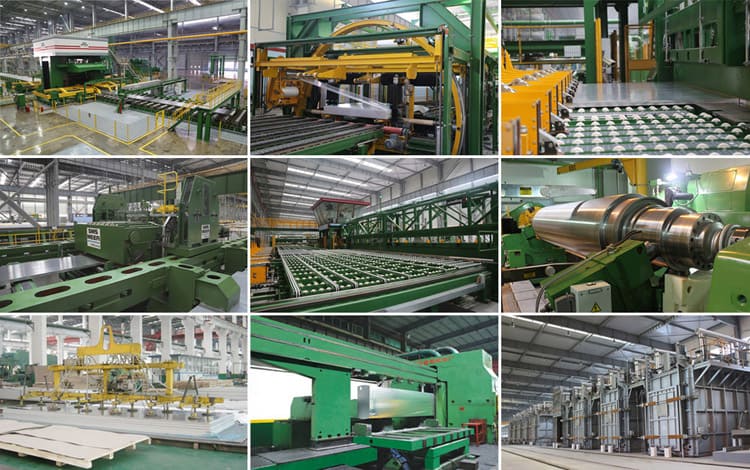
Proseso ng paghahagis at paggulong
Proseso ng paghahagis at paggulong: likidong metal, kahon sa harap (Kontrol sa antas ng likido), paghahagis at rolling machine (sistema ng pagpapadulas, paglamig ng tubig), paggupit ng makina, makina ng pag coiling.
Malamig na proseso ng produksyon ng pagulong
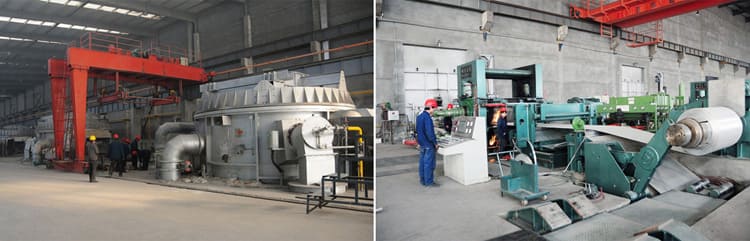
Panimula sa pagtatapos ng proseso ng produksyon
Aluminyo haluang metal ay may mga katangian ng mababang density, magandang mekanikal na katangian, magandang pagganap ng pagproseso, di nakakalason, madaling i recycle, mahusay na electrical kondaktibiti, paglipat ng init at paglaban sa kaagnasan, kaya ito ay may malawak na hanay ng mga application.
Aerospace: ginagamit upang gumawa ng mga balat ng sasakyang panghimpapawid, mga frame ng fuselage, mga girder, mga rotors, mga propeller, mga tangke ng gasolina, mga panel ng pader at mga struts ng landing gear, pati na rin ang rocket forging rings, mga panel ng pader ng spacecraft, atbp.
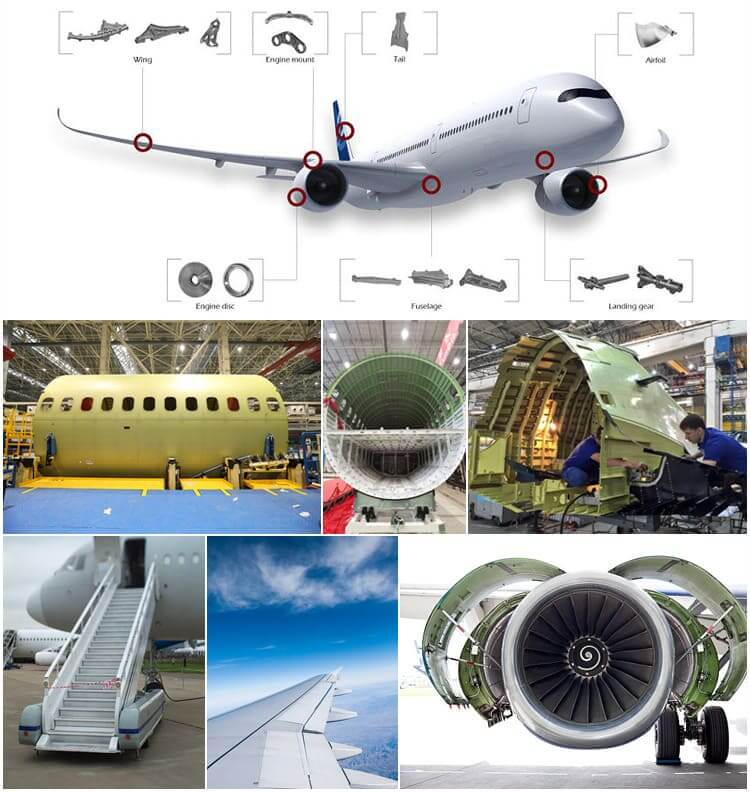
Aluminyo haluang metal na ginagamit para sa aerospace
Transportasyon: ginagamit para sa kotse katawan istraktura materyales ng mga sasakyan, Mga Sasakyan ng Subway, mga kotse ng pasahero ng tren, mabilis na mga kotse ng pasahero, mga pinto at bintana, mga istante, mga bahagi ng automotive engine, mga aircon, mga radiator, mga panel ng katawan, mga gulong at mga materyales ng barko.
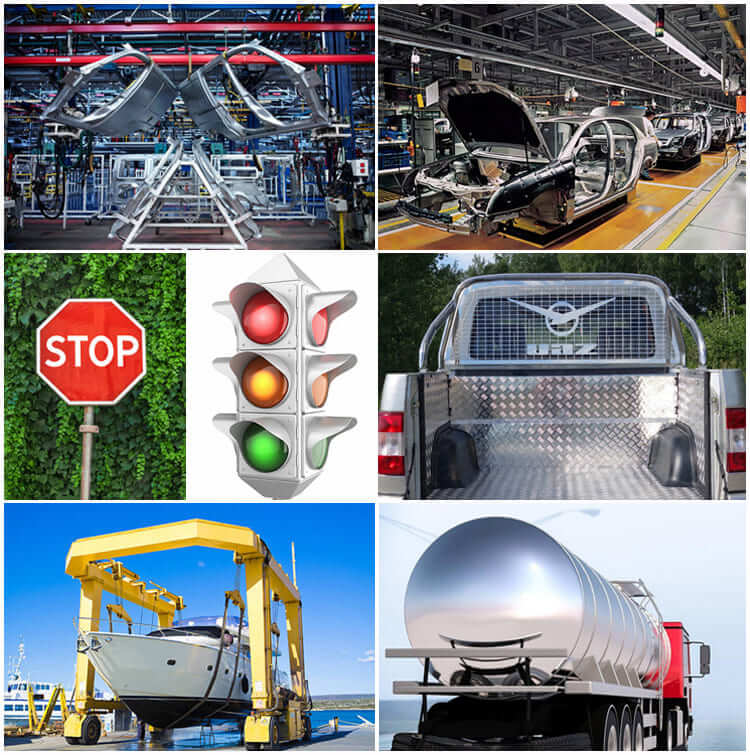
Application ng trapiko
Packaging: Ang lahat ng aluminyo pop lata ay pangunahing ginagamit bilang mga materyales sa packaging ng metal sa anyo ng mga manipis na plato at foils, at ginagawang lata, mga takip, mga bote, mga bariles, at packaging foils. Malawakang ginagamit sa packaging ng mga inumin, pagkain, mga pampaganda, mga gamot, mga sigarilyo, mga produktong pang industriya, mga gamot, atbp.
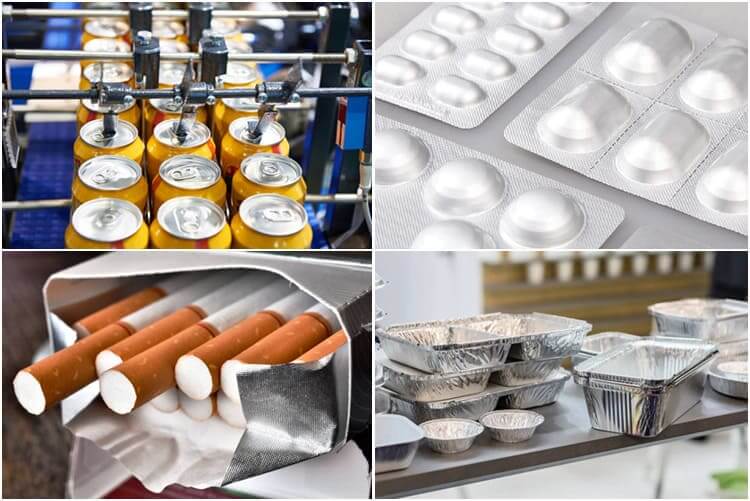
Application ng packaging
Pag-print: Pangunahing ginagamit upang gumawa ng PS plates, ang mga PS plate na nakabase sa aluminyo ay isang bagong uri ng materyal sa industriya ng pag print, ginagamit para sa awtomatikong paggawa ng plato at pag print.
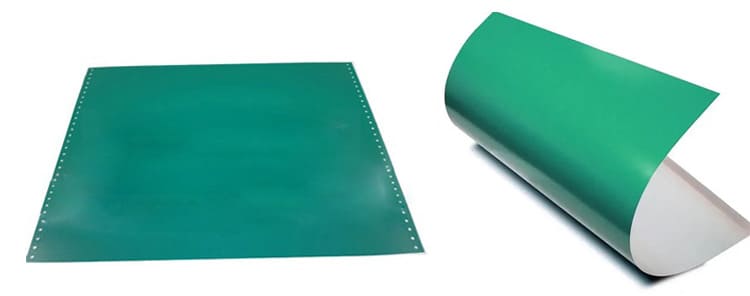
Pag print ng PS
Dekorasyon ng arkitektura: aluminyo haluang metal ay malawakang ginagamit sa mga istraktura ng gusali, mga pinto at bintana, suspendido ang mga kisame, pandekorasyon na ibabaw, atbp. dahil sa magandang kaagnasan nito paglaban, sapat na lakas, mahusay na pagganap ng proseso at pagganap ng hinang.

Application ng konstruksiyon ng haluang metal ng aluminyo
Mga produktong elektroniko: mga computer, mga mobile phone, mga shell ng refrigerator, mga radiator, atbp.
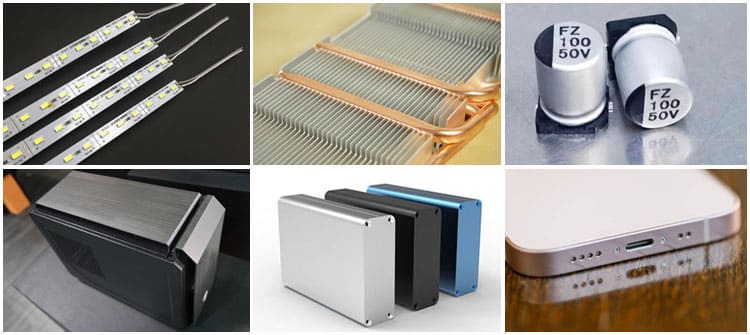
Electronic application ng produkto
Mga gamit sa kusina: mga kaldero ng aluminyo, aluminyo basins, mga liner ng rice cooker, sambahayan aluminyo foil, atbp.
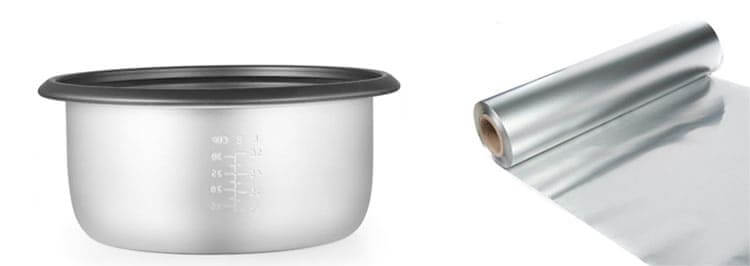
Application ng kusina
Packaging Ng Aluminum Sheet / Coil
Ang bawat detalye ng packaging ay kung saan namin ituloy ang perpektong serbisyo. Ang aming proseso ng packaging sa kabuuan ay ang mga sumusunod:
Paglalamina: malinaw na pelikula, asul na pelikula, mikro-mucosal, mataas na mucosal, laser pagputol ng pelikula (2 mga tatak, Novacell at Polyphem);
Proteksyon: mga tagapagtanggol ng sulok ng papel, mga pads laban sa presyon;
pagpapatayo ng mga: desiccant;
Tray: fumigated hindi nakakapinsala kahoy na tray, magagamit muli ang bakal na tray;
Pag-iimpake: Tik-tik-toe bakal sinturon, o PVC packing belt;
Kalidad ng Materyal: Ganap na libre mula sa mga depekto tulad ng puting kalawang, mga spot ng langis, mga rolling mark, pinsala sa gilid, mga baluktot, mga dent, mga butas, mga break lines, mga gasgas na, atbp., walang coil set.
Port: Qingdao o iba pang mga port sa China.
Lead oras: 15-45 mga araw.
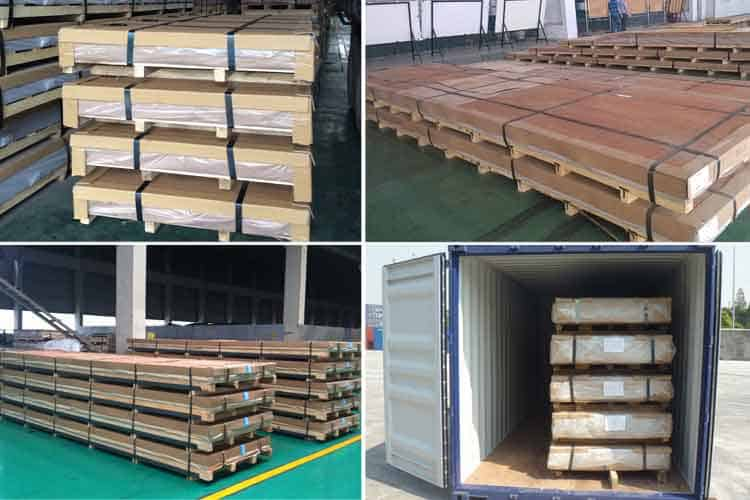
Aluminyo sheet / plate packaging proseso
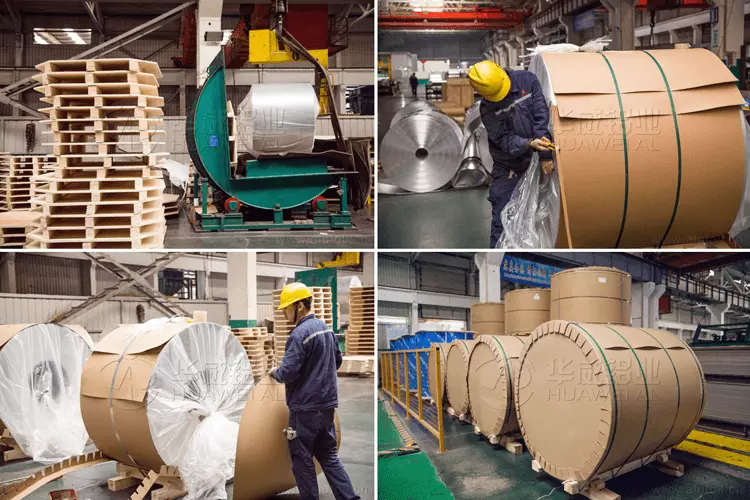
Aluminyo likawin packaging proseso
F: Ikaw ba ay isang tagagawa o isang mangangalakal?
Q: Kami ay isang tagagawa, ang factory namin ay sa No.3 Weier Road, Sonang Pang industriya, Gongyi, Henan, Tsina.
F: Ano ang MOQ para sa pag order ng produkto?
Q: Ang MOQ natin ay 5 tonelada, at ang ilang mga espesyal na produkto ay magkakaroon ng isang minimum na dami ng order ng 1 o 2 tonelada.
F: Gaano katagal ang iyong oras ng lead?
Q: Sa pangkalahatan ang aming lead time ay tungkol sa 30 mga araw.
F: Mayroon bang kalidad ng katiyakan ang iyong mga produkto?
Q: Oo nga, kung may problema sa quality sa products namin, kami ay mabayaran ang customer hanggang sa sila ay nasiyahan.
Mga Kaugnay na Produkto


Mga Pinakabagong Blog
5052 mga bes 6061 Aluminyo: Mga Pangunahing Pagkakaiba & Best Uses
Compare 5052 mga bes 6061 aluminum for strength, paglaban sa kaagnasan, pagiging formable, at machining. Discover which alloy best fits your project.
Common Alloys of Reefer Truck Used PE Coated Aluminum Coil
Discover common alloys of reefer truck used PE coated aluminum coil, kasama na ang 3003, 3004, at 3105. Designed for excellent corrosion resistance, pagiging formable, and long-lasting outdoor performance.
Is Aluminum Conductive? Mga Katangian, Gumagamit ng mga & Benefits Explained
Is aluminum conductive? Discover aluminum's electrical conductivity, key advantages, and why it is widely used in power transmission and industrial applications.
Unlocking Sustainability: The Truth About Aluminum Foil Recycling
Is Aluminum Foil Recyclable? Learn how aluminum foil can be recycled, how to prepare it properly, and why recycling helps reduce waste and save resources.