5052 mga bes 6061 Aluminyo: Mga Pangunahing Pagkakaiba & Best Uses
150 Mga Pananaw 2026-10-22 02:53:28
1. Panimula
Aluminum alloys play an important role in modern manufacturing because they combine low density, useful mechanical strength, paglaban sa kaagnasan, and flexible fabrication options.
Among the many grades available, 5052 aluminyo at 6061 aluminum are two widely used alloys, but they serve different engineering needs.
Understanding their differences helps manufacturers select materials that balance performance, processing requirements, tibay ng katawan, at gastos.
Although both alloys contain magnesium and offer good corrosion resistance, their strengthening mechanisms and typical applications differ.
Aluminyo 5052 belongs to the 5xxx series and relies primarily on solid-solution strengthening and cold work. It is particularly valued for corrosion resistance, sheet-metal forming, and welding.
Aluminyo 6061 belongs to the 6xxx series and contains magnesium and silicon, which allow it to gain strength through precipitation heat treatment.
Engineers often choose it for machined components, structural frames, and parts requiring a combination of strength and versatility.
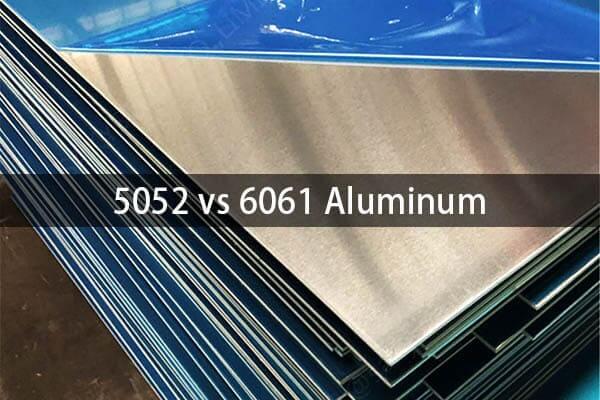
5052 mga bes 6061 Aluminyo
2. What Is Aluminum Alloy 5052?
2.1 Overview and Alloy Classification
5052 aluminyo is a wrought aluminum-magnesium alloy in the 5xxx series.
Its principal alloying element is magnesium, with chromium added in a smaller amount to support its overall performance.
Unlike heat-treatable 6xxx-series alloys, 5052 does not rely on conventional precipitation heat treatment to achieve its principal strength levels.
Instead, manufacturers control its properties mainly through alloy composition, malamig na nagtatrabaho, and temper selection.
The alloy offers a practical balance of moderate strength, magandang formability, reliable weldability, and excellent resistance to many atmospheric and marine environments.
These characteristics make it especially useful for fabricated products that must retain their shape and durability while remaining relatively lightweight.
5052 is commonly supplied as aluminum sheet, plate, and coil. Its combination of corrosion resistance and fabrication flexibility makes it suitable for equipment housings, marine panels, mga tangke ng gasolina, HVAC components, and general sheet-metal products.
2.2 Kemikal na komposisyon ng 5052 Aluminyo
Ang kemikal na komposisyon ng 5052 determines its characteristic balance of strength, workability, at paglaban sa kaagnasan.
The principal elements include magnesium and chromium, while the aluminum matrix forms the majority of the material.
| Elemento | Typical specification range or limit (wt.%) | Main role |
|---|---|---|
| Magnesium (Mg) | 2.2–2.8 | Provides solid-solution strengthening and contributes to strength and corrosion performance |
| Chromium (Cr) | 0.15–0.35 | Helps control material structure and supports corrosion-related performance |
| bakal na bakal (Fe) | ≤ 0.40 | Controlled impurity; excessive levels can affect ductility and surface quality |
| Silicon (Si Si) | ≤ 0.25 | Controlled impurity |
| Tanso (Cu) | ≤ 0.10 | Limited to help maintain the intended alloy characteristics |
| Mga mangganeso (Mn) | ≤ 0.10 | Controlled minor element |
| Sink (Zn) | ≤ 0.10 | Controlled minor element |
| Aluminyo (Al) | Balanse | Base metal |
Tala: Values shown are commonly published composition limits for 5052; confirm the governing material standard and mill test certificate for the ordered product.
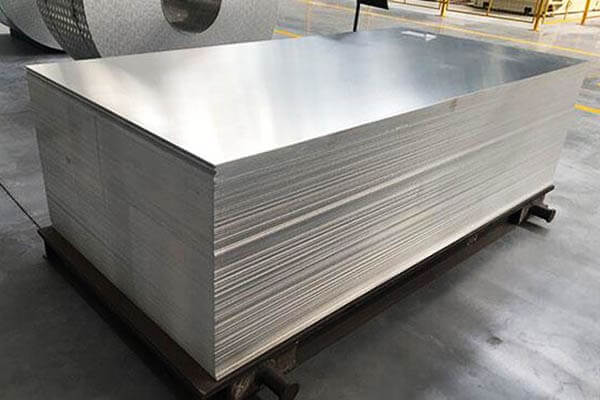
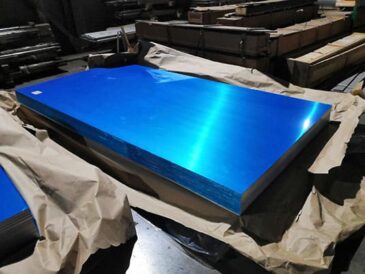
Huawei 5052 H32 Aluminum Sheet
2.3 Common Tempers of 5052 Aluminyo
5052 is available in several tempers, each offering a different balance between strength and formability.
| Temper | Paglalarawan | Typical characteristics | Common applications |
|---|---|---|---|
| 5052-O | Annealed na ang mga | High ductility and good formability; lower strength than strain-hardened tempers | Complex forming, drawn components, demanding bends |
| 5052-H32 | Tinigasan at pinatatag | Balanced strength, pagiging formable, at paglaban sa kaagnasan | Mga enclosure, mga panel, mga tangke, general sheet fabrication |
| 5052-H34 | More heavily strain-hardened and stabilized than H32 | Higher strength and hardness, generally with reduced formability | Panels and fabricated components requiring additional strength |
| 5052-H36 | More heavily strain-hardened than H34 | Mas mataas na lakas, with further limitations on forming | Applications where strength takes priority over tight bending |
3. What Is Aluminum Alloy 6061?
3.1 Overview and Alloy Classification
6061 aluminyo is a wrought aluminum-magnesium-silicon alloy in the 6xxx series.
It is a heat-treatable alloy that combines useful strength, magandang paglaban sa kaagnasan, kakayahang machining, and fabrication versatility.
Its ability to develop higher strength through precipitation heat treatment distinguishes it from non-heat-treatable alloys such as 5052.
Magnesium and silicon are the primary alloying elements responsible for its precipitation-hardening response.
Under appropriate heat-treatment conditions, these elements form fine precipitates that impede dislocation movement and increase the alloy’s strength.
Copper and chromium also contribute to the alloy’s overall characteristics.
One of 6061’s main advantages is its versatility across product forms.
Manufacturers can obtain it as sheet, plate, round bar, flat bar, tubo ng tubo, at paglabas, depending on the supplier’s production capabilities.
This flexibility makes it suitable for both machined components and structural assemblies.
Common applications include CNC-machined parts, equipment frames, mounting brackets, industrial fixtures, mga bahagi ng automotive, and structural members.
The exact product form and temper should match the component’s loading conditions and manufacturing process.
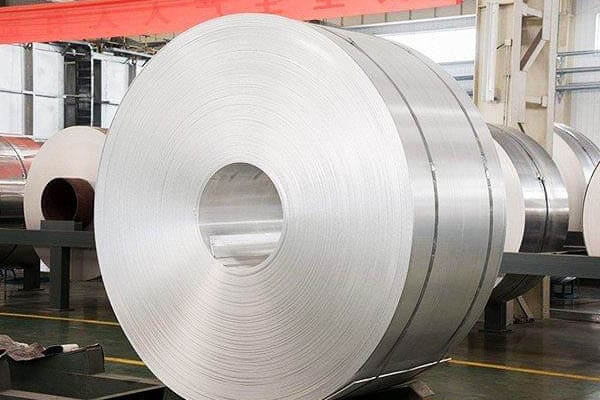
6061 Aluminum Coil Display
3.2 Kemikal na komposisyon ng 6061 Aluminyo
Ang kemikal na komposisyon ng 6061 supports its heat-treatment response, lakas ng loob, and general corrosion resistance.
Magnesium and silicon are particularly important because they enable precipitation hardening.
| Elemento | Typical specification range or limit (wt.%) | Main role |
|---|---|---|
| Magnesium (Mg) | 0.8–1.2 | Combines with silicon to support precipitation strengthening |
| Silicon (Si Si) | 0.4–0.8 | Combines with magnesium to form strengthening precipitates |
| Tanso (Cu) | 0.15–0.40 | Contributes to strength and precipitation-hardening behavior |
| Chromium (Cr) | 0.04–0.35 | Helps control microstructure and supports corrosion-related performance |
| bakal na bakal (Fe) | ≤ 0.70 | Controlled impurity; excessive levels can affect ductility and surface quality |
| Mga mangganeso (Mn) | ≤ 0.15 | Controlled minor element |
| Sink (Zn) | ≤ 0.25 | Controlled minor element |
| Aluminyo (Al) | Balanse | Base metal |
Tala: These are commonly published composition limits for 6061. Verify the applicable standard and material certificate for the specific product.
3.3 Common Tempers of 6061 Aluminyo
6061 is available in several tempers. The temper determines how the material has been processed and therefore affects its strength, ductility, kakayahang machining, and suitability for forming.
| Temper | Paglalarawan | Typical characteristics | Common applications |
|---|---|---|---|
| 6061-O | Annealed na ang mga | High ductility and relatively low strength | Forming stock and components requiring substantial deformation |
| 6061-T4 | Solusyon init ginagamot at natural na edad | Intermediate strength and useful formability | Selected formed components and products requiring further processing |
| 6061-T6 | Solusyon init ginagamot at artipisyal na edad | High strength and hardness relative to annealed conditions | Mga bahagi ng istruktura, machined parts, and equipment frames |
| 6061-T651 | T6-type heat-treated condition with stress relief by stretching | High strength with reduced residual stress for many plate applications | Machining plates, precision components, and industrial fixtures |
4. 5052 mga bes 6061 Aluminyo: Key Differences at a Glance
5052 at 6061 share the advantages of aluminum, kasama na ang mababang density, useful corrosion resistance, and broad industrial applicability.
Their main differences arise from alloy chemistry, strengthening mechanisms, temper-dependent mechanical properties, and fabrication behavior.
The following table summarizes the key differences for initial material selection.
| Comparison factor | 5052 Aluminyo | 6061 Aluminyo |
|---|---|---|
| Alloy series | 5xxx serye ng mga | 6xxx serye ng mga |
| Pangunahing mga elemento ng alloying | Magnesium and chromium | Magnesium and silicon, with copper and chromium |
| Heat-treatable | Hindi, not by conventional precipitation hardening | Oo nga |
| Main strengthening method | Solid-solution strengthening and cold work | Precipitation hardening; cold work can also affect properties |
| Lakas ng loob | Moderate to good, depending on temper | Often higher in T6/T651 than in common 5052 sheet tempers |
| Paglaban sa kaagnasan | Excellent in many atmospheric and marine environments | Good general corrosion resistance |
| Sheet-metal forming | Generally a strong choice for bending and forming | Highly dependent on temper; T6 is less suitable for tight bends |
| Weldability | Very good with suitable procedures | Mabuti na lang, but heat-affected-zone softening needs consideration |
| Machinability | Generally less favorable for precision machining | Sa pangkalahatan ay mabuti |
| Ang katigasan ng ulo | Depends on temper; commonly lower than 6061-T6 | Often higher in T6/T651 conditions |
| Fatigue behavior | Can perform well under cyclic loading | Depends on temper, geometry, Pagtatapos ng Ibabaw, and loading |
| Product forms | Commonly sheet, plate, and coil | Commonly sheet, plate, bar, tubo ng tubo, at paglabas |
| Typical applications | Marine panels, mga tangke, enclosures, formed sheet components | CNC parts, structural frames, mga fixtures, machined plates |
| Material selection priority | Paglaban sa kaagnasan, pagbuo ng, and welding | Lakas ng loob, machining, and structural versatility |
Important: The table describes general tendencies, not universal guarantees. A rigorous engineering comparison should specify the exact temper, product form, kapal naman, applicable standard, and test conditions.
5. Komposisyon ng Kemikal: 5052 mga bes 6061 Aluminyo
The chemical composition of aluminum alloys determines how they respond to forming, paggamot ng init, hinang, and environmental exposure.
Kahit na 5052 at 6061 both contain magnesium, their alloying systems differ significantly.
5052 relies primarily on magnesium, habang ang 6061 combines magnesium and silicon to enable precipitation hardening.
This difference influences their mechanical properties and helps explain why manufacturers use them for different applications.
5.1 Chemical Composition Comparison Table
The following table summarizes the commonly specified chemical composition limits for 5052 at 6061 aluminyo.
| Elemento | 5052 Aluminyo (wt.%) | 6061 Aluminyo (wt.%) |
|---|---|---|
| Aluminyo (Al) | Balanse | Balanse |
| Magnesium (Mg) | 2.2–2.8 | 0.8–1.2 |
| Silicon (Si Si) | ≤ 0.25 | 0.40–0.80 |
| Tanso (Cu) | ≤ 0.10 | 0.15–0.40 |
| Chromium (Cr) | 0.15–0.35 | 0.04–0.35 |
| bakal na bakal (Fe) | ≤ 0.40 | ≤ 0.70 |
| Mga mangganeso (Mn) | ≤ 0.10 | ≤ 0.15 |
| Sink (Zn) | ≤ 0.10 | ≤ 0.25 |
| Titanium (Ti) | Not separately specified in the cited 5052 composition table | ≤ 0.15 |
| Iba pang mga elemento, bawat isa ay | ≤ 0.05 | ≤ 0.05 |
| Iba pang mga elemento, kabuuan | ≤ 0.15 | ≤ 0.15 |
Tala: Composition limits are expressed in weight percent and reflect commonly published specifications. The applicable product standard and purchase specification govern acceptance; consult the material test certificate for the actual batch composition.
The table highlights three important differences:
- 5052 contains more magnesium. Its higher magnesium content contributes to solid-solution strengthening and supports its useful corrosion resistance and workability.
- 6061 contains more silicon and controlled amounts of magnesium. These elements enable the precipitation-hardening response that gives 6061-T6 and T651 their higher strength.
- 6061 permits more copper. Copper contributes to strength development, although it can also influence corrosion behavior. The actual performance depends on the alloy’s complete composition, Pamahiin, surface condition, and exposure environment.
Chemical composition establishes the foundation of an alloy’s performance, but it does not determine every property independently.
Rolling history, paggamot ng init, product thickness, and fabrication conditions also affect the finished material.

5052 Aluminum for Marine Applications
6. Mga Katangian ng Mekanikal: 5052 mga bes 6061 Aluminyo
Ang mga mekanikal na katangian ng 5052 at 6061 aluminum vary depending on temper, kapal naman, and product form.
Sa pangkalahatan, 6061-T6 offers higher strength and hardness, habang ang 5052 provides better sheet-forming performance and excellent corrosion resistance.
6.1 Lakas ng Kunat at Lakas ng Ani
Tensile strength measures the maximum stress a material withstands during a tensile test, while yield strength indicates when permanent deformation begins.
| Pag-aari | 5052-H32 | 6061-T6 |
|---|---|---|
| Lakas ng paghatak | 215–265 MPa | Approximately 290–310 MPa |
| Magbunga ng lakas | ≥ 160 MPa* | Approximately 240–276 MPa |
| Densidad ng katawan | Tinatayang 2.68 g/cm³ | Tinatayang 2.70 g/cm³ |
| Nababanat na modulus | Tinatayang 70 GPa | Tinatayang 69 GPa |
| Ang katigasan ng ulo | Tinatayang 60 HB | Tinatayang 95 HB |
Representative reference values, not universal guarantees. Actual properties depend on thickness, product form, applicable standard, and testing conditions.
Verify the supplier’s material certificate before use in engineering calculations.
6061-T6 generally provides higher strength, making it suitable for structural components and machined parts that require greater load-bearing capacity.
5052-H32 offers a useful balance of strength and formability for sheet-metal fabrication.
6.2 Hardness and Wear Resistance
6061-T6 generally has higher hardness than 5052-H32, making it suitable for components that require greater resistance to indentation and surface deformation.
Gayunpaman, hardness alone does not determine wear resistance. Friction, Pagtatapos ng Ibabaw, contact pressure, and operating conditions also affect service life.
Applications involving severe abrasion may require additional surface protection or a different material.
6.3 Pagpapahaba at Formability
5052 generally offers better formability for sheet-metal bending and fabrication, particularly in softer tempers such as 5052-O.
The H32 temper provides a practical balance between strength and ductility.
6061-T6 has lower formability than its annealed condition and may crack during tight bending if the bend radius, material thickness, and grain direction are unsuitable.
For complex forming operations, engineers should evaluate the required temper and manufacturing sequence before selecting the material.
6.4 Paglaban sa Pagkapagod
Both alloys can perform well under repeated loading, but fatigue life depends on stress levels, Pagtatapos ng Ibabaw, component geometry, hinang, and operating conditions.
5052 is suitable for many fabricated sheet components exposed to vibration.
6061 can also perform well in cyclic-loading applications, but welded 6061-T6 structures require particular attention because welding can reduce strength in the heat-affected zone.
6.5 Strength-to-Weight Ratio and Stiffness
Both alloys have similar densities and elastic moduli. Kaya nga, 6061’s higher strength does not automatically make an identically shaped component significantly stiffer.
6061-T6 may allow a lighter structural design when its higher strength supports reduced section thickness.
Samantala, 5052 remains an effective choice for lightweight formed panels and enclosures.
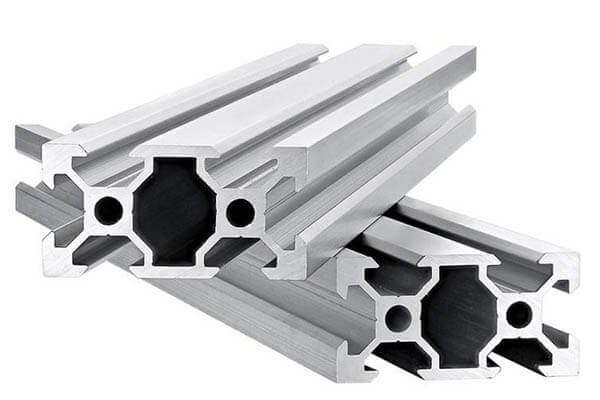
6061 T6 Aluminum Structural Profiles
7. Paglaban sa Kaagnasan: Which Alloy Performs Better?
Parehong 5052 at 6061 aluminum offer good corrosion resistance, pero 5052 generally performs better in marine environments and applications exposed to saltwater.
The best choice depends on the operating environment, surface condition, and required service life.
7.1 Corrosion Resistance in Different Environments
| Environment | 5052 Aluminyo | 6061 Aluminyo |
|---|---|---|
| Marine and saltwater | Napakahusay | Mabuti na lang |
| Industrial environments | Very good | Good to very good |
| Outdoor exposure | Napakahusay | Very good |
| Freshwater contact | Very good | Very good |
| Chemical exposure | Depends on the chemical | Depends on the chemical |
7.2 Pitting and Saltwater Corrosion
5052 contains magnesium, which helps it resist corrosion in saltwater and humid environments.
It is a popular choice for marine panels, mga tangke ng gasolina, and outdoor sheet-metal components.
6061 also provides good corrosion resistance, but prolonged exposure to chloride-rich environments may increase the risk of pitting.
Protective coatings and proper maintenance can improve its service life.
7.3 Corrosion Resistance After Welding
Both alloys offer good weldability, but welding can affect their performance and mechanical properties.
Welding may reduce the strength of 6061-T6 in the heat-affected zone, habang ang 5052 generally retains its corrosion-resistant characteristics well in welded sheet applications.
Proper welding procedures and post-weld cleaning remain important for both alloys.
8. Mga aplikasyon ng 5052 mga bes 6061 Aluminyo
5052 at 6061 aluminum serve different industrial needs because they offer different combinations of strength, pagiging formable, paglaban sa kaagnasan, at machinability.
5052 aluminum is generally preferred for formed sheet-metal products, habang ang 6061 aluminum is widely used for structural components and precision-machined parts.
8.1 Mga aplikasyon ng 5052 Aluminyo
5052 aluminum combines good corrosion resistance, napakahusay na formability, and reliable weldability.
It suits products that require bending, pag stamp ng, or fabrication, especially in humid and marine environments.
Mga Kagamitan sa Dagat
Its resistance to saltwater corrosion makes 5052 suitable for boat panels, marine enclosures, and selected marine components.
Fuel Tanks and Containers
Its formability and weldability support the fabrication of fuel tanks, fluid containers, and other formed sheet-metal products, subject to design and applicable requirements.
Electrical Enclosures and Cabinets
5052 can be bent into panels, housings, and cabinets while maintaining good corrosion resistance for indoor or outdoor use.
Transportation and General Fabrication
Truck body panels, equipment covers, mga panaklaw, and formed components benefit from its combination of low weight and workability.
8.2 Mga aplikasyon ng 6061 Aluminyo
6061 aluminyo, particularly in the T6 or T651 temper, offers higher strength and good machinability.
It is a practical choice for components that require dimensional accuracy, structural performance, or complex machined features.
CNC-Machined Components
6061 is widely used for precision brackets, housings, mga fixtures, and mechanical parts that require accurate dimensions and clean machining.
Structural Frames and Supports
Its strength-to-weight balance makes 6061 suitable for machine frames, support brackets, equipment structures, and other load-bearing components when properly designed.
Extrusions and Mechanical Parts
6061 is available in various product forms, including bars, mga plato, tubes, and extrusions, supporting a wide range of industrial designs.
Automotive and Sporting Equipment
Selected brackets, bicycle components, and lightweight mechanical parts use 6061 where strength, kakayahang machining, and low weight are important.
9. 5052 mga bes 6061 Aluminyo: Which Alloy Should You Choose?
The best alloy depends on your product’s manufacturing process, performance requirements, and operating environment.
Neither alloy is universally better; each offers advantages for specific applications.
9.1 Choose 5052 Aluminum When…
- Formability matters: You need to bend, stamp, roll, or draw sheet metal.
- Corrosion resistance is a priority: The product will operate in humid, baybayin, or marine environments.
- Welding is required: You need to fabricate tanks, cabinets, mga panel, or enclosures.
- The design uses thin sheet: You want a material that can accommodate relatively tight bends in a suitable temper.
Common choices include 5052-H32 for general sheet fabrication and 5052-O for applications requiring greater formability.
9.2 Choose 6061 Aluminum When…
- Higher strength is required: The component must support structural or mechanical loads.
- Machining is a major process: You need accurate dimensions, threaded holes, or complex features.
- The design uses plate, bar, tubo ng tubo, or extrusion: You need versatile product forms for industrial manufacturing.
- Strength and low weight must be balanced: The component needs good mechanical performance without excessive mass.
6061-T6 is a common choice for strong machined and structural components, while 6061-T651 is often used for plate machining where stress relief is beneficial.
10. Reliable Aluminum Alloy Supplier – Huawei Aluminum
Choosing a reliable aluminum supplier helps ensure consistent material quality, suitable product specifications, and dependable delivery.
Huawei Aluminum provides aluminum products for a range of industrial and commercial applications.
10.1 Wide Range of Aluminum Products
Different projects require different alloys, Tempers, mga kapal, and surface finishes.
A supplier with broad product capabilities can help buyers source materials that match their processing requirements.
Huawei Aluminum’s product capabilities include aluminum sheets, mga plato, mga coils, and foil, with value-added options such as color coating, embossing, pag anod ng, and mirror finishing, depending on the product and specification.
10.2 Support for Different Applications
5052 at 6061 serve different purposes, so buyers should communicate the intended application before confirming an order.
- Para sa 5052 aluminyo: Specify the required temper, kapal naman, sheet dimensions, forming requirements, and corrosion exposure.
- Para sa 6061 aluminyo: Specify the product form, Pamahiin, mechanical requirements, machining tolerances, and surface finish.
- For both alloys: Confirm applicable standards, inspection requirements, pag iimpake, and delivery arrangements.
10.3 Quality and Order Requirements
Before purchasing, request the relevant technical data and material documentation. Depending on the order, important checks may include:
- Chemical composition and mechanical properties
- Thickness and dimensional tolerances
- Surface quality and finish
- Applicable product standards
- Material test certificates and inspection records, where required
- Packaging and shipping requirements
Clear specifications help reduce material mismatches and support more consistent production.
For project quotations, provide the alloy, Pamahiin, dimensions, dami, surface requirements, and destination.
These details help the supplier evaluate the order and provide a more accurate quotation.
11. Pangwakas na Salita
5052 mga bes 6061 aluminum offer different advantages. 5052 aluminum is generally the better choice for sheet-metal forming, hinang, and applications requiring strong corrosion resistance.
Sa kabilang banda, 6061 aluminum is usually preferred for higher-strength structural components and precision-machined parts.
Before choosing, compare the required temper, product form, kapal naman, manufacturing process, and service environment.
A careful selection can improve product performance, simplify fabrication, and control overall production costs.
For reliable results, confirm the material specification and mechanical properties with your supplier before placing an order.
FAQs About 5052 mga bes 6061 Aluminyo
Is 5052 aluminum stronger than 6061?
Hindi. 6061-T6 generally offers higher tensile and yield strength, habang ang 5052 provides better formability and saltwater corrosion resistance.
Which alloy is better for bending?
5052 is generally better for sheet-metal bending, especially in suitable tempers such as O and H32. 6061-T6 requires larger bend radii to reduce cracking risk.
Which alloy is better for marine applications?
5052 is generally preferred for marine panels and fabricated components because of its strong saltwater corrosion resistance.
Which alloy is better for CNC machining?
6061-T6 or T651 is usually preferred for CNC machining because of its good machinability and higher strength.
Maaari bang 5052 at 6061 aluminum be welded?
Oo nga. Both are weldable, but welding can significantly reduce the strength of 6061-T6 near the weld. Proper welding procedures are essential.
Which alloy is more cost-effective?
It depends on material prices and processing costs. 5052 may suit formed sheet-metal products, habang ang 6061 may be more economical for machined or structural components.
Maaari bang 5052 replace 6061 aluminyo?
Only when the application requirements allow it. Check strength, forming needs, corrosion exposure, and the specified temper before substituting alloys.