1. Panimula
6061 T6 Aluminum Tread Plate combines the strength of 6061 aluminum alloy with a raised surface pattern designed for flooring, access platforms and industrial applications.
It offers a useful balance of mechanical strength, relatively low weight, corrosion resistance and fabrication flexibility.
Unlike ordinary flat aluminum sheet, tread plate features raised patterns on one surface. These patterns create a textured contact surface and give the plate a distinctive appearance.
Depending on the design and service conditions, manufacturers use it for walkways, hagdanan na, mga sahig ng sasakyan, equipment platforms and protective panels.
Ang 6061 haluang metal ay kabilang sa 6000 series of heat-treatable aluminum alloys. Magnesium and silicon are its principal alloying elements.
In the T6 temper, solution heat treatment and artificial aging increase its strength, making it suitable for applications that require better mechanical performance than many general-purpose aluminum tread plate grades.
Gayunpaman, selecting 6061 T6 aluminum tread plate involves more than choosing a strong alloy.
Buyers and engineers should also consider the base-metal thickness, raised pattern height, plate dimensions, support spacing, loading conditions and surface treatment.
These factors influence the finished component’s weight, rigidity, durability and service performance.
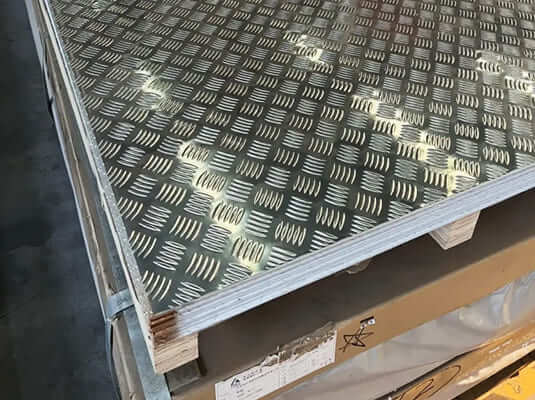
6061 T6 Aluminum Tread Plate
2. Ano ang 6061 T6 Aluminum Tread Plate?
6061 T6 aluminum tread plate is rolled aluminum plate made from alloy 6061, with a raised pattern on one face and a smooth back.
The T6 temper means the alloy has been heat treated to reach high strength.
2.1 Reading the Designation
| Part | Meaning |
|---|---|
| 6061 | Alloy number. The first digit “6” marks the aluminum-magnesium-silicon series |
| T6 | Temper: solution heat treated, then artificially aged |
| Tread plate | Plate with a raised pattern on one face for grip |
The alloy is heat-treatable. Its strength comes mainly from heat treatment, not from cold working. This is the key difference from alloys such as 5052 o 5754.
2.2 Other Names and Equivalents
| Pangalan | Notes |
|---|---|
| Tread plate | General technical term |
| Diamond plate | Common US term, from the look of the pattern |
| Checker plate / chequer plate | Common UK and European terms |
| AA 6061 | Aluminum Association designation |
| EN AW-6061 (AlMg1SiCu) | European designation |
| 3.3211 | German material number |
| UNS A96061 | Unified Numbering System reference |
Equivalence between standards is not always exact. Composition limits and mechanical requirements can differ between systems, so check the applicable standard before treating two grades as interchangeable.
3. Kemikal na komposisyon ng 6061 aluminyo haluang metal
Ang kemikal na komposisyon ng 6061 aluminyo determines its heat-treatment response, lakas ng loob, corrosion resistance and fabrication characteristics.
Magnesium and silicon are the principal alloying elements, while copper and chromium also contribute to the alloy’s overall performance.
Para sa 6061 T6 aluminum tread plate, chemical composition should comply with the applicable material specification, such as ASTM B632/B632M or the relevant alloy composition requirements referenced by the purchasing specification.
3.1 Chemical Composition Table of 6061 Aluminyo
The following table presents the commonly specified chemical composition limits for 6061 aluminyo, expressed as maximum or range values in weight percentage.
| Elemento | Komposisyon ng Kemikal (wt.%) |
|---|---|
| Silicon (Si Si) | 0.40–0.80 |
| bakal na bakal (Fe) | 0.70 .max. |
| Tanso (Cu) | 0.15–0.40 |
| Mga mangganeso (Mn) | 0.15 .max. |
| Magnesium (Mg) | 0.80–1.20 |
| Chromium (Cr) | 0.04–0.35 |
| Sink (Zn) | 0.25 .max. |
| Titanium (Ti) | 0.15 .max. |
| Iba pang mga Elemento, Ang bawat isa | 0.05 .max. |
| Iba pang mga Elemento, Kabuuang | 0.15 .max. |
| Aluminyo (Al) | Natitira |
Tala: These are commonly referenced 6061 composition limits.
The applicable product standard and its current edition should govern the final acceptance requirements.
Actual test results should be verified through the material certificate.
3.2 What Each Element Does
Magnesium (Mg) at Silicon (Si Si). These two elements are the heart of the alloy. During aging they combine to form fine particles of magnesium silicide (Mg₂Si). These particles block the movement of defects in the metal, and that is what gives T6 its high strength.
Tanso (Cu). Copper adds strength. It also lowers corrosion resistance slightly, which is why 6061 is a little less resistant to seawater than 5xxx alloys.
Chromium (Cr). Chromium controls grain growth and reduces sensitivity to stress corrosion. It also offsets some of the corrosion effect of copper.
bakal na bakal (Fe) and Manganese (Mn). These are mostly impurities or minor additions. They form hard particles that influence surface quality and forming behavior.
Sink (Zn) at Titanium (Ti). Zinc is limited to protect corrosion behavior. Titanium is added in small amounts as a grain refiner during casting.
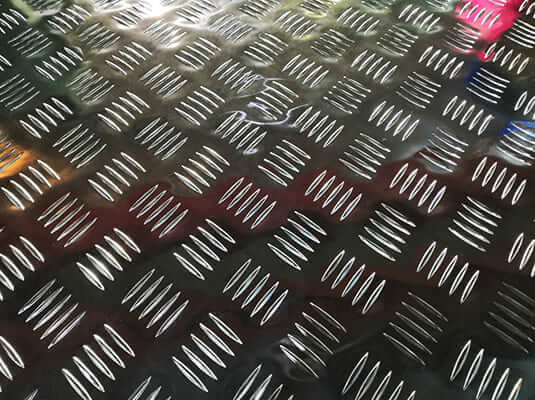
5 bar Aluminyo Tread Plate
4. Temper Explained: T6 vs. T651 vs. Other Tempers
The temper designation describes the processing and heat-treatment condition of an aluminum alloy.
Para sa 6061 aluminyo, temper selection affects strength, ductility, dimensional stability and suitability for subsequent fabrication.
T6 and T651 are both high-strength conditions, but they differ in their stress-relief processing.
Other tempers, tulad ng O, T4 and T6511, provide different balances of formability, strength and dimensional stability.
4.1 Ano ang 6061 T6?
6061-T6 undergoes solution heat treatment followed by artificial aging.
This process develops strengthening precipitates and gives the alloy its characteristic high-strength condition.
Main characteristics include:
- High tensile and yield strength.
- Good hardness and wear-related surface durability.
- Good machinability.
- Good corrosion resistance in many normal service environments.
- Lower formability than annealed 6061-O.
6061-T6 is suitable for tread plate applications that require a strong aluminum substrate.
Gayunpaman, its relatively high strength means that tight bending operations may require careful process design to avoid cracking.
4.2 Ano ang 6061 T651?
6061-T651 has the same basic solution heat-treated and artificially aged condition as T6, but it also undergoes controlled stretching to relieve residual stresses.
This stress-relief operation helps reduce distortion during machining, particularly when manufacturers remove significant amounts of material from the plate.
Its main characteristics include:
- High strength comparable to the corresponding T6 condition.
- Improved dimensional stability during machining.
- Reduced residual-stress-related distortion.
- Suitability for precision-machined plate components.
T651 is especially relevant to machining applications. Gayunpaman, buyers should confirm whether a specific tread plate product is available and certified in T651 rather than assuming that all 6061-T651 flat plate specifications apply to raised-pattern products.
4.3 Comparison of 6061 T6, T651 and Other Tempers
| Temper | Processing Condition | Strength Level | Formability | Main Characteristics | Mga Karaniwang Aplikasyon |
|---|---|---|---|---|---|
| O | Annealed na ang mga | Mababa ang | Napakahusay | Soft condition with high ductility | Deep forming and complex shaping |
| T4 | Solusyon init ginagamot at natural na edad | Katamtaman | Mabuti na lang | Offers a balance of strength and formability | Forming operations followed by possible further aging |
| T6 | Solusyon init ginagamot at artipisyal na edad | Mataas na | Moderate to limited | High strength and hardness | Mga bahagi ng istruktura, tread plate and machinery parts |
| T651 | Solution heat-treated, stress-relieved by stretching and artificially aged | Mataas na | Moderate to limited | High strength with improved dimensional stability | Precision-machined plate components |
| T6511 | T651-type treatment with additional straightening or minor processing as permitted by the applicable specification | Mataas na | Moderate to limited | Stress-relieved extruded product condition | Extruded bars, profiles and structural components |
Tala: Temper availability and mechanical properties depend on product form, thickness and applicable standards.
T651 and T6511 are not interchangeable designations. T6511 is generally associated with extruded products, whereas T651 is commonly used for stress-relieved plate and other applicable forms.
5. Mechanical and Physical Properties of 6061 T6 Aluminum Tread Plate
Properties show how the plate behaves under load, heat and wear.
This section separates mechanical properties (response to force) from physical properties (densidad, heat and electrical behavior).
5.1 Mga Katangian ng Mekanikal
| Pag-aari | Typical value for T6 / T651 (indicative) | What it means in practice |
|---|---|---|
| Lakas ng paghatak (Rm) | About 290–310 MPa | Maximum stress before fracture |
| Magbunga ng lakas (Rp0.2) | About 240–276 MPa | Stress at which permanent deformation begins |
| Pagpapahaba | About 8–12% | How far the plate stretches before breaking |
| Ang katigasan ng ulo (Brinell, HBW) | About 90–100 | Resistance to indentation and wear |
| Gupitin ang lakas | Tungkol sa 205 MPa | Resistance to shearing at fasteners and cut edges |
| Lakas ng pagkapagod (5×10⁸ cycles) | Tungkol sa 95 MPa | Resistance to repeated loading |
Tread plate standards may state different minimum values from smooth plate, and limits change with thickness. Treat this table as a comparison guide and request measured values on the mill certificate.
5.2 Mga Katangian ng Pisikal
| Pag-aari | Typical value |
|---|---|
| Densidad ng katawan | Tungkol sa 2.70 g/cm³ |
| Melting range | About 580–650 °C |
| Modulus ng pagkalastiko | Tungkol sa 69 GPa |
| Koepisyent ng thermal expansion (20–100 °C) | Tungkol sa 23.6 × 10⁻⁶ /K |
| Thermal kondaktibiti (at 25 °C) | About 160–170 W/m·K |
| Kondaktibiti ng kuryente | About 40–47% IACS |
| Magnetic behavior | Hindi magnetic |
6. Mga pagtutukoy ng 6061 T6 Aluminum Tread Plate
6061-T6 aluminum tread plate is available in different dimensions, thicknesses and raised patterns to meet industrial and commercial requirements.
A complete product specification should identify the aluminum alloy, Pamahiin, base-metal thickness, overall profile thickness, pattern, dimensions and applicable standard.
6.1 Main Product Specifications
| Parameter | Specification |
|---|---|
| Product Name | 6061 T6 Aluminum Tread Plate |
| haluang metal | 6061 |
| Temper | T6 |
| Serye ng haluang metal | 6000 Serye |
| Product Form | Aluminum Tread Plate / Sheet |
| Common Patterns | Five-bar, three-bar, diamond and customized patterns |
| Base-Metal Thickness | Customized according to requirements |
| Overall Thickness | Base thickness plus raised profile, subject to measurement convention |
| Lapad ng katawan | Na customize na |
| Haba | Na customize na |
| Tapos na sa ibabaw | Mill finish or agreed surface treatment |
| Pagproseso ng | Pagputol, paggupit, drilling and machining |
| Applicable Standard | ASTM B632/B632M or other agreed specifications |
| Mga Karaniwang Aplikasyon | Industrial flooring, mga plataporma, hagdanan na, vehicle floors and equipment |
The final specification should be confirmed with the supplier according to the required product form and production capabilities.
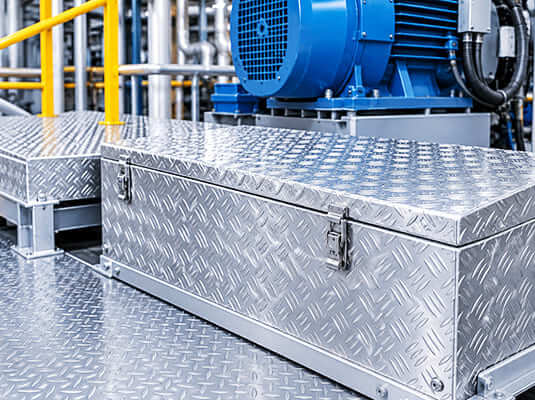
6061 T6 Aluminum Tread Plate for Equipment Covers
7. Key Properties and Advantages of 6061 T6 Aluminum Tread Plate
No single property explains why 6061 T6 tread plate is chosen.
It is the combination of strength, grip and low weight that makes it a practical material.
7.1 Mataas na Ratio ng Lakas sa Timbang
6061 T6 is among the strongest common tread plate alloys. It gives high strength at about one third the weight of steel.
Vehicles carry more payload, platforms are easier to install and handling costs fall.
7.2 Reliable Slip Resistance
The raised pattern gives feet, boots and tires a surface to grip. Grip is helped by drainage between the bars, which lets water and light debris escape.
There is an important limit. A pattern improves traction but does not make a surface slip-proof.
Oil, ice, wet leaves or fine dust can still reduce grip. For safety-critical walkways, consider added anti-slip coatings or follow the slip-resistance rules of your region.
7.3 Good Corrosion Resistance
Aluminum forms a thin, stable oxide layer that protects the metal. 6061 performs well in most outdoor and freshwater conditions with little maintenance.
In harsh marine or chloride environments, coating or a different alloy may be a better choice.
7.4 Wear and Dent Resistance
T6 is much harder than soft alloys such as 3003. It resists denting from tools, cargo and foot traffic, and the pattern hides minor scratches. This suits heavy-use floors and step plates.
7.5 Good Machinability
6061 machines more cleanly than most 5xxx alloys. Pagputol, drilling, routing and tapping are straightforward, which helps when fitting plates around hatches, brackets and fixtures.
7.6 Weldability, With Conditions
6061 can be welded by TIG and MIG, commonly with 4043 o 5356 filler wire.
The caution is strength loss in the heat-affected zone, as covered in Section 4. Good joint design, thicker sections at welds or mechanical fastening can compensate.
7.7 Surface Treatment Response
6061 accepts anodizing, painting and powder coating. Anodizing improves wear and corrosion resistance.
Patterned surfaces need good coverage into the grooves, so confirm the process with the finisher.
7.8 Easy Maintenance and Long Life
Tread plate is easy to wash and does not rust. Service life is long when it is kept clean and isolated from dissimilar metals.
7.9 Recyclability at Sustainability
Aluminum can be recycled repeatedly without losing its core properties.
Recycling uses only a small fraction of the energy needed to make primary metal, which supports sustainability and lifecycle cost goals.
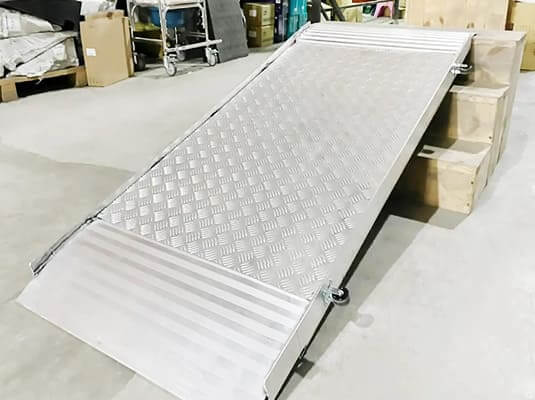
Aluminum Tread Plate for Rump
8. Proseso ng Paggawa ng 6061 T6 Aluminum Tread Plate
Making tread plate combines heavy rolling, pattern forming and heat treatment.
Each stage controls a specific quality factor, such as composition, pattern shape, strength or flatness.
8.1 Process Overview
| Stage | What happens | Quality factor controlled |
|---|---|---|
| 1. Melting and alloying | Aluminum and alloying elements are melted and adjusted to 6061 limits | Komposisyon |
| 2. Paghahagis | Molten metal is cast into slabs by direct-chill casting | Internal quality, inclusions |
| 3. Homogenizing | Slabs are heated and held to even out the structure | Uniform properties |
| 4. Scalping | Slab surface is machined to remove defects | Surface quality |
| 5. Mainit na pagulong | Slab is rolled to the intermediate thickness | Ang kapal, structure |
| 6. Pattern rolling | Plate passes through patterned rolls to form raised bars | Pattern shape and height |
| 7. Solution heat treatment and quench | Plate is heated, then cooled rapidly | Dissolved alloying elements |
| 8. Stretching (for T651) | Plate is stretched to relieve stress | Flatness, natitirang stress |
| 9. Artipisyal na pagtanda | Plate is held at moderate temperature | Final strength (T6 condition) |
| 10. Cutting and inspection | Plate is cut to size and checked | Mga Dimensyon, ibabaw, mga katangian |
The exact sequence varies by mill. Halimbawa na lang, some producers pattern-roll before heat treatment and others use different routes for thinner or thicker plate.
9. Mga aplikasyon ng 6061 T6 Aluminum Tread Plate
6061 T6 aluminum tread plate combines high strength, low weight, paglaban sa kaagnasan, and a raised surface pattern.
These properties make it suitable for applications that require durable flooring, protective coverings, and lightweight structural components.
Its raised pattern can improve surface grip, although actual slip resistance depends on the pattern design, surface condition, footwear, and operating environment.
9.1 Industrial Flooring and Walkways
Factories, mga workshop, and processing facilities use 6061 T6 aluminum tread plate for platforms, mga daanan ng mga daan, access routes, and equipment flooring.
Its strength-to-weight ratio helps reduce the weight of platforms while maintaining good mechanical performance.
Common applications include:
- Factory walkways and maintenance platforms
- Equipment access floors
- Machine covers and service platforms
- Lightweight industrial stairs and steps
9.2 Transportation and Vehicle Flooring
The combination of strength and low density makes 6061 T6 tread plate useful in transportation equipment.
Manufacturers use it for flooring and protective panels where weight reduction and durability are important.
Typical applications include:
- Truck and trailer flooring
- Utility vehicle floors
- Vehicle step plates and access platforms
- Interior flooring for specialized transport equipment
- Protective panels in commercial vehicles
9.3 Marine and Offshore Equipment
6061 aluminum offers good general corrosion resistance, making it suitable for selected marine components.
Tread plate can provide a textured surface for access areas and equipment platforms.
Typical applications include:
- Boat access steps and walkways
- Marine equipment platforms
- Deck accessories and protective covers
- Offshore maintenance platforms
9.4 Construction and Architectural Applications
6061 T6 aluminum tread plate is also used in construction projects that require lightweight, matibay na matibay, and easy-to-fabricate metal panels.
Examples include:
- Building access platforms
- Stair treads and landing plates
- Protective floor panels
- Equipment enclosures
- Decorative and functional wall or floor coverings
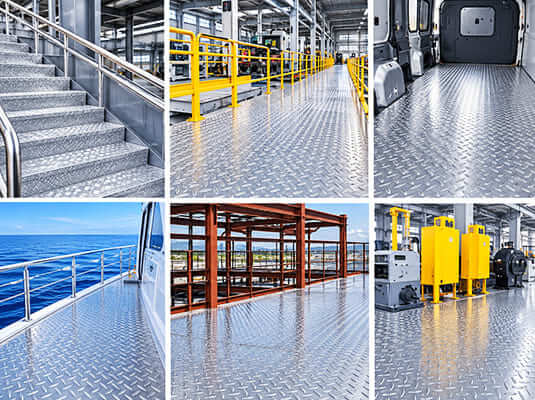
Mga Karaniwang Aplikasyon ng 6061 T6 Aluminum Tread Plate
9.5 Equipment Covers and Protective Panels
The raised pattern gives tread plate a distinctive appearance and helps conceal minor surface marks.
Its rigidity and machinability also make it suitable for fabricated covers and protective components.
Common uses include:
- Machinery covers
- Electrical and mechanical equipment enclosures
- Inspection access panels
- Storage compartment covers
- Protective plates for industrial equipment
10. 6061 T6 Aluminum Tread Plate vs. Other Aluminum Alloys
Different aluminum alloys offer different combinations of strength, pagiging formable, paglaban sa kaagnasan, at gastos.
Kahit na 6061 T6 provides a useful balance of mechanical properties, other alloys may offer better performance for specific applications.
10.1 Comparison of Common Aluminum Tread Plate Alloys
| Comparison Item | 6061 T6 | 3003 H22/H24 | 5052 H32 | 5083 H116 / H321 |
|---|---|---|---|---|
| Alloy series | 6000 serye ng mga | 3000 serye ng mga | 5000 serye ng mga | 5000 serye ng mga |
| Pangunahing mga elemento ng alloying | Magnesium and silicon | Mga mangganeso | Magnesium | Magnesium and manganese |
| Strength level | Mataas na | Low to medium | Medium to high | Mataas na |
| Paglaban sa kaagnasan | Mabuti na lang | Mabuti na lang | Very good | Excellent in many marine environments |
| Formability | Good in suitable conditions | Very good | Mabuti na lang | Katamtaman |
| Weldability | Mabuti na lang, with strength reduction in the heat-affected zone | Mabuti na lang | Mabuti na lang | Mabuti na lang |
| Machinability | Mabuti na lang | Fair | Fair | Fair |
| Typical applications | Industrial platforms, vehicle flooring, equipment panels | General flooring, mga pandekorasyon na panel, light-duty covers | Marine flooring, vehicle components, industrial panels | Marine structures, offshore platforms, heavy-duty equipment |
| Main advantage | High strength and versatile fabrication | Good formability and cost-effectiveness | Strong corrosion resistance and good formability | High strength and marine corrosion resistance |
Tala: The table provides a general alloy-level comparison. Actual performance depends on product form, Pamahiin, kapal naman, tread pattern, and applicable product specifications.
11. Quality Control and Testing Standards
Quality control decides whether the plate performs safely and looks right. This section covers what to inspect, how it is tested and which standards apply.
11.1 Key Quality Parameters
| Parameter | What it affects | Typical test method |
|---|---|---|
| Komposisyon ng haluang metal | Lakas ng loob, paglaban sa kaagnasan, aging response | Spectrometer analysis |
| Mga katangian ng makina | Load capacity, dent resistance | Tensile and hardness tests |
| Ang kapal | Timbang, lakas ng loob, fit | Micrometer or caliper at the base and over the pattern |
| Pattern height and shape | Grip, appearance, drainage | Pattern gauge and visual inspection |
| Flatness | Pagputol, fitting, appearance | Straightedge and gap measurement |
| Surface quality | Appearance, anodizing and coating results | Visual inspection under good light |
| Width and length | Fit and waste | Tape or laser measurement |
11.2 Reference Standards and Compliance
| Standard or regulation | Scope |
|---|---|
| ASTM B632 | Aluminum-alloy rolled tread plate (USA) |
| EN 1386 | Aluminum and aluminum alloys, tread plate (Europa) |
| EN 485 and EN 573-3 | Mga katangian ng makina, tolerances and composition for wrought aluminum |
| GB/T 3880 | Aluminum and aluminum alloy plate and strip (Tsina) |
| EN 10204 | Types of inspection documents |
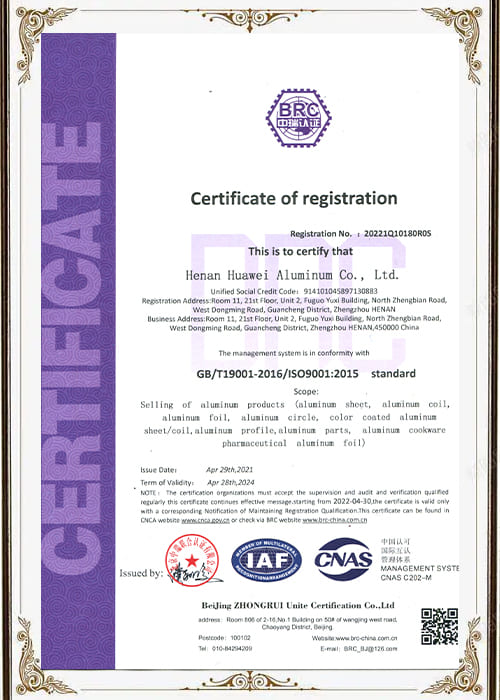
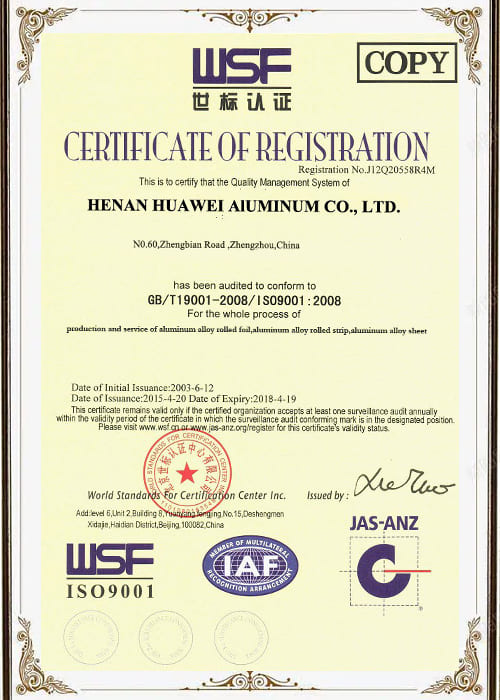
| .ISO 9001 | Quality management system |
| Customer or classification specification | May add requirements for transport, rail or marine use |
Standards change over time. Confirm the current edition of each one, and agree in writing which one governs your order.
12. Price Factors of 6061 T6 Aluminum Tread Plate
The cheapest quote is rarely the lowest cost. Understanding what drives the price helps you compare quotes fairly and avoid surprises.
This section does not quote prices, because aluminum prices move constantly. Ask your supplier for a current quotation.
12.1 Main Price Drivers
| Kadahilanan | Effect on price |
|---|---|
| Aluminum market price (such as the LME price) | The largest share of the cost; changes over time |
| Alloy and temper | 6061 T6 costs more than 3003 o 5052 because of the alloy and heat treatment |
| Ang kapal | Thicker plate uses more metal and costs more per piece |
| Pattern | Common patterns such as five-bar are usually cheaper and easier to source |
| Plate size | Standard sizes cost less than large or special sizes |
| Pagproseso ng | Cutting to size, flattening, film and special packing add cost |
| Certificates and approvals | Uri ng 3.1 certificates or classification approval add cost |
| Order volume | Larger orders usually lower the unit price |
| Origin and delivery terms | Freight, duties and incoterms change the landed cost |
12.2 How Price Is Usually Quoted
Aluminum plate is often priced per kilogram, per ton or per piece. The quote usually combines the metal price and a processing premium.
Ask whether the quote is fixed or linked to a market price, and for how long it is valid. Because aluminum prices move, a quote that is not time-limited can be misleading.
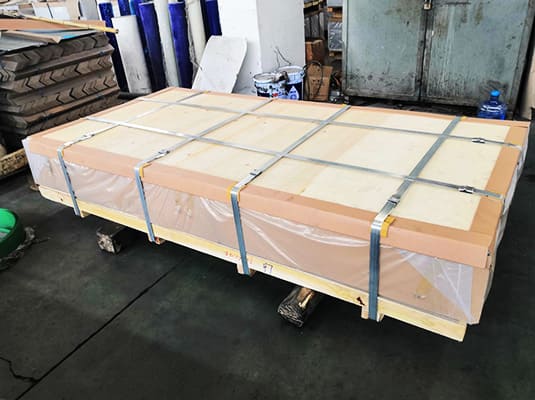
Huawei Packaged 6061 T6 Aluminum Tread Plate
13. Na customize na 6061 T6 Aluminum Tread Plate from Huawei Aluminum
Henan Huawei Aluminyo Co., Ltd. supplies aluminum sheets, mga plato, mga coils, and other aluminum products for industrial, transportasyon, konstruksiyon, and equipment applications.
With more than 20 years of experience in aluminum production and sales, Huawei Aluminum supports customers with customized material specifications and export services.
For projects requiring 6061 T6 aluminum tread plate, buyers can discuss their technical requirements with Huawei’s sales team to identify suitable product specifications.
13.1 Customized Product Specifications
Huawei Aluminum can discuss the following requirements for customized tread plate orders:
| Parameter | Mga Pagpipilian sa Pag customize |
|---|---|
| haluang metal | 6061 |
| Temper | T6, subject to product availability and specification |
| Product type | Aluminyo tread plate |
| Ang kapal | Customized according to project requirements |
| Width and length | Standard or customized dimensions |
| Tread pattern | Available pattern options, subject to production capability |
| Surface finish | Mill finish or other agreed treatments |
| Packaging | Standard export packaging or customized protection |
| Inspeksyon | Agreed dimensional, kemikal na, and mechanical checks |
Buyers should specify whether thickness refers to the base aluminum thickness or the overall thickness including the raised pattern.
13.2 Global Export and Customer Service
Huawei Aluminum has exported aluminum products to customers in 72 mga bansa.
The company supports international buyers with product communication, specification confirmation, export packaging, and delivery coordination.
Whether you need standard aluminum tread plate or a customized 6061 T6 solution, Huawei Aluminum can help you evaluate the required specifications and prepare a quotation.
Contact Huawei Aluminum to discuss your 6061 T6 aluminum tread plate requirements and request a customized quotation.
14. Pangwakas na Salita
6061 T6 aluminum tread plate combines high strength, low density, magandang paglaban sa kaagnasan, and a raised surface pattern.
These characteristics make it a practical material for industrial flooring, vehicle components, access platforms, equipment covers, and other applications requiring a balance of strength and weight.
Kung ikukumpara sa 3003, 5052, at 5083 aluminum tread plate, 6061 T6 offers a useful combination of strength and machinability.
Gayunpaman, the best alloy depends on the operating environment, forming requirements, corrosion exposure, and project specifications.
Kapag pumipili 6061 T6 aluminum tread plate, buyers should pay particular attention to the base-metal thickness, tread pattern, mekanikal na mga katangian, dimensional tolerances, and applicable product standard.
Working with an experienced supplier also helps ensure that the material specifications, inspection requirements, and delivery arrangements match the project.
Huawei Aluminum provides customized aluminum product solutions and supports customers with specification confirmation, quality inspection, and international export services.
Mga FAQ
1. Ano ang 6061 T6 aluminum tread plate?
It is a raised-pattern aluminum plate made from 6061 alloy in the T6 temper. It offers high strength, low weight, and good corrosion resistance.
2. What are the main applications of 6061 T6 aluminum tread plate?
Common applications include industrial flooring, mga daanan ng mga daan, truck and trailer floors, access platforms, equipment covers, and protective panels.
3. Is 6061 T6 aluminum tread plate corrosion-resistant?
Oo nga. It offers good resistance to general atmospheric corrosion. For marine or highly corrosive environments, additional protection and careful material selection may be necessary.
4. Ano ang pagkakaiba ng 6061 T6 at 3003 aluminum tread plate?
6061 T6 provides higher strength and better machinability, habang ang 3003 offers better formability and suits general-purpose, light-duty applications.
5. Maaari bang 6061 T6 aluminum tread plate be welded?
Oo nga. Gayunpaman, welding can reduce strength in the heat-affected zone. Suitable welding procedures and filler materials are important.
6. Does the raised pattern make the plate slip-proof?
Hindi. The raised pattern can improve surface grip, but actual slip resistance depends on surface conditions, kahalumigmigan, contamination, and the pattern design.
7. Which standard applies to 6061 T6 aluminum tread plate?
ASTM B632/B632M is a key standard for aluminum-alloy rolled tread plate. Buyers should confirm the applicable requirements for alloy, Pamahiin, and thickness.
8. What information is needed for a quotation?
Provide the alloy and temper, base-metal thickness, lapad ng katawan, haba, tread pattern, Pagtatapos ng Ibabaw, dami, required standard, and delivery destination.
9. Can Huawei Aluminum supply customized 6061 T6 aluminum tread plate?
Huawei Aluminum can discuss customized dimensions, product specifications, ibabaw ay nagtatapos, inspection requirements, and export packaging. Contact the company with your project details to confirm availability and request a quotation.
Proseso ng paghahagis ng produksyon at ang pagpapakilala nito
Ang layunin ng pagtunaw at paghahagis ay upang makabuo ng mga haluang metal na may kasiya siyang komposisyon at mataas na kadalisayan ng matunaw, upang lumikha ng mga kanais nais na kondisyon para sa paghahagis ng mga haluang metal ng iba't ibang mga hugis.
Mga hakbang sa proseso ng pagtunaw at paghahagis: mga ka batch --- pagpapakain --- natutunaw na --- pagpapakilos pagkatapos matunaw, pag alis ng slag --- sampling bago ang pagsusuri --- pagdaragdag ng haluang metal upang ayusin ang komposisyon, nakakapukaw ng damdamin --- pagpipino --- static na Setting——Guide furnace casting.
Mainit na proseso ng produksyon ng pagulong at ang pagpapakilala nito
- 1. Mainit na pagulong sa pangkalahatan ay tumutukoy sa paggulong sa itaas ng metal recrystallization temperatura;
- 2. Sa panahon ng mainit na proseso ng pagulong, ang metal ay may parehong mga proseso ng pagpapatigas at paglambot. Dahil sa impluwensya ng bilis ng pagpapapangit, basta huli na ang recovery at recrystallization process, magkakaroon ng tiyak na gawaing pagpapatigas;
- 3. Ang recrystallization ng metal pagkatapos ng mainit na pagulong ay hindi kumpleto, na ang ibig sabihin ay, ang magkakasamang buhay ng recrystallized istraktura at deformed istraktura;
- 4. Ang mainit na pagulong ay maaaring mapabuti ang pagganap ng pagproseso ng mga metal at haluang metal, bawasan o alisin ang mga depekto sa paghahagis.
- 1. Ang temperatura ng paghahagis at pagulong ay karaniwang nasa pagitan ng 680 o C at 700 o C. Ang mas mababa ang mas mahusay na, Ang matatag na paghahagis at rolling line ay karaniwang tumitigil nang isang beses sa isang buwan o higit pa upang muling tumayo. Sa panahon ng proseso ng produksyon, kinakailangang mahigpit na kontrolin ang antas ng likido ng front tank upang maiwasan ang mababang antas ng likido;
- 2. Ang pagpapadulas ay gumagamit ng C powder na may hindi kumpletong pagkasunog ng gas para sa pagpapadulas, na isa rin sa mga dahilan ng maruming ibabaw ng casting at rolling materials;
- 3. Ang bilis ng produksyon ay karaniwang sa pagitan ng 1.5m / min-2.5m / min;
- 4. Ang kalidad ng ibabaw ng mga produkto na ginawa sa pamamagitan ng paghahagis at paggulong ay karaniwang medyo mababa, at sa pangkalahatan ay hindi maaaring matugunan ang mga produkto na may espesyal na pisikal at kemikal na mga kinakailangan sa pagganap.
- 1. Ang malamig na pagulong ay tumutukoy sa paraan ng paggulong ng produksyon sa ibaba ng temperatura ng recrystallization;
- 2. Hindi magkakaroon ng dynamic na recrystallization sa panahon ng proseso ng paggulong, at ang temperatura ay tataas sa temperatura ng pagbawi sa karamihan, at ang malamig na paggulong ay lilitaw sa isang trabaho hardening estado, at ang trabaho hardening rate ay magiging malaki;
- 3. Ang malamig na ginulong sheet at strip ay may mataas na dimensional na katumpakan, magandang kalidad ng ibabaw, unipormeng istraktura at pagganap, at mga produkto sa iba't ibang estado ay maaaring makuha sa heat treatment;
- 4. Malamig na pagulong ay maaaring i roll out manipis na strips, pero sabay sabay, ito ay may mga disadvantages ng mataas na pagkonsumo ng enerhiya para sa pagpapapangit at maraming mga pasa sa pagproseso.
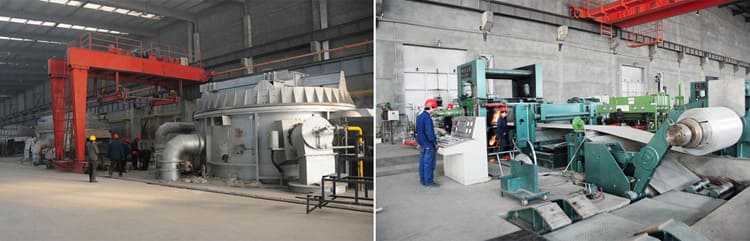
- 1. Ang pagtatapos ay isang paraan ng pagproseso upang matugunan ng malamig na ginulong sheet ang mga kinakailangan ng customer, o upang mapadali ang kasunod na pagproseso ng produkto;
- 2. Ang mga kagamitan sa pagtatapos ay maaaring iwasto ang mga depekto na ginawa sa mainit na pagulong at malamig na proseso ng produksyon, tulad ng basag na gilid, may langis na, mahina ang hugis ng plato, natitirang stress, atbp. Kailangan nitong tiyakin na walang iba pang mga depekto na dinala sa proseso ng produksyon;
- 3. Mayroong iba't ibang mga kagamitan sa pagtatapos, pangunahin kabilang ang cross-cutting, pagputol ng hiwa, pag unat at pagtutuwid, annealing furnace, mga slitter, atbp.
Proseso ng paghahagis at paggulong
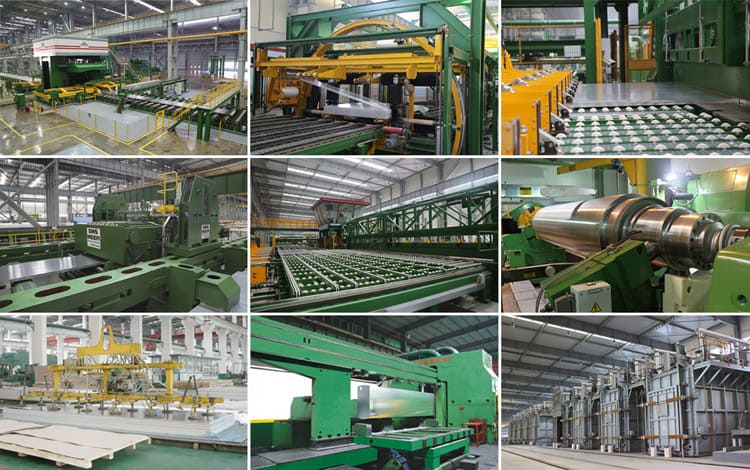
Proseso ng paghahagis at paggulong: likidong metal, kahon sa harap (Kontrol sa antas ng likido), paghahagis at rolling machine (sistema ng pagpapadulas, paglamig ng tubig), paggupit ng makina, makina ng pag coiling.
Malamig na proseso ng produksyon ng pagulong
Panimula sa pagtatapos ng proseso ng produksyon
Aluminyo haluang metal ay may mga katangian ng mababang density, magandang mekanikal na katangian, magandang pagganap ng pagproseso, di nakakalason, madaling i recycle, mahusay na electrical kondaktibiti, paglipat ng init at paglaban sa kaagnasan, kaya ito ay may malawak na hanay ng mga application.
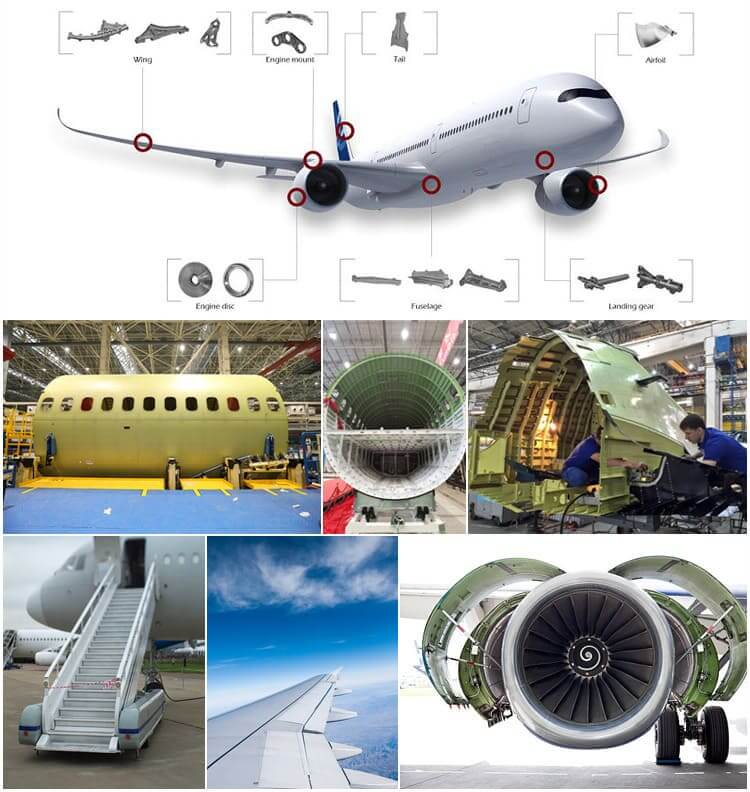
Aerospace: ginagamit upang gumawa ng mga balat ng sasakyang panghimpapawid, mga frame ng fuselage, mga girder, mga rotors, mga propeller, mga tangke ng gasolina, mga panel ng pader at mga struts ng landing gear, pati na rin ang rocket forging rings, mga panel ng pader ng spacecraft, atbp.
Aluminyo haluang metal na ginagamit para sa aerospace
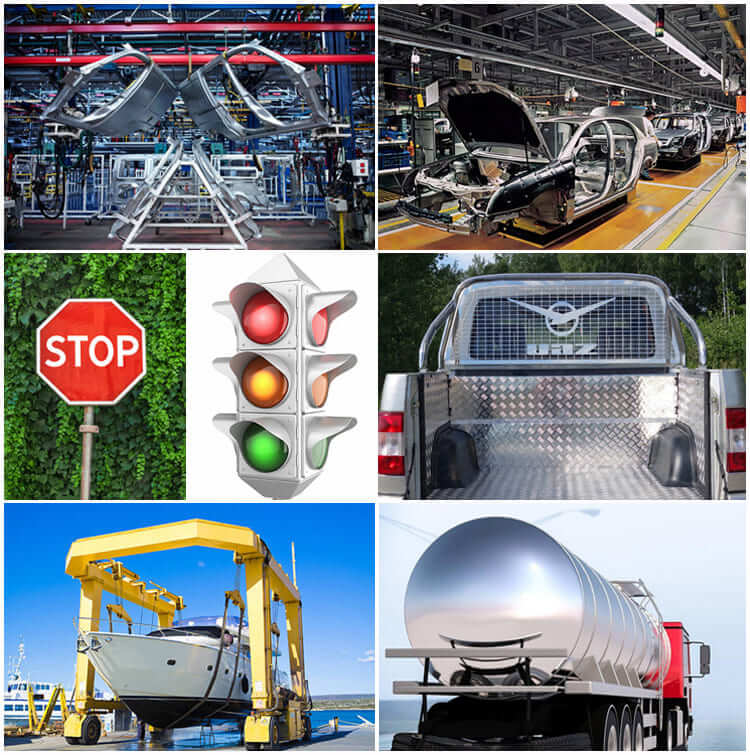
Transportasyon: ginagamit para sa kotse katawan istraktura materyales ng mga sasakyan, Mga Sasakyan ng Subway, mga kotse ng pasahero ng tren, mabilis na mga kotse ng pasahero, mga pinto at bintana, mga istante, mga bahagi ng automotive engine, mga aircon, mga radiator, mga panel ng katawan, mga gulong at mga materyales ng barko.
Application ng trapiko
Packaging: Ang lahat ng aluminyo pop lata ay pangunahing ginagamit bilang mga materyales sa packaging ng metal sa anyo ng mga manipis na plato at foils, at ginagawang lata, mga takip, mga bote, mga bariles, at packaging foils. Malawakang ginagamit sa packaging ng mga inumin, pagkain, mga pampaganda, mga gamot, mga sigarilyo, mga produktong pang industriya, mga gamot, atbp.
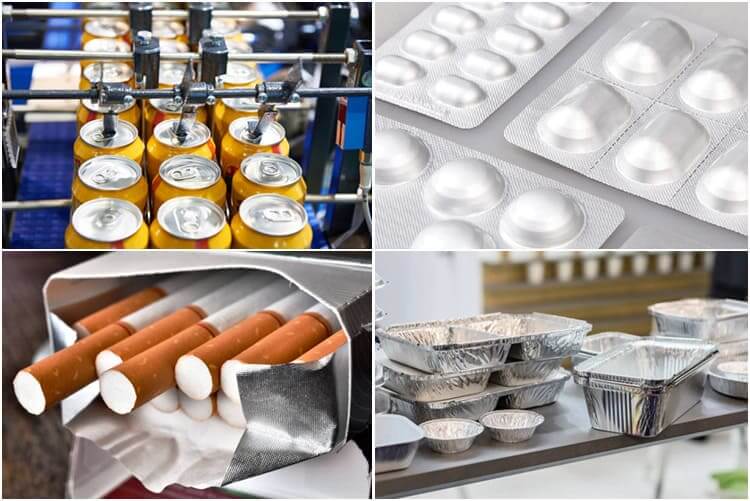
Application ng packaging
Pag-print: Pangunahing ginagamit upang gumawa ng PS plates, ang mga PS plate na nakabase sa aluminyo ay isang bagong uri ng materyal sa industriya ng pag print, ginagamit para sa awtomatikong paggawa ng plato at pag print.
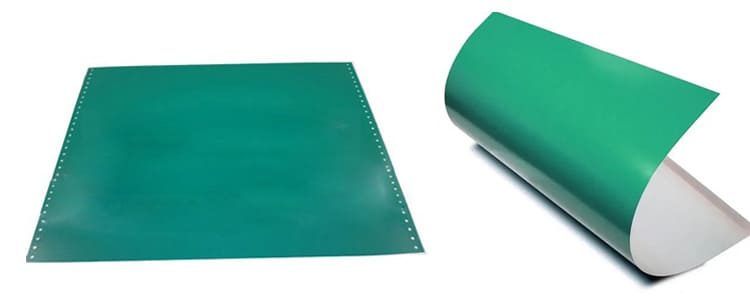
Pag print ng PS
Dekorasyon ng arkitektura: aluminyo haluang metal ay malawakang ginagamit sa mga istraktura ng gusali, mga pinto at bintana, suspendido ang mga kisame, pandekorasyon na ibabaw, atbp. dahil sa magandang kaagnasan nito paglaban, sapat na lakas, mahusay na pagganap ng proseso at pagganap ng hinang.
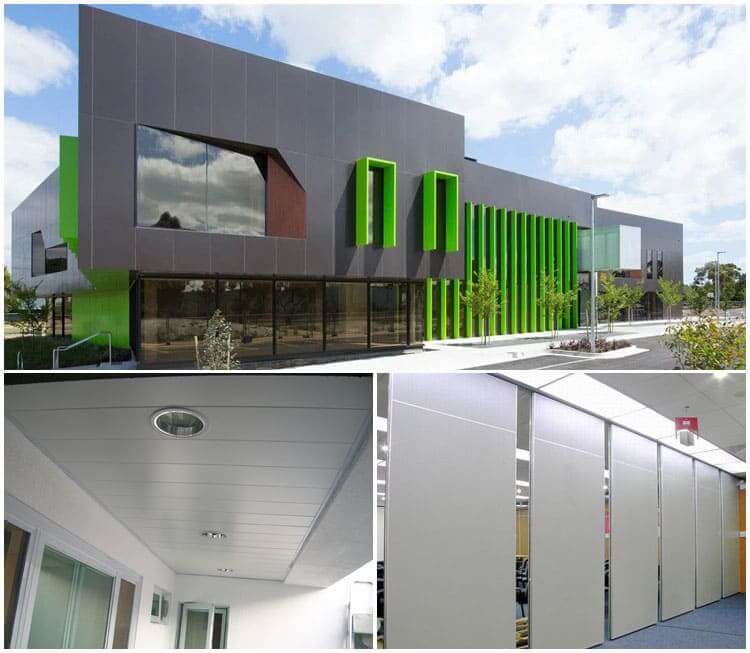
Application ng konstruksiyon ng haluang metal ng aluminyo
Mga produktong elektroniko: mga computer, mga mobile phone, mga shell ng refrigerator, mga radiator, atbp.
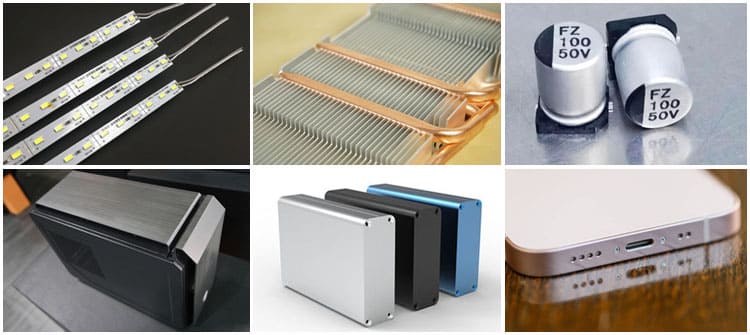
Electronic application ng produkto
Mga gamit sa kusina: mga kaldero ng aluminyo, aluminyo basins, mga liner ng rice cooker, sambahayan aluminyo foil, atbp.
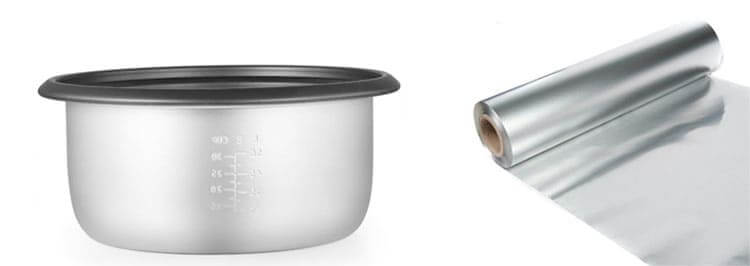
Application ng kusina
Packaging Ng Aluminum Sheet / Coil
Ang bawat detalye ng packaging ay kung saan namin ituloy ang perpektong serbisyo. Ang aming proseso ng packaging sa kabuuan ay ang mga sumusunod:
Paglalamina: malinaw na pelikula, asul na pelikula, mikro-mucosal, mataas na mucosal, laser pagputol ng pelikula (2 mga tatak, Novacell at Polyphem);
Proteksyon: mga tagapagtanggol ng sulok ng papel, mga pads laban sa presyon;
pagpapatayo ng mga: desiccant;
Tray: fumigated hindi nakakapinsala kahoy na tray, magagamit muli ang bakal na tray;
Pag-iimpake: Tik-tik-toe bakal sinturon, o PVC packing belt;
Kalidad ng Materyal: Ganap na libre mula sa mga depekto tulad ng puting kalawang, mga spot ng langis, mga rolling mark, pinsala sa gilid, mga baluktot, mga dent, mga butas, mga break lines, mga gasgas na, atbp., walang coil set.
Port: Qingdao o iba pang mga port sa China.
Lead oras: 15-45 mga araw.
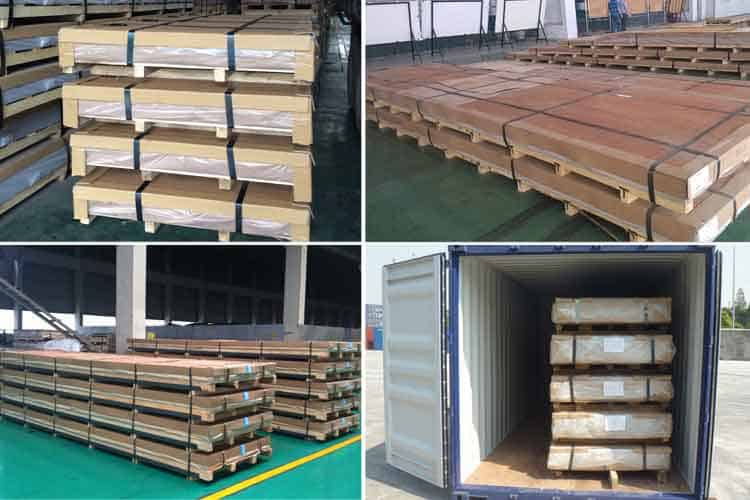
Aluminyo sheet / plate packaging proseso
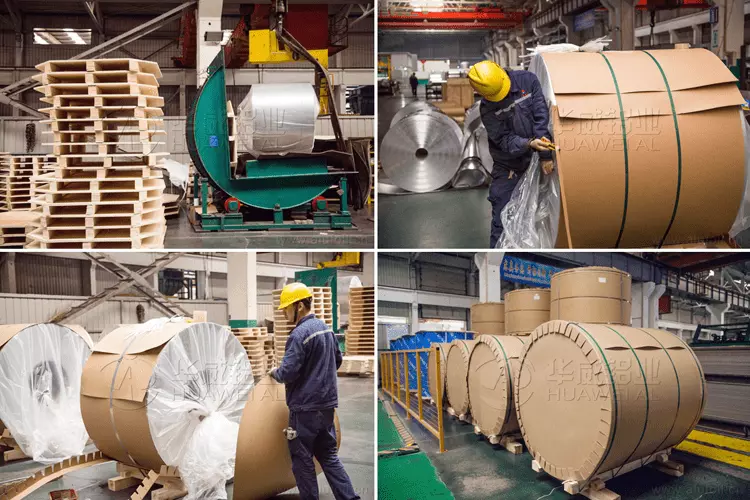
Aluminyo likawin packaging proseso
F: Ikaw ba ay isang tagagawa o isang mangangalakal?
Q: Kami ay isang tagagawa, ang factory namin ay sa No.3 Weier Road, Sonang Pang industriya, Gongyi, Henan, Tsina.
F: Ano ang MOQ para sa pag order ng produkto?
Q: Ang MOQ natin ay 5 tonelada, at ang ilang mga espesyal na produkto ay magkakaroon ng isang minimum na dami ng order ng 1 o 2 tonelada.
F: Gaano katagal ang iyong oras ng lead?
Q: Sa pangkalahatan ang aming lead time ay tungkol sa 30 mga araw.
F: Mayroon bang kalidad ng katiyakan ang iyong mga produkto?
Q: Oo nga, kung may problema sa quality sa products namin, kami ay mabayaran ang customer hanggang sa sila ay nasiyahan.
Mga Kaugnay na Produkto
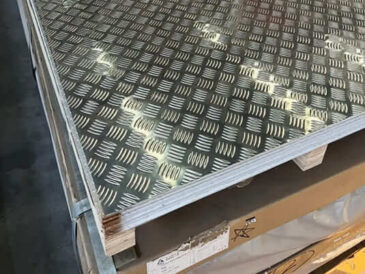


Mga Pinakabagong Blog
5052 mga bes 6061 Aluminyo: Mga Pangunahing Pagkakaiba & Best Uses
Compare 5052 mga bes 6061 aluminum for strength, paglaban sa kaagnasan, pagiging formable, at machining. Discover which alloy best fits your project.
Common Alloys of Reefer Truck Used PE Coated Aluminum Coil
Discover common alloys of reefer truck used PE coated aluminum coil, kasama na ang 3003, 3004, at 3105. Designed for excellent corrosion resistance, pagiging formable, and long-lasting outdoor performance.
Is Aluminum Conductive? Mga Katangian, Gumagamit ng mga & Benefits Explained
Is aluminum conductive? Discover aluminum's electrical conductivity, key advantages, and why it is widely used in power transmission and industrial applications.
Unlocking Sustainability: The Truth About Aluminum Foil Recycling
Is Aluminum Foil Recyclable? Learn how aluminum foil can be recycled, how to prepare it properly, and why recycling helps reduce waste and save resources.