1. Panimula
Titanium cookware has moved from a niche camping product to a visible category in home kitchens.
Consumers are looking for lightweight pots and pans, uncoated cooking surfaces, and materials that last. Pure titanium fits all three.
Every titanium pot or pan starts as a flat round blank, called a disc or circle. The quality of this disc decides how well the cookware can be formed, how clean its surface looks, and how consistent each batch will be.
Cracks, uneven thickness, or a contaminated surface that appear at the disc stage become expensive scrap later in deep drawing or spinning.
TA1 is the most common titanium grade chosen for this purpose. It is the softest and most formable of the commercially pure grades, and it offers excellent corrosion resistance and good food-contact suitability.
For cookware manufacturers, gayunpaman, choosing a disc is more complicated than choosing a grade name.
Kapal ng tolerance, annealed condition, kalidad ng gilid, Pagtatapos ng Ibabaw, and material traceability all affect production yield and final product quality.
Marketing claims in the titanium cookware market are also often exaggerated, which makes careful specification even more important.
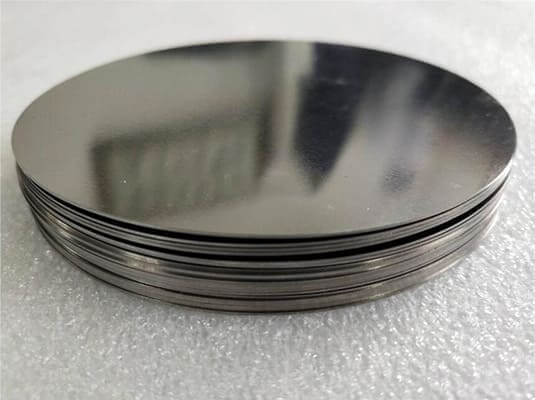
TA1 Titanium Disc for Cookware
2. What Is a TA1 Titanium Disc for Cookware?
2.1 Definition of TA1 Titanium
TA1 is a commercially pure titanium grade defined under China’s titanium material standards.
It contains a very high proportion of titanium, while controlling small amounts of elements such as iron, oxygen, nitrogen, carbon, and hydrogen.
Unlike titanium alloys that use elements such as aluminum and vanadium to increase strength, TA1 relies primarily on titanium purity and controlled interstitial content to achieve its characteristic properties.
TA1 is particularly valued for its combination of:
- High corrosion resistance in many environments
- Good ductility and cold-forming capability
- Relatively low density
- Good weldability under suitable conditions
- Stable surface behavior due to its natural oxide film
These characteristics make TA1 a candidate material for cookware components that require corrosion resistance, magaan na konstruksiyon, and forming flexibility.
2.2 What Is a TA1 Titanium Disc?
A TA1 titanium disc is a circular flat blank manufactured from TA1 titanium sheet or plate.
Manufacturers cut the material into the required diameter and thickness before using it in downstream forming operations.
The disc serves as the starting material for producing cookware shapes.
Depending on the product design and manufacturing process, manufacturers can use stamping, malalim na pagguhit, hydraulic pressing, or metal spinning to form the blank into a pan body, pot body, bowl, or other component.
2.3 Chemical Composition of TA1 Titanium
The chemical composition of TA1 determines its purity, mechanical behavior, and corrosion performance.
Oxygen and iron are particularly important because their content can influence strength and ductility.
The following table presents commonly referenced TA1 composition limits.
Buyers should verify the exact values against the applicable edition of GB/T 3620.1 or the material standard stated in the purchase order.
| Elemento | Composition Limit (wt.%) |
|---|---|
| Titanium (Ti) | Balanse |
| bakal na bakal (Fe) | ≤0.20 |
| Oxygen (O) | ≤0.18 |
| Carbon (C) | ≤0.08 |
| Nitrogen (N) | ≤0.03 |
| Hydrogen (H) | ≤0.015 |
3. Key Properties and Advantages of TA1 Titanium Disc for Cookware
TA1 titanium offers a useful combination of corrosion resistance, low density, and good ductility.
These properties make it suitable for cookware components that require lightweight construction, tibay ng katawan, and reliable forming performance.
3.1 Napakahusay na Paglaban sa Kaagnasan
TA1 titanium naturally forms a stable oxide film on its surface, protecting the underlying metal from corrosion.
It performs well in many food-related environments, including exposure to water, asin, and common acidic ingredients.
Key benefits include:
- Good resistance to corrosion during daily cooking and cleaning.
- Stable surface performance over long-term use.
- Reduced risk of rust and material degradation.
3.2 Magaan at matibay
With a density of approximately 4.51 g/cm³, TA1 titanium is much lighter than stainless steel and copper.
Its favorable strength-to-weight ratio makes it suitable for lightweight frying pans, cooking pots, and outdoor cookware.
Manufacturers can use TA1 titanium to reduce product weight while maintaining suitable structural strength through proper thickness and design selection.
3.3 Good Ductility and Formability
TA1 is a commercially pure titanium grade with good ductility and elongation. It can undergo several forming processes, kasama na ang:
- Stamping and pressing
- Deep drawing under suitable conditions
- Metal spinning
- Hydraulic forming
Its formability supports the production of different cookware shapes.
Gayunpaman, manufacturers should consider springback, tooling design, lubrication, and forming conditions when processing titanium discs.
3.4 Mataas na temperatura paglaban
TA1 titanium has a melting point of approximately 1,668°C, allowing it to withstand temperatures far above normal cookware operating conditions.
Gayunpaman, titanium has relatively low thermal conductivity compared with aluminum and copper.
Kaya nga, pure titanium cookware may distribute heat less evenly. Manufacturers often consider multilayer structures with aluminum or other conductive materials to improve heating performance.
3.5 Stable Surface and Food-Contact Potential
The natural oxide film helps maintain titanium’s surface stability and corrosion resistance.
TA1 can also receive polished, nagsipilyo, or other surface finishes to meet different cookware design requirements.
For food-contact applications, manufacturers should verify the compliance of the finished cookware, including surface treatments, Mga patong, and joining materials, with relevant market regulations.
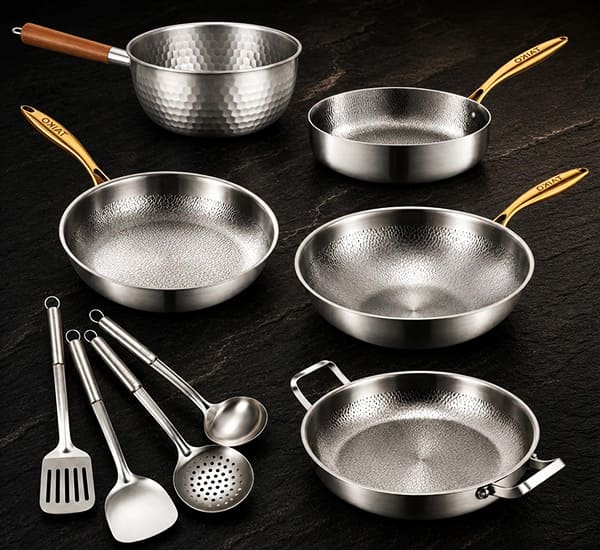
Different Types of Titanium Cookware
4. Specifications of TA1 Titanium Disc for Cookware
The specifications of a TA1 titanium disc directly affect its suitability for cookware manufacturing.
Buyers should define the material grade, kapal naman, diameter, delivery condition, Pagtatapos ng Ibabaw, and dimensional tolerances according to the final product design.
Unlike standard off-the-shelf metal circles, industrial titanium discs are often produced to customer drawings or customized dimensions.
4.1 Core Specifications of TA1 Titanium Disc
| Parameter | Specification |
|---|---|
| Material Grade | TA1 (Commercially Pure Titanium Grade 1) |
| Titanium Content | Balanse |
| Densidad ng katawan | 4.51 g/cm³ |
| Ang kapal | 0.5–10 mm (customized) |
| Diameter | 50–1,000 mm (customized) |
| Delivery Condition | Annealed na ang mga (M), or as agreed |
| Lakas ng Paghatak | ≥240 MPa (Grade 1 reference) |
| Yield Lakas (0.2%) | ≥138 MPa (Grade 1 reference) |
| Pagpapahaba | ≥24% (Grade 1 reference) |
| Tapos na sa ibabaw | Mainit na mainit ang ulo, Malamig na Ginulong, Pickled, Pinakintab na, Nagsipilyo |
| Cutting Method | Mechanical Blanking, Laser Cutting, Waterjet Cutting |
| Edge Condition | As-Cut, Deburred, or Customized |
| Applicable Standards | GB/T 3621, ASTM B265 |
| Inspeksyon | Komposisyon ng Kemikal, Mga Katangian ng Mekanikal, Mga Dimensyon, Surface Quality |
| Sertipikasyon | Sertipiko ng Pagsubok sa Mill (MTC) |
| Packaging | Protective Film, Interleaving, Wooden Cases or Pallets |
Tala: Thickness and diameter ranges are indicative customization ranges, not guaranteed standard stock sizes.
Mechanical properties should be confirmed against the applicable standard, product thickness, and delivery condition.
GB/T 3621 and ASTM B265 cover titanium flat products; the finished disc’s dimensions and tolerances should be agreed separately.
5. Manufacturing Process of TA1 Titanium Discs for Cookware
The production of TA1 titanium discs involves several controlled processes to ensure consistent material quality, katumpakan ng sukat, and surface finish.
A typical manufacturing process includes the following steps.
5.1 Raw Material Preparation and Melting
Manufacturers select qualified titanium raw materials and control the content of iron, oxygen, carbon, nitrogen, and hydrogen to meet TA1 requirements.
The material then undergoes vacuum melting, such as vacuum arc remelting (VAR), to produce titanium ingots with consistent chemical composition and internal quality.
5.2 Hot Rolling and Cold Rolling
Titanium ingots are processed into slabs and sheets through hot rolling and cold rolling.
- Mainit na pagulong: Reduces material thickness and produces titanium sheet or plate.
- Malamig na pagulong: Improves thickness accuracy, kalidad ng ibabaw, and dimensional consistency.
- Intermediate annealing: Restores ductility when necessary during repeated rolling.
These processes establish the material properties required for subsequent cookware forming.
5.3 Annealing and Pickling
Annealing reduces work hardening and improves ductility, making the titanium material more suitable for stamping, pagguhit, and spinning.
Pickling removes surface oxide and scale, providing a cleaner surface for further processing.
5.4 Disc Cutting and Blanking
Manufacturers cut titanium sheets or plates into circular blanks according to customer specifications.
Common cutting methods include:
- Mechanical blanking for repeat production.
- Laser cutting for flexible dimensions and customized designs.
- Waterjet cutting for heat-free cutting applications.
The cutting method depends on material thickness, production volume, dimensional tolerance, and edge-quality requirements.
5.5 Surface Finishing and Edge Processing
Pagkatapos ng pagputol, manufacturers can apply pickling, buli na, or brushing to achieve the required surface appearance. Deburring removes sharp edges and cutting defects.
Proper cleaning and surface treatment help improve appearance and reduce defects during cookware forming.
5.6 Final Inspection and Packaging
Before delivery, manufacturers inspect disc thickness, diameter, patag na, kalidad ng gilid, and surface condition.
Chemical composition and mechanical properties should also meet the agreed material standard.
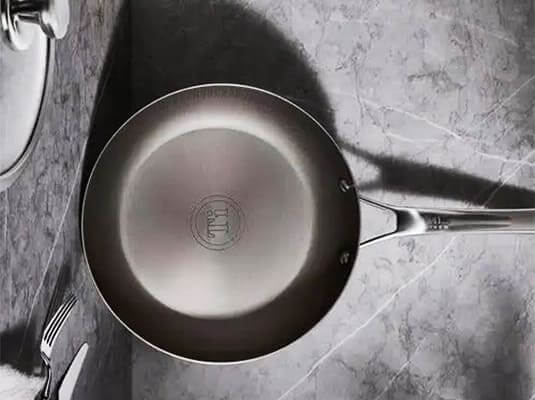
Titanium Frying Pans Display
6. Applications of TA1 Titanium Discs in Cookware Manufacturing
TA1 titanium discs provide a lightweight, corrosion-resistant starting material for various cookware and kitchenware components.
Their good ductility supports forming operations, while their relatively low density helps manufacturers develop portable products.
Gayunpaman, cookware design must also account for titanium’s relatively low thermal conductivity.
For applications requiring more uniform heating, manufacturers may combine titanium with aluminum or other heat-conductive materials.
6.1 Titanium Frying Pans
TA1 titanium discs can serve as blanks for forming frying pan bodies and selected pan components.
Their corrosion resistance supports repeated exposure to food ingredients and cleaning conditions.
Bukod pa rito, titanium’s relatively low density helps reduce the weight of the finished pan.
Typical applications include:
- Lightweight titanium frying pans.
- Outdoor and camping frying pans.
- Specialty cookware with titanium food-contact surfaces.
- Titanium layers in composite frying pans.
6.2 Titanium Cooking Pots and Saucepan Components
Manufacturers can use TA1 titanium discs to produce cooking pot bodies, saucepan components, and other circular kitchenware parts.
TA1’s ductility supports pressing and drawing processes, while its corrosion resistance helps maintain material stability during repeated cooking and washing.
Typical applications include:
- Titanium cooking pots.
- Saucepan bodies and components.
- Lightweight boiling pots.
- Specialized food preparation vessels.
6.3 Titanium Camping and Outdoor Cookware
Lightweight construction makes TA1 titanium particularly attractive for portable cookware.
Camping and outdoor products often prioritize low weight, paglaban sa kaagnasan, and easy maintenance.
Titanium discs can be formed into compact cookware products without adding unnecessary material weight.
Typical applications include:
- Camping pots and pans.
- Titanium bowls and cups.
- Portable cooking containers.
- Lightweight outdoor kitchenware.
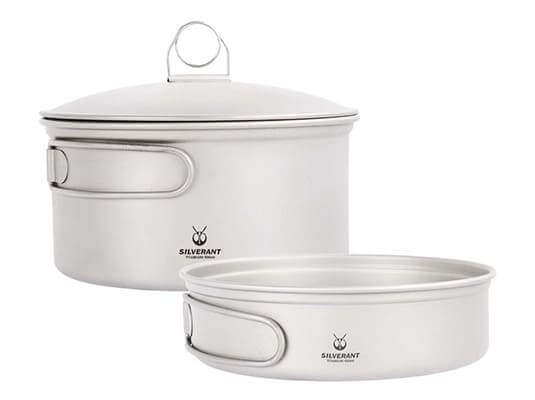
Outdoor Titanium Cookware
6.4 Titanium Bowls and Food Containers
TA1 titanium discs can also serve as starting blanks for bowls, mga lalagyan ng pagkain, and other circular kitchenware.
Their corrosion resistance and stable oxide surface make them suitable candidates for products that repeatedly contact food and water.
Common applications include:
- Titanium mixing bowls.
- Food storage containers.
- Serving bowls.
- Lightweight kitchenware for outdoor use.
6.5 Multilayer and Composite Cookware
Titanium’s corrosion resistance and low density can complement the thermal properties of other cookware materials.
Halimbawa na lang, manufacturers may combine titanium with aluminum to improve heat distribution while retaining a titanium surface or structural layer.
Typical constructions include:
- Titanium and aluminum multilayer cookware.
- Titanium-clad cookware structures.
- Composite pan bases with a conductive aluminum core.
- Customized cookware combining different metal layers.
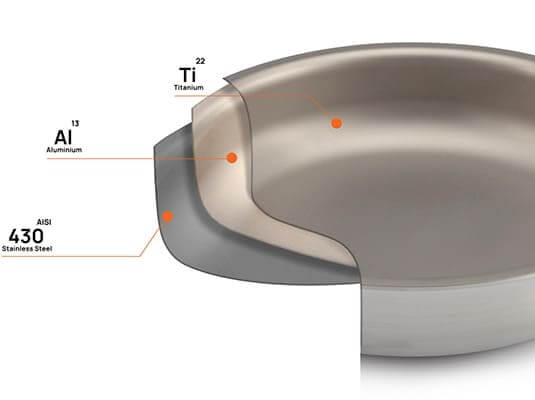
Titanium Alloy Composite Cookware
7. Quality Control and Inspection Standards for TA1 Titanium Discs
Titanium is costly and failure often appears late, during or after forming. Strong quality control and clear documents protect both the buyer and the supplier.
7.1 Incoming material control
- Sheet or coil is checked against its mill certificate on receipt.
- Komposisyon ng kemikal, including oxygen, nitrogen, hydrogen, carbon, and iron, is verified.
- Each lot is recorded for traceability.
7.2 In-process control
| Stage | Control Points |
|---|---|
| Paggulong | Thickness gauge, patag na |
| Annealing | Atmosphere and temperature records, property uniformity |
| Pickling | Surface condition, residual scale |
| Pagputol | Diameter, edge condition, burr height |
| Paglilinis | Residue and cleanliness check |
7.3 Finished disc tests
| Test | Purpose | Typical Method |
|---|---|---|
| Komposisyon ng kemikal | Confirm TA1 limits | Spectrometry and gas analysis (O, N, H) |
| Lakas ng paghatak, yield, pagpapahaba ng panahon | Verify annealed properties | Tensile testing |
| Ang katigasan ng ulo | Check temper and uniformity | Hardness tester |
| Formability | Predict deep-drawing behavior | Cupping (Erichsen) test, bend test |
| Ang kapal | Confirm gauge and uniformity | Micrometer or thickness gauge |
| Diameter and roundness | Fit forming tools | Calipers, measuring fixtures |
| Flatness | Prevent feeding and wrinkling issues | Flatness gauge or table |
| Surface and edge | Detect scratches, stains, burrs, mga bitak | Visual and magnified inspection |
7.4 Certificates and documents
- Mill test certificate (MTC): typically EN 10204 3.1, listing chemistry and mechanical results by heat or lot
- Quality system: .ISO 9001, only if actually held
- Third-party inspection: SGS, BV, or similar, on buyer request
- Traceability record: linking discs to sheet, heat number, and production batch
8. TA1 Titanium Disc vs. Other Materials for Cookware
Choosing the right cookware material requires balancing weight, lakas ng loob, paglaban sa kaagnasan, thermal kondaktibiti, pagiging formable, at gastos.
8.1 Quick comparison
| Pag-aari | TA1 Titanium | 304 Hindi kinakalawang na asero | Aluminyo 1050 | Aluminyo 3003 | Cast Iron |
|---|---|---|---|---|---|
| Densidad ng katawan (g/cm³) | tungkol sa 4.5 | tungkol sa 7.9 | tungkol sa 2.71 | tungkol sa 2.73 | tungkol sa 7.2 |
| Timbang (same size) | Liwanag | Heavy | Lightest | Lightest | Very heavy |
| Paglaban sa kaagnasan | Napakahusay | Very good | Mabuti na lang (reacts with acids unless anodized or coated) | Mabuti na lang (slightly lower than 1050; same acid caution) | Mga Maralita (rusts, needs seasoning) |
| Thermal kondaktibiti (W/m·K) | about 16–22 | about 15–16 | tungkol sa 230 | tungkol sa 190 | tungkol sa 50 |
| Heat distribution | Poor alone | Poor alone | Napakahusay | Very good | Mabuti na lang, slow |
| Strength and durability | Napakahusay | Napakahusay | Mababa ang (soft, dents easily) | Katamtaman (firmer than 1050) | Napakahusay |
| Formability (malalim na pagguhit) | Mabuti na lang, needs careful tooling | Mabuti na lang | Napakahusay | Very good | Not formed (cast) |
| Relative material cost | Mataas na | Katamtaman | Mababa ang | Mababa ang | Mababa ang |
| Typical use | Camping, light cookware | General cookware | Pots and pans where maximum heat spread is wanted | General cookware, Mga pans sa pagprito, mga kaldero, composite bases | Skillets, Dutch ovens |
Values are general references and vary by temper and product design. 1060 is a close alternative to 1050, and the two are often interchangeable in cookware circles.
9. How to Choose the Right TA1 Titanium Disc for Cookware
Choosing the right TA1 titanium disc helps ensure smooth forming, consistent product quality, and reliable cookware performance. Buyers should focus on the following key factors.
9.1 Confirm Material Grade and Standards
Verify that the titanium disc meets the required TA1 chemical composition and material standard.
Common references include GB/T 3621 and ASTM B265. Since TA1 and ASTM Grade 1 are not automatically interchangeable, check the chemical composition, mekanikal na mga katangian, and material test certificate before ordering.
9.2 Select the Right Thickness and Diameter
Choose disc dimensions according to the cookware design and forming process.
- Ang kapal: Consider cookware size, forming depth, lakas ng loob, and target weight.
- Diameter: Match the blank size to the finished cookware dimensions and forming allowance.
- Pagpaparaya: Specify thickness, diameter, and flatness requirements.
- Edge Condition: Select as-cut or deburred edges according to subsequent processing needs.
9.3 Consider Heat Transfer and Cookware Structure
TA1 titanium offers good corrosion resistance, but its thermal conductivity is relatively low compared with aluminum and copper.
For better heat distribution, manufacturers can consider multilayer cookware structures that combine titanium with an aluminum or copper core.
9.4 Choose a Reliable Supplier
A qualified supplier should provide consistent material quality, technical documentation, and customized dimensions. Before purchasing, check:
- Chemical composition and mechanical test reports.
- Dimensional and surface inspection records.
- Material traceability and mill test certificates.
- Customized thickness, diameter, and cutting services.
- Protective packaging and delivery arrangements.
For large orders, requesting samples and conducting forming trials can help verify material suitability before mass production.
10. Customized TA1 Titanium Disc for Cookware and Aluminum Disc Solutions from Huawei Aluminum
Henan Huawei Aluminyo Co., Ltd. was established in 2001 at may higit pa sa 20 years of experience in aluminum manufacturing and sales.
The company exports products to customers in 72 countries and specializes in aluminum sheets, mga plato, mga coils, papel de liha, mga guhit, mga bilog, and embossed sheets.
For cookware manufacturers looking for TA1 Titanium Disc products, material specifications and supply capabilities are important considerations.
TA1 titanium offers corrosion resistance, low density, and good formability, making it suitable for various cookware applications.
10.1 TA1 Titanium Disc Supply and Customization Requirements
A customized TA1 Titanium Disc should match the cookware design and forming process.
Buyers can specify the following requirements when discussing a titanium disc project:
| Parameter | Requirements |
|---|---|
| Material Grade | TA1 |
| Ang kapal | Customized according to application |
| Diameter | Customized according to cookware design |
| Delivery Condition | Annealed or as agreed |
| Tapos na sa ibabaw | Mainit na mainit ang ulo, Malamig na Ginulong, Pickled, Pinakintab na, or Brushed |
| Cutting Method | Mechanical Blanking, Laser Cutting, or Waterjet Cutting |
| Edge Condition | As-Cut or Deburred |
| Inspeksyon | Komposisyon ng Kemikal, Mga Katangian ng Mekanikal, Mga Dimensyon, and Surface Quality |
| Sertipikasyon | Sertipiko ng Pagsubok sa Mill (MTC) |
Tala: TA1 titanium sourcing and OEM processing availability should be confirmed directly with the supplier.
Huawei Aluminum primarily focuses on aluminum manufacturing and does not claim in-house TA1 titanium production.
10.2 Customized Aluminum Disc Solutions for Cookware
In addition to titanium cookware materials, Huawei Aluminum provides customized aluminum circles and discs for cookware manufacturing.
Aluminum offers excellent thermal conductivity, low density, and good formability, making it suitable for frying pans, cooking pots, and other kitchenware.
| Parameter | Mga Pagpipilian sa Pag customize |
|---|---|
| aluminyo haluang metal | 1050, 1060, 3003, 3004, and other suitable grades |
| Temper | O, H12, H14, H16, H18, H24, or as required |
| Ang kapal | Na customize na |
| Diameter | Na customize na |
| Tapos na sa ibabaw | Tapos na ang Mill, Pinakintab na, Nagsipilyo, or other available finishes |
| Pagproseso ng | Pagputol, Pag-embossing, Pagpapahid ng langis, and Color Coating |
| Packaging | Protective Film, Interleaving, Wooden Cases, or Pallets |
10.3 Contact Huawei Aluminum for Customized Cookware Discs
Whether you are evaluating TA1 Titanium Disc materials or sourcing customized aluminum discs, clearly defining the application, dimensions, material requirements, and order quantity helps suppliers provide a more suitable solution.
Contact Huawei Aluminum to discuss customized aluminum cookware discs, technical specifications, and material alternatives for your project.
11. Pangwakas na Salita
TA1 titanium discs offer cookware manufacturers a combination of corrosion resistance, low density, and good formability.
They can serve as blanks for frying pans, cooking pots, bowls, and outdoor cookware.
Gayunpaman, buyers should consider titanium’s relatively low thermal conductivity when designing cookware structures.
The right disc depends on material specifications, kapal naman, diameter, mekanikal na mga katangian, kalidad ng ibabaw, and forming requirements.
Clear technical agreements, material certificates, and production trials help ensure consistent results.
For cookware manufacturers comparing titanium and aluminum, Huawei Aluminum can provide customized aluminum disc solutions and technical support based on specific product requirements.
Mga FAQ
1. What is a TA1 titanium disc for cookware?
A TA1 titanium disc is a circular blank made from commercially pure titanium sheet or plate. Manufacturers use it to produce frying pans, cooking pots, bowls, and other cookware.
2. What are the main advantages of TA1 titanium?
TA1 titanium offers good corrosion resistance, low density, and good ductility. These properties make it suitable for cookware forming and applications requiring durability.
3. Is TA1 titanium equivalent to ASTM Grade 1?
Not automatically. Although both are commercially pure titanium grades, their chemical composition and mechanical requirements may differ. Always verify the applicable standards before purchasing.
4. What thickness and diameter are available?
Both dimensions can be customized according to cookware design and forming requirements. Buyers should confirm available sizes and tolerances with the supplier.
5. Can TA1 titanium discs be deep drawn?
Oo nga. TA1 has good ductility and supports deep drawing under suitable conditions. Email Address *, lubrication, forming speed, and material thickness all affect the results.
6. What surface finishes are available?
Common finishes include hot-rolled, cold-rolled, pickled, pinakintab na, and brushed surfaces. The choice depends on appearance and processing requirements.
7. Is TA1 titanium suitable for food-contact cookware?
TA1 has a stable natural oxide film and good corrosion resistance. Gayunpaman, food-contact compliance must be evaluated for the complete finished cookware, including coatings, surface treatments, and joints.
8. Is TA1 titanium better than aluminum for cookware?
They offer different advantages. TA1 provides good corrosion resistance, while aluminum has much higher thermal conductivity and lower density. The best choice depends on heating performance, bigat ng katawan, cost, and product design.
9. What standards apply to TA1 titanium discs?
GB/T 3621 and ASTM B265 are commonly referenced for titanium flat products. Finished disc dimensions and cutting tolerances should be agreed upon separately.
10. Can Huawei Aluminum supply TA1 titanium discs?
Huawei Aluminum primarily specializes in aluminum products, including customized aluminum circles and discs for cookware. Customers interested in TA1 titanium discs should confirm titanium sourcing or OEM supply availability directly with the company.
Proseso ng paghahagis ng produksyon at ang pagpapakilala nito
Ang layunin ng pagtunaw at paghahagis ay upang makabuo ng mga haluang metal na may kasiya siyang komposisyon at mataas na kadalisayan ng matunaw, upang lumikha ng mga kanais nais na kondisyon para sa paghahagis ng mga haluang metal ng iba't ibang mga hugis.
Mga hakbang sa proseso ng pagtunaw at paghahagis: mga ka batch --- pagpapakain --- natutunaw na --- pagpapakilos pagkatapos matunaw, pag alis ng slag --- sampling bago ang pagsusuri --- pagdaragdag ng haluang metal upang ayusin ang komposisyon, nakakapukaw ng damdamin --- pagpipino --- static na Setting——Guide furnace casting.
Mainit na proseso ng produksyon ng pagulong at ang pagpapakilala nito
- 1. Mainit na pagulong sa pangkalahatan ay tumutukoy sa paggulong sa itaas ng metal recrystallization temperatura;
- 2. Sa panahon ng mainit na proseso ng pagulong, ang metal ay may parehong mga proseso ng pagpapatigas at paglambot. Dahil sa impluwensya ng bilis ng pagpapapangit, basta huli na ang recovery at recrystallization process, magkakaroon ng tiyak na gawaing pagpapatigas;
- 3. Ang recrystallization ng metal pagkatapos ng mainit na pagulong ay hindi kumpleto, na ang ibig sabihin ay, ang magkakasamang buhay ng recrystallized istraktura at deformed istraktura;
- 4. Ang mainit na pagulong ay maaaring mapabuti ang pagganap ng pagproseso ng mga metal at haluang metal, bawasan o alisin ang mga depekto sa paghahagis.
- 1. Ang temperatura ng paghahagis at pagulong ay karaniwang nasa pagitan ng 680 o C at 700 o C. Ang mas mababa ang mas mahusay na, Ang matatag na paghahagis at rolling line ay karaniwang tumitigil nang isang beses sa isang buwan o higit pa upang muling tumayo. Sa panahon ng proseso ng produksyon, kinakailangang mahigpit na kontrolin ang antas ng likido ng front tank upang maiwasan ang mababang antas ng likido;
- 2. Ang pagpapadulas ay gumagamit ng C powder na may hindi kumpletong pagkasunog ng gas para sa pagpapadulas, na isa rin sa mga dahilan ng maruming ibabaw ng casting at rolling materials;
- 3. Ang bilis ng produksyon ay karaniwang sa pagitan ng 1.5m / min-2.5m / min;
- 4. Ang kalidad ng ibabaw ng mga produkto na ginawa sa pamamagitan ng paghahagis at paggulong ay karaniwang medyo mababa, at sa pangkalahatan ay hindi maaaring matugunan ang mga produkto na may espesyal na pisikal at kemikal na mga kinakailangan sa pagganap.
- 1. Ang malamig na pagulong ay tumutukoy sa paraan ng paggulong ng produksyon sa ibaba ng temperatura ng recrystallization;
- 2. Hindi magkakaroon ng dynamic na recrystallization sa panahon ng proseso ng paggulong, at ang temperatura ay tataas sa temperatura ng pagbawi sa karamihan, at ang malamig na paggulong ay lilitaw sa isang trabaho hardening estado, at ang trabaho hardening rate ay magiging malaki;
- 3. Ang malamig na ginulong sheet at strip ay may mataas na dimensional na katumpakan, magandang kalidad ng ibabaw, unipormeng istraktura at pagganap, at mga produkto sa iba't ibang estado ay maaaring makuha sa heat treatment;
- 4. Malamig na pagulong ay maaaring i roll out manipis na strips, pero sabay sabay, ito ay may mga disadvantages ng mataas na pagkonsumo ng enerhiya para sa pagpapapangit at maraming mga pasa sa pagproseso.
- 1. Ang pagtatapos ay isang paraan ng pagproseso upang matugunan ng malamig na ginulong sheet ang mga kinakailangan ng customer, o upang mapadali ang kasunod na pagproseso ng produkto;
- 2. Ang mga kagamitan sa pagtatapos ay maaaring iwasto ang mga depekto na ginawa sa mainit na pagulong at malamig na proseso ng produksyon, tulad ng basag na gilid, may langis na, mahina ang hugis ng plato, natitirang stress, atbp. Kailangan nitong tiyakin na walang iba pang mga depekto na dinala sa proseso ng produksyon;
- 3. Mayroong iba't ibang mga kagamitan sa pagtatapos, pangunahin kabilang ang cross-cutting, pagputol ng hiwa, pag unat at pagtutuwid, annealing furnace, mga slitter, atbp.
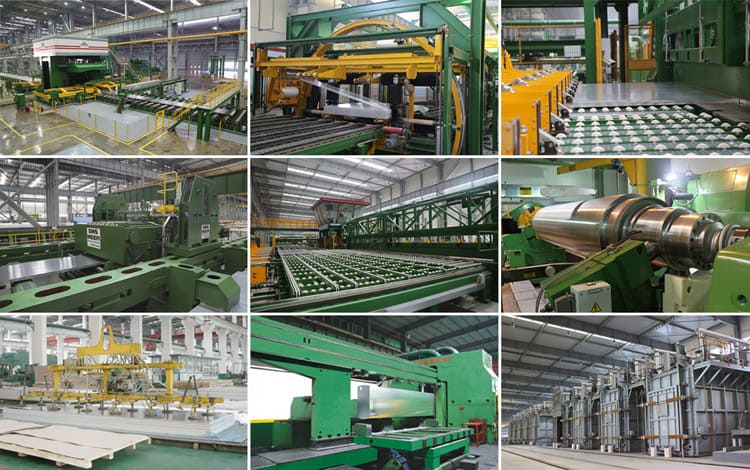
Proseso ng paghahagis at paggulong
Proseso ng paghahagis at paggulong: likidong metal, kahon sa harap (Kontrol sa antas ng likido), paghahagis at rolling machine (sistema ng pagpapadulas, paglamig ng tubig), paggupit ng makina, makina ng pag coiling.
Malamig na proseso ng produksyon ng pagulong
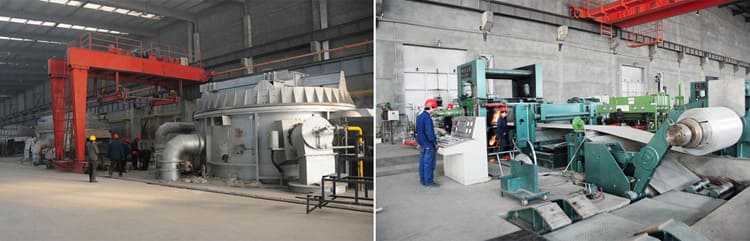
Panimula sa pagtatapos ng proseso ng produksyon
Aluminyo haluang metal ay may mga katangian ng mababang density, magandang mekanikal na katangian, magandang pagganap ng pagproseso, di nakakalason, madaling i recycle, mahusay na electrical kondaktibiti, paglipat ng init at paglaban sa kaagnasan, kaya ito ay may malawak na hanay ng mga application.
Aerospace: ginagamit upang gumawa ng mga balat ng sasakyang panghimpapawid, mga frame ng fuselage, mga girder, mga rotors, mga propeller, mga tangke ng gasolina, mga panel ng pader at mga struts ng landing gear, pati na rin ang rocket forging rings, mga panel ng pader ng spacecraft, atbp.
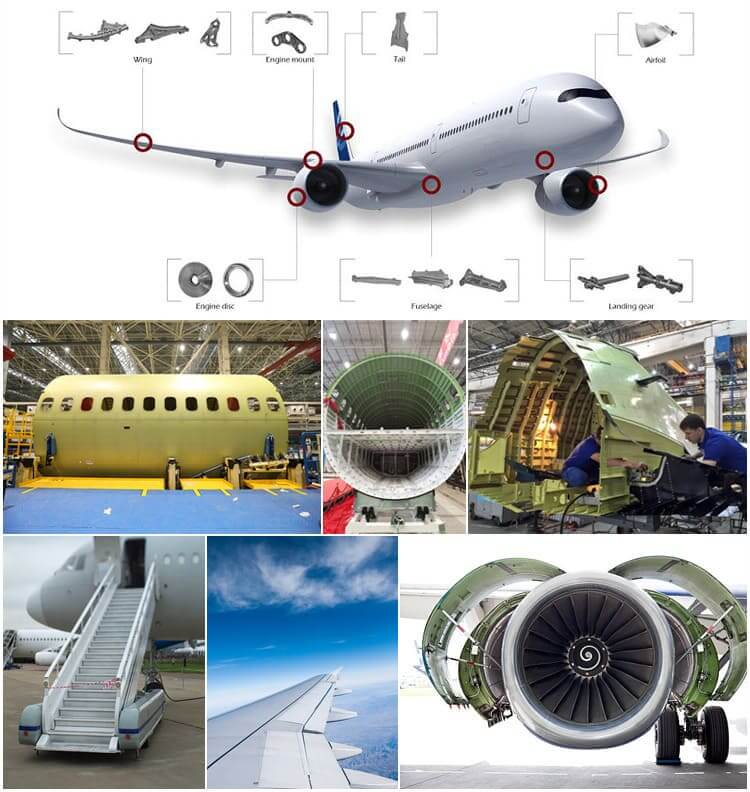
Aluminyo haluang metal na ginagamit para sa aerospace
Transportasyon: ginagamit para sa kotse katawan istraktura materyales ng mga sasakyan, Mga Sasakyan ng Subway, mga kotse ng pasahero ng tren, mabilis na mga kotse ng pasahero, mga pinto at bintana, mga istante, mga bahagi ng automotive engine, mga aircon, mga radiator, mga panel ng katawan, mga gulong at mga materyales ng barko.
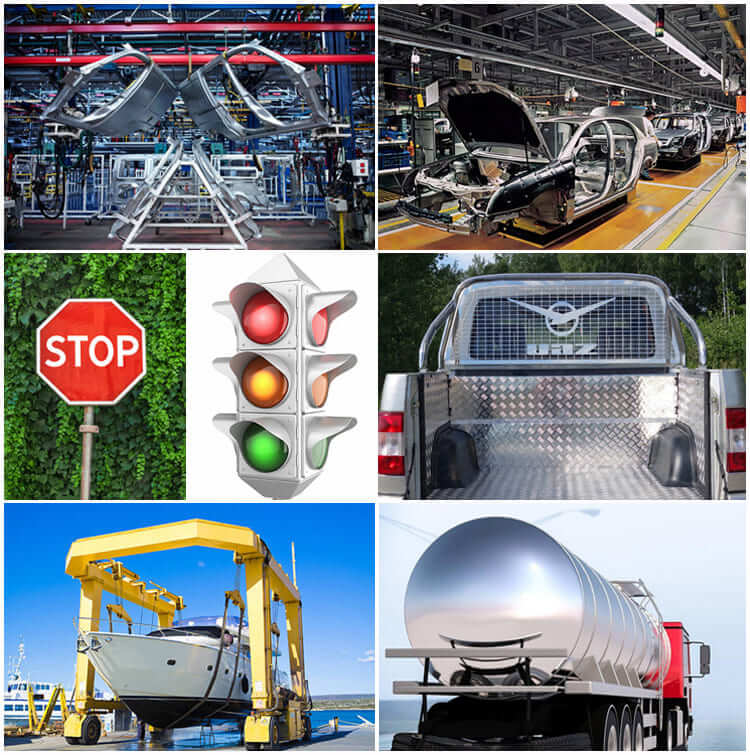
Application ng trapiko
Packaging: Ang lahat ng aluminyo pop lata ay pangunahing ginagamit bilang mga materyales sa packaging ng metal sa anyo ng mga manipis na plato at foils, at ginagawang lata, mga takip, mga bote, mga bariles, at packaging foils. Malawakang ginagamit sa packaging ng mga inumin, pagkain, mga pampaganda, mga gamot, mga sigarilyo, mga produktong pang industriya, mga gamot, atbp.
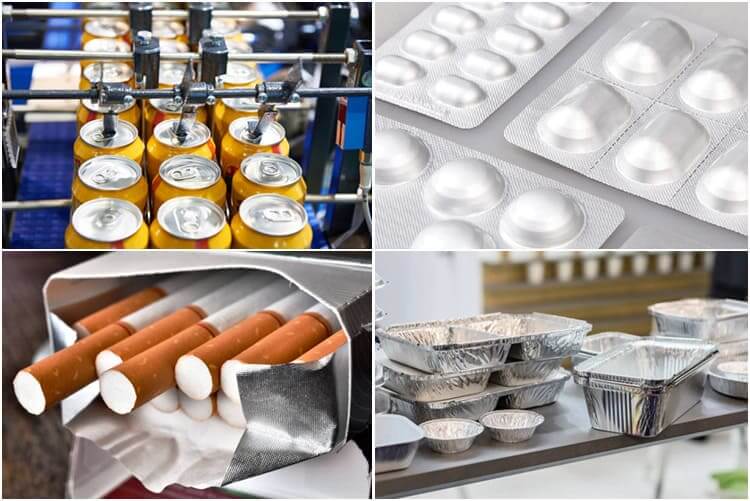
Application ng packaging
Pag-print: Pangunahing ginagamit upang gumawa ng PS plates, ang mga PS plate na nakabase sa aluminyo ay isang bagong uri ng materyal sa industriya ng pag print, ginagamit para sa awtomatikong paggawa ng plato at pag print.
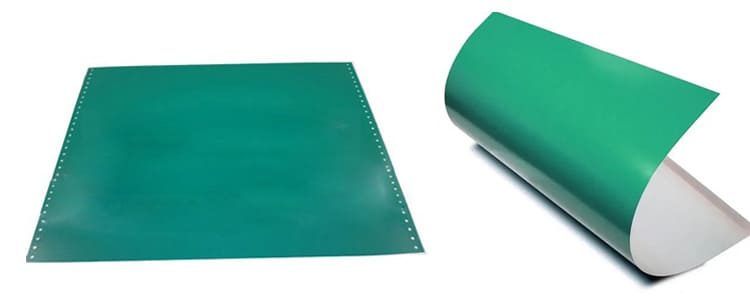
Pag print ng PS
Dekorasyon ng arkitektura: aluminyo haluang metal ay malawakang ginagamit sa mga istraktura ng gusali, mga pinto at bintana, suspendido ang mga kisame, pandekorasyon na ibabaw, atbp. dahil sa magandang kaagnasan nito paglaban, sapat na lakas, mahusay na pagganap ng proseso at pagganap ng hinang.

Application ng konstruksiyon ng haluang metal ng aluminyo
Mga produktong elektroniko: mga computer, mga mobile phone, mga shell ng refrigerator, mga radiator, atbp.
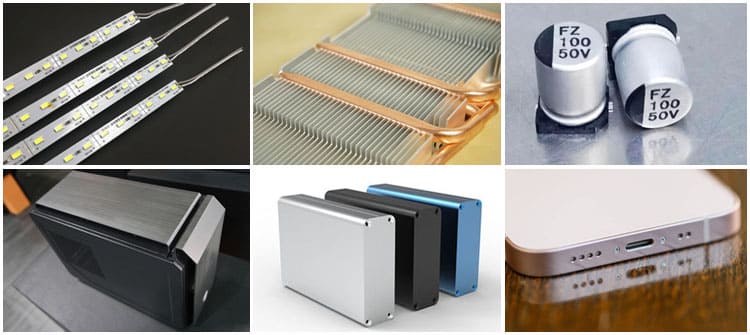
Electronic application ng produkto
Mga gamit sa kusina: mga kaldero ng aluminyo, aluminyo basins, mga liner ng rice cooker, sambahayan aluminyo foil, atbp.
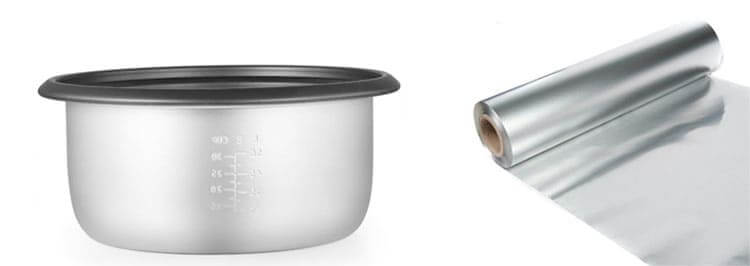
Application ng kusina
Packaging Ng Aluminum Sheet / Coil
Ang bawat detalye ng packaging ay kung saan namin ituloy ang perpektong serbisyo. Ang aming proseso ng packaging sa kabuuan ay ang mga sumusunod:
Paglalamina: malinaw na pelikula, asul na pelikula, mikro-mucosal, mataas na mucosal, laser pagputol ng pelikula (2 mga tatak, Novacell at Polyphem);
Proteksyon: mga tagapagtanggol ng sulok ng papel, mga pads laban sa presyon;
pagpapatayo ng mga: desiccant;
Tray: fumigated hindi nakakapinsala kahoy na tray, magagamit muli ang bakal na tray;
Pag-iimpake: Tik-tik-toe bakal sinturon, o PVC packing belt;
Kalidad ng Materyal: Ganap na libre mula sa mga depekto tulad ng puting kalawang, mga spot ng langis, mga rolling mark, pinsala sa gilid, mga baluktot, mga dent, mga butas, mga break lines, mga gasgas na, atbp., walang coil set.
Port: Qingdao o iba pang mga port sa China.
Lead oras: 15-45 mga araw.
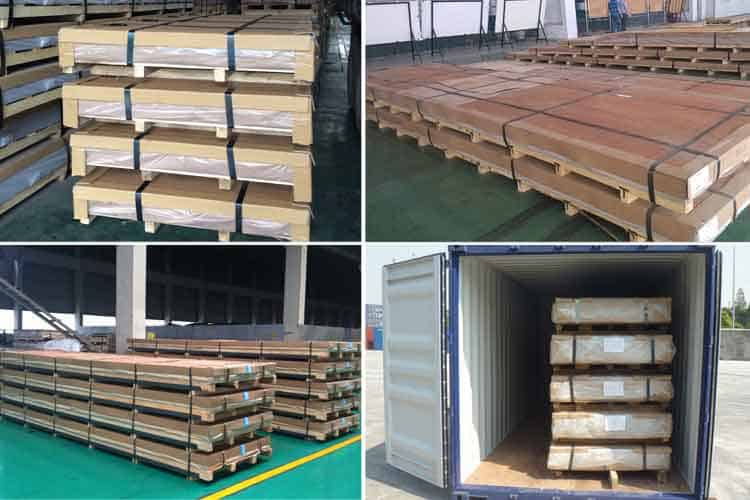
Aluminyo sheet / plate packaging proseso
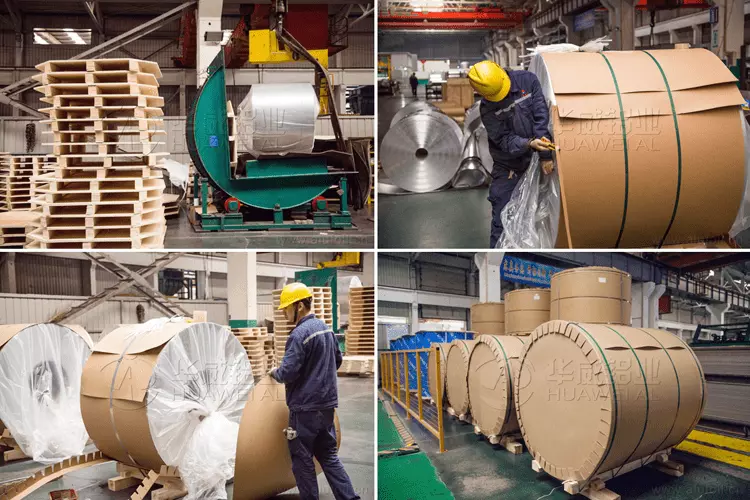
Aluminyo likawin packaging proseso
F: Ikaw ba ay isang tagagawa o isang mangangalakal?
Q: Kami ay isang tagagawa, ang factory namin ay sa No.3 Weier Road, Sonang Pang industriya, Gongyi, Henan, Tsina.
F: Ano ang MOQ para sa pag order ng produkto?
Q: Ang MOQ natin ay 5 tonelada, at ang ilang mga espesyal na produkto ay magkakaroon ng isang minimum na dami ng order ng 1 o 2 tonelada.
F: Gaano katagal ang iyong oras ng lead?
Q: Sa pangkalahatan ang aming lead time ay tungkol sa 30 mga araw.
F: Mayroon bang kalidad ng katiyakan ang iyong mga produkto?
Q: Oo nga, kung may problema sa quality sa products namin, kami ay mabayaran ang customer hanggang sa sila ay nasiyahan.
Mga Kaugnay na Produkto


Mga Pinakabagong Blog
5052 mga bes 6061 Aluminyo: Mga Pangunahing Pagkakaiba & Best Uses
Compare 5052 mga bes 6061 aluminum for strength, paglaban sa kaagnasan, pagiging formable, at machining. Discover which alloy best fits your project.
Common Alloys of Reefer Truck Used PE Coated Aluminum Coil
Discover common alloys of reefer truck used PE coated aluminum coil, kasama na ang 3003, 3004, at 3105. Designed for excellent corrosion resistance, pagiging formable, and long-lasting outdoor performance.
Is Aluminum Conductive? Mga Katangian, Gumagamit ng mga & Benefits Explained
Is aluminum conductive? Discover aluminum's electrical conductivity, key advantages, and why it is widely used in power transmission and industrial applications.
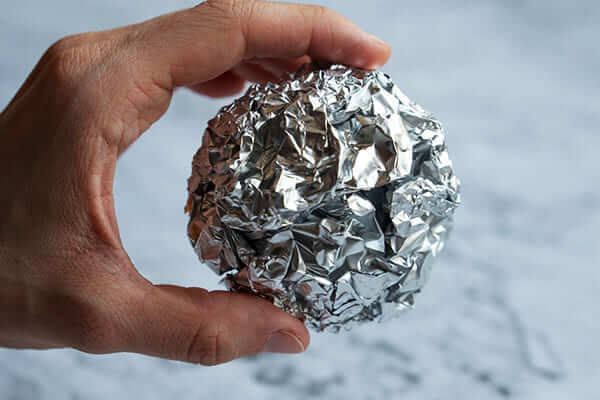
Unlocking Sustainability: The Truth About Aluminum Foil Recycling
Is Aluminum Foil Recyclable? Learn how aluminum foil can be recycled, how to prepare it properly, and why recycling helps reduce waste and save resources.