Common Alloys of Reefer Truck Used PE Coated Aluminum Coil
1435 Mga Pananaw 2026-07-06 07:41:38
Panimula
Common Alloys of Reefer Truck Used PE Coated Aluminum Coil are at the crossroads of lightweight design, paglaban sa kaagnasan, and long-term durability.
As reefer (refrigerated) truck fleets expand to meet global cold-chain demands, manufacturers and operators increasingly rely on PE (polyethylene) coated aluminum coil to produce interior and exterior panels, insulation facings, and liner sheets that can withstand low-temperature service, frequent loading/unloading, and harsh road conditions.
The right aluminum alloy combined with a robust PE coating determines not only the aesthetic and structural quality of the trailer but also the performance of the refrigeration system, fuel efficiency, and maintenance costs over the vehicle’s life cycle.
Sa partikular na, this article emphasizes the importance of alloy choice in relation to PE coating adhesion, pagiging formable, corrosion resistance in humid, low-temperature environments, and the lifecycle costs of reefer trailers.
By understanding the interaction between alloy chemistry, Pamahiin, and coating technology, stakeholders can optimize panel performance, reduce defect rates, and improve the overall reliability of refrigerated transport.
Common Alloys of Reefer Truck Used PE Coated Aluminum Coil
What is PE Coated Aluminum Coil for Reefer Trucks?
What is PE coating?
PE coating on aluminum coil refers to a film of polyethylene applied to one or both faces of aluminum sheet or coil.
This coating provides several functional benefits: improved chemical resistance, moisture barrier, easier cleaning, and a surface suitable for dyeing or painting if required.
In the context of reefer trucks, PE coatings are valued for their resilience in humid, saline, and occasionally acidic cargo environments, as well as their compatibility with insulation systems and interior lining materials.
The coating process typically yields a uniform thickness in the neighborhood of a few micrometers to a few tens of micrometers, depending on the manufacturer’s specification and the intended service environment.
Why use aluminum coil?
Aluminum coil offers an advantageous combination of lightweight mass with substantial strength, paglaban sa kaagnasan, at pagiging formable.
For reefer trailers, the coils are converted into panels, liners, and insulation facings that must endure the following conditions:
- Low-temperature exposure (often well below 0°C during transport)
- Occasional thermal cycling as doors open/close and as ambient temperatures fluctuate
- Moisture and humidity, which can drive corrosion in certain metal systems if coatings fail
- Mechanical stress from loading/unloading and traffic vibrations
- The need for cleanability and sanitary requirements inside the cargo bay
Aluminum’s low density helps reduce vehicle weight, which translates into fuel efficiency and lower operating costs—a critical factor in total cost of ownership for fleets.
A robust PE coated aluminum coil maintains a durable exterior while supporting cleanable interior surfaces, minimizing maintenance and downtime.
Key performance metrics for reefer applications
- Coating adhesion: The bond between PE coating and base alloy must withstand repeated flexing and edge bending without blistering or delamination.
- Impact and scratch resistance: Panels experience handling and contact with cargo, racking, or tools; coatings should resist scratching that could expose bare metal.
- Temperature stability: The coating and substrate must perform reliably across the typical reefer temperature range, including ultra-low temperatures during transit.
- Formability: The coil must be manufacturable into the required panel shapes with consistent dimensional control.
- Paglaban sa kaagnasan: In humid and salt-laden environments, a corrosion-resistant alloy helps ensure long panel life and reduced maintenance.
- Coating finish and color stability: For exterior panels, color retention and surface gloss are important for aesthetics and resale value, while interior surfaces may require easy-to-clean finishes.
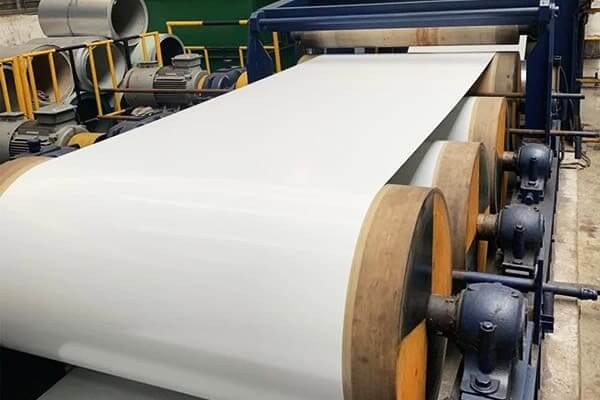
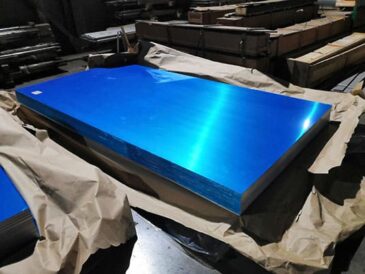
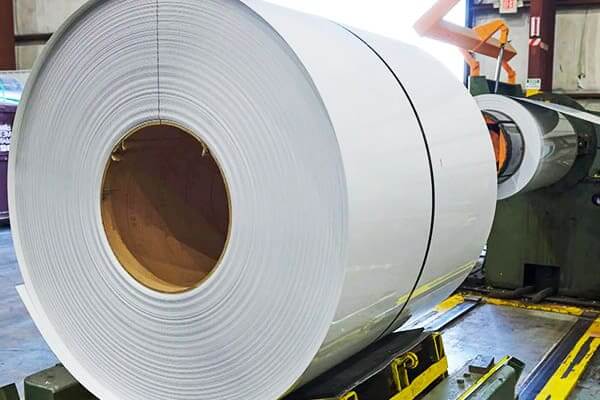
Huawei 3003 PE Coated Aluminum Coil Production
Common Alloys Used in PE Coated Aluminum Coils
Selecting the right aluminum alloy is foundational to achieving the target combination of formability, lakas ng loob, and corrosion resistance when paired with PE coating.
The following sections present the most common alloy families used for reefer truck PE coated aluminum coil, with practical guidance on temper, typical properties, at mga aplikasyon.
3xxx Serye: Aluminum-Manganese Alloys (Al Mn)
- Common alloys: 3003, 3004, 3105
- Typical temper ranges: H14, H24 (and sometimes O, F), depending on formability and performance requirements
- Key properties:
- Excellent formability and bendability
- Katamtamang lakas; magandang paglaban sa kaagnasan
- Readily workable for coatings and fabrications
- Why used in reefer PE coated coils:
- The high formability supports complex panel geometries without cracking the coating
- Adequate corrosion resistance for trailer interiors and moderately corrosive environments
- Cost-effective option with reliable coating adhesion and long service life
- Typical applications:
- Interior liners and panels
- Exterior siding sections on lighter-duty reefer compartments
- Insulation facings combined with PE coatings for moisture control
5xxx Serye: Aluminum-Magnesium Alloys (Al Mg)
- Common alloys: 5052, 5083, 5086 (and related grades)
- Typical temper ranges: H32, H34, H36, sometimes O or H24 depending on formability
- Key properties:
- Higher strength than 3xxx series while retaining good formability
- Notable corrosion resistance, including atmospheric and humidity exposure
- Good weldability and fatigue performance
- Why used in reefer PE coated coils:
- Enhanced strength allows thinner gauges to meet panel strength requirements, helping reduce weight
- Good corrosion resistance helps with exterior panels that may face road salts
- Strong coating adhesion and compatibility with common PE coating processes
- Typical applications:
- Structural panels and exterior skins on mid-weight reefer trailers
- Interior wall panels where more strength is desired without sacrificing formability
6xxx Serye: Aluminum-Mg-Silicon Alloys (Al Mg-Si)
- Common alloys: 6061, 6063
- Typical temper ranges: T5, T6, or O for different formability and strength profiles
- Key properties:
- Good to excellent formability and surface finish
- Higher strength than 3xxx alloys in some tempers, with dependable corrosion resistance when properly treated
- Excellent coating compatibility and uniformity of surface for coatings
- Why used in reefer PE coated coils:
- Suitable for more demanding exterior panels or components requiring higher stiffness
- Strong coating adhesion due to refined microstructure, improving coating life
- Consistent dimensional stability across temperature fluctuations
- Typical applications:
- Exterior skins where a combination of strength and aesthetic appeal is needed
- Interior panels in high-traffic areas where durability matters
Other considerations and alloys not typically primary for coils
- 8xxx and specialty alloys: While there are aluminum alloys outside the 3xxx–6xxx families, these are less common as base alloys for PE coated coils in reefer applications due to cost, availability, or coating adhesion constraints. In some niche cases, 8xxx alloys or high-silicon alloys may be considered for specialized thermal performance or wear resistance, but they are not standard for typical reefer trailer panels.
- Temper and microstructure: The temper designation (tulad ng H14, H24, T6, atbp.) plays a crucial role in formability, lakas ng loob, and coating compatibility. Halimbawang, H14 indicates annealed then strain-hardened to a lower degree, balancing formability with strength, whereas T6 indicates solution heat treated and artificially aged for higher strength, which may reduce formability in some panel geometries. The choice of temper is driven by the fabrication process (bending radii, pag stamp ng, pagulong gulong) and end-use performance.
Alloy-by-Alloy Comparison: Practical Insights for PE Coated Reefer Coil
| Alloy family | Common alloys (examples) | Typical temper options | Mga katangian ng makina (tipikal na) | Paglaban sa kaagnasan | Formability with PE coating | Practical reefer applications | Notable notes |
|---|---|---|---|---|---|---|---|
| 3xxx Serye | 3003, 3004, 3105 | H14, H24, O, F | YS: ~60–110 MPa; Mga UTS: ~90–150 MPa; madaling mabuo | Good to moderate | Napakahusay; high elongation reduces coating damage risk | Interior liners, light exterior panels | Great for low-cost, high-formability needs |
| 5xxx Serye | 5052, 5083 | H32, H34, H36 | YS: ~90–125 MPa; Mga UTS: ~210–260 MPa; malakas na | Very good | Good to very good | Exterior skins and interior panels requiring higher strength | Higher strength per thickness reduces weight, cost varies with thickness |
| 6xxx Serye | 6061, 6063 | T5, T6, O | YS: ~120–275 MPa; Mga UTS: ~190–310 MPa; good to excellent | Excellent with proper coating | Napakahusay; makinis na, uniform surfaces | Structural exterior panels, high-surface-quality interiors | Higher strength but may require more careful coating management |
Notes:
– Temper classifications (H, T, O) indicate heat treatment and work hardening states, significantly influencing formability and strength.
– In practice, the choice among 3xxx, 5xxx, and 6xxx alloys for PE coated coils will balance cost, required strength, panel geometry, and coating adhesion performance. For interior liners that see frequent handling, 3xxx alloys are popular; for exterior skins with greater structural demands, 5xxx or 6xxx alloys may be preferred.
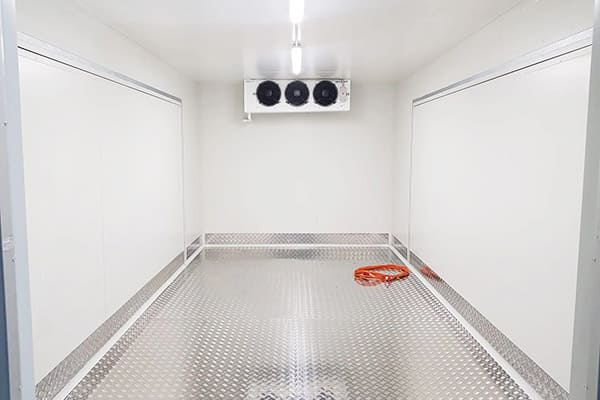
3105 PE Coated Aluminum Coil Used for Interior of Reefer Truck
Packaging, Coating Adhesion, and Long-Term Performance
PE coating adhesion is a critical determinant of long-term performance in reefer applications.
The adhesion depends not only on coating chemistry and thickness but also on the base alloy’s surface finish, oxide layer characteristics, at pag-uugali.
Several practical guidelines help ensure reliable adhesion and coating integrity:
- Surface preparation: Abrasive or chemical pretreatments to create a clean, roughened surface improve coating adhesion. Consistent surface finish prevents local delamination under flexing.
- Pretreatment compatibility: Some coatings require chemical primers or adhesion promoters compatible with the specific aluminum alloy and temper. Manufacturers often specify approved pretreatments for each alloy family.
- Coating thickness: Typical PE coating thickness on coil-facing surfaces used in reefer panels ranges from about 12 sa 25 micrometers, depending on environmental exposure, abrasion risk, and UV considerations. Interior-facing surfaces might use thinner coatings; exterior-facing or highly exposed surfaces may use thicker coatings for durability.
- Thermal compatibility: The combination of PE coating and aluminum must tolerate repeated thermal cycling between ambient temperatures and refrigerated temperatures without embrittlement or delamination.
- Edge protection: Edges and cut edges are more susceptible to coating damage; careful edge sealing and touch-up are important in fabrication.
Real-world experience indicates that combination choices – e.g., 5052 o 6063 alloys with a well‑adhered 15–20 μm PE coating – often deliver an optimal balance of strength, pagiging formable, and coating durability for modern reefer trailers.
When the coating formulation and cure process are well matched to the chosen alloy and temper, service life is extended, maintenance intervals lengthen, and the risk of coating-related defects on assembly lines is reduced.
Design and Manufacturing Considerations for PE Coated Reefer Panels
In practice, manufacturers optimize the entire chain—from alloy choice through coating application, gawa gawa lang, and final assembly.
These design considerations influence both performance and cost.
- Panel geometry and bending radii: The chosen alloy temper must tolerate bending radii required by the panel design without cracking the PE coating or the base metal. 3xxx alloys typically provide superior bendability, while 6xxx alloys may require larger radii or intermediate heat treatment to preserve formability.
- Edge finishing: Edges are critical for coating integrity. Deburring and edge coating or sealing prevent corrosion initiation at cut edges and protect against moisture ingress.
- Joining methods: Welding, riveting, or mechanical fastening are common. Aluminum alloys need compatible fasteners and processes to prevent galvanic corrosion and ensure coating integrity at joints.
- Surface aesthetics: Exterior panels must maintain color and gloss under UV exposure and temperature cycling. PE coating with a UV-stable additive and appropriate curing helps maintain surface appearance.
- Maintenance and repairability: The ability to repanel or repair coatings at field service sites influences lifecycle costs. Repaired surfaces should meet the same corrosion resistance and coating adhesion standards as new areas.
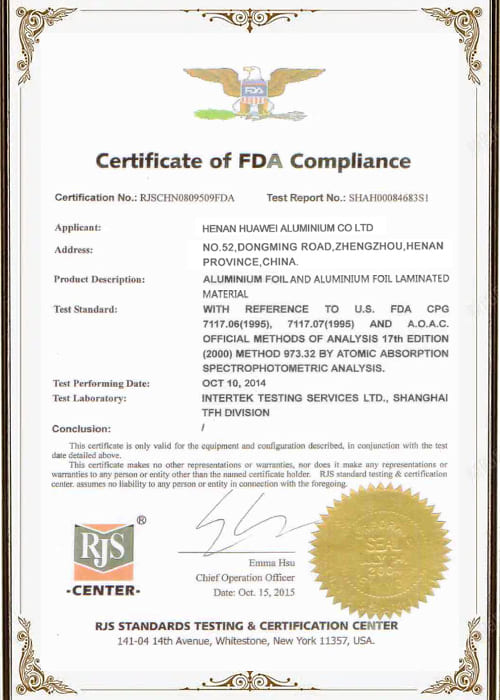
- Compliance and certifications: Materials used in reefer trucks should comply with relevant standards for transport equipment and, in some regions, food-contact safety if anything touches cargo. While interior surfaces may not be food-contact surfaces, some components and coatings may require specific approvals.
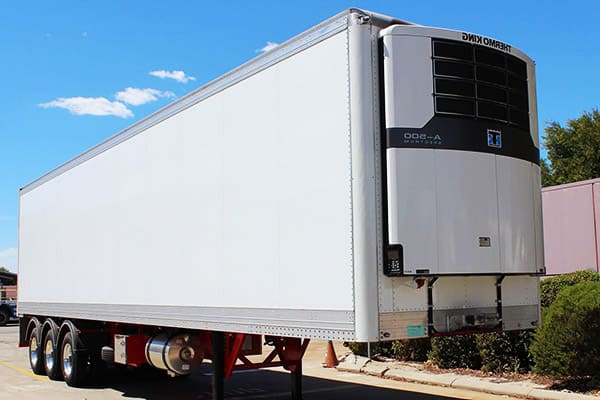
3003 PE Coated Aluminum Coil Reefer Truck Display
Supplier Spotlight: Huawei Aluminum
Huawei Aluminum is a well-regarded supplier of aluminum products, including PE coated aluminum coils used in reefer truck panels and liners. The company emphasizes:
- A broad product range: aluminum coils for various temper requirements, with PE coating options tailored for interior and exterior applications.
- Application suitability: products designed for environments typical of refrigerated trailers, including low-temperature service and exposure to humidity and road salts.
- Coating compatibility and adhesion: emphasis on coating application processes that deliver durable adhesion to common alloys used in reefer panels (3xxx, 5xxx, and 6xxx series).
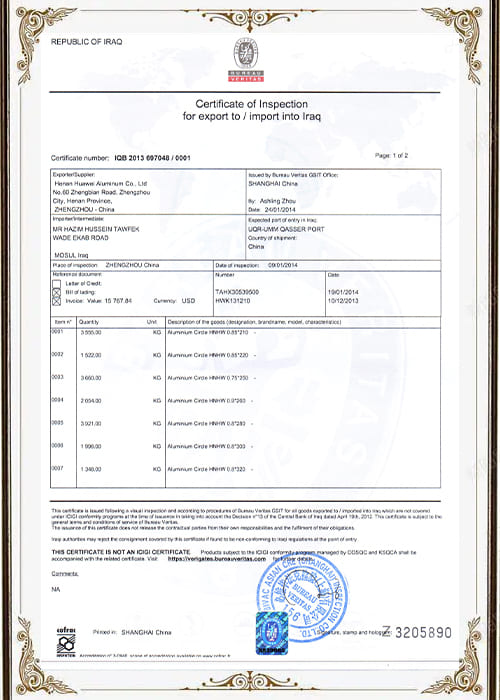
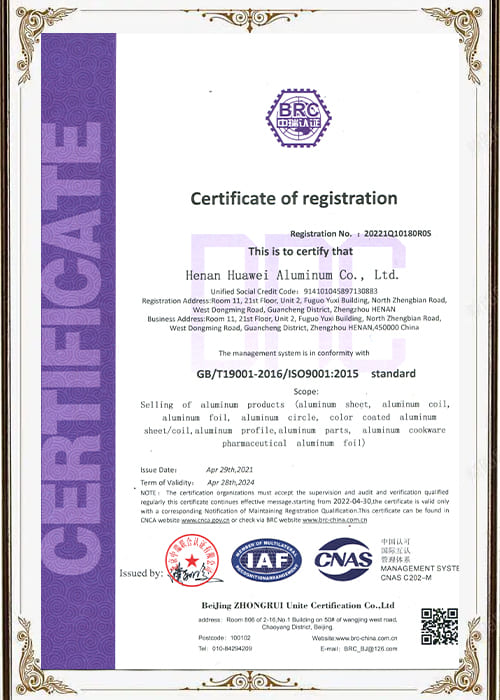
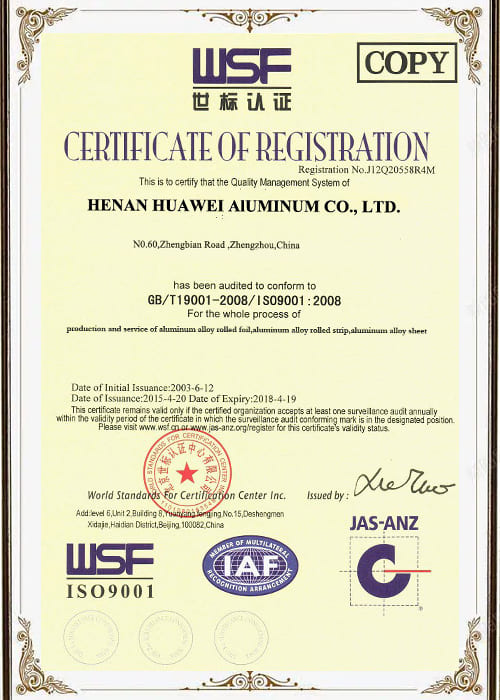
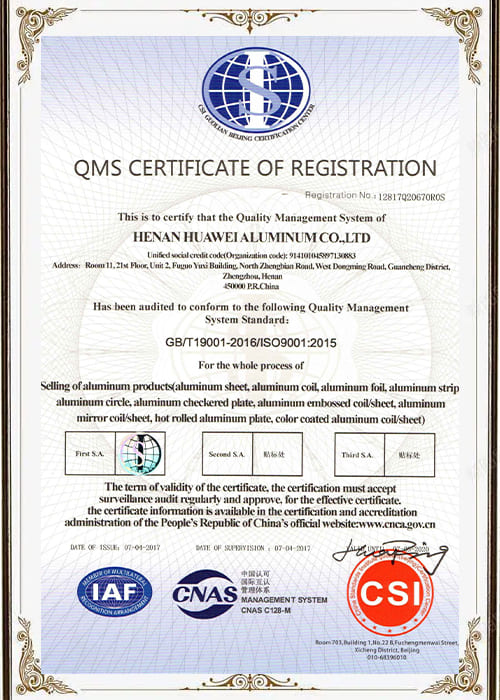
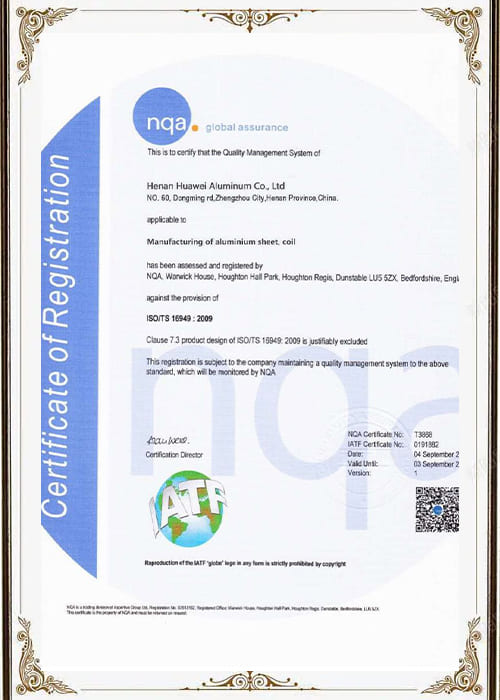
- Quality and compliance: standard quality assurance practices common to leading aluminum suppliers, with documentation and testing to support performance claims.
Introducing Huawei Aluminum in this guide helps connect practitioners with a credible source for PE coated aluminum coil products that align with the alloy choices discussed above.
Kapag sinusuri ang mga supplier, buyers should review product data sheets (PDS), Coating Data Sheets (CDS), temper options, coating thickness ranges, and performance test results (pagdikit, kakayahang umangkop, epekto ng paglaban, and humidity/chemical resistance).
Huawei Aluminum’s product literature and support channels can provide these specifics to ensure the selected alloy and coating configuration meet the reefer trailer’s design and service requirements.
FAQs About Common Alloys of Reefer Truck Used PE Coated Aluminum Coil
Q: What are the most common alloys used for PE coated reefer truck coils?
A: The most common alloys are in the 3xxx, 5xxx, and 6xxx series. Partikular na, 3003, 3004, at 3105 (3xxx) for high formability; 5052 at 5083 (5xxx) for higher strength and corrosion resistance; at 6061 at 6063 (6xxx) when higher stiffness and surface finish are needed.
Q: How do I choose an alloy for a specific reefer panel?
A: Consider panel location (interior vs exterior), required strength, pagiging formable, exposure to moisture or salt, coating adhesion requirements, at gastos. Interior liners benefit from high formability alloys (3xxx) with robust coating adhesion, while exterior skins may warrant higher-strength alloys (5xxx or 6xxx) if structural demands are higher.
Q: What temper is best for PE coated reefer panels?
A: It depends on the fabrication process. H14 or H24 (3xxx) offer a balance of formability and strength for many interior panels. For exterior panels requiring more strength, T5 or T6 tempers (6xxx) may be employed, provided the forming process can accommodate the final temper without compromising the coating.
Q: How thick should the PE coating be on aluminum coils used in reefer applications?
A: Typical coating thickness ranges from about 12 sa 25 micrometers, depending on exposure, abrasion risk, and coating formulation. Exterior surfaces and critical joints may justify thicker coatings, while interior surfaces can use thinner coatings where cleaning and cost are priorities.
Q: What role does Huawei Aluminum play in this market?
A: Huawei Aluminum is a recognized supplier of PE coated aluminum coil products, offering a range of alloy options and coating solutions designed for reefer trailer applications. Buyers should consult Huawei’s product data sheets for specific alloy, Pamahiin, kapal ng patong, and adhesion performance to ensure alignment with project requirements.
Q: How do environmental and life-cycle considerations affect alloy choices?
A: Aluminum’s recyclability and the potential for weight reduction contribute to lower lifecycle emissions and fuel consumption. Alloy selection should balance performance with cost and end-of-life considerations, aiming to maximize durability and minimize maintenance needs in a typical reefer trailer lifecycle.
Q: Are there industry standards I should follow when specifying PE coated aluminum coils for reefer trailers?
A: Standards may include general aluminum product specifications (ASTM, EN), coating adhesion standards, and industry specifications related to reefer trailer construction. It is essential to coordinate with the coating supplier and the aluminum mill to ensure compatibility and compliance with intended service conditions.
Pangwakas na Salita
Choosing the right Common Alloys of Reefer Truck Used PE Coated Aluminum Coil is a multi-disciplinary decision that blends materials science with practical fabrication know-how and fleet economics.
The right alloy in the right temper, paired with a robust PE coating, delivers a reefer trailer that is lightweight, matibay na matibay, and cost-effective across its lifecycle.
By understanding the strengths and limitations of 3xxx, 5xxx, and 6xxx alloys, and by aligning coating processes with alloy chemistry, manufacturers and operators can achieve superior performance in the demanding environment of refrigerated transport.
If you are considering a supplier for PE coated aluminum coil, Huawei Aluminum provides a credible option with a focus on coating performance and alloy availability.
Use this guide as a framework for developing your specification, evaluating supplier data sheets, and communicating your performance targets to your fabrication teams.
In the end, the combination of well-chosen alloy chemistry and well-executed coating technology will translate into safer, more reliable, and more efficient reefer trailers that meet the needs of modern cold-chain logistics.
Share with PDF: Download