Polyester Coated Aluminum Coil for Reefer Truck
1275 Mga Pananaw 2026-07-03 06:30:20
Panimula
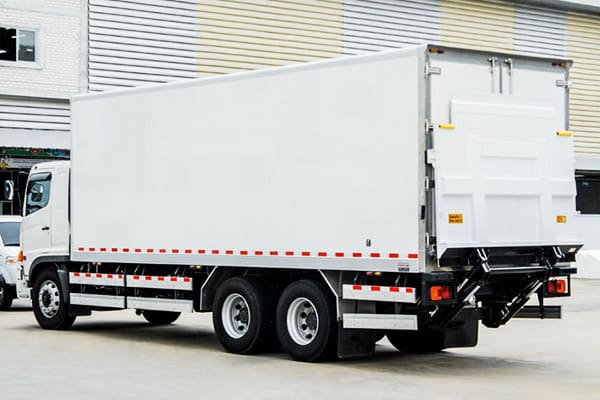
Polyester Coated Aluminum Coil for Reefer Truck is a specialized product designed to withstand the harsh conditions of refrigerated transport while delivering reliable aesthetics and durable performance.
In the logistics and cold-chain sector, reefer trucks move perishable goods from farms to processing plants, distribution centers, and retail outlets.
The exterior and interior surfaces of these vehicles must combine light weight, weather resistance, katatagan ng kulay, and easy maintenance.
Polyester coated aluminum coil answers these requirements with a balance of cost, pagganap, and process efficiency.
This article provides a comprehensive, practitioner-focused look at polyester coated aluminum coil for reefer trucks, covering fundamentals, mga katangian ng pagganap, manufacturing considerations, and practical guidance for fleet operators, body builders, and material buyers.
Throughout, you will find data-driven insights, evidence-based comparisons, and actionable tips to help you select the right coil coating solution, optimize fabrication, and extend the lifecycle of refrigerated transport assets.
We also highlight Huawei Aluminum, a prominent supplier in this space, to illustrate how a credible supplier supports quality control, pagpapasadya, and after-sales service in real-world applications.
Key terms you will encounter include polyester coil coatings, aluminum substrates, coating adhesion, UV and weathering resistance, paglaban sa kaagnasan, fluoropolymer alternatives, and lifecycle cost analyses.
By the end of this guide, you’ll be equipped with a practical framework for evaluating polyester coated aluminum coils for reefer truck applications, supported by data, case examples, and best practices.
Polyester Coated Aluminum Coil for Reefer Truck
Market Overview and Relevance
The role of aluminum coils in reefer trucks
Reefer trucks require materials that are both lightweight and durable. Aluminum offers a superior strength-to-weight ratio compared to steel and many other metals, contributing to better fuel economy and payload efficiency.
The coil form factor is integral to the coil-coating process, which enables continuous production of sheets for exterior panels, interior liners, mga pinto, and auxiliary compartments.
Polyester coatings applied to aluminum coils provide a protective, colored surface with good impact resistance and ease of maintenance.
Key advantages of aluminum coils in reefer trucks include:
– Weight reduction: Aluminum is about one-third the weight of steel for similar thickness, enabling more payload or better fuel efficiency.
– Corrosion resistance: Properly coated aluminum resists coastal salt spray, road salts, and humidity exposure—frequent in long-haul refrigerated routes.
– Aesthetics and branding: Polyester coatings deliver consistent color and gloss, helping fleets project a professional image.
– Repairability: Coated aluminum can be spot-repaired or refreshed with re-coating in some service models, Pagbabawas ng basura.
– Recyclability: Ang aluminyo ay mataas na recyclable, enabling closed-loop material reuse at end of life.
Why polyester coating matters in refrigerated transport
Polyester (PE) coatings are widely used in coil coating due to a strong balance of properties and cost. For reefer trucks, the coating must endure:
– Temperature fluctuations: Exterior surfaces experience wide diurnal and seasonal temperature cycles.
– UV exposure: Sunlight can degrade surface brightness and promote chalking if coatings lack UV stabilizers.
– Moisture and condensation: The surface should resist humidity-driven corrosion and hydrolysis.
– Mechanical wear: Mga Pintuan, handles, mga tatak, and loading activities can introduce scuffs and scratches.
Polyester coatings typically blend UV-stable resins with color pigments and binders, achieving good color retention, weather resistance, and adhesion to the aluminum substrate.
While fluoropolymer coatings (like PVDF) offer superior long-term chemical resistance and color stability, polyester coatings provide a cost-effective alternative with adequate performance for many reefer truck exterior and interior surfaces.
For many fleets, polyester coated aluminum coils present a compelling total cost of ownership given initial material cost, processing compatibility, and lifecycle performance.
Trends shaping the market
- The rise of lighter, sustainable fleets: Operators are increasingly prioritizing weight savings to maximize payload and fuel efficiency.
- Growing emphasis on corrosion resistance in coastal corridors: Salt exposure drives coating selection toward more durable finishes.
- Standardization and supply chain resilience: Sharp focus on consistent coating thickness, pagdikit, and color tolerance to minimize field issues and rework.
- Supplier consolidation and value-added services: Buyers look for integrated supply chains, including coil supply, pre-painted sheets, and post-paint services.
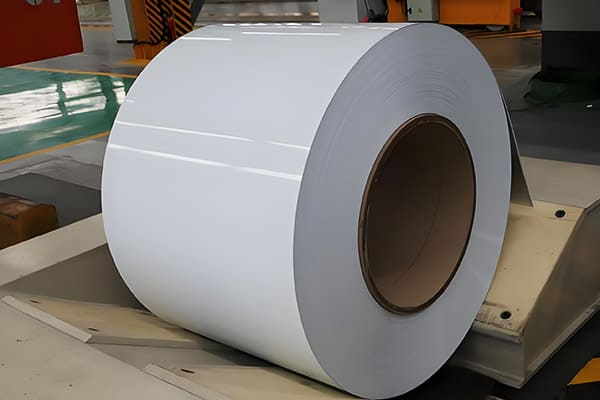
High-gloss White Polyester Coated Aluminum Coil
Product Fundamentals
What is Polyester Coated Aluminum Coil
Polyester coated aluminum coil is created by winding aluminum into a tight, continuous coil and applying a polymer-based polyester coating to one or both sides through a coil-coating process.
The coating is cured at elevated temperatures to form a robust, cross-linked film that adheres well to the aluminum substrate.
The resulting material combines the strength and lightness of aluminum with a durable, colored protective layer.
Common attributes include:
– Substrate options: Aluminum alloys like 3003-H14, 5052-H32, and 3105-H24 are frequently used due to good formability and corrosion resistance.
– Coating thickness: Polyester coatings typically range from about 12 sa 25 mga micron (0.012–0.025 mm) for exterior use, with interior applications sometimes using thinner finishes. Sa ilang mga kaso, 25–35 microns may be used for enhanced durability or specific color requirements.
– Color and gloss: A broad color palette and gloss range are available, with UV absorbers and stabilizers to preserve color and gloss over time.
– Adhesion and durability: Modern polyester formulas emphasize adhesion to aluminum, flexibility to accommodate bending, and resistance to scratching.
Substrate choices and coating thickness
- Substrates:
- 3003-H14: Highly formable, katamtamang lakas, good corrosion resistance—commonly used for exterior panels and interior liners.
- 5052-H32: Mas mataas na lakas, mahusay na paglaban sa kaagnasan, good for structural and load-bearing panels.
- 3105-H24: Aluminum-manganese alloy with excellent workability and coating compatibility.
- Coating thickness:
- Exterior applications: 18–25 microns (tipikal na) to balance durability and cost.
- Interior applications: 12–18 microns may be sufficient where exposure is moderate.
- If color and gloss retention are priority, some users opt for higher thicknesses (hal., 25 mga micron) for extended service life in harsh climates.
Performance characteristics to expect
- Pagdikit: Strong chemical and mechanical adhesion to aluminum, with coatings designed to resist peeling during bending and forming.
- UV stability: Pigments and stabilizers protect against fading and chalking under sun exposure.
- Paglaban sa panahon: Coatings resist rain, kahalumigmigan, and varying temperatures.
- Epekto ng paglaban: The combination of coating and substrate provides resilience to minor impacts and abrasions from loading and parking operations.
- Cleanability: Smooth coated surfaces are easier to wipe clean of dirt, asin, and road grime, pagbabawas ng mga gastos sa pagpapanatili.
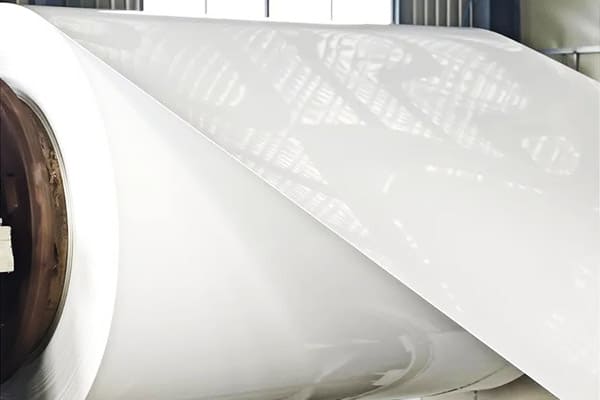
Huawei Polyester Coated Aluminum Coil Production
Huawei Aluminum as a Supplier
Company overview
Huawei Aluminum is a recognized supplier of aluminum coils, mga sheet, and related products, with a broad portfolio that includes pre-painted coils and coil-coated finishes.
Their product lines typically cover:
– Pre-painted aluminum coils with polyester and PVDF coatings.
– Substrates ranging from 1050, 1xxx-series alloys to 3xxx and 5xxx-series alloys used for exterior and interior applications.
– Custom coating colors, mga kapal, and surface textures to meet branding and functional requirements.
Huawei Aluminum emphasizes quality control, traceability, and customer service, aiming to support customers throughout the product lifecycle—from coil selection and coating design to fabrication advice and after-sales support.
In the reefer truck segment, a supplier like Huawei Aluminum can help buyers tailor coating thickness, kulay ng kulay, and performance to specific environmental conditions, ensuring consistent supply and reliable performance across fleets.
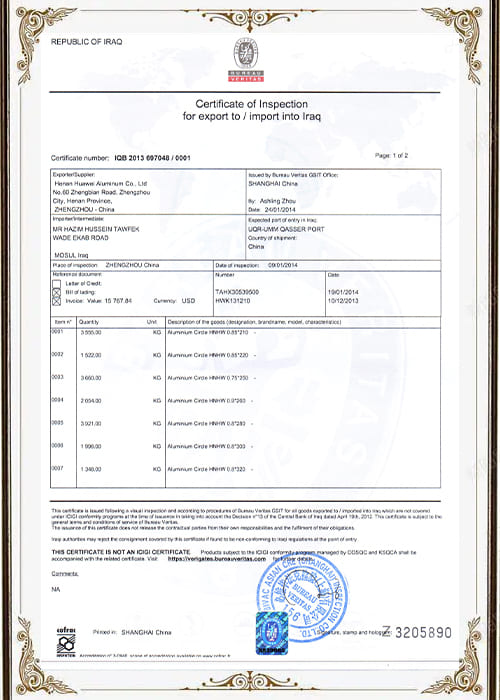
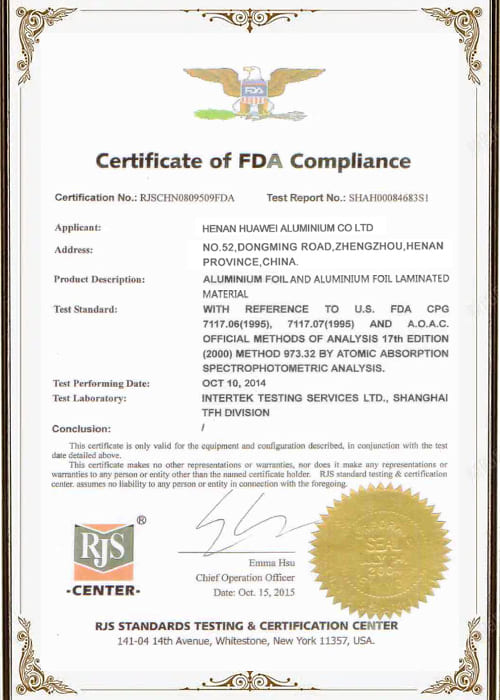
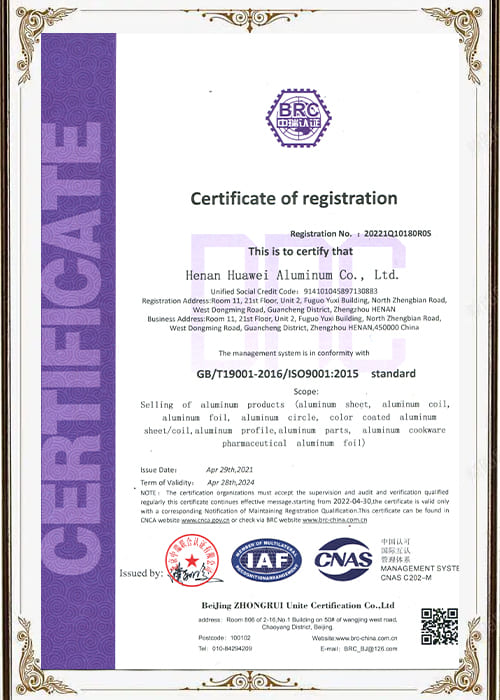
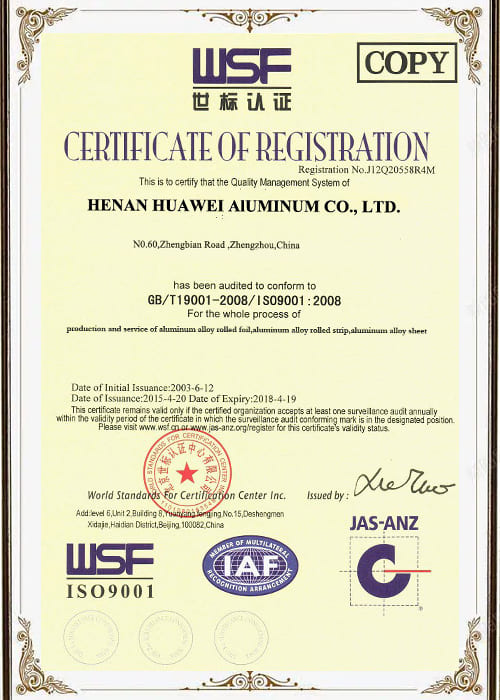
Kontrol sa kalidad, Mga sertipikasyon, and testing
Reliable suppliers typically implement:
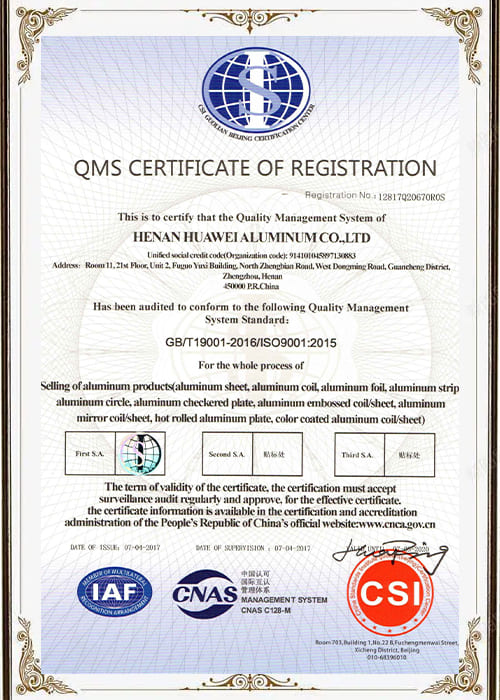
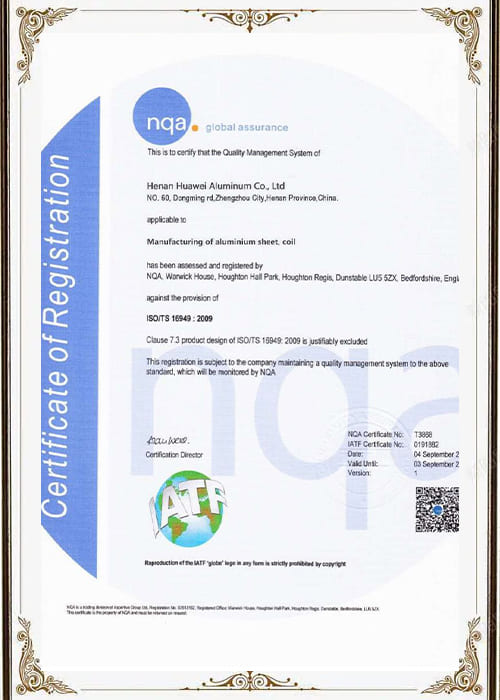
– ISO 9001 quality management systems for manufacturing and process control.
– ISO 14001 environmental management for sustainable operations.
– Factory audits and third-party testing of coating adhesion, bake resistance, and weathering performance.
– Material traceability from raw aluminum ingots to finished coils, including coating batch codes and lot numbers.
– Compliance with relevant food contact and safety standards if interior surfaces interact with cargo or passengers.
Huawei Aluminum’s capabilities in coating technology, along with strong process control and testing protocols, are essential for customers seeking predictable performance and consistent product specifications for reefer truck applications.
Performance and Properties
Mechanical properties and coating adhesion
The mechanical integrity of polyester coated aluminum coils lies in the synergy between the substrate and the coating. Key aspects include:
– Tensile strength and elongation: Sufficient to withstand forming operations used in door panels, panels with bends, and curved edges.
– Coating adhesion: Measured in peel or pull-off tests, with typical values indicating strong bonding to aluminum. Higher adhesion reduces risk of coating delamination during service life.
– Flexibility: The coating must withstand bending radii without cracking, especially for curved panels typical in reefer bodies.
Representative properties
| Pag-aari | Karaniwang Saklaw | Notes |
|---|---|---|
| Substrate alloy (hal., 3003) | 3003-H14, 5052-H32 etc. | Standard coil-coating substrates |
| Coating thickness | 12–25 microns | Panlabas na bahagi: 18–25 μm common; interior: 12–18 μm |
| Pagdikit (pull-off) | 3–6 MPa (tipikal na) | Higher for optimized primer-adhesive systems |
| Gloss (60°) | 15–70 GU | Wide range for branding and aesthetics |
| UV stability (accelerated) | 500–2000 hours chalking resistance | Depends on pigments and stabilizers |
| Kakayahang umangkop ( mandrel bend) | 4–6 mm mandrel test | Indicates ability to form without crack |
Weathering and UV resistance
Refrigerated trucks face sun exposure during daytime stops and rest periods, especially in cross-border routes.
Polyester coated aluminum coils incorporate UV stabilizers and color pigments designed to resist chalking and color fading.
In accelerated aging tests, polyester coatings may demonstrate acceptable chalking resistance for several months of outdoor exposure, with color shifts monitored to maintain branding consistency.
PVDF coatings offer higher long-term color stability, but polyester coatings can outperform in price-sensitive applications when combined with protective topcoats or clear overcoats.
For reefer trucks operating in moderate climates or with limited sun exposure, polyester coatings meet most service life expectations while keeping total cost lower.
Corrosion resistance and salt spray performance
Corrosion performance depends on:
– Substrate alloy and natural oxide layer that forms on aluminum surfaces.
– Coating chemistry and barrier properties.
– Vapor pressure and humidity within the environment near the cargo area.
Coated aluminum used for exterior panels typically demonstrates good resistance to accelerated salt spray tests, provided the coating is properly cured and adhesion is maintained. Fleet operators in coastal or winter road conditions often choose thicker polyester coatings and/or additional protective topcoats to optimize longevity.
Color stability, gloss retention, and aesthetics
Color consistency is vital for branding and fleet appearance. Polyester coatings can deliver uniform color and gloss across panels, with minimal haze or orange-peel texture.
Color retention under UV exposure can be enhanced with stabilizers and pigments designed for outdoor performance.
For interior liners or cargo-area panels, a range of matte to semi-gloss finishes can be selected to hide minor scuffs and maintain a clean appearance.
Thermal properties and energy management
Polyester coated aluminum coils contribute to thermal management by offering reflective exterior surfaces with light color options.
High reflectivity reduces heat absorption, helping to maintain cooler surfaces on sun-exposed panels, which can indirectly affect the energy efficiency of the trailer’s refrigeration system by reducing heat load from the outer surface.
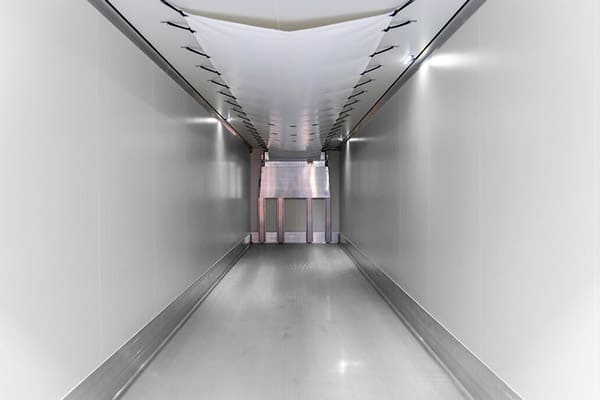
Interior View of Reefer Truck
Paghahambing: Polyester vs Alternatives
| Coating Type | Substrate Commonly Used | Typical Coating Thickness (M) | Color/Gloss Options | UV/Chalk Resistance | Cost Position | Longevity in Salt Exposure | Repair/Refurbishment Ease | Primary Use Case in Reefer Trucks |
|---|---|---|---|---|---|---|---|---|
| Polyester (PE) | 3003, 3105, 5052 | 12–25 | Wide range; matte to high gloss | Katamtaman; UV stabilizers used | Katamtaman | Moderate to good | Katamtaman; field re-coating possible | Exterior body panels, interior liners with budget considerations |
| PVDF (Fluoropolymer) | 3003, 5052 | 25–35 | Excellent color stability; gloss retention | Napakahusay; best long-term stability | Mas Mataas | Napakahusay | Mabuti na lang; but more challenging to re-coat | Premium exterior panels, branding-heavy fleets, extended service life |
| Polyester with topcoat or UV protective overlay | 3003, 5052 | 18–25 | Varied; good color range | Improved UV stability | Moderate to good | Mabuti na lang | Mabuti na lang | Balanced solution for mixed climates and cost-conscious operators |
Notes:
– PVDF coatings provide superior long-term color and chemical resistance but come at a higher material and processing cost.
– Polyester coatings are well-suited for cost-sensitive projects where moderate to good performance is acceptable.
– Real-world outcomes depend on substrate choice, coating system, curing temperatures, and post-forming handling.
Sustainability and Lifecycle Considerations
Recyclability and environmental impact
Aluminum itself is highly recyclable, with recycled content contributing to significant energy savings compared to primary production.
Polyester coatings are generally compatible with recycling streams, though some coating residues may require minimal processing to remove paint from aluminum scrap.
End-of-life considerations often involve mechanical recycling with minimal chemical processing.
Life cycle costs and maintenance
- Initial cost: Polyester coated coils tend to be less expensive than PVDF-coated options, reducing upfront capital expenditure.
- Maintenance costs: Cleanability and scratch resistance affect ongoing maintenance. Polyester-coated surfaces that are well maintained typically require less frequent cosmetic rework than heavily pigmented, non-coated surfaces.
- Service life: For reefer trucks operating in moderate climates, polyester-coated coils can provide an optimal balance of performance and affordability for several years. In extreme climates or environments with heavy salt exposure, you may want to consider protective measures or higher-grade coatings.
Energy efficiency impact
Although the direct energy impact of the coating is modest compared to insulation and refrigeration system components, a reflective exterior surface reduces solar heat gain.
Light-colored polyester coatings with high reflectivity can contribute to lower radiant heat absorption, translating to modest energy savings and improved refrigeration efficiency in hot climates.
FAQs About Polyester Coated Aluminum Coil for Reefer Truck
Q1: What is the typical lifespan of polyester coated aluminum coil in reefer trucks?
A1: Lifespan depends on climate, exposure, pagpapanatili, and coating thickness. For exterior panels in moderate climates with regular maintenance, a 5–10 year service life is common, with extended life possible through thicker coatings and proactive maintenance.
Q2: How does polyester coating affect repairability and refinishing?
A2: Polyester coatings can be spot-repaired or re-coated in many cases, especially when applying compatible new coatings. Matching color and gloss can be challenging after long service; working with a supplier that provides color-matching services helps maintain a consistent appearance.
Q3: How should I select substrate alloy for reefer truck coils?
A3: For exterior panels with good corrosion resistance and formability, 3003-H14 is a common choice. For higher strength and improved corrosion resistance, 5052-H32 is a strong option. Your choice should align with manufacturing capabilities, required surface finish, and service environment.
Q4: What are the key trade-offs between polyester and PVDF coatings?
A4: Polyester coatings offer lower cost and good performance in many climates, while PVDF coatings provide superior color stability and long-term chemical resistance. If branding and long-term stability are critical in harsh environments, PVDF may be preferred. For cost-sensitive projects with moderate exposure, polyester is often the better option.
Q5: How do suppliers like Huawei Aluminum support reefer truck projects?
A5: Reputable suppliers provide material specifications, coating options, Pagtutugma ng Kulay, quality certifications, batch traceability, and logistics support. They may also offer technical guidance on processing compatibility, pre-painting considerations, and post-sale service.
Q6: What testing should I request from a coating supplier?
A6: Require coating adhesion tests (pull-off), thickness measurements, antas ng gloss, color measurements (ΔE value across batches), UV resistance data, and accelerated weathering results. Request salt spray exposure data if your routes include coastal or winter road exposure.
Q7: Are there environmental considerations specific to polyester coatings?
A7: Polyester coatings generally have lower production energy demands than PVDF coatings, but the overall environmental impact also depends on pigment selection, curing temperatures, and end-of-life recycling practices. Reputable suppliers will provide environmental data for their products.
Q8: How can I ensure color consistency across panels?
A8: Work with the supplier to lock in color standards, obtain color swatches for approval, and verify color tolerances across production lots. Use standardized paint systems and maintain consistent production parameters to minimize variance.
Q9: Can polyester coated aluminum coils be used for internal trailer liners?
A9: Oo nga, polyester coatings are often used for interior liners where cleanability and aesthetic appeal matter. For interior surfaces, you may select a lighter gloss, smoother texture, and lower roughness values to facilitate cleaning.
Q10: What should I know about lead times and supply chain reliability?
A10: Lead times vary by substrate availability, coating line capacity, and shipment routes. In today’s market, securing a consistent supplier with clear lead times and reliable logistics is essential for project planning and fleet maintenance cycles.
Pangwakas na Salita
Polyester Coated Aluminum Coil for Reefer Truck represents a practical, versatile solution for modern refrigerated transport needs.
It balances the advantages of aluminum’s light weight and corrosion resistance with a robust, cost-effective coating system designed for exterior and interior surfaces.
While PVDF coatings may offer superior long-term color stability in extreme environments, polyester coatings provide an attractive blend of performance and affordability for most reefer truck applications.
The optimal choice depends on climate, exposure, branding priorities, and total lifecycle cost considerations.
In this landscape, Huawei Aluminum stands as a credible, capable supplier that emphasizes quality control, pagpapasadya, and reliable service—attributes that translate into consistent product performance and smoother project execution for buyers and fabricators alike.
By combining sound material science with practical application insights, you can select the right Polyester Coated Aluminum Coil for Reefer Truck and achieve durable, attractive, and cost-efficient results across your cold-chain fleet.
Share with PDF: Download