High-barrier Pharma Foil For Capsule Sealing
15,116 Mga Pananaw 2025-12-01 07:56:45
Panimula
Pharmaceutical packaging is no longer an afterthought; it is an active part of the drug’s formulation and stability control strategy. For capsules — hard gelatin, HPMC, and softgels — the packaging choice frequently determines whether the drug meets shelf-life and performance targets, especially in hot and humid distribution zones. High-barrier pharma foils (aluminum foils and high-barrier laminates) remain the dominant solution when the primary objective is to control ingress of moisture, oxygen and light while providing robust tamper evidence and process reliability.
This article expands on each technical and operational dimension of high-barrier foils, supplying deeper material science, manufacturing detail, quality control methods, application guidance, quantitative data ranges, and practical decision criteria for formulation scientists, packaging engineers and procurement teams.

High-barrier Pharma Foil For Capsule Sealing
What is High-barrier Pharma Foil for Capsule Sealing?
High-barrier pharma foil is a thin-gauge metallic material engineered specifically for sealing pharmaceutical blister packs, mga sachet, or bottles containing capsules.
Unlike standard packaging foils, it is characterized by ultra-low permeability to gases (oxygen), kahalumigmigan (singaw ng tubig), at liwanag, coupled with strict compliance to pharmaceutical safety standards.
The foil typically ranges in thickness from 20 sa 40 mga micron, with a multi-layer structure that may include a base aluminum alloy (hal., 8011, 8079), a heat-sealable adhesive layer (hal., modified polyethylene), and a protective topcoat (to prevent scratches or oxidation).
Its primary function in capsule sealing is twofold: protective barrier—shielding capsules from moisture, oxygen, and light to maintain API stability; at tamper-evident seal—providing a secure, irreversible seal that alerts consumers to potential tampering.
For hard gelatin capsules, which are prone to moisture-induced brittleness or softening, the foil’s moisture barrier is critical; for soft capsules (filled with oils or liquids), oxygen barrier performance prevents oxidative rancidity of the fill material.
High-barrier pharma foil is distinct from consumer packaging foils due to its tighter quality controls (hal., pinhole limits, metal migration tests) and compliance with pharmacopoeial standards (USP, EP, BP).
Material science & constructions
A. Base Alloys
Pharma foil is typically fabricated from high-purity aluminum alloys selected for formability, lakas at kaagnasan paglaban. Common alloys and why they are chosen:
- AA 8011 — the industry workhorse for lidding and some cold-form foils. Provides good formability after annealing and acceptable surface quality for lacquer adhesion.
- AA 1235 — very high purity and improved corrosion resistance; used where chemical inertness is particularly important.
- AA 8079 / AA 3104 (used in some regions) — used when higher elongation is required for deep drawing or tight cavity geometries.
Thickness ranges (tipikal na):
- Lidding foils: 20–30 µm (0.020–0.030 mm)
- Cold-form foils: 40-60 μm (0.040–0.060 mm) — thicker to resist puncture during forming and handling
Processing note: foil temper (annealing profile) controls ductility; inconsistently annealed foil will crack during cold forming or display micro-tears that compromise barrier performance.

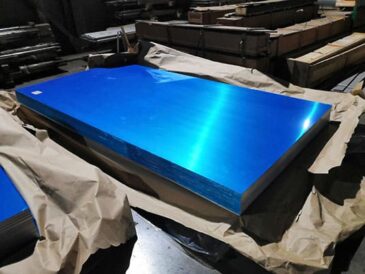
8011 aluminum foil for Pharma Packaging
B. Multi-layer Structure & Barrier Enhancements (lumawak na ang)
High-barrier performance is commonly achieved by layering aluminum with polymers and functional coatings:
- Alu-Alu (cold-form): outer polymer layer (often OPA/nylon) for mechanical reinforcement and printability / inner aluminum layer providing continuous barrier / inner polymer layer for sealing or lamination. The result is a multi-ply structure where aluminum is present on one or both surfaces. Because the aluminum layer forms the cavity in cold-form applications, the product is surrounded by aluminum on multiple sides — delivering near-absolute barrier.
- Aluminum lidding with heat-seal lacquer: single aluminum sheet coated with a pharmaceutical-grade heat-seal lacquer (HSL) on the side that contacts the forming film. The lacquer provides a controlled adhesion surface and is formulated to minimize extractables.
- Polymer-based high-barrier: PVC or PET base films coated with PVdC, EVOH, o PCTFE (Aclar); these coatings drastically reduce WVTR and OTR while preserving thermoformability. PVdC coatings are common because they are proven and cost-effective; EVOH and PCTFE offer different tradeoffs in moisture sensitivity and environmental footprint.
Coating weights and effects (examples):
- PVdC coating: 40–120 g·m⁻² → progressively lower WVTR with higher coat weights; higher weights raise cost and may affect seal parameters.
- Aclar (PCTFE) Mga pelikula (typically 25–50 µm) have very low WVTR but are more costly.
C. Key Material Properties (expanded with data ranges)
Below are quantified properties commonly used to specify and compare materials. Values are indicative typical ranges used for specification; final values depend on supplier, construction and test method.
| Pag-aari | High-Barrier Alu-Alu (cold-form) | Alu Lidding (20–30 µm) | PVC / PVdC (thermoformable) |
|---|---|---|---|
| WVTR (g·m⁻²·day⁻¹, 38°C/90% RH) | <0.001 | <0.001–0.005 | 0.03–0.12 |
| OTR (cc·m⁻²·day⁻¹) | ~0 | ~0 | 0.1–1.0 |
| Light transmission | 0% | 0% | 0–20% (depends on metallization) |
| Typical tensile strength (MPa) | 80–120 | 80–110 | 40–70 |
| Typical puncture force (N) | 10–20 | 6–12 | 4–8 |
| Typical seal temp (°C) | N / A (cold-form) | 180–210 | 140–200 |
Interpretation: cold-form alu-alu provides orders-of-magnitude better WVTR and is essentially impermeable to oxygen and light; PVdC-coated films are a high-performance polymeric compromise suited to many applications where thermoformability and cost are priorities.
Benefits of High-Barrier Pharma Foil for Capsule Sealing
A. Enhanced Protection — mechanisms and quantified impact
- Moisture control: reducing cumulative water ingress is the primary method to prevent hydrolytic degradation of APIs and shell softening. Example effect: A hygroscopic API with an experimentally determined moisture sensitivity (hal., potency loss of 5% per 0.1 g·m⁻²/day WVTR over 12 mga buwan) will show dramatically improved shelf stability when packaged in alu-alu vs standard PVC. (Quantitative cases depend on API; this is to illustrate the proportional effect.)
- Oxidation control: oxygen scavenging excipients are helpful, but preventing O₂ ingress (OTR ≈ 0) practically eliminates oxidative pathways in many solid formulations.
- Photostability: opaque aluminum prevents photodegradation; for photolabile APIs (where even small UV doses accelerate degradation), 100% light blocking is non-negotiable.
B. Compliance with Regulatory Standards — what regulators expect
Regulators expect packaging suitability to be demonstrated with Mga Extractable & leachables (E&L), stability studies (ICH conditions), and compatibility data. Key expectations include:
- Stability data showing no meaningful potency loss across the intended shelf life under ICH conditions (hal., 25°C/60% RH and accelerated 40°C/75% RH).
- E&L studies demonstrating that heat-seal lacquers and adhesives do not produce harmful leachables at clinically relevant levels.
- Documentation of supplier GMP (.ISO 15378), process controls, and change-control agreements.
C. Tamper-Evident Properties — real-world behavior
- Push-through lidding will deform predictably when punctured and usually produces a torn lidding pattern that a patient can observe.
- Cold-form alu-alu blisters are difficult to open and reclose without visible damage; they offer superior tamper evidence in serialized supply chains.
D. Customizability — security, information, and usability
- Foil surfaces can be printed (flexo/offset) or metallographically marked. Overt and covert anti-counterfeit features (holographic patches, microtext, UV inks, QR codes) can be integrated during lamination or printing.
- Customer experience: push-through force can be engineered (target ranges 5–12 N depending on patient population) by adjusting lidding foil thickness and heat-seal parameters.
E. Sustainability — lifecycle and recycling concerns
- Aluminum recycling: aluminum has a closed recycling loop and high recovery value. Energy for primary aluminum is high, but recycled aluminum uses substantially less energy.
- Composite laminates: these are harder to recycle due to mixed materials; trends are toward mono-polymer laminates or separable constructions. Manufacturers are developing PVdC-free and lower-gauge laminates to reduce environmental impact.

Huawei Packaged High-barrier Aluminum Foil
Applications of High-Barrier Pharma Foil in Capsule Sealing
A. Blister Packaging for Capsules — design considerations
- Thermoform blister + lidding foil: commonly used for retail solid oral dosage forms. Suitable when the formulation can tolerate the small but non-zero moisture ingress of PVdC-coated thermoplastic forming films combined with alu lidding.
- Push-through design parameters: blister cavity depth, forming film type, lidding foil thickness and lacquer chemistry are tuned to control push-through force and seal integrity.
B. Cold-Form Foil Blisters — typical use cases
- Highly hygroscopic drugs, probiotics, proteinaceous excipients, and antibiotics — alu-alu is chosen when shelf life must be preserved without secondary packaging or desiccant reliance.
C. Push-Through Packaging — patient and line performance
- Push-through constructions prioritize patient accessibility at high-speed line throughput. Lidding foils must ensure good runnability (no wrinkles, consistent seals) at speeds often exceeding 300–600 blisters/min on modern equipment.
D. Sealing of Soft Gelatin Capsules — special challenges
- Softgels contain plasticizers (hal., glycerol, sorbitol) that can migrate; packaging must prevent plasticizer loss and protect the fill from oxygen. Aluminum lidding or alu-alu solutions are commonly specified for sensitive softgels (omega-3, fat-soluble vitamins).

Pharma Foil For Capsule Sealing
Types of High-Barrier Pharma Foil (technical comparison)
1. Cold-Formable Aluminum Foil (Alu-Alu)
- Structure: polymer/Al/polymer (hal., OPA/Al/PVC)
- Pros: best barrier, robust tamper evidence, excellent shelf life in hot/humid zones
- Cons: higher cost, requires cold-form tooling, limited push-through usability (often requires perforated patterns)
2. PVC/PVdC Coated Foil (thermoform + coated lidding)
- Structure: PVC forming film coated with PVdC; lidding either polymeric or alu lidding with HSL
- Pros: thermoformable, cost efficient, good barrier for many APIs
- Cons: PVdC environmental concerns in some regions; not as impermeable as alu-alu
3. Aluminum Lidding Foil (heat-seal lacquer)
- Structure: Al foil + HSL printed/laminated for traceability
- Pros: excellent light and vapor barrier on lidding side; simple to implement on standard thermoform lines
- Cons: overall package barrier depends on forming film; careful lacquer control required to avoid E&L issues
4. High-Barrier Laminates (PET/Al/PE, Aclar-based, EVOH combinations)
- Pros: tailored mechanical properties, excellent barrier with some thermoformability
- Cons: variable recyclability, higher material complexity
Manufacturing Process of High-Barrier Pharma Foil
A. Casting and Rolling — metallurgical control
- Aluminum slabs are cast and hot/ cold-rolled to gauge. Intermediate annealing (recrystallization) cycles are controlled to achieve the desired temper (O, H tempers). Microstructure control minimizes inclusions and pinholes; suppliers commonly target mga pinhole <1 per m² at final inspection for premium foils.
B. Coating and Lamination — functional layer control
- PVdC coating lines use solvent or aqueous systems; coating weight uniformity is critical (±5% typical).
- Heat-seal lacquers are applied in controlled thickness (hal., 5–10 g·m⁻²) and cured to ensure predictable seal strength. Lacquers must be validated for Mga Extractable under worst-case sealing temperatures.
C. Heat Treatment — mechanical property tuning
- Post-rolling anneals at programmed temperatures relieve stresses and ensure consistent elongation; over-annealing reduces strength, under-annealing increases brittleness. Process records (temperature profiles, line speed) are part of supplier batch documentation.
D. Surface Treatment — adhesion and printability
- Corona treatment increases surface energy for inks and adhesives. Chemical surface primers or silane coupling agents are used when polymer adhesion to aluminum is critical.
E. Process control & traceability
- Pharmaceutical foil suppliers operate under GMP (.ISO 15378); full lot traceability, certificate of analysis (CoA), and change control agreements are standard requirements for pharmaceutical customers.
Regulatory, safety and quality control
A. Required studies and documentation
- Extractables and leachables (E&L) — perform solvent extraction under exaggerated conditions (heat/solvent polarity range) and analyze by GC-MS and LC-HRMS. Establish qualification thresholds and toxicological risk assessments.
- Migration testing — real-time and accelerated migration studies from foil into placebo/formulation at defined ICH conditions.
- Stability studies — include packaged product in ICH long-term and accelerated conditions; consider additional real-time storage in target markets (hal., 30°C/65% RH, 40°C/75% RH).
- Functional testing — WVTR, OTR, seal strength, push-through force, puncture/burst tests, pinhole mapping.
B. Acceptance criteria — example specification targets (to be adapted per product)
- WVTR (38°C/90% RH): ≤0.005 g·m⁻²·day⁻¹ for lidding foil; <0.001 g·m⁻²·day⁻¹ for alu-alu.
- Heat-seal strength: ≥6 N/15 mm (minimum na), typical target 8–12 N/15 mm to ensure transport robustness.
- Pinholes: 0 pinholes per m² for lidding foils; ≤1–5 per m² acceptable for some cold-form layers depending on construction and inspection method.
- E&L: No unidentified extractable above qualification thresholds (Karaniwan 0.1 µg per dose for toxicologically concerning compounds, or as determined by risk assessment).
C. Supplier qualification checklist (inirerekomenda)
- GMP certification (.ISO 15378) and internal auditing record
- CoA with WVTR/OTR/heat-seal data for supplied lot
- E&L baseline package for lacquer and adhesives
- Change control and notification agreement
- Stability batches supporting product shelf life
Comparison with Other Packaging Materials
| Criteria | High-Barrier Aluminum Foil (Cold-Form / Lidding) | PVC/PVdC Thermoform Films | Aclar (PCTFE) Mga Laminate | EVOH-Based High-Barrier Laminates | Standard PVC / PET Films (No Barrier Coating) |
|---|---|---|---|---|---|
| Barrier ng kahalumigmigan (WVTR) (38°C/90% RH) | < 0.001 g·m⁻²·day⁻¹ (practically zero) | 0.03–0.12 g·m⁻²·day⁻¹ | 0.006–0.01 g·m⁻²·day⁻¹ | 0.01–0.05 g·m⁻²·day⁻¹ | 0.3–0.6 g·m⁻²·day⁻¹ (poor) |
| Oxygen Barrier (OTR) | ≈ 0 cc·m⁻²·day⁻¹ | 0.1–1.0 cc·m⁻²·day⁻¹ | ≈ 0.1 cc·m⁻²·day⁻¹ | 0.05–0.2 cc·m⁻²·day⁻¹ | High permeability (poor barrier) |
| Light Protection | 100% light-blocking | Limited depending on thickness, usually low | Katamtaman hanggang mataas (with metallization) | Katamtaman | Poor unless pigmented |
| Lakas ng Mekanikal | High puncture resistance (10–20 N) | Katamtaman (4–8 N) | Mataas na | Katamtaman | Mababa hanggang katamtaman |
| Formability | Cold-formable; no heat forming needed | Excellent thermoformability | Good thermoformability (but slower) | Good but moisture sensitive | Good thermoformability |
| Push-Through Usability | Excellent for lidding foil; alu-alu less suited | Napakahusay | Excellent with lidding | Mabuti na lang | Mabuti na lang |
| Tamper Evidence | Strong (foil tears visibly) | Katamtaman | Katamtaman | Katamtaman | Mababa ang |
| E&L Risk | Mababa ang (inert metal) but depends on lacquers | Katamtaman (PVdC degradation products) | Very low | Mababa hanggang katamtaman | Mababa ang |
| Regulatory Acceptance | Global standard; best for sensitive APIs | Very widely used | Highly accepted for premium drugs | Accepted with proper moisture controls | Accepted for low-sensitivity products |
| Shelf-Life Extension Impact | Highest; commonly 24–48 months | Katamtaman | Mataas na | Mataas na | Mababa ang |
| Patient Accessibility | Good for lidding; alu-alu requires perforations | Very good | Very good | Very good | Very good |
| Gastos (relative) | Mataas na | Low–medium | Very high (premium) | Medium–high | Very low |
| Environmental Footprint | Mixed: recyclable metal, but composites limit recycling | Concerns over PVdC chlorine content | Poor recyclability; high energy material | More sustainable but moisture-sensitive | Easy to recycle but low barrier |
| Mga Tipikal na Kaso ng Paggamit | Highly sensitive APIs; hygroscopic drugs; softgels; global hot/humid markets | Mass-market solid oral products | High-value, moisture-critical drugs | Niche high-barrier needs with sustainability focus | Stable vitamins, mga tablet, supplements |
X. Pangwakas na Salita
High-barrier pharma foil is a critical enabler of safe, effective capsule packaging, providing unmatched protection against moisture, oxygen, at liwanag. Its material science—rooted in carefully selected alloys and multi-layer structures—ensures it meets the stringent performance and safety requirements of the pharmaceutical industry.
From standard blister packs to ultra-sensitive cold-form applications, its versatility and customizability make it suitable for nearly all capsule types.
While it carries a higher upfront cost than plastic alternatives, its ability to extend shelf life, bawasan ang basura, and ensure regulatory compliance delivers superior value over the product lifecycle.
As the pharmaceutical industry evolves toward more sensitive APIs and sustainable packaging, innovations in thinner gauges, recyclable coatings, and smart integration will further solidify high-barrier pharma foil’s role as the gold standard for capsule sealing.
Mga FAQ
Q: Is high-barrier pharma foil compatible with vegan/HPMC capsules?
A: Oo nga. It is inert and compatible with plant-based capsule shells (HPMC, pullulan), with no chemical interaction. It meets the same regulatory standards as foil for gelatin capsules.
Q: What is the maximum sealing temperature for this foil?
A: Most high-barrier pharma foils seal effectively at 130–170°C, compatible with standard blister sealing equipment. Cold-formable foils can withstand up to 200°C for short durations.
Q: Can high-barrier pharma foil be recycled after use?
A: Oo nga. The aluminum core is 100% pwede na ba mag recycle. Laminated foils require separation of plastic layers, but new bio-based adhesives are making full recycling feasible.
Q: How does it prevent capsule cross-contamination?
A: Its non-porous surface prevents bacterial adhesion, and manufacturing is done in GMP-compliant cleanrooms. Dagdag pa, the hermetic seal blocks external contaminants from entering blisters.
Q: What is the shelf life of unused high-barrier pharma foil?
A: When stored in vacuum-sealed, moisture-proof packaging (per GMP guidelines), it has a shelf life of 24 mga buwan. After opening, use within 6 months to avoid oxidation or coating degradation.