8079 Chocolate Packaging Aluminum Foil
1283 Mga Pananaw 2026-07-30 02:07:02
Panimula
When you unwrap a piece of premium chocolate, the delicate crinkle and subtle sheen of the foil do more than protect the product—they shape your first sensory impression. Behind that seemingly simple wrapper lies a sophisticated material engineered for purity, barrier performance, and flawless converting. The alloy at the heart of this experience is 8079 chocolate packaging aluminum foil.
Unlike generic aluminum foils, 8079 aluminum foil delivers an exceptional combination of dead-fold properties, zero pinhole rates, and compatibility with food-grade laminating adhesives.
For confectionery brands that refuse to compromise on freshness or presentation, understanding this specialized alloy becomes a competitive necessity.
This article explores the metallurgy, manufacturing precision, performance advantages, and supply chain considerations that make 8079 aluminum foil the definitive choice for chocolate packaging.
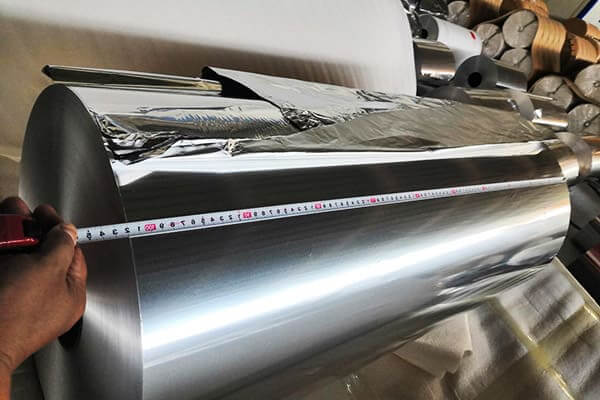
8079 Chocolate Packaging Aluminum Foil
The Metallurgical Foundation of 8079 Aluminum Foil
To appreciate why 8079 chocolate packaging aluminum foil outperforms other alloys, you need to start with its chemical composition and microstructural characteristics.
haluang metal 8079 belongs to the 8xxx series of aluminum alloys, a family distinguished by the addition of iron and silicon as primary alloying elements.
While many packaging foils rely on 8011 o 1235 mga haluang metal, 8079 occupies a unique position due to its carefully balanced formulation.
Chemical Composition and Its Impact on Performance
The typical chemical composition of 8079 aluminum alloy includes iron content ranging from 0.7% sa 1.3% and silicon between 0.05% at 0.30%.
This specific ratio creates a fine, uniform dispersion of intermetallic particles throughout the aluminum matrix.
These particles act as grain refiners during the rolling process, enabling the production of ultra-thin gauges without sacrificing structural integrity.
For chocolate packaging, where foil thickness often ranges from 6 sa 20 mga micron, this grain structure proves critical.
A finer grain means fewer pathways for moisture or oxygen molecules to penetrate, directly enhancing barrier properties.
Other elements remain tightly controlled. Copper content stays below 0.05%, zinc below 0.10%, and titanium below 0.05%.
This purity discipline minimizes the risk of electrochemical reactions that could compromise the foil’s inertness when in direct contact with cocoa butter and other fat-based chocolate ingredients.
The result is a foil that remains chemically stable throughout the product’s shelf life, never imparting metallic tastes or odors.
Comparison with Alternative Foil Alloys
A practical way to understand 8079’s advantages involves comparing it with two common alternatives: 8011 at 1235 mga foils ng aluminyo.
| Pag-aari | 8079 Aluminum Foil | 8011 Aluminum Foil | 1235 Aluminum Foil |
|---|---|---|---|
| Iron Content | 0.7–1.3% | 0.6–1.0% | 0.65% .max |
| Silicon Content | 0.05–0.30% | 0.50–0.90% | 0.05–0.30% |
| Lakas ng Paghatak (MPa) | 80–110 | 85–105 | 70–90 |
| Pagpapahaba (%) | 8–15 | 6–12 | 15–25 |
| Typical Gauge Range (mm) | 0.006–0.02 | 0.006–0.02 | 0.006–0.02 |
| Dead-Fold Quality | Napakahusay | Mabuti na lang | Katamtaman |
| Pinhole Resistance | Superior | Mabuti na lang | Katamtaman |
haluang metal 8011 contains higher silicon, which improves strength but can reduce formability and increase the risk of pinholes during deep drawing or folding.
haluang metal 1235 offers excellent elongation and softness, making it suitable for household foil applications, but its lower iron content translates to reduced dead-fold characteristics—a critical drawback for chocolate wrapping where the foil must stay tightly folded without springing back.
haluang metal 8079 strikes the optimal balance: enough iron for dead-fold and barrier integrity, controlled silicon for rolling performance, and sufficient elongation to survive high-speed converting without tearing.
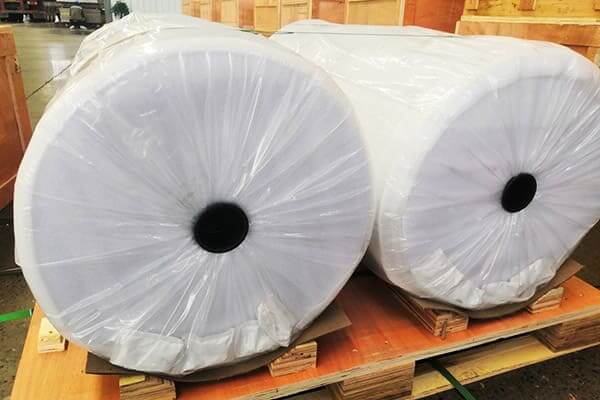
Huawei Packaged 8079 Aluminum Foil
Bakit nga ba 8079 Chocolate Packaging Aluminum Foil Dominates the Confectionery Industry
Chocolate presents unique packaging challenges. Cocoa butter is highly sensitive to oxidation, temperature fluctuations, at kahalumigmigan.
Even minor exposure to air can trigger fat bloom—that unappealing whitish coating that forms on chocolate surfaces.
Dagdag pa, chocolate readily absorbs ambient odors, which can ruin delicate flavor profiles.
The packaging material must also withstand high-speed wrapping machines, maintain print fidelity for branding, and deliver a satisfying tactile experience for consumers.
8079 chocolate packaging aluminum foil addresses every one of these demands.
Superior Barrier Protection
The primary functional requirement for chocolate packaging is an absolute barrier against light, oxygen, kahalumigmigan, and volatile organic compounds.
Aluminyo foil, by its nature, provides near-total opacity and impermeability when free of pinholes. The fine grain structure of 8079 alloy minimizes micro-voids that can form during rolling.
Manufacturers routinely achieve pinhole counts of zero per square meter at thicknesses as low as 7 mga micron, a benchmark that lower-grade alloys struggle to meet consistently.
This barrier performance extends shelf life significantly. Chocolate wrapped in 8079 aluminum foil laminate can maintain its original flavor, texture, and appearance for 12 sa 24 months under proper storage conditions.
The foil’s inert surface also prevents any interaction between the packaging and the product, preserving the chocolate’s intended taste without the need for additional barrier coatings in many applications.
Exceptional Dead-Fold Characteristics
Dead-fold refers to a material’s ability to stay folded without adhesive or external pressure.
When you twist the ends of a chocolate wrapper or fold a tablet into a precise envelope, the foil must retain that shape instantly and permanently.
8079 aluminum foil excels in this property due to its work-hardening behavior and optimized iron content.
The foil yields plastically under minimal force and holds the new geometry without spring-back.
This characteristic proves invaluable on high-speed packaging lines. Wrapping machines operating at speeds of 300 sa 800 pieces per minute rely on the foil’s predictable folding behavior.
Inconsistent dead-fold leads to loose wraps, product exposure, and machine jams that cause costly downtime.
Sa pamamagitan ng pagpili ng 8079 chocolate packaging aluminum foil, confectionery manufacturers achieve higher line efficiencies and reduce material waste.
Compatibility with Lamination and Printing
Modern chocolate packaging rarely uses bare foil alone. Most applications involve lamination with paper, polyethylene, or polyester films to add print surfaces, heat-seal capabilities, or additional strength.
8079 aluminum foil accepts a wide range of laminating adhesives and extrusion coatings without surface treatment beyond standard cleaning.
Its surface energy naturally supports strong bonds with solvent-based, solventless, and water-based adhesive systems.
For printing, the foil can serve as a metallic substrate for rotogravure or flexographic processes, or it can be laminated to paper that carries the printed design.
In either case, the foil’s uniform thickness and surface quality ensure consistent print registration and color reproduction.
Brands benefit from vibrant graphics that resist scuffing and fading throughout distribution.
Food Safety and Regulatory Compliance
Chocolate packaging materials must comply with stringent food safety regulations across global markets.
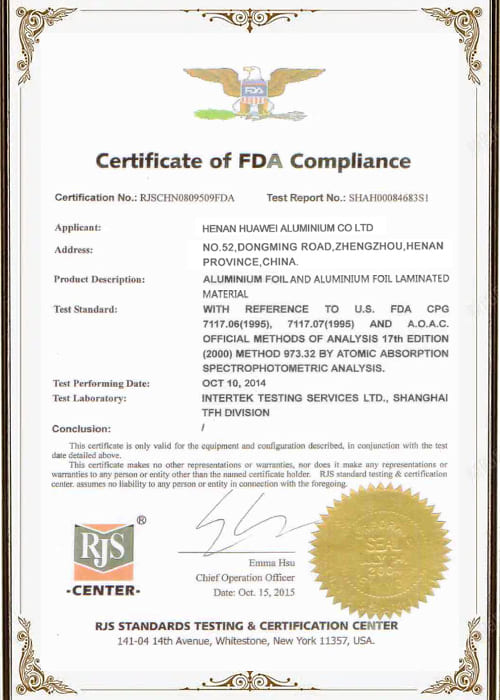
8079 aluminum foil manufactured by reputable producers meets the requirements of FDA 21 CFR 175.300 sa Estados Unidos, EU Regulation (EC) Hindi. 1935/2004 in Europe, and GB 4806.9 in China.
These standards address overall migration limits, specific migration of individual elements, and sensory neutrality.
The alloy’s controlled composition ensures that residual elements remain well below harmful thresholds, and the foil does not release substances that could alter the chocolate’s organoleptic properties.
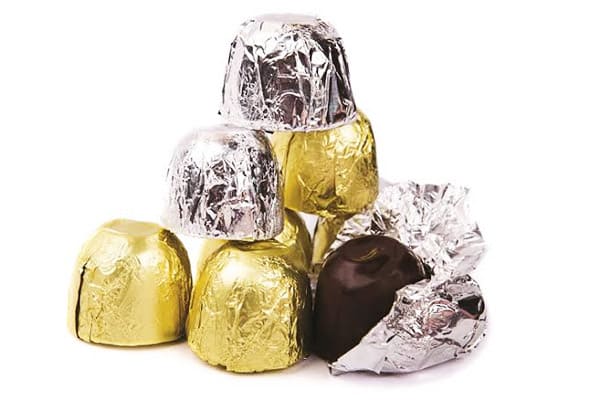
Chocolate Packaging Aluminum Foil
Manufacturing Excellence: From Ingot to Finished Foil
The journey from raw aluminum to finished 8079 chocolate packaging aluminum foil involves a series of tightly controlled processes.
Each step influences the final product’s performance, and understanding this chain helps buyers evaluate supplier capabilities.
Pagtunaw at Paghahagis
The process begins with the melting of primary aluminum ingots, typically with a purity of 99.7% o mas mataas pa, combined with master alloys to achieve the precise 8079 komposisyon.
Modern facilities use continuous casting methods, such as twin-roll casting, to produce coils of 6 sa 8 mm thickness directly from molten metal.
This method promotes rapid solidification, which refines the grain structure and distributes intermetallic particles uniformly.
Alternatively, direct chill (D at T) casting followed by hot rolling produces slabs that undergo subsequent cold rolling.
Both routes can yield high-quality foil, but twin-roll casting often provides cost advantages and excellent surface quality for thin-gauge products.
Cold Rolling and Annealing
The cast strip undergoes a series of cold rolling passes that progressively reduce thickness to the target gauge.
For chocolate packaging foil, final thicknesses typically range from 0.006 mm (6 mga micron) sa 0.020 mm (20 mga micron).
Rolling mills equipped with automatic gauge control systems and shape measurement technology ensure thickness tolerances within ±2% of nominal.
This precision matters because thickness variations directly affect barrier properties and converting behavior.
Annealing, or heat treatment, relieves internal stresses introduced during cold rolling and adjusts the foil’s mechanical properties.
Para sa 8079 haluang metal, partial annealing produces a temper designated as “O” (soft) or specific H-tempers that balance strength and formability.
The annealing cycle must be carefully controlled to avoid excessive grain growth, which would compromise pinhole resistance and dead-fold performance.
Slitting and Finishing
After rolling and annealing, the master coils undergo slitting to the widths required by customers. Chocolate manufacturers typically order foil in widths ranging from 300 mm sa 1,200 mm, depending on their wrapping machine specifications.
Precision slitting with minimal burr formation prevents web breaks during subsequent converting.
The slit coils then receive final inspection, including pinhole detection using high-intensity light arrays, surface defect scanning, and mechanical property verification.
Quality Control Protocols
Reputable producers of 8079 chocolate packaging aluminum foil implement rigorous quality control at every stage. Key tests include:
- Tensile testing per ASTM E8 or ISO 6892 to verify strength and elongation
- Pinhole testing using light transmission methods with detection thresholds down to 10 mga micron
- Surface wettability testing to confirm readiness for lamination
- Microstructure analysis via optical or electron microscopy to assess grain size and intermetallic distribution
- Chemical composition verification using optical emission spectroscopy
These protocols ensure that every coil shipped meets the demanding requirements of confectionery packaging.
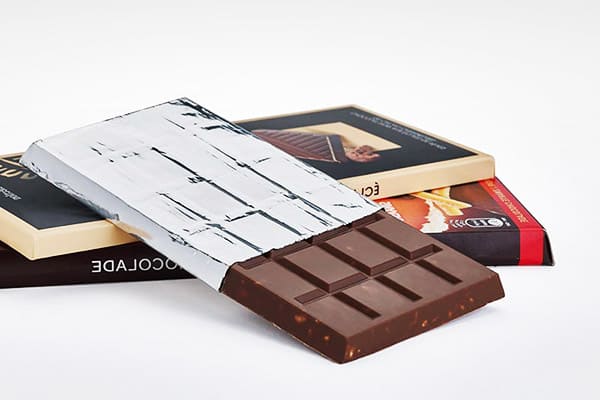
8079 Aluminum Foil for High-end Chocolate
Applications Across Chocolate Product Categories
8079 chocolate packaging aluminum foil adapts to a wide range of chocolate formats, each with distinct packaging engineering requirements.
Molded Chocolate Tablets and Bars
Solid chocolate bars represent the highest-volume application. The foil typically wraps the product directly, with an outer paper sleeve or carton providing branding and additional protection.
The foil’s dead-fold properties allow tight envelope-style wrapping that conforms precisely to the bar’s shape.
For products with inclusions like nuts or fruits, the foil’s puncture resistance prevents sharp edges from compromising the barrier.
Pralines and Filled Chocolates
Filled chocolates with liquid or soft centers demand exceptional barrier performance because the fillings often have higher water activity than the chocolate shell.
Moisture migration from the filling into the shell can cause sugar bloom or textural degradation.
8079 aluminyo foil, laminated with a heat-seal layer, creates a hermetic seal that locks in freshness.
Individual twist-wrapping of pralines relies heavily on the foil’s dead-fold to maintain a tight closure around the irregular shape.
Chocolate-Coated Wafers and Biscuits
These composite products combine chocolate with baked components that may contain residual moisture.
The packaging must prevent moisture exchange between the biscuit and the chocolate while also protecting against oxidation of fats in both components.
8079 aluminum foil laminates with polyethylene or cast polypropylene provide the necessary moisture vapor transmission rate (MVTR) sa ibaba 0.1 g/m²/day, effectively isolating the different food matrices.
Seasonal and Promotional Items
Holiday chocolates often feature intricate shapes—Santa figures, Easter eggs, hearts—that challenge wrapping machinery.
The formability of 8079 foil allows it to be pressed or folded around complex contours without tearing.
Its metallic luster also enhances the premium perception of gift items, making it a favorite for high-end seasonal collections.
Technical Specifications and Performance Data
For packaging engineers and procurement professionals, detailed technical data supports informed decision-making.
The following specifications represent typical values for 8079 chocolate packaging aluminum foil in the soft (O) temper at 0.012 kapal ng mm.
| Parameter | Typical Value | Paraan ng Pagsusulit |
|---|---|---|
| Thickness Tolerance | ±2% | .ISO 4591 |
| Lakas ng Paghatak (MD) | 85–100 MPa | .ISO 527-3 |
| Lakas ng Paghatak (TD) | 80–95 MPa | .ISO 527-3 |
| Pagpapahaba sa Break (MD) | 10–14% | .ISO 527-3 |
| Pagpapahaba sa Break (TD) | 12–16% | .ISO 527-3 |
| Pinhole Count | 0 per m² (at 7 µm+) | Internal light test |
| Water Vapor Transmission | <0.01 g/m²/24h | ASTM F1249 |
| Oxygen Transmission | <0.01 cc/m²/24h | ASTM D3985 |
| Surface Wetting Tension | ≥38 dynes/cm | ASTM D2578 |
| Oil Residue | ≤5 mg/m² | Internal extraction |
These values demonstrate why 8079 chocolate packaging aluminum foil sets the standard for barrier packaging.
The near-zero transmission rates for water vapor and oxygen effectively eliminate oxidation and moisture-related defects during the product’s commercial life.
Supplier Selection: What to Look for in a Foil Partner
Choosing the right supplier for 8079 chocolate packaging aluminum foil involves evaluating technical capabilities, quality systems, and commercial reliability.
Confectionery manufacturers should consider several factors beyond price per kilogram.
Manufacturing Capability and Capacity
A qualified supplier operates modern rolling mills with automatic gauge control, clean-room slitting environments, and in-line pinhole detection.
Annual production capacity should align with your volume requirements to ensure supply continuity.
Suppliers with integrated casting, pagulong gulong, and finishing operations can offer better traceability and faster lead times than those relying on outsourced intermediate steps.
Mga Sertipikasyon at Pagsunod
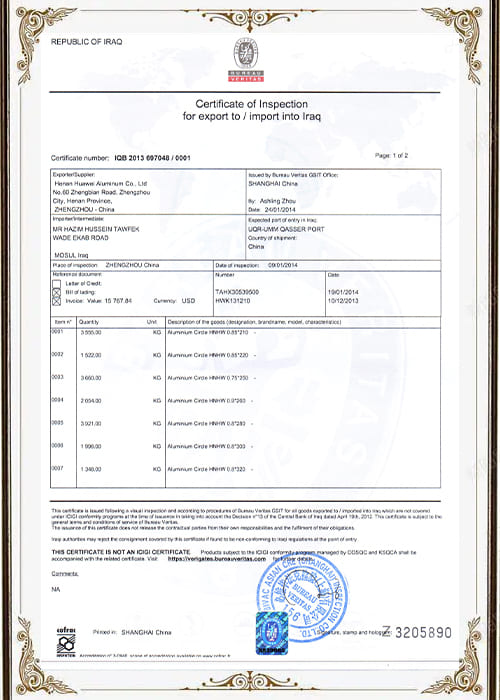
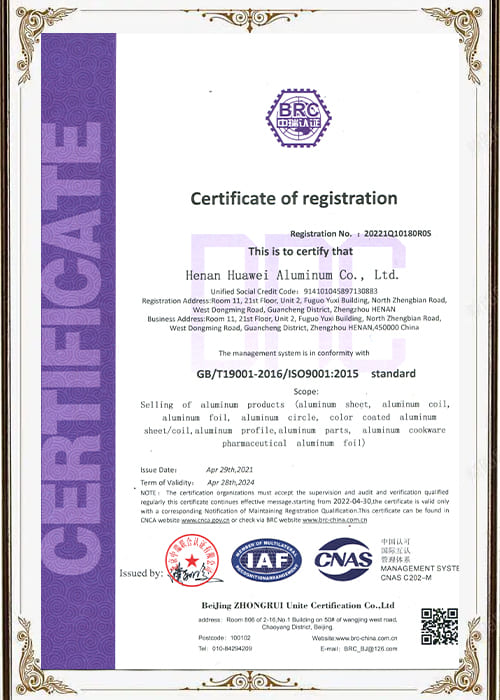
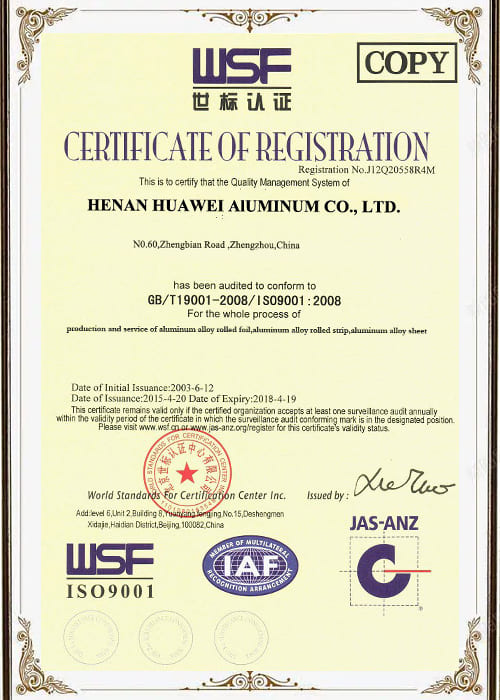
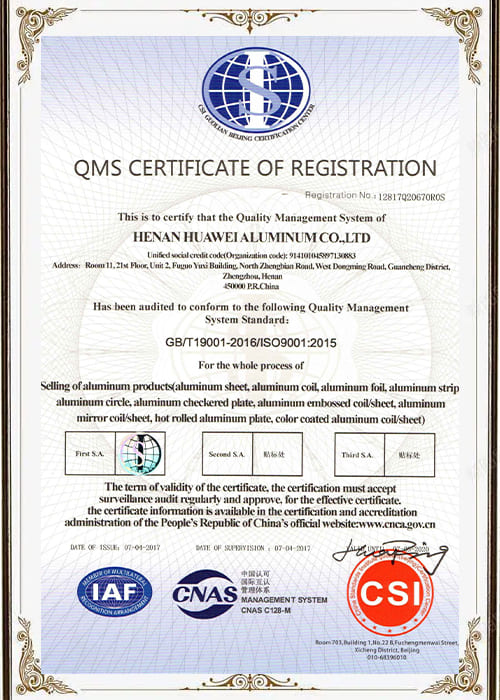
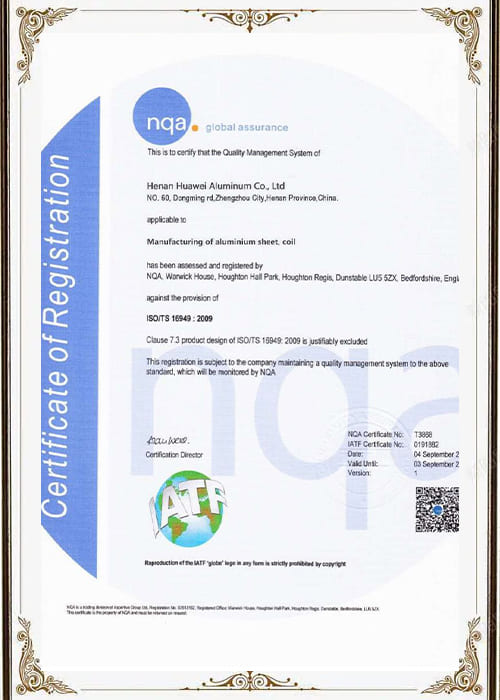
Look for ISO 9001 quality management certification as a baseline. Food safety certifications such as FSSC 22000, BRC Global Standard for Packaging, or ISO 22000 provide additional assurance.
Specific regulatory compliance documentation for FDA, EU, and other target markets should be readily available.
A supplier that invests in third-party audits and maintains up-to-date compliance dossiers reduces your regulatory risk.
Technical Support and Customization
The best foil suppliers offer technical collaboration beyond simply shipping coils. They assist with gauge selection, temper optimization, and lamination compatibility testing.
If your product requires unique properties—such as extra-soft temper for hand-wrapping applications or enhanced surface treatment for difficult adhesives—a technically proficient supplier can develop customized solutions.
Henan Huawei Aluminyo Co., Ltd. as a Strategic Partner
Henan Huawei Aluminyo Co., Ltd. stands among the established manufacturers of high-quality aluminum alloy products in China, with extensive experience producing 8079 chocolate packaging aluminum foil for domestic and international confectionery markets.
The company operates advanced continuous casting and cold rolling lines capable of delivering foil in gauges from 0.006 mm sa 0.2 mm, with widths customized to customer specifications.
Their quality management system incorporates comprehensive pinhole detection, mechanical testing, and surface analysis to ensure every coil meets food-grade standards.
For confectionery brands seeking a reliable supply of 8079 aluminyo foil, Henan Huawei Aluminum offers technical consultation on alloy selection, temper specification, and converting compatibility.
Their production flexibility accommodates both trial quantities for new product development and large-scale commercial orders.
By maintaining strict control over raw material sourcing and manufacturing parameters, the company delivers consistent foil quality that supports efficient wrapping operations and extended product shelf life.
Converting and Handling Best Practices
Even the highest-quality 8079 chocolate packaging aluminum foil requires proper handling during converting and packaging operations to deliver its full performance potential.
Storage Conditions
Aluminum foil coils should be stored in clean, dry environments at temperatures between 15°C and 30°C.
Extreme temperature fluctuations can cause condensation, which may lead to water staining or surface oxidation.
Coils should remain in their original packaging until immediately before use, and partial coils should be re-wrapped to prevent dust accumulation.
Unwinding and Tension Control
During lamination or printing, consistent web tension prevents wrinkles, pag-unat, and web breaks. 8079 foil in soft temper requires lower tension settings than harder alloys.
Operators should follow supplier recommendations for tension ranges based on foil thickness and width.
Proper alignment of idler rollers and regular inspection of web paths minimize the risk of edge damage that can propagate into tears.
Lamination Process Parameters
When laminating 8079 foil to paper or plastic films, adhesive selection and application weight significantly affect bond strength and final package performance.
Solventless adhesives offer fast curing and low migration risk, making them popular for chocolate packaging.
Adhesive coat weights typically range from 1.5 sa 3.0 g/m². Curing conditions—temperature and time—must be validated for each material combination to achieve full bond development before slitting or sheeting.
Troubleshooting Common Issues
- Wrinkling during lamination: Check tension settings and roller alignment; verify that the foil and substrate have compatible elongation properties.
- Poor dead-fold on packaging line: Confirm that the foil temper matches the specification; over-annealed foil may lose dead-fold characteristics.
- Pinholes detected after lamination: Investigate foil quality, but also examine lamination nip pressures and roller surfaces that could introduce defects.
- Adhesion failure: Verify surface wetting tension of the foil; contamination from rolling oils or storage conditions may require cleaning before lamination.
Sustainability and Environmental Considerations
Aluminum foil packaging increasingly faces scrutiny regarding environmental impact.
Understanding the sustainability profile of 8079 chocolate packaging aluminum foil helps brands communicate responsibly with environmentally conscious consumers.
Infinite Recyclability
Aluminum can be recycled indefinitely without loss of properties. The recycling process requires only about 5% of the energy needed for primary aluminum production.
Chocolate wrappers made from 8079 papel de liha, when collected through appropriate waste streams, can be reprocessed into new aluminum products.
Gayunpaman, multi-material laminates present recycling challenges. The industry continues to develop mono-material structures and separation technologies to improve end-of-life recovery.
Lightweighting and Source Reduction
The excellent barrier properties of 8079 aluminum foil allow for downgauging—using thinner foil without sacrificing protection.
Reducing foil thickness from 12 microns to 9 microns cuts material usage by 25%, directly lowering the packaging’s carbon footprint.
Advances in alloy metallurgy and rolling technology continue to push the minimum viable gauge for chocolate packaging.
Responsible Sourcing
Leading aluminum producers increasingly participate in certifications such as the Aluminium Stewardship Initiative (ASI), which sets standards for environmental, social, and governance performance across the aluminum value chain.
Chocolate manufacturers can inquire about their foil supplier’s ASI certification status or equivalent responsible sourcing credentials.
Mga Madalas Itanong
What makes 8079 aluminum foil different from standard household aluminum foil?
Household foil typically uses alloy 8011 o 1235, which prioritize softness and tear resistance for kitchen use.
8079 chocolate packaging aluminum foil contains higher iron content, which provides superior dead-fold characteristics and pinhole resistance at very thin gauges.
It also undergoes more stringent surface quality control to ensure compatibility with food-grade laminating adhesives and printing processes.
Maaari bang 8079 aluminum foil be used for direct food contact without lamination?
Oo nga, 8079 aluminum foil in its bare form is safe for direct food contact with dry, fat-based foods like chocolate.
It complies with major food contact regulations globally. Gayunpaman, many chocolate applications use laminated structures to add heat-seal capability, print surfaces, or additional puncture resistance.
What is the minimum thickness of 8079 foil suitable for chocolate packaging?
The minimum practical thickness depends on the specific packaging format and machinery. For tablet wrapping, 7 sa 9 microns represents the lower end of the typical range.
Sa ibaba 7 mga micron, the risk of pinholes increases, and handling on high-speed lines becomes more challenging. Some specialized applications with gentle handling can use 6-micron foil successfully.
How should I specify 8079 aluminum foil when requesting quotations?
A complete specification includes alloy (8079), Pamahiin (hal., O or H18), thickness with tolerance, lapad ng katawan, coil inner diameter, maximum outer diameter, and any special surface requirements.
Also specify the intended lamination process and end-use application so the supplier can recommend the optimal product variant.
Does 8079 foil require special storage conditions?
Store coils in a clean, dry area at 15–30°C and 40–60% relative humidity. Avoid exposure to direct sunlight, tubig, or corrosive atmospheres.
Use coils within the supplier’s recommended shelf life, Karaniwan 6 sa 12 months from delivery, to ensure optimal surface properties for lamination.
Pangwakas na Salita
8079 chocolate packaging aluminum foil represents a pinnacle of material engineering for the confectionery industry.
Its carefully balanced alloy composition delivers the dead-fold characteristics, pinhole resistance, and barrier performance that chocolate products demand.
From protecting delicate pralines to wrapping high-volume tablet bars, this specialized foil enables efficient packaging operations and extended product shelf life without compromising food safety or sensory quality.
For chocolate manufacturers, selecting the right foil supplier involves evaluating metallurgical expertise, manufacturing precision, and commitment to quality.
Partners like Henan Huawei Aluminum Co., Ltd. bring integrated production capabilities and technical support that help brands navigate material specifications and optimize packaging performance.
As sustainability imperatives grow and packaging technology advances, 8079 aluminum foil will continue to adapt, maintaining its essential role in delivering chocolate from producer to consumer in perfect condition.