1. Panimula
Industrial aluminum foil is a high-value engineered material, distinct from household foil in both performance requirements and manufacturing standards.
With thicknesses typically ranging from 6 μm to 200 M, industrial aluminum foil plays a critical role in packaging, mga electronics, energy systems, thermal management, and advanced manufacturing.
Driven by trends such as lightweighting, electrification, high-barrier packaging, and sustainability, global demand for industrial aluminum foil continues to grow steadily.
According to industry data, the global aluminum foil market exceeded USD 30 billion in recent years, with industrial-grade foil accounting for a significant and fast-growing share.

Industrial Aluminum Foil Introduction
2. Redefining Foil: The Essential Difference Between Industrial and Household Aluminum Foil
To understand industrial aluminum foil, one must first distinguish it from the familiar household foil.
Although both originate from aluminum, they differ vastly in performance, mga pagtutukoy, and application.
Sambahayan Aluminum Foil
- haluang metal: Typically 8011 in the ‘H34’ (annealed na nga ba) Pamahiin.
- Ang kapal: Generally ranges from 10 sa 25 micrometers (M).
- Core Requirements: Kaligtasan ng pagkain, good barrier properties (kahalumigmigan, liwanag, aroma), and ease of forming (“dead-fold” characteristic).
Industrial Aluminum Foil
- Mga haluang metal: A much broader range, including the 1xxx series (hal., 1235, 1060), 3xxx serye ng mga (hal., 3003), and 8xxx series (hal., 8011, 8079), selected based on specific applications.
- Ang kapal: An extremely wide range, from ultra-thin 6 M (for capacitors) to several hundred micrometers (for container foil).
- Core Requirements: Beyond barrier properties, the focus is on specific industrial performance metrics such as electrical kondaktibiti, thermal kondaktibiti, mechanical strength, paglaban sa kaagnasan, at weldability.

End of 1235 aluminyo foil jumbo roll
3. Market Size and Quantified Growth
According to the latest market research reports, the global aluminum foil market size reached approximately USD 29 billion to 31 billion sa 2024.
Driven by the explosive growth in emerging application fields, the market is projected to expand at a Compound Annual Growth Rate (CAGR) ng mga 5.1% sa 6.5%, potentially exceeding USD 45 bilyon sa pamamagitan ng 2033.
| Key Market Indicators | Global Aluminum Foil Market (2024) | Forecasted CAGR (2025-2033) | China’s Aluminum Foil Output (2022) |
|---|---|---|---|
| Halaga | Humigit-kumulang. USD 29-31 Billion | 5.1% – 6.5% | 5.02 Million Tons |
| Main Drivers | New Energy Vehicles (NEVs), Energy Storage, High-end Electronics Manufacturing | Lithium Batteries, Electronic Products, Pharmaceutical Packaging | Packaging and Lithium Battery Sectors |
Insight:
The Asia-Pacific region, particularly China, is the core growth engine of the global aluminum foil market.
China’s aluminum foil output grew from 3.83 milyong tonelada sa 2018 sa 5.02 milyong tonelada sa 2022, achieving a high CAGR of 7.00%.
This rapid growth is primarily attributed to its massive production capacity and technological investment in the lithium battery at high-end flexible packaging sectors.
4. Key Alloys and Performance of Industrial Aluminum Foil
Different industrial applications place distinct demands on foil performance, which dictates the diversity in alloy selection.
4.1 1xxx Series Aluminum Alloys (hal., 1235, 1060): Champions of Purity and Conductivity
- Komposisyon ng Kemikal: Extremely high aluminum content (1235 ≥99.35% Al, 1060 ≥99.6% Al) with minimal impurities.
- Core Advantages:
- Excellent Electrical Conductivity: Can reach 60-62% IACS, making it an ideal choice for the electronics industry.
- Superb Thermal Conductivity: A thermal conductivity as high as ~230 W/m·K makes it outstanding for thermal management.
- Superior Formability and Corrosion Resistance: High purity results in a soft texture and easy processing.
- Mga Karaniwang Aplikasyon:
- Capacitor Foil: Used as the anode foil in electrolytic capacitors, its high purity ensures excellent electrochemical performance.
- Battery Foil: Serves as the cathode current collector in lithium-ion batteries.
- Transformer Winding Foil: Replaces copper wire to achieve lightweight transformers.
4.2 3xxx Series Aluminum Alloys (hal., 3003): The Perfect Balance of Strength, Formability, and Corrosion Resistance
- Komposisyon ng Kemikal: The primary alloying element is manganese (Mn, 1.0-1.5%).
- Core Advantages:
- Katamtamang Lakas: Tinatayang 20% stronger than 1xxx series alloys while retaining good formability.
- Napakahusay na Paglaban sa Kaagnasan: Inherits aluminum’s superior properties, with manganese further enhancing its resistance.
- Good Weldability.
- Mga Karaniwang Aplikasyon:
- Honeycomb Core Foil: Used to manufacture lightweight, high-strength aluminum honeycomb panels for architectural curtain walls and rail transportation.
- Brazing Composite Foil: Serves as the core material or fins for heat exchangers like radiators and intercoolers.
- Food Container Foil: Strong enough to hold food, and safe and non-toxic.
4.3 8xxx Series Aluminum Alloys (hal., 8011, 8079, 8021): The Versatile All-Rounders Engineered for Foil
- Komposisyon ng Kemikal: The main alloying elements are iron (Fe) at silicon (Si Si).
- Core Advantages:
- Excellent Overall Performance: The 8xxx series was specifically developed for foil production, achieving an optimal balance between strength, ductility, paglaban sa kaagnasan, and stamping performance.
- Fewer Pinholes: When rolled to ultra-thin gauges, 8xxx series alloys can achieve a lower pinhole rate, which is critical for packaging foils.
- Mga Karaniwang Aplikasyon:
- Pharmaceutical Packaging Foil (PTP): 8011, 8021, at 8079 aluminyo foil are the mainstays of pharmaceutical packaging, providing an absolute barrier.
- Flexible Food Packaging: Used in composite packaging bags to protect food from light, oxygen, at kahalumigmigan.
- Tape Foil: Serves as the base material for aluminum foil tape, used for sealing HVAC ducts and for electromagnetic shielding.

8021 Aluminum Foil Pharmaceutical Packaging
5. Manufacturing Processes of Industrial Aluminum Foil
5.1 Raw Material Preparation and Slab Casting
The process begins with primary aluminum ingots or recycled aluminum, which are melted and alloyed according to target specifications (commonly 1xxx, 3xxx, or 8xxx series).
Key process controls include:
- Chemical composition accuracy (typically ±0.02–0.05%)
- Hydrogen content control to prevent porosity
- Grain refiner additions to improve rolling behavior
Molten aluminum is then cast into slabs, karaniwan ay 500–600 mm thick, using continuous or semi-continuous casting systems.
5.2 mainit na pagulong
Hot rolling reduces the cast slab thickness to approximately 2–6 mm.
- Rolling temperatures: 450–500°C
- Primary objectives:
- Break down the cast structure
- Improve grain uniformity
- Prepare the material for cold rolling
Hot rolling establishes the base microstructure that will influence foil flatness and mechanical stability in later stages.
5.3 Cold Rolling and Gauge Reduction
Cold rolling is the most critical step in aluminum foil manufacturing.
- Material passes through multiple rolling stands
- Thickness is progressively reduced from millimeters to microns
- Rolling oil is used for lubrication and surface quality
For foils thinner than 25 M, double rolling is applied, where two foil layers are rolled together to prevent tearing.
Modern rolling mills achieve thickness tolerances within ±1–2%, which is critical for applications such as batteries and pharmaceuticals.

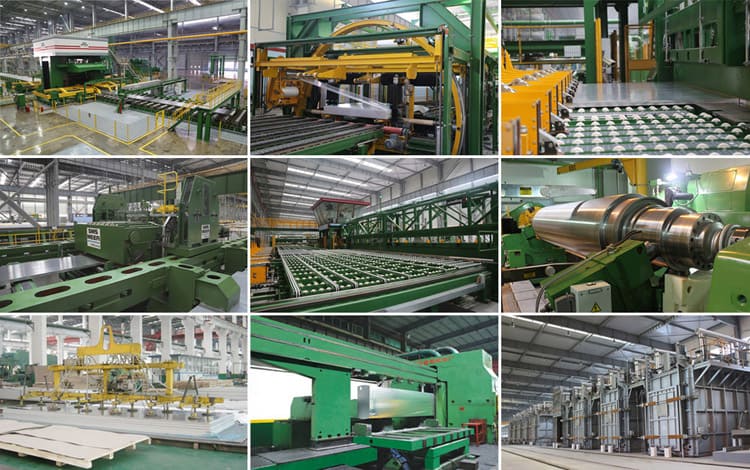
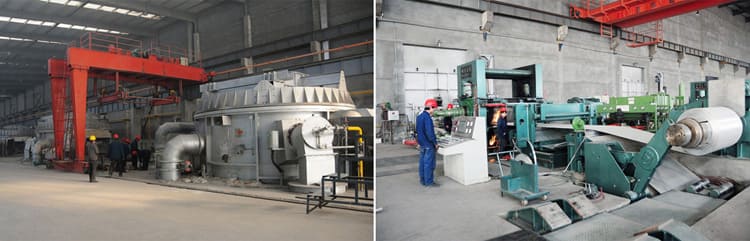
Huawei Aluminum Foil Production Workshop
5.4 Annealing and Temper Control
Annealing adjusts mechanical properties and removes residual stresses.
- Typical annealing temperature: 300–400°C
- Atmosphere control prevents oxidation
- Oil residues are burned off to ensure surface cleanliness
Annealing determines the final temper:
- O kahinahunan for maximum softness and formability
- H18/H19 for high strength and rigidity
- H22/H24 for balanced performance
5.5 Surface Treatment and Finishing
Depending on application requirements, aluminum foil may undergo additional treatments:
- Degreasing and cleaning for food and pharmaceutical use
- Pag-embossing to improve stiffness or aesthetics
- Coating or laminating with polymers, papel na papel, or other foils
- Hydrophilic Coating: Applied to fins of Air Conditioning (HVAC) mga heat exchanger, it allows condensed water to spread evenly, improving heat exchange efficiency and preventing corrosion from stagnant water droplets.
- Corrosion-Resistant Coating: Used in building insulation and marine environments to provide extra protection and extend service life.
- Conductive Coating: Applied to battery current collectors to reduce interface resistance and enhance battery performance.

Color-coated aluminum foil
6. Mechanical and Physical Performance
Ang pagganap ng industrial aluminum foil is determined not only by its chemical composition but also by its thickness, Pamahiin, rolling history, and surface condition.
Mechanical and physical properties directly influence pagiging formable, tibay ng katawan, barrier effectiveness, and functional reliability across different industrial applications.
6.1 Mga Katangian ng Mekanikal
Because aluminum foil is extremely thin, its mechanical behavior differs from that of thicker aluminum sheets or plates.
As thickness decreases, strength increases while elongation generally decreases, a phenomenon driven by work hardening during rolling.
Typical Mechanical Property Ranges
| Pag-aari | Karaniwang Saklaw | Influencing Factors |
|---|---|---|
| Lakas ng paghatak | 60–160 MPa | Alloy type, Pamahiin, kapal naman |
| Magbunga ng lakas | 35–120 MPa | Cold reduction level |
| Pagpapahaba | 1.5–20% | Annealing state, grain size |
| Tear resistance | Medium to high | Ang kapal, rolling direction |
Key Insight:
Foils in O kahinahunan prioritize ductility and formability, habang ang H18/H19 tempers provide higher strength and stiffness, essential for high-speed packaging lines and capacitor winding.
6.2 Thickness Effect on Mechanical Performance
Thickness is one of the most critical variables in foil behavior.
- Sa ibaba 20 M, aluminum foil becomes increasingly sensitive to:
- Pinholes
- Tearing
- Edge defects
- Above 40 M, foil exhibits:
- Improved puncture resistance
- Higher dimensional stability
- Better suitability for forming and insulation
| Saklaw ng Kapal | Mechanical Behavior | Mga Karaniwang Aplikasyon |
|---|---|---|
| 6–9 μm | Very fragile, high precision required | Pharma blister, battery foil |
| 10–30 μm | Balanced strength and flexibility | Packaging ng pagkain, Mga Laminate |
| 40–200 μm | High stiffness and durability | Industrial insulation, pagbuo ng |

Huawei Aluminum foil thickness measurement
6.3 Mga Katangian ng Pisikal
Aluminum foil retains the intrinsic physical advantages of aluminum, even at very low thickness.
Key Physical Property Data
| Pag-aari | Typical Value |
|---|---|
| Densidad ng katawan | ~2.70 g/cm³ |
| Thermal kondaktibiti | 130–235 W/m·K |
| Kondaktibiti ng kuryente | ~35–60% IACS |
| Pagninilay (radiant heat) | Hanggang sa 95% |
| Magnetic behavior | Hindi magnetic |
Practical Implication:
High thermal reflectivity makes aluminum foil highly effective in thermal insulation and radiant heat barriers, particularly in HVAC and building applications.
6.4 Pagganap ng hadlang
One of the most valuable attributes of industrial aluminum foil is its near-perfect barrier capability.
- Blocks 100% of light
- Prevents transmission of:
- Oxygen
- Kahalumigmigan
- Aroma
- Microorganisms
Even at thicknesses as low as 6–7 μm, intact aluminum foil provides superior barrier performance compared to polymer films many times thicker.
6.5 Electrical and Functional Performance
In electronics and energy applications, aluminum foil serves functional roles beyond containment.
- Capacitor foil: Requires high purity, controlled surface roughness
- Battery foil: Demands tight thickness tolerance (≤±1%) and surface cleanliness
- EMI/RFI shielding: Relies on conductivity and continuity
Small deviations in surface quality or thickness can significantly impact electrical performance, highlighting the importance of manufacturing precision.
7. Key Application Areas of Industrial Aluminum Foil: Where Each Alloy Shines
7.1 Power and Electronics Industry: The Lightweight Conductor and Guardian
- Mga Aplikasyon:
- Capacitor Anode Foil: Utilizes the ability of the aluminum foil surface to form a dense oxide film, which is then etched and formed to greatly increase the surface area, thus manufacturing miniaturized, high-capacity electrolytic capacitors.
- Lithium Battery Cathode Current Collector: 1060 o 1235 aluminyo foil serves as the carrier for the cathode material. Its high electrical conductivity, low contact resistance, and lightweight properties help to increase the energy density and cycle performance of the battery.
- Electromagnetic Shielding (EMI / RFI): Aluminum foil has excellent shielding effectiveness against electromagnetic waves and is widely used in cables, electronic device enclosures, and server rooms to prevent signal interference.
- Halaga: In this field, ang electrical kondaktibiti at magaan ang timbang nature of aluminum foil are its core values.

Industrial Aluminum Foil for HVAC
7.2 Construction and HVAC Industry: The Energy-Saving and Durable Barrier
- Mga Aplikasyon:
- Insulated Sandwich Panels: As the surface layer for insulation cores like polyurethane (PUR) or rock wool, it utilizes its hanggang sa 97% thermal reflectivity as a radiant heat barrier and acts as a vapor barrier to protect the core from moisture.
- Flexible Ducts: Aluminum foil is laminated with materials like PET and PVC to form lightweight, hindi lumalaban sa kaagnasan, and easy-to-install air conditioning ducts.
- Aluminum Foil Tape: 8011 aluminum foil is the primary material for sealing HVAC duct joints, ensuring the system’s airtightness and thermal efficiency.
- Halaga: Thermal reflectivity at vapor barrier properties are the core values of aluminum foil in the building and energy conservation sector.
7.3 Transportasyon: The Driver of Lightweighting and Thermal Management
- Mga Aplikasyon:
- Automotive Heat Exchangers: 3003 or other brazing composite aluminum foils are key materials for manufacturing automotive radiators, mga condensers, evaporators, and intercoolers, with their high thermal conductivity ensuring efficient heat exchange.
- Mga Kalasag sa Init ng Sasakyan: Stamped aluminum foil parts are used to block heat transfer from the engine and exhaust system to the cabin and sensitive components.
- Aluminum Honeycomb Core: Honeycomb cores made from 3003 aluminyo foil are used to produce lightweight, high-strength interior panels and flooring for rail vehicles and ships.
- Halaga: Mataas na thermal kondaktibiti at magaan ang timbang properties are the core advantages of aluminum foil in the transportation sector.

Industrial Aluminum Foil for Heat Exchangers
7.4 High-Performance Packaging: The Absolute Guardian
- Mga Aplikasyon:
- Aseptic Packaging: In composite packaging like Tetra Pak, an extremely thin layer of aluminum foil (usually only 6-7µm) provides an absolute barrier to light, oxygen, and microorganisms, enabling products like milk and juice to have a shelf life of several months at room temperature.
- Pharmaceutical Packaging: 8011, 8021, o 8079 aluminum foils are used to make PTP (blister) packs and cold-form aluminum, providing the ultimate protection for drugs.
- Retort Pouches: Used for flexible packaging of high-temperature retorted foods, requiring aluminum foil with good heat resistance and barrier properties.
- Halaga: In this field, ang absolute barrier property of aluminum foil is its irreplaceable core value.
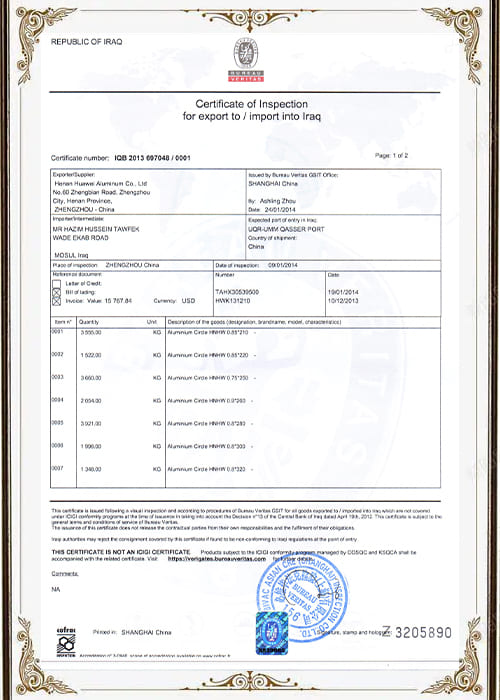
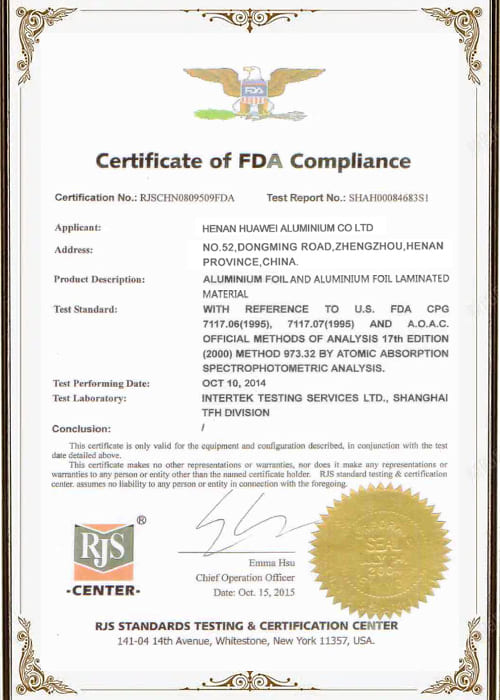
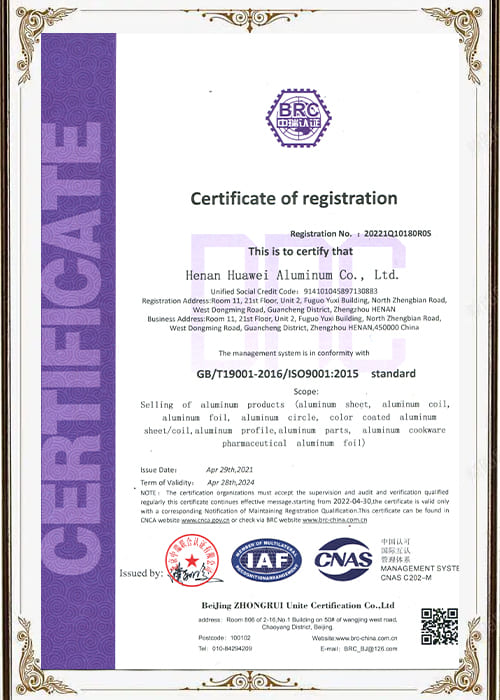
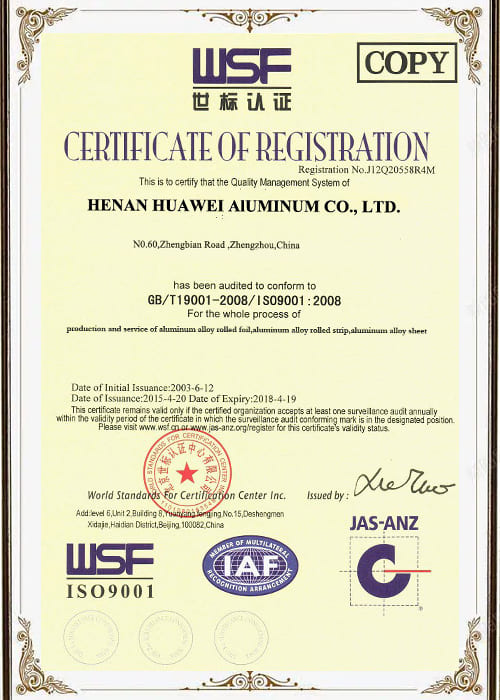
8. The Importance of Quality Assurance and Supplier Selection (Henan Huawei Aluminum)
Ang pagganap ng Industrial Aluminum Foil directly affects the quality and reliability of the final product. Kaya nga, its quality control must be extremely stringent.
- Chemical Composition Control: The content of alloying elements must be precisely controlled to ensure the final mechanical and physical properties.
- Thickness and Shape: High-precision thickness gauges and shape meters are used to ensure uniform thickness and a flat shape across the entire coil, which is crucial for subsequent high-speed processing.
- Surface Quality: The foil surface must be clean, free of oil stains, mga gasgas na, and bright spots. For packaging foil, the surface wetting tension is also required to meet standards (karaniwan ay >32 dynes) to ensure strong printing and lamination.
- Pinhole Count: This is a key indicator of barrier performance. High-quality industrial foil, especially for packaging, has extremely strict requirements for the number and size of pinholes.
For manufacturers worldwide, choosing an aluminum foil supplier with strong technical capabilities and strict quality control is essential.
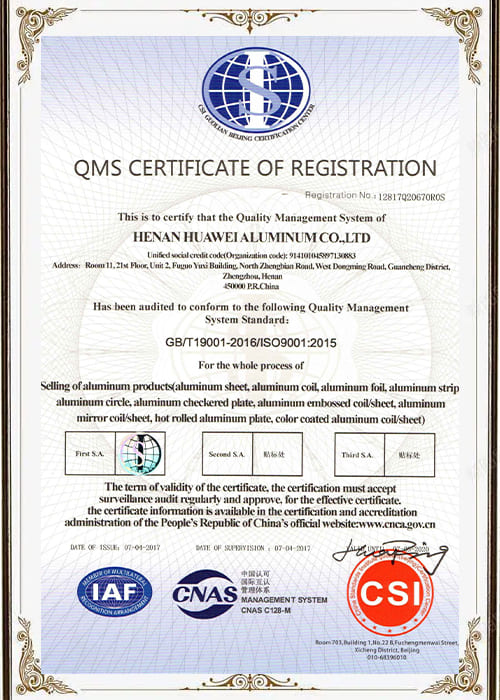
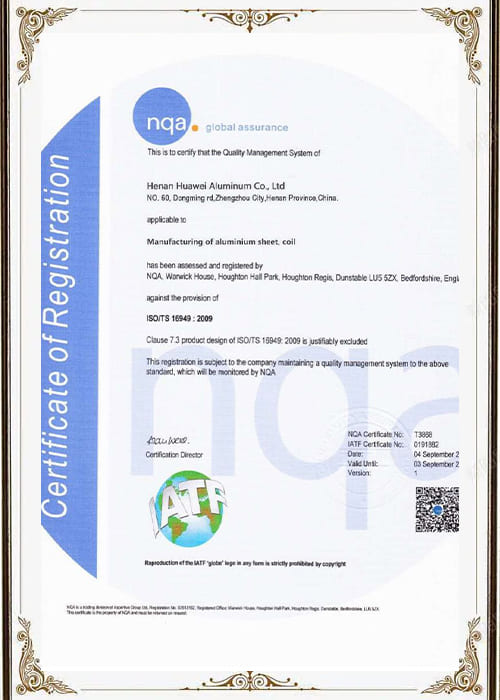
Henan Huawei Aluminyo Co., Ltd, a well-known aluminum product manufacturer in the industry, is such a partner.
It is important to clarify that this “Huawei” refers to Henan Huawei Aluminum, a company specializing in the R&D and production of aluminum, and is a different, independent entity from the renowned consumer electronics and communication technology giant, Huawei Technologies.
9. Mga Pamantayan, Pagsubok, and Compliance
9.1 Major International Standards for Industrial Aluminum Foil
Industrial aluminum foil is governed by multiple national and international standards that define komposisyon ng kemikal, mekanikal na mga katangian, dimensional tolerances, at kalidad ng ibabaw.
| Standard Organization | Pamantayan | Scope |
|---|---|---|
| ASTM (USA) | ASTM B479 | Aluminum foil for general industrial use |
| .ISO | .ISO 6361 | Wrought aluminum and aluminum alloys |
| EN (EU) | EN 546 | Tolerances for aluminum foil |
| GB (Tsina) | GB/T 3198 | Aluminum and aluminum alloy foil |
| JIS (Hapon) | JIS H4160 | Aluminum and aluminum alloy foils |
9.2 Industry-Specific Regulatory Requirements
Beyond general material standards, many applications impose sector-specific regulations:
- Packaging ng pagkain
- FDA (21 CFR) compliance in the U.S.
- EU Regulation (EC) Hindi. 1935/2004
- Pharmaceutical packaging
- GMP requirements
- Low pinhole density and cleanliness standards
- Electronics and batteries
- Tight thickness tolerance (often ≤±1%)
- Surface contamination control
9.3 Testing Methods and Quality Verification
Testing is essential to confirm that aluminum foil meets both standard and customer-specific requirements.
Common Testing Items
| Test Item | Purpose |
|---|---|
| Tensile test | Verify mechanical strength |
| Pinhole test | Ensure barrier integrity |
| Thickness gauge | Confirm dimensional accuracy |
| Inspeksyon sa ibabaw | Detect defects and contamination |
10. Pangwakas na Salita
Industrial Aluminum Foil, with its lightweight, mataas na thermal kondaktibiti, mataas na electrical kondaktibiti, excellent barrier properties, at higit na mahusay na paglaban sa kaagnasan, plays a crucial role in modern industry.
From supporting the electronic components of the digital economy and ensuring the comfort of cities through HVAC systems to safeguarding the safety of food and drugs with packaging solutions, every application of industrial aluminum foil reflects the ingenuity of material science.
Through the precise application of different alloys like the 1xxx, 3xxx, and 8xxx series, manufacturers can provide customized solutions for a variety of extreme and precision conditions.
As a producer committed to providing high-quality metal products, Henan Huawei Aluminyo Co., Ltd will continue to leverage its professional knowledge and advanced technology to provide excellent Industrial Aluminum Foil products to global customers, jointly promoting technological progress and sustainable development.
Mga FAQ
Q1: Can industrial and household aluminum foil be used interchangeably?
A1: Hindi. Industrial aluminum foil is designed for specific properties (like conductivity or specific strength), may not be certified for food-grade use, and its mechanical properties (like hardness) are not suitable for kitchen use. Sa kabilang banda, household foil cannot meet the strict requirements of industrial applications for strength, paglaban sa temperatura, or electrical properties.
Q2: Does the “shiny” vs. “dull” side of industrial aluminum foil matter in use?
A2: In terms of industrial aluminum foil pagganap, especially for thermal conductivity and barrier properties, the difference between the shiny and dull sides is negligible. This difference is a natural result of the “pack rolling” process. Gayunpaman, in applications requiring high reflectivity (like insulation boards), the shiny side is usually oriented towards the heat source.
Q3: Why is aluminum foil used for the cathode of lithium batteries, while copper foil is used for the anode?
A3: At high potentials, aluminum reacts with the electrolyte to form a dense AlF₃ passivation film, protecting the current collector from corrosion, whereas copper would oxidize. At low potentials (anode), aluminum would alloy with lithium, destroying the structure, while copper does not. Kaya nga, aluminum foil is the ideal cathode current collector, and copper foil is the ideal anode current collector.
Q4: Is industrial aluminum foil a sustainable material?
A4: Oo nga. Aluminum is a 100% infinitely recyclable material, and the recycling process requires only about 5% of the energy needed for primary aluminum production. Scrap from industrial production and end-of-life aluminum foil products have high recycling value, making it a model for a circular economy.
Proseso ng paghahagis ng produksyon at ang pagpapakilala nito
Ang layunin ng pagtunaw at paghahagis ay upang makabuo ng mga haluang metal na may kasiya siyang komposisyon at mataas na kadalisayan ng matunaw, upang lumikha ng mga kanais nais na kondisyon para sa paghahagis ng mga haluang metal ng iba't ibang mga hugis.
Mga hakbang sa proseso ng pagtunaw at paghahagis: mga ka batch --- pagpapakain --- natutunaw na --- pagpapakilos pagkatapos matunaw, pag alis ng slag --- sampling bago ang pagsusuri --- pagdaragdag ng haluang metal upang ayusin ang komposisyon, nakakapukaw ng damdamin --- pagpipino --- static na Setting——Guide furnace casting.
Mainit na proseso ng produksyon ng pagulong at ang pagpapakilala nito
- 1. Mainit na pagulong sa pangkalahatan ay tumutukoy sa paggulong sa itaas ng metal recrystallization temperatura;
- 2. Sa panahon ng mainit na proseso ng pagulong, ang metal ay may parehong mga proseso ng pagpapatigas at paglambot. Dahil sa impluwensya ng bilis ng pagpapapangit, basta huli na ang recovery at recrystallization process, magkakaroon ng tiyak na gawaing pagpapatigas;
- 3. Ang recrystallization ng metal pagkatapos ng mainit na pagulong ay hindi kumpleto, na ang ibig sabihin ay, ang magkakasamang buhay ng recrystallized istraktura at deformed istraktura;
- 4. Ang mainit na pagulong ay maaaring mapabuti ang pagganap ng pagproseso ng mga metal at haluang metal, bawasan o alisin ang mga depekto sa paghahagis.
- 1. Ang temperatura ng paghahagis at pagulong ay karaniwang nasa pagitan ng 680 o C at 700 o C. Ang mas mababa ang mas mahusay na, Ang matatag na paghahagis at rolling line ay karaniwang tumitigil nang isang beses sa isang buwan o higit pa upang muling tumayo. Sa panahon ng proseso ng produksyon, kinakailangang mahigpit na kontrolin ang antas ng likido ng front tank upang maiwasan ang mababang antas ng likido;
- 2. Ang pagpapadulas ay gumagamit ng C powder na may hindi kumpletong pagkasunog ng gas para sa pagpapadulas, na isa rin sa mga dahilan ng maruming ibabaw ng casting at rolling materials;
- 3. Ang bilis ng produksyon ay karaniwang sa pagitan ng 1.5m / min-2.5m / min;
- 4. Ang kalidad ng ibabaw ng mga produkto na ginawa sa pamamagitan ng paghahagis at paggulong ay karaniwang medyo mababa, at sa pangkalahatan ay hindi maaaring matugunan ang mga produkto na may espesyal na pisikal at kemikal na mga kinakailangan sa pagganap.
- 1. Ang malamig na pagulong ay tumutukoy sa paraan ng paggulong ng produksyon sa ibaba ng temperatura ng recrystallization;
- 2. Hindi magkakaroon ng dynamic na recrystallization sa panahon ng proseso ng paggulong, at ang temperatura ay tataas sa temperatura ng pagbawi sa karamihan, at ang malamig na paggulong ay lilitaw sa isang trabaho hardening estado, at ang trabaho hardening rate ay magiging malaki;
- 3. Ang malamig na ginulong sheet at strip ay may mataas na dimensional na katumpakan, magandang kalidad ng ibabaw, unipormeng istraktura at pagganap, at mga produkto sa iba't ibang estado ay maaaring makuha sa heat treatment;
- 4. Malamig na pagulong ay maaaring i roll out manipis na strips, pero sabay sabay, ito ay may mga disadvantages ng mataas na pagkonsumo ng enerhiya para sa pagpapapangit at maraming mga pasa sa pagproseso.
- 1. Ang pagtatapos ay isang paraan ng pagproseso upang matugunan ng malamig na ginulong sheet ang mga kinakailangan ng customer, o upang mapadali ang kasunod na pagproseso ng produkto;
- 2. Ang mga kagamitan sa pagtatapos ay maaaring iwasto ang mga depekto na ginawa sa mainit na pagulong at malamig na proseso ng produksyon, tulad ng basag na gilid, may langis na, mahina ang hugis ng plato, natitirang stress, atbp. Kailangan nitong tiyakin na walang iba pang mga depekto na dinala sa proseso ng produksyon;
- 3. Mayroong iba't ibang mga kagamitan sa pagtatapos, pangunahin kabilang ang cross-cutting, pagputol ng hiwa, pag unat at pagtutuwid, annealing furnace, mga slitter, atbp.
Proseso ng paghahagis at paggulong
Proseso ng paghahagis at paggulong: likidong metal, kahon sa harap (Kontrol sa antas ng likido), paghahagis at rolling machine (sistema ng pagpapadulas, paglamig ng tubig), paggupit ng makina, makina ng pag coiling.
Malamig na proseso ng produksyon ng pagulong
Panimula sa pagtatapos ng proseso ng produksyon
Aluminyo haluang metal ay may mga katangian ng mababang density, magandang mekanikal na katangian, magandang pagganap ng pagproseso, di nakakalason, madaling i recycle, mahusay na electrical kondaktibiti, paglipat ng init at paglaban sa kaagnasan, kaya ito ay may malawak na hanay ng mga application.
Aerospace: ginagamit upang gumawa ng mga balat ng sasakyang panghimpapawid, mga frame ng fuselage, mga girder, mga rotors, mga propeller, mga tangke ng gasolina, mga panel ng pader at mga struts ng landing gear, pati na rin ang rocket forging rings, mga panel ng pader ng spacecraft, atbp.
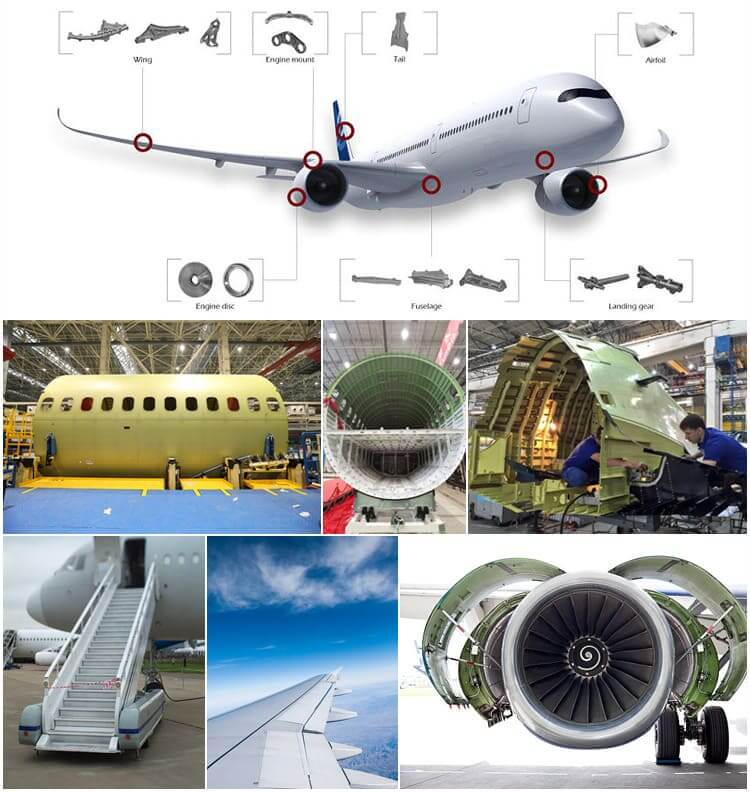
Aluminyo haluang metal na ginagamit para sa aerospace
Transportasyon: ginagamit para sa kotse katawan istraktura materyales ng mga sasakyan, Mga Sasakyan ng Subway, mga kotse ng pasahero ng tren, mabilis na mga kotse ng pasahero, mga pinto at bintana, mga istante, mga bahagi ng automotive engine, mga aircon, mga radiator, mga panel ng katawan, mga gulong at mga materyales ng barko.
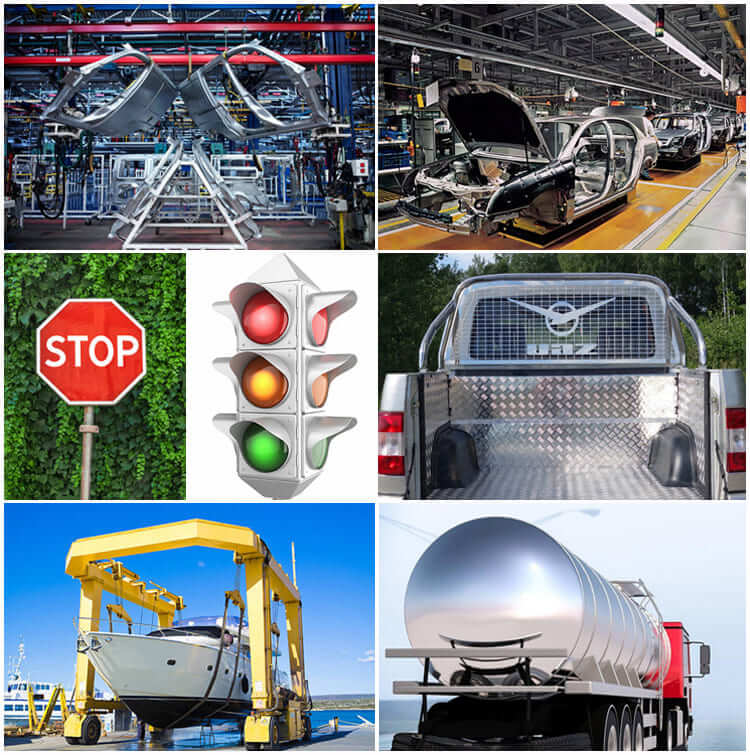
Application ng trapiko
Packaging: Ang lahat ng aluminyo pop lata ay pangunahing ginagamit bilang mga materyales sa packaging ng metal sa anyo ng mga manipis na plato at foils, at ginagawang lata, mga takip, mga bote, mga bariles, at packaging foils. Malawakang ginagamit sa packaging ng mga inumin, pagkain, mga pampaganda, mga gamot, mga sigarilyo, mga produktong pang industriya, mga gamot, atbp.
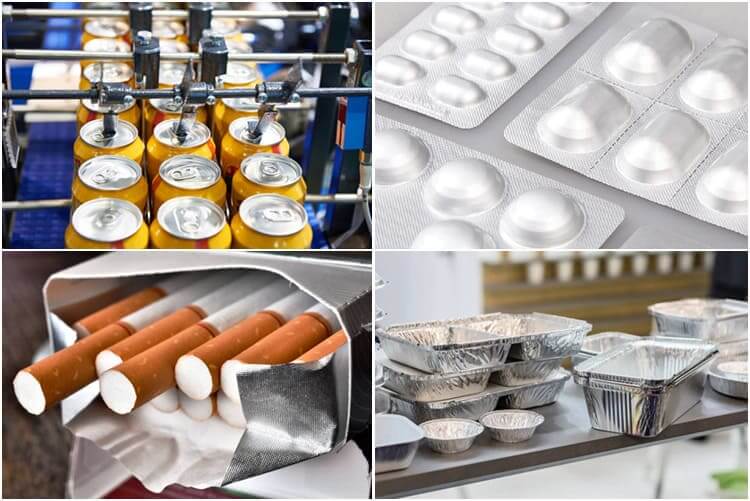
Application ng packaging
Pag-print: Pangunahing ginagamit upang gumawa ng PS plates, ang mga PS plate na nakabase sa aluminyo ay isang bagong uri ng materyal sa industriya ng pag print, ginagamit para sa awtomatikong paggawa ng plato at pag print.
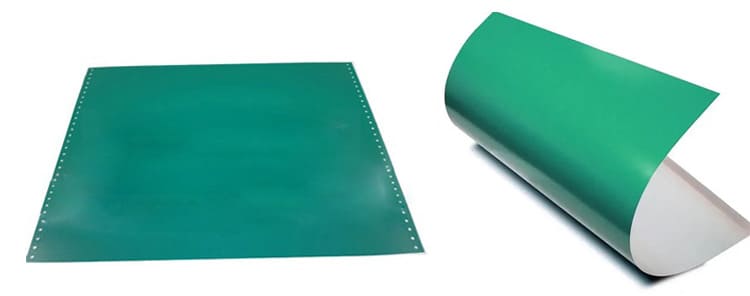
Pag print ng PS
Dekorasyon ng arkitektura: aluminyo haluang metal ay malawakang ginagamit sa mga istraktura ng gusali, mga pinto at bintana, suspendido ang mga kisame, pandekorasyon na ibabaw, atbp. dahil sa magandang kaagnasan nito paglaban, sapat na lakas, mahusay na pagganap ng proseso at pagganap ng hinang.

Application ng konstruksiyon ng haluang metal ng aluminyo
Mga produktong elektroniko: mga computer, mga mobile phone, mga shell ng refrigerator, mga radiator, atbp.
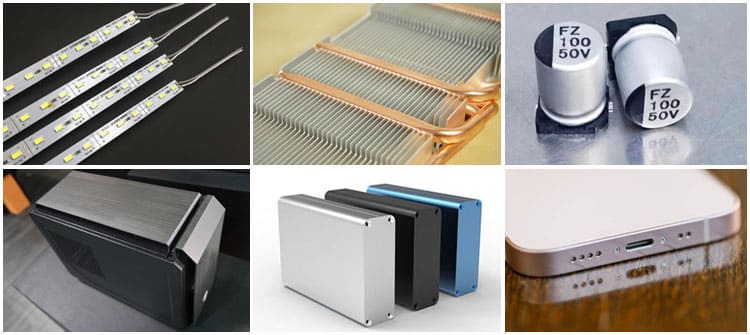
Electronic application ng produkto
Mga gamit sa kusina: mga kaldero ng aluminyo, aluminyo basins, mga liner ng rice cooker, sambahayan aluminyo foil, atbp.
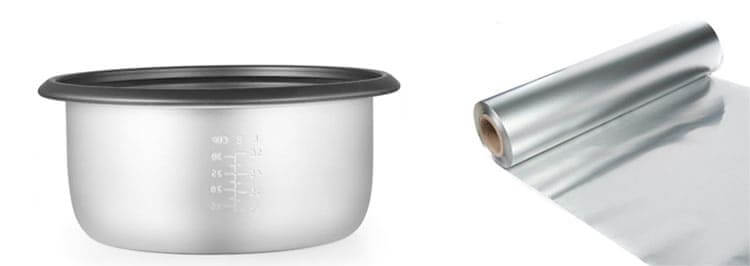
Application ng kusina
Packaging Ng Aluminum Sheet / Coil
Ang bawat detalye ng packaging ay kung saan namin ituloy ang perpektong serbisyo. Ang aming proseso ng packaging sa kabuuan ay ang mga sumusunod:
Paglalamina: malinaw na pelikula, asul na pelikula, mikro-mucosal, mataas na mucosal, laser pagputol ng pelikula (2 mga tatak, Novacell at Polyphem);
Proteksyon: mga tagapagtanggol ng sulok ng papel, mga pads laban sa presyon;
pagpapatayo ng mga: desiccant;
Tray: fumigated hindi nakakapinsala kahoy na tray, magagamit muli ang bakal na tray;
Pag-iimpake: Tik-tik-toe bakal sinturon, o PVC packing belt;
Kalidad ng Materyal: Ganap na libre mula sa mga depekto tulad ng puting kalawang, mga spot ng langis, mga rolling mark, pinsala sa gilid, mga baluktot, mga dent, mga butas, mga break lines, mga gasgas na, atbp., walang coil set.
Port: Qingdao o iba pang mga port sa China.
Lead oras: 15-45 mga araw.
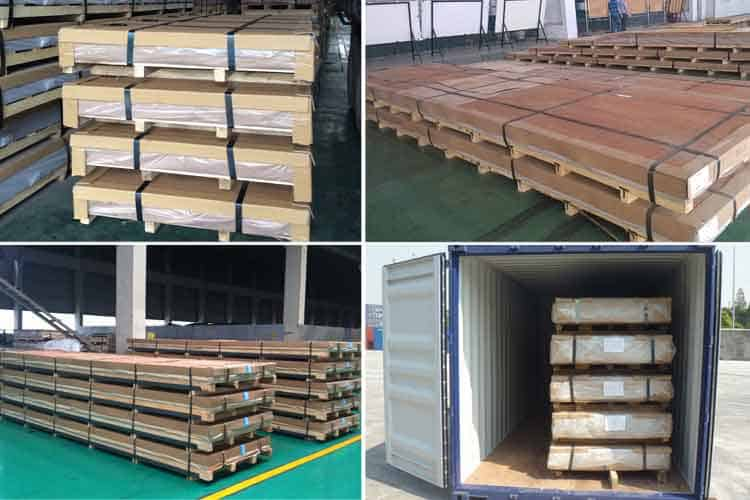
Aluminyo sheet / plate packaging proseso
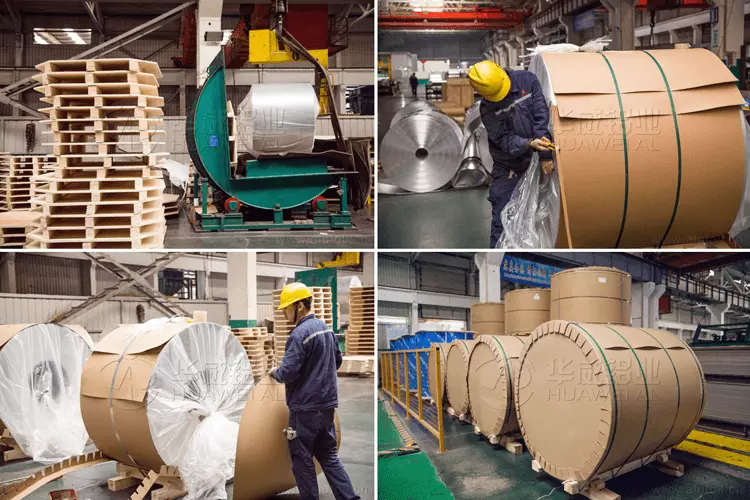
Aluminyo likawin packaging proseso
F: Ikaw ba ay isang tagagawa o isang mangangalakal?
Q: Kami ay isang tagagawa, ang factory namin ay sa No.3 Weier Road, Sonang Pang industriya, Gongyi, Henan, Tsina.
F: Ano ang MOQ para sa pag order ng produkto?
Q: Ang MOQ natin ay 5 tonelada, at ang ilang mga espesyal na produkto ay magkakaroon ng isang minimum na dami ng order ng 1 o 2 tonelada.
F: Gaano katagal ang iyong oras ng lead?
Q: Sa pangkalahatan ang aming lead time ay tungkol sa 30 mga araw.
F: Mayroon bang kalidad ng katiyakan ang iyong mga produkto?
Q: Oo nga, kung may problema sa quality sa products namin, kami ay mabayaran ang customer hanggang sa sila ay nasiyahan.
Mga Kaugnay na Produkto


Mga Pinakabagong Blog
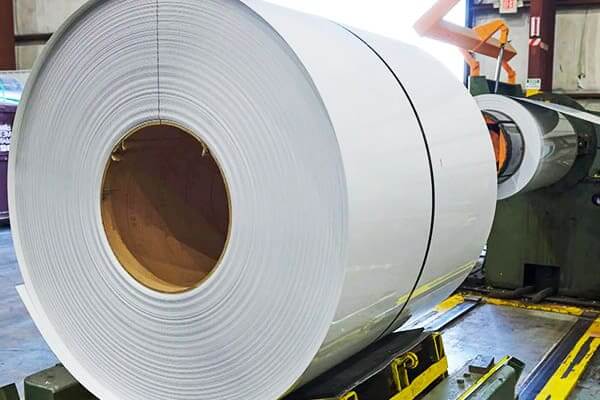
Common Alloys of Reefer Truck Used PE Coated Aluminum Coil
Discover common alloys of reefer truck used PE coated aluminum coil, kasama na ang 3003, 3004, at 3105. Designed for excellent corrosion resistance, pagiging formable, and long-lasting outdoor performance.
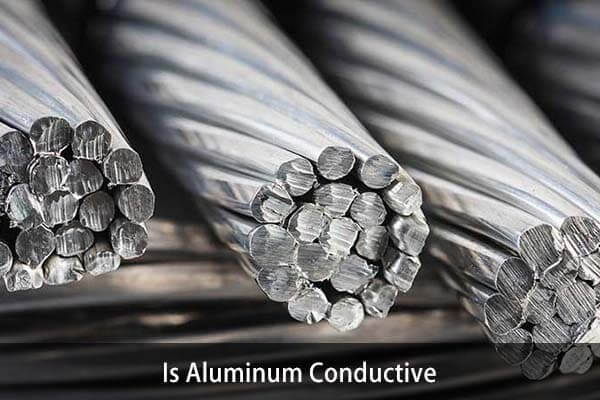
Is Aluminum Conductive? Mga Katangian, Gumagamit ng mga & Benefits Explained
Is aluminum conductive? Discover aluminum's electrical conductivity, key advantages, and why it is widely used in power transmission and industrial applications.
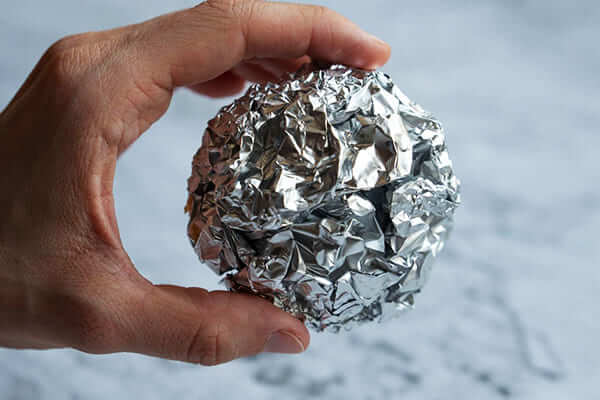
Unlocking Sustainability: The Truth About Aluminum Foil Recycling
Is Aluminum Foil Recyclable? Learn how aluminum foil can be recycled, how to prepare it properly, and why recycling helps reduce waste and save resources.
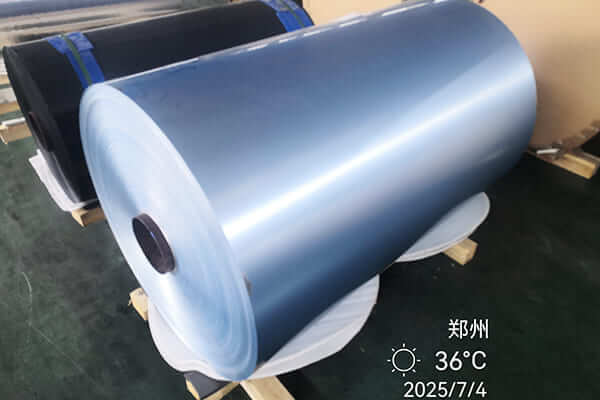
Coated Aluminum Foil for Packaging Applications | Strong & Reliable
High-quality coated aluminum foil for packaging applications, offering excellent barrier protection, tibay ng katawan, and consistent performance.