1. Panimula
Ang 80-micron Anodized Aluminum Foil Strip is a high-performance, precision-engineered material that combines the inherent properties of an aluminum substrate with the superior characteristics of a ceramic surface layer.
With a nominal thickness of 0.08 mm, this material is not a simple foil but a composite system created through a sophisticated electrochemical process called anodization.
This process grows a controlled layer of aluminum oxide (Al O) directly from the base metal, fundamentally transforming its surface properties.
The resulting material retains the excellent thermal kondaktibiti and light weight of the aluminum core while gaining high dielectric strength (making it an excellent electrical insulator), exceptional surface hardness (often exceeding 500 HV), at higit na mahusay na paglaban sa kaagnasan.
This unique combination of properties makes it an indispensable material for demanding applications in the electronics and new energy sectors, such as transformer and motor windings, lithium-ion battery tab insulation, and thermally conductive insulating substrates.

80-Micron Anodized Aluminum Foil Strip
2. Fundamental Characteristics of 80-Micron Anodized Aluminum Foil Strip
Base Aluminum Alloy
| haluang metal | Typical composition highlights (major elements, wt%) | Typical tempers for 80 µm strip | Typical mechanical ranges* | Key advantages for anodized foil strip | Limitations/remarks |
|---|---|---|---|---|---|
| 1085 | Al ≥ 99.85% | O, H14 | UTS ~70–110 MPa; pagpapahaba ng panahon >25% | Extremely high purity; most uniform anodic films; excellent dyeing consistency; superior ductility | Low mechanical strength; higher cost than standard 1xxx alloys |
| 1100 | Al ≥ 99.0% | O, H14 | UTS ~70–115 MPa; pagpapahaba ng panahon >20% | Good surface quality; napakahusay na formability; preferred for decorative anodizing | Limited rigidity and wear resistance |
| 1235 | Al ≥ 99.35% | O, H18 | UTS ~60–110 MPa (foil condition) | Mature foil alloy; stable rolling behavior; suitable for ultra-thin and narrow slit strips | Very low structural strength; mainly functional or conductive applications |
| 3003 | Mn ~1.0–1.5% | H14, H24 | UTS ~115–165 MPa; elongation 10–25% | Balanced strength and formability; widely used; stable anodizing behavior | Slightly less color uniformity than high-purity aluminum |
| 5052 | Mg ~2.2–2.8% | H32, H34 | UTS ~200–280 MPa; elongation 8–15% | Napakahusay na paglaban sa kaagnasan; suitable for humid or marine environments | Narrower forming window; anodized color may appear slightly gray |
| 8021 | Controlled Fe/Si (foil-grade alloy) | O, H18 | Producer-specific engineered ranges | Good surface control; suitable for precision coating and laminating | Anodizing compatibility must be process-validated |
| 8079 | Lower and more uniform Fe/Si content | O, H18 | Producer-specific engineered ranges | Premium foil alloy; high surface cleanliness; excellent slitting stability | Higher cost; stronger dependence on qualified suppliers |
| 8011 | Fe/Si ~0.6–1.0% | H18 | Typical foil-engineering range | Industry-standard foil alloy; wide processing window; strong availability | Anodized appearance requires optimized pretreatment |
| 6061 | Mg ~1.0%, Si ~0.6% | O, H14 (limited for thin gauges) | UTS ~260–320 MPa | High strength and rigidity; mature anodizing behavior | Not suitable for high-flexibility 80 µm strip applications |
- Mechanical values are indicative. Actual thin-gauge behavior depends on rolling history, Pamahiin, and supplier-specific processing.
Anodized layer composition
- The anodic film is primarily amorphous/nanoporous aluminum oxide (Al O) formed electrochemically.
- Typical decorative/hard anodize processes produce film thicknesses in the range ~2 – 25 M (pandekorasyon: ~5–15 µm; hardcoat: 20–60 µm but hardcoat at very high µm is usually not applied to very thin foils because of brittleness).
- Films are sealed (hot water, nickel acetate or silicate seal) to reduce porosity, increase corrosion resistance and lock in dyes where applied.
- The oxide is electrically insulating and much harder than the base metal.
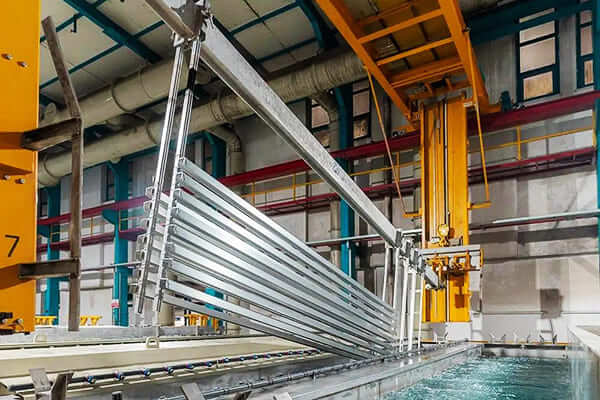
Aluminum alloy anodizing process
3. Mechanical and Physical Properties — 80-Micron Anodized Aluminum Foil Strip
Thickness and dimensions
Nominal substrate thickness
- 80 M (0.080 mm). Specify tolerance in POs — typical industrial tolerances are ±3–5 µm for precision foil/strip (adjust per supplier capability).
Typical coil / strip formats
- Coil ID / OD: common inner diameters 152 mm (6″) o 305 mm (12″) depending on customer equipment; outer diameter limited by coil mass handling.
- Slit widths: mula sa 3 mm hanggang sa 300+ mm (customer-specified).
- Edge quality: specify maximum burr height (hal., ≤ 10 M) and maximum edge roll for automatic handling.
Mga katangiang pisikal
| Pag-aari | Typical value / range | Test / note |
|---|---|---|
| Substrate thickness | 80 M (0.080 mm); tolerance example ±3–5 µm | Specify gauge tolerance per PO |
| Areal mass (substrate) | 0.216 kg·m⁻² (216 g/m²) — see worked calc | Computed from t×ρt×ρt×ρ |
| Areal mass (substrate + 8 µm film) | ~0.248 kg·m⁻² (approx.) | Illustrative; verify with supplier |
| Densidad ng katawan (Al substrate) | ~2.70 g·cm⁻³ (2700 kg·m⁻³) | Material constant |
| Surface finish (pre-anodize) | Maliwanag na / matte / pretreated | Specify surface roughness Ra if critical |
| Pagkamagaspang ng ibabaw (typical Ra) | ~0.2–2.0 µm before anodize (depends on mill finish) | Measure with stylus or optical profilometer |
| Coil/strip width | customer-specified (3–300+ mm) | Tolerance on width ±0.1–0.5 mm typical |
| Maximum recommended handling tension | supplier-dependent; tipikal na < 50 N/mm for thin strip | Avoid plastic elongation or edge cracking |
Mga katangian ng makina
| haluang metal (typical temper for strip) | Mga UTS (MPa) | Yield (0.2% offset, MPa) | Pagpapahaba (%) | Notes for thin gauge behavior |
|---|---|---|---|---|
| 1085 / 1100 (O / H14) | 70 – 115 | not always reported for foil | >20 | High ductility; excellent forming capability |
| 1235 (papel de liha) | 60 – 110 | – | mataas na (>20) | Foil-specific rolling yields very stable narrow strip |
| 3003 (H14 / H24) | 115 – 165 | 60 – 110 | 10 – 25 | Good balance of formability & lakas ng loob |
| 5052 (H32) | 200 – 280 | 110 – 200 | 8 – 15 | Mas mataas na lakas; better handling, lower elongation |
| 8011 / 8021 / 8079 (foil grades) | producer-engineered ranges | – | dependent | Engineered for gauge control and slit stability |
| 6061 (thin O/H14) | ~260 – 320 (T6 higher) | ~240–276 (T6) | 8–12 | Strong but less ductile; risk of springback & cracking in tight forming |
Paglaban sa kaagnasan
What anodize does
- A properly sealed anodic film converts the metal surface into a corrosion-resistant Al₂O₃ barrier. For decorative/architectural exposure, a sealed Type II film (5–12 µm) plus PVDF topcoat typically meets long-life expectations.
Typical qualification tests & guideline hours
- Spray ng asin (NSS — ASTM B117 / .ISO 9227): for painted or sealed anodize on architectural components, 240 h is often the baseline acceptance; 480 h or more is specified for marine/coastal hardware. (Set specific hours per project risk.)
- Cyclic corrosion / condensation tests recommended for coastal/industrial environments because real-world exposure cycles are more aggressive than static NSS.
Surface hardness
Anodic film hardness (tipikal na)
- Pandekorasyon (sulfuric, 5–15 µm): micro-Vickers hardness on the oxide typically ~300 – 600 HV (process dependent).
- Hard anodize (20-60 μm): ~600 – 1000 HV o mas mataas pa, but brittle and not recommended on very thin strip without qualification.
Thermal and electrical properties
Thermal properties
- Thermal kondaktibiti (substrate): bulk aluminium ~205 – 235 W·m⁻¹·K⁻¹ (depends on alloy). For thin strip the conduction is dominated by substrate; anodic film is a poor thermal conductor and contributes negligibly to in-plane conduction.
- Thermal mass: combined areal heat capacity approximated from substrate mass per area (0.216 kg·m⁻²) × specific heat (~900 J·kg⁻¹·K⁻¹) → ≈0.216×900=194.4≈ 0.216 × 900 = 194.4≈0.216×900=194.4 J·m⁻²·K⁻¹ (approximate). If you require the digit-by-digit check, I can show it similarly to above.
Electrical properties — oxide as dielectric
- Oxide is insulating. Typical practical dielectric strength for anodic films is often used as a rough engineering rule of ~10–20 V/µm (process dependent). This means:
- A 5 µm film → ~50–100 V (rough estimate),
- A 10 µm film → ~100–200 V (rough estimate).
- Capacitance per unit area of the film can be estimated using the oxide thickness and relative permittivity (εr ≈ 8–10) if you are designing sensors or capacitive components — but always validate with dielectric breakdown and leakage tests on production material.

Aluminum strip slitting
4. Manufacturing Process of 80-Micron Anodized Aluminum Foil Strips
Foil production
- Casting/rolling: primary aluminium slab → hot roll → cold roll to final gauge (80 M) with controlled anneal steps as needed. For narrow strip, master coils may be cold-slit or milled to width after rolling.
- Paghina ng loob & paglilinis: final temper (O, H14, atbp.) and cleaning/degreasing are performed before anodizing to ensure proper oxide formation and adhesion.
Anodization process
- Electrolytic oxidation: aluminum strip is made anodic in an electrolyte (commonly sulfuric acid for Type II decorative anodize). Current density, temperature and time control film thickness and porosity.
- Typical decorative film thickness: ~5–15 µm; hard anodize mas makapal (20-60 μm) but not commonly applied to very thin foil because thick hard oxides can crack and flake when the substrate bends or is slit.
- Pagbubuklod: immediate post-anodize sealing (hot water or chemical seal) hydrates/blocks pores improving corrosion resistance and dye retention.
- Pangkulay (opsyonal na): dyes infiltrate pores before sealing; electrolytic coloring or interference methods are alternatives.
Key constraints for 80 µm strip: the oxide is brittle relative to metal; deep/hard anodize film can cause cracking on slit edges or during bending. Process parameters must be matched to reduce internal stresses and preserve strip flexibility.
Surface finishing & post-treatments
- Dry film coatings (PVDF, polyurethane) can be applied after anodize for outdoor durability or to add functionality (paglaban sa gasgas).
- Masking & pagputol ng hiwa: care is taken to avoid scoring the anodic surface; slitting tools and winding tension must be controlled to avoid flaking.
Kontrol sa kalidad
- Film thickness measurement: eddy-current (non-destructive) or cross-section microscopy for calibration.
- Porosity/pinhole inspection: visual or electrolytic dye tests.
- Adhesion tests: tape/cross-cut or bend tests to ensure oxide and any topcoat adhesion.
- Electrical/dielectric testing: breakdown voltage tests if anodize used as dielectric.
- Spray ng asin & abrasion tests: for environmental durability.
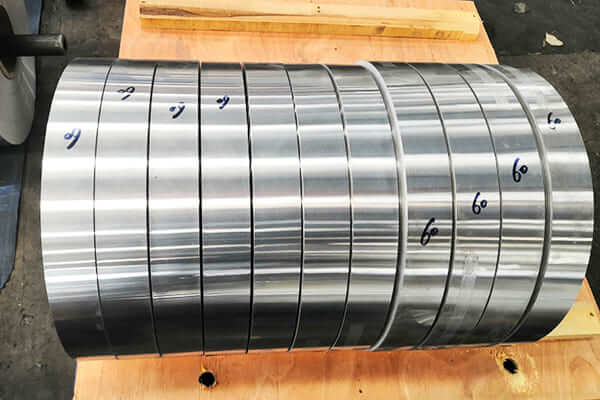
Huawei Packaging 80-Micron Anodized Aluminum Strip
5. Advantages of 80-Micron Anodized Aluminum Foil Strip
Electrical properties — transition from conductor to insulator
Anodize turns the thin surface into an insulating film while leaving a conductive substrate beneath.
That enables patterned insulation, local dielectric behavior for sensors, and safer handling where surface insulation is required.
Designers should test actual dielectric strength of the film + substrate stack for target voltages.
Mechanical properties — improved surface hardness
The oxide layer provides a hard, wear-resistant surface (better scratch resistance) while substrate flexibility allows bending and forming within limits.
For light wear applications, anodized strips perform significantly better than bare thin foil.
Thermal properties — efficient thermal management
For heat-spreading or lightweight thermal solutions the substrate (80 µm Al) provides good thermal conductivity with minimal mass.
The anodic layer has low thermal conductivity but is thin enough that substrate conduction dominates; therefore anodized strip can serve as a lightweight heat spreader with a protective surface.
Chemical properties — excellent corrosion resistance
Properly sealed anodic films substantially increase corrosion life against moisture and many corrosives.
When combined with a corrosion-resistant alloy (hal., 5052) and proper edge sealing the assembly performs well in humid and mildly corrosive environments.

80-Micron Aluminum Foil Strip for Transformer
6. Mga aplikasyon ng 80-Micron Anodized Aluminum Foil Strips
Electrical and Electronic Components
- Insulating spacer strips in transformers and inductors
- Busbar insulation layers (low-voltage, compact designs)
- Capacitor components and current collectors
- EMI shielding elements with controlled insulation
Thermal Management and Heat-Control Systems
- Heat spreader layers in LED modules
- Thermal interface backings in electronic assemblies
- Heat dissipation substrates combined with insulating layers
- Radiant heat control and reflective elements
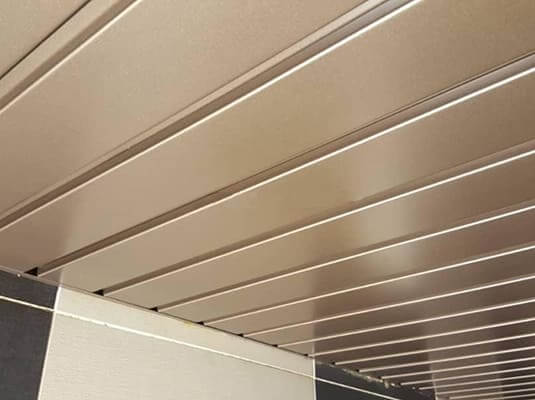
80-Micron Aluminum strip for interior decoration
Precision Insulation and Functional Laminates
- Laminated insulation tapes
- Composite barrier layers in industrial equipment
- Backing layers for pressure-sensitive adhesives
- Multilayer technical foils
Decorative and Architectural Trim Elements
- Narrow decorative strips and inlays
- Interior design accents
- Furniture trim and appliance detailing
- Anti-glare reflective elements
Industrial Labeling and Identification Systems
- High-durability nameplates
- Warning and instruction labels
- Barcode and QR code carriers
- Asset tracking tags for industrial equipment
Specialized and Emerging Applications
- Sensor substrates and functional electrodes
- Battery and energy-storage components (non-current-carrying roles)
- Optical and reflective control layers
- Laboratory and analytical equipment components
7. Comparison with Other Aluminum Foil Products
| Performance Dimension | 80μm Anodized Aluminum Foil | 80μm Bare Aluminum Foil | 80μm Coated/Laminated Foil | Polymer Insulating Films (hal., Kapton®, Mylar®) |
|---|---|---|---|---|
| Surface Nature | Integral Ceramic Layer (Al O) | Metallic Aluminum Surface | Applied Polymer Layer | Pure Polymer |
| Electrical Insulation | Napakahusay (High Dielectric Strength) | Wala (Conductor) | Mabuti na lang (Depends on coating) | Napakahusay (Specialized Insulator) |
| Surface Hardness/Abrasion Resistance | Napakataas na (Ceramic-like) | Very Low (Very soft) | Mababa ang (Depends on coating) | Katamtaman |
| Thermal Performance | Napakahusay (Conductive Core + Emissive Surface) | Mabuti na lang (Conductive core only) | Mga Maralita (Polymer layer is a thermal barrier) | Very Poor (Thermal Insulator) |
| Lakas ng Bond (Surface to Substrate) | Perfect (Integrally grown) | N / A | Mabuti na lang (but can delaminate) | N / A |
| Max. Operating Temperature | Mataas na ( >300°C ) | Mataas na ( >500°C ) | Mababa ang ( <150°C, limited by coating ) | Medium to High (Depends on polymer) |
| Thickness Uniformity/Precision | Mataas na | Mataas na | Fair (Coating adds variables) | Mataas na |
| Gastos | Katamtaman Mataas | Mababa ang | Katamtaman | Medium to High |
| Core Application Scenario | Motor windings, battery tab insulation, insulating heat sinks. | General heat fins, pag iimpake, EMI shielding. | Packaging ng pagkain, cable shielding, mga pandekorasyon na panel. | Pure electrical insulation, flexible circuit substrates. |
8. Pangwakas na Salita
Ang 80-micron Anodized Aluminum Foil Strip is a testament to the power of advanced surface engineering.
By transforming the surface of a basic metal into a high-performance ceramic layer, it creates a new material with a combination of properties that neither constituent could achieve alone.
It is not simply a piece of aluminum foil; it is a sophisticated, multifunctional solution engineered to solve the increasingly complex challenges of insulation, thermal management, and durability in the modern electronics and energy sectors.
Its ability to provide electrical insulation, surface hardness, and efficient heat dissipation in a single, lightweight package makes it an indispensable and intelligent material choice for high-performance applications.
Mga FAQ
Q1 — Does “80 µm” refer to the anodic film thickness or the substrate?
Usually it denotes the substrate thickness (papel de liha) = 80 M. If you require an 80 µm anodic film, explicitly state “anodic film thickness = 80 µm” — this is uncommon and will impose severe handling constraints.
Q2 — What anodize film thickness is typical on 80 µm strip?
Decorative anodize: ~5–15 µm. Hard anodize: 20-60 μm but thick hardcoats risk cracking on thin substrates. Choose modest film thickness for flexible strips.
Q3 — How much does an 80 µm strip weigh per m²?
Calculated earlier: 0.216 kg/m2 (substrate only). Add a few g/m² for anodic film & seal depending on film thickness.
Q4 — Can an anodized 80 µm strip be bent or formed?
Yes within limits. Bending radius limits depend on alloy/temper and film thickness; tight bending can crack the oxide. Run forming trials for critical bends.
Q5 — How does anodize affect electrical conductivity?
The oxide is insulating. The bulk substrate remains conductive if oxide is removed locally (mechanically or chemically) or pierced. If anodize is used as dielectric, measure dielectric strength on the manufactured lot.
Proseso ng paghahagis ng produksyon at ang pagpapakilala nito
Ang layunin ng pagtunaw at paghahagis ay upang makabuo ng mga haluang metal na may kasiya siyang komposisyon at mataas na kadalisayan ng matunaw, upang lumikha ng mga kanais nais na kondisyon para sa paghahagis ng mga haluang metal ng iba't ibang mga hugis.
Mga hakbang sa proseso ng pagtunaw at paghahagis: mga ka batch --- pagpapakain --- natutunaw na --- pagpapakilos pagkatapos matunaw, pag alis ng slag --- sampling bago ang pagsusuri --- pagdaragdag ng haluang metal upang ayusin ang komposisyon, nakakapukaw ng damdamin --- pagpipino --- static na Setting——Guide furnace casting.
Mainit na proseso ng produksyon ng pagulong at ang pagpapakilala nito
- 1. Mainit na pagulong sa pangkalahatan ay tumutukoy sa paggulong sa itaas ng metal recrystallization temperatura;
- 2. Sa panahon ng mainit na proseso ng pagulong, ang metal ay may parehong mga proseso ng pagpapatigas at paglambot. Dahil sa impluwensya ng bilis ng pagpapapangit, basta huli na ang recovery at recrystallization process, magkakaroon ng tiyak na gawaing pagpapatigas;
- 3. Ang recrystallization ng metal pagkatapos ng mainit na pagulong ay hindi kumpleto, na ang ibig sabihin ay, ang magkakasamang buhay ng recrystallized istraktura at deformed istraktura;
- 4. Ang mainit na pagulong ay maaaring mapabuti ang pagganap ng pagproseso ng mga metal at haluang metal, bawasan o alisin ang mga depekto sa paghahagis.
- 1. Ang temperatura ng paghahagis at pagulong ay karaniwang nasa pagitan ng 680 o C at 700 o C. Ang mas mababa ang mas mahusay na, Ang matatag na paghahagis at rolling line ay karaniwang tumitigil nang isang beses sa isang buwan o higit pa upang muling tumayo. Sa panahon ng proseso ng produksyon, kinakailangang mahigpit na kontrolin ang antas ng likido ng front tank upang maiwasan ang mababang antas ng likido;
- 2. Ang pagpapadulas ay gumagamit ng C powder na may hindi kumpletong pagkasunog ng gas para sa pagpapadulas, na isa rin sa mga dahilan ng maruming ibabaw ng casting at rolling materials;
- 3. Ang bilis ng produksyon ay karaniwang sa pagitan ng 1.5m / min-2.5m / min;
- 4. Ang kalidad ng ibabaw ng mga produkto na ginawa sa pamamagitan ng paghahagis at paggulong ay karaniwang medyo mababa, at sa pangkalahatan ay hindi maaaring matugunan ang mga produkto na may espesyal na pisikal at kemikal na mga kinakailangan sa pagganap.
- 1. Ang malamig na pagulong ay tumutukoy sa paraan ng paggulong ng produksyon sa ibaba ng temperatura ng recrystallization;
- 2. Hindi magkakaroon ng dynamic na recrystallization sa panahon ng proseso ng paggulong, at ang temperatura ay tataas sa temperatura ng pagbawi sa karamihan, at ang malamig na paggulong ay lilitaw sa isang trabaho hardening estado, at ang trabaho hardening rate ay magiging malaki;
- 3. Ang malamig na ginulong sheet at strip ay may mataas na dimensional na katumpakan, magandang kalidad ng ibabaw, unipormeng istraktura at pagganap, at mga produkto sa iba't ibang estado ay maaaring makuha sa heat treatment;
- 4. Malamig na pagulong ay maaaring i roll out manipis na strips, pero sabay sabay, ito ay may mga disadvantages ng mataas na pagkonsumo ng enerhiya para sa pagpapapangit at maraming mga pasa sa pagproseso.
- 1. Ang pagtatapos ay isang paraan ng pagproseso upang matugunan ng malamig na ginulong sheet ang mga kinakailangan ng customer, o upang mapadali ang kasunod na pagproseso ng produkto;
- 2. Ang mga kagamitan sa pagtatapos ay maaaring iwasto ang mga depekto na ginawa sa mainit na pagulong at malamig na proseso ng produksyon, tulad ng basag na gilid, may langis na, mahina ang hugis ng plato, natitirang stress, atbp. Kailangan nitong tiyakin na walang iba pang mga depekto na dinala sa proseso ng produksyon;
- 3. Mayroong iba't ibang mga kagamitan sa pagtatapos, pangunahin kabilang ang cross-cutting, pagputol ng hiwa, pag unat at pagtutuwid, annealing furnace, mga slitter, atbp.
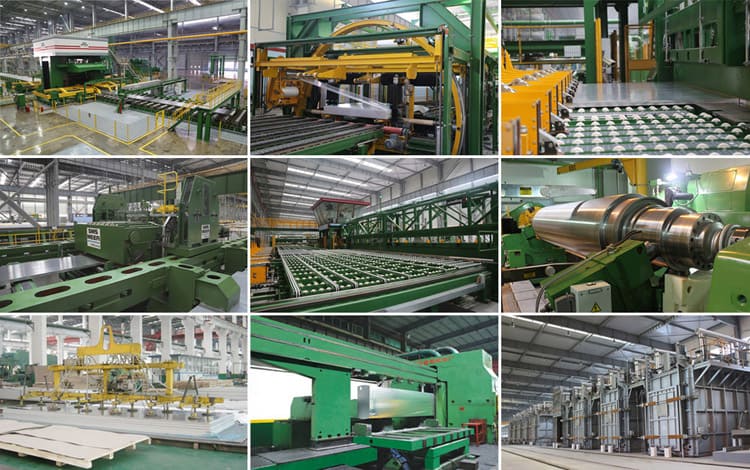
Proseso ng paghahagis at paggulong
Proseso ng paghahagis at paggulong: likidong metal, kahon sa harap (Kontrol sa antas ng likido), paghahagis at rolling machine (sistema ng pagpapadulas, paglamig ng tubig), paggupit ng makina, makina ng pag coiling.
Malamig na proseso ng produksyon ng pagulong
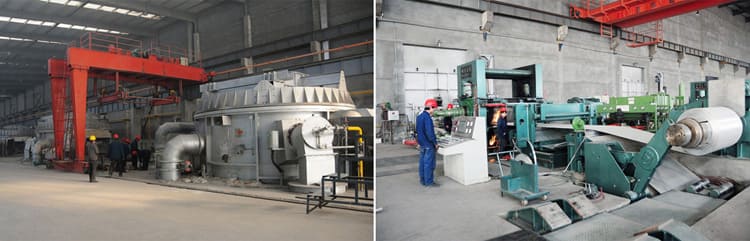
Panimula sa pagtatapos ng proseso ng produksyon
Aluminyo haluang metal ay may mga katangian ng mababang density, magandang mekanikal na katangian, magandang pagganap ng pagproseso, di nakakalason, madaling i recycle, mahusay na electrical kondaktibiti, paglipat ng init at paglaban sa kaagnasan, kaya ito ay may malawak na hanay ng mga application.
Aerospace: ginagamit upang gumawa ng mga balat ng sasakyang panghimpapawid, mga frame ng fuselage, mga girder, mga rotors, mga propeller, mga tangke ng gasolina, mga panel ng pader at mga struts ng landing gear, pati na rin ang rocket forging rings, mga panel ng pader ng spacecraft, atbp.
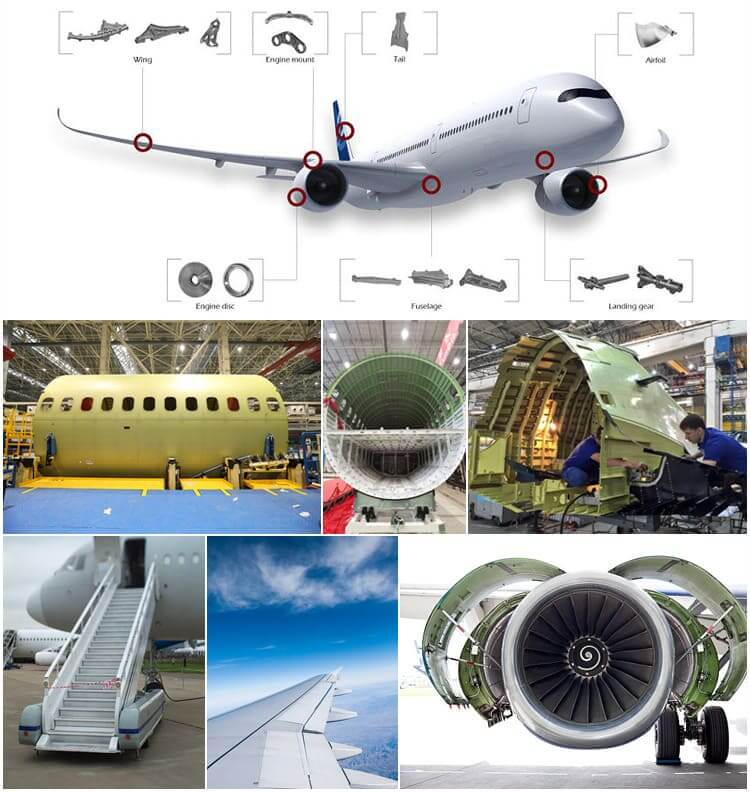
Aluminyo haluang metal na ginagamit para sa aerospace
Transportasyon: ginagamit para sa kotse katawan istraktura materyales ng mga sasakyan, Mga Sasakyan ng Subway, mga kotse ng pasahero ng tren, mabilis na mga kotse ng pasahero, mga pinto at bintana, mga istante, mga bahagi ng automotive engine, mga aircon, mga radiator, mga panel ng katawan, mga gulong at mga materyales ng barko.
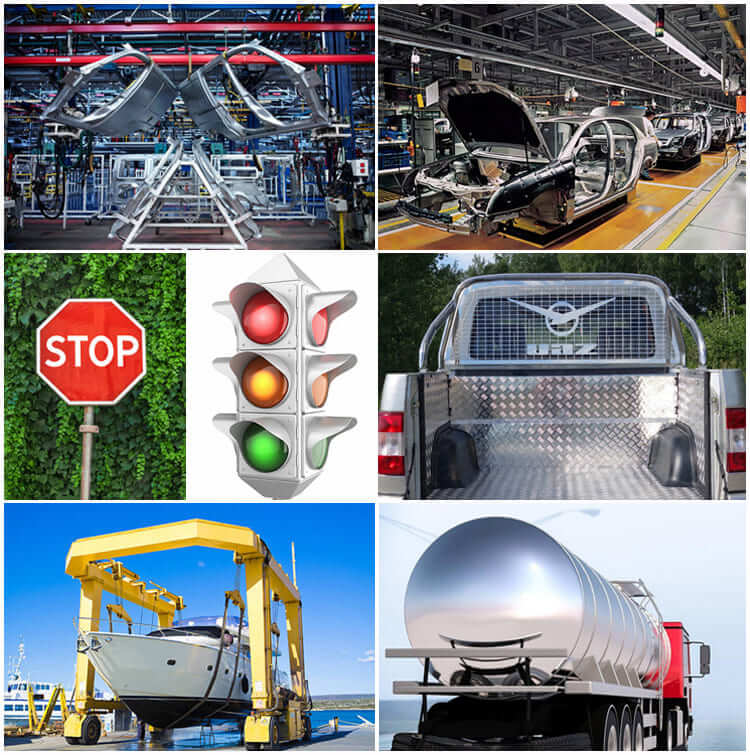
Application ng trapiko
Packaging: Ang lahat ng aluminyo pop lata ay pangunahing ginagamit bilang mga materyales sa packaging ng metal sa anyo ng mga manipis na plato at foils, at ginagawang lata, mga takip, mga bote, mga bariles, at packaging foils. Malawakang ginagamit sa packaging ng mga inumin, pagkain, mga pampaganda, mga gamot, mga sigarilyo, mga produktong pang industriya, mga gamot, atbp.
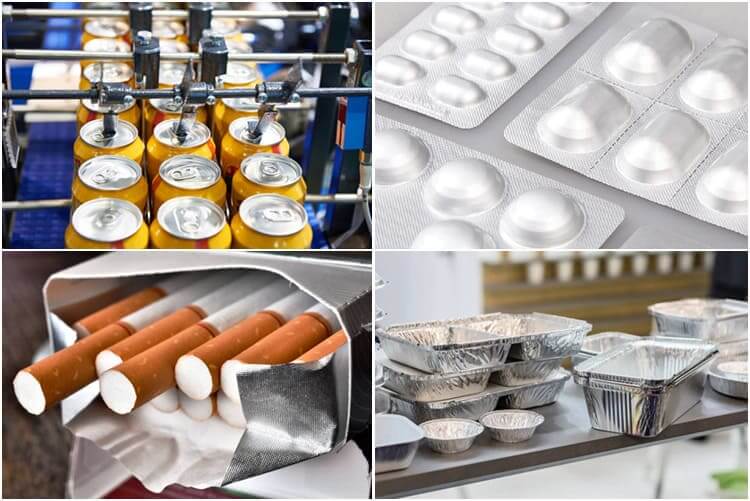
Application ng packaging
Pag-print: Pangunahing ginagamit upang gumawa ng PS plates, ang mga PS plate na nakabase sa aluminyo ay isang bagong uri ng materyal sa industriya ng pag print, ginagamit para sa awtomatikong paggawa ng plato at pag print.
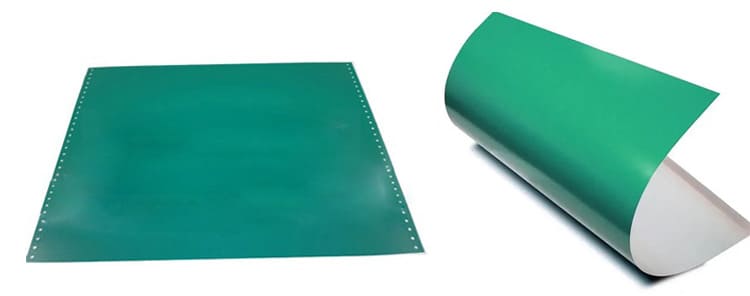
Pag print ng PS
Dekorasyon ng arkitektura: aluminyo haluang metal ay malawakang ginagamit sa mga istraktura ng gusali, mga pinto at bintana, suspendido ang mga kisame, pandekorasyon na ibabaw, atbp. dahil sa magandang kaagnasan nito paglaban, sapat na lakas, mahusay na pagganap ng proseso at pagganap ng hinang.
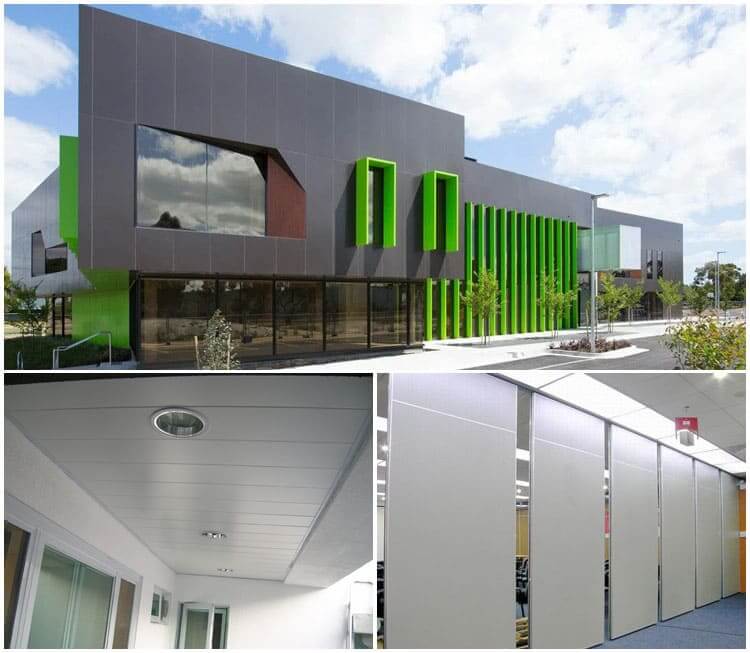
Application ng konstruksiyon ng haluang metal ng aluminyo
Mga produktong elektroniko: mga computer, mga mobile phone, mga shell ng refrigerator, mga radiator, atbp.
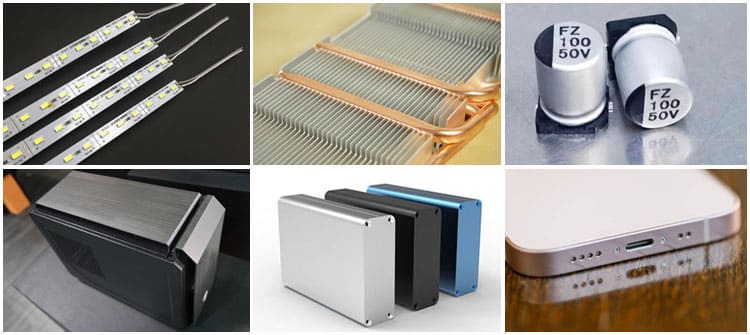
Electronic application ng produkto
Mga gamit sa kusina: mga kaldero ng aluminyo, aluminyo basins, mga liner ng rice cooker, sambahayan aluminyo foil, atbp.
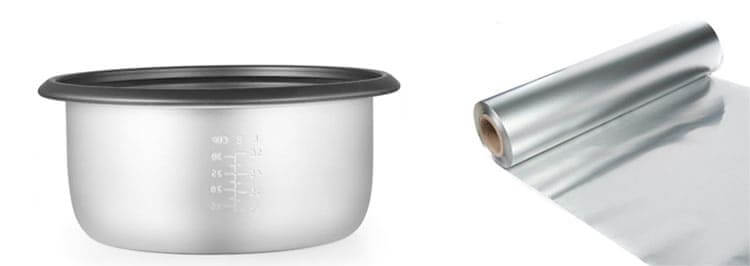
Application ng kusina
Packaging Ng Aluminum Sheet / Coil
Ang bawat detalye ng packaging ay kung saan namin ituloy ang perpektong serbisyo. Ang aming proseso ng packaging sa kabuuan ay ang mga sumusunod:
Paglalamina: malinaw na pelikula, asul na pelikula, mikro-mucosal, mataas na mucosal, laser pagputol ng pelikula (2 mga tatak, Novacell at Polyphem);
Proteksyon: mga tagapagtanggol ng sulok ng papel, mga pads laban sa presyon;
pagpapatayo ng mga: desiccant;
Tray: fumigated hindi nakakapinsala kahoy na tray, magagamit muli ang bakal na tray;
Pag-iimpake: Tik-tik-toe bakal sinturon, o PVC packing belt;
Kalidad ng Materyal: Ganap na libre mula sa mga depekto tulad ng puting kalawang, mga spot ng langis, mga rolling mark, pinsala sa gilid, mga baluktot, mga dent, mga butas, mga break lines, mga gasgas na, atbp., walang coil set.
Port: Qingdao o iba pang mga port sa China.
Lead oras: 15-45 mga araw.
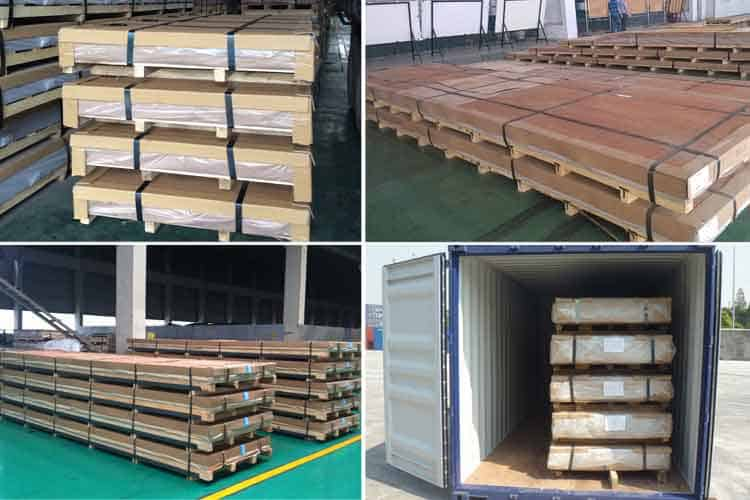
Aluminyo sheet / plate packaging proseso
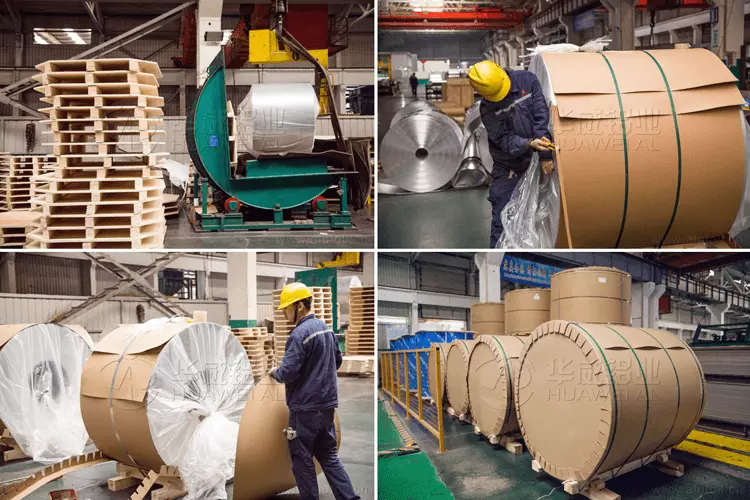
Aluminyo likawin packaging proseso
F: Ikaw ba ay isang tagagawa o isang mangangalakal?
Q: Kami ay isang tagagawa, ang factory namin ay sa No.3 Weier Road, Sonang Pang industriya, Gongyi, Henan, Tsina.
F: Ano ang MOQ para sa pag order ng produkto?
Q: Ang MOQ natin ay 5 tonelada, at ang ilang mga espesyal na produkto ay magkakaroon ng isang minimum na dami ng order ng 1 o 2 tonelada.
F: Gaano katagal ang iyong oras ng lead?
Q: Sa pangkalahatan ang aming lead time ay tungkol sa 30 mga araw.
F: Mayroon bang kalidad ng katiyakan ang iyong mga produkto?
Q: Oo nga, kung may problema sa quality sa products namin, kami ay mabayaran ang customer hanggang sa sila ay nasiyahan.
Mga Kaugnay na Produkto


Mga Pinakabagong Blog
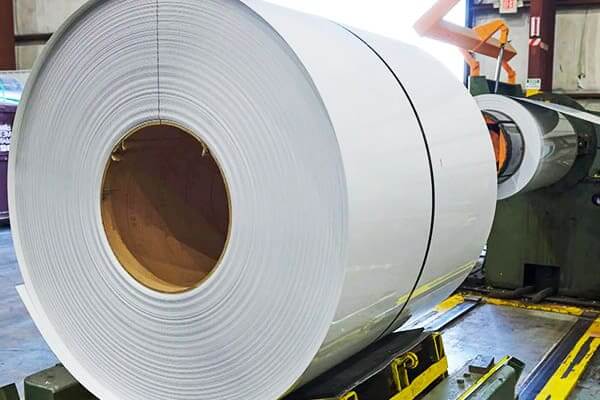
Common Alloys of Reefer Truck Used PE Coated Aluminum Coil
Discover common alloys of reefer truck used PE coated aluminum coil, kasama na ang 3003, 3004, at 3105. Designed for excellent corrosion resistance, pagiging formable, and long-lasting outdoor performance.
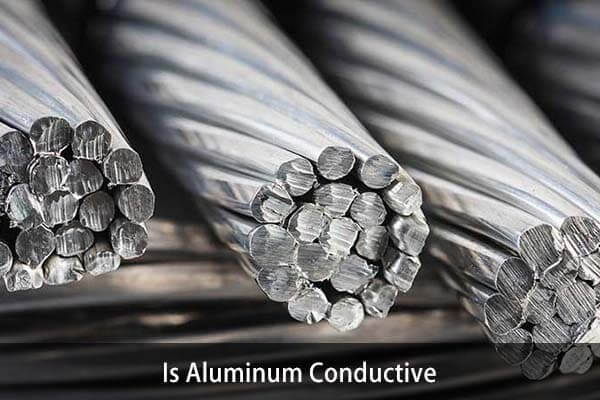
Is Aluminum Conductive? Mga Katangian, Gumagamit ng mga & Benefits Explained
Is aluminum conductive? Discover aluminum's electrical conductivity, key advantages, and why it is widely used in power transmission and industrial applications.
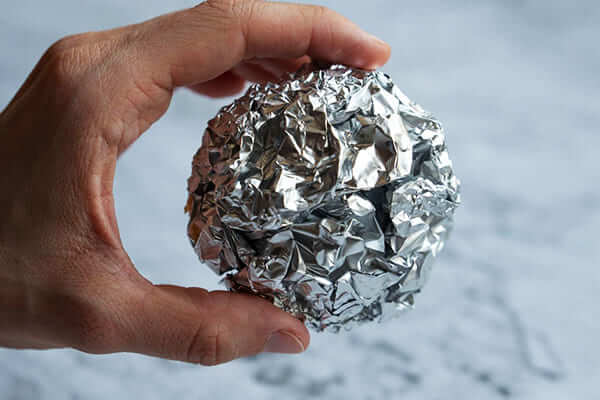
Unlocking Sustainability: The Truth About Aluminum Foil Recycling
Is Aluminum Foil Recyclable? Learn how aluminum foil can be recycled, how to prepare it properly, and why recycling helps reduce waste and save resources.
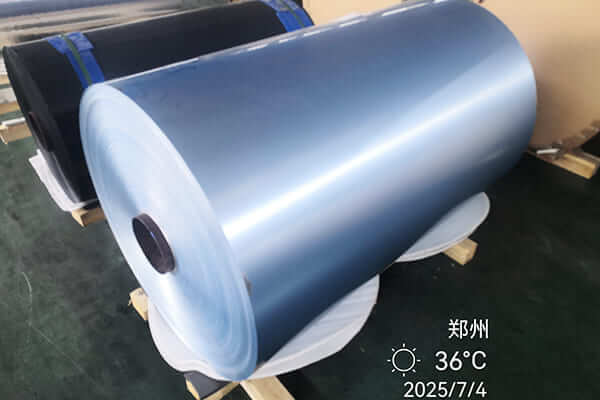
Coated Aluminum Foil for Packaging Applications | Strong & Reliable
High-quality coated aluminum foil for packaging applications, offering excellent barrier protection, tibay ng katawan, and consistent performance.