1. Panimula
Mirror aluminum for solar thermal collector — aluminum sheet finished to a high-specular surface and protected with optical coatings — is an important reflector option (heliostats, parabolic troughs, dishes and linear Fresnel fields).
Properly engineered mirror-aluminum assemblies deliver high solar-weighted specular reflectance (Karaniwan ≈90–95% in the solar band for practical front-surface systems), low areal mass, easier handling than glass, and excellent recyclability.
Lifetime and optical stability depend on the substrate alloy, surface finish and protective stack; modern protected aluminum front-surface mirrors have demonstrated field lifetimes on the order of a decade or more when tested and maintained appropriately.
These optical and durability attributes make mirror aluminum a cost-effective choice in many solar-thermal applications — provided procurement specifies spectral and specular reflectance metrics (not only “percent reflectance”) and requires durability test data from suppliers.
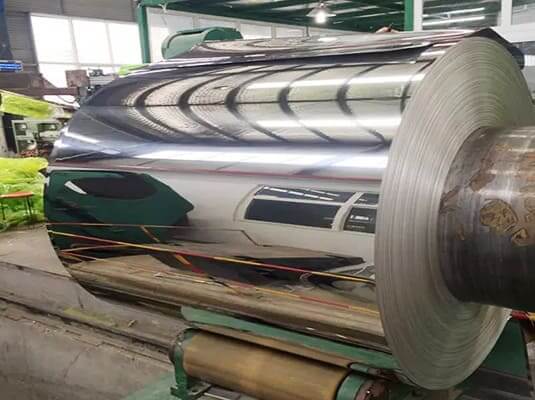
Huawei 1100 Mirror Aluminum Coil
2. The Principle of Mirror Aluminum for Solar Thermal Collector
2.1 Overview of Solar Thermal Technology
Solar thermal collectors harness solar energy by absorbing radiation and converting it to thermal energy.
Non-concentrating collectors typically achieve maximum temperatures around 100°C, limiting applications to lower temperature ranges.
Concentrated solar thermal technology, gayunpaman, concentrates direct solar radiation to generate high temperatures at the receiver, enabling power generation and industrial process heat applications.
Concentrating solar collectors are classified based on focus characteristics:
- Point Focus Concentrators: Parabolic dish systems with dual-axis tracking
- Line Focus Concentrators: Parabolic trough collectors with parabolic cross-section
The optical efficiency of these concentrators is highly dependent on the reflective material mounted on the concentrator frame.
2.2 Role of Mirror Aluminum
Mirror aluminum serves as the primary reflective surface in solar thermal collectors, performing several critical functions:
- Solar Concentration: Reflecting and concentrating sunlight onto receivers to achieve high temperatures
- Optical Efficiency: Determining the system’s ability to capture and direct solar radiation
- Long-term Performance: Maintaining reflective properties throughout the collector’s 25-30 year design life
Research demonstrates that the reflectivity of mirrors is one of the most important parameters affecting overall system performance.
Higher reflectivity directly translates to increased energy collection and improved system economics.

Mirror Aluminum for Solar Cookers
3. Material Science of Mirror Aluminum for Solar Thermal Collector
3.1 Aluminum Alloy Selection
The selection of aluminum alloys for solar thermal mirror applications is based on comprehensive considerations of reflectivity, mechanical strength, pagiging formable, at pagiging epektibo sa gastos.
High-Purity Aluminum (>99.8%)
- Typical Grades: 1050, 1100, 1070, 1085
- Composition Characteristics: Strict control of impurity elements such as Fe and Si
- Mga kalamangan: Highest reflectivity, umaabot sa 90-95%
- Mga Limitasyon: Lower mechanical strength, may require composite reinforcement
Al-Mg Series Alloys (5000 Aluminum ang Serye)
- Typical Grades: 5754, 5052
- Composition Characteristics: Mg content 2.5-3.5%, pagbibigay ng mahusay na paglaban sa kaagnasan
- Mga Aplikasyon: Coastal or high-humidity environments; product specifications for 5754 alloy show tensile strength of 300-320 N/mm² and yield strength of 270-300 N / mm²
Al-Mn Series Alloys (3000 Aluminum ang Serye)
- Typical Grades: 3003, 3105
- Mga kalamangan: Good strength and formability balance
3.2 Thickness and Temper
- Ang kapal: The gauge of the aluminum sheet typically ranges from 0.4 mm sa 1.5 mm, balancing rigidity, bigat ng katawan, at gastos. Thinner gauges (hal., 0.4-0.6 mm) are common for smaller, more flexible reflectors, while thicker gauges (hal., 1.0-1.5 mm) are used for larger, more rigid parabolic troughs or heliostats.
- Temper: The mechanical temper is crucial for formability and structural integrity:
- H18 / H19 (Full Hard): Often chosen for the highest strength and stiffness, suitable for applications where the mirror needs to retain its precise shape under environmental loads (hal., hangin).
- H14 / H16 (Half Hard / Three-Quarter Hard): May be used where some formability is still required post-processing, balancing strength with ductility.
- O (Annealed na ang mga / Malambot na): Rarely used for finished mirror components due to lack of rigidity, but may be an intermediate stage for complex forming before final hardening.
3.3 Pagninilay
Reflectivity is the most critical optical property. It is measured as specular reflectivity, which is the percentage of incident light reflected in a mirror-like direction (rather than diffused).
- Specular Reflectivity: High-performance mirror aluminum achieves specular reflectivity ranging from 85% to over 98% in the solar spectrum (300-2500 nm).
- Anodized Aluminum: Typically achieves 85-92% specular reflectivity. The reflectivity is inherent to the polished aluminum surface, protected by a transparent alumina layer.
- Sputtered Silver/Aluminum: Sputtered silver mirrors, often protected by an overcoat, can achieve the highest specular reflectivity, often >95%, with some premium products reaching 97-98%. Sputtered aluminum mirrors typically fall in the 90-95% range.
- Diffuse Reflectivity: Mirror aluminum is designed for very low diffuse reflectivity (hal., <2%), ensuring that almost all reflected light is directed precisely towards the absorber.

Huawei Export Packaging Mirror Aluminum Coils
4. Manufacturing Process of Mirror Aluminum for Solar Thermal Collector
4.1 Aluminum Sheet/Coil Production
- Ingot Casting: High-purity aluminum alloys are melted and cast into large ingots.
- mainit na pagulong: Ingots are hot rolled into thick plates.
- malamig na paggulong: Multiple passes through precision cold rolling mills reduce the aluminum to the desired thin gauge (hal., 0.4 mm sa 1.5 mm).
- Annealing/Tempering: Controlled heat treatment or cold working to achieve the specified mechanical temper (hal., H18, H19, H14).
Critical controls for optical-grade material:
- Thickness and flatness consistency (affects forming and slope error),
- Surface defect control (mga gasgas na, mga marka ng roll, pits),
- Cleanliness (residual oils can cause coating defects).
4.2 Surface Treatment and Polishing
Good optical performance depends on both macroscopic figure and microscopic smoothness.
- Degreasing and Cleaning: The aluminum surface is thoroughly cleaned to remove all rolling oils, contaminants, and oxides using alkaline and acidic chemical baths, followed by rinsing. This is essential for subsequent polishing and coating adhesion.
- Mekanikal na Kinis: For the highest quality, a multi-stage mechanical polishing process is often employed, using progressively finer abrasives and buffing wheels. This removes macro-scale scratches and surface defects, achieving a very low surface roughness (hal., Ra <0.05 M).
- Electropolishing/Chemical Polishing (Brightening): Pagkatapos ng mekanikal na buli, chemical or electrochemical brightening baths are used. These processes selectively dissolve microscopic peaks on the surface, achieving atomic-scale smoothness and maximizing inherent reflectivity. This step is particularly critical for anodized aluminum mirrors.
4.3 Paglalapat ng patong
Once the surface is prepared, the reflective and protective layers are applied.
Vacuum Deposition (PVD/CVD) for Sputtered Mirrors:
- Sputtering: In a high-vacuum chamber, a target material (hal., pilak o aluminyo) is bombarded with energetic ions, dislodging atoms that then deposit as a thin, uniform, highly reflective layer (hal., 0.1-0.3 M) onto the polished aluminum substrate. Silver is preferred for its high reflectivity.
- Protective Overcoat: After the reflective layer, a transparent, durable protective layer (hal., acrylic, PVDF, SiO2, or other inorganic compounds) is often applied, sometimes also via sputtering or a roll-coating process. This layer shields the delicate reflective film from abrasion, kaagnasan, and UV degradation.
Anodizing for Anodized Aluminum Mirrors:
- Electrochemical Process: The polished and brightened aluminum sheet is immersed in an electrolyte (hal., sulfuric acid) and subjected to an electric current. This process electrochemically grows a uniform, siksik, and transparent layer of aluminum oxide (Al2O3) directly from the aluminum surface.
- Layer Thickness Control: The thickness of the anodic oxide layer is precisely controlled (hal., 1-5 M). It must be thick enough to be protective but thin enough to maintain high reflectivity and transparency.
- Pagbubuklod: A final sealing step (hal., hot water, Nikel asetato) closes the pores in the anodic layer, enhancing its corrosion resistance and durability.

PVD Ultra-High Reflectivity Mirror Aluminum Plate
5. Advantages of Mirror Aluminum for Solar Thermal Collectors
5.1 High Efficiency in Solar Concentration
Mirror aluminyo sheet enables efficient solar concentration through high reflectivity.
Glass mirrors and aluminum are the main candidate materials for solar reflectors, with aluminum offering reflectivity comparable to glass while providing additional benefits.
The optical efficiency of concentrators greatly depends on the reflective material, and high-quality aluminum mirrors with 95% total reflectance and ≥91% specular reflectance ensure maximum energy capture.
5.2 Pagiging Epektibo sa Gastos
Aluminum mirrors offer significant economic advantages:
- Lower material costs compared to silver-based mirrors
- Reduced manufacturing complexity for curved surfaces
- Glass mirror preparation for curved applications is not economically feasible for small and medium sale volumes
The monolithic structure of aluminum mirror designs enables simple “drop-in-place” installation, reducing labor costs.
5.3 Durability and Weather Resistance
PVD anodized aluminum mirror sheets demonstrate excellent durability:
- Paglaban sa Panahon: Stable coating unaffected by UV radiation, maintains bright color without peeling or rusting even after long-term outdoor exposure
- Paglaban sa temperatura: Withstand high temperatures, with anodized surface helping dissipate heat effectively and preventing degradation of the reflective coating
- Paglaban sa Kaagnasan: Dense aluminum oxide film provides protection against atmosphere, mga kemikal, at kahalumigmigan
Prototype tests of coated mirrors showed stability in external conditions with no coating degradation during test campaigns.
5.4 Lightweight and Structural Simplicity
Aluminum’s low density provides significant advantages:
- Reduced structural requirements for support frames
- Simplified installation and handling
- Lower transportation costs
The aluminum mirror design incorporates sheet, extrusions, and fasteners in a monolithic structure that enables easy installation.
5.5 Design Flexibility
Mirror aluminum offers excellent formability for various collector designs:
- Can be bent to achieve curved parabolic shapes required for trough collectors
- Eliminates gaps between mirror pieces that occur when using flat glass mirrors on curved frames
- Suitable for both flat and curved surface applications
5.6 Recyclability
Aluminum mirrors offer environmental advantages throughout their life cycle:
- 100% recyclable without performance loss
- Environmentally friendly PVD process produces minimal waste and emissions
- Aluminum mirrors have a more sustainable life cycle from an environmental point of view compared to glass-based mirrors
6. Performance and Testing Methods of Mirror Aluminum
6.1 Optical Performance Testing
| Test Parameter | Paraan | Key Indicator |
|---|---|---|
| Total Reflectance | Spectrophotometer with integrating sphere | ≥92-95% |
| Specular Reflectance | Goniophotometer | ≥91% at 60° |
| Diffuse Reflectance | Haze meter | <1% |
| Kulay | Colorimeter | ΔE controlled |
Portable reflectometers are now used for monitoring reflectance of solar mirrors in CSP plants.
6.2 Durability Testing
Accelerated Aging Tests:
- QUV (UV + condensation): 5000 hours minimum
- Salt Spray Test: ≥1000 hours
- Damp Heat Test: 85°C/85% RH, 1000 mga oras
- Thermal Cycling: -40°C to +80°C, 100 cycles
Outdoor Exposure Testing:
Field tests at research facilities validate the stability of coated prototypes under real conditions.
Soiling and Cleaning Studies:
Research demonstrates that self-cleaning coatings restore initial reflectance affected by soiling and allow reduced water consumption for cleaning operations compared to uncoated glass mirrors.
Metal mirrors show significantly less soiling than glass or plastic film mirror products due to the lack of static charge.
6.3 Mechanical Performance Testing
| Test | Paraan | Requirements |
|---|---|---|
| Pagdikit | Cross-cut test | 4B-5B grade |
| Paglaban sa Hadhad | Taber abrasion test | Minimal haze increase |
| Ang katigasan ng ulo | Pencil hardness | ≥H |
| Formability | Bend test | No cracking at ≥1.5× thickness radius |
7. Key Applications of Mirror Aluminum for Solar Thermal Collector
7.1 Concentrating Solar Power (CSP) Plants
CSP plants represent a major application for mirror aluminum.
The partnership between research institutions and industry has developed concentrating solar collectors with aluminum mirrors, with installations at test facilities demonstrating the technology’s viability.
Applications in CSP:
- Parabolic Trough Collectors: Curved aluminum mirrors concentrate sunlight onto receivers along the focal line
- Linear Fresnel Reflectors: Flat or slightly curved mirror arrays
- Central Receiver Systems: Heliostats for tower-type systems
Aluminum mirrors offer advantages for CSP including durability, environmental friendliness, and lower installation costs compared to fragile glass-based mirrors.
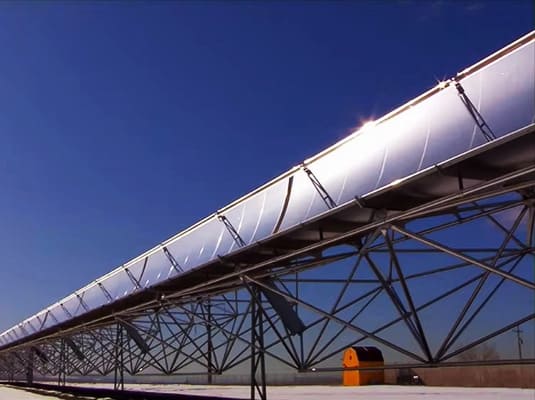
Mirror Aluminum for Solar Thermal Collector
7.2 Domestic and Commercial Hot Water Systems
Mirror aluminum enhances the performance of solar water heating systems:
- Compound Parabolic Concentrators: Low-concentration ratio for medium-temperature applications
- Evacuated Tube Collectors: Integrated CPC reflectors提高单位面积集热量
7.3 Industrial Process Heat
Industrial applications require medium to high temperatures for processes such as:
- Food processing
- Chemical manufacturing
- Textile production
- Desalination
Mirror aluminum enables efficient solar concentration for these applications, reducing fossil fuel consumption and operational costs.
7.4 Solar Cookers and Dryers
Parabolic dish concentrators for solar cooking and drying benefit from aluminum mirrors:
- Box Cookers: Enhanced with external reflectors
- Parabolic Cookers: High-concentration designs for cooking and frying
- Solar Dryers: Concentrating reflectors for agricultural product drying
The lightweight nature of aluminum mirrors is particularly advantageous for portable and manually tracked solar cookers.
7.5 Additional Applications
Tubular Daylighting Devices: PVD anodizing aluminum mirror sheets maximize light transmission efficiency, efficiently redirecting sunlight to illuminate interior spaces with natural light.
Indoor Louver-Type Light Collecting Systems: High-performance mirror materials serve as critical components for introducing outdoor daylight into indoor areas with no light or light-blind zones, providing an effective, energy-saving, and environmentally friendly solution.
Satellite Reflectors and Telescopes: High-reflectivity aluminum mirror sheets find applications in space and astronomical instruments.
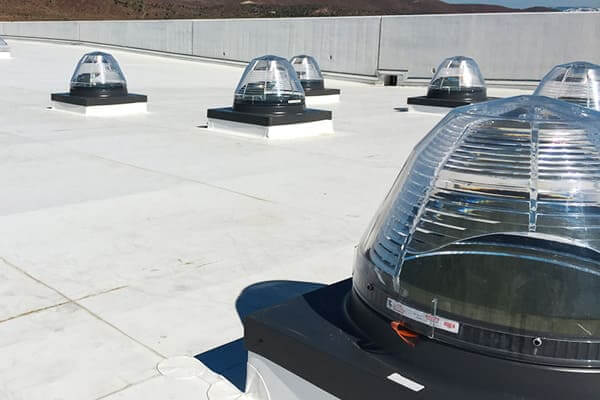
TTD System Used Mirror Aluminum
8. Comparison of Alternative Products
| Tampok / Materyal | Mirror Aluminum (Sputtered Silver) | Mirror Aluminum (Anodized) | Low-Iron Glass Mirror |
| Specular Reflectivity | Napakahusay (95-98%) | Mabuti na lang (85-92%) | Napakaganda (92-94%) |
| Tibay ng buhay / Weathering | Napakaganda (Coating dependent, excellent UV/corrosion resistance) | Mabuti na lang (Anodic oxide offers good protection) | Napakahusay (Highly resistant to environmental degradation) |
| Paglaban sa Hadhad | Katamtaman hanggang Mabuti (Coating dependent, can be susceptible) | Katamtaman (Anodic layer is hard but thin) | Napakahusay (Glass is inherently hard) |
| Timbang (Relative) | Napakahusay (Magaan ang timbang) | Napakahusay (Magaan ang timbang) | Mga Maralita (Heavy, ~2.5x heavier than aluminum of same area) |
| Formability | Napakahusay (Can be bent, hubog) | Napakahusay (Can be bent, hubog) | Mga Maralita (Rigid, can only be slightly curved via sagging) |
| Gastos (Relative) | Medium to High (Depending on coating complexity) | Katamtaman | Mataas na (Material cost, transportasyon, structural support) |
| Ease of Handling/Install | Napakahusay (Liwanag, less fragile) | Napakahusay (Liwanag, less fragile) | Mga Maralita (Heavy, fragile, requires robust handling) |
| Maintenance (Paglilinis) | Katamtaman (Surface can be more delicate) | Katamtaman (Surface can be more delicate) | Easy (Robust, common cleaning methods) |
| Recyclability | Napakahusay (Aluminum base, but coating can add complexity) | Napakahusay (Aluminum base, but coating can add complexity) | Napakahusay (Well-established recycling for glass) |
| Mga Karaniwang Aplikasyon | CSP parabolic troughs, Fresnel, heliostats for high output | Evacuated tube reflectors, flat plate backs, cost-sensitive CSP | CSP heliostats, dishes, where maximum durability is key |
9. Pangwakas na Salita
Mirror aluminum for Solar Thermal Collector stands as a pivotal material in the continuous evolution of solar thermal energy technology, offering a sophisticated solution for maximizing the capture and concentration of solar radiation.
Its precise material science, combining high-purity aluminum with advanced reflective and protective coatings, yields exceptional specular reflectivity, mula sa 85% to over 98%, critical for high-efficiency systems.
Beyond its superior optical performance, mirror aluminum’s lightweight nature, remarkable formability, and robust durability against environmental stressors contribute significantly to the cost-effectiveness and structural simplicity of solar thermal collectors.
From the vast arrays of heliostats in Concentrating Solar Power plants to the subtle reflectors within domestic hot water systems, its versatility is unmatched.
While continuous efforts are made to enhance its abrasion resistance and optimize its long-term performance, mirror aluminum is undeniably a cornerstone material driving the growth and viability of renewable thermal energy worldwide, playing a crucial role in our transition to a more sustainable energy future.
Mga FAQ
What is the typical lifespan of mirror aluminum in a solar thermal collector?
With proper protective coatings and maintenance, mirror aluminum can have a lifespan of 10 sa 20 years or more in solar thermal applications.
How does mirror aluminum compare to silvered glass in terms of cost and performance?
Mirror aluminum is generally more cost-effective and lighter than silvered glass. While silvered glass typically offers slightly higher initial reflectivity, mirror aluminum provides better formability and often sufficient performance for many applications, especially when considering total system cost.
What maintenance is required for mirror aluminum reflectors?
Regular cleaning to remove dust and dirt is crucial to maintain optical performance. The frequency depends on the local environment. Inspection for coating damage or corrosion is also recommended.
Can mirror aluminum be used in all types of solar thermal collectors?
Mirror aluminum is primarily used in concentrating solar collectors (parabolic troughs, dishes, heliostats) due to its high specular reflectance. It can also be used as internal reflectors in some flat plate collectors to enhance efficiency.
What are the environmental benefits of using aluminum in solar applications?
Ang aluminyo ay 100% pwede na ba mag recycle, reducing waste and energy consumption associated with primary aluminum production. Its lightweight nature also contributes to lower transportation emissions during installation.
Proseso ng paghahagis ng produksyon at ang pagpapakilala nito
Ang layunin ng pagtunaw at paghahagis ay upang makabuo ng mga haluang metal na may kasiya siyang komposisyon at mataas na kadalisayan ng matunaw, upang lumikha ng mga kanais nais na kondisyon para sa paghahagis ng mga haluang metal ng iba't ibang mga hugis.
Mga hakbang sa proseso ng pagtunaw at paghahagis: mga ka batch --- pagpapakain --- natutunaw na --- pagpapakilos pagkatapos matunaw, pag alis ng slag --- sampling bago ang pagsusuri --- pagdaragdag ng haluang metal upang ayusin ang komposisyon, nakakapukaw ng damdamin --- pagpipino --- static na Setting——Guide furnace casting.
Mainit na proseso ng produksyon ng pagulong at ang pagpapakilala nito
- 1. Mainit na pagulong sa pangkalahatan ay tumutukoy sa paggulong sa itaas ng metal recrystallization temperatura;
- 2. Sa panahon ng mainit na proseso ng pagulong, ang metal ay may parehong mga proseso ng pagpapatigas at paglambot. Dahil sa impluwensya ng bilis ng pagpapapangit, basta huli na ang recovery at recrystallization process, magkakaroon ng tiyak na gawaing pagpapatigas;
- 3. Ang recrystallization ng metal pagkatapos ng mainit na pagulong ay hindi kumpleto, na ang ibig sabihin ay, ang magkakasamang buhay ng recrystallized istraktura at deformed istraktura;
- 4. Ang mainit na pagulong ay maaaring mapabuti ang pagganap ng pagproseso ng mga metal at haluang metal, bawasan o alisin ang mga depekto sa paghahagis.
- 1. Ang temperatura ng paghahagis at pagulong ay karaniwang nasa pagitan ng 680 o C at 700 o C. Ang mas mababa ang mas mahusay na, Ang matatag na paghahagis at rolling line ay karaniwang tumitigil nang isang beses sa isang buwan o higit pa upang muling tumayo. Sa panahon ng proseso ng produksyon, kinakailangang mahigpit na kontrolin ang antas ng likido ng front tank upang maiwasan ang mababang antas ng likido;
- 2. Ang pagpapadulas ay gumagamit ng C powder na may hindi kumpletong pagkasunog ng gas para sa pagpapadulas, na isa rin sa mga dahilan ng maruming ibabaw ng casting at rolling materials;
- 3. Ang bilis ng produksyon ay karaniwang sa pagitan ng 1.5m / min-2.5m / min;
- 4. Ang kalidad ng ibabaw ng mga produkto na ginawa sa pamamagitan ng paghahagis at paggulong ay karaniwang medyo mababa, at sa pangkalahatan ay hindi maaaring matugunan ang mga produkto na may espesyal na pisikal at kemikal na mga kinakailangan sa pagganap.
- 1. Ang malamig na pagulong ay tumutukoy sa paraan ng paggulong ng produksyon sa ibaba ng temperatura ng recrystallization;
- 2. Hindi magkakaroon ng dynamic na recrystallization sa panahon ng proseso ng paggulong, at ang temperatura ay tataas sa temperatura ng pagbawi sa karamihan, at ang malamig na paggulong ay lilitaw sa isang trabaho hardening estado, at ang trabaho hardening rate ay magiging malaki;
- 3. Ang malamig na ginulong sheet at strip ay may mataas na dimensional na katumpakan, magandang kalidad ng ibabaw, unipormeng istraktura at pagganap, at mga produkto sa iba't ibang estado ay maaaring makuha sa heat treatment;
- 4. Malamig na pagulong ay maaaring i roll out manipis na strips, pero sabay sabay, ito ay may mga disadvantages ng mataas na pagkonsumo ng enerhiya para sa pagpapapangit at maraming mga pasa sa pagproseso.
- 1. Ang pagtatapos ay isang paraan ng pagproseso upang matugunan ng malamig na ginulong sheet ang mga kinakailangan ng customer, o upang mapadali ang kasunod na pagproseso ng produkto;
- 2. Ang mga kagamitan sa pagtatapos ay maaaring iwasto ang mga depekto na ginawa sa mainit na pagulong at malamig na proseso ng produksyon, tulad ng basag na gilid, may langis na, mahina ang hugis ng plato, natitirang stress, atbp. Kailangan nitong tiyakin na walang iba pang mga depekto na dinala sa proseso ng produksyon;
- 3. Mayroong iba't ibang mga kagamitan sa pagtatapos, pangunahin kabilang ang cross-cutting, pagputol ng hiwa, pag unat at pagtutuwid, annealing furnace, mga slitter, atbp.
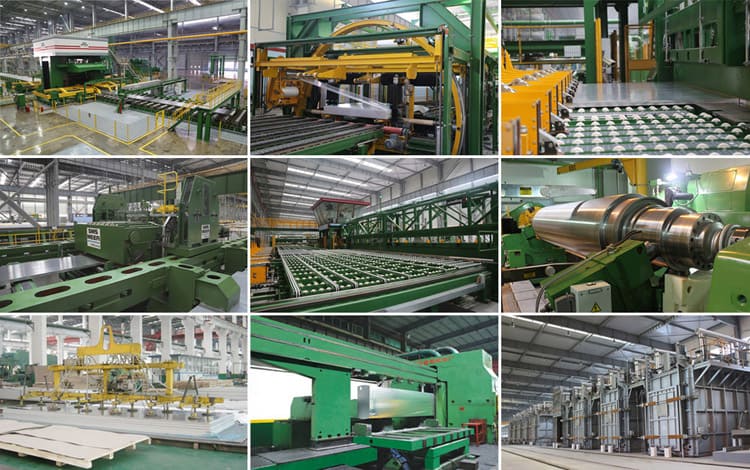
Proseso ng paghahagis at paggulong
Proseso ng paghahagis at paggulong: likidong metal, kahon sa harap (Kontrol sa antas ng likido), paghahagis at rolling machine (sistema ng pagpapadulas, paglamig ng tubig), paggupit ng makina, makina ng pag coiling.
Malamig na proseso ng produksyon ng pagulong
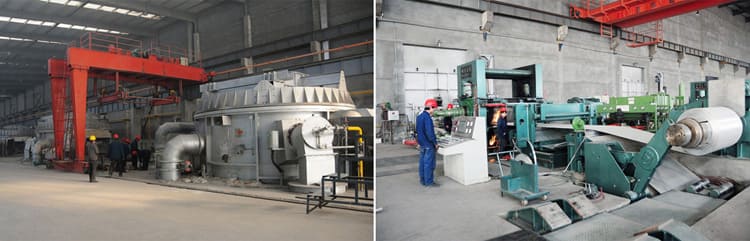
Panimula sa pagtatapos ng proseso ng produksyon
Aluminyo haluang metal ay may mga katangian ng mababang density, magandang mekanikal na katangian, magandang pagganap ng pagproseso, di nakakalason, madaling i recycle, mahusay na electrical kondaktibiti, paglipat ng init at paglaban sa kaagnasan, kaya ito ay may malawak na hanay ng mga application.
Aerospace: ginagamit upang gumawa ng mga balat ng sasakyang panghimpapawid, mga frame ng fuselage, mga girder, mga rotors, mga propeller, mga tangke ng gasolina, mga panel ng pader at mga struts ng landing gear, pati na rin ang rocket forging rings, mga panel ng pader ng spacecraft, atbp.
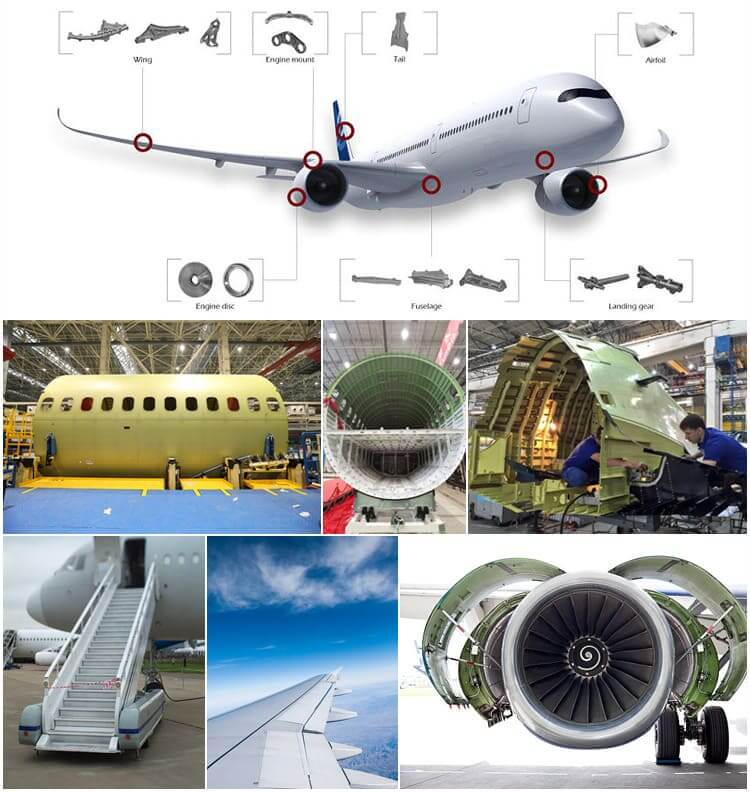
Aluminyo haluang metal na ginagamit para sa aerospace
Transportasyon: ginagamit para sa kotse katawan istraktura materyales ng mga sasakyan, Mga Sasakyan ng Subway, mga kotse ng pasahero ng tren, mabilis na mga kotse ng pasahero, mga pinto at bintana, mga istante, mga bahagi ng automotive engine, mga aircon, mga radiator, mga panel ng katawan, mga gulong at mga materyales ng barko.
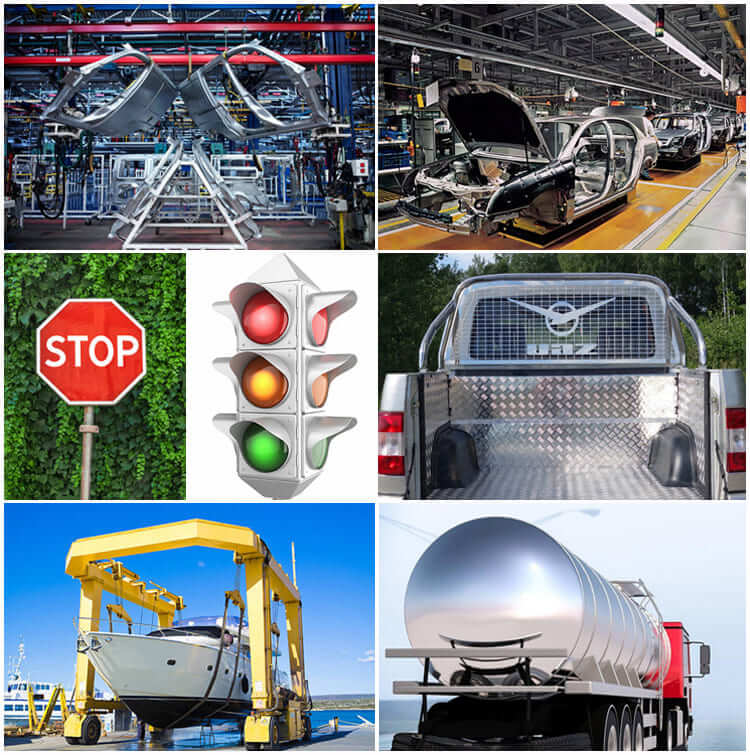
Application ng trapiko
Packaging: Ang lahat ng aluminyo pop lata ay pangunahing ginagamit bilang mga materyales sa packaging ng metal sa anyo ng mga manipis na plato at foils, at ginagawang lata, mga takip, mga bote, mga bariles, at packaging foils. Malawakang ginagamit sa packaging ng mga inumin, pagkain, mga pampaganda, mga gamot, mga sigarilyo, mga produktong pang industriya, mga gamot, atbp.
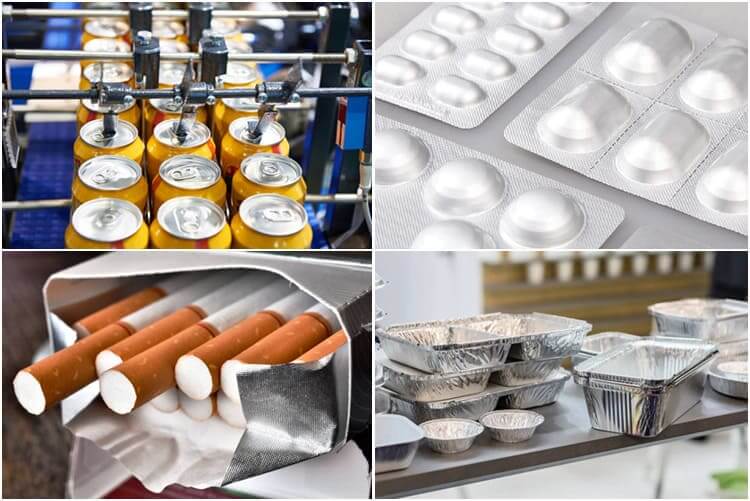
Application ng packaging
Pag-print: Pangunahing ginagamit upang gumawa ng PS plates, ang mga PS plate na nakabase sa aluminyo ay isang bagong uri ng materyal sa industriya ng pag print, ginagamit para sa awtomatikong paggawa ng plato at pag print.
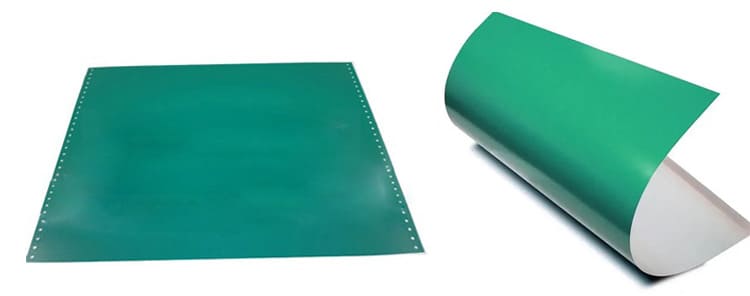
Pag print ng PS
Dekorasyon ng arkitektura: aluminyo haluang metal ay malawakang ginagamit sa mga istraktura ng gusali, mga pinto at bintana, suspendido ang mga kisame, pandekorasyon na ibabaw, atbp. dahil sa magandang kaagnasan nito paglaban, sapat na lakas, mahusay na pagganap ng proseso at pagganap ng hinang.
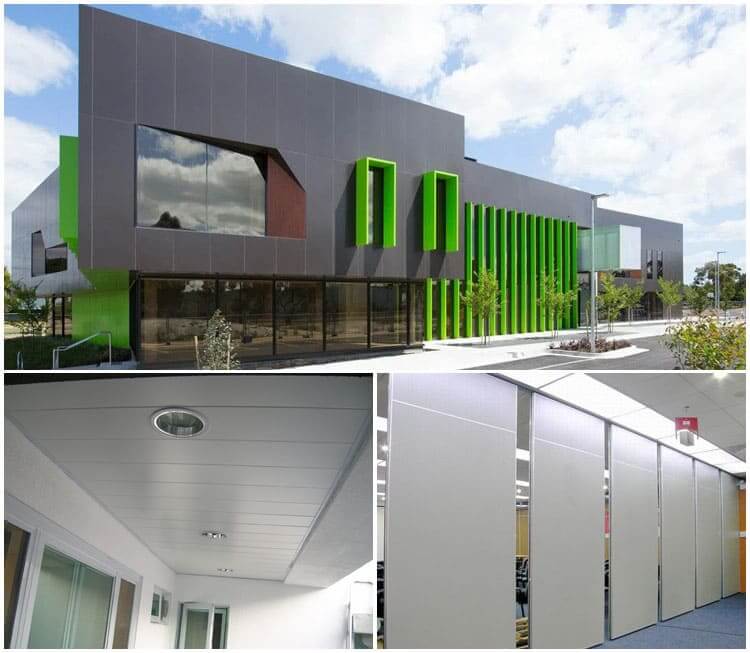
Application ng konstruksiyon ng haluang metal ng aluminyo
Mga produktong elektroniko: mga computer, mga mobile phone, mga shell ng refrigerator, mga radiator, atbp.
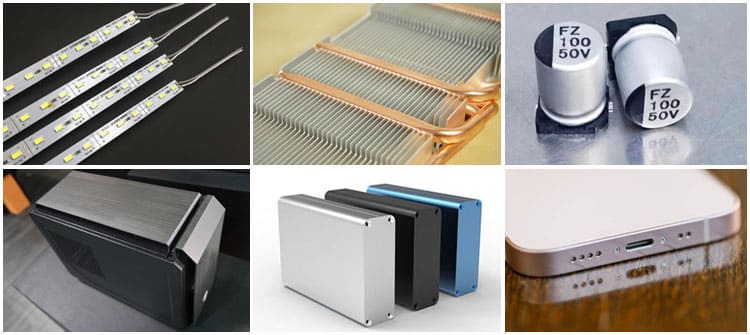
Electronic application ng produkto
Mga gamit sa kusina: mga kaldero ng aluminyo, aluminyo basins, mga liner ng rice cooker, sambahayan aluminyo foil, atbp.
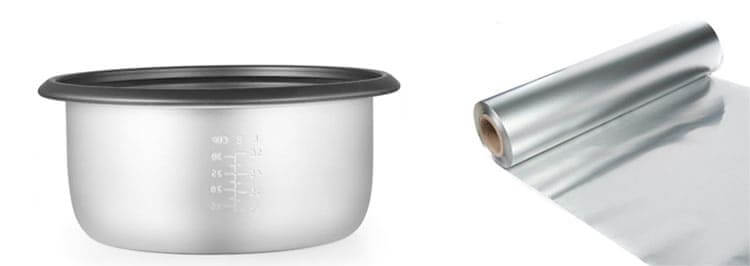
Application ng kusina
Packaging Ng Aluminum Sheet / Coil
Ang bawat detalye ng packaging ay kung saan namin ituloy ang perpektong serbisyo. Ang aming proseso ng packaging sa kabuuan ay ang mga sumusunod:
Paglalamina: malinaw na pelikula, asul na pelikula, mikro-mucosal, mataas na mucosal, laser pagputol ng pelikula (2 mga tatak, Novacell at Polyphem);
Proteksyon: mga tagapagtanggol ng sulok ng papel, mga pads laban sa presyon;
pagpapatayo ng mga: desiccant;
Tray: fumigated hindi nakakapinsala kahoy na tray, magagamit muli ang bakal na tray;
Pag-iimpake: Tik-tik-toe bakal sinturon, o PVC packing belt;
Kalidad ng Materyal: Ganap na libre mula sa mga depekto tulad ng puting kalawang, mga spot ng langis, mga rolling mark, pinsala sa gilid, mga baluktot, mga dent, mga butas, mga break lines, mga gasgas na, atbp., walang coil set.
Port: Qingdao o iba pang mga port sa China.
Lead oras: 15-45 mga araw.
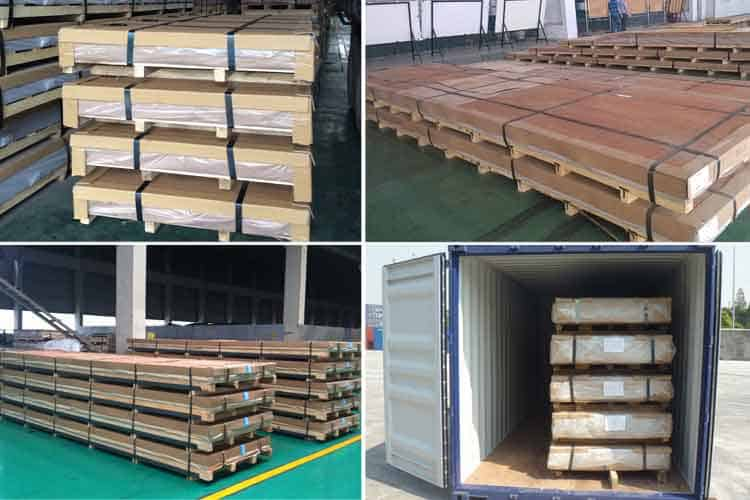
Aluminyo sheet / plate packaging proseso
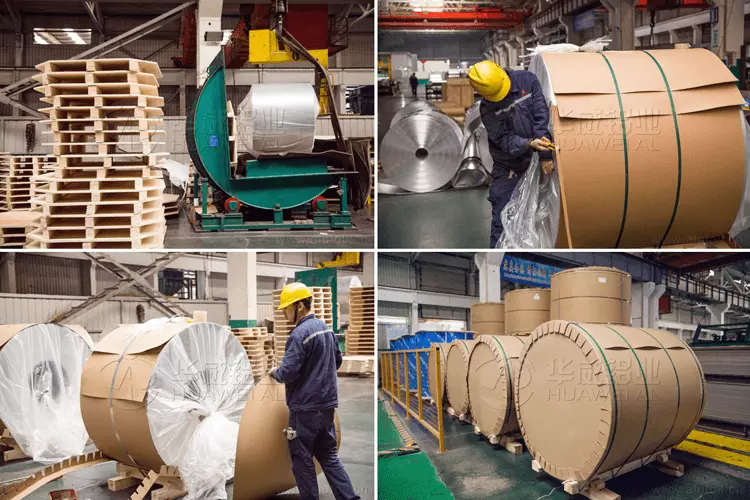
Aluminyo likawin packaging proseso
F: Ikaw ba ay isang tagagawa o isang mangangalakal?
Q: Kami ay isang tagagawa, ang factory namin ay sa No.3 Weier Road, Sonang Pang industriya, Gongyi, Henan, Tsina.
F: Ano ang MOQ para sa pag order ng produkto?
Q: Ang MOQ natin ay 5 tonelada, at ang ilang mga espesyal na produkto ay magkakaroon ng isang minimum na dami ng order ng 1 o 2 tonelada.
F: Gaano katagal ang iyong oras ng lead?
Q: Sa pangkalahatan ang aming lead time ay tungkol sa 30 mga araw.
F: Mayroon bang kalidad ng katiyakan ang iyong mga produkto?
Q: Oo nga, kung may problema sa quality sa products namin, kami ay mabayaran ang customer hanggang sa sila ay nasiyahan.
Mga Kaugnay na Produkto


Mga Pinakabagong Blog
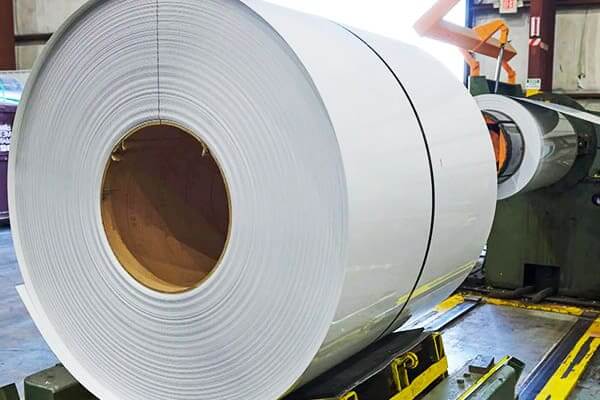
Common Alloys of Reefer Truck Used PE Coated Aluminum Coil
Discover common alloys of reefer truck used PE coated aluminum coil, kasama na ang 3003, 3004, at 3105. Designed for excellent corrosion resistance, pagiging formable, and long-lasting outdoor performance.
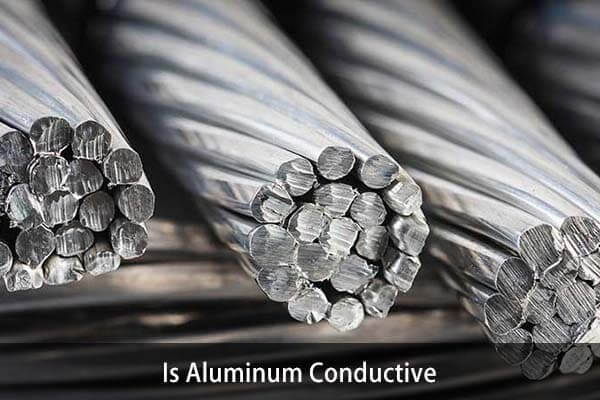
Is Aluminum Conductive? Mga Katangian, Gumagamit ng mga & Benefits Explained
Is aluminum conductive? Discover aluminum's electrical conductivity, key advantages, and why it is widely used in power transmission and industrial applications.
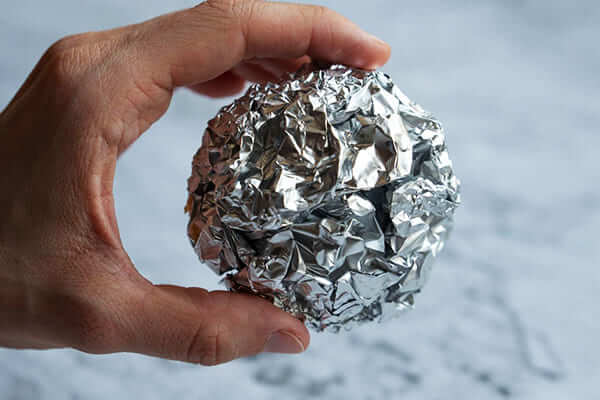
Unlocking Sustainability: The Truth About Aluminum Foil Recycling
Is Aluminum Foil Recyclable? Learn how aluminum foil can be recycled, how to prepare it properly, and why recycling helps reduce waste and save resources.
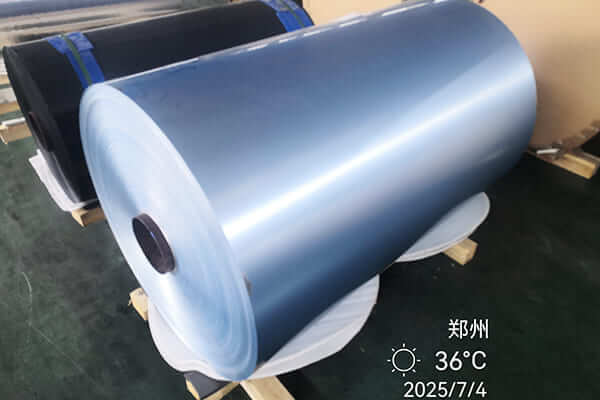
Coated Aluminum Foil for Packaging Applications | Strong & Reliable
High-quality coated aluminum foil for packaging applications, offering excellent barrier protection, tibay ng katawan, and consistent performance.