1. Panimula
Pharmaceutical blister packaging aluminum foil is one of the most important primary packaging materials for solid oral dosage forms because it helps protect medicines from light, kahalumigmigan, oxygen, contamination, and handling damage while still supporting efficient, unit-dose dispensing.
FDA guidance describes a blister package as a flexible packaging system made up of a lidding material and a forming film, and notes that the lidding material is usually a laminate with a barrier layer such as aluminum foil, a print primer, and a heat-sealing lacquer.
Its importance is not only technical but regulatory. Under U.S. cGMP, container closure systems must not alter product safety or quality and must provide adequate protection against foreseeable external factors, while stability testing must be performed in the same container-closure system in which the drug is marketed.
8011 Blister Packaging Aluminum Foil
2. What Is Pharmaceutical Blister Packaging Aluminum Foil?
At its core, pharmaceutical blister packaging aluminum foil—frequently termed Push-Through-Pack (PTP) foil or lidding foil—is a highly refined, heavily calendered metallic sheet.
Typically milled to a microscopic thickness ranging from 20 sa 30 micrometers (M) for standard lidding, at hanggang sa 60 µm for cold-form backing, it is significantly more sophisticated than standard consumer foil.
It is a composite material system. The raw aluminum substrate undergoes precise thermal treatments (annealing) to achieve specific mechanical tempers.
It is then functionally modified: the exterior is coated with a print-receptive primer to facilitate high-resolution pharmaceutical coding, while the interior is laminated with a thermoplastic Heat Seal Lacquer (HSL).
This HSL is chemically engineered to bond irreversibly with various thermoformed plastic base webs (such as PVC, PVDC, PP, or PET) under heat and pressure, sealing the medication inside the blister cavity.
3. Why Aluminum Foil Is Essential in Pharmaceutical Packaging
3.1 Barrier protection for drug stability
The defining characteristic of aluminum foil is its absolute barrier performance. When rolled to a gauge of 20 µm or thicker, high-quality pharmaceutical foil achieves a zero Water Vapor Transmission Rate (WVTR) and a zero Oxygen Transmission Rate (OTR) (<0.001 g/m²/24h).
Sa kabilang banda, standard 250 µm PVC film has a WVTR of approximately 3.0 g/m²/day. This absolute barrier completely halts hydrolytic and oxidative degradation pathways.
3.2 Shelf life extension and product efficacy
By creating an impenetrable micro-climate, aluminum foil extends the shelf life of sensitive APIs from months to several years (typically up to 3–5 years).
Dagdag pa rito, its 100% opacity completely blocks ultraviolet (UV) and visible light radiation.
This is critical for photo-labile drugs (like nifedipine or certain antibiotics), which undergo rapid photochemical degradation when exposed to light.
3.3 Dose accuracy and patient compliance
Unit-dose blister packs compartmentalize medication. Push-through aluminum foils allow patients to extract a single dose without exposing the remaining medication to ambient humidity.
Dagdag pa rito, foils can be printed with “calendarized” days of the week, a proven behavioral psychology tool that significantly boosts patient adherence and prevents accidental overdosing or missed doses.
3.4 Tamper evidence and product security
Counterfeit and adulterated drugs pose a lethal threat to global supply chains. Aluminum blister cavities are inherently tamper-evident; once the foil is breached, ruptured, or peeled, it cannot be seamlessly repaired or resealed.
This mechanical destruction provides immediate visual confirmation of product integrity to both pharmacists and consumers.
3.5 Compatibility with automated packaging lines
Modern high-volume pharmaceutical blistering lines—such as those manufactured by Uhlmann or Marchesini—operate at staggering speeds, often thermoforming, filling, and sealing 400 sa 800 blisters per minute.
Aluminum foil’s excellent thermal conductivity facilitates millisecond heat-sealing, while its dead-fold characteristic prevents spring-back, ensuring continuous, jam-free high-speed automation.

Pharmaceutical Blister Packaging Aluminum Foil
4. Types of Pharmaceutical Aluminum Foil Used in Blister Packaging
4.1 PTP (Press-Through-Pack) lidding foil
PTP foil is the ubiquitous backing for standard PVC/PVDC blisters. It is intentionally manufactured in a “hard” temper (H18 state).
The H18 temper means the aluminum has been severely work-hardened during cold rolling and not subjected to a final softening anneal.
This yields a material with high tensile strength but very low elongation (<2%). Dahil dito, it is highly brittle and ruptures cleanly with minimal force when a patient pushes a tablet against it.
4.2 Strip foil packaging
Utilized for larger capsules, effervescent tablets, and suppositories, strip foil utilizes two webs of foil to encapsulate the drug.
Unlike PTP, strip foil relies on a “soft” temper (O-state) aluminyo. It is highly ductile, preventing fracture during packaging, and is typically laminated with Low-Density Polyethylene (LDPE).
The two webs are heat-crimped together to form a pouch, providing an exceptional moisture barrier for highly hygroscopic products.
4.3 Cold forming foil (Alu-Alu foil)
For extremely hygroscopic or light-sensitive formulations, traditional plastic base webs are insufficient.
Alu-Alu blister packaging replaces the plastic with a cold-stamped aluminum laminate (typically OPA/Alu/PVC).
The aluminum core (45-60 μm) is fully annealed (O-state) to maximize ductility. Using a Teflon-coated punch, the laminate is deep-drawn into cavities at room temperature.
The foil must stretch up to 40% without micro-fracturing, demanding exceptional metallurgical purity.
4.4 Child-resistant (CR) and senior-friendly (SF) papel de liha
To comply with stringent regulations (hal., US CPSC F=1 protocols) preventing pediatric ingestion of toxic medications, lidding foil is reinforced.
It is laminated with a layer of tough paper or tear-resistant PET film. This creates a puncture-resistant barrier that cannot be simply pushed through.
Opening requires a cognitive, two-step “peel-push” (peeling the paper backing away to expose the pushable foil) or “tear-notch” mechanism, balancing child safety with accessibility for seniors suffering from dexterity issues.

Strip foil packaging
5. Material Structure and Coating Systems
5.1 Typical multilayer structure
A standard PTP blister foil is an engineered multilayer composite. From the exterior environment toward the tablet, the structure is precisely calibrated:
- Print Primer Layer (1.0 – 2.0 g/m²): Typically a nitrocellulose-based lacquer. It modifies the surface tension of the raw aluminum, ensuring excellent adhesion for various pharmaceutical printing inks.
- Aluminum Foil Substrate (20-30 M): Ang pangunahing layer ng hadlang, dictating the mechanical and protective properties.
- Heat Seal Lacquer (HSL) Layer (3.0 – 8.0 g/m²): A thermoplastic adhesive applied to the inner surface. It remains dormant at room temperature but melts and fuses with the plastic base web at specific temperatures (usually 180°C–220°C).
5.2 Common alloys of Blister Packaging Aluminum Foil
The microscopic performance of the foil is governed by its metallurgical alloy:
- haluang metal 8011: The global standard for PTP lidding. The deliberate addition of Iron (Fe, 0.6-1.0%) at Silicon (Si Si, 0.5-0.9%) enhances the material’s burst strength and dramatically reduces the occurrence of microscopic pinholes during rolling compared to pure aluminum.
- haluang metal 8021 / 8079: Featuring slightly higher aluminum purity and specific annealing profiles, these alloys possess superior elongation and deep-drawing characteristics, making them the absolute prerequisite for Alu-Alu cold forming base webs.
- haluang metal 1235: A high-purity aluminum (minimum na 99.35% Al) offering maximum barrier properties per micrometer, generally utilized in flat strip packaging laminates.
5.3 Common coating materials
The chemistry of the Heat Seal Lacquer (HSL) is critical and must be tailor-matched to the base web:
- Vinyl-based Resins: Used universally for sealing to standard PVC and PVDC webs.
- Acrylic-based Polymers: Required for sealing to non-halogenated webs like PET (Polyethylene Terephthalate) or PP (Polypropylene). Proper formulation ensures the seal strength falls within the ideal “peelable yet secure” window.
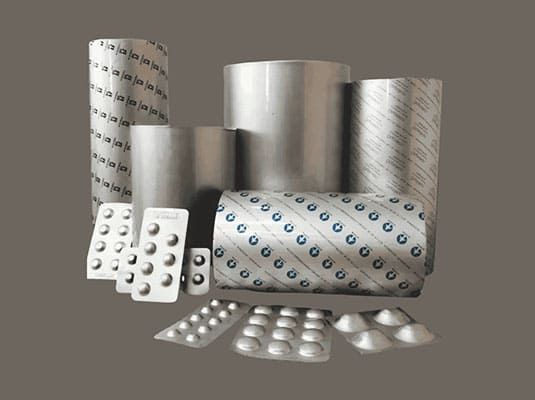
6. Key Characteristics of Pharmaceutical Blister Packaging Aluminum Foil
6.1 Barrier properties and Pinhole Porosity
While intact aluminum is impermeable, the manufacturing process can introduce microscopic gaps known as pinholes. High-grade pharmaceutical foil is strictly regulated for pinhole porosity (hal., EN 14392 Mga Pamantayan).
For a 20 µm foil, the industry standard demands absolutely zero pinholes larger than 0.3mm, and less than 1-3 microscopic pinholes per square meter, ensuring the macro-barrier remains uncompromised.
6.2 Mga katangian ng makina
- Lakas ng Paghatak: H18 temper PTP foil must exhibit a tensile strength between 130–170 MPa, ensuring it remains intact during packaging line tension but yields to finger pressure.
- Pagpapahaba: H18 foil has an elongation rate of ≤2%. In stark contrast, Alu-Alu O-state foil requires an elongation rate exceeding 15% to withstand the deep-drawing stamping process without rupture.
6.3 Seal performance
Seal integrity is the fail-safe of the blister pack. Quality foils must consistently demonstrate a minimum peel strength of ≥ 7.0 N/15mm (Newtons per 15mm width) when sealed against PVC under a standardized pressure of 0.3 MPa for 1 second at 180°C.
6.4 Chemical stability and compatibility
The foil system must be chemically inert. Exhaustive Extractables and Leachables (E&L) testing (via LC-MS and GC-MS) is conducted to guarantee that plasticizers, residual solvents, or ink components do not migrate through the lacquer into the API, even under accelerated thermal stress testing.
6.5 Printability and traceability
To combat counterfeiting and ensure patient safety, the exterior primer must support high-speed rotogravure or UV flexographic printing.
It must clearly render micro-text, mga numero ng batch, GS1 2D DataMatrix barcodes, and occasionally overt anti-counterfeit features like color-shifting inks or UV-fluorescent markers.
7. Manufacturing Processes of Blister Aluminum Foil
7.1 Rolling and foil production
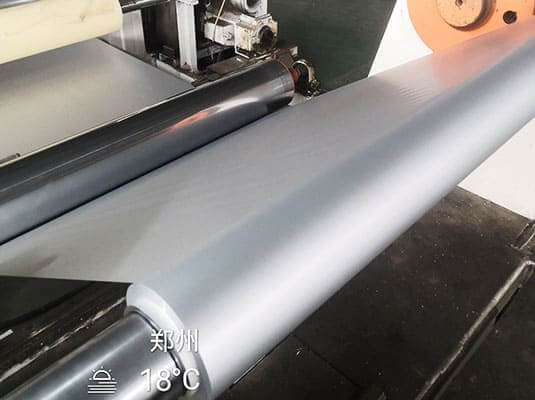
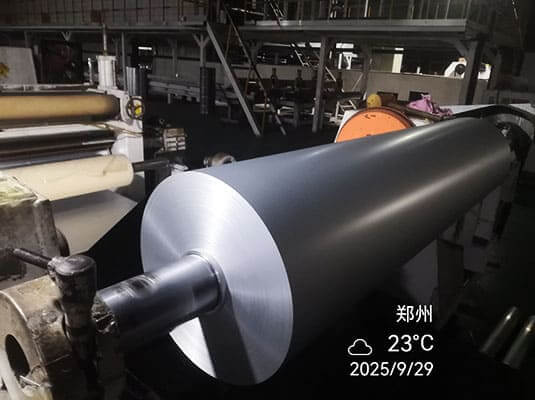
Production begins with continuous casting of massive aluminum coils. Through a series of high-precision cold rolling mills, the gauge is systematically reduced.
During the final pass, two sheets are often rolled together (Email Address *) to achieve the 20 kapal ng katawan, which gives foil its characteristic shiny side (in contact with the steel rollers) and matte side (in contact with the other aluminum sheet).
The foil is then thermally annealed in massive furnaces at 300°C – 400°C to achieve the desired temper and burn off volatile rolling oils.
7.2 Coating and lacquering
The bare foil is transferred to Class 100,000 (ISO Class 8) cleanroom facilities. Using precision gravure cylinders, the protective primer and Heat Seal Lacquer are applied evenly across the web.
The coated foil travels through multi-zone convection drying ovens (up to 200°C) to cure the polymers and rapidly evaporate the solvent carriers.
7.3 Printing and surface treatment
Depending on the pharmaceutical client’s specifications, the coated jumbo rolls undergo in-line printing.
Using specialized, non-migratory, pharma-grade inks, the foil is branded and encoded with specific regulatory text and visual security layers.
7.4 Slitting and conversion
Sa wakas, the massive jumbo rolls are processed through highly tension-controlled slitter rewinders, cutting the foil into the precise, narrow widths required by pharmaceutical blister machines.
Automated optical inspection (AOI) systems utilizing lasers continuously scan the moving web to detect surface anomalies or micro-pinholes in real-time.

Huawei Packaged Blister Packaging Aluminum Foil
8. Huawei Quality Control and Testing Methods
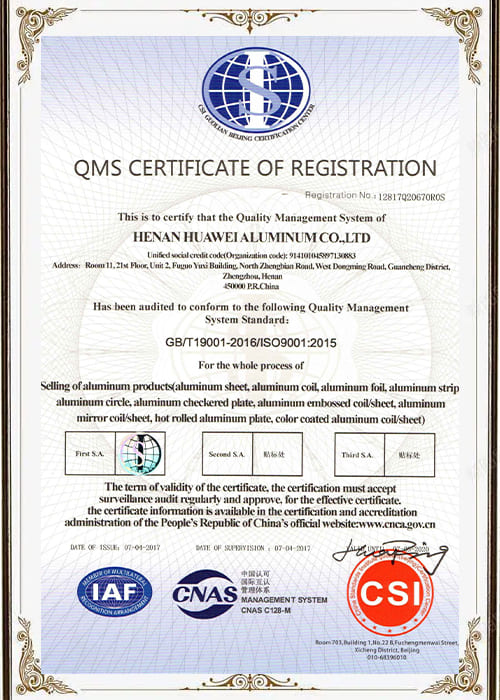
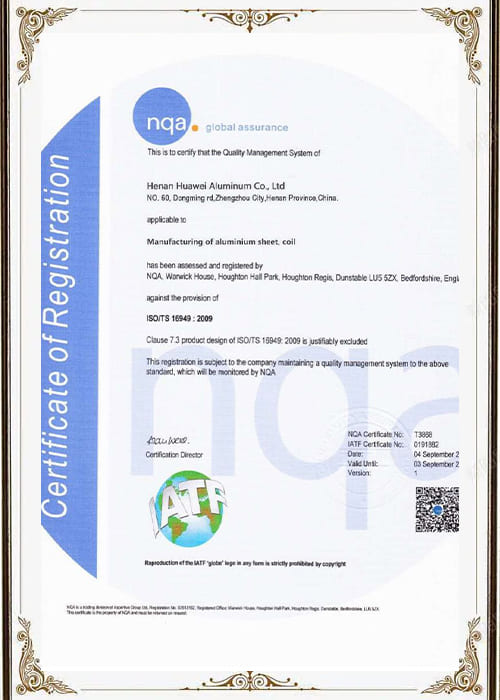
Recognized as a benchmark in global aluminum foil manufacturing, Huawei Aluminum implements a rigorous, uncompromising Quality Control (QC) framework tailored to pharmaceutical requirements.
Operating well beyond basic specifications, Huawei’s testing matrix includes:
- Laser Pinhole Detection: Utilizing high-intensity optical light boxes and automated laser scanners on the slitting line to guarantee absolute compliance with zero macroscopic pinhole limits.
- Peel Force & Adhesion Testing: Employing Lloyd instrument universal testing machines to verify that the Heat Seal Lacquer achieves and exceeds the critical 7N/15mm bonding strength against specific base webs.
- Gravimetric Coat Weight Verification: Ensuring the primer and HSL are applied uniformly, maintaining an exacting tolerance of ±0.5 g/m² to prevent weak seals (under-coating) or blister machine jamming (over-coating).
- Solvent Residue Analysis: Utilizing advanced Gas Chromatography-Mass Spectrometry (GC-MS) to quantify Volatile Organic Compounds (VOCs). Huawei ensures residual solvents from the lacquering process are practically non-existent (< 5 mg/m²), precluding any risk of drug contamination.
- Microbiological and Bioburden Testing: Conducted in dedicated, sterile lab facilities to ensure the foil maintains strict microbial limits, rendering it safe for primary pharmaceutical packaging.
9. Regulatory and Compliance Requirements
Because blister foil acts as primary packaging—meaning it is in direct contact with, or directly forms the barrier for, the medication—its production operates under severe regulatory scrutiny. Reputable manufacturers must meticulously adhere to:
- FDA 21 CFR (Part 175/177): Dictating the strict toxicological safety of the adhesives, polymers, and coatings used.
- DMF (Drug Master File): Manufacturers must register and maintain a Type III DMF with the US FDA. This highly confidential document details the precise chemical formulas and manufacturing protocols, allowing pharmaceutical companies to reference the foil during their drug approval (NDA/ANDA) proseso ng.
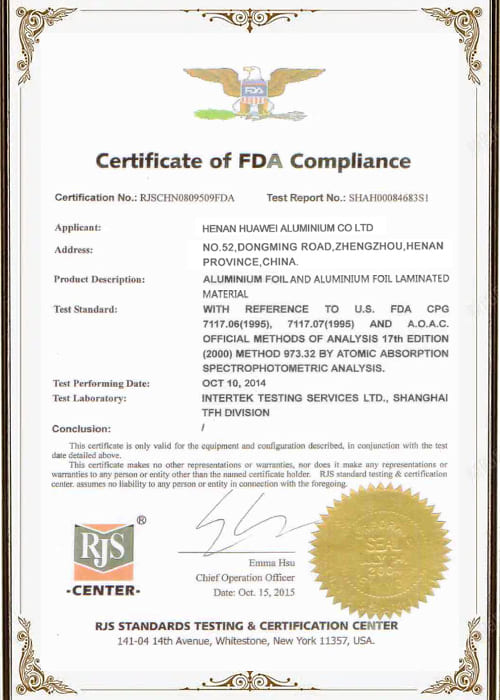
- .ISO 15378 & cGMP: A specialized global certification that merges ISO 9001 quality management with Good Manufacturing Practices (cGMP) specifically designed for primary packaging materials for medicinal products.
- Pharmacopoeia Standards: Total compliance with the material safety and performance monographs set by the USP (United States Pharmacopeia, specifically <661> at <671>) and the EP (European Pharmacopoeia).
10. Comparison with Alternative Packaging Materials
While aluminum remains the definitive standard, understanding the packaging landscape requires comparing it against its plastic counterparts.
The data clearly illustrates aluminum’s supremacy in barrier protection:
| Base Web Material | Typical Structure / Ang kapal | WVTR (Kahalumigmigan) [g/m²/day] | OTR (Oxygen) [cc/m²/day] | Visual Clarity | Relative Cost Factor | Primary ICH Climate Zone Suitability |
| Standard PVC | 250 M | ~3.00 | ~15.00 | Napakahusay | 1.0x (Baseline) | Zone I & II (Mild/Dry) |
| PVC / PVDC | 250 M / 90 gsm | ~ 0.40 | ~1.50 | Napakaganda | 1.5x – 2.0x | Zone I, II, III |
| Aclar® Laminate | PVC / Aclar (SupRx 900) | ~0.03 | ~2.00 | Napakahusay | 3.5x – 4.5x | All Zones (Moisture focus) |
| COC Laminate | PP / COC / PP | ~ 0.25 | ~8.00 | Napakahusay | 2.5x – 3.5x | Zone I, II, III |
| Alu-Alu Foil | OPA 25 / Alu 45 / PVC 60 | < 0.001 (Absolute Zero) | < 0.001 (Absolute Zero) | Opaque (Wala) | 3.0x – 4.0x | All Zones (Ultimate Protection) |
11. Pangwakas na Salita
Pharmaceutical blister packaging aluminum foil is far more than a simple metallic sheet; it is a triumph of advanced metallurgy, polymer chemistry, and precision engineering.
By providing an absolute, impermeable barrier against moisture, liwanag, at oxygen, while enabling ultra-high-speed automated packaging and tamper-evident security, it fundamentally underpins the stability of global healthcare supply chains.
As the pharmaceutical industry advances toward increasingly complex and sensitive formulations—such as biologically derived solids and ultra-hygroscopic compounds—the reliance on stringently tested, premium-grade aluminum foil will only intensify.
Manufacturers like Huawei Aluminum, who enforce relentless QC and regulatory compliance, are critical pillars in this ecosystem.
Looking forward, the integration of nanocoatings, RFID smart-packaging for patient adherence, and the development of sustainable, mono-material recycling pathways will ensure that aluminum foil remains the ultimate vanguard of pharmaceutical protection for decades to come.
Mga FAQ
Q1: What is the difference between PTP foil and Alu-Alu foil?
A1: PTP (Push-Through-Pack) foil is thin (20-30 M), hard-tempered, and used as the flat lidding sheet that you push a tablet through. Alu-Alu foil is thicker (45-60 M), soft-tempered, and laminated with nylon and PVC to allow it to be cold-formed into deep cavities (the base web) without tearing.
Q2: Is pharmaceutical aluminum foil safe and non-toxic?
A2: Oo nga. The aluminum substrate is coated with food- and pharma-grade primers and heat seal lacquers. The metal itself never comes into direct chemical contact with the drug, and all coating materials undergo rigorous Extractables and Leachables (E&L) testing to comply with FDA and EMA regulations.
Q3: Can pharmaceutical blister packs be recycled?
A3: Ayon sa kaugalian, blister packs are difficult to recycle because they are composite materials (aluminum securely bonded to PVC or other plastics). Gayunpaman, advanced delamination technologies and the development of newer, mono-material blister packaging concepts are actively improving the recyclability of these items.
Q4: Why does my blister foil have a paper layer on the back?
A4: If a blister pack has a paper or PET film laminated over the aluminum, it is designed for Child Resistance (CR). The paper layer prevents a child from simply pushing the pill through the foil; instead, an adult must cognitively peel back the paper layer first before pushing the tablet out.
Proseso ng paghahagis ng produksyon at ang pagpapakilala nito
Ang layunin ng pagtunaw at paghahagis ay upang makabuo ng mga haluang metal na may kasiya siyang komposisyon at mataas na kadalisayan ng matunaw, upang lumikha ng mga kanais nais na kondisyon para sa paghahagis ng mga haluang metal ng iba't ibang mga hugis.
Mga hakbang sa proseso ng pagtunaw at paghahagis: mga ka batch --- pagpapakain --- natutunaw na --- pagpapakilos pagkatapos matunaw, pag alis ng slag --- sampling bago ang pagsusuri --- pagdaragdag ng haluang metal upang ayusin ang komposisyon, nakakapukaw ng damdamin --- pagpipino --- static na Setting——Guide furnace casting.
Mainit na proseso ng produksyon ng pagulong at ang pagpapakilala nito
- 1. Mainit na pagulong sa pangkalahatan ay tumutukoy sa paggulong sa itaas ng metal recrystallization temperatura;
- 2. Sa panahon ng mainit na proseso ng pagulong, ang metal ay may parehong mga proseso ng pagpapatigas at paglambot. Dahil sa impluwensya ng bilis ng pagpapapangit, basta huli na ang recovery at recrystallization process, magkakaroon ng tiyak na gawaing pagpapatigas;
- 3. Ang recrystallization ng metal pagkatapos ng mainit na pagulong ay hindi kumpleto, na ang ibig sabihin ay, ang magkakasamang buhay ng recrystallized istraktura at deformed istraktura;
- 4. Ang mainit na pagulong ay maaaring mapabuti ang pagganap ng pagproseso ng mga metal at haluang metal, bawasan o alisin ang mga depekto sa paghahagis.
- 1. Ang temperatura ng paghahagis at pagulong ay karaniwang nasa pagitan ng 680 o C at 700 o C. Ang mas mababa ang mas mahusay na, Ang matatag na paghahagis at rolling line ay karaniwang tumitigil nang isang beses sa isang buwan o higit pa upang muling tumayo. Sa panahon ng proseso ng produksyon, kinakailangang mahigpit na kontrolin ang antas ng likido ng front tank upang maiwasan ang mababang antas ng likido;
- 2. Ang pagpapadulas ay gumagamit ng C powder na may hindi kumpletong pagkasunog ng gas para sa pagpapadulas, na isa rin sa mga dahilan ng maruming ibabaw ng casting at rolling materials;
- 3. Ang bilis ng produksyon ay karaniwang sa pagitan ng 1.5m / min-2.5m / min;
- 4. Ang kalidad ng ibabaw ng mga produkto na ginawa sa pamamagitan ng paghahagis at paggulong ay karaniwang medyo mababa, at sa pangkalahatan ay hindi maaaring matugunan ang mga produkto na may espesyal na pisikal at kemikal na mga kinakailangan sa pagganap.
- 1. Ang malamig na pagulong ay tumutukoy sa paraan ng paggulong ng produksyon sa ibaba ng temperatura ng recrystallization;
- 2. Hindi magkakaroon ng dynamic na recrystallization sa panahon ng proseso ng paggulong, at ang temperatura ay tataas sa temperatura ng pagbawi sa karamihan, at ang malamig na paggulong ay lilitaw sa isang trabaho hardening estado, at ang trabaho hardening rate ay magiging malaki;
- 3. Ang malamig na ginulong sheet at strip ay may mataas na dimensional na katumpakan, magandang kalidad ng ibabaw, unipormeng istraktura at pagganap, at mga produkto sa iba't ibang estado ay maaaring makuha sa heat treatment;
- 4. Malamig na pagulong ay maaaring i roll out manipis na strips, pero sabay sabay, ito ay may mga disadvantages ng mataas na pagkonsumo ng enerhiya para sa pagpapapangit at maraming mga pasa sa pagproseso.
- 1. Ang pagtatapos ay isang paraan ng pagproseso upang matugunan ng malamig na ginulong sheet ang mga kinakailangan ng customer, o upang mapadali ang kasunod na pagproseso ng produkto;
- 2. Ang mga kagamitan sa pagtatapos ay maaaring iwasto ang mga depekto na ginawa sa mainit na pagulong at malamig na proseso ng produksyon, tulad ng basag na gilid, may langis na, mahina ang hugis ng plato, natitirang stress, atbp. Kailangan nitong tiyakin na walang iba pang mga depekto na dinala sa proseso ng produksyon;
- 3. Mayroong iba't ibang mga kagamitan sa pagtatapos, pangunahin kabilang ang cross-cutting, pagputol ng hiwa, pag unat at pagtutuwid, annealing furnace, mga slitter, atbp.
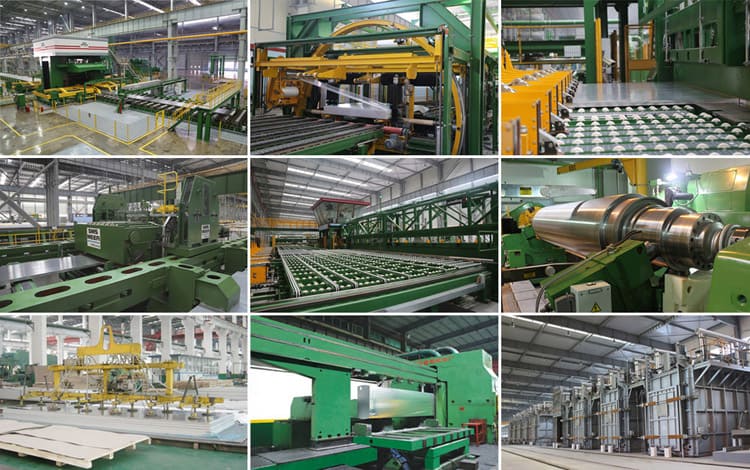
Proseso ng paghahagis at paggulong
Proseso ng paghahagis at paggulong: likidong metal, kahon sa harap (Kontrol sa antas ng likido), paghahagis at rolling machine (sistema ng pagpapadulas, paglamig ng tubig), paggupit ng makina, makina ng pag coiling.
Malamig na proseso ng produksyon ng pagulong
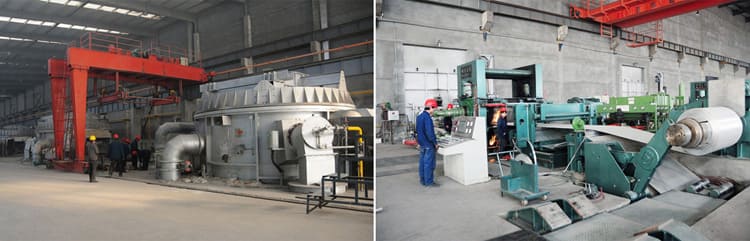
Panimula sa pagtatapos ng proseso ng produksyon
Aluminyo haluang metal ay may mga katangian ng mababang density, magandang mekanikal na katangian, magandang pagganap ng pagproseso, di nakakalason, madaling i recycle, mahusay na electrical kondaktibiti, paglipat ng init at paglaban sa kaagnasan, kaya ito ay may malawak na hanay ng mga application.
Aerospace: ginagamit upang gumawa ng mga balat ng sasakyang panghimpapawid, mga frame ng fuselage, mga girder, mga rotors, mga propeller, mga tangke ng gasolina, mga panel ng pader at mga struts ng landing gear, pati na rin ang rocket forging rings, mga panel ng pader ng spacecraft, atbp.
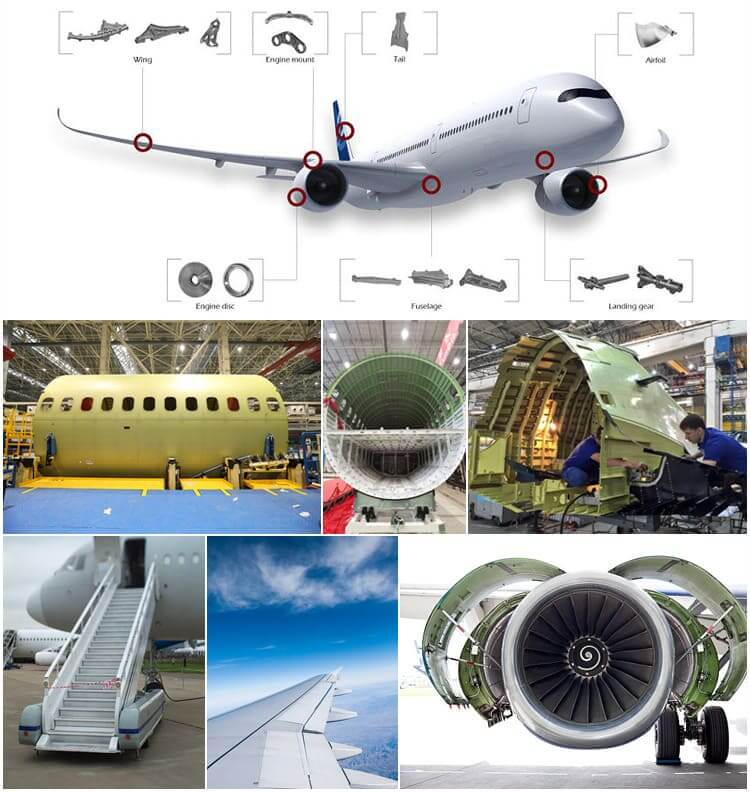
Aluminyo haluang metal na ginagamit para sa aerospace
Transportasyon: ginagamit para sa kotse katawan istraktura materyales ng mga sasakyan, Mga Sasakyan ng Subway, mga kotse ng pasahero ng tren, mabilis na mga kotse ng pasahero, mga pinto at bintana, mga istante, mga bahagi ng automotive engine, mga aircon, mga radiator, mga panel ng katawan, mga gulong at mga materyales ng barko.
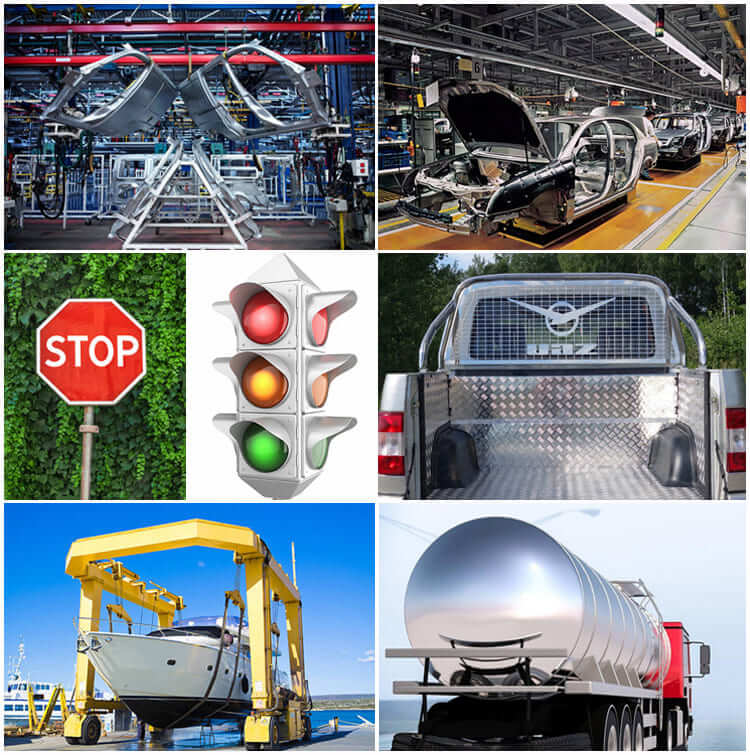
Application ng trapiko
Packaging: Ang lahat ng aluminyo pop lata ay pangunahing ginagamit bilang mga materyales sa packaging ng metal sa anyo ng mga manipis na plato at foils, at ginagawang lata, mga takip, mga bote, mga bariles, at packaging foils. Malawakang ginagamit sa packaging ng mga inumin, pagkain, mga pampaganda, mga gamot, mga sigarilyo, mga produktong pang industriya, mga gamot, atbp.
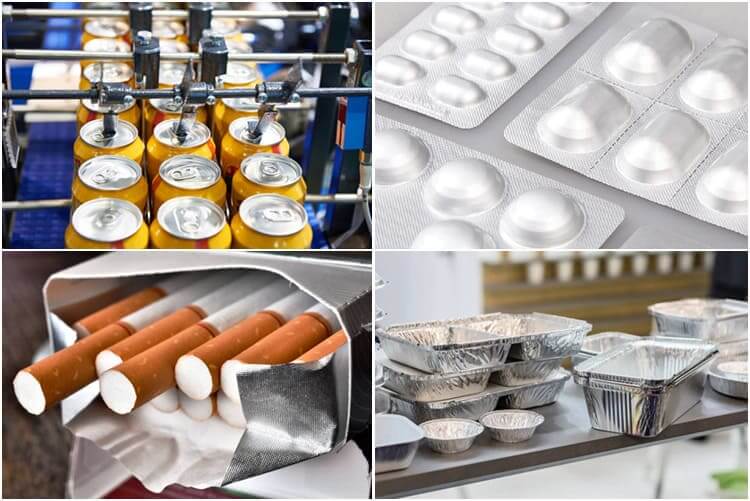
Application ng packaging
Pag-print: Pangunahing ginagamit upang gumawa ng PS plates, ang mga PS plate na nakabase sa aluminyo ay isang bagong uri ng materyal sa industriya ng pag print, ginagamit para sa awtomatikong paggawa ng plato at pag print.
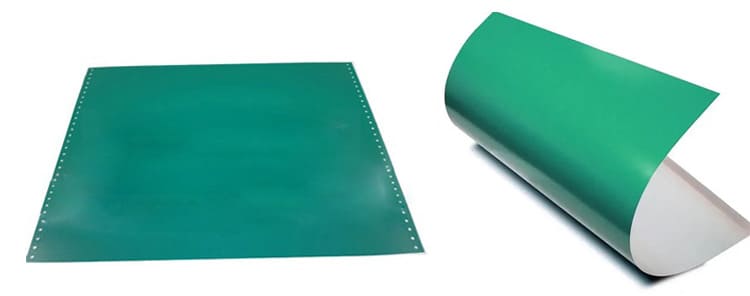
Pag print ng PS
Dekorasyon ng arkitektura: aluminyo haluang metal ay malawakang ginagamit sa mga istraktura ng gusali, mga pinto at bintana, suspendido ang mga kisame, pandekorasyon na ibabaw, atbp. dahil sa magandang kaagnasan nito paglaban, sapat na lakas, mahusay na pagganap ng proseso at pagganap ng hinang.

Application ng konstruksiyon ng haluang metal ng aluminyo
Mga produktong elektroniko: mga computer, mga mobile phone, mga shell ng refrigerator, mga radiator, atbp.
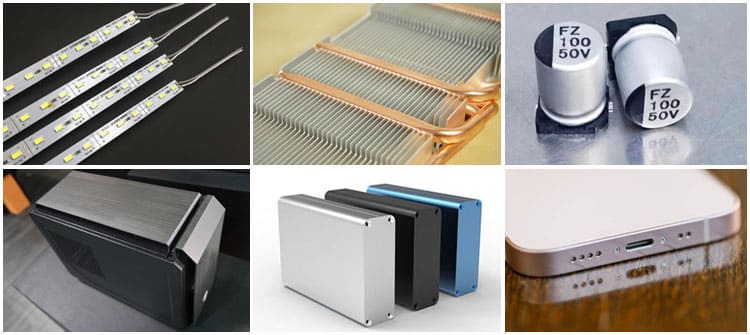
Electronic application ng produkto
Mga gamit sa kusina: mga kaldero ng aluminyo, aluminyo basins, mga liner ng rice cooker, sambahayan aluminyo foil, atbp.
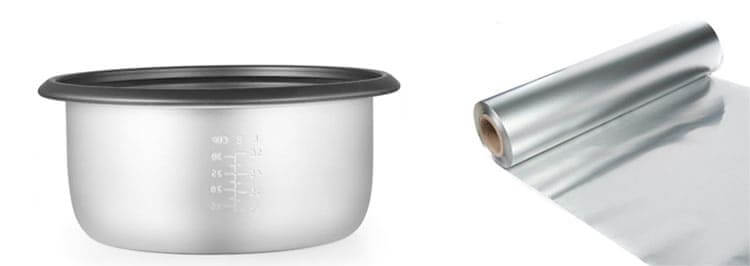
Application ng kusina
Packaging Ng Aluminum Sheet / Coil
Ang bawat detalye ng packaging ay kung saan namin ituloy ang perpektong serbisyo. Ang aming proseso ng packaging sa kabuuan ay ang mga sumusunod:
Paglalamina: malinaw na pelikula, asul na pelikula, mikro-mucosal, mataas na mucosal, laser pagputol ng pelikula (2 mga tatak, Novacell at Polyphem);
Proteksyon: mga tagapagtanggol ng sulok ng papel, mga pads laban sa presyon;
pagpapatayo ng mga: desiccant;
Tray: fumigated hindi nakakapinsala kahoy na tray, magagamit muli ang bakal na tray;
Pag-iimpake: Tik-tik-toe bakal sinturon, o PVC packing belt;
Kalidad ng Materyal: Ganap na libre mula sa mga depekto tulad ng puting kalawang, mga spot ng langis, mga rolling mark, pinsala sa gilid, mga baluktot, mga dent, mga butas, mga break lines, mga gasgas na, atbp., walang coil set.
Port: Qingdao o iba pang mga port sa China.
Lead oras: 15-45 mga araw.
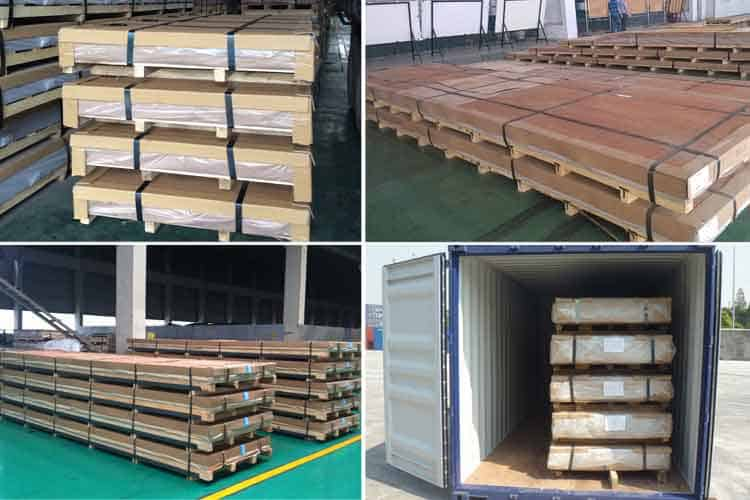
Aluminyo sheet / plate packaging proseso
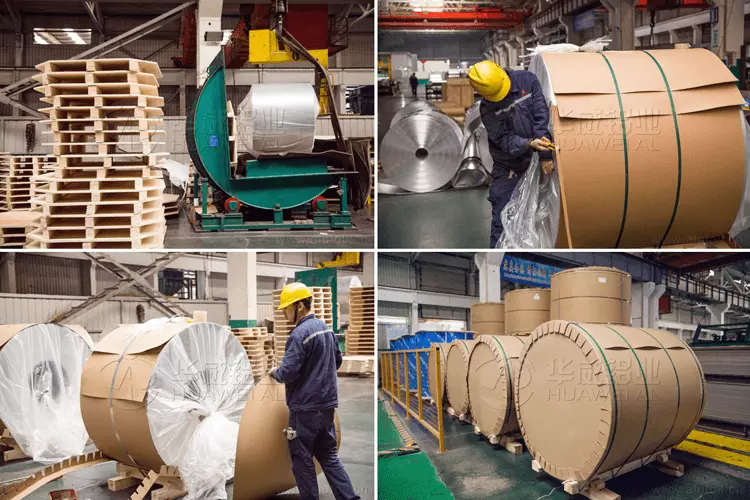
Aluminyo likawin packaging proseso
F: Ikaw ba ay isang tagagawa o isang mangangalakal?
Q: Kami ay isang tagagawa, ang factory namin ay sa No.3 Weier Road, Sonang Pang industriya, Gongyi, Henan, Tsina.
F: Ano ang MOQ para sa pag order ng produkto?
Q: Ang MOQ natin ay 5 tonelada, at ang ilang mga espesyal na produkto ay magkakaroon ng isang minimum na dami ng order ng 1 o 2 tonelada.
F: Gaano katagal ang iyong oras ng lead?
Q: Sa pangkalahatan ang aming lead time ay tungkol sa 30 mga araw.
F: Mayroon bang kalidad ng katiyakan ang iyong mga produkto?
Q: Oo nga, kung may problema sa quality sa products namin, kami ay mabayaran ang customer hanggang sa sila ay nasiyahan.
Mga Kaugnay na Produkto


Mga Pinakabagong Blog
Common Alloys of Reefer Truck Used PE Coated Aluminum Coil
Discover common alloys of reefer truck used PE coated aluminum coil, kasama na ang 3003, 3004, at 3105. Designed for excellent corrosion resistance, pagiging formable, and long-lasting outdoor performance.
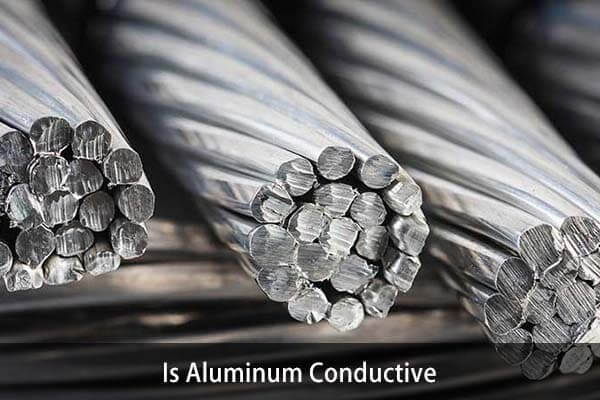
Is Aluminum Conductive? Mga Katangian, Gumagamit ng mga & Benefits Explained
Is aluminum conductive? Discover aluminum's electrical conductivity, key advantages, and why it is widely used in power transmission and industrial applications.
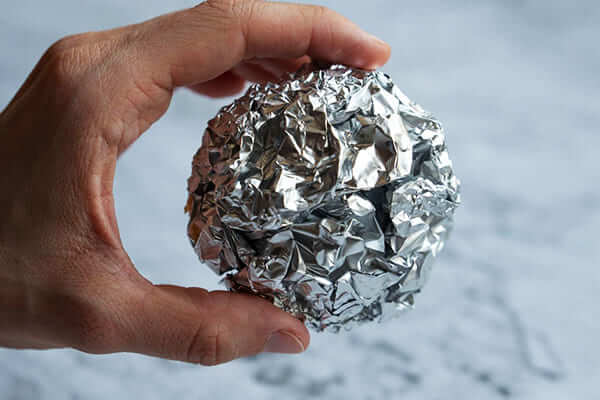
Unlocking Sustainability: The Truth About Aluminum Foil Recycling
Is Aluminum Foil Recyclable? Learn how aluminum foil can be recycled, how to prepare it properly, and why recycling helps reduce waste and save resources.
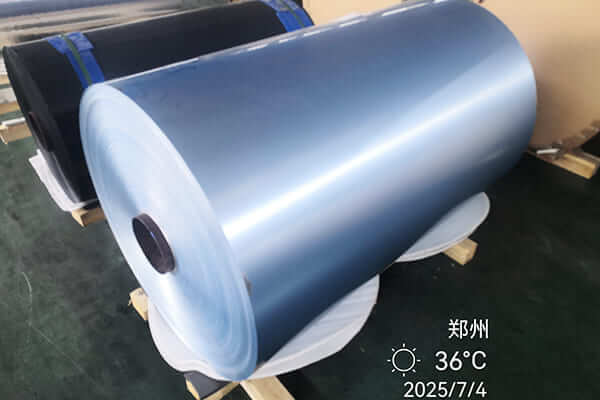
Coated Aluminum Foil for Packaging Applications | Strong & Reliable
High-quality coated aluminum foil for packaging applications, offering excellent barrier protection, tibay ng katawan, and consistent performance.