8011 Aluminum Foil For Medical Caps
11,417 Mga Pananaw 2026-01-30 08:30:37
1. Panimula
8011 aluminum foil for medical caps is the core metallic component in the manufacturing of high-quality pharmaceutical seals, particularly the aluminum-plastic composite caps used for injection vials and infusion bottles.
This specific 8xxx series alloy, defined by its iron (Fe) at silicon (Si Si) nilalaman, is chosen for its unique and optimal balance of properties.
Supplied in a precisely controlled H14 or H116 temper and a typical thickness range of 0.18 mm sa 0.23 mm, 8011 foil offers the perfect combination of katamtamang lakas for a secure seal and excellent deep-drawing performance required for the high-speed stamping of the cap’s complex shape.
Its inherent barrier properties, coupled with a chemically inert coating, ensure the sterility and stability of the enclosed drug.
The material’s ability to withstand high-temperature sterilization and its consistent machinability make it the globally recognized standard for creating safe, reliable, and cost-effective seals for parenteral drugs.

8011 Aluminum Foil For Medical Caps
2. Ano ang 8011 Aluminyo Foil?
8011 aluminyo foil belongs to the 8xxx series wrought aluminum alloys, specifically engineered within the Al-Fe-Si system.
Unlike the 1xxx series (≥99.0% Al) used in general packaging, 8011 incorporates controlled additions of iron and silicon to achieve superior mechanical properties without compromising corrosion resistance or formability.
Komposisyon ng Kemikal (ASTM B209 / EN 573-3)
| Elemento | Chemical Symbol | Komposisyon (wt%) | Pag-andar / Notes |
|---|---|---|---|
| Aluminyo | Al | Balanse (≥97.5%) | Base matrix; virginal primary grade required for medical applications |
| bakal na bakal | Fe | 0.50 – 1.0 | Primary strengthening element; forms AlFeSi intermetallics |
| Silicon | Si Si | 0.50 – 0.90 | Combined with Fe to form α-Al(Fe,Si Si) phases; improves castability |
| Tanso | Cu | 0.05 – 0.20 | Matibay na solusyon pagpapalakas; limited to prevent corrosion susceptibility |
| Mga mangganeso | Mn | ≤0.10 | Trace element; controlled to minimize interference with Fe-Si precipitation |
| Magnesium | Mg | ≤0.05 | Residual content; minimal intentional addition |
| Sink | Zn | ≤0.10 | Trace impurity limit; controlled for anodizing response |
| Titanium | Ti | ≤0.05 | Grain refiner (TiB₂ formation); pinhole reduction in thin gauges |
| Chromium | Cr | ≤0.05 | Residual limit |
| Ang iba naman (bawat isa ay) | — | ≤0.03 | Individual unspecified elements |
| Ang iba naman (kabuuan) | — | ≤0.10 | Combined unspecified elements |
Medical Grade Purity
Pharmaceutical-grade 8011 requires virgin primary aluminum (no recycled post-consumer scrap) with strict heavy metal limits:
- Humantong sa (Pb): <5 ppm
- Cadmium (Cd): <3 ppm
- Mercury (Hg): <1 ppm
- Arsenic (As): <3 ppm
3. Key Specifications: 8011 Aluminum Foil for Medical Caps
When specifying 8011 aluminum foil for medical caps, include clear requirements for temper, kapal naman, surface quality and mechanical properties.
Temper
- Common tempers: fully annealed O and lightly cold-worked tempers such as H14 / H18 are most used.
- O (annealed na nga ba): highest ductility, easiest forming, but lower yield strength. Use when extreme drawability is required.
- H14 / H18 (strain-hardened): increased strength and springback control, useful where the liner must maintain shape during automated installation.
- Selection rule: choose O for deep cupping with tight radii; choose H-tempers for high-speed insertion where dimensional control and resistance to tearing matter.

100µm Aluminum Foil Thickness measurement
Ang kapal
Medical cap applications utilize specific gauge ranges optimized for barrier and mechanical requirements:
| Paglalapat | Saklaw ng Kapal (mm) | Tolerances | Timbang (g/m²) |
|---|---|---|---|
| Flip-off caps (shell) | 0.18–0.25 | ±0.005 mm | 486–675 |
| Seal liners | 0.020–0.050 | ±0.002 mm | 54–135 |
| Ampoule break-rings | 0.10–0.15 | ±0.003 mm | 270–405 |
| Diagnostic plate seals | 0.05–0.08 | ±0.002 mm | 135–216 |
Down-Gauging Trends:
Advanced rolling technologies enable 0.16 mm gauge caps (previously standard at 0.22 mm), reducing material consumption by 27% while maintaining 8011’s strength advantage over thicker 1xxx series alternatives.
Gayunpaman, sub-0.15 mm gauges risk pinhole permeation in aggressive sterilization environments.
Surface quality and treatment
Pinhole density: critical — acceptability depends on application (for sterile parenteral closures require near-zero pinholes).
Typical supplier/dealer specs: visual and electrical pinhole inspection; sample acceptance criteria must be contractually specified (see §8 and QA).
Surface Cleanliness:
Medical-grade foil requires residual oil <30 mg/m² (measured by extraction gravimetry) and absence of aluminum fines or metallic debris that could contaminate sterile drug products.
Passivation layer (Al O) kapal naman: 2–5 nm native oxide, optionally thickened to 10–20 nm through anodizing (Uri II, sulfuric acid) for enhanced corrosion resistance.
Mga Pagpipilian sa Pagtatapos ng Ibabaw:
- Bright Annealed (BA): Mirror finish (Ra <0.1 M) for aesthetic caps and laser marking applications
- Tapos na ang Mill: Matte surface (Ra 0.3–0.6 μm) providing mechanical interlock for plastic insert molding (PP bonding)
- Chemical Matte: Etched finish (Ra 0.8–1.2 μm) for enhanced adhesion of printing inks and lacquers

Aluminum foil surface clean
Precise control of mechanical properties
- Paghatak ng balat / yield: supplier should provide typical UTS and 0.2% yield by temper. Example broad ranges (tipikal na; verify with MTC): Mga UTS ~70–150 MPa, pagpapahaba ng panahon 10–40% depending on temper and thickness.
- Forming characteristics: require certification of cup-formability or cupping trials: acceptable maximum reduction in area, absence of splits/tears at specified punch radii.
- Fatigue/bend testing: where caps are subject to repeated flexing (hal., child-resistant closures), include cyclical bend tests.
4. Properties of 8011 Aluminum Foil for Medical Caps
Mga Katangian ng Barrier
- Oxygen Transmission Rate (OTR): <0.01 cm³/(m²·24h·atm) at 25°C for 0.025 mm foil (ASTM D3985)
- Water Vapor Transmission Rate (WVTR): <0.05 g/(m²·24h) at 38°C, 90% RH (ASTM F1249)
- Light Transmission: 0% (complete opacity) at wavelengths 200–800 nm, preventing UV degradation of light-sensitive APIs (vitamins, antibiotics)
Mga Katangian ng Thermal
- Punto ng Pagtunaw: 660°C (aluminum substrate)
- Thermal kondaktibiti: 205–230 W/(m·K) — facilitates rapid heat transfer during induction sealing (400 kHz–3 MHz frequency range)
- Pagpapalawak ng Thermal: 23.2×10⁻⁶/°C (critical for seal integrity during autoclave sterilization 121°C)

Oral Liquid Medical Caps
Paglaban sa Kemikal
- pH Stability: Resistant to pH 4–9 drug formulations; anodized variants withstand pH 3–11
- Extractables: <0.5 μg/cm² total organic carbon (TOC) when tested per USP <661.1>
- Heavy Metal Migration: <0.1 μg/cm² Pb, Cd, As per ICH Q3D
Electromagnetic Properties
- Electrical kondaktibiti: 30–35% IACS (Internasyonal na Annealed Copper Standard), enabling induction heating for heat-seal liner applications
- Magnetic Response: Non-ferromagnetic (compatible with MRI environment labeling)
Biocompatibility
- .ISO 10993-5: Non-cytotoxic (Grade 0–1 reaction)
- USP Class VI: Passes intracutaneous reactivity and systemic toxicity testing
- Sensitization: Non-sensitizing per ISO 10993-10
5. Proseso ng Paggawa ng 8011 Aluminum Foil for Medical Caps
The foil used in caps moves through several process stages — both at the foil mill and at the closure manufacturer. Key steps:
Casting and Rolling of Aluminum Foil
- Primary metallurgy: melting and alloying to 8011 chemistry, continuous casting to slab.
- Mainit na pagulong / malamig na pagulong: sequential reductions to foil gauge with intermediate anneals. Final foil thickness produced in continuous rolling mills.
- Bright anneal / temper control: final thermal processing sets temper and surface condition.
Annealing
Batch or continuous anneal to achieve O temper or targeted H-tempers. Anneal schedules affect grain structure, ductility and subsequent drawability.
For deep cupping, fully annealed foil commonly preferred.
Coating and Printing
- Interior lacquers/sealants: heat-seal lacquer or polymeric liner applied to the foil inner face. Common choices: epoxy-based lacquers, acrylics, or thin thermoplastic films (PE, PP) depending on chemical compatibility and sealing method. The lacquer provides the actual product seal and prevents metal–product interaction.
- Exterior printing/inks: printing for branding or lot codes uses inks compatible with lacquer and sterilization; UV printers and flexo are common.
Mga Paggamot sa Ibabaw
- Cleaning/degreasing prior to coating.
- Conversion coatings (non-chromate chemistries recommended where environmental/regulatory constraints demand).
- Corona/plasma activation can be used to improve lacquer/ink adhesion on some processes.
Slitting and Cutting
Foil coils are slit to strip widths tailored for cap presses or converted into discs/liners by punch tooling.
Edge quality, burr control and coil camber are critical to feed reliability on high-speed cap lines.

Medical Caps Display
6. Mga kalamangan ng 8011 Aluminum Foil for Medical Caps
8011 aluminum foil for medical caps is not based on a single attribute, but on a powerful combination of advantages that work in synergy to meet the rigorous demands of pharmaceutical packaging.
Each benefit directly addresses a critical aspect of drug safety, stability, and usability.
Reliable and Hermetic Sealing
This is the primary mechanical function of the aluminum cap.
- The Mechanism: 8011 aluminum in the H14/H16 temper possesses an optimal blend of strength and malleability. During the capping process, a machine uses rollers to crimp the skirt of the aluminum cap tightly under and around the flange of the glass vial. The foil is ductile enough to conform perfectly to the contours of the vial neck, yet strong enough to maintain a high, consistent compressive force on the rubber stopper beneath it.
- The Result: This creates a hermetic seal—a perfect, airtight barrier that prevents any ingress of microorganisms, oxygen, or moisture, and also stops any loss of the drug product or its solvent through evaporation. This physical integrity is the first and most crucial guarantee of the drug’s sterility until the point of use.
Ensures the Safety and Stability of the Medicine
Beyond the physical seal, the material itself acts as an absolute barrier, safeguarding the chemical integrity of the drug.
- Absolute Barrier Properties: Unlike plastics which are permeable to gases and vapors to varying degrees, the dense metallic structure of aluminum is inherently impermeable.
- Light Protection: It completely blocks all light, including UV radiation, protecting photosensitive drugs from photolytic degradation.
- Gas and Moisture Barrier: It provides a near-zero transmission rate for oxygen and water vapor, preventing oxidation and hydrolysis of sensitive Active Pharmaceutical Ingredients (APIs).
- Chemical Inertness: The pharmaceutical-grade foil is always coated with a specialized, inert lacquer (like epoxy resin). This coating creates a non-reactive barrier, ensuring there is absolutely no chemical interaction or leaching between the aluminum metal and the drug product, thus preserving its purity and potency.
Excellent Processing Performance and Production Efficiency
For manufacturers, the consistent and predictable behavior of 8011 aluminum foil is a major economic advantage.
- High-Speed Machinability: The tightly controlled mechanical properties (lakas ng paghatak, pagpapahaba ng panahon) of 8011-H14/H16 foil ensure it performs flawlessly on high-speed, automated production lines. It can be stamped, drawn, and formed into complex cap shapes at rates of thousands of units per minute without tearing, Pag-crack, or causing tool wear.
- Consistency is Key: This reliability minimizes production downtime, reduces scrap rates, and ensures that every single cap meets the precise dimensional tolerances required for a perfect fit and seal. This translates to higher throughput and lower manufacturing costs.
Easy, Safe Opening and Anti-Counterfeiting Features
While the seal must be secure, it must also be accessible to healthcare professionals in a safe and convenient manner.
- Functional Design: The final aluminum-plastic composite cap (or “flip-off” cap) is an intelligent design. The aluminum part remains securely crimped, while the plastic “flip-top” provides a clean, easy-to-grip surface that, when lifted, tears away a specific portion of the aluminum, exposing the rubber stopper for needle puncture. This provides tamper evidence and ensures a clean access point.
- Anti-Counterfeiting: The flat surface of the aluminum cap is an ideal substrate for high-resolution printing of brand logos, security marks, or other identifying features. This serves as an important tool in the fight against counterfeit medicines, adding a layer of security to the supply chain.
High-Temperature Sterilization Resistance
Parenteral drugs and their packaging must often undergo terminal sterilization. 8011 aluminum is perfectly suited for this critical process.
- Katatagan ng Thermal: It can easily withstand the standard conditions of steam autoclaving—typically 121°C (250°F) at high pressure for 30 mga minuto—without any degradation of its mechanical properties, dimensional stability, or surface coatings. Unlike some plastics that can soften, warp, or degrade under these conditions, aluminum remains completely stable, ensuring the integrity of the seal is maintained throughout the sterilization cycle.

Aluminum foil for injection cap
7. Mga aplikasyon ng 8011 Aluminum Foil for Medical Caps
Pharmaceutical Bottle Caps
Flip-off Seals (.ISO 8362-1): Two-component construction utilizing 0.18–0.22 mm O-temper 8011 for the outer aluminum shell crimped over bromobutyl rubber septa. Ang 8011 shell provides:
- Structural integrity for needle penetration forces (15–30 N)
- Tear-off tabs requiring 20–40 N removal force
- Compatibility with steam, gamma, and EtO sterilization
Blister Packaging Seals
Push-through Foils (PTP): 0.020–0.025 mm 8011 aluminum foil heat-sealed to PVC or PVC/PVDC forming films, providing:
- Child resistance (senior-friendly opening requiring >30 N push-through force for adults, >150 N for children <5 mga taon)
- Barrier protection for unit-dose packaging
- Printability for drug identification (laser etching or flexographic printing)
Infusion Bottle Stoppers
IV Solution Port Seals: 0.20–0.25 mm 8011 caps for large-volume parenteral (LVP) mga bote (500mL–1000mL):
- Corrosion resistance to sodium chloride (0.9%) and dextrose (5%) solutions
- Rubber septum integration via compression molding (overmolding)
- Tear-off ring designs for spike port access
Lyophilization Stoppers: Two-valve 8011 seals for freeze-dried drug products, allowing:
- Vapor escape during primary drying (-40°C to -20°C, vacuum)
- Hermetic sealing post-lyophilization via compression or heat-sealing
Sterile Packaging for Diagnostic Kits
Reagent Bottle Closures: Chemical-resistant 8011 caps for HPLC solvents, PCR reagents, and ELISA kits, where aluminum’s barrier properties prevent:
- CO₂ ingress affecting pH buffers
- Moisture absorption by hygroscopic reagents (MgCl₂, enzymes)
- Volatile organic compound (VOC) loss from organic solvents (methanol, acetonitrile)
Child-Resistant and Tamper-Evident Seals
CRC (Child-Resistant Closures): 8011 H16 temper caps meeting ISO 8317 requirements through:
- Push-and-turn mechanisms requiring dual-action opening (metal’s spring-back maintains detent force)
- Squeeze-and-turn designs utilizing aluminum’s structural rigidity to maintain engagement tabs
8. Comparison with Other Materials for Medical Caps
| Comparison Dimension | 8011 Aluminum Foil (Medical-Grade) | Medical-Grade PE Film | 1235 Aluminum Foil (Medical-Grade) | 3003 Aluminum Foil (Medical-Grade) |
|---|---|---|---|---|
| Lakas ng Paghatak (MPa) | 100-150 | 20-30 | 70-100 | 90-130 |
| Pagpapahaba sa Break (%) | ≥15 | ≥200 | ≥18 | ≥12 |
| BFE (%) | ≥95 | ≤85 | ≥90 | ≥95 |
| Waterproof Performance | Napakahusay (≥24h no penetration) | Pangkalahatang (≤12h no penetration) | Mabuti na lang (≥20h no penetration) | Napakahusay (≥24h no penetration) |
| Sterilization Compatibility | EO, autoclave, gamma ray | Only EO | EO, autoclave, gamma ray | EO, autoclave, gamma ray |
| Gastos ($/kg, 2024) | 2.8-4.0 | 1.2-1.8 | 2.5-3.5 | 3.5-4.5 |
| Application Scope | All medical cap scenarios (high-demand preferred) | Low-demand scenarios (ordinary wards) | General medical cap scenarios | Chemical-corrosive scenarios (rare) |
| Key Advantage | Performance balance, cost-effective | Mababang gastos | Mababang gastos, magandang ductility | Mataas na kaagnasan paglaban |
| Key Disadvantage | Higher cost than PE/1235 | Poor performance, narrow applicability | Poor tear/puncture resistance | High cost, poor ductility |
9. Huawei Maintenance and Quality Assurance
Sourcing pharmaceutical-grade aluminum foil requires a supplier with an impeccable track record and a deep understanding of the industry’s stringent requirements.
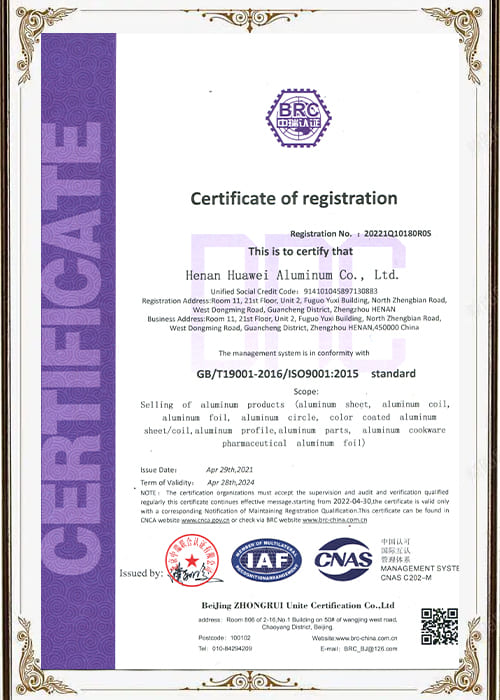
A leading global supplier like Huawei Aluminum ensures the highest quality through a comprehensive quality assurance system.
- GMP-Compliant Production: Adherence to Good Manufacturing Practices.
- Advanced Testing: Utilizing advanced equipment to test for surface wettability (dyne value), pinhole count, at mekanikal na mga katangian.
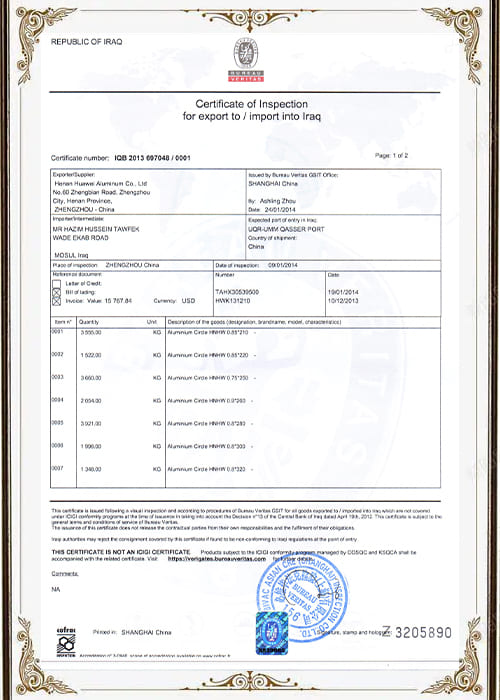
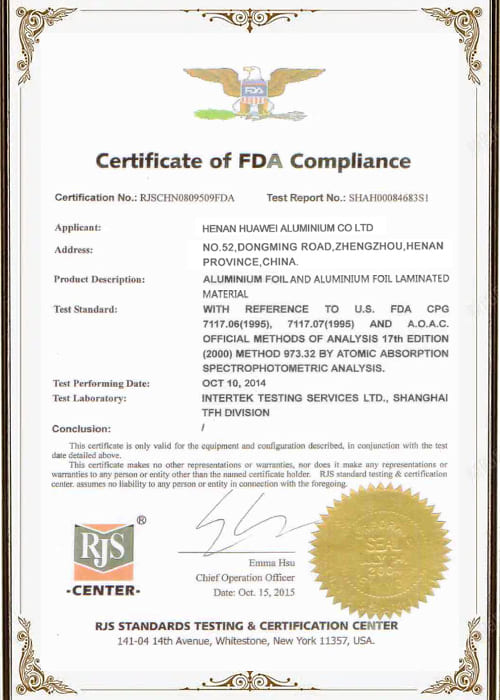
- Full Traceability: Providing complete documentation and Mill Test Certificates (MTC) for every coil, guaranteeing that the material meets all required pharmaceutical standards (hal., YBB, FDA).
This commitment to quality ensures that the 8011 foil will perform reliably and safely in its critical final application.
10. Pangwakas na Salita
8011 aluminum foil for medical caps is a highly specialized, performance-critical material. It is not a generic commodity but a product of precise metallurgical control and rigorous quality assurance.
Through its carefully engineered balance of strength, pagiging formable, at mga katangian ng barrier, it provides the secure and stable foundation needed to protect the world’s supply of injectable medicines.
It is a small but indispensable component in the larger mission of ensuring patient safety and drug efficacy, representing a perfect fusion of material science and healthcare.
Mga FAQ
Q1 — Why choose 8011 instead of 1100 o 3003 for caps?
A: 8011 provides a cost-effective balance of drawability and strength tuned for thin foil production.
1100 (commercial-pure) has slightly better corrosion resistance but is more expensive; 3003 may be used for other packaging but 8011 is optimized by mills for economical foil gauges used in caps.
2. What is the purpose of the coating on the aluminum foil for caps?
The coating, usually a clear or gold-colored epoxy lacquer, serves two main purposes.
Una, it creates an inert barrier that prevents any possibility of the aluminum metal coming into direct contact with the drug product.
Pangalawa, it provides a clean and smooth surface that is suitable for printing brand names, Mga Logo, or other information.
Q2 — What thickness should I specify for vial crimp liners vs screw-cap liners?
A: Vial crimp liners often use ~30–50 µm depending on cap design; screw-cap liners used as tamper-evident seals typically range ~30–60 µm.
Specify based on tooling, required barrier and whether a polymer liner will be laminated.
Q3 — How do I control pinholes?
A: Minimize contamination during rolling; require bright anneal and cleanroom handling if needed; specify pinhole inspection method and acceptance criteria; control slitting tools and punch quality because mechanical damage is a common source of pinholes.
Q4 — Are lacquered 8011 foils sterilisable?
A: Many lacquer/liner systems are compatible with autoclave (halamang singaw sa paa), EtO or gamma sterilization, but compatibility must be validated: run full sterilization cycles and test mechanical properties, adhesion and extractables afterwards.