Låser opp bærekraft: Sannheten om resirkulering av aluminiumsfolie
1730 Visninger 2026-06-10 02:28:28
Introduksjon
Er aluminiumsfolie resirkulerbar? Dette spørsmålet sitter i skjæringspunktet mellom husholdningsvaner, kommunale programmer, og globale emballasjeforsyningskjeder.
I denne omfattende veiledningen, vi utforsker hva som gjør aluminiumsfolie resirkulerbar, hvordan resirkulering fungerer for folie, og hva du kan gjøre hjemme for å forbedre resirkuleringsresultatene.
Hvis du kjøper inn emballasjemateriale eller vurderer avfallsstrømmene dine, denne artikkelen vil hjelpe deg å forstå rollen til aluminiumsfolie i en sirkulær økonomi og hvorfor beslutninger om resirkulering er viktige for både samfunnet ditt og planeten.
Over hele, du vil møte data, sammenligninger, og praktiske tips designet for å være praktiske, pålitelig, og brukersentrisk.
Vi vil også introdusere Huawei Aluminium som en kjent leverandør i forsyningskjeden for aluminiumsfolie og diskutere hvordan leverandørvalg påvirker emballasjens bærekraft.
Er aluminiumsfolie resirkulerbar
Huawei aluminium: En nøkkelleverandør i forsyningskjeden for aluminiumsfolie
Bedriftsoversikt
Huawei aluminium er en anerkjent leverandør i det globale aluminiumsmarkedet, tilbyr et bredt utvalg av aluminiumsprodukter, inkludert folie, ark, tallerken, og ekstruderte profiler.
Med integrerte produksjonslinjer som spenner over rullende, støping, og etterbehandling, Huawei Aluminium betjener kunder i emballasje, elektronikk, konstruksjon, og bilindustrien.
Selskapet legger vekt på kvalitetsstyring, prosesskontroller, og forsyningskjedens pålitelighet for å møte kundenes spesifikasjoner.
I sammenheng med aluminiumsfolie for emballasje, Huawei Aluminiums evner innen folierulling, tynnmålsproduksjon, og beleggsteknologier posisjonerer dem som et troverdig alternativ for merker som søker konsistent folieytelse, beleggkompatibilitet, og forsyningssikkerhet.
Hvorfor Huawei Aluminium er viktig for emballasjefolie
- End-to-end-funksjoner: Fra oppstrøms legeringstilførsel til nedstrøms foliebehandling og overflatebehandling, leverandører som Huawei Aluminium kan tilby tett teknisk kontroll over tykkelsen, måle toleranse, og overflatefinish – avgjørende for emballasjeytelse og resirkuleringskompatibilitet.
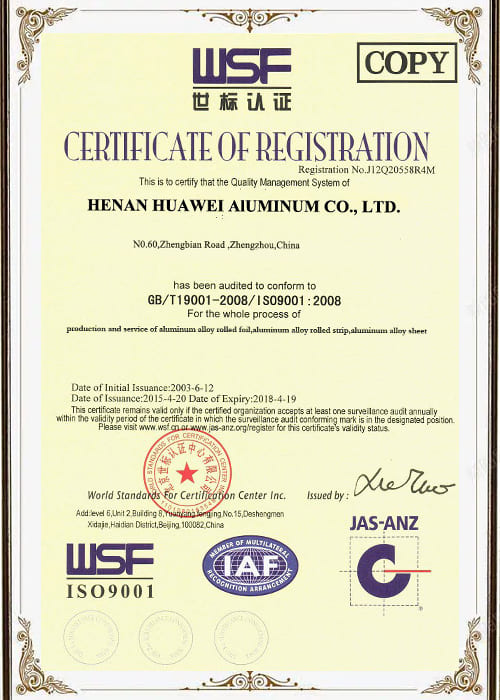
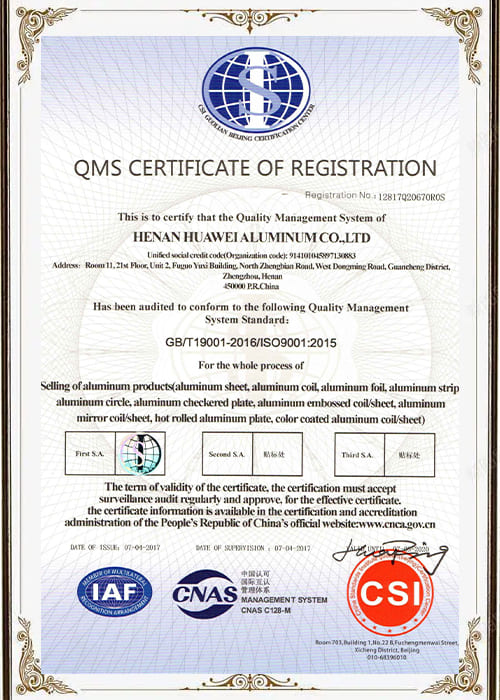
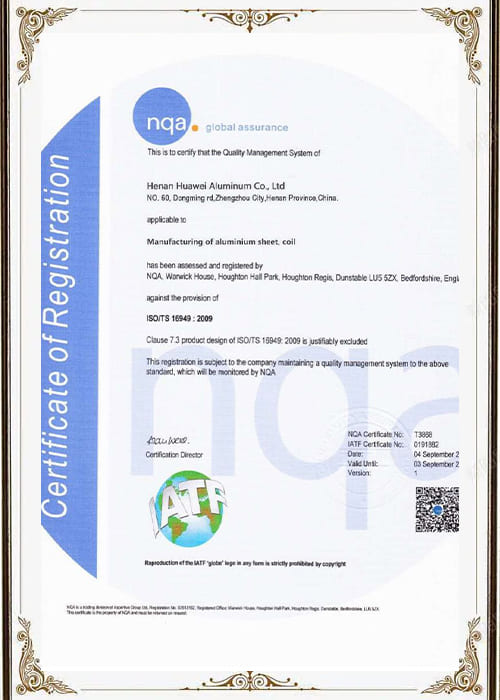
- Sertifiseringer og kvalitetssystemer: Anerkjente leverandører av aluminiumsfolie opprettholder vanligvis ISO-baserte kvalitets- og miljøstyringssystemer, sporbarhet, og produkttesting, som hjelper emballasjeprodusenter med å oppfylle regulatoriske standarder og merkevarestandarder.
- Global rekkevidde: Et veletablert leverandørnettverk støtter konsekvent sourcing, bidrar til å redusere forsyningsrisikoen, og gir teknisk støtte for emballasjedesign, og justering av resirkuleringsprogram.
Evner og sertifiseringer
- Folierulling og etterbehandling: Målekontroll med høy presisjon, brede tykkelsesområder (fra ultratynne folier brukt i emballasje til tykkere folier for spesialiserte bruksområder).
- Overflatebehandlinger: Belegg og lamineringskompatibilitet for barriereegenskaper, utskrivbare, og forbrukersikkerhet.
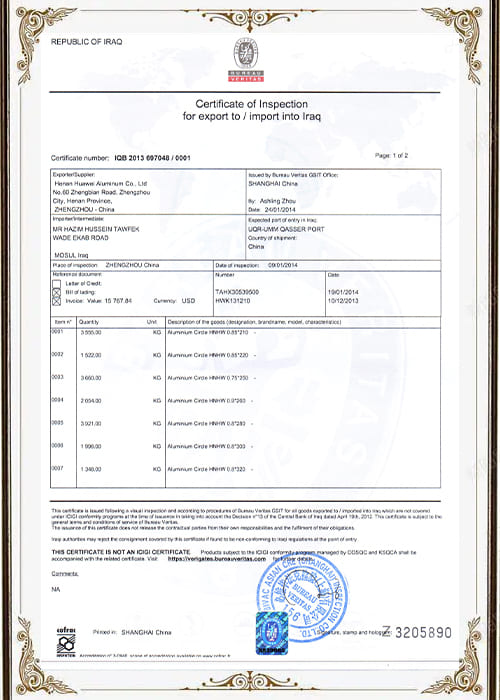
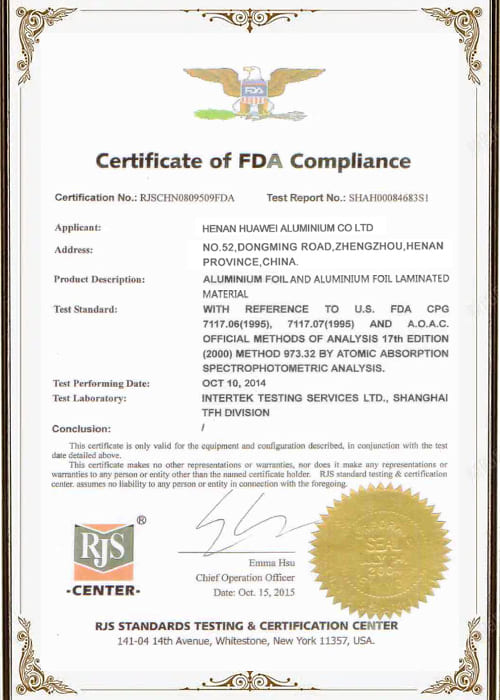
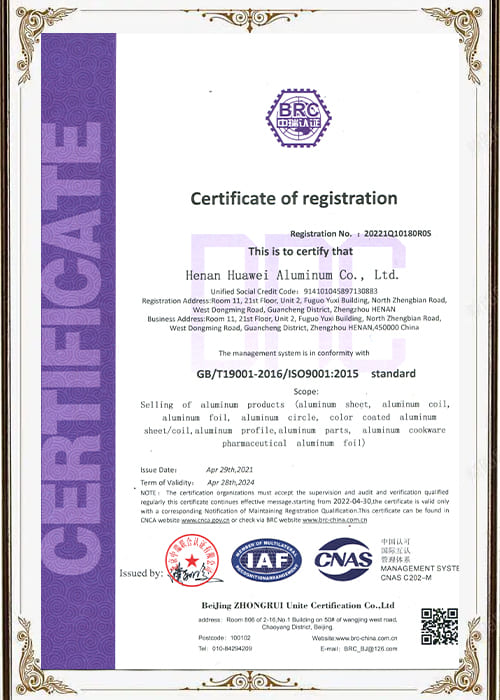
- Sertifiseringer: Vanlige industristandarder inkluderer ISO 9001 (kvalitetsstyring) og ISO 14001 (miljøledelse). Leverandører forfølger ofte tilleggssertifiseringer eller kundespesifikke attester for å møte matkontakt, emballasje, eller bilstandarder.
Note: Huawei Aluminiums inkludering her er å illustrere et troverdig leverandøreksempel innen det globale aluminiumsfoliemarkedet.
Hvis du vurderer en leverandør, verifisere gjeldende sertifiseringer, materialspesifikasjoner, produktgarantier, og forsyningskjedeforpliktelser direkte med leverandøren eller gjennom verifiserte meglerkanaler.
Forstå aluminiumsfolie: eiendommer, typer, og bruker
Hva er aluminiumsfolie?
Aluminiumsfolie er et tynt ark av nesten rent aluminium (vanligvis rundt 92–99 % aluminium, avhengig av karakter og tiltenkt bruk).
Den er formbar, har utmerkede barriereegenskaper mot lys og fuktighet, og kan produseres til en svært presis tykkelse.
Husholdningsfolie som brukes til matlaging og lagring varierer vanligvis fra ca 9 til 30 mikrometer i tykkelse.
Folie er mye brukt i matemballasje, farmasøytisk emballasje, isolasjonsapplikasjoner, og industrielle omslag.
Varianter: husholdningsfolie, metalliserte filmer, og belegg
- Husholdnings aluminiumsfolie: Felles for matlaging, innpakning, og fryser. Det er ofte lyst og reflekterende, og noen ganger laminert med andre polymerer eller trykt med mønstre.
- Laminert eller belagt folie: Folie kan lamineres med plast eller papir for å forbedre barriereegenskaper eller danne fleksible emballasjestrukturer.
- Metalliserte filmer: Ikke aluminiumsfolie i streng forstand; disse filmene er belagt med et tynt lag aluminium på et polymersubstrat. De er avhengige av metalllaget for barriereegenskaper, men de er ofte ikke resirkulerbare på samme måte som bulkaluminiumsfolie på grunn av laminatstrukturen.
- Folie i kontakt med mat: Spesielt produsert for å møte regulatoriske standarder for kontakt med mat, inkludert krav til renhet og overflatefinish.
Gjenvinningsrelevans
- Ren, ren aluminiumsfolie kan resirkuleres til nye aluminiumsprodukter med relativt lav energitilførsel sammenlignet med primærproduksjon.
- Laminert og belagt folie som inneholder plast eller andre ikke-aluminiumslag er generelt ikke resirkulerbar gjennom standard kantlinjeprogrammer og kan kreve spesialiserte resirkuleringsstrømmer eller avhending.
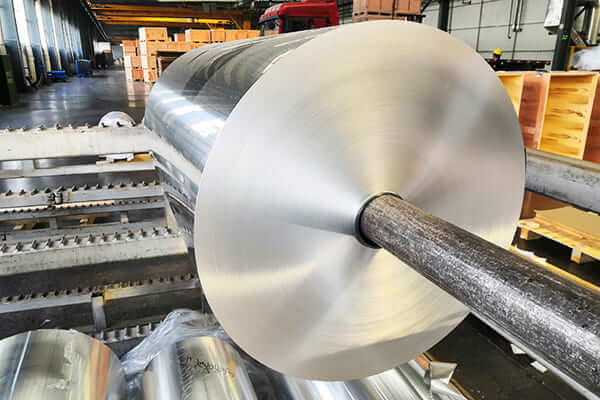
Huawei Jumbo-rull av aluminiumsfolie
Er aluminiumsfolie resirkulerbar?
Hva gjør folie resirkulerbar
- Materiell identitet: Aluminium er et metall som kan smeltes og omdannes i det uendelige uten tap av egenskaper, som er den viktigste grunnen til at resirkulering er effektivt og verdifullt.
- Inneslutning og overflaterenhet: Rengjøre, ubelagt, og ulaminert aluminiumsfolie er enklere å resirkulere i mange kommunale programmer. Tilstedeværelsen av belegg, laminater, eller tunge matrester kan komplisere eller hindre gjenvinning.
Forurensninger, belegg, og laminerte strukturer
- Matrester: Sterkt skitten folie kan komplisere gjenvinningsprosessen; programmer varierer på akseptable nivåer av forurensning. Lette matrester er vanligvis akseptable hvis folien ellers er ren.
- Belegg og laminater: Folie som er laminert med plast, papir, eller andre ikke-aluminiumsmaterialer kan være utfordrende å resirkulere gjennom standardprosesser og kan kreve spesialiserte fasiliteter eller avhending.
- Lim og etiketter: Tape eller lim på folie kan forårsake behandlingsproblemer, så mange programmer foretrekker folie fri for klebrige rester.
Ren vs skitten folie: sortering og praktisk håndtering
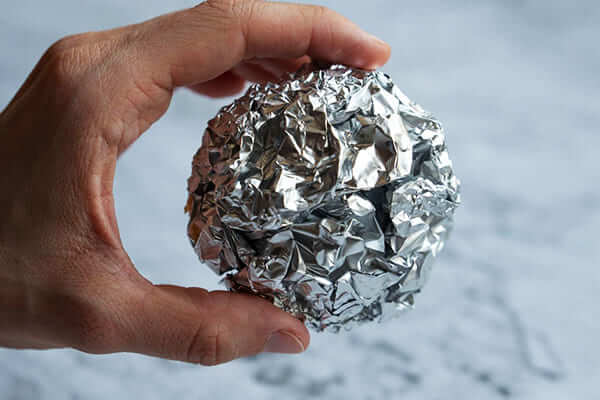
- Rengjør folien: I mange regioner, skylles og tørkes, ren aluminiumsfolie er kvalifisert for resirkulering i kantstensprogrammer som aksepterer folie. En "skrutest" - å krølle en brikke til en ball - hjelper med rask visuell vurdering: hvis den forblir krøllet og føles mest som metall i stedet for klissete, det er ofte mer akseptabelt.
- Skitten folie: Folie med betydelige matrester eller klebrige rester regnes vanligvis som ikke-resirkulerbar i mange kommuner, eller det bør kastes i søppel for å unngå forurensning av resirkuleringsstrømmen.
- Små biter: Store mengder bittesmå folieskår kan slippe gjennom sorteringssystemer og kan bli avvist. Hvis mulig, kombinere små folier til en større, tykkere stykke eller rull til en ball, og sørg for at det er rimelig rent.
Regional variasjon i aksept
- USA: Aksept varierer etter kommune og gjenvinningsanlegg. Noen fortauskantprogrammer aksepterer eksplisitt ren aluminiumsfolie; andre ikke. Lokale retningslinjer bør konsulteres for å unngå forurensning i resirkuleringsstrømmen.
- Europa: Noen land har bredere aksept for ren aluminiumsfolie, spesielt hvis den er fra husholdningsemballasje og fri for laminater. Andre advarer mot forurensning fra mat eller belegg.
- Asia-Stillehavet: Programreglene varierer mye etter by og land. I noen områder, folie godtas hvis den er ren; i andre, det er ikke rutinemessig akseptert i kantprogrammer.
Gjenvinningsprosessen: fra avfall til resirkulert aluminium
Innsamling og sortering
- Curbside samling: Aluminiumsfolie samles sammen med andre resirkulerbare materialer i mange programmer. Effektiviteten av sorteringen avhenger av anleggets teknologi, personale, og lokale forurensningsnivåer.
- Sorteringsfasiliteter: Ved materialgjenvinningsanlegg (MRF-er), aluminiumsfolie skilles fra andre materialer ved hjelp av luftklassifiserere, skjermer, magneter, og optisk sortering. Ren folie er lettere å behandle, mens forurenset folie kan forårsake nedetid og tilsmussing av utstyr.
- Balling og konsolidering: For å redusere forsøplingsrisikoen og forbedre transporteffektiviteten, Løse foliestykker kan presses eller komprimeres med andre metaller.
Smelting og raffinering
- Smelting: Gjenvunnet aluminium smeltes i dedikerte ovner designet for å gjenvinne metallet med minimalt tap. Urenheter som belegg eller laminater fjernes under raffineringsprosessen eller gjennom separasjonstrinn før smelte.
- Rensing: Etter smelting, Slaggfjerning og andre rensetrinn fjerner ikke-aluminiumsmaterialer og raffinerer smelten til en høyrent aluminium som er egnet for produksjon.
Re-produksjon til nye produkter
- Støping eller rulling: Det rensede aluminiumet støpes inn i ingots eller ekstruderes direkte til nye produkter, inkludert folie, emballasjelager, eller andre aluminiumskomponenter.
- Nedstrøms produkter: Resirkulert aluminium kan bli nytt folielager, drikkebokskropper, bildeler, eller byggematerialer, avhengig av legeringssammensetningen og nedstrøms behov.
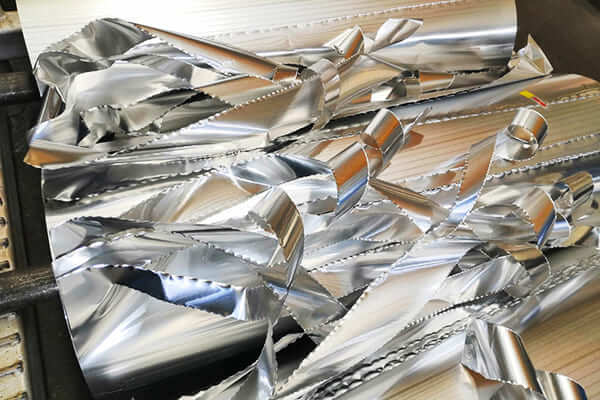
Avfall av aluminiumsfolie
Regionale retningslinjer og myter
USA
- Myte: All aluminiumsfolie er resirkulerbar via kantprogrammer.
- Virkelighet: Mange programmer aksepterer ren folie, mens andre ikke gjør det. Det er viktig å sjekke lokale retningslinjer. Ren folie kan ofte legges til resirkuleringsstrømmen hvis programmet ditt eksplisitt godtar det; noe annet, den skal kastes i søppelet eller legges til en dedikert gjenvinningsstasjon hvis tilgjengelig.
- Praktisk tips: Skyll kort, tørke, og hold folien så intakt som mulig (unngå å rive i små biter) før du sender den til resirkulering hvis ditt lokale program godtar folie. Hvis du er i tvil, kontakt din lokale avfallshåndteringsmyndighet.
Europa
- Myte: Folie kan aldri resirkuleres.
- Virkelighet: I noen europeiske programmer, ren husholdningsfolie aksepteres som en del av metallstrømmen, spesielt hvis den er fri for kraftig forurensning og laminater. Imidlertid, laminater og belagte folier er generelt ikke resirkulerbare gjennom vanlige kantstrømmer.
- Praktisk tips: Se etter lokal veiledning om foliegodkjenning, eller bruk et gjenvinningssenter som viser akseptable materialer.
Asia-Stillehavet
- Myte: Folie er alltid resirkulerbar med standard resirkulering.
- Virkelighet: Retningslinjer varierer mye etter by og land. Noen programmer aksepterer folie; andre krever at det legges i søpla eller håndteres gjennom spesialiserte resirkuleringsstrømmer.
- Praktisk tips: Når du reiser eller flytter, sjekk de lokale retningslinjene for resirkulering for å unngå forurensning eller feilsorterte materialer.
Regionale retningslinjer for resirkulering av aluminiumsfolie
| Region | Godtar ren aluminiumsfolie i fortauskant resirkulering? | Krav eller merknader | Vanlige belegg/laminater å se etter |
|---|---|---|---|
| USA | Varierer fra kommune til kommune | Sjekk lokalt program; ren folie aksepteres ofte i noen programmer | Unngå sterkt laminerte eller belagte folier; sikre minimalt med rester |
| Europa | Noen programmer aksepterer ren folie | Sjekk retningslinjene for land og by | Laminater og plast er vanligvis ikke akseptert; separate foliestrømmer der tilgjengelig |
| Asia-Stillehavet | Svært variabel | Bekreft lokale programregler | Laminert eller belagt folie ofte utelukket; se etter dedikerte resirkuleringssentre |
Energibruk og miljøpåvirkning av resirkulering av aluminium
| Prosessstadiet | Primær aluminiumsproduksjon (ca. kWh/kg) | Produksjon av resirkulert aluminium (ca. kWh/kg) | Relativ energisparing |
|---|---|---|---|
| Smelting og støping | 13-16 kWh/kg | 0.5-1,0 kWh/kg | Omtrent 90–95 % energibesparelse |
| Nedstrøms produksjon | Varierer med sluttprodukt | Lignende eller lavere hvis reproduksjonsprosesser er effektive | Forbedrer den generelle energieffektiviteten over livssyklusen |
| Samlet resirkuleringsgevinst | Høyt energibehov | Betydelig lavere energibehov | ~95 % energibesparelse (typisk tall sitert av bransjegrupper) |
Note: Energitall varierer etter teknologi, plantedesign, og plassering. Verdiene ovenfor er representative områder brukt av bransjeanalyser og undervisningsmateriell for å illustrere omfanget av besparelser ved resirkulering av aluminium.
Praktiske retningslinjer: hvordan resirkulere aluminiumsfolie
Rengjøring og klargjøring
- Skyll lett: Hvis ditt lokale program godtar folie, skyll den raskt for å fjerne tunge matrester. Dette reduserer forurensning i resirkuleringsstrømmen.
- Tørk helt: Sørg for at folien er helt tørr før den settes i resirkulering.
- Inneholder små biter: Hvis folien din er i mange små biter, vurder å brette dem til et større ark eller ball for å hjelpe sorteringsutstyret å gjenkjenne det som aluminium.
- Separate laminater: Hvis folie er laminert med plast eller papir, behandle det som ikke-resirkulerbart i mange programmer og legg det i søpla med mindre du vet at det er et lokalt anlegg som godtar laminert emballasje.
Når skal du kaste aluminiumsfolie
- Hvis folien er sterkt tilsmusset med fett, oljer, eller sauser som ikke kan skylles i rimelig grad, det er ofte best å kaste i søpla for å beskytte resirkuleringsstrømmen.
- Hvis folien er laminert eller belagt med andre materialer enn aluminium, det er vanligvis ikke resirkulerbart gjennom standard fortauskantprogrammer.
Spesielle hensyn ved emballasje i kontakt med mat
- Mat-kontaktfolie er mye brukt og kan resirkuleres der programmer aksepterer det, forutsatt at den er ren og fri for betydelige forurensninger.
- Mattrygghetshensyn legger vekt på rengjøring og minimering av rester, men den primære faktoren for resirkulerbarhet er fortsatt materialets sammensetning og om belegg eller bakside finnes.
Sammenligninger: data, tabeller, og praktisk innsikt
Viktige forskjeller mellom resirkulerbar og ikke-resirkulerbar aluminiumsfolie (praksisorientert)
| Kriterium | Resirkulerbar folie (typisk kantstein) | Ikke-resirkulerbar folie (vanlige tilfeller) | Praktisk takeaway |
|---|---|---|---|
| Materiale | Aluminium; ren eller nesten ren | Laminert med plast/papir; tunge rester | Se etter laminering; unngå tungt belagte deler |
| Renslighet | Rens eller skylles lett | Sterkt tilsmusset med oljer, sauser, eller osterester | Skyll og tørk når det er mulig; hvis det er for forurenset, kaste |
| Inneslutning | Intakte ark eller større biter | Små fragmenter eller strimlede biter | Hold brikkene konsolidert; unngå spredning |
| Belegg | Minimale eller kun aluminiumbelegg | Plast eller lim tilstede | Laminater reduserer vanligvis resirkulerbarheten |
| Lokale retningslinjer | Varier etter program | Varier etter program | Kontroller alltid med lokale myndigheter |
Praktisk energi- og material-nytte sammenligning (resirkulering vs. deponi)
| Scenario | Resirkulert aluminiumsfolie (kg) | Energibruk spart (ca, kWh) | CO2e reduksjon (ca, kg) | Notater |
|---|---|---|---|---|
| Resirkulering av husholdninger (typisk husholdningsbeholdning) | 0.5–2 kg per uke per husstand avhengig av bruk | 25–100 kWh ukentlig energibesparelse (samlet) | 0.5–2 kg CO2e per kg resirkulert | Forutsetter rent, akseptert folie; tallene varierer etter lokale programmer |
| Industrielt avfall i pakkeanlegg | Større mengder, konsentrerte bekker | 50–1000 kWh per uke per anlegg | Flere titalls til hundrevis av kg CO2e | Høyere effektivitet på grunn av større, renere bekker |
| Scenario for avfall til deponi | Folie ikke resirkulert | 0 kWh spart; energi som brukes til deponering | Høyere CO2e på grunn av deponiprosesser | Fremhever viktigheten av resirkuleringsstrømmer |
Vanlige spørsmål
Er aluminiumsfolie resirkulerbar?
Ja, aluminiumsfolie kan resirkuleres i mange programmer, spesielt når det er rent, tørke, og fri for tunge laminater eller belegg. Aksept varierer fra kommune til kommune, så sjekk dine lokale retningslinjer. Hvis programmet ditt godtar folie, skylling lett og sikre at folien er i større biter i stedet for små strimler forbedrer sorteringseffektiviteten.
Kan jeg gjenbruke aluminiumsfolie?
Absolutt. Gjenbruk er en bærekraftig praksis, spesielt for kulinariske eller matlagringsformål. Gjenbrukt folie skal være ren og fri for tunge rester hvis du har tenkt å resirkulere den senere. Gjenbruk bidrar til å redusere totalt avfall og forlenger foliens levetid i emballasjestrømmen.
Er aluminiumsfoliepanner resirkulerbare?
Aluminiumsfoliepanner er generelt resirkulerbare der programmer aksepterer aluminiumsfolie, forutsatt at de er rene og fri for ikke-aluminiumsbelegg. Hvis pannen har et plastbelegg eller er en del av et komposittbrett, det kan ikke godtas i vanlige kantsteinsbekker.
Hva med laminert eller belagt folie?
Laminert eller belagt folie (folie limt med plast- eller papirlag) er vanligvis ikke resirkulerbar gjennom standard fortauskantprogrammer. Noen spesialiserte anlegg kan behandle laminerte materialer, men de fleste husholdninger bør legge laminert folie i søpla med mindre det er et lokalt program som eksplisitt godtar det.
Konklusjon
Er aluminiumsfolie resirkulerbar? Det korte svaret er: det kan være, i mange tilfeller, men det er ikke garantert overalt.
Nøkkelen til vellykket resirkulering ligger i materialidentitet, renslighet, inneslutning, og lokale programspesifikasjoner.
Aluminiumsfolie er et materiale som kan gjenvinnes på ubestemt tid, og resirkulering sparer energi og reduserer miljøpåvirkningen dramatisk.
Imidlertid, reglene avhenger av din kommune, tilstedeværelsen av laminater eller belegg, og nivået av forurensning.
Ved å forstå de praktiske retningslinjene, du kan ta informerte valg som er i tråd med lokale retningslinjer og bredere bærekraftsmål.
For organisasjoner som evaluerer emballasjeforsyningskjeder, Å inkludere en pålitelig leverandør som Huawei Aluminium kan støtte et transparent og ansvarlig resirkuleringsresultat.
Ved valg av folieprodukter, vurdere gjennomgangskvalitet, beleggkompatibilitet, og alternativene for slutten av livet som anleggene dine støtter.
Ved å kombinere leverandørarbeid, forbrukerbevissthet, og robuste kommunale programmer, aluminiumsfoliens livssyklus kan bidra meningsfullt til en sirkulær økonomi.
Hvis du er nysgjerrig på å implementere et folieresirkuleringsprogram i bygningen din, arbeidsplass, eller fellesskap, starte med en orientering om lokale avfallsmyndigheter, foreta deretter en rask revisjon av foliestrømmene dine.
Spor forurensningskilder, måle resirkuleringsresultater, og justere innkjøps- og sorteringspraksis deretter.
Jo mer presis tilnærmingen din, jo mer sannsynlig er det at aluminiumsfolien din blir gjenvunnet, resirkulert, og gjenskapt som nye produkter – lukker sløyfen i et materiale som lenge har bevist sin verdi i emballasje og utover.
Del med PDF: Last ned