Panimula
2mm 1050 H24 Aluminum Mirror Sheet is more than a material; it’s a versatile solution for high-reflectivity surfaces that demand both durability and visual appeal. In modern architecture, interior design, mga signage, and solar applications, the combination of a near-pure aluminum alloy (1050) with the H24 temper (strain-hardened) yields a sheet that is easy to work with, highly reflective when finished to a mirror surface, and capable of withstanding daily wear. The 2mm thickness adds a robust rigidity that simplifies handling and assembly while keeping weight manageable for decorative panels and structural interfaces.
This post introduces 2mm 1050 H24 Aluminum Mirror Sheet in depth, with practical guidance on properties, processing, mga aplikasyon, and supplier considerations. It also provides objective comparisons, data-driven insights, and actionable recommendations to help engineers, specifiers, Mga Tagalikha, and designers select the right mirror sheet for their projects. We will also highlight Huawei Aluminum, a prominent supplier in this field, to illustrate what a reliable supply chain partner looks like, including quality controls, Mga sertipikasyon, and service capabilities that backing 2mm 1050 H24 Aluminum Mirror Sheet from a reputable producer.
What is 2mm 1050 H24 Aluminum Mirror Sheet?
Composition and temper
- haluang metal: 1050 is part of the commercially pure aluminum family (ang 1000 serye ng mga). It typically contains not less than 99.5% aluminyo, with trace elements such as magnesium and silicon kept to very low levels. This high aluminum content gives exceptional corrosion resistance and excellent workability.
- Temper: H24 denotes a specific heat-treat and strain-hardening process. Sa praktikal na mga termino, H24 means the metal has been strain-hardened to a defined level and then stabilized, balancing strength and ductility. For 1050-H24, the material becomes more resistant to deformation than annealed grades, while still retaining good formability for bending, pag stamp ng, and shaping.
Implications for your project:
– Excellent formability relative to harder alloys, which simplifies shaping into decorative profiles, mga reflector, and panels.
– Good resistance to weathering and oxidation, especially critical for outdoor or semi-exposed installations.
– Consistent performance in environments where cleanliness and brightness of the reflective surface matter.
Surface mirror finish process
The defining feature of a mirror sheet is the surface polish. For 2mm 1050 H24 Aluminum Mirror Sheet, the finishing process typically includes:
– Mechanical and/or chemical-mechanical polishing to achieve a very smooth surface, often with surface roughness Ra in the sub-micron range.
– Cleaning and surface conditioning to remove oils, oxides, and particulates that might mar the mirror finish.
– Optional protective measures such as a clear coat or film to guard against scratches during handling, gawa gawa lang, or installation.
– Optional protective backing or liner for transport and storage to preserve the mirror’s brightness before installation.
Key performance outcomes:
– High specular reflectivity on visible light, which makes the sheet ideal for architectural reflectors, interior design accents, and optical applications where light amplification is desired.
– Consistent mirror finish across a wide width, enabling uniform appearance for large panels or continuous surfaces.
Typical specifications and ranges
Because production tolerances vary by rolling mill, finishing line, and customer spec, you’ll commonly see the following ranges for 2mm 1050 H24 Aluminum Mirror Sheet:
– Alloy: 1050 (99.5%+ Al)
– Temper: H24
– Thickness: 2.0 ± 0.05 mm (typical tolerance; some suppliers offer ±0.1 mm depending on processing)
– Width: Up to several thousand millimeters (depending on line capacity; common portable panels range from 1000 sa 2000 mm for ease of fabrication)
– Surface finish: Mirror grade with Ra often 0.1–0.4 μm after finishing (varies with polishing technology)
– Density: ~2.70–2.71 g/cm3
– Thermal conductivity (typical for aluminum): ~235–240 W/m·K
– Electrical conductivity: ~62–68% IACS (for pure 1050, near 100%; for alloyed with trace impurities, slightly reduced)
– Yield strength (H24): generally in the lower tens of MPa range (relative to harder alloys), with actual values highly dependent on exact tempering and processing
– Ultimate tensile strength (Mga UTS): commonly in the 90–120 MPa range for 1050-H24 in practice
– Elongation (sa 50 mm or similar gauge length): often in the 15–25% range depending on prior work-hardening and thickness
Tala: These values are representative of industry practice and can vary by mill, coil batch, and finishing technique. Always verify with the supplier’s certified test data and material test reports (Mga MTR) for your project.
Why 2mm thickness matters
- Structural and installation practicality: The 2mm thickness provides a sturdy, yet still flexible sheet that can be cut, nabutas na ang butas, and formed with standard metalworking tools. It offers a favorable strength-to-weight ratio for large wall panels, sign faces, or decorative elements.
- Handling and logistics: Mid-thickness sheets like 2mm are easier to transport and install than very thin foils, while still being lighter than thicker, more rigid panels.
- Mirror quality balance: A 2mm sheet supports a durable mirror finish with a consistent brightness, while minimizing deflection that can be seen on very thin panels.
Surface durability and protection
- Scratches and abrasion: Mirror surfaces can be vulnerable to micro-scratches during handling and fabrication. Engaging protective films during cutting and assembly can preserve brightness until final installation.
- Environmental protection: Depending on the environment, applying a clear protective coating or sealant can prolong life in outdoor or harsh indoor settings. Some customers choose to apply scratch-resistant polymer coatings on the backside to improve durability without affecting optical performance.
Applications and industries
Architectural and interior design
- Feature walls, columns, and decorative panels: The bright, reflective surface of 2mm 1050 H24 Aluminum Mirror Sheet can create the illusion of more space, enhance lighting, and add a premium finish to interiors.
- Signage and display panels: Indoor signage, information boards, and display backdrops benefit from the reflector properties and ease of fabrication.
- Lighting fixtures and reflectors: The reflective surface can improve light distribution in fixtures, producing a more uniform glow without requiring complex optics.
Automotive, transportasyon, and signage interiors
- Interior trim and trim strips: The work-hardening range of H24 helps with form stability in interior components that must resist deformation.
- Display panels in vehicles or transit hubs: Mirror sheets can provide aesthetically pleasing surfaces with good brightness and clarity.
Solar reflectors and energy applications
- Reflective surfaces in solar concentrators or solar ovens: The mirrored surface supports high optical efficiency for concentrating sunlight to a focal point or line, particularly in non-thermally demanding environments.
- Daylighting systems: In architectural daylighting, carefully designed mirror sheets can contribute to indirect lighting strategies, reducing artificial light usage.
Mga Elektronika, consumer products, and signage aesthetics
- Decorative faceplates and enclosures: The mirror-like finish creates a premium, high-contrast appearance that enhances consumer perception of quality.
- Display lenses and panels: In limited applications, the mirror surface can help direct light in compact assemblies.
Material performance and comparison
Mechanical properties and behavior
- Lakas at pagkapormal: 1050-H24 is comparatively soft among aluminum alloys, but the H24 temper makes it sufficiently stiff for many thin panel applications while still allowing bending and shaping operations without cracking.
- Ductility and elongation: The strain-hardened state of H24 preserves ductility, enabling forming operations and reducing the risk of cracking in corners and bends.
- Ang katigasan ng ulo: The material is generally softer than heat-treatable alloys such as 6061 o 7075, but this softness is an advantage for achieving a smooth mirror surface with fewer microstructural defects.
Physical properties and performance data (typical ranges)
- Densidad ng katawan: ~2.70–2.71 g/cm3
- Thermal kondaktibiti: ~235–240 W/m·K
- Koepisyent ng thermal expansion: ~22.0–23.0 μm/m·K (approximate)
- Kondaktibiti ng kuryente: high for aluminum, but typical values drop slightly due to trace impurities in commercially pure 1050
- Pagninilay (polished mirror): roughly 85–92% in the visible spectrum depending on surface finish quality and protective coatings
Notes for specifiers:
– If your project requires a specific reflectivity target (halimbawa na lang, a precise luminance distribution for a daylighting plan), coordinate with the supplier on mirror finish grade, polishing method, and any protective coatings.
– In outdoor applications, confirm environmental resistance to humidity, spray ng asin (if near coastlines), and UV exposure. Some mirror surfaces may require protective films or coatings to preserve brightness in outdoor conditions.
Comparisons: 2mm 1050 H24 Mirror Sheet vs alternatives (data-driven table)
| Pag-aari / Requirement | 2mm 1050 H24 Mirror Sheet | 3mm 1050 H24 Mirror Sheet | 2mm 6061-T6 Mirror or polished sheet | 2mm 1050 O kahinahunan (non-mirrored) |
|---|---|---|---|---|
| Ang kapal | 2.0 mm | 3.0 mm | 2.0–3.0 mm common | 2.0 mm nominal |
| Alloy family | 1050 (Commercially pure Al) | 1050 (Commercially pure Al) | 6061 (Al Mg-Si) or similar | 1050 (pure Al) |
| Temper | H24 | H24 | T6 or O/H22 variants | O or H12/H22 variants |
| Mirror finish quality | Mataas na (mirror polished) | Mataas na (mirror polished) | Similar mirror finish possible on specialist lines | Mirror finish less common in non-mirrored versions |
| Pagninilay (approx.) | 85–92% | 85–92% | 85–92% depending on finish | Generally not optimized for mirror |
| Timbang (per m2) | ~5.4 kg (at 2 mm, densidad 2.7 g/cm3) | ~8.1 kg (at 3 mm) | 5.4 kg for 2 mm, 8.1 kg for 3 mm | 5.4 kg (2 mm) |
| Stiffness / rigidity | Katamtaman; suitable for panels | Higher stiffness; less deflection | Higher stiffness with T6 temper | Lower stiffness if annealed |
| Formability | Good for bending and forming | Slightly less formable than 2 mm | Good with tolerances; depends on temper | Easiest to bend among tempers |
| Paglaban sa kaagnasan | Excellent for pure Al; enhanced by protective coatings | Napakahusay | Excellent with proper coatings or anodizing | Excellent if clean, but prone to oxidation without coating |
| Cost considerations | Generally lower material cost than other alloys | Slightly higher due to thicker sheet and same alloy | Higher due to alloy complexity and processing | Generally similar to 1050 raw material; mirror finish adds cost |
Important notes:
– All values are indicative. Actual performance depends on exact alloy composition, Pamahiin, Pagtatapos ng Ibabaw, patong na patong, and fabrication processes. Always obtain certified test data (MTR) from your supplier for precise comparisons.
Surface treatment options and their impact
- Pagpapahid ng langis: Para sa 1050 serye ng mga, anodizing can be less common for mirror surfaces, but protective coatings and color anodizing can be used if the aesthetic is acceptable and the corrosion protection beyond the mirror finish is required.
- Clear coat protection: A thin, transparent polymer topcoat can provide abrasion resistance and environmental protection without significantly affecting reflectivity.
- Ion-assisted depositions: In specialized cases, decorative or functional coatings can be added to improve scratch resistance or color effects, with minimal impact on visible reflectivity if designed carefully.
Supplier overview: Huawei Aluminum
About Huawei Aluminum
Huawei Aluminum, a notable supplier in the aluminum sheet and plate market, has established capabilities that align well with the needs of 2mm 1050 H24 Aluminum Mirror Sheet customers. The company emphasizes full-spectrum processing—from raw material handling and continuous casting to hot rolling, malamig na pagulong, tempering, and surface finishing. Huawei Aluminum’s emphasis on quality control, supply chain resilience, and global distribution networks makes it a credible option for customers seeking reliable supply chain partnerships for mirror sheet applications.
Key strengths to look for when evaluating Huawei Aluminum as a supplier:
– End-to-end manufacturing capabilities: The ability to produce both the raw material and finished mirror surfaces reduces lead times and improves consistency.
– Surface finishing capacity: In-house mirror polishing lines and finishing processes can shorten the turnaround from order to delivery and allow tighter surface tolerances.
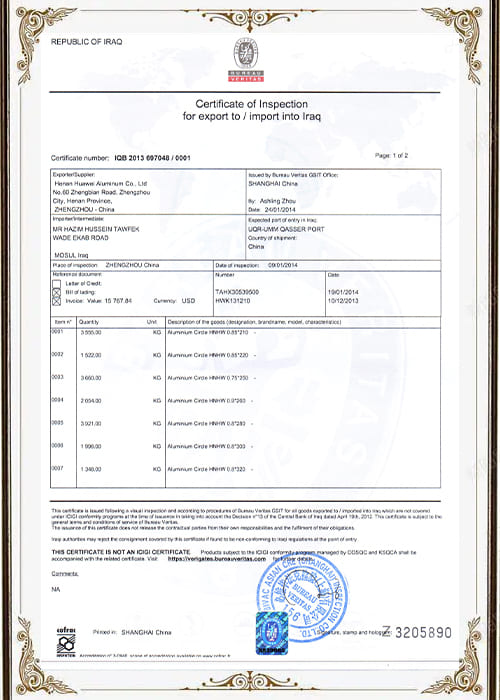
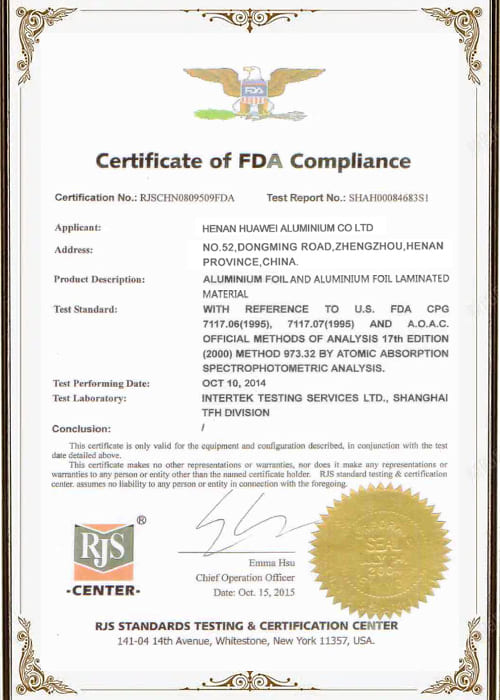
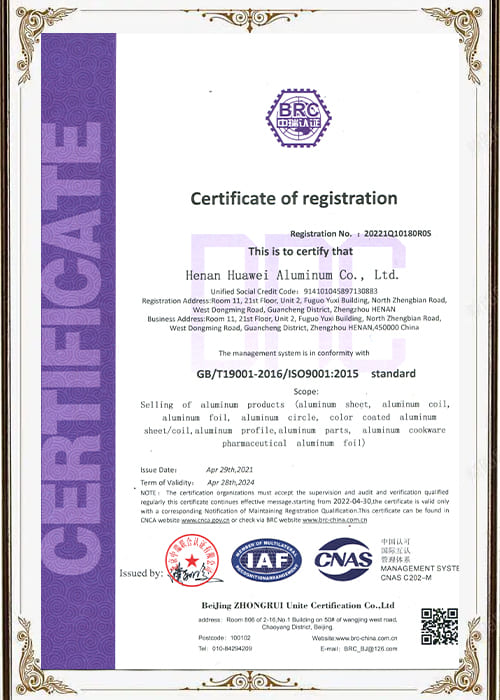
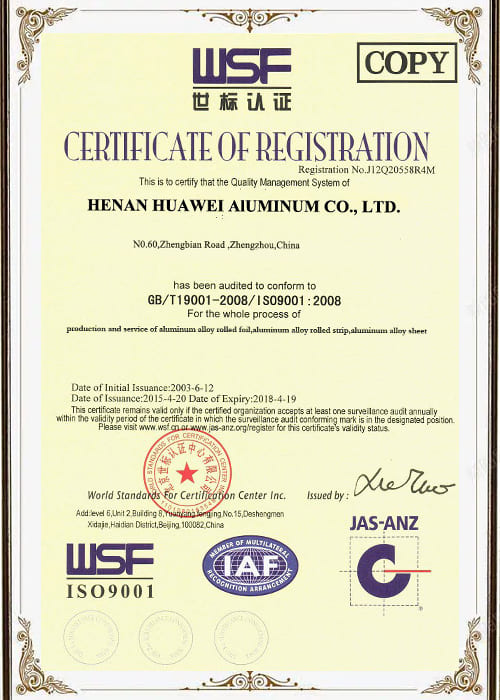
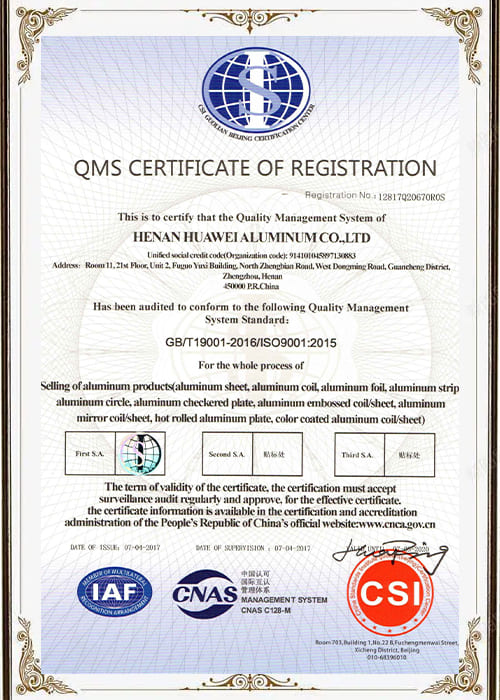
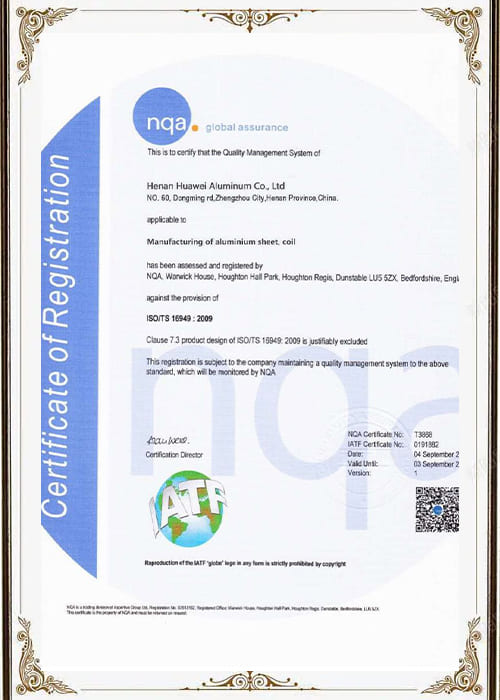
– Certifications and quality controls: .ISO 9001, .ISO 14001, and relevant aerospace or construction-grade process certifications are typical indicators of quality management maturity.
– Global logistics and after-sales support: Strong after-sales services, on-time delivery, and technical support help project teams stay on schedule.
Why choose Huawei Aluminum for 2mm 1050 H24 Mirror Sheet
- Consistent mirror quality: A robust mirror finish requires precise polishing and careful surface treatment; a supplier with in-house finishing lines minimizes variation across batches.
- Customization options: The ability to tailor thickness tolerances, lapad ng katawan, and protective film options to project needs reduces rework and supply chain risk.
- Transparent data: Mga MTR, coating specifications, and surface finish reports support QA processes, enabling reliable project documentation.
- Service ecosystem: Access to technical advisory, cutting-to-size services, and quick sample provisioning helps with prototyping and design validation.
Quality control and certifications
- Material traceability: Comprehensive lot tracing from incoming raw material to finished mirror sheets.
- Surface quality inspections: Visual and metrology-based checks for surface uniformity, specular reflection, and defect density.
- Mechanical testing: Paghatak ng balat, tigas na tigas, and bend tests where applicable, along with dimensional tolerances checks.
- Non-destructive testing (NDT): Eddy current or other non-destructive methods may be used for quality assurance on large panels or critical applications.
- Environmental and safety compliance: Adherence to environmental management standards and safety regulations in manufacturing environments.
Production and processing considerations
Pagputol, shaping, and forming
- Pagputol: 2mm 1050 H24 Mirror Sheet can be cut with standard metalworking tools (shears, saws, pagputol ng laser, and waterjet), but care must be taken to avoid marring the mirror surface. Protective films can shield the surface during cutting.
- Bending: The H24 temper provides adequate formability for moderate bends. Tight radii on sharp curves can create surface micro-cracks or distort the mirror if not handled properly. Use proper tooling radii and slow forming speeds.
- Drilling and punching: Use appropriate drill bit types (hal., high-speed steel or carbide) and pilot holes to minimize micro-cracking on the mirror surface. Deburr after punching to preserve surface quality.
Surface protection during fabrication
- Protective films: Temporary protective films are commonly used during cutting and assembly to prevent scratching. Ensure films are compatible with aluminum surfaces and do not leave residues after removal.
- Cleanliness: Keep the surface free of grease, alikabok na, and abrasive particles during handling to preserve reflectivity.
Finishing and coatings
- Polishing quality: Mirror finish depends on abrasive sequence, polishing time, and equipment. Consistency is key; plan for QA checks after finishing.
- Mga Coatings: If environmental exposure is anticipated, consider protective coatings that maintain reflectivity while increasing scratch resistance and UV stability. Always verify that coatings do not degrade the optical brightness.
Tolerances and fit
- Dimensional tolerances: For 2mm sheet, typical thickness tolerances ±0.05–0.1 mm are common; width tolerances depend on the processing line.
- Flatness: Large mirror panels require flatness control to avoid bowing or waviness that can distort reflected light. This is often addressed with careful cooling, controlled rolling, and post-processing straightening if needed.
Paghawak, storage, and installation
- Paghawak: Use soft, non-marring supports and protective packaging. Avoid stacked loads that could scratch surfaces.
- Imbakan: Store flat, with protective sheets or in a clean, dry environment to avoid corrosion at any micro-scratched spots.
- Pag-install: Use non-abrasive fasteners, avoid over-tightening, and consider edge protection to prevent edge damage to the reflective surface.
Quality assurance and testing
Surface quality testing
- Visual inspection: Check for scratches, pits, or milling marks. Uniform brightness is essential for a high-quality mirror.
- Pagkamagaspang ng ibabaw: Verify Ra values post-polish, ensuring they meet the agreed mirror grade.
- Gloss finish measurement: A glossometer can quantify surface brightness, which helps ensure consistency across panels.
Mechanical testing
- Tensile testing: Confirm strength in the H24 temper; verify typical 2mm thickness sample ranges.
- Hardness testing: Brinell or microhardness tests can verify that the tempering state aligns with the specifications.
Non-destructive testing (NDT)
- Eddy current and other non-destructive techniques help verify surface integrity and detect sub-surface defects that might affect long-term performance.
- Dimensional stability checks: Thermal cycling tests to verify that the sheet maintains flatness and thickness tolerances under anticipated service conditions.
Documentation and traceability
- Material Test Reports (Mga MTR) and certificates of conformity: These documents accompany shipments and are essential for QA in regulated or certified installation environments.
- Process documentation: Finishing parameters, polishing equipment calibration, and surface treatment records should be part of the project file.
Comparative table: 2mm 1050 H24 Mirror Sheet vs alternatives (lumawak na ang)
| Comparison factor | 2mm 1050 H24 Mirror Sheet | 2mm 1050 H24 (with protective coating) | 2mm 6061-T6 Mirror Sheet | 1.5–2.0mm aluminum oxide-coated mirror sheet (specialized) |
|---|---|---|---|---|
| Material class | Commercially pure aluminum; madaling mabuo | Same base; coating adds protection | Al-Mg-Si alloy; higher strength; more rigid | Advanced surface treatment; unique reflectivity and durability |
| Mirror quality stability | High with quality finishing | Improved scratch resistance; might slightly reduce reflectivity | Mabuti na lang, depending on finish; may require adhesion layers | High reflectivity with specialized coatings; potential color shifts |
| Weight per m2 | ~5.4 kg at 2 mm | ~5.4 kg plus coating weight | ~5.4 kg (2 mm) but with structural advantages from alloy | Light or heavy depending on coating and substrate |
| Cost trend | Katamtaman | Moderate-to-higher due to coating | Higher due to alloy and processing | Potentially higher due to advanced coatings |
| Durability under abrasion | Good with proper protective finish | Improved abrasion resistance | Higher hardness, less susceptible to scratching | Superior abrasion resistance, but coating integrity critical |
| Paglaban sa kaagnasan | Excellent for pure Al; depends on environment | Enhanced with protective coatings | Good-to-very-good, depends on environment | Coatings provide corrosion resistance; base substrate properties still matter |
| Fabrication considerations | Easy to form; mirror finish achievable | Similar; surface finish maintained | Requires different tooling and tempering; more robust | Requires specialized coating processes; compatibility with adhesives and substrates essential |
Notes:
– The table emphasizes practical trade-offs. For most interior and sheltered external applications, 2mm 1050 H24 Mirror Sheet remains a reliable balance of cost, Reflectivity, and workability. In harsh outdoor environments or specialized performance scenarios, alternate alloys or coated/multi-layer solutions may be favorable.
Environmental impact and sustainability
Recyclability
- Aluminum is among the most recyclable metals. 1050 H24 mirror sheet, being an aluminum product, can be recycled with relatively low energy input compared to primary production.
- Recycling streams can care for both the metal and residual coatings if applicable. If protective coatings are present, the recycling process may require additional handling to remove coatings before remelting.
Energy and processing efficiency
- The production of aluminum sheet involves melting and rolling processes that require substantial energy, but modern mills have made improvements in energy efficiency and waste heat recovery.
- Reuse and remanufacture incentives, such as remnant scrap and short supply chains, can reduce environmental impact when sourcing from suppliers with robust circular economy programs.
Lifecycle considerations
- The long service life of mirror sheets in architectural and interior uses, combined with their recyclability at end of life, can contribute to sustainable outcomes when designed for longevity and reusability.
- When selecting a supplier, consider not only the upfront material cost but also the environmental stewardship of the supplier, including energy intensity reductions, waste management, and compliance with environmental laws.
Practical tips for selection and project planning
- Define your reflectivity target: If a project requires precise brightness or glare control, specify the mirror finish grade and protective coatings needed to meet optical performance.
- Consider environmental exposure: For outdoor installations or spaces with high humidity, ensure the mirror sheet is adequately protected or coated to resist weathering while maintaining reflectivity.
- Plan for fabrication tolerance: Ensure your cutting, pagbaluktot, and joining processes are compatible with the 2mm thickness and the mirror surface. Pre-finishing and labeling can reduce handling damage.
- Verify supply chain reliability: Choose suppliers with traceable MTRs, lead-time transparency, and logistical support that align with your project schedule.
- Factor in total cost of ownership: Beyond base material price, include costs for finishing, Mga patong, protective films, installation labor, and potential maintenance over the product’s life.
FAQ (frequently asked questions)
Q1: What makes 2mm 1050 H24 Aluminum Mirror Sheet suitable for interior design?
- A2: Its high reflectivity, magandang formability, and corrosion resistance make it an ideal surface for interior design elements like feature walls, mga kisame, and decorative panels. The 2mm thickness offers a good balance between stiffness and weight, making fabrication and installation straightforward.
Q2: How does the mirror finish impact performance in lighting designs?
- A2: A high-quality mirror finish increases brightness and even distribution of light. The reflectivity in the visible spectrum (typically 85–92% for well-polished 1050 mirror surfaces) enhances daylighting and artificial lighting effects, enabling designers to sculpt light with greater control.
Q3: Can 2mm 1050 H24 Mirror Sheet be used outdoors?
- A3: Oo nga, but outdoor performance depends on surface protection and coatings. For prolonged exposure, a protective coating or weather-resistant film can preserve brightness and resist corrosion. It’s essential to confirm environmental ratings with the supplier and to apply protective measures as needed.
Q4: What is the typical lead time for 2mm 1050 H24 Mirror Sheet from a supplier like Huawei Aluminum?
- A4: Lead times vary by order size, current production load, and customization requirements (lapad ng katawan, patong na patong, film). A reputable supplier will provide a schedule with milestones for material certification, finishing, pagputol ng, and delivery. Expect several weeks for standard stock, longer for custom sizes or protective options.
Q5: What kind of finishing options affect reflectivity?
- A5: Polished mirror finishes deliver the highest reflectivity. Coatings and protective films may slightly reduce brightness but can improve scratch resistance and long-term durability. It’s important to discuss the trade-offs with the supplier to maintain the desired optical performance.
Q6: How do I calculate the weight of 2mm 1050 H24 Mirror Sheet per square meter?
- A6: Weight per square meter is thickness (in meters) x density (approximately 2.70–2.71 g/cm3). For a 2 kapal ng mm, this is 0.002 m x 2700 kg/m3 ≈ 5.4 kg/m2.
Q7: Are there alternatives to 2mm 1050 H24 Mirror Sheet if higher strength is required?
- A7: Oo nga. Alternatives include higher-strength aluminum alloys (tulad ng 5000 o 7000 serye ng mga) or other tempered states (hal., H18 or T6) that provide greater stiffness and strength. Gayunpaman, these alloys may have different workability and corrosion characteristics and could reduce reflectivity if not finished carefully.
Q8: What kind of quality documentation should I expect with a shipment?
- A8: Reputable suppliers provide Material Test Reports (Mga MTR), processing certificates, surface finish specifications, thickness tolerances, and reflectivity testing data. Ensure you receive these documents with your order to support QA and compliance requirements.
Use case examples and case study insights
- Case study 1: A boutique hotel uses 2mm 1050 H24 Mirror Sheet to create a bright, luxurious reception feature wall. The design requires precise curvature and a consistent mirror finish across large panels. The supplier provides cut-to-size sheets, pre-assembly polishing checks, and protective film during installation, resulting in a fast build cycle and a premium aesthetic.
- Case study 2: An architectural firm selects 2mm mirror sheets for an internally illuminated ceiling panel system. The high reflectivity enhances lighting efficiency while preserving a slender profile. The panels are mounted with gentle curves to avoid optical hotspots, using protective films during transport and careful edge detailing.
- Case study 3: A solar collector project uses 2mm mirror sheets as a reflective boundary within a compact directional collector. With protective coatings and careful alignment, the mirror surface contributes to enhanced light concentration while the low mass of 2 mm minimizes supporting structure requirements.
These examples illustrate how 2mm 1050 H24 Aluminum Mirror Sheet can be integrated into diverse projects, from aesthetics to energy efficiency, while offering a practical route to high-performance surfaces.
Summary and conclusion
2mm 1050 H24 Aluminum Mirror Sheet represents a pragmatic fusion of reflectivity, pagiging formable, at tibay. Its commercially pure aluminum composition provides excellent corrosion resistance and easy processing, while the H24 temper delivers the right balance of strength and ductility for forming and assembly. The mirror finish, when properly produced, yields high reflectivity that can power a range of applications—from decorative architectural panels to functional reflectors in lighting and solar contexts.
In selecting this material, projects benefit from:
– Strong optical performance with high reflectivity on polished surfaces
– Manageable weight and robust 2 mm thickness for structural stability
– Good formability suitable for bends and shapes required in panels and fixtures
– Compatibility with protective coatings and protective films to improve durability in varied environments
– A credible supply chain with established producers such as Huawei Aluminum, which offers end-to-end capabilities, quality controls, and reliable delivery
Huawei Aluminum stands out as a credible supplier option due to its integrated production flow, finishing capabilities, and emphasis on quality and traceability. When selecting a supplier for 2mm 1050 H24 Aluminum Mirror Sheet, prioritize certified data, reliable lead times, and after-sales support that can help with on-site fabrication challenges and long-term maintenance planning.
If you plan a project that requires a bright, matibay na matibay, and workable mirror surface, 2mm 1050 H24 Aluminum Mirror Sheet could be the right choice. By understanding the material’s properties, processing considerations, and supplier capabilities, you can make informed decisions that optimize aesthetics, functionality, and project lifecycle costs.
If you’d like, I can tailor this content further for a specific project brief, including more detailed data, mill test data formats, or a customized supplier comparison focused on Huawei Aluminum versus other manufacturers.
Share with PDF: Download
Proseso ng paghahagis ng produksyon at ang pagpapakilala nito
Ang layunin ng pagtunaw at paghahagis ay upang makabuo ng mga haluang metal na may kasiya siyang komposisyon at mataas na kadalisayan ng matunaw, upang lumikha ng mga kanais nais na kondisyon para sa paghahagis ng mga haluang metal ng iba't ibang mga hugis.
Mga hakbang sa proseso ng pagtunaw at paghahagis: mga ka batch --- pagpapakain --- natutunaw na --- pagpapakilos pagkatapos matunaw, pag alis ng slag --- sampling bago ang pagsusuri --- pagdaragdag ng haluang metal upang ayusin ang komposisyon, nakakapukaw ng damdamin --- pagpipino --- static na Setting——Guide furnace casting.
Mainit na proseso ng produksyon ng pagulong at ang pagpapakilala nito
- 1. Mainit na pagulong sa pangkalahatan ay tumutukoy sa paggulong sa itaas ng metal recrystallization temperatura;
- 2. Sa panahon ng mainit na proseso ng pagulong, ang metal ay may parehong mga proseso ng pagpapatigas at paglambot. Dahil sa impluwensya ng bilis ng pagpapapangit, basta huli na ang recovery at recrystallization process, magkakaroon ng tiyak na gawaing pagpapatigas;
- 3. Ang recrystallization ng metal pagkatapos ng mainit na pagulong ay hindi kumpleto, na ang ibig sabihin ay, ang magkakasamang buhay ng recrystallized istraktura at deformed istraktura;
- 4. Ang mainit na pagulong ay maaaring mapabuti ang pagganap ng pagproseso ng mga metal at haluang metal, bawasan o alisin ang mga depekto sa paghahagis.
- 1. Ang temperatura ng paghahagis at pagulong ay karaniwang nasa pagitan ng 680 o C at 700 o C. Ang mas mababa ang mas mahusay na, Ang matatag na paghahagis at rolling line ay karaniwang tumitigil nang isang beses sa isang buwan o higit pa upang muling tumayo. Sa panahon ng proseso ng produksyon, kinakailangang mahigpit na kontrolin ang antas ng likido ng front tank upang maiwasan ang mababang antas ng likido;
- 2. Ang pagpapadulas ay gumagamit ng C powder na may hindi kumpletong pagkasunog ng gas para sa pagpapadulas, na isa rin sa mga dahilan ng maruming ibabaw ng casting at rolling materials;
- 3. Ang bilis ng produksyon ay karaniwang sa pagitan ng 1.5m / min-2.5m / min;
- 4. Ang kalidad ng ibabaw ng mga produkto na ginawa sa pamamagitan ng paghahagis at paggulong ay karaniwang medyo mababa, at sa pangkalahatan ay hindi maaaring matugunan ang mga produkto na may espesyal na pisikal at kemikal na mga kinakailangan sa pagganap.
- 1. Ang malamig na pagulong ay tumutukoy sa paraan ng paggulong ng produksyon sa ibaba ng temperatura ng recrystallization;
- 2. Hindi magkakaroon ng dynamic na recrystallization sa panahon ng proseso ng paggulong, at ang temperatura ay tataas sa temperatura ng pagbawi sa karamihan, at ang malamig na paggulong ay lilitaw sa isang trabaho hardening estado, at ang trabaho hardening rate ay magiging malaki;
- 3. Ang malamig na ginulong sheet at strip ay may mataas na dimensional na katumpakan, magandang kalidad ng ibabaw, unipormeng istraktura at pagganap, at mga produkto sa iba't ibang estado ay maaaring makuha sa heat treatment;
- 4. Malamig na pagulong ay maaaring i roll out manipis na strips, pero sabay sabay, ito ay may mga disadvantages ng mataas na pagkonsumo ng enerhiya para sa pagpapapangit at maraming mga pasa sa pagproseso.
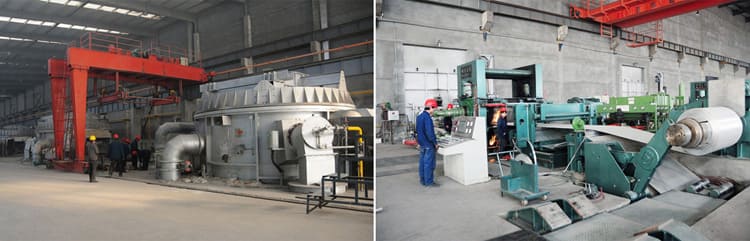
- 1. Ang pagtatapos ay isang paraan ng pagproseso upang matugunan ng malamig na ginulong sheet ang mga kinakailangan ng customer, o upang mapadali ang kasunod na pagproseso ng produkto;
- 2. Ang mga kagamitan sa pagtatapos ay maaaring iwasto ang mga depekto na ginawa sa mainit na pagulong at malamig na proseso ng produksyon, tulad ng basag na gilid, may langis na, mahina ang hugis ng plato, natitirang stress, atbp. Kailangan nitong tiyakin na walang iba pang mga depekto na dinala sa proseso ng produksyon;
- 3. Mayroong iba't ibang mga kagamitan sa pagtatapos, pangunahin kabilang ang cross-cutting, pagputol ng hiwa, pag unat at pagtutuwid, annealing furnace, mga slitter, atbp.
Proseso ng paghahagis at paggulong
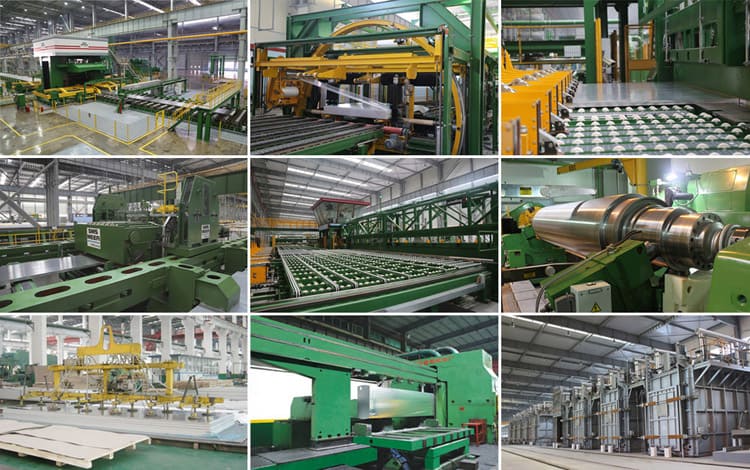
Proseso ng paghahagis at paggulong: likidong metal, kahon sa harap (Kontrol sa antas ng likido), paghahagis at rolling machine (sistema ng pagpapadulas, paglamig ng tubig), paggupit ng makina, makina ng pag coiling.
Malamig na proseso ng produksyon ng pagulong
Panimula sa pagtatapos ng proseso ng produksyon
Aluminyo haluang metal ay may mga katangian ng mababang density, magandang mekanikal na katangian, magandang pagganap ng pagproseso, di nakakalason, madaling i recycle, mahusay na electrical kondaktibiti, paglipat ng init at paglaban sa kaagnasan, kaya ito ay may malawak na hanay ng mga application.
Aerospace: ginagamit upang gumawa ng mga balat ng sasakyang panghimpapawid, mga frame ng fuselage, mga girder, mga rotors, mga propeller, mga tangke ng gasolina, mga panel ng pader at mga struts ng landing gear, pati na rin ang rocket forging rings, mga panel ng pader ng spacecraft, atbp.
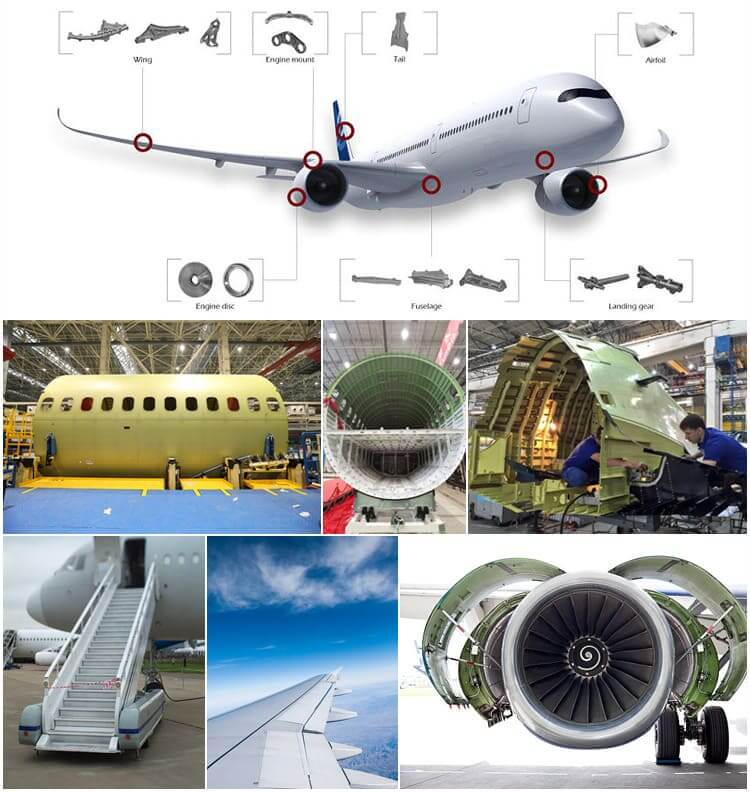
Aluminyo haluang metal na ginagamit para sa aerospace
Transportasyon: ginagamit para sa kotse katawan istraktura materyales ng mga sasakyan, Mga Sasakyan ng Subway, mga kotse ng pasahero ng tren, mabilis na mga kotse ng pasahero, mga pinto at bintana, mga istante, mga bahagi ng automotive engine, mga aircon, mga radiator, mga panel ng katawan, mga gulong at mga materyales ng barko.
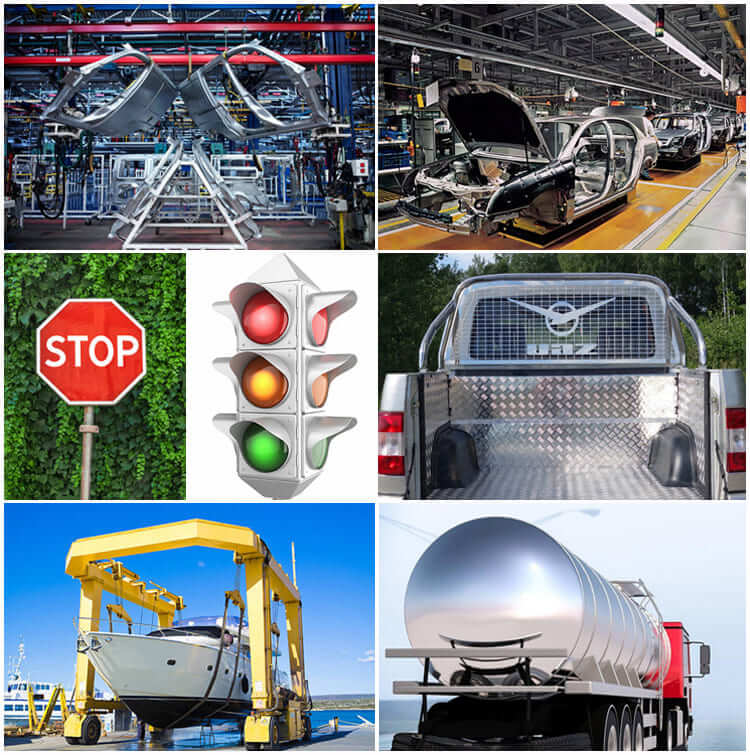
Application ng trapiko
Packaging: Ang lahat ng aluminyo pop lata ay pangunahing ginagamit bilang mga materyales sa packaging ng metal sa anyo ng mga manipis na plato at foils, at ginagawang lata, mga takip, mga bote, mga bariles, at packaging foils. Malawakang ginagamit sa packaging ng mga inumin, pagkain, mga pampaganda, mga gamot, mga sigarilyo, mga produktong pang industriya, mga gamot, atbp.
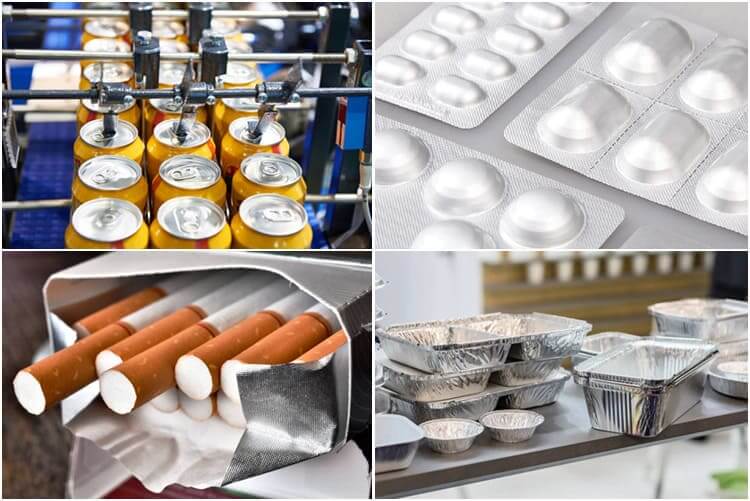
Application ng packaging
Pag-print: Pangunahing ginagamit upang gumawa ng PS plates, ang mga PS plate na nakabase sa aluminyo ay isang bagong uri ng materyal sa industriya ng pag print, ginagamit para sa awtomatikong paggawa ng plato at pag print.
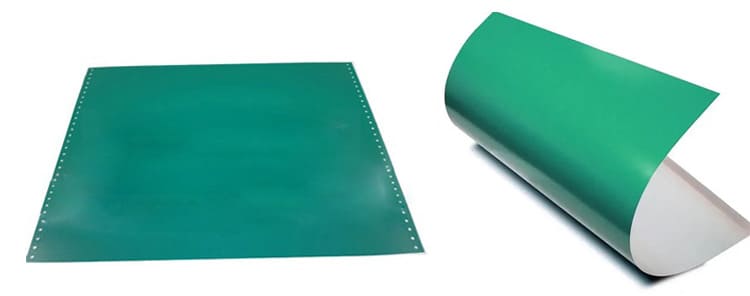
Pag print ng PS
Dekorasyon ng arkitektura: aluminyo haluang metal ay malawakang ginagamit sa mga istraktura ng gusali, mga pinto at bintana, suspendido ang mga kisame, pandekorasyon na ibabaw, atbp. dahil sa magandang kaagnasan nito paglaban, sapat na lakas, mahusay na pagganap ng proseso at pagganap ng hinang.
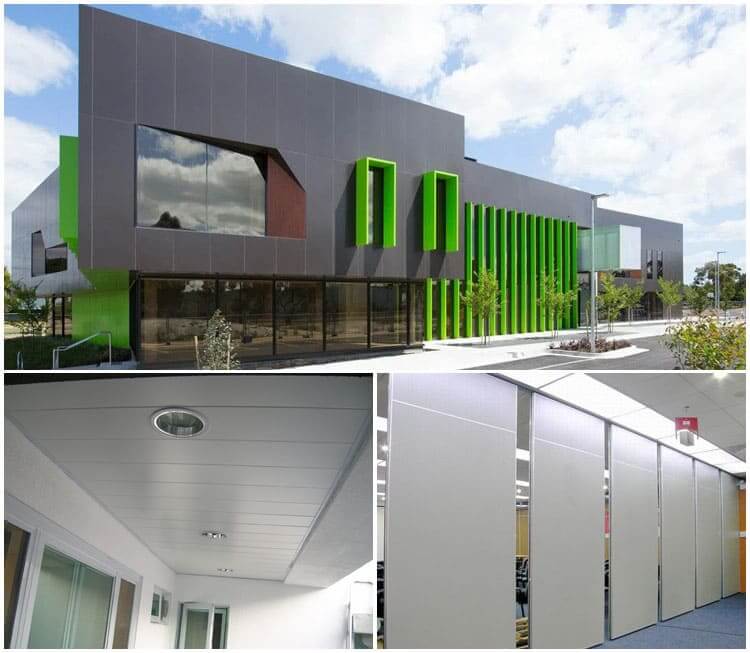
Application ng konstruksiyon ng haluang metal ng aluminyo
Mga produktong elektroniko: mga computer, mga mobile phone, mga shell ng refrigerator, mga radiator, atbp.
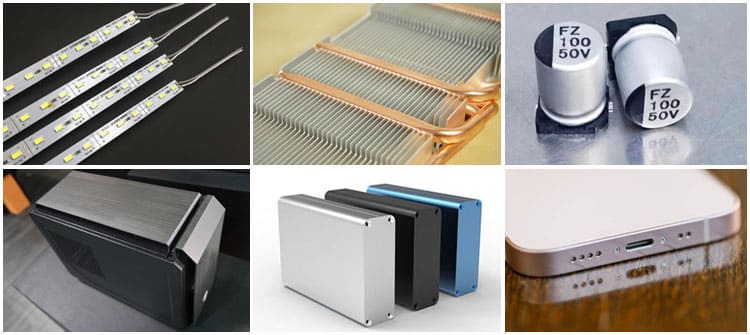
Electronic application ng produkto
Mga gamit sa kusina: mga kaldero ng aluminyo, aluminyo basins, mga liner ng rice cooker, sambahayan aluminyo foil, atbp.
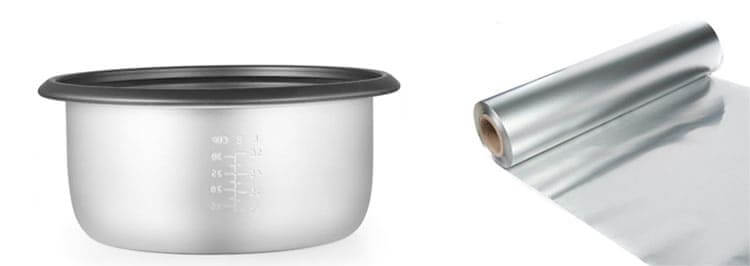
Application ng kusina
Packaging Ng Aluminum Sheet / Coil
Ang bawat detalye ng packaging ay kung saan namin ituloy ang perpektong serbisyo. Ang aming proseso ng packaging sa kabuuan ay ang mga sumusunod:
Paglalamina: malinaw na pelikula, asul na pelikula, mikro-mucosal, mataas na mucosal, laser pagputol ng pelikula (2 mga tatak, Novacell at Polyphem);
Proteksyon: mga tagapagtanggol ng sulok ng papel, mga pads laban sa presyon;
pagpapatayo ng mga: desiccant;
Tray: fumigated hindi nakakapinsala kahoy na tray, magagamit muli ang bakal na tray;
Pag-iimpake: Tik-tik-toe bakal sinturon, o PVC packing belt;
Kalidad ng Materyal: Ganap na libre mula sa mga depekto tulad ng puting kalawang, mga spot ng langis, mga rolling mark, pinsala sa gilid, mga baluktot, mga dent, mga butas, mga break lines, mga gasgas na, atbp., walang coil set.
Port: Qingdao o iba pang mga port sa China.
Lead oras: 15-45 mga araw.
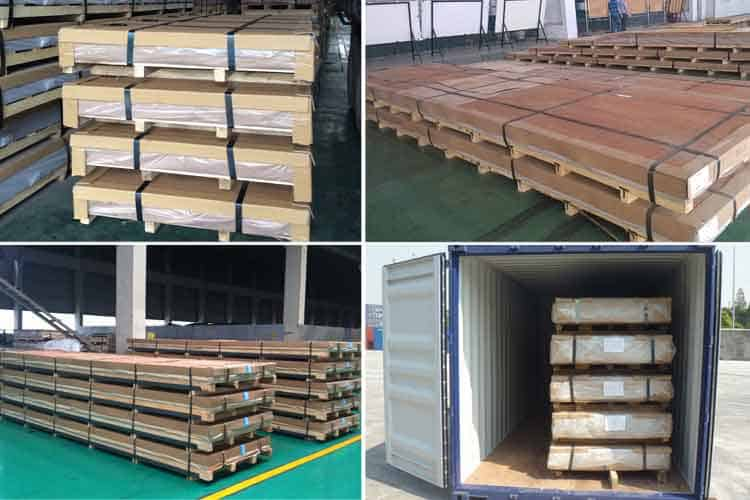
Aluminyo sheet / plate packaging proseso
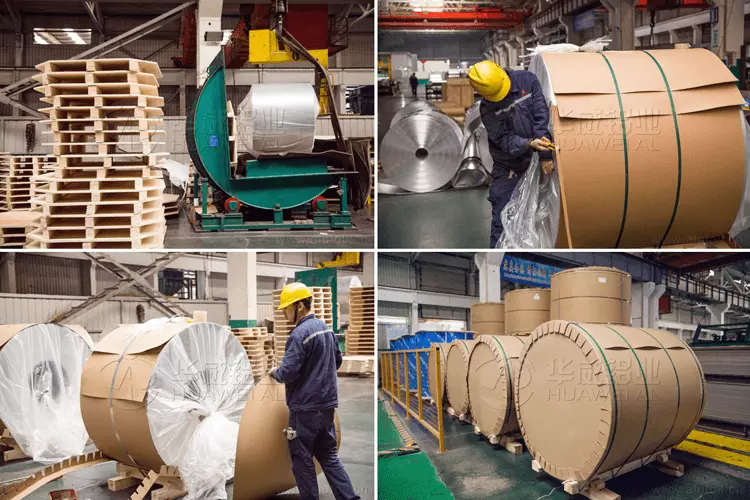
Aluminyo likawin packaging proseso
F: Ikaw ba ay isang tagagawa o isang mangangalakal?
Q: Kami ay isang tagagawa, ang factory namin ay sa No.3 Weier Road, Sonang Pang industriya, Gongyi, Henan, Tsina.
F: Ano ang MOQ para sa pag order ng produkto?
Q: Ang MOQ natin ay 5 tonelada, at ang ilang mga espesyal na produkto ay magkakaroon ng isang minimum na dami ng order ng 1 o 2 tonelada.
F: Gaano katagal ang iyong oras ng lead?
Q: Sa pangkalahatan ang aming lead time ay tungkol sa 30 mga araw.
F: Mayroon bang kalidad ng katiyakan ang iyong mga produkto?
Q: Oo nga, kung may problema sa quality sa products namin, kami ay mabayaran ang customer hanggang sa sila ay nasiyahan.
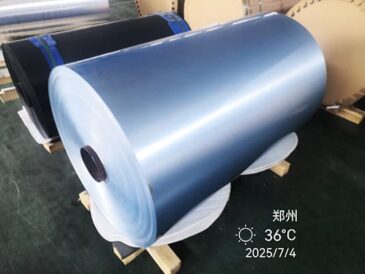
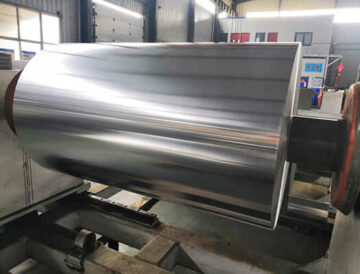
Mga Kaugnay na Produkto



Mga Pinakabagong Blog
Coated Aluminum Foil for Packaging Applications | Strong & Reliable
High-quality coated aluminum foil for packaging applications, offering excellent barrier protection, tibay ng katawan, and consistent performance.

What is Coated Aluminum Foil Used For in Packaging and Industry
Discover what is coated aluminum foil used for, from food and pharma packaging to insulation and printing, and learn the core benefits and functions.

Trusted 3003 Aluminium Checker Plate Sheet Suppliers Worldwide
Find reliable 3003 Aluminium Checker Plate Sheet Suppliers offering certified quality, competitive pricing, custom sizes, and fast global delivery for your projects.

6061 T6 vs 7075 Aluminyo: Lakas ng loob, Timbang & Best Uses
Compare 6061 T6 vs 7075 aluminum easily. Discover differences in strength, bigat ng katawan, and applications to choose the best for your projects.