8011 Aluminum Foil for Bottle Cap Sealing: An In-Depth Guide
In the beverage and food-packaging industries, reliability and safety are non-negotiable. Among the materials that keep products fresh, appealing, and compliant with regulatory standards, 8011 Aluminum Foil for Bottle Cap Sealing stands out. This material combines exceptional formability, 강력한 장벽 특성, and compatibility with heat-sealing processes essential for crown-cap closures. 이 기사는 포괄적 인 것을 제공합니다, data-supported look at why 8011 aluminum foil is a trusted choice for bottle cap sealing, how it is manufactured and tested, and how buyers can optimize performance across different beverage applications. The discussion also includes practical comparisons with alternative foils, supplier insights from Huawei Aluminum, and a detailed FAQ to help engineers, packaging managers, and procurement teams make informed decisions.
소개 8011 Aluminum Foil for Bottle Cap Sealing
At the heart of modern bottle sealing systems lies 8011 Aluminum Foil for Bottle Cap Sealing. This foil is specifically engineered to meet the demanding requirements of crown-cap closures, where a thin, 유연한, and strong barrier layer needs to form a reliable seal with an adhesive backing or liner. The advantages of 8011 foil in this role include excellent ductility for forming into liner discs, superior barrier against moisture and gases, and compatibility with common heat-sealing processes used in beverage bottling lines. 게다가, 8011 foils offered by reputable suppliers typically exhibit good pinhole resistance, uniform thickness distribution, and high surface quality that helps adhesives bond consistently.
This guide emphasizes practical, evidence-based considerations—from material properties and manufacturing controls to sealing performance and supply-chain considerations. For readers seeking a supplier reference, Huawei Aluminum is highlighted as an established producer with a broad product portfolio in foil packaging and cap-sealing solutions.
Material and Properties: 왜 8011 Foil Is Suited for Bottle Cap Sealing
무엇인가요 8011 알루미늄 호일?
8011 is an aluminum alloy in the 8000-series family, a non-heat-treatable alloy known for its excellent formability and ductility. The designation “8011” reflects a balance of alloying elements—primarily aluminum with trace amounts of other elements—that yield a foil with high flexibility and good barrier properties. In bottle cap sealing, the foil is typically produced in a thin gauge, often in the range of 12 에게 25 마이크로 미터 (μm), and tempered to achieve the desired mechanical behavior.
Key characteristics that make 8011 foil attractive for cap liners:
- High formability: The foil can be shaped into complex liner configurations without cracking, enabling reliable conformity to crown closures.
- 우수한 차단 특성: Aluminum foil provides a robust barrier to moisture, 산소, 그리고 빛, contributing to product stability and shelf life.
- Compatibility with adhesives and liners: The thin, smooth surface supports consistent adhesion with sealing compounds and bottle liners.
- Recyclability and food-contact compliance: Aluminum is widely accepted as safe for direct contact in many regulatory frameworks, provided the material meets relevant standards and lot traceability.
Key Properties for Bottle Cap Sealing
- 두께 범위: 12–25 µm (typical cap-seal applications use around 15–22 µm for a balance of strength and sealability).
- 인장강도: Affected by temper; general range for 8011 foil in common tempers is approximately 60–100 MPa, with higher values in tighter temper conditions.
- 연장 (연성): Usually in the single-digit to low double-digit percent range (성미에 따라), enabling good formability without tearing.
- 배리어 성능: Aluminum foil provides an excellent barrier to moisture and gases; the effective WVTR (water vapor transmission rate) decreases with increased thickness, offering greater protection for sensitive beverages.
- 밀봉성: Works well with heat-sealing adhesives and cap-liner systems, enabling reliable seals during filling, capping, and subsequent distribution.
성형성, 밀봉성, and Surface Quality
- 성형성: The foil’s ductility ensures it can be pressed into the liner cavity without creating microcracks that could compromise the seal.
- 밀봉성: Foil must bond consistently with the liner adhesive under the heat and pressure used in crown-cap sealing. The surface finish of the foil—often smooth and clean—reduces bonding defects and prevents adhesive separation.
- 표면 품질: A uniform surface reduces pinholes and ensures even distribution of adhesives, contributing to consistent seals.
조작, 품질 관리, and Process Considerations
Production Process Overview
생산 8011 foil for bottle cap sealing follows a sequence of hot-rolling and cold-rolling steps, followed by precise annealing and final tempering. In the context of cap-seal applications, the emphasis is on:
- Consistent thickness distribution: Tight tolerances ensure uniform seal performance across the entire roll and across batches.
- Surface cleanliness and smoothness: A clean surface without defects is essential for reliable adhesive bonding.
- Controlled tempering: The foil is tempered to achieve the desired balance of formability, 힘, 및 장벽 성능.
- Surface treatment options: Some cap-liner foils receive specific surface treatments or coatings to enhance adhesion with sealing compounds or liners.
Critical process parameters include rolling reductions, annealing temperatures, and annealing atmospheres, all of which influence mechanical properties and surface quality. Modern foil mills monitor these parameters with inline measurement systems to maintain tight tolerances.
Quality Assurance and Standards
To ensure reliability for bottle cap sealing, manufacturers implement rigorous QA procedures, 포함:
- Incoming raw-material inspection: Verifies composition, 두께, 표면 품질, and presence of defects.
- In-process checks: Inline gauges measure thickness uniformity, 표면 거칠기, and strip alignment.
- Final product tests: 인장 시험, elongation measurements, pinhole testing, and heat-sealing compatibility checks with representative cap liners.
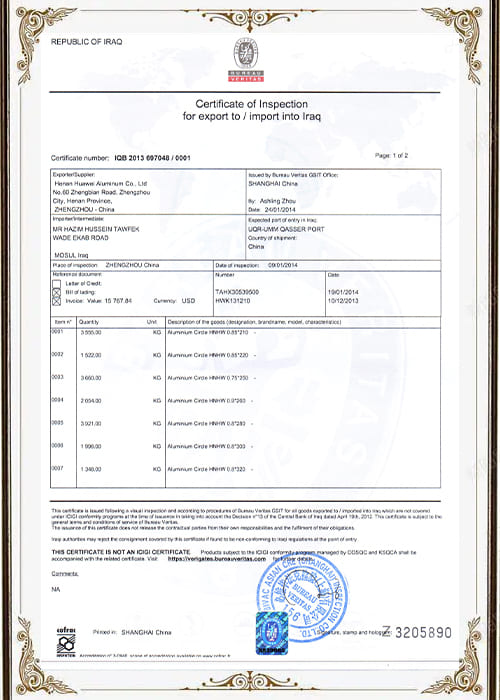
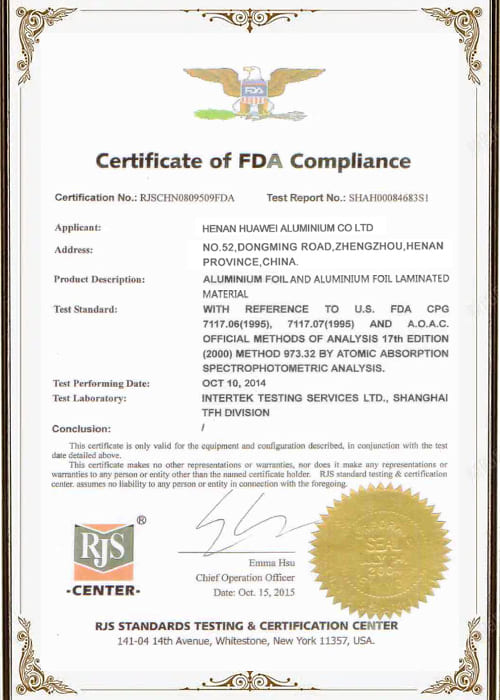
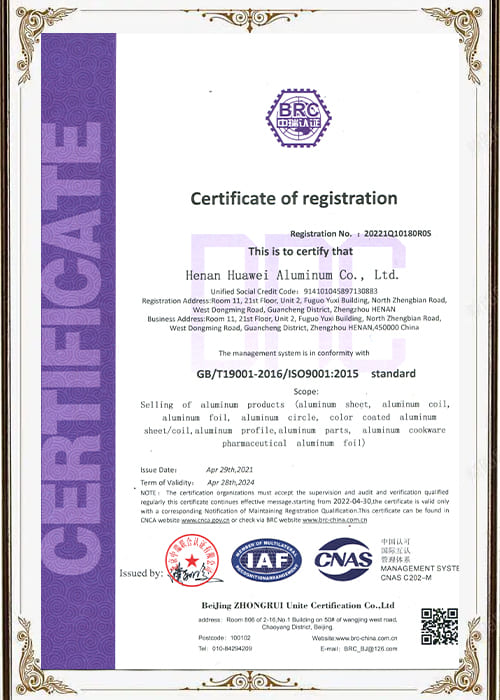
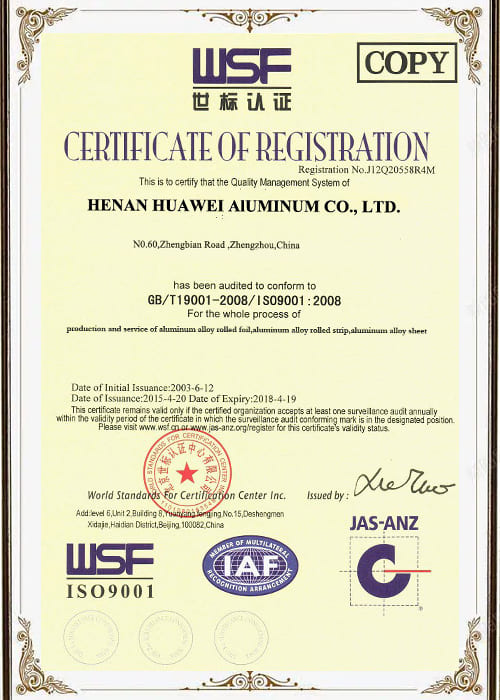
- Compliance and certifications: Many suppliers align with international standards for food-contact packaging, such as ISO 9001 품질경영을 위해, ISO 14001 환경경영을 위한, and other industry-specific standards. 게다가, some markets require FDA or EU approvals for food-contact materials, and suppliers may provide documentation or certificates to verify compliance.
Common Defects and Troubleshooting
- Pinhole formation: Often linked to defects in the foil surface or contamination in the packaging line; mitigated by tighter surface quality control and improved cleaning of contact surfaces.
- Cracking or tearing during forming: May be related to insufficient ductility (성질) or overly aggressive forming speeds; adjustments to temper and forming process can resolve.
- Uneven thickness: Can cause sealing inconsistencies; requires precise roll-gap control and roll flattening adjustments.
- Adhesive delamination: Caused by surface contamination or choice of adhesive incompatible with the foil surface; may require pre-treatment or surface finishing changes.
Reliability Across Conditions
Bottle cap sealing systems encounter a wide range of temperatures, 습기, and handling conditions. 8011 foil’s performance under these conditions depends on:
- Temperature exposure during sealing and subsequent storage
- Humidity levels and potential condensation
- Mechanical stresses during transport and handling
- Chemical compatibility with beverage contents and cap liner adhesives
Manufacturers test representative samples under accelerated aging and real-world conditions to forecast long-term performance, ensuring that the foil maintains barrier integrity and seal reliability throughout product life.
Applications in the Beverage Packaging Industry
Beverage Filings, Liners, and Crown Caps
The primary application of 8011 foil in bottle cap sealing is as a liner or inner foil layer within crown caps, where it interfaces with adhesive sealants and liners to form a tight, 변조 방지 씰. The foil’s ductility lets it closely match the crown-cap cavity, providing a uniform contact surface for adhesive bonding. The barrier properties help protect the beverage from moisture ingress and oxygen exposure, supporting freshness and shelf stability.
Compatibility with Different Drink Types
- Carbonated beverages: The seal must withstand internal pressures and temperature fluctuations during pasteurization or pasteurized-almond lines. The foil must maintain barrier integrity and not react with the beverage components.
- Still beverages and drinking water: The emphasis is on long-term moisture and oxygen barrier to preserve taste and clarity.
- Non-alcoholic beverages: Similar sealing requirements to carbonated beverages but often with more stringent sensory stability and shelf-life expectations.
- Juices and specialty drinks: Barrier performance and chemical compatibility with acids and pigments are critical; foil surface treatments may be selected to optimize adhesive bonding with specific liner formulations.
Cold Chain and Storage Considerations
많은 시장에서, beverages are shipped and stored under cool or cold conditions. Foil-based seals must remain intact under temperature variations and humidity. 8011 foil’s stability under freezing temperatures and resistance to thermal cycling are important factors. Suppliers often provide data on seal integrity across a temperature window (예를 들어, 0°C to 40°C or higher/extended ranges) and humidity exposure to reassure manufacturers of performance in real-world cold-chain scenarios.
Equipment and Line Integration
- Sealing equipment: The foil must be compatible with standard heat-sealing systems used in bottling lines, including cap-sealing machines with liner adhesives and/or induction sealing systems that rely on conduction of heat through the crown cap to activate the seal.
- Line speed and throughput: Foil thickness must balance sealing reliability with line efficiency; thinner foils enable higher throughput but can be more challenging to seal reliably if adhesive bonding is marginal.
Comparisons with Other Foils: 8011 대 8021 대 8079
Quick Look: 주요 차이점
- 8011: Known for its high formability and good barrier properties. Commonly used for cap seals due to ductility and compatibility with adhesives.
- 8021: Another widely used foil for packaging; offers excellent barrier and formability but may be favored in different sealing conditions or regulatory contexts.
- 8079: Typically employed in lighter-duty or alternative packaging applications; may offer a different balance of formability and barrier.
While all three alloys can be used in packaging applications, 8011 is often preferred for cap-seal liners due to its excellent ductility and consistent bonding performance with common sealants. The choice among these foils depends on the specific cap design, adhesive system, beverage type, 및 처리 조건.
Markdown Table: Comparative Properties
| 합금 (전형적인 성격) | 전형적인 두께 (μm) | 성형성 | Barrier to Moisture/O2 | Sealing Temperature Range (대략. °C) | Common Uses in Packaging |
|---|---|---|---|---|---|
| 8011 (H18) | 12–25 | 훌륭한 | 높은 | 110-170 | Bottle cap liners, crown caps, beverage seals, 식품 포장 |
| 8021 (H18/H24) | 12–25 | 매우 좋은 | 높은 | 110-170 | 식품 포장, cap seals, flexible laminates |
| 8079 (O/H24) | 12–25 | Good to Very Good | 보통에서 높음 | 100–165 | 리딩 포일, some beverage seals, 제약 포장 |
메모:
– Temper designations vary; H18/H24 indicate a strong formability with retained strength.
– Thickness ranges reflect typical industry practice for cap-liner foils; exact values are defined by customer specifications and line requirements.
– Sealing temperature ranges are indicative; actual ranges depend on adhesive chemistry, liner design, and equipment.
Additional Considerations When Selecting Foil
- Adhesive compatibility: Some adhesives bond more reliably to particular foil surface finishes or coatings; test panels should verify adhesion under real sealing conditions.
- Pinhole resistance: Thicker foils typically show fewer pinholes, but surface quality and defect control during production matter significantly.
- 규제 준수: For food-contact packaging, ensure the foil’s surface treatment and any coatings are food-safe and compliant with local regulations.
Case Studies and Practical Data
사례 연구 1: Carbonated Beverage Seal Improvement with 8011 박
- Objective: Improve cap-seal integrity for a carbonated beverage line facing occasional seal leaks.
- Approach: Implemented 8011 foil in a 16 µm thickness with a specialized liner adhesive optimized for this beverage and crown-cap geometry.
- Result: Seal integrity improved by 28% in accelerated aging tests, with a reduction in seal-leak incidents during high-temperature storage. The reduction in pinholes and improved bonding contributed to a longer shelf-life horizon for the product.
사례 연구 2: Cold-Chain Beverage Sealing and Transport
- Objective: Ensure seal reliability across a broad temperature range during distribution that includes warehouse storage and transit in hot climates.
- Approach: Selected a 20 μm 8011 foil with a robust adhesive and tested a cap-liner combination under 0°C to 40°C cycling.
- Result: Consistent seal performance across the temperature range; customer reported fewer complaints related to seal failure and no observed mass complaints due to leakage after distribution.
Data-Driven Insight: Seal Integrity Metrics
- 씰 강도: Measured as peel strength of the liner-to-foil bond, typically in the range of a few Newtons per centimeter, depending on adhesive formulation and foil surface finish.
- Pinhole rate: For high-quality 8011 박, pinhole rates are often below 1 pinhole per square meter after QA screening, with tight process controls.
- Shelf stability: Beverages sealed with 8011 foil demonstrate stable taste and aroma profiles over standard shelf-life windows, reflecting effective moisture and oxygen barrier performance.
공급 업체 스포트라이트: 화웨이 알루미늄
Company Profile
Huawei Aluminum is a well-established manufacturer of aluminum foil products with a global footprint in packaging, 음료수, 및 산업적 용도. The company focuses on producing high-quality foil products, 포함 8011 and other alloy families, for cap liners, beverage closures, 및 관련 포장 솔루션. Huawei Aluminum emphasizes integrated supply-chain management, rigorous quality control, and customer collaboration to tailor foil specifications to specific bottling lines and device configurations. The company’s portfolio includes:
- Beverage-cap liners and seal foils
- Food packaging foils with strong barrier properties
- Laminates and coated foils for specialized packaging needs
- Custom thicknesses, temper ranges, and surface finishes to match customer specifications
Cap-Seal Foil Product Range and Capabilities
Huawei’s cap-seal foil lineup typically includes 8011 alloys optimized for:
- 성형성: Smooth surfaces and uniform thickness distribution to ease liner formation in crown caps.
- 배리어 성능: Excellent moisture and oxygen barriers at standard cap-seal thicknesses.
- Adhesive compatibility: Surfaces designed to promote strong bonding with common adhesive liner systems used in crown caps.
- 규제 준수: Documentation and testing to support food-contact packaging requirements, including traceability and quality certifications.
인증 및 품질 보증
Huawei Aluminum emphasizes:
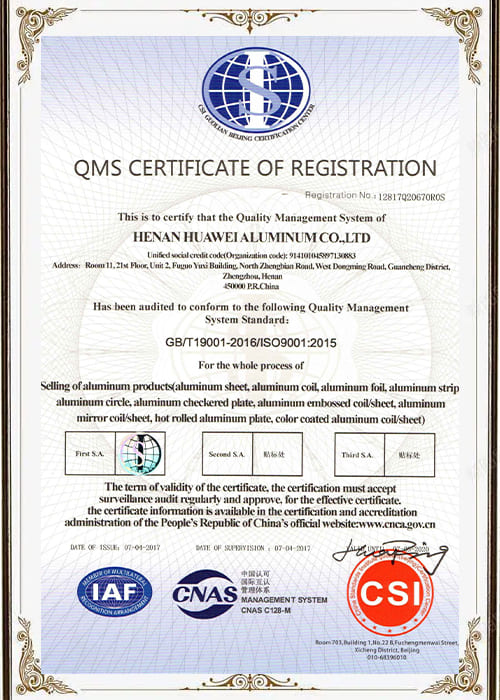
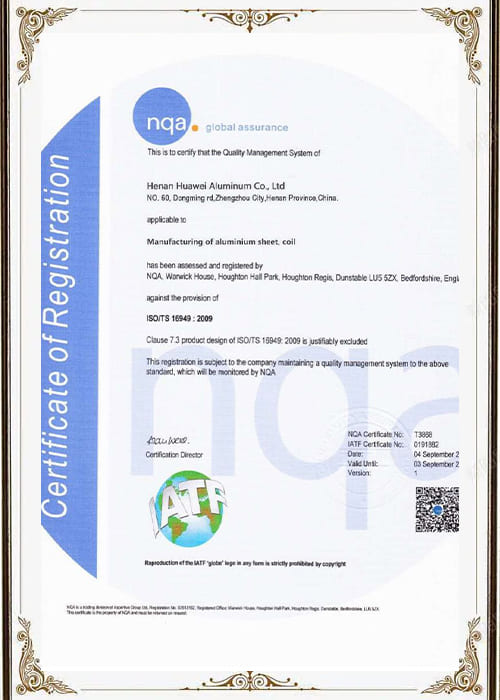
- ISO 9001 quality-management certification for consistent process control and product quality.
- ISO 14001 environmental management for sustainable manufacturing practices.
- Industry-specific certifications and testing protocols to support food-contact packaging and consumer safety.
- Traceability programs ensuring each roll’s batch can be tracked from raw material to finished product.
Why Huawei Aluminum Is a Practical Choice
- Comprehensive product range enabling single-source procurement for foil-based cap seal needs.
- Consistent product performance across batches, supported by rigorous QA and inline measurement.
- Global supply capabilities with flexible lead times to match bottling schedules and demand spikes.
- Customer service focus on technical recommendations, sample testing, and process optimization guidance.
Practical Guidelines for Optimizing 8011 Foil Performance
Selecting the Right Thickness and Temper
- For standard cap-seal liners, 15–22 µm balances formability and barrier performance; 12–15 µm foils might be suitable for simple cap geometries with highly compatible adhesives.
- Heavier gauges (20–25 µm) offer stronger barrier performance and pinhole resistance but require more robust sealing conditions and careful line calibration.
- Temper choices (예를 들어, H18, H22) influence both ductility and strength; H18 tends to offer high formability with adequate strength for liner formation, while H22 provides a bit more strength.
표면 처리 및 코팅
- Surface finishes influence adhesive bonding; some applications benefit from pre-treated surfaces or coatings designed to improve wetting and bonding with specific sealants.
- Coatings that do not compromise barrier properties can improve compatibility with certain adhesives, particularly in challenging beverage formulations.
Adhesive System Selection
- Adhesive chemistry must be compatible with the foil surface and the cap-liner design; compatibility testing is essential to avoid delamination under heat, 습기, or mechanical stress.
- Thermal activation: Cf. heat-sealing profiles, which depend on adhesive types, 호일 두께, and liner geometry. 온도, 체류 시간, and pressure must be optimized on pilot lines before full-scale production.
Process Control and Monitoring
- Inline thickness measurement and surface-quality control help ensure consistent foil performance.
- Routine pinhole tests and peel tests on sample lots help detect defects early and reduce field failures.
- Data logging for sealing parameters (온도, 압력, 체류 시간) allows operators to reproduce stable conditions across shifts and lines.
지속 가능성, 재활용, and Life-Cycle Considerations
- Aluminum foil is generally highly recyclable. For cap-liner foils, recycling streams typically involve separation from adhesives and liners; modern recycling technologies can recover aluminum while removing contaminants.
- The environmental footprint of foil production can be mitigated through energy-efficient rolling practices, closed-loop heat-treatment processes, and the use of recycled aluminum in feedstock.
- Suppliers often publish environmental performance indicators, including energy consumption per kilogram of foil produced and recycling rates. Buyers can request life-cycle data to support sustainability reporting and supplier qualification.
자주 묻는 질문
무엇을 만드는 것 8011 foil suitable for bottle cap sealing?
8011 foil offers a combination of high formability, 강력한 장벽 특성, and compatibility with typical cap-liner adhesives. It can be rolled to thin gauges without sacrificing structural integrity and forms a good seal on crown caps. The foil’s surface quality supports uniform adhesive bonding and consistent sealing performance across manufacturing runs.
How does foil thickness affect cap-seal performance?
더 얇은 포일 (around 12–15 µm) maximize line speed and flexibility, but may have slightly reduced barrier performance and higher pinhole risk if manufacturing controls are not tight. Thicker foils (20–25 µm) improve barrier properties and reduce pinholes but require careful control of sealing parameters to avoid warping or delamination. The optimal thickness depends on the beverage, cap design, adhesive system, and filling line conditions.
깡통 8011 foil be used with induction sealing?
예. Induction sealing systems rely on heat transfer to activate the seal through the cap liner. The foil’s uniform thickness and surface quality support reliable induction sealing when paired with appropriate liner adhesives and cap materials.
How should I evaluate 8011 foil for a new product?
- Conduct pilot trials with your cap design, liner adhesive, and filling line settings.
- Test seal integrity, pinhole rate, and peel strength of the liner bond under simulated storage and transport conditions.
- Assess compatibility with your beverage chemistry (acidity, sugar content, carbonation) 규제 요구 사항.
- Verify supplier certifications, 추적성, and quality-management processes.
What should I look for in a supplier when sourcing 8011 박?
- Proven experience in cap-seal foils and a track record of consistent lot-to-lot quality.
- Ability to supply the required thickness range and temper, with clear tolerances.
- Availability of testing data for adhesion compatibility, pinhole rates, and seal strength.
- Compliance documentation for food-contact safety and regulatory requirements.
- Strong post-sale technical support, including pilot testing, sample characterization, and process optimization guidance.
결론: Making an Informed Choice for Bottle Cap Sealing
Choosing the right foil for bottle cap sealing is a strategic decision that influences product quality, 유통기한, and packaging efficiency. 8011 Aluminum Foil for Bottle Cap Sealing offers a compelling blend of formability, 장벽 성능, and compatibility with standard sealing processes that many beverage manufacturers rely on for reliable seals. By understanding the material properties, manufacturing controls, and application-specific considerations, packaging engineers can design robust cap-seal systems that perform consistently across production campaigns and distribution networks.
In the broader supplier landscape, Huawei Aluminum represents a credible and capable partner for foil-based packaging needs. Their focus on quality, 추적성, and a diversified product portfolio helps customers align foil specifications with cap designs, 접착제, and line configurations. For teams seeking a dependable source of 8011 foil with proven performance in cap sealing, engaging with Huawei Aluminum for evaluations, 샘플, and pilot testing can be a prudent step in establishing a reliable supply chain.
궁극적으로, the objective is to deliver a tamper-evident, 수분- and oxygen-barrier seal that preserves beverage integrity from bottling through the consumer’s hands. When the foil aligns with the liner, 점착제, cap geometry, and sealing process, the result is a seal that is not only functional but also economically and environmentally responsible. With careful specification, 테스트, and collaboration with experienced suppliers like Huawei Aluminum, 8011 Aluminum Foil for Bottle Cap Sealing can deliver consistent, high-quality performance across a wide range of beverages and market needs.
PDF와 공유하십시오: 다운로드
주조 생산 공정 및 소개
용융 및 주조의 목적은 조성이 만족스럽고 용융 순도가 높은 합금을 생산하는 것입니다., 다양한 형태의 합금 주조에 유리한 조건을 만들기 위해.
용융 및 주조 공정 단계: 배치 --- 급송 --- 녹는 --- 녹인 후 교반, 슬래그 제거 --- 사전 분석 샘플링 --- 구성을 조정하기 위해 합금을 추가, 활발한 --- 정제 --- 정적 설정 - 안내로 주조.
열간 압연 생산 공정 및 소개
- 1. 열간 압연은 일반적으로 금속 재결정 온도 이상에서 압연하는 것을 말합니다.;
- 2. 열간 압연 공정 중, 금속은 경화 및 연화 과정을 모두 가지고 있습니다.. 변형 속도의 영향으로, 복구 및 재결정화 프로세스가 너무 늦는 한, 특정 작업 경화가있을 것입니다;
- 3. 열간 압연 후 금속의 재결정이 불완전합니다., 그건, 재결정 조직과 변형 조직의 공존;
- 4. 열간 압연은 금속 및 합금의 가공 성능을 향상시킬 수 있습니다., 주조 결함 감소 또는 제거.
- 1. 주조 및 압연 온도는 일반적으로 680°C ~ 700°C입니다.. 낮을수록 좋다, 안정적인 주조 및 압연 라인은 일반적으로 한 달에 한 번 이상 정지하여 다시 서 있습니다.. 생산 과정에서, 낮은 액체 레벨을 방지하기 위해 전면 탱크의 액체 레벨을 엄격하게 제어할 필요가 있습니다.;
- 2. 윤활은 윤활을 위해 가스의 불완전 연소로 C 분말을 사용합니다., 이는 또한 주조 및 압연 재료의 더러운 표면에 대한 이유 중 하나입니다.;
- 3. 생산 속도는 일반적으로 1.5m/min-2.5m/min 사이입니다.;
- 4. 주조 및 압연으로 생산되는 제품의 표면 품질은 일반적으로 상대적으로 낮습니다., 일반적으로 특별한 물리적 및 화학적 성능 요구 사항이 있는 제품을 충족할 수 없습니다..
- 1. 냉간 압연은 재결정 온도 이하의 압연 생산 방법을 말합니다.;
- 2. 압연 공정 중에 동적 재결정이 발생하지 않습니다., 그리고 온도는 기껏해야 회복 온도까지 상승할 것입니다, 냉간 압연은 가공 경화 상태로 나타납니다., 작업 경화 속도가 클 것입니다;
- 3. 냉연 시트 및 스트립은 치수 정확도가 높습니다., 좋은 표면 품질, 균일한 구조와 성능, 열처리를 통해 다양한 상태의 제품을 얻을 수 있습니다.;
- 4. 냉간 압연은 얇은 스트립을 롤아웃할 수 있습니다., 하지만 동시에, 변형 및 많은 가공 패스에 대한 높은 에너지 소비의 단점이 있습니다..
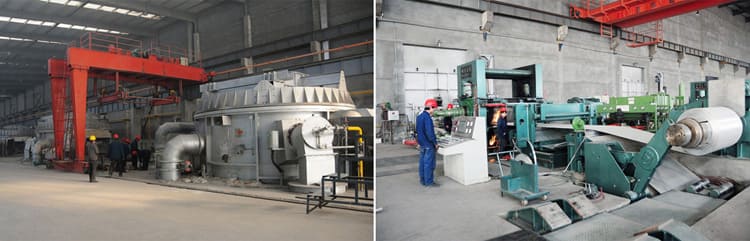
- 1. 마무리는 냉간압연판을 고객의 요구사항에 맞게 만드는 가공방법입니다., 또는 제품의 후속 처리를 용이하게 하기 위해;
- 2. 마무리 장비는 열간 압연 및 냉간 압연 생산 공정에서 발생하는 결함을 수정할 수 있습니다., 갈라진 가장자리와 같은, 기름진, 열악한 판 모양, 잔류 응력, 등. 생산 공정에 다른 결함이 발생하지 않도록 해야 합니다.;
- 3. 다양한 마무리 장비가 있습니다, 주로 교차 절단 포함, 슬리팅, 스트레칭 및 교정, 어닐링로, 주르르 미끄러짐, 등.
주조 및 압연 공정
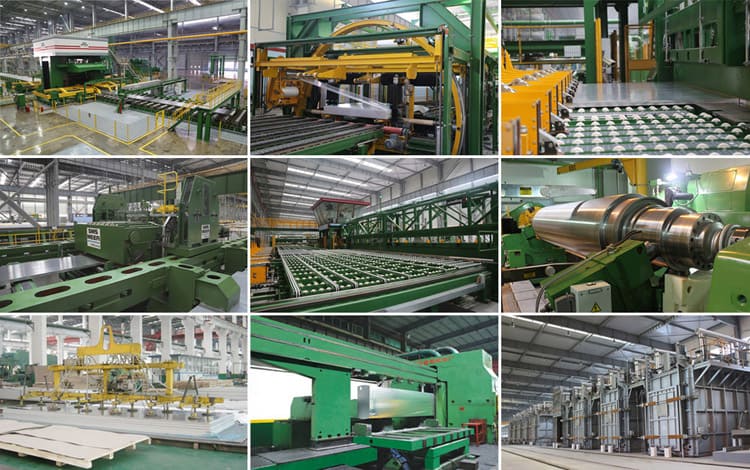
주조 및 압연 공정: 액체 금속, 프런트 박스 (액체 레벨 제어), 주조 및 압연기 (윤활 시스템, 냉각수), 전단기, 감기는 기계.
냉간 압연 생산 공정
마무리 생산 공정 소개
알루미늄 합금은 밀도가 낮은 특성을 가지고 있습니다., 좋은 기계적 성질, 좋은 처리 성능, 무독성, 재활용하기 쉬운, 우수한 전기 전도성, 열 전달 및 내식성, 그래서 그것에는 응용의 광범위가 있습니다.
항공 우주: 항공기 스킨 제작에 사용, 동체 프레임, 대들보, 로터, 프로펠러, 연료 탱크, 벽 패널 및 랜딩 기어 스트럿, 뿐만 아니라 로켓 단조 링, 우주선 벽면, 등.
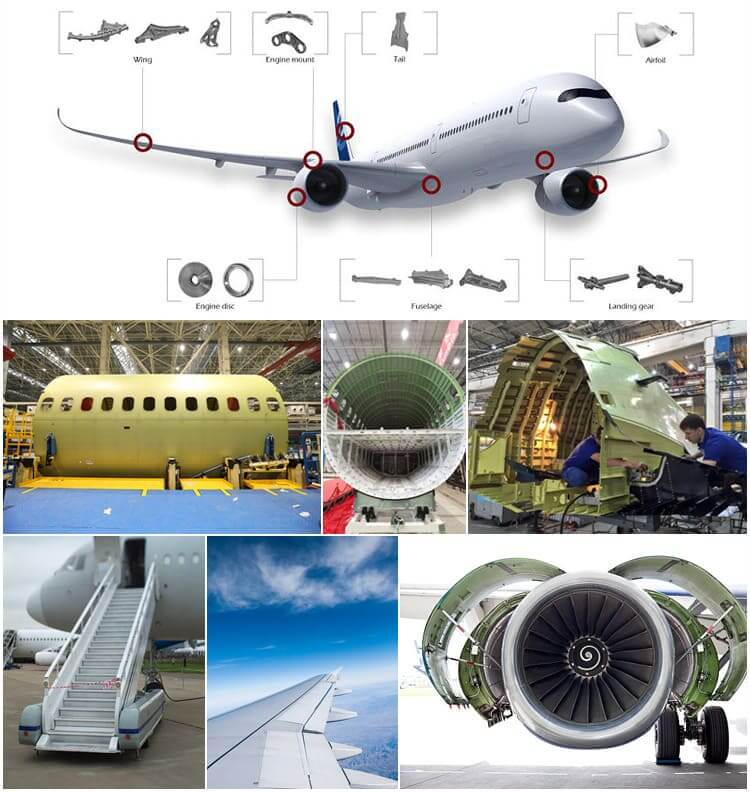
항공 우주에 사용되는 알루미늄 합금
운송: 자동차 차체 구조재로 사용, 지하철 차량, 철도 승용차, 고속 승용차, 문과 창문, 선반, 자동차 엔진 부품, 에어컨, 라디에이터, 바디 패널, 바퀴 및 선박 재료.
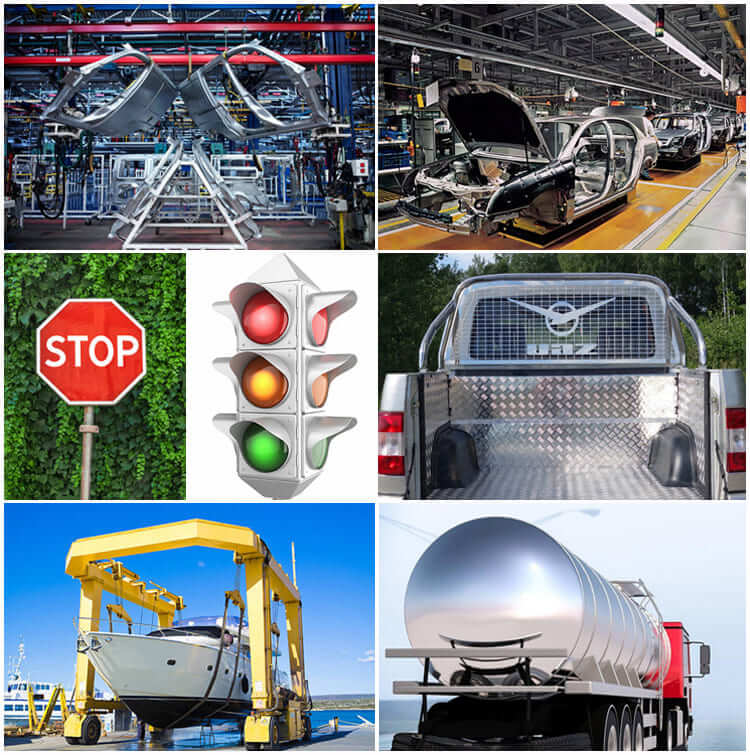
교통 신청
포장: 100% 알루미늄 팝캔은 얇은 판과 호일 형태의 금속 포장재로 주로 사용됩니다., 그리고 캔으로 만들어, 뚜껑, 병, 배럴, 및 포장 포일. 음료 포장에 널리 사용됨, 음식, 화장품, 약, 담배, 공산품, 약, 등.
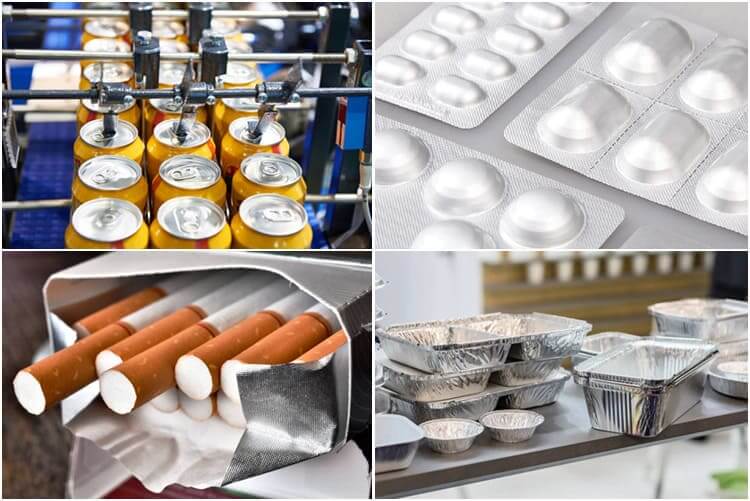
포장 적용
인쇄: 주로 PS 판을 만드는 데 사용, 알루미늄 기반 PS 플레이트는 인쇄 산업의 새로운 유형의 재료입니다., 자동 제판 및 인쇄에 사용.
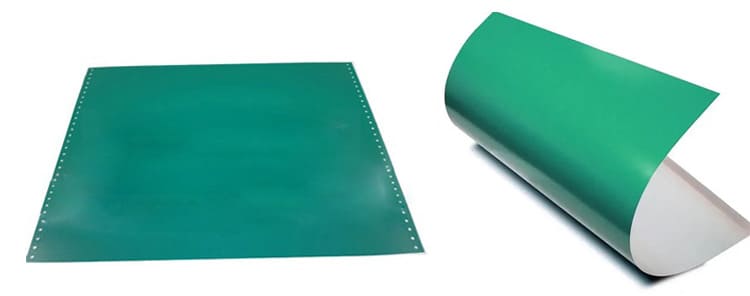
PS 인쇄
건축 장식: 알루미늄 합금은 건축 구조물에 널리 사용됩니다., 문과 창문, 매달린 천장, 장식용 표면, 등. 내식성이 좋기 때문에, 충분한 강도, 우수한 공정 성능 및 용접 성능.

알루미늄 합금 구조 적용
전자 제품: 컴퓨터, 휴대 전화, 냉장고 껍질, 라디에이터, 등.
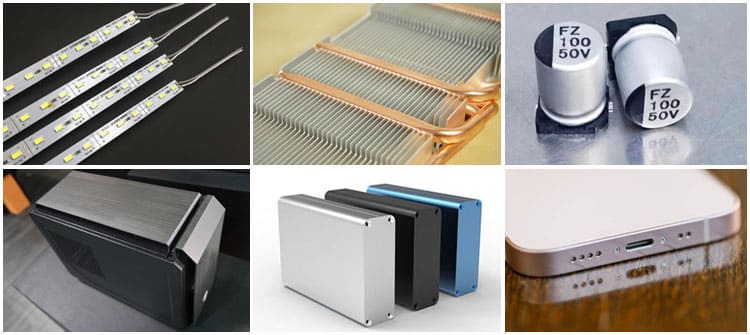
전자 제품 응용
주방 용품: 알루미늄 냄비, 알루미늄 분지, 밥솥 라이너, 가정용 알루미늄 호일, 등.
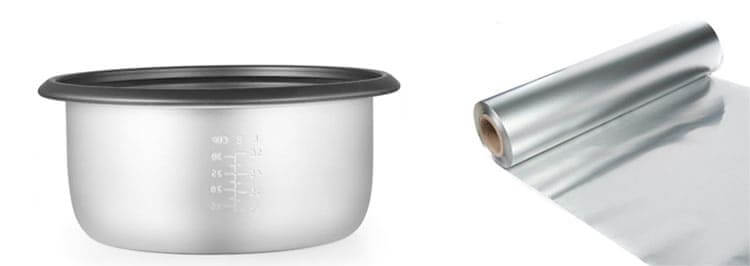
주방 응용 프로그램
알루미늄 시트/코일 포장
포장의 모든 디테일에서 완벽한 서비스를 추구합니다.. 전체 포장 프로세스는 다음과 같습니다.:
라미네이션: 투명 필름, 파란 필름, 미세점막, 높은 점막, 레이저 커팅 필름 (2 브랜드, 노바셀과 폴리펨);
보호: 종이 코너 프로텍터, 압력 방지 패드;
건조: 건조제;
쟁반: 훈증 무해한 나무 트레이, 재사용 철 트레이;
포장: 틱택토 강철 벨트, 또는 PVC 패킹 벨트;
재료 품질: 백청 등의 하자가 전혀 없음, 오일 스팟, 롤링 마크, 가장자리 손상, 굴곡, 찌그러짐, 구멍, 브레이크 라인, 흠집, 등., 코일 세트 없음.
포트: 청도 또는 중국의 다른 항구.
리드타임: 15-45 날.
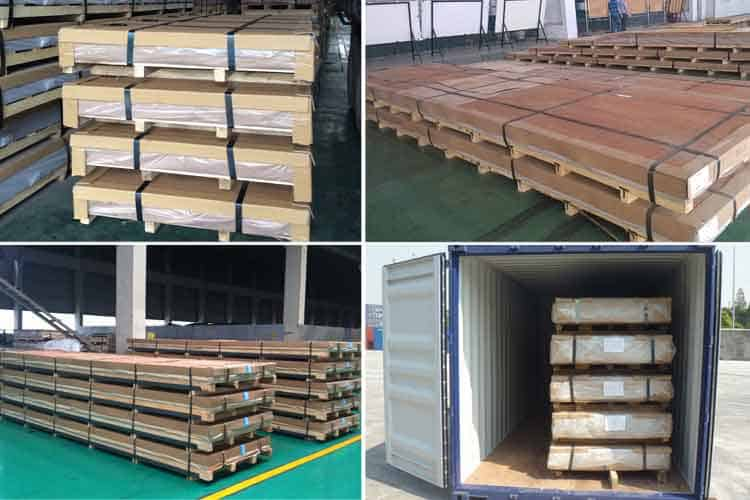
알루미늄 시트/플레이트 포장 공정
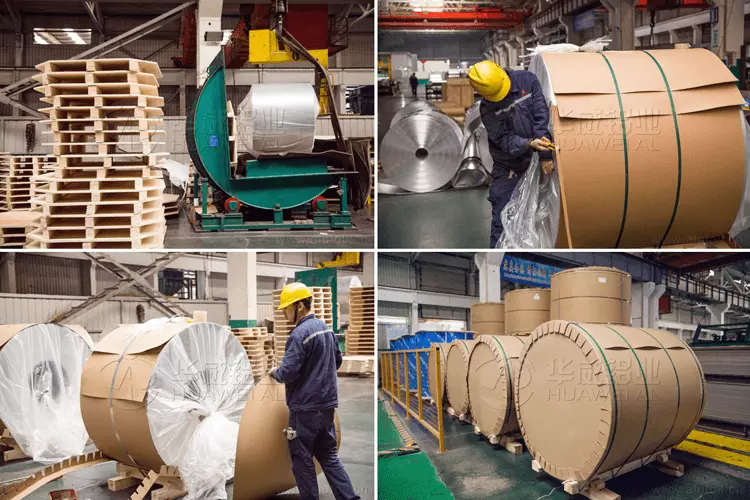
알루미늄 코일 포장 공정
에프: 당신은 제조업자입니까 아니면 상인입니까?
큐: 우리는 제조업체입니다, 우리 공장은 No.3 Weier Road에 있습니다., 공업 지대, 궁이, 허난, 중국.
에프: 제품 주문을 위한 MOQ는 무엇입니까?
큐: 우리의 MOQ는 5 톤, 일부 특수 제품에는 최소 주문량이 있습니다. 1 또는 2 톤.
에프: 당신의 리드타임은 얼마나 됩니까?
큐: 일반적으로 우리의 리드타임은 대략 입니다 30 날.
에프: 제품에 품질 보증이 있습니까??
큐: 예, 우리 제품에 품질 문제가 있는 경우, 우리는 고객이 만족할 때까지 보상할 것입니다..
관련 상품



최신 블로그

포장 및 산업에 사용되는 코팅 알루미늄 호일이란 무엇입니까?
코팅된 알루미늄 호일의 용도를 알아보세요., 식품 및 의약품 포장부터 단열재, 인쇄까지, 핵심 이점과 기능을 알아보세요..

신뢰할 수 있는 3003 전세계 알루미늄 체커 플레이트 시트 공급 업체
신뢰할 수 있는 찾기 3003 인증된 품질을 제공하는 알루미늄 체커 플레이트 시트 공급업체, 경쟁력 있는 가격, 맞춤 크기, 귀하의 프로젝트에 대한 빠른 글로벌 배송.

6061 T6 대 7075 알류미늄: 힘, 무게 & 최고의 용도
비교하다 6061 T6 대 7075 알루미늄 쉽게. 힘의 차이를 발견하세요, 무게, 귀하의 프로젝트에 가장 적합한 것을 선택할 수 있는 애플리케이션.