8021 Pharmaceutical Cold Forming Foil Jumbo Rolls
1634 Mga Pananaw 2026-04-29 08:54:12
Panimula
In the evolving world of pharmaceutical packaging, the choice of foil materials can make a decisive difference in product safety, shelf life, and process efficiency. Among the leading options for cold forming applications, 8021 Pharmaceutical Cold Forming Foil Jumbo Rolls stands out for its combination of formability, barrier performance, and compatibility with high-speed manufacturing lines.
This article delves into what makes 8021 pharmaceutical cold forming foil particularly suited for jumbo-roll applications, how it fits into modern packaging processes, and why a trusted supplier like Huawei Aluminum is often the go-to source for this critical material.
From the basics of alloy composition to the practical realities of jumbo rolls—widths, cores, winding quality, and storage—this guide provides a comprehensive, data-informed view.
It integrates technical specifications, industry standards, and real-world considerations to help packaging engineers, procurement specialists, and operations managers select, qualify, and optimize 8021 pharmaceutical cold forming foil jumbo rolls for their lines.
Throughout, you’ll see references to how the product is used in unit-dose, blister-card, and other pharmaceutical formats, along with practical recommendations for process control, pagtitiyak ng kalidad, and supplier selection.
This introduction highlights the core idea: when you invest in 8021 Pharmaceutical Cold Forming Foil Jumbo Rolls, you’re selecting a material that supports reliable forming, robust barrier protection, and consistent performance across batches and lines.
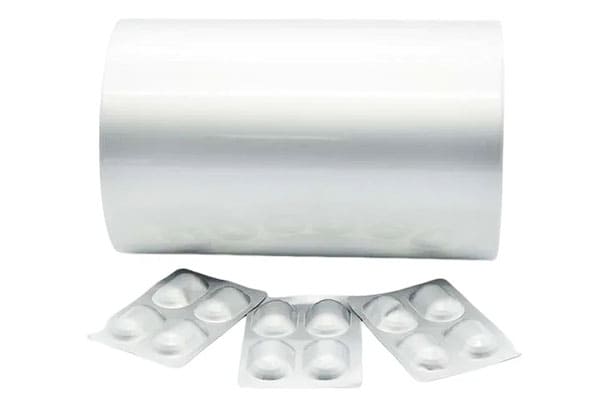
8021 Pharmaceutical Cold Forming Foil Jumbo Rolls
Understanding the Alloy and the Cold Forming Foil Concept
Ano ang 8021 haluang metal, and why is it used for cold forming foil?
Ang 8021 aluminyo foil is part of the high-purity, highly formable family of aluminum used in packaging foil for pharmaceutical products.
While the exact composition can vary by supplier and specification sheet, 8021 foils are engineered to balance ductility with adequate barrier properties, enabling smooth forming in the cold-forming process and reliable seal integrity in subsequent packaging steps.
The “cold forming” designation refers to the set of processes used to shape the foil into the cavities or forming features on blister cards or other unit-dose formats without the need for hot deformation.
This approach yields precise geometries with tight tolerances, which are essential when producing tiny, consistently formed dose units.
Key advantages of 8021 alloy in cold forming foil include:
– High formability and good splitting resistance, enabling clean forming at speed.
– Sufficient barrier properties to protect moisture, mga gas, and contaminants before sealing.
– Compatibility with coatings and coatings’ adhesion profiles that are common in pharmaceutical packaging.
How jumbo rolls influence performance and factory-wide efficiency
Jumbo rolls provide extended, uninterrupted run lengths, reducing roll changes and associated line downtime.
For pharmaceutical lines that require high-speed forming and sealing, jumbo rolls can lower total downtime and increase yield per shift.
The jumbo-roll format also helps minimize material handling interruptions and allows for consistent unwind tension, which is critical for maintaining uniform forming operations across a process run.
From a process standpoint, the jumbo-roll approach often involves:
– Precise control of unwind tension to prevent telescoping or wrinkling during forming.
– Consistent gauge distribution to minimize variation across roll width and length.
– Uniform internal and external coatings (as applicable) to maintain surface quality for printing, lacquering, or laminating steps downstream.

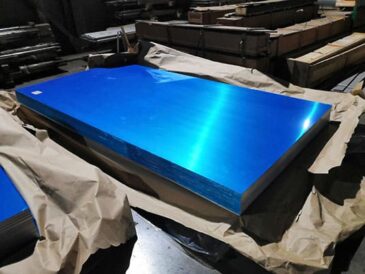
Huawei 8021 Pharmaceutical Cold Forming Foil
Applications and Benefits in Pharmaceutical Packaging
Core applications for 8021 Pharmaceutical Cold Forming Foil Jumbo Rolls
- Unit-dose blister packs produced by cold-forming equipment.
- Formed-lid foils used in tamper-evident seals for tablets and capsules.
- Lidding foils for beverage co-packages where compatibility with the filling process and seal integrity are critical (where applicable to pharma-adjacent uses).
Ang versatility ng 8021 foil in these contexts rests on three pillars: pagiging formable, barrier performance, and compatibility with downstream processes (paglilimbag, paglalamina ng, lacquering, and sealing).
In high-speed blister lines, formability reduces the risk of tearing, mga pinhole, or denting during forming; barrier properties maintain stability against humidity and oxygen ingress; and surface properties ensure robust adhesion for coatings or printing used for branding and traceability.
Benefits for manufacturers, packagers, and patients
- Consistent formability reduces machine downtime and rejects due to forming faults.
- Robust barrier properties help preserve product integrity throughout shelf life, supporting regulatory compliance and consumer safety.
- Surface compatibility enables efficient printing and labeling, improving GMP traceability and batch-level documentation.
- Jumbo rolls decrease changeover frequency, contributing to higher line efficiency and predictable throughput.
- The use of a proven supplier like Huawei Aluminum provides a track record of quality management, material consistency, and supply reliability.
Mga Katangian ng Materyal, Mga Pamantayan, and Quality Control
Physical properties and general performance expectations
While specific values can vary by production lot and the precise specification used by a supplier, typical performance expectations for 8021 pharmaceutical cold forming foil include:
– Formability: High elongation and good ductility to accommodate the forming radii and cavity shapes in cold-form tooling.
– Surface finish: Suitable for adhesion with lacquers or lacquering systems used in pharmaceutical packaging; low surface roughness helps ensure smooth forming and reliable downstream lamination.
– Mechanical strength: Adequate tensile properties to withstand unwinding tensions and handling on the line without tearing.
– Barrier performance: Acceptable moisture vapor transmission rate (MVTR) and oxygen transmission rate (OTR) to protect the drug product during storage, with values that meet common pharmacopeial or customer-specified requirements.
Surface quality and printing compatibility
Forming foil surfaces often must tolerate downstream printing, patong na patong, or lamination steps. Uniform surface quality reduces the risk of print defects and inconsistencies in brand labeling, lot codes, and fill details.
A high-quality surface also improves paint or lacquer adhesion, which is crucial for tamper-evident features and visual quality.
Pagsubok, Mga Pamantayan, and quality assurance
Pharmaceutical foil suppliers typically employ a robust quality-management regime aligned with global standards, kasama na ang:
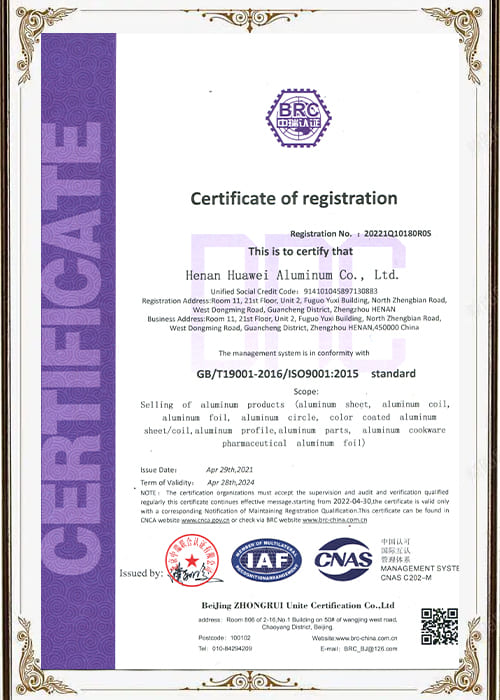
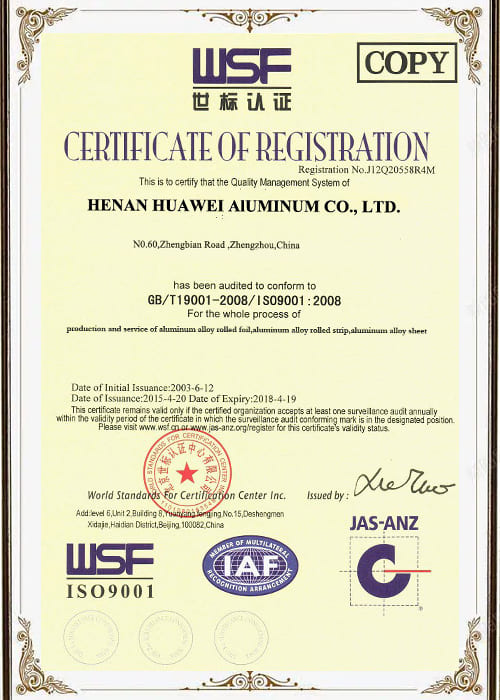
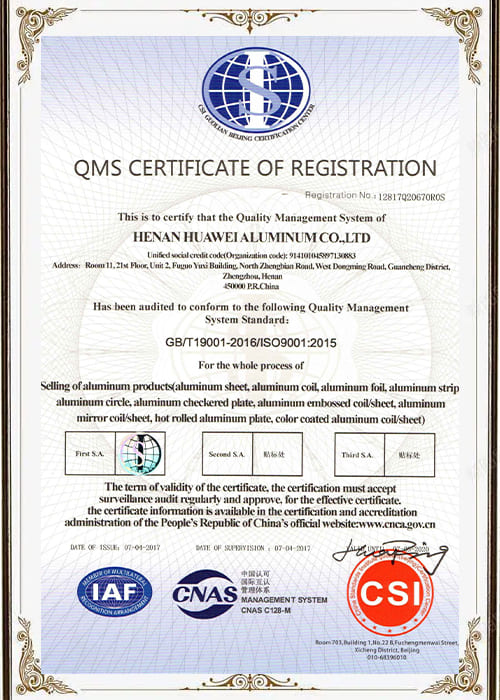
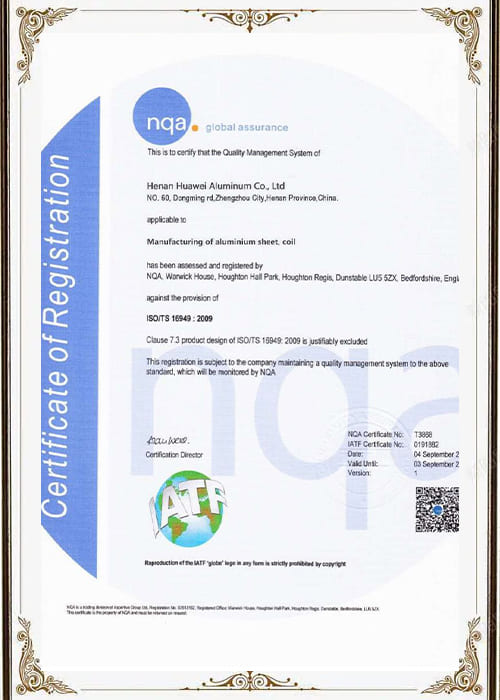
– ISO 9001 for quality management systems, ensuring consistent process control and continuous improvement.
– ISO 14001 or similar environmental-management standards, to address sustainability and waste handling.
– ISO/IEC 17025 accreditation for laboratory testing, enabling traceable MVTR, OTR, and surface-roughness measurements.
– Industry-specific pharmacopeial standards requested by customers (halimbawa na lang, tests for moisture barrier, seal strength, and compatibility with coatings used in the product’s dosage form).
In practice, manufacturing a jumbo roll of 8021 foil involves multiple stages of inspection:
– Pre-foil inspection (incoming raw material quality, thickness uniformity, surface cleanliness).
– In-process checks (coiling tension, pagkamagaspang ng ibabaw, rolling temperature controls, and annealing schedules).
– Post-production testing (MVTR/OTR, seal strength, paglaban sa kaagnasan, and peel strength of coatings).
– Final packaging and traceability (lot coding, batch documentation, and certificate of analysis).

Cold Forming Foil for Medicine packaging
Jumbo Roll Specifications: Sukat, Paghawak, and Storage
Dimensions and core specifications
Jumbo rolls used in pharmaceutical cold forming applications typically come with dimensions designed to maximize line uptime and minimize waste, within the capabilities of the forming equipment. Common characteristics include:
– Widths: Wide jumbo rolls that match the wide wide-knife or laser-formed forming tools, often in the 1000–1800 mm range, depending on the equipment.
– Core sizes: Large-diameter cores to enable long unwinding runs, with a standard inner-diameter (ID) that matches the unwind spindle on pharmaceutical forming lines.
– Outer diameter: Large enough to store significant material while keeping residual tension within safe limits during unwinding.
Thickness and gauge uniformity
In cold forming foil applications, the foil thickness is a critical parameter that influences both forming behavior and sealing performance.
Typical ranges for pharmaceutical 8021 foil in jumbo-roll format may span from roughly 12–30 µm per layer, with some applications using dual-coated structures or multi-layer laminates.
Uniform thickness across the width and along the length is essential to ensure consistent forming depth, reduce defect rates, and maintain seal integrity.
Winding quality, patong na patong, at mga paggamot sa ibabaw
- Winding quality: Even winding without gaps or overlaps reduces the risk of telescoping and marking on the product side. Proper tension control ensures that the foil unwinds smoothly without scratches or edge damage.
- Surface treatments: Depending on downstream processes, 8021 jumbo rolls may incorporate coatings or lacquer systems designed to improve adhesion for printing or laminations or to act as a barrier booster in multilayer laminates.
- Storage and handling: Rolls should be stored in clean, dry conditions with humidity control to prevent corrosion or tackiness of coatings. Handling guidelines typically emphasize minimizing exposure to contaminants and avoiding mechanical damage to the foil surface.
Pagtiyak ng Kalidad: Process Control and Reliability
Production-control workflows
- Raw-material inspection: Supplier qualification includes lot-by-lot checks of the starting aluminum stock for composition, surface cleanliness, and absence of defects.
- In-line inspection: On-line gauges monitor thickness uniformity and surface roughness; mechanical tests verify tensile properties and ductility.
- Post-process verification: Finished jumbo rolls undergo MVTR/OTR testing, adhesive compatibility checks for coatings, and seal-strength verification on representative test packages.
Documentation and traceability
- Lot-level traceability: Each jumbo roll lot carries a unique identifier linked to the supplier’s billeted material records, production run data, and testing results.
- Sertipikasyon: Certificates of Analysis (COA) accompany shipments, detailing thickness, surface quality metrics, and environmental performance qualifications.
- Change-control practices: Any material or process changes require documented risk assessments and customer notification to prevent surprises in packaging performance.
Reliability considerations and risk mitigation
- Variability management: Tight process controls minimize thickness variance across the width and length of jumbo rolls, which reduces the risk of inconsistent forming and sealing across batches.
- Packaging integrity: Consistent surface quality and coating compatibility reduce the risk of delamination or coating failure during laminating steps, which can cause packaging defects.
- Supplier collaboration: Strong partnerships with suppliers like Huawei Aluminum support continuous improvement in surface quality, process stability, and supply reliability.
The Jumbo Roll Advantage: Practical Considerations for Buyers
Why choose jumbo rolls for pharmaceutical cold forming foil?
- Operational efficiency: Fewer roll changes translate to higher line uptime and lower maintenance downtime, which is especially valuable on high-speed blister lines.
- Consistent performance: Jumbo rolls reduce the variability that can arise from frequent material handling, enabling more stable print quality, forming depth, and seal integrity.
- Waste reduction: Longer run lengths mean less scrap from misfeeds or misforms caused by occasional sheet-level changes. With tight process control, this translates into lower material waste and better yield.
Sourcing and supplier selection considerations
- Material compatibility: Ensure the foil’s surface finish and coating (kung mayroon man) are compatible with lacquers and coatings used downstream in your process.
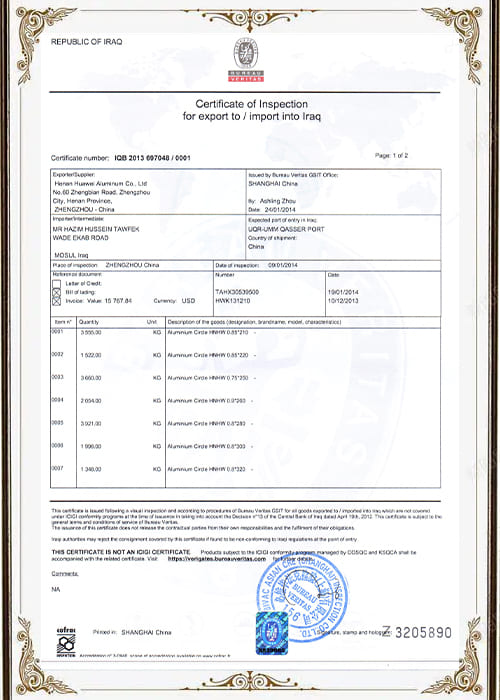
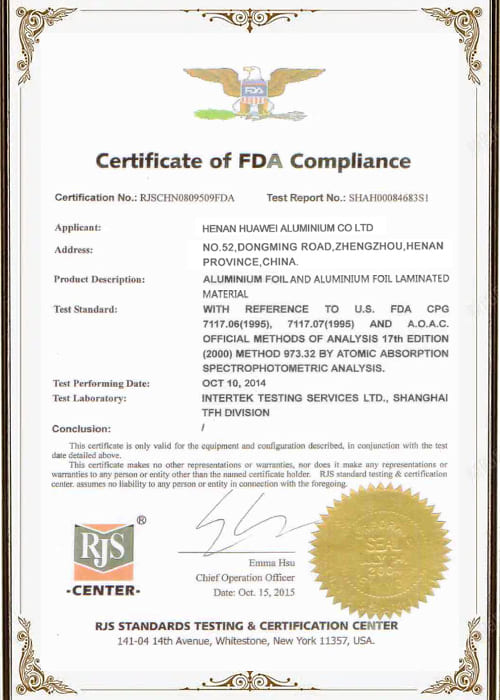
- Certification and documentation: Request ISO certifications, COAs, and third-party test data for MVTR/OTR, seal strength, and adhesion to coatings.
- Lead times and supply reliability: Jumbo rolls require careful inventory planning; ensure supplier capacity aligns with production demand and line downtimes for maintenance.
- Technical support: Choose suppliers who can provide technical guidance on forming parameters, coating compatibility, and process-set recommendations for your equipment.
Practical steps for procurement teams
- Define tolerances clearly: Ang kapal, lapad ng katawan, core dimension, and dimensional tolerances should be documented and agreed with the supplier.
- Request pilot data: Before large-scale procurement, obtain pilot material or short-roll samples to test on your line in real production conditions.
- Establish acceptance criteria: Build an acceptance test plan around forming quality, seal strength, at mga katangian ng barrier, with criteria tied to product stability and regulatory requirements.
- Plan for qualification: Schedule an initial qualification and ongoing re-qualification to ensure material consistency over time.
Comparative Analysis: 8021 vs Other Foil Alloys
To help buyers make informed choices, the following table compares 8021 aluminum foil in pharmaceutical cold forming applications with common alternative alloys used in similar contexts, tulad ng 8011 at, to a lesser extent, higher-strength alloys used in specialized packaging.
| haluang metal | Best For | Mga Katangian ng Barrier (relative) | Formability and Drawability | Karaniwang Saklaw ng Kapal (M) | Approximate Cost vs 8011 | Mga Pananalita |
|---|---|---|---|---|---|---|
| 8021 (pharmaceutical cold forming foil) | High-speed forming with robust barrier needs; tight tolerances | Katamtaman hanggang mataas; suitable for unit-dose protection with seal integrity | High formability, good ductility for complex cavities | 12–30 µm per layer (varies by construction) | Comparable to or slightly higher than 8011, depending on coatings and processing | Optimized for cold forming and seal performance; widely used for unit-dose applications when forming precision matters |
| 8011 (common pharmaceutical foil) | General-purpose pharmaceutical packaging; foil used in laminates and lid foils | High barrier when paired with coatings or laminates; strong moisture barriers | Excellent workability for standard packaging; easy to coat | 10–25 µm typical; often used in single-layer applications | Usually lower than 8021 for equivalent thickness | Versatile, cost-effective, but slightly less optimized for extreme forming geometries or tight tolerances |
| 8079 or other higher-strength variants (specialized) | High-strength lids or demanding mechanical environments | Often higher barrier with optimized coatings; used in specialized forms | Moderate formability; may require specific tooling | ≥15 µm in many cases | Higher cost; specialized supply chain | Reserved for niche applications requiring added strength or specific mechanical characteristics |
Notes:
– Values in the table are representative ranges based on industry norms and supplier data sheets. Actual numbers depend on exact alloy composition, patong na patong, processing, and testing performed by the supplier.
– When selecting between 8021 at 8011, customers should weigh the importance of formability and precision against the marginal cost difference. For lines with very fine cavities or high-speed cycles, 8021 can offer advantages that justify the premium.
Supplier Spotlight: Huawei Aluminum
Company overview
Huawei Aluminum is a recognized supplier in the aluminum foil sector, with a focus on providing high-performance foil products for pharmaceutical packaging.
The company emphasizes quality management, process control, and the ability to tailor foil solutions to the exact requirements of modern packaging lines.
Huawei Aluminum’s product portfolio includes pharmaceutical-grade foil designed for cold forming, Mga Laminate, and lidding applications, supported by technical service and supply-chain reliability.
Their materials are backed by documentation that supports traceability, material composition, and performance testing.
Capabilities and certifications
- Extensive roll-to-roll processing capabilities for jumbo rolls, including wide widths and long unwind lengths.
- Surface finishing options and coatings that support printing, lamination, and adhesion with lacquers used in pharmaceutical packaging.
- Quality-management systems that align with international standards, including documentation and traceability requirements for critical packaging materials.
- Testing capabilities for MVTR, OTR, seal strength, and adhesion, often in alignment with customer-specified test methods or recognized industry standards.
Why Huawei Aluminum for 8021 papel de liha?
- Proven track record in pharmaceutical packaging markets, offering consistent material quality across batches.
- Ability to supply jumbo rolls with tight tolerances and reliable supply to support high-speed lines.
- Strong technical support for formulation, process integration, and line optimization.
- Commitment to traceability and documentation that support regulatory compliance, audits, and customer quality programs.
Mga FAQ
What does “8021 Pharmaceutical Cold Forming Foil Jumbo Rolls” specifically refer to?
It refers to the 8021 aluminum alloy foil designed for cold-forming packaging applications in the pharmaceutical sector, supplied in jumbo rolls for extended unwind lengths to support high-speed production lines.
Why choose jumbo rolls over standard-width sheets?
Jumbo rolls reduce roll-change downtime, improve line efficiency, and deliver more consistent material performance across long production runs, which is especially valuable on high-speed pharmaceutical lines.
How does 8021 compare to 8011 for cold forming?
8021 typically offers better formability and stability in complex forming geometries, which can translate to improved forming fidelity and fewer rejects in high-precision blister-pack applications. 8011 offers strong barrier performance and cost efficiency, making it suitable for broader packaging needs that don’t require the most aggressive forming tolerances.
What should buyers look for when evaluating Huawei Aluminum as a supplier?
Look for certifications (.ISO 9001, and testing capabilities), traceability documentation, lead times and supply reliability, technical support for forming and coatings, and evidence of consistent roll quality (lapad ng katawan, thickness tolerance, Pagtatapos ng Ibabaw).
Are MVTR and OTR values always provided with jumbo rolls?
Oo nga, reputable suppliers provide MVTR and OTR test data for their foil products, though exact values depend on the specific coating, laminate structure, and process. Buyers should request this data and verify it against their product’s shelf-life and storage conditions.
How should I handle storage and transport of jumbo rolls?
Store in a clean, dry environment with stable humidity and temperature. Protect from mechanical damage and contamination, and ensure rolls are supported to prevent deformation of the cores.
Is ISO certification essential when sourcing pharmaceutical foils?
ISO certification helps demonstrate a manufacturer’s commitment to quality and process control. While not a legal requirement for every purchase, it is a strong indicator of a reliable supplier, especially in regulated industries like pharmaceuticals.
How can I assess long-term supplier reliability for jumbo rolls?
Review the supplier’s production capacity, lead-time consistency, past on-time delivery records, response times for technical inquiries, and the supplier’s willingness to participate in collaborative trials, quality audits, and continuous-improvement programs.
Pangwakas na Salita
Choosing 8021 Pharmaceutical Cold Forming Foil Jumbo Rolls is a strategic decision in pharmaceutical packaging that combines formability, barrier performance, and operability on high-speed lines.
The jumbo-roll format adds an operational advantage by reducing downtime and maintaining consistent run quality, which translates into higher throughput and more stable product quality across batches.
Ang 8021 alloy’s characteristics support precise forming, reliable seals, and compatibility with common downstream processes, making it a robust option for unit-dose packaging and other cold-forming applications.
Huawei Aluminum, as a supplier, offers a credible and well-supported pathway to acquiring this essential material.
With a focus on quality management, traceability, and technical service, Huawei Aluminum represents a reliable partner for manufacturers seeking consistent foil performance, robust process support, and predictable supply.
By combining strong material performance with supplier reliability, buyers can achieve improved line efficiency, enhanced product protection, and a smoother path from raw material to finished packaging.
If you’re evaluating foil options for a pharmaceutical cold forming line, this guide provides a structured framework for considering 8021 Pharmaceutical Cold Forming Foil Jumbo Rolls.
Use it to align specifications with process needs, compare alternatives, and engage with a supplier partner capable of supporting both current production and future scale-up.
The result should be packaging that protects the product, enables efficient manufacturing, and satisfies regulatory expectations—delivering safety and quality to patients while optimizing your operation’s performance.
Share with PDF: Download