1060 Aluminum Foil for Capacitors
1565 Mga Pananaw 2026-06-17 07:05:26
1. Panimula
1060 aluminum foil for capacitors is a high-purity aluminum foil used as electrode material in aluminum electrolytic capacitors.
With a minimum aluminum content of 99.60%, 1060 aluminum provides high electrical conductivity, Mahusay na ductility, stable oxide film formation, and reliable electrochemical processing behavior.
In capacitor production, aluminum foil is not a simple metal strip. It must withstand precision rolling, degreasing, electrochemical etching, anodic forming, pagputol ng hiwa, and high-speed winding.
Its quality directly affects capacitance, leakage current, equivalent series resistance, service life, and production yield.
1060 aluminum foil for capacitors offers a practical balance of high purity, electrical performance, pagiging formable, and cost efficiency.
It suits many general-purpose capacitor applications and can serve as a base material for etched foil, formed foil, anode foil, and cathode foil.
2. Ano ang 1060 Aluminum Foil for Capacitors?
1060 aluminum foil for capacitors is thin rolled foil made from 1060 commercially pure aluminum.
It usually requires tighter control than general industrial foil because capacitor production depends on predictable electrochemical behavior.
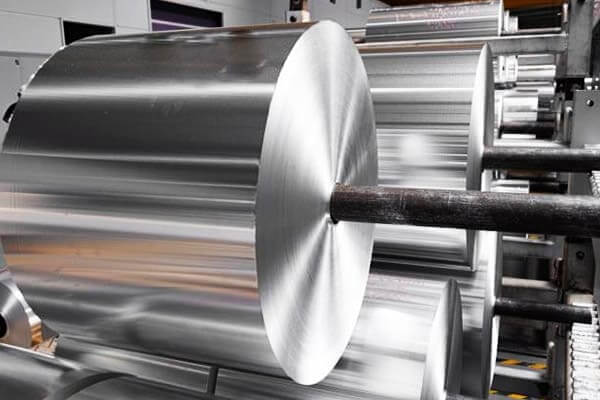
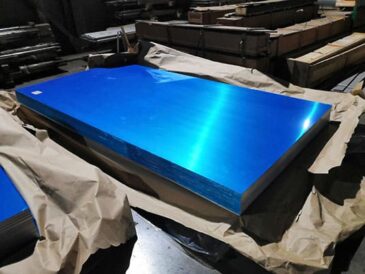
Huawei 1060 Aluminum Foil
2.1 Ano ang 1060 aluminyo haluang metal?
1060 aluminum belongs to the 1xxx series of commercially pure aluminum alloys.
It contains at least 99.60% aluminyo. Since it contains very limited alloying elements, it offers good conductivity, mahusay na paglaban sa kaagnasan, high ductility, and strong rolling performance.
Gayunpaman, 1060 aluminum is not heat-treatable. Manufacturers improve its strength mainly through cold working and adjust ductility through annealing.
2.2 Kemikal na komposisyon ng 1060 aluminyo haluang metal
| Elemento | Typical Content | Influence on Capacitor Foil |
|---|---|---|
| Aluminyo | ≥99.60% | Provides conductivity, ductility, and oxide film formation |
| Silicon | ≤0.25% | Must remain controlled to support surface stability |
| bakal na bakal | ≤0.35% | Influences grain structure and mechanical behavior |
| Tanso | ≤0.05% | Kept low to protect corrosion and electrical stability |
| Magnesium | ≤0.03% | Controlled impurity |
| Mga mangganeso | ≤0.03% | Controlled impurity |
| Sink | ≤0.05% | Controlled impurity |
| Titanium | ≤0.03% | May influence grain behavior |
| Vanadium | ≤0.05% | Trace element control |
| Ang iba naman | Trace | Must remain within agreed specification |
2.3 Metallurgical Characteristics
1060 aluminyo foil has several features that make it suitable for capacitor manufacturing:
- Mataas na kadalisayan: supports stable dielectric oxide formation.
- Magandang electrical kondaktibiti: pure aluminum commonly reaches about 60% IACS, depending on temper and processing.
- Napakahusay na ductility: allows thin rolling, pagputol ng hiwa, and winding.
- Uniform grain structure: improves etching consistency.
- Natural oxide-forming ability: aluminum forms aluminum oxide, o Al O, which acts as the capacitor dielectric after anodic forming.
- Good surface processability: supports degreasing, mga etching, pagbuo ng, and electrolyte compatibility.
2.4 Common Tempers for Capacitor Foil
| Temper | General Feature | Karaniwang Paggamit |
|---|---|---|
| O | Soft annealed, high ductility | Winding and forming operations requiring flexibility |
| H18 | Full hard, higher strength | Thin foil requiring better dimensional stability |
| H19 | Extra hard | Applications needing high tensile stability |
| Customized temper | Application-specific | Matched to etching, pagbuo ng, winding, and voltage class |
The correct temper depends on whether the foil will become anode foil, cathode foil, etched foil, formed foil, or plain foil for later treatment.
3. Technical Specifications of 1060 Aluminum Foil for Capacitors
| Parameter | Typical Requirement |
|---|---|
| Product name | 1060 aluminum foil for capacitors |
| haluang metal | 1060 |
| Aluminum purity | ≥99.60% |
| Temper | O, H18, H19, or customized |
| Ang kapal | Customized according to capacitor type and voltage class |
| Lapad ng katawan | Customized for slitting and winding equipment |
| Ibabaw | Clean, uniform, oil-controlled |
| Kondaktibiti | High conductivity required |
| Pinhole level | Strictly controlled |
| Edge quality | Low burr, no edge crack |
| Pagkamagaspang ng ibabaw | Controlled for etching response |
| Packaging | Moisture-proof, hindi mapag agawan ng alikabok, anti-scratch packaging |
| Dokumentasyon | MTC, inspection report, batch traceability |
A strong purchasing specification should define not only alloy and thickness, but also surface cleanliness, oil residue, pinhole acceptance level, burr height, tensile properties, and trial etching performance.
4. Working Principle of Aluminum Electrolytic Capacitors
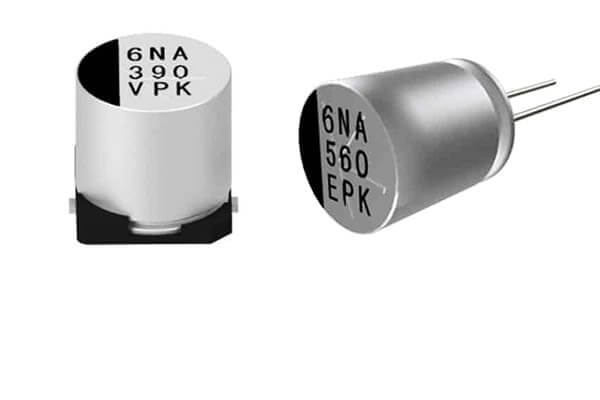
- Aluminum electrolytic capacitors use etched aluminum foil as the anode, a liquid electrolyte as the cathode, and a dielectric layer formed by anodizing the aluminum surface.
- Ang dielectric layer is a thin oxide film (aluminyo oksido, Al O) formed electrochemically, which acts as the insulating barrier between the anode and the electrolyte.
- The high surface area of the etched aluminum foil increases capacitance, allowing the storage of more electrical energy in a compact space.
Key Properties of 1060 Aluminum Foil for Capacitors
5. Key Properties of 1060 Aluminum Foil for Capacitors
5.1 High Purity and Low Impurity Content
High purity improves electrical stability and oxide film reliability. Impurities such as Fe, Si Si, Cu, and Zn can affect etching uniformity, leakage current, and corrosion behavior.
Dahil 1060 aluminum contains ≥99.60% Al, it provides a strong baseline for general capacitor foil applications.
5.2 High Electrical Conductivity
Conductivity affects current flow and internal resistance.
1060 aluminum’s high conductivity helps reduce resistive losses and supports stable capacitor performance.
This matters especially in ripple-current applications such as power supplies, motor drives, and inverter systems.
5.3 Uniform Thickness
Thickness variation can affect winding tension, capacitance consistency, foil strength, and final capacitor size.
Capacitor foil buyers usually require tight thickness tolerance because even small gauge changes can alter winding density and electrical design.
5.4 Clean Surface and Low Oil Residue
Surface contamination can block etching, weaken oxide formation, or cause localized electrical defects.
Capacitor-grade foil should have low rolling oil residue and a clean surface suitable for degreasing, mga etching, and forming.
5.5 Low Pinhole Level
Pinholes create weak points. In capacitor foil, pinholes can cause electrical failure, leakage current increase, or mechanical breakage.
Melt cleanliness, rolling control, filtration, and inspection all help reduce pinhole risk.
5.6 Controlled Grain Structure
Grain size and texture influence etching morphology.
A stable grain structure supports more uniform pore formation and better capacitance gain.
Poor metallurgical control can cause uneven etching and inconsistent electrical performance.
5.7 Good Ductility and Winding Performance
Capacitor production involves slitting, winding, impregnation, and assembly.
Foil must bend around winding cores without tearing or cracking.
Proper temper selection helps balance tensile strength and elongation.
Produksyon ng 1060 Aluminum Foil
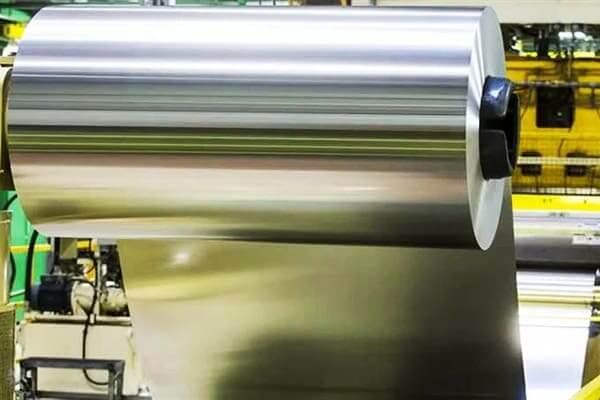
6. Proseso ng Paggawa ng 1060 Aluminum Foil for Capacitors
6.1 High-purity Aluminum Selection
Production starts with high-purity aluminum feedstock.
The mill controls impurity elements because capacitor foil performance depends strongly on chemistry.
6.2 Pagtunaw at Paghahagis
Clean melting reduces inclusions and non-metallic particles.
These defects can later become pinholes, surface flaws, or electrical weak points.
6.3 Homogenization and Hot Rolling
Homogenization improves structural uniformity.
Hot rolling reduces the cast material and prepares it for cold rolling.
6.4 Cold Rolling and Foil Rolling
Cold rolling and foil rolling reduce the material to the target gauge.
This stage controls thickness accuracy, patag na, Pagtatapos ng Ibabaw, at mekanikal na mga katangian.
6.5 Annealing and Temper Control
Annealing adjusts grain structure, pagpapahaba ng panahon, and tensile strength.
The supplier must match the temper to the customer’s etching, pagbuo ng, and winding process.
6.6 Cleaning and Degreasing
Cleaning removes rolling oil, alikabok na, metal fines, and surface contaminants.
This step directly affects etching uniformity and oxide film formation.
6.7 Slitting and Rewinding
Precision slitting produces narrow rolls for capacitor production.
Low burr edges reduce tearing risk during high-speed winding.
6.8 Packaging
Capacitor foil packaging should protect against moisture, alikabok na, mga gasgas na, fingerprints, and oxidation stains.
Good export packaging often includes moisture-proof wrapping, edge protection, desiccant, and stable pallet support.
1060 Aluminum Foil for Capacitors
7. Mga aplikasyon ng 1060 Aluminum Foil for Capacitors
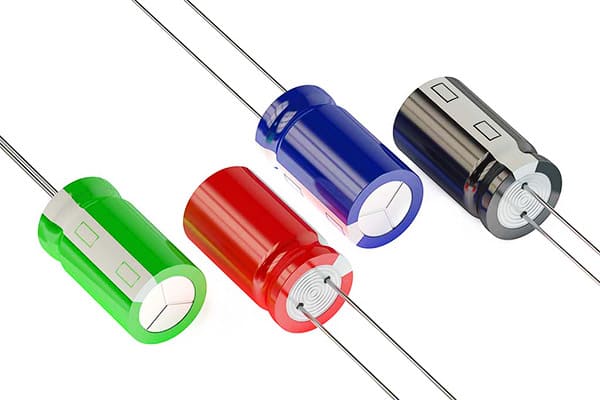
1060 aluminum foil for capacitors is mainly used in aluminum electrolytic capacitors and related electronic components that require high conductivity, stable oxide film formation, magandang ductility, and reliable electrochemical processing.
Dahil 1060 aluminum contains at least 99.60% aluminyo, it provides a strong balance of purity, processability, and cost efficiency for capacitor production.
7.1 Aluminum Electrolytic Capacitors
The most important application of 1060 aluminum foil is aluminum electrolytic capacitors.
In this structure, aluminum foil serves as the key electrode material.
It can be used as:
- Anode foil: etched and anodized to create a high-surface-area electrode and dielectric oxide layer
- Cathode foil: used for current collection and electrolyte contact
- Etched foil: treated to increase effective surface area
- Formed foil: anodized to generate the aluminum oxide dielectric layer
Because capacitance depends strongly on effective surface area and dielectric thickness, the purity, kalidad ng ibabaw, and etching behavior of 1060 foil directly affect capacitor performance.
7.2 Low-voltage Capacitors
Low-voltage aluminum electrolytic capacitors often need high capacitance density in a compact size.
For this reason, the foil must support deep and uniform etching to increase the effective surface area.
1060 aluminyo foil works well in low-voltage capacitor applications because it offers:
- Good etching response
- High ductility for winding
- Stable conductivity
- Controlled surface quality
- Suitable cost-performance balance
Typical uses include consumer electronics, LED drivers, small power adapters, control boards, and household appliances.
7.3 High-voltage Capacitors
High-voltage capacitors require a stable dielectric oxide layer that can withstand higher forming voltage.
In these applications, oxide film quality becomes especially important.
1060 aluminum foil can be used in selected high-voltage capacitor applications when it meets strict requirements for purity, istraktura ng butil, surface cleanliness, and forming behavior.
Gayunpaman, some high-end high-voltage capacitors may use higher-purity aluminum grades such as 1070, 1080, o 1085, depending on reliability targets.
7.4 Power Supply and Inverter Capacitors
Power supplies and inverters rely on capacitors for filtering, voltage smoothing, and energy buffering.
1060 aluminum foil supports these functions by providing conductive and stable electrode material.
Common application fields include:
| Mga Kagamitan | Capacitor Function |
|---|---|
| Switching power supplies | Ripple filtering and voltage smoothing |
| Solar inverters | DC-link stabilization and energy buffering |
| Wind power converters | Voltage stabilization and power conditioning |
| UPS systems | Backup power and DC bus support |
| Industrial drives | Motor control and ripple current handling |
| EV charging equipment | Power filtering and energy storage support |
In these applications, capacitors may operate under heat, ripple current, and long service cycles.
Kaya nga, foil consistency, oxide stability, and winding reliability matter greatly.
7.5 Automotive Electronics
Modern vehicles use many electronic control modules, sensors, lighting systems, power converters, infotainment units, and battery management systems.
Aluminum electrolytic capacitors help stabilize power and reduce voltage fluctuation in these circuits.
1060 aluminum foil for capacitors can support automotive capacitor production when the capacitor design requires:
- Magandang kondaktibiti
- Stable electrochemical behavior
- Low leakage current risk
- Good winding strength
- Reliable long-term performance
Automotive applications require strict quality control because components must tolerate vibration, temperature changes, and long service periods.
7.6 Mga Elektronika ng Consumer
Consumer electronics require compact capacitors with stable electrical performance and cost efficiency.
1060 aluminum foil provides a practical material choice for capacitors used in:
- Mga Telebisyon
- Audio equipment
- Chargers
- Computers
- Monitors
- Routers
- Smart home devices
- Power adapters
- Small appliances
In these products, the capacitor must support stable power delivery while keeping size and cost under control.
7.7 LED Lighting and Driver Circuits
LED drivers often use aluminum electrolytic capacitors for voltage smoothing and current stabilization.
Poor capacitor quality can lead to flicker, sobrang init, or shortened lighting life.
1060 aluminum foil helps capacitor manufacturers produce components suitable for LED applications by supporting:
- Stable capacitance
- Magandang kondaktibiti
- Reliable winding
- Controlled leakage current
- Consistent oxide film formation
7.8 Industrial Electronics and Motor Control
Industrial electronics place higher demands on capacitor reliability.
Motor drives, automation systems, welding equipment, frequency converters, and control cabinets often operate under continuous load.
In these systems, capacitors made with qualified 1060 aluminum foil can help provide:
- DC bus filtering
- Ripple current support
- Voltage stabilization
- Power factor correction support
- Energy buffering
- Circuit protection
7.9 Communication and Data Equipment
Communication systems need clean and stable power.
Capacitors help reduce ripple, noise, and voltage instability in power modules.
Applications include:
- Base station power supplies
- Network routers
- Server power modules
- Data center equipment
- Communication control units
- Signal processing equipment
8. 1060 Aluminum Foil vs Other Capacitor Foil Materials
| Materyal | Kadalisayan / Uri ng | Advantage | Limitation | Best-fit Use |
|---|---|---|---|---|
| 1060 aluminyo foil | ≥99.60% Al | Good purity, conductivity, ductility, and cost balance | Lower purity than 1070 o 1085 | General capacitor foil |
| 1070 aluminyo foil | ≥99.70% Al | Higher purity and better electrical stability | Higher cost | Higher-reliability capacitor foil |
| 1100 aluminyo foil | ≥99.00% Al | Good formability and availability | Lower purity | Less demanding electrical uses |
| 1235 aluminyo foil | ≥99.35% Al | Economical and common in packaging | Not ideal for precision capacitor foil | Packaging and flexible laminates |
| Metallized film | Polymer film with metal layer | Self-healing behavior in film capacitors | Different capacitor technology | Film capacitors |
1060 aluminum foil offers an effective balance for many capacitor manufacturers.
It provides higher purity than 1100 at 1235, while usually costing less than ultra-high-purity grades.
9. Quality Control and Testing
To meet the demands of global capacitor brands (such as Rubycon, Nichicon, or Chemi-Con), 1060 foil undergoes rigorous testing:
- Wettability Testing (Dyne Test): Using water-drop contact angle testing to ensure the surface energy is >32 dynes/cm, proving the absolute absence of hydrocarbon residues.
- Pinhole Detection: Optical light arrays detect microscopic perforations. Capacitor foil allows near-zero pinhole tolerance, as a pinhole will break the internal winding circuit.
- Microstructural Analysis: Metallurgists use scanning electron microscopes (SEM) to verify the crystalline grain size, ensuring it will respond predictably to the customer’s chemical etching baths.
10. Bakit Pumili ng Huawei 1060 Aluminum Foil for Capacitors
Henan Huawei Aluminyo Co., Ltd. supplies aluminum sheet, plate, likawin ang, hubad, and foil products for packaging, electrical, at pang industriya na mga aplikasyon.
For capacitor foil buyers, the supplier’s role is not only to deliver 1060 papel de liha, but also to support stable specifications and repeatable processing performance.
Huawei can support 1060 aluminum foil for capacitors kasama ang:
- 1060 aluminum foil supply with ≥99.60% aluminum purity
- Customized thickness, lapad ng katawan, Pamahiin, and roll dimensions
- Surface control for capacitor processing
- Moisture-proof export packaging
- Mill test certificates and batch traceability
- Sample support for etching, pagbuo ng, and winding trials
- Technical communication for anode or cathode foil requirements
Before placing a bulk order, buyers should provide capacitor type, voltage class, anode/cathode use, target thickness, Pamahiin, surface cleanliness requirement, pinhole standard, and packaging method.
11. Pangwakas na Salita
1060 aluminum foil for capacitors is a high-purity, conductive, ductile, and electrochemically stable material for aluminum electrolytic capacitor production.
Its 99.60% minimum na nilalaman ng aluminyo, good conductivity, oxide-forming ability, and rolling processability make it suitable for anode foil, cathode foil, etched foil, and formed foil applications.
For manufacturers, the right foil improves capacitance consistency, reduces leakage current risk, supports stable winding, and increases production yield.
Kaya nga, buyers should evaluate more than price.
They should examine purity, kalidad ng ibabaw, istraktura ng butil, mga pinhole, thickness tolerance, edge condition, etching response, and supplier quality control.
Mga FAQ
1. Ano ang 1060 aluminum foil for capacitors?
It is high-purity aluminum foil used in aluminum electrolytic capacitors as anode foil, cathode foil, etched foil, or formed foil.
2. What is the purity of 1060 aluminyo foil?
1060 aluminum contains at least 99.60% aluminyo.
3. Bakit nga ba 1060 aluminum suitable for capacitor foil?
It provides high purity, good conductivity, Mahusay na ductility, stable oxide film formation, and reliable electrochemical processing performance.
4. What is etched aluminum foil?
Etched aluminum foil has a roughened microscopic surface that increases effective area and improves capacitance density.
5. How does oxide thickness affect capacitor voltage?
Higher voltage capacitors need thicker oxide layers. Aluminum oxide thickness grows roughly in the nanometer-per-volt range, often around 1.4 nm/V for amorphous oxide.
6. Why is surface cleanliness important?
Oil, alikabok na, mga gasgas na, or stains can cause uneven etching, poor oxide formation, leakage current, or production defects.