Kochgeschirr aus eloxiertem Aluminium
15,489 Ansichten 2025-11-06 07:29:00
1. Was ist Kochgeschirr aus eloxiertem Aluminium??
Kochgeschirr aus eloxiertem Aluminium ist Kochgeschirr aus Aluminium, das einer Behandlung unterzogen wurde kontrollierte elektrochemische Oxidation. Der Prozess wandelt die äußeren Mikrometer Aluminium in um Gib Al₂O₃, eine Oberfläche schaffen, die ist hart, inert, und korrosionsbeständig. Im Vergleich zu lackierter oder reiner PTFE-Antihaftbeschichtung, die anodische Schicht ist Integral zum Untergrund (kein Film), also es schält oder blättert nicht ab bei normalem Gebrauch.

Kochgeschirr aus eloxiertem Aluminium
2. Auswahl an Kochgeschirrlegierungen (Körper & Handhaben)
| Komponente | Empfohlene Legierungen | Warum diese Legierungen | Hinweise zum Eloxieren |
|---|---|---|---|
| Pfannen-/Topfkörper (tiefgezogen/gesponnen) | 3003, 3004, 5052 Aluminiumkreis | Gute Zeichenfähigkeit; stabiles Korn zum Spinnen; ausgewogene Kraft | 3xxx/5xxx gleichmäßig eloxieren; beliebt für harteloxiertes Kochgeschirr Körper |
| Geschmiedete/dicke Basen & Premium-Pfannen | 6061, 6082 | Höhere Festigkeit und Steifigkeit für dickere Abschnitte | Lässt sich gut hartanodisieren; Ideal für 2.5–5,0 mm Premium-Pfannen |
| Deckel (Ring-/Knopfträger) | 3003/5052 | Licht, formbar | Eloxieren oder Klarlackieren |
| Griffe / Nieten | 3003/5052 (gegossenes/geformtes Al) oder 304/430 SS | Thermisch abgestimmter Griff | Edelstahlgriffe vermeiden Handwärme; ferritisch 430 unterstützt Induktionsscheiben |
Tipp: Druckgusslegierungen mit hohem Siliziumgehalt werden zu dunkleren/fleckigen Tönen eloxiert; Prämie geschmiedet oder bearbeitet Körper ergeben die am einheitlichsten hartanodisierte Oberfläche.
3. Typische technische Parameter
| Parameter | Dekoratives Eloxieren | Hartanodisieren | Einheiten / Notizen |
|---|---|---|---|
| Beschichtungsdicke | 5 – 25 | 25 – 100 | µm |
| Oberflächenhärte | 150 – 300 | 350 – 700 | HV (Vickers) |
| Porosität (entsiegelt) | 5 – 15% | 1 – 6% | Geringere Porosität = höhere Korrosionsbeständigkeit |
| Thermische Einwirkung | < 3–5 % | Minimal | Reduzierung der Wärmeübertragung vernachlässigbar |
| Verschleißfestigkeit | 2–4× vs. blanker Al | 5–10× vs. blanker Al | Taber-Abriebtest |
| Salzspraybeständigkeit | 24 – 96 H | 96 – 500 H | Hängt von der Dichtungsqualität ab |
| Versiegelungsmethode | Heißes Wasser / chemisch | Chemisch / Kaltversiegelung | Verbessert die Korrosionsbeständigkeit |
| Lebensmittelsicherheit | Konform nach dem Versiegeln | Völlig konform | Migration & Schwermetallgeprüft |
Die Daten basieren auf Standard-Labortestbereichen und industriellen Ergebnissen; Spezifische Werte hängen von der Verarbeitungsmethode und dem Testprotokoll ab.

5052 Kreis aus eloxiertem Aluminium
4. Leistungsanalyse & Dateneinblicke
4.1 Tragen & Kratzerfestigkeit
Die anodische Oxidschicht ist keramikartig, dramatisch zunehmende Härte.
Hartanodisierte Beschichtungen erreichen typischerweise 350–700 HV, wodurch der Oberflächenverschleiß reduziert wird 5–8 Mal im Vergleich zu blankem Aluminium.
Taber-Abrieb- und Feldtests bestätigen, dass hartanodisiertes Kochgeschirr auch nach längerem Gebrauch sein Aussehen und seine Antihaftwirkung behält.
4.2 Wärmeleitfähigkeit
Basis-Aluminium hat eine Wärmeleitfähigkeit von ca 237 W/m·K, während die Oxidschicht einen viel geringeren Wert hat.
Jedoch, da die Anodenschicht extrem dünn ist (normalerweise <50 µm), seine Gesamtauswirkung auf die Wärmeübertragung ist weniger als 5%.
Daher, Eloxiertes Kochgeschirr bewahrt das Markenzeichen von Aluminium schnelle und gleichmäßige Wärmeverteilung.
4.3 Korrosionsbeständigkeit & Abdichtung
Nicht versiegelte anodische Poren können Verunreinigungen einschließen und die Korrosionsbeständigkeit verringern.
Durch Heißwasser oder chemische Versiegelung, Porengröße und Durchlässigkeit nehmen ab, Erhöhung der Salzsprühleistung ab 24 Stunden bis zu 500 Std..
Eine dünne Beschichtung in Lebensmittelqualität kann nach dem Anodisieren aufgetragen werden, um die Säure zu verbessern, Alkali, und Reinigungsbeständigkeit.
4.4 Sicherheit bei Lebensmittelkontakt
Aluminiumoxid (Al₂o₃) Ist chemisch inert und nicht reaktiv.
Um die Sicherheit zu gewährleisten:
-
- Poren müssen ordnungsgemäß verschlossen sein;
- Elektrolytrückstände müssen entfernt werden;
- Farb- oder Beschichtungsstoffe müssen Migrationsgrenzwerte einhalten.
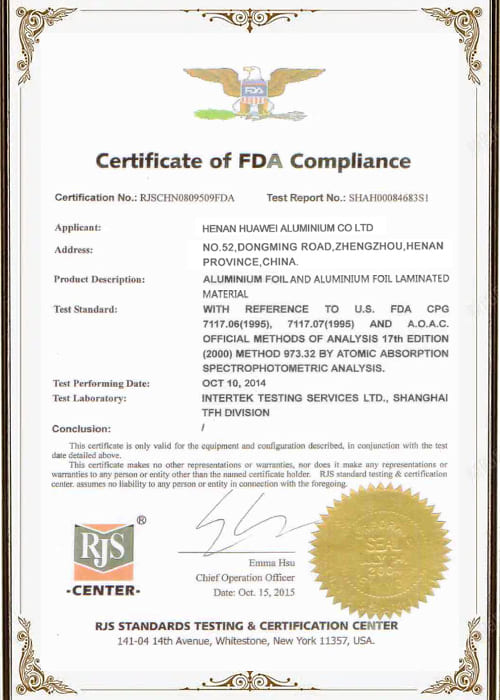
Zertifiziertes Kochgeschirr besteht normalerweise die Prüfung allgemeine und spezifische Migrationstests wie gefordert von FDA / EU-Normen für den Lebensmittelkontakt.

Verpackt 1100 Aluminiumkreis
5. Design & Überlegungen zur Herstellung
5.1 Legierungsauswahl
Die Legierungszusammensetzung beeinflusst die Gleichmäßigkeit und das Aussehen der Eloxierung.
Häufige Entscheidungen: 3003, 5052, 6061 —
- 3003: hervorragende Formbarkeit, Ideal für tiefgezogene Töpfe und Pfannen.
- 5052 / 6061: höhere Festigkeit und Nachformstabilität.
Henan Huawei Aluminium Co., GmbH. kann Legierungstypen basierend auf der Umform- und Anodisierungsverträglichkeit empfehlen.
5.2 Filmdicke vs. Anwendung
| Anwendung | Typ | Empfohlene Dicke |
|---|---|---|
| Tägliches Kochgeschirr | Dekoratives Eloxieren | 5–20 µm |
| Professional / Hochleistungskochgeschirr | Hartanodisieren | 30–80 µm |
Dickere Beschichtungen verbessern die Haltbarkeit, erhöhen jedoch leicht die Kosten und die innere Spannung; optimale Designbalancen Härte, kosten, und Wärmereaktion.
5.3 Abdichtung & Nachbehandlung
Zur Maximierung der Korrosionsbeständigkeit und Hygiene:
- Chemische Versiegelung wird gegenüber einer Heißwasserversiegelung empfohlen;
- Optional Nano-Silica- oder lebensmittelechte Fluorbeschichtungen kann die Reinigungsfähigkeit verbessern und Fleckenbildung reduzieren.
5.4 Qualitätskontrolle (QC / IQ)
Zu den kritischen Inspektionspunkten gehören::
- Gleichmäßige Filmdicke (Toleranz ±2–5 µm);
- Härteprüfung (HV-Werte);
- Überprüfung der Porenversiegelung (Blasen- oder Farbstofftests);
- Probenahme im Salzsprüh- und Abriebzyklus;
- Migrations- und Schwermetalltests (FDA / EU-Konformität).

Dickentest eines Aluminiumkreises
6. Herstellungswege für Kochgeschirr aus eloxiertem Aluminium
- Tiefziehen + Spinnen (am häufigsten): Aluminiumkreise → tiefgezogene Becher → auf Profil gedreht → beschnitten → hart eloxiert → versiegeln.
- Geschmiedete schwere Ausführung: Platte/Rohling erhitzt und geschmiedet → CNC-Besatz → hart eloxiert → versiegeln. Am besten für gleichmäßige Erwärmung und Verwindungssteifigkeit.
- Schlagverklebte Basis: Aluminiumgehäuse + Ferritische Edelstahlscheibe schlaggebunden für Induktionskompatibilität.
- Nieten/Griffe: Edelstahlgriffe/Nieten minimieren die Wärmeleitung zum Griff; Griffe aus eloxiertem Aluminium sind leichter, benötigen aber thermische Trennungen.
7. Huawei-Qualitätskontrolle & Testplan
- Anodische Dicke: Wirbelstromkartierung (≥12 Punkte pro Pfanne).
- Härte: HV-Test auf Felge/Flach; Annahme ≥ 350 HV für Premium-Linien.
- Siegelqualität: Färbefleck bzw Leitfähigkeitsabfall Verfahren.
- Korrosion: Neutralsalzspray oder Essigsalzspray (kundendefinierte Stunden); Küchensimulanzien (Tomate/Zitrone).
- Haftung: Kreuzschraffur auf gefärbt/eloxiert + Decklacksysteme.
- Thermoschock: 10× Zyklen (200 °C bis Wasserlöschung).
- Verzug/Flachheit: Vor- und postthermische Zyklen an Glasoberflächen-Armaturen.
- Induktionsbasis: Bindungsscherung / Peeling nach dem Radfahren.

Huawei Kreis aus eloxiertem Aluminium
8. Kochgeschirr aus eloxiertem Aluminium im Vergleich zu anderen Materialien
| Attribut | Hartanodisiertes Aluminium | Rostfrei (304/316) | Gusseisen | Kupfer (gekleidet) |
|---|---|---|---|---|
| Wärmeleitfähigkeit | Hoch (≈205) | Niedrig (≈16) | Medium (≈50) | Sehr hoch (≈385) |
| Aufheizzeit | Schnell | Langsam | Medium | Schnell |
| Gewicht (relativ) | Am leichtesten | Schwer | Schwer | Am schwersten |
| Oberflächenhärte | Hoch (300–500 HV) | Medium | Medium (gewürzt) | Weich (bekleidetes Gesicht ist SS) |
| Geeignet für Induktion | Benötigt Scheibe/Verkleidung | Ja | Ja | Wenn ferritisch plattiert |
| Wartung | Niedrig | Niedrig | Gewürze erforderlich | Mäßig |
| Kostenstufe | $$ (Wertprämie) | $$–$$$ | $–$$ | $$$$ |
9. Abschluss
Durch Eloxieren wird Aluminium-Kochgeschirr zu einem dauerhaft, korrosionsbeständig, und optisch ansprechend Produkt unter Beibehaltung seiner geringes Gewicht und thermische Effizienz.
Der Erfolg hängt von der Auswahl geeigneter Produkte ab Legierungen, Beschichtungsdicke, und Versiegelungsprozesse, kombiniert mit streng Qualitäts- und Compliance-Kontrolle.
Mit umfassenden Fertigungs- und Testmöglichkeiten, Henan Huawei Aluminium Co., GmbH. bietet Kochgeschirrherstellern a Komplettlösung für Material- und Oberflächentechnik, Sicherstellung gleichbleibender Qualität und globaler Wettbewerbsfähigkeit.
10. FAQs – Kochgeschirr aus eloxiertem Aluminium
Ist hartanodisiertes Aluminium-Kochgeschirr mit Antihaftbeschichtung?
Nicht von Natur aus. Wenn es vorgewärmt/gewürzt ist, klebt es nur wenig; Viele Marken fügen PTFE/Keramik hinzu, um das Lösen zu erleichtern.
Werden Säuren die Oberfläche angreifen??
Ordnungsgemäß versiegelter Typ III verträgt Küchensäuren; Vermeiden Sie längeres Einweichen starkes Alkali Reinigungsmittel.
Utensilien aus Metall?
Gelegentlicher Kontakt ist in Ordnung; Vermeiden Sie scharfes Schaben, um die Ästhetik des Finishs zu bewahren.
Spülmaschinenfest?
Einige Produkte werden so bewertet, Aber Handwäsche Verlängert das Aussehen und die Lebensdauer der Dichtung.
Induktionsgebrauch?
Erfordert Ferritische Scheibe oder gekleidet Konstruktion.
Stellt die Exposition gegenüber Aluminium ein Risiko dar??
Der Die anodische Schicht ist inert; Es isoliert unedles Aluminium aus Lebensmitteln.
Warum sind Premium-Pfannen schwerer??
Dickere Basen (≥3 mm) Verbessern Sie die Gleichmäßigkeit und Verzugsfestigkeit.
Kann die Farbe verblassen??
Farbstoffe können unter UV/Alkali verblassen; natur hartanodisiert grau/schwarz ist am stabilsten.