PVDF 3003 Aluminum Sheet for Construction
10 Views 2026-06-24 03:24:54
1. Introduction
PVDF 3003 aluminum sheet for construction has emerged as a preferred solution for modern building envelopes due to its excellent balance of durability, appearance, and economic value.
As urbanization accelerates and architectural designs become increasingly sophisticated, the demand for lightweight and weather-resistant facade materials continues to grow.
Traditional construction materials such as galvanized steel, painted metals, and concrete panels often require extensive maintenance over their service life.
In contrast, PVDF-coated aluminum sheets provide long-lasting protection against UV radiation, moisture, pollutants, and temperature fluctuations while maintaining their color and gloss for decades.
Among various aluminum alloys, 3003 aluminum is particularly suitable for architectural applications because of its excellent formability, moderate strength, and superior corrosion resistance.
When combined with a high-performance PVDF coating system, it becomes an ideal material for exterior and interior construction projects.
2. What Is PVDF 3003 Aluminum Sheet for Construction?
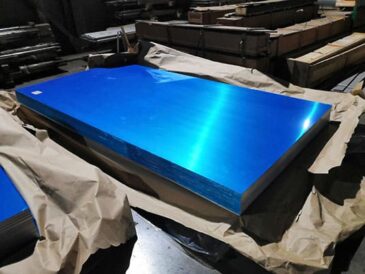
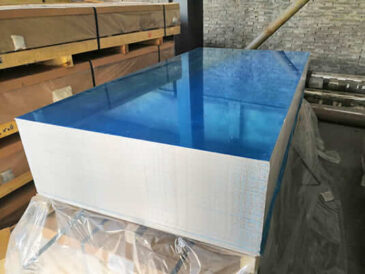
PVDF 3003 aluminum sheet is a pre-coated aluminum sheet made from 3003 Al-Mn alloy and finished with PVDF fluorocarbon coating. It can be supplied as coil, sheet, strip, or cut-to-size panel material.
2.1 What Is 3003 Aluminum Alloy?
3003 aluminum is a 3xxx series aluminum-manganese alloy.
It cannot be strengthened by heat treatment, but it can be strengthened through cold working.
Compared with 1050 or 1100 pure aluminum, 3003 provides higher strength while keeping good formability and corrosion resistance.
Common uses of 3003 aluminum include roofing, siding, gutters, decorative sheets, containers, signs, and general sheet metal products.
2.2 Chemical Composition of 3003 Aluminum Alloy
| Element | Typical Content | Function |
|---|---|---|
| Aluminum | Balance, about 96.8-99% | Lightweight base metal |
| Manganese | 1.0-1.5% | Improves strength and stability |
| Copper | 0.05-0.20% | Slightly improves strength |
| Iron | ≤0.70% | Controlled impurity affecting surface and properties |
| Silicon | ≤0.60% | Controlled impurity affecting formability |
| Zinc | ≤0.10% | Controlled for corrosion stability |
| Others | ≤0.15% total | Controlled for consistency |
The manganese content is the key reason 3003 has better strength than commercially pure aluminum.
2.3 What Is PVDF Coating?
PVDF stands for polyvinylidene fluoride. In architectural coating systems, PVDF resin is valued for its strong resistance to UV radiation, weathering, chemicals, fading, and chalking.
High-performance architectural PVDF systems often use fluoropolymer resin technology designed for long outdoor service.
PVDF coatings can be supplied in:
- Solid colors
- Metallic colors
- Matte finishes
- High-gloss finishes
- Pearlescent finishes
- Custom architectural colors
2.4 Why Combine PVDF with 3003 Aluminum?
The combination is practical for construction because each part contributes a specific advantage.
| Component | Main Role | Construction Value |
|---|---|---|
| 3003 aluminum sheet | Strength, formability, corrosion resistance | Easy fabrication and stable panel structure |
| Pretreatment layer | Adhesion and corrosion support | Reduces coating failure risk |
| Primer | Bonding and base protection | Improves long-term coating reliability |
| PVDF topcoat | UV and weather resistance | Maintains color and gloss outdoors |
| Back coat | Reverse-side protection | Supports processing and installation |
3. Understanding the PVDF Coating System
3.1 Typical Coating Structure
A high-quality PVDF coated aluminum sheet usually includes several layers:
| Layer | Function |
|---|---|
| Aluminum substrate | Provides strength, flatness, and formability |
| Chemical pretreatment | Improves adhesion and corrosion resistance |
| Primer | Creates a strong bonding layer |
| PVDF color coat | Provides color, weather resistance, and surface protection |
| Optional clear coat | Protects metallic or special-effect finishes |
| Back coat | Protects reverse side and improves handling |
The coating system works only when all layers perform together.
Good PVDF paint cannot compensate for poor pretreatment or weak curing.
3.2 PVDF Resin Content
Architectural PVDF coatings are often specified with high fluoropolymer resin content, commonly associated with 70% PVDF resin systems in premium exterior applications.
Higher-quality resin and inorganic pigments usually improve long-term color retention and weathering performance.
3.3 Coating Thickness
| Coating Position | Typical Thickness |
|---|---|
| Front PVDF coating | 25-35 μm |
| Back coating | 5-15 μm |
| Primer | Usually included in total coating system or specified separately |
For exterior construction, coating thickness affects durability, corrosion resistance, color depth, and forming performance.
Metallic or special-effect colors often require a three-coat system.
3.4 Two-coat vs Three-coat PVDF Systems
| System | Structure | Best Use |
|---|---|---|
| Two-coat PVDF | Primer + color topcoat | Solid colors, general exterior panels |
| Three-coat PVDF | Primer + color coat + clear coat | Metallic, pearlescent, mica, and premium architectural finishes |
Three-coat systems usually offer better visual depth and surface protection for complex colors.
4. Technical Specifications of PVDF 3003 Aluminum Sheet
| Parameter | Typical Requirement |
|---|---|
| Product name | PVDF 3003 aluminum sheet for construction |
| Alloy | 3003 |
| Temper | H14, H24, H26, O, or customized |
| Thickness | Customized according to panel design |
| Width / length | Sheet, coil, strip, or cut-to-size |
| Coating type | PVDF fluorocarbon coating |
| Front coating thickness | Usually 25-35 μm |
| Back coating | Polyester, epoxy, service coat, or customized |
| Surface finish | Smooth, matte, metallic, pearlescent, textured |
| Color | RAL, Pantone, or custom color |
| Gloss | Low, medium, or high gloss |
| Protective film | Optional |
| Packaging | Moisture-proof export packaging |
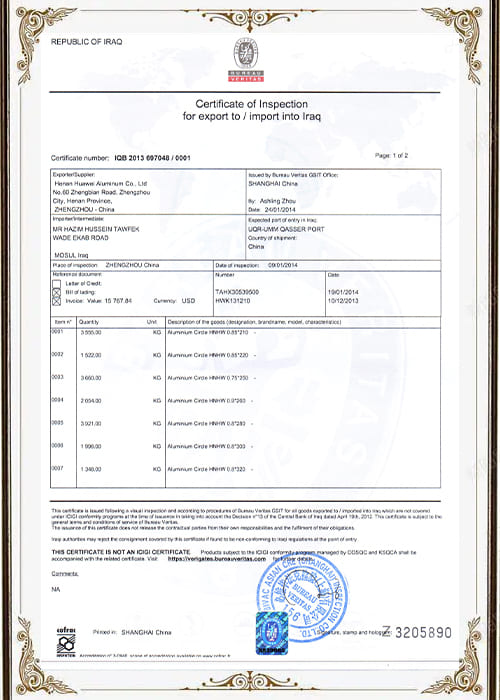
| Documents | MTC, coating report, color report, inspection certificate |
5. Key Properties of PVDF 3003 Aluminum Sheet
5.1 Excellent Corrosion Resistance
The natural oxide layer of aluminum already provides substantial corrosion protection.
Furthermore, the PVDF coating acts as an additional barrier against moisture, pollutants, and aggressive environmental conditions.
In coastal regions where chloride concentrations are high, PVDF-coated aluminum significantly outperforms many conventional painted metals.
5.2 Superior Weatherability
One of the most important advantages of PVDF coatings is long-term weather resistance.
Typical performance data show:
| Property | Performance |
| Color Retention | >90% after 20 years |
| Gloss Retention | >50% after 20 years |
| UV Resistance | Excellent |
| Chalk Resistance | Excellent |
As a result, many building facades maintain their original appearance for more than two decades with minimal maintenance.
5.3 Lightweight Construction
Compared with steel, aluminum dramatically reduces structural weight.
| Material | Density (g/cm³) |
| Aluminum | 2.73 |
| Carbon Steel | 7.85 |
| Stainless Steel | 7.90–8.00 |
Therefore, aluminum structures can reduce dead loads by approximately 65% compared with steel alternatives.
5.4 Excellent Formability
3003 aluminum possesses outstanding forming capabilities.
Fabricators can easily produce:
- Curved facade panels
- Perforated decorative panels
- Architectural trims
- Complex roofing profiles
- Ceiling systems
This flexibility allows architects to achieve innovative building designs without sacrificing material performance.
5.5 Thermal Efficiency
Aluminum surfaces can effectively reflect solar radiation and improve building energy efficiency when combined with insulated facade systems.
Many modern building envelopes utilize reflective PVDF-coated aluminum panels to reduce heat gain and cooling loads.
6. Manufacturing Process of PVDF 3003 Aluminum Sheet
- Aluminum substrate production
3003 aluminum is produced through melting, casting, hot rolling, cold rolling, annealing, and leveling. - Surface cleaning
The sheet or coil surface is cleaned to remove rolling oil, dust, and metal particles. - Chemical pretreatment
Pretreatment improves corrosion resistance and coating adhesion. - Primer coating
Primer strengthens the bond between aluminum and PVDF topcoat. - PVDF coating application
The coating line applies PVDF paint with controlled color, viscosity, film thickness, and gloss. - Curing
Oven curing allows the coating to form a durable film with proper adhesion, hardness, and flexibility. - Protective film application
A removable film may be applied to protect the surface during fabrication and installation. - Cutting, slitting, or sheet processing
The material is supplied in coil, sheet, strip, or cut-to-size format. - Inspection and packaging
The supplier checks coating thickness, color difference, gloss, adhesion, bending performance, and surface defects.
7. Key Performance Advantages
7.1 Long-term Weather Resistance
PVDF coating resists sunlight, rain, heat, and atmospheric pollution better than standard polyester coating. This makes it suitable for exterior architectural projects where long service life matters.
7.2 Excellent Color Retention
PVDF coating helps reduce fading and chalking. This matters for high-rise façades, airports, railway stations, commercial centers, schools, hospitals, and public buildings where appearance must remain stable for years.
7.3 Good Corrosion Resistance
The aluminum substrate naturally forms a protective oxide layer, while pretreatment, primer, and PVDF topcoat add further protection. This layered protection helps resist rain, humidity, and moderate chemical exposure.
7.4 Strong Fabrication Performance
3003 aluminum supports cutting, bending, punching, routing, roll forming, and panel fabrication. With the correct temper and coating flexibility, PVDF 3003 aluminum sheet can be formed into many construction components.
7.5 Lightweight Building Design
Aluminum is much lighter than steel. The density of aluminum is about 2.7 g/cm³, while steel is around 7.85 g/cm³. This lower weight reduces structural load, simplifies installation, and can reduce transportation burden.
7.6 Lifecycle Cost Value
PVDF coated aluminum usually costs more than polyester coated aluminum at purchase. However, it can reduce repainting, replacement, and maintenance costs in demanding exterior environments.
8. Applications of PVDF 3003 Aluminum Sheet in Construction
Thanks to its combination of lightweight properties, excellent corrosion resistance, superior weatherability, and outstanding formability, PVDF 3003 aluminum sheet has become one of the most widely used materials in modern construction.
Architects, engineers, and contractors increasingly rely on this material for both exterior and interior building applications, particularly in projects that require long-term durability and aesthetic appeal.
8.1 Building Facades and Curtain Walls
Building facades represent one of the largest application areas for PVDF 3003 aluminum sheets. Modern curtain wall systems require materials that can withstand decades of exposure to sunlight, rain, wind, and environmental pollutants without significant deterioration.
- High-rise office buildings
- Commercial complexes
- Hotels
- Government buildings
- Educational institutions
Many architectural facade systems are designed to maintain their appearance for more than 20–30 years, reducing lifecycle maintenance costs.
8.2 Exterior Wall Cladding Systems
Exterior cladding serves both decorative and protective functions. PVDF 3003 aluminum sheets provide a durable weather barrier while enhancing the visual appearance of buildings.
- Ventilated façade systems
- Rainscreen cladding
- Decorative architectural panels
- Renovation and retrofit projects
8.3 Architectural Roofing Systems
Roofing materials must withstand some of the harshest environmental conditions, including ultraviolet radiation, temperature fluctuations, moisture, and wind loads.
- Standing seam roofs
- Curved roofing systems
- Industrial roofs
- Airport terminal roofs
- Stadium roofing structures
At only 2.73 g/cm³ density, aluminum roofing can reduce structural weight by approximately 65% compared with steel roofing systems.
8.4 Ceiling and Soffit Panels
Architectural ceiling systems often require materials that combine durability with an attractive appearance.
- Suspended ceiling panels
- Linear ceiling systems
- Perforated acoustic ceilings
- Exterior soffits
- Decorative canopy structures
Additionally, aluminum ceilings require minimal maintenance and retain their appearance for many years.
8.5 Aluminum Composite Panel (ACP) Skins
PVDF-coated 3003 aluminum sheets frequently serve as the outer layers of aluminum composite panels (ACP).
In ACP production, thin PVDF-coated aluminum skins are bonded to a core material to create lightweight panels with excellent rigidity.
- Commercial facades
- Interior wall systems
- Corporate signage
- Decorative cladding
- Retail buildings
The excellent adhesion properties of PVDF coatings help ensure long-term performance and appearance of ACP systems.
8.6 Transportation Infrastructure
Large-scale public infrastructure projects require durable materials capable of performing under heavy environmental exposure and high traffic conditions.
- Airport terminals
- Metro stations
- Railway stations
- Bus terminals
- Pedestrian bridges
- Transportation hubs
These benefits help infrastructure owners reduce maintenance costs over the service life of the facility.
8.7 Industrial and Commercial Buildings
Industrial facilities often face demanding environmental conditions, including humidity, chemicals, temperature variations, and airborne contaminants.
PVDF-coated aluminum sheets are commonly used for:
- Factory wall systems
- Warehouse cladding
- Logistics centers
- Distribution facilities
- Manufacturing plants
The combination of aluminum’s natural corrosion resistance and PVDF’s protective coating provides excellent durability even in challenging industrial environments.
8.8 Residential Construction
Modern residential architecture increasingly incorporates aluminum cladding and decorative elements to achieve contemporary aesthetics and improved durability.
- Exterior wall panels
- Balcony cladding
- Decorative facades
- Roof edge systems
- Sunshade structures
- Garage and entrance canopies
9. PVDF 3003 Aluminum Sheet vs Alternative Materials
| Material | Advantages | Limitations | Best-fit Use |
|---|---|---|---|
| PVDF 3003 aluminum sheet | Excellent weather resistance, lightweight, formable, durable color | Higher cost than polyester | Exterior architectural panels |
| Polyester 3003 aluminum sheet | Economical, colorful, easy forming | Lower UV and weather resistance | Interior and mild outdoor use |
| 1100 PVDF aluminum sheet | Excellent formability | Lower strength | Decorative panels |
| 5052 PVDF aluminum sheet | Higher strength and corrosion resistance | Higher cost, harder forming | Transport and harsh environments |
| Galvanized color steel | Strong and economical | Heavy, cut-edge rust risk | Industrial roofing and cladding |
| Stainless steel | Excellent corrosion resistance | Heavy and expensive | Premium or corrosive environments |
| Fiber cement panel | Rigid and fire-resistant | Heavier and less formable | Exterior cladding systems |
10. Why Choose Huawei PVDF 3003 Aluminum Sheet for Construction
Henan Huawei Aluminum Co., Ltd. supplies aluminum sheet, coil, strip, foil, and coated aluminum products for construction, decoration, packaging, transportation, and industrial markets.
For buyers sourcing Huawei PVDF 3003 aluminum sheet for construction, the key value lies in coating customization, stable substrate quality, and export-ready supply.
Huawei can support buyers with:
- 3003 aluminum substrate supply
- PVDF coating in solid, metallic, matte, or custom colors
- Front coating thickness customization, commonly 25-35 μm
- Back coating options according to use environment
- Coil, sheet, strip, or cut-to-size supply
- Mill test certificates and coating inspection reports
- Protective film and moisture-proof packaging
- Sample support for color matching, bending, and installation trials
Before ordering, buyers should provide the project environment, panel thickness, temper, color code, gloss level, coating system, forming method, and expected durability requirement.
11. Conclusion
PVDF 3003 aluminum sheet represents one of the most effective solutions for modern construction and architectural applications.
By combining the excellent formability and corrosion resistance of 3003 aluminum alloy with the superior weatherability of PVDF fluorocarbon coatings, it delivers exceptional long-term performance in challenging environments.
Furthermore, its lightweight nature, aesthetic versatility, sustainability, and low maintenance requirements make it particularly attractive for curtain walls, facades, roofing systems, transportation infrastructure, and commercial buildings.
As the construction industry continues to emphasize durability, energy efficiency, and lifecycle value, PVDF 3003 aluminum sheet will remain a leading material choice for architects, engineers, and building owners worldwide.
FAQs
What is PVDF 3003 aluminum sheet?
PVDF 3003 aluminum sheet is a 3003 aluminum alloy sheet coated with a high-performance fluorocarbon (PVDF) coating designed for architectural and construction applications.
How long does PVDF-coated aluminum last?
High-quality PVDF-coated aluminum sheets can provide 20–30 years or more of outdoor service life with minimal maintenance.
Why is 3003 aluminum used in construction?
3003 aluminum offers excellent corrosion resistance, formability, weldability, and cost-effectiveness, making it ideal for architectural applications.
Is PVDF better than polyester coating?
Yes. PVDF coatings generally provide superior UV resistance, color retention, gloss retention, and weather durability compared with polyester coatings.
Can PVDF 3003 aluminum be used in coastal environments?
Yes. Its combination of corrosion-resistant aluminum alloy and PVDF coating makes it highly suitable for coastal and marine-adjacent construction projects.
What thicknesses are commonly used?
Common architectural thicknesses range from 0.5 mm to 4.0 mm, depending on the application and structural requirements.
Is PVDF-coated aluminum recyclable?
Yes. Both the aluminum substrate and the coated product support sustainable building practices through recyclability and long service life.