Is 5052 Aluminum Sheet Bendable? Discover Its Flexibility
16,826 Views 2025-07-18 02:52:44
The Direct Answer: Is 5052 aluminum sheet bendable?
Let’s get straight to the point: Yes, 5052 aluminum sheet is absolutely bendable. In fact, its excellent formability, combined with its high strength and superior corrosion resistance, is precisely why it’s such a popular and versatile material.
However, the question isn’t just if you can bend it, but how you can bend it successfully.
The ease and success of bending 5052 aluminum sheet depend almost entirely on one critical factor: its temper.
This guide will walk you through what that means, how to choose the right material for bending, and the best practices to get a clean, crack-free bend every time.
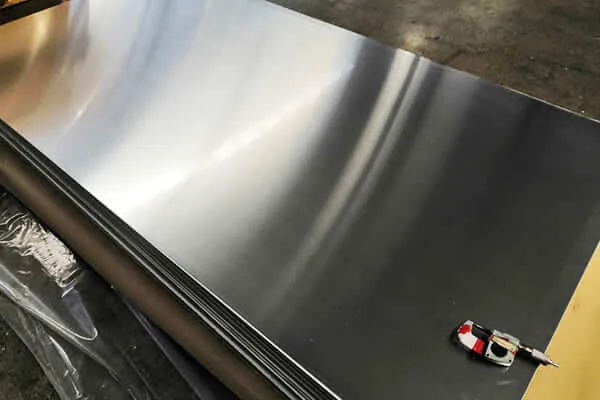
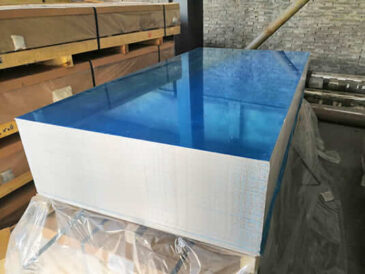
Huawei 5052 Aluminum Sheet
The Critical Role of Temper in Bending 5052 Aluminum
When you see a designation like “5052-H32,” the “H32” part is the temper.
Temper refers to the hardness and strength of the aluminum, which is achieved through strain-hardening (work-hardening).
Understanding this is the key to understanding its bendability.
There’s a fundamental trade-off in metals: as strength and hardness increase, formability (or bendability) decreases.
A harder temper will resist bending and is more likely to crack, while a softer temper is much more forgiving.
Let’s look at the most common tempers for 5052 aluminum sheet.
| Temper | Description | Strength | Bendability / Formability |
| 5052-O | Annealed (Soft) | Lowest | Excellent. The most formable state. Can handle very tight bends. |
| 5052-H32 | Strain-Hardened, Quarter-Hard | Medium | Good. The most common “sweet spot.” Strong yet still very formable for most applications. |
| 5052-H34 | Strain-Hardened, Half-Hard | Medium-High | Fair. Stronger than H32 but requires a more generous bend radius to avoid cracking. |
| 5052-H38 | Strain-Hardened, Full-Hard | High | Poor. Very strong and rigid. Not recommended for applications that require significant bending. |
In short, if your project involves bending, 5052-H32 is often the perfect choice, offering a great balance of properties.
If you need to make extremely tight or complex bends, sourcing 5052-O (annealed) is your best bet.
Understanding Bend Radius: The Golden Rule of Bending
You cannot discuss if 5052 aluminum sheet is bendable without talking about bend radius.
The bend radius is the inside radius of the bend. Think of it this way: if you try to fold a piece of paper sharply, you get a crisp crease.
If you try to do that with a piece of plastic, it might snap. To bend the plastic, you have to bend it around your finger, creating a curve. That curve is the bend radius.
Using a bend radius that is too small (too sharp) for the material’s temper and thickness is the #1 cause of cracking. A harder temper requires a larger radius.

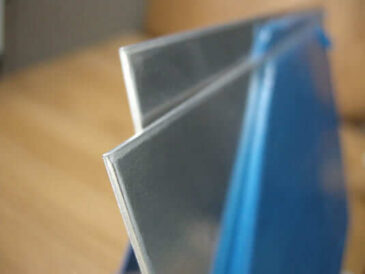
Is 5052 Aluminum Sheet Bendable
Typical Bend Radius Guide for 5052 Aluminum (90° Bend)
This chart gives a general idea of the minimum inside bend radius, expressed as a multiple of the material’s thickness (T).
| Temper | 0.063″ (1.6mm) Thick | 0.125″ (3.2mm) Thick |
| 5052-O | 0T – 1T | 0T – 1T |
| 5052-H32 | 1T – 2T | 1.5T – 2.5T |
| 5052-H34 | 1.5T – 2.5T | 2T – 3T |
| 5052-H38 | 4T – 6T | 5T – 7T |
Disclaimer: These are typical values. Always consult your material supplier’s specific datasheet for the most accurate information.
For example, to bend a piece of 5052-H32 that is 3.2mm thick, you should use a tool that creates an inside radius of at least 4.8mm to 8mm (1.5 x 3.2mm to 2.5 x 3.2mm) to be safe.
How Does 5052 Compare to Other Bendable Aluminum Sheets?
Seeing how 5052 stacks up against other common alloys provides valuable context for your material choice.
| Alloy | Key Feature | Bendability | Strength | When to Use It |
| 5052-H32 | Corrosion Resistance & Good Strength | Good | Medium | The all-rounder. Ideal for marine parts, chassis, brackets, and tanks that require both strength and formability. |
| 3003-H14 | Excellent Formability & Low Cost | Excellent | Low | The go-to for general sheet metal work where strength is not the primary concern. Perfect for fan blades, ductwork, and decorative parts. |
| 6061-T6 | High Structural Strength | Fair to Poor | High | The structural champion. Use it for high-load applications like ramps and frames, but avoid complex bends as its T6 temper makes it brittle and prone to cracking. |
Ultimately, choose 3003 aluminum if you need maximum bendability and cost is a factor.
Choose 6061 if you need maximum strength and are doing little to no bending.
Choose 5052 when you need the best of both worlds: good strength and good formability.
Best Practices for a Perfect Bend
To ensure you successfully bend 5052 aluminum sheet, follow these professional tips:
- Know Your Temper: First and foremost, confirm the temper of your sheet. Bending H38 with a radius meant for H32 will lead to failure.
- Respect the Bend Radius: Don’t cheat on the radius. Use the proper tooling (like a press brake with the correct punch and die) to achieve the recommended radius. A larger radius is always safer.
- Watch the Grain Direction: Aluminum sheet has a grain direction from the rolling process. It bends more easily “across the grain.” When possible, orient your bends perpendicular to the grain to reduce the risk of cracking on tight bends.
- Smooth Tooling is Key: Ensure the tooling (especially the press brake die) is smooth and free of nicks or gouges. Imperfections on the tool can create stress points on the aluminum, initiating a crack.
Conclusion
So, is 5052 aluminum sheet bendable? The answer is a resounding yes. It is a fabricator-friendly material that offers an exceptional combination of strength and formability.
The key to success is not in forcing the material but in understanding it.
By selecting the appropriate temper for your project (usually 5052-H32), respecting the required bend radius, and following best practices, you can confidently form and fabricate 5052 aluminum to create durable, reliable, and beautifully crafted parts.
Frequently Asked Questions (FAQs)
Why did my 5052 aluminum crack when I bent it?
Your sheet most likely cracked for one of these three common reasons:
- Bend Radius Too Tight: You tried to make the corner too sharp for the material’s hardness.
- Wrong Temper: You may have used a hard temper (like H38) which is not designed for bending.
- Bent Along the Grain: Bending parallel to the metal’s grain direction increases the risk of cracking.
What is the best 5052 temper for bending?
It depends on your goal:
- 5052-O (Annealed): For maximum flexibility and the tightest possible bends.
- 5052-H32 (Quarter-Hard): For the best overall balance of good strength and good bendability. This is the most common choice.
Can I use heat to bend 5052-H32 aluminum?
No, this is not recommended. Uncontrolled heat from a torch will ruin the H32 temper, creating a soft, weak spot that compromises the material’s specified strength.
Does bending 5052 make it stronger?
Yes, the bent corner itself becomes harder and stronger due to work-hardening. However, it also becomes more brittle and should not be straightened and re-bent, as it will likely crack.
What tools can I use to bend 5052 sheet?
- Press Brake: The professional tool for precise, repeatable industrial bends.
- Box and Pan Brake: Excellent for workshops and forming multi-sided shapes from lighter gauge sheet.
- Vise and Workbench: Effective for simple, non-critical bends in thin material.