5083 vs 6061 aluminum sheet
110,235 Views 2024-11-07 01:56:51
5083 vs 6061 aluminum sheet
5083 aluminum alloy and 6061 aluminum alloy are both commonly used aluminum alloy grades, which differ in alloy composition, performance and use. 5083 alloy usually has better high temperature resistance than 6061 alloy, but in daily use, 6061 alloy is more common because it has good processing and welding properties.

5083 vs 6061
5053 aluminum plate is a non-heat-treatable alloy. Its high hardness is mainly due to its high magnesium alloy content, but it is difficult to process, so the price is relatively high. The hardness can reach around 70-80HB. It is a commonly used alloy in shipbuilding and equipment processing. It has good bending performance in 0 state and H321 state. 5083 aluminum plate is a product that can be bent and has a relatively high hardness. It is widely used in the shipbuilding industry. H116 state aluminum plate, 0 state aluminum plate.
6061 aluminum plate is a heat-treatable alloy. After aging and solution treatment, it is in T6 state. In this state, the hardness can reach about 100HB. It is a good alloy for machining mechanical parts. When the hardness is 100HB, it is more useful in turning, milling, and grinding.
5083 vs 6061 Performance Differences
The differences between 5083 aluminum alloy and 6061 aluminum alloy in other properties are mainly reflected in the following aspects:
1. Alloy composition
5083 aluminum alloy: The main element is magnesium (about 4.0% – 4.9%), and the aluminum content is relatively high. In addition, it also contains a small amount of manganese and silicon.
6061 aluminum alloy: The main elements are magnesium (about 0.8% – 1.2%) and silicon (about 0.4% – 0.8%), and also contains a small amount of copper, manganese and chromium.
2. Strength
5083 aluminum alloy: It has high tensile strength, especially in high temperature environments, and is suitable for manufacturing parts that are subject to high stress loads.
6061 aluminum alloy: It has high strength, but it may decrease under certain high temperature conditions. Its mechanical properties are suitable for a wide range of industrial applications.
3. Corrosion resistance
5083 aluminum alloy: It has good corrosion resistance and is particularly suitable for use in marine and harsh environments.
6061 aluminum alloy: Although it also has a certain degree of corrosion resistance, 5083 alloy performs better in highly corrosive environments.
4. Welding performance
5083 aluminum alloy: Good welding performance, suitable for welding structural parts.
6061 aluminum alloy: Weldability is also good, but special treatment may be required to avoid strength loss after welding.
5. Processing performance
5083 aluminum alloy: Suitable for cold processing, relatively difficult machining.
6061 aluminum alloy: Excellent processability, easy to cut, and performs well in manufacturing parts with complex shapes.
6. Application field
5083 aluminum alloy: Commonly used in ships, pressure vessels, marine facilities and other environments that require corrosion resistance and high strength.
6061 aluminum alloy: Widely used in aerospace, construction, automobiles, machinery manufacturing and other fields.

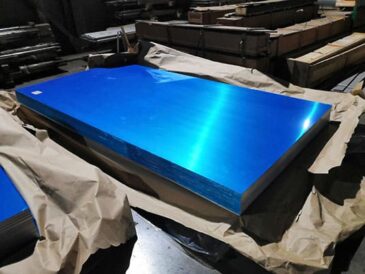
Packaged aluminum sheet
5083 vs 6061 Application Differences
Main uses of 5083 aluminum alloy:
- Ship and marine structures: commonly used in hulls, ship accessories and other marine applications with anti-corrosion treatment.
- Industrial applications: can be used to manufacture pressure vessels and chemical processing equipment.
- Transportation and storage: suitable for making refrigerated trucks and other transportation equipment.
Main uses of 6061 aluminum alloy:
- Aerospace: commonly used in aerospace applications such as aircraft and aircraft parts.
- Building and structure: widely used in building structures, bridges and brackets.
- Automotive industry: used to manufacture automotive parts and body frames.
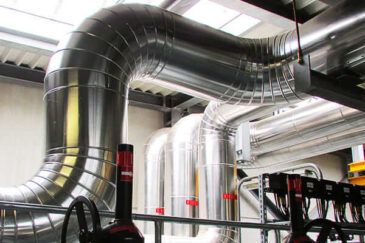
- Equipment and pipelines: widely used in mechanical equipment, pipelines and frame structures.
5083 vs 6061 Summary
5083 and 6061 are representative products of 5000 series al-mg alloy and 6000 series aluminum alloy(al-mg-si) respectively. They are widely used. Due to the difference in performance, the application range will also be different.
5083 aluminum alloy is more suitable for use in high-corrosion and high-strength environments, while 6061 aluminum alloy is more suitable for application scenarios that require good formability and weldability. The selection of a suitable aluminum alloy should be determined according to specific application requirements.