1235 Aluminum Foil for Cigarette Packaging
1701 Views 2026-05-06 07:01:40
Introduction
In the world of premium cigarette packaging, material science matters as much as design. Among the materials that regularly win attention for their combination of barrier properties, formability, and compatibility with multi-layer laminates, 1235 Aluminum Foil for Cigarette Packaging stands out.
This article surveys 1235 aluminum foil, focusing on its role in cigarette packaging, its properties, typical structures, and practical guidance for buyers and converters.
It also introduces Huawei Aluminum, a major supplier in the global market, and explains why manufacturers and brand owners turn to this company for reliable supply of high-quality foil.
Throughout this guide, you will find practical data-backed insights, structured explanations, and real-world comparisons. The aim is to help packaging engineers, procurement specialists, and tobacco brand owners make informed decisions that balance performance, cost, and supply chain resilience.
The discussion integrates authoritative language, field-tested concepts, and a user-centric approach to material selection and supplier evaluation.
The phrase 1235 Aluminum Foil for Cigarette Packaging appears throughout to reinforce its relevance to this specific application and to improve search visibility for readers seeking focused guidance on cigarette packaging foil.
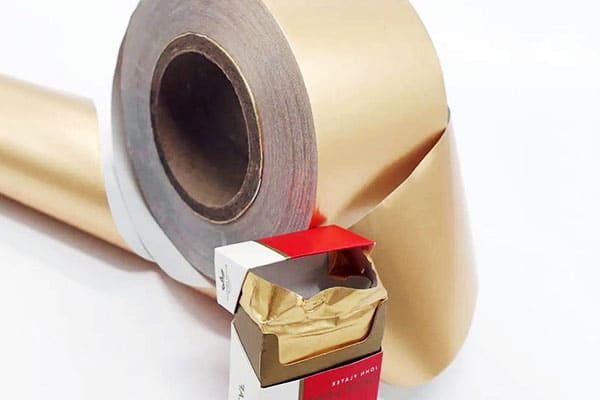
1235 Aluminum Foil for Cigarette Packaging
What is 1235 Aluminum Foil for Cigarette Packaging?
Composition and Grade
1235 is part of the 1xxx series in aluminum alloy designations. It is a commercially pure aluminum foil with a very high aluminum content, typically around 99.35% aluminum.
This high purity contributes to excellent formability, ductility, and surface quality—traits that are valuable in cigarette packaging where tight seals, clean printing surfaces, and reliable lamination are essential.
- Primary characteristics: high ductility, good elongation, superb surface finish, excellent printability, and strong barrier performance when combined in multi-layer laminates.
- Common temper: multiple manufacturers use soft to moderately hard tempers (for example, O or H18/H19) depending on rolling and annealing practices to achieve the desired foil thickness, strength, and forming behavior.
- Typical thickness range: 12–40 micrometers (0.012–0.040 mm). For cigarette packaging, foils in the 12–25 µm range are popular due to balance among formability, sealability, and barrier performance.
Key Properties
1235 aluminum foil excels in areas critical to cigarette packaging:
- Barrier properties: While aluminum itself is a barrier to moisture, oxygen, and aroma to varying degrees, 1235 foil’s thin profile is often optimized within laminates (with polymers such as PET, BOPP, or paper) to achieve targeted moisture vapor transmission rates (MVTR) and oxygen transmission rates (OTR) for product stability.
- Formability and sealability: Its ductility supports tight draw-down, easy thermo-sealing, and reliable resistance to pinholing under lamination processes.
- Printability: The smooth, bright surface of 1235 foil yields good printing performance for brand artwork, security features, and tamper-evident cues when used in laminates with printed films or laminated papers.
- Lamination compatibility: It bonds well with common film layers and can be formulated into laminated structures that resist bending fatigue, puncture, and surface abrasion in pack handling.
Thickness and Mechanical Properties
- Typical thickness tolerance: ±5% to ±8% is common, depending on rolling precision and inspection standards.
- Tensile strength: Generally modest due to the soft nature of 1xxx foils; however, when rolled to the target thickness, the foil can exhibit sufficient strength for its role in multi-layer packaging.
- Elongation: High ductility supports formability during packaging line processes such as feeder, sealing, and carton forming.
Note: Specific numbers can vary by producer, rolling mill, temper, and annealing cycles.
For cigarette packaging, the goal is to achieve a consistent foil with stable seal integrity and predictable behavior in lamination.
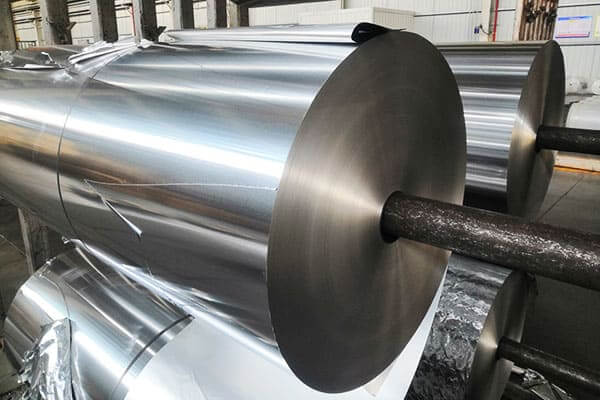
Huawei 1235 Aluminum Foil Large Roll
Why 1235 Aluminum Foil is Ideal for Cigarette Packaging
Barrier Performance in Multi-Layer Laminates
Cigarette packaging typically uses laminated structures that combine aluminum foil with polymers or paper to achieve both barrier properties and mechanical performance.
While the aluminum foil itself provides a fundamental barrier to moisture and gases, its real strength comes from how it is integrated into a laminate:
- Pairing with PET, BOPP, or paper sheets creates a multi-layer barrier that resists moisture ingress, preserves product aroma, and helps control odor leakage.
- The foil’s thinness enables flexible packaging designs and compact pack dimensions, which are important for modern brand aesthetics and consumer convenience.
- The integrity of the foil in laminated form contributes to tamper-evidence and product authenticity features when paired with printed or embedded security elements.
Sealability and Printability
- Heat-sealing compatibility: 1235 foil is widely used in heat-sealed laminates. The foil’s surface quality helps achieve strong seals with minimum seal interference, reducing the risk of seal failure during transport or shelf life.
- Printing surface: A smooth, uniform surface supports high-quality graphics, color reproduction, and brand messaging on the outer packaging layer. This is critical for premium cigarette brands that rely on label aesthetics and security features to deter counterfeiting.
Lamination Compatibility
1235 aluminum foil can be combined with a broad range of substrates:
- Films: PET, PE, PA, PVDC, and various co-extruded films are compatible with 1235 foil when properly laminated.
- Paper: Paper-based laminates with aluminum foil provide strong barrier performance, good rigidity, and favorable aesthetics for carton lids or inner wrappers.
- Multi-layer structures: Common lamination schemes include aluminum foil laminated between paper and a polymer film, enabling high barrier performance while maintaining machinability on high-speed packaging lines.
Formats, Structures, and Typical Lamination Designs
Cigarette packaging uses a variety of laminate structures to balance barrier, printability, sustainability, and cost.
The foil’s role is often to act as the core barrier layer, while outer layers provide structure and printability.
Common Laminate Structures (Illustrative)
- Paper core with aluminum foil and polymer outer layer
- Aluminum foil between PET and paper
- Aluminum foil between BOPP and PET, or between PET and a protective overlaminate
Table: Common Laminate Structures for Cigarette Packaging Using 1235 Foil
| Laminate Structure | Primary Function | Advantages | Typical Applications |
|---|---|---|---|
| Paper / Aluminum / PET | High barrier with printable surface | Strong barrier with good printability; recyclable-friendly if designed for paper-based packaging | Cigarette carton wrap, inner wrappers |
| PET / Aluminum / BOPP | Rigid, high barrier, glossy finish | Excellent gloss and sealability; good moisture barrier | Front-of-pack wrappers in premium segments |
| Paper / Aluminum / PE | Cost-effective, flexible | Simple lamination; good seal; efficient production | Roll-to-roll internal wrappers, smoker packs |
| Paper / Aluminum / PVDC / PET | Maximum barrier with additional chemical barrier | Superior MVTR/OTR control; excellent shelf life | Premium packs with extended shelf life and anti-counterfeiting features |
Note: The exact structure depends on brand requirements, regulatory constraints, and production capabilities.
Suppliers like Huawei Aluminum provide foils tailored to these laminate configurations, ensuring consistency in thickness, surface finish, and compatibility with sealing adhesives.
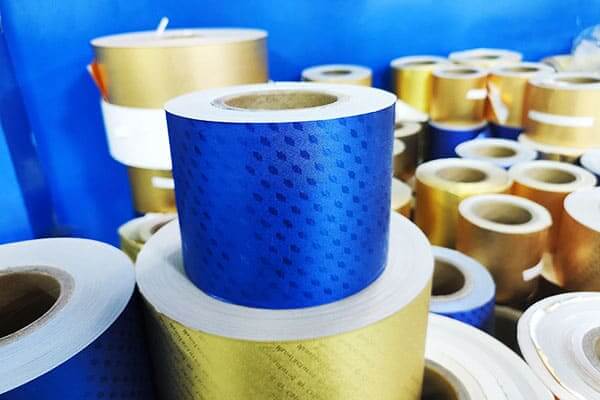
Paper Aluminum PET Laminated aluminum foil
Supplier Landscape and Huawei Aluminum: Introduction and Capabilities
Huawei Aluminum: Company Overview
Huawei Aluminum Co., Ltd. is a leading producer of aluminum foil products in China and a recognized supplier to the global packaging industry.
The company specializes in a broad range of aluminum foil solutions, including 1235 aluminum foil suitable for cigarette packaging applications. Huawei Aluminum emphasizes:
- Integrated supply chain control from alloy ingot to finished foil, ensuring consistent quality and reliable delivery schedules.
- Diverse product lineup that includes standard thicknesses and custom thicknesses for laminates and packaging converters.
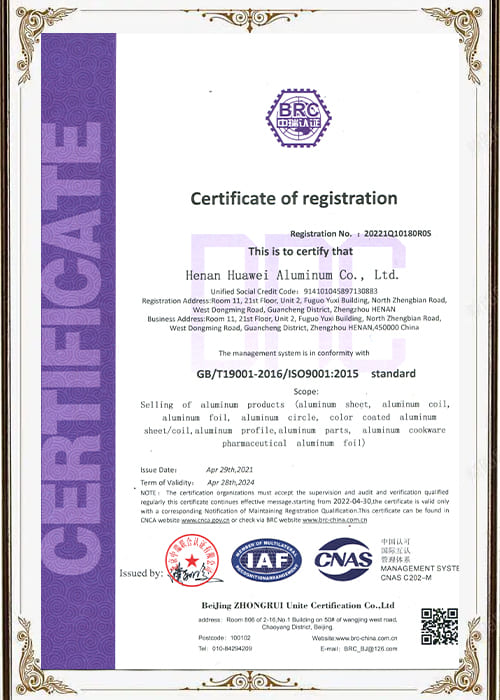
- Quality assurance frameworks aligned with international standards, supporting export to multiple regions with strong traceability and documentation.
Why Huawei for 1235 Foil
- Customization capability: Huawei can tailor foil thickness, temper, and surface finish to meet laminate and sealing requirements.
- Consistent supply: Scale, process controls, and a robust logistics network reduce supply risk for cigarette pack producers and brand owners.
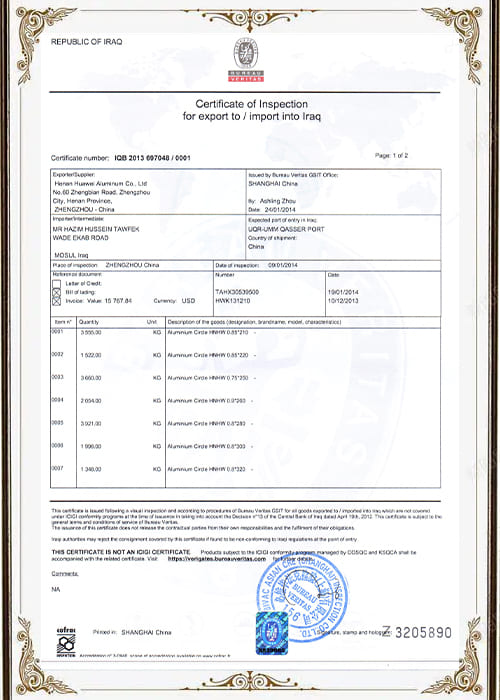
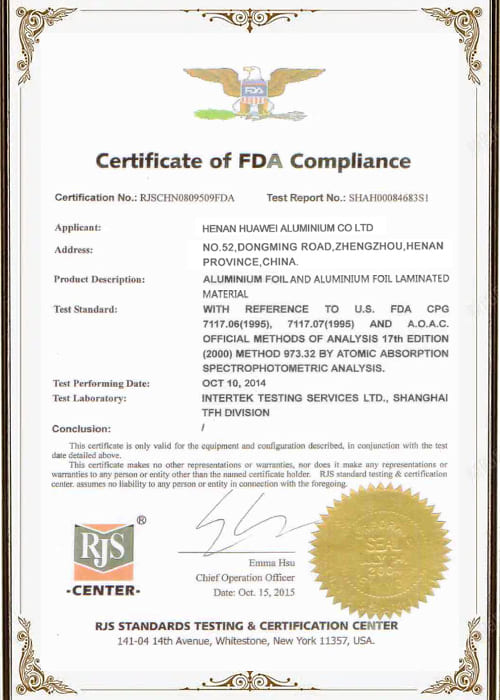
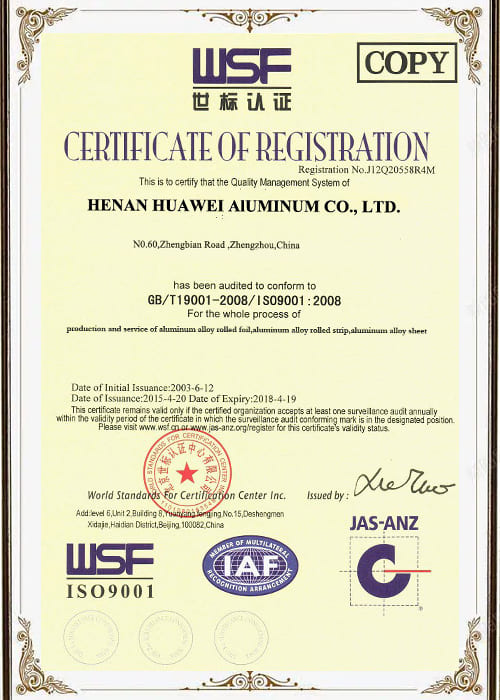
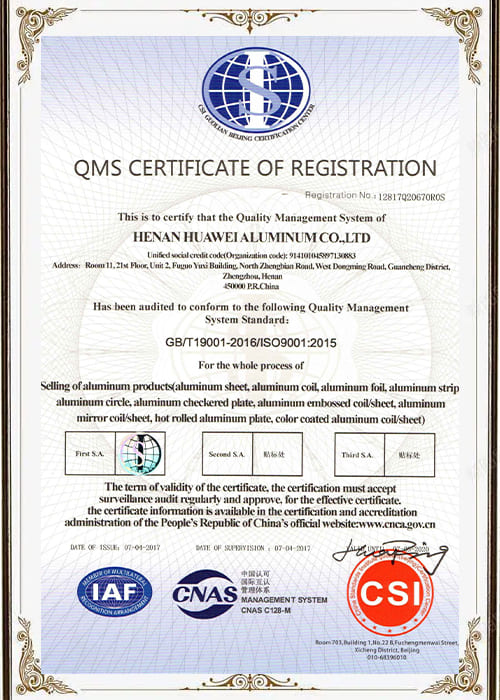
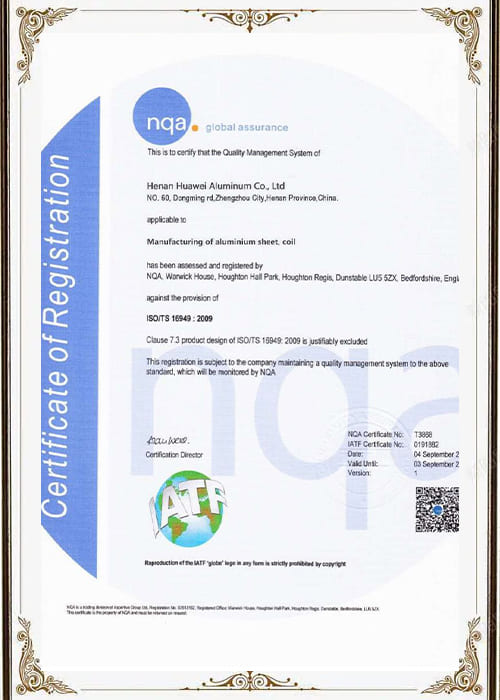
- Certification and quality: The company maintains rigorous QA protocols and documentation such as material certificates of analysis (COA) and compliance statements, facilitating regulatory alignment for tobacco packaging in various markets.
- Technical collaboration: Huawei often engages in collaborative development with converters and brand owners to optimize laminate performance, seal integrity, and print quality.
Practical Considerations for Sourcing from Huawei Aluminum
- Verification of COA: Request a COA for each batch, including thickness tolerance, surface finish, and temper.
- Sample testing: Conduct seal strength, tear resistance, and barrier property tests with your laminate partners to confirm compatibility.
- Lead times: Align production planning with roll-to-roll lamination workflows to ensure that foil thickness and temper are available when needed.
- Documentation: Ensure traceability documentation is complete, including batch numbers and production lot records.
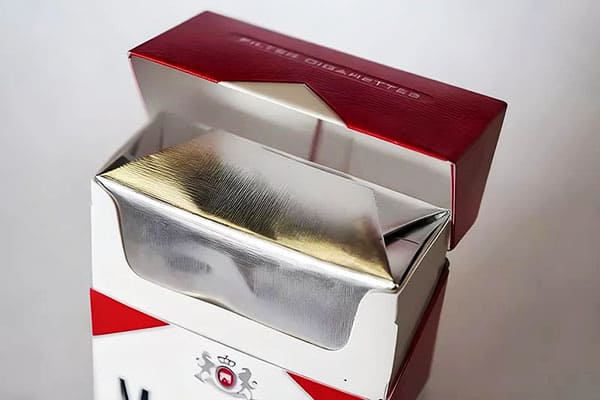
Aluminum Foil Cigarette Packaging Application
Manufacturing Process: From Ingot to Foil
Understanding the manufacturing flow helps packaging developers evaluate quality, consistency, and process control.
Raw Material and Casting
- Ingot quality and composition control the starting point for foil. For 1235, maintaining a high aluminum content with minimal impurities is essential to achieve the desired ductility and surface finish.
- Homogenization and casting processes set the stage for uniform rolling and dimensional stability.
Rolling and Annealing
- Cold rolling reduces the ingot to foil thickness. The rolling process must maintain uniform thickness with tight tolerances, minimizing thickness variation across the width.
- Annealing cycles (recrystallization) restore ductility after rolling and determine temper. The temper choice (O, H18, H19, etc.) affects formability, sealability, and draw-down behavior in packaging lines.
Surface Treatments and Finishing
- Surface quality is critical for printability and laminate adhesion. Surface roughness (Ra) and gloss are controlled during finishing.
- Surface treatment may include light passivation or cleaning to ensure compatibility with printing inks and adhesive systems without compromising barrier properties.
Slitting, Packaging, and Delivery
- The final foil is slit to customer-specified widths (e.g., for internal wrap use or carton lining) and packaged under controlled conditions to prevent oxidation and physical damage.
- Packaging methods protect foil from moisture and mechanical impact during transportation, ensuring foil arrives ready for lamination and sealing processes.
Quality Assurance and Compliance
Standards and Certifications
- Industry standards: Aluminum foil for food-contact packaging often aligns with general food-contact guidelines; cigarette packaging may also adhere to local regulatory requirements depending on the market.
- Product quality: Manufacturers maintain internal QA procedures, including dimensional tolerances, grammage consistency, surface finish specs, and cleanliness criteria.
Testing Methods
- Thickness uniformity: Vanderpol or equivalent non-destructive thickness gauges are used to verify thickness across the width and along the length.
- Surface quality: Visual inspection and roughness measurements ensure smooth surfaces free of defects.
- Mechanical tests: Tensile strength and elongation measurements confirm that the foil can withstand the handling and lamination process.
- Barrier-related testing: MVTR and OTR tests on laminate samples verify overall barrier performance when foil is combined with polymer films or paper.
- Seal strength: Peel or lap-shear tests on laminated samples indicate the reliability of seals under typical usage conditions.
Traceability and Documentation
- COA and batch traceability: Each coil or batch should be associated with a certificate detailing composition, temper, thickness, and testing results.
- Regulatory compliance: For cigarette packaging, ensure that materials comply with regional restrictions on metals, printing inks, adhesives, and laminating resins.
Applications and Case Insights
Cigarette Pack Laminate Examples
- Premium packs: Multi-layer laminates with glossy outer films and strong inner seals, emphasizing aesthetic appeal and barrier performance.
- Value packs: Cost-optimized laminates with selective use of polymer layers and optimized foil thickness to balance cost with barrier performance.
Regional Market Use and Trends
- Asia-Pacific: High-volume demand for cigarette packaging laminates due to large manufacturing bases and growing brand innovation.
- Europe and North America: Emphasis on scent and aroma retention, anti-counterfeiting features, and sustainable packaging strategies (e.g., recyclability and reduced weight).
- Emerging markets: Increasing focus on tamper-evident features and secure labeling integrated into laminate structures.
Comparative Analysis: 1235 vs Other Common Foils
To help decision-makers choose the right foil grade, a concise comparison is provided below.
This section uses a simplified, practical lens rather than a full-blown material science treatise.
Table: 1235 Aluminum Foil vs 8011 and 1050 in Cigarette Packaging Context
| Property / Criterion | 1235 (Aluminum, ~99.35% Al) | 8011 | 1050 |
|---|---|---|---|
| Typical applications | Cigarette packaging laminates, food packaging, flexible packaging | General-purpose foil, barrier in some laminates, spiral-wound can ends in some markets | Pure aluminum foil used where high ductility and formability are required, moderate barrier when used in laminates |
| Thickness range for packaging | 12–25 µm common for cigarette packaging | 6–20 µm in some laminates, but often thicker in general packaging | 10–30 µm in packaging contexts |
| Formability | Excellent due to high ductility | Good, depending on temper and thickness | Very good, particularly at thinner gauges |
| Barrier role in laminates | Effective; often selected for balance with polymers | Moderate; benefits from precise lamination structures | Moderate; relies on laminate design for barrier performance |
| Printability | High-quality surface supports crisp graphics | Adequate for standard printing on selected surfaces | Good; suitable for various print technologies |
| Cost considerations | Often cost-effective in large volumes; depends on market | Usually cost-competitive; widely available | Generally the most affordable among 1xxx series, but performance depends on laminate design |
| Sustainability | High recyclability and light-weight properties | Recyclable; widely used in packaging | Recyclable; common in thin-gauge applications |
Note: This table highlights relative tendencies. Specific performance will depend on temper, thickness, surface finish, and laminate design.
Suppliers like Huawei Aluminum provide tailored 1235 foil options to align with the chosen laminate architecture and packaging line requirements.
Market Trends and Future Outlook
Demand Drivers
- Regulatory shifts: Governments tightening tobacco packaging regulations and seeking less wasteful packaging designs influence material selection and lamination approaches.
- Anti-counterfeiting: The use of foil with printed security features, holograms, micro-text, and embedded data matrices increases the need for high-quality foil surfaces and stable printing bases.
- Sustainability: Growing emphasis on recyclability and lightweight packaging drives interest in thin-gauge foils and barrier-efficient laminates.
Innovations in 1235 Foil Applications
- Enhanced laminate compatibility: Developments in adhesive systems and surface treatments that improve lamination strength and reduce defects.
- Smart packaging integrations: Incorporating RFID or anti-counterfeit markers within the laminate stack while preserving foil integrity.
- Process optimization: Advanced rolling and annealing control to reduce thickness variation and improve yield.
FAQs About 1235 Aluminum Foil for Cigarette Packaging
1) What is 1235 Aluminum Foil for Cigarette Packaging?
– It is a high-purity aluminum foil (around 99.35% Al) used in cigarette packaging laminates for its formability, surface quality, and compatibility with sealing and printing processes.
2) What thickness is typical for cigarette packaging foil?
– Common thicknesses range from about 12 to 25 micrometers, with exact thickness tailored to laminate design and packaging line requirements.
3) How does 1235 foil contribute to barrier performance?
– While aluminum provides a fundamental barrier, its effectiveness in a cigarette laminate depends on the full laminate design, including polymer layers or paper interlayers that work with the foil to control MVTR and OTR.
4) Why is Huawei Aluminum a recommended supplier?
– Huawei Aluminum offers integrated production from alloy to finished foil, consistent quality, a broad product range, and technical collaboration with converters to optimize laminate performance.
5) How should I validate a foil for my packaging line?
– Obtain COAs, run material tests with your laminate stack (seal strength, adhesion, barrier tests), and verify surface finish and printability under production conditions.
6) What considerations should guide laminate design with 1235 foil?
– Balance of barrier, sealability, printability, and cost; compatibility with chosen adhesives and films; and regulatory compliance for the target market.
7) Are there sustainability advantages to using aluminum foil in cigarette packaging?
– Aluminum is highly recyclable, and optimized thin gauges can reduce material usage without compromising performance. The full sustainability assessment also depends on laminate design and recycling pathways for the final packaging format.
8) What role does surface finish play in printing and lamination?
– A smooth, bright surface improves print fidelity and ink adhesion, while ensuring reliable lamination behavior and minimizing defects during sealing.
9) How do I choose between 1235 foil and other aluminum grades?
– Consider laminate structure, desired balance of barrier and formability, cost, and supplier capabilities. 1235 is often favored for its ductility and compatibility with high-quality print surfaces in cigarette packaging.
10) Can 1235 foil be used across global markets with different regulatory regimes?
– Yes, but you should verify regulatory approvals, labeling, and packaging material requirements for each market. Working with a supplier like Huawei Aluminum can help ensure documentation and compliance align with local standards.
Conclusion
1235 Aluminum Foil for Cigarette Packaging offers a compelling combination of ductility, printability, and compatibility with modern laminate structures used in cigarette packs.
Its role as a core barrier layer within multi-layer laminates makes it a practical choice for brands seeking reliable performance, consistent aesthetics, and supply chain resilience.
By pairing 1235 foil with optimized film stacks and adhesives, manufacturers can achieve strong seals, high-quality graphics, and robust barrier performance that aligns with consumer expectations and regulatory demands.
Huawei Aluminum stands out as a credible partner in this space, offering integrated production capabilities, rigorous quality control, and technical collaboration to tailor foil solutions to specific laminate designs.
For packaging engineers and procurement professionals, engaging with Huawei Aluminum—or similar established suppliers—can help ensure that foil specifications, testing protocols, and supply timelines align with project goals and market requirements.
If you are evaluating aluminum foil for cigarette packaging, consider the full laminate system, the seal and print requirements, and the supplier’s ability to deliver consistent product across batches.
The right 1235 foil, when integrated with a well-engineered laminate, can deliver the combination of aesthetics, performance, and reliability that top cigarette brands demand.
Share with PDF: Download