1. Executive Summary
Food-grade aluminum foil is aluminum foil manufactured and processed for applications where the material may come into direct or indirect contact with food.
It combines aluminum’s barrier performance, low weight, thermal kondaktibiti, pagiging formable, at recyclability with controlled material quality and, where required, suitable coatings or laminating systems.
A key point is that “food-grade” is not simply an aluminum alloy designation. Food-contact suitability depends on the complete material and its intended conditions of use, including the alloy, Pamahiin, surface condition, Mga patong, adhesives, food type, temperatura, and contact time.
In the United States, the FDA evaluates food-contact substances according to their authorized uses and conditions of use; in the European Union, food-contact materials must comply with the general safety requirements of Regulation (EC) Hindi. 1935/2004 and applicable good manufacturing practices.
Food-grade aluminum foil is widely used in food wrapping, foil sa bahay, lidding foil, flexible packaging, baking trays, mga lalagyan ng pagkain, and multilayer packaging.
Depende sa application, common aluminum grades include 1060, 1100, 3003, 3004, 8006, at 8011.
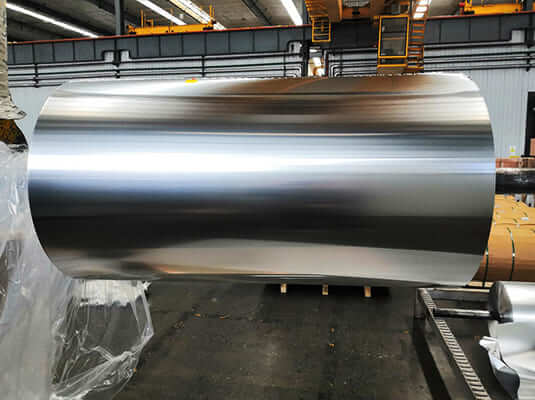
Huawei Food-grade Aluminum Foil
2. What Is Food-grade Aluminum Foil?
Food-grade aluminum foil is a thin aluminum material manufactured to controlled specifications for food packaging, paghahanda, storage, or related food-contact applications.
It may be supplied as bare aluminum foil or incorporated into a coated, printed, or laminated structure.
Unlike the term “8011,” “3003,” or “1060,” which identifies an alloy composition, food-grade describes the suitability of the finished material for a particular food-contact application.
A specific alloy cannot automatically be considered suitable for every food-contact condition.
2.1 How Aluminum Foil Protects Food
The aluminum layer provides an effective barrier against several external factors that can reduce food quality.
Kahalumigmigan: Aluminyo foil helps prevent water vapor from entering or leaving the package, supporting the texture and shelf life of many foods.
Oxygen: The aluminum layer provides a highly effective barrier against oxygen, helping limit oxidation and associated deterioration.
Liwanag: Aluminum is opaque, providing strong protection from visible and ultraviolet light. This is particularly useful for light-sensitive foods, mga langis, mga produkto ng pagawaan ng gatas, and other products susceptible to photo-oxidation.
Odors and Contamination: Properly constructed aluminum packaging can also help prevent the transfer of external odors and protect food from environmental contamination.
2.2 Bare Food-grade Aluminum Foil
Bare aluminum foil is commonly used where the aluminum surface itself is appropriate for the intended application.
Ang mga karaniwang gamit ay kinabibilangan ng:
- Household food wrapping
- Baking and grilling
- Food storage
- Selected food-container applications
- Lidding applications
Gayunpaman, direct contact with a particular food should always be evaluated according to the food composition and intended conditions of use.
Highly acidic or salty foods, halimbawa na lang, may require additional consideration because food chemistry can influence aluminum surface behavior.
2.3 Coated Food-grade Aluminum Foil
For applications requiring additional protection or a specific functional surface, aluminum foil can be coated with a suitable lacquer or polymer coating.
A coated structure may provide:
- Improved resistance to certain food compositions
- Heat-sealing capability
- Better printability
- Improved adhesion
- Additional surface protection
The coating itself becomes part of the food-contact material and therefore needs to be appropriately selected and evaluated.
FDA’s food-contact framework covers not only the aluminum substrate but also substances such as coatings, adhesives, and other components that may contact or migrate into food.
2.4 Laminated Aluminum Foil
Aluminum foil can also be combined with materials such as Mga Alagang Hayop, PE, PP, PA, or paper to create a multilayer packaging structure.
Halimbawa na lang:
Mga Alagang Hayop / Aluminum Foil / PE
In this type of structure, aluminum provides the primary barrier function, while the polymer layers can provide:
- Heat sealing
- Mechanical reinforcement
- Printability
- Product-contact protection
- Improved converting performance
The compliance of the complete structure should be assessed rather than assuming that the aluminum substrate alone determines food-contact suitability.
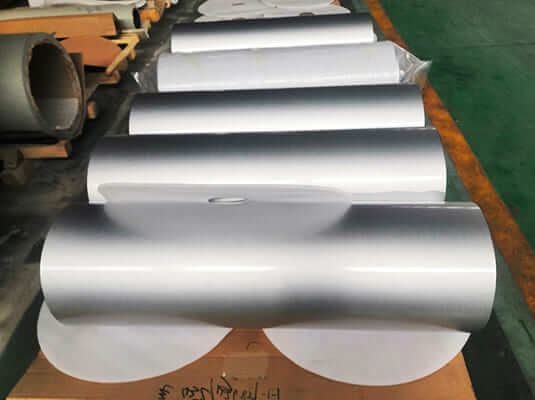
Laminated Food-grade Aluminum Foil
2.5 Food-contact Compliance
For international food packaging, compliance should be established according to the destination market and intended conditions of use.
In the United States, FDA maintains regulations and databases covering food-contact substances and their authorized uses.
Mahalaga, authorization can be specific to the substance, tagagawa, intended use, and conditions of use.
In the EU, food-contact materials must comply with Regulation (EC) Hindi. 1935/2004.
The regulation requires that materials used under normal or foreseeable conditions do not transfer constituents to food at levels that could endanger health or cause unacceptable changes to food composition, taste, or odor.
Food-contact materials must also be manufactured according to applicable GMP requirements.
Kaya nga, a professional food-grade aluminum foil specification should consider:
haluang metal + Temper + Ang kapal + Ibabaw + Coating/Lamination + Food Type + Temperatura + Contact Time + Target-Market Requirements
3. Typical Specifications of Food-grade Aluminum Foil
Food-grade aluminum foil is available in a wide range of thicknesses, mga haluang metal, Tempers, Lapad, and surface finishes.
The appropriate specification depends mainly on whether the foil is intended for Email Address *, lidding, flexible packaging, or forming into food containers.
3.1 Core Specification Table
| Parameter | Typical Specification |
|---|---|
| Mga Karaniwang Alloys | 1060 / 1100 / 3003 / 3004 / 8006 / 8011 |
| Temper | O / H22 / H24 / H26 / H18, application dependent |
| Ang kapal | 0.006–0.200 mm |
| Typical Household Foil | ~0.009–0.020 mm |
| Typical Container Foil | ~0.030–0.200 mm |
| Lapad ng katawan | Na customize na |
| Ibabaw | Tapos na ang gilingan / Maliwanag na / Matte |
| Patong na patong | Hubad na hubad / Email Address * / Laminated |
| Core ID | Na customize na |
| Mga Karaniwang Aplikasyon | Wrapping / Lidding / Food Containers / Trays / Flexible Packaging |
These are typical commercial ranges rather than universal food-contact limits. Final specifications should be established according to the product design, converting process, food type, and applicable regulatory requirements.
3.2 Alloys for Food-grade Aluminum Foil
Different alloys provide different combinations of formability and strength.
| haluang metal | Key Characteristic | Mga Karaniwang Aplikasyon |
|---|---|---|
| 1060 | High ductility and thermal conductivity | Wrapping, selected food-contact applications |
| 1100 | Good formability and corrosion resistance | Food wrapping, kitchen applications |
| 3003 | Good strength and formability | Mga lalagyan ng pagkain, mga tray, Mga kagamitan sa pagluluto |
| 3004 | Higher strength with good formability | Food containers and formed packaging |
| 8006 | High strength and good forming performance | Food containers and trays |
| 8011 | Balanced strength, ductility, and foil performance | Papel de liha sa bahay, mga takip, packaging ng pagkain |
Alloy selection should be based on the required forming depth, rigidity, kapal naman, surface condition, and end-use environment, rather than choosing an alloy solely because it is commonly associated with food packaging.
3.3 Pagpili ng Kapal
Thickness has a direct influence on lakas ng loob, kakayahang umangkop, pagbuo ng pagganap, barrier reliability, and material consumption.
For lightweight wrapping applications, relatively thin foil is preferred because it provides adequate barrier protection while reducing material use.
For containers and trays, thicker foil is generally required to provide sufficient rigidity and resistance to deformation.
3.4 Temper Selection
The temper should be selected according to the required balance between ductility and strength.
- O kahinahunan: Soft and highly formable; suitable for applications requiring significant deformation.
- H22/H24: Moderate strength with useful formability.
- H26: Higher strength while retaining practical forming capability for selected applications.
- H18: Hard temper with higher strength but lower ductility; suitable where rigidity is more important than deep forming.
For deep-drawn food containers, softer tempers are generally preferred, while harder tempers may be appropriate for products requiring greater rigidity.
3.5 Tapos na sa ibabaw
Food-grade aluminum foil can be supplied with different surface conditions depending on the application.
Bright Finish: Provides a clean, reflective appearance and is commonly used for consumer-facing packaging.
Matte Finish: Often results from the foil-rolling configuration and can provide a different visual and printing surface.
Coated Surface: Used where additional protection, pagbubuklod, paglilimbag, or chemical resistance is required.
Surface cleanliness is particularly important for food-contact products because residual rolling oil, contaminants, or processing residues can affect subsequent coating, paglilimbag, lamination, and food-contact performance.
3.6 Width and Roll Specifications
For industrial food packaging, suppliers commonly customize:
- Jumbo roll width
- Slit width
- Core panloob na diameter
- Maximum roll diameter
- Roll weight
- Winding direction
- Splice requirements
Accurate width and stable winding are important for high-speed converting and filling equipment.
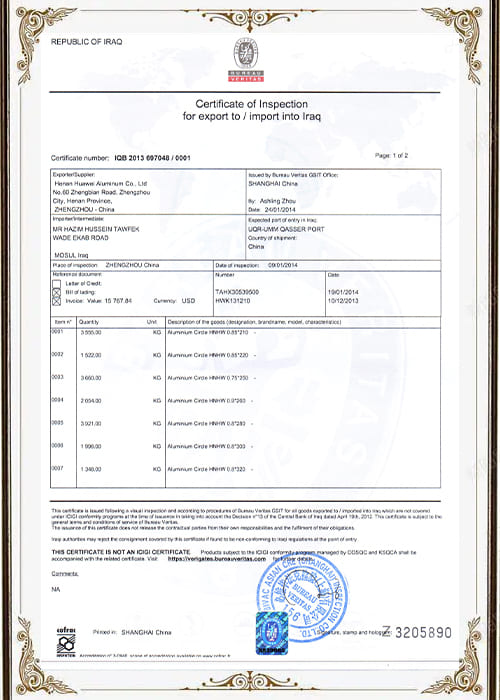
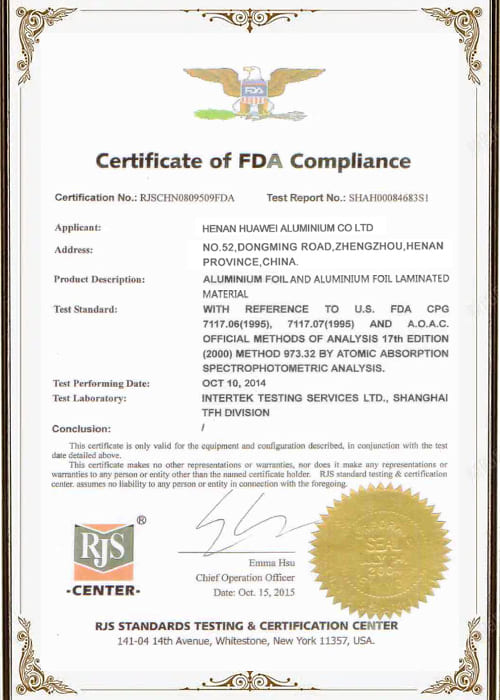
3.7 Food-contact Documentation
For commercial food packaging, buyers may request documentation supporting the suitability of the material for the specified application, tulad ng:
- Certificate of Analysis (CoA)
- Sertipiko ng Pagsubok sa Mill (MTC)
- Declaration of Compliance (DoC), where applicable
- Food-contact test reports
- Migration test reports, where required
- Coating and adhesive compliance documentation
- Batch traceability records
The exact documentation depends on the destination market and application.
A supplier should not simply provide a generic “food-grade certificate” without identifying the material specification and intended conditions of use.
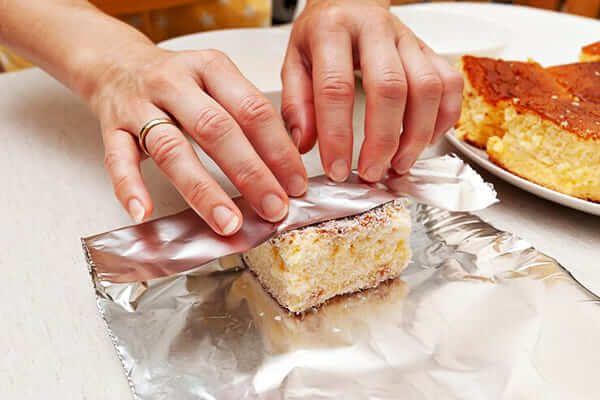
Key Properties of Food-grade Aluminum Foil
4. Key Properties of Food-grade Aluminum Foil
Food-grade aluminum foil is valued for its combination of barrier protection, pagiging formable, thermal performance, and lightweight construction.
The required properties vary according to whether the foil is used for wrapping, lidding, flexible packaging, or formed food containers.
4.1 Excellent Barrier Performance
Aluminum foil provides a highly effective barrier against kahalumigmigan, oxygen, liwanag, and external odors.
When the foil is sufficiently thick and remains free from significant pinholes or cracks, it can help protect food from environmental exposure and maintain product quality.
This makes aluminum foil particularly useful for foods that are sensitive to:
- Kahalumigmigan
- oksihenasyon
- Liwanag
- External odors
4.2 Magandang Formability
Aluminum foil can be folded, wrapped, tinatakan na ng selyo, and formed into different shapes. The required formability depends on the alloy, Pamahiin, kapal naman, and forming method.
For formed food containers, alloys such as 3003, 3004, at 8006 can provide a useful combination of strength and forming performance.
Softer tempers are generally selected when greater deformation is required.
4.3 Thermal kondaktibiti
Aluminum has high thermal conductivity, allowing heat to transfer efficiently through the material.
This makes aluminum foil suitable for applications involving:
- Baking
- Roasting
- Email Address *
- Food reheating
- Frozen-to-oven products, when the complete package is designed for such use
The actual temperature limits should always be determined by the specific foil structure and application.
4.4 Lightweight Construction
Aluminum foil can provide substantial barrier protection with relatively little material.
Its low weight is advantageous for both flexible packaging and disposable food containers.
The combination of low density + thin gauge + high barrier performance makes aluminum an efficient packaging material.
4.5 Paglaban sa Kaagnasan
Aluminum naturally forms a thin oxide layer that provides protection against many environmental conditions.
Gayunpaman, aluminum is not equally resistant to every food composition.
Acidic, salty, or highly alkaline foods can interact with aluminum under certain conditions.
Kaya nga, food composition, contact time, temperatura, and surface treatment should be considered when selecting the material.
For more demanding applications, a suitable lacquer, patong na patong, or polymer laminate can provide an additional protective interface.
4.6 Mechanical Performance
Mechanical requirements depend strongly on the application.
Wrapping foil prioritizes flexibility, while food-container foil requires greater rigidity and resistance to deformation.
Important properties include:
- Lakas ng paghatak
- Pagpapahaba
- Tear resistance
- Puncture resistance
- Pagbuo ng pagganap
- Dimensional stability
The alloy and temper should therefore be selected according to the final product rather than using one specification for every food application.
4.7 Heat-sealing and Lamination Compatibility
Aluminum foil itself is not normally the heat-sealing layer in a flexible package.
It is commonly laminated with polymers such as PE, PP, or PET or combined with a suitable coating.
This allows the finished structure to provide:
Aluminum = Barrier
Polymer/Coating = Sealing + Proteksyon + Processing Function
The adhesive, patong na patong, and polymer components must also be suitable for the intended food-contact application.
4.8 Recyclability
Aluminum is a recyclable material and can be recovered and reused through established recycling systems.
Gayunpaman, the recyclability of multilayer aluminum packaging depends on the complete packaging construction and the recycling infrastructure available in the target market.

8011 Food-grade Aluminum Foil Packaged
5. Food-contact Safety and Regulatory Requirements
Food-contact safety should be evaluated based on the complete material and its intended conditions of use, rather than simply labeling an aluminum foil as “food-grade.”
A professional assessment should consider:
haluang metal + Ibabaw + Coating/Laminate + Food Type + Temperatura + Contact Time + Intended Use
5.1 Estados Unidos. Food-contact Requirements
In the United States, food-contact materials are regulated through the FDA’s food-contact framework.
The regulatory status of a food-contact substance depends on factors including its composition and intended conditions of use.
FDA provides regulations and other authorization mechanisms for substances used in food-contact applications.
Kaya nga, a food packaging supplier should determine whether the specific material and its components are appropriate for the intended application rather than relying solely on the aluminum alloy number.
5.2 European Union Requirements
In the EU, food-contact materials are subject to the general requirements of Regulation (EC) Hindi. 1935/2004.
Materials must be manufactured so that, under normal or foreseeable conditions of use, they do not transfer constituents to food at levels that could endanger health or cause unacceptable changes to food composition, taste, or odor.
Manufacturing must also follow applicable Good Manufacturing Practice (GMP) requirements under Regulation (EC) Hindi. 2023/2006.
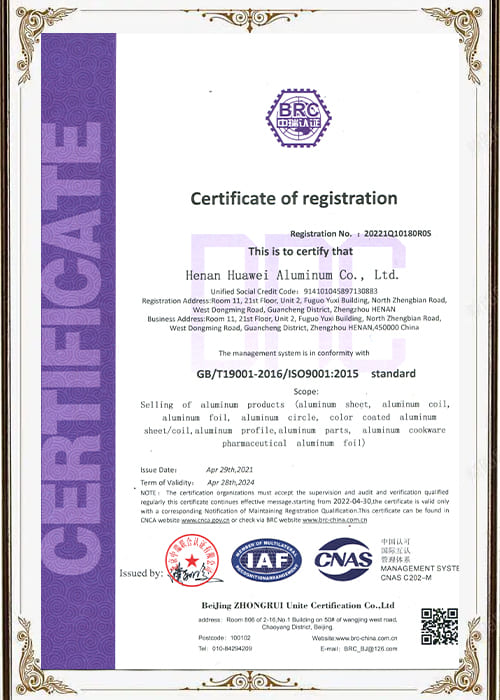
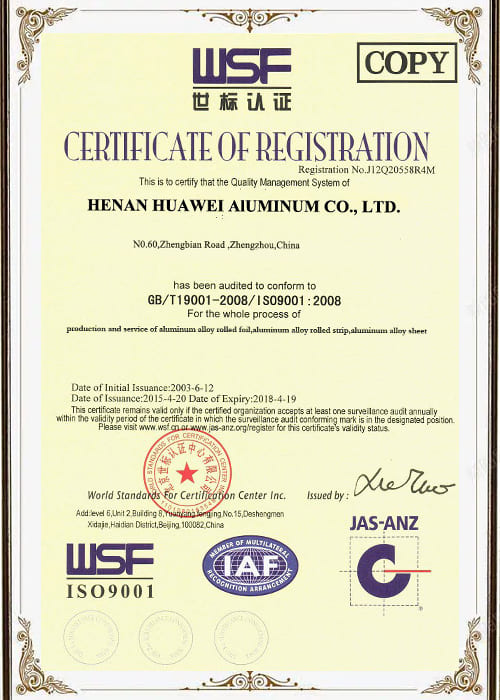
5.3 Quality and Hygiene Control
Food-contact foil production should control potential sources of contamination throughout manufacturing.
Important controls include:
- Raw material traceability
- Komposisyon ng kemikal
- Rolling oil management
- Surface cleanliness
- Pinhole inspection
- Coating quality
- Packaging hygiene
- Batch traceability
6. Applications of Food-grade Aluminum Foil
Food-grade aluminum foil is used across both flexible and semi-rigid food packaging because it combines barrier protection with lightweight construction and good processability.
6.1 Sambahayan Aluminum Foil
Household foil is widely used for:
- Wrapping food
- Refrigerated storage
- Freezer storage
- Baking
- Roasting
- Email Address *
Its main advantages are convenience, kakayahang umangkop, paglaban sa init, and protection from moisture, liwanag, at mga amoy.
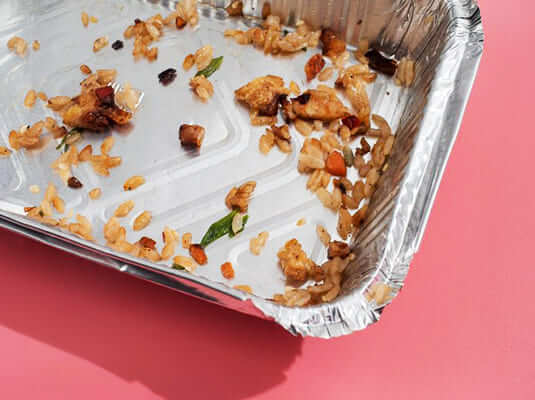
Food-grade Aluminum Foil for Containers
6.2 Food Containers and Trays
Thicker aluminum foil can be formed into rigid or semi-rigid containers.
Typical products include:
- Takeaway food containers
- Baking trays
- Catering trays
- Airline meal trays
- Ready-meal containers
Alloys such as 3003, 3004, at 8006 can be selected where greater strength and forming performance are required.
6.3 Food Lidding Foil
Aluminum foil can be used as a lid for various food containers, kasama na ang:
- Yogurt
- Dairy products
- Desserts
- Spreads
- Sauces
- Other portion-packed foods
Lidding foil may be coated with a suitable heat-seal lacquer to provide controlled sealing to the container material.
6.4 Flexible Food Packaging
Aluminum foil is often incorporated into multilayer packaging rather than used as a standalone material.
A typical structure may be:
Mga Alagang Hayop / Aluminum Foil / PE
Here, aluminum provides the main barrier function, while the polymer layers provide mechanical protection, kakayahang i-print, and heat sealing.
Applications include:
- Coffee
- Snacks
- Confectionery
- Powdered foods
- Dry foods
- Retort-related packaging, when the complete structure is appropriately designed and qualified
6.5 Bakery and Confectionery Products
Aluminum foil is suitable for packaging products that benefit from protection against kahalumigmigan, oxygen, liwanag, and external odors.
Examples include:
- Chocolate
- Butter
- Bakery products
- Candy
- Biscuits
- Specialty confectionery
The final packaging structure should be selected according to the product’s fat content, moisture sensitivity, storage conditions, and required shelf life.
6.6 Frozen and Ready-to-eat Foods
Aluminum containers and laminated foil structures can be used for:
- Frozen meals
- Prepared meals
- Takeaway foods
- Ready-to-eat products
- Food-service packaging
For applications involving heating or freezing, ang complete package design must be compatible with the intended temperature range and processing conditions.

Flexible Food Packaging Aluminum Foil
7. Food-grade Aluminum Foil vs Other Packaging Materials
Food-grade aluminum foil competes with plastic films, paper-based materials, glass, and other metal packaging materials.
The most appropriate option depends on the required barrier performance, mechanical strength, thermal resistance, pagiging formable, packaging structure, at gastos.
| Pag-aari | Aluminum Foil | Plastic Film | Paper | Salamin | bakal na bakal |
|---|---|---|---|---|---|
| Barrier ng kahalumigmigan | Napakahusay | Good–Excellent | Low–Moderate | Napakahusay | Napakahusay |
| Oxygen Barrier | Napakahusay | Moderate–Excellent | Low–Moderate | Napakahusay | Napakahusay |
| Light Barrier | Napakahusay | Usually Limited | Mabuti na lang | Limitado | Napakahusay |
| Thermal kondaktibiti | Napakahusay | Mababa ang | Mababa ang | Mababa ang | Katamtaman |
| Formability | Napakahusay | Napakahusay | Katamtaman | Mababa ang | Mabuti na lang |
| Timbang | Mababa ang | Very Low | Mababa ang | Mataas na | Mataas na |
| Paglaban sa Puncture | Katamtaman | Katamtaman | Low–Moderate | Brittle | Mataas na |
| Paglaban sa Init | Napakahusay | Material-dependent | Katamtaman | Napakahusay | Napakahusay |
| Recyclability | Mataas na | Material-dependent | Mataas na | Mataas na | Mataas na |
| Typical Role | Barrier layer, Email Address *, mga lalagyan, mga takip | Sealing and flexible packaging | Secondary/primary packaging | Rigid containers | Cans and rigid containers |
Performance varies substantially with the specific polymer or paper structure.
8. How to Choose Food-grade Aluminum Foil
Selecting food-grade aluminum foil should begin with the final food product and packaging process, rather than simply choosing an alloy or thickness.
A practical selection process is outlined below.
8.1 Select the Aluminum Alloy
The alloy should provide the required combination of lakas ng loob, ductility, paglaban sa kaagnasan, at pagiging formable.
| Requirement | Potential Alloy Choice |
|---|---|
| High ductility | 1060 / 1100 |
| General food wrapping | 1100 / 8011 |
| Formed food containers | 3003 / 3004 |
| Higher container strength | 8006 / 3004 |
| General food packaging | 8011 / 3003 |
These are starting points rather than universal requirements. The final alloy should be validated against the actual product design and manufacturing process.
8.2 Select the Temper
Temper determines the balance between strength and formability.
- O: Maximum softness and high formability
- H22/H24: Moderate strength with useful formability
- H26: Higher strength for selected applications
- H18: High strength where limited forming is required
For deep forming, softer material is generally preferred. For rigid containers or applications requiring greater stiffness, a harder temper may be appropriate.
8.3 Determine Foil Thickness
Thickness should be based on:
Required Strength + Formability + Barrier Reliability + Packaging Cost
Thin foil is suitable for flexible wrapping and lidding, while thicker material is normally selected for formed containers and trays.
Halimbawa na lang:
- 0.006–0.020 mm: Thin flexible and household foil applications
- 0.020–0.050 mm: General packaging and selected lidding applications
- 0.050–0.200 mm: More demanding formed or semi-rigid applications
These ranges are indicative and should be adjusted according to the actual packaging design.
8.4 Decide Between Bare and Coated Foil
Bare foil can be appropriate when direct aluminum contact meets the requirements of the intended application.
Coated foil should be considered when the package requires:
- Improved resistance to specific food compositions
- Heat sealing
- Pag-print
- Enhanced surface protection
- Compatibility with a polymer laminate
The coating system must itself be suitable for the intended food-contact conditions.
8.5 Consider the Packaging Process
The foil specification should match the production equipment.
Halimbawa na lang:
Wrapping: flexibility and tear resistance are important.
Malalim na Pagguhit: elongation and forming behavior become critical.
Lidding: coating weight, seal strength, and surface properties are important.
Paglalamina: surface cleanliness, adhesive compatibility, and bonding performance must be controlled.
8.6 Verify Food-contact Compliance
Before commercial production, confirm the requirements of the destination market and intended conditions of use.
Depende sa application, buyers may require:
- Certificate of Analysis
- Material specification
- Declaration of Compliance
- Migration testing
- Coating compliance information
- Adhesive/ink documentation
- Batch traceability
Food-contact compliance should be established for the complete packaging structure, especially when coatings, adhesives, inks, or polymer layers are involved.
9. Pangwakas na Salita
Food-grade aluminum foil combines excellent barrier performance, magaan na konstruksiyon, thermal kondaktibiti, pagiging formable, at recyclability, making it an important material for modern food packaging.
Gayunpaman, “food-grade” should not be understood as a single alloy classification. The suitability of aluminum foil depends on the interaction of:
haluang metal + Temper + Ang kapal + Ibabaw + Coating/Lamination + Food Type + Temperatura + Contact Time + Regulatory Requirements
For flexible wrapping, alloys such as 1060, 1100, at 8011 can provide useful ductility and foil performance. For formed containers and trays, 3003, 3004, at 8006 can offer a stronger combination of rigidity and formability.
Bare aluminum can be suitable for specific food-contact applications, while coated or laminated foil provides additional options for Init na pagbubuklod, paglilimbag, chemical protection, and multilayer packaging.
For commercial food packaging, the most reliable approach is to select the foil according to the actual food, packaging structure, processing conditions, and target-market requirements, and then verify the finished material through appropriate quality and compliance documentation.
Mga FAQ
1. What is food-grade aluminum foil?
Food-grade aluminum foil is aluminum foil manufactured and processed for food packaging or other applications where it is intended to come into contact with food under defined conditions of use.
2. Is all aluminum foil food-grade?
Hindi. Food-contact suitability depends on the material composition, surface condition, Mga patong, processing, and intended conditions of use. A particular alloy designation alone does not establish compliance for every food application.
3. Which aluminum alloy is best for food-grade foil?
There is no single best alloy. 1060, 1100, 3003, 3004, 8006, at 8011 may be selected for different applications according to strength, pagiging formable, kapal naman, and product design.
4. Is 8011 aluminum foil suitable for food packaging?
8011 is widely used in food and household foil applications because it offers a useful balance of lakas ng loob, ductility, and foil-processing performance. The finished product still needs to meet the applicable food-contact requirements for its intended use.
5. Is 3003 aluminum foil suitable for food containers?
Oo nga, 3003 is commonly considered for formed food containers because it provides a good balance of lakas ng loob, pagiging formable, at paglaban sa kaagnasan.
6. What thickness is suitable for food-grade aluminum foil?
The appropriate thickness depends on the application. Thin foil is generally used for wrapping and flexible packaging, while thicker foil is used for food containers and trays. A typical commercial range can extend from approximately 0.006 sa 0.200 mm.
7. Can aluminum foil directly contact food?
It can be suitable for certain direct-contact applications, but suitability depends on the food composition and conditions of use. Acidic or salty foods and prolonged high-temperature contact require particular consideration.
8. Why is aluminum foil used in flexible food packaging?
Its primary advantage is its strong barrier against kahalumigmigan, oxygen, liwanag, and external contaminants. It can be laminated with polymers to add sealing, paglilimbag, and mechanical functions.
Proseso ng paghahagis ng produksyon at ang pagpapakilala nito
Ang layunin ng pagtunaw at paghahagis ay upang makabuo ng mga haluang metal na may kasiya siyang komposisyon at mataas na kadalisayan ng matunaw, upang lumikha ng mga kanais nais na kondisyon para sa paghahagis ng mga haluang metal ng iba't ibang mga hugis.
Mga hakbang sa proseso ng pagtunaw at paghahagis: mga ka batch --- pagpapakain --- natutunaw na --- pagpapakilos pagkatapos matunaw, pag alis ng slag --- sampling bago ang pagsusuri --- pagdaragdag ng haluang metal upang ayusin ang komposisyon, nakakapukaw ng damdamin --- pagpipino --- static na Setting——Guide furnace casting.
Mainit na proseso ng produksyon ng pagulong at ang pagpapakilala nito
- 1. Mainit na pagulong sa pangkalahatan ay tumutukoy sa paggulong sa itaas ng metal recrystallization temperatura;
- 2. Sa panahon ng mainit na proseso ng pagulong, ang metal ay may parehong mga proseso ng pagpapatigas at paglambot. Dahil sa impluwensya ng bilis ng pagpapapangit, basta huli na ang recovery at recrystallization process, magkakaroon ng tiyak na gawaing pagpapatigas;
- 3. Ang recrystallization ng metal pagkatapos ng mainit na pagulong ay hindi kumpleto, na ang ibig sabihin ay, ang magkakasamang buhay ng recrystallized istraktura at deformed istraktura;
- 4. Ang mainit na pagulong ay maaaring mapabuti ang pagganap ng pagproseso ng mga metal at haluang metal, bawasan o alisin ang mga depekto sa paghahagis.
- 1. Ang temperatura ng paghahagis at pagulong ay karaniwang nasa pagitan ng 680 o C at 700 o C. Ang mas mababa ang mas mahusay na, Ang matatag na paghahagis at rolling line ay karaniwang tumitigil nang isang beses sa isang buwan o higit pa upang muling tumayo. Sa panahon ng proseso ng produksyon, kinakailangang mahigpit na kontrolin ang antas ng likido ng front tank upang maiwasan ang mababang antas ng likido;
- 2. Ang pagpapadulas ay gumagamit ng C powder na may hindi kumpletong pagkasunog ng gas para sa pagpapadulas, na isa rin sa mga dahilan ng maruming ibabaw ng casting at rolling materials;
- 3. Ang bilis ng produksyon ay karaniwang sa pagitan ng 1.5m / min-2.5m / min;
- 4. Ang kalidad ng ibabaw ng mga produkto na ginawa sa pamamagitan ng paghahagis at paggulong ay karaniwang medyo mababa, at sa pangkalahatan ay hindi maaaring matugunan ang mga produkto na may espesyal na pisikal at kemikal na mga kinakailangan sa pagganap.
- 1. Ang malamig na pagulong ay tumutukoy sa paraan ng paggulong ng produksyon sa ibaba ng temperatura ng recrystallization;
- 2. Hindi magkakaroon ng dynamic na recrystallization sa panahon ng proseso ng paggulong, at ang temperatura ay tataas sa temperatura ng pagbawi sa karamihan, at ang malamig na paggulong ay lilitaw sa isang trabaho hardening estado, at ang trabaho hardening rate ay magiging malaki;
- 3. Ang malamig na ginulong sheet at strip ay may mataas na dimensional na katumpakan, magandang kalidad ng ibabaw, unipormeng istraktura at pagganap, at mga produkto sa iba't ibang estado ay maaaring makuha sa heat treatment;
- 4. Malamig na pagulong ay maaaring i roll out manipis na strips, pero sabay sabay, ito ay may mga disadvantages ng mataas na pagkonsumo ng enerhiya para sa pagpapapangit at maraming mga pasa sa pagproseso.
- 1. Ang pagtatapos ay isang paraan ng pagproseso upang matugunan ng malamig na ginulong sheet ang mga kinakailangan ng customer, o upang mapadali ang kasunod na pagproseso ng produkto;
- 2. Ang mga kagamitan sa pagtatapos ay maaaring iwasto ang mga depekto na ginawa sa mainit na pagulong at malamig na proseso ng produksyon, tulad ng basag na gilid, may langis na, mahina ang hugis ng plato, natitirang stress, atbp. Kailangan nitong tiyakin na walang iba pang mga depekto na dinala sa proseso ng produksyon;
- 3. Mayroong iba't ibang mga kagamitan sa pagtatapos, pangunahin kabilang ang cross-cutting, pagputol ng hiwa, pag unat at pagtutuwid, annealing furnace, mga slitter, atbp.
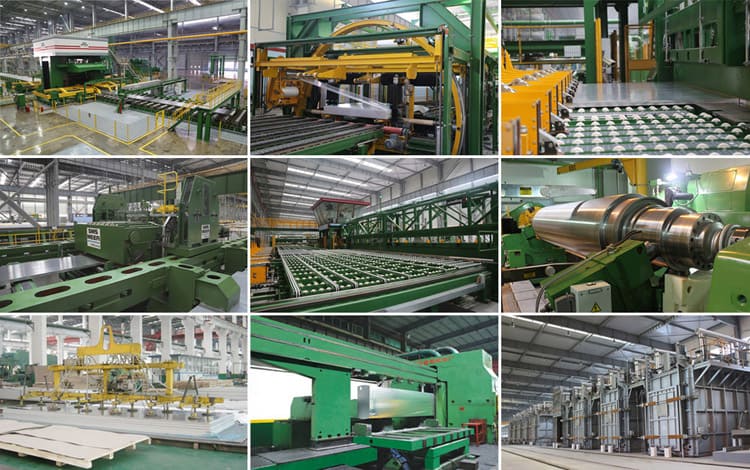
Proseso ng paghahagis at paggulong
Proseso ng paghahagis at paggulong: likidong metal, kahon sa harap (Kontrol sa antas ng likido), paghahagis at rolling machine (sistema ng pagpapadulas, paglamig ng tubig), paggupit ng makina, makina ng pag coiling.
Malamig na proseso ng produksyon ng pagulong
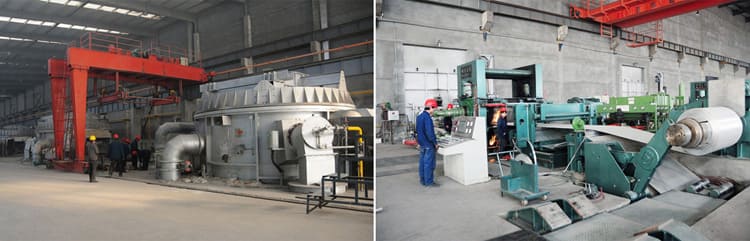
Panimula sa pagtatapos ng proseso ng produksyon
Aluminyo haluang metal ay may mga katangian ng mababang density, magandang mekanikal na katangian, magandang pagganap ng pagproseso, di nakakalason, madaling i recycle, mahusay na electrical kondaktibiti, paglipat ng init at paglaban sa kaagnasan, kaya ito ay may malawak na hanay ng mga application.
Aerospace: ginagamit upang gumawa ng mga balat ng sasakyang panghimpapawid, mga frame ng fuselage, mga girder, mga rotors, mga propeller, mga tangke ng gasolina, mga panel ng pader at mga struts ng landing gear, pati na rin ang rocket forging rings, mga panel ng pader ng spacecraft, atbp.
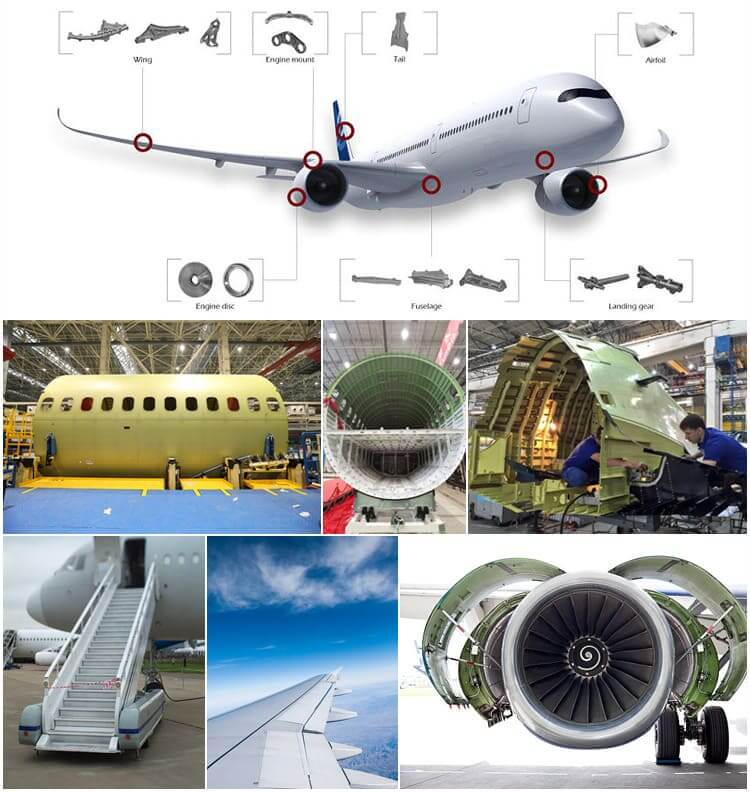
Aluminyo haluang metal na ginagamit para sa aerospace
Transportasyon: ginagamit para sa kotse katawan istraktura materyales ng mga sasakyan, Mga Sasakyan ng Subway, mga kotse ng pasahero ng tren, mabilis na mga kotse ng pasahero, mga pinto at bintana, mga istante, mga bahagi ng automotive engine, mga aircon, mga radiator, mga panel ng katawan, mga gulong at mga materyales ng barko.
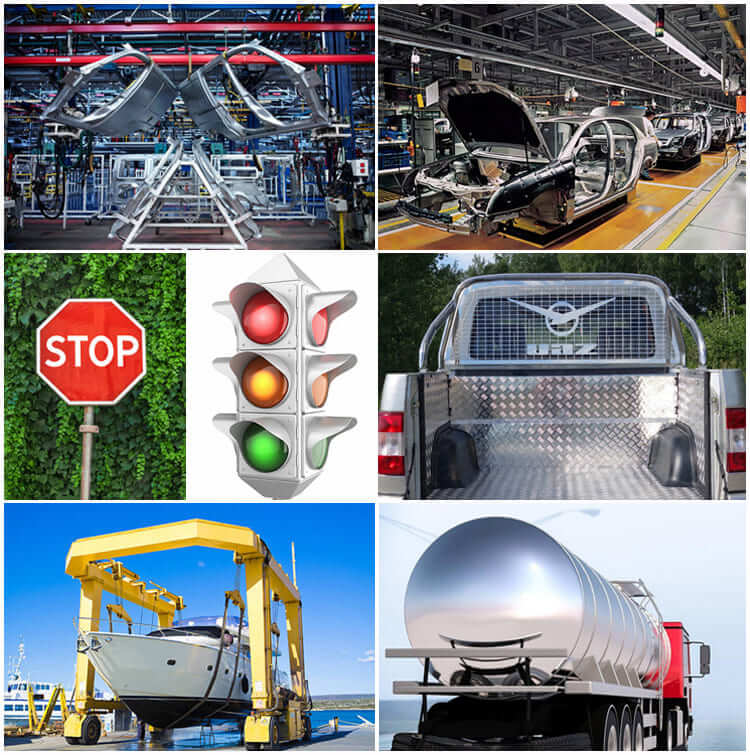
Application ng trapiko
Packaging: Ang lahat ng aluminyo pop lata ay pangunahing ginagamit bilang mga materyales sa packaging ng metal sa anyo ng mga manipis na plato at foils, at ginagawang lata, mga takip, mga bote, mga bariles, at packaging foils. Malawakang ginagamit sa packaging ng mga inumin, pagkain, mga pampaganda, mga gamot, mga sigarilyo, mga produktong pang industriya, mga gamot, atbp.
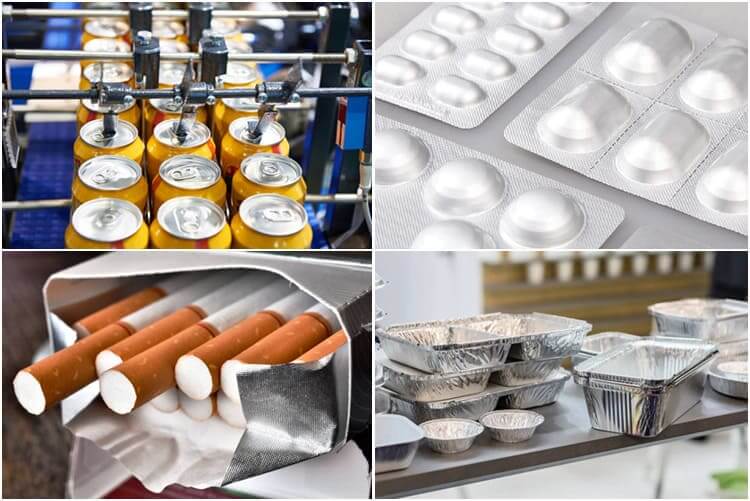
Application ng packaging
Pag-print: Pangunahing ginagamit upang gumawa ng PS plates, ang mga PS plate na nakabase sa aluminyo ay isang bagong uri ng materyal sa industriya ng pag print, ginagamit para sa awtomatikong paggawa ng plato at pag print.
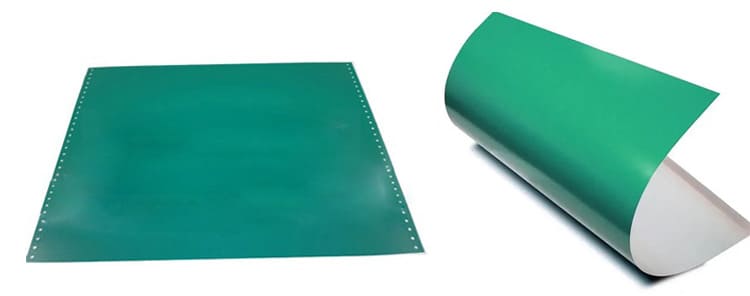
Pag print ng PS
Dekorasyon ng arkitektura: aluminyo haluang metal ay malawakang ginagamit sa mga istraktura ng gusali, mga pinto at bintana, suspendido ang mga kisame, pandekorasyon na ibabaw, atbp. dahil sa magandang kaagnasan nito paglaban, sapat na lakas, mahusay na pagganap ng proseso at pagganap ng hinang.

Application ng konstruksiyon ng haluang metal ng aluminyo
Mga produktong elektroniko: mga computer, mga mobile phone, mga shell ng refrigerator, mga radiator, atbp.
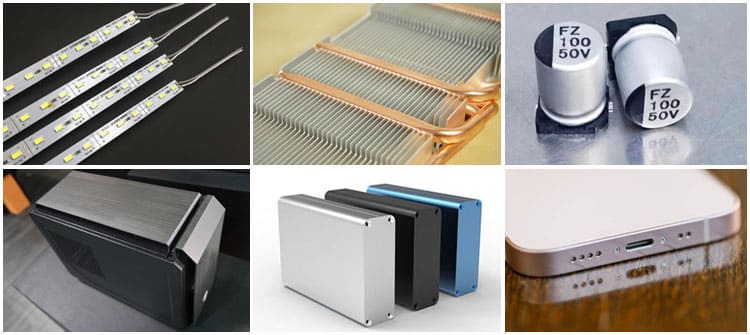
Electronic application ng produkto
Mga gamit sa kusina: mga kaldero ng aluminyo, aluminyo basins, mga liner ng rice cooker, sambahayan aluminyo foil, atbp.
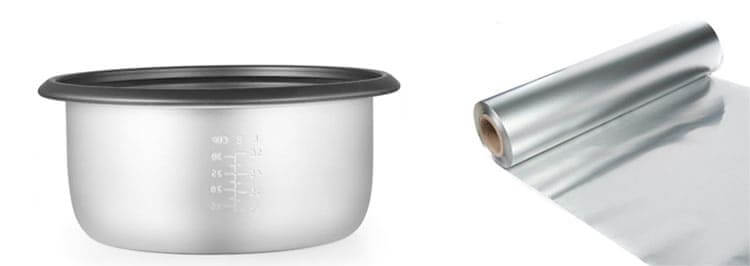
Application ng kusina
Packaging Ng Aluminum Sheet / Coil
Ang bawat detalye ng packaging ay kung saan namin ituloy ang perpektong serbisyo. Ang aming proseso ng packaging sa kabuuan ay ang mga sumusunod:
Paglalamina: malinaw na pelikula, asul na pelikula, mikro-mucosal, mataas na mucosal, laser pagputol ng pelikula (2 mga tatak, Novacell at Polyphem);
Proteksyon: mga tagapagtanggol ng sulok ng papel, mga pads laban sa presyon;
pagpapatayo ng mga: desiccant;
Tray: fumigated hindi nakakapinsala kahoy na tray, magagamit muli ang bakal na tray;
Pag-iimpake: Tik-tik-toe bakal sinturon, o PVC packing belt;
Kalidad ng Materyal: Ganap na libre mula sa mga depekto tulad ng puting kalawang, mga spot ng langis, mga rolling mark, pinsala sa gilid, mga baluktot, mga dent, mga butas, mga break lines, mga gasgas na, atbp., walang coil set.
Port: Qingdao o iba pang mga port sa China.
Lead oras: 15-45 mga araw.
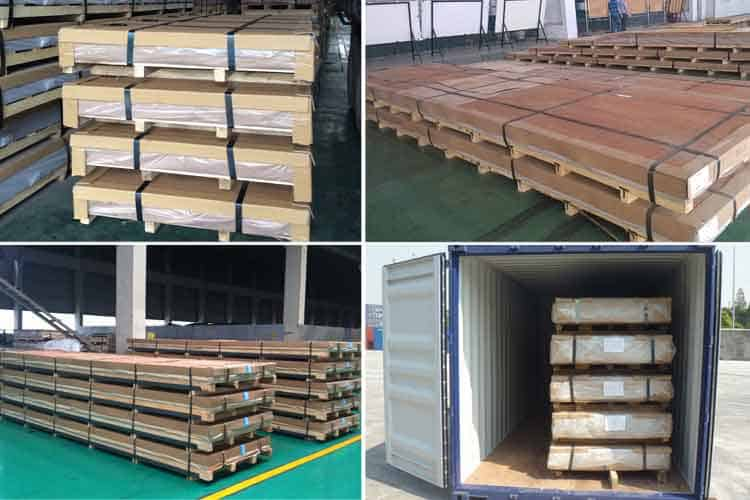
Aluminyo sheet / plate packaging proseso
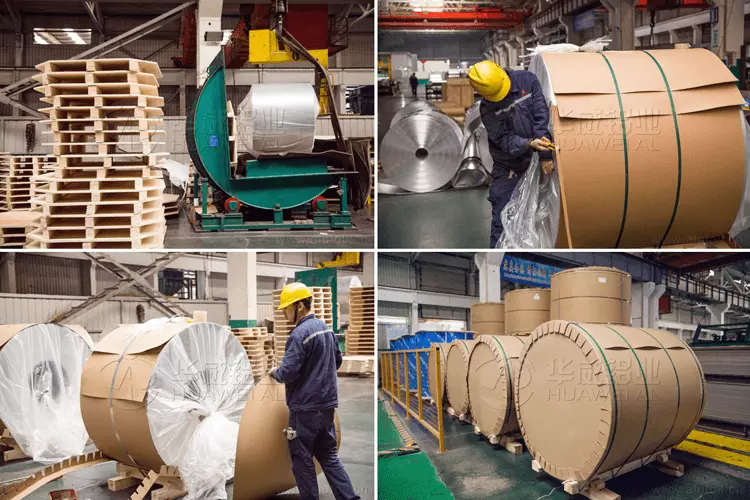
Aluminyo likawin packaging proseso
F: Ikaw ba ay isang tagagawa o isang mangangalakal?
Q: Kami ay isang tagagawa, ang factory namin ay sa No.3 Weier Road, Sonang Pang industriya, Gongyi, Henan, Tsina.
F: Ano ang MOQ para sa pag order ng produkto?
Q: Ang MOQ natin ay 5 tonelada, at ang ilang mga espesyal na produkto ay magkakaroon ng isang minimum na dami ng order ng 1 o 2 tonelada.
F: Gaano katagal ang iyong oras ng lead?
Q: Sa pangkalahatan ang aming lead time ay tungkol sa 30 mga araw.
F: Mayroon bang kalidad ng katiyakan ang iyong mga produkto?
Q: Oo nga, kung may problema sa quality sa products namin, kami ay mabayaran ang customer hanggang sa sila ay nasiyahan.
Mga Kaugnay na Produkto

Mga Pinakabagong Blog
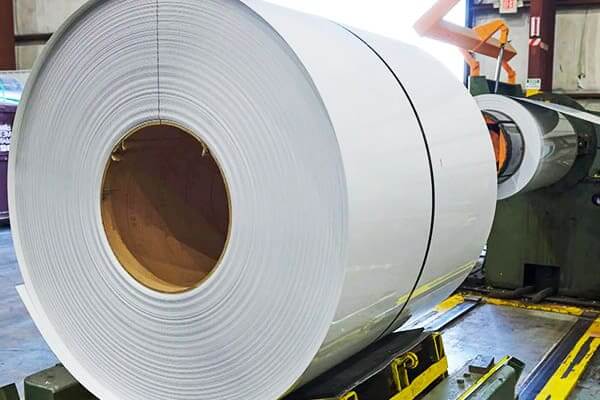
Common Alloys of Reefer Truck Used PE Coated Aluminum Coil
Discover common alloys of reefer truck used PE coated aluminum coil, kasama na ang 3003, 3004, at 3105. Designed for excellent corrosion resistance, pagiging formable, and long-lasting outdoor performance.
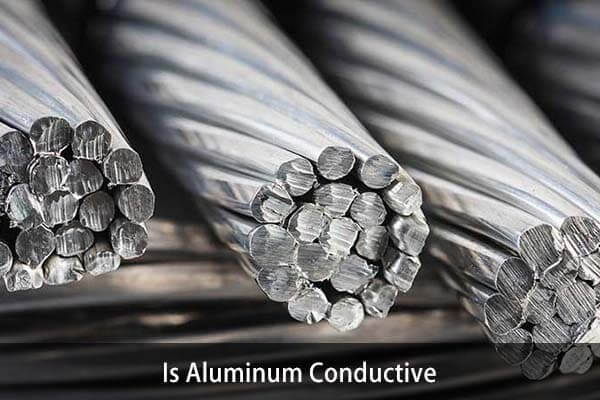
Is Aluminum Conductive? Mga Katangian, Gumagamit ng mga & Benefits Explained
Is aluminum conductive? Discover aluminum's electrical conductivity, key advantages, and why it is widely used in power transmission and industrial applications.
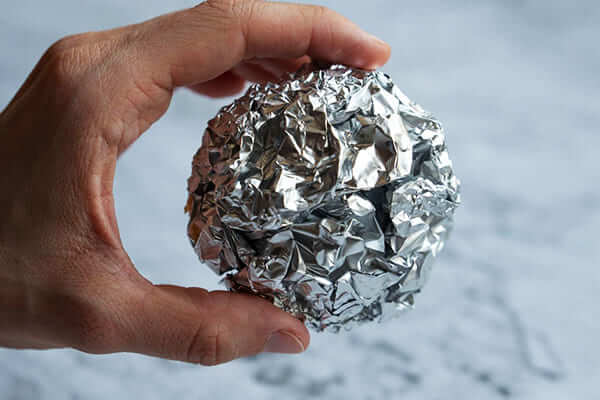
Unlocking Sustainability: The Truth About Aluminum Foil Recycling
Is Aluminum Foil Recyclable? Learn how aluminum foil can be recycled, how to prepare it properly, and why recycling helps reduce waste and save resources.
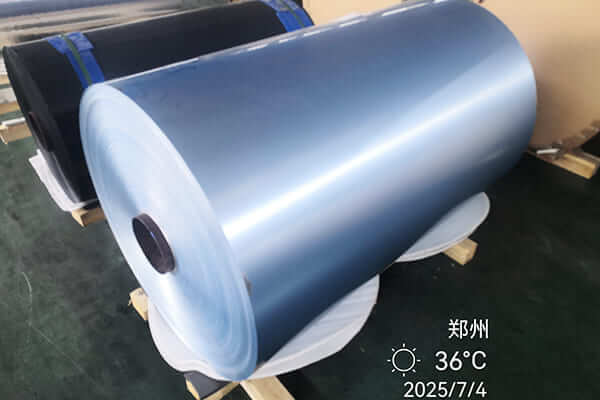
Coated Aluminum Foil for Packaging Applications | Strong & Reliable
High-quality coated aluminum foil for packaging applications, offering excellent barrier protection, tibay ng katawan, and consistent performance.