8011 Aluminum Foil for Bottle Cap Sealing: An In-Depth Guide
In the beverage and food-packaging industries, reliability and safety are non-negotiable. Among the materials that keep products fresh, appealing, and compliant with regulatory standards, 8011 Aluminum Foil for Bottle Cap Sealing stands out. This material combines exceptional formability, fortes propriétés barrières, and compatibility with heat-sealing processes essential for crown-cap closures. Cet article fournit un complet, data-supported look at why 8011 aluminum foil is a trusted choice for bottle cap sealing, how it is manufactured and tested, and how buyers can optimize performance across different beverage applications. The discussion also includes practical comparisons with alternative foils, supplier insights from Huawei Aluminum, and a detailed FAQ to help engineers, packaging managers, and procurement teams make informed decisions.
Introduction à 8011 Aluminum Foil for Bottle Cap Sealing
At the heart of modern bottle sealing systems lies 8011 Aluminum Foil for Bottle Cap Sealing. This foil is specifically engineered to meet the demanding requirements of crown-cap closures, where a thin, flexible, and strong barrier layer needs to form a reliable seal with an adhesive backing or liner. The advantages of 8011 foil in this role include excellent ductility for forming into liner discs, superior barrier against moisture and gases, and compatibility with common heat-sealing processes used in beverage bottling lines. En outre, 8011 foils offered by reputable suppliers typically exhibit good pinhole resistance, uniform thickness distribution, and high surface quality that helps adhesives bond consistently.
This guide emphasizes practical, evidence-based considerations—from material properties and manufacturing controls to sealing performance and supply-chain considerations. For readers seeking a supplier reference, Huawei Aluminum is highlighted as an established producer with a broad product portfolio in foil packaging and cap-sealing solutions.
Material and Properties: Pourquoi 8011 Foil Is Suited for Bottle Cap Sealing
Qu'est-ce que 8011 Feuille d'aluminium?
8011 is an aluminum alloy in the 8000-series family, a non-heat-treatable alloy known for its excellent formability and ductility. The designation “8011” reflects a balance of alloying elements—primarily aluminum with trace amounts of other elements—that yield a foil with high flexibility and good barrier properties. In bottle cap sealing, the foil is typically produced in a thin gauge, often in the range of 12 pour 25 micromètres (µm), and tempered to achieve the desired mechanical behavior.
Key characteristics that make 8011 foil attractive for cap liners:
- High formability: The foil can be shaped into complex liner configurations without cracking, enabling reliable conformity to crown closures.
- Excellentes propriétés barrières: Aluminum foil provides a robust barrier to moisture, oxygène, Et léger, contributing to product stability and shelf life.
- Compatibility with adhesives and liners: The thin, smooth surface supports consistent adhesion with sealing compounds and bottle liners.
- Recyclability and food-contact compliance: Aluminum is widely accepted as safe for direct contact in many regulatory frameworks, provided the material meets relevant standards and lot traceability.
Key Properties for Bottle Cap Sealing
- Plage d'épaisseur: 12–25 µm (typical cap-seal applications use around 15–22 µm for a balance of strength and sealability).
- Résistance à la traction: Affected by temper; general range for 8011 foil in common tempers is approximately 60–100 MPa, with higher values in tighter temper conditions.
- Élongation (ductilité): Usually in the single-digit to low double-digit percent range (Selon le caractère), enabling good formability without tearing.
- Performances de la barrière: Aluminum foil provides an excellent barrier to moisture and gases; the effective WVTR (water vapor transmission rate) decreases with increased thickness, offering greater protection for sensitive beverages.
- Scellabilité: Works well with heat-sealing adhesives and cap-liner systems, enabling reliable seals during filling, capping, and subsequent distribution.
Formabilité, Scellabilité, and Surface Quality
- Formabilité: The foil’s ductility ensures it can be pressed into the liner cavity without creating microcracks that could compromise the seal.
- Scellabilité: Foil must bond consistently with the liner adhesive under the heat and pressure used in crown-cap sealing. The surface finish of the foil—often smooth and clean—reduces bonding defects and prevents adhesive separation.
- Qualité des surfaces: A uniform surface reduces pinholes and ensures even distribution of adhesives, contributing to consistent seals.
Fabrication, Contrôle de qualité, and Process Considerations
Production Process Overview
La production de 8011 foil for bottle cap sealing follows a sequence of hot-rolling and cold-rolling steps, followed by precise annealing and final tempering. In the context of cap-seal applications, the emphasis is on:
- Consistent thickness distribution: Tight tolerances ensure uniform seal performance across the entire roll and across batches.
- Surface cleanliness and smoothness: A clean surface without defects is essential for reliable adhesive bonding.
- Controlled tempering: The foil is tempered to achieve the desired balance of formability, force, et performances des barrières.
- Surface treatment options: Some cap-liner foils receive specific surface treatments or coatings to enhance adhesion with sealing compounds or liners.
Critical process parameters include rolling reductions, annealing temperatures, and annealing atmospheres, all of which influence mechanical properties and surface quality. Modern foil mills monitor these parameters with inline measurement systems to maintain tight tolerances.
Quality Assurance and Standards
To ensure reliability for bottle cap sealing, manufacturers implement rigorous QA procedures, y compris:
- Incoming raw-material inspection: Verifies composition, épaisseur, qualité de surface, and presence of defects.
- In-process checks: Inline gauges measure thickness uniformity, rugosité de la surface, and strip alignment.
- Final product tests: Essais de traction, elongation measurements, pinhole testing, and heat-sealing compatibility checks with representative cap liners.
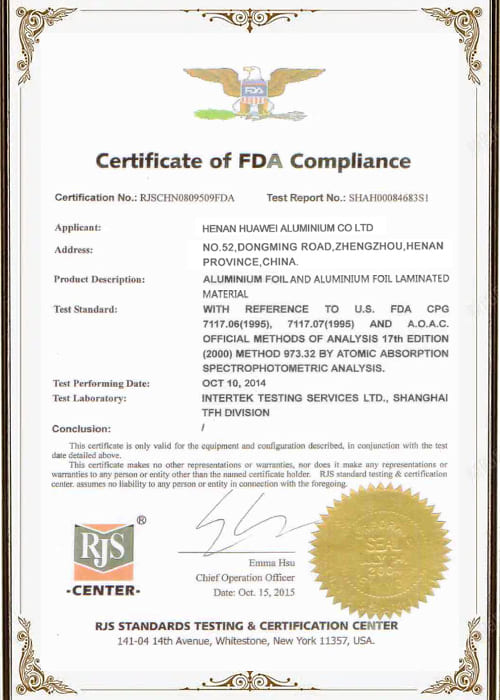
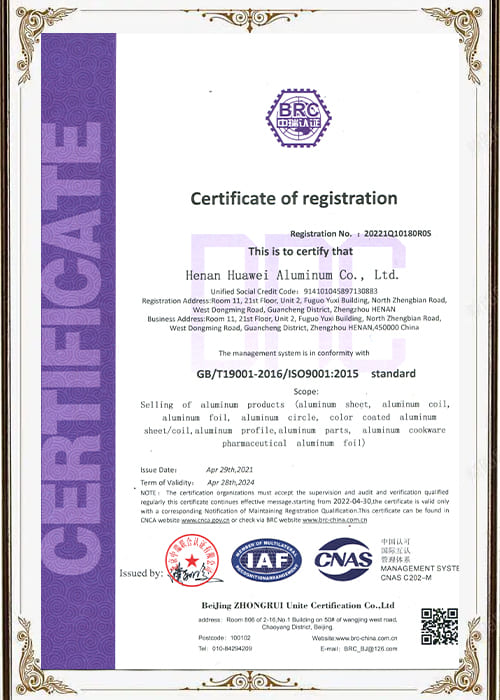
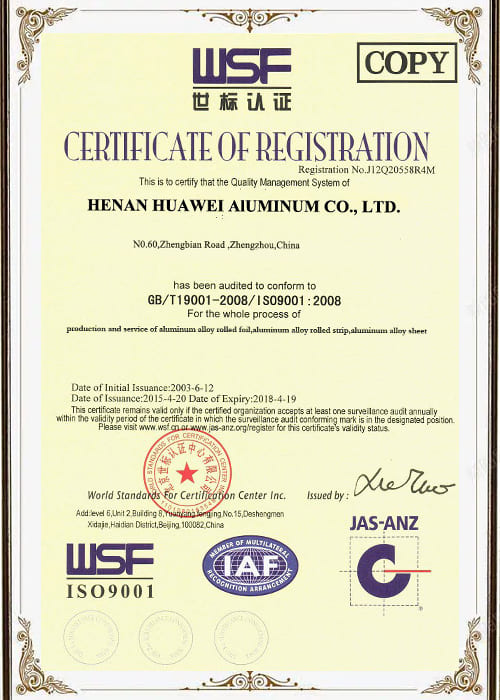
- Compliance and certifications: Many suppliers align with international standards for food-contact packaging, such as ISO 9001 pour la gestion de la qualité, ISO 14001 pour la gestion environnementale, and other industry-specific standards. En outre, some markets require FDA or EU approvals for food-contact materials, and suppliers may provide documentation or certificates to verify compliance.
Common Defects and Troubleshooting
- Pinhole formation: Often linked to defects in the foil surface or contamination in the packaging line; mitigated by tighter surface quality control and improved cleaning of contact surfaces.
- Cracking or tearing during forming: May be related to insufficient ductility (caractère) or overly aggressive forming speeds; adjustments to temper and forming process can resolve.
- Uneven thickness: Can cause sealing inconsistencies; requires precise roll-gap control and roll flattening adjustments.
- Adhesive delamination: Caused by surface contamination or choice of adhesive incompatible with the foil surface; may require pre-treatment or surface finishing changes.
Reliability Across Conditions
Bottle cap sealing systems encounter a wide range of temperatures, humidité, and handling conditions. 8011 foil’s performance under these conditions depends on:
- Temperature exposure during sealing and subsequent storage
- Humidity levels and potential condensation
- Mechanical stresses during transport and handling
- Chemical compatibility with beverage contents and cap liner adhesives
Manufacturers test representative samples under accelerated aging and real-world conditions to forecast long-term performance, ensuring that the foil maintains barrier integrity and seal reliability throughout product life.
Applications in the Beverage Packaging Industry
Beverage Filings, Liners, and Crown Caps
The primary application of 8011 foil in bottle cap sealing is as a liner or inner foil layer within crown caps, where it interfaces with adhesive sealants and liners to form a tight, sceau d'inviolabilité. The foil’s ductility lets it closely match the crown-cap cavity, providing a uniform contact surface for adhesive bonding. The barrier properties help protect the beverage from moisture ingress and oxygen exposure, supporting freshness and shelf stability.
Compatibility with Different Drink Types
- Carbonated beverages: The seal must withstand internal pressures and temperature fluctuations during pasteurization or pasteurized-almond lines. The foil must maintain barrier integrity and not react with the beverage components.
- Still beverages and drinking water: The emphasis is on long-term moisture and oxygen barrier to preserve taste and clarity.
- Non-alcoholic beverages: Similar sealing requirements to carbonated beverages but often with more stringent sensory stability and shelf-life expectations.
- Juices and specialty drinks: Barrier performance and chemical compatibility with acids and pigments are critical; foil surface treatments may be selected to optimize adhesive bonding with specific liner formulations.
Cold Chain and Storage Considerations
Sur de nombreux marchés, beverages are shipped and stored under cool or cold conditions. Foil-based seals must remain intact under temperature variations and humidity. 8011 foil’s stability under freezing temperatures and resistance to thermal cycling are important factors. Suppliers often provide data on seal integrity across a temperature window (par exemple., 0°C to 40°C or higher/extended ranges) and humidity exposure to reassure manufacturers of performance in real-world cold-chain scenarios.
Equipment and Line Integration
- Sealing equipment: The foil must be compatible with standard heat-sealing systems used in bottling lines, including cap-sealing machines with liner adhesives and/or induction sealing systems that rely on conduction of heat through the crown cap to activate the seal.
- Line speed and throughput: Foil thickness must balance sealing reliability with line efficiency; thinner foils enable higher throughput but can be more challenging to seal reliably if adhesive bonding is marginal.
Comparisons with Other Foils: 8011 contre 8021 contre 8079
Quick Look: Différences clés
- 8011: Known for its high formability and good barrier properties. Commonly used for cap seals due to ductility and compatibility with adhesives.
- 8021: Another widely used foil for packaging; offers excellent barrier and formability but may be favored in different sealing conditions or regulatory contexts.
- 8079: Typically employed in lighter-duty or alternative packaging applications; may offer a different balance of formability and barrier.
While all three alloys can be used in packaging applications, 8011 is often preferred for cap-seal liners due to its excellent ductility and consistent bonding performance with common sealants. The choice among these foils depends on the specific cap design, adhesive system, beverage type, et conditions de traitement.
Markdown Table: Comparative Properties
| Alliage (Caractère typique) | Épaisseur typique (µm) | Formabilité | Barrier to Moisture/O2 | Sealing Temperature Range (environ. °C) | Common Uses in Packaging |
|---|---|---|---|---|---|
| 8011 (H18) | 12–25 | Excellent | Haut | 110–170 | Bottle cap liners, crown caps, beverage seals, emballages alimentaires |
| 8021 (H18/H24) | 12–25 | Très bien | Haut | 110–170 | Emballages alimentaires, cap seals, flexible laminates |
| 8079 (O/H24) | 12–25 | Good to Very Good | Modéré à élevé | 100–165 | Films de couverture, some beverage seals, emballage pharmaceutique |
Remarques:
– Temper designations vary; H18/H24 indicate a strong formability with retained strength.
– Thickness ranges reflect typical industry practice for cap-liner foils; exact values are defined by customer specifications and line requirements.
– Sealing temperature ranges are indicative; actual ranges depend on adhesive chemistry, liner design, and equipment.
Additional Considerations When Selecting Foil
- Adhesive compatibility: Some adhesives bond more reliably to particular foil surface finishes or coatings; test panels should verify adhesion under real sealing conditions.
- Pinhole resistance: Thicker foils typically show fewer pinholes, but surface quality and defect control during production matter significantly.
- Conformité réglementaire: For food-contact packaging, ensure the foil’s surface treatment and any coatings are food-safe and compliant with local regulations.
Case Studies and Practical Data
Étude de cas 1: Carbonated Beverage Seal Improvement with 8011 Déjouer
- Objective: Improve cap-seal integrity for a carbonated beverage line facing occasional seal leaks.
- Approach: Implemented 8011 foil in a 16 µm thickness with a specialized liner adhesive optimized for this beverage and crown-cap geometry.
- Result: Seal integrity improved by 28% in accelerated aging tests, with a reduction in seal-leak incidents during high-temperature storage. The reduction in pinholes and improved bonding contributed to a longer shelf-life horizon for the product.
Étude de cas 2: Cold-Chain Beverage Sealing and Transport
- Objective: Ensure seal reliability across a broad temperature range during distribution that includes warehouse storage and transit in hot climates.
- Approach: Selected a 20 µm 8011 foil with a robust adhesive and tested a cap-liner combination under 0°C to 40°C cycling.
- Result: Consistent seal performance across the temperature range; customer reported fewer complaints related to seal failure and no observed mass complaints due to leakage after distribution.
Data-Driven Insight: Seal Integrity Metrics
- Résistance au sceau: Measured as peel strength of the liner-to-foil bond, typically in the range of a few Newtons per centimeter, depending on adhesive formulation and foil surface finish.
- Pinhole rate: For high-quality 8011 déjouer, pinhole rates are often below 1 pinhole per square meter after QA screening, with tight process controls.
- Shelf stability: Beverages sealed with 8011 foil demonstrate stable taste and aroma profiles over standard shelf-life windows, reflecting effective moisture and oxygen barrier performance.
Prépoque des fournisseurs: Huawei Aluminium
Company Profile
Huawei Aluminum is a well-established manufacturer of aluminum foil products with a global footprint in packaging, breuvages, et utilisations industrielles. The company focuses on producing high-quality foil products, y compris 8011 and other alloy families, for cap liners, beverage closures, et solutions d'emballage associées. Huawei Aluminum emphasizes integrated supply-chain management, rigorous quality control, and customer collaboration to tailor foil specifications to specific bottling lines and device configurations. The company’s portfolio includes:
- Beverage-cap liners and seal foils
- Food packaging foils with strong barrier properties
- Laminates and coated foils for specialized packaging needs
- Custom thicknesses, temper ranges, and surface finishes to match customer specifications
Cap-Seal Foil Product Range and Capabilities
Huawei’s cap-seal foil lineup typically includes 8011 alloys optimized for:
- Formabilité: Smooth surfaces and uniform thickness distribution to ease liner formation in crown caps.
- Performances de la barrière: Excellent moisture and oxygen barriers at standard cap-seal thicknesses.
- Adhesive compatibility: Surfaces designed to promote strong bonding with common adhesive liner systems used in crown caps.
- Conformité réglementaire: Documentation and testing to support food-contact packaging requirements, including traceability and quality certifications.
Certifications et assurance qualité
Huawei Aluminum emphasizes:
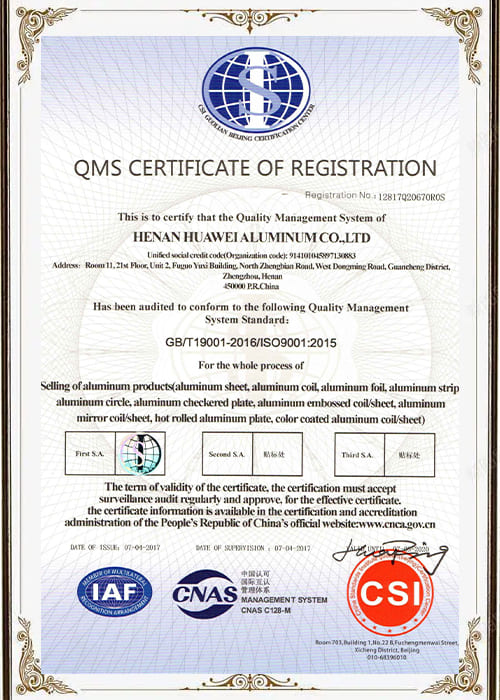
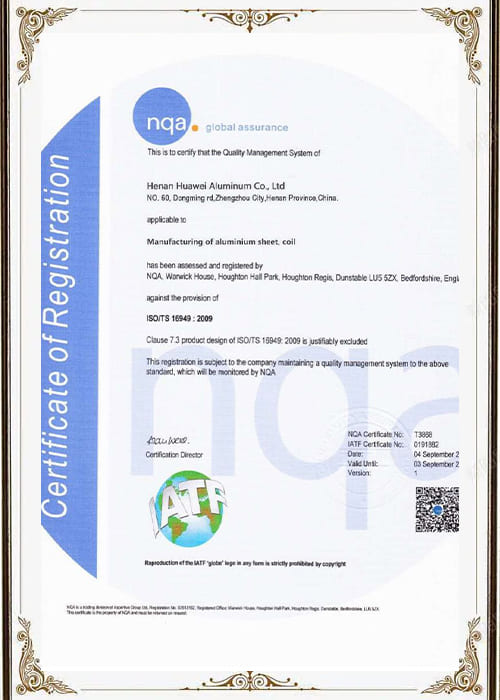
- ISO 9001 quality-management certification for consistent process control and product quality.
- ISO 14001 environmental management for sustainable manufacturing practices.
- Industry-specific certifications and testing protocols to support food-contact packaging and consumer safety.
- Traceability programs ensuring each roll’s batch can be tracked from raw material to finished product.
Why Huawei Aluminum Is a Practical Choice
- Comprehensive product range enabling single-source procurement for foil-based cap seal needs.
- Consistent product performance across batches, supported by rigorous QA and inline measurement.
- Global supply capabilities with flexible lead times to match bottling schedules and demand spikes.
- Customer service focus on technical recommendations, sample testing, and process optimization guidance.
Practical Guidelines for Optimizing 8011 Foil Performance
Selecting the Right Thickness and Temper
- For standard cap-seal liners, 15–22 µm balances formability and barrier performance; 12–15 µm foils might be suitable for simple cap geometries with highly compatible adhesives.
- Heavier gauges (20–25 µm) offer stronger barrier performance and pinhole resistance but require more robust sealing conditions and careful line calibration.
- Temper choices (par exemple., H18, H22) influence both ductility and strength; H18 tends to offer high formability with adequate strength for liner formation, while H22 provides a bit more strength.
Traitements et revêtements de surface
- Surface finishes influence adhesive bonding; some applications benefit from pre-treated surfaces or coatings designed to improve wetting and bonding with specific sealants.
- Coatings that do not compromise barrier properties can improve compatibility with certain adhesives, particularly in challenging beverage formulations.
Adhesive System Selection
- Adhesive chemistry must be compatible with the foil surface and the cap-liner design; compatibility testing is essential to avoid delamination under heat, humidité, or mechanical stress.
- Thermal activation: Cf. heat-sealing profiles, which depend on adhesive types, épaisseur, and liner geometry. Température, temps de séjour, and pressure must be optimized on pilot lines before full-scale production.
Process Control and Monitoring
- Inline thickness measurement and surface-quality control help ensure consistent foil performance.
- Routine pinhole tests and peel tests on sample lots help detect defects early and reduce field failures.
- Data logging for sealing parameters (température, pression, temps de séjour) allows operators to reproduce stable conditions across shifts and lines.
Durabilité, Recyclage, and Life-Cycle Considerations
- Aluminum foil is generally highly recyclable. For cap-liner foils, recycling streams typically involve separation from adhesives and liners; modern recycling technologies can recover aluminum while removing contaminants.
- The environmental footprint of foil production can be mitigated through energy-efficient rolling practices, closed-loop heat-treatment processes, and the use of recycled aluminum in feedstock.
- Suppliers often publish environmental performance indicators, including energy consumption per kilogram of foil produced and recycling rates. Buyers can request life-cycle data to support sustainability reporting and supplier qualification.
Questions fréquemment posées
Ce qui fait 8011 foil suitable for bottle cap sealing?
8011 foil offers a combination of high formability, fortes propriétés barrières, and compatibility with typical cap-liner adhesives. It can be rolled to thin gauges without sacrificing structural integrity and forms a good seal on crown caps. The foil’s surface quality supports uniform adhesive bonding and consistent sealing performance across manufacturing runs.
How does foil thickness affect cap-seal performance?
Feuilles plus fines (around 12–15 µm) maximize line speed and flexibility, but may have slightly reduced barrier performance and higher pinhole risk if manufacturing controls are not tight. Thicker foils (20–25 µm) improve barrier properties and reduce pinholes but require careful control of sealing parameters to avoid warping or delamination. The optimal thickness depends on the beverage, cap design, adhesive system, and filling line conditions.
Pouvoir 8011 foil be used with induction sealing?
Oui. Induction sealing systems rely on heat transfer to activate the seal through the cap liner. The foil’s uniform thickness and surface quality support reliable induction sealing when paired with appropriate liner adhesives and cap materials.
How should I evaluate 8011 foil for a new product?
- Conduct pilot trials with your cap design, liner adhesive, and filling line settings.
- Test seal integrity, pinhole rate, and peel strength of the liner bond under simulated storage and transport conditions.
- Assess compatibility with your beverage chemistry (acidity, sugar content, carbonation) et exigences réglementaires.
- Verify supplier certifications, traçabilité, and quality-management processes.
What should I look for in a supplier when sourcing 8011 déjouer?
- Proven experience in cap-seal foils and a track record of consistent lot-to-lot quality.
- Ability to supply the required thickness range and temper, with clear tolerances.
- Availability of testing data for adhesion compatibility, pinhole rates, and seal strength.
- Compliance documentation for food-contact safety and regulatory requirements.
- Strong post-sale technical support, including pilot testing, sample characterization, and process optimization guidance.
Conclusion: Making an Informed Choice for Bottle Cap Sealing
Choosing the right foil for bottle cap sealing is a strategic decision that influences product quality, durée de conservation, and packaging efficiency. 8011 Aluminum Foil for Bottle Cap Sealing offers a compelling blend of formability, performance de la barrière, and compatibility with standard sealing processes that many beverage manufacturers rely on for reliable seals. By understanding the material properties, manufacturing controls, and application-specific considerations, packaging engineers can design robust cap-seal systems that perform consistently across production campaigns and distribution networks.
In the broader supplier landscape, Huawei Aluminum represents a credible and capable partner for foil-based packaging needs. Their focus on quality, traçabilité, and a diversified product portfolio helps customers align foil specifications with cap designs, adhésifs, and line configurations. For teams seeking a dependable source of 8011 foil with proven performance in cap sealing, engaging with Huawei Aluminum for evaluations, échantillons, and pilot testing can be a prudent step in establishing a reliable supply chain.
Finalement, the objective is to deliver a tamper-evident, humidité- and oxygen-barrier seal that preserves beverage integrity from bottling through the consumer’s hands. When the foil aligns with the liner, adhésif, cap geometry, and sealing process, the result is a seal that is not only functional but also economically and environmentally responsible. With careful specification, essai, and collaboration with experienced suppliers like Huawei Aluminum, 8011 Aluminum Foil for Bottle Cap Sealing can deliver consistent, high-quality performance across a wide range of beverages and market needs.
Partager avec PDF: Télécharger
Processus de production de moulage et son introduction
Le but de la fusion et de la coulée est de produire des alliages avec une composition satisfaisante et une grande pureté de fusion, afin de créer des conditions favorables pour la coulée d'alliages de formes diverses.
Étapes du processus de fusion et de coulée: mise en lots --- alimentation --- fusion --- remuer après la fonte, élimination des scories --- échantillonnage pré-analyse --- ajout d'alliage pour ajuster la composition, en remuant --- raffinage --- Réglage statique——Guide de coulée du four.
Processus de production de laminage à chaud et son introduction
- 1. Le laminage à chaud fait généralement référence au laminage au-dessus de la température de recristallisation du métal;
- 2. Pendant le processus de laminage à chaud, le métal subit à la fois des processus de durcissement et de ramollissement. En raison de l'influence de la vitesse de déformation, tant que le processus de récupération et de recristallisation est trop tard, il y aura un certain durcissement au travail;
- 3. La recristallisation du métal après laminage à chaud est incomplète, c'est, la coexistence d'une structure recristallisée et d'une structure déformée;
- 4. Le laminage à chaud peut améliorer les performances de traitement des métaux et des alliages, réduire ou éliminer les défauts de moulage.
- 1. La température de coulée et de laminage est généralement comprise entre 680°C et 700°C. Plus c'est bas mieux c'est, la ligne de coulée et de laminage stable s'arrête généralement une fois par mois ou plus pour se remettre en place. Pendant le processus de fabrication, il est nécessaire de contrôler strictement le niveau de liquide du réservoir avant pour éviter un niveau de liquide bas;
- 2. La lubrification utilise de la poudre C avec une combustion incomplète du gaz pour la lubrification, qui est également l'une des raisons de la saleté de la surface des matériaux de coulée et de laminage;
- 3. La vitesse de production est généralement comprise entre 1,5 m/min et 2,5 m/min;
- 4. La qualité de surface des produits issus du moulage et du laminage est généralement relativement faible, et ne peut généralement pas répondre aux produits avec des exigences de performances physiques et chimiques particulières.
- 1. Le laminage à froid fait référence à la méthode de production de laminage en dessous de la température de recristallisation;
- 2. Il n'y aura pas de recristallisation dynamique pendant le processus de laminage, et la température montera jusqu'à la température de récupération au plus, et le laminage à froid apparaîtra dans un état d'écrouissage, et le taux d'écrouissage sera important;
- 3. La tôle et la bande laminées à froid ont une précision dimensionnelle élevée, bonne qualité de surface, structure et performances uniformes, et des produits dans divers états peuvent être obtenus avec un traitement thermique;
- 4. Le laminage à froid permet de dérouler de fines bandes, mais en même temps, il présente les inconvénients d'une forte consommation d'énergie pour la déformation et de nombreuses passes de traitement.
- 1. La finition est une méthode de traitement pour que la tôle laminée à froid réponde aux exigences du client, ou pour faciliter le traitement ultérieur du produit;
- 2. L'équipement de finition peut corriger les défauts produits dans le processus de production de laminage à chaud et à froid, comme le bord fissuré, huileux, mauvaise forme de l'assiette, contrainte résiduelle, etc.. Il doit s'assurer qu'aucun autre défaut n'est introduit dans le processus de production;
- 3. Il existe divers équipements de finition, principalement transversaux, fendre, étirement et redressement, four de recuit, glisser, etc..
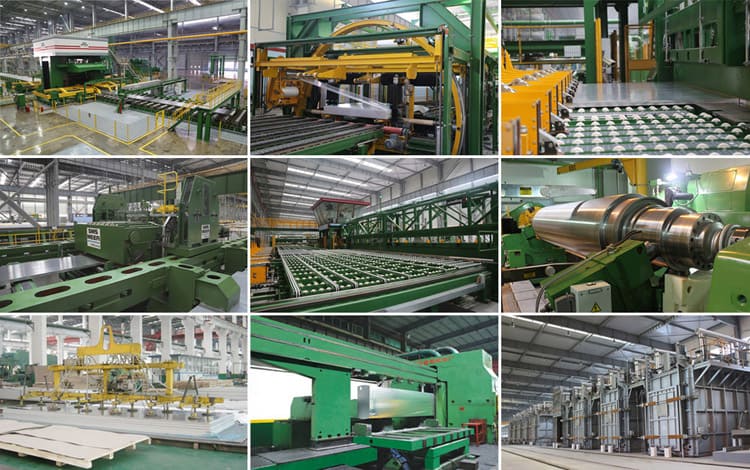
Processus de moulage et de laminage
Processus de moulage et de laminage: métal liquide, boîte avant (contrôle du niveau de liquide), machine de coulée et de laminage (Système de lubrification, eau de refroidissement), machine à cisailler, bobineuse.
Processus de production de laminage à froid
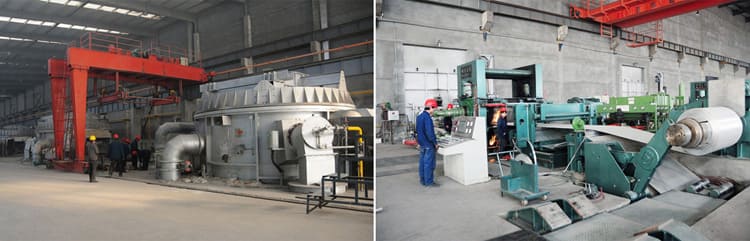
Introduction au processus de production de finition
L'alliage d'aluminium a les caractéristiques de faible densité, bonnes propriétés mécaniques, bonne performance de traitement, non toxique, facile à recycler, excellente conductivité électrique, transfert de chaleur et résistance à la corrosion, il a donc un large éventail d'applications.
Aérospatial: utilisé pour fabriquer des peaux d'avions, cadres de fuselage, poutres, rotors, hélices, réservoir d'essence, panneaux muraux et jambes de train d'atterrissage, ainsi que des anneaux de forgeage de fusée, panneaux muraux pour engins spatiaux, etc..
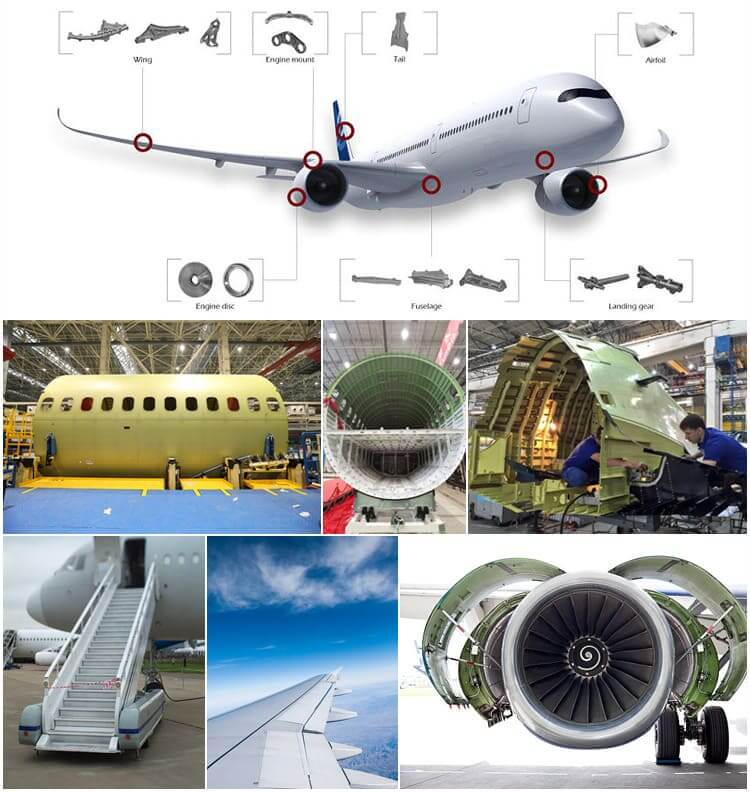
Alliage d'aluminium utilisé pour l'aérospatiale
Transport: utilisé pour les matériaux de structure de carrosserie d'automobiles, véhicules de métro, voitures de chemin de fer, voitures particulières à grande vitesse, Portes et fenêtres, étagères, pièces de moteur automobile, climatiseurs, radiateurs, panneaux de carrosserie, roues et matériaux de bateau.
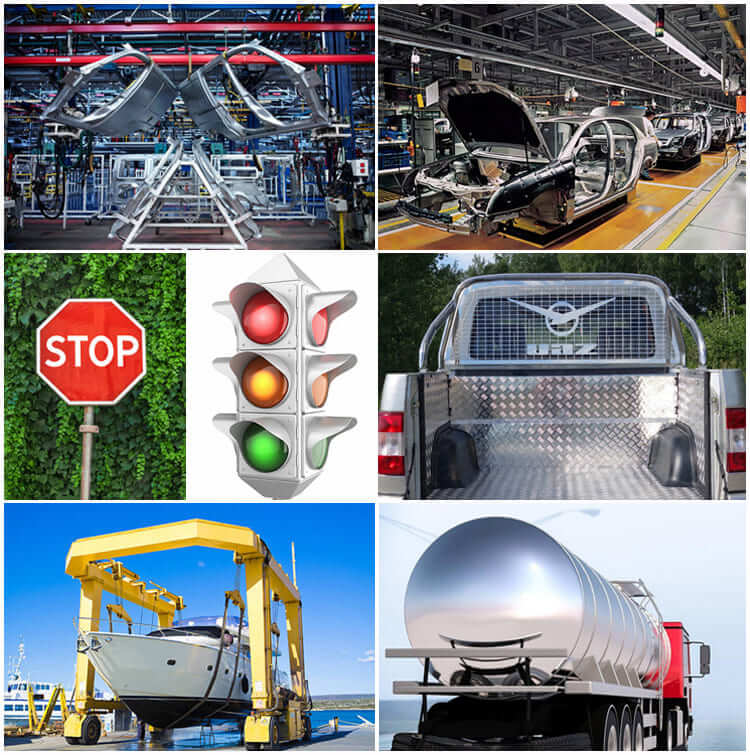
Demande de trafic
Emballage: Les canettes de boisson gazeuse entièrement en aluminium sont principalement utilisées comme matériaux d'emballage en métal sous la forme de plaques minces et de feuilles, et sont transformés en canettes, couvercles, bouteilles, barils, et feuilles d'emballage. Largement utilisé dans l'emballage des boissons, nourriture, produits de beauté, médicaments, cigarettes, produits industriels, médicaments, etc..
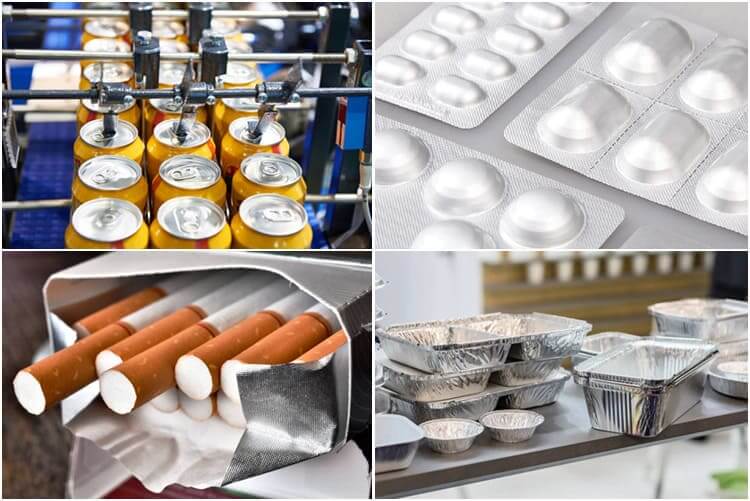
Demande d'emballage
Impression: Principalement utilisé pour fabriquer des plaques PS, Les plaques PS à base d'aluminium sont un nouveau type de matériau dans l'industrie de l'impression, utilisé pour la fabrication et l'impression automatiques de plaques.
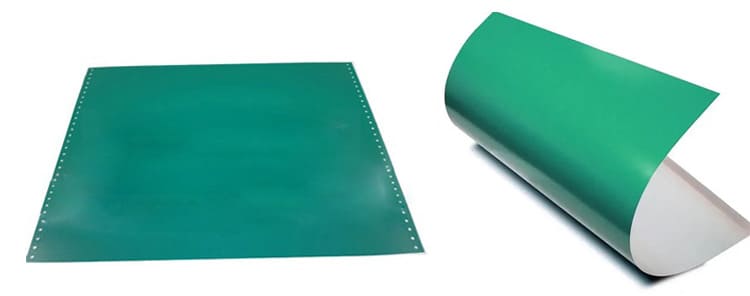
Impression PS
Décoration architecturale: l'alliage d'aluminium est largement utilisé dans les structures de construction, Portes et fenêtres, plafonds suspendus, surfaces décoratives, etc.. en raison de sa bonne résistance à la corrosion, force suffisante, excellentes performances de processus et performances de soudage.

Application de construction en alliage d'aluminium
Produits électroniques: des ordinateurs, téléphones portables, coquilles de réfrigérateur, radiateurs, etc..
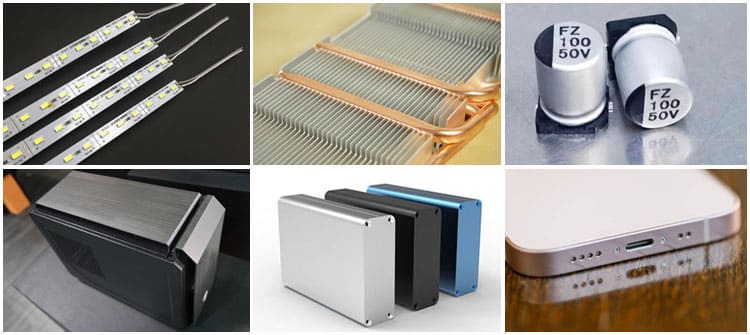
Demande de produit électronique
Fournitures de cuisine: marmites en aluminium, vasques en aluminium, doublures de cuiseur à riz, papier d'aluminium ménager, etc..
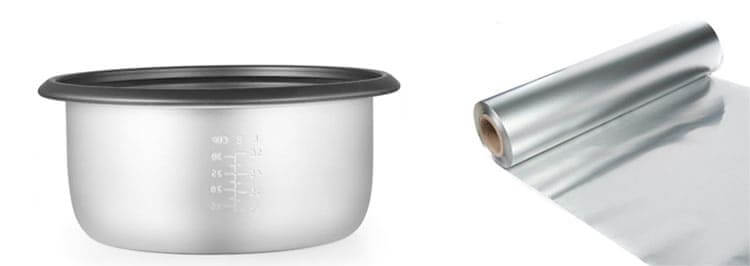
Application cuisine
Emballage de feuille/bobine d'aluminium
Chaque détail de l'emballage est l'endroit où nous recherchons un service parfait. Notre processus d'emballage dans son ensemble est le suivant:
Laminage: film clair, film bleu, micro-muqueuse, haute-muqueuse, film de découpe laser (2 marques, Novacell et Polyphem);
protection: protège-coins en papier, coussinets anti-pression;
séchage: déshydratant;
Plateau: plateau en bois inoffensif fumigé, plateau en fer réutilisable;
Emballage: Ceinture en acier tic-tac-toe, ou ceinture d'emballage en PVC;
Qualité des matériaux: Complètement exempt de défauts tels que la rouille blanche, taches d'huile, marques de roulement, dommages aux bords, se plie, bosses, des trous, lignes de rupture, rayures, etc., pas de jeu de bobines.
Port: Qingdao ou autres ports en Chine.
Délai de mise en œuvre: 15-45 jours.
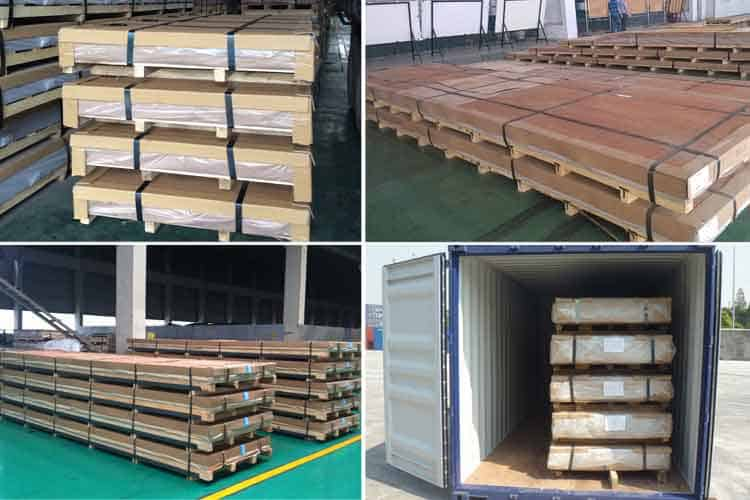
Processus d'emballage de feuilles/plaques d'aluminium
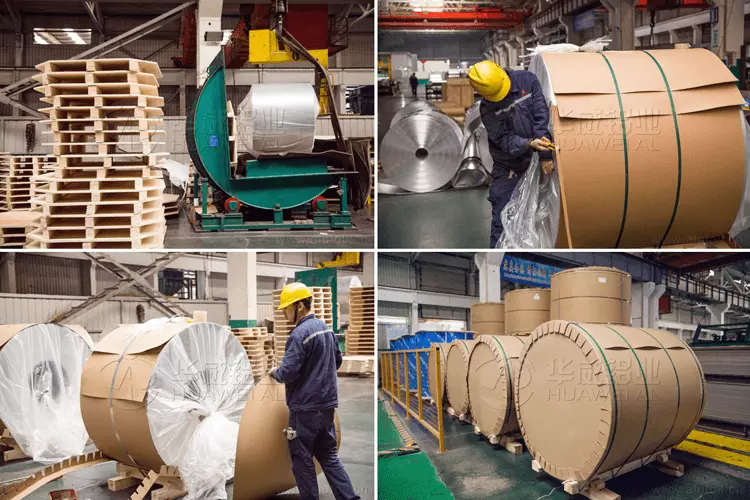
Processus d'emballage de bobines d'aluminium
F: Êtes-vous un fabricant ou un commerçant?
Q: Nous sommes un fabricant, notre usine est au No.3 Weier Road, Zone industrielle, Gongyi, Hénan, Chine.
F: Quel est le MOQ pour commander le produit?
Q: Notre MOQ est 5 tonnes, et certains produits spéciaux auront une quantité minimum de commande de 1 ou 2 tonnes.
F: Combien de temps dure votre délai de livraison?
Q: Généralement, notre délai de livraison est d'environ 30 jours.
F: Vos produits ont-ils une assurance qualité?
Q: Oui, s'il y a un problème de qualité avec nos produits, nous indemniserons le client jusqu'à ce qu'il soit satisfait.
Produits connexes



Derniers blogs
Feuille d'aluminium enduite pour les applications d'emballage | Fort & Fiable
Feuille d'aluminium enduite de haute qualité pour les applications d'emballage, offrant une excellente barrière de protection, durabilité, et des performances cohérentes.

À quoi sert le papier d’aluminium enduit dans l’emballage et l’industrie
Découvrez à quoi sert le papier aluminium enduit, de l'emballage alimentaire et pharmaceutique à l'isolation et à l'impression, et découvrez les principaux avantages et fonctions.

Confiance 3003 Fournisseurs de tôles à carreaux en aluminium dans le monde entier
Trouver fiable 3003 Fournisseurs de tôles à carreaux en aluminium offrant une qualité certifiée, prix compétitif, tailles personnalisées, et une livraison mondiale rapide pour vos projets.

6061 T6 contre 7075 Aluminium: Force, Lester & Meilleures utilisations
Comparer 6061 T6 contre 7075 aluminium facilement. Découvrez les différences de force, poids, et applications pour choisir le meilleur pour vos projets.