3003 Aluminum Coil vs 3004 Aluminum Coil – Performance, Gastos & Formability
19,606 Mga Pananaw 2025-06-23 06:04:07
1. Panimula
The selection of the correct aluminum alloy is a critical decision in manufacturing and engineering, directly impacting product performance, tibay ng katawan, at pagiging epektibo sa gastos.
Within the versatile 3xxx series of aluminum alloys, 3003 aluminyo likawin mga bes 3004 aluminyo likawin are two prominent materials, each possessing distinct characteristics that make them suitable for a wide array of applications.
While they share a common lineage, subtle yet significant differences in their composition and properties dictate their optimal uses.
This article provides a comprehensive, in-depth comparison between 3003 aluminyo likawin mga bes 3004 aluminyo likawin.
We will meticulously analyze their chemical compositions, physical and mechanical properties, pagiging formable, paglaban sa kaagnasan, and key applications.
The goal is to equip engineers, Mga Taga-disenyo, and procurement professionals with the necessary knowledge to make informed decisions when choosing between these two capable alloys.

3003 Aluminum Coil vs 3004 aluminyo likawin
2. Alloy Designation and Background
Ang 3xxx serye ng aluminyo haluang metal are known for their moderate strength, napakahusay na formability, and good corrosion resistance, primarily due to manganese being their principal alloying element.
Brief History of the 3xxx-Series Aluminum Alloys
The 3xxx series alloys were developed to offer improved strength over the 1xxx (commercially pure) series while retaining much of their excellent formability and corrosion resistance.
haluang metal 3003, one of the earliest and most widely used in this series, established a benchmark for general-purpose applications.
Alloy Numbering System (Al-Mn-Mg Family)
According to the Aluminum Association (AA) designation system for wrought alloys:
- The first digit “3” identifies the alloy group, where manganese (Mn) is the major alloying element.
- The subsequent digits specify individual alloys within the series.
Habang 3003 is primarily an Al-Mn alloy, 3004 belongs to the Al-Mn-Mg subfamily, indicating the significant role of magnesium in its composition and properties.
Evolution from 3003 sa 3004
haluang metal 3004 was developed as an evolution of 3003, specifically to achieve higher strength while maintaining good formability and corrosion resistance.
The strategic addition of magnesium to the Al-Mn base of 3003 resulted in 3004, an alloy particularly well-suited for applications demanding greater structural integrity, such as beverage can bodies.
3. Komposisyon ng Kemikal: 3003 Aluminum Coil vs 3004 aluminyo likawin
| Elemento | AA 3003 Nominal Range (%) | AA 3004 Nominal Range (%) | Key Influence |
| Silicon (Si Si) | 0.6 .max | 0.30 .max | Minor additions can affect castability and fluidity. |
| bakal na bakal (Fe) | 0.7 .max | 0.7 .max | Common impurity; controlled to optimize properties. |
| Tanso (Cu) | 0.05 – 0.20 | 0.25 .max | Small amounts can increase strength but may slightly reduce corrosion resistance. |
| Mga mangganeso (Mn) | 1.0 – 1.5 | 1.0 – 1.5 | Primary strengthener in 3xxx series; improves strain hardening. |
| Magnesium (Mg) | – | 0.8 – 1.3 | Key differentiator; significantly increases strength in 3004. |
| Sink (Zn) | 0.10 .max | 0.25 .max | Generally an impurity at these levels. |
| Ang iba naman, bawat isa ay | 0.05 .max | 0.05 .max | |
| Ang iba naman, kabuuan | 0.15 .max | 0.15 .max | |
| Aluminyo (Al) | Balanse | Balanse | Base metal. |
The critical distinction is the intentional addition of 0.8-1.3% magnesium in 3004 aluminyo, which is absent or present only as an impurity in 3003.
This magnesium addition is the primary reason for 3004’s enhanced mechanical properties.
4. Mga Katangian ng Pisikal: 3003 Aluminum Coil vs 3004 aluminyo likawin
The physical properties of aluminum alloys are fundamental to their behavior in various applications, influencing everything from weight to thermal management.
Habang 3003 aluminum coil vs 3004 aluminum coil share many similarities due to their high aluminum content, subtle differences exist.
Below is a comparative table of key physical properties for 3003 aluminum coil vs 3004 aluminyo likawin.
Note that these are typical values and can vary slightly depending on the exact composition within the allowed ranges and the specific temper of the material.
Values are generally for room temperature unless otherwise specified.
| Pisikal na Ari arian | AA 3003 Aluminyo (Typical, O Temper) | AA 3004 Aluminyo (Typical, O Temper) | Unit | Significance for Coil Applications |
| Densidad ng katawan | ~2.73 | ~2.72 | g/cm³ (lb/in³) | Determines weight for a given volume; both are lightweight. Slight difference due to Mg in 3004 being lighter than Al. |
| (~0.0986) | (~0.0983) | |||
| Melting Range (Solidus-Liquidus) | ~643 – 654 | ~629 – 654 | °C (°F) | Important for casting (less so for wrought coils), hinang, and high-temperature applications. 3004 has a slightly lower solidus. |
| (~1190 – 1210) | (~1165 – 1210) | |||
| Thermal kondaktibiti (sa 25°C) | ~193 | ~180 | W/m·K | Ability to conduct heat; crucial for cookware, mga heat exchanger. 3003 is slightly better. |
| Electrical kondaktibiti (at 20°C) | ~49-50% IACS | ~46-48% IACS | % IACS | Kakayahang magsagawa ng kuryente. Both are good conductors. |
| Electrical Resistivity (at 20°C) | ~34.5 – 35.2 | ~35.9 – 37.4 | nΩ·m | Inverse of conductivity. |
| Tiyak na Kapasidad ng Init (at 20°C) | ~900 | ~900 | J/kg·K | Amount of heat required to raise the temperature of a unit mass by one degree. Very similar for both. |
| Koepisyent ng Thermal Expansion (20-100°C) | ~23.2 | ~23.4 | µm/m·K (10⁻⁶/°C) | How much the material expands or contracts with temperature changes. Important for designs with dissimilar materials or large temperature variations. |
| Modulus ng Pagkalastiko (Ang Modulus ni Young) | ~68.9 | ~70.3 | GPa (Msi) | Stiffness of the material; resistance to elastic deformation. 3004 is slightly stiffer. |
| (~10.0) | (~10.2) | |||
| Modulus of Rigidity (Gupitin ang Modulus) | ~25 | ~26 | GPa (Msi) | Resistance to shear deformation. |
| (~3.6) | (~3.8) | |||
| Ang Ratio ni Poisson | ~0.33 | ~0.33 | Dimensionless | Ratio of transverse strain to axial strain. Similar for both. |
| Pagninilay (Visible Light) | Mataas na (~80-90% for polished) | Mataas na (~80-90% for polished) | % | Relevant for lighting fixtures or heat reflection applications. |
| Emissivity (Thermal) | Mababa ang (~0.04-0.07 for polished) | Mababa ang (~0.04-0.07 for polished) | Dimensionless | Ability to radiate thermal energy. Low emissivity means they are poor radiators of heat. |
Key Observations from the Physical Properties Table:
- Densidad ng katawan: Both alloys are very similar in density, making them excellent choices for lightweight applications.
The slightly lower density of 3004 is due to magnesium being lighter than aluminum. - Thermal and Electrical Properties: 3003 generally exhibits slightly higher thermal and electrical conductivity compared to 3004.
This difference, while small, might be a consideration in applications where these properties are critical (hal., very efficient heat exchangers or electrical components). - Melting Range: 3004 has a slightly lower solidus temperature (the temperature at which melting begins), which could be relevant in some high-temperature scenarios or during welding.
- Stiffness: 3004 is marginally stiffer (higher Modulus of Elasticity) kaysa sa 3003.
- Other Properties: Many other physical properties like specific heat capacity, coefficient of thermal expansion (very similar), Ang ratio ni Poisson, Reflectivity, and emissivity are largely comparable between the two alloys, reflecting their shared aluminum base.
While the mechanical properties (lakas ng loob, tigas na tigas, ductility) show more pronounced differences due to the magnesium in 3004, their fundamental physical characteristics remain broadly similar, underscoring their shared lineage in the 3xxx series.
The choice based on physical properties often comes down to very specific requirements where even slight variations in conductivity or melting behavior might be critical.
5. Mga Katangian ng Mekanikal
| Pag-aari | 3003-H14 | 3004-H14 | Relative Difference |
|---|---|---|---|
| Lakas ng Paghatak | 145 – 155 MPa | 195 – 205 MPa | +30–35 % (higher in 3004) |
| Yield Lakas | 65 – 75 MPa | 110 – 120 MPa | +65 – 80 % |
| Pagpapahaba sa Break | 12 – 18 % | 8 – 12 % | –25 – 35 % (lower in 3004) |
| Ang katigasan ng ulo (Brinell) | 40 – 45 HB | 55 – 60 HB | +35 – 40 % |
| Lakas ng Pagkapagod | ~55 MPa | ~85 MPa | +50 % |
| Lakas ng Paggupit | ~100 MPa | ~140 MPa | +40 % |
Transitional Note: While AA 3004 clearly outperforms AA 3003 in strength, formers must accommodate its reduced ductility when specifying minimum bend radii or draw ratios.
6. Formability and Workability: 3003 Aluminum Coil vs. 3004 aluminyo likawin
Kakayahang umangkop
- 3003: Exhibits excellent bendability, capable of tight bend radii, lalo na sa mas malambot na tempers (hal., 0T to 1T for O temper).
- 3004: Also has good bendability, but due to its higher strength, it may require slightly larger bend radii for a given thickness and temper compared to 3003 (hal., 1T to 2T for O temper).

Bending Test of 3003 Aluminyo
Deep Drawing Characteristics
- 3003: Renowned for its excellent deep drawing capabilities, making it ideal for cookware, mga lalagyan, and complex shapes. It has a good Limiting Draw Ratio (LDR).
- 3004: Possesses very good deep drawing properties, sufficient for demanding applications like beverage can bodies. Its magnesium content helps control “earing” (the formation of wavy edges during deep drawing) more effectively than in 3003 for certain applications.
Strain Hardening Behavior
Both alloys strain harden significantly during cold working.
Gayunpaman, 3004 typically exhibits a higher strain hardening rate (higher strain hardening exponent ‘n’) dahil sa pagkakaroon ng magnesium.
This means it strengthens more rapidly with deformation, contributing to its higher final strength in tempered conditions.
Weldability
3003 aluminum coil vs 3004 aluminum coil are readily weldable using common fusion welding techniques like TIG (Gas Tungsten Arc Welding) and MIG (Gas Metal Arc Welding).
- Recommended filler alloy for 3003: AA4043 or AA1100.
- Recommended filler alloy for 3004: AA4043 for general purposes, or AA5356 if higher weld strength is desired (though care must be taken with 5356 on 3xxx series due to potential magnesium segregation if not properly controlled).
The heat-affected zone (HAZ) will experience some softening (annealing) in both alloys.
Machinability
- 3003 & 3004: Both have fair machinability for aluminum alloys, especially in harder tempers. They can be somewhat “gummy” in the O-temper (annealed na nga ba) kalagayan, leading to chip buildup. Using sharp tools, appropriate cutting fluids, and higher speeds can improve machining.
7. Paglaban sa Kaagnasan: Durability in Various Environments
General Corrosion Resistance
Parehong 3003 at 3004 exhibit excellent resistance to atmospheric corrosion and attack by a wide variety of foods, mga inumin, and many industrial chemicals.
This is due to the formation of a stable, Tagasunod, and self-healing aluminum oxide (Al O) passive film on their surfaces.
Pitting Corrosion
They offer good resistance to pitting corrosion in neutral or mildly acidic/alkaline environments.
Gayunpaman, exposure to aggressive chloride-containing solutions (like seawater or de-icing salts) can induce pitting, though 3xxx series alloys are generally more resistant than some other aluminum alloy families like 2xxx or 7xxx.
Stress Corrosion Cracking (SCC)
In typical service conditions and tempers, neither 3003 nor 3004 is generally considered susceptible to stress corrosion cracking.
Influence of Alloying Elements on Corrosion
- Mga mangganeso (Mn): Has little detrimental effect on corrosion resistance and can even slightly improve it in some cases.
- Magnesium (Mg) sa 3004: Generally maintains the good corrosion resistance typical of Al-Mn alloys. While very high magnesium Al-Mg alloys (like some 5xxx series) can sometimes be susceptible to SCC or intergranular corrosion if improperly processed or sensitized, this is not a typical concern for the magnesium levels in 3004.
- Tanso (Cu): Small amounts of copper, as present in both alloys, can slightly reduce general corrosion resistance if not uniformly distributed in the matrix, but the levels are generally low enough not to cause significant issues for most applications.
Performance in Specific Environments
- Marine: While not primary marine alloys, they offer fair resistance to marine atmospheres, but direct saltwater immersion would favor 5xxx series alloys.
- Pang industriya: Good resistance to many industrial fumes and chemicals.
- Food Contact: Both are widely used and considered safe for food contact applications when properly cleaned and in appropriate tempers.
8. Mga Pangunahing Aplikasyon: 3003 Aluminum Coil vs 3004 aluminyo likawin
When selecting an aluminum alloy for industrial or commercial use, application-specific performance must be prioritized.
Habang 3003 aluminum coil vs 3004 aluminum coil share a similar metallurgical base, their differing strength and formability profiles lead them to serve both overlapping and distinct roles across various sectors. Below is an authoritative breakdown of where and why each alloy excels.

3003 Aluminum Coil for Corrugated Panels
AA 3003 Aluminum Coil Applications
3003 aluminyo likawin is prized for its exceptional workability, paglaban sa kaagnasan, at pagiging epektibo sa gastos.
Its moderate strength makes it ideal for applications that require extensive forming, pagbaluktot, or deep drawing without cracking.
Key Sectors and Products:
- Architectural Cladding and Roofing:
3003 is extensively used in corrugated panels, fascia, Mga Kanal, and roofing systems due to its ability to withstand atmospheric exposure without corroding. - Cookware and Kitchen Equipment:
It is widely used in pressure cookers, mga kawali, and baking trays because of its thermal conductivity and easy formability. - HVAC and Heat Exchangers:
Used in evaporator fins and ducting systems, 3003 offers a good combination of thermal conductivity and flexibility. - Storage Tanks and Fuel Containers (Non-pressurized):
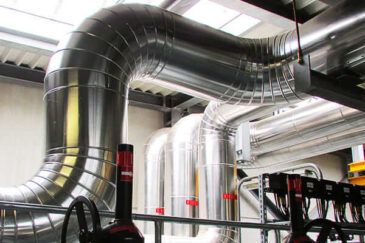
3003’s ease of welding and high corrosion resistance make it a smart choice for containers exposed to chemicals or moisture. - Insulation Jacketing and Cladding:
For pipe wrap and equipment insulation, 3003 offers durability with ease of fabrication.

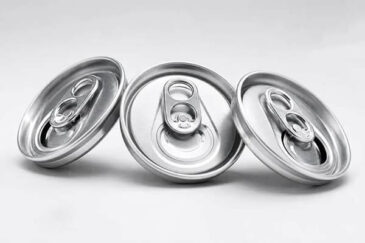
3004 Aluminum Coil for Beverage Can Bodies
AA 3004 Aluminum Coil Applications
3004 builds upon 3003 by enhancing strength through the addition of magnesium, allowing for thinner gauges and higher load-bearing applications.
It performs well in semi-structural roles without sacrificing too much workability.
Key Sectors and Products:
- Beverage and Food Cans:
Perhaps its most well-known application, 3004 is the industry standard for drawn-and-ironed (D&I) aluminum beverage can bodies. - Automotive Body Panels and Trim:
In some non-structural or lightly stressed areas of the vehicle, such as wheel covers or decorative moldings, 3004 is selected for its strength-to-weight efficiency. - Trailer and Truck Panels:
For transport applications, 3004 strikes a balance between formability and strength, especially where structural lightness is paramount. - Building Facades and Curtain Walls:
Due to its improved mechanical strength and durability, 3004 is suitable for large-area panels that must resist wind and structural loads. - Appliance Housings:
It is also used in washing machine drums, microwave linings, and other components that require formability with better wear and stress resistance than 3003 can offer.
Overlapping Applications and Deciding Factors
Sa ilang mga kaso, either alloy may be used, depending on design requirements, cost sensitivity, and form constraints.
| Application Area | Preferred Alloy | Bakit nga ba |
|---|---|---|
| Mga kagamitan sa pagluluto (deep-drawn) | 3003 | Better ductility for deep drawing |
| Roofing Panels | 3003 o 3004 | Choose 3003 for simple bends, 3004 for strength |
| Beverage Cans (body stock) | 3004 | Thinner wall possible due to higher strength |
| HVAC Fins | 3003 o 3004 | Thermal properties comparable |
| Mga Pandekorasyon na Panel | 3003 | Anodizes more evenly |
| Automotive Trim | 3004 | Increased mechanical load resistance |
9. Pangwakas na Salita
3003 aluminyo likawin VS 3004 aluminyo likawin are highly valuable and versatile materials within the 3xxx aluminum alloy series.
They share common strengths in excellent formability and robust corrosion resistance.
Gayunpaman, the key differentiator lies in the intentional addition of magnesium to 3004, which imparts significantly higher tensile and yield strength compared to the primarily Al-Mn composition of 3003.
Ultimately, the choice between 3003 at 3004 aluminyo likawin hinges on the specific demands of the application.
For general-purpose forming where moderate strength suffices, 3003 offers an excellent and economical solution.
Sa kabilang banda, for applications requiring greater structural integrity, higher strength-to-weight ratios (such as in beverage cans allowing for thinner walls), or better performance at moderately elevated temperatures, 3004 emerges as the superior and often necessary choice.
A thorough evaluation of mechanical property needs, forming requirements, and cost considerations will guide the optimal selection, ensuring product success and manufacturing efficiency.
10. Mga Madalas Itanong (FAQ)
Q1: What is the main chemical difference between 3003 at 3004 aluminyo?
A: The main chemical difference is that 3004 aluminum contains approximately 0.8-1.3% magnesiyo (Mg) as a significant alloying element, in addition to manganese (Mn), habang ang 3003 is primarily an aluminum-manganese alloy with only trace amounts of magnesium, kung mayroon man.
Q2: Is 3004 aluminum significantly stronger than 3003 aluminyo?
A: Oo nga, 3004 aluminum is significantly stronger than 3003 aluminyo in comparable tempers. Halimbawa na lang, the tensile strength of 3004-H34 can be around 285 MPa, whereas 3003-H14 is typically in the 140-180 MPa range. This is primarily due to the magnesium addition in 3004.
Q3: Bakit nga ba 3004 aluminum used for beverage cans instead of 3003?
A: 3004 aluminum is preferred for beverage can bodies due to its higher strength, which allows for thinner can walls (downgauging), saving material and weight. It also has excellent deep drawing characteristics suitable for can manufacturing and can withstand the internal pressure of carbonated beverages.
Q4: Which alloy has better formability, 3003 o 3004?
A: Both have good to excellent formability. Gayunpaman, 3003 generally exhibits slightly better ductility and can handle more severe forming operations or tighter bend radii, lalo na sa mas malambot na tempers, due to its lower strength. 3004 still offers very good formability for demanding tasks like can making.
Q5: Are both 3003 at 3004 aluminum considered food-grade?
A: Oo nga, pareho po 3003 at 3004 aluminum are widely used in food contact applications (hal., Mga kagamitan sa pagluluto, mga lata ng inumin) and are generally considered safe when properly processed and cleaned. They meet FDA and other regulatory requirements for food-grade materials.