Premium Thermal Insulation Aluminum Foil – Save Energy, Stay Comfortable
18,551 Mga Pananaw 2025-08-08 07:02:54
Unleashing Efficiency: The Power of Thermal Insulation Aluminum Foil for Ultimate Energy Savings
Thermal Insulation Aluminum Foil delivers a powerful combination of lightweight design, mataas na reflectivity, and practical installation.
It reduces heat transfer, protects building envelopes, and slashes energy bills when you apply it correctly.
This post dives deep into how aluminum foil insulation works, where it excels, and how to get the best energy savings in real projects.
You will find clear, practical guidance, technical insight, and step-by-step installation advice.
Expect checklists, comparison tables, examples, and a realistic energy-savings calculator.
I structured the content to help professionals, DIYers, builders, and energy managers make smart choices quickly.

Thermal insulation aluminum foil
What Is Thermal Insulation Aluminum Foil?
Thermal Insulation Aluminum Foil refers to aluminum-based materials designed to reduce heat transfer by reflecting radiant energy and acting as vapor and moisture barriers.
Manufacturers produce them in many forms: pure foil layers, laminated sheets, foil-faced foam, and bubble-foil composites.
You will find them under many names: radiant barriers, foil-faced insulation, foil bubble wrap, and foil-backed foam boards. Each type matches specific applications.
How It Works: Radiation, Conduction, and Convection
Heat moves in three ways: radiation, pag-uugali, and convection. Aluminum foil insulation targets radiation most effectively.
- Radiation: Aluminum reflects a large portion of infrared radiation. Shiny foil often has reflectivity above 90%. That means it sends heat back toward the source rather than allowing it to pass through.
- Conduction: Aluminum itself conducts heat well. But foil insulation uses thin metallic surfaces adjacent to air gaps or insulating cores to reduce conductive transfer across building assemblies.
- Convection: When you install foil with an air gap, the gap restricts air movement and reduces convective heat transfer.
Combine reflective foil with an air gap and/or foam core, and you gain strong resistance to radiant heat while preventing moisture and acting as a vapor barrier.
Typical Compositions and Construction
Manufacturers combine aluminum with various substrates:
- Single-layer aluminum foil on a kraft paper backing
- Aluminum laminated to polyethylene film (foil film)
- Aluminum foil laminated to fiberglass, foam board, or mineral wool
- Bubble wrap sandwiched between aluminum layers (bubble-foil)
- Multi-layer laminates including scrim, adhesives, and reflective coats
Each construction balances thermal performance, mechanical strength, moisture control, at gastos.
Key Material Properties
Here are essential physical properties you should watch when choosing insulation foil:
- Pagninilay: Percentage of radiant energy reflected. Mataas na reflectivity (≥90%) improves radiant barrier performance.
- Emissivity: A material’s tendency to emit thermal radiation. Lower emissivity means better reflection. Clean aluminum can have emissivity as low as 0.03–0.05.
- Thermal kondaktibiti: Aluminum itself has high conductivity (~205 W/m·K), so foil alone does little to stop conductive heat. The trick lies in combining foil with air gaps or foam cores.
- Permeance/Vapor Barrier: Foil layers often act as vapor barriers (low water vapor permeance), which helps prevent condensation in assemblies.
- Fire Performance: Look for ratings like flame spread and smoke developed; some foil laminates meet specific fire class requirements.

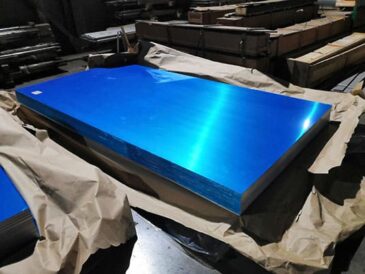
Huawei 1050 aluminum foil jumbo roll packaged
Common specifications of thermal insulation aluminum foil
| Parameter | Karaniwang Saklaw / Halaga |
|---|---|
| Aluminum Foil Thickness | 7–20 μm (high-performance types up to 40 M) |
| Composite Thickness | 2–20 mm (papel de liha + foam/kraft/fiberglass) |
| Lapad ng katawan | 1.0–1.25 m (custom widths available) |
| Haba ng Roll | 20–60 m (industrial rolls up to 100 m) |
| Structure | Single-sided / Double-sided / Multi-layer |
| Pagninilay | ≥ 95–97% |
| Emissivity | ≤ 0.03 |
| Thermal Resistance (R-value) | 1.0–3.5 m²·K/W |
| Moisture Permeability | < 0.1 g/m²·24h |
| Lakas ng Paghatak | 60–90 N/25 mm |
Types of Aluminum Foil Insulation and How to Choose
Not every foil product suits every job. Selecting the right type depends on climate, Paglalapat, installation method, at badyet.
Common Types and Their Strengths
Here’s a practical breakdown:
- Radiant Barrier (single or double-sided foil)
- Strengths: Excellent at reflecting solar heat in hot climates; magaan ang timbang; easy to apply in attics.
- Weaknesses: Effectiveness depends on facing an air gap; not a high R-value by itself.
- Foil-Faced Rigid Foam Boards
- Strengths: Combines reflective and conductive resistance; great for walls, mga bubong, and insulated sheathing.
- Weaknesses: Higher material cost; needs careful sealing.
- Foil-Faced Insulation Rolls (foil-kraft insulation)
- Strengths: Provides vapor barrier and modest thermal resistance; fits between studs and rafters.
- Weaknesses: Lower R-value than thicker insulations.
- Bubble-Foil (foil-bubble-foil)
- Strengths: Magaan ang timbang, good for underfloor, crawl spaces, and wrapping ducts; handles mechanical shock.
- Weaknesses: Lower continuous R-value; compressible.
- Foil Laminated to Fiberglass or Mineral Wool
- Strengths: Combines thermal mass and radiant reflection; good acoustic properties.
- Weaknesses: Mas mabigat, more expensive.
Common Grades for Thermal Insulation Aluminum Foil
| Serye | Grade | Aluminum Content (%) | Main Features | Mga Karaniwang Aplikasyon |
|---|---|---|---|---|
| 1XXX | 1050 | ≥ 99.5 | Mataas na reflectivity, strong thermal conductivity | Roofing reflective film, indoor insulation decorative foil |
| 1XXX | 1060 | ≥ 99.6 | Napakahusay na ductility, malakas na paglaban sa kaagnasan | Building insulation foil, composite aluminum foil |
| 1XXX | 1100 | ≥ 99.0 | Magandang paglaban sa kaagnasan, excellent workability | Exterior wall insulation layers, insulation panel surfaces |
| 3XXX | 3003 | ≥ 98.6 | Mas mataas na lakas, magandang paglaban sa panahon | HVAC ducts, industrial insulation, roofing reflective foil |
| 3XXX | 3105 | ≥ 98.0 | Mataas na lakas, paglaban sa kaagnasan, good coating adhesion | Color-coated insulation foil, exterior wall decorative foil |
| 8XXX | 8011 | ≥ 97.0 | Balanced strength & ductility, good barrier | Building insulation composite foil, food/pharma thermal packaging |
| 8XXX | 8021 | ≥ 97.0 | High barrier, paglaban sa kaagnasan | Cold storage insulation, industrial equipment insulation, moisture barrier |
Quick Comparison Table
| Product Type | Best Use | Pagninilay | Vapor Barrier | R-Value Contribution* |
|---|---|---|---|---|
| Radiant Barrier Foil | Attics in hot climates | Very high (≥90%) | Oo nga | Low alone; high when combined with air gap |
| Foil-Faced Foam Board | Roofs, mga pader, sheathing | Mataas na | Oo nga | Katamtaman hanggang mataas (depends on foam thickness) |
| Foil-Kraft Roll | Stud bays, rafters | Katamtaman | Oo nga | Mababa hanggang katamtaman |
| Bubble-Foil | Ducts, mga tubo, underfloor | Mataas na | Oo nga | Mababa ang |
| Foil + Fiberglass | Walls, mga kisame | Mataas na | Oo nga | Moderate-to-high (with fiberglass) |
*R-values vary with installation details and materials. Foil primarily reduces radiant heat; insulating core determines conductive R-value.
Why Choose Thermal Insulation Aluminum Foil?
Choosing thermal insulation aluminum foil offers distinct benefits. Recognize where foil outperforms conventional insulation and where it complements other systems.
Mga Pangunahing Benepisyo
- Low weight and flexible handling make installation faster and less labor-intensive.
- High reflectivity cuts radiant heat gain in hot climates, lowering cooling loads.
- Acts as an effective vapor and moisture barrier when sealed properly.
- Provides fire-resistant facing options and can improve fire performance of assemblies.
- Fits tight spaces and wraps irregular shapes, ducts, at mga tubo.
- Long service life when installed correctly; aluminum resists corrosion and degradation.

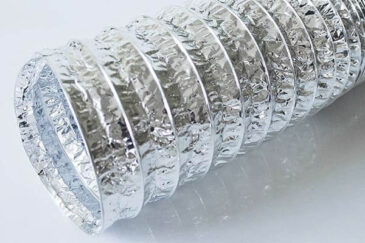
HVAC used thermal insulation aluminum foil
Where Foil Adds the Most Value
- Attics and roofs in hot, sunny climates where radiant heat drives cooling demand.
- Metal buildings and warehouses with high solar gain.
- HVAC ductwork and furnace flues where reflective layers reduce heat loss/gain.
- Refrigerated trucks, coolers, and cold-storage facilities.
- Retrofit projects seeking quick energy upgrades without major construction.
Considerations and Limitations
- Foil alone provides minimal conductive insulation. Pair it with foam or fibrous insulation for cold climates.
- Installation mistakes (contact with insulation on both sides, no air gap) reduce performance.
- Dirty or oxidized surfaces lose reflective capability over time. Keep foil clean and protected.
- Building codes sometimes restrict foil placement in certain assemblies; confirm local rules.
Performance Metrics: How Thermal Insulation Aluminum Foil Delivers Savings
To measure value, you must understand emissivity, Reflectivity, R-value, and their practical implications in assemblies.
Emissivity and Reflectivity: The Radiant Barrier Story
Emissivity measures how much thermal radiation a surface emits. Lower emissivity means the surface emits less heat; hence it reflects more.
- Clean shiny aluminum: Emissivity ~0.03–0.05 → Reflectivity ≈ 95–97%
- Oxidized aluminum: Emissivity rises; reflectivity decreases.
A radiant barrier with low emissivity reduces the radiant heat transfer across an attic air space, which can reduce cooling loads significantly in hot climates.
R-Value and Foil
R-value quantifies resistance to conductive heat flow. Aluminum foil itself has a negligible R-value but boosts effective R-value when placed adjacent to an air space.
- A foil facing next to an air gap can add the equivalent of several R-units for that assembly—this depends on gap orientation and climate.
- For cold climates, combine foil with foam or fibrous insulation to get meaningful R-values.
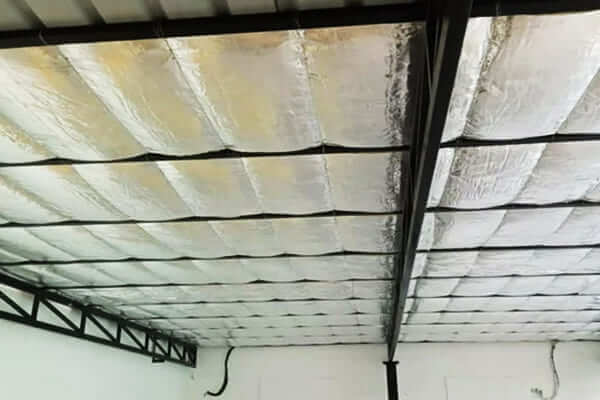
Thermal insulation aluminum foil for constryction
Halimbawa: Effect of an Air Gap
A foil surface with a 1-inch air gap can add approximately R-2 to R-3 effective resistance for that side of the assembly by reducing surface emissivity.
This is situational. The overall improvement depends on the entire envelope.
Thermal Performance Table (Indicative)
| Assembly | Typical Conditions | Effective Improvement |
|---|---|---|
| Attic rafters with foil-facing, 1″ air gap | Hot sunny climate | Cooling energy savings 5–15% |
| Foil-faced 2″ foam board | Exterior wall sheathing | Adds R-6 to R-8 (depending on foam) |
| Duct wrapped in bubble foil | Conditioned space | Reduces duct losses by 10–30% |
| Radiant barrier in cold climate | Winter heating dominant | Little effect; must be paired with bulk insulation |
Tala: Numbers vary with building specifics. Use energy modeling for precise estimates.
Applications and Use Cases
Aluminum foil insulation shines in diverse applications. Below I outline practical uses, performance expectations, and real-life guidance.
Attics and Roofs
Install radiant barrier foil across attic rafters or drape it across the attic floor. In hot climates, this dramatically reduces heat transferred into living spaces via radiative transfer.
Tips:
– Face the shiny side towards the attic living space to reflect attic heat.
– Maintain an air gap on one side of the foil for best performance.
– Seal all seams and penetrations to ensure the vapor barrier functions.
Walls and Exterior Sheathing
Foil-faced foam boards serve as continuous insulation, improving wall thermal performance and reducing thermal bridging.
Tips:
– Install over studs as an exterior sheathing layer.
– Seal joints and penetrations with appropriate tape or sealant.
– Pair with proper WRB and cladding per code.
Ducts and HVAC Systems
Wrapping ducts with foil insulation minimizes energy losses during distribution. It helps maintain supply air temperature and reduces peak load on HVAC equipment.
Tips:
– Use foil-scrim-backed insulation or bubble-foil specifically designed for duct wrap.
– Seal seams with foil tape rated for HVAC use.
– Maintain clearance from energized components.
Pipes and Mechanical Insulation
Foil wraps resist condensation and protect pipes in cold spaces. They also reduce heat loss on hot water piping and improve system efficiency.
Tips:
– Avoid compressing insulating layers; keep thickness consistent.
– Use foil taped seams for vapor control.
– Protect foil from mechanical damage and foot traffic.
Cold Storage, Refrigeration, and Transport
Reflective foil reduces heat ingress in refrigerated trucks and refrigerated rooms, boosting temperature control and reducing compressor cycling.
Tips:
– Use multi-layer foil composites for mechanical protection.
– Seal edges and joints to minimize air infiltration.
– Combine with closed-cell insulation where moisture exposure is high.
Industrial and Specialty Uses
- High-temperature process insulation where reflective layers protect external surfaces.
- Fire-rated assemblies when foil facings meet fire-code specifications.
- Agricultural applications such as greenhouse insulation and animal housing.
Choosing the Right Product: Specifications and Selection Guide
Not all foil products are equal. Here’s how to compare and pick the right product for your project.
Critical Technical Specs to Review
- Reflectivity and emissivity ratings (look for low emissivity, <0.1)
- Thermal resistance of the insulating core (if present)
- Material thickness (measured in mils or microns) and scrim reinforcement
- Water vapor transmission rate (WVTR)
- Fire and smoke ratings (ASTM E84 / UL 723)
- Tensile strength and tear resistance
- Adhesives and tapes compatibility
Selection Checklist
- Match product to application (attic, duct, wall sheathing).
- Check code compliance and fire rating.
- Confirm the required air gap for radiant barriers.
- Choose tape and mastic rated for foil products.
- Prefer products with UV protection if exposed to sunlight.
- Verify manufacturer installation guidance and warranty.
Product Comparison Table (Indicative)
| Produkto | Ang kapal | Emissivity | Paglalapat | Fire Rating |
|---|---|---|---|---|
| Single-side radiant foil | 0.5–1 mil | 0.03–0.05 | Attic radiant barrier | Nag-iiba |
| Foil-faced foam board (1″) | 5–25 mm foam + papel de liha | Foam determines R-value | Sheathing, mga pader | Class A / B options |
| Foil-bubble-foil | 2–8 mm bubble + papel de liha | Mababa ang | Ducts, wraps | Usually Class B |
| Foil-kraft roll | 2–6 mil | Mababa ang | Stud bays, rafters | Nag-iiba |
Always verify current product data sheets.
Installation Costs and Labor Considerations
Budget realistically. Material cost is often only part of the investment.
Cost Drivers
- Product type and quality
- Project size and complexity
- Labor rates in your region
- Accessibility (attic vs roof vs industrial ductwork)
- Required auxiliary materials (tape, mga fastener, adhesives)
DIY vs Professional Installation
- Small projects (duct wrap, pipe wrap): DIY-friendly if you have basic tools.
- Attic radiant barrier: DIYable for confident homeowners; use caution with attic safety and wiring.
- Commercial or roof applications: Prefer professional installers with experience and equipment.
Example Labor Estimate (Indicative)
- Attic radiant barrier: 4–8 hours for a typical home (2 installers) → labor cost $200–$600 depending on rates.
- Duct wrap (small system): 2–6 hours → $150–$450.
- Exterior foam sheathing (professional): Significant labor; get contractor quotes.
Environmental Impact and Sustainability
Aluminum foil insulation provides environmental benefits and tradeoffs. Understanding life-cycle impact helps make responsible choices.
Benefits
- Significant operational energy savings, especially in cooling-dominated regions.
- Long service life reduces replacement frequency.
- Ang aluminyo ay mataas na recyclable; scrap foil has high recycling value.
- Reduces carbon emissions by lowering HVAC energy consumption.
Tradeoffs
- Production of aluminum requires considerable energy, so initial embodied energy is higher than some materials.
- Use recycled aluminum and responsibly sourced products to reduce embodied carbon.
- Balance embodied energy with long-term operational savings to evaluate net environmental impact.
Recycling and End-of-Life
- Collect clean foil and scrap separately; many recycling programs accept aluminum.
- Laminated composites with plastics may complicate recycling—seek manufacturer recycling guidance.
- Design for disassembly when possible to recover materials.
Mga Madalas Itanong (FAQ)
Below are answers to common questions homeowners and professionals ask.
Does thermal insulation aluminum foil work in cold climates?
It helps when paired with bulk insulation. Alone, foil provides little conductive R-value. Use foil-faced foam boards and ensure proper vapor control to avoid condensation issues in cold environments.
How much energy will I save?
Savings depend on climate, house characteristics, and current insulation. In hot climates, attic radiant barriers commonly yield 5–15% cooling savings. Use detailed modeling for precise estimates.
Can I install foil insulation myself?
Yes for many applications (ducts, mga tubo, attics). Ensure you follow safety guidelines, maintain air gaps, and do not cover ventilation. Hire professionals for roofs and complex assemblies.
Is foil insulation a vapor barrier?
Most aluminum foil layers act as vapor retarders due to their low permeance. Seal seams to maintain vapor barrier functionality.
Will foil corrode over time?
Aluminum resists general corrosion. Surface oxidation slightly raises emissivity but usually does not destroy reflective properties for decades. Protect against physical damage and harsh chemical exposure.
Can foil insulation cause moisture problems?
If misapplied, foil can trap moisture, especially in walls. Provide proper ventilation, manage vapor profiles, and follow building science best practices.
Pangwakas na Salita
Thermal insulation aluminum foil is not just another insulation product; it’s a high-performance, matibay na matibay, and sustainable solution for controlling heat transfer.
By reflecting radiant energy, resisting moisture, and providing long-lasting thermal protection, it meets the demands of modern construction, industry, and transportation.
When installed correctly, it delivers significant energy savings, improves comfort, and protects structures for decades—making it a smart choice for those who value performance and sustainability.