Unveiling 8079 Blister Aluminum Foil: The Ultimate Solution for Superior Packaging and Protection
130 Mga Pananaw 2026-03-14 05:32:33
Panimula
In the fast-evolving world of pharmaceutical packaging, the integrity of each blister pack hinges on the reliability of its materials. Among the most critical components is the blister aluminum foil, a material that provides the primary barrier against moisture, oxygen, and external contamination while offering the formability required to enclose delicate pharmaceutical products. Ang 8079 Blister Aluminum Foil is a widely used alloy in this domain, renowned for its combination of barrier performance, paglaban sa butas, and compatibility with common sealing layers.
This article dives deep into the characteristics, produksyon ng, pagganap, and practical guidelines for selecting and using 8079 blister aluminum foil. It also introduces Huawei Aluminum, a leading supplier in this space, and explains how their capabilities align with the needs of modern blister packaging.
8079 Blister Aluminum Foil is not just a material choice; it’s a strategic decision that can influence shelf life, product safety, waste reduction, and regulatory compliance.
Whether you’re a packaging engineer, a procurement manager, or a quality assurance professional, this guide will clarify why 8079 foil is favored for blister packaging, how it compares with alternative alloys, and what to ask suppliers to ensure you get consistent performance in the field.

8079 Blister Aluminum Foil
Pag-unawa 8079 Blister Aluminum Foil
What is the 8079 alloy and why is it used for blister foil?
8079 is an aluminum alloy designation commonly used in the pharmaceutical packaging sector for blister foil applications.
While the exact chemical composition can vary slightly depending on the manufacturer, 8079 aluminyo foil is known for:
- High formability and ductility at thin gauges, which makes it easier to stamp and form into blister cavities without tearing.
- Excellent barrier properties to moisture and gases when used in metallized or laminated structures, helping preserve drug potency and shelf life.
- Good compatibility with standard sealing layers (such as PVdC, PE-based sealants, and hot-seal coatings) that are applied in laminate structures to form hermetic seals with PET or other polymers.
In practice, 8079 blister aluminum foil is part of a multilayer laminate where the aluminum foil provides the primary metal barrier.
The foil is typically laminated to polymer layers (hal., polyester, polyamide, or polyethylene terephthalate) and then edge- or lacquer-coated on the printable side.
The combination yields a protective, printable, and sealable package suitable for a wide range of solid dose pharmaceuticals, mga tablet, and capsules.
Key attributes of 8079 for blister packaging include:
– Barrier performance to water vapor and gases: crucial for maintaining drug stability.
– Puncture and tear resistance: important during handling, dosing, and consumer use.
– Printability and surface finish: enables labeling, lot tracking, expiration information, and branding.
– Sealability: compatibility with common heat-seal layers used in pharmaceutical laminates.
– Recyclability and sustainability: aluminum’s inherent recyclability supports circular economy goals.

8079 Blister Aluminum Foil Production
How 8079 compares with other common blister alloys
Habang 8079 is widely used, designers often consider other 8000-series alloys (hal., 8011, 8021) for blister foil depending on product requirements.
The trade-offs typically involve barrier performance, pagiging formable, kakayahang i-print, at gastos. Here is a concise, qualitative comparison to help frame decisions:
- Barrier performance: All three offer excellent barrier properties in foil form, but associated laminate structures determine overall MVTR (moisture vapor transmission rate) and OTR (oxygen transmission rate). Aluminum itself is an excellent barrier; the polymer laminate must be optimized to maintain this barrier. 8011 at 8021 may be chosen when slightly different formability or draw characteristics are needed.
- Formability and drawability: 8079 often provides a favorable balance of formability and strength at thin gauges, which can support deeper cavities and more intricate shapes without creasing. 8011 generally offers good formability as well but can be chosen when seal performance with specific laminates is critical.
- Printability and surface finish: Parehong 8079 at 8011 can be coated for high-quality printing. The exact surface finish (hal., bright or matte) and coating compatibility will influence print fidelity and adhesion.
- Sealing compatibility: Most pharmaceutical laminates pair well with standard heat-seal coatings on the foil side; gayunpaman, the interaction with specific adhesives and polyolefin sealants can differ slightly among alloys, making compatibility testing essential.
- Cost and availability: Alloy choice can impact raw material cost and lead times. 8011 is often slightly more common and can be cost-effective depending on supplier capacity, habang ang 8079 may offer advantages in formability and barrier in certain structures.
Buod: 8079 is a strong general-purpose choice for blister foil when you need robust barrier performance, good formability at thin gauges, and broad compatibility with common laminate structures.
Gayunpaman, the optimal choice depends on the exact laminate architecture, sealing layer, and product-specific requirements. A supplier with tested data for your laminate structure is always recommended.
Typical structures and applications where 8079 blister foil shines
8079 blister foil is most commonly employed in:
– Solid oral dosage blister packs (tablets and capsules)
– Pediatric and veterinary dosage forms where a secure, readable labeling surface is valuable
– Multi-column blister packs with deeper draw features
– Regulated markets requiring rigid barrier performance and traceability
Common laminate structures with 8079 foil may include metallized or laminated foils with:
– PET or PA (polyamide) layers for stiffness and chemical resistance
– PVdC or other moisture barriers to reduce moisture ingress
– Heat-seal coatings on the foil side compatible with PE or PP seal layers
The exact structure is tailored to product stability, packaging line speed, and regulatory requirements (USP, EP, Mga pamantayan sa ISO, and local regulatory approvals).

Huawei Packaged Aluminum Foil Jumbo Roll
Manufacturing and Quality Control of 8079 Blister Aluminum Foil
From ingot to foil: the manufacturing journey
The production of blister foil from 8079 alloy is a multi-step process designed to achieve uniform thickness, kalidad ng ibabaw, at mekanikal na mga katangian. Typical steps include:
- Paghahanda ng hilaw na materyal: High-purity aluminum billets or ingots are melted and cast into slabs that meet chemical specifications. The alloy composition is tightly controlled to ensure consistent performance.
- Hot rolling and cold rolling: The cast slabs undergo hot rolling to reduce thickness, followed by cold rolling to produce the final foil thickness. This combination reveals the required ductility and strength characteristics for blister applications.
- Annealing: Controlled annealing (softening heat treatment) is performed to adjust the temper and elongation. The temper range for blister foil commonly falls in the O to H range (hal., O, H14, H18, depending on target properties). Annealing ensures adequate formability while preserving barrier performance.
- Surface finishing and coatings: The foil surface may be treated for printability and adhesion; side surfaces may be lacquer-coated or prepared for lamination. The printable surface is typically aligned for high-quality typography and readability of lot numbers, expiry dates, and branding.
- Slitting and packaging: The final foil is slit to customer-specified widths and wound onto cores for easy integration into blister packaging lines. Quality is checked at multiple points before packaging.
This process is designed to produce consistent thickness tolerances (crucial for uniform heat sealing and structural integrity) and stable surface finishes that facilitate lamination and printing.
Kontrol sa kalidad: tests and acceptance criteria
Quality assurance for 8079 blister foil centers on ensuring consistent performance across production lots. Key QA tests include:
- Thickness uniformity: Micrometer-based or optical metrology methods ensure tight tolerances across the width and at the edges. Small deviations can lead to uneven heat sealing and sealing failures.
- Surface roughness and gloss: Surface characteristics influence printability, lamination adhesion, and heat seal with the chosen layer. A smooth but adequately roughened surface may be required for certain lamination systems.
- Pinhole testing: A critical test for barrier integrity. Pinhole detection ensures there are no micro-defects that would compromise moisture and gas barriers.
- Tensile strength and elongation: Mechanical properties are checked to ensure the foil can survive handling, pagbuo ng, and sealing without tearing or cracking.
- Seal strength compatibility: The foil’s ability to seal against the laminate’s sealant under prescribed temperatures and dwell times is validated.
- Corrosion and chemical compatibility: Foil is tested for interactions with common laminate polymers, Mga patong, and active pharmaceutical ingredients (APIs) to prevent degradation or adverse reactions.
- Surface contamination checks: The presence of dust, langis, or other contaminants on the foil surface is minimized through proper cleaning and handling protocols.
In practice, buyers and quality teams should request the supplier’s QA data package, including batch release certificates, test results, and traceability documentation to confirm compliance with relevant pharmacopeial standards.
Lamination compatibility and process considerations
Lamination is a pivotal part of blister packaging. When designing a blister with 8079 papel de liha, the supplier will typically consider:
– The laminate stack: Mga Alagang Hayop, PA, or other polymer layers for mechanical strength and chemical resistance.
– The moisture barrier: PVdC or other discrete barrier layers to reduce water vapor transmission when combined with aluminum foil.
– The sealant layer: Heat-seal coatings on the foil side or adhesion promoters on the polymer side to achieve reliable seals with the outer polymer (hal., PE, PP, or co-extruded films).
– Printability on the foil: The foil’s surface may be pre-treated or lacquer-coated to support high-resolution printing of lot numbers and branding.
Critical process considerations include controlling lamination temperature, dwell time, and pressure to avoid deformation of the foil or delamination of the laminate.
Inadequate lamination can cause delamination during handling or storage, undermining product integrity.
Performance and Applications: Practical Insights
Barrier performance and its influence on shelf life
The aluminum barrier is a primary defense against moisture and gases. When used in blister laminates, the overall barrier performance is a function of both the foil and the surrounding polymer layers. In practice:
– Aluminum foil provides near-absolute barrier to water vapor and gases in the absence of pinholes, making it a cornerstone for preserving drug potency in many solid dosage forms.
– A thin polymer laminate, when combined with well-sealed aluminum foil, can achieve a very low MVTR (moisture vapor transmission rate) and OTR comparable to existing pharmaceutical packaging standards.
Because shelf life is product-specific (depending on the API, excipients, and packaging design), it is essential to conduct product-specific stability studies that simulate real storage conditions (temperatura, kahalumigmigan, light exposure) and to validate that the chosen laminate structure maintains drug potency and stability over the intended shelf life.
Heat sealing and laminate compatibility
The heat-seal process is critical to blister package integrity. The foil side’s surface treatment, combined with an appropriate sealant layer and seal parameters, determines the reliability of the seal. Important considerations include:
– Seal temperature and dwell time: Too low a temperature or too brief a dwell time can lead to weak seals; too high a temperature or extended dwell time can cause deformation, distortion, or leakage.
– Sealant compatibility: The polymer layer used for sealing (usually PE-based) must bond effectively with the sealant coating or lacquer on the foil or the adjacent polymer layer of the laminate.
– Seal strength testing: Packages should be subjected to peel or flush seal tests to ensure seals remain intact through shipping, Paghawak, and consumer use.
Laminate structures: common configurations with 8079 papel de liha
Below are representative lamination structures that often feature 8079 blister foil. The exact stack may vary by product requirements and supplier capabilities:
- Structure A: Aluminyo foil (20-25 M) / Adhesive layer / Mga Alagang Hayop (12-25 M) / Sealant film
- Structure B: Aluminyo foil (25 M) / PA (12-20 M) / Mga Alagang Hayop (12-20 M) / PVdC barrier / Sealant
- Structure C: Aluminyo foil (18-25 M) / PE-based seal coating / Mga Alagang Hayop (25 M) / Release liner for blister packs
These structures illustrate how aluminum foil serves as the barrier core, while polymer layers provide mechanical strength, kakayahang i-print, and seal performance.
The choice among these structures depends on product stability, sterilization methods, regulatory considerations, and equipment capabilities on packaging lines.
Comparative performance table (blister foil variants)
| Attribute | 8079 Blister Foil (tipikal na) | 8011 Blister Foil (tipikal na) | 8021 Blister Foil (tipikal na) |
|---|---|---|---|
| Barrier to moisture and gases | Excellent when laminated; barrier depends on laminate | Very good; often chosen for good moisture barrier | Napakahusay; often used in high-barrier laminates |
| Formability at thin gauges | Very good; supports deep draw without tearing | Mabuti na lang; widely used for standard cavities | Mabuti na lang; similar applications to 8011 |
| Printability on foil side | Mabuti na lang; compatible with standard coatings | Mabuti na lang; widely supported by printers | Mabuti na lang; compatible with many coatings |
| Sealability with common sealants | High compatibility with standard PVdC/PE seals | High compatibility; tested with common laminates | High compatibility; tested with common laminates |
| Cost and availability | High-volume supplier options; may be cost-effective with scale | Widely available; often lower cost | Availability depends on region; katulad ng 8011 |
| Suitable applications | Solid dosage, multi-column packets, sensitive APIs | General blister packaging; cost-conscious projects | High-barrier or specialized laminates; premium segments |
Tala: The above table provides qualitative comparisons. Specific performance will depend on exact temper, kapal naman, and laminate design.
For precise specifications, consult the supplier’s technical data sheet (TDS) for the intended laminate structure.
Huawei Aluminum: Supplier Spotlight
Who is Huawei Aluminum?
Huawei Aluminum is a prominent player in the global aluminum foil and packaging materials market, with a focus on producing high-quality blister foils and related packaging materials.
The company emphasizes robust product development, strict quality control, and responsive customer service to meet the needs of pharmaceutical manufacturers and other industries requiring reliable barrier foils.
Capabilities and product scope
- Blister foil and pharmaceutical laminates: A portfolio that includes 8079 alloy foil suitable for pharmaceutical blister packaging, with various thicknesses and temper options to align with laminate structures.
- Lamination-ready products: Foil that is prepared for lamination with PET, PA, PVdC, or PE-based sealants, with surface finishes tailored for printing and adhesion.
- Coatings and surface treatments: Treatments to improve printability and adhesion with laminate layers; coatings designed to enhance seal compatibility and barrier performance.
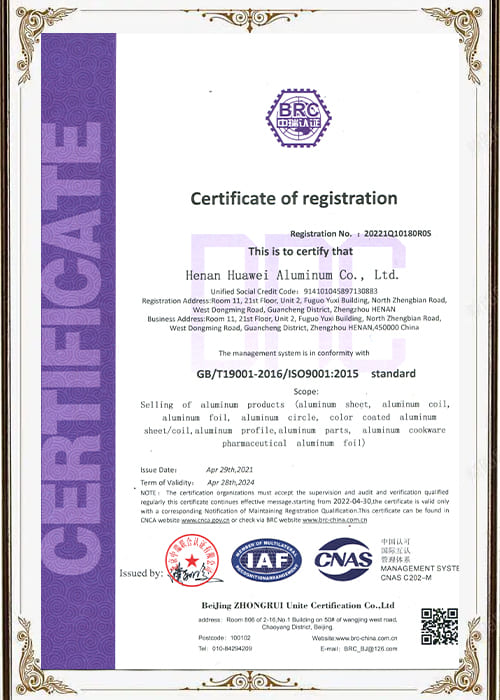
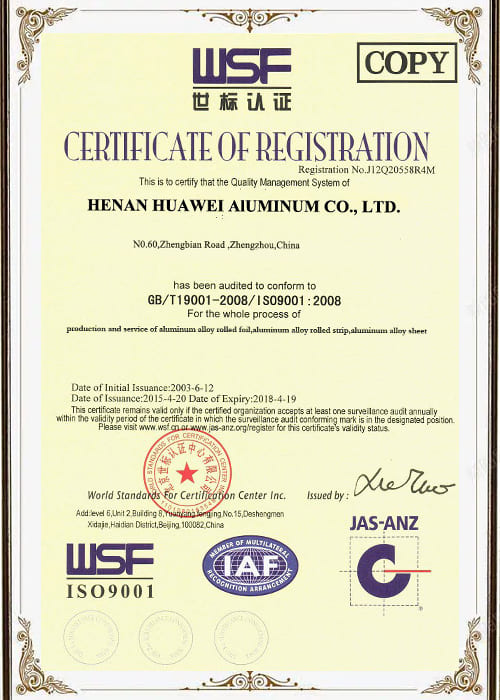
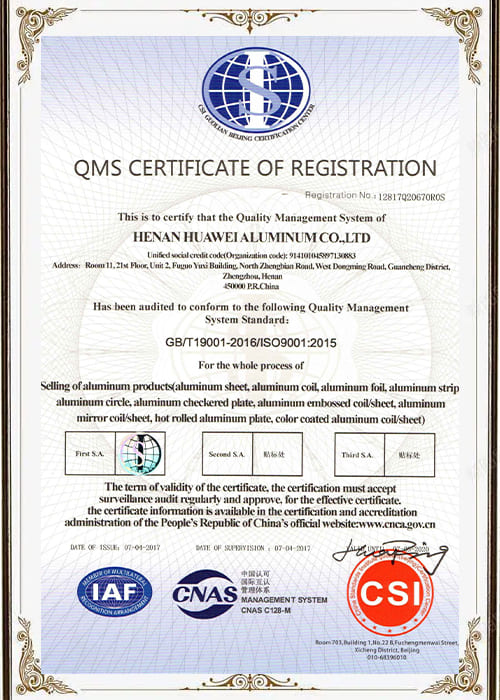
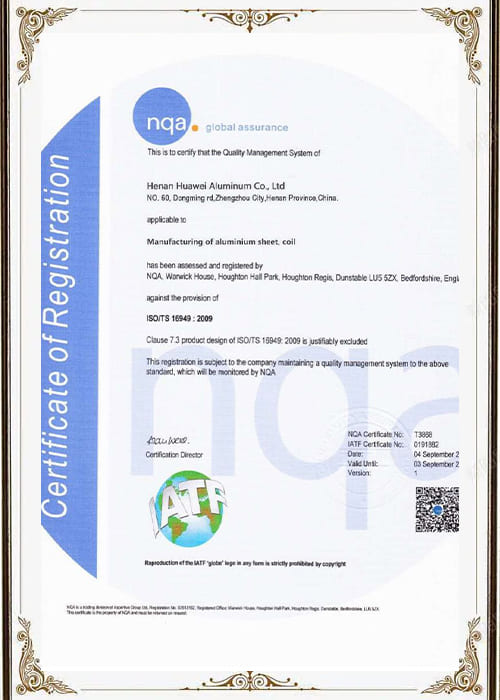
- Quality management: ISO-based quality management systems, traceability, batch release processes, and documentation to support regulatory compliance.
Quality assurance and certifications
Huawei Aluminum emphasizes rigorous testing and documentation. Expect to see:
– TÜV/ISO 9001-compliant quality management
– Documentation of batch traceability and material certifications
– Tests aligned with pharmacopeial and packaging industry standards, including pinhole tests, seal strength, and lamination compatibility assessments
– Environmental and sustainability considerations, including recycling-friendly packaging practices and compliance with relevant environmental standards
Why partner with Huawei Aluminum for blister foil?
- Proven supply reliability: A well-established supply chain with multiple regional distribution channels supports lead-time reliability and customer service responsiveness.
- Technical collaboration: The supplier provides data-driven support for material selection, laminate optimization, and QA testing plans tailored to your drug product and packaging line.
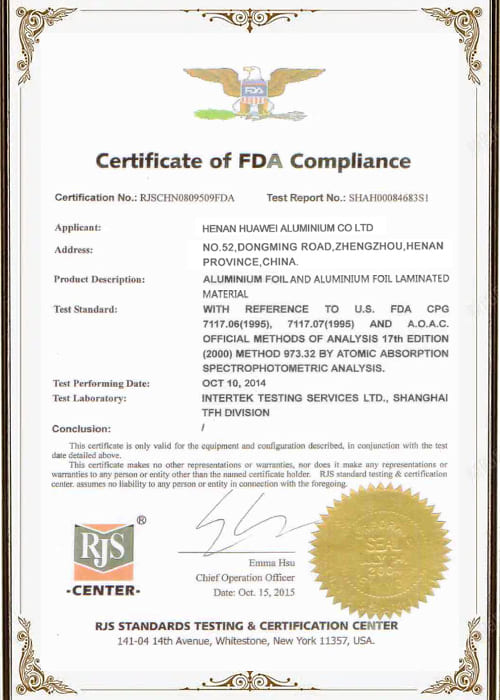
- Regulatory alignment: Access to materials that have been tested for compliance with common pharmacopeial standards and packaging regulations, helping to streamline validation and qualification processes.
If you are evaluating 8079 blister foil or other blister foil options, engaging with Huawei Aluminum can help you validate material performance against your laminate design, production line parameters, and regulatory requirements.
Request a data package that includes material composition details, mekanikal na mga katangian, surface treatment specifications, and recommended sealant and lamination partners.
Practical Guidelines for Selecting 8079 Blister Aluminum Foil
Determining the right thickness and temper
- Ang kapal: Blister foil thickness typically ranges from 12 sa 30 M, with 20–25 μm being common for many pharmaceutical laminates. Thinner foils provide cost and weight advantages but may require careful sealing parameter optimization and laminate support to ensure mechanical integrity.
- Temper: The temper affects formability and strength. Common choices include O (annealed na nga ba) and H-series tempers like H14 or H18. The final temper is chosen to balance drawability, post-draw strength, and seal integrity. For high-depth cavities or challenging shapes, a slightly harder temper (H14 / H18) might be preferred; for simple cavities or very high-speed lines, an O or H12 temper could be appropriate with proper annealing and process control.
Lamination compatibility considerations
- Seal layer compatibility: Confirm with the foil supplier and laminate vendor which sealant coatings are recommended for your structure. Some foils require specific lacquer or coating types to ensure robust seals with the chosen polymer layer.
- Adhesive performance: If using an adhesive-based lamination, verify adhesion strength to the foil and the polymer layers across the expected temperature and humidity range.
- Printing and decoration needs: If high-quality printing is required on the foil, ensure surface treatment and coating options support high-resolution inks while maintaining barrier integrity after lamination.
Testing and qualification steps
- Material property verification: Request the foil’s tensile strength, pagpapahaba ng panahon, magbunga ng lakas, and surface roughness values from the supplier.
- Lamination trial: Conduct a pilot lamination using your chosen laminate layers to verify adhesion, delamination resistance, and seal integrity under the packaging line’s process conditions.
- Seal strength testing: Perform heat-seal tests to determine optimal temperature, dwell time, and pressure for your specific laminate combination.
- Stability and compatibility testing: Run accelerated aging studies to ensure the foil-laminate combination preserves drug stability under expected storage conditions.
Sourcing and supplier collaboration tips
- Early-phase testing: Involve the foil supplier early in the packaging qualification process to tailor foil selection to the laminate design and sealing parameters.
- Sample habit: Request sample foils with the same temper and thickness as planned on the line, along with QA data for the corresponding laminate structure.
- Regulatory documentation: Obtain material safety data sheets (MSDS), RoHS compliance statements, and any pharmacopeia-aligned test results to expedite regulatory submission processes.
Market Trends, Mga Hamon, and Future Outlook
Trends shaping 8079 blister foil adoption
- Demand for higher barrier performance: As APIs become more sensitive to moisture or oxygen, there is a push toward laminate constructs that maximize barrier while preserving formability. 8079 foil remains a flexible core barrier, especially when paired with robust polymer laminates.
- Advancements in printing and traceability: High-quality printing on foil surfaces supports serialization and counterfeit deterrence, improving product integrity and regulatory compliance.
- Sustainability and recyclability: Aluminum’s recyclability continues to be a strong selling point. Packaging developers increasingly seek materials and lamination designs that facilitate recycling and minimize waste.
Regulatory considerations
Global pharmaceutical packaging is governed by a range of regulatory standards, including pharmacopeias (USP/NF, EP), ISO standards for packaging, and region-specific requirements. A robust blister foil strategy must consider:
– Sterilization compatibility (hal., gamma irradiation, ethylene oxide) and its effects on sealing integrity and barrier performance
– Compatibility with primary packaging materials and APIs to avoid adverse interactions
– Traceability and batch-level documentation to support regulatory audits
Innovation trajectory
- Co-extruded or laminated structures with enhanced peel strengths and improved sealant bonding
- Barrier layer innovations that further reduce MVTR/OTR without compromising printability or processability
- Smart packaging features, such as serialization-ready printing and anti-counterfeit marks integrated into the foil’s surface or laminate
Mga Madalas Itanong (Mga FAQ)
Q1: What exactly is 8079 blister aluminum foil, and how is it used?
A: 8079 blister aluminum foil refers to an 8079 aluminum alloy foil used as the metal barrier layer in blister packaging.
It is laminated with polymers (such as PET or PA) and coated or lacquered on the foil side to enable printing and heat sealing with outer seal layers.
The result is a sealed blister package that protects tablets or capsules from moisture, oxygen, and contamination while remaining compatible with pharmaceutical labeling and serialization.
Q2: How does 8079 differ from 8011 o 8021 blister foils?
A: All three are used in blister packaging, but their performance characteristics vary slightly due to alloy composition and temper.
8079 is commonly chosen for a balance of formability and barrier performance, with strong compatibility with standard lamination systems.
8011 is often favored for excellent formability and cost-effectiveness, habang ang 8021 can provide alternative sealing and mechanical properties depending on the laminate design.
The best choice depends on the specific product, storage conditions, and packaging line requirements.
Q3: What should I consider when selecting thickness and temper for 8079 papel de liha?
A: Consider the depth and geometry of the blister cavities, the required sealing strength, and the speed of your packaging line.
Thinner foils (hal., around 12–20 μm) save material costs but require precise line control and robust lamination to maintain barrier integrity.
A temper in the O to H14/H18 range can balance formability with seal performance. Pilot trials and lamination tests are essential to determine the optimal combination.
Q4: How important is the lamination structure in blister packaging?
A: Extremely important. The foil’s barrier performance is augmented by the laminate structure, which includes adhesives, PET/PA layers, and potential barrier coatings like PVdC.
The total barrier performance and seal integrity depend on the compatibility of each layer and the processing conditions (temperatura, dwell time, and pressure).
An integrated testing program with the foil supplier and laminate partner ensures acceptable performance.
Q5: How can I verify the quality and reliability of 8079 blister foil?
A: Request the supplier’s material data sheet (MDS/TDS), batch release documents, and QA test results (mga pinhole, seal strength, tensile properties, lamination compatibility).
Conduct pilot lamination and seal strength tests on your equipment, and perform accelerated aging studies to validate stability under expected storage scenarios.
A supplier like Huawei Aluminum can provide a comprehensive data package and technical support to guide your qualification.
Q6: What role does Huawei Aluminum play in blister foil supply?
A: Ang Huawei Aluminum ay nagbibigay ng 8079 blister foil products, technical support for lamination design, and QA documentation.
They offer materials suited for pharmaceutical blister packaging, with attention to surface finish, seal compatibility, and regulatory documentation.
Their capabilities include production of foil with controlled temper, thickness options, and readiness for lamination—along with collaboration on testing plans and supply chain readiness.
Q7: How important is sustainability in choosing blister foil?
A: Very important. Aluminum foil is inherently recyclable, and modern blister packaging designs tend to favor structures that support high recyclability, bawasan ang basura, and align with corporate sustainability goals.
Evaluating end-of-life scenarios, recyclability of the laminate stack, and supplier commitments to responsible sourcing are all part of responsible material selection.
Q8: Maaari bang 8079 foil be used for both primary blister packages and blister cards?
A: Oo nga. With appropriate lamination structures and sealing layers, 8079 foil is suitable for primary blister packs that hold tablets, mga kapsula, or other dosage forms.
For blister cards, additional structural considerations and printing requirements apply, but the foil can still serve as the core barrier.
Pag aaral ng Kaso: Practical Example of 8079 Foil in a Pharmaceutical Laminate
Tala: This case study is illustrative and designed to provide practical insights into how 8079 blister foil features in a real packaging program.
- Produkto: A solid-dose tablet requiring moisture protection for a 24-month shelf life.
- Laminate structure: Aluminyo foil (~20 μm) / PVdC barrier (~2–3 μm) / Mga Alagang Hayop (~12–20 μm) / seal layer for blister machine compatibility.
- Temper: H14 to balance formability and post-form strength.
- Seal parameters: Heat-seal temperature around mid-range for the sealant used, dwell time optimized to ensure a robust seal without foil deformation.
- QA focus: Pinholes testing, seal strength measurement, and lamination adhesion testing across multiple punches to simulate production variability.
- Outcome: Ang 8079 foil provided strong barrier performance with reliable seals, enabling the line to operate at a high speed while maintaining drug stability under accelerated aging testing.
This case demonstrates the practical approach to selecting 8079 foil and validating it in collaboration with a supplier (like Huawei Aluminum) and laminate partners. It emphasizes the need for early coordination, pilot trials, and rigorous QA to ensure long-term packaging performance.
Pangwakas na Salita
8079 Blister Aluminum Foil remains a widely trusted core component for pharmaceutical blister packaging, delivering a reliable barrier, magandang formability, and strong compatibility with common laminate systems.
Its role in protecting drug products through moisture and oxygen ingress, while supporting robust seals and high-quality printing, makes it a practical choice for many packaging programs.
The alloy’s performance, when combined with compatible laminates and sealants, directly influences product shelf life, regulatory compliance, and patient safety.
Selecting the right foil involves a careful balance of thickness, Pamahiin, laminate design, and processing conditions. Supplier support, demonstrated through technical data, pilot testing, and QA documentation, is essential to reduce risk and ensure consistent performance.
Huawei Aluminum stands as a credible partner in this space, offering 8079 blister aluminum foil options and the technical collaboration needed to integrate foil materials into reliable, scalable packaging solutions.
By aligning foil selection with laminate design, packaging line capabilities, and regulatory expectations, manufacturers can achieve durable, compliant blister packs that protect products and support efficient production.
This guide provides a practical framework for evaluating, testing, and implementing 8079 blister aluminum foil in real-world packaging programs, with a focus on safety, pagganap, and sustainability.
If you are planning a blister packaging project or are seeking to optimize an existing line, consider engaging with Huawei Aluminum to explore 8079 foil options, request data-driven testing plans, and obtain a comprehensive material package that aligns with your regulatory and quality obligations.
The right foil choice, backed by solid data and supplier collaboration, can make a measurable difference in product integrity, patient safety, and supply chain resilience.
Share with PDF: Download