8011-H18 Aluminum Foil for Pharmaceutical Packaging
12,136 Mga Pananaw 2026-01-12 08:13:33
The Unseen Guardian: A Deep Dive into 8011-H18 Aluminum Foil for Pharmaceutical Packaging
In the world of modern medicine, the final, crucial step between a manufactured drug and a patient is its packaging. This is not merely a container; it is a meticulously engineered shield, a frontline defender of the medicine’s integrity, kaligtasan, and efficacy.
While often overlooked by the end-user, this protective layer is the product of intense material science. Among the champions of this field, one material stands out for its unmatched performance in many applications: 8011-H18 aluminum foil for pharmaceutical packaging.
This article will take you on a journey deep into the microscopic world of this remarkable material. We will decode its name, explore the scientific properties that make it the ultimate barrier, and examine its critical role in applications like blister packs.
Dagdag pa rito, we will delve into the stringent quality control measures, including how experts calculate thickness of aluminum foil to ensure perfection. By comparing it with other materials and understanding the role of premier suppliers, you will gain a profound appreciation for this unseen guardian that protects global health, one dose at a time.

8011-H18 Aluminum Foil for Pharmaceutical Packaging
Why Pharmaceutical Packaging is a Zero-Compromise Domain
Before we can appreciate the solution, we must first understand the gravity of the problem.
Pharmaceutical products are often highly sensitive compounds, vulnerable to a host of environmental aggressors that can render them ineffective or even harmful.
- Kahalumigmigan: Water vapor can hydrolyze active pharmaceutical ingredients (APIs), degrading their chemical structure and potency. For moisture-sensitive drugs, this is a primary threat.
- Oxygen: Oxidation can decompose APIs, leading to a loss of efficacy and the formation of potentially toxic byproducts.
- Liwanag: UV and visible light can trigger photochemical reactions, breaking down light-sensitive molecules and compromising the drug’s stability.
- Microbial Contamination: Bacteria, viruses, and other microorganisms pose a direct threat to patient safety. The packaging must provide a sterile, hermetic seal.
- Physical Damage: The packaging must protect the solid dosage form (tablet, capsule) from being crushed or broken during transport and handling.
Dahil dito, the material chosen to protect the medicine must provide an absolute, uncompromising barrier against all these threats.
This non-negotiable requirement sets an incredibly high bar, which 8011-H18 aluminum foil for pharmaceutical packaging is uniquely equipped to meet.
Decoding the Standard: What Does “8011-H18” Actually Mean?
The designation “8011-H18” is not arbitrary; it’s a precise technical language that describes the foil’s composition and physical state. Let’s break it down.
- 8011 (The Alloy): This number signifies a specific aluminum alloy registered with the Aluminum Association. The 8xxx series alloys are a unique group where the primary alloying elements are not copper, mangganeso, or magnesium. Para sa 8011 aluminyo foil, the key additions are Iron (Fe) at Silicon (Si Si). These elements are precisely controlled to enhance the foil’s strength and formability, giving it superior performance over purer alloys (like the 1xxx series) in demanding applications. The presence of Fe and Si provides a better grain structure, which is crucial for the foil’s mechanical properties.
- H18 (The Temper): This part of the code describes the foil’s hardness and the process used to achieve it.
- H: Stands for strain-hardened (also known as work-hardened). This means the foil’s strength has been increased by the physical process of cold rolling.
- 1: The first digit indicates that the foil is strain-hardened only, without any subsequent thermal treatment like partial annealing.
- 8: The second digit signifies the degree of hardness. ‘8’ denotes “full-hard.” This is the maximum level of hardness that can be achieved through cold rolling alone.
Kaya nga, 8011-H18 describes a foil made from the 8011 alloy that has been rolled to its thinnest gauge, resulting in a full-hard temper.
This full-hard state gives it maximum tensile strength and puncture resistance but minimal ductility. As we will see, this specific combination of properties is exactly what makes it perfect for pharmaceutical blister lidding.

Huawei 8011-H18 Aluminum Foil
The Ultimate Barrier: Key Properties of 8011-H18 in Action
The unique combination of the 8011 alloy and the H18 temper gives this foil a suite of properties that make it an unparalleled choice for pharmaceutical packaging.
1. An Absolute and Impermeable Barrier
Unlike plastics or paper, solid aluminum foil is not just “resistant” to moisture and gases; it is completely impermeable.
Its tightly packed metallic crystal structure allows nothing to pass through. This provides a 100% barrier against:
- Water Vapor (Kahalumigmigan)
- Oxygen and other gases
- Liwanag (UV and visible)
- Microorganisms
- Odors and flavors
This absolute barrier ensures that the drug inside the package remains in the exact condition it was in when it was sealed, preserving its shelf life and efficacy.
2. Superior Mechanical Strength (The “Push-Through” Property)
The H18 full-hard temper is critical here. It gives the foil high tensile strength and stiffness. For a blister pack, this means the foil is strong enough to protect the tablets from accidental puncture or pressure.
Kasabay nito, its hardness provides the clean, crisp “snap” or “break” when a user pushes a tablet through.
A softer foil would stretch or tear unevenly, whereas 8011-H18 provides a clean fracture, which is a hallmark of high-quality pharmaceutical packaging.
3. Chemical Inertness and Non-Toxicity
Aluminum is physiologically neutral. It does not react with the vast majority of pharmaceutical compounds.
When used in packaging, it is often coated with a heat-seal lacquer on the product-contact side, which is also carefully selected to be non-toxic and inert.
This ensures there is no leaching of materials into the drug and no reaction that could alter the drug’s chemical composition.
4. Katatagan ng Thermal
The foil maintains its integrity and barrier properties over a wide range of temperatures.
It can easily withstand sterilization processes and is stable during shipping and storage in various climates, from tropical heat to cold northern winters.
5. Excellent Printability
The outer surface of the foil is typically treated to be highly receptive to printing.
This is essential for displaying critical information such as the drug name, tagagawa, dosage, expiration date, and batch number.
High-quality printing also allows for complex branding and anti-counterfeiting features like micro-text or holograms.

Aluminum Foil Jumbo Roll Packaging
Kontrol sa Kalidad: The Science of Perfection in Every Roll
To guarantee the properties mentioned above, manufacturers of pharmaceutical foil operate under incredibly strict quality control regimes.
A single microscopic flaw can compromise the entire package. One of the most fundamental parameters they monitor is the foil’s thickness.
The thickness of pharmaceutical foil is typically in the range of 20 sa 30 mga micron (M). Even a tiny deviation can affect performance.
- Too thin: The foil may have a higher incidence of pinholes and lack the required mechanical strength for a clean push-through.
- Too thick: It wastes material, increases costs, and may be too difficult for the user to break.
Kaya nga, producers must have a precise way to verify thickness across the entire production run.
While advanced in-line scanners are used during production, a fundamental and highly accurate method for quality assurance is to calculate thickness of aluminum foil based on its physical properties.
The formula is derived from the basic relationship: Density = Mass / Dami ng.
Dahil Volume = Area × Thickness, we can rearrange it to:
Thickness = Mass / (Area × Density)
How to Calculate Thickness of Aluminum Foil (QA/QC Method):
- Cut a Precise Sample: A technician carefully cuts a perfectly square or rectangular sample from the foil roll using a precision die cutter. A typical size is 10cm x 10cm (0.01 m2).
- Measure the Mass: The sample is weighed on a highly sensitive analytical balance that can measure to at least four decimal places (hal., 0.0001 gramo).
- Use the Known Density: Ang density ng 8011 aluminum alloy is a known constant, humigit-kumulang 2.71 gramo bawat kubiko sentimetro (g/cm³).
- Perform the Calculation: The values are plugged into the formula, ensuring all units are consistent.
Example Calculation:
- Sample Area: 10 cm × 10 cm = 100 cm²
- Measured Mass: 0.0542 g
- Densidad ng 8011 haluang metal: 2.71 g/cm³
- Thickness = 0.0542 g / (100 cm² × 2.71 g/cm³)
- Thickness = 0.0542 / 271 cm = 0.00020 cm
- To convert to microns: 0.00020 cm × 10,000 µm/cm = 20 M
This method provides an exceptionally accurate average thickness for the sample area. It is a cornerstone of quality control, used to calibrate in-line sensors and verify that every batch meets the stringent specifications required by the pharmaceutical industry.
Beyond thickness, other critical tests include pinhole counts, surface wettability (for coating adhesion), and heat-seal strength.
Common Applications of 8011-H18 Foil
The unique properties of this foil make it the go-to material for several types of primary pharmaceutical packaging.
- Blister Pack Lidding (PTP – Push-Through Packaging): This is the most common application. The 8011-H18 foil is heat-sealed to a thermoformed plastic base (like PVC or PVdC) that contains the tablets or capsules. The foil acts as the tamper-evident, protective lid that the patient pushes through.
- Tropical Blister Packs: For extremely moisture-sensitive drugs, a “tropical” blister is used. This involves placing a standard PVC/foil blister into a secondary, formable aluminum pouch. 8011 foil can be a component in this outer protective layer due to its excellent barrier properties.
- Strip Packaging: In this format, each tablet is sealed in its own small pouch made of two layers of foil/polymer laminate. 8011-H18 provides the strength and barrier properties for these individual doses.
The Competitive Landscape: 8011-H18 vs. Other Materials
To truly understand its value, it’s helpful to compare 8011-H18 aluminum foil for pharmaceutical packaging with other potential materials.
| Tampok / Materyal | 8011-H18 Aluminum Foil | 1235 Aluminum Foil (Soft Temper) | PVC/PVdC Plastic Film | Paper/Poly Laminates |
| Barrier (Moisture/Gas/Light) | Absolute (100%) | Absolute (100%) | Poor to Moderate. Not a complete barrier; allows some transmission. | Very Poor. Offers minimal barrier protection. |
| Lakas ng Mekanikal | Napakataas na (Full-Hard). Ideal for push-through lidding. | Mababa ang (Malambot na). Not suitable for push-through; would tear or stretch. | Katamtaman. Used for the formable base, not the lid. | Mababa ang. Easily torn. |
| “Push-Through” Feel | Napakahusay. Clean, crisp break. | Mga Maralita. No clean break. | Hindi naaangkop (it’s the base). | Mga Maralita. No resistance. |
| Gastos | Katamtaman | Katamtaman | Mas mababa | Lowest |
| Best Use Case | Blister Pack Lidding, Mga Pack ng Strip. | Lamination for flexible pouches, where ductility is needed. | Formable base of blister packs. | Outer secondary packaging, not for direct drug protection. |
As the table clearly shows, while other materials have their place, none can match the specific combination of an absolute barrier and high mechanical strength that 8011-H18 offers for blister lidding.
The Source Matters: Choosing a High-Quality Foil Supplier
The remarkable properties of pharmaceutical foil can only be achieved through advanced manufacturing processes and unwavering quality control.
The choice of a supplier is therefore a decision of paramount importance for any pharmaceutical company. A top-tier supplier is not just a vendor; they are a partner in patient safety.
Leading global manufacturers like Henan Huawei Aluminyo Co., Ltd. exemplify the standards required in this industry.
When sourcing a critical material like 8011-H18 aluminum foil for pharmaceutical packaging, here is what a reputable supplier like HWALU provides:
- Mga Pasilidad ng State of the Art: Production occurs in environments that adhere to Good Manufacturing Practices (GMP), often including cleanroom facilities to prevent any contamination.
- Precision Rolling Mills: Advanced rolling technology is essential to achieve a perfectly uniform thickness and a flawless surface finish, free of blemishes.
- Strict Quality Assurance: This includes a suite of tests beyond just thickness checks. They perform automated pinhole detection, surface wettability tests (to ensure proper adhesion of coatings and inks), and rigorous checks of mechanical properties.
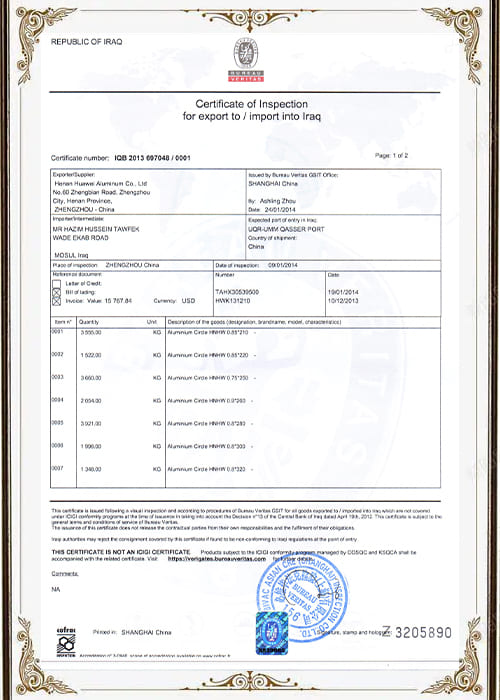
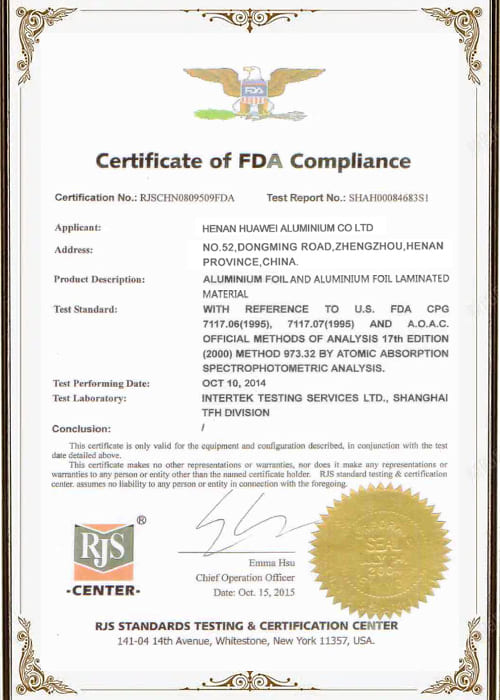
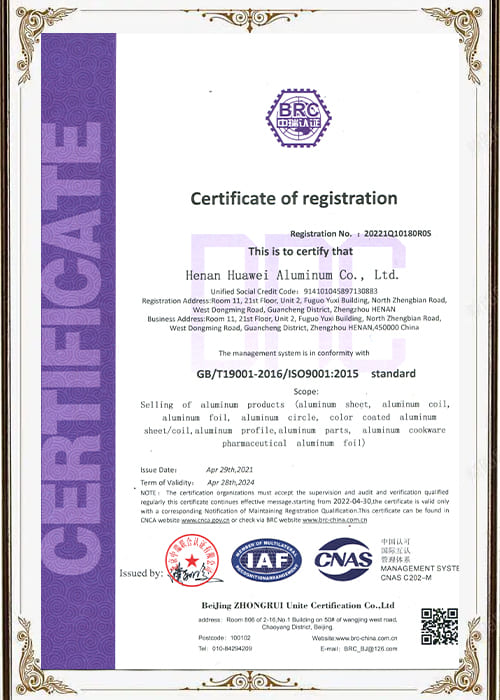
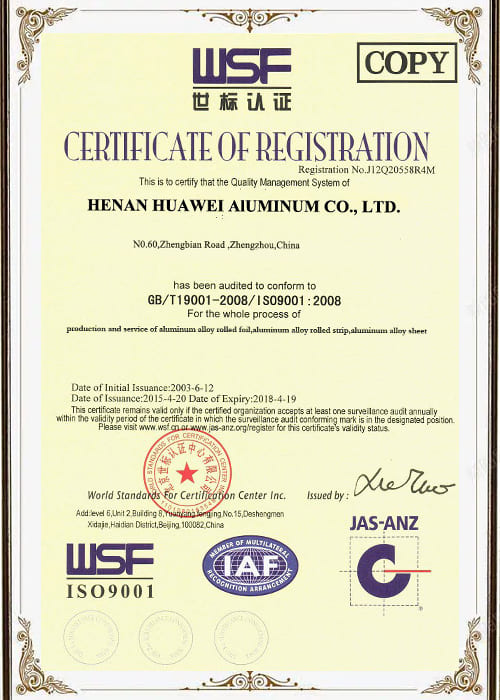
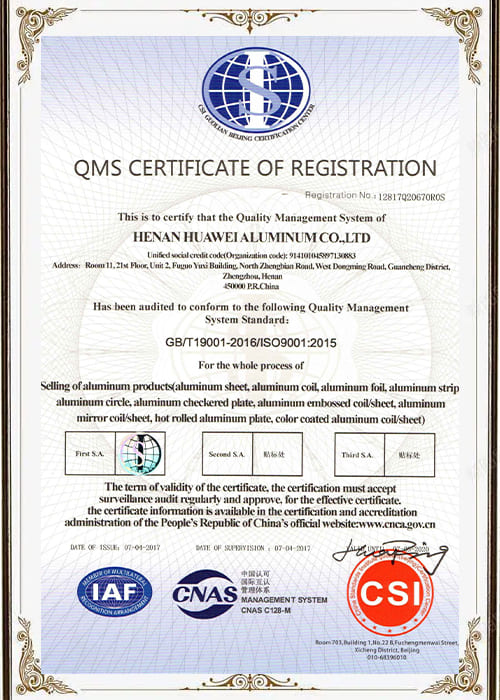
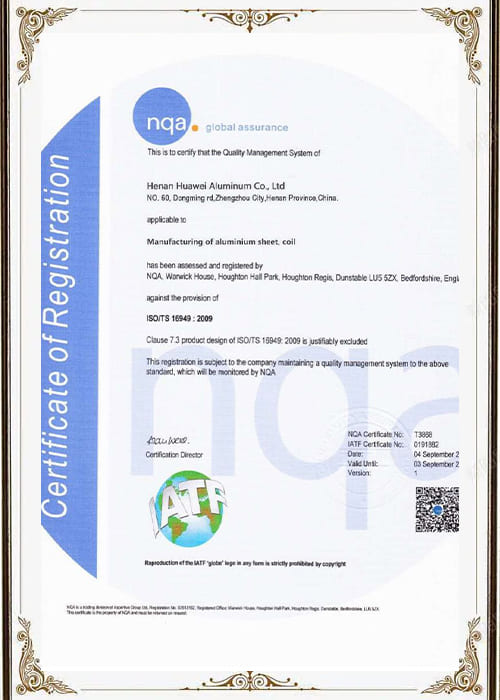
- Compliance and Certification: A reliable supplier provides full documentation and certification, ensuring their products meet the stringent regulations of bodies like the FDA and EMA. Huawei Aluminum has extensive experience in meeting these international standards.
- Expertise in Alloying: The precise control over the iron and silicon content in the 8011 alloy is what gives the foil its unique properties. A specialized supplier like Huawei Aluminum has the metallurgical expertise to guarantee this consistency in every batch.
Choosing a supplier with a proven track record is the final link in the chain, ensuring that the high-tech shield protecting the medicine is itself produced to the highest possible standard.
Mga Madalas Itanong (FAQ)
Q1: Why is the H18 “full-hard” temper so important?
The H18 temper provides the stiffness and strength needed for the foil to protect the tablets from accidental crushing while also enabling a clean, easy break when a user intentionally pushes a tablet through. A softer temper would deform or tear unevenly.
Q2: Is 8011 aluminum foil safe for direct contact with medicines?
Oo nga. The aluminum itself is non-toxic and inert. In practice, the side of the foil that contacts the drug is coated with a food-grade/pharma-grade heat-seal lacquer, which provides an additional layer of protection and is also certified to be completely safe for contact with pharmaceuticals.
Q3: Ano ang pagkakaiba ng 8011 at 8021 aluminum alloys for pharmaceutical use?
Both are common in pharmaceutical packaging. 8011-H18 is primarily used for hard-temper lidding on push-through blister packs. 8021 haluang metal, which has a higher iron content, is often used in a soft temper (O-temper) for cold-forming applications, such as the formable base of an Alu-Alu (cold form) blister pack, where high ductility is required.
Q4: Can you recycle pharmaceutical blister packs?
This is a challenge. Because blister packs are a composite of plastic and aluminum, they are difficult to separate and recycle in most standard municipal recycling streams. Gayunpaman, specialized recycling programs are emerging to tackle this issue.
Pangwakas na Salita
From its specific alloy composition to its full-hard temper and precisely controlled thickness, 8011-H18 aluminum foil for pharmaceutical packaging is a marvel of material science.
It is far more than a simple sheet of metal; it is a highly engineered barrier designed with a single, noble purpose: to protect the integrity of medicine and the health of the patient.
Every time you push a tablet through the crisp foil of a blister pack, you are interacting with a material that has provided an absolute shield against moisture, liwanag, and air, ensuring the dose you are taking is as safe and effective as the day it was made.
It is the unseen guardian, a testament to how advanced materials, produced by expert suppliers, play a silent yet indispensable role in global healthcare.