3003 Insulation Aluminum Coil
1204 Mga Pananaw 2026-09-17 06:00:40
1. Panimula
Insulation systems need more than thermal insulation materials. They also require a durable outer layer to protect the insulation from moisture, weather exposure, mechanical damage, and the surrounding environment. 3003 insulation aluminum coil is widely used as an aluminum jacketing material for thermal and acoustical insulation.
3003 aluminum belongs to the 3xxx series of aluminum-manganese alloys.
It combines magandang paglaban sa kaagnasan, pagiging formable, katamtamang lakas, and relatively low weight, making it suitable for protective jacketing around insulated pipes, mga tangke, ducts, and industrial equipment.
In insulation applications, the aluminum coil does not provide the primary thermal insulation itself.
Instead, it forms a protective outer jacket over materials such as mineral wool, glass wool, elastomeric insulation, or other insulation systems.
ASTM C1729 covers aluminum jacketing for thermal and acoustical insulation in indoor and outdoor environments.
The specification considers alloy, Pamahiin, ibabaw ng paggamot, and moisture-retarder construction, showing that insulation jacketing performance depends on the complete material structure rather than aluminum alloy alone.
2. Ano ang 3003 Insulation Aluminum Coil?
2.1 Buod ng 3003 aluminyo haluang metal
3003 is a wrought aluminum-manganese alloy in the 3xxx series.
Unlike heat-treatable aluminum alloys, 3003 develops higher strength primarily through cold working rather than precipitation heat treatment.
Its composition typically includes approximately 1.0–1.5% manganese and 0.05–0.20% copper, with silicon and iron controlled within specified limits.
This alloy design provides a useful combination of workability, paglaban sa kaagnasan, at katamtamang lakas.
3003 aluminyo likawin can be supplied in different tempers, kasama na ang O, H12, H14, H18, and H24.
The appropriate temper depends on the required balance between forming performance and mechanical strength.

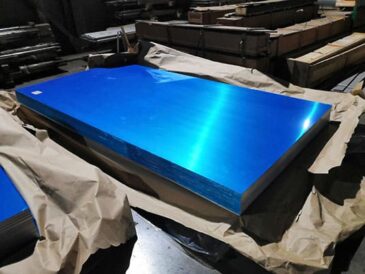
Tapos na ang Mill 3003 Aluminum Coil Display
2.2 What Is Insulation Aluminum Jacketing?
Insulation aluminum jacketing is the protective metal layer installed over thermal or acoustical insulation.
A typical insulation system can be understood as:
Insulation Material → Aluminum Jacket → External Environment
The insulation layer provides the primary thermal or acoustic function, while the aluminum jacket protects the insulation system from external conditions.
The jacket helps shield insulation from ulan ng ulan, kahalumigmigan, sunlight, physical impact, dirt, and other environmental exposure.
It also provides a stable external surface for industrial insulation systems.
2.3 Why Is 3003 Used for Insulation Jacketing?
3003 provides a practical balance between material performance and fabrication requirements.
Its good formability allows the coil to be hiwa, nakabaluktot, gumulong na, naka emboss na, at hugis around insulated pipes and equipment.
Kasabay nito, its corrosion resistance and moderate strength provide a suitable protective layer for many insulation systems.
ASTM C1729 recognizes 3003 in several jacketing configurations, kasama na ang 3003 H14/H24 at 3003 H12, providing a standards-based connection between this alloy and insulation jacketing applications.
3. Key Properties of 3003 Insulation Aluminum Coil
3.1 Good Corrosion Resistance
3003 aluminum provides good general corrosion resistance, making it suitable for many indoor and outdoor insulation systems.
Gayunpaman, kahalumigmigan, chemical exposure, dissimilar-metal contact, and installation conditions can affect long-term performance.
For demanding environments, additional coatings or protective layers can provide further protection.
3.2 Napakahusay na Formability
3003 offers good formability, allowing the coil to follow curved and irregular insulation surfaces.
It can be hiwa, nakabaluktot, roll-formed, naka emboss na, and corrugated to produce different jacketing configurations.
Ito ay gumagawa ng 3003 practical for pipe, duct, tank, and equipment insulation.
3.3 Katamtamang Lakas
3003 provides sufficient strength for most insulation jacketing applications while remaining relatively easy to fabricate.
Different tempers allow manufacturers to balance strength and formability according to application requirements.
ASTM C1729 recognizes 3003 in tempers such as H14/H24 and H12 for aluminum jacketing applications.
3.4 Lightweight Construction
With a density of approximately 2.73 g/cm³, 3003 aluminum provides a lightweight protective layer without adding excessive weight to the insulation system.
This is particularly useful for large-scale applications involving pipes, ducts, mga tangke, and industrial equipment.
3.5 Flexible Surface Options
3003 insulation aluminum coil can be supplied with various surface treatments, kasama na ang:
- Tapos na ang gilingan
- Stucco embossed
- Corrugated
- Painted or coated
- Laminated moisture-retarder surface
These options allow the jacketing to meet different mechanical, environmental, and appearance requirements.
3.6 Moisture Protection Capability
Aluminum jacketing helps protect insulation from rain, kahalumigmigan, and other external exposure.
For applications requiring additional moisture control, Polysurlyn or other laminated moisture-retarder layers can be added to the aluminum surface.
The appropriate moisture-barrier structure should match the operating environment and overall insulation design.
3.7 Balanced Performance
3003 insulation aluminum coil combines paglaban sa kaagnasan, pagiging formable, katamtamang lakas, low weight, and surface protection in one material.
Its overall performance depends not only on the alloy but also on Pamahiin, kapal naman, ibabaw ng paggamot, moisture-retarder design, gawa gawa lang, and installation.

3003 Insulation Aluminum Coil
4. 3003 Insulation Aluminum Coil Specifications
3003 insulation aluminum coil should be specified according to the insulation system, pipe or equipment dimensions, fabrication method, and service environment.
For insulation jacketing, ASTM C1729 is the more directly relevant specification, habang ang ASTM B209/B209M covers the aluminum sheet and coil material itself.
4.1 Core Specifications
| Specification | 3003 Insulation Aluminum Coil |
|---|---|
| haluang metal | 3003 Aluminyo |
| Serye ng haluang metal | 3xxx Serye, Aluminum-Manganese |
| Product Form | Coil / Sheet |
| Common Temper | O, H12, H14, H24 |
| Aluminum Thickness | 0.016–0.050 in (0.41–1.27 mm) under ASTM C1729 |
| Typical Pipe-Jacketing Thickness | 0.016–0.040 in (0.41–1.01 mm) depending on insulation diameter and type |
| Lapad ng katawan | Customized according to pipe, duct, tank, or equipment dimensions |
| Coil ID | Na customize na; commonly available industrial sizes include 152, 203, 300, 400 at 508 mm depending on supplier |
| Coil OD | Customized according to coil weight and processing equipment |
| Tapos na sa ibabaw | Tapos na ang gilingan, stucco embossed, corrugated, painted/coated |
| Moisture Retarder | Polyfilm, polykraft, laminated polymer film, or other specified system |
| Applicable Material Standard | ASTM B209/B209M |
| Insulation Jacketing Standard | ASTM C1729 |
| Mga Karaniwang Aplikasyon | Pipe insulation, HVAC, mga tangke, ducts, mga kagamitang pang industriya |
5. 3003 Aluminum Coil Temper Selection
Temper determines the balance between lakas ng loob, tigas na tigas, at pagiging formable ng mga 3003 aluminyo likawin.
Selecting the correct temper is important for both fabrication and service performance.
5.1 3003 H14
3003 H14 is a commonly used half-hard temper with a useful balance of strength and formability.
It is suitable when the aluminum jacket needs to maintain good shape while still allowing bending, pagputol ng, and fabrication around insulation systems.
5.2 3003 H24
3003 H24 provides a similar practical balance between strength and formability.
It is commonly considered for insulation jacketing where the material requires adequate rigidity while remaining workable during installation.
The final mechanical requirements should follow the applicable specification and project conditions.
5.3 3003 H12
H12 is a quarter-hard temper that generally offers greater formability than H14/H24.
It can be considered for applications where the aluminum jacket requires more extensive forming or fabrication.
ASTM C1729 recognizes 3003 H12 for specific aluminum jacketing configurations.
5.4 3003 O Temper
O temper represents an annealed condition with high formability and relatively low strength.
It can be useful where extensive forming is required, although the final jacketing design should determine whether its lower strength is appropriate.
Temper Selection Guide
| Temper | General Characteristic | Typical Consideration |
|---|---|---|
| O | Highest formability | Extensive forming |
| H12 | Magandang formability | Formable jacketing |
| H14 | Balanced strength and formability | General jacketing |
| H24 | Balanced strength and formability | General industrial jacketing |
The appropriate temper depends on forming requirements, kapal naman, mekanikal na pagganap, and applicable standards.

3003 H14 Insulation Aluminum Coil
6. Surface Options for 3003 Insulation Aluminum Coil
Surface treatment can improve the functional performance, appearance, and fabrication characteristics of insulation jacketing.
The most suitable option depends on the environment and insulation system design.
6.1 Tapos na ang Mill
Mill finish is the standard untreated aluminum surface.
It provides the natural appearance of aluminum and is suitable for many general insulation applications where additional surface treatment is not required.
6.2 Stucco Embossed Surface
Stucco embossing creates a textured aluminum surface that can provide a distinctive appearance and improve surface stiffness.
It is widely used for pipe insulation, Mga sistema ng HVAC, mga tangke, and industrial equipment jacketing.
The textured surface can also help reduce the visibility of minor surface marks compared with a smooth finish.
6.3 Corrugated Aluminum Coil
Corrugated aluminum provides a structured surface with increased rigidity compared with a flat sheet of similar thickness.
It can be considered for larger equipment, ducts, mga tangke, and applications where additional structural stiffness is useful.
The corrugation profile should be selected according to the fabrication method and application requirements.
6.4 Painted or PVDF-Coated Surface
Coated aluminum provides additional surface protection and allows the jacket to be supplied in different colors.
Painted or PVDF-coated 3003 aluminum can be considered where weather resistance, appearance, color identification, or additional surface protection is important.
Coating selection should consider operating temperature, UV exposure, chemical environment, and required service life.
6.5 Polysurlyn Laminated Aluminum Coil
Polysurlyn-laminated aluminum coil combines the aluminum jacket with a polymer moisture-retarder layer.
The laminated layer is commonly used to help reduce moisture ingress and protect the inner side of the aluminum jacket, particularly in outdoor insulation systems.
It is suitable for applications such as industrial pipelines, mga tangke, Mga sistema ng HVAC, mga halaman ng kemikal, and other equipment exposed to moisture.
The appropriate laminate structure should be selected according to the insulation system, operating environment, and applicable specification.

PVDF Coated 3003 aluminyo likawin
7. 3003 Aluminum Insulation Coil vs. Other Aluminum Alloys
Different aluminum alloys offer different combinations of strength, pagiging formable, paglaban sa kaagnasan, and surface performance.
The following table compares several commonly considered alloys for insulation and related jacketing applications.
| Pag-aari | 3003 | 1100 | 3105 | 5005 | 5052 |
|---|---|---|---|---|---|
| Serye ng haluang metal | 3xxx Al-Mn | 1xxx commercially pure Al | 3xxx Al-Mn-Mg | 5xxx Al-Mg | 5xxx Al-Mg |
| Main Alloying Element | Mn 1.0–1.5% | Al ≥99.0% | Mn 0.3–0.8%, Mg 0.2–0.8% | Mg 0.5–1.1% | Mg 2.2–2.8% |
| Densidad ng katawan | Humigit-kumulang. 2.73 g/cm³ | Humigit-kumulang. 2.71 g/cm³ | Humigit-kumulang. 2.72 g/cm³ | Humigit-kumulang. 2.70 g/cm³ | Humigit-kumulang. 2.68 g/cm³ |
| Paglaban sa Kaagnasan | Mabuti na lang | Napakahusay | Mabuti na lang | Napakaganda | Napakahusay |
| Formability | Napakaganda | Napakahusay | Napakaganda | Napakaganda | Mabuti na lang |
| Strength Level | Katamtaman | Mababa ang | Katamtaman | Katamtaman | Mas Mataas |
| Surface Appearance | Mabuti na lang | Napakahusay | Mabuti na lang | Napakaganda | Mabuti na lang |
| Malamig na Paggawa | Suitable | Suitable | Suitable | Suitable | Suitable |
| Typical Advantage | Balanced strength and formability | Maximum formability and purity | Good strength and formability | Surface appearance and anodizing | Higher strength and corrosion resistance |
| Insulation Jacketing Consideration | Widely suitable | Suitable where high formability is needed | Suitable for specified jacketing systems | More application-specific | Suitable for higher-strength requirements |
8. Mga aplikasyon ng 3003 Insulation Aluminum Coil
3003 insulation aluminum coil is mainly used as a protective outer jacket for thermal and acoustical insulation systems.
It protects the underlying insulation while providing a durable and formable external surface.
8.1 Pipe Insulation
Pipe insulation is one of the most common applications.
3003 aluminum coil can be fabricated into jacketing for steam pipes, hot-water lines, chilled-water pipes, process pipelines, and other insulated piping systems.
The aluminum jacket helps protect insulation from weather, kahalumigmigan, epekto, and general environmental exposure.
8.2 HVAC and Refrigeration Systems
3003 aluminum jacketing can be used on insulated HVAC ducts and refrigeration systems.
For chilled-water and low-temperature systems, moisture control becomes particularly important because condensation can affect insulation performance.
A properly designed aluminum jacket and moisture-retarder system can help protect the insulation.
8.3 Storage Tanks and Equipment
Large storage tanks, vessels, and industrial equipment often require external insulation to control heat loss or maintain process temperatures.
3003 aluminum coil can be fabricated into large-area jacketing around these systems. Its low weight and good formability make it practical for covering curved surfaces.

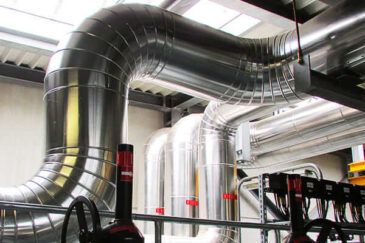
3003 Aluminum Coil for Pipe Insulation
8.4 Oil and Gas Facilities
Insulated pipelines and equipment in oil and gas facilities may require protective metal jacketing.
3003 aluminum can be used where the operating environment and project specification call for aluminum insulation jacketing.
For more aggressive environments, the alloy, patong na patong, moisture barrier, and installation details should be selected according to the project requirements.
8.5 Chemical and Power Plants
Chemical processing facilities and power plants contain extensive networks of insulated pipes, mga tangke, ducts, and equipment.
3003 insulation aluminum coil can provide a protective external layer that helps shield insulation from kahalumigmigan, weather exposure, mechanical damage, and industrial conditions.
The surface treatment and moisture-retarder system should be selected according to the specific operating environment.
8.6 Commercial and Industrial Buildings
3003 aluminum jacketing can also be used for insulation systems in factories, warehouses, mga gusaling komersyal, and other facilities.
Typical applications include:
- HVAC duct insulation
- Mga kagamitan sa makina
- Chilled-water systems
- Heating systems
- Ventilation systems
- Industrial utility piping
Its combination of low weight, pagiging formable, paglaban sa kaagnasan, at katamtamang lakas makes it suitable for a wide range of building and industrial insulation applications.
9. Manufacturing and Processing of 3003 Insulation Aluminum Coil
Ang produksyon ng 3003 insulation aluminum coil requires controlled alloy composition, pagulong gulong, paggamot ng init, surface processing, and dimensional inspection.
The manufacturing process directly affects the coil’s thickness consistency, mekanikal na mga katangian, kalidad ng ibabaw, and forming performance.
9.1 Alloy Preparation and Casting
The process begins with aluminum alloy preparation. Aluminum and alloying elements are proportioned according to the required 3003 komposisyon, with particular control of manganese and copper.
The molten aluminum is then cast into slabs or other suitable semi-finished forms. Chemical composition is checked before further processing.
9.2 Homogenization and Hot Rolling
Cast material may undergo homogenization to improve the uniformity of the alloy structure.
Hot rolling then reduces the slab thickness while improving the material’s internal structure.
The rolling schedule is controlled according to the required final thickness and product characteristics.
9.3 malamig na paggulong
Pagkatapos ng mainit na pagulong, the material undergoes cold rolling to achieve the required thickness, patag na, at kalidad ng ibabaw.
Multiple rolling passes may be used for thin insulation jacketing material.
Precise control of rolling reduction is important because thickness variation can affect both fabrication and installation.
9.4 Annealing and Temper Control
Heat treatment and annealing are used to obtain the required temper and balance between strength and formability.
Para sa 3003 insulation aluminum coil, common conditions include O, H12, H14, and H24.
The final temper should match the forming requirements and applicable material specification.
9.5 Embossing and Corrugation
Depende sa application, the aluminum coil can undergo additional surface processing.
Stucco embossing creates a textured surface, habang ang corrugation forms a structured profile that can improve rigidity and provide a distinctive appearance.
These processes must maintain consistent dimensions without compromising the aluminum’s surface quality.
9.6 Coating and Lamination
For applications requiring additional surface or moisture protection, 3003 aluminum coil can be coated or laminated.
Common options include:
- Painted or PVDF coating
- Polysurlyn moisture-retarder film
- Polykraft or other laminated structures
- Protective films
The coating or laminate must maintain good adhesion and uniform coverage across the coil.
9.7 Final Inspection and Coil Processing
Before shipment, manufacturers typically inspect alloy composition, kapal naman, lapad ng katawan, mekanikal na mga katangian, kalidad ng ibabaw, patag na, at mga sukat ng coil.
For laminated or coated products, additional checks should cover coating or film adhesion, coverage, and surface defects.
The finished coil is then slit or cut to the required width and packed according to transportation and storage requirements.
10. How to Choose the Right 3003 Insulation Aluminum Coil
Choosing the right 3003 insulation aluminum coil requires more than selecting the alloy.
The material should match the insulation system, service environment, fabrication method, and applicable standards.
10.1 Confirm the Required Standard
For aluminum insulation jacketing, ASTM C1729 is an important reference because it addresses aluminum jacketing for thermal and acoustical insulation.
The base aluminum material may also need to comply with ASTM B209/B209M or another specified material standard.
10.2 Select the Appropriate Temper
Choose the temper according to the required balance between formability and strength.
- O: Maximum formability
- H12: Good formability with increased strength
- H14/H24: Higher strength while retaining useful forming capability
For many insulation-jacketing applications, H14 or H24 can provide a practical balance between rigidity and fabrication.
10.3 Determine the Correct Thickness
Thickness should be based on the insulation diameter, insulation type, mechanical exposure, installation method, and applicable standard.
For ASTM C1729 jacketing, aluminum thickness can range from approximately 0.016 sa 0.050 sa (0.41–1.27 mm), with specific minimum thickness requirements depending on the insulation configuration.
Avoid selecting thickness solely based on price. Insufficient thickness can reduce mechanical protection and affect fabrication quality.
10.4 Choose the Surface Finish
Select the surface according to the operating environment and appearance requirements.
Tapos na ang gilingan is suitable for basic applications, habang ang stucco embossed aluminum is widely used where a textured and more rigid surface is preferred.
For additional weather or moisture protection, coated or Polysurlyn-laminated aluminum can be considered.
10.5 Consider Moisture Protection
Outdoor and low-temperature insulation systems require careful moisture management.
If the application has significant exposure to rain, condensation, or humidity, a laminated moisture-retarder system such as Polysurlyn may be appropriate.
Gayunpaman, moisture protection also depends on proper seams, mga kasukasuan, penetrations, end closures, and installation practices.
10.6 Consider Fabrication Requirements
The coil should be compatible with the intended fabrication process.
Consider:
- Required coil width
- Cutting method
- Pagbaluktot ng radius
- Embossing or corrugation
- Roll forming
- Seaming and overlapping
- Coil weight and handling requirements
The temper and thickness should provide sufficient formability for the planned fabrication process.
10.7 Evaluate the Service Environment
Before selecting the material, consider:
Temperatura + Kahalumigmigan + UV Exposure + Chemical Exposure + Mechanical Impact + Indoor/Outdoor Installation
For highly corrosive industrial environments, additional surface protection or an alternative alloy may be appropriate.
11. Pangwakas na Salita
3003 insulation aluminum coil provides a balanced combination of corrosion resistance, pagiging formable, katamtamang lakas, low weight, and surface-processing flexibility.
Its ability to be supplied in different tempers, mga kapal, ibabaw ay nagtatapos, and moisture-retarder configurations makes it suitable for a wide range of insulation jacketing systems.
Typical applications include insulated pipes, HVAC ducts, mga tangke ng imbakan, mga kagamitang pang industriya, chemical facilities, mga planta ng kuryente, and other thermal or acoustical insulation systems.
Gayunpaman, the performance of an aluminum jacket depends on the complete system rather than the alloy alone.
haluang metal, Pamahiin, kapal naman, ibabaw ng paggamot, moisture protection, gawa gawa lang, and installation quality should be considered together.
For projects requiring customized 3003 insulation aluminum coil, selecting the correct specification at the design stage can help improve fabrication efficiency, tibay ng katawan, and long-term insulation-system performance.
Mga FAQ
1. Ano ang 3003 insulation aluminum coil used for?
3003 insulation aluminum coil is mainly used as protective jacketing for pipe, HVAC, tank, duct, and industrial insulation systems. It helps protect insulation from moisture, weather exposure, dirt, and mechanical damage.
2. What thickness is commonly used for 3003 insulation aluminum coil?
The thickness depends on the application and applicable standard. ASTM C1729 covers aluminum jacketing thicknesses from approximately 0.016 sa 0.050 sa (0.41–1.27 mm), with specific requirements depending on the insulation configuration.
3. Which temper is suitable for insulation jacketing?
Common choices include H12, H14, and H24. H12 provides greater formability, while H14 and H24 offer a useful balance between strength and formability.
4. Maaari bang 3003 insulation aluminum coil be embossed?
Oo nga. Stucco embossing is a common surface option for aluminum insulation jacketing. Corrugated surfaces are also available for applications requiring a structured profile.
5. What is Polysurlyn laminated aluminum coil?
Polysurlyn laminated aluminum coil consists of aluminum with a polymer moisture-retarder film, usually applied to the inner surface. It helps reduce moisture ingress and provides additional protection for insulation systems.
6. Is 3003 aluminum suitable for outdoor insulation?
Oo nga. 3003 can be used for outdoor insulation jacketing when the haluang metal, Pamahiin, kapal naman, ibabaw ng paggamot, moisture protection, and installation method are properly selected for the service environment.
7. Ano ang pagkakaiba ng 3003 at 3105 insulation aluminum coil?
Both are 3xxx-series alloys with good formability and corrosion resistance. The final choice should depend on the required standard, Pamahiin, mekanikal na mga katangian, kapal naman, ibabaw ng paggamot, and project specifications.
8. Maaari bang 3003 insulation aluminum coil be customized?
Oo nga. Manufacturers can customize kapal naman, lapad ng katawan, Pamahiin, Pagtatapos ng Ibabaw, embossing, patong na patong, moisture-retarder laminate, coil dimensions, at pag iimpake according to project requirements.