6061-T6 for Energy Storage System Housing
12,898 Views 2026-01-08 03:17:09
1. Introduction
6061-T6 for Energy Storage System Housing has emerged as a highly effective material solution as global energy storage deployments accelerate across residential, commercial, and utility-scale sectors.
Energy Storage Systems (ESS), particularly those based on lithium-ion battery technology, impose stringent requirements on enclosure materials, including mechanical strength, thermal management capability, safety performance, corrosion resistance, and long-term reliability.
The housing is not merely a protective shell—it plays a critical role in structural integrity, heat dissipation, electromagnetic shielding, environmental protection, and fire risk mitigation.

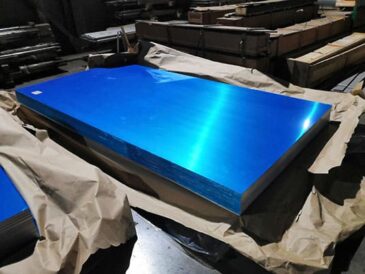
6061-T6 Aluminum Sheet
2. Key Properties of 6061-T6 for Energy Storage System Housing
| Property | Typical value | Units | Relevance to ESS housing |
|---|---|---|---|
| Density | 2.70 | g·cm⁻³ | Lightweight housings reduce transport/installation costs |
| Ultimate tensile strength (UTS) | 290–310 | MPa | Structural capacity for impact and stacking loads |
| Yield strength (0.2% offset) | 240–276 | MPa | Elastic design limits for panels/brackets |
| Elongation at break | 8–12 | % | Ductility for minor deformation without cracking |
| Young’s modulus (E) | 68–69 | GPa | Stiffness; affects deflection and resonant frequency |
| Thermal conductivity (≈) | 140–170 | W·m⁻¹·K⁻¹ | Passive heat spreading from cells / electronics |
| Coefficient of thermal expansion (CTE) | 23–24 ×10⁻⁶ | K⁻¹ | Mismatch risk with PCBs, busbars, cells |
| Electrical conductivity | ~40–45 | % IACS | Useful for chassis grounding and EMI shielding |
| Melting / solidus | ~582–652 | °C | High upper limit vs polymers; not fireproof but non-combustible |
Practical implications
- Thermal: 6061 aluminum conducts heat far better than plastics—helpful to spread hotspots and interface with heat sinks—but designers must manage CTE mismatch between aluminum and battery cell materials or PCBs.
- Mechanical: With yield ~240–276 MPa, relatively thin panels (2–6 mm) can meet many static and stacking requirements while keeping mass low.
- Manufacturability: Excellent machinability and extrudability enable integrated frames, fins or interfaces for thermal coupling and cable routing.
- Safety: Being metallic, enclosures provide flame containment, EMI shielding and robust mechanical protection compared with polymer housings.
3. Design Requirements for ESS Housing
A successful ESS housing design must satisfy multiple, often competing, requirements.
Below are the major functional families and associated design responses when using 6061-T6.
Structural & mechanical
Requirements: withstand handling drops, stacking, transport vibration and localized impact; limit deformation to preserve busbar alignment and sealing surfaces.
- Use panel thicknesses of 2–6 mm for small/medium housings; 6–12 mm for large modules or framing members under higher loads.
- Add stiffening features (beads, ribs, internal frames) to increase moment of inertia without large mass penalties.
- Employ finite element analysis (FEA) with representative load cases: drop height, stacking load (e.g., 1.5× expected stack), seismic acceleration (site-specific).

3mm 6061-T6 Aluminum Sheet
Thermal management
Requirements: remove or spread steady and transient heat from cells and power electronics; minimize hot-spot propagation.
- Integrate aluminum baseplates or heat-spreader plates in direct contact with modules for conductive cooling.
- Use extruded fin arrays or machined channels if air cooling is primary; solid contact and TIMs (thermal interface materials) for conduction to active cooling loops.
- For high-power modules, combine aluminum housing with liquid-cooling cold plates; 6061 provides robust mounting and manifold interfaces.
Environmental protection
Requirements: ingress protection (IP65/IP67 distribution depending on location), corrosion resistance in outdoor/coastal environments, condensation control.
- Provide anodize (Type II or Type III) or conversion coating plus durable topcoat for prolonged outdoor exposure.
- Seal interfaces with EPDM or silicone gaskets rated for the intended temperature range and chemical exposure (electrolyte). Ensure drainage/weep paths to avoid trapped liquids.
Electrical & EMI considerations
Requirements: chassis grounding, EMI shielding, safe isolation between HV and enclosure, and low-resistance bonding paths.
- Use the housing as a ground plane—ensure continuous conductive paths across seams (conductive gaskets, plated seam contacts) and proper bonding to earth/PE.
- If coatings are insulating, implement local grounding pads (uncoated or plated) at bonding locations or apply conductive paint selectively.
Safety & fire containment
Requirements: limit propagation of thermal runaway, provide venting/pressure relief and maintain structural integrity during off-normal events.
- Use partitioned compartments and thermal barriers (e.g., intumescent layers or ceramic blankets) between cell stacks to slow propagation.
- Provide engineered vent paths and burst panels sized to relieve predicted gas volumes; design for mechanical loads after venting and include flame arresters where applicable.
Assembly, serviceability & manufacturability
Requirements: accessible internals, modular replacement, production efficiency.
- Prefer a modular frame with removable panels secured by captive fasteners for service access.
- Design features for repeatable torque control and use captive inserts or welded bosses for reliability.
- Use common extruded profiles to reduce tooling cost at scale and enable consistent finishes.

Packaged 6061-T6 Aluminum Sheet By Huawei
4. Applications of 6061-T6 for Energy Storage System Housing
Residential & Small Commercial Battery Modules
Why 6061-T6 fits
- Light weight eases installation (roof/wall mounts).
- Good thermal conduction helps passive spreading of module heat.
- Attractive finishes (anodize / powder coat) for domestic installations.
Typical product form
- Sheet/folded enclosures, extruded frames and machined baseplates.
- Typical panel thickness: 2–4 mm for housings; 4–8 mm for baseplates or structural rails.
Rack-Mount & Data-Center Energy Storage
Why 6061-T6 fits
- High stiffness and tight tolerances for rack fits and rail-guided modules.
- Good EMI control when chassis is used as ground plane.
Typical product form
- Extruded rails, precision-machined chassis, thin panels with stiffening ribs.
- Typical thickness: 2–6 mm for side panels; 6–12 mm for load-bearing rails.
Containerized / Skid-Mounted Utility & Commercial ESS
Why 6061-T6 fits
- Structural framing and paneling that reduce overall container weight and improve handling; metal housings simplify grounding and cooling interface design.
Typical product form
- Welded/extruded frame with bolted panel system, baseplate for module racks.
- Typical thickness: 6–12 mm for panels/frames; 8–20 mm for baseplates or mounting structures.

Residential Battery Modules
Power Electronics & Inverter Enclosures
Why 6061-T6 fits
- Excellent heat-sink capability for inverters and power electronics; machinability enables integrated heat paths and mounting features.
Typical product form
- Thick base plates (heat spreader) with thin sheet side panels; machined channels or extruded fin features.
- Typical thickness: 5–15 mm for thermal baseplates; 2–4 mm for sheet covers.
Mobile / Fieldable Energy Systems
Why 6061-T6 fits
- Ruggedness, reparability in the field, and relatively low mass for transportability.
Typical product form
- Reinforced extruded frames, corner castings, shock-mount base plates.
- Typical thickness: 6–12 mm for structural elements; 3–6 mm for covers.
Telecom & Edge-Site Backup Power
Why 6061-T6 fits
- Compact enclosures that need EMI shielding, thermal handling and ease of service.
Typical product form
- Wall cabinets, small cabinets with integrated heat-spreader bases.
- Typical thickness: 2–6 mm for panels; 5–10 mm for mounting plates.
Second-Life & Repurposed Battery Modules
Why 6061-T6 fits
- Modular enclosures that allow reconfiguration, inspection and eventual recycling—aluminum supports disassembly and high recycled value.
Typical product form
- Reconfigurable racks and trays with bolted panels for quick module insertion/removal.
- Typical thickness: 3–8 mm depending on rack design.
Integration with Active Cooling Systems
Why 6061-T6 fits
- Reliable mechanical interfaces to manifolds and cold plates; can be machined to tight tolerances for seals; thermal conduction improves distribution.
Typical product form
- Housings that double as manifolds or mounting plates for cold plates; machined or extruded fluid channels.
- Typical thickness: 8–20 mm in manifold/base plates.

6061-T6 for Energy Storage System Housing
Grid-Scale Substation Structures & Custom Enclosures
Why 6061-T6 fits
- Used where weight reduction and corrosion protection lower installation costs (e.g., rooftop substations, modular power centers). 6061 offers a balance of structural capability and corrosion protection with proper treatment.
Typical product form
- Large welded frames, bolted panel systems, heavy baseplates.
- Typical thickness: 8–25 mm for heavy structural members and baseplates.
5. Advantages of 6061-T6 for Energy Storage System Housing
Technical advantages
- Strength-to-weight: compared to steel, 6061-T6 reduces mass ~2.7 g/cm³ vs steel ~7.8 g/cm³ while offering adequate yield strength—important for roof-mounted and transportable installations.
- Thermal conduction: actively improves passive thermal management vs polymer housings—useful for spreading heat and interfacing to active coolers.
- EMI shielding / electrical path: housing can act as a structural ground, aiding EMC compliance.
Manufacturing & lifecycle advantages
- Machinability & extrudability: enables integrated features (bosses, rails, fin arrays) and fast prototyping via CNC.
- Surface finishing & aesthetics: anodize/powder coat for long life and brand differentiation.
- Recyclability: aluminum is highly recyclable; end-of-life recovery yields substantial embodied energy savings vs virgin material.
Economic view
- Cost balance: 6061-T6 typically sits between commodity steels and higher-performance alloys; lower total cost vs exotic alloys when factoring machining and finish requirements.
6. Surface Treatments and Enhancements for 6061-T6 ESS Housing
Surface treatment selection balances corrosion protection, electrical conductivity for grounding, aesthetic and thermal needs.
Conversion coatings (chemfilm / Alodine alternatives)
- Thin, chromate or non-chromate conversion layers improve paint adhesion and corrosion resistance. Leave grounding points uncoated or provide bolt-through bonding methods.
Anodizing
- Type II (decorative) and Type III (hardcoat): increases corrosion and abrasion resistance. Thick anodize can be insulating—plan for grounding pads or conductive paths where EMI chassis continuity matters.
Powder coating / liquid paint
- Provides color and additional corrosion protection. Use suitable primer or conversion coat to ensure adhesion. Environmental exposure zones (coastal) may require higher-performance topcoats.
Local metallic finishes
- Nickel or copper plating at contact points (busbar attachments, grounding pads) to reduce contact resistance and galvanic concerns when bolting copper busbars to aluminum.
Sealants and gasketing
- EPDM, silicone or fluorosilicone gaskets for IP sealing; select materials compatible with electrolyte and service temperatures.
7. Comparisons with Alternative Materials
| Material | Density (g/cm³) | Yield Strength (MPa) | Thermal Conductivity (W/m·K) | Corrosion Resistance | Weldability | Typical Cost Level* | Key Characteristics |
|---|---|---|---|---|---|---|---|
| 6061-T6 Aluminum | 2.70 | 240–276 | 140–170 | Good | Good | Medium | High strength-to-weight ratio, excellent machinability, versatile |
| 5052-H32 Aluminum | 2.68 | 190–215 | 130–150 | Excellent | Excellent | Medium–Low | Superior corrosion resistance, high formability, lower strength |
| 304 Stainless Steel | 7.90 | 215–240 | 14–16 | Excellent | Good | High | Very strong, heavy, poor thermal conductivity |
| Galvanized Steel | 7.85 | 200–350 | 45–60 | Moderate | Moderate | Low | Low cost, heavy, corrosion risk at cut edges |
| Glass-Fiber Reinforced Plastic (GFRP) | 1.8–2.0 | 100–250 (directional) | 0.2–0.4 | Excellent | N/A | Medium | Lightweight, non-conductive, poor heat dissipation |
| Magnesium Alloy (AZ31B) | 1.78 | 160–200 | 75–95 | Fair | Poor–Moderate | High | Ultra-lightweight, corrosion sensitive, fire risk |
8. Conclusion
6061-T6 for energy storage system housing is an excellent mainstream choice where a balance of mechanical protection, thermal performance, manufacturability and recyclability is required.
Its thermal conductivity and EMI/grounding capabilities provide system-level advantages over polymer or composite alternatives.
Designers must account for CTE and galvanic interactions, provide appropriate surface treatments for corrosion and ensure that welded joints and fastened interfaces maintain structural and electrical continuity.
A robust development path includes early FEA for mechanical and thermal cases, prototyping (instrumented with thermocouples and strain gauges), and comprehensive validation (structural, thermal, environmental, EMI, and safety tests) prior to production.
FAQs
Q1 — Is 6061-T6 fireproof?
No metal is combustible—6061-T6 itself does not burn; however housing design must address thermal runaway gases, venting and heat propagation. Fire containment in batteries is about venting and thermal barriers, not material combustibility alone.
Q2 — What typical panel thickness should I use for a residential ESS housing?
For compact, wall-mounted residential modules, 2–4 mm sheet with internal stiffeners is a common starting point. Validate with FEA and safety margins for stacking or impact loads.
Q3 — How do I ensure good electrical grounding if I anodize the housing?
Leave dedicated grounding/bonding pads un-anodized (mechanically mask before anodizing) or provide plated inserts/bonding studs. Use conductive gaskets at seams where continuous EMI shielding is required.
Q4 — Is welding 6061-T6 recommended for housings?
Yes, but be aware that fusion welding softens the HAZ (reduces local strength). Use friction stir welding (FSW) where possible to maintain joint strength; otherwise design welds with mechanical redundancy or accept local reduction and compensate by geometry.
Q5 — How does 6061-T6 compare to 5052 for marine/coastal ESS installations?
5052 (an Al-Mg non-heat treatable alloy) has superior corrosion resistance in chloride-rich environments and better formability. For prolonged immersion or continuously wet coastal exposure, 5052 or additional coatings on 6061 are preferred.