1. Introduction
PVD Anodized Mirror Aluminum Sheet is a premium aluminum surface-finish product that combines a highly reflective aluminum substrate with anodizing and Physical Vapor Deposition (PVD) technology.
It provides a bright metallic appearance, surface protection, and customizable decorative effects.
Unlike ordinary mill-finish aluminum sheet, mirror aluminum requires careful control of the substrate and surface preparation.
Rolling quality, surface roughness, polishing, brightening, cleaning, and subsequent finishing processes all influence the final appearance.
The terms mirror, anodized, and PVD describe different aspects of the product. The mirror finish refers mainly to the highly reflective surface.
Anodizing creates an integral aluminum oxide layer, while PVD deposits a thin surface coating through a vacuum-based process.
Anodizing can improve corrosion resistance, abrasion resistance, and surface durability.
Because the anodic oxide follows the underlying surface condition, the quality of the aluminum substrate remains critical to the final appearance.

PVD Anodized Mirror Aluminum Sheet
2. What Is PVD Anodized Mirror Aluminum Sheet?
2.1 Mirror Aluminum Sheet
Mirror aluminum sheet starts with an aluminum substrate that receives controlled surface treatment to achieve a smooth and highly reflective appearance.
Depending on the required finish, manufacturers may use precision rolling, mechanical polishing, buffing, chemical brightening, or electrochemical brightening.
These processes reduce surface irregularities and improve the optical quality of the aluminum.
The mirror effect therefore does not simply come from anodizing or PVD. It starts with a properly selected and carefully processed aluminum substrate.
2.2 Anodized Aluminum Surface
Anodizing is an electrochemical process that converts the aluminum surface into an integral anodic oxide layer.
Unlike conventional paint, the anodic oxide develops from the aluminum substrate itself. It can improve:
- Corrosion resistance
- Surface durability
- Abrasion resistance
- Decorative appearance
- Color stability
- Surface protection
Anodized aluminum can have a clear or colored finish. The final appearance depends on the alloy, temper, surface preparation, anodizing conditions, oxide thickness, coloring method, and sealing process.
2.3 PVD Surface Treatment
PVD, or Physical Vapor Deposition, is a vacuum-based surface treatment in which a coating material is vaporized and deposited onto a prepared substrate.
For aluminum sheet, PVD can create decorative metallic finishes and controlled surface colors, including:
- Silver
- Gold
- Champagne
- Bronze
- Black
- Rose gold
- Customized metallic colors
PVD should be considered a surface engineering and decorative finishing technology, rather than simply another form of anodizing.
2.4 How Mirror, Anodizing and PVD Work Together
The three technologies have different functions:
| Process / Feature | Main Function |
|---|---|
| Aluminum substrate | Provides the structural base |
| Mirror preparation | Creates a highly reflective surface |
| Anodizing | Forms an integral aluminum oxide layer |
| PVD | Provides decorative or functional surface effects |
| Sealing / protection | Helps maintain surface stability |
A typical process concept can be represented as:
Aluminum Substrate → Mirror Surface Preparation → Anodizing → PVD Finishing
The exact structure and sequence may vary according to the manufacturer’s process and the intended application.
2.5 Why Surface Preparation Matters
A high-quality PVD coating cannot completely compensate for a poor aluminum substrate.
Mirror surfaces can reveal relatively small defects, including scratches, pits, rolling marks, streaks, and uneven surface textures.
This is especially important for anodized aluminum because the anodic oxide does not function like a thick filler layer.
The underlying surface characteristics can remain visible through the anodic finish.
Therefore, consistent substrate quality and surface preparation are essential for achieving uniform PVD anodized mirror aluminum.
3. Materials and Alloy Selection
The aluminum alloy affects the surface appearance, processing behavior, mechanical performance, and anodizing response of the final product.
For mirror-finish aluminum, manufacturers should consider both surface quality and alloy chemistry, rather than selecting an alloy based only on strength.
3.1 Common Alloys for Mirror Aluminum
| Alloy | General Characteristics | Typical Consideration |
|---|---|---|
| 1050 | High aluminum content, good surface quality | Reflective and decorative applications |
| 1060 | High purity, good workability | Mirror and decorative sheet |
| 1070 | Very high aluminum content | High-reflectivity applications |
| 1100 | Good workability and corrosion resistance | General decorative applications |
| 3003 | Higher strength than 1xxx alloys | Applications requiring additional strength |
| 5005 | Good anodizing response | Architectural and decorative applications |
3.2 Why Aluminum Purity Matters
Higher-purity aluminum alloys can be advantageous when surface appearance is the primary requirement.
Mirror surfaces make small imperfections more visible. Inclusions, scratches, pits, rolling marks, streaks, and other defects can remain noticeable after polishing, anodizing, and PVD treatment.
3.3 Alloy and Anodizing Compatibility
Alloy selection also influences the appearance of anodized aluminum.
Different alloys can respond differently to anodizing because of their chemical composition and microstructure.
As a result, the same nominal anodizing color may appear differently on different alloys.
This becomes particularly important for PVD mirror products because their high-gloss surface makes differences in color, brightness, and surface uniformity more noticeable.
3.4 Choosing the Alloy for the Application
For decorative applications where surface appearance is the main requirement, 1050, 1060, and 1070 may be considered when their mechanical and processing properties are sufficient.
For applications requiring higher strength, 3003 may provide a better balance between surface quality and mechanical performance.
5005 is also commonly considered for applications where anodized appearance and architectural performance are important.
The final selection should always consider both surface requirements and end-use performance.

PVD Anodized Mirror Aluminum Sheet Display
4. Anodizing Process for Mirror Aluminum Sheet
Anodizing is an important surface-treatment stage for PVD Anodized Mirror Aluminum Sheet.
It forms an integral aluminum oxide layer that improves surface protection, durability, and corrosion resistance while maintaining the prepared mirror appearance.
4.1 Surface Pretreatment
Before anodizing, the mirror aluminum surface undergoes controlled cleaning and conditioning.
A typical process includes:
Degreasing → Cleaning → Deoxidizing → Brightening → Rinsing
This removes oil, dust, processing residues, and surface oxides.
Proper pretreatment is essential because defects or contamination on the mirror surface can remain visible after anodizing.
4.2 Electrochemical Anodizing
During anodizing, the aluminum sheet serves as the anode in an electrolytic process.
An electric current forms a controlled aluminum oxide layer on the surface.
Key process parameters include:
- Electrolyte composition
- Bath temperature
- Current density
- Processing time
- Oxide-layer thickness
Consistent control of these parameters helps achieve uniform surface appearance and stable coating performance.
4.3 Anodic Oxide Layer
The anodic oxide layer can improve:
- Corrosion resistance
- Surface hardness
- Abrasion resistance
- Surface durability
- Decorative stability
The required oxide thickness depends on the application. Interior decorative products and exterior architectural products may require different anodizing specifications.
4.4 Coloring and Sealing
The anodized surface can remain clear or receive a controlled color through suitable coloring methods.
After anodizing and coloring, sealing helps reduce the porosity of the oxide layer and improve surface stability and corrosion resistance.
For PVD mirror aluminum, anodizing and PVD should be treated as a coordinated finishing system to achieve consistent color, gloss, and surface appearance.
5. PVD Coating Process
Physical Vapor Deposition (PVD) is a vacuum-based surface treatment used to create a thin decorative or functional coating on anodized mirror aluminum.
It can provide metallic colors, enhanced surface appearance, and additional surface protection.
5.1 Surface Cleaning
Before PVD treatment, the aluminum surface must be thoroughly cleaned to remove:
- Oil and grease
- Dust and particles
- Moisture
- Chemical residues
A clean surface helps improve coating adhesion and reduce visible defects.
5.2 Vacuum and Surface Activation
The prepared aluminum sheet is placed inside a vacuum chamber. The chamber is evacuated to create a controlled deposition environment.
Depending on the PVD system, plasma or ion treatment may further clean and activate the surface before coating. This helps prepare the substrate for uniform deposition.
5.3 PVD Deposition
During deposition, the coating material is vaporized and deposited onto the prepared aluminum surface under controlled vacuum conditions.
Depending on the required finish, PVD systems can use metallic or compound coating materials based on elements such as titanium, chromium, zirconium, or aluminum.
The coating system is selected according to the required:
- Color
- Appearance
- Optical performance
- Surface durability
- Application environment
5.4 Color and Coating Uniformity
PVD allows manufacturers to produce a wide range of metallic finishes, including silver, gold, champagne, bronze, black, and rose gold.
For consistent results, manufacturers control coating thickness, deposition parameters, substrate temperature, and product positioning.
Color should preferably be confirmed against an approved sample because the final appearance can vary with the substrate, surface preparation, coating composition, and lighting conditions.

Interior Decoration Used Mirror Aluminum Sheet
6. Surface Structure and Working Principle
PVD Anodized Mirror Aluminum Sheet combines a reflective aluminum substrate with an anodized surface and a PVD coating.
Each layer performs a different function to achieve the required appearance, protection, and surface performance.
6.1 Surface Structure
A typical structure can be described as:
PVD Coating → Anodized Layer → Mirror-Finished Aluminum Surface → Aluminum Substrate
- Aluminum Substrate: Provides the basic strength, formability, and corrosion resistance.
- Mirror Surface: Provides high reflectivity and a smooth, bright appearance.
- Anodized Layer: Adds an integral oxide layer that improves corrosion resistance, surface hardness, and durability.
- PVD Coating: Provides metallic colors, decorative effects, and additional surface protection.
The exact layer structure may vary depending on the manufacturer and the selected surface treatment system.
6.2 Working Principle
The performance of PVD anodized mirror aluminum comes from the combined effect of the substrate and surface treatments.
First, the aluminum surface undergoes precision finishing to achieve the required smoothness and reflectivity.
Anodizing then forms a controlled oxide layer on the aluminum surface. After proper preparation, the PVD process deposits a thin coating under controlled vacuum conditions.
The mirror surface mainly determines the optical appearance, while anodizing and PVD contribute to surface protection, color, durability, and decorative performance.
6.3 Key Relationship Between Each Layer
| Component | Main Function |
|---|---|
| Aluminum substrate | Strength and formability |
| Mirror finish | Reflectivity and smooth appearance |
| Anodized layer | Corrosion and wear protection |
| PVD coating | Color, decoration, and additional surface protection |
Therefore, the final performance depends on the quality of the aluminum substrate, mirror preparation, anodizing process, and PVD coating rather than on any single treatment alone.
7. Key Properties of PVD Anodized Mirror Aluminum Sheet
PVD Anodized Mirror Aluminum Sheet combines the optical quality of a mirror surface with the protective and decorative functions of anodizing and PVD coating. Its key properties include:
7.1 High Reflectivity
The highly polished surface provides a smooth, bright, and reflective appearance.
Final reflectivity depends on alloy, surface roughness, polishing quality, and processing conditions.
7.2 Corrosion Resistance
The anodized layer provides additional protection against moisture, oxidation, and environmental exposure.
Actual corrosion performance depends on the anodizing system and application environment.
7.3 Surface Hardness and Durability
Anodizing improves surface hardness, while the PVD coating can provide additional wear and surface protection.
Performance varies according to the selected coating system and processing parameters.
7.4 Premium Metallic Appearance
PVD technology allows manufacturers to produce metallic finishes such as silver, gold, champagne, bronze, black, and rose gold.
Color and gloss should be confirmed against an approved sample.
7.5 Good Formability
Aluminum provides a lightweight and workable substrate. Formability depends mainly on the selected alloy, temper, thickness, and surface-treatment system.
7.6 Surface Uniformity
A high-quality mirror substrate and controlled anodizing and PVD processes help maintain consistent gloss, color, and surface appearance across the sheet.
Overall, PVD anodized mirror aluminum sheet offers a combination of reflective appearance, corrosion protection, surface durability, decorative flexibility, and lightweight performance, making it suitable for demanding architectural and decorative applications.

PVD Anodized Mirror Aluminum Sheet for Elevator
8. PVD Anodized Mirror Aluminum vs. Other Aluminum Finishes
PVD Anodized Mirror Aluminum combines a high-reflectivity mirror surface with anodizing and PVD coating.
Compared with conventional aluminum finishes, it offers a combination of reflectivity, metallic appearance, surface protection, and color flexibility.
| Finish | Reflectivity | Surface Appearance | Color Options | Key Characteristics | Typical Applications |
|---|---|---|---|---|---|
| Mill Finish Aluminum | Low–Moderate | Natural metallic | Limited | Simple and economical | General fabrication |
| Brushed Aluminum | Moderate | Linear, satin-like | Moderate | Directional texture, decorative appearance | Interior panels, equipment |
| Mirror Aluminum | High | Bright, reflective | Limited | High reflectivity | Reflectors, decoration |
| Anodized Aluminum | Moderate–High | Bright, matte, or colored | Moderate | Good corrosion and wear resistance | Architecture, interiors |
| PVD Anodized Mirror Aluminum | High | Metallic mirror | Wide | High reflectivity, surface protection, customizable metallic colors | Premium architecture, interiors, displays |
Key Differences
- Mirror Aluminum: Mainly focuses on high reflectivity and a bright metallic appearance.
- Anodized Aluminum: Provides surface protection, durability, and controlled decorative finishes.
- Brushed Aluminum: Creates a directional surface texture rather than a mirror effect.
- PVD Anodized Mirror Aluminum: Combines mirror reflectivity, anodized surface protection, and PVD metallic colors in one engineered finish.
For applications requiring a premium reflective appearance, customized metallic colors, and enhanced surface performance, PVD anodized mirror aluminum offers a versatile surface-finishing solution.
9. Specifications of PVD Anodized Mirror Aluminum Sheet
PVD Anodized Mirror Aluminum Sheet can be customized in alloy, temper, dimensions, mirror finish, anodizing treatment, and PVD color.
The final specification should be selected according to the application, forming requirements, surface appearance, and service environment.
| Parameter | Specification / Options |
|---|---|
| Product Name | PVD Anodized Mirror Aluminum Sheet |
| Aluminum Alloy | 1050, 1060, 1100, 3003, or customized |
| Temper | O, H12, H14, H18, or customized |
| Product Form | Sheet / Coil |
| Thickness | Customized according to application |
| Width | Customized |
| Length | Customized |
| Surface Finish | High-Reflective Mirror |
| Anodizing | Customized oxide layer and finish |
| PVD Finish | Silver, Gold, Champagne, Bronze, Black, Titanium-like, Custom |
| Reflectivity | Customized according to optical requirements |
| Surface | Smooth, uniform, low-defect mirror surface |
| Protective Film | Available |
| Standards | ASTM, EN, JIS, or customer specification |
| Inspection | Dimensional, surface, reflectivity, anodizing and PVD coating inspection |
| Packaging | Export-standard seaworthy packaging |
10. Applications of PVD Anodized Mirror Aluminum Sheet
The combination of lightweight aluminum, mirror reflectivity, anodizing, and PVD decoration gives this material a broad range of potential applications.
Its strongest application areas are generally those where visual appearance is important but the project also benefits from aluminum’s low weight and fabricability.
10.1 Architectural Wall Panels
PVD anodized mirror aluminum can be used for decorative wall systems, feature walls, entrance areas, columns, and other architectural surfaces.
The reflective finish can make a space appear brighter and visually larger.
Compared with heavier metallic materials, aluminum also provides a lower-density solution for large decorative surfaces.
For exterior architecture, however, the coating system should be selected according to the actual exposure environment rather than assuming that every decorative PVD finish has identical outdoor durability.
10.2 Elevator Interiors
Elevator cabins require surfaces that combine:
- Attractive appearance
- Low weight
- Easy fabrication
- Surface durability
- Easy maintenance
PVD anodized mirror aluminum can provide a metallic decorative effect without the weight associated with thicker stainless-steel panels.
It can be processed into wall panels, ceiling components, trim, and decorative inserts.
10.3 Interior Decoration
Typical interior applications include:
- Feature walls
- Decorative ceiling panels
- Partitions
- Reception areas
- Hotel interiors
- Commercial interiors
- Furniture panels
Different PVD colors can also be combined to create contrast between architectural elements.
The reflective surface is particularly useful when designers want a metallic appearance without relying exclusively on polished stainless steel.
10.4 Retail and Display Systems
Retail environments often require visually distinctive materials.
PVD mirror aluminum can be used for:
- Display panels
- Product backgrounds
- Brand walls
- Decorative shelves
- Store fixtures
- Exhibition structures
The ability to specify different metallic colors allows the material to support brand-specific visual design.
10.5 Lighting Reflectors
The reflective characteristics of mirror aluminum make it relevant to reflector applications.
The exact suitability depends on the required optical performance, surface reflectivity, wavelength range, thermal environment, and coating design.
For technical reflector applications, the buyer should specify the required optical characteristics rather than relying only on the term “mirror aluminum.”
10.6 Furniture and Decorative Components
PVD anodized mirror aluminum can also be fabricated into:
- Cabinet panels
- Furniture trim
- Decorative inserts
- Table components
- Interior partitions
Its low density can be useful where designers want a large metallic-looking surface without adding excessive structural weight.
10.7 Automotive and Transportation Interiors
The material can be considered for selected decorative interior components where visual appearance and low weight are important.
Potential applications include:
- Interior trim
- Decorative panels
- Console elements
- Door trim
- Specialty interior components
However, automotive applications require application-specific testing for abrasion, chemicals, temperature, UV exposure, and cleaning agents.
10.8 Signage and Exhibition Displays
Mirror aluminum can provide strong visual contrast for:
- Premium signage
- Exhibition booths
- Brand displays
- Decorative lettering
- Retail signs
PVD coloring further expands the design possibilities beyond conventional silver mirror aluminum.
11. Conclusion
PVD Anodized Mirror Aluminum Sheet is a multi-stage engineered aluminum surface, not simply a decorative aluminum coating.
Its performance begins with the aluminum substrate. The alloy, temper, rolling quality, flatness, and surface condition establish the foundation for the final appearance.
The mirror-finishing stage then creates the high-reflectivity surface. Anodizing provides a controlled oxide layer and contributes to surface durability and environmental resistance.
Finally, PVD deposition introduces a precisely controlled decorative or functional thin film.
A high-quality PVD film cannot compensate for a defective mirror substrate. Likewise, excellent mirror finishing cannot guarantee a consistent final product if anodizing or PVD parameters fluctuate.
For manufacturers and suppliers, these details also provide the basis for developing stable, repeatable PVD anodized mirror aluminum products for architectural, decorative, lighting, transportation, retail, and other specialized applications.
FAQs
1. What is PVD Anodized Mirror Aluminum Sheet?
PVD Anodized Mirror Aluminum Sheet combines a high-reflective mirror surface with an anodized layer and a PVD coating. It provides a metallic appearance, surface protection, and customizable colors.
2. What is the difference between PVD and anodizing?
Anodizing forms a protective aluminum oxide layer through an electrochemical process. PVD deposits a thin film onto the prepared surface in a vacuum environment. The two processes can be combined to achieve both protection and decorative effects.
3. What aluminum alloys are commonly used?
Common options include 1050, 1060, 1100, and 3003. The appropriate alloy depends on the required surface quality, strength, formability, and application.
4. What PVD colors are available?
Common colors include silver, gold, champagne, bronze, black, and titanium-like finishes. Custom colors can also be developed according to project requirements.
5. Is PVD Anodized Mirror Aluminum suitable for outdoor applications?
It can be used outdoors when the anodizing and PVD system is specified for the intended exposure conditions. UV radiation, humidity, temperature changes, and corrosion requirements should be considered before selection.
6. Can it be cut and bent?
Yes. It can generally be cut, punched, and bent, but fabrication parameters should be selected carefully to prevent scratches, cracking, or damage to the finished surface.
7. How is the mirror surface quality evaluated?
Key factors include reflectivity, gloss, surface roughness, flatness, color consistency, and visible surface defects such as scratches, pits, and stains.
8. Can the PVD finish be customized?
Yes. Customers can specify the PVD color, surface appearance, dimensions, alloy, temper, and other technical requirements. For projects with strict appearance requirements, an approved sample is recommended.
9. What information is needed for a quotation?
A typical inquiry should include alloy, temper, thickness, width, length, mirror finish, anodizing requirements, PVD color, quantity, application, and packaging requirements.
10. How should PVD Anodized Mirror Aluminum be maintained?
Use a soft cloth and a mild, compatible cleaning solution. Avoid abrasive pads, harsh chemicals, and rough cleaning methods that may damage the anodized or PVD surface.
Casting production process and its introduction
The purpose of melting and casting is to produce alloys with satisfactory composition and high purity of melt, so as to create favorable conditions for casting alloys of various shapes.
Melting and casting process steps: batching --- feeding --- melting --- stirring after melting, slag removal --- pre-analysis sampling --- adding alloy to adjust the composition, stirring --- refining --- static Setting——Guide furnace casting.
Hot rolling production process and its introduction
- 1. Hot rolling generally refers to rolling above the metal recrystallization temperature;
- 2. During the hot rolling process, the metal has both hardening and softening processes. Due to the influence of deformation speed, as long as the recovery and recrystallization process is too late, there will be a certain work hardening;
- 3. The recrystallization of the metal after hot rolling is incomplete, that is, the coexistence of recrystallized structure and deformed structure;
- 4. Hot rolling can improve the processing performance of metals and alloys, reduce or eliminate casting defects.
- 1. The casting and rolling temperature is generally between 680°C and 700°C. The lower the better, the stable casting and rolling line usually stops once a month or more to re-stand. During the production process, it is necessary to strictly control the liquid level of the front tank to prevent low liquid level;
- 2. Lubrication uses C powder with incomplete combustion of gas for lubrication, which is also one of the reasons for the dirty surface of casting and rolling materials;
- 3. The production speed is generally between 1.5m/min-2.5m/min;
- 4. The surface quality of products produced by casting and rolling is generally relatively low, and generally cannot meet products with special physical and chemical performance requirements.
- 1. Cold rolling refers to the rolling production method below the recrystallization temperature;
- 2. There will be no dynamic recrystallization during the rolling process, and the temperature will rise to the recovery temperature at most, and the cold rolling will appear in a work hardening state, and the work hardening rate will be large;
- 3. The cold-rolled sheet and strip have high dimensional accuracy, good surface quality, uniform structure and performance, and products in various states can be obtained with heat treatment;
- 4. Cold rolling can roll out thin strips, but at the same time, it has the disadvantages of high energy consumption for deformation and many processing passes.
- 1. Finishing is a processing method to make the cold-rolled sheet meet the customer's requirements, or to facilitate the subsequent processing of the product;
- 2. The finishing equipment can correct the defects produced in the hot rolling and cold rolling production process, such as cracked edge, oily, poor plate shape, residual stress, etc. It needs to ensure that no other defects are brought into the production process;
- 3. There are various finishing equipments, mainly including cross-cutting, slitting, stretching and straightening, annealing furnace, slitter, etc.
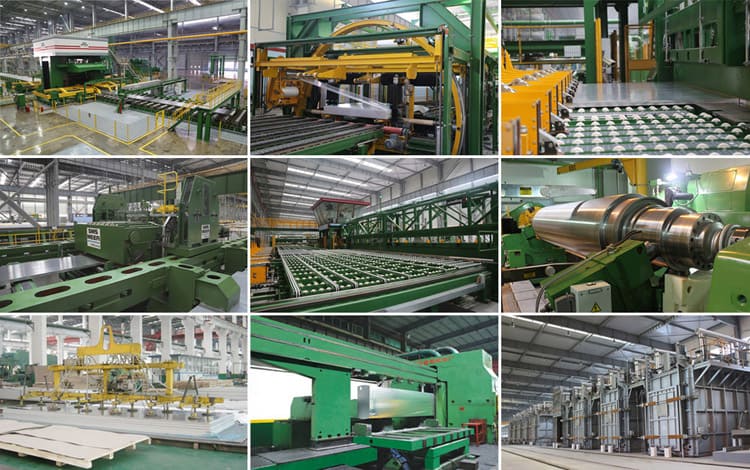
Casting and rolling process
Casting and rolling process: liquid metal, front box (liquid level control), casting and rolling machine (lubrication system, cooling water), shearing machine, coiling machine.
Cold rolling production process
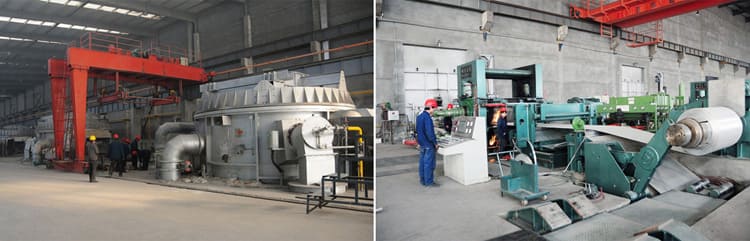
Introduction to finishing production process
Aluminum alloy has the characteristics of low density, good mechanical properties, good processing performance, non-toxic, easy to recycle, excellent electrical conductivity, heat transfer and corrosion resistance, so it has a wide range of applications.
Aerospace: used to make aircraft skins, fuselage frames, girders, rotors, propellers, fuel tanks, wall panels and landing gear struts, as well as rocket forging rings, spacecraft wall panels, etc.
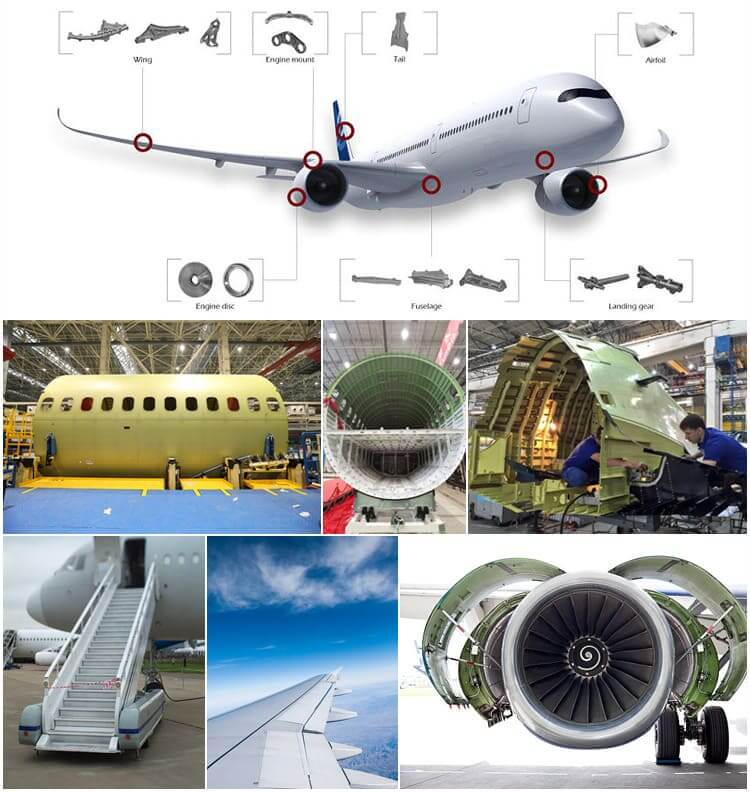
Aluminum alloy used for aerospace
Transportation: used for car body structure materials of automobiles, subway vehicles, railway passenger cars, high-speed passenger cars, doors and windows, shelves, automotive engine parts, air conditioners, radiators, body panels, wheels and ship materials.
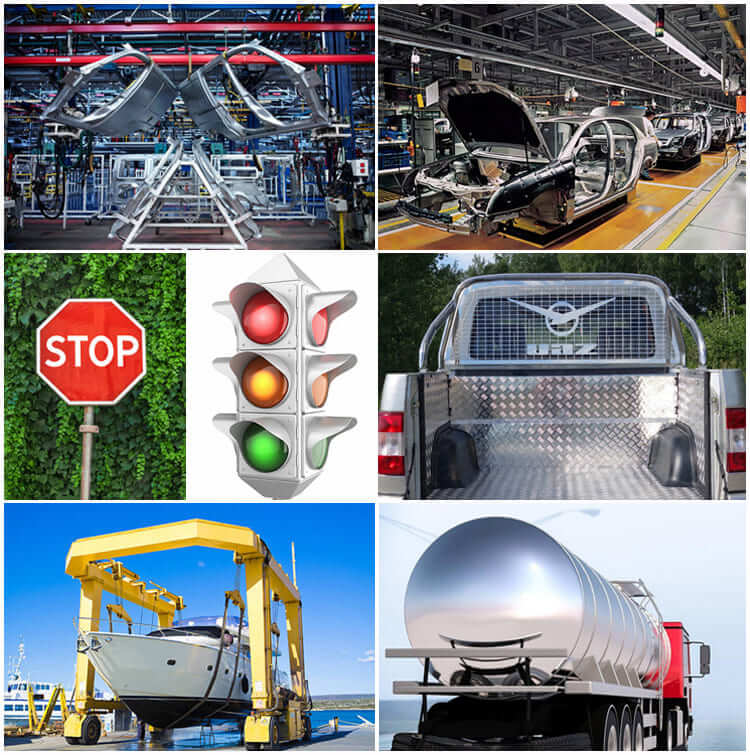
Traffic application
Packaging: All-aluminum pop cans are mainly used as metal packaging materials in the form of thin plates and foils, and are made into cans, lids, bottles, barrels, and packaging foils. Widely used in the packaging of beverages, food, cosmetics, medicines, cigarettes, industrial products, medicines, etc.
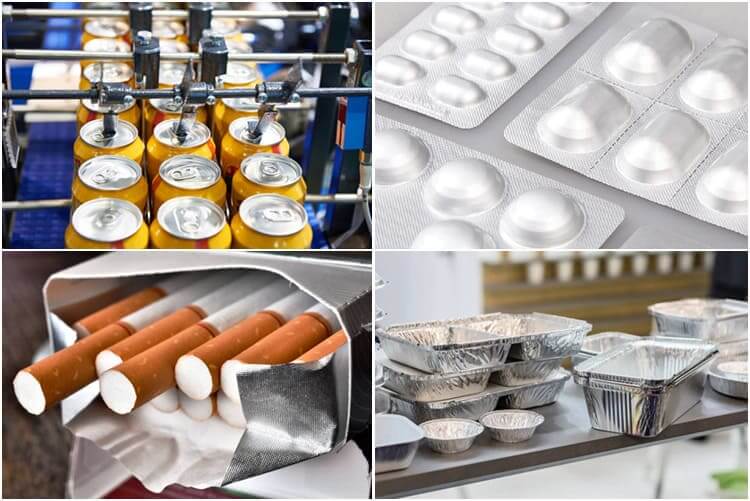
Packaging application
Printing: Mainly used to make PS plates, aluminum-based PS plates are a new type of material in the printing industry, used for automatic plate making and printing.
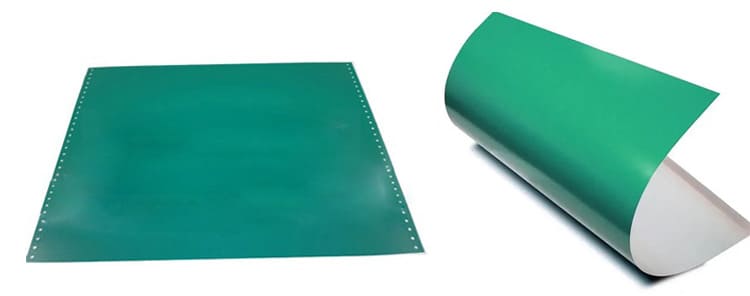
PS printing
Architectural decoration: aluminum alloy is widely used in building structures, doors and windows, suspended ceilings, decorative surfaces, etc. due to its good corrosion resistance, sufficient strength, excellent process performance and welding performance.
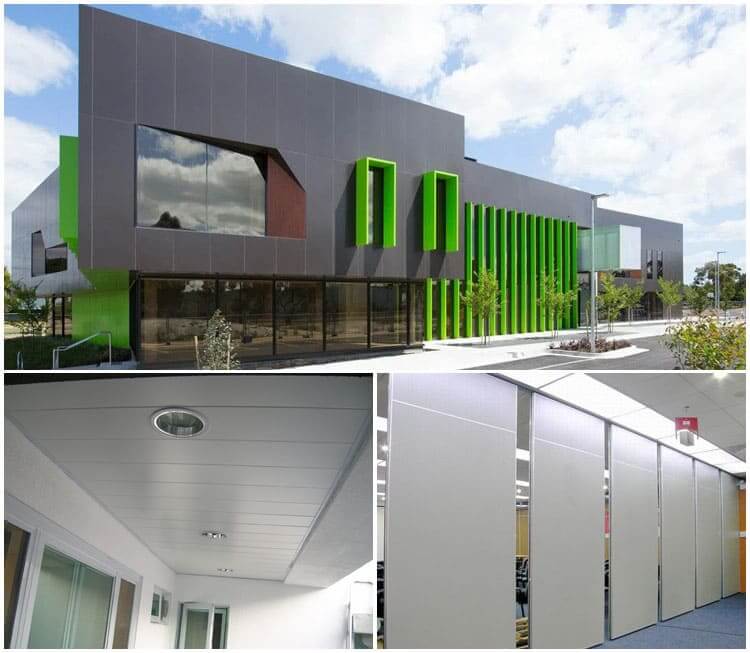
Aluminum alloy construction application
Electronic products: computers, mobile phones, refrigerator shells, radiators, etc.
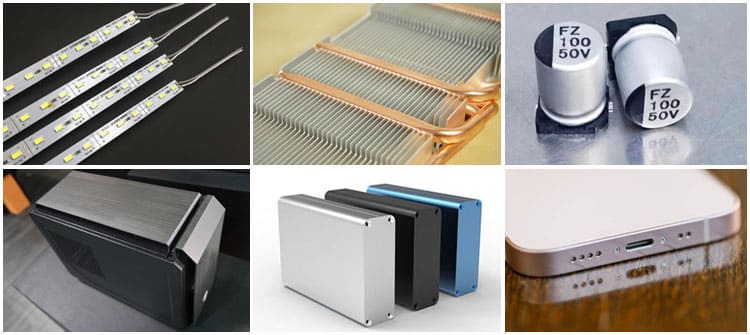
Electronic product application
Kitchen supplies: aluminum pots, aluminum basins, rice cooker liners, household aluminum foil, etc.
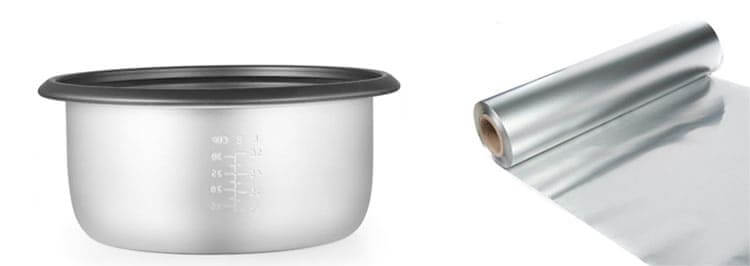
Kitchen application
Packaging Of Aluminum Sheet/Coil
Every detail of packaging is where we pursue perfect service. Our packaging process as a whole is as follows:
Lamination: clear film, blue film, micro-mucosal, high-mucosal, laser cutting film (2 brands, Novacell and Polyphem);
Protection: paper corner protectors, anti-pressure pads;
drying: desiccant;
Tray: fumigated harmless wooden tray, reusable iron tray;
Packing: Tic-tac-toe steel belt, or PVC packing belt;
Material Quality: Completely free from defects such as white rust, oil spots, rolling marks, edge damage, bends, dents, holes, break lines, scratches, etc., no coil set.
Port: Qingdao or other ports in China.
Lead time: 15-45 days.
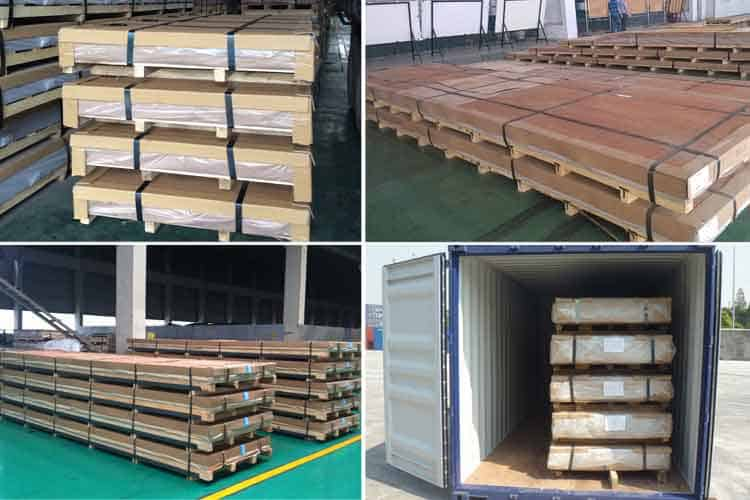
Aluminum sheet/plate packaging process
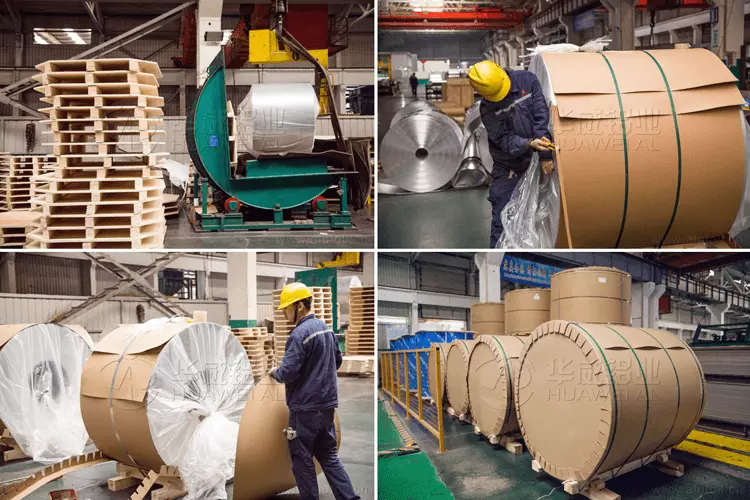
Aluminum coil packaging process
F: Are you a manufacturer or a trader?
Q: We are a manufacturer, our factory is at No.3 Weier Road, Industrial Zone, Gongyi, Henan, China.
F: What is the MOQ for ordering the product?
Q: Our MOQ is 5 tons, and some special products will have a minimum order quantity of 1 or 2 tons.
F: How long is your lead time?
Q: Generally our lead time is about 30 days.
F: Do your products have quality assurance?
Q: Yes, if there is a quality problem with our products, we will compensate the customer until they are satisfied.
Related Products


Latest Blogs
Common Alloys of Reefer Truck Used PE Coated Aluminum Coil
Discover common alloys of reefer truck used PE coated aluminum coil, including 3003, 3004, and 3105. Designed for excellent corrosion resistance, formability, and long-lasting outdoor performance.
Is Aluminum Conductive? Properties, Uses & Benefits Explained
Is aluminum conductive? Discover aluminum's electrical conductivity, key advantages, and why it is widely used in power transmission and industrial applications.
Unlocking Sustainability: The Truth About Aluminum Foil Recycling
Is Aluminum Foil Recyclable? Learn how aluminum foil can be recycled, how to prepare it properly, and why recycling helps reduce waste and save resources.
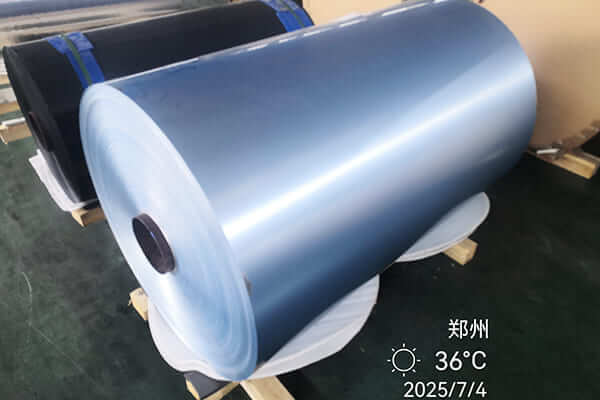
Coated Aluminum Foil for Packaging Applications | Strong & Reliable
High-quality coated aluminum foil for packaging applications, offering excellent barrier protection, durability, and consistent performance.