1. Panimula
PVD Anodized Mirror Aluminum Sheet is a premium aluminum surface-finish product that combines a highly reflective aluminum substrate with anodizing and Physical Vapor Deposition (PVD) Teknolohiya.
It provides a bright metallic appearance, proteksyon sa ibabaw, and customizable decorative effects.
Unlike ordinary mill-finish aluminum sheet, mirror aluminum requires careful control of the substrate and surface preparation.
Rolling quality, pagkamagaspang ng ibabaw, buli na, brightening, paglilinis, and subsequent finishing processes all influence the final appearance.
The terms salamin, anodized, at PVD describe different aspects of the product. Ang tapos na ang salamin refers mainly to the highly reflective surface.
Pagpapahid ng langis creates an integral aluminum oxide layer, habang ang PVD deposits a thin surface coating through a vacuum-based process.
Anodizing can improve corrosion resistance, abrasion resistance, and surface durability.
Because the anodic oxide follows the underlying surface condition, the quality of the aluminum substrate remains critical to the final appearance.

PVD Anodized Mirror Aluminum Sheet
2. What Is PVD Anodized Mirror Aluminum Sheet?
2.1 Mirror Aluminum Sheet
Mirror aluminum sheet starts with an aluminum substrate that receives controlled surface treatment to achieve a smooth and highly reflective appearance.
Depending on the required finish, manufacturers may use precision rolling, mekanikal na buli, buffing, chemical brightening, or electrochemical brightening.
These processes reduce surface irregularities and improve the optical quality of the aluminum.
The mirror effect therefore does not simply come from anodizing or PVD. It starts with a properly selected and carefully processed aluminum substrate.
2.2 Anodized Aluminum Surface
Anodizing is an electrochemical process that converts the aluminum surface into an integral anodic oxide layer.
Unlike conventional paint, the anodic oxide develops from the aluminum substrate itself. It can improve:
- Paglaban sa kaagnasan
- Surface durability
- Abrasion resistance
- Decorative appearance
- Color stability
- Surface protection
Anodized aluminum can have a clear or colored finish. The final appearance depends on the alloy, Pamahiin, surface preparation, anodizing conditions, kapal ng oksido, coloring method, and sealing process.
2.3 PVD Surface Treatment
PVD, or Physical Vapor Deposition, is a vacuum-based surface treatment in which a coating material is vaporized and deposited onto a prepared substrate.
For aluminum sheet, PVD can create decorative metallic finishes and controlled surface colors, kasama na ang:
- Pilak
- Ginto
- Champagne
- Tanso
- Itim
- Rose gold
- Customized metallic colors
PVD should be considered a surface engineering and decorative finishing technology, rather than simply another form of anodizing.
2.4 How Mirror, Anodizing and PVD Work Together
The three technologies have different functions:
| Proseso / Tampok | Main Function |
|---|---|
| Aluminum substrate | Provides the structural base |
| Mirror preparation | Creates a highly reflective surface |
| Pagpapahid ng langis | Forms an integral aluminum oxide layer |
| PVD | Provides decorative or functional surface effects |
| Pagbubuklod / protection | Helps maintain surface stability |
A typical process concept can be represented as:
Aluminum Substrate → Mirror Surface Preparation → Anodizing → PVD Finishing
The exact structure and sequence may vary according to the manufacturer’s process and the intended application.
2.5 Why Surface Preparation Matters
A high-quality PVD coating cannot completely compensate for a poor aluminum substrate.
Mirror surfaces can reveal relatively small defects, including scratches, pits, mga rolling mark, mga guhit, and uneven surface textures.
This is especially important for anodized aluminum because the anodic oxide does not function like a thick filler layer.
The underlying surface characteristics can remain visible through the anodic finish.
Kaya nga, consistent substrate quality and surface preparation are essential for achieving uniform PVD anodized mirror aluminum.
3. Materials and Alloy Selection
The aluminum alloy affects the surface appearance, processing behavior, mekanikal na pagganap, and anodizing response of the final product.
For mirror-finish aluminum, manufacturers should consider both surface quality and alloy chemistry, rather than selecting an alloy based only on strength.
3.1 Common Alloys for Mirror Aluminum
| haluang metal | General Characteristics | Typical Consideration |
|---|---|---|
| 1050 | High aluminum content, magandang kalidad ng ibabaw | Reflective and decorative applications |
| 1060 | Mataas na kadalisayan, good workability | Mirror and decorative sheet |
| 1070 | Very high aluminum content | High-reflectivity applications |
| 1100 | Good workability and corrosion resistance | General decorative applications |
| 3003 | Higher strength than 1xxx alloys | Applications requiring additional strength |
| 5005 | Good anodizing response | Architectural and decorative applications |
3.2 Why Aluminum Purity Matters
Higher-purity aluminum alloys can be advantageous when surface appearance is the primary requirement.
Mirror surfaces make small imperfections more visible. Inclusions, mga gasgas na, pits, mga rolling mark, mga guhit, and other defects can remain noticeable after polishing, pag anod ng, and PVD treatment.
3.3 Alloy and Anodizing Compatibility
Alloy selection also influences the appearance of anodized aluminum.
Different alloys can respond differently to anodizing because of their chemical composition and microstructure.
As a result, the same nominal anodizing color may appear differently on different alloys.
This becomes particularly important for PVD mirror products because their high-gloss surface makes differences in color, brightness, and surface uniformity more noticeable.
3.4 Choosing the Alloy for the Application
For decorative applications where surface appearance is the main requirement, 1050, 1060, at 1070 may be considered when their mechanical and processing properties are sufficient.
For applications requiring higher strength, 3003 may provide a better balance between surface quality and mechanical performance.
5005 is also commonly considered for applications where anodized appearance and architectural performance are important.
The final selection should always consider both surface requirements and end-use performance.

PVD Anodized Mirror Aluminum Sheet Display
4. Anodizing Process for Mirror Aluminum Sheet
Anodizing is an important surface-treatment stage for PVD Anodized Mirror Aluminum Sheet.
It forms an integral aluminum oxide layer that improves surface protection, tibay ng katawan, and corrosion resistance while maintaining the prepared mirror appearance.
4.1 Surface Pretreatment
Before anodizing, the mirror aluminum surface undergoes controlled cleaning and conditioning.
A typical process includes:
Degreasing → Cleaning → Deoxidizing → Brightening → Rinsing
This removes oil, alikabok na, processing residues, and surface oxides.
Proper pretreatment is essential because defects or contamination on the mirror surface can remain visible after anodizing.
4.2 Electrochemical Anodizing
During anodizing, the aluminum sheet serves as the anode in an electrolytic process.
An electric current forms a controlled aluminum oxide layer on the surface.
Key process parameters include:
- Electrolyte composition
- Bath temperature
- Current density
- Processing time
- Oxide-layer thickness
Consistent control of these parameters helps achieve uniform surface appearance and stable coating performance.
4.3 Anodic Oxide Layer
The anodic oxide layer can improve:
- Paglaban sa kaagnasan
- Surface hardness
- Abrasion resistance
- Surface durability
- Decorative stability
The required oxide thickness depends on the application. Interior decorative products and exterior architectural products may require different anodizing specifications.
4.4 Coloring and Sealing
The anodized surface can remain clear or receive a controlled color through suitable coloring methods.
Pagkatapos ng pag anod at pangkulay, sealing helps reduce the porosity of the oxide layer and improve surface stability and corrosion resistance.
For PVD mirror aluminum, anodizing and PVD should be treated as a coordinated finishing system to achieve consistent color, gloss, and surface appearance.
5. PVD Coating Process
Pisikal na Vapor Deposition (PVD) is a vacuum-based surface treatment used to create a thin decorative or functional coating on anodized mirror aluminum.
It can provide metallic colors, enhanced surface appearance, and additional surface protection.
5.1 Surface Cleaning
Before PVD treatment, the aluminum surface must be thoroughly cleaned to remove:
- Oil and grease
- Dust and particles
- Kahalumigmigan
- Chemical residues
A clean surface helps improve coating adhesion and reduce visible defects.
5.2 Vacuum and Surface Activation
The prepared aluminum sheet is placed inside a vacuum chamber. The chamber is evacuated to create a controlled deposition environment.
Depending on the PVD system, plasma or ion treatment may further clean and activate the surface before coating. This helps prepare the substrate for uniform deposition.
5.3 PVD Deposition
During deposition, the coating material is vaporized and deposited onto the prepared aluminum surface under controlled vacuum conditions.
Depending on the required finish, PVD systems can use metallic or compound coating materials based on elements such as titanium, kromo, zirconium, or aluminum.
The coating system is selected according to the required:
- Kulay
- Appearance
- Optical performance
- Surface durability
- Kapaligiran ng application
5.4 Color and Coating Uniformity
PVD allows manufacturers to produce a wide range of metallic finishes, including silver, ginto na, champagne, tanso, itim na itim, and rose gold.
For consistent results, manufacturers control coating thickness, deposition parameters, substrate temperature, and product positioning.
Color should preferably be confirmed against an approved sample because the final appearance can vary with the substrate, surface preparation, coating composition, and lighting conditions.

Interior Decoration Used Mirror Aluminum Sheet
6. Surface Structure and Working Principle
PVD Anodized Mirror Aluminum Sheet combines a reflective aluminum substrate with an anodized surface and a PVD coating.
Each layer performs a different function to achieve the required appearance, protection, and surface performance.
6.1 Surface Structure
A typical structure can be described as:
PVD Coating → Anodized Layer → Mirror-Finished Aluminum Surface → Aluminum Substrate
- Aluminum Substrate: Provides the basic strength, pagiging formable, at paglaban sa kaagnasan.
- Mirror Surface: Provides high reflectivity and a smooth, bright appearance.
- Anodized Layer: Adds an integral oxide layer that improves corrosion resistance, surface hardness, at tibay.
- PVD Coating: Provides metallic colors, decorative effects, and additional surface protection.
The exact layer structure may vary depending on the manufacturer and the selected surface treatment system.
6.2 Working Principle
The performance of PVD anodized mirror aluminum comes from the combined effect of the substrate and surface treatments.
Una, the aluminum surface undergoes precision finishing to achieve the required smoothness and reflectivity.
Anodizing then forms a controlled oxide layer on the aluminum surface. After proper preparation, the PVD process deposits a thin coating under controlled vacuum conditions.
The mirror surface mainly determines the optical appearance, while anodizing and PVD contribute to surface protection, kulay ng kulay, tibay ng katawan, and decorative performance.
6.3 Key Relationship Between Each Layer
| Component | Main Function |
|---|---|
| Aluminum substrate | Lakas at pagkapormal |
| Mirror finish | Reflectivity and smooth appearance |
| Anodized layer | Corrosion and wear protection |
| PVD coating | Kulay, dekorasyon, and additional surface protection |
Kaya nga, the final performance depends on the quality of the aluminum substrate, mirror preparation, proseso ng anodizing, and PVD coating rather than on any single treatment alone.
7. Key Properties of PVD Anodized Mirror Aluminum Sheet
PVD Anodized Mirror Aluminum Sheet combines the optical quality of a mirror surface with the protective and decorative functions of anodizing and PVD coating. Its key properties include:
7.1 High Reflectivity
The highly polished surface provides a smooth, maliwanag, and reflective appearance.
Final reflectivity depends on alloy, pagkamagaspang ng ibabaw, polishing quality, and processing conditions.
7.2 Paglaban sa Kaagnasan
The anodized layer provides additional protection against moisture, oksihenasyon, and environmental exposure.
Actual corrosion performance depends on the anodizing system and application environment.
7.3 Surface Hardness and Durability
Anodizing improves surface hardness, while the PVD coating can provide additional wear and surface protection.
Performance varies according to the selected coating system and processing parameters.
7.4 Premium Metallic Appearance
PVD technology allows manufacturers to produce metallic finishes such as silver, ginto na, champagne, tanso, itim na itim, and rose gold.
Color and gloss should be confirmed against an approved sample.
7.5 Magandang Formability
Aluminum provides a lightweight and workable substrate. Formability depends mainly on the selected alloy, Pamahiin, kapal naman, and surface-treatment system.
7.6 Surface Uniformity
A high-quality mirror substrate and controlled anodizing and PVD processes help maintain consistent gloss, kulay ng kulay, and surface appearance across the sheet.
Sa kabuuan, PVD anodized mirror aluminum sheet offers a combination of sumasalamin na hitsura, corrosion protection, surface durability, decorative flexibility, and lightweight performance, making it suitable for demanding architectural and decorative applications.

PVD Anodized Mirror Aluminum Sheet for Elevator
8. PVD Anodized Mirror Aluminum vs. Other Aluminum Finishes
PVD Anodized Mirror Aluminum combines a high-reflectivity mirror surface with anodizing and PVD coating.
Compared with conventional aluminum finishes, it offers a combination of Reflectivity, metallic appearance, proteksyon sa ibabaw, and color flexibility.
| Tapos na | Pagninilay | Surface Appearance | Color Options | Mga Pangunahing Katangian | Mga Karaniwang Aplikasyon |
|---|---|---|---|---|---|
| Mill Finish Aluminum | Low–Moderate | Natural metallic | Limitado | Simple and economical | Pangkalahatang gawa gawa |
| Brushed Aluminum | Katamtaman | Linear, satin-like | Katamtaman | Directional texture, decorative appearance | Mga panloob na panel, mga kagamitan |
| Mirror Aluminum | Mataas na | Maliwanag na, mapanimdim | Limitado | Mataas na reflectivity | Mga reflector, dekorasyon |
| Anodized Aluminum | Moderate–High | Maliwanag na, matte, or colored | Katamtaman | Good corrosion and wear resistance | Arkitektura, interiors |
| PVD Anodized Mirror Aluminum | Mataas na | Metallic mirror | Wide | Mataas na reflectivity, proteksyon sa ibabaw, customizable metallic colors | Premium architecture, interiors, displays |
Mga Pangunahing Pagkakaiba
- Mirror Aluminum: Mainly focuses on high reflectivity and a bright metallic appearance.
- Anodized Aluminum: Provides surface protection, tibay ng katawan, and controlled decorative finishes.
- Brushed Aluminum: Creates a directional surface texture rather than a mirror effect.
- PVD Anodized Mirror Aluminum: Combines mirror reflectivity, anodized surface protection, and PVD metallic colors in one engineered finish.
For applications requiring a premium reflective appearance, customized metallic colors, and enhanced surface performance, PVD anodized mirror aluminum offers a versatile surface-finishing solution.
9. Specifications of PVD Anodized Mirror Aluminum Sheet
PVD Anodized Mirror Aluminum Sheet can be customized in alloy, Pamahiin, dimensions, tapos na ang salamin, anodizing treatment, and PVD color.
The final specification should be selected according to the application, forming requirements, surface appearance, and service environment.
| Parameter | Specification / Options |
|---|---|
| Product Name | PVD Anodized Mirror Aluminum Sheet |
| aluminyo haluang metal | 1050, 1060, 1100, 3003, or customized |
| Temper | O, H12, H14, H18, or customized |
| Product Form | Sheet / Coil |
| Ang kapal | Customized according to application |
| Lapad ng katawan | Na customize na |
| Haba | Na customize na |
| Tapos na sa ibabaw | High-Reflective Mirror |
| Pagpapahid ng langis | Customized oxide layer and finish |
| PVD Finish | Pilak, Ginto, Champagne, Tanso, Itim, Titanium-like, Custom |
| Pagninilay | Customized according to optical requirements |
| Ibabaw | Makinis na, uniform, low-defect mirror surface |
| Protective Film | Available |
| Mga Pamantayan | ASTM, EN, JIS, or customer specification |
| Inspeksyon | Dimensional, ibabaw, Reflectivity, anodizing and PVD coating inspection |
| Packaging | Export-standard seaworthy packaging |
10. Applications of PVD Anodized Mirror Aluminum Sheet
The combination of lightweight aluminum, mirror reflectivity, pag anod ng, and PVD decoration gives this material a broad range of potential applications.
Its strongest application areas are generally those where visual appearance is important but the project also benefits from aluminum’s low weight and fabricability.
10.1 Architectural Wall Panels
PVD anodized mirror aluminum can be used for decorative wall systems, feature walls, entrance areas, columns, and other architectural surfaces.
The reflective finish can make a space appear brighter and visually larger.
Compared with heavier metallic materials, aluminum also provides a lower-density solution for large decorative surfaces.
For exterior architecture, gayunpaman, the coating system should be selected according to the actual exposure environment rather than assuming that every decorative PVD finish has identical outdoor durability.
10.2 Elevator Interiors
Elevator cabins require surfaces that combine:
- Attractive appearance
- Low weight
- Easy fabrication
- Surface durability
- Madaling pagpapanatili
PVD anodized mirror aluminum can provide a metallic decorative effect without the weight associated with thicker stainless-steel panels.
It can be processed into wall panels, ceiling components, trim, and decorative inserts.
10.3 Interior Decoration
Typical interior applications include:
- Feature walls
- Decorative ceiling panels
- Partitions
- Reception areas
- Hotel interiors
- Commercial interiors
- Furniture panels
Different PVD colors can also be combined to create contrast between architectural elements.
The reflective surface is particularly useful when designers want a metallic appearance without relying exclusively on polished stainless steel.
10.4 Retail and Display Systems
Retail environments often require visually distinctive materials.
PVD mirror aluminum can be used for:
- Display panels
- Product backgrounds
- Brand walls
- Decorative shelves
- Store fixtures
- Exhibition structures
The ability to specify different metallic colors allows the material to support brand-specific visual design.
10.5 Lighting Reflectors
The reflective characteristics of mirror aluminum make it relevant to reflector applications.
The exact suitability depends on the required optical performance, surface reflectivity, wavelength range, thermal environment, and coating design.
For technical reflector applications, the buyer should specify the required optical characteristics rather than relying only on the term “mirror aluminum.”
10.6 Furniture and Decorative Components
PVD anodized mirror aluminum can also be fabricated into:
- Cabinet panels
- Furniture trim
- Decorative inserts
- Table components
- Interior partitions
Its low density can be useful where designers want a large metallic-looking surface without adding excessive structural weight.
10.7 Automotive and Transportation Interiors
The material can be considered for selected decorative interior components where visual appearance and low weight are important.
Potential applications include:
- Interior trim
- Mga pandekorasyon na panel
- Console elements
- Door trim
- Specialty interior components
Gayunpaman, automotive applications require application-specific testing for abrasion, mga kemikal, temperatura, UV exposure, and cleaning agents.
10.8 Signage and Exhibition Displays
Mirror aluminum can provide strong visual contrast for:
- Premium signage
- Exhibition booths
- Brand displays
- Decorative lettering
- Retail signs
PVD coloring further expands the design possibilities beyond conventional silver mirror aluminum.
11. Pangwakas na Salita
PVD Anodized Mirror Aluminum Sheet is a multi-stage engineered aluminum surface, not simply a decorative aluminum coating.
Its performance begins with the aluminum substrate. The alloy, Pamahiin, rolling quality, patag na, and surface condition establish the foundation for the final appearance.
The mirror-finishing stage then creates the high-reflectivity surface. Anodizing provides a controlled oxide layer and contributes to surface durability and environmental resistance.
Sa wakas, PVD deposition introduces a precisely controlled decorative or functional thin film.
A high-quality PVD film cannot compensate for a defective mirror substrate. Likewise, excellent mirror finishing cannot guarantee a consistent final product if anodizing or PVD parameters fluctuate.
For manufacturers and suppliers, these details also provide the basis for developing stable, repeatable PVD anodized mirror aluminum products for architectural, pandekorasyon, pag-iilaw, transportasyon, retail, and other specialized applications.
Mga FAQ
1. What is PVD Anodized Mirror Aluminum Sheet?
PVD Anodized Mirror Aluminum Sheet combines a high-reflective mirror surface with an anodized layer and a PVD coating. It provides a metallic appearance, proteksyon sa ibabaw, and customizable colors.
2. What is the difference between PVD and anodizing?
Anodizing forms a protective aluminum oxide layer through an electrochemical process. PVD deposits a thin film onto the prepared surface in a vacuum environment. The two processes can be combined to achieve both protection and decorative effects.
3. What aluminum alloys are commonly used?
Common options include 1050, 1060, 1100, at 3003. The appropriate alloy depends on the required surface quality, lakas ng loob, pagiging formable, and application.
4. What PVD colors are available?
Common colors include silver, ginto na, champagne, tanso, itim na itim, and titanium-like finishes. Custom colors can also be developed according to project requirements.
5. Is PVD Anodized Mirror Aluminum suitable for outdoor applications?
It can be used outdoors when the anodizing and PVD system is specified for the intended exposure conditions. UV radiation, kahalumigmigan, temperature changes, and corrosion requirements should be considered before selection.
6. Can it be cut and bent?
Oo nga. It can generally be cut, punched, and bent, but fabrication parameters should be selected carefully to prevent scratches, Pag-crack, or damage to the finished surface.
7. How is the mirror surface quality evaluated?
Key factors include Reflectivity, gloss, pagkamagaspang ng ibabaw, patag na, color consistency, and visible surface defects such as scratches, pits, and stains.
8. Can the PVD finish be customized?
Oo nga. Customers can specify the PVD color, surface appearance, dimensions, haluang metal, Pamahiin, and other technical requirements. For projects with strict appearance requirements, an approved sample is recommended.
9. What information is needed for a quotation?
A typical inquiry should include haluang metal, Pamahiin, kapal naman, lapad ng katawan, haba, tapos na ang salamin, anodizing requirements, PVD color, dami, Paglalapat, and packaging requirements.
10. How should PVD Anodized Mirror Aluminum be maintained?
Use a soft cloth and a mild, compatible cleaning solution. Avoid abrasive pads, harsh chemicals, and rough cleaning methods that may damage the anodized or PVD surface.
Proseso ng paghahagis ng produksyon at ang pagpapakilala nito
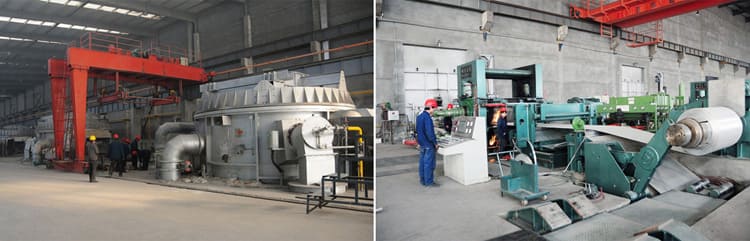
Ang layunin ng pagtunaw at paghahagis ay upang makabuo ng mga haluang metal na may kasiya siyang komposisyon at mataas na kadalisayan ng matunaw, upang lumikha ng mga kanais nais na kondisyon para sa paghahagis ng mga haluang metal ng iba't ibang mga hugis.
Mga hakbang sa proseso ng pagtunaw at paghahagis: mga ka batch --- pagpapakain --- natutunaw na --- pagpapakilos pagkatapos matunaw, pag alis ng slag --- sampling bago ang pagsusuri --- pagdaragdag ng haluang metal upang ayusin ang komposisyon, nakakapukaw ng damdamin --- pagpipino --- static na Setting——Guide furnace casting.
Mainit na proseso ng produksyon ng pagulong at ang pagpapakilala nito
- 1. Mainit na pagulong sa pangkalahatan ay tumutukoy sa paggulong sa itaas ng metal recrystallization temperatura;
- 2. Sa panahon ng mainit na proseso ng pagulong, ang metal ay may parehong mga proseso ng pagpapatigas at paglambot. Dahil sa impluwensya ng bilis ng pagpapapangit, basta huli na ang recovery at recrystallization process, magkakaroon ng tiyak na gawaing pagpapatigas;
- 3. Ang recrystallization ng metal pagkatapos ng mainit na pagulong ay hindi kumpleto, na ang ibig sabihin ay, ang magkakasamang buhay ng recrystallized istraktura at deformed istraktura;
- 4. Ang mainit na pagulong ay maaaring mapabuti ang pagganap ng pagproseso ng mga metal at haluang metal, bawasan o alisin ang mga depekto sa paghahagis.
- 1. Ang temperatura ng paghahagis at pagulong ay karaniwang nasa pagitan ng 680 o C at 700 o C. Ang mas mababa ang mas mahusay na, Ang matatag na paghahagis at rolling line ay karaniwang tumitigil nang isang beses sa isang buwan o higit pa upang muling tumayo. Sa panahon ng proseso ng produksyon, kinakailangang mahigpit na kontrolin ang antas ng likido ng front tank upang maiwasan ang mababang antas ng likido;
- 2. Ang pagpapadulas ay gumagamit ng C powder na may hindi kumpletong pagkasunog ng gas para sa pagpapadulas, na isa rin sa mga dahilan ng maruming ibabaw ng casting at rolling materials;
- 3. Ang bilis ng produksyon ay karaniwang sa pagitan ng 1.5m / min-2.5m / min;
- 4. Ang kalidad ng ibabaw ng mga produkto na ginawa sa pamamagitan ng paghahagis at paggulong ay karaniwang medyo mababa, at sa pangkalahatan ay hindi maaaring matugunan ang mga produkto na may espesyal na pisikal at kemikal na mga kinakailangan sa pagganap.
- 1. Ang malamig na pagulong ay tumutukoy sa paraan ng paggulong ng produksyon sa ibaba ng temperatura ng recrystallization;
- 2. Hindi magkakaroon ng dynamic na recrystallization sa panahon ng proseso ng paggulong, at ang temperatura ay tataas sa temperatura ng pagbawi sa karamihan, at ang malamig na paggulong ay lilitaw sa isang trabaho hardening estado, at ang trabaho hardening rate ay magiging malaki;
- 3. Ang malamig na ginulong sheet at strip ay may mataas na dimensional na katumpakan, magandang kalidad ng ibabaw, unipormeng istraktura at pagganap, at mga produkto sa iba't ibang estado ay maaaring makuha sa heat treatment;
- 4. Malamig na pagulong ay maaaring i roll out manipis na strips, pero sabay sabay, ito ay may mga disadvantages ng mataas na pagkonsumo ng enerhiya para sa pagpapapangit at maraming mga pasa sa pagproseso.
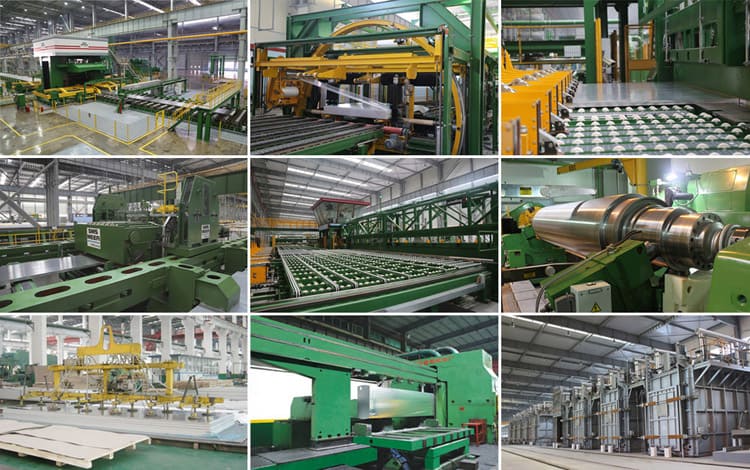
- 1. Ang pagtatapos ay isang paraan ng pagproseso upang matugunan ng malamig na ginulong sheet ang mga kinakailangan ng customer, o upang mapadali ang kasunod na pagproseso ng produkto;
- 2. Ang mga kagamitan sa pagtatapos ay maaaring iwasto ang mga depekto na ginawa sa mainit na pagulong at malamig na proseso ng produksyon, tulad ng basag na gilid, may langis na, mahina ang hugis ng plato, natitirang stress, atbp. Kailangan nitong tiyakin na walang iba pang mga depekto na dinala sa proseso ng produksyon;
- 3. Mayroong iba't ibang mga kagamitan sa pagtatapos, pangunahin kabilang ang cross-cutting, pagputol ng hiwa, pag unat at pagtutuwid, annealing furnace, mga slitter, atbp.
Proseso ng paghahagis at paggulong
Proseso ng paghahagis at paggulong: likidong metal, kahon sa harap (Kontrol sa antas ng likido), paghahagis at rolling machine (sistema ng pagpapadulas, paglamig ng tubig), paggupit ng makina, makina ng pag coiling.
Malamig na proseso ng produksyon ng pagulong
Panimula sa pagtatapos ng proseso ng produksyon
Aluminyo haluang metal ay may mga katangian ng mababang density, magandang mekanikal na katangian, magandang pagganap ng pagproseso, di nakakalason, madaling i recycle, mahusay na electrical kondaktibiti, paglipat ng init at paglaban sa kaagnasan, kaya ito ay may malawak na hanay ng mga application.
Aerospace: ginagamit upang gumawa ng mga balat ng sasakyang panghimpapawid, mga frame ng fuselage, mga girder, mga rotors, mga propeller, mga tangke ng gasolina, mga panel ng pader at mga struts ng landing gear, pati na rin ang rocket forging rings, mga panel ng pader ng spacecraft, atbp.
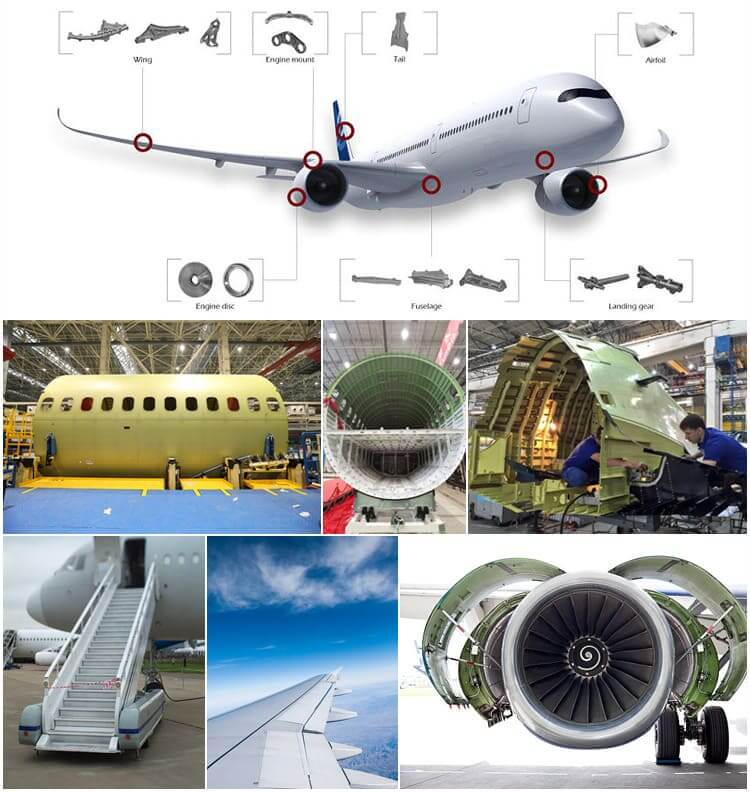
Aluminyo haluang metal na ginagamit para sa aerospace
Transportasyon: ginagamit para sa kotse katawan istraktura materyales ng mga sasakyan, Mga Sasakyan ng Subway, mga kotse ng pasahero ng tren, mabilis na mga kotse ng pasahero, mga pinto at bintana, mga istante, mga bahagi ng automotive engine, mga aircon, mga radiator, mga panel ng katawan, mga gulong at mga materyales ng barko.
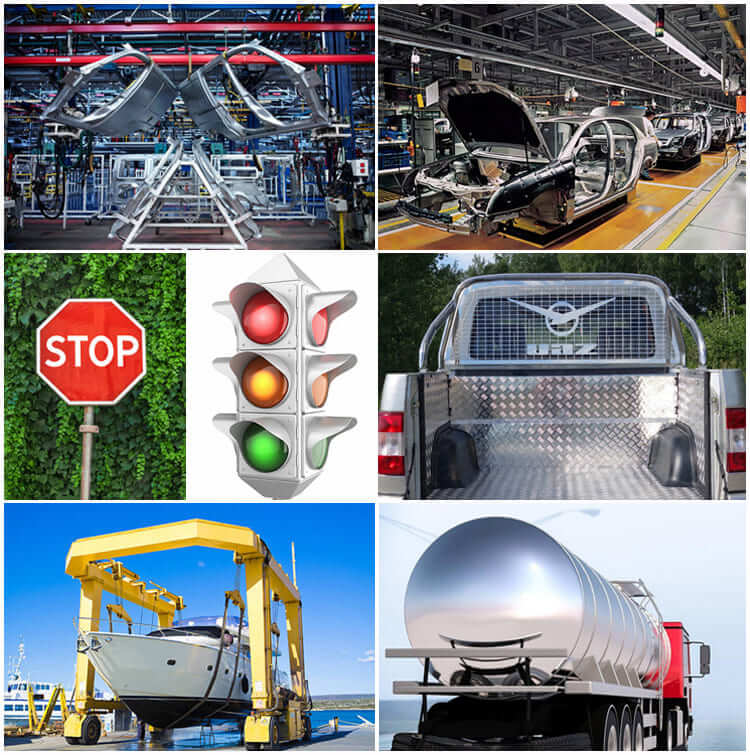
Application ng trapiko
Packaging: Ang lahat ng aluminyo pop lata ay pangunahing ginagamit bilang mga materyales sa packaging ng metal sa anyo ng mga manipis na plato at foils, at ginagawang lata, mga takip, mga bote, mga bariles, at packaging foils. Malawakang ginagamit sa packaging ng mga inumin, pagkain, mga pampaganda, mga gamot, mga sigarilyo, mga produktong pang industriya, mga gamot, atbp.
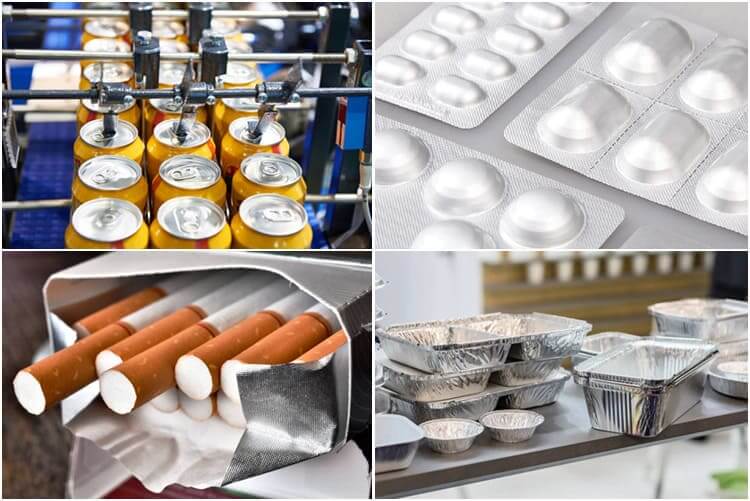
Application ng packaging
Pag-print: Pangunahing ginagamit upang gumawa ng PS plates, ang mga PS plate na nakabase sa aluminyo ay isang bagong uri ng materyal sa industriya ng pag print, ginagamit para sa awtomatikong paggawa ng plato at pag print.
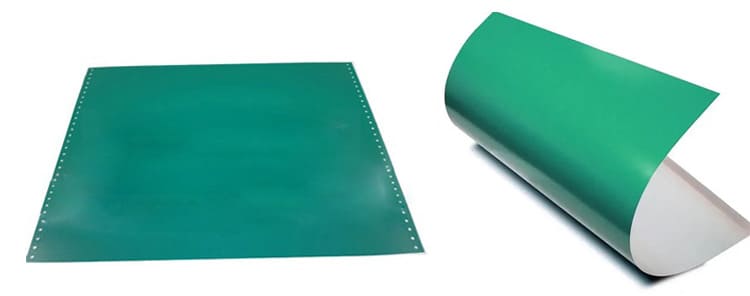
Pag print ng PS
Dekorasyon ng arkitektura: aluminyo haluang metal ay malawakang ginagamit sa mga istraktura ng gusali, mga pinto at bintana, suspendido ang mga kisame, pandekorasyon na ibabaw, atbp. dahil sa magandang kaagnasan nito paglaban, sapat na lakas, mahusay na pagganap ng proseso at pagganap ng hinang.
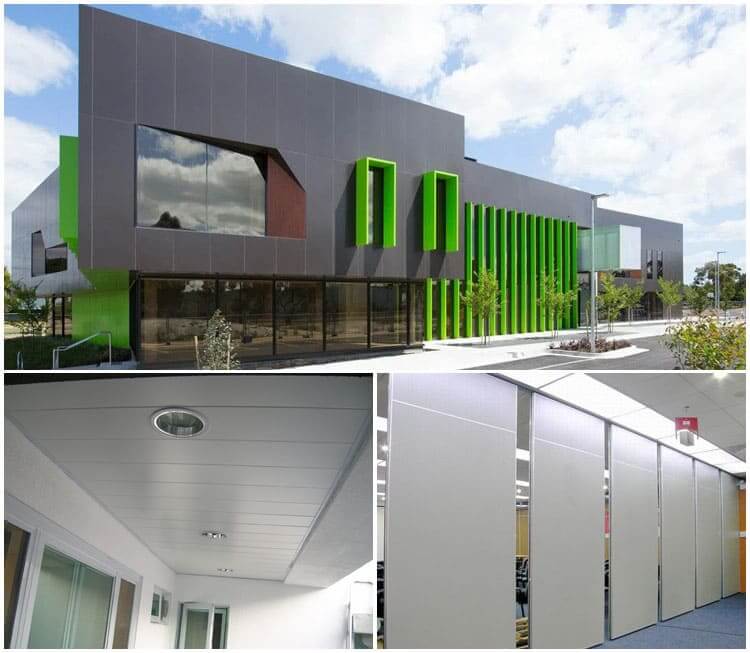
Application ng konstruksiyon ng haluang metal ng aluminyo
Mga produktong elektroniko: mga computer, mga mobile phone, mga shell ng refrigerator, mga radiator, atbp.
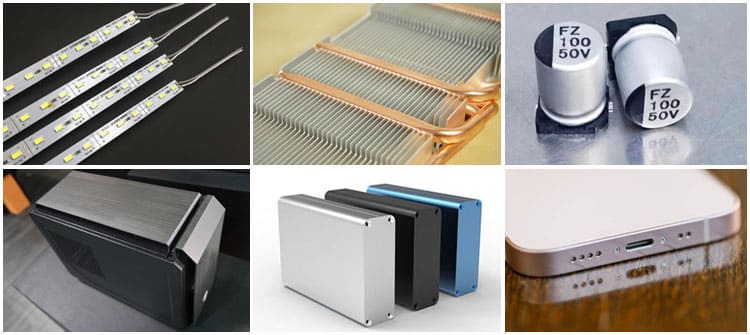
Electronic application ng produkto
Mga gamit sa kusina: mga kaldero ng aluminyo, aluminyo basins, mga liner ng rice cooker, sambahayan aluminyo foil, atbp.
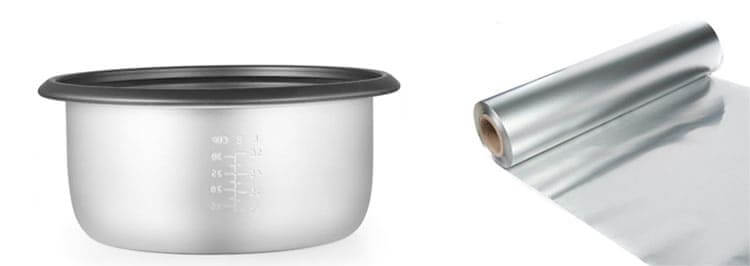
Application ng kusina
Packaging Ng Aluminum Sheet / Coil
Ang bawat detalye ng packaging ay kung saan namin ituloy ang perpektong serbisyo. Ang aming proseso ng packaging sa kabuuan ay ang mga sumusunod:
Paglalamina: malinaw na pelikula, asul na pelikula, mikro-mucosal, mataas na mucosal, laser pagputol ng pelikula (2 mga tatak, Novacell at Polyphem);
Proteksyon: mga tagapagtanggol ng sulok ng papel, mga pads laban sa presyon;
pagpapatayo ng mga: desiccant;
Tray: fumigated hindi nakakapinsala kahoy na tray, magagamit muli ang bakal na tray;
Pag-iimpake: Tik-tik-toe bakal sinturon, o PVC packing belt;
Kalidad ng Materyal: Ganap na libre mula sa mga depekto tulad ng puting kalawang, mga spot ng langis, mga rolling mark, pinsala sa gilid, mga baluktot, mga dent, mga butas, mga break lines, mga gasgas na, atbp., walang coil set.
Port: Qingdao o iba pang mga port sa China.
Lead oras: 15-45 mga araw.
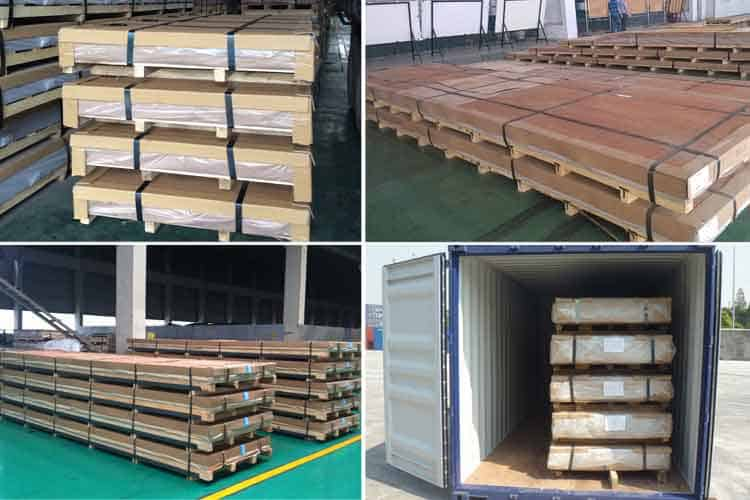
Aluminyo sheet / plate packaging proseso
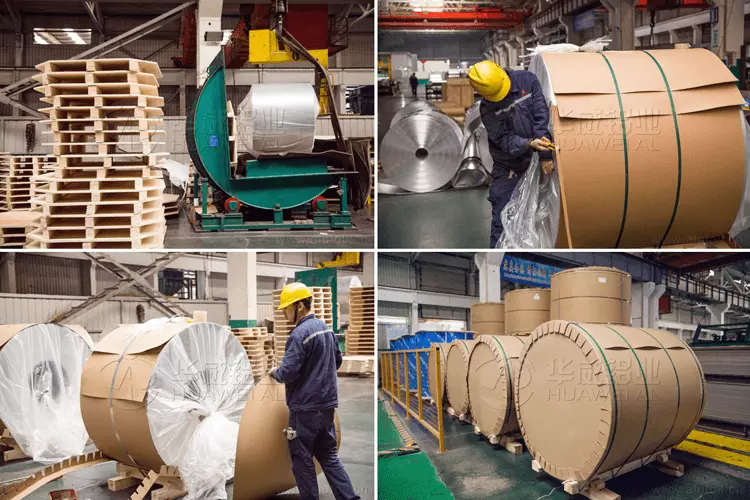
Aluminyo likawin packaging proseso
F: Ikaw ba ay isang tagagawa o isang mangangalakal?
Q: Kami ay isang tagagawa, ang factory namin ay sa No.3 Weier Road, Sonang Pang industriya, Gongyi, Henan, Tsina.
F: Ano ang MOQ para sa pag order ng produkto?
Q: Ang MOQ natin ay 5 tonelada, at ang ilang mga espesyal na produkto ay magkakaroon ng isang minimum na dami ng order ng 1 o 2 tonelada.
F: Gaano katagal ang iyong oras ng lead?
Q: Sa pangkalahatan ang aming lead time ay tungkol sa 30 mga araw.
F: Mayroon bang kalidad ng katiyakan ang iyong mga produkto?
Q: Oo nga, kung may problema sa quality sa products namin, kami ay mabayaran ang customer hanggang sa sila ay nasiyahan.
Mga Kaugnay na Produkto


Mga Pinakabagong Blog
Common Alloys of Reefer Truck Used PE Coated Aluminum Coil
Discover common alloys of reefer truck used PE coated aluminum coil, kasama na ang 3003, 3004, at 3105. Designed for excellent corrosion resistance, pagiging formable, and long-lasting outdoor performance.
Is Aluminum Conductive? Mga Katangian, Gumagamit ng mga & Benefits Explained
Is aluminum conductive? Discover aluminum's electrical conductivity, key advantages, and why it is widely used in power transmission and industrial applications.
Unlocking Sustainability: The Truth About Aluminum Foil Recycling
Is Aluminum Foil Recyclable? Learn how aluminum foil can be recycled, how to prepare it properly, and why recycling helps reduce waste and save resources.
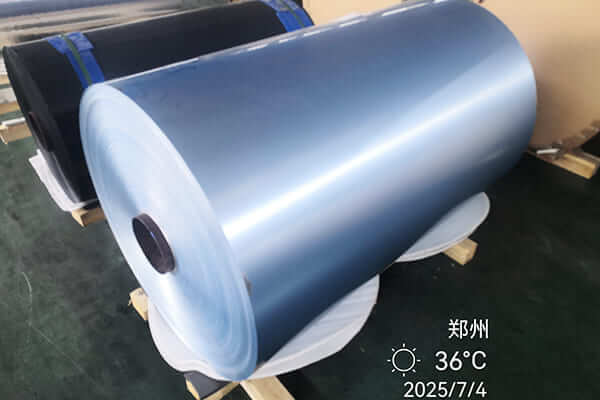
Coated Aluminum Foil for Packaging Applications | Strong & Reliable
High-quality coated aluminum foil for packaging applications, offering excellent barrier protection, tibay ng katawan, and consistent performance.