я. Введение
Морской класс 5086 Алюминиевая пластина H116 занимает уникально ценное положение в спектре алюминиевых материалов для судостроения, которое часто недооценивают именно потому, что оно находится между двумя наиболее известными сплавами..
Более устойчив к коррозии и формуем, чем 6061 ряд, еще более работоспособен и свариваем, чем высокопрочный 5083, 5086 H116 обладает сочетанием свойств, которые делают его незаменимым в широком спектре морских применений.: прогулочные рыболовные суда со сложной формой корпуса, корпуса парусников, требующие расширения верхних строений, Вторичная конструкция коммерческого катера, дорожки для морской платформы, и надстройки военных кораблей.
В этой статье представлен всеобъемлющий, авторитетная экспертиза морского класса 5086 Алюминиевая пластина H116 в восемнадцати аналитических измерениях - металлургия, закалять науку, производство, характеристики, коррозионная стойкость, критическое сравнение 5086 и 5083, структурный проект, применение на судах, изготовление, защита от коррозии, стандарты качества, нормативно-правовая база, экономика цепочки поставок, устойчивость, и инновации.
II. Металлургический фонд: The 5086 Алюминиевый сплав
2.1 Серия 5xxx: Морская химия магния
Алюминиевые сплавы серии 5xxx достигают своей прочности и коррозионных характеристик за счет растворения магния в твердом растворе внутри алюминиевой матрицы..
Атомы магния, немного больше атомов алюминия, исказить кристаллическую решетку, препятствуя движению дислокаций и тем самым увеличивая прочность - механизм, называемый упрочнением твердого раствора, который не требует термической обработки для активации и никогда не ослабевает при термическом воздействии. (ниже диапазона сенсибилизации).
Этот неподдающийся термической обработке характер определяет логику морских характеристик сплавов 5xxx.: их свойства остаются стабильными на протяжении всего срока службы судна, в отличие от термообработанных сплавов, дисперсионное твердение которых можно частично обратить вспять термическими циклами сварки и огня..
Второй морской дар магния — электрохимический: это смещает естественный коррозионный потенциал сплава в морской воде в сторону более отрицательного значения. (анодный) ценности, улучшение устойчивости к питтинговой коррозии за счет повышения стабильности пассивной пленки и уменьшения разницы между матрицей сплава и катодными интерметаллидными частицами, которые служат местами возникновения питтинговой коррозии..
Более высокое содержание магния обычно означает лучшую устойчивость к коррозии в морской воде — вот почему 5083 (4.0–4,9% Мг) превосходит 5052 (2.2–2,8% Мг) в долгосрочной морской службе.
5086 сидит между этими двумя: содержание магния в диапазоне 3,5–4,5% обеспечивает устойчивость к коррозии в морской воде, значительно превосходящую 5052 и приближается 5083, сохраняя при этом содержание магния на достаточно низком уровне, чтобы снизить риск сенсибилизации, который становится основной инженерной проблемой в сплавах с высоким содержанием магния..
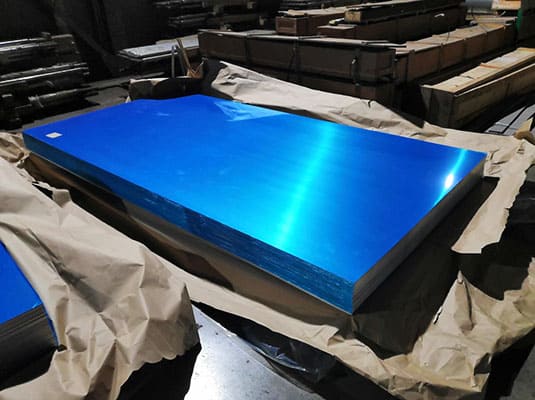
Морской класс 5086 H116 Алюминиевая пластина
2.2 Химический состав: Каждый элемент создан для моря
Состав 5086 алюминий, определено ASTM B209, В 573-3, ГБ/Т 3880, и JIS H4000, отражает продуманную морскую инженерию в каждом элементе:
| Элемент | Диапазон состава (%) | Функция морской инженерии |
|---|---|---|
| Алюминий (Ал) | Остаток (~94,2–95,7) | Первичная матрица; формирование и восстановление пассивной оксидной пленки |
| Магний (мг) | 3.5 – 4.5 | Сплошное укрепление раствора; устойчивость к коррозии морской воды |
| Марганец (Мн) | 0.20 – 0.70 | Контроль зернистой структуры; Образование дисперсоида Al₆Mn |
| Хром (Кр) | 0.05 – 0.25 | Ингибирует рекристаллизацию; стабилизирует границы зерен |
| Железо (Fe) | ≤ 0.50 | Примесь; образует катодные частицы Al₃Fe — строго контролируется |
| Кремний (И) | ≤ 0.40 | Примесь; взаимодействует с Mg при образовании Mg₂Si |
| Медь (Cu) | ≤ 0.10 | Строго минимизировано — повышает риск питтинговой и гальванической коррозии |
| Цинк (цинк) | ≤ 0.25 | Потолок примесей; избыток ухудшает устойчивость к SCC |
| Титан (Из) | ≤ 0.15 | Литейный рафинер зерна; контролируется на соответствие свойству |
| Другие (каждый/всего) | ≤0,05/≤0,15 | Совокупный предел примесей |
2.3 Сравнительный анализ сплавов для морского применения
Выбор подходящего морского алюминиевого сплава требует понимания того, где каждый из них находится в спектре производительности, формуемости и чувствительности.:
| сплав | мг (%) | Мин ЕТС (H116, МПа) | Мин. лет (H116, МПа) | Риск сенсибилизации | Формируемость | Лучшее морское приложение |
|---|---|---|---|---|---|---|
| 5052-H32 | 2.2–2,8 | 228 | 193 | Очень низкий | Отличный | Легкая конструкция; некорпусный |
| 5086-H116 | 3.5–4,5 | 270 | 193 | Низкая-средняя | Очень хороший | Верхние строения корпуса; сложные формы; вторичная структура |
| 5083-H116 | 4.0–4,9 | 303 | 214 | Умеренный | Хороший | Основная конструкция корпуса; нижняя обшивка |
| 5456-H116 | 4.7–5,5 | 317 | 228 | Умеренно-высокий | Справедливый | Высокопрочный корпус; тщательный мониторинг |
| 5059-H116 | 5.0–6,0 | 330 | 240 | Низкий (оптимизированный) | Справедливый | Премиум военно-морской; морской пехотинец высочайшей прочности |
| 6061-Т6 | 0.8–1,2 Мг | 310 | 276 | Н/Д | Умеренный | Неморские конструкции; избегайте погружения в морскую воду |
5086 занимает оптимальную формуемость среди морских сплавов. Он сгибается легче, чем 5083, сварные швы с немного меньшим снижением прочности ЗТВ, и обеспечивает эквивалентную защиту от чувствительности в закалке H116, что делает его логичным выбором при сложной геометрии, изогнутые формы корпуса, или превосходная холодная обрабатываемость имеют большее значение, чем надбавка за прочность на 10–12 %, 5083 обеспечивает.
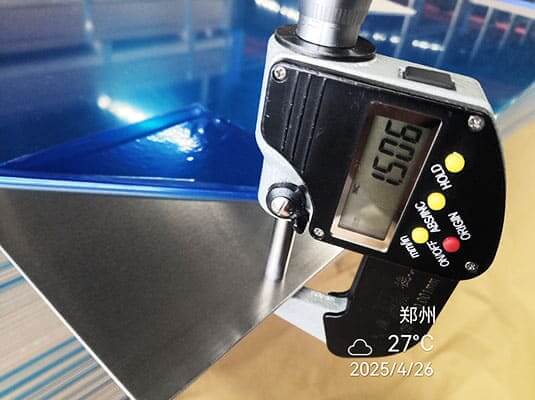
5086 H116 Измерение толщины алюминиевой пластины
III. H116 Темперамент: Морская специфическая инженерия 5086
3.1 Характер, рожденный опытом эксплуатации
Спецификация состояния H116 для судовых алюминиевых сплавов возникла не из теоретического материаловедения, а из документированной истории преждевременных коррозионных разрушений сосудов, изготовленных из сплавов 5xxx в состояниях, которые соответствовали спецификациям по механическим свойствам, но не имели микроструктурного контроля, необходимого для устойчивости к специфическим механизмам коррозии морской воды..
Отслоение обшивки корпуса, коррозионное растрескивание под напряжением в сварных соединениях, и межкристаллитное разрушение в пластине, которая была слегка сенсибилизирована во время изготовления, - все это способствовало признанию в отрасли того, что морской алюминий нуждается в обозначении состояния, специально разработанном с учетом коррозионной стойкости., не только вокруг силы.
Результат — кодифицирован в ASTM B928. (впервые опубликовано 2004, регулярно пересматривается) — определяет H116 как состояние деформационного упрочнения для сплавов серии 5xxx с содержанием магния ≥3%, специально разработанных для обеспечения устойчивости к расслаивающей коррозии и коррозионному растрескиванию под напряжением..
Стандарт требует тестирования на сенсибилизацию каждой производственной партии., что делает H116 единственным сплавом алюминия в обычном коммерческом производстве, где испытания на коррозию являются обязательным требованием при приемке партии, а не дополнительным дополнительным испытанием..
3.2 H116 Путь производства: Контролируемая холодная работа
Производство 5086 H116 требует точного контроля холодного обжатия, применяемого после горячей прокатки — процент, который одновременно достигает трех целей, которые обычно связаны с растяжением.: достаточная прочность на растяжение (УТС ≥270 МПа), достаточная пластичность (удлинение ≥10%), и специфическая дислокационная структура, которая нарушает непрерывное покрытие границ зерен бета-фазой..
Критической термической дисциплиной при холодной прокатке H116 является поддержание температуры листа ниже 65°C на протяжении всех проходов холодной обжатия..
Холодная прокатка генерирует тепло за счет пластической деформации., и без адекватного применения СОЖ и межпроходного охлаждения, Только тепло прокатки может привести пластину в диапазон сенсибилизации — отклонение процесса, которое приведет к получению механических свойств, закаленных H116, в материале, который уже начал выделяться по границам зерен, для предотвращения которого предназначен H116..
3.3 Сравнение 5086 Характер: Морские критические различия
| Характер | Определение | Требуется НАМЛТ | Устойчивость к отшелушиванию | Сопротивление SCC | Морское использование |
|---|---|---|---|---|---|
| О | Полностью отожжен | Нет | Бедный | Бедный | Только глубокая формовка; не для погружения в морскую воду |
| H32 | Деформационно-упрочненный + частичный отжиг | Нет | Умеренный | Умеренный | Не морской класс - только общие структурные |
| Н34 | Деформационно-упрочненный + частичный отжиг (выше) | Нет | Умеренный | Умеренный | Не морской класс |
| H116 | Деформационно-упрочненный; управляемый морским путем | Да (≤15 мг/см²) | Отличный | Отличный | Первичная морская структурная спецификация |
| H321 | Деформационно-упрочненный + стабилизированный | Да (≤15 мг/см²) | Отличный | Отличный | Альтернатива H116; тарелка >38 мм |
| Н112 | Как изготовлено; контролируемые свойства | Нет | Не проверено | Не проверено | Неморские конструкции |
3.4 Механические свойства морского класса 5086 H116 Алюминиевая пластина
| Свойство | Ценить | Стандарт испытаний | Приложение для проектирования |
|---|---|---|---|
| ОТС (минимум) | 270 МПа (39 тысяч фунтов на квадратный дюйм) | АСТМ Е8 | Прочность панели корпуса; конструкция конструктивного элемента |
| Предел текучести (0.2%) (мин) | 193 МПа (28 тысяч фунтов на квадратный дюйм) | АСТМ Е8 | Эластичный расчетный предел; оценка потери устойчивости |
| Удлинение (мин) | 10% | АСТМ Е8 | Запас пластичности для формовки и ударопрочность |
| Прочность на сдвиг (типичный) | ~165 МПа | - | Конструкция заклепок и сварных сдвигов |
| Твердость по Бринеллю (типичный) | 60–75 ГБ | АСТМ Е10 | Проверка темперамента; входной контроль |
| Предел выносливости (несварной, 5×10⁸) | ~117 МПа | АСТМ Е466 | Оценка усталости основного металла |
| Предел выносливости (сварное соединение) | ~45–62 МПа | Еврокод 9/DNV | Регулирующий критерий проектирования морских корпусов |
| Воздействие Шарпи (−40°С) | >15 Дж | АСТМ Е23 | Квалификация обслуживания холодного климата |
| Модуль упругости | 70.3 ГПа | - | Расчеты прогиба и жесткости |
IV. Процесс производства морского класса 5086 H116 Алюминиевая пластина
4.1 От расплава к морской сертификации: Производственная последовательность
Проверенный 5086 Морская плита H116 требует строгого контроля процесса на шести этапах производства., поскольку основная функция отпуска H116 — устойчивость к коррозии за счет контролируемой микроструктуры — может быть разрушена в результате одного термического воздействия или неадекватного холодного восстановления в любой точке последовательности.
Ниже прослеживается производственный процесс от подготовки сплава до сертификации..
4.2 Подготовка сплавов и литье под постоянным током
The 5086 расплав готовят путем объединения первичного алюминия (≥99,7% Ал) с точно взвешенными добавками металлического магния (достижение целевого показателя 3,5–4,5% Mg) и лигатура марганца (0.20–0,70% Mn целевой показатель).
Добавление хрома (0.05–0,25% Кр) требует тщательного контроля — слишком мало жертвует функцией стабилизации границ зерен; слишком большой риск образования осадка, содержащего хром, который может сделать сплав хрупким. Оптическая эмиссионная спектрометрия (ОЭС) проверяет химический состав расплава на образцах ковша перед каждой разливкой.
Прямой холод (ОКРУГ КОЛУМБИЯ) полунепрерывное литье дает прокат слябов обычно толщиной 400–550 мм и шириной 1000–2000 мм..
Контролируемая скорость затвердевания процесса постоянного тока обеспечивает, относительно однородная микроструктура с управляемыми градиентами состава — превосходит более грубые, более разделенная структура, полученная методами непрерывной разливки.
Для производства морских плит, Литье постоянным током является обязательным производственным маршрутом; производители, пытающиеся осуществлять непрерывную разливку 5086 для морского применения невозможно достичь микроструктурной однородности, необходимой для стабильных коррозионных характеристик H116..
4.3 Гомогенизация: Создание микроструктурного фундамента
Гомогенизация при 460–510°С в течение 8–18 часов выполняет одновременно три функции: 5086 плиты:
Устранение сегрегации: Затвердевание приводит к градиентам состава поперек промежутков между дендритами. (обычно 50–200 мкм). Выдерживание при повышенной температуре позволяет диффузию перераспределить магний., марганец, и хрома в более равномерное распределение, обеспечение стабильных свойств по всей толщине листа.
Дисперсоидные осадки: При медленном охлаждении от температуры гомогенизации, Дисперсоидные частицы Al₆Mn и Al₁₂Mg₂Cr (0.05–0,5 мкм) зарождаться и расти. Эти частицы являются микроструктурными агентами, ответственными за ингибирование рекристаллизации во время горячей прокатки и роста зерен во время отжига, напрямую контролируя конечную структуру зерен пластины H116..
Неравновесное фазовое растворение: В исполнении 5086 содержит метастабильные интерметаллические фазы, богатые магнием, на границах дендритов. Гомогенизация растворяет их в твердый раствор., подготовка однородной исходной микроструктуры к горячей прокатке.
4.4 Горячая прокатка: Уменьшение толщины здания с помощью микроструктурного контроля
После гомогенизации, скальпированные плиты (поверхность обработана для удаления отделившихся внешних слоев толщиной 10–20 мм.) предварительно нагревают до 430–500°С и подвергают горячекатаной прокатке..
График проходов горячей прокатки позволяет уменьшить толщину сляба с ~ 400–550 мм до толщины горячей полосы, обычно 3–20 мм, за счет последовательности проходов прокатки. (большое сокращение за проход, высокая температура) и завершающие проходы (меньшее сокращение, контролируемая температура на выходе).
Температура на выходе горячей прокатки — температура, при которой полоса покидает прокатную клеть — особенно важна для 5086 Производство H116.
Если температура на выходе слишком высокая (выше примерно 320°C), полоса интенсивно рекристаллизуется с образованием крупнозернистой структуры, что приводит к ухудшению качества поверхности конечного продукта..
Если температура на выходе слишком низкая (ниже примерно 220°C), неполная рекристаллизация оставляет частично обработанную структуру, что приводит к изменению свойств после последующего отжига..
Для последовательного 5086 Недвижимость H116, большинство производителей устанавливают температуру на выходе 250–310°C с контролем ±20°C по ширине полосы..
4.5 Холодная прокатка до состояния H116
После охлаждения горячей полосы до температуры ниже 100°C. (обеспечение отсутствия сенсибилизации во время перехода), холодная прокатка применяет контролируемое обжатие, которое определяет H116..
Производственная дисциплина при холодной прокатке включает одновременно три требования::
- Контроль снижения: Достичь определенного процентного снижения (собственность каждого производителя, обычно 5–20% для 5086 H116) обеспечивающий УТС ≥270 МПа, YS ≥193 МПа, удлинение ≥10%, и плотность дислокаций, достаточная для NAMLT ≤15 мг/см².
- Контроль температуры: Постоянно поддерживайте температуру листа ниже 65°C — проверяется контактными термометрами на стороне выхода каждого прохода холодной прокатки.
- Управление смазочными материалами: Равномерно нанесите масло для прокатки, чтобы контролировать трение., выделение тепла, и чистота поверхности — избыток смазки способствует загрязнению поверхности углеводородами, что ухудшает последующую адгезию покрытия.
4.6 Интеграция контроля качества: Тестирование на сенсибилизацию на этапе производства
ASTM B928 требует, чтобы каждая производственная партия 5086 H116 проходит тестирование NAMLT перед выпуском. «Партия» определяется как все пластины из одного и того же сплава., характер, и толщины изготовлены из одной и той же отливки (нагревать) в той же последовательности прокатки.
Практическое значение для крупных прокатных станов, производящих несколько партий одновременно, заключается в том, что тестирование NAMLT может представлять собой значительное время цикла сертификации — обычно добавляя 2–3 рабочих дня к графикам поставок..
Команды по закупкам должны включить этот график в графики поставок материалов на верфь, а не требовать от поставщиков выпуска предварительной сертификации..
Последовательность испытаний контроля качества продукции перед выпуском пластины:
- Химический состав (от OES): Каждая плавка → принять/отклонить в соответствии с ASTM B209. / В 573-3 пределы
- Испытание на растяжение (АСТМ Е8): Каждый лот → ОТС, Да, удлинение по сравнению с минимумами H116
- НАМЛТ (АСТМ G67): Каждый лот → потеря массы ≤15 мг/см²
- твердость (Бринелл): Каждый лот (выборочная проверка) → Подтверждение диапазона 60–75 HB
- Проверка размеров: Каждая пластина → толщина, ширина, длина, плоскостность, выпуклость
- Ультразвуковой контроль (АСТМ Б594): Как указано → внутреннее ламинирование и обнаружение включений
В. Физические и механические свойства: Полный профиль
5.1 Сравнение структурных свойств: 5086 H116 против. Ключевые альтернативы
Понимание морского класса 5086 Алюминиевая пластина H116 сама по себе менее полезна, чем понимание ее в контексте..
Следующие позиции сравнения 5086 H116 по сравнению с его наиболее распространенными морскими альтернативами по свойствам, которые определяют решения по проектированию конструкций.:
| Свойство | 5086-H116 | 5083-H116 | 5052-H32 | 6061-Т6 |
|---|---|---|---|---|
| ЕТС мин (МПа) | 270 | 303 | 228 | 310 |
| YS мин. (МПа) | 193 | 214 | 193 | 276 |
| Удлинение мин. (%) | 10 | 10 | 12 | 8 |
| Плотность (г/см³) | 2.66 | 2.66 | 2.68 | 2.70 |
| Эн (ГПа) | 70.3 | 70.3 | 70.3 | 68.9 |
| Опасность YS (тип., МПа) | ~105 | ~115 | ~90 | ~ 160 (Т4-экв.) |
| Минимальный радиус изгиба (3пластина мм) | ~1,5т | ~2т | ~1т | ~2,5т |
| Коррозия морской воды | Отличный | Отличный | Очень хороший | Умеренный |
| Риск сенсибилизации | Низкая-средняя | Умеренный | Очень низкий | Н/Д |
| Требуется ASTM B928 | Да | Да | Нет | Нет |
Ряд пределов текучести HAZ раскрывает одно из недооцененных преимуществ 5086.: свойства ЗТВ сварного соединения, ниже, чем родительская пластина, выгодно сравниваться со значениями HAZ 5083, поскольку более низкий начальный предел текучести приводит к более благоприятному коэффициенту полезного действия соединения HAZ..
Для структурной панели, где эффективность сварного соединения (Опасность YS / родитель YS) управляет дизайном, 5086 достигает примерно 54% совместная эффективность по сравнению примерно 54% для 5083 - по сути эквивалент.
Однако, абсолютный уровень стресса в 5086 Азартный (~105 МПа) ниже, это означает, что для данной конструктивной нагрузки, 5086 Для соединений HAZ требуется немного более толстая пластина или меньшее расстояние между элементами жесткости, чем у эквивалента. 5083 связи.
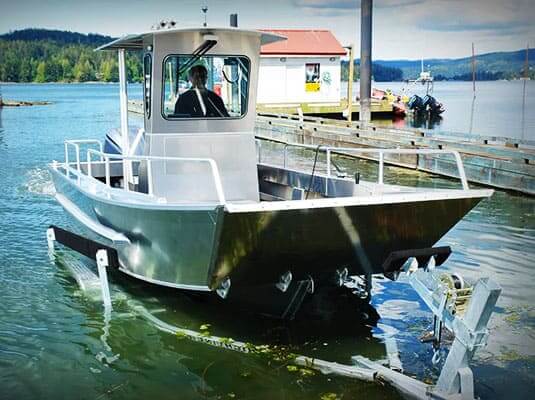
5086 Алюминиевая пластина H116 для корпусов парусников
5.2 Физические свойства для морского дизайна
| Свойство | Ценить | Единица | Значение морского дизайна |
|---|---|---|---|
| Плотность | 2.66 | г/см³ | 34% из стали; обеспечивает облегченную конструкцию корпуса |
| Модуль упругости | 70.3 | ГПа | Ниже, чем сталь; регулирует прогиб в больших панелях |
| Модуль сдвига | 26.4 | ГПа | Торсионная жесткость; расчет устойчивости панели при сдвиге |
| Коэффициент температурного расширения | 23.8 | мкм/м·°С | Требования к конструкции термического соединения для тропических и арктических регионов |
| Теплопроводность | 127 | Вт/м·К | Распределение тепла; пожарно-технический анализ |
| Электрическая проводимость | 31 | % МАКО | Схема распределения тока катодной защиты |
| Диапазон плавления | 585–641 | °С | Пожарная безопасность: ниже, чем сталь; необходима пассивная защита |
| Удельная теплоемкость | 900 | J/кг · к | Тепловая масса для расчета продолжительности пожара |
Плотность 2.66 г/см³ — это число, которое в конечном итоге определяет экономическое обоснование преимущества алюминия перед сталью в большинстве морских применений..
Преобразование этого в сравнение веса конструкции корпуса.: а 5086 Панель корпуса H116 с жесткостью на изгиб, эквивалентной морской стальной панели, весит примерно 45–55% веса стальной панели..
На 15-метровом прогулочном судне, такая экономия веса конструкции корпуса на 600–900 кг напрямую снижает расход топлива примерно на 15–22% на крейсерской скорости — значительная эксплуатационная экономия в течение 20–30-летнего срока службы судна..
5.3 Формируемость: 5086Конкурентное отличие
5086 Преимущество формуемости H116 перед 5083 H116 — это не тонкость — это основная инженерная причина указать 5086 когда требуется сложная геометрия корпуса.
Механизм преимущества прост.: 5086более низкое содержание магния (3.5–4,5% против. 4.0–4,9% для 5083) обеспечивает более низкий предел текучести, а более низкий предел текучести напрямую приводит к лучшей способности к холодной штамповке, поскольку напряжение, необходимое для пластической деформации материала, ниже по сравнению с его напряжением разрушения..
Сравнение минимального радиуса изгиба (толщина материала 4 мм):
| Направление изгиба | 5086-H116 | 5083-H116 | Преимущество |
|---|---|---|---|
| Поперек направления прокатки | 1.5т (6 мм) | 2т (8 мм) | 5086: 25% более узкий радиус |
| Параллельно направлению прокатки | 2т (8 мм) | 2.5т (10 мм) | 5086: 20% более узкий радиус |
Для конструкции корпуса с выраженными углами килеватости, расклешенные верхние строения, носовые секции сложной изогнутой формы, и повороты трюма узкого радиуса, это преимущество формуемости имеет решающее значение в оперативном отношении.
Производители, работающие с 5086 H116 сообщает о 30–40% меньшем количестве случаев растрескивания при холодном изгибе шпангоутов корпуса и панелей корпуса по сравнению с эквивалентом. 5083 Операции H116 — улучшение качества и производительности, которое более чем компенсирует скромную разницу в стоимости материалов между двумя сплавами..
5.4 Расчетные свойства морских конструкций на усталость
Усталостные свойства сварных соединений 5086 H116 соответствует тому же Еврокоду. 9 / Структура кривой DNV S-N как 5083 H116, поскольку оба являются свариваемыми алюминиевыми сплавами, а усталостные характеристики сварных соединений зависят в первую очередь от геометрии и качества сварного шва, а не от конкретного сплава.:
| Структурная деталь | Категория детали Δσ_C (МПа) | Представительский корпус |
|---|---|---|
| Родительская пластина, удаленный от сварных швов | 70 | Средняя панель, вдали от ребер жесткости |
| Стыковой шов с полным проплавлением (качество А) | 40–50 | Продольные соединения обвода корпуса |
| Стыковой шов с полным проплавлением (качество Б) | 35–45 | Каркас и поперечные соединения |
| Окончание ребра жесткости — с кронштейном | 28–35 | Торцевые соединения рамы |
| Окончание ребра жесткости — без кронштейна | 20–28 | Короткие окончания ребер жесткости |
| Угловой сварной шов, крестообразный сустав | 25–32 | Крепление палубного оборудования |
Важно, 5086 и 5083 Сварные соединения одной и той же категории деталей обеспечивают эквивалентную усталостную долговечность в эквивалентных диапазонах напряжений..
Выбор между двумя сплавами существенно не влияет на результат расчета усталости., при условии, что качество сварного шва и геометрия детали эквивалентны.
Эта эквивалентность означает, что дизайнеры могут свободно заменять 5086 для 5083 в конструкциях, подверженных усталости, без перепроектирования деталей сварных швов — важное практическое упрощение.
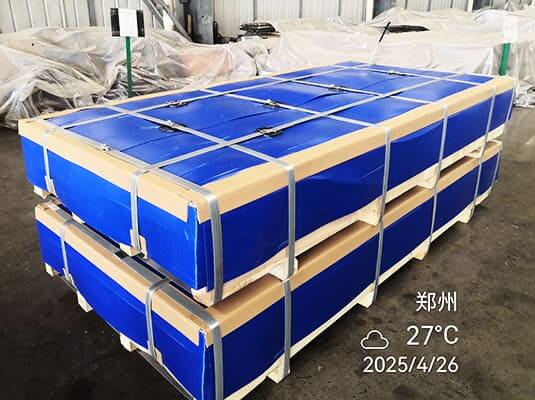
Экспортная упаковка морского класса 5086 H116 Алюминиевая пластина
VI. Защита от морской коррозии: Научный анализ
6.1 5086Электрохимическое положение в морской воде
Морской класс 5086 Алюминиевая пластина H116 в морской воде развивает естественный потенциал разомкнутой цепи. (ОКП) примерно -0,85 В по сравнению с насыщенным каломельным электродом (ПКЭ) — чуть более благородный (позитивный) чем 5083 (примерно −0,87 В), что отражает немного более низкое содержание магния.
Эта небольшая разница практически незначительна для большинства целей морского проектирования., поскольку оба сплава занимают одинаковое общее положение в гальваническом ряду и одинаково реагируют на одни и те же системы катодной защиты..
Пассивный фильм на 5086 в морской воде тонкий (2–8 морских миль), слой аморфного оксида алюминия, который образуется спонтанно при воздействии кислородсодержащей среды и поддерживается за счет динамического баланса растворения и репассивации..
Ключевым показателем эффективности является потенциал питтинга - электрохимический потенциал, выше которого образуются питтинги - и питтинговый потенциал 5086 в морской воде при 25°C падает примерно от -0,65 до -0,75 В по сравнению с SCE..
Поскольку естественный OCP (−0,85 В) значительно более отрицателен, чем потенциал питтинга, 5086 при нормальной эксплуатации в морской воде работает с катодной защитой примерно 100–200 мВ за счет собственного объемного потенциала — самозащитного буфера, который обеспечивает базовую устойчивость к образованию ямок..
6.2 Три критических режима коррозии и защитные механизмы 5086
Отслаивание Коррозия: Основная защита H116
Отслаивание воздействует на сплавы 5ххх через удлиненную, границы зерен в форме блинов, полученные в результате прокатки - межзеренное проникновение морской воды постепенно поднимает последовательные слои пластины вдоль плоскостей прокатки., создавая характерные волдыри, отшелушивающий вид, который и дал название отшелушиванию.
Механизм требует трех условий одновременно: сенсибилизированная зернограничная сеть (непрерывное покрытие бета-фазы); электролит (морская вода) способный проникать через границу зерен; и геометрические ограничения удлиненных зерен, которые вынуждают расширение продуктов коррозии выражаться в межслоевом расслоении, а не в рассеянном общем воздействии..
5086 H116 атакует этот механизм при первой же предпосылке.. Контролируя холодное восстановление для получения прерывистого, прерывистое зернограничное распределение бета-фазы, Закалка H116 удаляет непрерывные межзернистые пути, необходимые морской воде для постепенного отшелушивания..
Кроме того, 5086более низкое содержание магния (против 5083) означает, что даже без контроля температуры H116, бета-фаза на границах зерен имеет тенденцию формироваться медленнее и более прерывисто, что обеспечивает дополнительный запас прочности, который объясняет, почему 5086 в закале H32 демонстрирует лучшую устойчивость к отслаиванию, чем 5083 в закалке H32, несмотря на то, что ни один из них не соответствует требованиям сертификации ASTM B928..
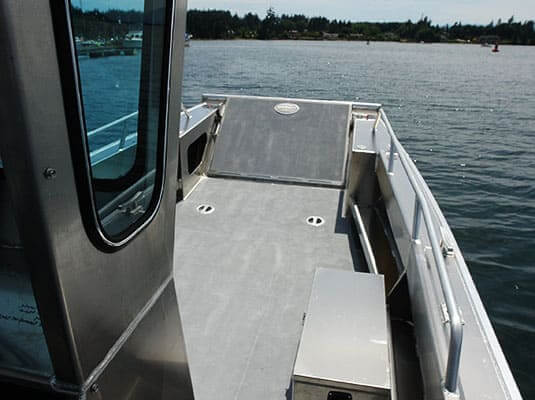
Палуба корабля использована 5086 H116 Алюминиевая пластина
Коррозия стресса (SCC): Где 5086 Превосходит 5083
SCC сочетает в себе устойчивое растягивающее напряжение с активной коррозионной средой для распространения трещин при интенсивности напряжения, намного ниже вязкости разрушения ненапряженного материала..
В сенсибилизированных сплавах 5ххх, непрерывная пленка бета-фазы на границах зерен обеспечивает распространение трещин анодного растворения. 5086 Устойчивость H116 к SCC достигается за счет двух усиливающих механизмов.: разрушение непрерывной зернограничной бета-фазы при отпуске H116 (то же, что и для отшелушивания), и более медленная кинетика сенсибилизации при более низком содержании магния..
Опубликованные данные долгосрочного тестирования SCC 5086 H116 демонстрирует устойчивость к растрескиванию при длительных нагрузках до 60% предела текучести при испытаниях с попеременным погружением (АСТМ G44) - превосходит 5083 H116 (обычно устойчив примерно к 50% предела текучести) и значительно превосходит сенсибилизированный материал H32 (который может треснуть при 20–25% предела текучести.).
Для корпусных конструкций, несущих остаточные сварочные напряжения 30–50 МПа., этот запас устойчивости к SCC достаточен для нормальной морской эксплуатации, но не безграничен.. Любое длительное растягивающее напряжение в сочетании с термической средой, способствующей сенсибилизации, заслуживает инженерного внимания..
Коррозия ячейки: Базовая атака с использованием морской воды
Питтинг возникает в местах, где пассивная пленка наиболее слаба.: интерметаллические границы раздела частица-матрица, точки выхода границ зерен, и поверхностные царапины, обнажающие свежий алюминий.
Для морского класса 5086 H116 Алюминиевая пластина, доминирующими местами зарождения ямок являются интерметаллические частицы Al₃Fe и Al₆Mn., которые являются катодами по отношению к алюминиевой матрице и создают локальные гальванические элементы, растворяющие окружающий алюминий..
Предел примеси железа ≤0,50% для 5086 (по сравнению с ≤0,40% для 5083) означает, что 5086 в принципе может содержать больше частиц Al₃Fe — незначительный недостаток коррозионной стойкости по сравнению с 5083. На практике, самый морской класс 5086 производители держат железо ниже 0.30%, делая эту теоретическую разницу незначительной.
Данные испытаний на длительное погружение для 5086 в синтетической морской воде (АСТМ Д1141) демонстрирует среднюю глубину ямок 0,10–0,25 мм после 5 лет — скорость коррозии 0,02–0,05 мм/год, что вполне соответствует запасу толщины пластин, имеющемуся в обшивке корпуса судна..
VII. Морское применение и типы судов
7.1 Прогулочные и спортивные лодки: Доминирующий домен приложения
На рынок прогулочного судоходства приходится наибольшая доля 5086 Потребление H116 в мире, обусловлено исключительным сочетанием формуемости сплава, устойчивость к коррозии морской воды, и весовая эффективность для типов и размеров судов, которые доминируют в прогулочном строительстве. (6–18 м длина атаки).
Оффшорные алюминиевые рыболовные лодки в диапазоне 6–12 м представляют собой архетип 5086 Приложение H116. Этим судам необходимы корпуса сложной кривизны с выраженным килем. (обычно 18–24 °) и расклешенные носы для морского плавания, устойчивость к коррозии в морской воде для верхних строений, которые могут не окрашиваться в течение многих лет между ремонтами, и прочность конструкции, достаточная для эксплуатации на море, без чрезмерного веса, который может снизить производительность при использовании небольших подвесных двигателей или силовых установок с кормовым приводом.. Морской класс 5086 Алюминиевая пластина H116 толщиной 3,0–5,0 мм одновременно удовлетворяет всем трем требованиям..
Корпуса парусников представляют некоторые из наиболее геометрически сложных задач в строительстве алюминиевых лодок — стреловидные кили., изогнутые секции транца, расклешенные верхние строения, и ярко выраженный «кувыркающийся дом» требуют изгиба с малым радиусом, что 5086 работает надежнее, чем 5083. Кроме того, Нагрузки на конструкцию парусной лодки обычно ниже, чем нагрузки на моторную лодку эквивалентной длины. (не хлопать; более низкая скорость), делая 10% разница в пределе текучести между 5086 и 5083 структурно не имеет значения для большинства парусных судов.. Опытные производители алюминиевых парусников, в том числе специалисты в Европе и Новой Зеландии, постоянно указывают 5086 H116 для надстроек и надватерлинии, резервирование 5083 H116 для мест крепления киля и ватерлинии/обшивки днища, где конструктивные требования оправдывают дополнительную прочность..
Центральная консоль и прогулочные лодки (7–10 м) Воспользуйтесь преимуществами формуемости 5086 при производстве консольных конструкций с глубокими стенками., рыбный ящик вокруг, и секции надводного борта, определяющие эти типы корпуса.. Строители сообщают о значительно меньшем количестве ремонтов сварных швов из-за растрескивания во время формирования этих сложных профилей при использовании 5086 H116 против 5083 H116 — прямая экономия производственных затрат, которая более чем компенсирует любые незначительные надбавки к стоимости материалов..
7.2 Коммерческие рабочие лодки: Сочетание структурных характеристик с формуемостью
Коммерческие рабочие суда — практичность, утилитарные суда, обслуживающие морские платформы, трансферная бригада, проводить опросы, и поддержка портовых операций — представляют собой вторую по значимости сферу потребления для 5086 H116.
Суда для перевозки экипажа (CTVS) для обслуживания морских ветряных электростанций наиболее четко демонстрируют стратегию оптимизации выбора сплава. Типичный 24 м. В конструкции корпуса CTV часто используются 5083 H116 (6–8 мм) для обшивки днища, где ударные нагрузки от многократного доступа к турбине при низком волнении моря создают высокие циклические напряжения, и 5086 H116 (5–6 мм) для верхних строений и панелей надстройки, где более низкие требования к конструкции позволяют использовать более пластичный сплав и где сложная геометрия помещений для экипажа выигрывает от более малого радиуса изгиба 5086.
Лоцманские катера и суда портового обслуживания (12–22 м) создают особенно благоприятные условия для 5086 H116: умеренные структурные нагрузки (в большинстве случаев смещение, а не строгание), сложные формы корпуса, типичные для круглотрюмных водоизмещающих конструкций, и регулярная промывка верхних строений пресной водой, что характерно для технического обслуживания портовых судов.. Меньший риск сенсибилизации 5086 H116 против 5083 является второстепенным преимуществом для портовых судов, подвергающихся очистке палубы паром — потенциальное сенсибилизирующее воздействие температуры, которое полностью отсутствует в спецификациях корпусных конструкционных сплавов на большинстве верфей..
7.3 Морские конструкции и морские применения
Помимо самих корпусов лодок, 5086 Пластина H116 широко применяется в морских конструкциях, где ценятся коррозионная стойкость и легкий вес алюминия, а максимальные конструктивные характеристики имеют второстепенное значение.:
Плавучие причалы и понтоны для яхт использовать 5086 H116 за исключительную коррозионную стойкость в агрессивной среде морских портов. (повышенный уровень загрязняющих веществ в результате разливов топлива, стекание противообрастающей краски, и органическое загрязнение от пришвартованных судов). Более низкие структурные требования к конструкции плавучего дока делают ненужной дополнительную прочность 5083., в то время как пластичность модели 5086 упрощает изготовление понтонных форм и соединительных кронштейнов, которые характеризуют причальные системы для яхт..
Дорожки для морской платформы, поручни, и решетки - если основной функцией является коррозионная стойкость и безопасность персонала, а не несущая нагрузку на конструкцию, - используйте 5086 H116 за сочетание достаточной прочности (достаточен для загрузки прохода в соответствии с применимыми нормами), отличная коррозионная стойкость без покраски (сокращение объема технического обслуживания в удаленных морских местах), и легкий вес (снижение собственного веса конструкции верхней части платформы).
Трапы и пандусы для транспортировки с судна на платформу и с судна на берег существуют требования к формуемости, которые способствуют 5086: шарнирные секции, изогнутые направляющие, и наклонные посадочные платформы современных систем трапов требуют операций гибки, при этом более малый минимальный радиус изгиба модели 5086 позволяет создавать конструкции, требующие предварительного отжига 5083.
Пока 5083 H116 доминирует в основных конструкциях корпуса при строительстве военных кораблей., 5086 H116 находит широкое применение во вторичной конструкции и надстройке военных кораблей.:
Панели и ограждения надстройки на быстроходных патрульных кораблях и вспомогательных судах преимущества пластичности модели 5086 при изготовлении неплоских, поверхности сложной изогнутой формы, которые характеризуют эстетику надстройки современного военного корабля. (разработан для уменьшения радиолокационного сечения). Военно-морские архитекторы, проектирующие по критериям скрытности, указывают изогнутые, угловые панели надстройки, которые бросают вызов производителям, работающим с 5083; переход к 5086 для этих элементов значительно повышает показатели успеха изготовления с первого прохода.
Судно противоминной защиты (MCMV) вспомогательная конструкция — ненесущие панели, внутренние перегородки для помещений, корпуса палубных механизмов — часто используется 5086 H116, где важны снижение веса и устойчивость к коррозии, но не максимальные конструктивные характеристики.. Требование к немагнитности, которое определяет выбор материала корпуса MCMV в пользу алюминия. (или ВРП) также относится к вторичной структуре, изготовление 5086 естественная посадка.
Десантный корабль комбинированной конструкции стратегии все чаще используют 5086 H116 для верхних строений, боковые панели рампы, и конструкция боевого отделения, резервирование 5083 H116 для нижней обшивки и структурных рам, которые несут сосредоточенные нагрузки от загрузки транспортных средств во время высадки на берег..
XIII. Стандарты качества, Тестирование, и сертификация
Сертифицированный морской класс 5086 Алюминиевая пластина H116 находится в рамках дополнительных стандартов, касающихся состава., характеристики, сенсибилизация, и документация:
| Стандарт | Выдающий орган | Объем | Критическое требование к 5086 |
|---|---|---|---|
| АСТМ Б928 | АСТМ Интернешнл | 5ххх сплавы для морской службы | NAMLT ≤15 мг/см² в каждой партии |
| АСТМ B209 | АСТМ Интернешнл | Аль лист и пластина: размеры и свойства | Химический состав; механические свойства |
| АСТМ G67 | АСТМ Интернешнл | Тест на сенсибилизацию NAMLT | Процедура испытаний на соответствие B928 |
| АСТМ G66 | АСТМ Интернешнл | Тест на отшелушивание ASSET | Визуальная оценка устойчивости к отслаиванию |
| В 485 | CEN | Европейский лист/плита: размеры и допуски | Рамки размерных допусков |
| В 573-3 | CEN | Европейские стандарты состава сплавов | 5086 пределы состава |
| МИЛ-ДТЛ-24093 | Министерство обороны США | Военный морской алюминий | Квалификация материалов военно-морских судов |
| В 10204 | CEN | Типы сертификатов материалов | 3.1 / 3.2 сертификационная документация |
IX. Заключение
Самым важным выводом этого всестороннего исследования является переосмысление того, как морской класс 5086 H116 Алюминиевая пластина воспринимается. Слишком часто описывается как «менее сильная альтернатива 5083 для применений, где допустима пониженная прочность,Морской сорт 5086 Алюминиевая пластина H116 более точно понимается как выбор прецизионного материала для применений, где требуется превосходная формуемость., эквивалентная долговременная стойкость к морской коррозии при сертифицированном состоянии H116, и немного лучшая устойчивость к сенсибилизации в совокупности обеспечивают лучшие инженерные результаты, чем 5083 H116 достигнет.
Приложения, которые особенно выигрывают от 5086 H116 многочисленны и коммерчески значимы.: прогулочные алюминиевые лодки со сложной формой корпуса (крупнейший по объему сектор потребления морского алюминия), корпуса и надстройки парусников, Вторичная конструкция коммерческого катера, алюминиевые конструкции морской платформы, Стратегии строительства корпуса из смешанных сплавов, и быстро растущий рынок аккумуляторно-электрических судов. Во всех этих приложениях, 5086 H116 — это не запасной вариант — это правильный инженерный ответ.
Процесс производства литья и его внедрение
Целью плавки и литья является получение сплавов удовлетворительного состава и высокой чистоты расплава., так, чтобы создать благоприятные условия для литья сплавов различной формы.
Этапы процесса плавки и литья: дозирование --- кормление --- плавление --- перемешивание после плавления, удаление шлака --- отбор проб перед анализом --- добавление сплава для корректировки состава, перемешивание --- переработка --- статическая установка — направляющая отливка в печь.
Производственный процесс горячей прокатки и его внедрение
- 1. Горячая прокатка обычно относится к прокатке выше температуры рекристаллизации металла.;
- 2. В процессе горячей прокатки, металл имеет как процессы закалки, так и разупрочнения. Из-за влияния скорости деформации, пока процесс восстановления и перекристаллизации слишком запоздал, будет определенная закалка работы;
- 3. Рекристаллизация металла после горячей прокатки неполная., то есть, сосуществование рекристаллизованной структуры и деформированной структуры;
- 4. Горячая прокатка может улучшить производительность обработки металлов и сплавов., уменьшить или устранить дефекты литья.
- 1. Температура литья и прокатки обычно составляет от 680°C до 700°C.. Чем ниже, тем лучше, Стабильная линия литья и прокатки обычно останавливается раз в месяц или чаще для повторной выдержки. В процессе производства, необходимо строго контролировать уровень жидкости в переднем баке, чтобы не допустить низкого уровня жидкости;
- 2. Смазка использует порошок C с неполным сгоранием газа для смазки., что также является одной из причин загрязнения поверхности литейных и прокатных материалов.;
- 3. Скорость производства обычно составляет от 1,5 м/мин до 2,5 м/мин.;
- 4. Качество поверхности изделий, изготовленных методом литья и прокатки, как правило, относительно низкое., и, как правило, не может соответствовать требованиям продуктов с особыми физическими и химическими характеристиками..
- 1. Холодная прокатка относится к способу прокатки ниже температуры рекристаллизации.;
- 2. В процессе прокатки не будет динамической рекристаллизации., и температура повысится до температуры восстановления не более, и холодная прокатка появится в состоянии упрочнения, и скорость упрочнения будет большой;
- 3. Холоднокатаный лист и лента имеют высокую точность размеров., хорошее качество поверхности, однородная структура и производительность, а изделия в различном состоянии можно получить при термообработке;
- 4. Холодная прокатка позволяет раскатывать тонкие полоски., но в то же время, у него есть недостатки - большие энергозатраты на деформацию и много проходов обработки.
- 1. Отделка - это метод обработки, позволяющий холоднокатаному листу соответствовать требованиям заказчика., или для облегчения последующей обработки продукта;
- 2. Отделочное оборудование может исправлять дефекты, возникающие в процессе производства горячей и холодной прокатки., например, треснувший край, жирный, плохая форма пластины, остаточный стресс, и т. д.. Он должен гарантировать, что никакие другие дефекты не будут внесены в производственный процесс.;
- 3. Есть различное отделочное оборудование., преимущественно в том числе сквозные, разрезание, растяжка и выпрямление, печь отжига, скользить, и т. д..
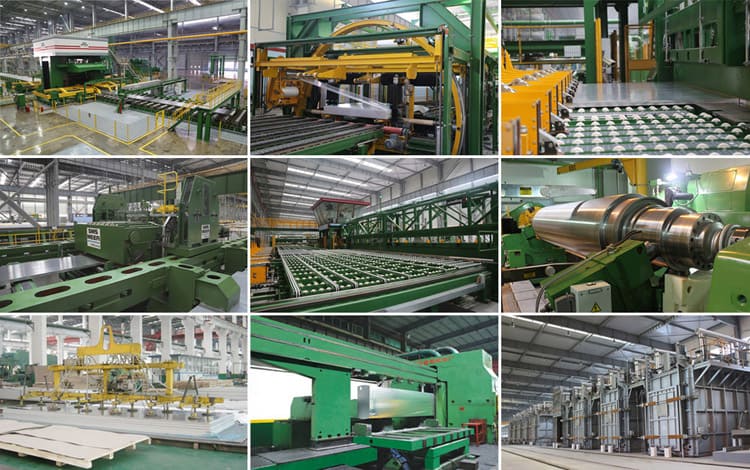
Процесс литья и прокатки
Процесс литья и прокатки: жидкий металл, передняя коробка (контроль уровня жидкости), литейно-прокатная машина (система смазки, охлаждающая вода), стригальная машина, намоточная машина.
Производственный процесс холодной прокатки
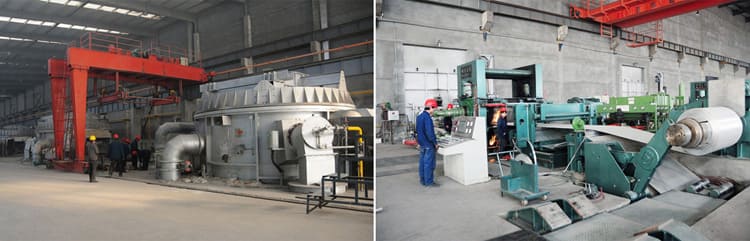
Введение в процесс производства отделки
Алюминиевый сплав имеет характеристики низкой плотности, хорошие механические свойства, хорошая производительность обработки, нетоксичный, легко перерабатывается, отличная электропроводность, теплопередача и коррозионная стойкость, поэтому он имеет широкий спектр применения.
Аэрокосмическая промышленность: используется для изготовления обшивки самолетов, шпангоуты фюзеляжа, балки, роторы, пропеллеры, топливные баки, стеновые панели и стойки шасси, а также кольца ракетной ковки, стеновые панели космического корабля, и т. д..
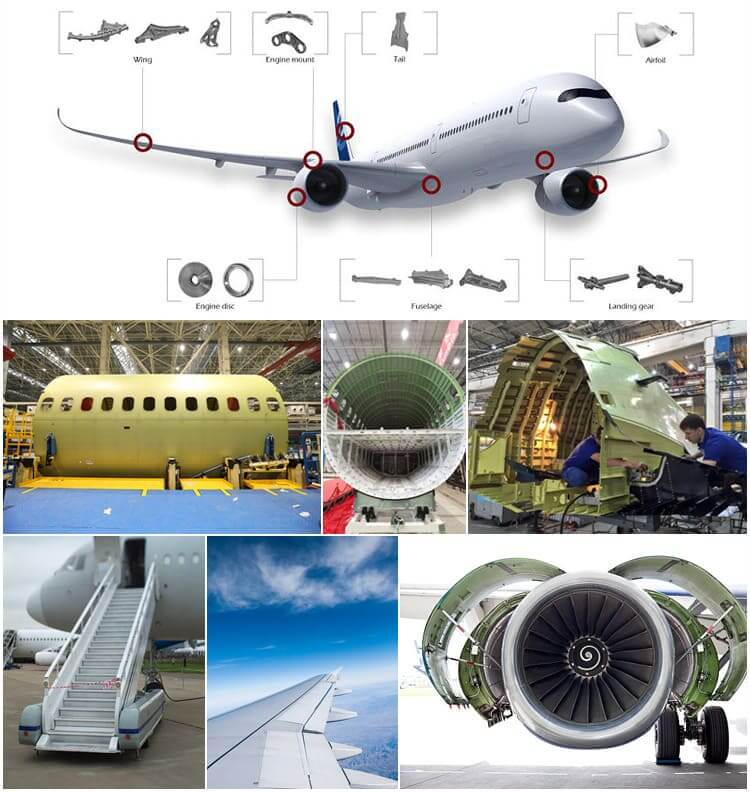
Алюминиевый сплав, используемый в аэрокосмической промышленности
Транспорт: используется для материалов конструкции кузова автомобилей, вагоны метро, железнодорожные пассажирские вагоны, скоростные легковые автомобили, двери и окна, полки, части автомобильного двигателя, Кондиционеры, радиаторы, панели кузова, колеса и корабельные материалы.
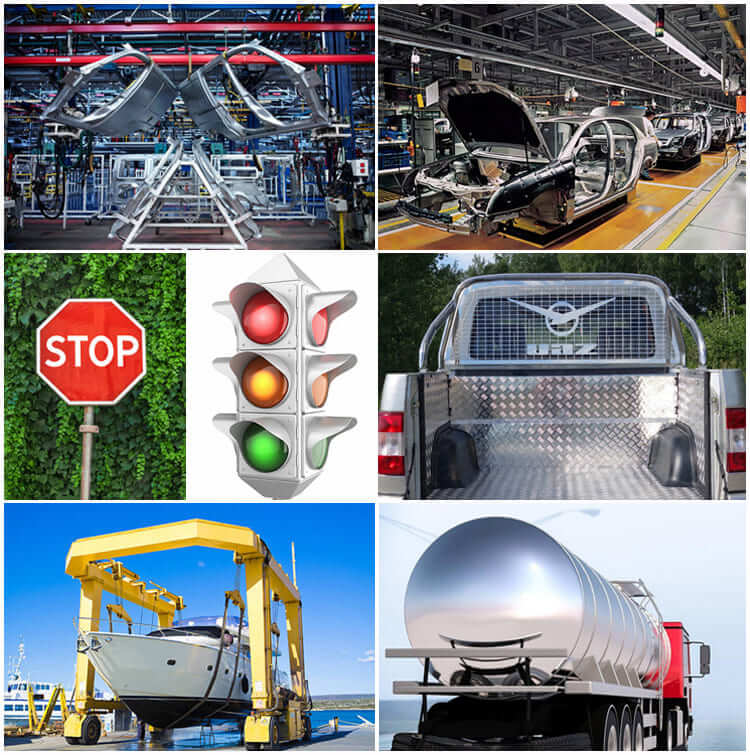
Приложение трафика
Упаковка: Цельноалюминиевые банки для поп-музыки в основном используются в качестве металлических упаковочных материалов в виде тонких пластин и фольги., и превращаются в банки, крышки, бутылки, бочки, и упаковочная пленка. Широко используется в упаковке напитков, еда, косметика, лекарства, сигареты, промышленные товары, лекарства, и т. д..
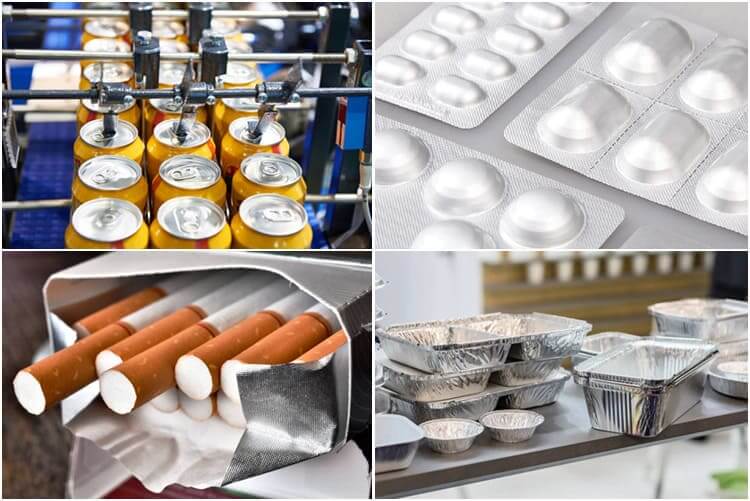
Приложение для упаковки
Печать: В основном используется для изготовления пластин PS, пластины PS на алюминиевой основе — это новый тип материала в полиграфической промышленности., используется для автоматического изготовления пластин и печати.
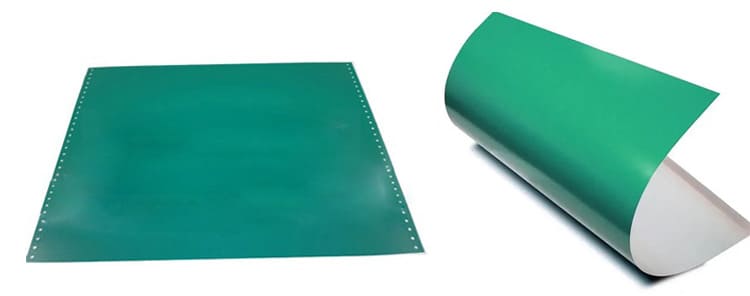
PS печать
Архитектурное украшение: алюминиевый сплав широко используется в строительных конструкциях, двери и окна, подвесные потолки, декоративные поверхности, и т. д.. благодаря хорошей коррозионной стойкости, достаточная прочность, отличная производительность процесса и производительность сварки.
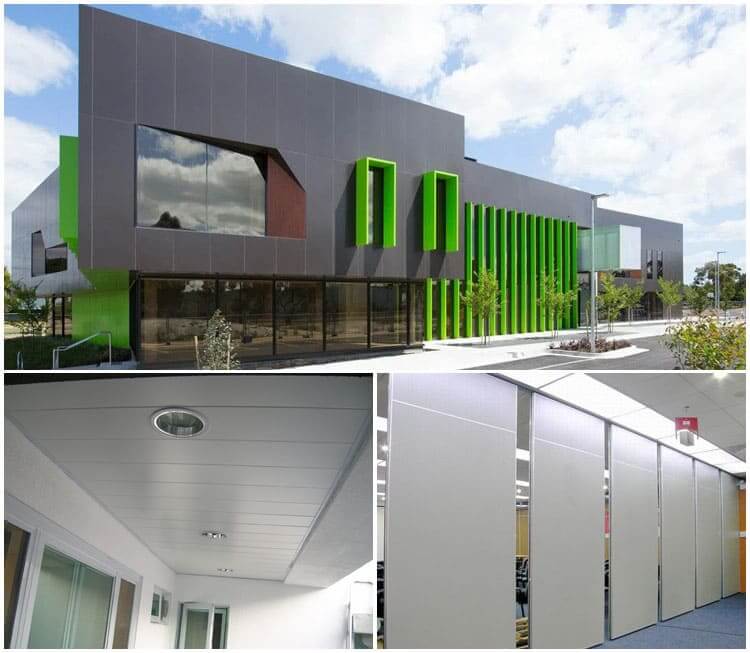
Применение конструкции из алюминиевого сплава
Электронные продукты: компьютеры, мобильные телефоны, корпуса холодильника, радиаторы, и т. д..
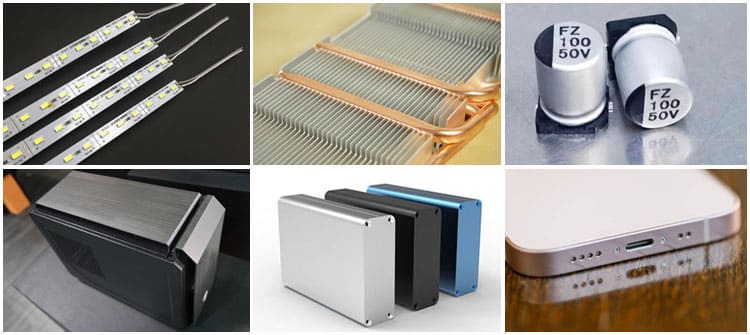
Заявка на электронный продукт
Кухонные принадлежности: алюминиевые горшки, алюминиевые раковины, вкладыши для рисоварки, бытовая алюминиевая фольга, и т. д..
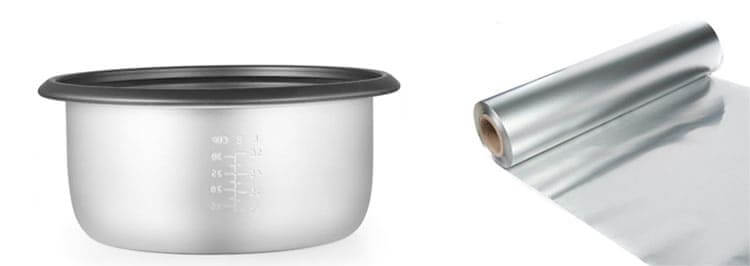
Кухонное приложение
Упаковка алюминиевого листа/катушки
Каждая деталь упаковки - это то, где мы стремимся к безупречному обслуживанию. Наш процесс упаковки в целом выглядит следующим образом:
Ламинирование: прозрачная пленка, голубая пленка, микрослизистая оболочка, с высокой слизистой оболочкой, лазерная резка пленки (2 бренды, Новаселл и Полифем);
Защита: защитные уголки из бумаги, подушечки против давления;
сушка: осушитель;
Поднос: окуренный безвредный деревянный поднос, многоразовый железный лоток;
Упаковка: Стальной пояс для игры в крестики-нолики, или упаковочный ремень из ПВХ;
Качество материала: Полностью свободен от дефектов, таких как белая ржавчина, масляные пятна, следы прокатки, повреждение края, изгибы, вмятины, отверстия, линии разрыва, царапины, и т. д., катушка не установлена.
Порт: Циндао или другие порты в Китае.
Время выполнения: 15-45 дни.
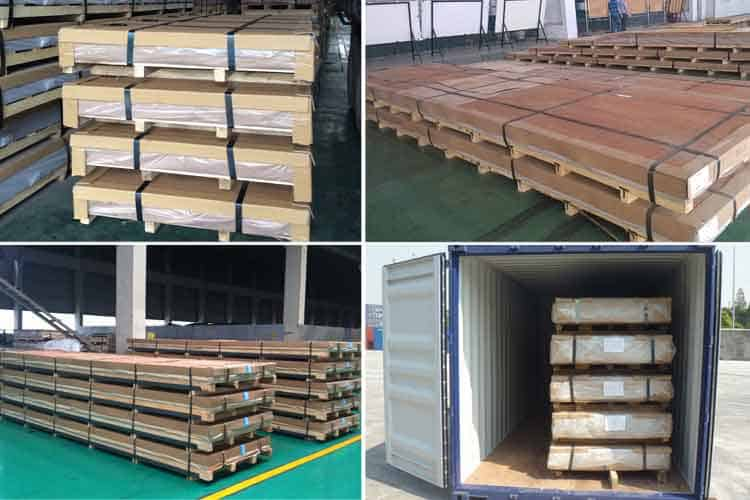
Процесс упаковки алюминиевых листов/пластин
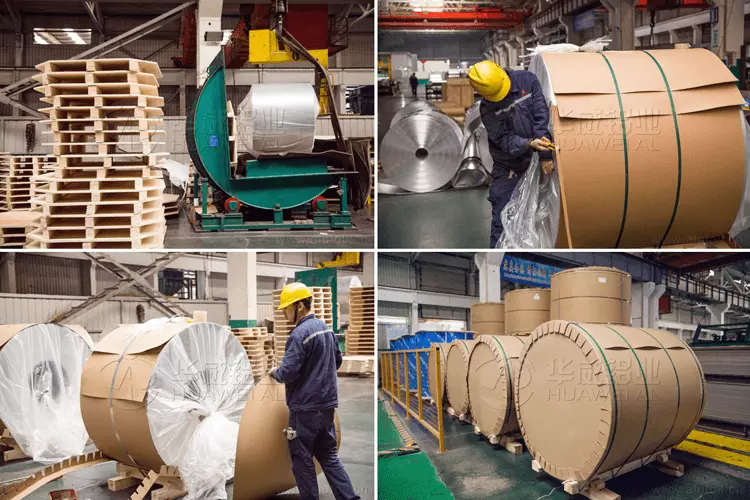
Процесс упаковки алюминиевых рулонов
Ф: Вы производитель или продавец?
Вопрос: Мы являемся производителем, наша фабрика находится на Вейер-роуд № 3, Индустриальная зона, Гонги, Хэнань, Китай.
Ф: Что такое MOQ для заказа продукта?
Вопрос: Наш минимальный заказ 5 тонн, и некоторые специальные продукты будут иметь минимальный объем заказа 1 или 2 тонн.
Ф: Как долго ваше время выполнения заказа?
Вопрос: Как правило, наше время выполнения заказа составляет около 30 дни.
Ф: Есть ли у вашей продукции гарантия качества?
Вопрос: Да, если есть проблема качества с нашей продукцией, мы компенсируем клиента, пока он не будет удовлетворен.
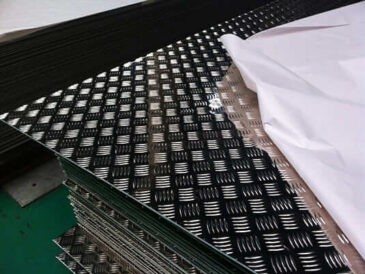
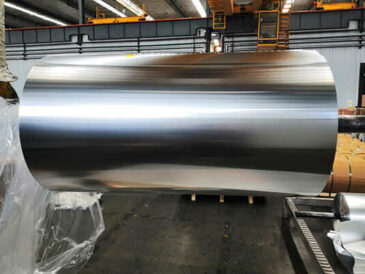
сопутствующие товары


Последние блоги
Распространенные сплавы алюминиевой катушки с полиэтиленовым покрытием для рефрижераторных грузовиков
Откройте для себя распространенные сплавы алюминиевых катушек с полиэтиленовым покрытием для рефрижераторов., включая 3003, 3004, и 3105. Разработан для превосходной коррозионной стойкости, формуемость, и длительная работа на открытом воздухе.
Является ли алюминий проводящим? Характеристики, Использование & Объяснение преимуществ
Является ли алюминий проводящим? Откройте для себя электропроводность алюминия, ключевые преимущества, и почему он широко используется в передаче электроэнергии и в промышленности..
Открытие устойчивого развития: Правда о переработке алюминиевой фольги
Пригодна ли алюминиевая фольга для вторичной переработки?? Узнайте, как можно переработать алюминиевую фольгу, как его правильно приготовить, и почему переработка помогает сократить количество отходов и сэкономить ресурсы.
Алюминиевая фольга с покрытием для упаковки | Сильный & Надежный
Высококачественная алюминиевая фольга с покрытием для упаковки., предлагая превосходную барьерную защиту, долговечность, и последовательная производительность.