PE Coated Aluminum Foil Roll: A Comprehensive Guide for 2026
PE coated aluminum foil rolls sit at the intersection of performance, safety, and convenience. These materials combine the unbeatable barrier properties of metal with the versatility of a polyethylene (PE) coating, enabling high-quality packaging, insulation, and specialty applications across food, pharma, electronics, and industrial sectors.
This article provides an authoritative, data-driven overview of PE coated aluminum foil rolls, with practical guidance for buyers, engineers, and procurement teams.
We also introduce Huawei Aluminum as a leading supplier in this space, outlining how such manufacturers meet global standards and customer needs.
About Huawei Aluminum: A Trusted Supplier of PE Coated Aluminum Foil Roll
Huawei Aluminum is a prominent, vertically integrated aluminum producer with a broad product portfolio that includes aluminum sheets, coils, and specialty foils.
In the segment of PE coated aluminum foil rolls, Huawei Aluminum leverages advanced rolling mills, precision coating lines, and rigorous quality control protocols to deliver consistent performance across industries. Key capabilities include:
- Integrated production lines from aluminum billet to finished foil and coated products
- PE coating options tailored for food contact, moisture barriers, and peel strength requirements
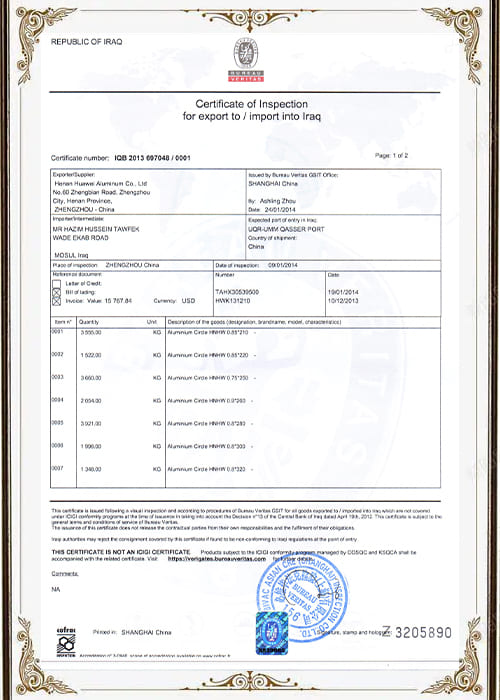
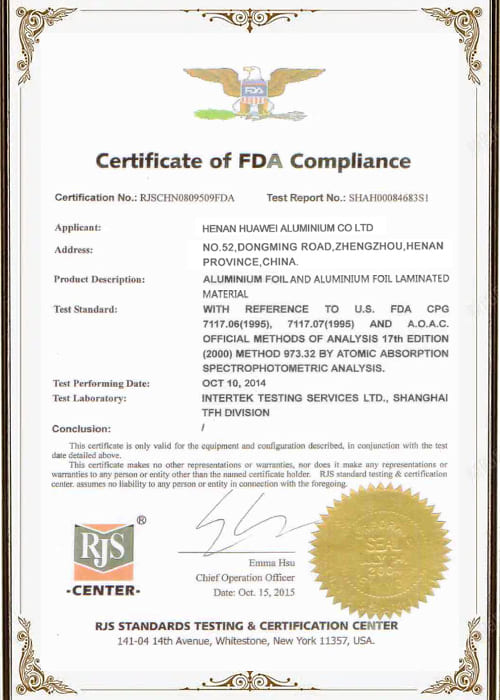
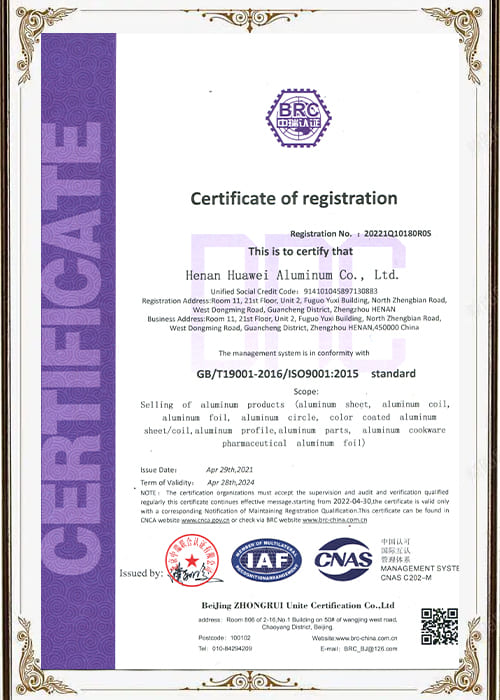
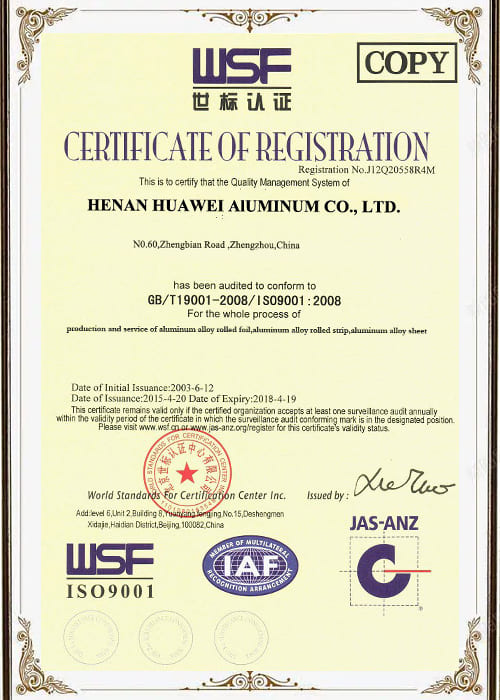
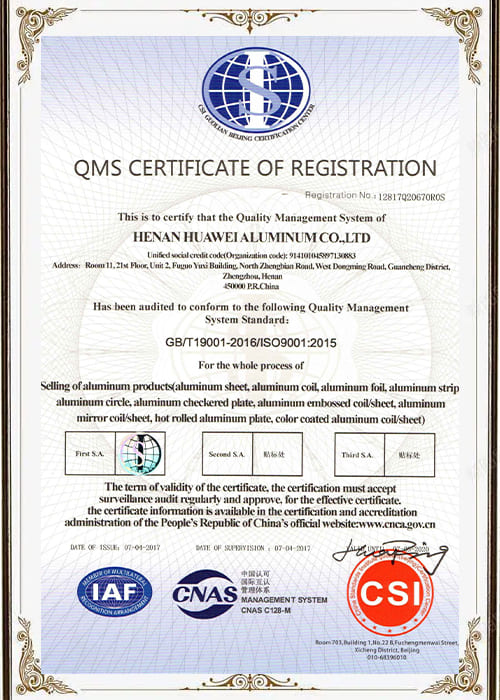
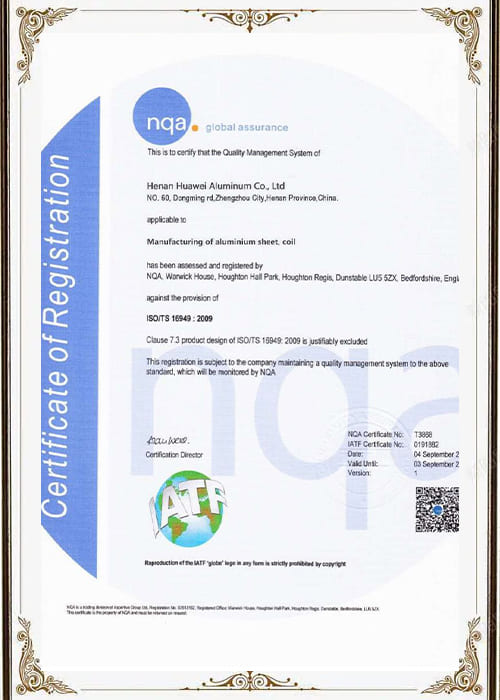
- Certifications and quality systems aligned with international standards (ISO 9001, ISO 14001, and relevant food-contact and medical-device standards)
- A global logistics and service network designed to support large-volume orders, just-in-time delivery, and technical support
Huawei Aluminum emphasizes value-driven partnerships, technical collaboration, and transparency in testing, documentation, and compliance.
For buyers, this means clear product specifications, traceable supply chains, and reliable performance under real-world conditions.
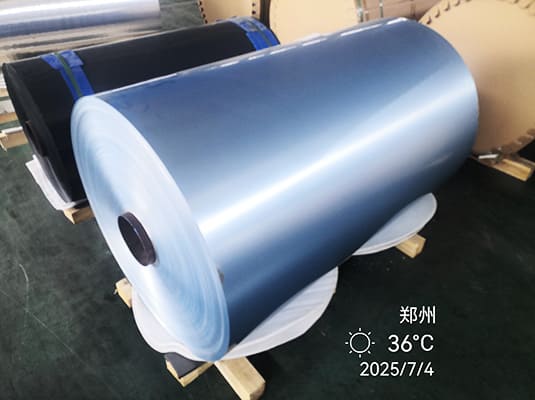
PE Coated Aluminum Foil Roll
What Is a PE Coated Aluminum Foil Roll?
PE coated aluminum foil roll refers to a rolled aluminum foil product that has a polyethylene layer applied to one or both surfaces.
The coating modifies surface energy, adhesion, heat-sealability, and chemical compatibility, expanding the range of applications beyond bare aluminum foil.
The PE layer can serve as a primary food-contact surface, a cushioning or peel-layer in packaging laminates, or a protective coating in insulation and electronics packaging.
Key characteristics at a glance:
– Core material: Aluminum foil (typically 6–25 microns thick, depending on application)
– Surface coating: Polyethylene (PE), thickness commonly in the sub-micron to a few micrometers range per surface, depending on the coating process and target performance
– Form factor: Flat, flexible roll suitable for converting into bags, pouches, laminates, or direct use in sealing equipment
– Primary benefits: Excellent barrier to moisture and gases (when laminated or used as a barrier layer), good heat-seal performance, high printability on coated surfaces, and broad chemical compatibility
Why PE coating? The PE coating makes the foil more versatile for direct-contact packaging, improved heat-sealing behavior, and easier lamination with other polymers (such as LDPE, EVA, or PP). It also provides a defined surface for adhesion to inks, coatings, and laminates, enabling robust multi-layer structures.
Manufacturing Process Overview
Understanding the manufacturing process helps explain performance characteristics and quality control. A PE coated aluminum foil roll typically follows these steps:
- Aluminum foil production
- Casting and rolling: Aluminum billets are cast into sheet ingots and rolled into thin foils through multiple pass reductions.
- Surface finish and reconsolidation: The foil surface is smoothed, annealed to achieve target ductility, and inspected for uniform thickness.
- PE coating application
- Surface preparation: Foil surfaces are cleaned and treated to improve coating adhesion (e.g., corona or primer treatment in some processes).
- Coating methods: PE coating can be applied via extrusion coating, lamination, or co-extrusion with protective release layers. The choice depends on the target end-use, required seal strength, and lamination compatibility.
- Coating thickness control: PE layer thickness is controlled to achieve the desired mechanical and barrier properties without compromising heat-seal performance.
- Lamination and finishing
- Multi-layer structures: For many applications, the PE coated foil is laminated with additional layers (e.g., PET, CPP, or LDPE) to form a complete packaging film.
- Winding and inspection: Coated foils are wound into rolls, with inline and offline inspection for thickness uniformity, surface defects, and coating adhesion.
- Quality assurance
- Mechanical tests, seal strength tests, and barrier property measurements are conducted to validate that the PE coated aluminum foil roll meets specifications.
This integrated approach ensures traceability, consistent performance, and compatibility with downstream converting equipment.
Properties and Performance: What to Expect from a PE Coated Aluminum Foil Roll
Physical and Mechanical Properties
- Thickness range
- Aluminum foil: typically 6–25 microns (0.006–0.025 mm)
- PE coating: a few micrometers per surface (often 1–8 µm; sometimes thicker for demanding heat-seal or chemical resistance)
- final flexibility: high, enabling easy forming and sealing in pouch-making and tray-lidding processes
- seal strength: dependent on PE composition, coating thickness, and the mating material; typical values span 3–10 N/15 mm (with optimized formulations achieving higher strengths)
- tear resistance: high for the aluminum core, with coating designed to avoid premature delamination during converting and handling
- surface energy: optimized to ensure good adhesion of inks, primers, and laminates
Barrier Properties
- Moisture barrier: aluminum inherently blocks most moisture; PE coating adds surface compatibility for packaging laminates without compromising the barrier
- Gas barrier: aluminum foil provides an excellent barrier to oxygen and aromas in many configurations; when laminated with polymer layers, gas barrier can be tailored for shelf life
- Light barrier: metal foil is opaque, providing robust protection against light-induced degradation
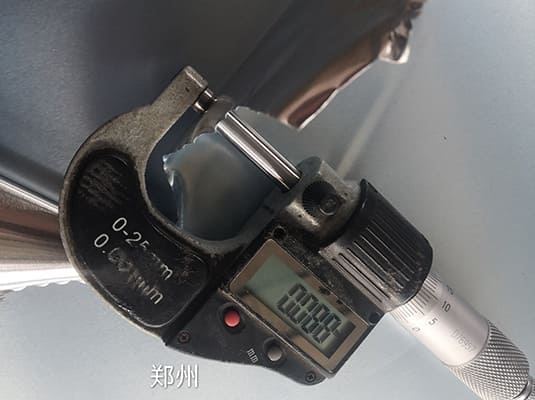
Thickness measurement of PE Coated Aluminum Foil Roll
Thermal and Chemical Compatibility
- Heat resistance: suitable for retort and pasteurization processes; PE coated foils can withstand brief exposure to elevated temperatures typical of steaming or hot-fill operations (often up to 120–135°C, depending on formulation)
- Chemical resistance: coating is selected to resist common food-grade solvents, fats, and cleaning agents used in packaging lines
- Food contact safety: PE coatings used with food-grade polymers comply with applicable regulations (for example, EU 10/2011 directives, FDA guidelines in the United States, or equivalent local standards)
Adhesion, Coating Integrity, and Bonding
- Adhesion to the foil: strong adhesion ensures the coating remains intact under mechanical stress and during lamination
- Coating delamination risk: controlled by surface treatment and coating process; high-quality PE coated foils are designed to minimize such risk during sealing and forming
- Lamination compatibility: optimized for bonding with common laminates (LDPE, LLDPE, PET, PLA, EVOH) used in rigid and semi-rigid packaging
Sustainability and End-of-Life Considerations
- Recyclability: bare aluminum foil is highly recyclable; PE-coated foil presents challenges because the polymer layer complicates aluminum recovery. In some systems, composite materials are recycled via specialized industrial processes, while other systems treat them as a composite that is diverted from recycling streams. Buyers should consult local recycling guidelines and supplier sustainability statements.
- Weight considerations: foil-based packaging enables lightweight solutions, reducing transport emissions and material usage in per-unit packaging
- Life-cycle insights: selecting the right thickness, coating, and laminate structure can optimize both cost and environmental impact
Applications and Market Segments
Food Packaging
- Primary uses: snack wraps, bakery packaging, ready meals, and single-serve packaging
- Advantages: excellent moisture and aroma barriers, heat-sealability, compatibility with automated packaging lines
- Formats: roll-fed films for vertical/horizontal form-fill-seal equipment, pre-formed trays with lidding foil, laminated pouches
Pharmaceutical Packaging
- Applications: blister packs, sachets, and sterile barrier closures
- Compliance: materials designed to meet pharmacopeial requirements and regulatory constraints, with traceability and documentation to support validation
- Benefits: robust barrier against contamination and environmental factors, stable mechanical properties during storage
Electronics and Industrial Uses
- EMI shielding enclosures, protective wraps, and insulation wraps
- The combination of aluminum’s conductivity and a polymer coat enables specific surface characteristics necessary for assembly lines and thermal management
Other Specialized Markets
- Insulation barriers for building materials
- Label backing and heat-applied tapes
- Medical device packaging and sterile barrier systems
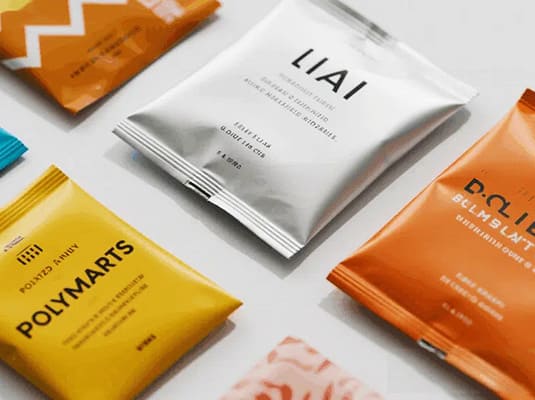
Flexible packaging used Coated Aluminum Foil
Comparative Analysis: PE Coated Aluminum Foil Roll vs Alternatives
The following table compares key characteristics of PE coated aluminum foil rolls against common alternatives used in packaging and insulation.
The table emphasizes practical performance, cost considerations, and suitability for typical converting processes.
| Comparison Dimension | PE Coated Aluminum Foil Roll | LDPE coated Aluminum Foil | Plain Aluminum Foil (uncoated) | Laminated Aluminum Foil |
|---|---|---|---|---|
| Core material | Aluminum foil (6–25 µm) | Aluminum foil with polymer coating (coated externally) | Aluminum foil (6–25 µm) | Aluminum foil + polymer layers (PET/PE/CPP) |
| Primary benefit | Heat sealability, barrier, direct food contact surface | Enhanced seal interface, improved lamination compatibility | Maximum barrier, metal integrity | Tuned barrier and mechanical properties for specific end-use |
| Surface energy | Moderate to high (with PE) | High where coating improves adhesion; can be tuned | Low to moderate | Varied; depends on outer and inner layers |
| Heat sealing compatibility | Excellent with proper mating polymer | Excellent with targeted seals; depends on coating thickness | Not optimized for sealing | Excellent, but require compatible sealer and lamination mill settings |
| Barrier performance | Excellent moisture/gas barrier when laminated | Dependent on laminate; often good moisture barrier | Excellent moisture barrier; gas barrier depends on lamination | Hammond’s a balance: barrier tuned by layer stack |
| Recyclability | Composite with PE complicates recycling; often non-separable | Also composite; similar recycling challenges | Easiest to recycle, minimal polymer contamination | Varies; typically more complex due to multi-materials |
| Typical applications | Food pouches, ready meals, snack wraps | Laminate laminates, flexible packaging requiring good adhesion | Basic barrier packaging; some rerun can be laminated | High-performance packaging with multiple functions |
| Cost considerations | Moderate to high, depending on coating thickness and width | Often lower per layer but requires lamination | Lowest cost per unit for basic foil | Highest cost due to multiple materials and processing steps |
Notes:
– The table provides a high-level view. Specific product formulations, processing equipment, and regional standards significantly influence performance and cost.
– Buyers should request material safety data sheets (MSDS), technical datasheets, and third-party test results to verify compliance and suitability for their line.
Quality Assurance: Testing, Standards, and Validation
Rigorous quality assurance supports performance claims and reduces risk for downstream converters and end-users. Common QA activities for PE coated aluminum foil roll include:
- Thickness measurement
- Accurate measurement of aluminum foil thickness and coating thickness using calibrated micrometers and X-ray fluorescence (XRF) methods
- Heat-seal and peel testing
- Seal strength testing across the intended sealing temperature range
- Peel strength testing against the relevant laminates to ensure reliable opening/closing performance
- Barrier testing
- WVTR (Water Vapor Transmission Rate) and OTR (Oxygen Transmission Rate) tests to quantify barrier performance within the laminate system
- Surface and adhesion tests
- Coating adhesion tests (e.g., tape test) to confirm coating durability under converting and usage
- Chemical compatibility
- Exposure tests with fats, solvents, and cleaning agents relevant to the packaging line and product category
- Regulatory and safety compliance
- Verification of food-contact compliance, labeling, and documentation
- Traceability and lot documentation
- Lot-specific data including production date, line, batch, and coating parameters for full traceability
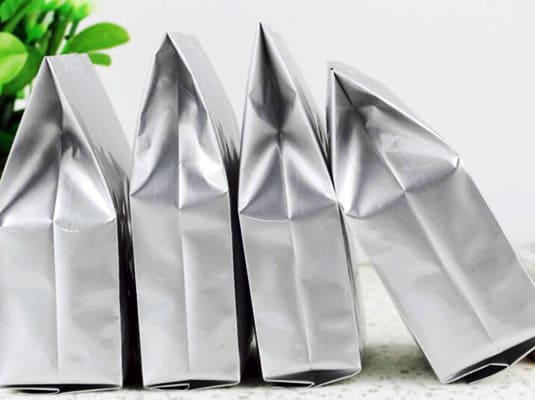
PE Coated Aluminum Foil Roll for Food Packaging
Supplier Spotlight: Huawei Aluminum’s Capabilities and Commitments
Huawei Aluminum’s approach to PE coated aluminum foil roll emphasizes reliability, technical rigor, and industry leadership. Key attributes include:
- Global reach with localized support: Huawei Aluminum supports international customers through regional offices and distributors, enabling turnkey procurement and responsive technical assistance.
- Innovation in surface engineering: The company invests in surface treatment technologies to optimize adhesion, printability, and lamination compatibility.
- Strong quality culture: Quality management systems are embedded across design, production, and logistics, with inline and offline testing to ensure specification conformance.
- Sustainability and resource efficiency: Energy-efficient rolling and coating lines, waste minimization programs, and ongoing assessments of environmental impact align with modern ESG expectations.
- Comprehensive documentation: Certificates of conformity, MSDS, and material test reports accompany shipments, helping customers maintain compliance and traceability.
For buyers, Huawei Aluminum’s credibility rests on demonstrable performance data, transparent processes, and a robust technical support ecosystem.
Engaging with Huawei Aluminum often involves collaborative product development, pilot testing, and custom coating configurations to meet specific packaging or insulation requirements.
FAQs: PE Coated Aluminum Foil Roll
What is a PE coated aluminum foil roll used for?
It is used for heat-sealable packaging, laminated films, pastry and dairy packaging, pharmaceutical packaging, and insulation applications where a polymer-coated surface improves lamination, adhesion, and sealing.
How does PE coating affect recyclability?
The PE coating complicates recycling because the polymer layer is difficult to separate from aluminum. In many systems, these foil laminates are treated as composite materials. However, some recycling streams are capable of separating the layers, while others design end-of-life handling to recover aluminum where possible and manage polymer fractions appropriately.
What thickness ranges are typical?
Aluminum foil: 6–25 µm
PE coating: 1–8 µm per surface, depending on the required seal strength and lamination compatibility
Is PE coated aluminum foil safe for food contact?
Yes, provided the coating formulation is approved for food contact and the product meets applicable regulatory standards (e.g., FDA, EU directives). Always verify the coating composition and regulatory documentation with the supplier.
How do I select a supplier for PE coated aluminum foil roll?
Look for a supplier with a robust quality management system, traceability, regulatory compliance (food contact, medical devices if applicable), sample testing support, and clear documentation. A supplier like Huawei Aluminum offers integrated production, technical assistance, and a track record of supply to multinational brands.
What testing should I request in qualification?
Seal strength tests, WVTR/OTR tests, adhesion tests, material compliance certificates, and supplier declarations. Also request pilot-run data for your specific laminates and sealing equipment.
How should I store PE coated aluminum foil rolls?
Store in a dry, cool environment away from direct sunlight, in original packaging or protective cases to minimize surface damage. Avoid exposure to oils, solvents, and chemicals that might affect the coating or surface energy.
Conclusion
PE coated aluminum foil rolls offer a versatile solution for modern packaging and industrial needs. They provide a reliable barrier, predictable heat-sealing characteristics, and compatibility with a range of laminates and converting processes.
When paired with a reputable supplier—such as Huawei Aluminum—the result is a supply chain that emphasizes quality, traceability, and service.
For buyers, the critical steps are to define end-use requirements precisely, verify regulatory compliance and safety documentation, and conduct pilot testing to ensure compatibility with converting equipment and downstream packaging structures.
As markets continue to demand safer packaging, longer shelf life, and sustainable design, PE coated aluminum foil rolls will remain a foundational material in advanced packaging and industrial applications.
Whether your priority is barrier performance, seal reliability, or laminate compatibility, a PE coated aluminum foil roll from a trusted supplier can deliver consistent performance and value across product lines and geographic markets.
If you would like to connect with Huawei Aluminum for product specifications, samples, or technical assistance related to PE coated aluminum foil rolls, consider requesting a datasheet package, including material composition, coating thickness ranges, mechanical properties, and conformity documents.
A qualified technical representative can guide you through thickness selection, coating formulations, and lamination strategies to optimize your packaging performance and total cost of ownership.
Share with PDF: Download
Casting production process and its introduction
The purpose of melting and casting is to produce alloys with satisfactory composition and high purity of melt, so as to create favorable conditions for casting alloys of various shapes.
Melting and casting process steps: batching --- feeding --- melting --- stirring after melting, slag removal --- pre-analysis sampling --- adding alloy to adjust the composition, stirring --- refining --- static Setting——Guide furnace casting.
Hot rolling production process and its introduction
- 1. Hot rolling generally refers to rolling above the metal recrystallization temperature;
- 2. During the hot rolling process, the metal has both hardening and softening processes. Due to the influence of deformation speed, as long as the recovery and recrystallization process is too late, there will be a certain work hardening;
- 3. The recrystallization of the metal after hot rolling is incomplete, that is, the coexistence of recrystallized structure and deformed structure;
- 4. Hot rolling can improve the processing performance of metals and alloys, reduce or eliminate casting defects.
- 1. The casting and rolling temperature is generally between 680°C and 700°C. The lower the better, the stable casting and rolling line usually stops once a month or more to re-stand. During the production process, it is necessary to strictly control the liquid level of the front tank to prevent low liquid level;
- 2. Lubrication uses C powder with incomplete combustion of gas for lubrication, which is also one of the reasons for the dirty surface of casting and rolling materials;
- 3. The production speed is generally between 1.5m/min-2.5m/min;
- 4. The surface quality of products produced by casting and rolling is generally relatively low, and generally cannot meet products with special physical and chemical performance requirements.
- 1. Cold rolling refers to the rolling production method below the recrystallization temperature;
- 2. There will be no dynamic recrystallization during the rolling process, and the temperature will rise to the recovery temperature at most, and the cold rolling will appear in a work hardening state, and the work hardening rate will be large;
- 3. The cold-rolled sheet and strip have high dimensional accuracy, good surface quality, uniform structure and performance, and products in various states can be obtained with heat treatment;
- 4. Cold rolling can roll out thin strips, but at the same time, it has the disadvantages of high energy consumption for deformation and many processing passes.
- 1. Finishing is a processing method to make the cold-rolled sheet meet the customer's requirements, or to facilitate the subsequent processing of the product;
- 2. The finishing equipment can correct the defects produced in the hot rolling and cold rolling production process, such as cracked edge, oily, poor plate shape, residual stress, etc. It needs to ensure that no other defects are brought into the production process;
- 3. There are various finishing equipments, mainly including cross-cutting, slitting, stretching and straightening, annealing furnace, slitter, etc.
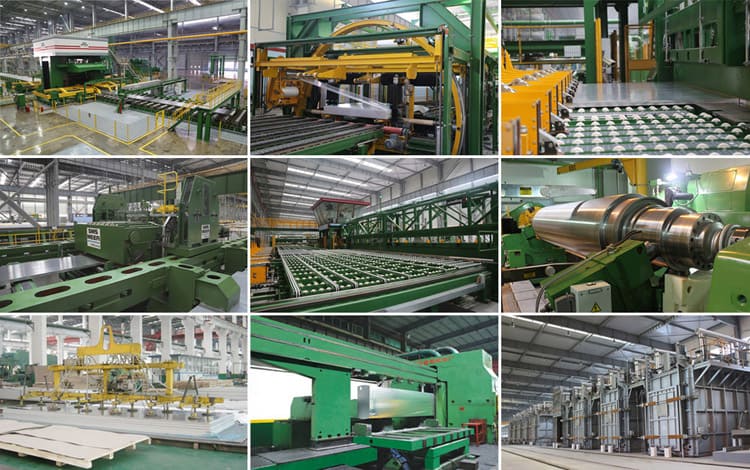
Casting and rolling process
Casting and rolling process: liquid metal, front box (liquid level control), casting and rolling machine (lubrication system, cooling water), shearing machine, coiling machine.
Cold rolling production process
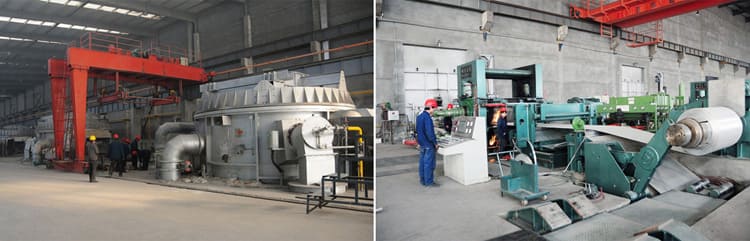
Introduction to finishing production process
Aluminum alloy has the characteristics of low density, good mechanical properties, good processing performance, non-toxic, easy to recycle, excellent electrical conductivity, heat transfer and corrosion resistance, so it has a wide range of applications.
Aerospace: used to make aircraft skins, fuselage frames, girders, rotors, propellers, fuel tanks, wall panels and landing gear struts, as well as rocket forging rings, spacecraft wall panels, etc.
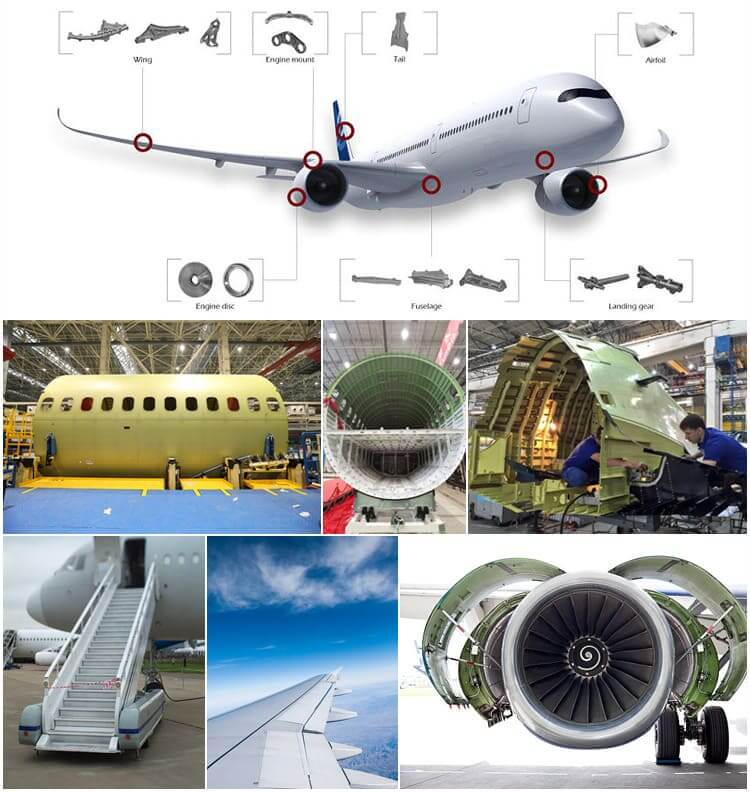
Aluminum alloy used for aerospace
Transportation: used for car body structure materials of automobiles, subway vehicles, railway passenger cars, high-speed passenger cars, doors and windows, shelves, automotive engine parts, air conditioners, radiators, body panels, wheels and ship materials.
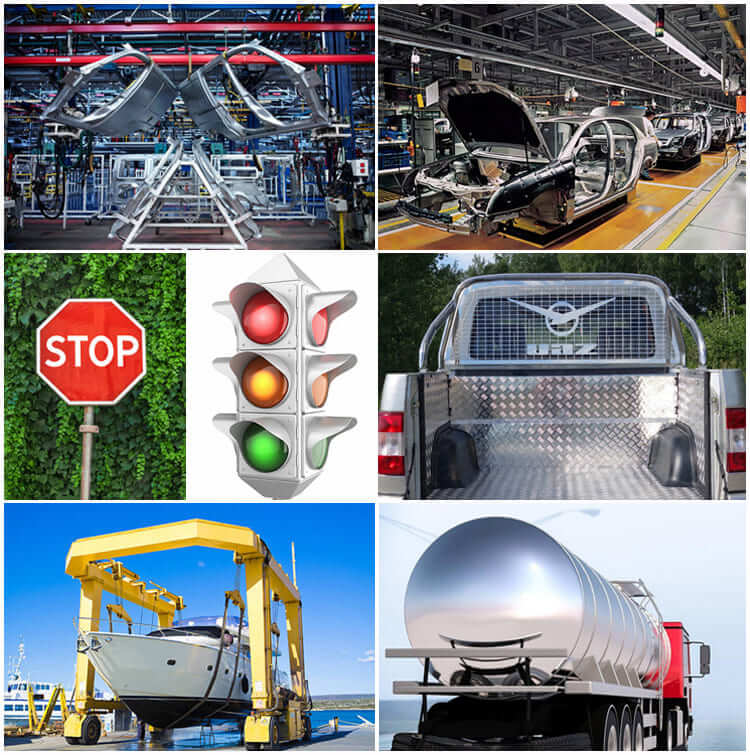
Traffic application
Packaging: All-aluminum pop cans are mainly used as metal packaging materials in the form of thin plates and foils, and are made into cans, lids, bottles, barrels, and packaging foils. Widely used in the packaging of beverages, food, cosmetics, medicines, cigarettes, industrial products, medicines, etc.
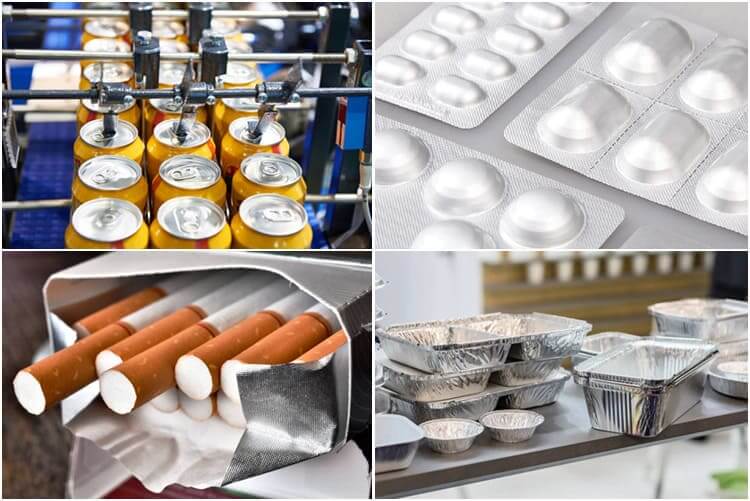
Packaging application
Printing: Mainly used to make PS plates, aluminum-based PS plates are a new type of material in the printing industry, used for automatic plate making and printing.
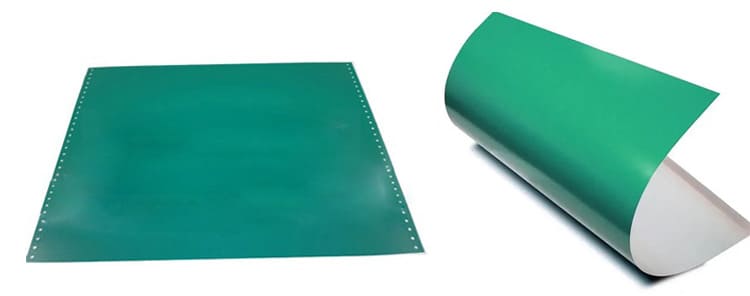
PS printing
Architectural decoration: aluminum alloy is widely used in building structures, doors and windows, suspended ceilings, decorative surfaces, etc. due to its good corrosion resistance, sufficient strength, excellent process performance and welding performance.

Aluminum alloy construction application
Electronic products: computers, mobile phones, refrigerator shells, radiators, etc.
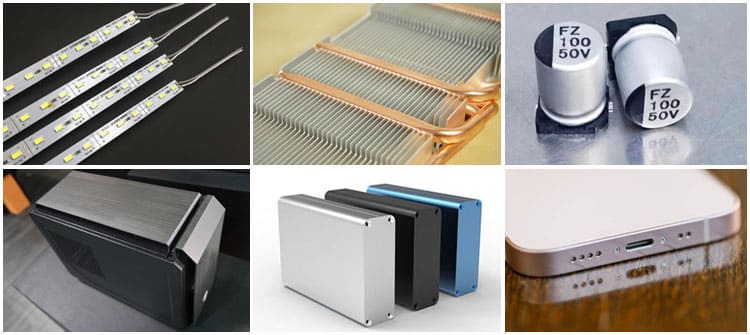
Electronic product application
Kitchen supplies: aluminum pots, aluminum basins, rice cooker liners, household aluminum foil, etc.
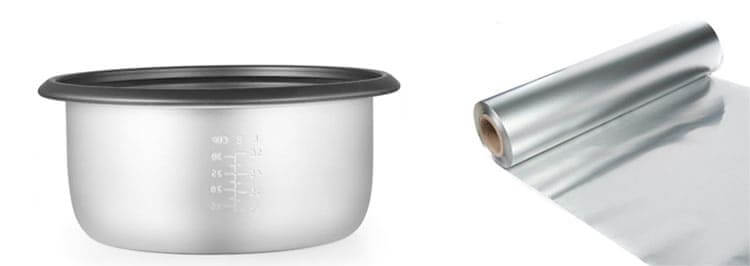
Kitchen application
Packaging Of Aluminum Sheet/Coil
Every detail of packaging is where we pursue perfect service. Our packaging process as a whole is as follows:
Lamination: clear film, blue film, micro-mucosal, high-mucosal, laser cutting film (2 brands, Novacell and Polyphem);
Protection: paper corner protectors, anti-pressure pads;
drying: desiccant;
Tray: fumigated harmless wooden tray, reusable iron tray;
Packing: Tic-tac-toe steel belt, or PVC packing belt;
Material Quality: Completely free from defects such as white rust, oil spots, rolling marks, edge damage, bends, dents, holes, break lines, scratches, etc., no coil set.
Port: Qingdao or other ports in China.
Lead time: 15-45 days.
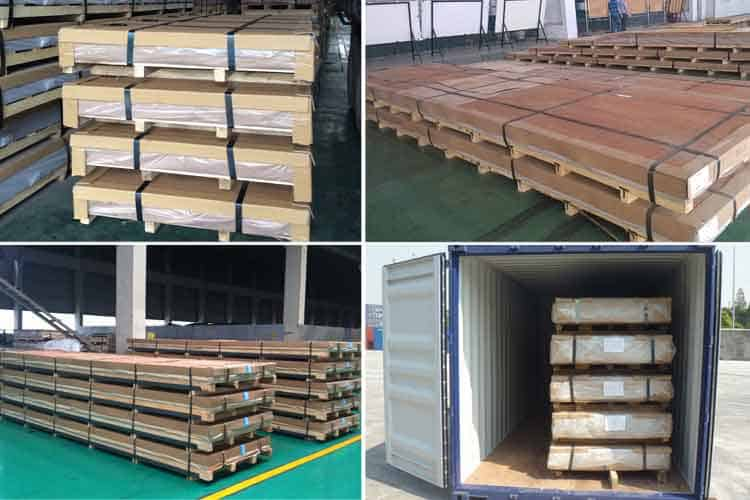
Aluminum sheet/plate packaging process
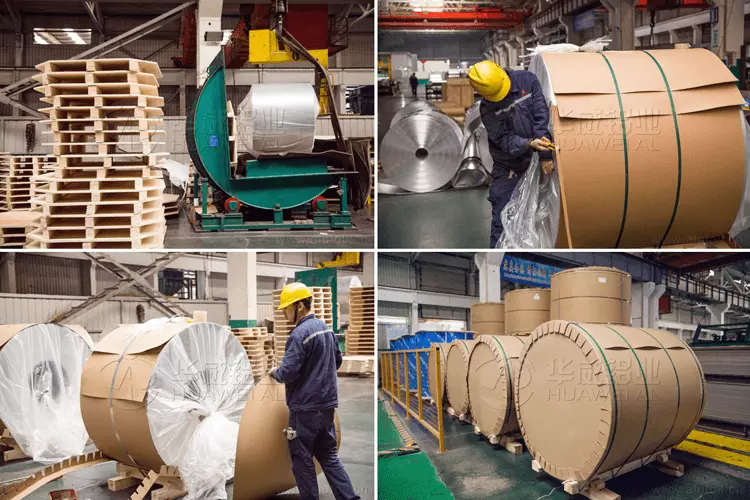
Aluminum coil packaging process
F: Are you a manufacturer or a trader?
Q: We are a manufacturer, our factory is at No.3 Weier Road, Industrial Zone, Gongyi, Henan, China.
F: What is the MOQ for ordering the product?
Q: Our MOQ is 5 tons, and some special products will have a minimum order quantity of 1 or 2 tons.
F: How long is your lead time?
Q: Generally our lead time is about 30 days.
F: Do your products have quality assurance?
Q: Yes, if there is a quality problem with our products, we will compensate the customer until they are satisfied.
Related Products



Latest Blogs
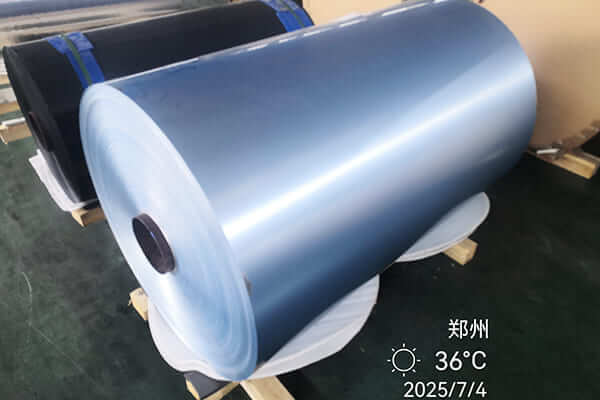
Coated Aluminum Foil for Packaging Applications | Strong & Reliable
High-quality coated aluminum foil for packaging applications, offering excellent barrier protection, durability, and consistent performance.

What is Coated Aluminum Foil Used For in Packaging and Industry
Discover what is coated aluminum foil used for, from food and pharma packaging to insulation and printing, and learn the core benefits and functions.

Trusted 3003 Aluminium Checker Plate Sheet Suppliers Worldwide
Find reliable 3003 Aluminium Checker Plate Sheet Suppliers offering certified quality, competitive pricing, custom sizes, and fast global delivery for your projects.

6061 T6 vs 7075 Aluminum: Strength, Weight & Best Uses
Compare 6061 T6 vs 7075 aluminum easily. Discover differences in strength, weight, and applications to choose the best for your projects.