5052 H48 Can End Aluminum Coil
145 Mga Pananaw 2026-09-21 08:46:23
1. Panimula
5052 H48 Can End Aluminum Coil is a 5xxx-series aluminum product used for selected can-end and closure applications.
It combines magandang paglaban sa kaagnasan, controlled strength, magaan na konstruksiyon, and suitable forming performance.
5052 is a non-heat-treatable aluminum-magnesium alloy. Its strength mainly comes from magnesium alloying and cold working, while the H48 temper provides a higher-strength condition for demanding processing applications.
For can-end production, consistent kapal naman, mekanikal na mga katangian, patag na, kalidad ng ibabaw, and edge condition are essential.
These factors affect blanking, pagbuo ng, scoring, pagkukulot ng buhok, riveting, and coating performance.
ASTM B209/B209M provides an important specification framework for aluminum sheet and coiled sheet.
Gayunpaman, the final material requirements should also match the specific can-end design, kapal naman, forming process, and performance requirements.
Compared with other can-end alloys such as 5182 H48, 5052 H48 offers a different balance of strength, paglaban sa kaagnasan, at pagiging formable.
Kaya nga, alloy and temper selection should follow the requirements of the finished can end rather than alloy designation alone.

Custom 5052 H48 Can End Aluminum Coil
2. Ano ang 5052 H48 Can End Aluminum Coil?
5052 H48 Can End Aluminum Coil is a 5xxx-series aluminum-magnesium coil supplied in the H48 temper for selected can-end and closure applications.
It combines magandang paglaban sa kaagnasan, increased strength, magaan na konstruksiyon, and controlled forming performance.
2.1 5052 aluminyo haluang metal
5052 aluminyo likawin is a non-heat-treatable aluminum alloy. Magnesium provides its main strengthening effect, while chromium helps control the microstructure.
The alloy gains additional strength through cold working rather than precipitation heat treatment.
2.2 H48 Temper
Ang H48 temper indicates a strain-hardened condition. Compared with softer 5052 Tempers, H48 provides higher strength and hardness while maintaining useful forming characteristics.
For can-end production, consistent temper control helps maintain stable performance during blanking, pagbuo ng, scoring, pagkukulot ng buhok, and riveting.
2.3 Can End Aluminum Coil
Can-end aluminum coil is supplied in continuous coil form for high-speed blanking and forming operations.
Depending on the can design, the material may undergo:
- Blanking
- Shell forming
- Curling
- Countersinking
- Scoring
- Riveting
- Patong na patong
Because the coil feeds continuously through production equipment, thickness consistency, patag na, kalidad ng ibabaw, edge condition, at mekanikal na mga katangian are critical.
2.4 Mga Pangunahing Katangian
5052 H48 can-end coil is mainly selected for its:
- Magandang paglaban sa kaagnasan
- Higher strength in H48 temper
- Lightweight construction
- Controlled forming performance
- Good surface quality
- Compatibility with protective coatings
The material should be selected according to the specific can-end design, kapal naman, forming process, and performance requirements.
For higher-strength applications, manufacturers may also consider alternatives such as 5182 H48.

5052 H48 Can End Aluminum Coil
3. Kemikal na komposisyon ng 5052 Aluminyo
Ang kemikal na komposisyon ng 5052 provides the foundation for its mechanical properties, paglaban sa kaagnasan, and processing behavior.
Magnesium is the principal alloying element, while chromium contributes to microstructural control.
Other elements remain within controlled limits to maintain the intended performance of the alloy.
Typical composition limits for 5052 aluminum are shown below.
Exact requirements should always be confirmed against the applicable material standard and purchase specification.
3.1 Typical Chemical Composition
| Elemento | Karaniwang Komposisyon, wt.% | Main Function |
|---|---|---|
| Magnesium (Mg) | 2.2–2.8 | Main strengthening element |
| Chromium (Cr) | 0.15–0.35 | Microstructure control and corrosion-related performance |
| bakal na bakal (Fe) | ≤ 0.40 | Controlled impurity |
| Silicon (Si Si) | ≤ 0.25 | Controlled impurity |
| Tanso (Cu) | ≤ 0.10 | Controlled to maintain alloy characteristics |
| Mga mangganeso (Mn) | ≤ 0.10 | Microstructure control |
| Sink (Zn) | ≤ 0.10 | Controlled impurity |
| Iba pang mga Elemento | ≤ 0.05 bawat isa ay / ≤ 0.15 kabuuan | Trace-element control |
| Aluminyo (Al) | Balanse | Base metal |
Exact chemical limits depend on the applicable standard or customer specification.
4. Mga pagtutukoy ng 5052 H48 Can End Aluminum Coil
5052 H48 Can End Aluminum Coil should be specified according to the requirements of the finished can end and the production line.
haluang metal, Pamahiin, kapal naman, lapad ng katawan, surface condition, coil dimensions, at mekanikal na mga katangian are the core specifications.
4.1 Core Specifications
| Parameter | Typical Specification |
|---|---|
| haluang metal | 5052 |
| Temper | H48 |
| Product Form | aluminyo likawin |
| Main Application | Can Ends / Closure Components |
| Ang kapal | Customized according to can design |
| Lapad ng katawan | Na customize na / Slit Width |
| Ibabaw | Makinis na, malinis na, uniform |
| Edge | Slit or mill edge, controlled burr |
| Coil ID/OD | According to production line requirements |
| Coil Timbang | Na customize na |
| Pamantayan | ASTM B209/B209M or applicable customer specification |
| Patong na patong | Hubad na hubad, lacquered, or coated according to application |
The exact dimensional range should be agreed between the aluminum supplier and can manufacturer because can-end geometry, tooling, and production equipment can impose specific requirements.
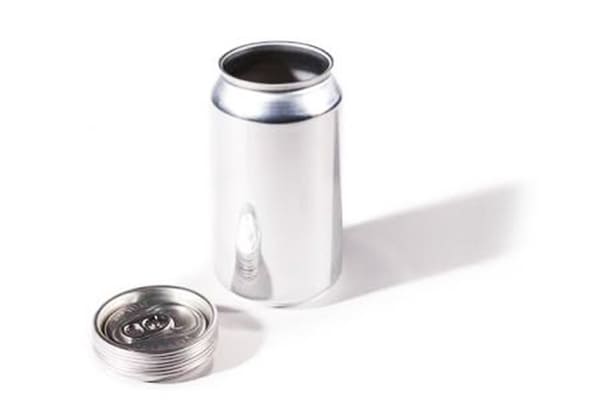
Can End and Can Body
5. Mechanical and Physical Properties
Ang mga mekanikal na katangian ng 5052 H48 depend on the applicable standard, product thickness, and processing condition.
Kaya nga, manufacturers should use the values specified for the actual product rather than relying on a single universal value.
5.1 Mga Katangian ng Mekanikal
The key mechanical parameters include:
- Lakas ng paghatak
- Magbunga ng lakas
- Pagpapahaba
- Ang katigasan ng ulo
H48 provides substantially higher strength than annealed 5052 because the material undergoes controlled cold working.
For can-end applications, strength should be sufficient to maintain the required shape while still allowing the material to undergo forming, scoring, and other conversion processes.
Mechanical Properties — Key Considerations
| Pag-aari | Importance for Can Ends |
|---|---|
| Lakas ng Paghatak | Supports structural strength and resistance to deformation |
| Yield Lakas | Helps maintain dimensional stability during use |
| Pagpapahaba | Indicates available forming capability |
| Ang katigasan ng ulo | Influences forming, scoring, and tool interaction |
| Temper Uniformity | Supports consistent high-speed production |
Actual mechanical-property requirements should follow the applicable material standard and customer specification.
5.2 Mga Katangian ng Pisikal
5052 aluminum has the typical lightweight characteristics of wrought aluminum alloys.
| Pisikal na Ari arian | Typical Value |
|---|---|
| Densidad ng katawan | Humigit-kumulang. 2.68 g/cm³ |
| nababanat na modulus | Humigit-kumulang. 70–72 GPa |
| Ang Ratio ni Poisson | Humigit-kumulang. 0.33 |
| Melting Range | Humigit-kumulang. 607–649°C |
| Thermal kondaktibiti | Humigit-kumulang. 138 W/m·K |
These values are general reference data and may vary slightly with material condition and source.
5.3 Why These Properties Matter
For can-end manufacturing, the most important properties are not simply maximum strength or lowest density.
The material must provide a balanced property profile.
A suitable 5052 H48 coil should combine sufficient strength with controlled elongation, stable dimensions, magandang kalidad ng ibabaw, and predictable forming behavior.
6. Key Performance Requirements for Can End Aluminum Coil
Can-end aluminum coil must meet both material requirements and conversion-process requirements.
A coil that meets the basic chemical composition but performs inconsistently during forming may still create production problems.
6.1 Strength and Dimensional Stability
The H48 temper provides increased strength through strain hardening. This helps the finished can end resist deformation during handling and service.
Consistent yield strength is also important because variations can change forming behavior from one coil to another.
For pressurized packaging, the final end design and material thickness must be evaluated together rather than relying on alloy strength alone.
6.2 Formability
Can-end production involves several forming operations. The material must deform in a controlled manner without excessive cracking or distortion.
Important forming operations include:
- Shell forming
- Countersinking
- Curling
- Scoring
- Rivet formation
- Tab attachment
Formability depends on the combination of haluang metal, Pamahiin, kapal naman, lubrication, tooling, and forming speed.
6.3 Scoring Performance
Scoring creates a controlled weakened line that allows the consumer to open the can.
The score must provide a carefully controlled balance:
Strong enough to resist premature opening + weak enough to open reliably
Material consistency is therefore critical. Variations in thickness, tigas na tigas, or mechanical properties can influence score depth and opening behavior.
6.4 Paglaban sa Kaagnasan
Can ends may encounter moisture, atmospheric exposure, and contact with packaging contents.
5052 provides good corrosion resistance for many environments, but the finished packaging system often relies on an appropriate internal or external coating for additional protection.
Coating selection should consider:
- Product chemistry
- Storage conditions
- Processing temperature
- Food-contact requirements
- Coating adhesion
- Chemical resistance
6.5 Surface Quality
Surface quality directly affects both appearance and downstream coating performance.
The coil should maintain a clean, uniform surface with controlled levels of:
- Mga gasgas
- Pits
- Dents
- Oil residue
- oksihenasyon
- Surface marks
Consistent surface quality is particularly important when the can end requires lacquer, paglilimbag, or other surface treatment.
6.6 Edge Quality
Coil edges must remain stable during feeding and blanking.
Excessive burrs, mga bitak, or damaged edges can cause:
- Feeding problems
- Tool wear
- Edge cracking
- Material waste
- Production interruptions
Controlled slitting and edge inspection therefore form an important part of can-end coil quality control.
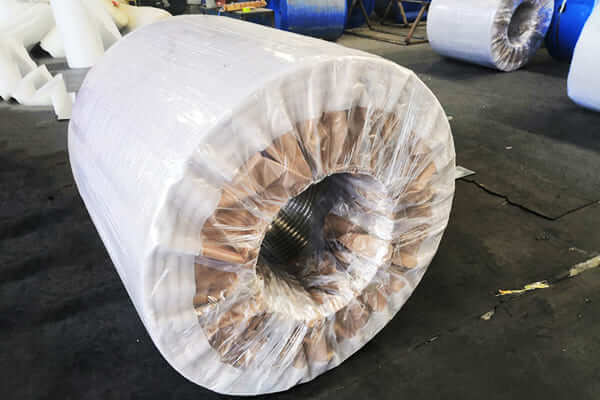
Huawei Packaged 5052 H48 Aluminum Coil
7. Proseso ng Paggawa ng 5052 H48 Can End Aluminum Coil
Ang produksyon ng 5052 H48 can-end coil combines metallurgical control, rolling technology, temper processing, surface finishing, and final inspection.
7.1 Alloy Melting and Casting
The process begins with carefully controlled aluminum alloy preparation.
The required levels of magnesium, kromo, and other elements are adjusted according to the applicable 5052 specification.
The molten aluminum then undergoes purification and casting.
Control at this stage helps minimize inclusions and maintain consistent chemical composition.
7.2 Homogenization
After casting, the aluminum may undergo homogenization treatment to reduce chemical segregation and improve microstructural uniformity.
A controlled microstructure provides a more stable foundation for subsequent hot rolling and cold rolling.
7.3 mainit na pagulong
The cast material is processed through hot rolling to reduce its thickness and produce a suitable intermediate strip.
Hot rolling helps:
- Refine the material structure
- Reduce casting-related variations
- Improve internal consistency
- Prepare the material for cold rolling
Rolling parameters must remain tightly controlled to achieve the required thickness and surface quality.
7.4 malamig na paggulong
Cold rolling provides precise thickness reduction and contributes directly to the strain-hardening response of 5052.
For H48 material, controlled cold working is particularly important because it determines much of the final strength and hardness.
During this stage, manufacturers monitor:
- Ang kapal
- Flatness
- Surface quality
- Rolling reduction
- Coil tension
- Edge condition
7.5 Temper Control
The material is processed to achieve the specified H48 temper.
Because the temper directly influences strength, tigas na tigas, and forming behavior, manufacturers must maintain consistent processing conditions across the coil.
Quality control normally includes mechanical testing to verify that the finished material meets the required specification.
7.6 Surface Treatment or Coating
Depende sa application, the coil may be supplied as bare aluminum or with a specified coating/lacquer system.
For coated can-end material, the process may include:
- Surface cleaning
- Pretreatment where required
- Primer or lacquer application
- Controlled curing
- Coating inspection
The coating must provide suitable adhesion and resistance for the intended packaging environment.
7.7 Slitting and Coil Finishing
Large-width aluminum coils can be slit into narrower widths according to the customer’s production requirements.
During slitting, manufacturers control:
- Width tolerance
- Edge burr
- Edge cracking
- Coil tension
- Winding quality
- Coil alignment
Proper slitting is essential for stable feeding into downstream can-end production equipment.
7.8 Packaging and Shipment
The final coils should receive suitable packaging to protect them from kahalumigmigan, epekto, contamination, and edge damage during transportation.
For export orders, packaging should be adapted to the shipping method and destination, with particular attention to moisture protection and coil stability.
A reliable manufacturing process therefore follows a complete chain:
Controlled Chemistry → Casting → Homogenization → Hot Rolling → Cold Rolling → H48 Temper Control → Surface/Coating → Slitting → Inspection → Protective Packaging
This integrated process helps produce 5052 H48 Can End Aluminum Coil with the consistency required for demanding can-end conversion operations.
8. Surface Treatment and Coating of 5052 H48 Coil
Surface treatment and coating help 5052 H48 Can End Aluminum Coil achieve the required corrosion protection, kalidad ng ibabaw, and compatibility with the packaged product.
8.1 Surface Cleaning
Before coating, the aluminum surface should be clean and free from langis, alikabok na, mantika, oksihenasyon, at iba pang mga contaminants.
Proper cleaning improves coating adhesion and surface uniformity.
8.2 Surface Pretreatment
When required, a suitable pretreatment can improve:
- Coating adhesion
- Corrosion protection
- Surface stability
- Coating durability
The pretreatment should match the selected coating system and end-use requirements.
8.3 Internal Coating
For can ends, an internal lacquer or protective coating can reduce direct contact between the aluminum and the packaged product.
The coating should provide appropriate resistance to kahalumigmigan, acids, salts, carbonated contents, and other relevant substances, depende sa application.
8.4 External Coating
External coatings provide additional surface protection and can support paglilimbag, dekorasyon, and handling.
The coating must maintain good adhesion and stability during subsequent forming and use.
8.5 Coating Quality Control
Key quality parameters include:
- Coating thickness or weight
- Surface uniformity
- Pagdikit
- Curing
- Pinholes
- Chemical resistance
For food and beverage packaging, the coating system should also comply with the applicable food-contact requirements of the target market.
8.6 Bare vs. Coated Coil
| Uri ng | Main Characteristics |
|---|---|
| Bare Coil | Clean aluminum surface for customer-applied coating |
| Pre-Coated Coil | Coated before forming for consistent surface protection |
| Lacquered Coil | Protective or product-contact lacquer for packaging applications |
The choice between bare and coated 5052 H48 coil depends on the proseso ng produksyon, coating equipment, can design, and final packaging requirements.
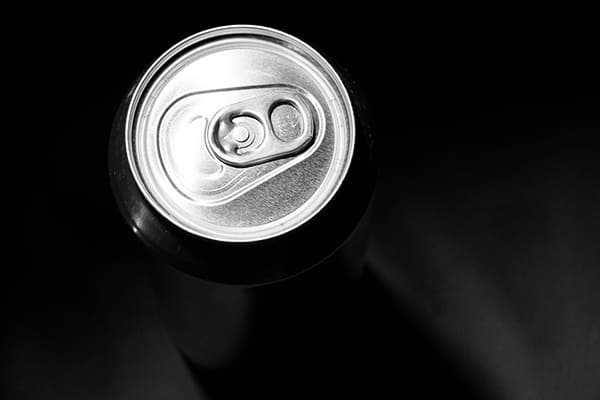
Paglalapat ng 5052 H48 Can End Aluminum Coil
9. Mga kalamangan ng 5052 H48 Can End Aluminum Coil
5052 H48 Can End Aluminum Coil provides a combination of material and processing characteristics that can be useful for selected can-end applications.
9.1 Good Corrosion Resistance
5052 belongs to the 5xxx aluminum-magnesium family and provides good resistance to many atmospheric and packaging environments.
When combined with an appropriate coating system, it can provide additional protection against contact with moisture and chemically active contents.
9.2 Higher Strength in H48 Temper
The H48 temper increases the strength and hardness of 5052 through controlled cold working.
This helps the finished can end maintain its shape and resist deformation during handling and use.
9.3 Lightweight Construction
Aluminum has a density of approximately 2.68 g/cm³, making it significantly lighter than many conventional packaging metals.
Using aluminum can help reduce component weight while maintaining the required structural performance.
9.4 Controlled Forming Performance
5052 H48 offers a useful balance between strength and forming capability.
With appropriate thickness, tooling, lubrication, and process control, the coil can support operations such as:
- Blanking
- Shell forming
- Curling
- Scoring
- Riveting
Actual forming performance depends on the complete material and production system.
9.5 Good Surface Quality
A controlled aluminum surface provides a suitable foundation for coating, lacquer, paglilimbag, and other finishing processes.
Good surface quality also helps reduce defects during high-speed conversion.
9.6 Consistent Coil Processing
Properly manufactured 5052 H48 coil can provide consistent:
- Ang kapal
- Lapad ng katawan
- Flatness
- Mga katangian ng makina
- Edge condition
- Coil winding
Such consistency is important for automated production lines where material variations can affect production efficiency.
9.7 Coating Compatibility
5052 can be supplied in bare or coated form according to application requirements.
Appropriate coating systems can improve corrosion protection, product compatibility, appearance, and service performance.
9.8 Recyclability
Aluminum is well suited to recycling and can be repeatedly processed into new aluminum products when appropriate collection and recycling systems are available.
This makes aluminum an important material for lightweight packaging solutions.
10. Mga aplikasyon ng 5052 H48 Can End Aluminum Coil
5052 H48 Can End Aluminum Coil is used for selected can-end and closure applications where the material requirements call for a balance of strength, paglaban sa kaagnasan, pagbuo ng pagganap, at kalidad ng ibabaw.
The final alloy selection should always follow the specific can design and production requirements.
10.1 Beverage Can Ends
5052 H48 can be considered for selected beverage can-end designs where the required strength and forming characteristics match the material specification.
Potential applications include ends for:
- Soft drinks
- Carbonated beverages
- Beer
- Energy drinks
- Other packaged beverages
For pressurized products, engineers should evaluate the complete combination of haluang metal, Pamahiin, kapal naman, end geometry, scoring design, and internal pressure.
10.2 Food Can Ends
Aluminum can ends can also be used for selected food-packaging applications.
Potential applications include:
- Processed foods
- Canned foods
- Pet food
- Nutritional products
- Specialty food packaging
For these applications, the internal coating is particularly important because the coating separates the aluminum from the packaged product and helps control corrosion.
10.3 Easy-Open Can Ends
The material can be processed into selected easy-open closure designs incorporating:
- Opening panels
- Score lines
- Rivets
- Pull tabs
- Stay-on tabs
The score line requires precise control because the finished end must remain secure during storage and handling while allowing controlled opening by the consumer.
10.4 Lightweight Metal Closures
5052 H48 coil can also be considered for lightweight closure and lid components where manufacturers require a combination of:
- Low weight
- Lakas ng loob
- Paglaban sa kaagnasan
- Formability
- Surface quality
The exact material specification should correspond to the closure geometry and forming process.
10.5 Specialty Packaging Components
Depending on the customer’s design and technical requirements, 5052 H48 may be considered for customized packaging components and metal closures beyond conventional can ends.
Before mass production, manufacturers should evaluate:
- Material thickness
- Forming behavior
- Score performance
- Coating compatibility
- Sealing performance
- Product-contact requirements
11. 5052 H48 vs. 5182 H48 Aluminum Coil
5052 H48 and 5182 H48 are both 5xxx-series aluminum alloys that can serve demanding packaging and closure applications.
Both provide good corrosion resistance and increased strength through strain hardening, but their alloy chemistry and performance profiles differ.
11.1 Mga Pangunahing Pagkakaiba
| Parameter | 5052 H48 | 5182 H48 |
|---|---|---|
| Serye ng haluang metal | 5xxx | 5xxx |
| Main Alloying Element | Magnesium | Magnesium |
| Temper | H48 | H48 |
| Strength Level | Mataas na | Generally higher |
| Paglaban sa Kaagnasan | Mabuti na lang | Mabuti na lang |
| Formability | Mabuti na lang | Mabuti na lang, application-dependent |
| Karaniwang Paggamit | Selected can ends and closures | High-strength can ends and closures |
| Scoring Performance | Requires design-specific control | Requires design-specific control |
| Coating Compatibility | Mabuti na lang | Mabuti na lang |
| Material Selection | Based on can design and forming requirements | Often considered where higher strength is required |
12. Quality Control for 5052 H48 Can End Aluminum Coil
Quality control is essential for 5052 H48 Can End Aluminum Coil because can-end production requires stable mechanical properties, accurate dimensions, and consistent surface quality.
12.1 Chemical Composition Control
The chemical composition is tested to ensure compliance with the specified 5052 alloy requirements. Key elements include Mg, Cr, Fe, Si Si, Cu, Mn, and Zn.
Consistent chemistry helps maintain stable strength, paglaban sa kaagnasan, pagbuo ng pagganap, and batch-to-batch consistency.
12.2 Dimensional and Mechanical Inspection
Key dimensional checks include:
- Ang kapal
- Lapad ng katawan
- Flatness
- Coil ID and OD
- Coil timbang
Mechanical testing typically covers:
- Lakas ng paghatak
- Magbunga ng lakas
- Pagpapahaba
- Ang katigasan ng ulo, when specified
These properties should meet the applicable standard and customer requirements.
12.3 Surface and Edge Quality
The coil surface should remain clean, makinis na, and free from major defects such as:
- Mga gasgas
- Dents
- Pits
- Oil stains
- oksihenasyon
- Surface marks
Edge inspection focuses on mga bitak, excessive burrs, pinsala sa gilid, and slitting quality to support stable feeding and blanking.
12.4 Kalidad ng Patong
For lacquered or pre-coated coil, quality control may include:
- Coating thickness or weight
- Pagdikit
- Curing
- Surface uniformity
- Pinholes
- Chemical resistance
The coating system should match the intended can-end application and applicable food-contact requirements.
12.5 Final Inspection and Traceability
Before shipment, the finished coil undergoes final inspection covering haluang metal, Pamahiin, dimensions, mekanikal na mga katangian, surface condition, kalidad ng gilid, coil specifications, and coating condition when applicable.
A Sertipiko ng Pagsubok sa Mill (MTC) can provide material and batch information for quality verification and traceability.
13. Pangwakas na Salita
5052 H48 Can End Aluminum Coil combines the advantages of a 5xxx-series aluminum alloy with the increased strength of the H48 temper.
Its corrosion resistance, magaan na konstruksiyon, controlled forming performance, and coating compatibility make it suitable for selected can-end and closure applications.
For reliable production, material selection should consider more than alloy and temper.
Ang kapal, mekanikal na mga katangian, patag na, kalidad ng ibabaw, edge condition, winding quality, scoring requirements, coating system, and can design all influence final performance.
Kung ikukumpara sa 5182 H48, 5052 H48 provides a different balance of strength and forming characteristics.
The appropriate alloy should therefore depend on the specific can-end design, proseso ng produksyon, performance requirements, and customer specification.
For buyers, a complete purchasing specification should clearly define the 5052 H48 alloy, dimensions, surface condition, coil configuration, applicable standard, mechanical requirements, coating requirements, inspection criteria, and packaging requirements.
With controlled chemistry, precise rolling, stable temper control, careful slitting, and comprehensive inspection, 5052 H48 aluminum coil can provide consistent material performance for demanding packaging production.
Mga FAQ
1. Ano ang 5052 H48 aluminum coil?
5052 H48 is a 5xxx-series aluminum alloy with a strain-hardened H48 temper. It offers good corrosion resistance, increased strength, and controlled forming performance.
2. Maaari bang 5052 H48 be used for can ends?
Oo nga. It can be used for selected can-end and closure applications, depending on the can design, kapal naman, forming process, and performance requirements.
3. Ano ang pagkakaiba ng 5052 H48 and 5182 H48?
5182 H48 generally provides higher strength, habang ang 5052 H48 offers a different balance of strength, paglaban sa kaagnasan, at pagiging formable. The final choice depends on the can-end design and production requirements.
4. Maaari bang 5052 H48 coil be coated?
Oo nga. It can be supplied as bare, lacquered, or coated coil, depending on the application and coating requirements.
5. What standards apply to 5052 H48 aluminum coil?
ASTM B209/B209M provides a general specification framework for aluminum sheet and coiled sheet. Specific requirements should follow the applicable customer specification and end use.
6. What quality information should buyers specify?
Buyers should define the haluang metal, Pamahiin, kapal naman, lapad ng katawan, ibabaw, coil dimensions, mechanical requirements, patong na patong, inspection requirements, and MTC to ensure consistent material quality.