5A02 aluminum sheet for ship structural
11,625 Views 2026-01-22 08:26:32
1. Introduction
5A02 Aluminum Sheet for Ship Structural applications is a marine-grade, non-heat-treatable aluminum-magnesium (Al-Mg) alloy, highly regarded in the shipbuilding industry for its exceptional corrosion resistance, excellent weldability, and superior plasticity (formability).
With a magnesium content of 2.0-2.8%, its chemical composition and mechanical properties are highly similar to the internationally recognized 5052 alloy, making it a proven and reliable choice for a wide range of marine structural components.
While not as strong as high-performance alloys like 5083, its primary value lies in its optimal balance of properties. It provides more than adequate strength for secondary and non-primary ship structures while offering significant advantages in ease of fabrication and overall cost-effectiveness.
Typically supplied in tempers such as H111, H32, or O, 5A02 is the ideal material for superstructures, internal bulkheads, tanks, and complex formed parts, offering a durable, lightweight, and economically sound solution for modern shipbuilding.
2. What is 5A02 Aluminum Sheet?
5A02 is a wrought, Al–Mg (5xxx series aluminum alloy) marine-oriented aluminium alloy supplied as sheet and plate.
It is strengthened primarily by solid solution and strain hardening (work hardening), not by heat treatment.
In shipbuilding it is chosen for its seawater corrosion resistance, good formability and reliable weldability for structural panels, topsides and accessories.

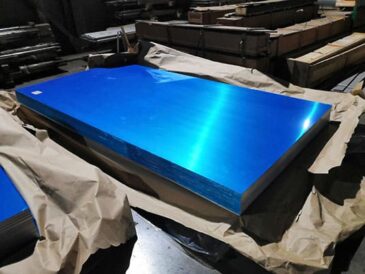
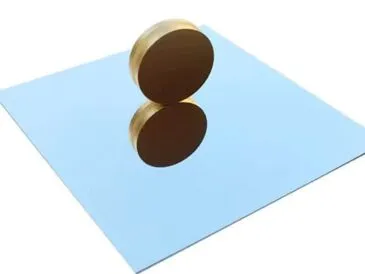
5A02 Aluminum Sheet Surface Display
Typical chemical composition
The values below are typical commercial ranges for 5A02 sheet. Always check the mill certificate for the delivered heat.
| Element | Typical range (wt%) |
|---|---|
| Magnesium (Mg) | 2.0 – 2.8 |
| Manganese (Mn) | 0.15 – 0.40 |
| Chromium (Cr) | 0.15 – 0.40 |
| Iron (Fe) | ≤ 0.40 |
| Silicon (Si) | ≤ 0.40 |
| Copper (Cu) | ≤ 0.10 |
| Titanium (Ti) | ≤ 0.15 |
| Other each / total | trace limits |
| Aluminium (Al) | Balance |
Metallurgical note:
Mg is the principal intentional alloying element; controlled amounts of Mn/Cr are used to refine grain structure and improve strength and resistance to recrystallization during forming.
Copper is kept very low to retain corrosion resistance.
Strengthening mechanism & microstructure
- Non-heat-treatable: 5A02 is strengthened by solid-solution strengthening (Mg in Al matrix) and strain hardening introduced during rolling or cold work. There is no beneficial precipitation heat treatment route (unlike 6xxx or 7xxx series).
- Microstructure: industrially produced 5A02 sheet typically shows a fine, worked-grain structure with Mg in solid solution and a dispersion of dispersoids (Mn/Cr-containing particles) that stabilize grain boundaries and help control texture and toughness. The microstructure gives a good balance of ductility and strength for formed parts.
- Temper influence: H-tempers (H111, H112, H32, etc.) indicate level of cold work and any stress-relief; they control the final strength, formability and dimensional stability.
Typical mechanical properties
Values vary by temper, thickness and supplier. Use mill-certificate values for design acceptance.
| Property | Representative typical value (sheet) |
|---|---|
| Ultimate tensile strength (UTS) | ~140 – 170 MPa |
| Yield strength (0.2% offset) | ~120 – 140 MPa |
| Elongation (A50 or A5, depending on standard) | ≥ 12 – 16% |
| Brinell hardness (approx.) | ~40 – 75 HB |
| Young’s modulus | ~69 GPa |
| Density | ~2.66 – 2.70 g/cm³ |
Engineering note:
The alloy trades absolute static strength for superior corrosion resistance and formability.
For strength-critical elements, designers typically use stiffening (beams/ribs) or choose higher-strength alloys.

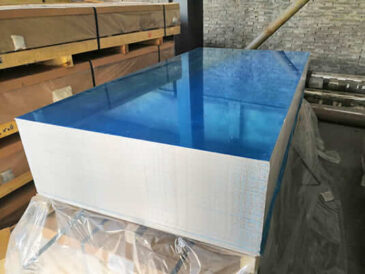
Huawei 5A02 Aluminum Sheet Packaged
3. Specification of 5A02 Aluminum Sheet for Ship Structural
Thickness and Dimension Specifications
For ship structural applications, 5A02 aluminum sheets are mainly available in thicknesses of 2-10 mm, with medium thicknesses (4-8 mm) being the most common.
Per ASTM B209, the thickness tolerance for 5mm 5A02 sheets is ±0.10-±0.15 mm, and for 8mm sheets is ±0.15-±0.20 mm.
The width and length can be customized according to ship design requirements, generally ranging from 1000-2000 mm in width and 2000-6000 mm in length, with flatness error ≤0.5 mm/m to ensure precise assembly of hull components.
Temper Requirements for Ship Structures
Ship structural 5A02 sheets mainly adopt O-temper (annealed) and H112-temper (as-rolled, no special heat treatment).
O-temper offers excellent ductility (elongation ≥22%) and formability, suitable for curved hull parts and stamping components.
H112-temper has higher strength (tensile strength ≥240 MPa) and is used for load-bearing parts such as deck plates and bulkheads.
Both tempers avoid post-weld heat treatment, reducing welding complexity and structural deformation.
Quality Requirements for Ship-Grade Sheets
- Surface quality: No scratches, pits, oxidation spots, or inclusions; surface roughness Ra ≤1.6 μm for parts requiring painting.
- Internal quality: Ultrasonic non-destructive testing (per ASTM A416) to ensure no internal cracks or inclusions; grain size controlled at 6-8 grades for uniform performance.
- Batch consistency: Chemical composition and mechanical properties variation within ±5% for the same batch, meeting ship classification society batch inspection requirements.
4. Why 5A02 Aluminum Sheet for Ship Structural
Excellent Marine Corrosion Resistance
Marine environments are dominated by chloride ions, which easily cause metal corrosion.
5A02 aluminum sheet forms a dense Al₂O₃ passivation film on the surface, effectively resisting chloride erosion.
Test data shows its pitting corrosion rate is ≤0.03 mm/year in 3.5% NaCl solution (simulating seawater), and it passes ASTM G34 exfoliation corrosion tests.
Unlike high-strength 7xxx series alloys, 5A02 has no stress corrosion cracking (SCC) tendency, ensuring long-term service in alternating load and corrosive environments.
Balanced Mechanical Performance and Structural Stability
Ship structural components need to withstand alternating wave loads, impact, and long-term humidity.
5A02’s elongation (18-25%) ensures good ductility and impact toughness, avoiding brittle fracture at low marine temperatures (-20℃ to 0℃).
Its fatigue limit is 90-100 MPa under 10⁷ cycles, meeting the durability requirements of medium-load parts.
The material’s creep resistance is also excellent, with less than 0.5% creep deformation after 1000 hours of service under 50% yield strength at 50℃.
Superior Weldability for Ship Assembly
Shipbuilding involves extensive welding, and 5A02 aluminum sheet is rated “excellent” for weldability (AWS D1.2 classification).
It is compatible with MIG, TIG, and friction stir welding (FSW) methods, with 5356 alloy as the recommended filler metal.
Post-weld weld seam strength retains ≥85% of the base metal, and no post-weld heat treatment is required, reducing production cycles and structural deformation.
This advantage is particularly prominent compared to 5A06 (lower weldability) and 7xxx series alloys (poor weldability).
Lightweight Advantage and Fuel Efficiency Improvement
With a density of 2.68 g/cm³, 5A02 aluminum sheet is only 38% of steel’s density (7.85 g/cm³).
For the same structural strength, using 5A02 can reduce ship weight by 60%, significantly improving speed and maneuverability.
Data from shipbuilding enterprises shows that replacing steel with 5A02 for deck and superstructure parts reduces fuel consumption by 15-20% per 100 nautical miles, aligning with green shipbuilding trends.
Cost-Effectiveness and Supply Stability
Compared to high-performance marine aluminum alloys (5A06, 5083), 5A02 has lower raw material costs (Mg content 2.0-2.8% vs. 5A06’s 5.8-6.8%) and simpler processing, with a total cost 15-25% lower.
It is mass-produced globally, with stable supply of specifications 2-10 mm, meeting the batch procurement needs of shipyards.
5. Applications of 5A02 Aluminum Sheet in Shipbuilding
5A02 aluminum sheet is widely applied in shipbuilding where corrosion resistance, formability, weldability, and moderate structural strength are required.
Rather than being used for the most highly stressed primary hull structures, 5A02 is typically selected for secondary structural components, panels, and marine-exposed elements that benefit from lightweight construction and ease of fabrication.
5.1 Hull and Side Shell Panels
For small and medium-sized vessels—such as patrol boats, workboats, ferries, and yachts—5A02 aluminum sheet is commonly used for:
- Hull side shell plating
- Bow and stern shell panels
- Spray rails and outer hull attachments
Typical thicknesses range from 3 mm to 8 mm, often combined with internal stiffeners to meet classification society strength requirements.

5A02 Aluminum Sheet for Yachts
5.2 Superstructure and Deckhouse Construction
- Deckhouses
- Wheelhouses
- Accommodation blocks
- Bridge enclosures
5.3 Deck Plating and Internal Structural Panels
- Deck plating in non-heavy-load zones
- Internal bulkheads
- Partition walls and compartment linings
Typical deck sheet thicknesses range from 4 mm to 10 mm, depending on design loads and spacing of supporting structures.
5.4 Marine Equipment and Functional Components
- Hatches and hatch covers
- Ladders and access platforms
- Cable trays and equipment panels
- Ventilation ducts and casings

Ship Superstructure
5.5 Offshore and Coastal Structures
- Floating platforms
- Walkways and gangways
- Offshore equipment housings
- Marine pontoons and docking structures
6. 5A02 Aluminum VS Other Materials for Shipbuilding
| Performance & Characteristic | 5A02 Aluminum | 5A06 Aluminum | 5083 Aluminum | Ship-Grade Q235 Steel |
|---|---|---|---|---|
| Tensile Strength (MPa) | 210-260 | 310-380 | 270-310 | 375-500 |
| Yield Strength (MPa) | 80-110 | 190-240 | 110-140 | 235 |
| Elongation at Break (%) | 18-25 | 15-20 | 16-22 | 21-26 |
| Density (g/cm³) | 2.68 | 2.66 | 2.66 | 7.85 |
| Weldability | Excellent (AWS D1.2, ≥85% seam strength retention) | Good (≥75% seam strength retention) | Good (≥80% seam strength retention) | Excellent (mature process, high seam strength) |
| Marine Corrosion Resistance | Excellent (pitting rate ≤0.03 mm/year, no SCC tendency) | Excellent (pitting rate ≤0.04 mm/year) | Superior (pitting rate ≤0.02 mm/year, best for offshore) | Poor (requires frequent painting, pitting rate ≥0.1 mm/year) |
| Relative Cost | 1.0 (Baseline) | 1.3-1.5 | 1.2-1.4 | 0.6-0.8 (initial cost, high maintenance cost) |
| Typical Ship Application | Medium-load parts: deck plates, bulkheads, superstructures | High-load parts: hulls of large boats, offshore brackets | Offshore platforms, ship hulls in harsh marine environments | Large ship hulls, heavy-load structural components |
7. Standards and Certifications
International and Domestic Standards
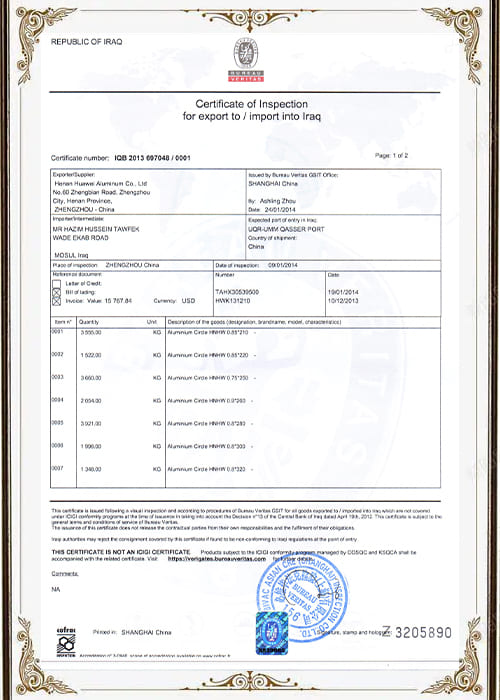
- Material standards: ASTM B209 (US), EN 573 (EU), GB/T 3880 (China) specify chemical composition, mechanical properties, and dimension tolerances of 5A02 aluminum sheets.
- Testing standards: ASTM G34 (exfoliation corrosion), ASTM G67 (intergranular corrosion), ASTM A416 (ultrasonic non-destructive testing) for performance verification.
- Welding standards: AWS D1.2 (aluminum welding), CCS 《Ship Welding Specifications》 for welding process and quality control.
Ship Classification Society Certifications
Ship-grade 5A02 aluminum sheets must obtain certifications from major classification societies to ensure compliance with safety requirements:
- CCS (China): Certifies chemical composition, mechanical properties, corrosion resistance, and non-destructive testing, requiring compliance with 《Aluminum Alloy Materials for Ships》.
- DNV (Norway): Focuses on material durability and welding performance, requiring fatigue test data for load-bearing components.
- ABS (US): Strictly controls impurity content and internal quality, with mandatory ultrasonic testing for sheets thicker than 5 mm.
- LR (UK): Emphasizes batch consistency, requiring sampling inspection of 5% of each batch for mechanical properties.
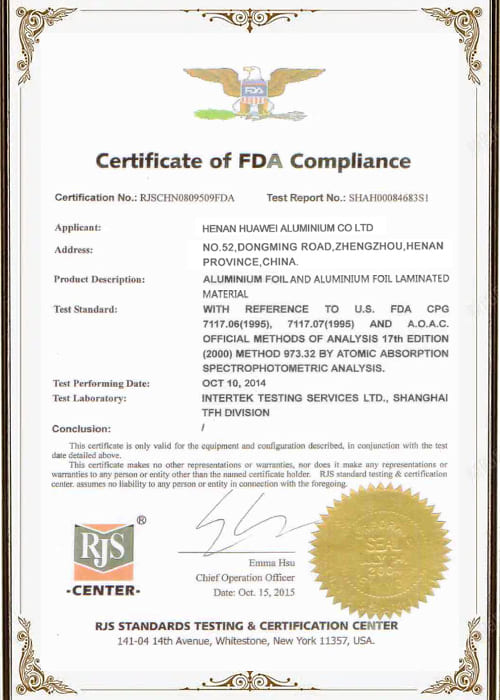
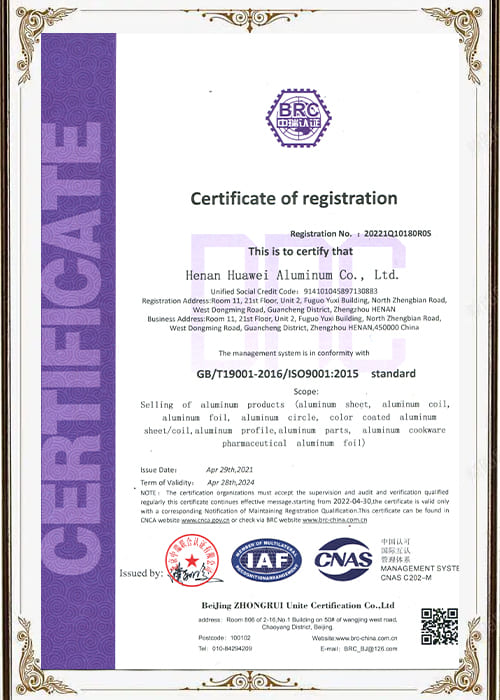
Production Quality Control – Huawei
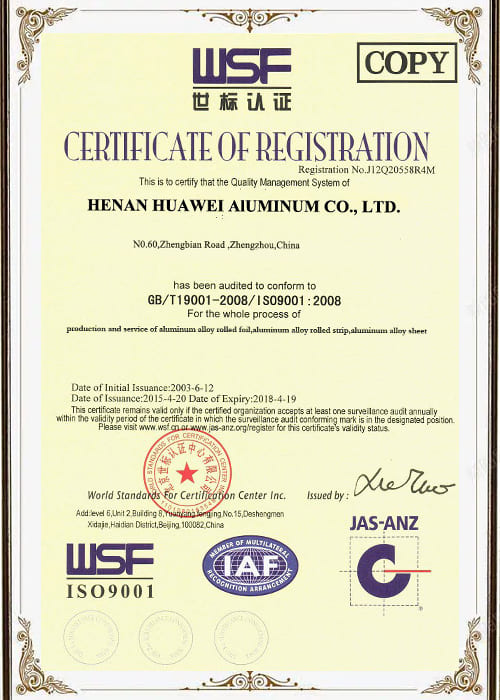
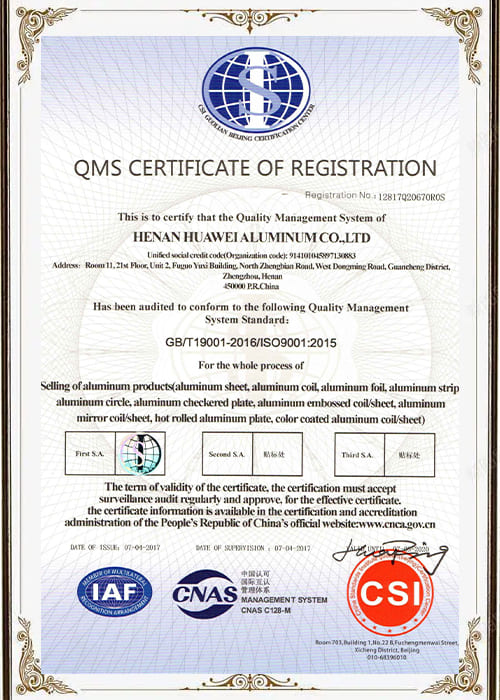
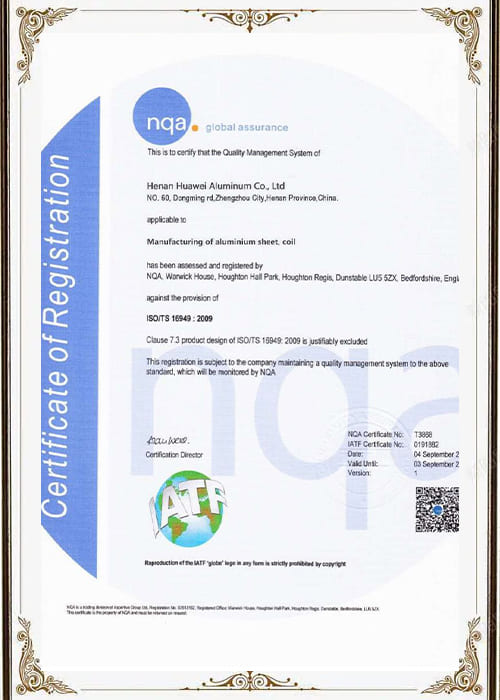
Huawei Aluminum, a leading global supplier of marine-grade aluminum sheets, has established a complete production and quality control system for 5A02 aluminum sheets used in ship structures.
The company adheres to strict compliance with ASTM B209, GB/T 3880 and ship classification society norms (CCS, DNV, ABS), and its 5A02 production line is equipped with advanced continuous casting and precision rolling equipment to ensure uniform grain structure (controlled at 6-8 grades) and stable thickness tolerance (±0.10 mm for 5mm sheets).
For ship-specific requirements, Huawei Aluminum conducts 100% ultrasonic non-destructive testing on each batch of 5A02 sheets, with defect detection accuracy reaching 0.1mm, and adopts ICP-OES for chemical composition analysis to ensure Mg content is strictly controlled at 2.0-2.8 wt.% and impurity content meets marine-grade limits (Fe≤0.40 wt.%, Si≤0.40 wt.%).
8. Conclusion
5A02 aluminum sheet is a practical, marine-oriented alloy for ship structural applications where corrosion resistance, formability and weldability are key drivers.
It is not a high-strength 5xxx alloy like 5083, but it provides a useful balance of properties for topside panels, superstructure cladding and many deck and accessory components.
Successful use depends on correct specification (alloy + temper + product form + tests), qualified welding and joining procedures, galvanic compatibility detailing, and an inspection plan suited to the vessel’s service environment and class society requirements.
FAQs
Q1 — Is 5A02 the same as 5052 or 5083?
Some suppliers note that 5A02 behaves similarly to 5052; 5A02 is an Al–Mg alloy in the same family as 5083 and 5052 aluminum, but do not assume interchangeability.
Q2 — Can 5A02 be welded on board during repairs?
Yes — 5A02 welds with standard aluminium fusion processes and can be repaired in the yard or afloat with appropriate procedures. For long seam production welds, friction stir welding can reduce distortion.
Q3 — What temper should I specify for 5A02 ship panels?
Common tempers for sheet are H112, H111, H32. Choose a temper that matches required forming (H32 for some formed panels) and dimensional stability (H112 often used for general sheet).
Q4 — How should I prevent galvanic corrosion where 5A02 meets steel or stainless?
Use electrical isolators (washers, coatings), compatible fastener materials (aluminium fasteners where practical) and edge sealing. Avoid direct contact of aluminium with dissimilar metals in saltwater without appropriate isolation.