1. การแนะนำ
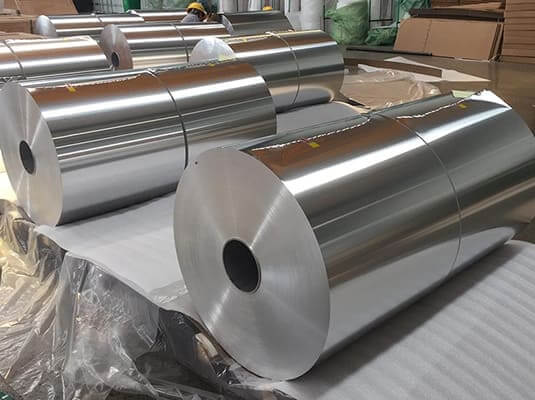
9-ไมครอน 1235 อลูมิเนียมฟอยล์คอมโพสิต มีความเชี่ยวชาญสูง, multi-layer material that serves as a cornerstone of the modern flexible packaging industry.
This material system is engineered to provide a high-performance barrier at an optimal cost and weight. Its core is an ultra-thin, 9ไมโครเมตร (0.009มม) foil made from 1235 อลูมิเนียมอัลลอยด์, มีความบริสุทธิ์สูง (≥99.35% อัล) grade prized for its exceptional softness and workability.
While the 9-micron foil itself provides a near-perfect barrier to light, ก๊าซ, และความชื้น, its thinness makes it mechanically fragile and susceptible to pinholes.
These weaknesses are overcome by laminating it with other polymer films (such as PET, BOPP, and PE). The resulting composite structure leverages the absolute barrier of the aluminum core while gaining the strength, ความสามารถพิมพ์ได้, and sealability of the polymer layers.
This makes 9-micron 1235 composite foil the go-to solution for a vast range of applications, รวมถึงบรรจุภัณฑ์อาหาร (ของว่าง, กาแฟ, นมผง) and pharmaceutical sachets, where a high barrier, น้ำหนักเบา, and cost-effectiveness are all critical requirements.
9-ไมครอน 1235 อลูมิเนียมฟอยล์คอมโพสิต
2. ความเข้าใจ 1235 อลูมิเนียมอัลลอยด์
2.1 องค์ประกอบทางเคมี
เดอะ 1235 อลูมิเนียมฟอยล์ belongs to the 1xxx series of commercial purity aluminum, specifically engineered for converter foil applications where formability and barrier performance take precedence over structural strength.
The chemical composition adheres to strict limits that maximize rolling efficiency and surface quality.
| องค์ประกอบ | ขั้นต่ำ | ขีดสุด | Functional Role in 9μm Foil |
|---|---|---|---|
| อลูมิเนียม (อัล) | 99.35% | - | Matrix providing ductility, การสะท้อนกลับ, และความต้านทานการกัดกร่อน |
| ซิลิคอน (และ) | - | 0.10% | Tight control ensures smooth rolling surface and minimizes inclusion defects |
| เหล็ก (เฟ) | - | 0.60% | Provides slight strengthening; excessive levels increase pinhole risk |
| ทองแดง (ลูกบาศ์ก) | - | 0.05% | Kept minimal to preserve electrical conductivity and corrosion resistance |
| แมงกานีส (ล้าน) | - | 0.05% | Trace element limited to prevent work hardening |
| แมกนีเซียม (มก) | - | 0.05% | Controlled to avoid surface oxidation issues |
| สังกะสี (สังกะสี) | - | 0.10% | Impurity management for anodizing compatibility |
| ไทเทเนียม (ของ) | - | 0.03% | Grain refinement in cast ingots |
| องค์ประกอบอื่นๆ (แต่ละ) | - | 0.03% | Aggregate impurity cap ensuring consistency |
| องค์ประกอบอื่นๆ (ทั้งหมด) | - | 0.10% | Overall purity protection |
2.2 Microstructure and Temper
เดอะ 1235 alloy achieves its optimal properties through careful thermal processing.
Manufacturers produce 9-micron foil in two primary tempers, each serving distinct converting requirements:
o อารมณ์ (อ่อนนุ่ม, อบอ่อน):
- ความต้านแรงดึง: 60–90 MPa (8.7–13.0 ksi)
- ความแข็งแรงของผลผลิต: 20–35 MPa (2.9–5.1 ksi)
- การยืดตัว: 25–35% (A50mm gauge)
- ความแข็ง: 20–25 HB
- โครงสร้างจุลภาค: Fully recrystallized equiaxed grains (ASTM 6–9) with minimal dislocation density
The O temper maximizes ductility for deep drawing, พับ, and complex forming operations.
The 25–35% elongation enables 9-micron foil to conform to sharp creases in cigarette inner liners and sachet corners without cracking.
This temper also optimizes adhesive wet-out during lamination, as the soft surface conforms to microscopic surface irregularities in plastic films.
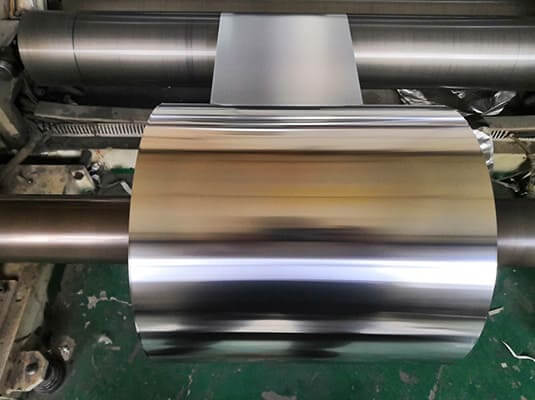
9-ไมครอน 1235 อลูมิเนียมฟอยล์ H18
H18 Temper (ฮาร์ดเต็ม, Cold-Worked):
- ความต้านแรงดึง: 110–150 MPa (16.0–21.8 ksi)
- ความแข็งแรงของผลผลิต: 100–130 MPa (14.5–18.9 ksi)
- การยืดตัว: 1–3%
- ความแข็ง: 45–55 HB
- โครงสร้างจุลภาค: Elongated grains with high dislocation density from cold rolling
H18 temper provides handling stiffness for unwind operations and slit-edge stability.
Converters often specify H18 for foil that must traverse long web paths at high speed before lamination, as the increased rigidity reduces wrinkling and edge weaving.
The laminate structure subsequently provides flexibility in the finished product.
3. 9 Micrometer (ไมโครเมตร) ความหนา: Opportunities and Challenges
3.1 Opportunities (Why pursue 9 ไมโครมิเตอร์?)
- น้ำหนักเบา & material cost reduction. Moving from e.g., 12–15 µm down to 9 µm reduces aluminum mass by ~25–40%, lowering raw-material cost and package weight. (9 µm = 0.009 มม).
- Excellent barrier per unit mass. Even at 9 µm a continuous aluminum layer provides near-opaque light barrier and very low oxygen and moisture transmission when incorporated into a laminate; suppliers report OTR and WVTR figures that place such laminates in “high barrier” class for many food and pharmaceutical applications.
- Improved form-factor and aesthetics. Thin foil conforms to complex shapes (labels, lidding) with smaller step heights and less bulk.
3.2 ความท้าทาย (Inherent weaknesses of 9 ไมโครมิเตอร์)
- Mechanical fragility: reduced puncture resistance, higher sensitivity to handling, and increased risk of pinholes during rolling and lamination. Typical practical tensile/puncture performance must be validated for the stack and forming process.
- รูเข็ม & defects control: process cleanliness and rolling/anneal schedules must be tightly controlled; pinhole density scales unfavorably with decreasing gauge.
- Adhesion and delamination risk: ultra-thin foil has less cohesive thickness for adhesives to “bite”; surface treatments or lacquers are often required to secure bond strength to polymers.
- Converting difficulty: ตัด, embossing, die-cutting and rewinding require specialized tension control, anti-static measures and skilled equipment operators.
4. Structure of 9-Micron 1235 Composite Aluminum Foil
4.1 Typical Composite Structures
The 9-micron 1235 foil rarely serves as standalone packaging. แทน, it functions as the critical barrier layer within multi-material laminates that combine complementary properties.
Engineers design these structures to position each material where its properties deliver maximum value:
โครงสร้าง 1: PET/AL/PE (General-Purpose Food Packaging)
- สัตว์เลี้ยง (12–25μm): Exterior print carrier providing mechanical strength, ความเสถียรของมิติ, and gloss
- กาว (1.5–3.0 g/m²): Polyurethane two-component system creating chemical bond
- อัล (9ไมโครเมตร): Core barrier layer blocking oxygen, ความชื้น, และแสง
- กาว (1.5–3.0 g/m²): Tie layer for polyethylene adhesion
- วิชาพลศึกษา (40–80μm): Interior sealant providing heat-sealability, chemical resistance, and food contact compliance
Total thickness: ~65–120μm | สิ่งกีดขวาง: OTR <0.1 cc/m²·day, วว <0.01 กรัม/ตรม.·วัน
โครงสร้าง 2: Paper/AL/PE (Cigarette Inner Liner)
- กระดาษ (40–60 g/m²): Exterior providing dead-fold characteristics, ความทึบแสง, and tactile quality
- อัล (9ไมโครเมตร): Barrier against moisture and aroma loss
- วิชาพลศึกษา (20–60μm): Heat-seal layer for pack closure
This structure leverages the “dead-fold” property of 1235-O foil—the ability to retain a crease without spring-back—essential for cigarette pack forming at 400+ packs/minute.
โครงสร้าง 3: BOPP/AL/CPP (Confectionery and Snacks)
- BOPP (20ไมโครเมตร): High-clarity exterior with excellent machinability
- อัล (9ไมโครเมตร): Barrier and light protection
- CPP (40–70μm): Hot-tack sealant for high-speed form-fill-seal operations
The biaxially oriented polypropylene (BOPP) provides superior crack resistance compared to PET, while cast polypropylene (CPP) offers broader heat-seal windows for confectionery packaging.
โครงสร้าง 4: PA/AL/PE (Puncture-Resistant Pouches)
- ป้า (15ไมโครเมตร, Nylon): Exterior providing exceptional puncture and abrasion resistance
- อัล (9ไมโครเมตร): Barrier layer
- วิชาพลศึกษา (60–80μm): Sealant and structural bulk
This configuration suits vacuum-packed meats and cheeses where bone edges or sharp corners threaten package integrity.
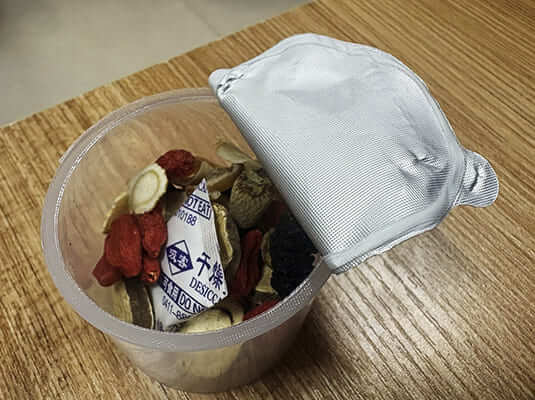
Tea packaging used 9-micron 1235 อลูมิเนียมฟอยล์คอมโพสิต
4.2 Why Composite for 9-Micron Aluminum Foil
Mechanical Protection:
The 9-micron foil cannot survive handling, การส่งสินค้า, or retail display as a single layer.
สัตว์เลี้ยง (tensile strength 200–300 MPa) or paper (stiffness 2–5 Nm/g) provide structural armor that prevents flex cracks and abrasion.
ความสมบูรณ์ของตราประทับ:
Aluminum lacks thermoplasticity—it cannot heat-seal. PE or CPP layers (melting point 110–135°C) create hermetic closures through impulse or hot-bar sealing.
Chemical Isolation:
Acidic or alkaline products (ซอสมะเขือเทศ, ผงซักฟอก) corrode aluminum. PE and PP provide inert barriers preventing chemical attack.
ความสามารถพิมพ์ได้:
Aluminum accepts only limited printing technologies. PET and paper substrates enable high-resolution gravure or flexographic decoration.
Cost Optimization:
At $8–12/kg for aluminum foil versus $2–4/kg for PE, composite structures minimize aluminum usage to the absolute barrier requirement while leveraging cheaper polymers for bulk.
5. Manufacturing Process of 9-Micron 1235 Composite Aluminum Foil
Key steps and control points:
- Casting and hot rolling to produce coil stock.
- Cold rolling schedules with multiple passes to progressively reduce gauge toward foil thickness. Intermediate and final anneals are applied to restore ductility and control grain structure. Precise pass schedules and roll gap control are critical to reach a uniform 9 µm target without excessive edge-wave or thickness variation.
- Surface preparation and cleaning to remove rolling oils and particulates (important to minimize pinholes).
- Coating/lacquering (ไม่จำเป็น) to provide printability and corrosion resistance prior to lamination.
- การเคลือบ (composite formation) — can be by solventless adhesive, การเคลือบอัดขึ้นรูป (melt adhesive), or solvent/wet adhesives depending on stack and end-use. Proper adhesive selection, nip temperature and pressure are tuned to avoid foil wrinkles and to achieve peel strength targets.
- Slitting and rewinding with strict tension control and anti-static handling for 9 µm gauges.
- Quality inspection (pinhole detection, การทำแผนที่ความหนา, surface inspection) and final packing.
Process control charts for foil production typically track gauge tolerance (เช่น., ±0.5 µm target for 9 ไมโครเมตร), pinhole counts per m², and laminate peel strength.
6. Applications of 9-Micron 1235 Composite Aluminum Foil
6.1 บรรจุภัณฑ์อาหารที่มีความยืดหยุ่น
The 9-micron 1235 foil serves as the barrier backbone for dry goods packaging:
- Coffee and Tea: Aroma retention critical; 9μm foil with <40 pinholes/m² maintains freshness 12–18 months
- Snack Foods: PET/AL/PE structures provide light protection for photosensitive vitamins and flavors
- Powdered Beverages: วว <0.01 g/m²·day prevents caking and preserves solubility
High-speed form-fill-seal (FFS) lines operate at 200+ cycles/minute with 9-micron foil, validating its mechanical stability under rapid flexing.
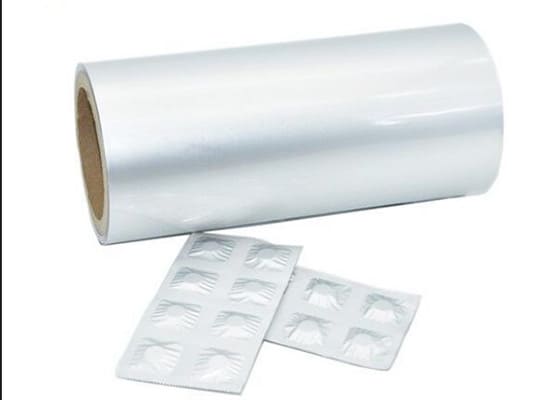
Sachet Strips For Medical Packaging
6.2 Pharmaceutical and Medical Packaging
Secondary overwraps for pharmaceuticals utilize 9-micron foil in:
- Sachet Strips: PET/AL/PE for unit-dose powders and granules
- ฟอยล์ปิดฝา: 9μm 1235-O replaces thicker gauges for cost-sensitive OTC products
- Tropical Blister Alternatives: Non-PVC laminates for high-humidity markets
Migration testing per EU 10/2011 and FDA 21 ซีเอฟอาร์ 177.1390 ensures compliance for indirect food contact.
6.3 Tobacco Packaging
Cigarette inner liners represent a major 9-micron application:
- โครงสร้าง: กระดาษ (40–60 g/m²)/อัล (9ไมโครเมตร)/วิชาพลศึกษา (20–30μm)
- Dead-พับ: 1235-O temper retains sharp creases without spring-back
- อุปสรรคอโรมา: Prevents moisture loss and flavor cross-contamination
- Speed Compatibility: Runs at 400+ packs/minute on G.D. and Focke machines
6.4 Industrial and Technical Applications
Cable Wrap: Non-woven/AL/PE laminates provide electromagnetic interference (อีเอ็มไอ) shielding with 9-micron foil delivering >60 dB attenuation at 1 GHz.
ฉนวนอาคาร: Foil-faced radiant barriers utilize 9μm 1235 for cost-effective reflectivity (>88% solar reflectance).
Battery Pouch Films: Lamination with nylon and polypropylene creates containment for lithium-ion cells, with 9-micron foil providing moisture barrier and electrical isolation.
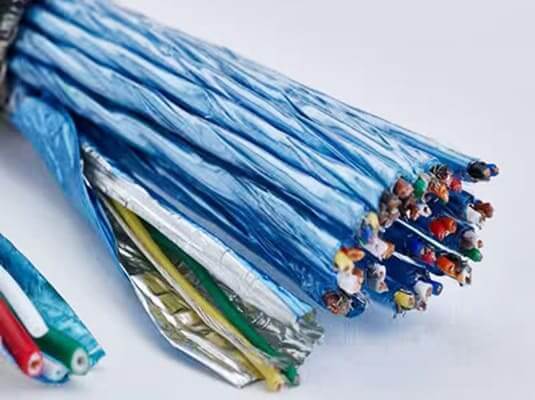
1235 aluminum foil for Cable Wrap
7. Comparative Alloy Analysis
Engineers selecting aluminum foil must evaluate alternatives to 1235. The following matrix compares key options for 9-micron applications:
| คุณลักษณะ | 1235 | 8079 | 8011 | Selection Guidance |
|---|---|---|---|---|
| ความบริสุทธิ์ของอลูมิเนียม | ≥99.35% | ≥99.0% | ~97.0% (Al-Fe-Si) | 1235 for highest purity; 8079 for pinhole-critical <7ไมโครเมตร |
| ความต้านแรงดึง (โอ้อารมณ์) | 60–90 MPa | 80–110 MPa | 80–120 เมกะปาสคาล | Higher strength in 8079/8011 for handling stiffness |
| การยืดตัว (โอ้อารมณ์) | 25–35% | 15–25% | 15–25% | 1235 superior for deep drawing and folding |
| Dead-Fold Characteristics | ยอดเยี่ยม | ดีมาก | ดี | 1235 preferred for cigarette/tobacco |
| Pinhole Resistance at 9μm | Enhanced: ≤40/m² | Enhanced: ≤30/m² | Enhanced: ≤25/m² | 8079/8011 intermetallics improve rolling; 1235 requires tighter process control |
| Cost Position | $ (ต่ำที่สุด) | $$ | $$ | 1235 offers 10–15% cost advantage |
| การใช้งานทั่วไป | Mainstream food, ยาสูบ, general lamination | High-barrier pharma, abuse-resistant pouches | ฝา, tube laminates, heat-seal applications |
8. Huawei 9-Micron 1235 Composite Aluminum Foil Specification
(Representative supplier specification drawn from typical product pages — engineers should request a manufacturer-run Material Test Certificate and sample tests before approving for production.)
Supplier example: เหอหนาน หัวเว่ย อลูมิเนียม บจก., จำกัด (commercial supplier listing for “9-Micron 1235 Composite Aluminum Foil”). Reported or typical specification items include:
- ล้อแม็ก: 1235 (O temper typical for lamination).
- Nominal aluminum thickness: 9 ไมโครเมตร (0.009 มม).
- Composite stacks offered: PET/AL(9)/วิชาพลศึกษา; Paper/AL(9)/วิชาพลศึกษา; BOPP/AL(9)/วิชาพลศึกษา.
- Typical WVTR / OTR for laminated structures (supplier reported example): OTR < 0.1 (units depend on test method; usually cc/m²·day), วว < 0.01 (กรัม/ตรม.·วัน) for finished laminate — confirm test method and units with supplier before quoting shelf life.
- ความหนาแน่นของรูเข็ม: marketed as “low pinhole density” — suppliers commonly specify pinhole counts per m² or qualitative grades; ask for measured pinhole counts at acceptance.
- อารมณ์โกรธ: อ (อบอ่อน) or light cold-work (as required).
- การเคลือบผิว: optional lacquer for printability; adhesive systems per laminate.
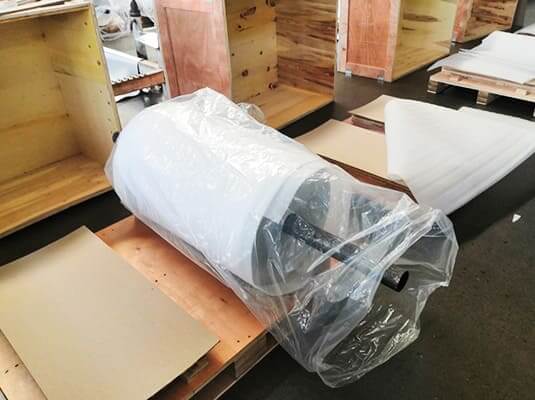
- บรรจุุภัณฑ์: jumbo rolls, typical widths 200–1,600 mm; coil ID/OD to buyer spec.
- การควบคุมคุณภาพ: thickness tolerance band (สำหรับ 9 µm often specified ±0.5–1.0 µm depending on supplier), visual surface class, pinhole acceptance, MTC available on request.
Huawei Aluminum Foil Export Packaging
9. บทสรุป
เดอะ 9-ไมครอน 1235 อลูมิเนียมฟอยล์คอมโพสิต is a testament to the power of systems thinking in material science.
It is a highly optimized solution that acknowledges the limitations of a single material and overcomes them through intelligent combination.
By pairing the absolute barrier potential of an ultra-thin 1235 aluminum foil with the mechanical strength of polymer films, the packaging industry has created a material that is both high-performing and highly economical.
It is not the most robust barrier available, but for the vast majority of flexible packaging needs, it represents the perfect equilibrium of protection, ค่าใช้จ่าย, และประสิทธิภาพ.
คำถามที่พบบ่อย
1. If 9-micron foil has pinholes, is it still a “high barrier”?
ใช่. In a composite structure, the barrier performance is not determined by the foil alone. The adhesive and polymer layers create a “tortuous path” that effectively seals the microscopic pinholes. The final laminate still provides an exceptionally low OTR and WVTR (เช่น., <0.5), which is firmly in the high-barrier category and far superior to any non-foil-based film.
2. Why not just use a thicker foil to avoid pinholes?
You can, but it comes with trade-offs. A thicker foil (เช่น., 12µm or 15µm) will have fewer pinholes and more strength, but it will be more expensive, heavier, and result in a stiffer final package, which may not be desirable. 9 microns is often the most cost-effective solution that meets the required barrier specifications for a huge range of products.
3. What is the difference between this and “Alu-Alu” foil?
“Alu-Alu” (แบบฟอร์มเย็น) foil is a much thicker, soft-temper aluminum foil (โดยทั่วไป 45-60 ไมครอน) laminated with OPA and PVC. It is designed to be plastically deformed (cold-formed) into a blister cavity, providing an absolute, 100% สิ่งกีดขวาง. 9-micron composite foil is a thin, flexible material used for flat pouches and bags; it cannot be formed into a deep cavity.
กระบวนการผลิตแบบหล่อและการแนะนำ
จุดประสงค์ของการหลอมและการหล่อคือเพื่อผลิตโลหะผสมที่มีองค์ประกอบที่น่าพอใจและหลอมละลายที่มีความบริสุทธิ์สูง, เพื่อสร้างเงื่อนไขที่เอื้ออำนวยต่อการหล่อโลหะผสมที่มีรูปร่างต่างๆ.
ขั้นตอนกระบวนการหลอมและหล่อ: การแบทช์ --- การให้อาหาร --- ละลาย --- กวนหลังจากละลาย, การกำจัดตะกรัน --- การสุ่มตัวอย่างก่อนการวิเคราะห์ --- เพิ่มโลหะผสมเพื่อปรับองค์ประกอบ, กวน --- การกลั่น --- การตั้งค่าคงที่ —— คู่มือการหล่อเตา.
กระบวนการผลิตแผ่นรีดร้อนและการแนะนำ
- 1. การรีดร้อนโดยทั่วไปหมายถึงการรีดเหนืออุณหภูมิการตกผลึกของโลหะ;
- 2. ระหว่างกระบวนการรีดร้อน, โลหะมีทั้งกระบวนการชุบแข็งและอ่อนตัว. เนื่องจากอิทธิพลของความเร็วการเปลี่ยนรูป, ตราบใดที่กระบวนการกู้คืนและการตกผลึกใหม่ยังสายเกินไป, จะมีการแข็งตัวของงานบางอย่าง;
- 3. การตกผลึกใหม่ของโลหะหลังจากการรีดร้อนไม่สมบูรณ์, นั่นคือ, การอยู่ร่วมกันของโครงสร้างผลึกใหม่และโครงสร้างที่ผิดรูป;
- 4. การรีดร้อนสามารถปรับปรุงประสิทธิภาพการประมวลผลของโลหะและโลหะผสม, ลดหรือกำจัดข้อบกพร่องในการหล่อ.
- 1. โดยทั่วไปอุณหภูมิการหล่อและการรีดจะอยู่ระหว่าง 680°C ถึง 700°C. ยิ่งต่ำยิ่งดี, ไลน์การหล่อและการรีดที่มั่นคงมักจะหยุดเดือนละครั้งหรือมากกว่านั้นเพื่อตั้งใหม่. ระหว่างกระบวนการผลิต, จำเป็นต้องควบคุมระดับของเหลวของถังด้านหน้าอย่างเคร่งครัดเพื่อป้องกันไม่ให้ระดับของเหลวต่ำ;
- 2. การหล่อลื่นใช้ผง C ที่มีการเผาไหม้ของก๊าซที่ไม่สมบูรณ์เพื่อการหล่อลื่น, ซึ่งเป็นสาเหตุหนึ่งที่ทำให้พื้นผิวของวัสดุหล่อและลูกกลิ้งสกปรก;
- 3. ความเร็วในการผลิตโดยทั่วไปอยู่ระหว่าง 1.5m/min-2.5m/min;
- 4. คุณภาพพื้นผิวของผลิตภัณฑ์ที่เกิดจากการหล่อและการรีดโดยทั่วไปค่อนข้างต่ำ, และโดยทั่วไปไม่สามารถตอบสนองผลิตภัณฑ์ที่มีข้อกำหนดพิเศษด้านประสิทธิภาพทางกายภาพและเคมีได้.
- 1. การรีดเย็นหมายถึงวิธีการผลิตแบบรีดที่อุณหภูมิต่ำกว่าการตกผลึกซ้ำ;
- 2. จะไม่มีการตกผลึกซ้ำแบบไดนามิกในระหว่างกระบวนการกลิ้ง, และอุณหภูมิจะสูงขึ้นจนถึงอุณหภูมิการกู้คืนมากที่สุด, และการรีดเย็นจะปรากฏในสถานะการชุบแข็ง, และอัตราการแข็งตัวของงานจะมีมาก;
- 3. แผ่นรีดเย็นและแถบมีความแม่นยำของมิติสูง, คุณภาพพื้นผิวที่ดี, โครงสร้างและประสิทธิภาพที่สม่ำเสมอ, และผลิตภัณฑ์ในสถานะต่าง ๆ สามารถรับได้ด้วยการอบชุบ;
- 4. การรีดเย็นสามารถรีดแผ่นบางๆ, แต่ในขณะเดียวกัน, มีข้อเสียในด้านการใช้พลังงานสูงสำหรับการเสียรูปและการผ่านกระบวนการจำนวนมาก.
- 1. การตกแต่งเป็นวิธีการประมวลผลเพื่อให้แผ่นรีดเย็นเป็นไปตามความต้องการของลูกค้า, หรือเพื่ออำนวยความสะดวกในการแปรรูปผลิตภัณฑ์ในภายหลัง;
- 2. อุปกรณ์ตกแต่งสามารถแก้ไขข้อบกพร่องที่เกิดขึ้นในกระบวนการผลิตรีดร้อนและรีดเย็น, เช่นขอบแตก, มัน, รูปร่างจานไม่ดี, ความเครียดตกค้าง, เป็นต้น. ต้องแน่ใจว่าไม่มีข้อบกพร่องอื่น ๆ เข้ามาในกระบวนการผลิต;
- 3. มีอุปกรณ์ตกแต่งต่างๆ, ส่วนใหญ่รวมถึงการตัดขวาง, ตัด, การยืดและการยืดผม, เตาหลอม, เลื้อย, เป็นต้น.
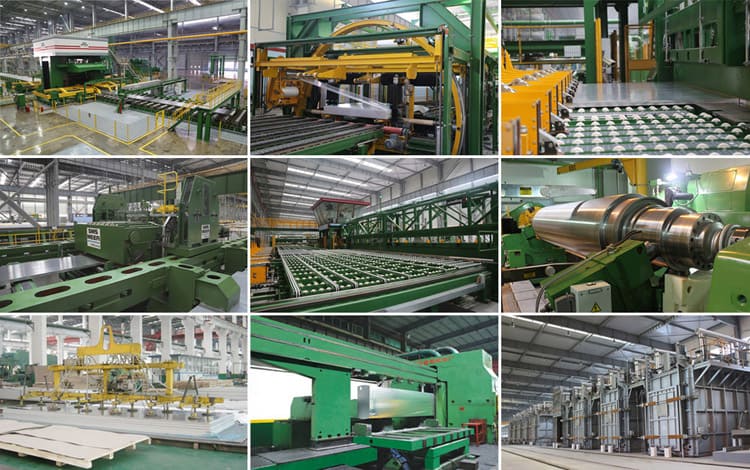
กระบวนการหล่อและรีด
กระบวนการหล่อและรีด: โลหะเหลว, กล่องหน้า (การควบคุมระดับของเหลว), เครื่องหล่อและรีด (ระบบหล่อลื่น, น้ำเย็น), เครื่องตัด, เครื่องม้วน.
กระบวนการผลิตรีดเย็น
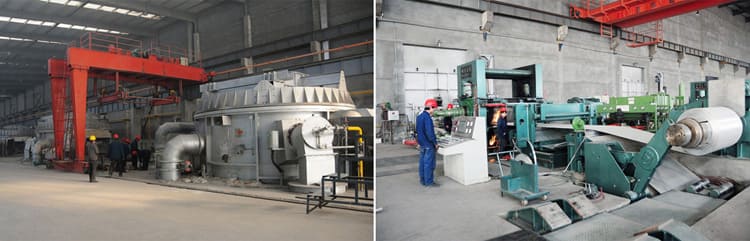
ความรู้เบื้องต้นเกี่ยวกับกระบวนการผลิตขั้นสุดท้าย
โลหะผสมอลูมิเนียมมีลักษณะของความหนาแน่นต่ำ, คุณสมบัติทางกลที่ดี, ประสิทธิภาพการประมวลผลที่ดี, ปลอดสารพิษ, ง่ายต่อการรีไซเคิล, การนำไฟฟ้าที่ดีเยี่ยม, การถ่ายเทความร้อนและความต้านทานการกัดกร่อน, ดังนั้นจึงมีแอพพลิเคชั่นที่หลากหลาย.
การบินและอวกาศ: ใช้ทำหนังเครื่องบิน, กรอบลำตัว, คาน, โรเตอร์, ใบพัด, ถังเชื้อเพลิง, แผงผนังและเสาเกียร์ลงจอด, เช่นเดียวกับแหวนตีจรวด, แผ่นผนังยานอวกาศ, เป็นต้น.
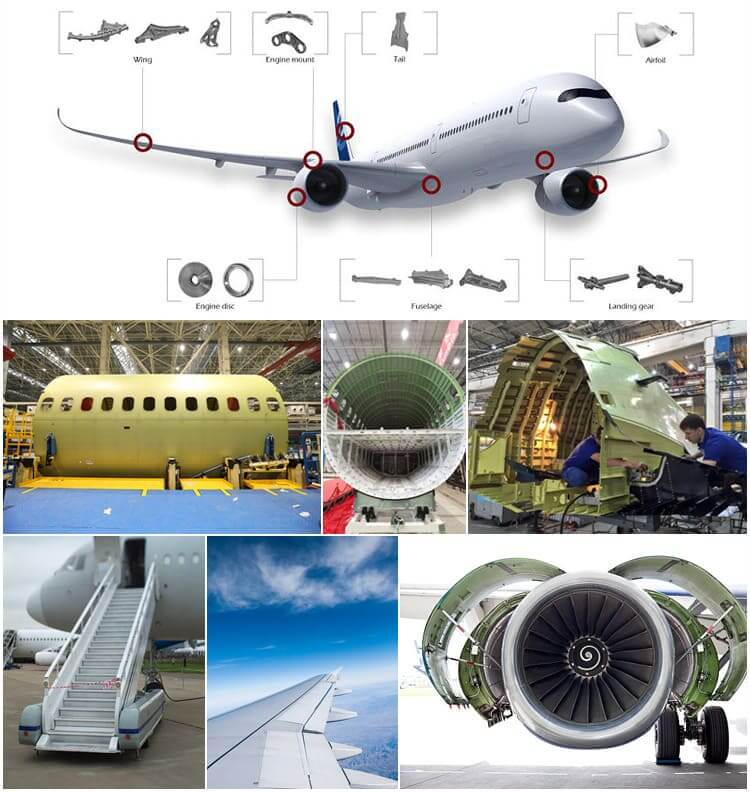
โลหะผสมอลูมิเนียมที่ใช้สำหรับการบินและอวกาศ
การขนส่ง: ใช้สำหรับเป็นวัสดุโครงสร้างตัวรถของรถยนต์, ยานพาหนะรถไฟใต้ดิน, รถยนต์โดยสารรถไฟ, รถยนต์นั่งส่วนบุคคลความเร็วสูง, ประตูและหน้าต่าง, ชั้นวางของ, ชิ้นส่วนเครื่องยนต์ยานยนต์, เครื่องปรับอากาศ, หม้อน้ำ, แผงร่างกาย, ล้อและวัสดุเรือ.

แอปพลิเคชันการจราจร
บรรจุภัณฑ์: กระป๋องป๊อปอลูมิเนียมทั้งหมดส่วนใหญ่จะใช้เป็นวัสดุบรรจุภัณฑ์โลหะในรูปแบบของแผ่นบางและฟอยล์, และนำมาทำเป็นกระป๋อง, ฝาปิด, ขวด, บาร์เรล, และฟอยล์บรรจุภัณฑ์. ใช้กันอย่างแพร่หลายในการบรรจุเครื่องดื่ม, อาหาร, เครื่องสำอาง, ยา, บุหรี่, สินค้าอุตสาหกรรม, ยา, เป็นต้น.
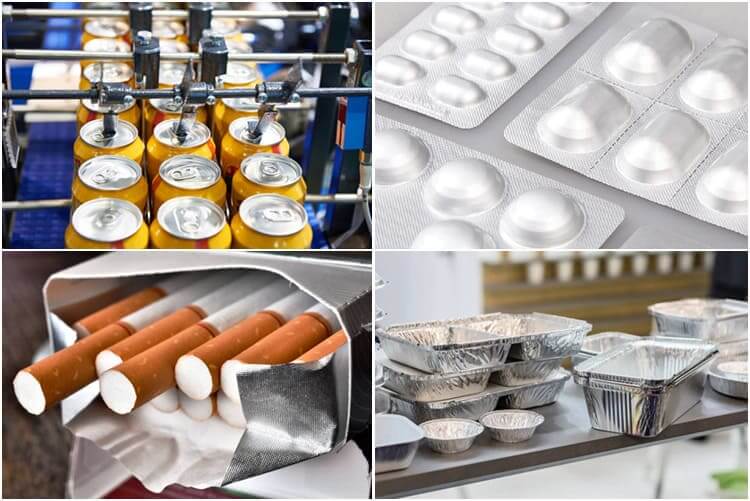
การประยุกต์ใช้บรรจุภัณฑ์
การพิมพ์: ส่วนใหญ่ใช้ทำแผ่น PS, แผ่น PS ที่ทำจากอลูมิเนียมเป็นวัสดุประเภทใหม่ในอุตสาหกรรมการพิมพ์, ใช้สำหรับการทำและพิมพ์เพลทอัตโนมัติ.
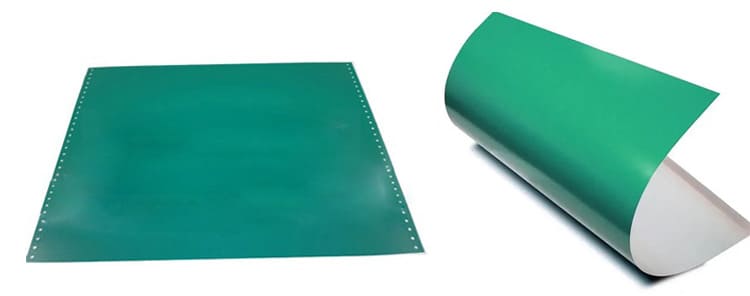
ป.ล.การพิมพ์
ตกแต่งสถาปัตยกรรม: อลูมิเนียมอัลลอยด์ถูกนำมาใช้กันอย่างแพร่หลายในโครงสร้างอาคาร, ประตูและหน้าต่าง, เพดานที่ถูกระงับ, พื้นผิวตกแต่ง, เป็นต้น. เนื่องจากทนต่อการกัดกร่อนได้ดี, มีความแข็งแรงเพียงพอ, ประสิทธิภาพกระบวนการที่ยอดเยี่ยมและประสิทธิภาพการเชื่อม.

การประยุกต์ใช้การก่อสร้างโลหะผสมอลูมิเนียม
ผลิตภัณฑ์อิเล็กทรอนิกส์: คอมพิวเตอร์, โทรศัพท์มือถือ, เปลือกตู้เย็น, หม้อน้ำ, เป็นต้น.
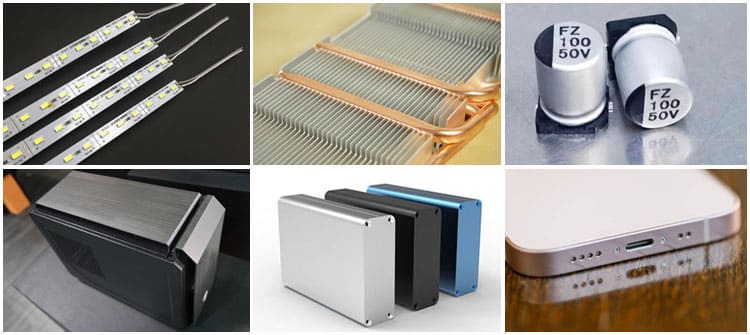
การประยุกต์ใช้ผลิตภัณฑ์อิเล็กทรอนิกส์
อุปกรณ์ครัว: หม้ออลูมิเนียม, อ่างอลูมิเนียม, หม้อหุงข้าว, อลูมิเนียมฟอยล์ในครัวเรือน, เป็นต้น.
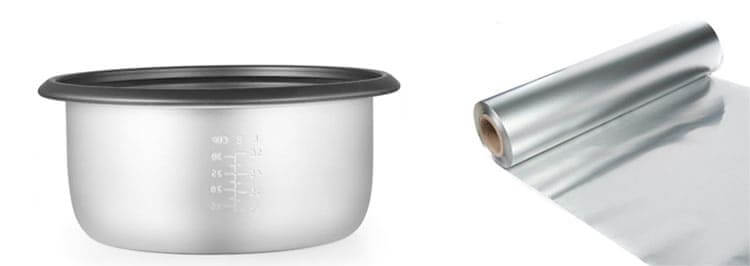
แอปพลิเคชั่นครัว
บรรจุภัณฑ์ของแผ่นอลูมิเนียม / ม้วน
ทุกรายละเอียดของบรรจุภัณฑ์คือจุดที่เราให้บริการที่สมบูรณ์แบบ. กระบวนการบรรจุภัณฑ์โดยรวมของเรามีดังนี้:
การเคลือบ: ฟิล์มใส, ฟิล์มสีน้ำเงิน, เยื่อเมือกขนาดเล็ก, เยื่อเมือกสูง, ฟิล์มตัดเลเซอร์ (2 แบรนด์, โนวาเซลล์และโพลีฟีม);
การป้องกัน: ตัวป้องกันมุมกระดาษ, แผ่นป้องกันแรงกดทับ;
การทำให้แห้ง: สารดูดความชื้น;
ถาด: ถาดไม้รมควันที่ไม่เป็นอันตราย, ถาดเหล็กที่ใช้ซ้ำได้;
การบรรจุ: เข็มขัดเหล็ก tic-tac-toe, หรือสายพานบรรจุ PVC;
คุณภาพวัสดุ: ปราศจากตำหนิเช่นสนิมขาว, จุดน้ำมัน, เครื่องหมายกลิ้ง, ความเสียหายที่ขอบ, โค้ง, รอยบุบ, หลุม, เส้นแบ่ง, รอยขีดข่วน, เป็นต้น, ไม่มีชุดคอยล์.
ท่าเรือ: ชิงเต่าหรือพอร์ตอื่นๆ ในประเทศจีน.
เวลานำ: 15-45 วัน.
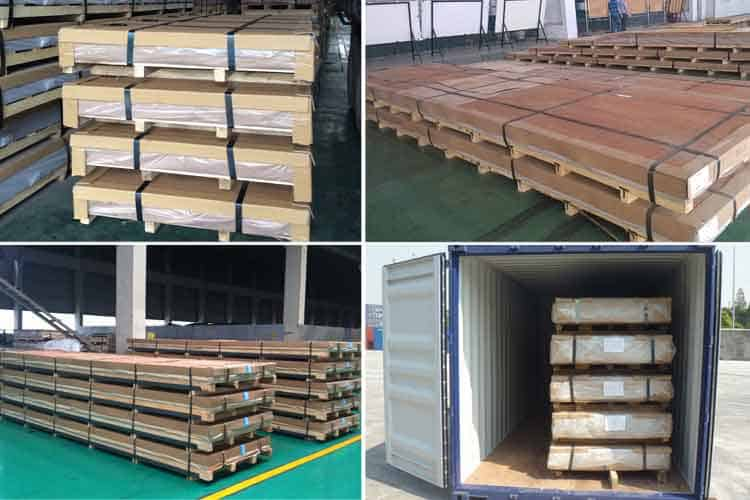
กระบวนการบรรจุหีบห่ออลูมิเนียมแผ่น / แผ่น
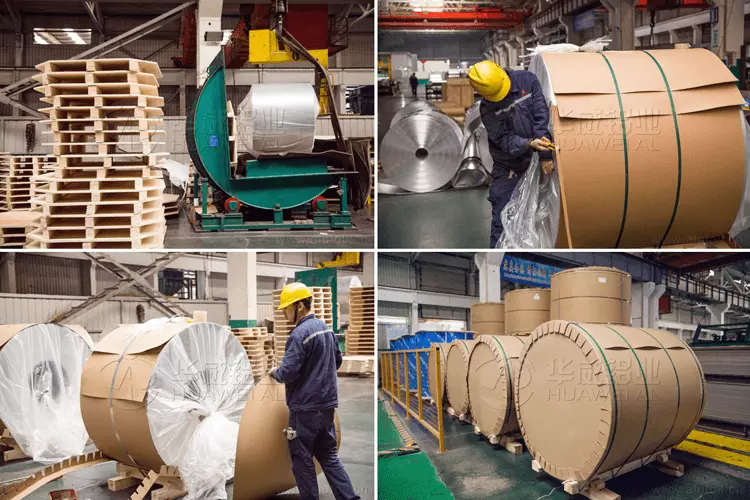
กระบวนการบรรจุม้วนอลูมิเนียม
ฉ: คุณเป็นผู้ผลิตหรือผู้ค้า?
ถาม: เราเป็นผู้ผลิต, โรงงานของเราอยู่ที่ No.3 Weier Road, เขตอุตสาหกรรม, กงอี้, เหอหนาน, จีน.
ฉ: MOQ สำหรับการสั่งซื้อผลิตภัณฑ์คืออะไร?
ถาม: MOQ ของเราคือ 5 ตัน, และสินค้าพิเศษบางรายการจะมีจำนวนการสั่งซื้อขั้นต่ำที่ 1 หรือ 2 ตัน.
ฉ: เวลานำของคุณนานแค่ไหน?
ถาม: โดยทั่วไปเวลานำของเราคือประมาณ 30 วัน.
ฉ: ผลิตภัณฑ์ของคุณมีการประกันคุณภาพหรือไม่?
ถาม: ใช่, หากมีปัญหาด้านคุณภาพกับผลิตภัณฑ์ของเรา, เราจะชดเชยให้ลูกค้าจนกว่าจะพอใจ.
สินค้าที่เกี่ยวข้อง


บล็อกล่าสุด
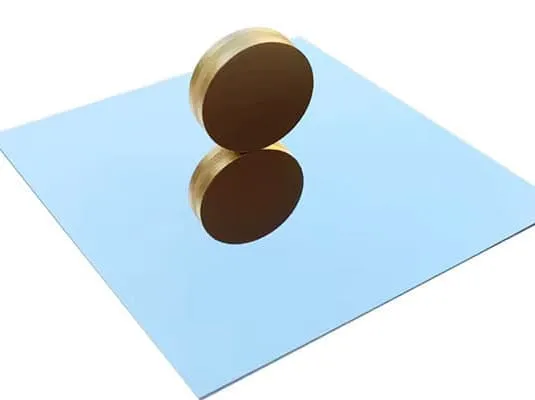
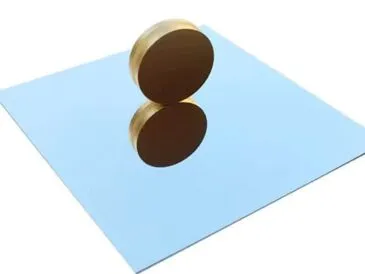
แผ่นกระจกอลูมิเนียมสะท้อนแสงสูงพิเศษ
แผ่นกระจกอลูมิเนียมสะท้อนแสงสูงพิเศษพร้อมการสะท้อนแสงที่มองเห็นได้ 95–98%, กระจัดกระจายต่ำ (มอก <1%), และคำแนะนำข้อมูลจำเพาะสำหรับ BRDF, เส้นโค้งสเปกตรัมและการเคลือบ.

เชื่อถือได้ 3003 ซัพพลายเออร์แผ่นแผ่นตรวจสอบอลูมิเนียมทั่วโลก
ค้นหาความน่าเชื่อถือ 3003 ซัพพลายเออร์แผ่นแผ่นตรวจสอบอลูมิเนียมที่นำเสนอคุณภาพที่ผ่านการรับรอง, ราคาที่แข่งขันได้, ขนาดที่กำหนดเอง, และการจัดส่งทั่วโลกที่รวดเร็วสำหรับโครงการของคุณ.

6061 T6 กับ 7075 อลูมิเนียม: ความแข็งแกร่ง, น้ำหนัก & การใช้งานที่ดีที่สุด
เปรียบเทียบ 6061 T6 กับ 7075 อลูมิเนียมได้อย่างง่ายดาย. ค้นพบความแตกต่างในความแข็งแกร่ง, น้ำหนัก, และแอปพลิเคชันเพื่อเลือกสิ่งที่ดีที่สุดสำหรับโครงการของคุณ.

อุตสาหกรรมและการประยุกต์ฟอยล์อลูมิเนียมรังผึ้ง
บล็อกนี้สำรวจอุตสาหกรรมของอลูมิเนียมฟอยล์รังผึ้ง, มุ่งเน้นไปที่ 3003 กระบวนการผลิตโลหะผสม. ครอบคลุมถึงการรีดร้อน, การหล่ออย่างต่อเนื่อง, และวิธีการหล่อ-รีดต่อเนื่อง, เน้นถึงคุณประโยชน์ของการปรับปรุงกระบวนการให้เหมาะสมในการปรับปรุงคุณสมบัติทางกล, ลดการใช้พลังงาน, และลดต้นทุนการผลิต.