8011 Aluminum Foil for Bottle Cap Sealing: An In-Depth Guide
In the beverage and food-packaging industries, reliability and safety are non-negotiable. Among the materials that keep products fresh, appealing, and compliant with regulatory standards, 8011 Aluminum Foil for Bottle Cap Sealing stands out. This material combines exceptional formability, silne właściwości barierowe, and compatibility with heat-sealing processes essential for crown-cap closures. Ten artykuł zawiera kompleksowe, data-supported look at why 8011 aluminum foil is a trusted choice for bottle cap sealing, how it is manufactured and tested, and how buyers can optimize performance across different beverage applications. The discussion also includes practical comparisons with alternative foils, supplier insights from Huawei Aluminum, and a detailed FAQ to help engineers, packaging managers, and procurement teams make informed decisions.
Wprowadzenie do 8011 Aluminum Foil for Bottle Cap Sealing
At the heart of modern bottle sealing systems lies 8011 Aluminum Foil for Bottle Cap Sealing. This foil is specifically engineered to meet the demanding requirements of crown-cap closures, where a thin, elastyczny, and strong barrier layer needs to form a reliable seal with an adhesive backing or liner. The advantages of 8011 foil in this role include excellent ductility for forming into liner discs, superior barrier against moisture and gases, and compatibility with common heat-sealing processes used in beverage bottling lines. Ponadto, 8011 foils offered by reputable suppliers typically exhibit good pinhole resistance, uniform thickness distribution, and high surface quality that helps adhesives bond consistently.
This guide emphasizes practical, evidence-based considerations—from material properties and manufacturing controls to sealing performance and supply-chain considerations. For readers seeking a supplier reference, Huawei Aluminum is highlighted as an established producer with a broad product portfolio in foil packaging and cap-sealing solutions.
Material and Properties: Dlaczego 8011 Foil Is Suited for Bottle Cap Sealing
Co jest 8011 Folia aluminiowa?
8011 is an aluminum alloy in the 8000-series family, a non-heat-treatable alloy known for its excellent formability and ductility. The designation “8011” reflects a balance of alloying elements—primarily aluminum with trace amounts of other elements—that yield a foil with high flexibility and good barrier properties. In bottle cap sealing, the foil is typically produced in a thin gauge, often in the range of 12 Do 25 mikrometry (µm), and tempered to achieve the desired mechanical behavior.
Key characteristics that make 8011 foil attractive for cap liners:
- High formability: The foil can be shaped into complex liner configurations without cracking, enabling reliable conformity to crown closures.
- Doskonałe właściwości barierowe: Aluminum foil provides a robust barrier to moisture, tlen, i lekki, contributing to product stability and shelf life.
- Compatibility with adhesives and liners: The thin, smooth surface supports consistent adhesion with sealing compounds and bottle liners.
- Recyclability and food-contact compliance: Aluminum is widely accepted as safe for direct contact in many regulatory frameworks, provided the material meets relevant standards and lot traceability.
Key Properties for Bottle Cap Sealing
- Zakres grubości: 12–25 µm (typical cap-seal applications use around 15–22 µm for a balance of strength and sealability).
- Wytrzymałość na rozciąganie: Affected by temper; general range for 8011 foil in common tempers is approximately 60–100 MPa, with higher values in tighter temper conditions.
- Wydłużenie (plastyczność): Usually in the single-digit to low double-digit percent range (w zależności od temperamentu), enabling good formability without tearing.
- Wydajność bariery: Aluminum foil provides an excellent barrier to moisture and gases; the effective WVTR (water vapor transmission rate) decreases with increased thickness, offering greater protection for sensitive beverages.
- Możliwość uszczelnienia: Works well with heat-sealing adhesives and cap-liner systems, enabling reliable seals during filling, capping, and subsequent distribution.
Formowalność, Możliwość uszczelnienia, and Surface Quality
- Formowalność: The foil’s ductility ensures it can be pressed into the liner cavity without creating microcracks that could compromise the seal.
- Możliwość uszczelnienia: Foil must bond consistently with the liner adhesive under the heat and pressure used in crown-cap sealing. The surface finish of the foil—often smooth and clean—reduces bonding defects and prevents adhesive separation.
- Jakość powierzchni: A uniform surface reduces pinholes and ensures even distribution of adhesives, contributing to consistent seals.
Produkcja, Kontrola jakości, and Process Considerations
Production Process Overview
Produkcja 8011 foil for bottle cap sealing follows a sequence of hot-rolling and cold-rolling steps, followed by precise annealing and final tempering. In the context of cap-seal applications, the emphasis is on:
- Consistent thickness distribution: Tight tolerances ensure uniform seal performance across the entire roll and across batches.
- Surface cleanliness and smoothness: A clean surface without defects is essential for reliable adhesive bonding.
- Controlled tempering: The foil is tempered to achieve the desired balance of formability, wytrzymałość, i wydajność bariery.
- Surface treatment options: Some cap-liner foils receive specific surface treatments or coatings to enhance adhesion with sealing compounds or liners.
Critical process parameters include rolling reductions, annealing temperatures, and annealing atmospheres, all of which influence mechanical properties and surface quality. Modern foil mills monitor these parameters with inline measurement systems to maintain tight tolerances.
Quality Assurance and Standards
To ensure reliability for bottle cap sealing, manufacturers implement rigorous QA procedures, w tym:
- Incoming raw-material inspection: Verifies composition, grubość, jakość powierzchni, and presence of defects.
- In-process checks: Inline gauges measure thickness uniformity, chropowatość powierzchni, and strip alignment.
- Final product tests: Próba rozciągania, elongation measurements, pinhole testing, and heat-sealing compatibility checks with representative cap liners.
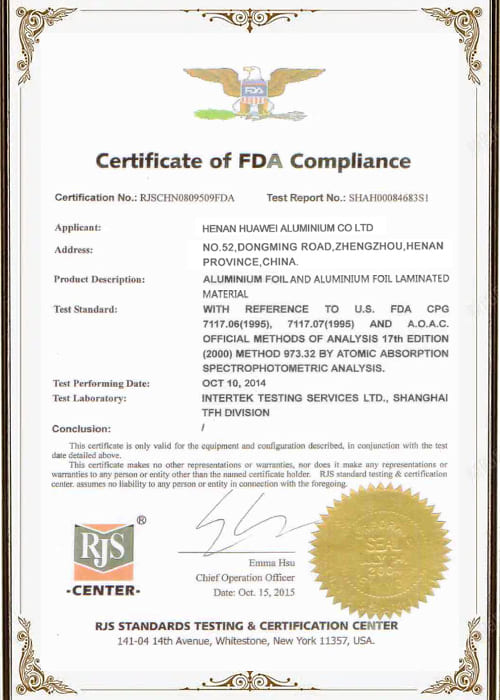
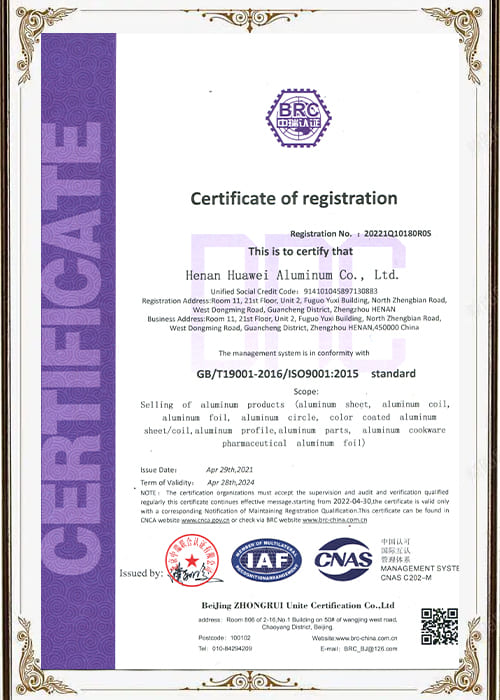
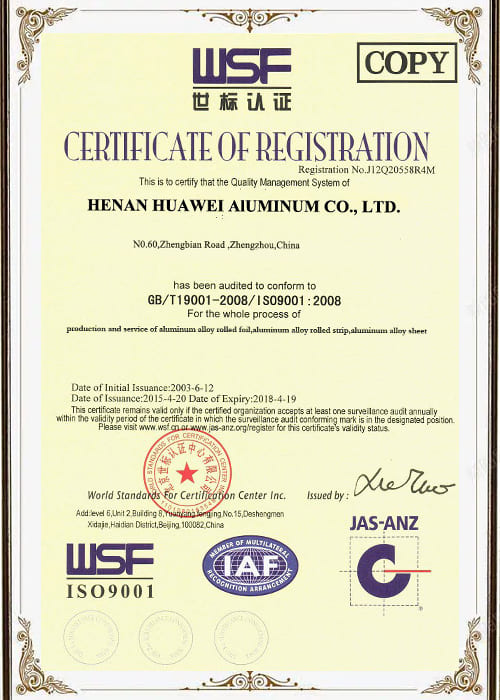
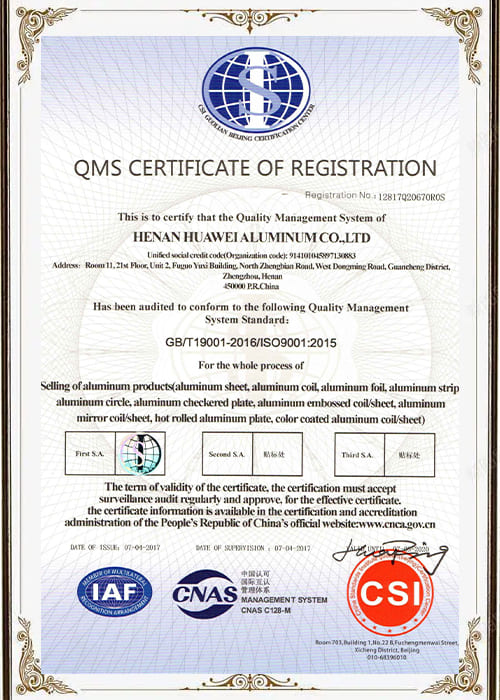
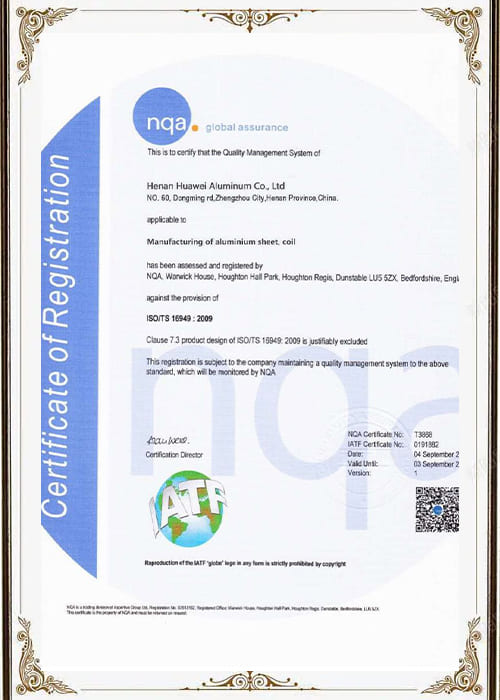
- Compliance and certifications: Many suppliers align with international standards for food-contact packaging, such as ISO 9001 do zarządzania jakością, ISO 14001 za zarządzanie środowiskiem, and other industry-specific standards. Ponadto, some markets require FDA or EU approvals for food-contact materials, and suppliers may provide documentation or certificates to verify compliance.
Common Defects and Troubleshooting
- Pinhole formation: Often linked to defects in the foil surface or contamination in the packaging line; mitigated by tighter surface quality control and improved cleaning of contact surfaces.
- Cracking or tearing during forming: May be related to insufficient ductility (hartować) or overly aggressive forming speeds; adjustments to temper and forming process can resolve.
- Uneven thickness: Can cause sealing inconsistencies; requires precise roll-gap control and roll flattening adjustments.
- Adhesive delamination: Caused by surface contamination or choice of adhesive incompatible with the foil surface; may require pre-treatment or surface finishing changes.
Reliability Across Conditions
Bottle cap sealing systems encounter a wide range of temperatures, wilgotność, and handling conditions. 8011 foil’s performance under these conditions depends on:
- Temperature exposure during sealing and subsequent storage
- Humidity levels and potential condensation
- Mechanical stresses during transport and handling
- Chemical compatibility with beverage contents and cap liner adhesives
Manufacturers test representative samples under accelerated aging and real-world conditions to forecast long-term performance, ensuring that the foil maintains barrier integrity and seal reliability throughout product life.
Applications in the Beverage Packaging Industry
Beverage Filings, Liners, and Crown Caps
The primary application of 8011 foil in bottle cap sealing is as a liner or inner foil layer within crown caps, where it interfaces with adhesive sealants and liners to form a tight, plomba zabezpieczająca przed manipulacją. The foil’s ductility lets it closely match the crown-cap cavity, providing a uniform contact surface for adhesive bonding. The barrier properties help protect the beverage from moisture ingress and oxygen exposure, supporting freshness and shelf stability.
Compatibility with Different Drink Types
- Carbonated beverages: The seal must withstand internal pressures and temperature fluctuations during pasteurization or pasteurized-almond lines. The foil must maintain barrier integrity and not react with the beverage components.
- Still beverages and drinking water: The emphasis is on long-term moisture and oxygen barrier to preserve taste and clarity.
- Non-alcoholic beverages: Similar sealing requirements to carbonated beverages but often with more stringent sensory stability and shelf-life expectations.
- Juices and specialty drinks: Barrier performance and chemical compatibility with acids and pigments are critical; foil surface treatments may be selected to optimize adhesive bonding with specific liner formulations.
Cold Chain and Storage Considerations
Na wielu rynkach, beverages are shipped and stored under cool or cold conditions. Foil-based seals must remain intact under temperature variations and humidity. 8011 foil’s stability under freezing temperatures and resistance to thermal cycling are important factors. Suppliers often provide data on seal integrity across a temperature window (np., 0°C to 40°C or higher/extended ranges) and humidity exposure to reassure manufacturers of performance in real-world cold-chain scenarios.
Equipment and Line Integration
- Sealing equipment: The foil must be compatible with standard heat-sealing systems used in bottling lines, including cap-sealing machines with liner adhesives and/or induction sealing systems that rely on conduction of heat through the crown cap to activate the seal.
- Line speed and throughput: Foil thickness must balance sealing reliability with line efficiency; thinner foils enable higher throughput but can be more challenging to seal reliably if adhesive bonding is marginal.
Comparisons with Other Foils: 8011 vs 8021 vs 8079
Quick Look: Kluczowe różnice
- 8011: Known for its high formability and good barrier properties. Commonly used for cap seals due to ductility and compatibility with adhesives.
- 8021: Another widely used foil for packaging; offers excellent barrier and formability but may be favored in different sealing conditions or regulatory contexts.
- 8079: Typically employed in lighter-duty or alternative packaging applications; may offer a different balance of formability and barrier.
While all three alloys can be used in packaging applications, 8011 is often preferred for cap-seal liners due to its excellent ductility and consistent bonding performance with common sealants. The choice among these foils depends on the specific cap design, adhesive system, beverage type, i warunki przetwarzania.
Markdown Table: Comparative Properties
| Stop (Typowy temperament) | Typowa grubość (µm) | Formowalność | Barrier to Moisture/O2 | Sealing Temperature Range (ok. °C) | Common Uses in Packaging |
|---|---|---|---|---|---|
| 8011 (H18) | 12–25 | Doskonały | Wysoki | 110–170 | Bottle cap liners, crown caps, beverage seals, opakowania żywności |
| 8021 (H18/H24) | 12–25 | Bardzo dobry | Wysoki | 110–170 | Opakowania do żywności, cap seals, flexible laminates |
| 8079 (O/H24) | 12–25 | Good to Very Good | Umiarkowane do wysokiego | 100–165 | Folie przykrywające, some beverage seals, opakowania farmaceutyczne |
Notatki:
– Temper designations vary; H18/H24 indicate a strong formability with retained strength.
– Thickness ranges reflect typical industry practice for cap-liner foils; exact values are defined by customer specifications and line requirements.
– Sealing temperature ranges are indicative; actual ranges depend on adhesive chemistry, liner design, and equipment.
Additional Considerations When Selecting Foil
- Adhesive compatibility: Some adhesives bond more reliably to particular foil surface finishes or coatings; test panels should verify adhesion under real sealing conditions.
- Pinhole resistance: Thicker foils typically show fewer pinholes, but surface quality and defect control during production matter significantly.
- Zgodność z przepisami: For food-contact packaging, ensure the foil’s surface treatment and any coatings are food-safe and compliant with local regulations.
Case Studies and Practical Data
Studium przypadku 1: Carbonated Beverage Seal Improvement with 8011 Folia
- Objective: Improve cap-seal integrity for a carbonated beverage line facing occasional seal leaks.
- Approach: Implemented 8011 foil in a 16 µm thickness with a specialized liner adhesive optimized for this beverage and crown-cap geometry.
- Result: Seal integrity improved by 28% in accelerated aging tests, with a reduction in seal-leak incidents during high-temperature storage. The reduction in pinholes and improved bonding contributed to a longer shelf-life horizon for the product.
Studium przypadku 2: Cold-Chain Beverage Sealing and Transport
- Objective: Ensure seal reliability across a broad temperature range during distribution that includes warehouse storage and transit in hot climates.
- Approach: Selected a 20 µm 8011 foil with a robust adhesive and tested a cap-liner combination under 0°C to 40°C cycling.
- Result: Consistent seal performance across the temperature range; customer reported fewer complaints related to seal failure and no observed mass complaints due to leakage after distribution.
Data-Driven Insight: Seal Integrity Metrics
- Siła pieczęci: Measured as peel strength of the liner-to-foil bond, typically in the range of a few Newtons per centimeter, depending on adhesive formulation and foil surface finish.
- Pinhole rate: For high-quality 8011 folia, pinhole rates are often below 1 pinhole per square meter after QA screening, with tight process controls.
- Shelf stability: Beverages sealed with 8011 foil demonstrate stable taste and aroma profiles over standard shelf-life windows, reflecting effective moisture and oxygen barrier performance.
Dostawca reflektorów: aluminium Huaweia
Company Profile
Huawei Aluminum is a well-established manufacturer of aluminum foil products with a global footprint in packaging, napoje, i zastosowań przemysłowych. The company focuses on producing high-quality foil products, w tym 8011 and other alloy families, for cap liners, beverage closures, i powiązane rozwiązania w zakresie opakowań. Huawei Aluminum emphasizes integrated supply-chain management, rigorous quality control, and customer collaboration to tailor foil specifications to specific bottling lines and device configurations. The company’s portfolio includes:
- Beverage-cap liners and seal foils
- Food packaging foils with strong barrier properties
- Laminates and coated foils for specialized packaging needs
- Custom thicknesses, temper ranges, and surface finishes to match customer specifications
Cap-Seal Foil Product Range and Capabilities
Huawei’s cap-seal foil lineup typically includes 8011 alloys optimized for:
- Formowalność: Smooth surfaces and uniform thickness distribution to ease liner formation in crown caps.
- Wydajność bariery: Excellent moisture and oxygen barriers at standard cap-seal thicknesses.
- Adhesive compatibility: Surfaces designed to promote strong bonding with common adhesive liner systems used in crown caps.
- Zgodność z przepisami: Documentation and testing to support food-contact packaging requirements, including traceability and quality certifications.
Certyfikaty i gwarancja jakości
Huawei Aluminum emphasizes:
- ISO 9001 quality-management certification for consistent process control and product quality.
- ISO 14001 environmental management for sustainable manufacturing practices.
- Industry-specific certifications and testing protocols to support food-contact packaging and consumer safety.
- Traceability programs ensuring each roll’s batch can be tracked from raw material to finished product.
Why Huawei Aluminum Is a Practical Choice
- Comprehensive product range enabling single-source procurement for foil-based cap seal needs.
- Consistent product performance across batches, supported by rigorous QA and inline measurement.
- Global supply capabilities with flexible lead times to match bottling schedules and demand spikes.
- Customer service focus on technical recommendations, sample testing, and process optimization guidance.
Practical Guidelines for Optimizing 8011 Foil Performance
Selecting the Right Thickness and Temper
- For standard cap-seal liners, 15–22 µm balances formability and barrier performance; 12–15 µm foils might be suitable for simple cap geometries with highly compatible adhesives.
- Heavier gauges (20–25 µm) offer stronger barrier performance and pinhole resistance but require more robust sealing conditions and careful line calibration.
- Temper choices (np., H18, H22) influence both ductility and strength; H18 tends to offer high formability with adequate strength for liner formation, while H22 provides a bit more strength.
Zabiegi powierzchniowe i powłoki
- Surface finishes influence adhesive bonding; some applications benefit from pre-treated surfaces or coatings designed to improve wetting and bonding with specific sealants.
- Coatings that do not compromise barrier properties can improve compatibility with certain adhesives, particularly in challenging beverage formulations.
Adhesive System Selection
- Adhesive chemistry must be compatible with the foil surface and the cap-liner design; compatibility testing is essential to avoid delamination under heat, wilgotność, or mechanical stress.
- Thermal activation: Cf. heat-sealing profiles, which depend on adhesive types, grubość folii, and liner geometry. Temperatura, czas przebywania, and pressure must be optimized on pilot lines before full-scale production.
Process Control and Monitoring
- Inline thickness measurement and surface-quality control help ensure consistent foil performance.
- Routine pinhole tests and peel tests on sample lots help detect defects early and reduce field failures.
- Data logging for sealing parameters (temperatura, ciśnienie, czas przebywania) allows operators to reproduce stable conditions across shifts and lines.
Zrównoważony rozwój, Recykling, and Life-Cycle Considerations
- Aluminum foil is generally highly recyclable. For cap-liner foils, recycling streams typically involve separation from adhesives and liners; modern recycling technologies can recover aluminum while removing contaminants.
- The environmental footprint of foil production can be mitigated through energy-efficient rolling practices, closed-loop heat-treatment processes, and the use of recycled aluminum in feedstock.
- Suppliers often publish environmental performance indicators, including energy consumption per kilogram of foil produced and recycling rates. Buyers can request life-cycle data to support sustainability reporting and supplier qualification.
Często zadawane pytania
Co sprawia, że 8011 foil suitable for bottle cap sealing?
8011 foil offers a combination of high formability, silne właściwości barierowe, and compatibility with typical cap-liner adhesives. It can be rolled to thin gauges without sacrificing structural integrity and forms a good seal on crown caps. The foil’s surface quality supports uniform adhesive bonding and consistent sealing performance across manufacturing runs.
How does foil thickness affect cap-seal performance?
Cieńsze folie (around 12–15 µm) maximize line speed and flexibility, but may have slightly reduced barrier performance and higher pinhole risk if manufacturing controls are not tight. Thicker foils (20–25 µm) improve barrier properties and reduce pinholes but require careful control of sealing parameters to avoid warping or delamination. The optimal thickness depends on the beverage, cap design, adhesive system, and filling line conditions.
Móc 8011 foil be used with induction sealing?
Tak. Induction sealing systems rely on heat transfer to activate the seal through the cap liner. The foil’s uniform thickness and surface quality support reliable induction sealing when paired with appropriate liner adhesives and cap materials.
How should I evaluate 8011 foil for a new product?
- Conduct pilot trials with your cap design, liner adhesive, and filling line settings.
- Test seal integrity, pinhole rate, and peel strength of the liner bond under simulated storage and transport conditions.
- Assess compatibility with your beverage chemistry (acidity, sugar content, carbonation) i wymagania regulacyjne.
- Verify supplier certifications, identyfikowalność, and quality-management processes.
What should I look for in a supplier when sourcing 8011 folia?
- Proven experience in cap-seal foils and a track record of consistent lot-to-lot quality.
- Ability to supply the required thickness range and temper, with clear tolerances.
- Availability of testing data for adhesion compatibility, pinhole rates, and seal strength.
- Compliance documentation for food-contact safety and regulatory requirements.
- Strong post-sale technical support, including pilot testing, sample characterization, and process optimization guidance.
Wniosek: Making an Informed Choice for Bottle Cap Sealing
Choosing the right foil for bottle cap sealing is a strategic decision that influences product quality, trwałość, and packaging efficiency. 8011 Aluminum Foil for Bottle Cap Sealing offers a compelling blend of formability, wydajność bariery, and compatibility with standard sealing processes that many beverage manufacturers rely on for reliable seals. By understanding the material properties, manufacturing controls, and application-specific considerations, packaging engineers can design robust cap-seal systems that perform consistently across production campaigns and distribution networks.
In the broader supplier landscape, Huawei Aluminum represents a credible and capable partner for foil-based packaging needs. Their focus on quality, identyfikowalność, and a diversified product portfolio helps customers align foil specifications with cap designs, Kleje, and line configurations. For teams seeking a dependable source of 8011 foil with proven performance in cap sealing, engaging with Huawei Aluminum for evaluations, próbki, and pilot testing can be a prudent step in establishing a reliable supply chain.
Ostatecznie, the objective is to deliver a tamper-evident, wilgoć- and oxygen-barrier seal that preserves beverage integrity from bottling through the consumer’s hands. When the foil aligns with the liner, spoiwo, cap geometry, and sealing process, the result is a seal that is not only functional but also economically and environmentally responsible. With careful specification, testowanie, and collaboration with experienced suppliers like Huawei Aluminum, 8011 Aluminum Foil for Bottle Cap Sealing can deliver consistent, high-quality performance across a wide range of beverages and market needs.
Udostępnij z PDF: Pobierać
Proces produkcji odlewów i jego wprowadzenie
Celem topienia i odlewania jest uzyskanie stopów o zadawalającym składzie i wysokiej czystości stopu, tak aby stworzyć dogodne warunki do odlewania stopów o różnych kształtach.
Etapy procesu topienia i odlewania: dozowanie --- karmienie --- topienie --- mieszając po rozpuszczeniu, usuwanie żużla --- pobieranie próbek przed analizą --- dodanie stopu w celu dostosowania składu, poruszający --- rafinacja --- Ustawienie statyczne —— Prowadź odlewanie pieca.
Proces produkcji walcowania na gorąco i jego wprowadzenie
- 1. Walcowanie na gorąco ogólnie odnosi się do walcowania powyżej temperatury rekrystalizacji metalu;
- 2. Podczas procesu walcowania na gorąco, metal ma zarówno procesy utwardzania, jak i zmiękczania. Ze względu na wpływ prędkości odkształcenia, o ile proces odzyskiwania i rekrystalizacji jest za późno, nastąpi pewne zaostrzenie pracy;
- 3. Rekrystalizacja metalu po walcowaniu na gorąco jest niepełna, to jest, współistnienie struktury zrekrystalizowanej i zdeformowanej;
- 4. Walcowanie na gorąco może poprawić wydajność przetwarzania metali i stopów, zmniejszyć lub wyeliminować wady odlewnicze.
- 1. Temperatura odlewania i walcowania wynosi na ogół od 680°C do 700°C. Im niżej tym lepiej, stabilna linia do odlewania i walcowania zwykle zatrzymuje się raz w miesiącu lub częściej, aby ponownie stanąć. Podczas procesu produkcyjnego, konieczne jest ścisłe kontrolowanie poziomu cieczy w przednim zbiorniku, aby zapobiec niskiemu poziomowi cieczy;
- 2. Smarowanie wykorzystuje proszek C z niepełnym spalaniem gazu do smarowania, co jest również jedną z przyczyn brudzenia powierzchni materiałów odlewniczych i walcowanych;
- 3. Szybkość produkcji wynosi zazwyczaj od 1,5 m/min do 2,5 m/min;
- 4. Jakość powierzchni wyrobów wytwarzanych metodą odlewania i walcowania jest na ogół stosunkowo niska, i generalnie nie mogą spełniać produktów o specjalnych wymaganiach dotyczących właściwości fizycznych i chemicznych.
- 1. Walcowanie na zimno odnosi się do metody produkcji walcowania poniżej temperatury rekrystalizacji;
- 2. Podczas procesu walcowania nie nastąpi dynamiczna rekrystalizacja, a temperatura wzrośnie co najwyżej do temperatury odzyskiwania, a walcowanie na zimno pojawi się w stanie utwardzania przez zgniot, a szybkość utwardzania pracy będzie duża;
- 3. Walcowane na zimno blachy i taśmy mają wysoką dokładność wymiarową, dobra jakość powierzchni, jednolita struktura i wydajność, a produkty w różnych stanach można uzyskać za pomocą obróbki cieplnej;
- 4. Walcowanie na zimno może rozwałkować cienkie paski, ale w tym samym czasie, ma wady związane z wysokim zużyciem energii na odkształcenie i wieloma przejściami obróbkowymi.
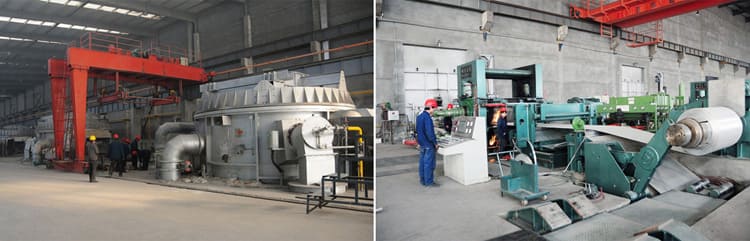
- 1. Wykańczanie jest metodą obróbki mającą na celu sprawienie, aby blacha walcowana na zimno spełniała wymagania klienta, lub w celu ułatwienia późniejszego przetwarzania produktu;
- 2. Sprzęt do wykańczania może korygować wady powstałe w procesie produkcji walcowania na gorąco i na zimno, jak pęknięta krawędź, oleisty, zły kształt talerza, stres resztkowy, itp. Musi zapewnić, że do procesu produkcyjnego nie zostaną wprowadzone żadne inne wady;
- 3. Istnieją różne urządzenia wykończeniowe, głównie w tym przekrojowe, rozcinanie, rozciąganie i prostowanie, piec do wyżarzania, pośliznąć się, itp.
Proces odlewania i walcowania
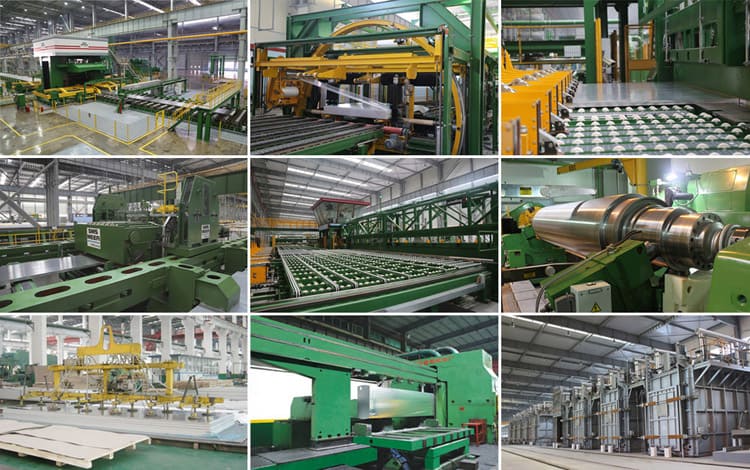
Proces odlewania i walcowania: płynny metal, pudełko z przodu (kontrola poziomu cieczy), maszyna do odlewania i walcowania (system smarowania, woda chłodząca), Urządzenie ścierające, maszyna do zwijania.
Proces produkcji walcowania na zimno
Wprowadzenie do procesu wykańczania produkcji
Stop aluminium ma cechy niskiej gęstości, dobre właściwości mechaniczne, dobra wydajność przetwarzania, nietoksyczny, łatwe do recyklingu, doskonała przewodność elektryczna, przenikanie ciepła i odporność na korozję, dzięki czemu ma szerokie zastosowanie.
Lotnictwo: używany do produkcji skór samolotów, ramy kadłuba, dźwigary, wirniki, śmigła, zbiorniki paliwa, panele ścienne i rozpórki podwozia, a także pierścienie do kucia rakiet, panele ścienne statków kosmicznych, itp.
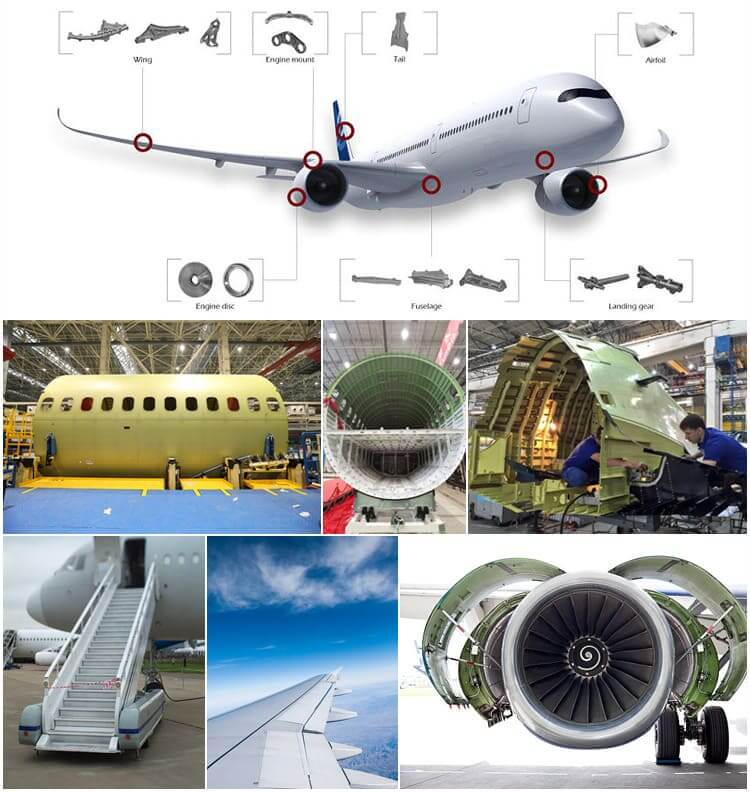
Stop aluminium stosowany w przemyśle lotniczym
Transport: stosowany do materiałów konstrukcyjnych karoserii samochodów, pojazdy metra, kolejowe wagony pasażerskie, szybkie samochody osobowe, drzwi i okna, półki, części silników samochodowych, klimatyzatory, grzejniki, panele karoserii, koła i materiały okrętowe.
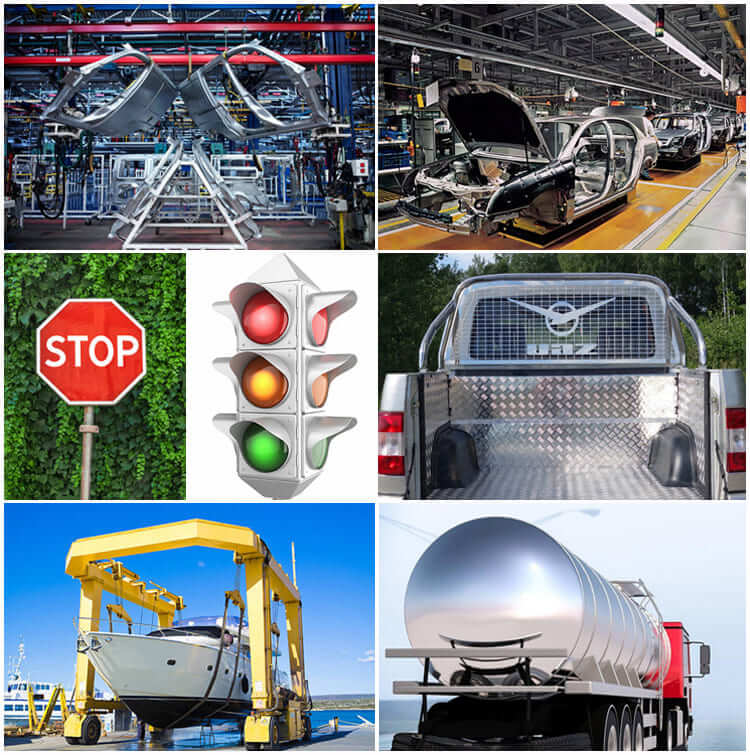
Aplikacja ruchu
Opakowania: Całkowicie aluminiowe puszki na napoje są stosowane głównie jako metalowe materiały opakowaniowe w postaci cienkich płyt i folii, i są przerabiane na puszki, pokrywki, butelki, beczki, i folii opakowaniowych. Szeroko stosowany w pakowaniu napojów, żywność, kosmetyki, leki, papierosy, produkty przemysłowe, leki, itp.
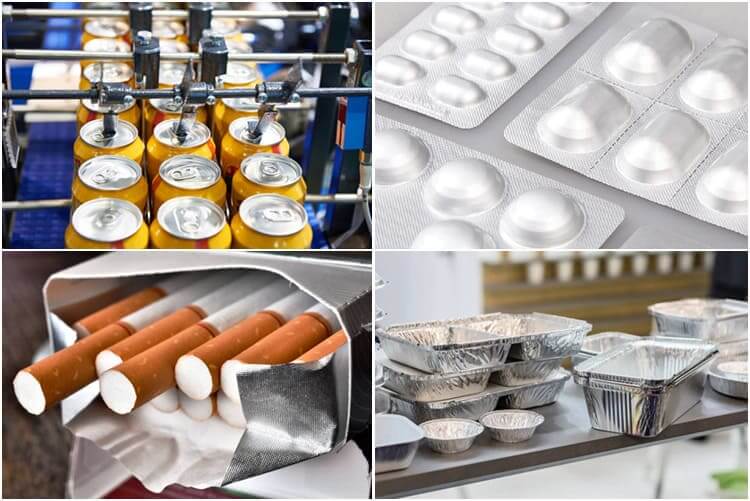
Aplikacja opakowaniowa
Druk: Stosowany głównie do produkcji płyt PS, Płyty PS na bazie aluminium to nowy rodzaj materiału w przemyśle poligraficznym, używany do automatycznego wytwarzania i drukowania płyt.
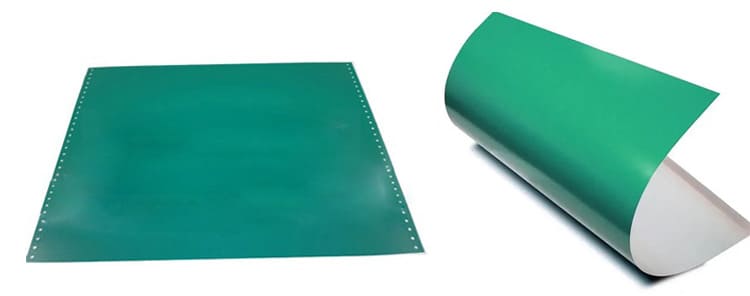
Druk PS
Dekoracja architektoniczna: stop aluminium jest szeroko stosowany w konstrukcjach budowlanych, drzwi i okna, sufity podwieszane, powierzchnie dekoracyjne, itp. ze względu na dobrą odporność na korozję, wystarczająca siła, doskonała wydajność procesu i wydajność spawania.

Zastosowanie konstrukcji ze stopu aluminium
Produkty elektroniczne: komputery, telefony komórkowe, obudowy lodówek, grzejniki, itp.
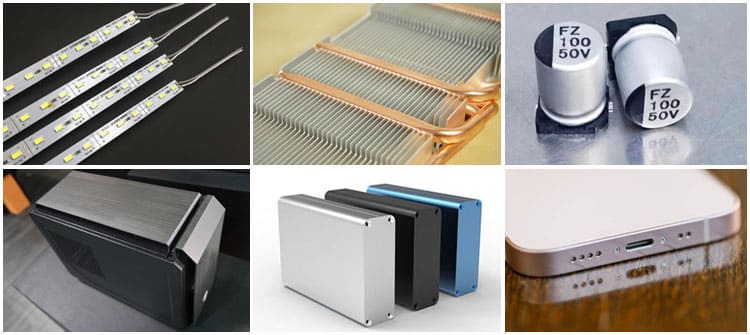
Elektroniczna aplikacja produktu
Kuchenne zapasy: garnki aluminiowe, umywalki aluminiowe, wkładki do gotowania ryżu, folia aluminiowa do użytku domowego, itp.
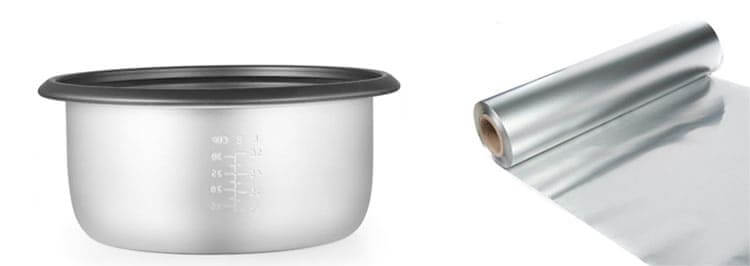
Aplikacja do kuchni
Pakowanie blachy aluminiowej / cewki
Każdy szczegół opakowania jest miejscem, w którym dążymy do doskonałej obsługi. Cały nasz proces pakowania wygląda następująco:
Laminowanie: wyraźny film, niebieska folia, mikrośluzówkowy, wysokośluzówkowy, folia do cięcia laserowego (2 marki, Novacell i Polifem);
Ochrona: papierowe zabezpieczenia narożników, podkładki przeciwuciskowe;
wysuszenie: osuszacz;
Taca: fumigowana nieszkodliwa drewniana taca, tacka na żelazko wielokrotnego użytku;
Uszczelka: Stalowy pasek w kółko i krzyżyk, lub taśma do pakowania z PVC;
Jakość materiału: Całkowicie wolny od wad typu biała rdza, plamy oleju, ślady toczenia, uszkodzenie krawędzi, zakręty, wgniecenia, dziury, przerwać linie, zadrapania, itp., brak zestawu cewek.
Port: Qingdao lub inne porty w Chinach.
Czas realizacji: 15-45 dni.
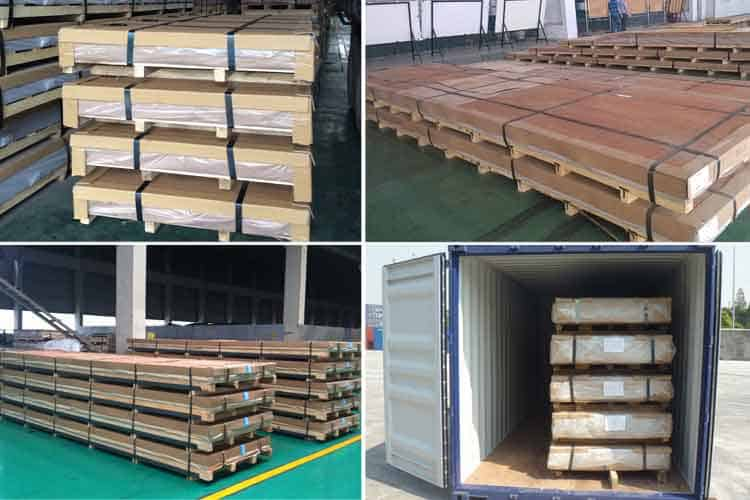
Proces pakowania blachy/płyty aluminiowej
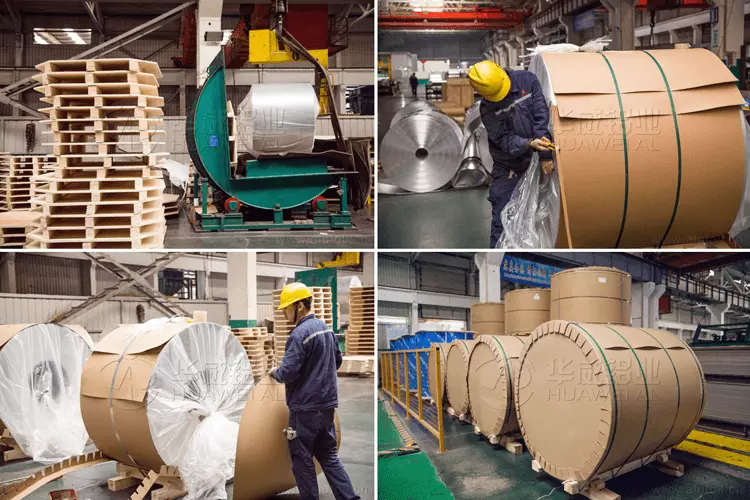
Proces pakowania cewek aluminiowych
F: Jesteś producentem lub handlowcem?
Q: Jesteśmy producentem, nasza fabryka znajduje się przy No.3 Weier Road, Strefa przemysłowa, Gongyi, Henan, Chiny.
F: Jakie jest MOQ do zamówienia produktu?
Q: Nasze MOQ jest 5 mnóstwo, a niektóre produkty specjalne będą miały minimalną wielkość zamówienia 1 Lub 2 mnóstwo.
F: Jak długi jest twój czas realizacji?
Q: Ogólnie nasz czas realizacji wynosi około 30 dni.
F: Czy twoje produkty mają gwarancję jakości?
Q: Tak, jeśli występuje problem z jakością naszych produktów, zrekompensujemy klientowi, dopóki nie będą zadowoleni.
Produkty powiązane



Najnowsze blogi
Powlekana folia aluminiowa do zastosowań opakowaniowych | Mocny & Niezawodny
Wysokiej jakości powlekana folia aluminiowa do zastosowań opakowaniowych, oferując doskonałą ochronę barierową, trwałość, i konsekwentna wydajność.

Do czego służy powlekana folia aluminiowa w opakowaniach i przemyśle
Dowiedz się do czego służy powlekana folia aluminiowa, od opakowań żywności i leków po izolację i drukowanie, i poznaj podstawowe zalety i funkcje.

Zaufany 3003 Dostawcy blach aluminiowych na całym świecie
Znajdź niezawodne 3003 Dostawcy blach aluminiowych oferujących certyfikowaną jakość, konkurencyjne ceny, rozmiary niestandardowe, i szybką, globalną dostawę Twoich projektów.

6061 T6 vs 7075 Aluminium: Wytrzymałość, Waga & Najlepsze zastosowania
Porównywać 6061 T6 vs 7075 aluminium z łatwością. Odkryj różnice w sile, waga, i aplikacje, aby wybrać to, co najlepsze dla Twoich projektów.