1. Wstęp
6061 T6 Aluminum Tread Plate combines the strength of 6061 aluminum alloy with a raised surface pattern designed for flooring, access platforms and industrial applications.
It offers a useful balance of mechanical strength, relatively low weight, corrosion resistance and fabrication flexibility.
Unlike ordinary flat aluminum sheet, tread plate features raised patterns on one surface. These patterns create a textured contact surface and give the plate a distinctive appearance.
Depending on the design and service conditions, manufacturers use it for walkways, schody, podłogi pojazdów, equipment platforms and protective panels.
The 6061 stop należy do 6000 series of heat-treatable aluminum alloys. Magnesium and silicon are its principal alloying elements.
In the T6 temper, solution heat treatment and artificial aging increase its strength, making it suitable for applications that require better mechanical performance than many general-purpose aluminum tread plate grades.
Jednakże, selecting 6061 T6 aluminum tread plate involves more than choosing a strong alloy.
Buyers and engineers should also consider the base-metal thickness, raised pattern height, plate dimensions, rozstaw podpór, loading conditions and surface treatment.
These factors influence the finished component’s weight, sztywność, durability and service performance.
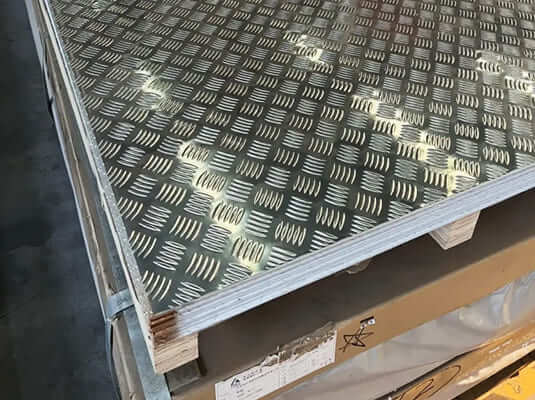
6061 Aluminiowa płyta bieżnika T6
2. Co jest 6061 Aluminiowa płyta bieżnika T6?
6061 T6 aluminum tread plate is rolled aluminum plate made from alloy 6061, with a raised pattern on one face and a smooth back.
The T6 temper means the alloy has been heat treated to reach high strength.
2.1 Reading the Designation
| Część | Meaning |
|---|---|
| 6061 | Alloy number. The first digit “6” marks the aluminum-magnesium-silicon series |
| T6 | Hartować: solution heat treated, then artificially aged |
| Tread plate | Plate with a raised pattern on one face for grip |
The alloy is heat-treatable. Its strength comes mainly from heat treatment, not from cold working. This is the key difference from alloys such as 5052 Lub 5754.
2.2 Other Names and Equivalents
| Nazwa | Notatki |
|---|---|
| Tread plate | General technical term |
| Płyta diamentowa | Common US term, from the look of the pattern |
| Płyta sprawdzająca / chequer plate | Common UK and European terms |
| AA 6061 | Aluminum Association designation |
| EN AW-6061 (AlMg1SiCu) | European designation |
| 3.3211 | German material number |
| UNS A96061 | Unified Numbering System reference |
Equivalence between standards is not always exact. Composition limits and mechanical requirements can differ between systems, so check the applicable standard before treating two grades as interchangeable.
3. Skład chemiczny 6061 Stop aluminium
Skład chemiczny 6061 aluminium determines its heat-treatment response, wytrzymałość, corrosion resistance and fabrication characteristics.
Magnesium and silicon are the principal alloying elements, while copper and chromium also contribute to the alloy’s overall performance.
Dla 6061 T6 aluminum tread plate, chemical composition should comply with the applicable material specification, such as ASTM B632/B632M or the relevant alloy composition requirements referenced by the purchasing specification.
3.1 Chemical Composition Table of 6061 Aluminium
The following table presents the commonly specified chemical composition limits for 6061 aluminium, expressed as maximum or range values in weight percentage.
| Element | Skład chemiczny (wt.) |
|---|---|
| Krzem (I) | 0.40–0,80 |
| Żelazo (Fe) | 0.70 maks. |
| Miedź (Cu) | 0.15–0,40 |
| Mangan (Mn) | 0.15 maks. |
| Magnez (Mg) | 0.80–1,20 |
| Chrom (Kr) | 0.04–0,35 |
| Cynk (zn) | 0.25 maks. |
| Tytan (Z) | 0.15 maks. |
| Inne elementy, Każdy | 0.05 maks. |
| Inne elementy, Całkowity | 0.15 maks. |
| Aluminium (Glin) | Reszta |
Notatka: These are commonly referenced 6061 limity składu.
The applicable product standard and its current edition should govern the final acceptance requirements.
Actual test results should be verified through the material certificate.
3.2 What Each Element Does
Magnez (Mg) i silikon (I). These two elements are the heart of the alloy. During aging they combine to form fine particles of magnesium silicide (Mg₂Si). These particles block the movement of defects in the metal, and that is what gives T6 its high strength.
Miedź (Cu). Copper adds strength. It also lowers corrosion resistance slightly, which is why 6061 is a little less resistant to seawater than 5xxx alloys.
Chrom (Kr). Chromium controls grain growth and reduces sensitivity to stress corrosion. It also offsets some of the corrosion effect of copper.
Żelazo (Fe) and Manganese (Mn). These are mostly impurities or minor additions. They form hard particles that influence surface quality and forming behavior.
Cynk (zn) i tytan (Z). Zinc is limited to protect corrosion behavior. Titanium is added in small amounts as a grain refiner during casting.
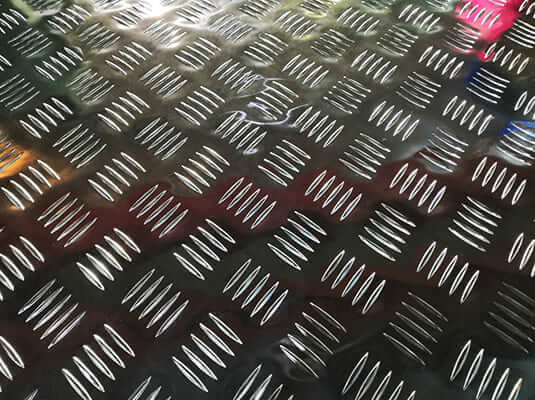
5 bar Aluminiowa płyta bieżnika
4. Temper Explained: T6 vs. T651 vs. Other Tempers
The temper designation describes the processing and heat-treatment condition of an aluminum alloy.
Dla 6061 aluminium, temper selection affects strength, plastyczność, dimensional stability and suitability for subsequent fabrication.
T6 and T651 are both high-strength conditions, but they differ in their stress-relief processing.
Other tempers, takie jak O, T4 and T6511, provide different balances of formability, strength and dimensional stability.
4.1 Co jest 6061 T6?
6061-T6 undergoes solution heat treatment followed by artificial aging.
This process develops strengthening precipitates and gives the alloy its characteristic high-strength condition.
Main characteristics include:
- High tensile and yield strength.
- Good hardness and wear-related surface durability.
- Dobra obrabialność.
- Good corrosion resistance in many normal service environments.
- Lower formability than annealed 6061-O.
6061-T6 is suitable for tread plate applications that require a strong aluminum substrate.
Jednakże, its relatively high strength means that tight bending operations may require careful process design to avoid cracking.
4.2 Co jest 6061 T651?
6061-T651 has the same basic solution heat-treated and artificially aged condition as T6, but it also undergoes controlled stretching to relieve residual stresses.
This stress-relief operation helps reduce distortion during machining, particularly when manufacturers remove significant amounts of material from the plate.
Its main characteristics include:
- High strength comparable to the corresponding T6 condition.
- Improved dimensional stability during machining.
- Reduced residual-stress-related distortion.
- Suitability for precision-machined plate components.
T651 is especially relevant to machining applications. Jednakże, buyers should confirm whether a specific tread plate product is available and certified in T651 rather than assuming that all 6061-T651 flat plate specifications apply to raised-pattern products.
4.3 Porównanie 6061 T6, T651 and Other Tempers
| Hartować | Processing Condition | Poziom siły | Formowalność | Główna charakterystyka | typowe aplikacje |
|---|---|---|---|---|---|
| O | Wyżarzone | Niski | Doskonały | Soft condition with high ductility | Deep forming and complex shaping |
| T4 | Obrobione cieplnie w kąpieli i naturalnie starzone | Średni | Dobry | Offers a balance of strength and formability | Forming operations followed by possible further aging |
| T6 | Obrobione cieplnie w kąpieli i sztucznie starzone | Wysoki | Moderate to limited | High strength and hardness | Elementy konstrukcyjne, tread plate and machinery parts |
| T651 | Solution heat-treated, stress-relieved by stretching and artificially aged | Wysoki | Moderate to limited | High strength with improved dimensional stability | Precision-machined plate components |
| T6511 | T651-type treatment with additional straightening or minor processing as permitted by the applicable specification | Wysoki | Moderate to limited | Stress-relieved extruded product condition | Extruded bars, profiles and structural components |
Notatka: Temper availability and mechanical properties depend on product form, thickness and applicable standards.
T651 and T6511 are not interchangeable designations. T6511 is generally associated with extruded products, whereas T651 is commonly used for stress-relieved plate and other applicable forms.
5. Mechanical and Physical Properties of 6061 Aluminiowa płyta bieżnika T6
Properties show how the plate behaves under load, heat and wear.
This section separates mechanical properties (response to force) from physical properties (gęstość, heat and electrical behavior).
5.1 Właściwości mechaniczne
| Nieruchomość | Typical value for T6 / T651 (orientacyjny) | What it means in practice |
|---|---|---|
| Wytrzymałość na rozciąganie (Rm) | About 290–310 MPa | Maximum stress before fracture |
| Siła plastyczności (Rp0.2) | About 240–276 MPa | Stress at which permanent deformation begins |
| Wydłużenie | About 8–12% | How far the plate stretches before breaking |
| Twardość (Brinella, HBW) | About 90–100 | Resistance to indentation and wear |
| Wytrzymałość na ścinanie | O 205 MPa | Resistance to shearing at fasteners and cut edges |
| Siła zmęczenia (5×10⁸ cycles) | O 95 MPa | Resistance to repeated loading |
Tread plate standards may state different minimum values from smooth plate, and limits change with thickness. Treat this table as a comparison guide and request measured values on the mill certificate.
5.2 Właściwości fizyczne
| Nieruchomość | Typowa wartość |
|---|---|
| Gęstość | O 2.70 g/cm³ |
| Zakres topnienia | About 580–650 °C |
| Moduł sprężystości | O 69 GPa |
| Współczynnik rozszerzalności cieplnej (20–100 °C) | O 23.6 × 10⁻⁶ /k |
| Przewodność cieplna (Na 25 °C) | About 160–170 W/m·K |
| Przewodnictwo elektryczne | About 40–47% IACS |
| Zachowanie magnetyczne | Niemagnetyczne |
6. Specyfikacje 6061 Aluminiowa płyta bieżnika T6
6061-T6 aluminum tread plate is available in different dimensions, thicknesses and raised patterns to meet industrial and commercial requirements.
A complete product specification should identify the aluminum alloy, hartować, base-metal thickness, overall profile thickness, wzór, dimensions and applicable standard.
6.1 Main Product Specifications
| Parametr | Specyfikacja |
|---|---|
| Nazwa produktu | 6061 Aluminiowa płyta bieżnika T6 |
| Stop | 6061 |
| Hartować | T6 |
| Seria stopów | 6000 Seria |
| Formularz produktu | Aluminiowa płyta bieżnika / Arkusz |
| Common Patterns | Five-bar, three-bar, diamond and customized patterns |
| Base-Metal Thickness | Customized according to requirements |
| Overall Thickness | Base thickness plus raised profile, subject to measurement convention |
| Szerokość | Dostosowane |
| Długość | Dostosowane |
| Wykończenie powierzchni | Mill finish or agreed surface treatment |
| Przetwarzanie | Ciąć, strzyżenie, drilling and machining |
| Obowiązująca norma | ASTM B632/B632M or other agreed specifications |
| typowe aplikacje | Industrial flooring, platformy, schody, vehicle floors and equipment |
The final specification should be confirmed with the supplier according to the required product form and production capabilities.
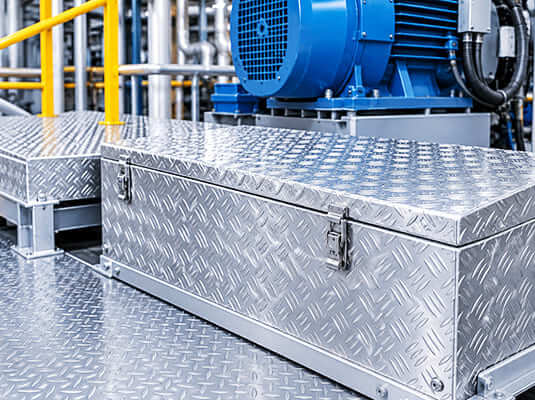
6061 T6 Aluminum Tread Plate for Equipment Covers
7. Key Properties and Advantages of 6061 Aluminiowa płyta bieżnika T6
No single property explains why 6061 T6 tread plate is chosen.
It is the combination of strength, grip and low weight that makes it a practical material.
7.1 Wysoki stosunek wytrzymałości do masy
6061 T6 is among the strongest common tread plate alloys. It gives high strength at about one third the weight of steel.
Vehicles carry more payload, platforms are easier to install and handling costs fall.
7.2 Reliable Slip Resistance
The raised pattern gives feet, boots and tires a surface to grip. Grip is helped by drainage between the bars, which lets water and light debris escape.
There is an important limit. A pattern improves traction but does not make a surface slip-proof.
Olej, lód, wet leaves or fine dust can still reduce grip. For safety-critical walkways, consider added anti-slip coatings or follow the slip-resistance rules of your region.
7.3 Dobra odporność na korozję
Aluminum forms a thin, stable oxide layer that protects the metal. 6061 performs well in most outdoor and freshwater conditions with little maintenance.
In harsh marine or chloride environments, coating or a different alloy may be a better choice.
7.4 Wear and Dent Resistance
T6 is much harder than soft alloys such as 3003. It resists denting from tools, cargo and foot traffic, and the pattern hides minor scratches. This suits heavy-use floors and step plates.
7.5 Good Machinability
6061 machines more cleanly than most 5xxx alloys. Ciąć, wiercenie, routing and tapping are straightforward, which helps when fitting plates around hatches, brackets and fixtures.
7.6 Spawalność, With Conditions
6061 can be welded by TIG and MIG, commonly with 4043 Lub 5356 filler wire.
The caution is strength loss in the heat-affected zone, as covered in Section 4. Good joint design, thicker sections at welds or mechanical fastening can compensate.
7.7 Surface Treatment Response
6061 accepts anodizing, painting and powder coating. Anodizing improves wear and corrosion resistance.
Patterned surfaces need good coverage into the grooves, so confirm the process with the finisher.
7.8 Easy Maintenance and Long Life
Tread plate is easy to wash and does not rust. Service life is long when it is kept clean and isolated from dissimilar metals.
7.9 Zdolność do recyklingu i zrównoważony rozwój
Aluminum can be recycled repeatedly without losing its core properties.
Recycling uses only a small fraction of the energy needed to make primary metal, which supports sustainability and lifecycle cost goals.
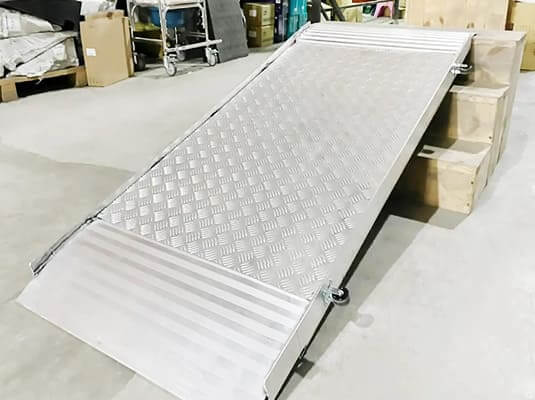
Aluminum Tread Plate for Rump
8. Proces produkcyjny 6061 Aluminiowa płyta bieżnika T6
Making tread plate combines heavy rolling, pattern forming and heat treatment.
Każdy etap kontroluje określony współczynnik jakości, such as composition, pattern shape, strength or flatness.
8.1 Process Overview
| Scena | Co się stanie | Quality factor controlled |
|---|---|---|
| 1. Topienie i stapianie | Aluminum and alloying elements are melted and adjusted to 6061 limity | Kompozycja |
| 2. Odlew | Molten metal is cast into slabs by direct-chill casting | Jakość wewnętrzna, wtrącenia |
| 3. Homogenizing | Slabs are heated and held to even out the structure | Uniform properties |
| 4. Scalping | Slab surface is machined to remove defects | Jakość powierzchni |
| 5. Walcowanie na gorąco | Slab is rolled to the intermediate thickness | Grubość, structure |
| 6. Pattern rolling | Plate passes through patterned rolls to form raised bars | Pattern shape and height |
| 7. Solution heat treatment and quench | Plate is heated, then cooled rapidly | Dissolved alloying elements |
| 8. Sięgnięcie (for T651) | Plate is stretched to relieve stress | Płaskość, stres resztkowy |
| 9. Sztuczne starzenie się | Plate is held at moderate temperature | Final strength (T6 condition) |
| 10. Cutting and inspection | Plate is cut to size and checked | Wymiary, powierzchnia, właściwości |
The exact sequence varies by mill. Na przykład, some producers pattern-roll before heat treatment and others use different routes for thinner or thicker plate.
9. Zastosowania 6061 Aluminiowa płyta bieżnika T6
6061 T6 aluminum tread plate combines high strength, niska waga, odporność na korozję, i wypukły wzór powierzchni.
These properties make it suitable for applications that require durable flooring, protective coverings, and lightweight structural components.
Its raised pattern can improve surface grip, although actual slip resistance depends on the pattern design, stan powierzchni, obuwie, i środowisko operacyjne.
9.1 Industrial Flooring and Walkways
Factories, warsztaty, and processing facilities use 6061 T6 aluminum tread plate for platforms, chodniki, access routes, and equipment flooring.
Its strength-to-weight ratio helps reduce the weight of platforms while maintaining good mechanical performance.
Common applications include:
- Factory walkways and maintenance platforms
- Equipment access floors
- Machine covers and service platforms
- Lightweight industrial stairs and steps
9.2 Transportation and Vehicle Flooring
Połączenie wytrzymałości i niskiej gęstości sprawia, że 6061 T6 tread plate useful in transportation equipment.
Manufacturers use it for flooring and protective panels where weight reduction and durability are important.
Typowe zastosowania obejmują:
- Truck and trailer flooring
- Utility vehicle floors
- Vehicle step plates and access platforms
- Interior flooring for specialized transport equipment
- Protective panels in commercial vehicles
9.3 Marine and Offshore Equipment
6061 aluminum offers good general corrosion resistance, making it suitable for selected marine components.
Tread plate can provide a textured surface for access areas and equipment platforms.
Typowe zastosowania obejmują:
- Boat access steps and walkways
- Marine equipment platforms
- Deck accessories and protective covers
- Offshore maintenance platforms
9.4 Zastosowania budowlane i architektoniczne
6061 T6 aluminum tread plate is also used in construction projects that require lightweight, wytrzymały, and easy-to-fabricate metal panels.
Przykłady obejmują:
- Building access platforms
- Stair treads and landing plates
- Protective floor panels
- Equipment enclosures
- Decorative and functional wall or floor coverings
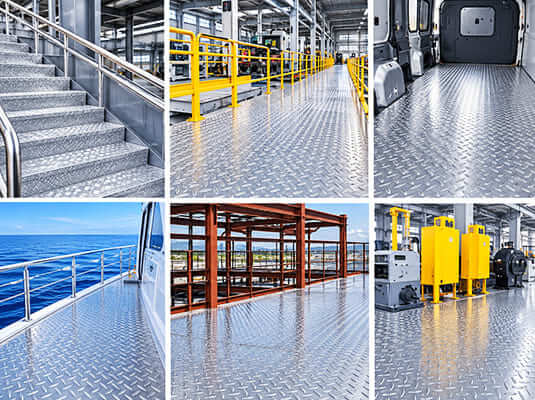
Typowe zastosowania 6061 Aluminiowa płyta bieżnika T6
9.5 Equipment Covers and Protective Panels
The raised pattern gives tread plate a distinctive appearance and helps conceal minor surface marks.
Its rigidity and machinability also make it suitable for fabricated covers and protective components.
Common uses include:
- Machinery covers
- Electrical and mechanical equipment enclosures
- Inspection access panels
- Storage compartment covers
- Protective plates for industrial equipment
10. 6061 T6 Aluminum Tread Plate vs. Inne stopy aluminium
Różne stopy aluminium oferują różne kombinacje wytrzymałości, formowalność, odporność na korozję, i koszt.
Chociaż 6061 T6 provides a useful balance of mechanical properties, other alloys may offer better performance for specific applications.
10.1 Comparison of Common Aluminum Tread Plate Alloys
| Comparison Item | 6061 T6 | 3003 H22/H24 | 5052 H32 | 5083 H116/H321 |
|---|---|---|---|---|
| Seria stopów | 6000 seria | 3000 seria | 5000 seria | 5000 seria |
| Główne pierwiastki stopowe | Magnez i krzem | Mangan | Magnez | Magnesium and manganese |
| Strength level | Wysoki | Niski do średniego | Średnie do wysokiego | Wysoki |
| Odporność na korozję | Dobry | Dobry | Bardzo dobry | Excellent in many marine environments |
| Formowalność | Good in suitable conditions | Bardzo dobry | Dobry | Umiarkowany |
| Spawalność | Dobry, with strength reduction in the heat-affected zone | Dobry | Dobry | Dobry |
| Skrawalność | Dobry | Sprawiedliwy | Sprawiedliwy | Sprawiedliwy |
| Typowe aplikacje | Platformy przemysłowe, vehicle flooring, equipment panels | Podłoga ogólna, Panele dekoracyjne, light-duty covers | Podłogi morskie, elementy pojazdu, industrial panels | Konstrukcje morskie, offshore platforms, ciężki sprzęt |
| Main advantage | High strength and versatile fabrication | Good formability and cost-effectiveness | Strong corrosion resistance and good formability | Wysoka wytrzymałość i odporność na korozję morską |
Notatka: The table provides a general alloy-level comparison. Actual performance depends on product form, hartować, grubość, wzór bieżnika, and applicable product specifications.
11. Kontrola jakości i standardy testowania
Quality control decides whether the plate performs safely and looks right. W tej sekcji opisano, co należy sprawdzić, jak jest testowany i jakie standardy mają zastosowanie.
11.1 Kluczowe parametry jakości
| Parametr | Na co wpływa | Typowa metoda testowa |
|---|---|---|
| Skład stopu | Wytrzymałość, odporność na korozję, aging response | Analiza spektrometryczna |
| Właściwości mechaniczne | Load capacity, Opór wciągnięcia | Tensile and hardness tests |
| Grubość | Waga, wytrzymałość, fit | Micrometer or caliper at the base and over the pattern |
| Pattern height and shape | Grip, wygląd, drainage | Pattern gauge and visual inspection |
| Płaskość | Ciąć, fitting, wygląd | Straightedge and gap measurement |
| Jakość powierzchni | Wygląd, anodizing and coating results | Visual inspection under good light |
| Szerokość i długość | Fit and waste | Tape or laser measurement |
11.2 Standardy odniesienia i zgodność
| Norma lub przepis | Zakres |
|---|---|
| ASTM B632 | Aluminum-alloy rolled tread plate (USA) |
| W 1386 | Aluminum and aluminum alloys, płyta bieżnika (Europa) |
| W 485 and EN 573-3 | Właściwości mechaniczne, tolerances and composition for wrought aluminum |
| GB/T 3880 | Aluminum and aluminum alloy plate and strip (Chiny) |
| W 10204 | Types of inspection documents |
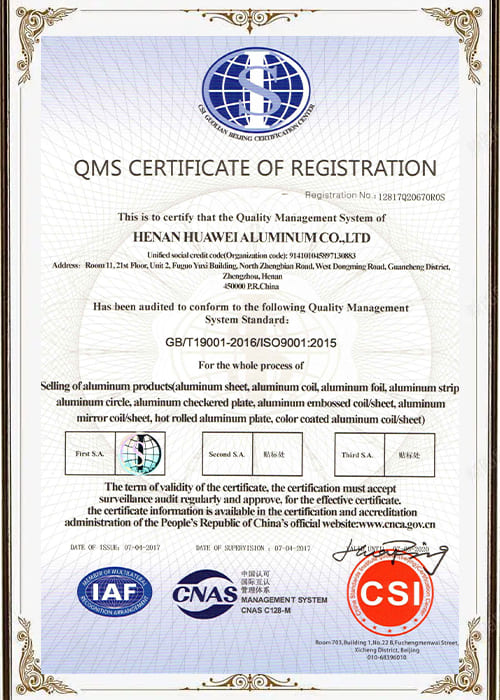
| ISO 9001 | System zarządzania jakością |
| Customer or classification specification | May add requirements for transport, rail or marine use |
Standardy zmieniają się z biegiem czasu. Confirm the current edition of each one, i uzgodnij na piśmie, który z nich reguluje Twoje zamówienie.
12. Price Factors of 6061 Aluminiowa płyta bieżnika T6
The cheapest quote is rarely the lowest cost. Understanding what drives the price helps you compare quotes fairly and avoid surprises.
This section does not quote prices, because aluminum prices move constantly. Ask your supplier for a current quotation.
12.1 Main Price Drivers
| Czynnik | Effect on price |
|---|---|
| Aluminum market price (such as the LME price) | The largest share of the cost; changes over time |
| Stop i temperament | 6061 T6 costs more than 3003 Lub 5052 because of the alloy and heat treatment |
| Grubość | Thicker plate uses more metal and costs more per piece |
| Wzór | Common patterns such as five-bar are usually cheaper and easier to source |
| Plate size | Standard sizes cost less than large or special sizes |
| Przetwarzanie | Cutting to size, flattening, film and special packing add cost |
| Certificates and approvals | Typ 3.1 certificates or classification approval add cost |
| Order volume | Larger orders usually lower the unit price |
| Origin and delivery terms | Freight, duties and incoterms change the landed cost |
12.2 How Price Is Usually Quoted
Aluminum plate is often priced per kilogram, per ton or per piece. The quote usually combines the metal price and a processing premium.
Ask whether the quote is fixed or linked to a market price, and for how long it is valid. Because aluminum prices move, a quote that is not time-limited can be misleading.
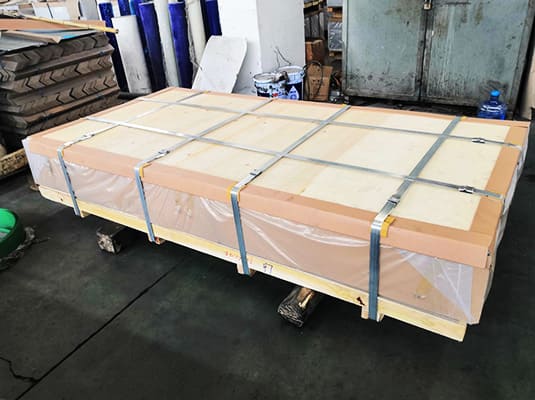
Huawei pakowane 6061 Aluminiowa płyta bieżnika T6
13. Dostosowane 6061 T6 Aluminum Tread Plate from Huawei Aluminum
Henan Huawei Aluminium Co., Sp. z o.o. supplies aluminum sheets, talerze, cewki, and other aluminum products for industrial, transport, budowa, and equipment applications.
Z więcej niż 20 wieloletnie doświadczenie w produkcji i sprzedaży aluminium, Huawei Aluminum supports customers with customized material specifications and export services.
For projects requiring 6061 T6 aluminum tread plate, buyers can discuss their technical requirements with Huawei’s sales team to identify suitable product specifications.
13.1 Customized Product Specifications
Huawei Aluminum can discuss the following requirements for customized tread plate orders:
| Parametr | Opcje dostosowywania |
|---|---|
| Stop | 6061 |
| Hartować | T6, subject to product availability and specification |
| Product type | Aluminiowa płyta bieżnika |
| Grubość | Customized according to project requirements |
| Szerokość i długość | Standard or customized dimensions |
| Wzór bieżnika | Available pattern options, subject to production capability |
| Wykończenie powierzchni | Mill finish or other agreed treatments |
| Opakowania | Standard export packaging or customized protection |
| Kontrola | Agreed dimensional, chemiczny, and mechanical checks |
Buyers should specify whether thickness refers to the base aluminum thickness or the overall thickness including the raised pattern.
13.2 Global Export and Customer Service
Huawei Aluminum has exported aluminum products to customers in 72 Państwa.
The company supports international buyers with product communication, specification confirmation, opakowania eksportowe, and delivery coordination.
Whether you need standard aluminum tread plate or a customized 6061 T6 solution, Huawei Aluminum can help you evaluate the required specifications and prepare a quotation.
Contact Huawei Aluminum to discuss your 6061 T6 aluminum tread plate requirements and request a customized quotation.
14. Wniosek
6061 T6 aluminum tread plate combines high strength, niska gęstość, dobra odporność na korozję, i wypukły wzór powierzchni.
These characteristics make it a practical material for industrial flooring, elementy pojazdu, access platforms, osłony sprzętu, and other applications requiring a balance of strength and weight.
W porównaniu z 3003, 5052, I 5083 aluminiowa płyta bieżnika, 6061 T6 offers a useful combination of strength and machinability.
Jednakże, the best alloy depends on the operating environment, Wymagania tworzenia, narażenie na korozję, i specyfikacje projektu.
Przy wyborze 6061 T6 aluminum tread plate, buyers should pay particular attention to the base-metal thickness, wzór bieżnika, właściwości mechaniczne, tolerancje wymiarowe, i obowiązującą normę produktu.
Working with an experienced supplier also helps ensure that the material specifications, wymagania inspekcyjne, and delivery arrangements match the project.
Huawei Aluminum provides customized aluminum product solutions and supports customers with specification confirmation, quality inspection, and international export services.
Często zadawane pytania
1. Co jest 6061 T6 aluminum tread plate?
It is a raised-pattern aluminum plate made from 6061 alloy in the T6 temper. It offers high strength, niska waga, i dobrą odporność na korozję.
2. What are the main applications of 6061 T6 aluminum tread plate?
Common applications include industrial flooring, chodniki, podłogi samochodów ciężarowych i przyczep, access platforms, osłony sprzętu, and protective panels.
3. Jest 6061 T6 aluminum tread plate corrosion-resistant?
Tak. It offers good resistance to general atmospheric corrosion. For marine or highly corrosive environments, additional protection and careful material selection may be necessary.
4. Jaka jest różnica pomiędzy 6061 T6 i 3003 aluminiowa płyta bieżnika?
6061 T6 provides higher strength and better machinability, chwila 3003 offers better formability and suits general-purpose, light-duty applications.
5. Móc 6061 T6 aluminum tread plate be welded?
Tak. Jednakże, welding can reduce strength in the heat-affected zone. Suitable welding procedures and filler materials are important.
6. Does the raised pattern make the plate slip-proof?
NIE. The raised pattern can improve surface grip, but actual slip resistance depends on surface conditions, wilgoć, zanieczyszczenie, and the pattern design.
7. Which standard applies to 6061 T6 aluminum tread plate?
ASTM B632/B632M is a key standard for aluminum-alloy rolled tread plate. Buyers should confirm the applicable requirements for alloy, hartować, i grubość.
8. Jakie informacje są potrzebne do wyceny?
Provide the alloy and temper, base-metal thickness, szerokość, długość, wzór bieżnika, Wykończenie powierzchni, ilość, required standard, and delivery destination.
9. Can Huawei Aluminum supply customized 6061 T6 aluminum tread plate?
Huawei Aluminum can discuss customized dimensions, product specifications, wykończenia powierzchni, wymagania inspekcyjne, and export packaging. Contact the company with your project details to confirm availability and request a quotation.
Proces produkcji odlewów i jego wprowadzenie
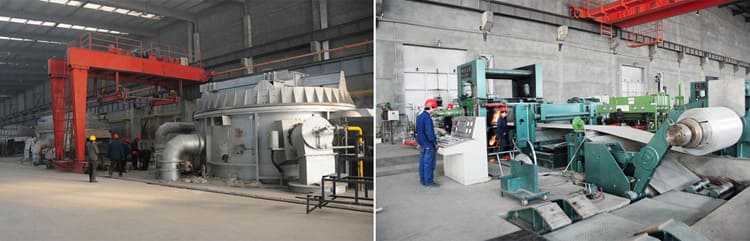
Celem topienia i odlewania jest uzyskanie stopów o zadawalającym składzie i wysokiej czystości stopu, tak aby stworzyć dogodne warunki do odlewania stopów o różnych kształtach.
Etapy procesu topienia i odlewania: dozowanie --- karmienie --- topienie --- mieszając po rozpuszczeniu, usuwanie żużla --- pobieranie próbek przed analizą --- dodanie stopu w celu dostosowania składu, poruszający --- rafinacja --- Ustawienie statyczne —— Prowadź odlewanie pieca.
Proces produkcji walcowania na gorąco i jego wprowadzenie
- 1. Walcowanie na gorąco ogólnie odnosi się do walcowania powyżej temperatury rekrystalizacji metalu;
- 2. Podczas procesu walcowania na gorąco, metal ma zarówno procesy utwardzania, jak i zmiękczania. Ze względu na wpływ prędkości odkształcenia, o ile proces odzyskiwania i rekrystalizacji jest za późno, nastąpi pewne zaostrzenie pracy;
- 3. Rekrystalizacja metalu po walcowaniu na gorąco jest niepełna, to jest, współistnienie struktury zrekrystalizowanej i zdeformowanej;
- 4. Walcowanie na gorąco może poprawić wydajność przetwarzania metali i stopów, zmniejszyć lub wyeliminować wady odlewnicze.
- 1. Temperatura odlewania i walcowania wynosi na ogół od 680°C do 700°C. Im niżej tym lepiej, stabilna linia do odlewania i walcowania zwykle zatrzymuje się raz w miesiącu lub częściej, aby ponownie stanąć. Podczas procesu produkcyjnego, konieczne jest ścisłe kontrolowanie poziomu cieczy w przednim zbiorniku, aby zapobiec niskiemu poziomowi cieczy;
- 2. Smarowanie wykorzystuje proszek C z niepełnym spalaniem gazu do smarowania, co jest również jedną z przyczyn brudzenia powierzchni materiałów odlewniczych i walcowanych;
- 3. Szybkość produkcji wynosi zazwyczaj od 1,5 m/min do 2,5 m/min;
- 4. Jakość powierzchni wyrobów wytwarzanych metodą odlewania i walcowania jest na ogół stosunkowo niska, i generalnie nie mogą spełniać produktów o specjalnych wymaganiach dotyczących właściwości fizycznych i chemicznych.
- 1. Walcowanie na zimno odnosi się do metody produkcji walcowania poniżej temperatury rekrystalizacji;
- 2. Podczas procesu walcowania nie nastąpi dynamiczna rekrystalizacja, a temperatura wzrośnie co najwyżej do temperatury odzyskiwania, a walcowanie na zimno pojawi się w stanie utwardzania przez zgniot, a szybkość utwardzania pracy będzie duża;
- 3. Walcowane na zimno blachy i taśmy mają wysoką dokładność wymiarową, dobra jakość powierzchni, jednolita struktura i wydajność, a produkty w różnych stanach można uzyskać za pomocą obróbki cieplnej;
- 4. Walcowanie na zimno może rozwałkować cienkie paski, ale w tym samym czasie, ma wady związane z wysokim zużyciem energii na odkształcenie i wieloma przejściami obróbkowymi.
- 1. Wykańczanie jest metodą obróbki mającą na celu sprawienie, aby blacha walcowana na zimno spełniała wymagania klienta, lub w celu ułatwienia późniejszego przetwarzania produktu;
- 2. Sprzęt do wykańczania może korygować wady powstałe w procesie produkcji walcowania na gorąco i na zimno, jak pęknięta krawędź, oleisty, zły kształt talerza, stres resztkowy, itp. Musi zapewnić, że do procesu produkcyjnego nie zostaną wprowadzone żadne inne wady;
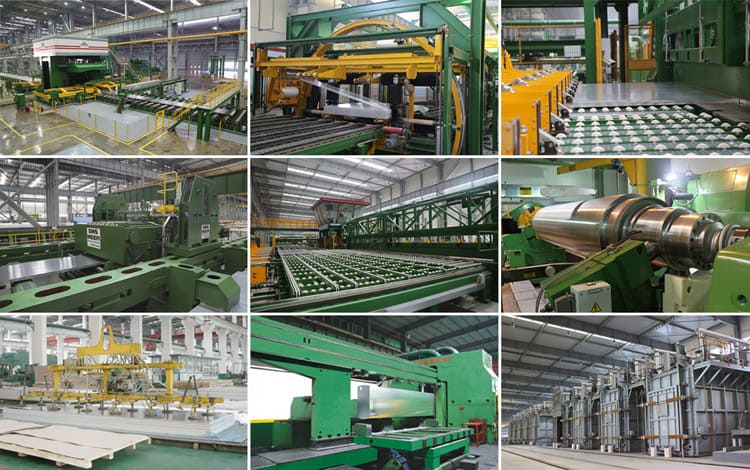
- 3. Istnieją różne urządzenia wykończeniowe, głównie w tym przekrojowe, rozcinanie, rozciąganie i prostowanie, piec do wyżarzania, pośliznąć się, itp.
Proces odlewania i walcowania
Proces odlewania i walcowania: płynny metal, pudełko z przodu (kontrola poziomu cieczy), maszyna do odlewania i walcowania (system smarowania, woda chłodząca), Urządzenie ścierające, maszyna do zwijania.
Proces produkcji walcowania na zimno
Wprowadzenie do procesu wykańczania produkcji
Stop aluminium ma cechy niskiej gęstości, dobre właściwości mechaniczne, dobra wydajność przetwarzania, nietoksyczny, łatwe do recyklingu, doskonała przewodność elektryczna, przenikanie ciepła i odporność na korozję, dzięki czemu ma szerokie zastosowanie.
Lotnictwo: używany do produkcji skór samolotów, ramy kadłuba, dźwigary, wirniki, śmigła, zbiorniki paliwa, panele ścienne i rozpórki podwozia, a także pierścienie do kucia rakiet, panele ścienne statków kosmicznych, itp.
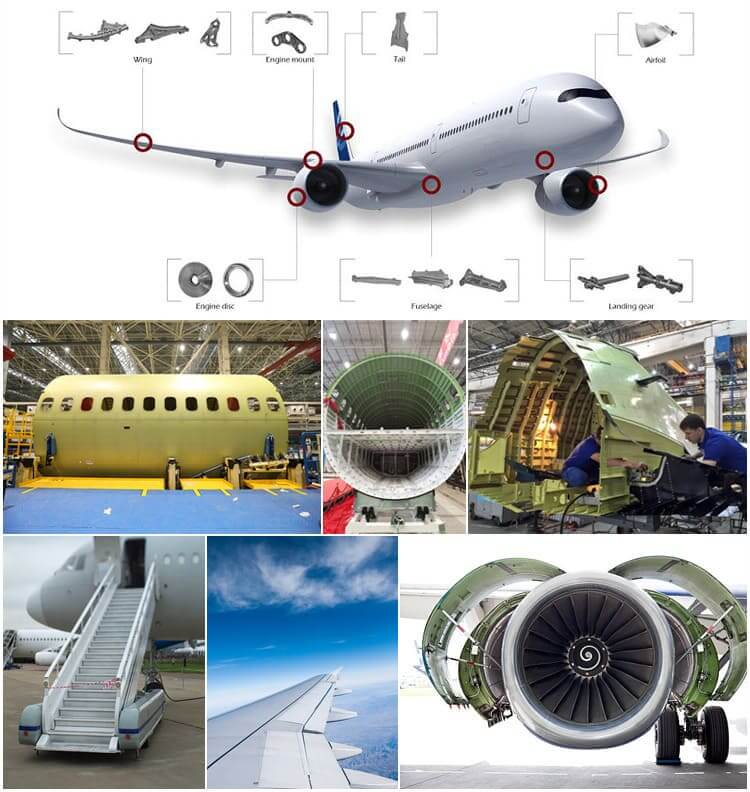
Stop aluminium stosowany w przemyśle lotniczym
Transport: stosowany do materiałów konstrukcyjnych karoserii samochodów, pojazdy metra, kolejowe wagony pasażerskie, szybkie samochody osobowe, drzwi i okna, półki, części silników samochodowych, klimatyzatory, grzejniki, panele karoserii, koła i materiały okrętowe.
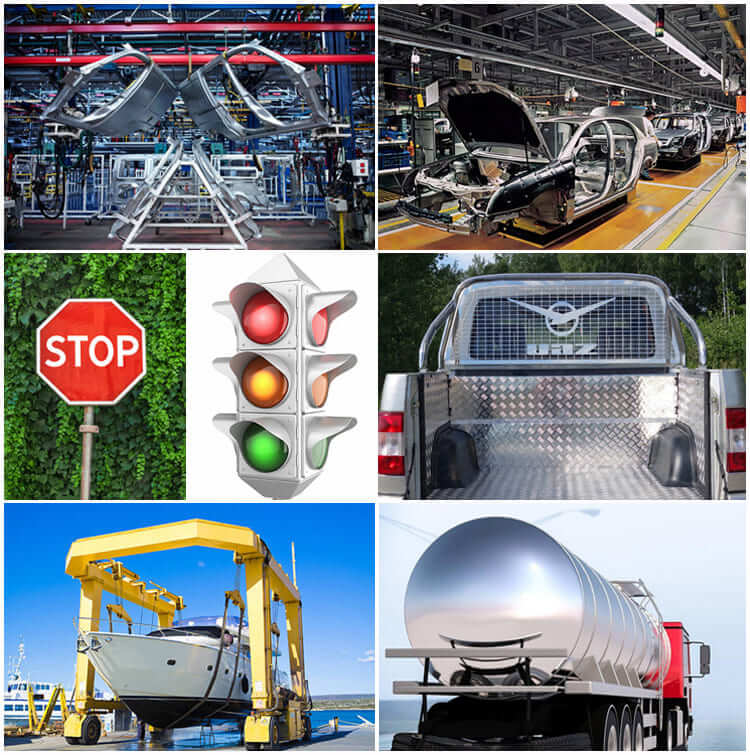
Aplikacja ruchu
Opakowania: Całkowicie aluminiowe puszki na napoje są stosowane głównie jako metalowe materiały opakowaniowe w postaci cienkich płyt i folii, i są przerabiane na puszki, pokrywki, butelki, beczki, i folii opakowaniowych. Szeroko stosowany w pakowaniu napojów, żywność, kosmetyki, leki, papierosy, produkty przemysłowe, leki, itp.
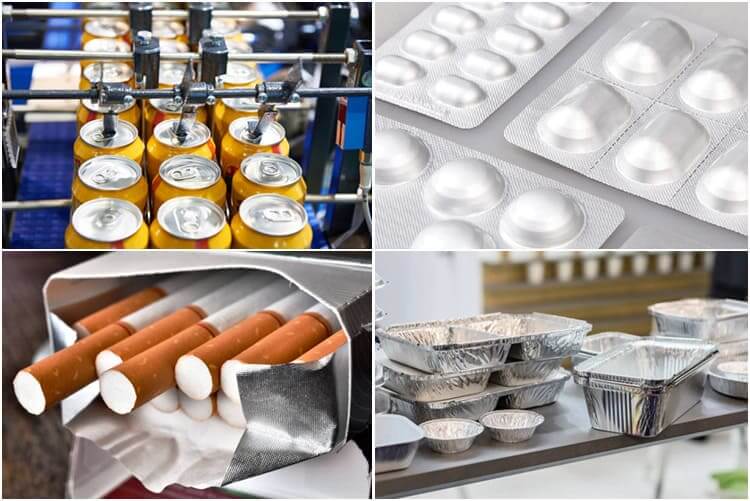
Aplikacja opakowaniowa
Druk: Stosowany głównie do produkcji płyt PS, Płyty PS na bazie aluminium to nowy rodzaj materiału w przemyśle poligraficznym, używany do automatycznego wytwarzania i drukowania płyt.
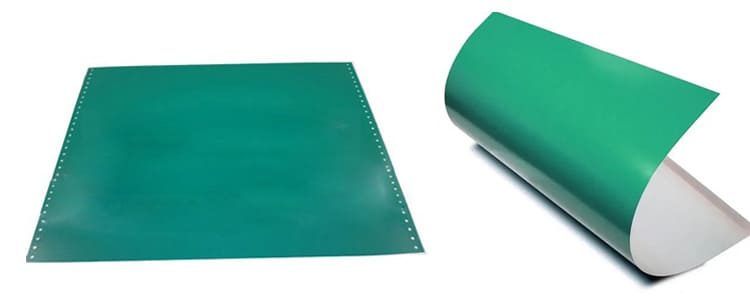
Druk PS
Dekoracja architektoniczna: stop aluminium jest szeroko stosowany w konstrukcjach budowlanych, drzwi i okna, sufity podwieszane, powierzchnie dekoracyjne, itp. ze względu na dobrą odporność na korozję, wystarczająca siła, doskonała wydajność procesu i wydajność spawania.
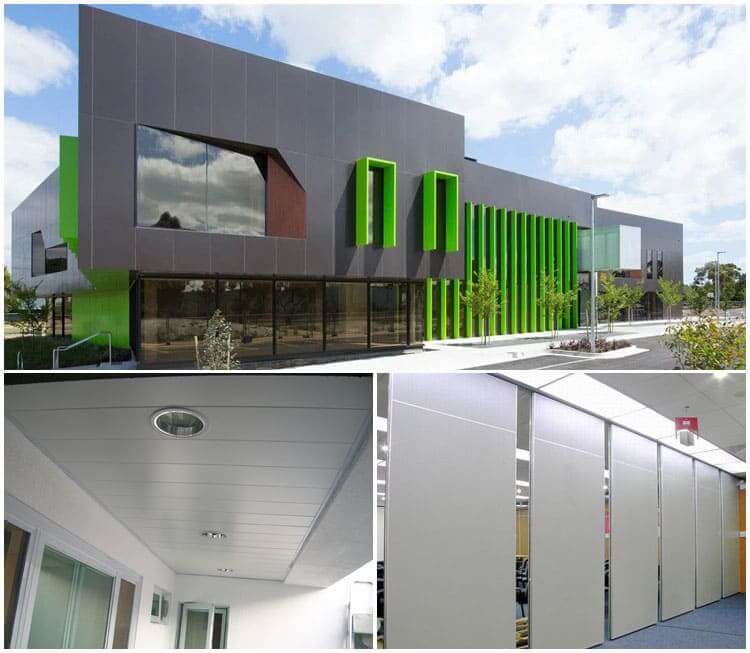
Zastosowanie konstrukcji ze stopu aluminium
Produkty elektroniczne: komputery, telefony komórkowe, obudowy lodówek, grzejniki, itp.
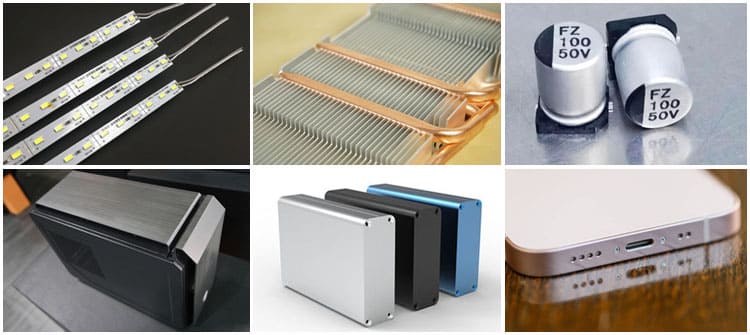
Elektroniczna aplikacja produktu
Kuchenne zapasy: garnki aluminiowe, umywalki aluminiowe, wkładki do gotowania ryżu, folia aluminiowa do użytku domowego, itp.
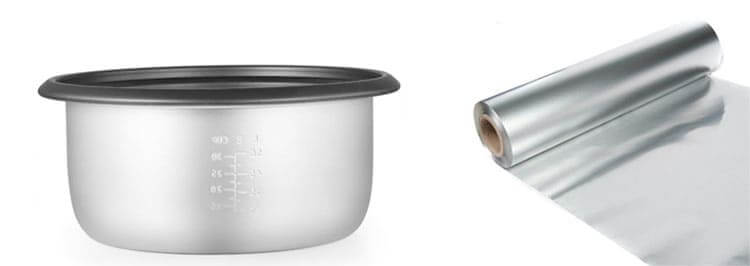
Aplikacja do kuchni
Pakowanie blachy aluminiowej / cewki
Każdy szczegół opakowania jest miejscem, w którym dążymy do doskonałej obsługi. Cały nasz proces pakowania wygląda następująco:
Laminowanie: wyraźny film, niebieska folia, mikrośluzówkowy, wysokośluzówkowy, folia do cięcia laserowego (2 marki, Novacell i Polifem);
Ochrona: papierowe zabezpieczenia narożników, podkładki przeciwuciskowe;
wysuszenie: osuszacz;
Taca: fumigowana nieszkodliwa drewniana taca, tacka na żelazko wielokrotnego użytku;
Uszczelka: Stalowy pasek w kółko i krzyżyk, lub taśma do pakowania z PVC;
Jakość materiału: Całkowicie wolny od wad typu biała rdza, plamy oleju, ślady toczenia, uszkodzenie krawędzi, zakręty, wgniecenia, dziury, przerwać linie, zadrapania, itp., brak zestawu cewek.
Port: Qingdao lub inne porty w Chinach.
Czas realizacji: 15-45 dni.
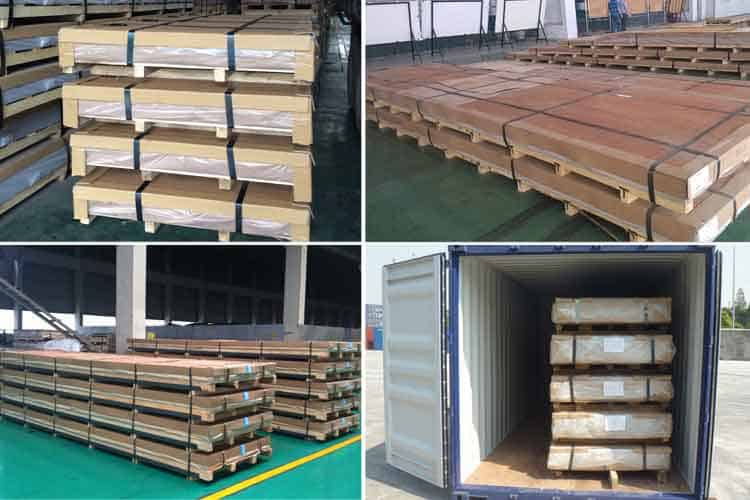
Proces pakowania blachy/płyty aluminiowej
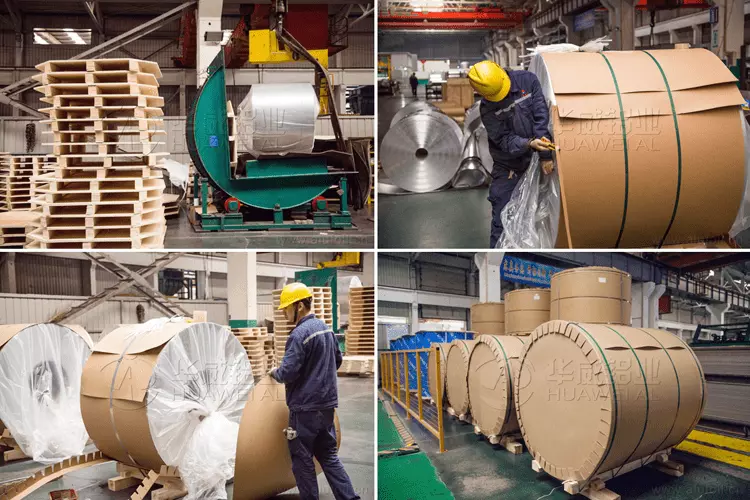
Proces pakowania cewek aluminiowych
F: Jesteś producentem lub handlowcem?
Q: Jesteśmy producentem, nasza fabryka znajduje się przy No.3 Weier Road, Strefa przemysłowa, Gongyi, Henan, Chiny.
F: Jakie jest MOQ do zamówienia produktu?
Q: Nasze MOQ jest 5 mnóstwo, a niektóre produkty specjalne będą miały minimalną wielkość zamówienia 1 Lub 2 mnóstwo.
F: Jak długi jest twój czas realizacji?
Q: Ogólnie nasz czas realizacji wynosi około 30 dni.
F: Czy twoje produkty mają gwarancję jakości?
Q: Tak, jeśli występuje problem z jakością naszych produktów, zrekompensujemy klientowi, dopóki nie będą zadowoleni.
Produkty powiązane
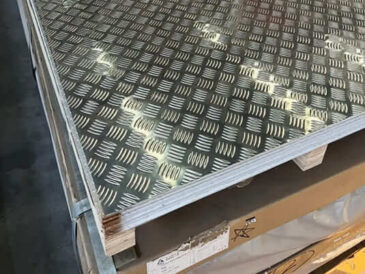


Najnowsze blogi
5052 vs 6061 Aluminium: Kluczowe różnice & Najlepsze zastosowania
Porównywać 5052 vs 6061 aluminium dla wytrzymałości, odporność na korozję, formowalność, i obróbka. Odkryj, który stop najlepiej pasuje do Twojego projektu.
Typowe stopy chłodni Używana cewka aluminiowa powlekana PE
Odkryj popularne stopy stosowane w chłodniach, cewki aluminiowe powlekane PE, w tym 3003, 3004, I 3105. Zaprojektowane z myślą o doskonałej odporności na korozję, formowalność, i długotrwałe działanie na świeżym powietrzu.
Czy aluminium przewodzi? Nieruchomości, Używa & Korzyści wyjaśnione
Czy aluminium przewodzi? Odkryj przewodność elektryczną aluminium, kluczowe zalety, i dlaczego jest szeroko stosowany w przenoszeniu mocy i zastosowaniach przemysłowych.
Odblokowanie zrównoważonego rozwoju: Prawda o recyklingu folii aluminiowej
Czy folia aluminiowa nadaje się do recyklingu? Dowiedz się, jak można poddać recyklingowi folię aluminiową, jak to dobrze przygotować, i dlaczego recykling pomaga zmniejszyć ilość odpadów i oszczędzać zasoby.