8011 Aluminum Foil for Bottle Cap Sealing: An In-Depth Guide
In the beverage and food-packaging industries, reliability and safety are non-negotiable. Among the materials that keep products fresh, appealing, and compliant with regulatory standards, 8011 Aluminum Foil for Bottle Cap Sealing stands out. This material combines exceptional formability, forti proprietà della barriera, and compatibility with heat-sealing processes essential for crown-cap closures. Questo articolo fornisce un completo, data-supported look at why 8011 aluminum foil is a trusted choice for bottle cap sealing, how it is manufactured and tested, and how buyers can optimize performance across different beverage applications. The discussion also includes practical comparisons with alternative foils, supplier insights from Huawei Aluminum, and a detailed FAQ to help engineers, packaging managers, and procurement teams make informed decisions.
Introduzione a 8011 Aluminum Foil for Bottle Cap Sealing
At the heart of modern bottle sealing systems lies 8011 Aluminum Foil for Bottle Cap Sealing. This foil is specifically engineered to meet the demanding requirements of crown-cap closures, where a thin, flessibile, and strong barrier layer needs to form a reliable seal with an adhesive backing or liner. The advantages of 8011 foil in this role include excellent ductility for forming into liner discs, superior barrier against moisture and gases, and compatibility with common heat-sealing processes used in beverage bottling lines. Inoltre, 8011 foils offered by reputable suppliers typically exhibit good pinhole resistance, uniform thickness distribution, and high surface quality that helps adhesives bond consistently.
This guide emphasizes practical, evidence-based considerations—from material properties and manufacturing controls to sealing performance and supply-chain considerations. For readers seeking a supplier reference, Huawei Aluminum is highlighted as an established producer with a broad product portfolio in foil packaging and cap-sealing solutions.
Material and Properties: Perché 8011 Foil Is Suited for Bottle Cap Sealing
Cosa è 8011 Foglio di alluminio?
8011 is an aluminum alloy in the 8000-series family, a non-heat-treatable alloy known for its excellent formability and ductility. The designation “8011” reflects a balance of alloying elements—primarily aluminum with trace amounts of other elements—that yield a foil with high flexibility and good barrier properties. In bottle cap sealing, the foil is typically produced in a thin gauge, often in the range of 12 A 25 micrometri (µm), and tempered to achieve the desired mechanical behavior.
Key characteristics that make 8011 foil attractive for cap liners:
- High formability: The foil can be shaped into complex liner configurations without cracking, enabling reliable conformity to crown closures.
- Eccellenti proprietà barriera: Aluminum foil provides a robust barrier to moisture, ossigeno, e luce, contributing to product stability and shelf life.
- Compatibility with adhesives and liners: The thin, smooth surface supports consistent adhesion with sealing compounds and bottle liners.
- Recyclability and food-contact compliance: Aluminum is widely accepted as safe for direct contact in many regulatory frameworks, provided the material meets relevant standards and lot traceability.
Key Properties for Bottle Cap Sealing
- Gamma di spessori: 12–25 µm (typical cap-seal applications use around 15–22 µm for a balance of strength and sealability).
- Resistenza alla trazione: Affected by temper; general range for 8011 foil in common tempers is approximately 60–100 MPa, with higher values in tighter temper conditions.
- Allungamento (duttilità): Usually in the single-digit to low double-digit percent range (a seconda del temperamento), enabling good formability without tearing.
- Prestazioni barriera: Aluminum foil provides an excellent barrier to moisture and gases; the effective WVTR (water vapor transmission rate) decreases with increased thickness, offering greater protection for sensitive beverages.
- Sigillabilità: Works well with heat-sealing adhesives and cap-liner systems, enabling reliable seals during filling, capping, and subsequent distribution.
Formabilità, Sigillabilità, and Surface Quality
- Formabilità: The foil’s ductility ensures it can be pressed into the liner cavity without creating microcracks that could compromise the seal.
- Sigillabilità: Foil must bond consistently with the liner adhesive under the heat and pressure used in crown-cap sealing. The surface finish of the foil—often smooth and clean—reduces bonding defects and prevents adhesive separation.
- Qualità della superficie: A uniform surface reduces pinholes and ensures even distribution of adhesives, contributing to consistent seals.
Produzione, Controllo di qualità, and Process Considerations
Production Process Overview
La produzione di 8011 foil for bottle cap sealing follows a sequence of hot-rolling and cold-rolling steps, followed by precise annealing and final tempering. In the context of cap-seal applications, the emphasis is on:
- Consistent thickness distribution: Tight tolerances ensure uniform seal performance across the entire roll and across batches.
- Surface cleanliness and smoothness: A clean surface without defects is essential for reliable adhesive bonding.
- Controlled tempering: The foil is tempered to achieve the desired balance of formability, forza, e prestazioni di barriera.
- Surface treatment options: Some cap-liner foils receive specific surface treatments or coatings to enhance adhesion with sealing compounds or liners.
Critical process parameters include rolling reductions, annealing temperatures, and annealing atmospheres, all of which influence mechanical properties and surface quality. Modern foil mills monitor these parameters with inline measurement systems to maintain tight tolerances.
Quality Assurance and Standards
To ensure reliability for bottle cap sealing, manufacturers implement rigorous QA procedures, tra cui:
- Incoming raw-material inspection: Verifies composition, spessore, Qualità della superficie, and presence of defects.
- In-process checks: Inline gauges measure thickness uniformity, rugosità superficiale, and strip alignment.
- Final product tests: Prove di trazione, elongation measurements, pinhole testing, and heat-sealing compatibility checks with representative cap liners.
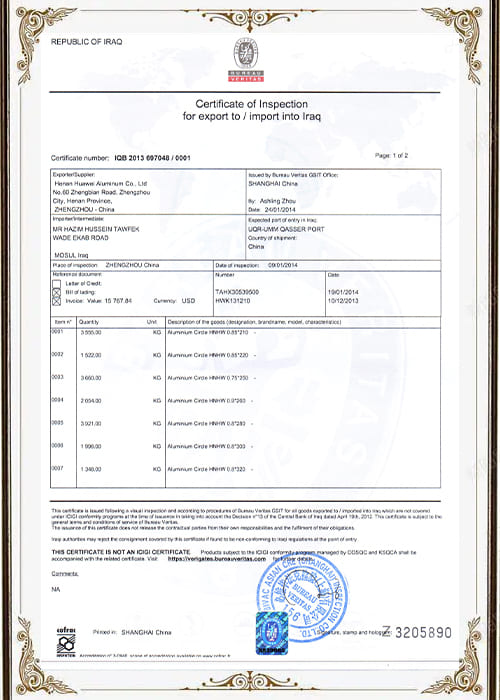
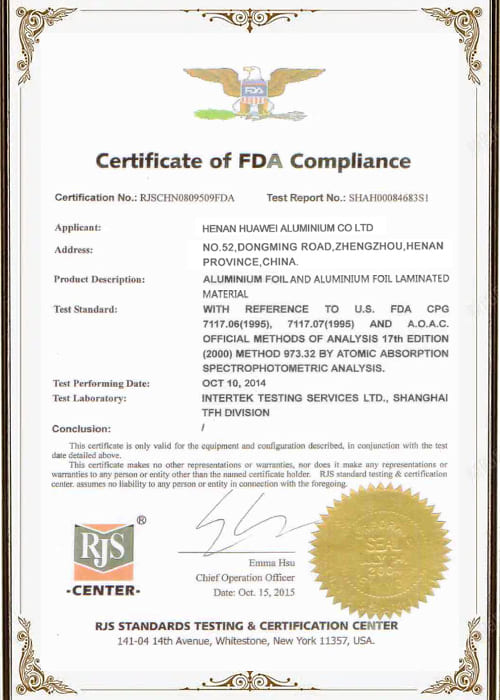
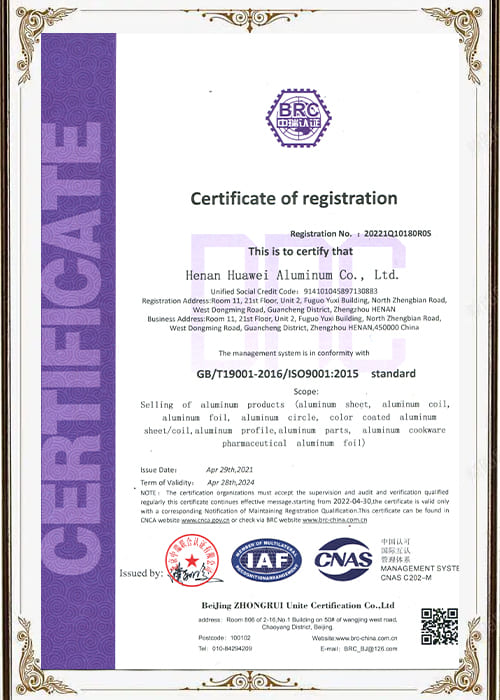
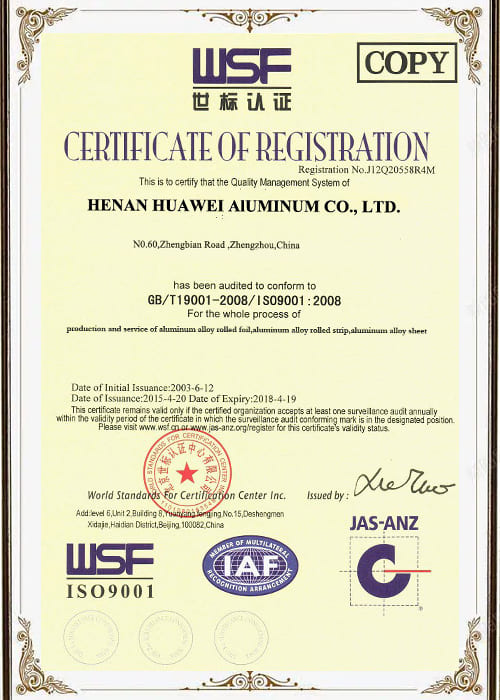
- Compliance and certifications: Many suppliers align with international standards for food-contact packaging, such as ISO 9001 per la gestione della qualità, Iso 14001 per la gestione ambientale, and other industry-specific standards. Inoltre, some markets require FDA or EU approvals for food-contact materials, and suppliers may provide documentation or certificates to verify compliance.
Common Defects and Troubleshooting
- Pinhole formation: Often linked to defects in the foil surface or contamination in the packaging line; mitigated by tighter surface quality control and improved cleaning of contact surfaces.
- Cracking or tearing during forming: May be related to insufficient ductility (temperare) or overly aggressive forming speeds; adjustments to temper and forming process can resolve.
- Uneven thickness: Can cause sealing inconsistencies; requires precise roll-gap control and roll flattening adjustments.
- Adhesive delamination: Caused by surface contamination or choice of adhesive incompatible with the foil surface; may require pre-treatment or surface finishing changes.
Reliability Across Conditions
Bottle cap sealing systems encounter a wide range of temperatures, umidità, and handling conditions. 8011 foil’s performance under these conditions depends on:
- Temperature exposure during sealing and subsequent storage
- Humidity levels and potential condensation
- Mechanical stresses during transport and handling
- Chemical compatibility with beverage contents and cap liner adhesives
Manufacturers test representative samples under accelerated aging and real-world conditions to forecast long-term performance, ensuring that the foil maintains barrier integrity and seal reliability throughout product life.
Applications in the Beverage Packaging Industry
Beverage Filings, Liners, and Crown Caps
The primary application of 8011 foil in bottle cap sealing is as a liner or inner foil layer within crown caps, where it interfaces with adhesive sealants and liners to form a tight, sigillo antimanomissione. The foil’s ductility lets it closely match the crown-cap cavity, providing a uniform contact surface for adhesive bonding. The barrier properties help protect the beverage from moisture ingress and oxygen exposure, supporting freshness and shelf stability.
Compatibility with Different Drink Types
- Carbonated beverages: The seal must withstand internal pressures and temperature fluctuations during pasteurization or pasteurized-almond lines. The foil must maintain barrier integrity and not react with the beverage components.
- Still beverages and drinking water: The emphasis is on long-term moisture and oxygen barrier to preserve taste and clarity.
- Non-alcoholic beverages: Similar sealing requirements to carbonated beverages but often with more stringent sensory stability and shelf-life expectations.
- Juices and specialty drinks: Barrier performance and chemical compatibility with acids and pigments are critical; foil surface treatments may be selected to optimize adhesive bonding with specific liner formulations.
Cold Chain and Storage Considerations
In molti mercati, beverages are shipped and stored under cool or cold conditions. Foil-based seals must remain intact under temperature variations and humidity. 8011 foil’s stability under freezing temperatures and resistance to thermal cycling are important factors. Suppliers often provide data on seal integrity across a temperature window (PER ESEMPIO., 0°C to 40°C or higher/extended ranges) and humidity exposure to reassure manufacturers of performance in real-world cold-chain scenarios.
Equipment and Line Integration
- Sealing equipment: The foil must be compatible with standard heat-sealing systems used in bottling lines, including cap-sealing machines with liner adhesives and/or induction sealing systems that rely on conduction of heat through the crown cap to activate the seal.
- Line speed and throughput: Foil thickness must balance sealing reliability with line efficiency; thinner foils enable higher throughput but can be more challenging to seal reliably if adhesive bonding is marginal.
Comparisons with Other Foils: 8011 vs 8021 vs 8079
Quick Look: Differenze chiave
- 8011: Known for its high formability and good barrier properties. Commonly used for cap seals due to ductility and compatibility with adhesives.
- 8021: Another widely used foil for packaging; offers excellent barrier and formability but may be favored in different sealing conditions or regulatory contexts.
- 8079: Typically employed in lighter-duty or alternative packaging applications; may offer a different balance of formability and barrier.
While all three alloys can be used in packaging applications, 8011 is often preferred for cap-seal liners due to its excellent ductility and consistent bonding performance with common sealants. The choice among these foils depends on the specific cap design, adhesive system, beverage type, e condizioni di lavorazione.
Markdown Table: Comparative Properties
| Lega (Temperamento tipico) | Spessore tipico (µm) | Formabilità | Barrier to Moisture/O2 | Sealing Temperature Range (ca.. ° C.) | Common Uses in Packaging |
|---|---|---|---|---|---|
| 8011 (H18) | 12–25 | Eccellente | Alto | 110–170 | Bottle cap liners, crown caps, beverage seals, imballaggio alimentare |
| 8021 (H18/H24) | 12–25 | Molto bene | Alto | 110–170 | Imballaggio alimentare, cap seals, flexible laminates |
| 8079 (O/H24) | 12–25 | Good to Very Good | Da moderato a alto | 100–165 | Lamine di copertura, some beverage seals, Packaging farmaceutico |
Note:
– Temper designations vary; H18/H24 indicate a strong formability with retained strength.
– Thickness ranges reflect typical industry practice for cap-liner foils; exact values are defined by customer specifications and line requirements.
– Sealing temperature ranges are indicative; actual ranges depend on adhesive chemistry, liner design, and equipment.
Additional Considerations When Selecting Foil
- Adhesive compatibility: Some adhesives bond more reliably to particular foil surface finishes or coatings; test panels should verify adhesion under real sealing conditions.
- Pinhole resistance: Thicker foils typically show fewer pinholes, but surface quality and defect control during production matter significantly.
- Conformità normativa: For food-contact packaging, ensure the foil’s surface treatment and any coatings are food-safe and compliant with local regulations.
Case Studies and Practical Data
Caso di studio 1: Carbonated Beverage Seal Improvement with 8011 Sventare
- Objective: Improve cap-seal integrity for a carbonated beverage line facing occasional seal leaks.
- Approach: Implemented 8011 foil in a 16 µm thickness with a specialized liner adhesive optimized for this beverage and crown-cap geometry.
- Result: Seal integrity improved by 28% in accelerated aging tests, with a reduction in seal-leak incidents during high-temperature storage. The reduction in pinholes and improved bonding contributed to a longer shelf-life horizon for the product.
Caso di studio 2: Cold-Chain Beverage Sealing and Transport
- Objective: Ensure seal reliability across a broad temperature range during distribution that includes warehouse storage and transit in hot climates.
- Approach: Selected a 20 µm 8011 foil with a robust adhesive and tested a cap-liner combination under 0°C to 40°C cycling.
- Result: Consistent seal performance across the temperature range; customer reported fewer complaints related to seal failure and no observed mass complaints due to leakage after distribution.
Data-Driven Insight: Seal Integrity Metrics
- Forza della tenuta: Measured as peel strength of the liner-to-foil bond, typically in the range of a few Newtons per centimeter, depending on adhesive formulation and foil surface finish.
- Pinhole rate: For high-quality 8011 sventare, pinhole rates are often below 1 pinhole per square meter after QA screening, with tight process controls.
- Shelf stability: Beverages sealed with 8011 foil demonstrate stable taste and aroma profiles over standard shelf-life windows, reflecting effective moisture and oxygen barrier performance.
Spotlight del fornitore: Huawei Aluminium
Company Profile
Huawei Aluminum is a well-established manufacturer of aluminum foil products with a global footprint in packaging, bevande, e usi industriali. The company focuses on producing high-quality foil products, tra cui 8011 and other alloy families, for cap liners, beverage closures, e relative soluzioni di imballaggio. Huawei Aluminum emphasizes integrated supply-chain management, rigorous quality control, and customer collaboration to tailor foil specifications to specific bottling lines and device configurations. The company’s portfolio includes:
- Beverage-cap liners and seal foils
- Food packaging foils with strong barrier properties
- Laminates and coated foils for specialized packaging needs
- Custom thicknesses, temper ranges, and surface finishes to match customer specifications
Cap-Seal Foil Product Range and Capabilities
Huawei’s cap-seal foil lineup typically includes 8011 alloys optimized for:
- Formabilità: Smooth surfaces and uniform thickness distribution to ease liner formation in crown caps.
- Prestazioni barriera: Excellent moisture and oxygen barriers at standard cap-seal thicknesses.
- Adhesive compatibility: Surfaces designed to promote strong bonding with common adhesive liner systems used in crown caps.
- Conformità normativa: Documentation and testing to support food-contact packaging requirements, including traceability and quality certifications.
Certificazioni e Garanzia di Qualità
Huawei Aluminum emphasizes:
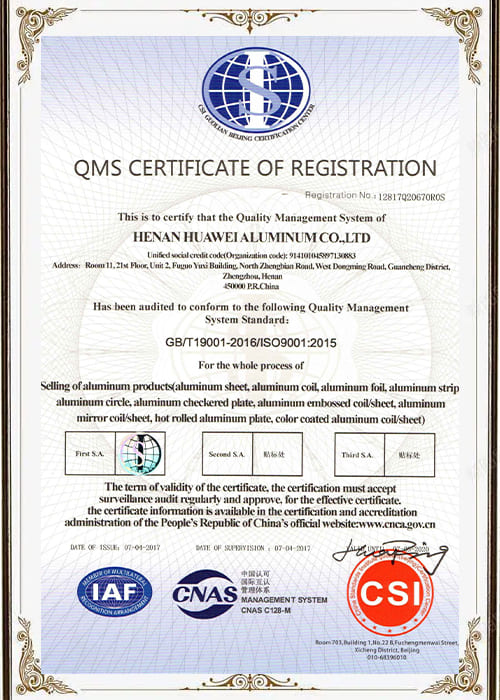
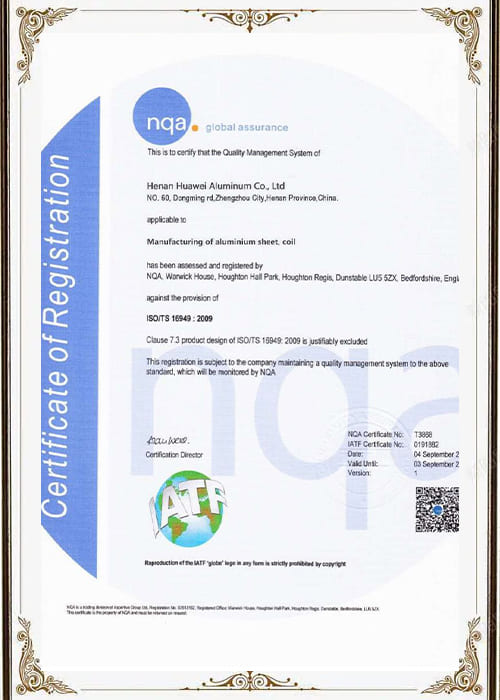
- Iso 9001 quality-management certification for consistent process control and product quality.
- Iso 14001 environmental management for sustainable manufacturing practices.
- Industry-specific certifications and testing protocols to support food-contact packaging and consumer safety.
- Traceability programs ensuring each roll’s batch can be tracked from raw material to finished product.
Why Huawei Aluminum Is a Practical Choice
- Comprehensive product range enabling single-source procurement for foil-based cap seal needs.
- Consistent product performance across batches, supported by rigorous QA and inline measurement.
- Global supply capabilities with flexible lead times to match bottling schedules and demand spikes.
- Customer service focus on technical recommendations, sample testing, and process optimization guidance.
Practical Guidelines for Optimizing 8011 Foil Performance
Selecting the Right Thickness and Temper
- For standard cap-seal liners, 15–22 µm balances formability and barrier performance; 12–15 µm foils might be suitable for simple cap geometries with highly compatible adhesives.
- Heavier gauges (20–25 µm) offer stronger barrier performance and pinhole resistance but require more robust sealing conditions and careful line calibration.
- Temper choices (PER ESEMPIO., H18, H22) influence both ductility and strength; H18 tends to offer high formability with adequate strength for liner formation, while H22 provides a bit more strength.
Trattamenti superficiali e rivestimenti
- Surface finishes influence adhesive bonding; some applications benefit from pre-treated surfaces or coatings designed to improve wetting and bonding with specific sealants.
- Coatings that do not compromise barrier properties can improve compatibility with certain adhesives, particularly in challenging beverage formulations.
Adhesive System Selection
- Adhesive chemistry must be compatible with the foil surface and the cap-liner design; compatibility testing is essential to avoid delamination under heat, umidità, or mechanical stress.
- Thermal activation: Cf. heat-sealing profiles, which depend on adhesive types, Spessore del foglio, and liner geometry. Temperatura, tempo di sosta, and pressure must be optimized on pilot lines before full-scale production.
Process Control and Monitoring
- Inline thickness measurement and surface-quality control help ensure consistent foil performance.
- Routine pinhole tests and peel tests on sample lots help detect defects early and reduce field failures.
- Data logging for sealing parameters (temperatura, pressione, tempo di sosta) allows operators to reproduce stable conditions across shifts and lines.
Sostenibilità, Riciclaggio, and Life-Cycle Considerations
- Aluminum foil is generally highly recyclable. For cap-liner foils, recycling streams typically involve separation from adhesives and liners; modern recycling technologies can recover aluminum while removing contaminants.
- The environmental footprint of foil production can be mitigated through energy-efficient rolling practices, closed-loop heat-treatment processes, and the use of recycled aluminum in feedstock.
- Suppliers often publish environmental performance indicators, including energy consumption per kilogram of foil produced and recycling rates. Buyers can request life-cycle data to support sustainability reporting and supplier qualification.
Domande frequenti
Cosa fa 8011 foil suitable for bottle cap sealing?
8011 foil offers a combination of high formability, forti proprietà della barriera, and compatibility with typical cap-liner adhesives. It can be rolled to thin gauges without sacrificing structural integrity and forms a good seal on crown caps. The foil’s surface quality supports uniform adhesive bonding and consistent sealing performance across manufacturing runs.
How does foil thickness affect cap-seal performance?
Lamine più sottili (around 12–15 µm) maximize line speed and flexibility, but may have slightly reduced barrier performance and higher pinhole risk if manufacturing controls are not tight. Thicker foils (20–25 µm) improve barrier properties and reduce pinholes but require careful control of sealing parameters to avoid warping or delamination. The optimal thickness depends on the beverage, cap design, adhesive system, and filling line conditions.
Potere 8011 foil be used with induction sealing?
SÌ. Induction sealing systems rely on heat transfer to activate the seal through the cap liner. The foil’s uniform thickness and surface quality support reliable induction sealing when paired with appropriate liner adhesives and cap materials.
How should I evaluate 8011 foil for a new product?
- Conduct pilot trials with your cap design, liner adhesive, and filling line settings.
- Test seal integrity, pinhole rate, and peel strength of the liner bond under simulated storage and transport conditions.
- Assess compatibility with your beverage chemistry (acidity, sugar content, carbonation) e requisiti normativi.
- Verify supplier certifications, tracciabilità, and quality-management processes.
What should I look for in a supplier when sourcing 8011 sventare?
- Proven experience in cap-seal foils and a track record of consistent lot-to-lot quality.
- Ability to supply the required thickness range and temper, with clear tolerances.
- Availability of testing data for adhesion compatibility, pinhole rates, and seal strength.
- Compliance documentation for food-contact safety and regulatory requirements.
- Strong post-sale technical support, including pilot testing, sample characterization, and process optimization guidance.
Conclusione: Making an Informed Choice for Bottle Cap Sealing
Choosing the right foil for bottle cap sealing is a strategic decision that influences product quality, durata di conservazione, and packaging efficiency. 8011 Aluminum Foil for Bottle Cap Sealing offers a compelling blend of formability, prestazioni di barriera, and compatibility with standard sealing processes that many beverage manufacturers rely on for reliable seals. By understanding the material properties, manufacturing controls, and application-specific considerations, packaging engineers can design robust cap-seal systems that perform consistently across production campaigns and distribution networks.
In the broader supplier landscape, Huawei Aluminum represents a credible and capable partner for foil-based packaging needs. Their focus on quality, tracciabilità, and a diversified product portfolio helps customers align foil specifications with cap designs, adesivi, and line configurations. For teams seeking a dependable source of 8011 foil with proven performance in cap sealing, engaging with Huawei Aluminum for evaluations, campioni, and pilot testing can be a prudent step in establishing a reliable supply chain.
Alla fine, the objective is to deliver a tamper-evident, umidità- and oxygen-barrier seal that preserves beverage integrity from bottling through the consumer’s hands. When the foil aligns with the liner, adesivo, cap geometry, and sealing process, the result is a seal that is not only functional but also economically and environmentally responsible. With careful specification, test, and collaboration with experienced suppliers like Huawei Aluminum, 8011 Aluminum Foil for Bottle Cap Sealing can deliver consistent, high-quality performance across a wide range of beverages and market needs.
Condividi con PDF: Scaricamento
Casting Processo di produzione e la sua introduzione
Lo scopo di sciogliere e lanciare è produrre leghe con composizione soddisfacente e alta purezza di fusione, in modo da creare condizioni favorevoli per le leghe di fusione di varie forme.
Passaggi del processo di scioglimento e fusione: batching --- alimentazione --- fusione --- mescolando dopo lo scioglimento, rimozione delle scorie --- campionamento pre-analisi --- Aggiunta della lega per regolare la composizione, mescolando --- raffinazione --- Impostazione statica - - Guide Furnace Casting.
Processo di produzione a rotazione calda e la sua introduzione
- 1. Il rotolamento caldo si riferisce generalmente al rotolamento sopra la temperatura di ricristallizzazione del metallo;
- 2. Durante il processo di rotolamento caldo, Il metallo ha sia i processi di indurimento che di ammorbidimento. A causa dell'influenza della velocità di deformazione, Finché il processo di recupero e ricristallizzazione è troppo tardi, Ci sarà un certo indurimento del lavoro;
- 3. La ricristallizzazione del metallo dopo il rotazione calda è incompleta, questo è, La coesistenza di struttura ricristallizzata e struttura deformata;
- 4. Il rotolamento a caldo può migliorare le prestazioni di elaborazione di metalli e leghe, ridurre o eliminare i difetti di fusione.
- 1. La temperatura di fusione e rotolamento è generalmente tra 680 ° C e 700 ° C. Più basso è meglio, La linea di fusione e rotolatura stabile di solito si ferma una volta al mese o più per riapprovare. Durante il processo di produzione, È necessario controllare rigorosamente il livello del liquido del serbatoio anteriore per prevenire il basso livello del liquido;
- 2. La lubrificazione utilizza polvere C con combustione incompleta del gas per lubrificazione, che è anche uno dei motivi per la superficie sporca della fusione e dei materiali di rotolamento;
- 3. La velocità di produzione è generalmente compresa tra 1,5 m/min-2,5 m/min;
- 4. La qualità della superficie dei prodotti prodotta per fusione e rotolamento è generalmente relativamente bassa, e generalmente non può soddisfare i prodotti con speciali requisiti di prestazioni fisiche e chimiche.
- 1. Il rotolamento a freddo si riferisce al metodo di produzione di rotolamento al di sotto della temperatura di ricristallizzazione;
- 2. Non ci sarà alcuna ricristallizzazione dinamica durante il processo di rotolamento, e la temperatura salirà al massimo alla temperatura di recupero, e il rotazione fredda apparirà in uno stato di indurimento da lavoro, E il tasso di indurimento del lavoro sarà grande;
- 3. Il lenzuolo e la striscia hanno una precisione ad alta dimensione, Buona qualità della superficie, Struttura e prestazioni uniformi, e i prodotti in vari stati possono essere ottenuti con il trattamento termico;
- 4. La rotolamento a freddo può stendere le strisce sottili, Ma allo stesso tempo, Ha gli svantaggi dell'elevato consumo di energia per la deformazione e molti passaggi di elaborazione.
- 1. La finitura è un metodo di elaborazione per far soddisfare i requisiti del cliente illegato a freddo, o per facilitare la successiva elaborazione del prodotto;
- 2. L'attrezzatura di finitura può correggere i difetti prodotti nel processo di produzione di rotolamento e rotolamento a freddo caldo, come il bordo screpolato, oleoso, Scarsa forma del piatto, stress residuo, ecc. Deve garantire che nessun altro difetti venga portato nel processo di produzione;
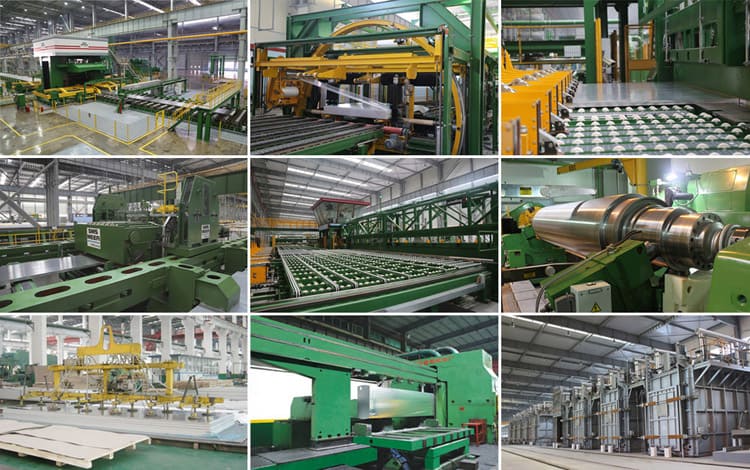
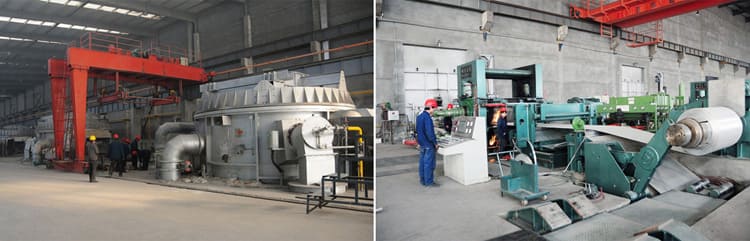
- 3. Ci sono varie attrezzature di finitura, Principalmente incluso il taglio incrociato, taglio, allungamento e raddrizzamento, Fornace di ricottura, Slitter, ecc.
Processo di lancio e rotolamento
Processo di lancio e rotolamento: metallo liquido, scatola anteriore (Controllo a livello di liquido), Casting and Rolling Machine (Sistema di lubrificazione, Acqua di raffreddamento), Macchina di taglio, macchina a spirale.
Processo di produzione a freddo a freddo
Introduzione al processo di produzione di finitura
La lega di alluminio ha le caratteristiche di bassa densità, Buone proprietà meccaniche, Buone prestazioni di elaborazione, non tossico, facile da riciclare, Ottima conducibilità elettrica, Trasferimento di calore e resistenza alla corrosione, Quindi ha una vasta gamma di applicazioni.
Aerospaziale: Utilizzato per produrre pelli di aeromobili, cornici di fusoliera, travi, Rotori, eliche, serbatoi di carburante, Pannelli a parete e montanti di carrello di atterraggio, così come anelli di forgiatura a razzo, pannelli a parete spaziale, ecc.
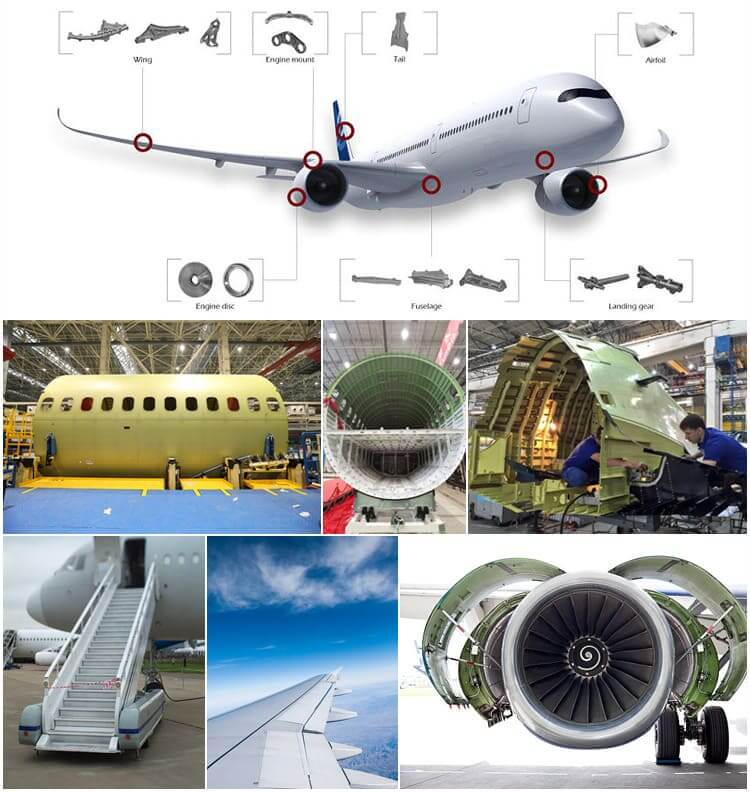
Lega di alluminio usata per l'aerospaziale
Trasporto: Utilizzato per i materiali della struttura del corpo dell'auto delle automobili, veicoli della metropolitana, Auto passeggeri ferroviarie, autovetture ad alta velocità, porte e finestre, scaffali, parti del motore automobilistico, condizionatori d'aria, radiatori, pannelli del corpo, ruote e materiali della nave.
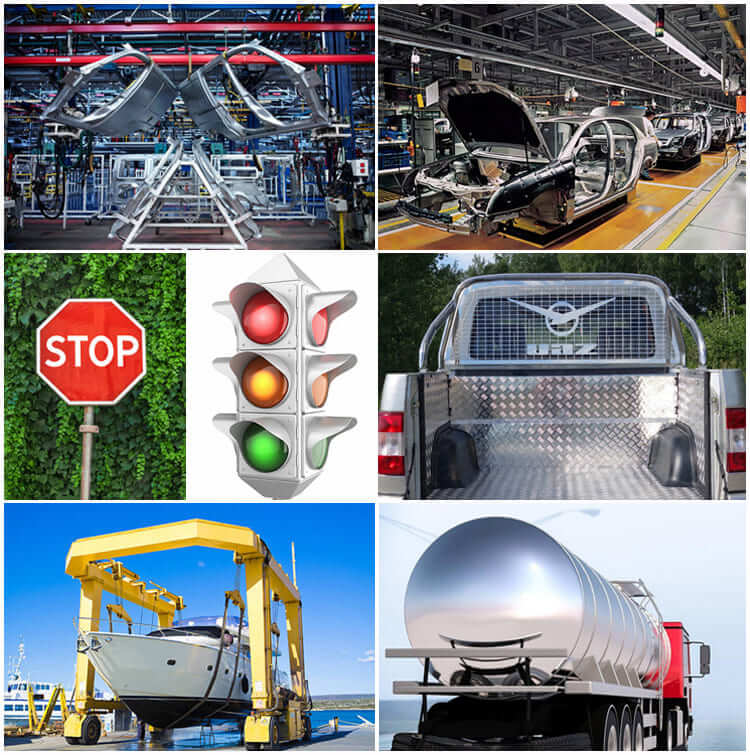
Applicazione del traffico
Confezione: Le lattine pop interamente in alluminio sono utilizzate principalmente come materiali di imballaggio metallico sotto forma di piastre e lamine sottili, e sono trasformati in lattine, coperchi, bottiglie, barili, e fogli di imballaggio. Ampiamente utilizzato nella confezione di bevande, cibo, cosmetici, medicinali, sigarette, prodotti industriali, medicinali, ecc.
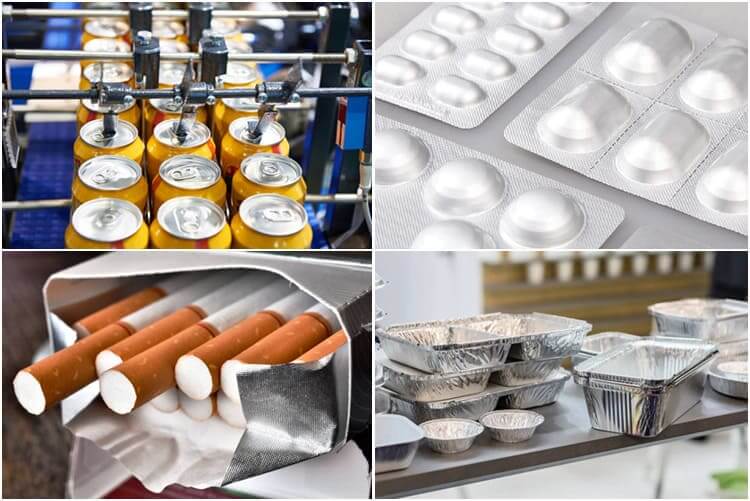
Applicazione di imballaggio
Stampa: Utilizzato principalmente per creare piastre PS, Le piastre PS a base di alluminio sono un nuovo tipo di materiale nel settore della stampa, Utilizzato per la produzione e la stampa automatica.
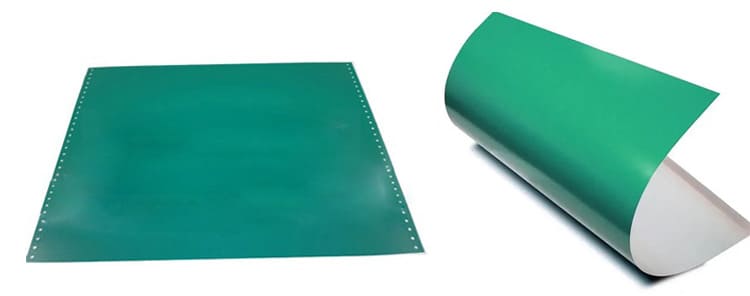
Stampa di PS
Decorazione architettonica: La lega di alluminio è ampiamente utilizzata nelle strutture di costruzione, porte e finestre, soffitti sospesi, superfici decorative, ecc. A causa della sua buona resistenza alla corrosione, forza sufficiente, Eccellenti prestazioni del processo e prestazioni di saldatura.

Applicazione di costruzione in lega di alluminio
Prodotti elettronici: computer, telefoni cellulari, conchiglie di frigorifero, radiatori, ecc.
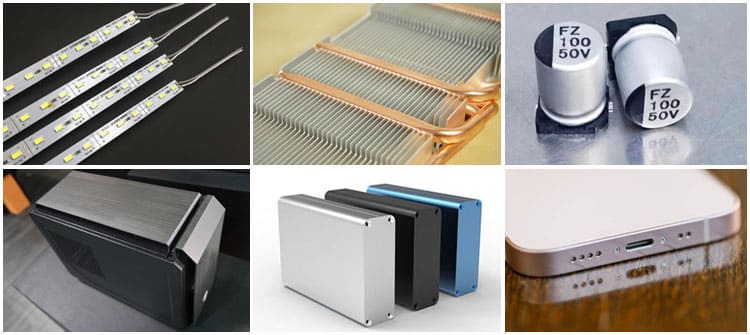
Applicazione del prodotto elettronico
Forniture da cucina: vasi in alluminio, bacini di alluminio, rivestimenti di pentola di riso, foglio di alluminio domestico, ecc.
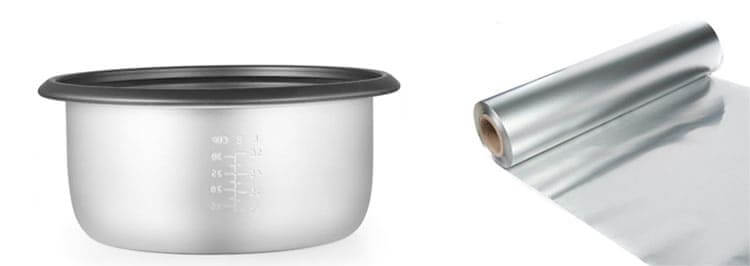
Applicazione della cucina
Packaging di foglio/bobina in alluminio
Ogni dettaglio della confezione è dove perseguiamo un servizio perfetto. Il nostro processo di imballaggio nel suo insieme è il seguente:
Laminazione: Film chiaro, film blu, micro-mucosa, Alta mucosa, Film di taglio laser (2 marchi, Novacell e Polyphem);
Protezione: Protettori d'angolo di carta, cuscinetti anti-pressione;
asciugatura: essiccante;
Vassoio: vassoio di legno innocuo fumigato, vassoio di ferro riutilizzabile;
Imballaggio: Cintura in acciaio Tic-Tac-Toe, o cintura di imballaggio in PVC;
Qualità del materiale: Completamente libero da difetti come la ruggine bianca, macchie di petrolio, segni rotolanti, danno al bordo, curve, ammaccature, buchi, linee di rottura, graffi, ecc., Nessun set bobina.
Porta: Qingdao o altri porti in Cina.
Tempi di consegna: 15-45 giorni.
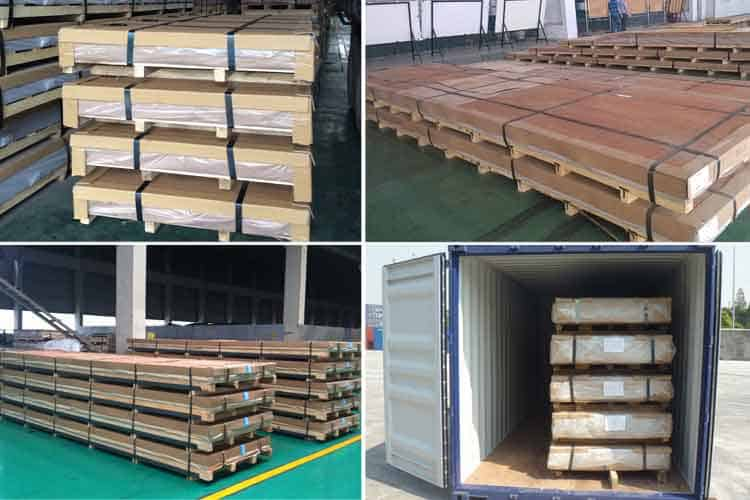
Processo di imballaggio in foglio/piastra in alluminio
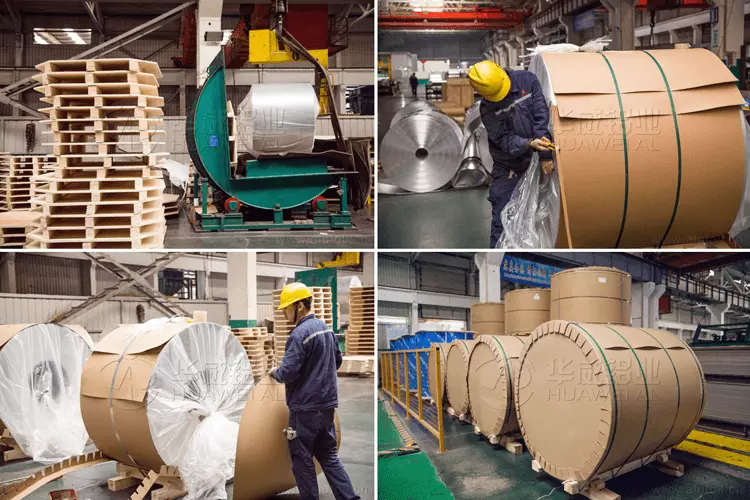
Processo di imballaggio della bobina in alluminio
F: Sei un produttore o un commerciante?
Q: Siamo un produttore, La nostra fabbrica è al numero 3 di Weier Road, Zona industriale, Gongyi, Henan, Cina.
F: Cos'è il MOQ per ordinare il prodotto?
Q: Il nostro MOQ è 5 tonnellate, e alcuni prodotti speciali avranno una quantità minima di ordine di 1 O 2 tonnellate.
F: Quanto dura il tuo tempo di consegna?
Q: Generalmente il nostro tempo di consegna è circa 30 giorni.
F: I tuoi prodotti hanno una garanzia di qualità?
Q: SÌ, Se c'è un problema di qualità con i nostri prodotti, compenseremo il cliente fino a quando non saranno soddisfatti.
Prodotti correlati



Ultimi blog
Foglio di alluminio rivestito per applicazioni di imballaggio | Forte & Affidabile
Foglio di alluminio rivestito di alta qualità per applicazioni di imballaggio, offrendo un'eccellente protezione barriera, durata, e prestazioni coerenti.

A cosa serve il foglio di alluminio rivestito nell'imballaggio e nell'industria
Scopri a cosa serve il foglio di alluminio rivestito, dall'imballaggio alimentare e farmaceutico all'isolamento e alla stampa, e apprendi i vantaggi e le funzioni principali.

Fidato 3003 Fornitori di lamiere striate in alluminio in tutto il mondo
Trova affidabile 3003 Fornitori di lamiere striate in alluminio che offrono qualità certificata, prezzi competitivi, dimensioni personalizzate, e consegna rapida in tutto il mondo per i tuoi progetti.

6061 T6 contro 7075 Alluminio: Forza, Peso & Migliori usi
Confrontare 6061 T6 contro 7075 alluminio facilmente. Scopri le differenze di forza, peso, e applicazioni per scegliere il meglio per i tuoi progetti.