8011 Aluminum Foil for Bottle Cap Sealing: An In-Depth Guide
In the beverage and food-packaging industries, reliability and safety are non-negotiable. Among the materials that keep products fresh, appealing, and compliant with regulatory standards, 8011 Aluminum Foil for Bottle Cap Sealing stands out. This material combines exceptional formability, sifat penghalang yang kuat, and compatibility with heat-sealing processes essential for crown-cap closures. Artikel ini memberikan komprehensif, data-supported look at why 8011 aluminum foil is a trusted choice for bottle cap sealing, how it is manufactured and tested, and how buyers can optimize performance across different beverage applications. The discussion also includes practical comparisons with alternative foils, supplier insights from Huawei Aluminum, and a detailed FAQ to help engineers, packaging managers, and procurement teams make informed decisions.
Perkenalan pada 8011 Aluminum Foil for Bottle Cap Sealing
At the heart of modern bottle sealing systems lies 8011 Aluminum Foil for Bottle Cap Sealing. This foil is specifically engineered to meet the demanding requirements of crown-cap closures, where a thin, fleksibel, and strong barrier layer needs to form a reliable seal with an adhesive backing or liner. The advantages of 8011 foil in this role include excellent ductility for forming into liner discs, superior barrier against moisture and gases, and compatibility with common heat-sealing processes used in beverage bottling lines. Selain itu, 8011 foils offered by reputable suppliers typically exhibit good pinhole resistance, uniform thickness distribution, and high surface quality that helps adhesives bond consistently.
This guide emphasizes practical, evidence-based considerations—from material properties and manufacturing controls to sealing performance and supply-chain considerations. For readers seeking a supplier reference, Huawei Aluminum is highlighted as an established producer with a broad product portfolio in foil packaging and cap-sealing solutions.
Material and Properties: Mengapa 8011 Foil Is Suited for Bottle Cap Sealing
Apa 8011 Alumunium foil?
8011 is an aluminum alloy in the 8000-series family, a non-heat-treatable alloy known for its excellent formability and ductility. The designation “8011” reflects a balance of alloying elements—primarily aluminum with trace amounts of other elements—that yield a foil with high flexibility and good barrier properties. In bottle cap sealing, the foil is typically produced in a thin gauge, often in the range of 12 ke 25 mikrometer (mikron), and tempered to achieve the desired mechanical behavior.
Key characteristics that make 8011 foil attractive for cap liners:
- High formability: The foil can be shaped into complex liner configurations without cracking, enabling reliable conformity to crown closures.
- Sifat penghalang yang sangat baik: Aluminum foil provides a robust barrier to moisture, oksigen, dan cahaya, contributing to product stability and shelf life.
- Compatibility with adhesives and liners: The thin, smooth surface supports consistent adhesion with sealing compounds and bottle liners.
- Recyclability and food-contact compliance: Aluminum is widely accepted as safe for direct contact in many regulatory frameworks, provided the material meets relevant standards and lot traceability.
Key Properties for Bottle Cap Sealing
- Kisaran ketebalan: 12–25 μm (typical cap-seal applications use around 15–22 µm for a balance of strength and sealability).
- Daya tarik: Affected by temper; general range for 8011 foil in common tempers is approximately 60–100 MPa, with higher values in tighter temper conditions.
- Pemanjangan (keuletan): Usually in the single-digit to low double-digit percent range (tergantung pada temperamen), enabling good formability without tearing.
- Kinerja penghalang: Aluminum foil provides an excellent barrier to moisture and gases; the effective WVTR (water vapor transmission rate) decreases with increased thickness, offering greater protection for sensitive beverages.
- Kemampuan menyegel: Works well with heat-sealing adhesives and cap-liner systems, enabling reliable seals during filling, capping, and subsequent distribution.
Sifat mampu bentuk, Kemampuan menyegel, and Surface Quality
- Sifat mampu bentuk: The foil’s ductility ensures it can be pressed into the liner cavity without creating microcracks that could compromise the seal.
- Kemampuan menyegel: Foil must bond consistently with the liner adhesive under the heat and pressure used in crown-cap sealing. The surface finish of the foil—often smooth and clean—reduces bonding defects and prevents adhesive separation.
- Kualitas permukaan: A uniform surface reduces pinholes and ensures even distribution of adhesives, contributing to consistent seals.
Manufaktur, Kontrol kualitas, and Process Considerations
Production Process Overview
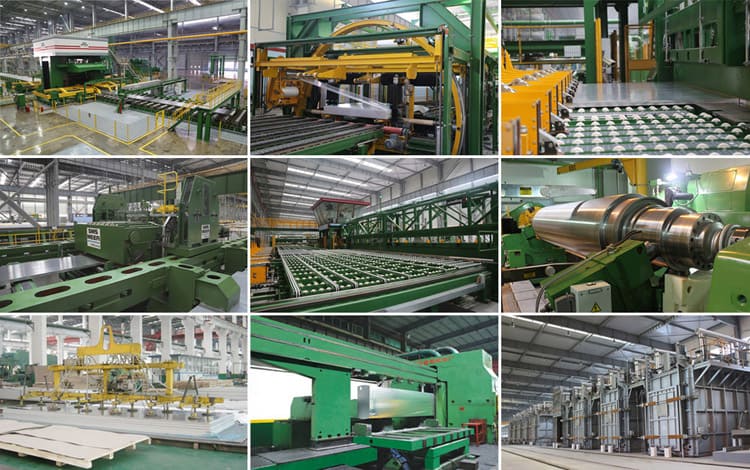
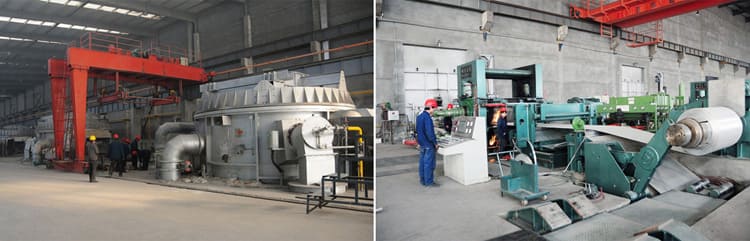
Produksi dari 8011 foil for bottle cap sealing follows a sequence of hot-rolling and cold-rolling steps, followed by precise annealing and final tempering. In the context of cap-seal applications, the emphasis is on:
- Consistent thickness distribution: Tight tolerances ensure uniform seal performance across the entire roll and across batches.
- Surface cleanliness and smoothness: A clean surface without defects is essential for reliable adhesive bonding.
- Controlled tempering: The foil is tempered to achieve the desired balance of formability, kekuatan, dan kinerja penghalang.
- Surface treatment options: Some cap-liner foils receive specific surface treatments or coatings to enhance adhesion with sealing compounds or liners.
Critical process parameters include rolling reductions, annealing temperatures, and annealing atmospheres, all of which influence mechanical properties and surface quality. Modern foil mills monitor these parameters with inline measurement systems to maintain tight tolerances.
Quality Assurance and Standards
To ensure reliability for bottle cap sealing, manufacturers implement rigorous QA procedures, termasuk:
- Incoming raw-material inspection: Verifies composition, ketebalan, kualitas permukaan, and presence of defects.
- In-process checks: Inline gauges measure thickness uniformity, kekasaran permukaan, and strip alignment.
- Final product tests: Pengujian tarik, elongation measurements, pinhole testing, and heat-sealing compatibility checks with representative cap liners.
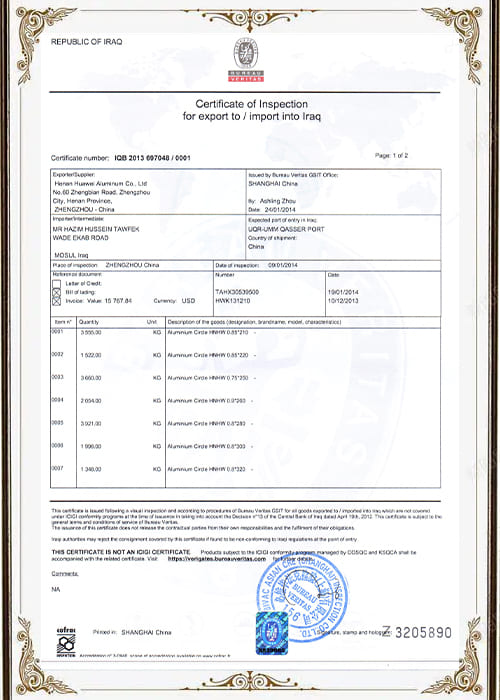
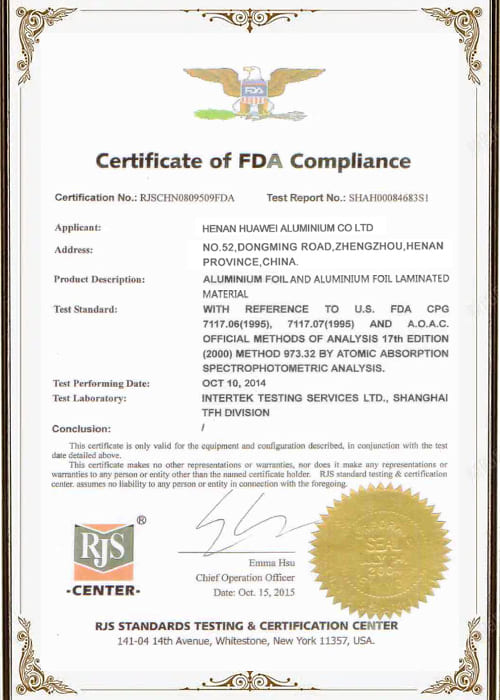
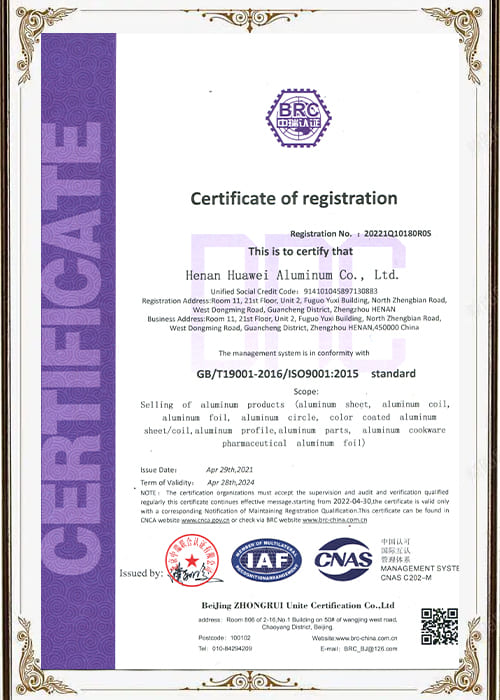
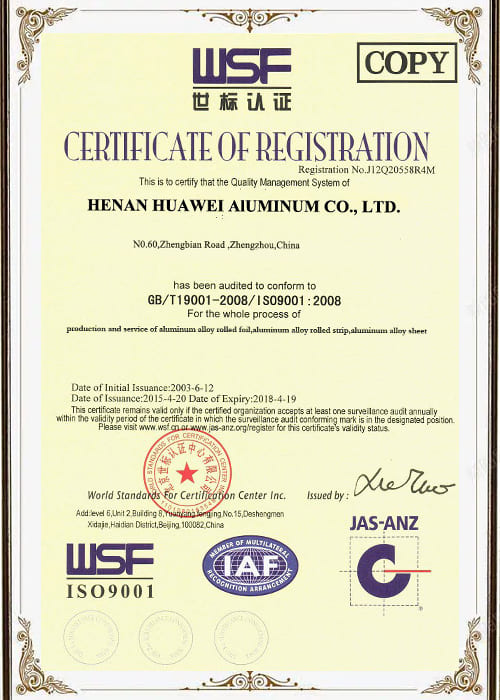
- Compliance and certifications: Many suppliers align with international standards for food-contact packaging, such as ISO 9001 untuk manajemen mutu, ISO 14001 untuk pengelolaan lingkungan hidup, and other industry-specific standards. Selain itu, some markets require FDA or EU approvals for food-contact materials, and suppliers may provide documentation or certificates to verify compliance.
Common Defects and Troubleshooting
- Pinhole formation: Often linked to defects in the foil surface or contamination in the packaging line; mitigated by tighter surface quality control and improved cleaning of contact surfaces.
- Cracking or tearing during forming: May be related to insufficient ductility (melunakkan) or overly aggressive forming speeds; adjustments to temper and forming process can resolve.
- Uneven thickness: Can cause sealing inconsistencies; requires precise roll-gap control and roll flattening adjustments.
- Adhesive delamination: Caused by surface contamination or choice of adhesive incompatible with the foil surface; may require pre-treatment or surface finishing changes.
Reliability Across Conditions
Bottle cap sealing systems encounter a wide range of temperatures, kelembaban, and handling conditions. 8011 foil’s performance under these conditions depends on:
- Temperature exposure during sealing and subsequent storage
- Humidity levels and potential condensation
- Mechanical stresses during transport and handling
- Chemical compatibility with beverage contents and cap liner adhesives
Manufacturers test representative samples under accelerated aging and real-world conditions to forecast long-term performance, ensuring that the foil maintains barrier integrity and seal reliability throughout product life.
Applications in the Beverage Packaging Industry
Beverage Filings, Liners, and Crown Caps
The primary application of 8011 foil in bottle cap sealing is as a liner or inner foil layer within crown caps, where it interfaces with adhesive sealants and liners to form a tight, segel anti rusak. The foil’s ductility lets it closely match the crown-cap cavity, providing a uniform contact surface for adhesive bonding. The barrier properties help protect the beverage from moisture ingress and oxygen exposure, supporting freshness and shelf stability.
Compatibility with Different Drink Types
- Carbonated beverages: The seal must withstand internal pressures and temperature fluctuations during pasteurization or pasteurized-almond lines. The foil must maintain barrier integrity and not react with the beverage components.
- Still beverages and drinking water: The emphasis is on long-term moisture and oxygen barrier to preserve taste and clarity.
- Non-alcoholic beverages: Similar sealing requirements to carbonated beverages but often with more stringent sensory stability and shelf-life expectations.
- Juices and specialty drinks: Barrier performance and chemical compatibility with acids and pigments are critical; foil surface treatments may be selected to optimize adhesive bonding with specific liner formulations.
Cold Chain and Storage Considerations
Di banyak pasar, beverages are shipped and stored under cool or cold conditions. Foil-based seals must remain intact under temperature variations and humidity. 8011 foil’s stability under freezing temperatures and resistance to thermal cycling are important factors. Suppliers often provide data on seal integrity across a temperature window (misalnya, 0°C to 40°C or higher/extended ranges) and humidity exposure to reassure manufacturers of performance in real-world cold-chain scenarios.
Equipment and Line Integration
- Sealing equipment: The foil must be compatible with standard heat-sealing systems used in bottling lines, including cap-sealing machines with liner adhesives and/or induction sealing systems that rely on conduction of heat through the crown cap to activate the seal.
- Line speed and throughput: Foil thickness must balance sealing reliability with line efficiency; thinner foils enable higher throughput but can be more challenging to seal reliably if adhesive bonding is marginal.
Comparisons with Other Foils: 8011 vs 8021 vs 8079
Quick Look: Perbedaan Utama
- 8011: Known for its high formability and good barrier properties. Commonly used for cap seals due to ductility and compatibility with adhesives.
- 8021: Another widely used foil for packaging; offers excellent barrier and formability but may be favored in different sealing conditions or regulatory contexts.
- 8079: Typically employed in lighter-duty or alternative packaging applications; may offer a different balance of formability and barrier.
While all three alloys can be used in packaging applications, 8011 is often preferred for cap-seal liners due to its excellent ductility and consistent bonding performance with common sealants. The choice among these foils depends on the specific cap design, adhesive system, beverage type, dan kondisi pemrosesan.
Markdown Table: Comparative Properties
| Paduan (Temperamen Khas) | Ketebalan khas (mikron) | Sifat mampu bentuk | Barrier to Moisture/O2 | Sealing Temperature Range (kira-kira. °C) | Common Uses in Packaging |
|---|---|---|---|---|---|
| 8011 (H18) | 12–25 | Bagus sekali | Tinggi | 110–170 | Bottle cap liners, crown caps, beverage seals, kemasan makanan |
| 8021 (H18/H24) | 12–25 | Sangat bagus | Tinggi | 110–170 | Kemasan makanan, cap seals, flexible laminates |
| 8079 (O/H24) | 12–25 | Good to Very Good | Sedang hingga Tinggi | 100–165 | Penutup foil, some beverage seals, kemasan farmasi |
Catatan:
– Temper designations vary; H18/H24 indicate a strong formability with retained strength.
– Thickness ranges reflect typical industry practice for cap-liner foils; exact values are defined by customer specifications and line requirements.
– Sealing temperature ranges are indicative; actual ranges depend on adhesive chemistry, liner design, and equipment.
Additional Considerations When Selecting Foil
- Adhesive compatibility: Some adhesives bond more reliably to particular foil surface finishes or coatings; test panels should verify adhesion under real sealing conditions.
- Pinhole resistance: Thicker foils typically show fewer pinholes, but surface quality and defect control during production matter significantly.
- Kepatuhan terhadap peraturan: For food-contact packaging, ensure the foil’s surface treatment and any coatings are food-safe and compliant with local regulations.
Case Studies and Practical Data
Studi kasus 1: Carbonated Beverage Seal Improvement with 8011 Menggagalkan
- Objective: Improve cap-seal integrity for a carbonated beverage line facing occasional seal leaks.
- Approach: Implemented 8011 foil in a 16 µm thickness with a specialized liner adhesive optimized for this beverage and crown-cap geometry.
- Result: Seal integrity improved by 28% in accelerated aging tests, with a reduction in seal-leak incidents during high-temperature storage. The reduction in pinholes and improved bonding contributed to a longer shelf-life horizon for the product.
Studi kasus 2: Cold-Chain Beverage Sealing and Transport
- Objective: Ensure seal reliability across a broad temperature range during distribution that includes warehouse storage and transit in hot climates.
- Approach: Selected a 20 mikron 8011 foil with a robust adhesive and tested a cap-liner combination under 0°C to 40°C cycling.
- Result: Consistent seal performance across the temperature range; customer reported fewer complaints related to seal failure and no observed mass complaints due to leakage after distribution.
Data-Driven Insight: Seal Integrity Metrics
- Kekuatan segel: Measured as peel strength of the liner-to-foil bond, typically in the range of a few Newtons per centimeter, depending on adhesive formulation and foil surface finish.
- Pinhole rate: For high-quality 8011 menggagalkan, pinhole rates are often below 1 pinhole per square meter after QA screening, with tight process controls.
- Shelf stability: Beverages sealed with 8011 foil demonstrate stable taste and aroma profiles over standard shelf-life windows, reflecting effective moisture and oxygen barrier performance.
Spotlight Pemasok: Huawei Aluminium
Company Profile
Huawei Aluminum is a well-established manufacturer of aluminum foil products with a global footprint in packaging, minuman, dan kegunaan industri. The company focuses on producing high-quality foil products, termasuk 8011 and other alloy families, for cap liners, beverage closures, dan solusi pengemasan terkait. Huawei Aluminum emphasizes integrated supply-chain management, rigorous quality control, and customer collaboration to tailor foil specifications to specific bottling lines and device configurations. The company’s portfolio includes:
- Beverage-cap liners and seal foils
- Food packaging foils with strong barrier properties
- Laminates and coated foils for specialized packaging needs
- Custom thicknesses, temper ranges, and surface finishes to match customer specifications
Cap-Seal Foil Product Range and Capabilities
Huawei’s cap-seal foil lineup typically includes 8011 alloys optimized for:
- Sifat mampu bentuk: Smooth surfaces and uniform thickness distribution to ease liner formation in crown caps.
- Kinerja penghalang: Excellent moisture and oxygen barriers at standard cap-seal thicknesses.
- Adhesive compatibility: Surfaces designed to promote strong bonding with common adhesive liner systems used in crown caps.
- Kepatuhan terhadap peraturan: Documentation and testing to support food-contact packaging requirements, including traceability and quality certifications.
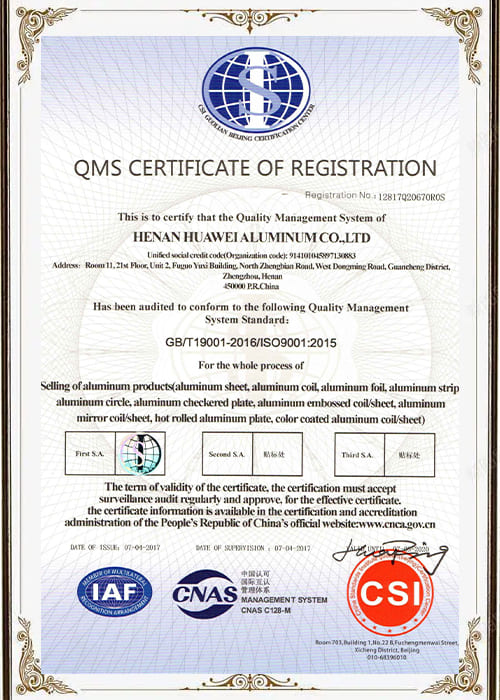
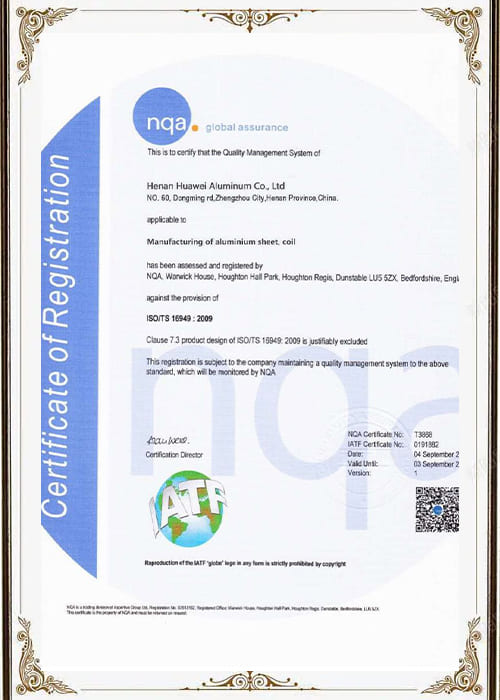
Sertifikasi dan Jaminan Mutu
Huawei Aluminum emphasizes:
- ISO 9001 quality-management certification for consistent process control and product quality.
- ISO 14001 environmental management for sustainable manufacturing practices.
- Industry-specific certifications and testing protocols to support food-contact packaging and consumer safety.
- Traceability programs ensuring each roll’s batch can be tracked from raw material to finished product.
Why Huawei Aluminum Is a Practical Choice
- Comprehensive product range enabling single-source procurement for foil-based cap seal needs.
- Consistent product performance across batches, supported by rigorous QA and inline measurement.
- Global supply capabilities with flexible lead times to match bottling schedules and demand spikes.
- Customer service focus on technical recommendations, sample testing, and process optimization guidance.
Practical Guidelines for Optimizing 8011 Foil Performance
Selecting the Right Thickness and Temper
- For standard cap-seal liners, 15–22 µm balances formability and barrier performance; 12–15 µm foils might be suitable for simple cap geometries with highly compatible adhesives.
- Heavier gauges (20–25 μm) offer stronger barrier performance and pinhole resistance but require more robust sealing conditions and careful line calibration.
- Temper choices (misalnya, H18, H22) influence both ductility and strength; H18 tends to offer high formability with adequate strength for liner formation, while H22 provides a bit more strength.
Perawatan dan pelapis permukaan
- Surface finishes influence adhesive bonding; some applications benefit from pre-treated surfaces or coatings designed to improve wetting and bonding with specific sealants.
- Coatings that do not compromise barrier properties can improve compatibility with certain adhesives, particularly in challenging beverage formulations.
Adhesive System Selection
- Adhesive chemistry must be compatible with the foil surface and the cap-liner design; compatibility testing is essential to avoid delamination under heat, kelembaban, or mechanical stress.
- Thermal activation: Cf. heat-sealing profiles, which depend on adhesive types, ketebalan foil, and liner geometry. Suhu, waktu tinggal, and pressure must be optimized on pilot lines before full-scale production.
Process Control and Monitoring
- Inline thickness measurement and surface-quality control help ensure consistent foil performance.
- Routine pinhole tests and peel tests on sample lots help detect defects early and reduce field failures.
- Data logging for sealing parameters (suhu, tekanan, waktu tinggal) allows operators to reproduce stable conditions across shifts and lines.
Keberlanjutan, Mendaur ulang, and Life-Cycle Considerations
- Aluminum foil is generally highly recyclable. For cap-liner foils, recycling streams typically involve separation from adhesives and liners; modern recycling technologies can recover aluminum while removing contaminants.
- The environmental footprint of foil production can be mitigated through energy-efficient rolling practices, closed-loop heat-treatment processes, and the use of recycled aluminum in feedstock.
- Suppliers often publish environmental performance indicators, including energy consumption per kilogram of foil produced and recycling rates. Buyers can request life-cycle data to support sustainability reporting and supplier qualification.
Pertanyaan yang sering diajukan
Apa yang membuat 8011 foil suitable for bottle cap sealing?
8011 foil offers a combination of high formability, sifat penghalang yang kuat, and compatibility with typical cap-liner adhesives. It can be rolled to thin gauges without sacrificing structural integrity and forms a good seal on crown caps. The foil’s surface quality supports uniform adhesive bonding and consistent sealing performance across manufacturing runs.
How does foil thickness affect cap-seal performance?
Foil yang lebih tipis (around 12–15 µm) maximize line speed and flexibility, but may have slightly reduced barrier performance and higher pinhole risk if manufacturing controls are not tight. Thicker foils (20–25 μm) improve barrier properties and reduce pinholes but require careful control of sealing parameters to avoid warping or delamination. The optimal thickness depends on the beverage, cap design, adhesive system, and filling line conditions.
Bisa 8011 foil be used with induction sealing?
Ya. Induction sealing systems rely on heat transfer to activate the seal through the cap liner. The foil’s uniform thickness and surface quality support reliable induction sealing when paired with appropriate liner adhesives and cap materials.
How should I evaluate 8011 foil for a new product?
- Conduct pilot trials with your cap design, liner adhesive, and filling line settings.
- Test seal integrity, pinhole rate, and peel strength of the liner bond under simulated storage and transport conditions.
- Assess compatibility with your beverage chemistry (acidity, sugar content, carbonation) dan persyaratan peraturan.
- Verify supplier certifications, ketertelusuran, and quality-management processes.
What should I look for in a supplier when sourcing 8011 menggagalkan?
- Proven experience in cap-seal foils and a track record of consistent lot-to-lot quality.
- Ability to supply the required thickness range and temper, with clear tolerances.
- Availability of testing data for adhesion compatibility, pinhole rates, and seal strength.
- Compliance documentation for food-contact safety and regulatory requirements.
- Strong post-sale technical support, including pilot testing, sample characterization, and process optimization guidance.
Kesimpulan: Making an Informed Choice for Bottle Cap Sealing
Choosing the right foil for bottle cap sealing is a strategic decision that influences product quality, umur simpan, and packaging efficiency. 8011 Aluminum Foil for Bottle Cap Sealing offers a compelling blend of formability, kinerja penghalang, and compatibility with standard sealing processes that many beverage manufacturers rely on for reliable seals. By understanding the material properties, manufacturing controls, and application-specific considerations, packaging engineers can design robust cap-seal systems that perform consistently across production campaigns and distribution networks.
In the broader supplier landscape, Huawei Aluminum represents a credible and capable partner for foil-based packaging needs. Their focus on quality, ketertelusuran, and a diversified product portfolio helps customers align foil specifications with cap designs, perekat, and line configurations. For teams seeking a dependable source of 8011 foil with proven performance in cap sealing, engaging with Huawei Aluminum for evaluations, sampel, and pilot testing can be a prudent step in establishing a reliable supply chain.
Akhirnya, the objective is to deliver a tamper-evident, kelembaban- and oxygen-barrier seal that preserves beverage integrity from bottling through the consumer’s hands. When the foil aligns with the liner, perekat, cap geometry, and sealing process, the result is a seal that is not only functional but also economically and environmentally responsible. With careful specification, pengujian, and collaboration with experienced suppliers like Huawei Aluminum, 8011 Aluminum Foil for Bottle Cap Sealing can deliver consistent, high-quality performance across a wide range of beverages and market needs.
Bagikan dengan PDF: Unduh
Proses produksi pengecoran dan pengenalannya
Tujuan peleburan dan pengecoran adalah untuk menghasilkan paduan dengan komposisi yang memuaskan dan kemurnian lelehan yang tinggi, sehingga menciptakan kondisi yang menguntungkan untuk pengecoran paduan berbagai bentuk.
Langkah-langkah proses peleburan dan pengecoran: pengelompokan --- makanan --- meleleh --- pengadukan setelah pencairan, penghapusan terak --- sampling pra-analisis --- menambahkan paduan untuk menyesuaikan komposisi, mengaduk --- pengilangan --- Pengaturan statis——Panduan pengecoran tungku.
Proses produksi hot rolling dan pengenalannya
- 1. Pengerolan panas umumnya mengacu pada penggulungan di atas suhu rekristalisasi logam;
- 2. Selama proses pengerolan panas, logam mengalami proses pengerasan dan pelunakan. Karena pengaruh kecepatan deformasi, selama proses pemulihan dan rekristalisasi terlambat, akan ada pengerasan kerja tertentu;
- 3. Rekristalisasi logam setelah pengerolan panas tidak lengkap, itu adalah, koeksistensi struktur rekristalisasi dan struktur terdeformasi;
- 4. Rolling panas dapat meningkatkan kinerja pemrosesan logam dan paduan, mengurangi atau menghilangkan cacat pengecoran.
- 1. Temperatur casting dan rolling umumnya antara 680°C dan 700°C. Semakin rendah semakin baik, jalur casting dan rolling yang stabil biasanya berhenti sebulan sekali atau lebih untuk berdiri kembali. Selama proses produksi, tingkat cairan tangki depan harus dikontrol secara ketat untuk mencegah tingkat cairan rendah;
- 2. Pelumasan menggunakan bubuk C dengan pembakaran gas yang tidak sempurna untuk pelumasan, yang juga menjadi salah satu penyebab kotornya permukaan material casting dan rolling;
- 3. Kecepatan produksi umumnya antara 1,5m/min-2,5m/min;
- 4. Kualitas permukaan produk yang dihasilkan oleh casting dan rolling umumnya relatif rendah, dan umumnya tidak dapat memenuhi produk dengan persyaratan kinerja fisik dan kimia khusus.
- 1. Cold rolling mengacu pada metode produksi rolling di bawah suhu rekristalisasi;
- 2. Tidak akan ada rekristalisasi dinamis selama proses rolling, dan suhu akan naik ke suhu pemulihan paling banyak, dan penggulungan dingin akan muncul dalam kondisi pengerasan kerja, dan tingkat pengerasan kerja akan besar;
- 3. Lembaran dan strip cold-rolled memiliki akurasi dimensi yang tinggi, kualitas permukaan yang baik, struktur dan kinerja yang seragam, dan produk di berbagai negara dapat diperoleh dengan perlakuan panas;
- 4. Penggulungan dingin dapat menggulung strip tipis, tapi diwaktu yang sama, itu memiliki kerugian konsumsi energi yang tinggi untuk deformasi dan banyak proses yang lewat.
- 1. Finishing adalah metode pemrosesan untuk membuat lembaran cold-rolled memenuhi kebutuhan pelanggan, atau untuk memfasilitasi pemrosesan produk selanjutnya;
- 2. Peralatan finishing dapat memperbaiki cacat yang dihasilkan dalam proses produksi hot rolling dan cold rolling, seperti tepi retak, berminyak, bentuk piring yang buruk, tegangan sisa, dll.. Perlu dipastikan bahwa tidak ada cacat lain yang dibawa ke dalam proses produksi;
- 3. Ada berbagai peralatan finishing, terutama termasuk lintas sektoral, menggorok, peregangan dan pelurusan, tungku anil, meluncur, dll..
Proses pengecoran dan rolling
Proses pengecoran dan rolling: logam cair, kotak depan (kontrol level cairan), pengecoran dan mesin rolling (Sistem pelumasan, air pendingin), mesin pencukur, mesin melingkar.
Proses produksi cold rolling
Pengantar untuk menyelesaikan proses produksi
Paduan aluminium memiliki karakteristik kepadatan rendah, sifat mekanik yang baik, kinerja pemrosesan yang baik, tidak beracun, mudah untuk didaur ulang, konduktivitas listrik yang sangat baik, perpindahan panas dan ketahanan korosi, sehingga memiliki berbagai macam aplikasi.
Dirgantara: digunakan untuk membuat kulit pesawat, rangka badan pesawat, balok penopang, rotor, baling-baling, tangki bahan bakar, panel dinding dan penyangga roda pendaratan, serta cincin penempaan roket, panel dinding pesawat ruang angkasa, dll..
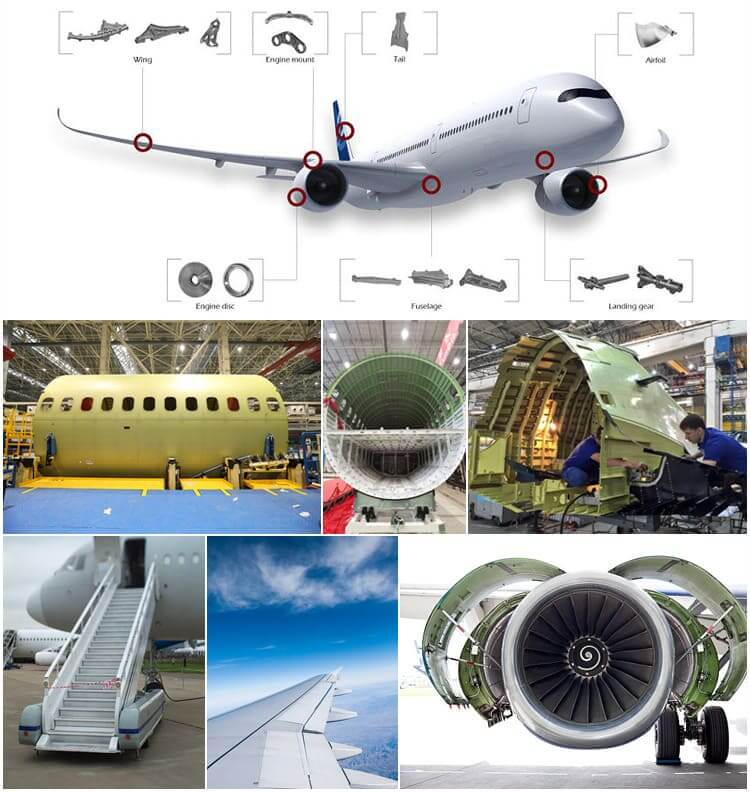
Paduan aluminium digunakan untuk ruang angkasa
Angkutan: digunakan untuk bahan struktur bodi mobil mobil, kendaraan kereta bawah tanah, mobil penumpang kereta api, mobil penumpang berkecepatan tinggi, pintu dan jendela, rak, suku cadang mesin otomotif, AC, radiator, panel bodi, roda dan material kapal.
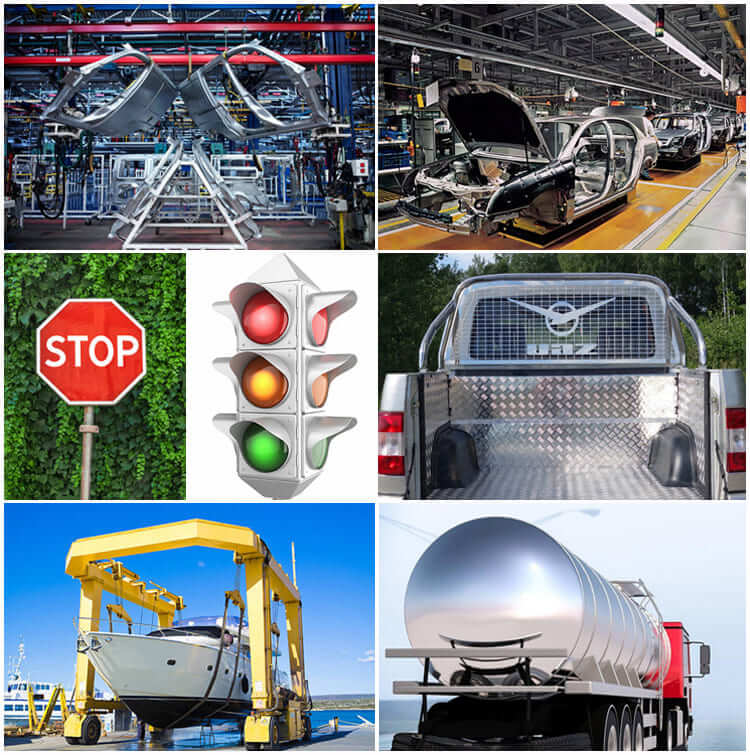
Aplikasi lalu lintas
Kemasan: Kaleng pop all-aluminium terutama digunakan sebagai bahan kemasan logam dalam bentuk pelat tipis dan foil, dan dibuat menjadi kaleng, tutup, botol, barel, dan foil kemasan. Banyak digunakan dalam kemasan minuman, makanan, kosmetik, obat, rokok, produk industri, obat, dll..
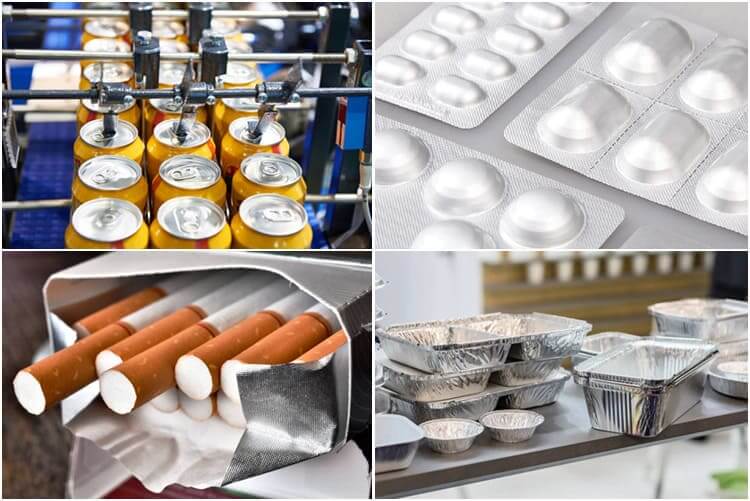
Aplikasi pengemasan
Pencetakan: Terutama digunakan untuk membuat pelat PS, Pelat PS berbasis aluminium adalah jenis material baru dalam industri percetakan, digunakan untuk pembuatan dan pencetakan pelat otomatis.
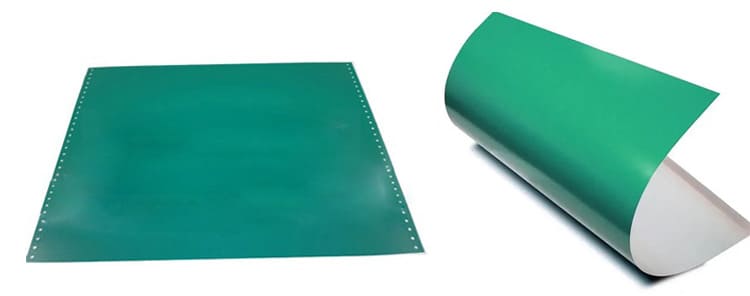
pencetakan PS
Dekorasi arsitektur: paduan aluminium banyak digunakan dalam struktur bangunan, pintu dan jendela, plafon gantung, permukaan dekoratif, dll.. karena ketahanan korosinya yang baik, kekuatan yang cukup, kinerja proses yang sangat baik dan kinerja pengelasan.

Aplikasi konstruksi paduan aluminium
Produk elektronik: komputer, ponsel, cangkang kulkas, radiator, dll..
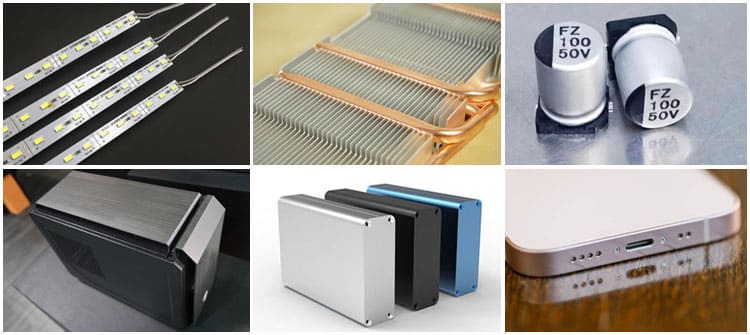
aplikasi produk elektronik
Persediaan dapur: pot aluminium, baskom aluminium, lapisan penanak nasi, aluminium foil rumah tangga, dll..
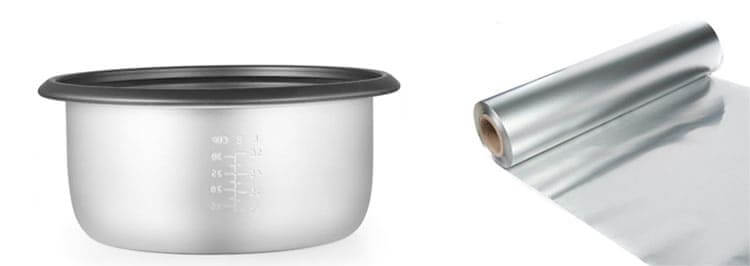
Aplikasi dapur
Pengemasan Aluminium Sheet/Coil
Setiap detail kemasan adalah tempat kami mengejar pelayanan yang sempurna. Proses pengemasan kami secara keseluruhan adalah sebagai berikut:
Laminasi: film bening, film biru, mikro-mukosa, mukosa tinggi, film pemotongan laser (2 merek, Novacell dan Polyphem);
Perlindungan: pelindung sudut kertas, bantalan anti-tekanan;
pengeringan: pengering;
Baki: nampan kayu yang tidak berbahaya difumigasi, nampan besi yang dapat digunakan kembali;
Sedang mengemas: Sabuk baja tic-tac-toe, atau sabuk pengepakan PVC;
Kualitas Bahan: Benar-benar bebas dari cacat seperti karat putih, noda minyak, tanda bergulir, kerusakan tepi, tikungan, penyok, lubang, garis putus-putus, goresan, dll., tidak ada set kumparan.
Pelabuhan: Qingdao atau pelabuhan lain di Cina.
Waktu memimpin: 15-45 hari.
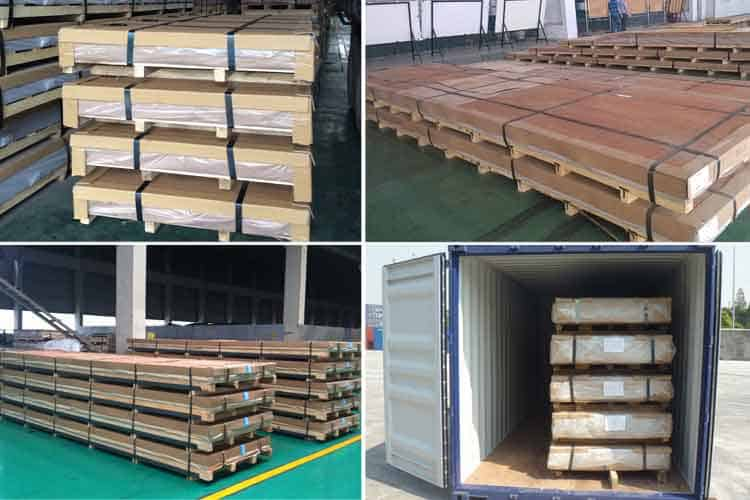
Proses pengemasan lembaran/pelat aluminium
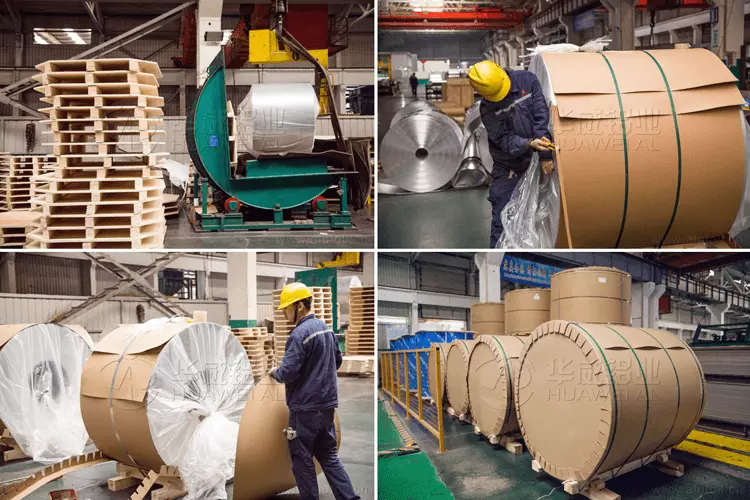
Proses pengemasan koil aluminium
F: Apakah Anda produsen atau pedagang?
Q: Kami adalah produsen, pabrik kami berada di No.3 Weier Road, Zona industri, Gongyi, Henan, Cina.
F: Apa MOQ untuk memesan produk?
Q: MOQ kami adalah 5 ton, dan beberapa produk khusus akan memiliki jumlah pesanan minimum 1 atau 2 ton.
F: Berapa lama waktu tunggu Anda?
Q: Umumnya lead time kami adalah tentang 30 hari.
F: Apakah produk Anda memiliki jaminan kualitas?
Q: Ya, jika ada masalah kualitas dengan produk kami, kami akan memberi kompensasi kepada pelanggan sampai mereka puas.
Produk-produk terkait



Blog Terbaru
Aluminium Foil Dilapisi untuk Aplikasi Pengemasan | Kuat & Dapat diandalkan
Aluminium foil berlapis berkualitas tinggi untuk aplikasi pengemasan, menawarkan perlindungan penghalang yang sangat baik, daya tahan, dan kinerja yang konsisten.

Untuk Apa Aluminium Foil Dilapisi Digunakan dalam Pengemasan dan Industri
Temukan kegunaan aluminium foil berlapis, dari pengemasan makanan dan farmasi hingga isolasi dan pencetakan, dan pelajari manfaat dan fungsi inti.

Tepercaya 3003 Pemasok Lembar Plat Pemeriksa Aluminium Di Seluruh Dunia
Temukan yang dapat diandalkan 3003 Pemasok Lembar Plat Aluminium Checker menawarkan kualitas bersertifikat, harga yang kompetitif, ukuran khusus, dan pengiriman global yang cepat untuk proyek Anda.

6061 T6 vs 7075 Aluminium: Kekuatan, Berat & Penggunaan Terbaik
Membandingkan 6061 T6 vs 7075 aluminium dengan mudah. Temukan perbedaan kekuatan, berat, dan aplikasi untuk memilih yang terbaik untuk proyek Anda.