8011 PE Coated Aluminum Foil for Food Packaging
1288 Views 2026-02-26 08:28:00
1. Introduction
8011 PE coated aluminum foil is a production-proven packaging substrate that combines an Al–Fe–Si foil alloy (8011) with a polyethylene (PE) functional layer to deliver high barrier, controlled sealability, and robust converting performance for food applications (lidding, pouches, induction liners).
Key quantitative anchors used in this article: typical 8011 composition windows; common lidding foil gauges (≈30–50 µm); PE coating or extrusion-laminate layer thicknesses (commonly 15–30 µm); and industrial heat-seal lacquers/coat weights for lidding in the ~4–6 g/m² range.
These design numbers are representative industry starting points and must be validated on the target converting line.

8011 PE Coated Aluminum Foil for Food Packaging
2. Understanding 8011 PE Coated Aluminum Foil for Food Packaging
2.1 Chemical Composition
The performance characteristics of 8011 PE coated aluminum foil originate from its precisely controlled alloy chemistry, which balances barrier properties, mechanical strength, and processing behavior.
| Element | Content Range | Functional Role | Performance Impact |
|---|---|---|---|
| Aluminum (Al) | 97.5–99.1 | Base matrix | Barrier properties, formability, corrosion resistance |
| Iron (Fe) | 0.60–1.00 | Solid solution strengthening | 20–40% strength increase vs. pure aluminum; enhanced puncture resistance |
| Silicon (Si) | 0.50–0.90 | Casting aid, dispersion strengthening | Improved rolling behavior, reduced pinhole density, enhanced surface quality |
| Manganese (Mn) | 0.60–1.00 | Grain control, additional strengthening | Improved formability and texture control |
| Copper (Cu) | ≤0.10 | Trace strengthening | Minimal impact on corrosion resistance |
| Magnesium (Mg) | ≤0.10 | Corrosion resistance | Enhanced resistance to alkaline environments |
| Zinc (Zn) | ≤0.10 | Impurity control | Minimizes galvanic corrosion potential |
| Titanium (Ti) | ≤0.05 | Grain refinement | Casting structure homogenization |
| Others (total) | ≤0.15 | — | — |
Sources: ASTM B209, EN 573, industry specifications
2.2 Mechanical Properties
The mechanical behavior of 8011 aluminum foil is fundamental to its processing performance and end-use functionality.
The material is typically supplied in O (annealed) temper for maximum formability, though H14, H16, H18, H22, and H24 tempers are available for applications requiring higher rigidity.
| Temper | Tensile Strength (MPa) | Yield Strength (MPa) | Elongation (%) | Hardness (HB) | Primary Applications |
|---|---|---|---|---|---|
| O (Soft/Annealed) | 90–120 | 35–55 | 25–35 | 25–35 | Deep drawing, flexible wraps, lidding |
| H14 (Half-hard) | 180–220 | 160–200 | 5–8 | 45–55 | Semi-rigid containers, forming |
| H18 (Full-hard) | 240–280 | 220–260 | 1–3 | 65–75 | Rigid lidding, high-speed lines |
| H22 | 100–130 | 65–85 | 15–25 | 30–40 | Balanced formability and strength |
| H24 | 115–145 | 85–110 | 10–20 | 35–45 | Stiffer lidding components |
Key Mechanical Characteristics:
- Tensile Strength: The O temper provides 90–120 MPa, adequate for handling and processing while maintaining the ductility essential for forming operations. The H18 temper reaches 240–280 MPa for applications requiring maximum rigidity.
- Elongation: The O temper’s 25–35% elongation enables deep drawing and complex forming without cracking—critical for lidding applications requiring dome or recess formation.
- Puncture Resistance: 8011 alloy achieves ≥3 N puncture resistance in typical gauges, preventing damage from sharp food edges (nuts, bones, candies) during packaging and distribution.
- Fold Endurance: The alloy exhibits excellent resistance to cracking during repeated bending, essential for hinge formations in lidding and wrapping applications.
2.3 Barrier Properties
The barrier performance of 8011 PE coated aluminum foil represents one of its most critical attributes, directly impacting food shelf life and quality preservation.
Intrinsic Aluminum Barrier Performance:
| Barrier Property | Theoretical Value | Practical Value (15–25 μm foil) | Significance |
|---|---|---|---|
| Oxygen Transmission Rate (OTR) | <0.01 cc/m²·day | <0.01–0.1 cc/m²·day | Prevents oxidation, rancidity, nutrient degradation |
| Water Vapor Transmission Rate (WVTR) | <0.01 g/m²·day | <0.1–0.5 g/m²·day | Prevents moisture gain/loss, texture preservation |
| Light Transmission | 0% | 0% (complete opacity) | UV protection, vitamin preservation, photo-oxidation prevention |
| Aroma/Flavor Barrier | Impermeable | Impermeable | Prevents volatile loss and odor migration |
| Microbial Barrier | Impermeable | Impermeable (when sealed) | Sterile maintenance post-pasteurization |
Pinhole Control and Thickness Optimization:
Pinholes—microscopic perforations in the foil—represent the primary limitation to barrier performance. Their density is strongly thickness-dependent:
| Thickness (μm) | Typical Pinhole Density | Application Suitability |
|---|---|---|
| 6–7 | 5–20/m² | Chocolate wrapping, short shelf-life products |
| 9–12 | 1–5/m² | General food packaging, dairy applications |
| 15–20 | <1/m² | Long shelf-life, oxygen-sensitive products |
| 25–30 | Essentially pinhole-free | Pharmaceuticals, ultra-high barrier requirements |
_Pinhole detection: Online optical or eddy current systems, 100% inspection
PE Coating Barrier Contribution: While the PE coating is permeable compared to aluminum, it provides:
- Secondary moisture barrier: Reduces effective WVTR by 30–50% in laminated structures
- Chemical isolation: Prevents direct contact between aluminum and acidic/alkaline foods
- Seal integrity: Hermetic closure eliminates edge permeation pathways
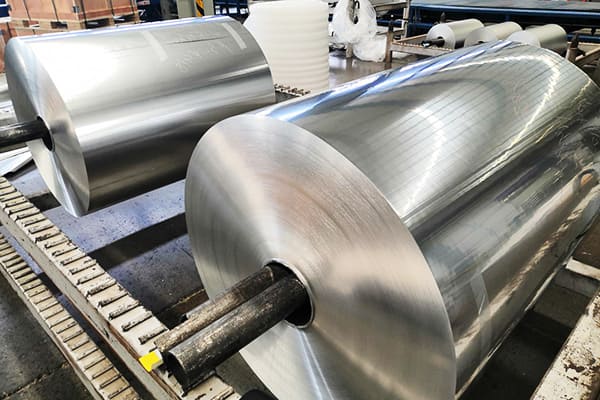
Huawei 8011 PE Coated Aluminum Foil
3. Manufacturing Processes of 8011 PE Coated Aluminum Foil
3.1 Base Foil Production (8011)
The manufacturing of 8011 alu foil involves sophisticated metallurgical processing to achieve the precise combination of strength, ductility, and surface quality required for coating and sealing operations.
Process Sequence:
- Direct Chill (DC) Casting: 8011 alloy is cast into rolling ingots (400–600 mm thick) with strict control of grain size and intermetallic distribution. Homogenization at 500–550°C for 8–24 hours dissolves casting segregations and precipitates uniform dispersoids.
- Hot Rolling: Ingots are reduced to 6–10 mm strip at 350–450°C, breaking down the cast structure and achieving uniform fine-grained microstructure. This stage establishes the foundation for subsequent cold rolling.
- Cold Rolling: Strip is progressively reduced to 0.30–0.50 mm intermediate gauge through multi-stand tandem mills. Work hardening increases strength but reduces ductility, necessitating intermediate annealing.
- Intermediate Annealing: Softening treatments at 300–360°C restore ductility between cold rolling passes, controlling grain size and texture development.
- Foil Rolling: Final reduction to 0.006–0.050 mm (6–50 μm) using cluster mills (Sendzimir or similar) with extremely high roll pressure. This stage requires precise tension control and lubrication to achieve gauge uniformity and surface quality.
- Final Annealing (O Temper): Controlled atmosphere annealing at 300–360°C for 2–4 hours achieves complete recrystallization, producing the soft, ductile condition required for forming and sealing operations. For H-series tempers, controlled cold rolling follows annealing to achieve specified strength levels.
- Slitting and Inspection: Precision slitting to customer width (100–1600 mm) with 100% inspection for pinholes, surface defects, and gauge variation. Online pinhole detection systems using optical or eddy current methods ensure material meets specified limits.
3.2 Coating Process
The most common and effective method for applying the PE layer is extrusion coating/lamination.
- Surface Pre-Treatment: The raw 8011 aluminum foil is unwound and its surface is prepared for adhesion. This typically involves corona discharge treatment, an electrical process that increases the surface energy of the aluminum, making it receptive to the molten polymer.
- Extrusion: Polyethylene pellets are melted and extruded through a flat T-die, forming a continuous, uniform film of molten plastic.
- Lamination: This molten PE film is immediately pressed onto the moving aluminum foil substrate by a combination of a pressure roller and a large, cooled chill roll. The pressure ensures an intimate bond, while the chill roll rapidly solidifies the PE, locking it onto the aluminum surface.
- Post-Processing: The finished composite roll is trimmed to a precise width and rewound for shipment. The coating weight (typically 15-30 g/m²) is continuously monitored to ensure consistent sealing performance.

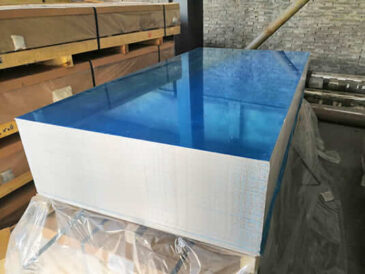
8011 PE Coated Aluminum Foil Production
4. Performance properties of 8011 PE Coated Aluminum Foil for Food Packaging
4.1 Barrier & preservation properties
The aluminum core supplies the dominant barrier against oxygen and light.
For lidding and retort applications designers often use aluminum thicknesses in the 30–50 μm band (yogurt lids and many tray lids commonly sit near 30–45 μm) to balance puncture resistance with cost and formability.
For flexible pouches aluminum is often thinner but paired with polymer layers that supply mechanical strength. These choices determine shelf-life for oxidation-sensitive foods.
4.2 Heat-sealability and sealing window
The PE layer provides a polymer surface that can bond to counterpart substrates (cups, trays, overwraps) by heat sealing.
Typical industrial sealing windows for lidding foils depend on sealant chemistry, pressure and dwell time; many commercial lidding applications operate in the roughly 170–230 °C range on contact bars (exact setpoints vary by sealant and equipment).
Seal strength is commonly characterized as peel force (g/25 mm) and must be mapped across temperature/pressure/dwell to find robust production windows.
4.3 Mechanical properties and formability
8011 aluminum foil offers an advantageous combination of formability and puncture performance compared with ultra-pure foils.
For deep-draw or lidding operations, target gauges are often 30–50 μm; thinner gauges (≈6–20 μm) are used in laminated flexible films where aluminum is not the primary structural layer.
Always test candidate foil/PE combinations on production tooling to validate wrinkling, springback and pinhole generation.
4.4 Surface & conversion properties
PE-coated foil accepts printing, varnishing and lamination when appropriate primers or corona treatments are used.
For printed lidding, converters often apply a thin WUV primer over the PE or use printable PE formulations—coat weights and surface energy must be specified to achieve good ink set and scratch resistance.
4.5 Thermal, optical and functional properties
Aluminum’s high reflectivity and thermal conductivity aid thermal process control (retort heating/cooling and induction sealing).
PE layers reduce direct heat transfer at the seal interface relative to bare metal, which influences required seal dwell and bar temperature.
For induction liners, the aluminum layer is the active metal while PE provides mechanical backing; PE thickness controls compressibility and sealing contact.
5. Applications of 8011 PE Coated Aluminum Foil for Food Packaging
5.1 Lidding for cups and trays
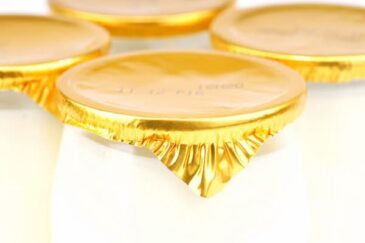
Primary application: yogurt and dairy lids, ready-meal tray lidding, single-serve cups.
Typical construction: printed PE/primer / aluminum (30–45 μm) / PE or lacquer depending on design.
Sealability, consumer peel ease, and puncture resistance are the key acceptance metrics.
5.2 Flexible pouches and sachets
In multi-layer laminates, a thin aluminum foil (8–12 μm) combined with PE heat-seal layers and PET or OPP structural films provides shelf-stable barrier at reduced cost and weight.
The PE layer is the sealant interface and mechanical buffer.

Flexible Food Packaging 8011 PE Coated Aluminum Foil
5.3 Wraps and liners
Food wraps, oven liners and tray liners use PE-coated foil where a polymer surface is needed for safety, sealing or machinability.
5.4 Induction sealing wads and liners
Aluminum forms the induction-responsive layer; PE provides compressibility and serves as the food-contact backing.
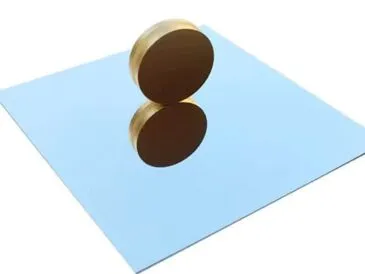
Typical production uses thin punched discs laminated to PE backing films.
6. Comparison with Alternative Packaging Materials
6.1 8011 PE Coated Foil vs. Metallized Plastic Films
| Property | 8011 PE Coated Aluminum Foil | Metallized PET/OPP | Selection Guidance |
|---|---|---|---|
| Oxygen barrier | <0.01–0.1 cc/m²·day | 1–5 cc/m²·day | 8011 for sensitive products |
| Moisture barrier | <0.1–0.5 g/m²·day | 1–5 g/m²·day | 8011 for long shelf life |
| Light barrier | 100% opacity | 99%+ (metallized layer) | Equivalent for most applications |
| Cost | Higher (2–4×) | Lower | Metallized for cost-sensitive, short shelf-life |
| Microwaveability | No (arcing risk) | Yes | Metallized for microwave applications |
| Formability | Excellent | Good | 8011 for deep drawing |
| Puncture resistance | Excellent | Moderate | 8011 for sharp/abrasive products |
| Recyclability | Excellent (aluminum) | Challenging (mixed materials) | 8011 preferred for circular economy |
| Carbon footprint | Higher production, lower end-of-life | Lower production, higher end-of-life | Lifecycle-dependent |
6.2 8011 vs. 1235/8079 Alloys for Food Packaging
| Alloy | Al Content (%) | Strength | Formability | Cost | Primary Applications |
|---|---|---|---|---|---|
| 8011 | 97.5–99.1 | High (90–120 MPa O temper) | Very Good | Moderate | General food packaging, lidding, laminates |
| 1235 | ≥99.35 | Moderate (70–110 MPa) | Excellent | Lower | Flexible wrapping, household aluminum foil, cable |
| 8079 | 99.0–99.3 | Moderate (60–100 MPa O temper) | Excellent | Higher | Pharmaceutical blister, high-barrier packaging |
7. Why Choose Huawei 8011 PE Coated Aluminum Foil for Food Packaging
Choosing Henan Huawei Aluminum for 8011 PE coated aluminum foil is critical to ensuring consistent quality, regulatory compliance, and optimal performance.
A leading manufacturer will distinguish itself through:
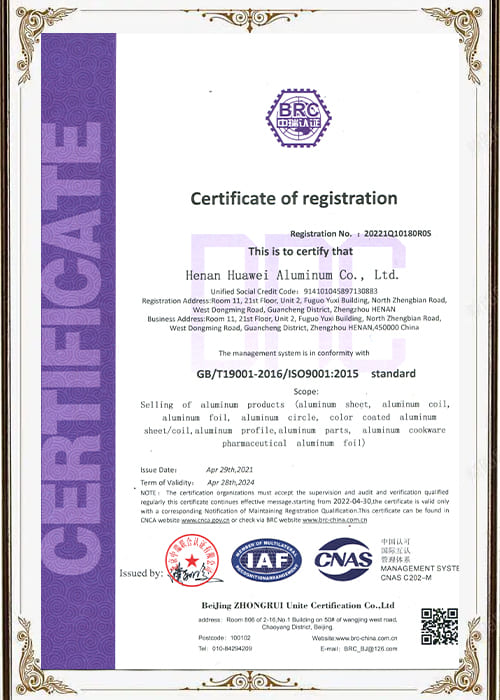
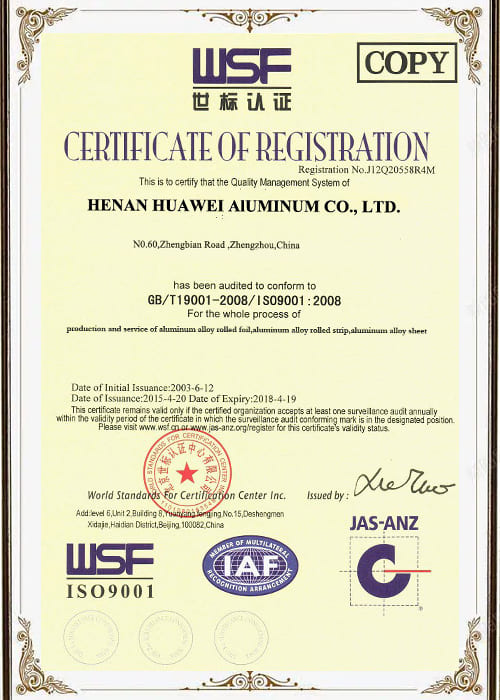
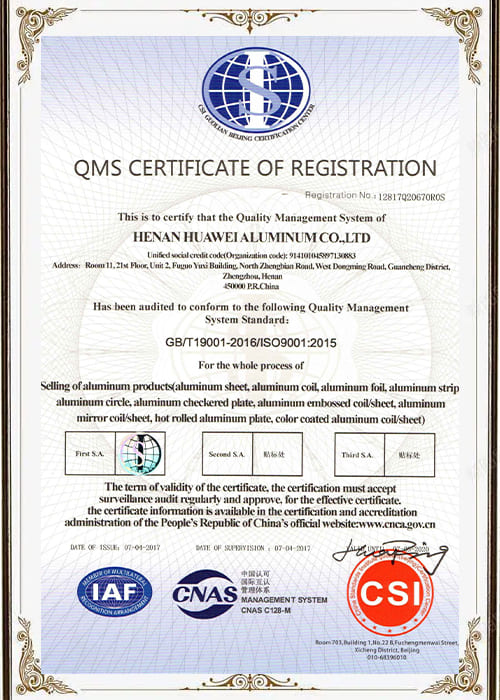
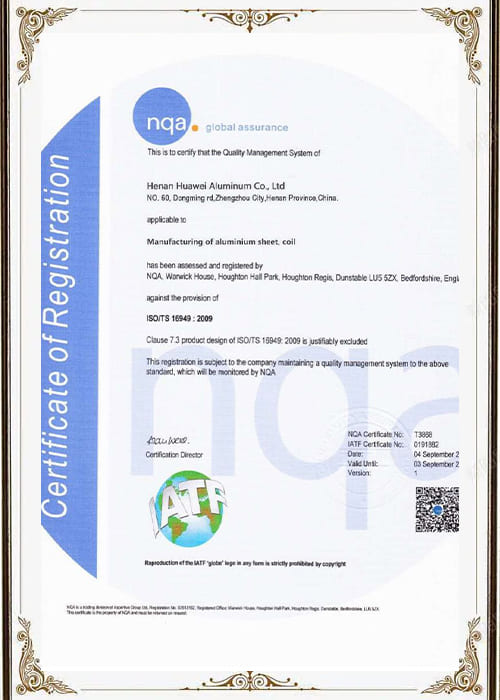
- Stringent Quality Control: Implementing ISO 9001 certified quality management systems across the entire production chain, from raw material sourcing of 8011 alloy to the final PE coating process. This ensures precise thickness control (e.g., ±5% tolerance on foil thickness), consistent PE layer adhesion (e.g., >2 N/15mm peel strength), and defect-free materials.
- Advanced Manufacturing Capabilities: Utilizing state-of-the-art rolling mills and extrusion coating lines to produce foil with superior surface finish, uniform coating thickness, and minimized pinhole counts (e.g., <5 pinholes per m² for 20 µm foil).
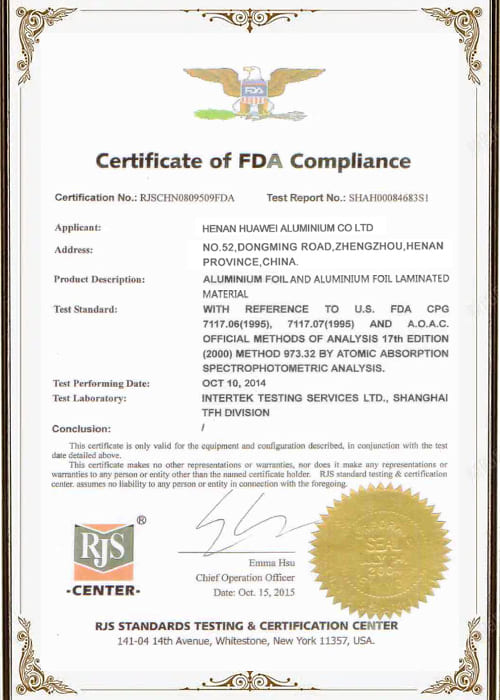
- Food-Grade Compliance: Adhering strictly to international food contact regulations such as FDA 21 CFR 177.1520 (for PE) and European Regulation (EC) No 1935/2004 for all materials, backed by comprehensive migration testing and safety certifications.
- Technical Expertise and Customization: Offering deep industry knowledge and the ability to customize foil specifications (e.g., alloy temper, PE thickness, specific barrier properties, surface treatments) to meet unique customer requirements and application challenges.
- Sustainable Practices: Demonstrating a commitment to environmental responsibility through optimized production processes, waste reduction initiatives, and support for end-of-life solutions.
- Reliable Supply Chain: Ensuring consistent product availability, efficient logistics, and responsive customer service to support continuous production for clients.

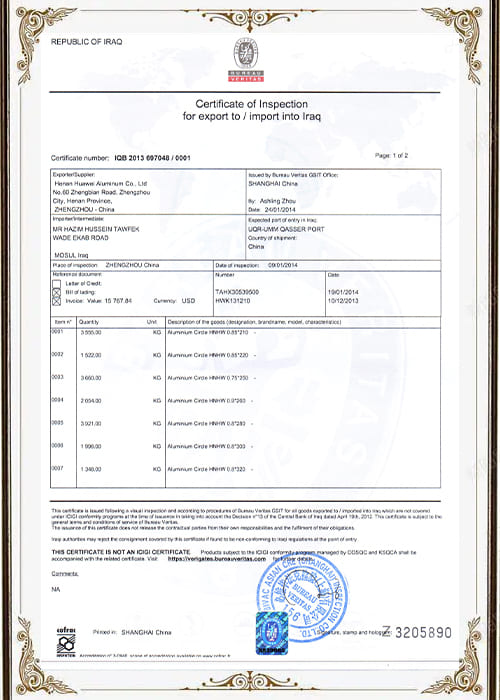
Export packaging of Aluminum Foil
8. Conclusion
8011 PE coated aluminum foil represents a pinnacle in food packaging technology, expertly balancing the inherent barrier superiority of aluminum with the functional versatility of polyethylene.
Its robust chemical composition, precise manufacturing, and exceptional performance properties—including unparalleled barrier protection, reliable heat-sealability, and impressive mechanical strength—make it an indispensable choice for preserving a vast array of food products.
While alternative materials exist, the comprehensive benefits of 8011 PE coated aluminum foil in extending shelf life, ensuring food safety, and providing brand appeal often outweigh other considerations.
As the food industry continues to evolve, this sophisticated material remains a critical component in meeting the ever-growing demands for quality, convenience, and sustainability in packaging.
FAQs
Q1: Is 8011 PE coated aluminum foil recyclable?
A1: The recyclability of PE coated aluminum foil is more complex than plain aluminum foil due to the PE layer. While aluminum is highly recyclable, separating the PE from the aluminum can be challenging for standard recycling facilities. However, specialized recycling technologies are emerging for multi-layer materials, and some regions have infrastructure for this. Consumers should check local recycling guidelines.
Q2: Can 8011 PE coated aluminum foil be used in a microwave?
A2: Generally, aluminum foil should not be used in a microwave oven due to the risk of arcing and damaging the appliance. While some specialized microwave-safe aluminum trays exist, standard PE coated foil is not recommended for microwave use unless explicitly stated by the manufacturer and product instructions.
Q3: What is the typical shelf life extension provided by 8011 PE coated aluminum foil?
A3: The shelf life extension varies significantly depending on the food product, storage conditions, and specific packaging construction. However, for many sensitive products (e.g., dried goods, processed meats, dairy), 8011 PE coated foil can extend shelf life by factors of 2x to 10x or more compared to non-barrier packaging, often from weeks to several months or even over a year.
Q4: How does 8011 alloy differ from other aluminum alloys used in packaging, like 1235 or 8079?
A4: 8011, 1235, and 8079 are all commonly used for foil. 1235 (nearly pure aluminum) is excellent for barrier properties but might be softer. 8079 has higher iron and silicon content than 8011, offering slightly better strength and often used for more demanding applications like pharmaceutical blister foils or thicker gauges. 8011 strikes a good balance of strength, formability, and cost-effectiveness, making it highly versatile for general food packaging.
Q5: Is the PE coating safe for direct food contact?
A5: Yes, the polyethylene (PE) used for coating 8011 aluminum foil is specifically formulated to be food-grade and comply with international regulations such as FDA and EU food contact material directives. Manufacturers conduct rigorous testing to ensure there is no harmful migration of substances from the PE into the food.