1. Introdução
9-mícron 1235 folha de alumínio composta é altamente especializado, multi-layer material that serves as a cornerstone of the modern flexible packaging industry.
This material system is engineered to provide a high-performance barrier at an optimal cost and weight. Its core is an ultra-thin, 9µm (0.009milímetros) foil made from 1235 Liga de alumínio, uma alta pureza (≥99,35% Al) grade prized for its exceptional softness and workability.
While the 9-micron foil itself provides a near-perfect barrier to light, gases, e umidade, its thinness makes it mechanically fragile and susceptible to pinholes.
These weaknesses are overcome by laminating it with other polymer films (such as PET, BOPP, and PE). The resulting composite structure leverages the absolute barrier of the aluminum core while gaining the strength, impressão, and sealability of the polymer layers.
This makes 9-micron 1235 composite foil the go-to solution for a vast range of applications, incluindo embalagens de alimentos (lanches, café, leite em pó) and pharmaceutical sachets, where a high barrier, peso leve, and cost-effectiveness are all critical requirements.
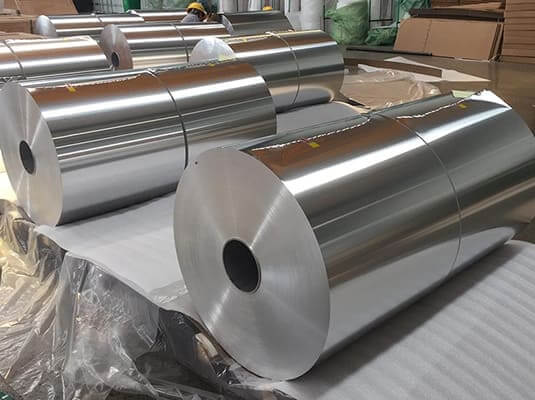
9-mícron 1235 folha de alumínio composta
2. Entendimento 1235 Liga de alumínio
2.1 Composição química
O 1235 folha de alumínio belongs to the 1xxx series of commercial purity aluminum, specifically engineered for converter foil applications where formability and barrier performance take precedence over structural strength.
The chemical composition adheres to strict limits that maximize rolling efficiency and surface quality.
| Elemento | Mínimo | Máximo | Functional Role in 9μm Foil |
|---|---|---|---|
| Alumínio (al) | 99.35% | - | Matrix providing ductility, refletividade, e resistência à corrosão |
| Silício (E) | - | 0.10% | Tight control ensures smooth rolling surface and minimizes inclusion defects |
| Ferro (Fé) | - | 0.60% | Provides slight strengthening; excessive levels increase pinhole risk |
| Cobre (Cu) | - | 0.05% | Kept minimal to preserve electrical conductivity and corrosion resistance |
| Manganês (Mn) | - | 0.05% | Trace element limited to prevent work hardening |
| Magnésio (mg) | - | 0.05% | Controlled to avoid surface oxidation issues |
| Zinco (Zn) | - | 0.10% | Impurity management for anodizing compatibility |
| Titânio (De) | - | 0.03% | Grain refinement in cast ingots |
| Outros elementos (Cada) | - | 0.03% | Aggregate impurity cap ensuring consistency |
| Outros elementos (Total) | - | 0.10% | Overall purity protection |
2.2 Microstructure and Temper
O 1235 alloy achieves its optimal properties through careful thermal processing.
Manufacturers produce 9-micron foil in two primary tempers, each serving distinct converting requirements:
O Temper (Macio, Recozido):
- Resistência à tracção: 60–90 MPa (8.7–13.0 ksi)
- Força de Rendimento: 20–35 MPa (2.9–5.1 ksi)
- Alongamento: 25–35% (A50mm gauge)
- Dureza: 20–25 HB
- Microestrutura: Fully recrystallized equiaxed grains (ASTM 6–9) with minimal dislocation density
The O temper maximizes ductility for deep drawing, dobrando, and complex forming operations.
The 25–35% elongation enables 9-micron foil to conform to sharp creases in cigarette inner liners and sachet corners without cracking.
This temper also optimizes adhesive wet-out during lamination, as the soft surface conforms to microscopic surface irregularities in plastic films.
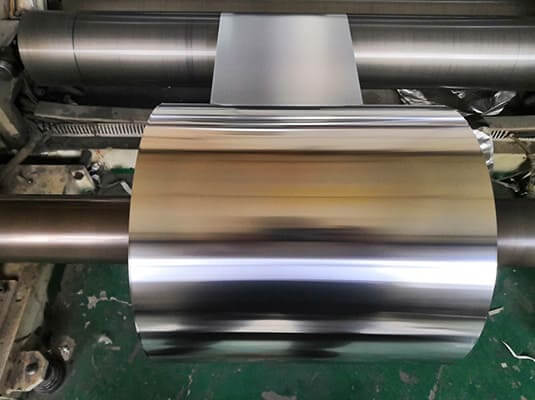
9-mícron 1235 Folha de alumínio H18
H18 Temper (Cheio Difícil, Cold-Worked):
- Resistência à tracção: 110–150 MPa (16.0–21.8 ksi)
- Força de Rendimento: 100–130 MPa (14.5–18.9 ksi)
- Alongamento: 1–3%
- Dureza: 45–55 HB
- Microestrutura: Elongated grains with high dislocation density from cold rolling
H18 temper provides handling stiffness for unwind operations and slit-edge stability.
Converters often specify H18 for foil that must traverse long web paths at high speed before lamination, as the increased rigidity reduces wrinkling and edge weaving.
The laminate structure subsequently provides flexibility in the finished product.
3. 9 Micrometer (μm) Grossura: Opportunities and Challenges
3.1 Opportunities (Why pursue 9 micrômetros?)
- Leveza & material cost reduction. Moving from e.g., 12–15 µm down to 9 µm reduces aluminum mass by ~25–40%, lowering raw-material cost and package weight. (9 µm = 0.009 milímetros).
- Excellent barrier per unit mass. Even at 9 µm a continuous aluminum layer provides near-opaque light barrier and very low oxygen and moisture transmission when incorporated into a laminate; suppliers report OTR and WVTR figures that place such laminates in “high barrier” class for many food and pharmaceutical applications.
- Improved form-factor and aesthetics. Thin foil conforms to complex shapes (labels, lidding) with smaller step heights and less bulk.
3.2 Desafios (Inherent weaknesses of 9 micrômetros)
- Mechanical fragility: reduced puncture resistance, higher sensitivity to handling, and increased risk of pinholes during rolling and lamination. Typical practical tensile/puncture performance must be validated for the stack and forming process.
- Buracos & defects control: process cleanliness and rolling/anneal schedules must be tightly controlled; pinhole density scales unfavorably with decreasing gauge.
- Adhesion and delamination risk: ultra-thin foil has less cohesive thickness for adhesives to “bite”; surface treatments or lacquers are often required to secure bond strength to polymers.
- Converting difficulty: corte, embossing, die-cutting and rewinding require specialized tension control, anti-static measures and skilled equipment operators.
4. Structure of 9-Micron 1235 Composite Aluminum Foil
4.1 Typical Composite Structures
The 9-micron 1235 foil rarely serves as standalone packaging. Em vez de, it functions as the critical barrier layer within multi-material laminates that combine complementary properties.
Engineers design these structures to position each material where its properties deliver maximum value:
Estrutura 1: PET/AL/PE (General-Purpose Food Packaging)
- BICHO DE ESTIMAÇÃO (12–25μm): Exterior print carrier providing mechanical strength, estabilidade dimensional, and gloss
- Adesivo (1.5–3.0 g/m²): Polyurethane two-component system creating chemical bond
- AL (9μm): Core barrier layer blocking oxygen, umidade, e luz
- Adesivo (1.5–3.0 g/m²): Tie layer for polyethylene adhesion
- EDUCAÇAO FISICA (40–80μm): Interior sealant providing heat-sealability, chemical resistance, and food contact compliance
Total thickness: ~65–120μm | Barreira: OTR <0.1 cc/m²·day, WVTR <0.01 g/m²·dia
Estrutura 2: Paper/AL/PE (Cigarette Inner Liner)
- Papel (40–60 g/m²): Exterior providing dead-fold characteristics, opacidade, and tactile quality
- AL (9μm): Barrier against moisture and aroma loss
- EDUCAÇAO FISICA (20–60μm): Heat-seal layer for pack closure
This structure leverages the “dead-fold” property of 1235-O foil—the ability to retain a crease without spring-back—essential for cigarette pack forming at 400+ packs/minute.
Estrutura 3: BOPP/AL/CPP (Confectionery and Snacks)
- BOPP (20μm): High-clarity exterior with excellent machinability
- AL (9μm): Barrier and light protection
- CPP (40–70μm): Hot-tack sealant for high-speed form-fill-seal operations
The biaxially oriented polypropylene (BOPP) provides superior crack resistance compared to PET, while cast polypropylene (CPP) offers broader heat-seal windows for confectionery packaging.
Estrutura 4: PA/AL/PE (Puncture-Resistant Pouches)
- PA (15μm, Nylon): Exterior providing exceptional puncture and abrasion resistance
- AL (9μm): Barrier layer
- EDUCAÇAO FISICA (60–80μm): Sealant and structural bulk
This configuration suits vacuum-packed meats and cheeses where bone edges or sharp corners threaten package integrity.
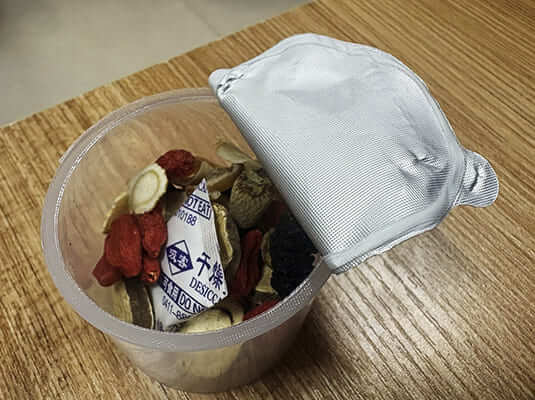
Tea packaging used 9-micron 1235 folha de alumínio composta
4.2 Why Composite for 9-Micron Aluminum Foil
Mechanical Protection:
The 9-micron foil cannot survive handling, envio, or retail display as a single layer.
BICHO DE ESTIMAÇÃO (tensile strength 200–300 MPa) or paper (stiffness 2–5 Nm/g) provide structural armor that prevents flex cracks and abrasion.
Sele Integrity:
Aluminum lacks thermoplasticity—it cannot heat-seal. PE or CPP layers (melting point 110–135°C) create hermetic closures through impulse or hot-bar sealing.
Chemical Isolation:
Acidic or alkaline products (molho de tomate, detergentes) corrode aluminum. PE and PP provide inert barriers preventing chemical attack.
Impressão:
Aluminum accepts only limited printing technologies. PET and paper substrates enable high-resolution gravure or flexographic decoration.
Cost Optimization:
At $8–12/kg for aluminum foil versus $2–4/kg for PE, composite structures minimize aluminum usage to the absolute barrier requirement while leveraging cheaper polymers for bulk.
5. Manufacturing Process of 9-Micron 1235 Composite Aluminum Foil
Key steps and control points:
- Casting and hot rolling to produce coil stock.
- Cold rolling schedules with multiple passes to progressively reduce gauge toward foil thickness. Intermediate and final anneals are applied to restore ductility and control grain structure. Precise pass schedules and roll gap control are critical to reach a uniform 9 µm target without excessive edge-wave or thickness variation.
- Surface preparation and cleaning to remove rolling oils and particulates (important to minimize pinholes).
- Coating/lacquering (opcional) to provide printability and corrosion resistance prior to lamination.
- Laminação (composite formation) — can be by solventless adhesive, laminação por extrusão (melt adhesive), or solvent/wet adhesives depending on stack and end-use. Proper adhesive selection, nip temperature and pressure are tuned to avoid foil wrinkles and to achieve peel strength targets.
- Slitting and rewinding with strict tension control and anti-static handling for 9 µm gauges.
- Quality inspection (pinhole detection, mapeamento de espessura, surface inspection) and final packing.
Process control charts for foil production typically track gauge tolerance (por exemplo., ±0.5 µm target for 9 µm), pinhole counts per m², and laminate peel strength.
6. Applications of 9-Micron 1235 Composite Aluminum Foil
6.1 Embalagens flexíveis para alimentos
The 9-micron 1235 foil serves as the barrier backbone for dry goods packaging:
- Coffee and Tea: Aroma retention critical; 9μm foil with <40 pinholes/m² maintains freshness 12–18 months
- Snack Foods: PET/AL/PE structures provide light protection for photosensitive vitamins and flavors
- Powdered Beverages: WVTR <0.01 g/m²·day prevents caking and preserves solubility
High-speed form-fill-seal (FFS) lines operate at 200+ cycles/minute with 9-micron foil, validating its mechanical stability under rapid flexing.
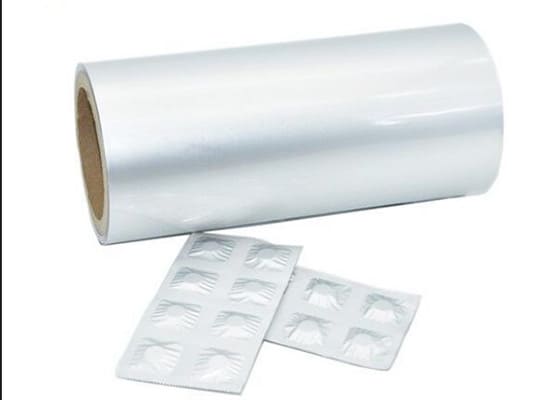
Sachet Strips For Medical Packaging
6.2 Pharmaceutical and Medical Packaging
Secondary overwraps for pharmaceuticals utilize 9-micron foil in:
- Sachet Strips: PET/AL/PE for unit-dose powders and granules
- Folha de tampa: 9μm 1235-O replaces thicker gauges for cost-sensitive OTC products
- Tropical Blister Alternatives: Non-PVC laminates for high-humidity markets
Migration testing per EU 10/2011 and FDA 21 CFR 177.1390 ensures compliance for indirect food contact.
6.3 Tobacco Packaging
Cigarette inner liners represent a major 9-micron application:
- Estrutura: Papel (40–60 g/m²)/AL (9μm)/EDUCAÇAO FISICA (20–30μm)
- Dobra morta: 1235-O temper retains sharp creases without spring-back
- Barreira de Aroma: Prevents moisture loss and flavor cross-contamination
- Speed Compatibility: Runs at 400+ packs/minute on G.D. and Focke machines
6.4 Industrial and Technical Applications
Cable Wrap: Non-woven/AL/PE laminates provide electromagnetic interference (EMI) shielding with 9-micron foil delivering >60 dB attenuation at 1 GHz.
Isolamento de construção: Foil-faced radiant barriers utilize 9μm 1235 for cost-effective reflectivity (>88% solar reflectance).
Battery Pouch Films: Lamination with nylon and polypropylene creates containment for lithium-ion cells, with 9-micron foil providing moisture barrier and electrical isolation.
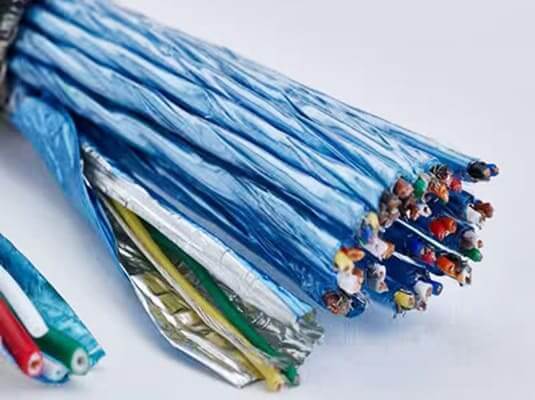
1235 aluminum foil for Cable Wrap
7. Comparative Alloy Analysis
Engineers selecting aluminum foil must evaluate alternatives to 1235. The following matrix compares key options for 9-micron applications:
| Atributo | 1235 | 8079 | 8011 | Selection Guidance |
|---|---|---|---|---|
| Pureza do Alumínio | ≥99.35% | ≥99,0% | ~97.0% (Al-Fe-Si) | 1235 for highest purity; 8079 for pinhole-critical <7μm |
| Resistência à tracção (Ó temperamento) | 60–90 MPa | 80–110 MPA | 80–120MPa | Higher strength in 8079/8011 for handling stiffness |
| Alongamento (Ó temperamento) | 25–35% | 15–25% | 15–25% | 1235 superior for deep drawing and folding |
| Dead-Fold Characteristics | Excelente | Muito bom | Bom | 1235 preferred for cigarette/tobacco |
| Pinhole Resistance at 9μm | Enhanced: ≤40/m² | Enhanced: ≤30/m² | Enhanced: ≤25/m² | 8079/8011 intermetallics improve rolling; 1235 requires tighter process control |
| Cost Position | $ (Mais baixo) | $$ | $$ | 1235 offers 10–15% cost advantage |
| Aplicações Típicas | Mainstream food, tabaco, general lamination | High-barrier pharma, abuse-resistant pouches | Tampa, tube laminates, heat-seal applications |
8. Huawei 9-Micron 1235 Composite Aluminum Foil Specification
(Representative supplier specification drawn from typical product pages — engineers should request a manufacturer-run Material Test Certificate and sample tests before approving for production.)
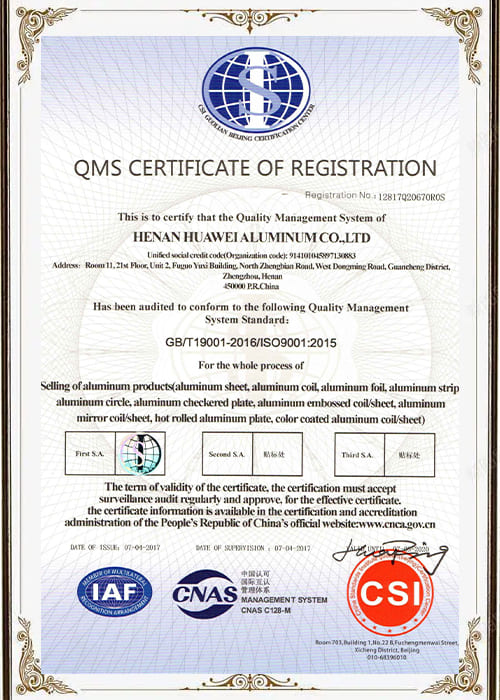
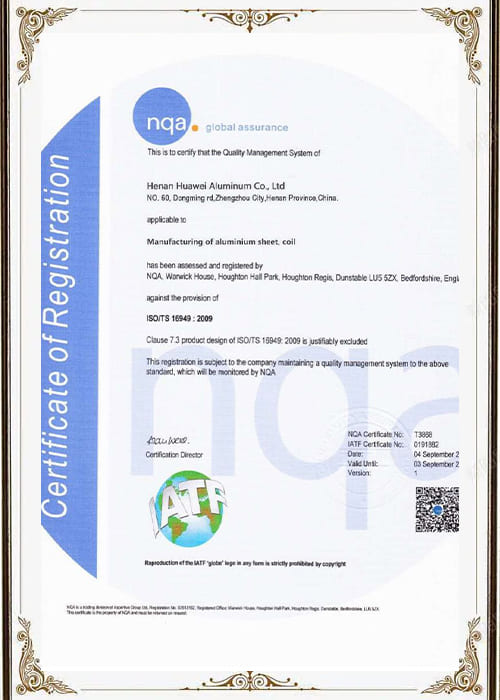
Supplier example: Henan Huawei Alumínio Co., Ltda (commercial supplier listing for “9-Micron 1235 Composite Aluminum Foil”). Reported or typical specification items include:
- Liga: 1235 (O temper typical for lamination).
- Nominal aluminum thickness: 9 µm (0.009 milímetros).
- Composite stacks offered: PET/AL(9)/EDUCAÇAO FISICA; Paper/AL(9)/EDUCAÇAO FISICA; BOPP/AL(9)/EDUCAÇAO FISICA.
- Typical WVTR / OTR for laminated structures (supplier reported example): OTR < 0.1 (units depend on test method; usually cc/m²·day), WVTR < 0.01 (g/m²·dia) for finished laminate — confirm test method and units with supplier before quoting shelf life.
- Densidade de furo: marketed as “low pinhole density” — suppliers commonly specify pinhole counts per m² or qualitative grades; ask for measured pinhole counts at acceptance.
- Temperamento: O (recozido) or light cold-work (as required).
- Revestimento: optional lacquer for printability; adhesive systems per laminate.
- Pacote: jumbo rolls, typical widths 200–1,600 mm; coil ID/OD to buyer spec.
- Controle de qualidade: thickness tolerance band (para 9 µm often specified ±0.5–1.0 µm depending on supplier), visual surface class, pinhole acceptance, MTC available on request.
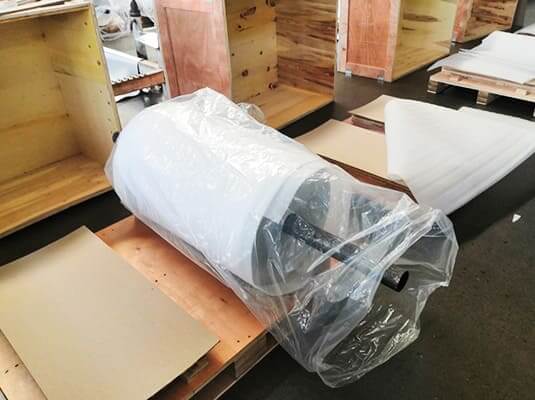
Huawei Aluminum Foil Export Packaging
9. Conclusão
O 9-mícron 1235 folha de alumínio composta is a testament to the power of systems thinking in material science.
It is a highly optimized solution that acknowledges the limitations of a single material and overcomes them through intelligent combination.
By pairing the absolute barrier potential of an ultra-thin 1235 aluminum foil with the mechanical strength of polymer films, the packaging industry has created a material that is both high-performing and highly economical.
It is not the most robust barrier available, but for the vast majority of flexible packaging needs, it represents the perfect equilibrium of protection, custo, e eficiência.
Perguntas frequentes
1. If 9-micron foil has pinholes, is it still a “high barrier”?
Sim. In a composite structure, the barrier performance is not determined by the foil alone. The adhesive and polymer layers create a “tortuous path” that effectively seals the microscopic pinholes. The final laminate still provides an exceptionally low OTR and WVTR (por exemplo., <0.5), which is firmly in the high-barrier category and far superior to any non-foil-based film.
2. Why not just use a thicker foil to avoid pinholes?
You can, but it comes with trade-offs. A thicker foil (por exemplo., 12µm or 15µm) will have fewer pinholes and more strength, but it will be more expensive, heavier, and result in a stiffer final package, which may not be desirable. 9 microns is often the most cost-effective solution that meets the required barrier specifications for a huge range of products.
3. What is the difference between this and “Alu-Alu” foil?
“Alu-Alu” (forma fria) foil is a much thicker, soft-temper aluminum foil (tipicamente 45-60 mícrons) laminated with OPA and PVC. It is designed to be plastically deformed (cold-formed) into a blister cavity, providing an absolute, 100% barreira. 9-micron composite foil is a thin, flexible material used for flat pouches and bags; it cannot be formed into a deep cavity.
Processo de produção de fundição e sua introdução
O objetivo da fusão e fundição é produzir ligas com composição satisfatória e alta pureza de fusão, de modo a criar condições favoráveis para a fundição de ligas de várias formas.
Etapas do processo de fusão e fundição: dosagem --- alimentando --- Derretendo --- mexendo depois de derreter, remoção de escória --- amostragem pré-análise --- adicionando liga para ajustar a composição, mexendo --- refino --- Configuração estática——Guia de fundição do forno.
Processo de produção de laminação a quente e sua introdução
- 1. A laminação a quente geralmente se refere à laminação acima da temperatura de recristalização do metal;
- 2. Durante o processo de laminação a quente, o metal tem processos de endurecimento e amolecimento. Devido à influência da velocidade de deformação, desde que o processo de recuperação e recristalização seja tarde demais, haverá um certo endurecimento do trabalho;
- 3. A recristalização do metal após a laminação a quente é incompleta, aquilo é, a coexistência de estrutura recristalizada e estrutura deformada;
- 4. A laminação a quente pode melhorar o desempenho do processamento de metais e ligas, reduzir ou eliminar defeitos de fundição.
- 1. A temperatura de fundição e laminação é geralmente entre 680°C e 700°C. Quanto mais baixo melhor, a linha estável de fundição e laminação geralmente para uma vez por mês ou mais para se reerguer. Durante o processo de produção, é necessário controlar rigorosamente o nível de líquido do tanque frontal para evitar baixo nível de líquido;
- 2. Lubrificação usa pó C com combustão incompleta de gás para lubrificação, que também é uma das razões para a superfície suja de materiais fundidos e rolantes;
- 3. A velocidade de produção é geralmente entre 1,5m/min-2,5m/min;
- 4. A qualidade da superfície dos produtos produzidos por fundição e laminação é geralmente relativamente baixa, e geralmente não pode atender a produtos com requisitos especiais de desempenho físico e químico.
- 1. Laminação a frio refere-se ao método de produção de laminação abaixo da temperatura de recristalização;
- 2. Não haverá recristalização dinâmica durante o processo de laminação, e a temperatura subirá até a temperatura de recuperação no máximo, e a laminação a frio aparecerá em um estado de encruamento, e a taxa de endurecimento do trabalho será grande;
- 3. As chapas e tiras laminadas a frio possuem alta precisão dimensional, boa qualidade de superfície, estrutura e desempenho uniformes, e produtos em vários estados podem ser obtidos com tratamento térmico;
- 4. A laminação a frio pode lançar tiras finas, mas ao mesmo tempo, tem as desvantagens de alto consumo de energia para deformação e muitas passagens de processamento.
- 1. O acabamento é um método de processamento para fazer com que a chapa laminada a frio atenda aos requisitos do cliente, ou para facilitar o processamento posterior do produto;
- 2. O equipamento de acabamento pode corrigir os defeitos produzidos no processo de produção de laminação a quente e laminação a frio, como borda rachada, oleoso, má forma da placa, Estresse residual, etc. Ele precisa garantir que nenhum outro defeito seja trazido para o processo de produção;
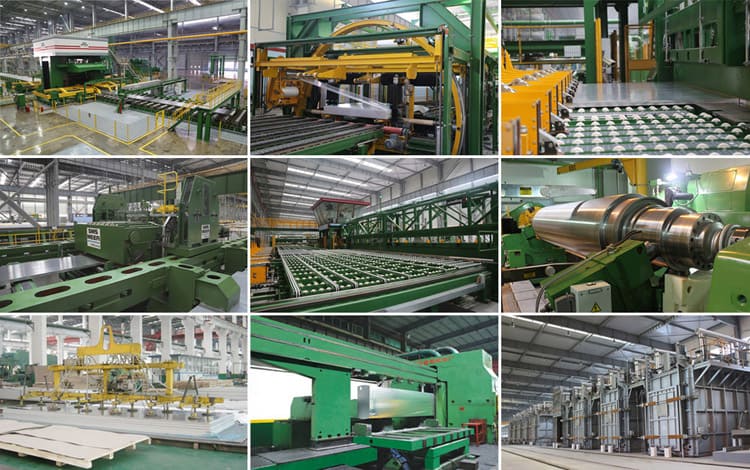
- 3. Existem vários equipamentos de acabamento, principalmente incluindo cortes transversais, corte, alongamento e endireitamento, forno de recozimento, deslizar, etc.
Processo de fundição e laminação
Processo de fundição e laminação: metal líquido, caixa frontal (controle de nível de líquido), máquina de fundição e rolamento (Sistema de lubrificação, água de refrigeração), máquina de corte, máquina de bobinar.
Processo de produção de laminação a frio
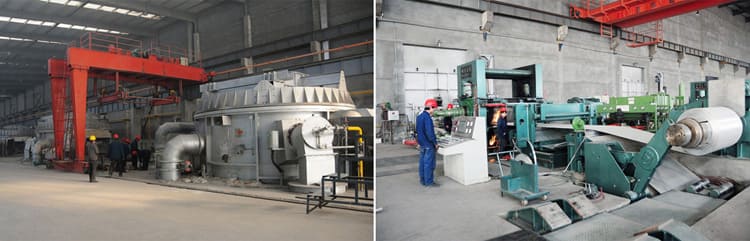
Introdução ao processo de produção de acabamento
A liga de alumínio tem as características de baixa densidade, boas propriedades mecânicas, bom desempenho de processamento, não tóxico, fácil de reciclar, excelente condutividade elétrica, transferência de calor e resistência à corrosão, por isso tem uma ampla gama de aplicações.
Aeroespacial: usado para fazer peles de aeronaves, molduras da fuselagem, vigas, rotores, hélices, tanques de combustível, painéis de parede e suportes de trem de pouso, bem como anéis de forjamento de foguetes, painéis de parede da nave espacial, etc.
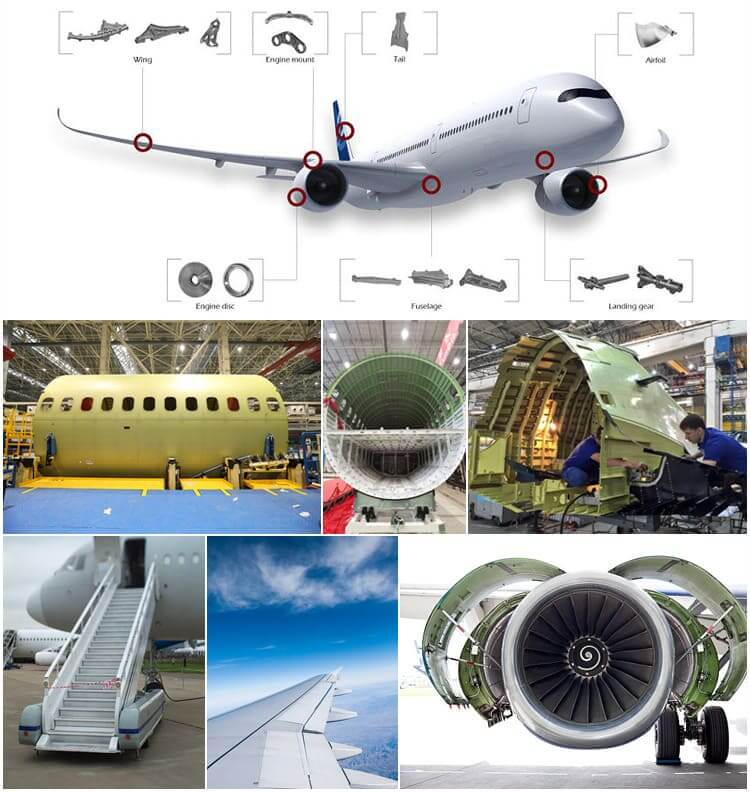
Liga de alumínio usada para aeroespacial
Transporte: usado para materiais de estrutura de carroceria de automóveis, veículos do metrô, vagões ferroviários de passageiros, carros de passageiros de alta velocidade, portas e janelas, prateleiras, peças de motor automotivo, ar condicionado, radiadores, painéis da carroceria, rodas e materiais de navio.
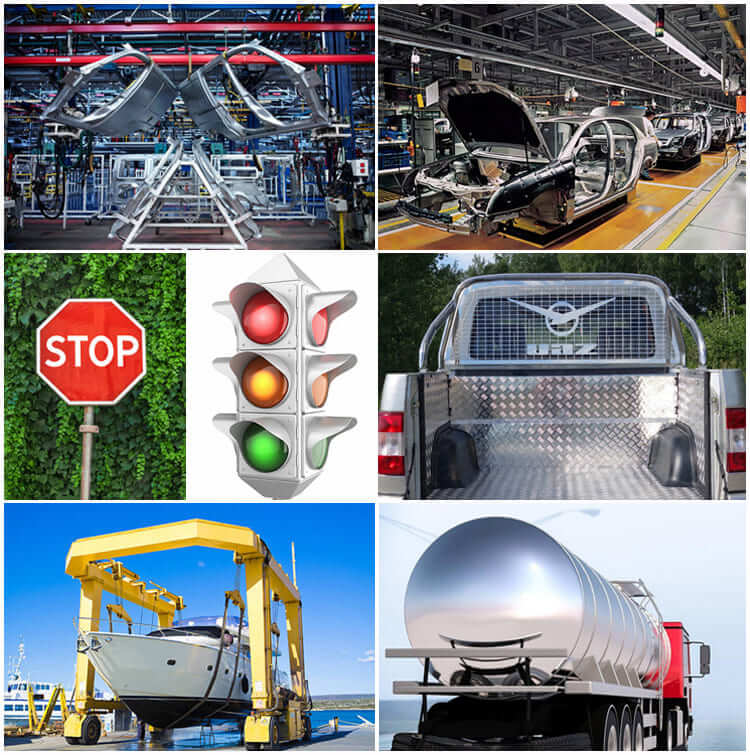
aplicativo de tráfego
Embalagem: As latas de alumínio são usadas principalmente como materiais de embalagem de metal na forma de placas finas e folhas, e são feitos em latas, tampas, garrafas, barris, e folhas de embalagem. Amplamente utilizado na embalagem de bebidas, comida, cosméticos, medicação, cigarros, produtos industriais, medicação, etc.
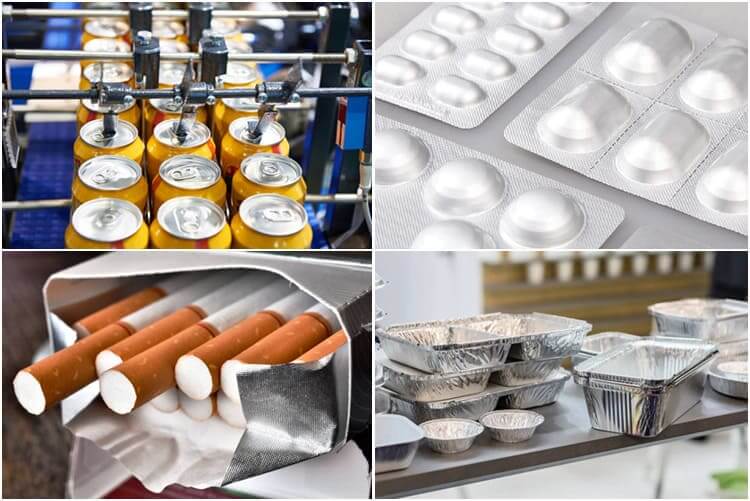
Aplicação de embalagem
Impressão: Usado principalmente para fazer placas de PS, as chapas PS à base de alumínio são um novo tipo de material na indústria gráfica, usado para fabricação e impressão automática de placas.
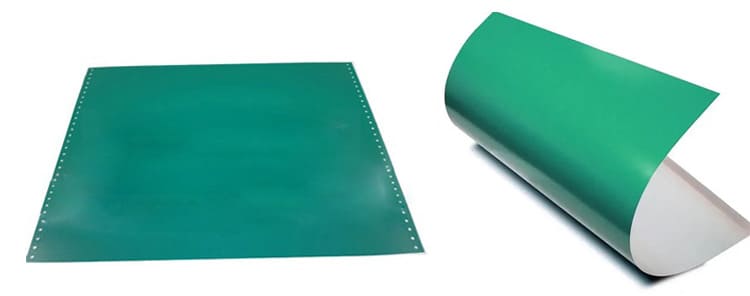
impressão PS
decoração arquitetônica: liga de alumínio é amplamente utilizado em estruturas de construção, portas e janelas, tectos falsos, superfícies decorativas, etc. devido à sua boa resistência à corrosão, força suficiente, excelente desempenho de processo e desempenho de soldagem.

Aplicação de construção de liga de alumínio
Produtos eletrônicos: computadores, celulares, conchas de geladeira, radiadores, etc.
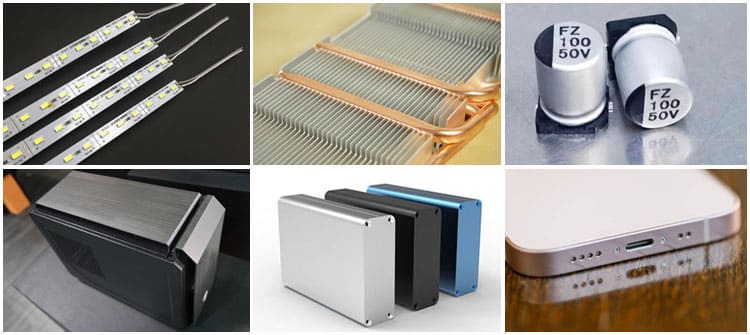
Aplicação de produtos eletrônicos
Material de cozinha: potes de alumínio, bacias de alumínio, forros de panela de arroz, papel alumínio doméstico, etc.
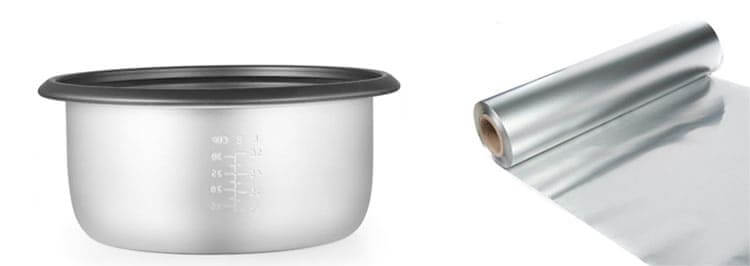
Aplicação de cozinha
Embalagem de folha/bobina de alumínio
Cada detalhe da embalagem é onde buscamos um serviço perfeito. Nosso processo de embalagem como um todo é o seguinte:
Laminação: filme claro, filme azul, micromucoso, mucoso alto, filme de corte a laser (2 marcas, Novacell e Polyphem);
Proteção: protetores de canto de papel, almofadas anti-pressão;
secagem: dessecante;
Bandeja: bandeja de madeira inofensiva fumigada, bandeja de ferro reutilizável;
Embalagem: Cinto de aço Tic-tac-toe, ou cinto de embalagem de PVC;
Qualidade do Material: Completamente livre de defeitos como ferrugem branca, manchas de óleo, marcas rolantes, dano de borda, curvas, amolgadelas, buracos, linhas de quebra, arranhões, etc., sem conjunto de bobina.
Porta: Qingdao ou outros portos na China.
Tempo de espera: 15-45 dias.
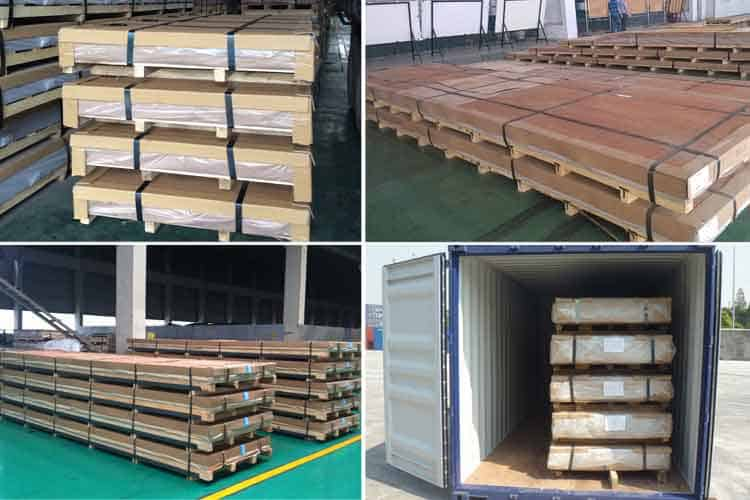
Processo de embalagem de folha/placa de alumínio
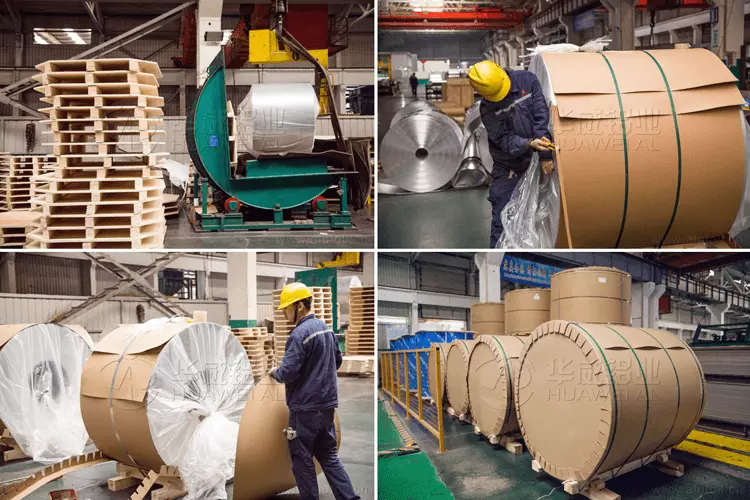
Processo de embalagem de bobina de alumínio
F: Você é um fabricante ou um comerciante?
Q: Nós somos um fabricante, nossa fábrica está em No.3 Weier Road, Zona industrial, Gongyi, Henan, China.
F: Qual é o MOQ para encomendar o produto?
Q: Nosso MOQ é 5 toneladas, e alguns produtos especiais terão uma quantidade mínima de pedido de 1 ou 2 toneladas.
F: Quanto tempo é o seu prazo de entrega?
Q: Geralmente nosso prazo de entrega é de cerca de 30 dias.
F: Seus produtos têm garantia de qualidade?
Q: Sim, se houver um problema de qualidade com nossos produtos, compensaremos o cliente até que esteja satisfeito.
produtos relacionados


Últimos blogs
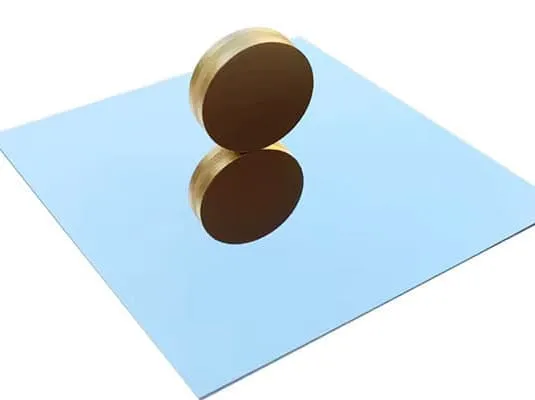
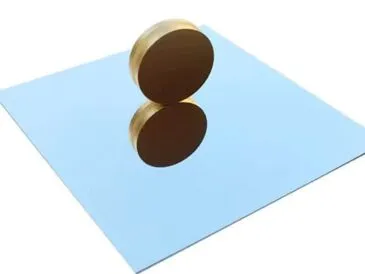
Folha de espelho de alumínio de ultra-alta refletividade
Folha de espelho de alumínio de ultra-alta refletividade com 95–98% de refletância visível, dispersão baixa (TIS <1%), e conselhos de especificação para BRDF, curvas espectrais e revestimentos.

Confiável 3003 Fornecedores de chapas verificadoras de alumínio em todo o mundo
Encontre confiável 3003 Fornecedores de chapas xadrez de alumínio que oferecem qualidade certificada, preços competitivos, tamanhos personalizados, e entrega global rápida para seus projetos.

6061 T6 versus 7075 Alumínio: Força, Peso & Melhores usos
Comparar 6061 T6 versus 7075 alumínio facilmente. Descubra diferenças de força, peso, e aplicativos para escolher o melhor para seus projetos.

Industrialização e Aplicação de Folha de Alumínio Honeycomb
Este blog explora a industrialização da folha de alumínio alveolar, focando no 3003 processo de produção de liga. Cobre laminação a quente, fundição contínua, e o método de fundição contínua, destacando os benefícios da otimização do processo na melhoria das propriedades mecânicas, reduzindo o consumo de energia, e reduzindo os custos de produção.