1. Introduction
Ultra-high reflectivity aluminum mirror sheets combine a lightweight metal substrate with precision surface finishing and protective coatings to deliver mirrors that are both optically excellent and mechanically practical.
Depending on process and protection, modern aluminum mirror sheets deliver visible reflectance typically in the 92–98% range, very low hemispherical emissivity (≈0.03–0.06 for polished surfaces), and excellent thermal conductivity (~235 W·m⁻¹·K⁻¹).
They find high value in solar concentrating systems, lighting reflectors, architectural façades, optical instruments and lightweight mirrors for aerospace.
Specifiers should pick the substrate alloy, finishing route and protective overcoat to balance peak reflectivity, durability, formability and cost.
Henan Huawei Aluminum Co., Ltd. (Huawei) supplies mirror-grade aluminum and runs test protocols (spectral reflectance, BRDF/TIS, abrasion, adhesion, weathering) to assure performance for each project.
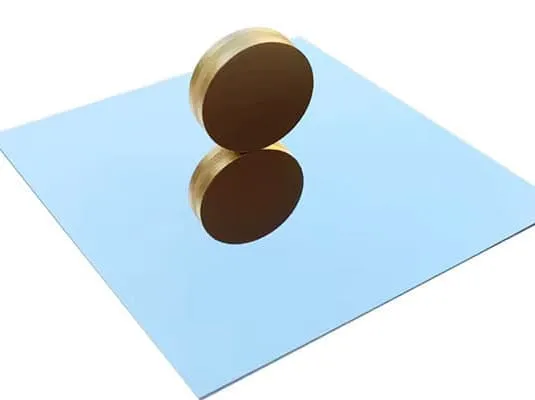
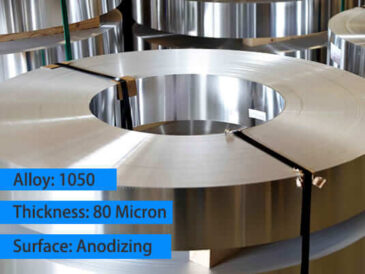
Ultra-high reflectivity aluminum mirror sheet
2. What is Ultra-High Reflectivity Aluminum Mirror Sheet?
An ultra-high reflectivity aluminum mirror sheet is an aluminum substrate whose front surface has been processed to achieve very high specular reflectance and low scatter across a target spectral band (commonly visible 400–700 nm, solar 300–2500 nm, or infrared). Key elements:
- Substrate — aluminum alloy coil or plate chosen for polishability, formability and stiffness.
- Surface finishing — mechanical polishing, electropolishing and/or chemical polishing to reduce micro-roughness.
- Optical enhancement — protected aluminum deposited in vacuum or dielectric overcoats applied to boost and stabilise reflectivity.
- Protection — thin transparent overcoats (e.g., SiO₂, ALD oxides, lacquer) or laminates to protect against oxidation, abrasion and environmental attack.
Performance threshold (typical):
- Specular visible reflectance: 92%–98% depending on process and coating.
- Total integrated scatter (TIS) for high-quality sheets: < 1% (visible band).
- Surface roughness (RMS) for precision optics: ≤ 5–20 nm (process dependent).
(Always request supplier spectral curves and BRDF scans for contract acceptance; numbers above are representative.)
3. Properties of Ultra-High Reflectivity Aluminum Mirror Sheets
3.1 Optical properties (typical ranges)
| Metric | Typical value (note) |
|---|---|
| Visible specular reflectance (400–700 nm) | 92–98% (protected vacuum-coated Al often 95–98%) |
| Solar band reflectance (300–2500 nm) | 88–96% (depends on IR behavior) |
| Total integrated scatter (TIS) | <1% for high-grade optical finish |
| Surface roughness (RMS) | ≤ 5–20 nm for precision; decorative mirrors may be 50–200 nm |
| BRDF sharpness | Low off-specular lobe for mirror performance |
3.2 Thermal & physical properties
- Thermal conductivity (Al): ≈ 235 W·m⁻¹·K⁻¹ — ensures rapid heat spreading under concentrated flux.
- Emissivity (polished Al): 0.03–0.06 (low, useful for radiative control).
- Density: ≈ 2.70 g·cm⁻³ — lightweight vs glass (≈2.5 g·cm⁻³ but glass is brittle and heavy in panel form).
- Mechanical: can be supplied as thin foils to stiff panels (e.g., laminated to honeycomb) to meet stiffness/planarity.
3.3 Durability indicators
Abrasion resistance and adhesion depend on the protective overcoat; standard tests used include Taber abrasion, cross-cut adhesion (ASTM D3359), and salt spray (ASTM B117) for outdoor durability of coated mirrors.

aluminum mirror sheet for lampshad
4. Materials & Alloy Selection
4.1 Substrate Alloy Systems
The selection of aluminum alloy fundamentally determines mechanical properties, surface quality potential, and optical performance.
High-purity alloys are preferred for mirror applications to minimize intermetallic inclusions that scatter light.
1xxx Series (Commercially Pure Aluminum)
| Alloy | Al Content | Key Characteristics | Mirror Applications |
|---|---|---|---|
| 1050 | 99.5% | Excellent corrosion resistance, high ductility, good polishability | Deep-drawn reflectors, decorative |
| 1060 | 99.6% | Higher purity than 1050, improved surface finish | High-end lighting, solar |
| 1085 | 99.85% | Very high purity, minimal intermetallics, superior optical quality | Precision optics, laser reflectors |
| 1090 | 99.90% | Ultra-high purity, exceptional surface smoothness possible | Scientific instruments, aerospace |
3xxx Series (Aluminum-Manganese)
- 3003: 1.0-1.5% Mn, 20% stronger than 1xxx, good formability, excellent for brake-formed reflectors
- 3005: Higher strength, improved anodizing response for architectural applications
- 3105: Modified 3003 with better strength-ductility balance for complex forming
5xxx Series (Aluminum-Magnesium)
- 5005: Moderate strength, excellent anodizing quality, marine-grade corrosion resistance
- 5052: Higher strength (25% stronger than 3003), good formability, preferred for structural optical components
4.2 Alloy Selection Matrix by Application
| Application | Recommended Alloy | Temper | Rationale |
|---|---|---|---|
| LED downlight reflectors | 1050, 1060 | O, H14 | Maximum reflectance, deep drawing capability |
| CSP parabolic troughs | 1085, 5052 | H19, H32 | High reflectance + structural rigidity |
| Automotive headlamps | 3003, 5005 | H14, H16 | Formability, thermal stability, cost balance |
| Architectural panels | 5005, 3003 | H34, H44 | Durability, color consistency |
| Electronic backlighting | 1060, 1085 | O | Maximum photometric efficiency |
| Solar cookers | 1050, 1060 | H14 | Cost-effective high reflectance |
5. Manufacturing and Surface Finishing Processes
Achieving over 95% reflectivity is a multi-stage, high-tech process.
- Substrate Preparation: A coil of high-purity aluminum is produced.
- Electrochemical Polishing: The coil is passed through an electrochemical bath. This process smooths the surface at a microscopic level, removing imperfections and creating a flawless, ultra-flat base. This is critical for maximizing specular reflection.
- Physical Vapor Deposition (PVD): This is the key step. The polished coil enters a large vacuum chamber where a multi-layer optical coating is applied. A typical coating stack includes:
- Reflective Layer: A layer of ultra-pure (99.99%) aluminum or sometimes silver is deposited to boost the primary reflection.
- Dielectric Enhancement Layers: Several alternating layers of transparent dielectric materials (like SiO₂, TiO₂) are applied. These layers use the principles of optical interference to suppress reflection at unwanted wavelengths and enhance it in the desired spectrum (e.g., visible light), pushing the total reflectance towards its physical limit.
- Protective Layer: A final, hard, transparent layer of a material like silicon dioxide (SiO₂) is deposited to protect the delicate optical layers from oxidation, abrasion, and environmental attack.

Rolled mirror aluminum sheet
6. Optical and Thermal Performance
- Optical Insight: The performance of this material is a powerful demonstration of applied physics. For example, upgrading a lighting fixture’s reflector from a standard 86% reflective aluminum to a 95% ultra-high reflective sheet can increase the luminaire’s Light Output Ratio (LOR) by more than 10%. This means the fixture can produce the same amount of light using fewer LEDs or by running them at a lower, more efficient power, directly translating to cost and energy savings.
- Thermal Performance: Aluminum’s excellent thermal conductivity allows the mirror sheet to also function as an effective heat spreader, drawing heat away from light sources like LEDs, which helps to prolong their lifespan and maintain their efficiency.
7. Applications of Ultra-High Reflectivity Aluminum Mirror Sheets
7.1 Concentrated Solar Power (CSP) and Solar Thermal
Parabolic Trough Collectors The largest application segment for ultra-high reflectivity aluminum, representing >60% of industrial demand:
- Optical Requirements: SWSR >94%, specular error <3 mrad
- Substrate: 5052-H32 or 3004-H34, 0.4-0.8 mm thickness
- Forming: Precision roll-forming into parabolic profiles (focal length accuracy ±1 mm)
- Protection: 20-25 μm anodic coating or fluoropolymer clear coat for 25-year service life
- Market Scale: 12-15 million m² annual demand growth with CSP expansion
Solar Towers (Heliostats)
- Flat or slightly curved panels (1-150 m² area) tracking sun position
- Aluminum advantages: Wind load resistance, impact resistance from sand/debris, field-adjustable mounting
- Reflectance maintenance: >90% after 20 years with periodic cleaning
Concentrated Photovoltaics (CPV)
- Primary and secondary optical elements concentrating sunlight 500-1000x onto high-efficiency cells
- Precision requirements: Surface accuracy <0.5 mrad, specular reflectance >92%
- Thermal management: Aluminum substrate provides heat spreading for cell cooling

Ultra-high reflectivity aluminum mirror sheet for Solar Towers
7.2 LED Lighting and Luminaires
Downlights and Spotlights
- Parabolic reflectors (PAR, R, BR types) utilizing 1050-O aluminum deep-drawn to precise optical profiles
- Efficiency gain: 15-25% higher lumens per watt vs. painted reflectors
- Color consistency: Neutral reflectance preserves LED CCT (correlated color temperature)
Commercial and Industrial Lighting
- High-bay reflectors for warehouses, gymnasiums, manufacturing facilities
- Linear fluorescent/LED troffer reflectors utilizing roll-formed 3003-H14
- Emergency lighting and exit sign reflectors meeting UL924 photometric requirements
Automotive Lighting
- Headlamp reflectors (projector and reflector types) for halogen, HID, LED, and laser sources
- Material: 5005-H16 or 3005-H25 with specialized high-temperature coatings withstanding 200°C continuous exposure
- Regulatory compliance: ECE R48, SAE J1383 photometric standards
7.3 Architectural and Interior Applications
Decorative Panels
- Ceiling tiles and linear systems (baffles, blades) creating luminous environments
- Wall cladding with mirror or brushed finishes
- Elevator interiors and column covers requiring scratch-resistant reflective surfaces
7.4 Consumer Electronics and Appliances
Display Backlighting
- LCD/LED TV and monitor reflector sheets (EEFL, CCFL, LED edge-lit)
- Material: 1060-O or 1085-O, 0.2-0.5 mm, reflectance >90%
- Forming: Precision stamping into complex 3D profiles for uniform luminance
- Market: 200+ million units annually for TV alone
Lighting Fixtures
- Task lamps, under-cabinet lighting, decorative fixtures
- Photocopier and scanner optical paths requiring precise reflectance uniformity
Appliance Interiors
- Microwave oven cavities (1060 with specialized food-safe coatings)
- Refrigerator interior liners (high reflectivity for illumination efficiency)
- Oven interiors (high-temperature resistant grades)
7.5 Transportation and Aerospace
Aircraft Interiors
- Cabin lighting reflectors (reading lights, mood lighting)
- Overhead bin and sidewall panel trim
- Weight reduction: 50-60% vs. glass mirror alternatives
- Fire safety: Meeting FAR 25.853 flammability requirements
Rail and Mass Transit
- Interior lighting reflectors for passenger cars
- Exterior signal and marker light reflectors
- Station architectural elements
7.6 Scientific and Industrial Optical Systems
Laser Cavities and Beam Delivery
- Pump chambers for solid-state lasers
- Beam steering mirrors for CO₂ and fiber lasers (IR-optimized coatings)
- Requirement: Surface figure <λ/10 at 632.8 nm for precision applications
Telescope and Instrumentation
- Secondary mirrors for amateur and professional telescopes
- Collimating optics for optical testing
- Solar simulators for spacecraft testing
8. Comparison of Mirror Polishing Processes for Aluminum Plates
| Metric / attribute | Physical polishing | Chemical polishing | Electropolishing (EP) | PVD (protected Al + overcoat) |
|---|---|---|---|---|
| Typical RMS roughness (nm) | 10 – 200 | 10 – 50 | 3 – 20 | ≤ 5 – 10 (depends on substrate) |
| Visible reflectance (400–700 nm) | 92 – 95% | 92 – 96% | 93 – 96% | 95 – 98% |
| Total integrated scatter (TIS) | ~>1% | ~1% | <1% | <<1% |
| Uniformity over large area | Moderate | Good | Very good | Excellent (if substrate prep done) |
| Formability after processing | Excellent | Excellent | Good | Good → Limited (coating ductility critical) |
| Durability without overcoat | Poor (oxidizes) | Poor | Improved | Poor (fresh Al oxidizes unless overcoated) |
| Durability with overcoat | Moderate | Moderate | High | Very high |
| Environmental impact | Abrasive waste | Chemical effluent (high) | Chemical effluent + energy | Energy intensive; less aqueous waste |
| Capital & per-m² cost | Low → Medium | Low → Medium | Medium | High |
| Typical lead time / throughput | High (fast for coarse work) | Medium | Medium | Low → Medium (depends on equipment) |
| Best use cases | Decorative, interior mirrors | Uniform decorative/medium optics | Precision mirrors, heliostats, optical substrates | Highest-performance outdoor mirrors, CSP, precision optics |
9. Huawei Quality Assurance
Achieving consistent, ultra-high reflectivity requires an exceptional level of process control.
A leading supplier like Henan Huawei Aluminum Co., Ltd (HWALU) ensures top-tier quality through a comprehensive system:
- Premium Substrate: Utilizing only high-purity aluminum coils from trusted sources as the base material.
- Advanced Production Lines: Operating state-of-the-art PVD vacuum coating lines with precise control over every layer’s thickness and composition.
- Rigorous Optical Testing: Employing integrated spectrophotometers to test and certify the total and specular reflectance of every coil produced, ensuring it meets the specified performance (e.g., “95%” or “98%”).
- Durability Testing: Conducting a full suite of tests including pencil hardness, adhesion, and salt spray tests to guarantee the long-term performance of the coating.
10. Conclusion
Ultra-high reflectivity aluminum mirror sheets occupy a unique niche: they combine very high optical performance with lightweight formability and practical durability when finished and protected correctly.
For large-area outdoor mirrors (solar concentrators, façades), protected vacuum-coated aluminum typically offers the best balance of reflectivity (95–98%), cost and ease of integration.
For precision optics, electropolished aluminum or silvered glass retain relevance. Procurement should specify full spectral curves, BRDF/TIS limits, abrasion and weathering tests, and require supplier QA documentation.
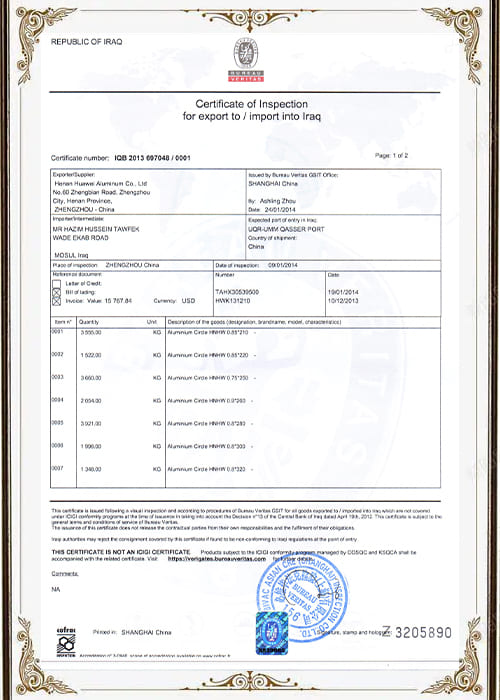
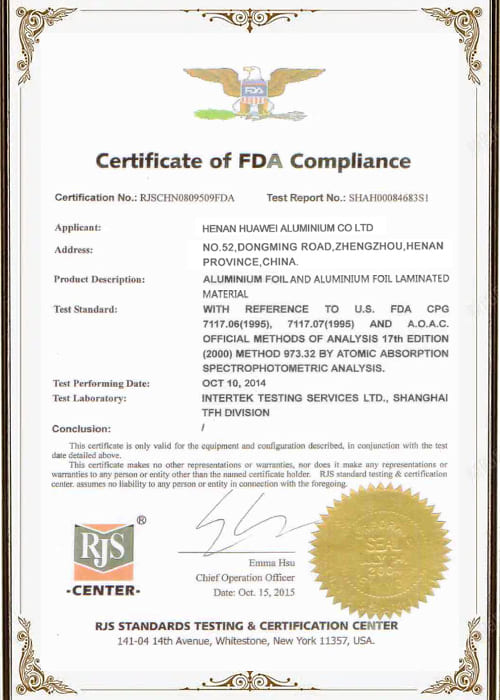
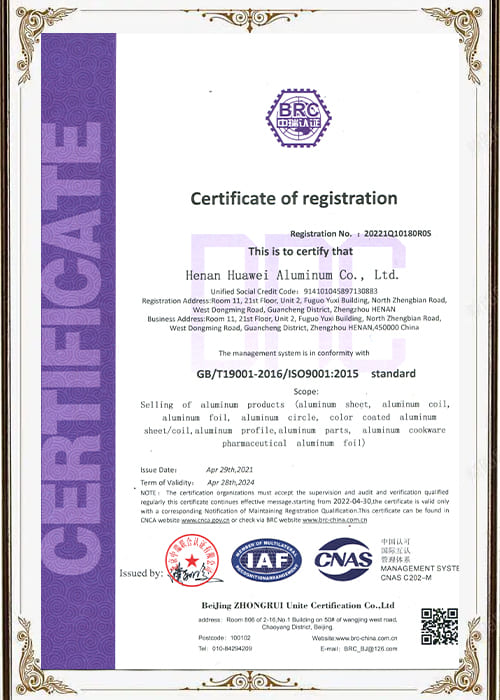
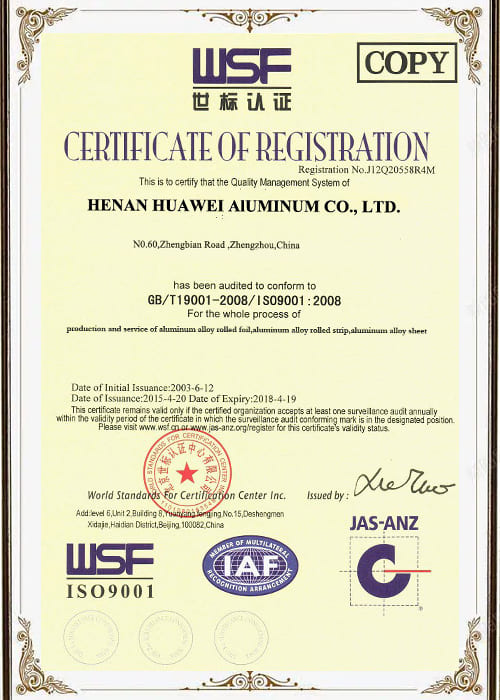
Henan Huawei Aluminum’s tailored test protocols and material traceability help reduce risk and accelerate project deployment.
FAQs
Q1 — What reflectance should I require in a purchase specification?
A: Specify the spectral band and acceptance limits (for example: Visible 400–700 nm average reflectance ≥95%; TIS ≤1%; provide full spectral curve measured with integrating sphere). Don’t accept a single point number without the curve.
Q2 — How do coatings affect formability?
A: Thin dielectric overcoats (<300 nm) can follow modest forming; thicker or brittle coatings may crack on tight bends. Select coating chemistries with sufficient elongation or plan forming before coating.
Q3 — Are aluminum mirror sheets suitable for coastal installations?
A: Yes if they use a durable protective overcoat and design for drainage; require salt-spray and cyclic corrosion test data and specify maintenance intervals.
Q4 — How do I protect mirrors during installation?
A: Use peelable protective films, soft handling, and avoid contact with abrasive tools. After installation, clean with approved non-abrasive cleaners and follow manufacturer guidance.
Q5 — Can I recycle coated mirror sheets?
A: Yes — aluminum is highly recyclable. Coatings are typically oxidised/removed during remelt processes; recycling economics depend on local facilities.
Casting production process and its introduction
The purpose of melting and casting is to produce alloys with satisfactory composition and high purity of melt, so as to create favorable conditions for casting alloys of various shapes.
Melting and casting process steps: batching --- feeding --- melting --- stirring after melting, slag removal --- pre-analysis sampling --- adding alloy to adjust the composition, stirring --- refining --- static Setting——Guide furnace casting.
Hot rolling production process and its introduction
- 1. Hot rolling generally refers to rolling above the metal recrystallization temperature;
- 2. During the hot rolling process, the metal has both hardening and softening processes. Due to the influence of deformation speed, as long as the recovery and recrystallization process is too late, there will be a certain work hardening;
- 3. The recrystallization of the metal after hot rolling is incomplete, that is, the coexistence of recrystallized structure and deformed structure;
- 4. Hot rolling can improve the processing performance of metals and alloys, reduce or eliminate casting defects.
- 1. The casting and rolling temperature is generally between 680°C and 700°C. The lower the better, the stable casting and rolling line usually stops once a month or more to re-stand. During the production process, it is necessary to strictly control the liquid level of the front tank to prevent low liquid level;
- 2. Lubrication uses C powder with incomplete combustion of gas for lubrication, which is also one of the reasons for the dirty surface of casting and rolling materials;
- 3. The production speed is generally between 1.5m/min-2.5m/min;
- 4. The surface quality of products produced by casting and rolling is generally relatively low, and generally cannot meet products with special physical and chemical performance requirements.
- 1. Cold rolling refers to the rolling production method below the recrystallization temperature;
- 2. There will be no dynamic recrystallization during the rolling process, and the temperature will rise to the recovery temperature at most, and the cold rolling will appear in a work hardening state, and the work hardening rate will be large;
- 3. The cold-rolled sheet and strip have high dimensional accuracy, good surface quality, uniform structure and performance, and products in various states can be obtained with heat treatment;
- 4. Cold rolling can roll out thin strips, but at the same time, it has the disadvantages of high energy consumption for deformation and many processing passes.
- 1. Finishing is a processing method to make the cold-rolled sheet meet the customer's requirements, or to facilitate the subsequent processing of the product;
- 2. The finishing equipment can correct the defects produced in the hot rolling and cold rolling production process, such as cracked edge, oily, poor plate shape, residual stress, etc. It needs to ensure that no other defects are brought into the production process;
- 3. There are various finishing equipments, mainly including cross-cutting, slitting, stretching and straightening, annealing furnace, slitter, etc.
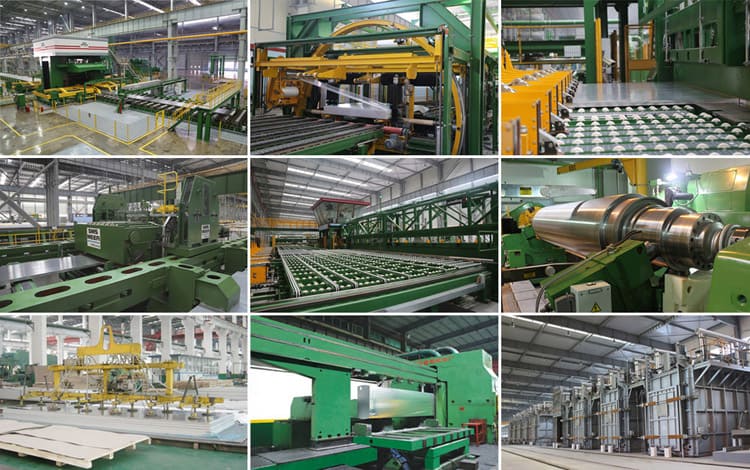
Casting and rolling process
Casting and rolling process: liquid metal, front box (liquid level control), casting and rolling machine (lubrication system, cooling water), shearing machine, coiling machine.
Cold rolling production process
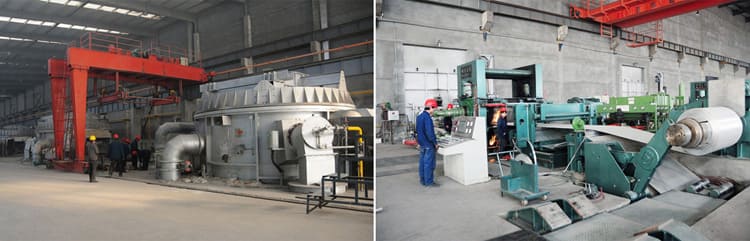
Introduction to finishing production process
Aluminum alloy has the characteristics of low density, good mechanical properties, good processing performance, non-toxic, easy to recycle, excellent electrical conductivity, heat transfer and corrosion resistance, so it has a wide range of applications.
Aerospace: used to make aircraft skins, fuselage frames, girders, rotors, propellers, fuel tanks, wall panels and landing gear struts, as well as rocket forging rings, spacecraft wall panels, etc.
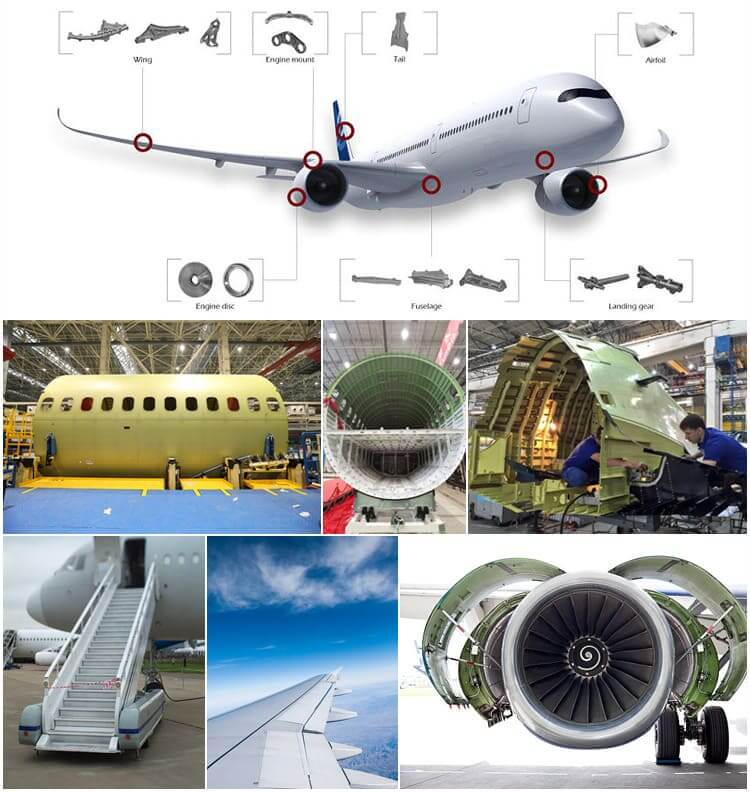
Aluminum alloy used for aerospace
Transportation: used for car body structure materials of automobiles, subway vehicles, railway passenger cars, high-speed passenger cars, doors and windows, shelves, automotive engine parts, air conditioners, radiators, body panels, wheels and ship materials.
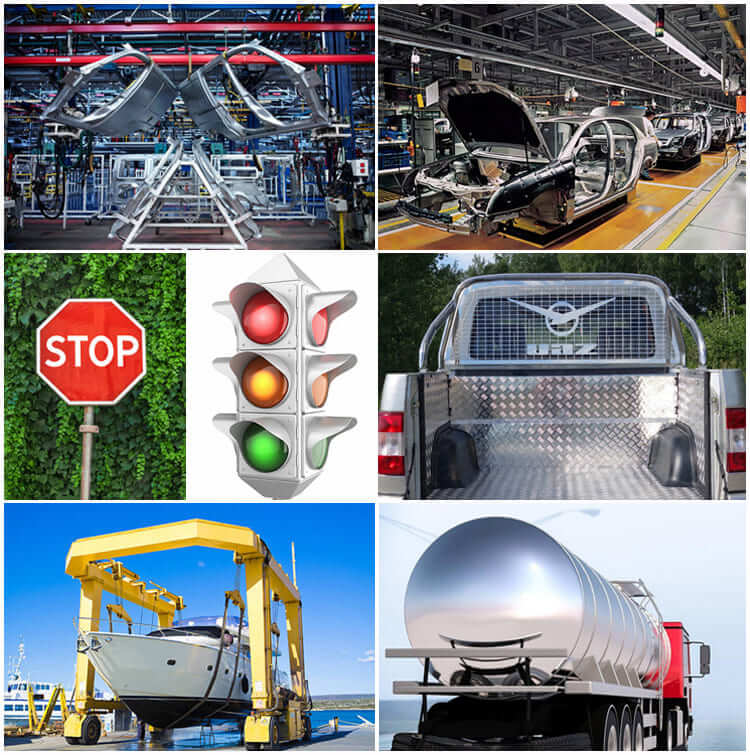
Traffic application
Packaging: All-aluminum pop cans are mainly used as metal packaging materials in the form of thin plates and foils, and are made into cans, lids, bottles, barrels, and packaging foils. Widely used in the packaging of beverages, food, cosmetics, medicines, cigarettes, industrial products, medicines, etc.
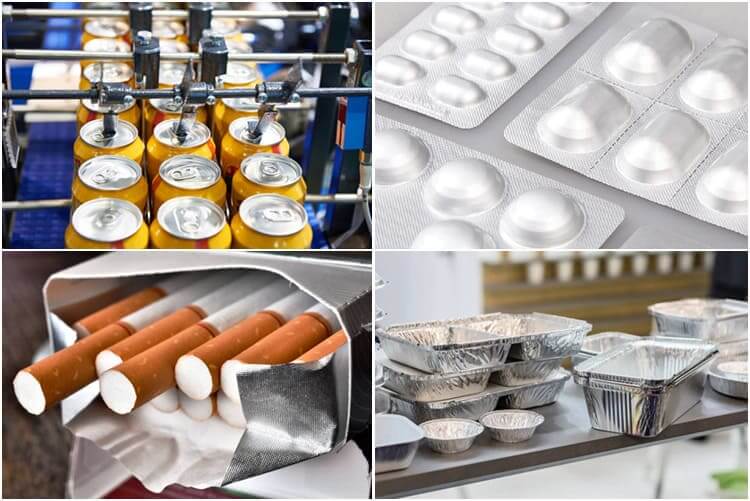
Packaging application
Printing: Mainly used to make PS plates, aluminum-based PS plates are a new type of material in the printing industry, used for automatic plate making and printing.
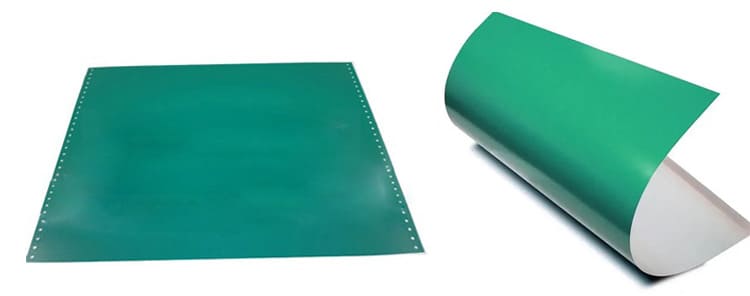
PS printing
Architectural decoration: aluminum alloy is widely used in building structures, doors and windows, suspended ceilings, decorative surfaces, etc. due to its good corrosion resistance, sufficient strength, excellent process performance and welding performance.
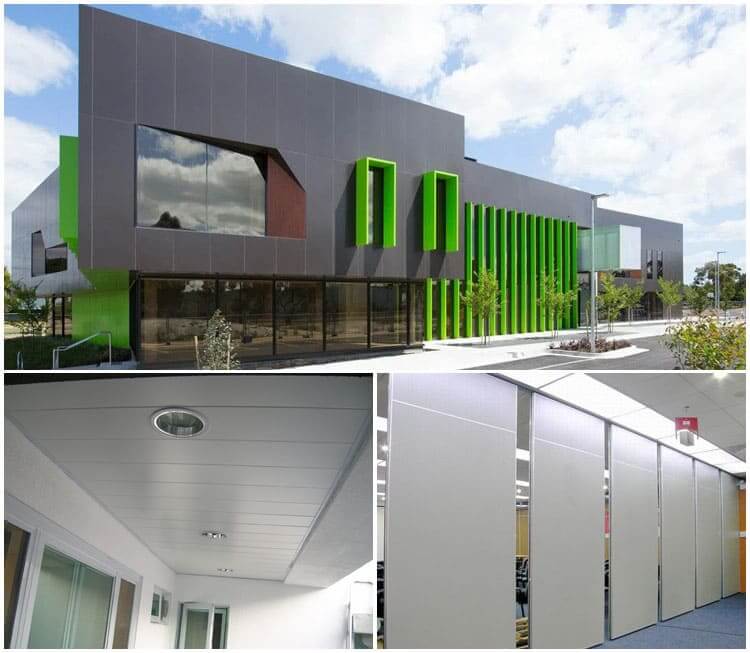
Aluminum alloy construction application
Electronic products: computers, mobile phones, refrigerator shells, radiators, etc.
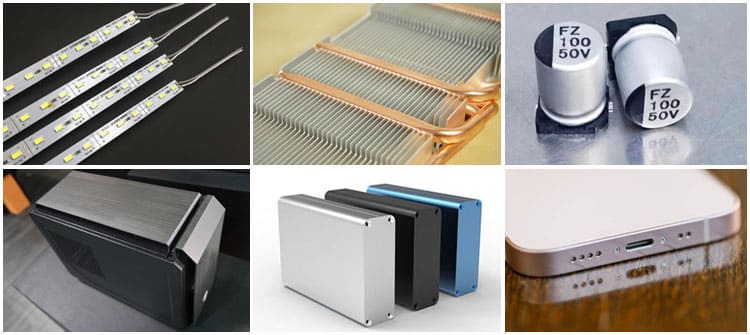
Electronic product application
Kitchen supplies: aluminum pots, aluminum basins, rice cooker liners, household aluminum foil, etc.
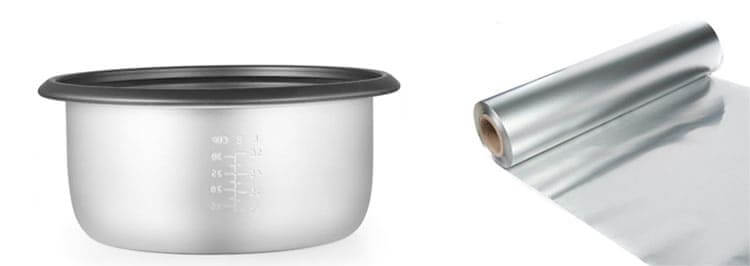
Kitchen application
Packaging Of Aluminum Sheet/Coil
Every detail of packaging is where we pursue perfect service. Our packaging process as a whole is as follows:
Lamination: clear film, blue film, micro-mucosal, high-mucosal, laser cutting film (2 brands, Novacell and Polyphem);
Protection: paper corner protectors, anti-pressure pads;
drying: desiccant;
Tray: fumigated harmless wooden tray, reusable iron tray;
Packing: Tic-tac-toe steel belt, or PVC packing belt;
Material Quality: Completely free from defects such as white rust, oil spots, rolling marks, edge damage, bends, dents, holes, break lines, scratches, etc., no coil set.
Port: Qingdao or other ports in China.
Lead time: 15-45 days.
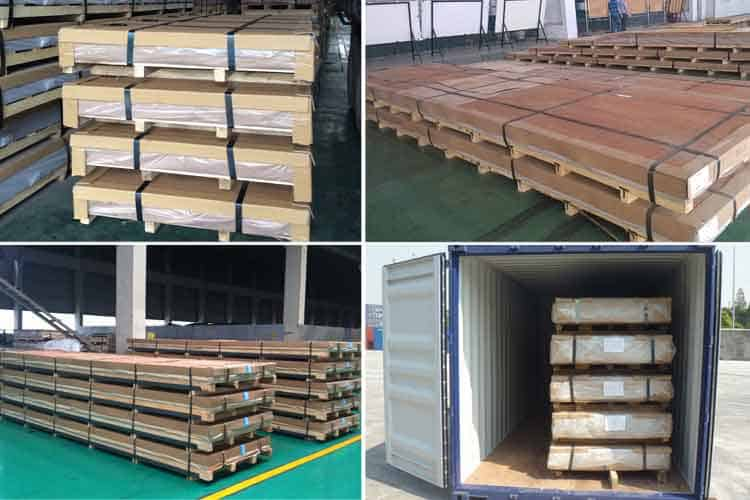
Aluminum sheet/plate packaging process
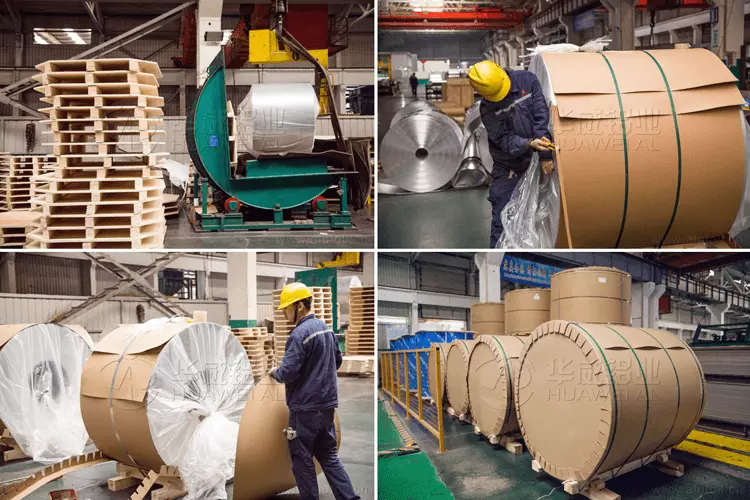
Aluminum coil packaging process
F: Are you a manufacturer or a trader?
Q: We are a manufacturer, our factory is at No.3 Weier Road, Industrial Zone, Gongyi, Henan, China.
F: What is the MOQ for ordering the product?
Q: Our MOQ is 5 tons, and some special products will have a minimum order quantity of 1 or 2 tons.
F: How long is your lead time?
Q: Generally our lead time is about 30 days.
F: Do your products have quality assurance?
Q: Yes, if there is a quality problem with our products, we will compensate the customer until they are satisfied.
Related Products



Latest Blogs

What is Coated Aluminum Foil Used For in Packaging and Industry
Discover what is coated aluminum foil used for, from food and pharma packaging to insulation and printing, and learn the core benefits and functions.

Trusted 3003 Aluminium Checker Plate Sheet Suppliers Worldwide
Find reliable 3003 Aluminium Checker Plate Sheet Suppliers offering certified quality, competitive pricing, custom sizes, and fast global delivery for your projects.

6061 T6 vs 7075 Aluminum: Strength, Weight & Best Uses
Compare 6061 T6 vs 7075 aluminum easily. Discover differences in strength, weight, and applications to choose the best for your projects.

Industrialization and Application of Honeycomb Aluminum Foil
This blog explores the industrialization of honeycomb aluminum foil, focusing on the 3003 alloy production process. It covers hot rolling, continuous casting, and the continuous casting-rolling method, highlighting the benefits of process optimization in improving mechanical properties, reducing energy consumption, and lowering production costs.